

Plasma proteomic associations with genetics and health in the UK Biobank
Open accessPublished version of a preprint
The DOI matches its Crossref record; 125 of the 125 references it cites were found in a registry or an index; 25 of the 34 sources its claims cite were checked for support.
Abstract
The Pharma Proteomics Project is a precompetitive biopharmaceutical consortium characterizing the plasma proteomic profiles of 54,219 UK Biobank participants. Here we provide a detailed summary of this initiative, including technical and biological validations, insights into proteomic disease signatures, and prediction modelling for various demographic and health indicators. We present comprehensive protein quantitative trait locus (pQTL) mapping of 2,923 proteins that identifies 14,287 primary genetic associations, of which 81% are previously undescribed, alongside ancestry-specific pQTL mapping in non-European individuals. The study provides an updated characterization of the genetic architecture of the plasma proteome, contextualized with projected pQTL discovery rates as sample sizes and proteomic assay coverages increase over time. We offer extensive insights into trans pQTLs across multiple biological domains, highlight genetic influences on ligand–receptor interactions and pathway perturbations across a diverse collection of cytokines and complement networks, and illustrate long-range epistatic effects of ABO blood group and FUT2 secretor status on proteins with gastrointestinal tissue-enriched expression. We demonstrate the utility of these data for drug discovery by extending the genetic proxied effects of protein targets, such as PCSK9, on additional endpoints, and disentangle specific genes and proteins perturbed at loci associated with COVID-19 susceptibility. This public–private partnership provides the scientific community with an open-access proteomics resource of considerable breadth and depth to help to elucidate the biological mechanisms underlying proteo-genomic discoveries and accelerate the development of biomarkers, predictive models and therapeutics 1 .
Overview
CoChat Summary
TL;DR
The UK Biobank Pharma Proteomics Project profiled plasma proteins in 54,219 UK Biobank participants using the Olink Explore 3072 proximity extension assay, measuring 2,923 unique proteins. It reports large-scale pQTL mapping, including 14,287 primary genetic associations in a European discovery cohort, of which 81% were previously undescribed.
Key findings
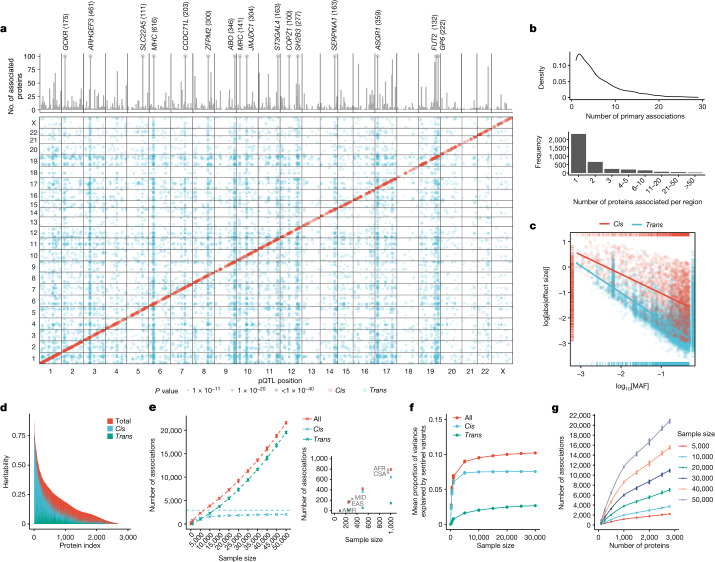
- In the European discovery cohort (n = 34,557), the study identified 14,287 primary pQTL associations across 3,760 independent genetic regions at P < 1.7 × 10⁻¹¹; 1,955 were cis and 12,332 were trans. Replication in n = 17,806 showed 95.6% of cis and 64.1% of trans associations remained significant and directionally concordant.
- 82.6% of tested proteins (2,414/2,922) had at least one pQTL, and 66.9% (1,954/2,922) had a cis association. 81% of primary associations (11,521/14,287) were previously undescribed; 89% of trans pQTLs were previously undescribed versus 27% of cis pQTLs.
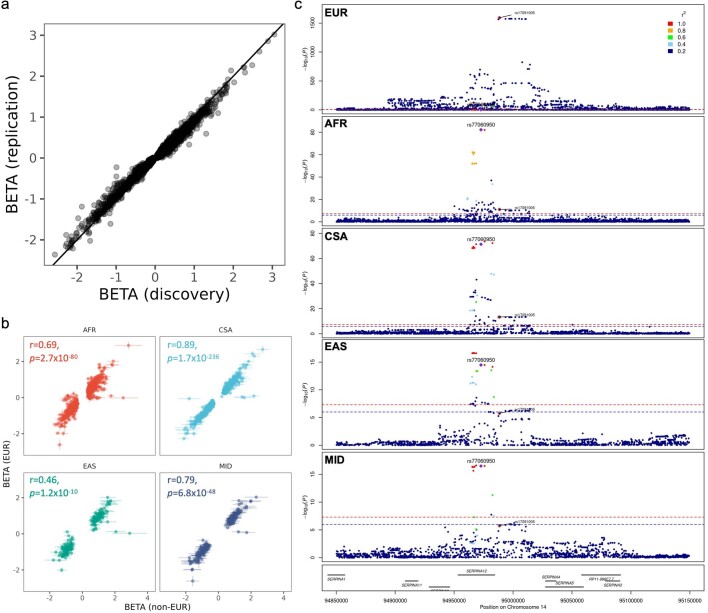
- Non-European ancestry-specific analyses found 785 (AFR, n = 931), 732 (CSA, n = 920), 227 (MID, n = 308), 179 (EAS, n = 262) and 9 (AMR, n = 97) primary associations; the paper highlights ancestry-specific allelic enrichments such as SERPINA12 rs77060950.
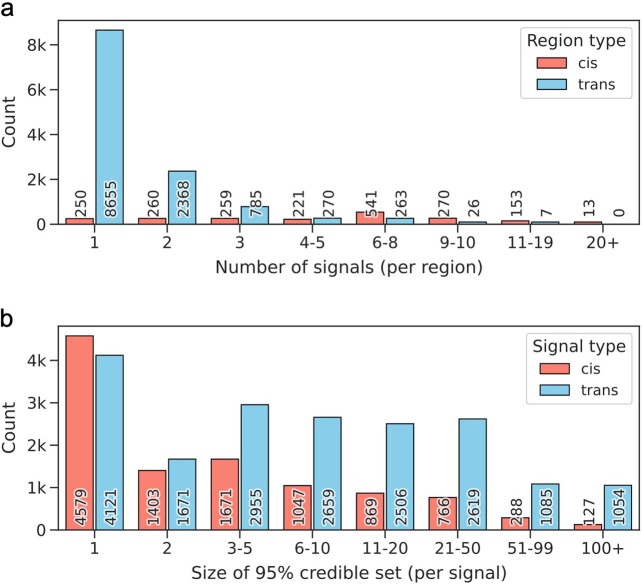
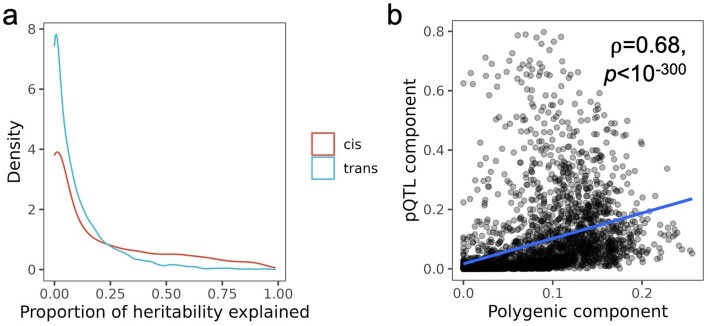
- Additional analyses identified 29,420 independent pQTL signals, mean total SNP-based heritability of 0.16, and colocalization of 65% (1,220/1,889) of genes with a significant eQTL in at least one tissue.
Methods
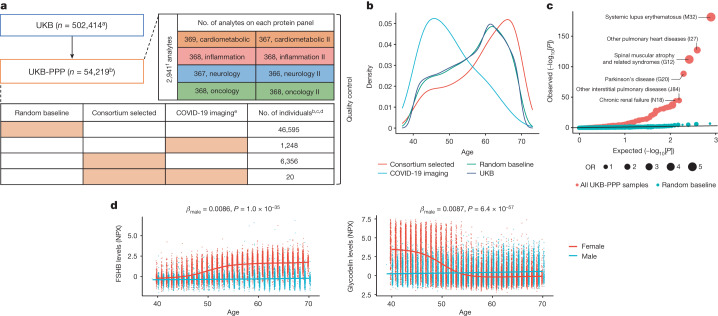
- Plasma proteomic profiling used the antibody-based Olink Explore 3072 PEA, measuring 2,941 protein analytes and 2,923 unique proteins across 54,219 UKB participants, including 46,595 randomly selected baseline, 6,376 consortium-selected and 1,268 COVID-19 repeat-imaging participants.
- Discovery pQTL analyses were performed in European-ancestry randomly selected baseline participants (n = 34,557) with replication in the remaining samples (n = 17,806), using REGENIE GWAS for up to 16.1 million imputed variants and a significance threshold of P < 1.7 × 10⁻¹¹; full-cohort mapping used n = 52,363 and up to 23.8 million variants.
- Downstream analyses included SuSiE fine-mapping, SNP-based heritability estimation, colocalization with GTEx eQTLs, ancestry-specific pQTL mapping in five pan-UKBB groups, sensitivity analyses for blood cell counts, BMI, season and fasting time, and Mendelian randomization exemplars such as PCSK9.
Limitations
- Stated: the predominantly white European ancestral composition of UKB does not capture full human genetic and phenotypic diversity, and the non-European ancestry groups were small and underpowered; the authors call for prioritizing under-represented and genetically diverse populations, resampling/longitudinal analyses, and orthogonal comparisons across proteomic assays.
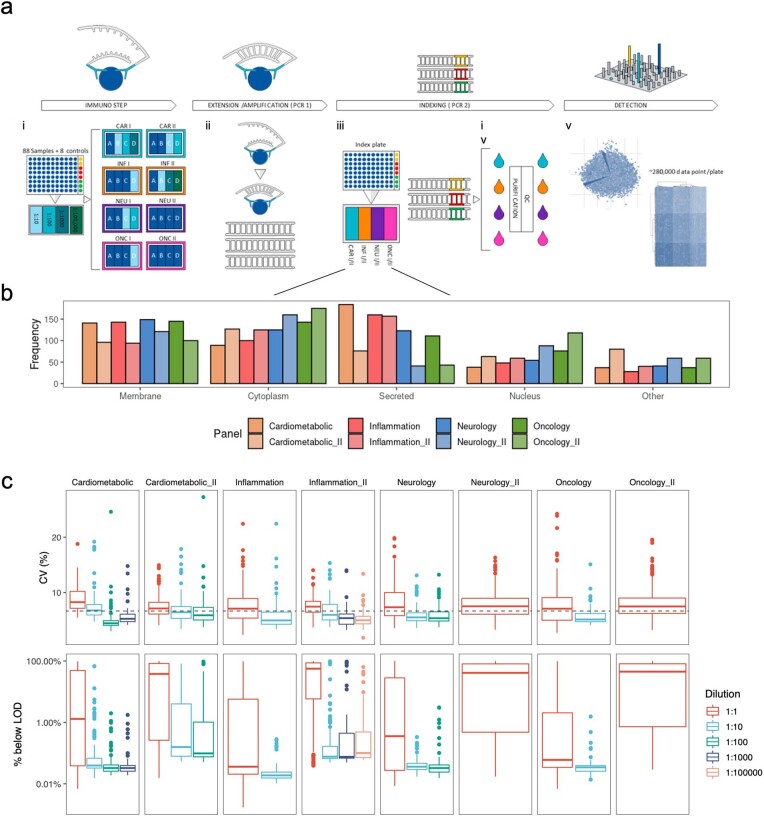
- Stated: pQTL discovery is affected by protein abundance and assay detection; proteins with lower expected concentrations had higher coefficients of variation, and 81.4% of proteins without a pQTL had more than 50% of samples below the limit of detection.
- Evident from the text: the main design is cross-sectional and observational, with causal inference limited to exemplar Mendelian randomization analyses; platform-specific antibody-based measurements may limit overlap with aptamer-based pQTL findings, as only 38% of previous aptamer-based associations replicated among common proteins.
Model-written summary. Check it against the paper before relying on it.
Integrity signals
Registry
Cites
Statistics
Figures
Verification
Claims the paper makes
15 Valid · 1 Not valid · 5 Not checked · 123 Own results and interpretations
The cited sources that could be checked couldn’t confirm or dispute this claim.
In the paper
“Liver expression of SERPINA12 was also higher in rs77060950-T carriers (P = 2.6 × 10 -8 ) 31”
§ Plasma proteomic associations with genetics and health in the UK Biobank > Non-European pQTL mapping
What the sources say
- Could not verifycites [31] The GTEx Consortium. The GTEx Consortium atlas of genetic regulatory effects across human tissues. Science 369, 1318-1330 (2020). sourceExperimental — accuracy not yet measured
The QTL discovery section describes associations between genetic variants and gene expression across tissues, but does not report this specific association. Searches for SERPINA12, rs77060950, and the stated P value found no passage establishing higher liver expression in T carriers; page numbers were not supplied in our copy. (LLM, conf=0.72)
plainstates an association- Asserted: passes — The authors put it forward as true.
- Checkable: passes — It can be checked against evidence.
- Load-bearing: unclear — It is unclear whether the paper’s conclusions depend on it.
- Based: passes — The paper gives a reason why it holds.
- Could not verify
The cited sources support only part of this claim — read each source’s verdict below.
In the paper
“These included well-established, previously identified [17][18][19][20] pleiotropic loci such as MHC, ABO, ZFPM2, ARHGEF3, GCKR, SERPINA1, SH2B3 and ASGR1”
§ Plasma proteomic associations with genetics and health in the UK Biobank > Discovery of pQTLs
What the sources say
- Partly supportedcites [17] Emilsson, V. et al. Co-regulatory networks of human serum proteins link genetics to disease. Science 361, 769-773 (2018). sourceExperimental — accuracy not yet measured
The section “Genetic variants influence serum protein levels” explicitly describes pleiotropy at ABO as well established. Our copy does not identify MHC, ZFPM2, ARHGEF3, GCKR, SERPINA1, SH2B3, or ASGR1 as previously identified pleiotropic loci, so it supports only part of the list. (LLM, conf=0.86)
- Partly supportedcites [18] Sun, B. B. et al. Genomic atlas of the human plasma proteome. Nature 558, 73-79 (2018). sourceExperimental — accuracy not yet measured
In “trans pQTLs identify pathways to disease” (page unavailable), the paper identifies ABO as a well-known pleiotropic locus, describes ZFPM2 as associated with many correlated proteins, and reports associations between a SERPINA1 variant and multiple proteins. It mentions MHC elsewhere but does not identify it there as a pleiotropic locus; the passages found do not establish ARHGEF3, GCKR, SH2B3 or ASGR1 as examples. (LLM, conf=0.88)
- Not checked — no full text of the sourcecites [19] Ferkingstad, E. et al. Large-scale integration of the plasma proteome with genetics and disease. Nat. Genet. 53, 1712-1721 (2021). source
- Partly supportedcites [20] Pietzner, M. et al. Mapping the proteo-genomic convergence of human diseases. Science 374, eabj1541 (2021). sourceExperimental — accuracy not yet measured
The Results section (‘Genetic associations for protein targets’; page unavailable) identifies ARF4-ARHGEF3, ABO and GCKR as substantially pleiotropic regions. The ‘A map of proteo-genomic connections across the phenome’ section also calls GCKR a known pleiotropic locus. Our copy does not establish the remaining named loci as previously identified pleiotropic loci, so it does not support the full list. (LLM, conf=0.87)
boostedstates an association- Asserted: passes — The authors put it forward as true.
- Checkable: passes — It can be checked against evidence.
- Load-bearing: unclear — It is unclear whether the paper’s conclusions depend on it.
- Based: passes — The paper gives a reason why it holds.
- Partly supported
The cited sources support only part of this claim — read each source’s verdict below.
In the paper
“The missense variant rs72938840 (Arg59Gln, MAF AFR = 7.9%) in the gene encoding rhomboid protease, RHBDL2, is mostly absent in EUR and other ancestries 28 and is associated in trans with concentrations of one of its cleavage substrates 29 , SPINT1 (P = 5.8 × 10 -12 )”
§ Plasma proteomic associations with genetics and health in the UK Biobank > Non-European pQTL mapping
What the sources say
- Could not verifycites [28] Karczewski, K. J. et al. The mutational constraint spectrum quantified from variation in 141,456 humans. Nature 581, 434-443 (2020). sourceExperimental — accuracy not yet measured
The cited paper’s population-comparison discussion (p. 439) concerns gene-level constraint, not rs72938840 or its frequency across ancestries. Searches for rs72938840, RHBDL2, Arg59Gln and SPINT1 found no passage reporting the variant’s 7.9% African-ancestry frequency or its association with SPINT1 concentrations. In the citing sentence, this source’s citation is attached to the ancestry-frequency statement, while a different citation follows the SPINT1 statement. (LLM, conf=0.72)
- Supportedcites [29] Johnson, N. et al. Quantitative proteomics screen identifies a substrate repertoire of rhomboid protease RHBDL2 in human cells and implicates it in epithelial homeostasis. Sci. Rep. 7, 7283 (2017). source
The citation to this paper identifies SPINT1 as a cleavage substrate of RHBDL2. In the Results section (page not available), the authors report RHBDL2-dependent cleavage of Spint-1 and identify its cleavage site. The variant association, allele frequency, and P value are not attributed to this source by the citation placement. (LLM, conf=0.93)
plainstates an association- Asserted: passes — The authors put it forward as true.
- Checkable: passes — It can be checked against evidence.
- Load-bearing: unclear — It is unclear whether the paper’s conclusions depend on it.
- Based: passes — The paper gives a reason why it holds.
- Could not verify
A result the paper reports from its own data — it cites no other source for it, so there is none to check. The quote shows it is in the paper.
In the paper
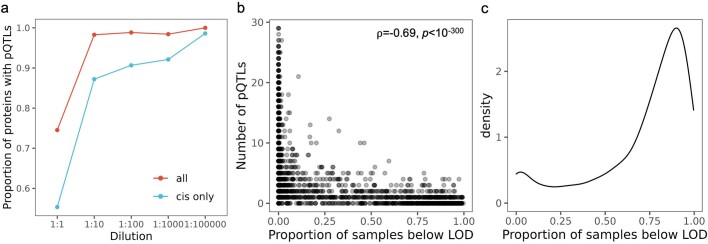
“we found a significant negative relationship between the number of pQTLs and the proportion of samples that were below the LOD (Spearman's ρ = -0.69,P < 10 -300”
§ Plasma proteomic associations with genetics and health in the UK Biobank > Discovery of pQTLs
plainstates an association- Asserted: passes — The authors put it forward as true.
- Checkable: passes — It can be checked against evidence.
- Load-bearing: unclear — It is unclear whether the paper’s conclusions depend on it.
- Based: passes — The paper gives a reason why it holds.
A result the paper reports from its own data — it cites no other source for it, so there is none to check. The quote shows it is in the paper.
In the paper
“with 66.9% of proteins tested (1,954 of 2,922 proteins) having a cis association (within 1 Mb from the gene encoding the protein)”
§ Plasma proteomic associations with genetics and health in the UK Biobank > Discovery of pQTLs
plainstates an association- Asserted: passes — The authors put it forward as true.
- Checkable: passes — It can be checked against evidence.
- Load-bearing: passes — The paper’s conclusions depend on it.
- Based: passes — The paper gives a reason why it holds.
52 more claims
Create a free account to see all 144 claims and to verify the 1 reference still open.
- It may state two separate claims as one. 58
- Probably not a substantial claim. 44
Claims other papers make about this one
Each is checked against this paper’s own text: does it say what the citing paper says it does?
The source backs part of the claim, not all of it — or backs it for a different population, condition or comparison.
In the citing paper
“In a separate array-based GWAS on the UKB-PPP cohort, we tested for the association between common variants (MAF > 0.1%) and 2,922 protein assays, resulting in 14,287 primary genetic associations5.”
From Rare variant associations with plasma protein levels in the UK Biobank (2023) · cites this paper as [5]
Experimental — accuracy not yet measuredThe source backs part of the claim, not all of it — or backs it for a different population, condition or comparison.
In the citing paper
“This pQTL was also CSF specific using Olink (table S5), independent of a subthreshold EGFR pQTL in plasma (rs56380922; R2 = 0.017), and not significant in plasma studies with 10 times our CSF sample size (9–11), implying a highly specific association in neurological contexts.”
From Low overlap of plasma and CSF protein quantitative trait loci affects protein discovery for neurological disease (2026) · cites this paper as [11]
Experimental — accuracy not yet measuredThe cited source says what the claim attributes to it.
In the citing paper
“Key plasma protein databases, such as the UK Biobank Pharma Proteomics Project (UKB-PPP) and deCODE [12,13], offer valuable resources for identifying therapeutic targets and risk factors across various diseases, including cancer [14,15].”
From Identifying novel drug targets for calcific aortic valve disease through Mendelian randomization (2025) · cites this paper as [12]
The cited source says what the claim attributes to it.
In the citing paper
“To date, most pQTLs have been discovered via genome-wide association studies (GWASs), which predominantly focus on common variants3,5–8.”
From Rare variant associations with plasma protein levels in the UK Biobank (2023) · cites this paper as [5]
The cited source says what the claim attributes to it.
In the citing paper
“The effect sizes (β) of nominally significant ExWAS pQTLs (P < 1 × 10⁻⁴) strongly correlated with the GWAS-derived pQTLs5 (r2 = 0.96; Supplementary Fig. 2).”
From Rare variant associations with plasma protein levels in the UK Biobank (2023) · cites this paper as [5]
10 more claims about this paper
Create a free account to see every claim other papers make about this one.
Self-check
Percentages, sums and reported differences re-computed from the paper’s own numbers.
Each contradiction between two passages listed here was confirmed by an independent check.
Rated minor: it would not touch a result — a value no result rests on, a p-value that stays on the same side of the significance level, or a conflict that is clerical, resolved elsewhere in the paper, or outside its own findings.
In the paper
§ Plasma proteomic associations with genetics and health in the UK Biobank > Additional information
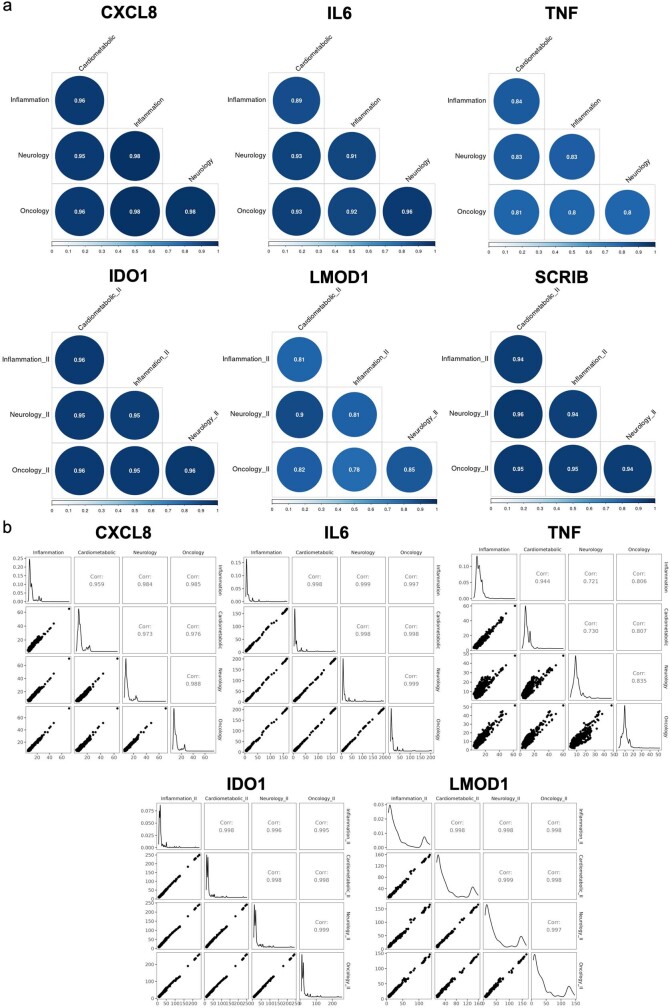
“on three proteins measured across multiple protein panels”
§ Plasma proteomic associations with genetics and health in the UK Biobank > Additional information
“(CXCL8, IL-6, TNF, IDO1, LMOD1, SCRIB).”
Rated minor: it would not touch a result — a value no result rests on, a p-value that stays on the same side of the significance level, or a conflict that is clerical, resolved elsewhere in the paper, or outside its own findings.
In the paper
§ Plasma proteomic associations with genetics and health in the UK Biobank > Discovery of pQTLs
“A total of 1,955 of the 14,287 primary associations were in cis”
§ Plasma proteomic associations with genetics and health in the UK Biobank > Comparisons with previous pQTL studies
“compared with cis pQTLs (27%; 518 out of 1,954).”
Citations
Cites
Regularization Paths for Generalized Linear Models via Coordinate Descent
Friedman, J., Hastie, T., & Tibshirani, R. (2010) · Journal of Statistical Software · doi:10.18637/jss.v033.i01 · Cited by 19,927 · cited 1×
“…eGFR and ABO blood groups (genetic ascertainment of blood groups is described in the ‘ABO blood group and FUT2 secretor status analysis’ section) separately using glmnet (R package v.4.1-4) 57 to tune the lambda.1se parameter with tenfold cross validation for 100 lambdas between 10 −5 and 1,000.”
MethodInfluentialTissue-based map of the human proteome
Uhlén, M., Fagerberg, L., Hallström, B. M., Lindskog, C., Oksvold, P., Mardinoglu, A., Sivertsson, Å., Kampf, C., Sjöstedt, E., Asplund, A., et al. (2015) · Science · doi:10.1126/science.1260419 · Cited by 15,286
Second-generation PLINK: rising to the challenge of larger and richer datasets
Chang, C. C., Chow, C. C., Tellier, L. C., Vattikuti, S., Purcell, S. M., & Lee, J. J. (2015) · Gigascience · doi:10.1186/s13742-015-0047-8 · Cited by 12,709
The mutational constraint spectrum quantified from variation in 141,456 humans
Karczewski, K. J., Francioli, L. C., Tiao, G., Cummings, B. B., Alföldi, J., Wang, Q., Collins, R. L., Laricchia, K. M., Ganna, A., Birnbaum, D. P., et al. (2020) · Nature · doi:10.1038/s41586-020-2308-7 · Cited by 9,434 · cited 3×
“%) and is nearly absent in EUR and other ances-tries 28 .”
BackgroundInfluentialSelf-citationThe UK Biobank resource with deep phenotyping and genomic data
Bycroft, C., Freeman, C., Petkova, D., Band, G., Elliott, L. T., Sharp, K., Motyer, A., Vukcevic, D., Delaneau, O., O’Connell, J., et al. (2018) · Nature · doi:10.1038/s41586-018-0579-z · Cited by 8,876 · cited 2×
“The open-access framework 24 , deep phenotypic characterization 7 and long-term development 9,10 of population studies like the UKB offer a unique opportunity to expand proteogenomics to a massive scale, broaden research use of high-throughput proteomic data, build more extensive pQTL databases,…”
BackgroundMethodSelf-citationThe MR-Base platform supports systematic causal inference across the human phenome
Hemani, G., Zheng, J., Elsworth, B., Wade, K. H., Haberland, V., Baird, D., Laurin, C., Burgess, S., Bowden, J., Langdon, R., et al. (2018) · eLife · doi:10.7554/elife.34408 · Cited by 7,959 · cited 1×
“Data for these outcomes were extracted from the OpenGWAS project 72,73 .”
MethodSelf-citationLD Score regression distinguishes confounding from polygenicity in genome-wide association studies
Schizophrenia Working Group of the Psychiatric Genomics Consortium, Bulik-Sullivan, B. K., Loh, P.-R., Finucane, H. K., Ripke, S., Yang, J., Patterson, N., Daly, M. J., Price, A. L., & Neale, B. M. (2015) · Nature Genetics · doi:10.1038/ng.3211 · Cited by 5,559 · cited 1×
“The polygenic component, which mostly likely satisfies the polygenic model of small genetic contributions across the genome, was estimated using LD-score regression 62 .”
MethodThe GTEx Consortium atlas of genetic regulatory effects across human tissues
The GTEx Consortium, Aguet, F., Anand, S., Ardlie, K. G., Gabriel, S., Getz, G. A., Graubert, A., Hadley, K., Handsaker, R. E., Huang, K. H., et al. (2020) · Science · doi:10.1126/science.aaz1776 · Cited by 5,547
Self-citationAnderson, N. L., & Anderson, N. G. (2002) · Molecular & Cellular Proteomics · doi:10.1074/mcp.r200007-mcp200 · Cited by 4,414
Estimating glomerular filtration rate from serum creatinine and cystatin C
Inker, L. A., Schmid, C. H., Tighiouart, H., Eckfeldt, J. H., Feldman, H. I., Greene, T., Kusek, J. W., Manzi, J., Van Lente, F., Zhang, Y. L., et al. (2012) · New England Journal of Medicine · doi:10.1056/nejmoa1114248 · Cited by 4,102
Cited by
Items 1,101–1,200 of 1,846
Increased signaling of the Neanderthal growth hormone receptor
Kanis, P., Berreiter, M., Sieme, D., Wootton, O., Ju, X.-C., Holzwart, N. E., Hu, D. Z., Tadaka, S., Taira, M., Kinoshita, K., et al. (2026) · Current Biology · doi:10.1016/j.cub.2026.07.025 · Cited by 3
Valine modulates Alzheimer’s disease risk in APOE ε4 carriers: evidence from two cohorts
Yang, Z.-L., Zhang, C., Tang, S., Zhang, X.-Y., Huang, L.-Y., Tan, L., & Xu, W. (2026) · Journal of Advanced Research · doi:10.1016/j.jare.2026.08.014 · Cited by 1
Prokunina‐Olsson, L., Flórez-Vargas, O., Levin, M. G., Dutta, D., Breeze, C. E., Hurwitz, L. M., Yan, W., Lamy, P., Papenberg, B. W., Wang, K., et al. (2026) · Nature Communications · doi:10.1038/s41467-026-76157-4 · Cited by 2
“5-TOLLIP ), We also evaluated the 70 BC loci for evidence of in fl uencing circulating protein levels via quantitative trait loci (pQTLs) using data from the UKB – Pharma Proteomics Project (UKB-PPP) 41 , which quanti fi ed 2940 plasma proteins in 34,557 individuals of European ancestry.”
Yang, W., Chen, Z., Zhang, Y., Peng, C., & Chen, B. (2026) · Frontiers in Nutrition · doi:10.3389/fnut.2026.1893517 · Cited by 1
Dong, L., Xie, J., Tao, M., Liu, S., Lu, Y., Wu, T., Geng, J., Chen, Q., Zhao, X., Zhao, J., et al. (2026) · Journal of Clinical Investigation · doi:10.1172/jci201848 · Cited by 1
Proteogenomics in human populations
Zhai, R., Mälarstig, A., & Shen, X. (2026) · Nature Reviews Genetics · doi:10.1038/s41576-026-00998-4 · Cited by 2
Cheon, P., McParland, J. T., Doherty, S., Rikhi, R. R., Petek, B. J., Khan, S., Chew, N., Sharma, G. V., Spitz, J. A., Kalra, D. K., et al. (2026) · Progress in Cardiovascular Diseases · doi:10.1016/j.pcad.2026.08.008 · Cited by 2
Protein Biomarkers in Risk and Prognosis of Amyotrophic Lateral Sclerosis
Pan, L., Hou, C., Seitz, C., Ingre, C., Hedman, Å. K., Laffita, J., Vu, T. N., Pawitan, Y., Ullgren, A., Yazdani, S., et al. (2026) · European Journal of Neurology · doi:10.1111/ene.70741 · Cited by 2
Self-citationProtein mediators of chronic kidney disease in Type 2 diabetes: A mendelian randomization study
Liang, K. Y. H., Zheng, T. M., Tan, D., Sasako, T., Ilboudo, Y., Chen, Y., Butler‐Laporte, G., Yoshiji, S., & Richards, J. B. (2026) · PLoS Medicine · doi:10.1371/journal.pmed.1004802 · Cited by 1
“We obtained phase 2 release of the UKB-PPP GWAS summary statistics for 2,923 proteins measured in 34,557 individuals from the original publication [16].”
InfluentialFibronectin mediates APOE4-driven blood–brain barrier dysfunction in Alzheimer’s disease
Bhattarai, P., Yılmaz, E., Cakir, E. Ö., Tayran, H., Haq, I., Murphy, D., Keller, J. N., Grand, Q. L., Eschbach, J., Çelikkaya, H., et al. (2026) · Nature Aging · doi:10.1038/s43587-026-01204-0 · Cited by 4
“The genetic association of FN1 with vascular traits, including stroke and small vessel disease 87 (Supplementary Tables 2–4), further supports its role in cerebrovascular integrity.”
Neamțu, A.-A., Barna, R. A., Vigdorovits, A., Hotinceanu, I. A., Muresan, M. M., Paşcalău, A. V., & Pop, O.-L. (2026) · Cancers · doi:10.3390/cancers18182974 · Cited by 2
Blood proteomics of menopause map to brain aging and dementia risk
Alexander, M. W., Rabin, J. S., Caunca, M. R., Iadipaolo, A. S., Cornelis, L., Warrier, R., Walker, K. A., Miolane, N., Bot, V. A., Wood, B., et al. (2026) · Nature Medicine · doi:10.1038/s41591-026-04648-4 · Cited by 6
Hong, X., Zhang, L., Zuber, V., Zhuang, Z., Cronjé, H. T., Burgess, S., & Gill, D. (2026) · EBioMedicine · doi:10.1016/j.ebiom.2026.106485 · Cited by 1
Hamed, O., Reitz, C. J., Kuzmanov, U., Gramolini, S., Hu, M., Halpern, J., Billia, F., & Gramolini, A. O. (2026) · Nature Cardiovascular Research · doi:10.1038/s44161-026-00880-w · Cited by 3
Li, X. (2023) · XRDS Crossroads The ACM Magazine for Students · doi:10.1145/3637460 · Cited by 1
Sex-specific associations of the plasma proteome with incident coronary artery disease
Sier, V. Q., Димитрова, К., Peters, E. H. A. B., van der Loo, W. P. M., van Dijk, K. W., van Heemst, D., Bax, W. H., Quax, P. H. A., Pasterkamp, G., Mokrý, M., et al. (2026) · Cardiovascular Research · doi:10.1093/cvr/cvag186 · Cited by 2
The diabetic myocardial transcriptome reveals Erbb3 as a novel biomarker of incident heart failure
Conning-Rowland, M. S., Giannoudi, M., Drozd, M., Brown, O., Yuldasheva, N. Y., Cheng, C. W., Meakin, P. J., Straw, S., Gierula, J., Ajjan, R., et al. (2024) · Cardiovascular Research · doi:10.1093/cvr/cvae088.079 · Cited by 1
Zammarchi, G., & Pisanu, C. (2024) · Computational Statistics · doi:10.1007/s00180-024-01551-9 · Cited by 1
“…approval was obtained by the original GWAS studies and quality control procedures, including imputation, meta-analysis of different cohorts, and adjustment for population stratification, were performed by the original studies (Wang et al. 2022; Said et al. 2022; Sun et al. 2023; Pulit et al. 2019).”
Hazelwood, E., Manzano, C. L., Vincent, E. E., Albanes, D., Bishop, D. T., Marchand, L. L., Ulrich, C. M., Peters, U., Murphy, G. A., Samadder, N. J., et al. (2024) · Cancer Epidemiology Biomarkers & Prevention · doi:10.1158/1055-9965.epi-24-0926 · Cited by 1
Why PNI scientists need to engage in exploratory hypothesis-generating biomarker studies
Karshikoff, B. (2024) · Brain Behavior & Immunity - Health · doi:10.1016/j.bbih.2024.100904 · Cited by 3
Xie, W., Wan, W.-T., Liu, S.-Y., Wang, J., Chen, C., Sun, X., Liu, X.-Y., & Yang, Q. (2024) · Medicine · doi:10.1097/md.0000000000040934 · Cited by 1
“[19] Scoliosis data were obtained from the FinnGen Consortium R10, to ensure population matching with the exposure data and to minimize population stratification bias.”
Self-citationDu, Z., Wang, Y., Wang, Y., Li, X., Zheng, Y., Wu, D., Qu, W.-M., Liao, Z., & Zou, W. (2024) · Pancreatology · doi:10.1016/j.pan.2024.12.016 · Cited by 2
Yue, Q., Li, X., Wan, X., Lin, X., Li, Y., Zhang, M., & Xu, S. (2025) · Cancer Medicine · doi:10.1002/cam4.70570 · Cited by 1
Kim, K., Han, M., & Lee, D. (2025) · Computational and Structural Biotechnology Journal · doi:10.1016/j.csbj.2025.01.003 · Cited by 1
Gan, L., Wang, C., & Liu, X. (2025) · BMC Medicine · doi:10.1186/s12916-024-03803-3 · Cited by 1
“By identifying specific proteins as potential diagnostic, prognostic, and therapeutic indicators, PPR opens new avenues for the early diagnosis, treatment, and prevention of diseases [4].”
SysNatMed: rational natural medicine discovery by systems genetics
Ye, C., Leng, J., Jin, M., Meng, Y.-D., Zhao, Z., Meng, F., Xu, X., Fan, S., Luo, H., & Meng, X. (2025) · Frontiers in Pharmacology · doi:10.3389/fphar.2025.1496061 · Cited by 1
“GWAS summary statistics of pQTLs were collected from two sources, the UKB-PPP and the deCODE pQTL (Sun et al., 2023; Ferkingstad et al., 2021).”
Zhang, S., Ren, J., Liu, B., Wang, M., Huang, L., Mao, Y., Xie, X., & Qian, Y. (2025) · Clinical Traditional Medicine and Pharmacology · doi:10.1016/j.ctmp.2025.200205 · Cited by 1
Cross-ancestry genome-wide association study identifies new susceptibility genes for preeclampsia
Shan, Y., Hu, H. W., & Chu, Y. (2025) · BMC Pregnancy and Childbirth · doi:10.1186/s12884-025-07534-y · Cited by 2
“…on 2,923 proteins from 54,219 UKB participants; deCODE Genetics, which includes 4,907 plasma proteins from 35,559 Icelandic participants; and the Atherosclerosis Risk in Communities (ARIC) study, which includes 4,483 plasma proteins from 7,213 individuals of European American descent [18–20].”
Potential value of B7-H3 in sepsis diagnosis and prognosis: A Mendelian randomization study.
Guo, M., & He, Z. (2024) · PubMed Central · doi:10.11817/j.issn.1672-7347.2024.240139 · Cited by 1
“…应 [12] ,这可能是脓毒症的关键发病机制之一。研究 [13] 发现:与健康个体相比,脓毒症患者血浆可溶性 B7-H3 的机会,效力等同于随机对照试验 [14-16] 种蛋白质水平的遗传关联,血浆蛋白 B7-H3 测定所 纳入的有效样本量为 33 649 [18] 。 脓毒症 GWAS 数据包括脓毒症整体、脓毒症 28 d 内死亡、重症脓毒症及重症脓毒症 28 d 内死亡 4 个部 分,均来源于 IEU Open GWAS 数据库。依据国际疾 病分类第 10 版标准 [19] 关而与结局不相关的 SNPs 作为 IVs [20] ;当 B7-H3 为…”
He, R., Ren, J., Malakhov, M. M., & Pan, W. (2025) · PLoS Genetics · doi:10.1371/journal.pgen.1011659 · Cited by 1
“Analogously, we also trained prediction models for protein expression using data from the UKB Pharma Proteomics Project [34,35].”
A Review of Clinical Biomarker Insights: Advances in Diagnosis and Prognosis of Early Alzheimer
Rajagopalan, R., Hariharan, S., Akshaya, N. R., & Senthamarai, R. (2025) · Global Journal of Medical Pharmaceutical and Biomedical Update · doi:10.25259/gjmpbu_38_2024 · Cited by 1
Titova, O. E., Yuan, S., & Larsson, S. C. (2025) · European Heart Journal · doi:10.1093/eurheartj/ehaf187 · Cited by 1
Lehrer, S. P., & Rheinstein, P. H. (2025) · American Journal of Clinical Oncology · doi:10.1097/coc.0000000000001203 · Cited by 1
Zou, X., Tang, Y., & Zhou, C. S. (2025) · World Neurosurgery · doi:10.1016/j.wneu.2025.124015 · Cited by 2
Bao, W., Bi, H., Chao, L., Jiang, Y., Yu, X., Ruan, F., Wu, D., Chen, Z., & Le, K. (2025) · Journal of Alzheimer s Disease · doi:10.1177/13872877251333811 · Cited by 1
“31 We selected SNPs within 2 Mb of the gene encoding, strongly associated with the 279 DDR-related plasma protein levels in UKB-PPP.”
InfluentialXu, Y., Xiong, J., Wu, Y., Wu, X., Shi, H. Y., & Xu, S. (2025) · Molecular Neurobiology · doi:10.1007/s12035-025-04977-4 · Cited by 1
Sun, S., Li, M., Song, J., & Zhong, D. (2025) · Journal of Inflammation Research · doi:10.2147/jir.s507515 · Cited by 2
“15 In this paper, we analyzed the expression levels of CSF inflammation-related proteins in patients with GBS at the peak of the disease and in control patients using Olink proteomics technology.”
Mind the meal and the missingness: Cautionary notes on multi-omics subtyping of MetALD in UK Biobank
Huang, K. (2025) · Journal of Hepatology · doi:10.1016/j.jhep.2025.06.008 · Cited by 1
Yang, Y., Lorincz‐Comi, N. J., & Zhu, X. (2025) · Nature Communications · doi:10.1038/s41467-025-61423-8 · Cited by 6
Chen, X., Wu, H., Wang, L., Guo, Y., & Miao, X. (2025) · Analytical Biochemistry · doi:10.1016/j.ab.2025.115946 · Cited by 1
Xiong, Y., Yang, X., & Jie, J. (2025) · Journal of Affective Disorders · doi:10.1016/j.jad.2025.120047 · Cited by 1
Regulatory genomics at biobank scales
Montgomery, S. B. (2025) · Nature Reviews Genetics · doi:10.1038/s41576-025-00879-2 · Cited by 1
“In recent years, studies such as the UK Biobank have unlocked the potential of omics at biobank scales by conducting proteomics in 54,000 individuals, a scale previously unimaginable for molecular QTL studies 4 .”
Xu, X., Huang, F., Ying, J., Zhang, T., & Huang, H. (2025) · Medicine · doi:10.1097/md.0000000000044742 · Cited by 1
“[13] A total of 2923 unique proteins in 54,219 individuals were analyzed using the Olink platform.”
Peng, L., Peng, H., Wu, N., Wang, X., Li, H., & Ding, X. (2025) · Neurosurgical Review · doi:10.1007/s10143-025-03870-x · Cited by 1
Munroe, P. B., Young, W. J., & Ramírez, J. (2025) · European Heart Journal · doi:10.1093/eurheartj/ehaf530 · Cited by 1
Wang, H., Zhou, W., Huang, Y., Li, Y., & Zhang, K. (2025) · Clinical Proteomics · doi:10.1186/s12014-025-09558-0 · Cited by 1
“The first was the UKB-PPP, which includes 2,923 plasma proteins measured in 54,219 participants (aged 40–69 years; approximately equal male–female distribution) using the Olink Explore 3072 platform—an affinity-based targeted proteomics platform [13].”
Gu, S., Zeng, S.-L., Zhang, W., Shen, C., Yuan, C., Song, Y., & Ye, Q. (2025) · Journal of Genetic Engineering and Biotechnology · doi:10.1016/j.jgeb.2025.100608 · Cited by 2
“Large-scale integrative omics analyses, especially those leveraging genome-wide association studies (GWAS) and quantitative trait loci (QTL) mapping, enable a deeper investigation of potential molecular mechanisms for complex disease 10 – 14 .”
Toward Responsible and Sustainable Data Sharing in Large-scale Cohort-based Genomic Research
Song, J., Chen, W., Huang, J., & Song, H. (2025) · Genomics Proteomics & Bioinformatics · doi:10.1093/gpbjnl/qzaf100 · Cited by 1
Schuermans, A., Verstraete, A., Lammi, V., Nakanishi, T., Ardissino, M., den Eynde, J. V., Sun, B. B., Georgakis, M. K., Guillén‐Guío, B., Wain, L. V., et al. (2025) · Nature Cardiovascular Research · doi:10.1038/s44161-025-00749-4 · Cited by 5
“A total of 54,306 UK Biobank participants who donated blood samples at baseline or follow-up study visits were selected for proteomic profiling and were included in the UKB-PPP cohort.”
InfluentialSelf-citationJiang, X., Zhang, M. J., Zhang, Y., Durvasula, A., Inouye, M., Holmes, C., Price, A. L., & McVean, G. (2022) · medRxiv · doi:10.1101/2022.10.23.22281420 · Cited by 1
Yao, M., Miller, G. W., Vardarajan, B. N., Baccarelli, A., Guo, Z., & Liu, Z. (2023) · medRxiv · doi:10.1101/2023.02.20.23286200 · Cited by 1
Zhao, Y., Chukanova, M., Kentistou, K. A., Fairhurst-Hunter, Z., Siegert, A. M., Jia, R., Dowsett, G. K. C., Gardner, E. J., Day, F. R., Kaisinger, L. R., et al. (2023) · medRxiv · doi:10.1101/2023.06.14.23291368 · Cited by 1
Self-citationSobczyk, M. K., & Gaunt, T. R. (2023) · medRxiv · doi:10.1101/2023.10.02.23296427 · Cited by 1
Applying Machine Learning on UK Biobank biomarker data empowers case-control discovery yieldPreprint
Garg, M., Karpinski, M., Matelska, D., Middleton, L., Mitchell, J., O'Neill, A., Wang, Q.-L., Harper, A. R., Dhindsa, R., Petrovski, S., et al. (2023) · medRxiv · doi:10.1101/2023.10.10.23296832
Self-citationTobacco use: a smoking gun for IPF?
Hall, I. P. (2023) · Thorax · doi:10.1136/thorax-2023-220483 · Cited by 3
Zheng, J., Smith, G. D., & Tobias, J. H. (2023) · Arthritis & Rheumatology · doi:10.1002/art.42753 · Cited by 1
Kim, J. O., Lee, S. Y., Kim, E. G., Lee, E., Lee, J., & Shim, Y. J. (2023) · Research Square · doi:10.21203/rs.3.rs-3531113/v1 · Cited by 1
McKeigue, P., Iakovliev, A., Spiliopoulou, A., Erabadda, B., & Colhoun, H. M. (2023) · medRxiv · doi:10.1101/2023.12.15.23300008 · Cited by 1
A Mendelian randomization study identifies proteins involved in neurodegenerative diseasesPreprint
Belbasis, L., Morris, S., van Duijn, C. M., Bennett, D., & Walters, R. G. (2024) · medRxiv · doi:10.1101/2024.02.24.24303314 · Cited by 1
APOL1 variants affect APOL1 plasma protein concentration: a UK Biobank studyPreprint
Adamson, W. E., Noyes, H. A., Ogunsola, J. O., Parekh, R. S., Cooper, A., & MacLeod, A. (2024) · medRxiv · doi:10.1101/2024.02.28.24303461 · Cited by 1
Loesch, D. P., Garg, M., Matelska, D., Vitsios, D., Jiang, X., Ritchie, S. C., Sun, B. B., Runz, H., Whelan, C. D., Holman, R. R., et al. (2024) · medRxiv · doi:10.1101/2024.03.15.24304200 · Cited by 1
Self-citationOkamoto, J., Yin, X., Ryan, B., Chiou, J., Luca, F., Piqué-Regi, R., Im, H. K., Morrison, J., Burant, C., Fauman, E. B., et al. (2024) · bioRxiv (Cold Spring Harbor Laboratory) · doi:10.1101/2024.03.28.587202 · Cited by 1
“Recent efforts to address this problem have resulted in the emergence of genome-scale molecular quantitative trait loci (QTL) annotations [3, 4] and the development of statistical meth-ods bridging genetic variants with molecular phenotypes of gene candidates and complex traits [5, 6, 7, 8, 9, 10,…”
BackgroundMethodSelf-citationZhu, Y., Wu, Z., Wang, Y., Cui, Z., Liu, F., & Hu, J. (2024) · medRxiv · doi:10.1101/2024.04.08.24305481 · Cited by 2
Rouskas, K., Bocher, O., Simistiras, A., Emmanouil, C., Mantas, P., Skoulakis, A., Park, Y. C., Dimopoulos, A. C., Glentis, S., Kastenmüller, G., et al. (2024) · medRxiv · doi:10.1101/2024.04.19.24306061 · Cited by 1
Self-citationSchuermans, A., Verstraete, A., Lammi, V., Nakanishi, T., Ardissino, M., den Eynde, J. V., Sun, B. B., Georgakis, M. K., Guillen-Guio, B., Wain, L. V., et al. (2024) · medRxiv · doi:10.1101/2024.05.17.24307553 · Cited by 1
Self-citationHu, D., Jiang, J., Zhang, Q., & Lin, Z. (2024) · medRxiv · doi:10.1101/2024.06.24.24309385 · Cited by 1
Impact of Clonal Hematopoiesis on the Carcinogenic Process of Multiple MyelomaPreprint
Koh, Y., Park, C., Cho, G., Ryu, G., Park, J.-M., Yoon, H., Oh, Y. M., Lee, C., An, H., Sun, C.-H., et al. (2024) · Research Square · doi:10.21203/rs.3.rs-4672454/v1 · Cited by 1
Cruchaga, C., Yang, C., Gorijala, P., Timsina, J., Wang, L., Liu, M., Wang, C., Brock, W., Wang, Y., & Sung, Y. J. (2024) · Research Square · doi:10.21203/rs.3.rs-3617016/v1 · Cited by 1
“Consistent with previous studies 20,15,21 , we observed that the absolute effect size was negatively correlated with the minor allele frequency (Figure S4A).”
ResultJiang, X., Hu, F., Zou, X. Z., Abbasi, A., Deevi, S. V. V., Atanur, S. S., O’Neill, A., Harrow, J., Fabre, M. A., Wang, Q., et al. (2024) · medRxiv · doi:10.1101/2024.07.23.24310892 · Cited by 1
Self-citationJulkunen, H., & Rousu, J. (2024) · medRxiv · doi:10.1101/2024.08.07.24311604 · Cited by 1
“Recent studies in UK Biobank have demonstrated the strong promise proteomics data in predicting various diseases [32, 33, 34].”
BackgroundGenetics of Cardiac Aging Implicate Organ-Specific VariationPreprint
Brundage, J., Barrios, J. P., Tison, G. H., & Pirruccello, J. P. (2024) · medRxiv · doi:10.1101/2024.08.02.24310874 · Cited by 2
Davis, C. N., Toikumo, S., Hatoum, A. S., Khan, Y., Pham, B. K., Pakala, S. R., Feuer, K. L., Gelernter, J. E., Sanchez‐Roige, S., Kember, R. L., et al. (2024) · Research Square · doi:10.21203/rs.3.rs-4823644/v1 · Cited by 1
Ye, C., Xia, L., Gong, R., Chang, J., Sun, Q., Xu, J., & Li, F. (2024) · Clinical & Translational Oncology · doi:10.1007/s12094-024-03680-5 · Cited by 1
Attracting Computational Researchers to Proteomics
Nitz, A. A., Mongane, A. R., Squires, L., & Payne, S. (2024) · Journal of the American Society for Mass Spectrometry · doi:10.1021/jasms.4c00185 · Cited by 1
Imputed DNA methylation outperforms measured loci associations with smoking and chronological agePreprint
Richmond, A., Mur, J., Harris, S. E., Corley, J., Elliott, H. R., Foley, C. N., Hannon, E. J., Kuncheva, Z., Min, J. L., Moqri, M., et al. (2024) · bioRxiv (Cold Spring Harbor Laboratory) · doi:10.1101/2024.09.05.611501 · Cited by 1
Self-citationComprehensive multi-omics profiling of a healthy human cohortPreprint
de Visser, C., Niehues, A., Najdekr, L., Tóth, R., Nazarov, P. V., Vrbková, J., Stanková, J., Ekberg, S., Conde, E., Ghimire, B. R., et al. (2024) · bioRxiv (Cold Spring Harbor Laboratory) · doi:10.1101/2024.11.07.622407 · Cited by 3
“…multi-omics cohort studies, Swedish CArdioPulmonary bioImage Study (SCAPIS) in Sweden 48–50 , Biobanking and Biomolecular Resources Research Infrastructure - Netherlands (BBMRI-NL) in the Netherlands 51,52 , integrative Personal Omics Profiling (iPOP) in the USA 53,54 and the UK Biobank 55,56 .”
Holleman, A. M., Deaton, A. M., Hoffing, R. A., Krohn, L., LoGerfo, P. J., Nioi, P., Plekan, M. E., Serrano, S. A., Ticau, S., Walshe, T. E., et al. (2024) · medRxiv · doi:10.1101/2024.11.13.24317290 · Cited by 1
Self-citationWu, S., Smith, A., Huang, J., Otto, G., Ko, Y.-H., Yarmolinsky, J., Gill, D., Rohatgi, A. K., Tzoulaki, I., & Meena, D. (2024) · medRxiv · doi:10.1101/2024.12.18.24319223 · Cited by 1
Shen, J., Huang, Y., Wu, M., Yan, M., Sun, J., Chen, H., Xu, X., Song, P., Yao, P., Xu, Q., et al. (2025) · medRxiv · doi:10.1101/2025.01.14.25320538 · Cited by 2
Suarez-Pajes, E., Shrine, N. R. G., Tosco-Herrera, E., Hernández-Beeftink, T., Rubio‐Rodríguez, L. A., García-Laorden, M. I., Corrales, A., Prieto-González, M., Rodríguez, A., Carriedo, D., et al. (2025) · medRxiv · doi:10.1101/2025.01.30.25321087 · Cited by 2
Yang, W. Q., Liu, C., Li, Z., & Cui, M. (2025) · Research Square · doi:10.21203/rs.3.rs-5510112/v1 · Cited by 1
Chen, L., Gu, Y., Chen, Y., Yu, W., Zhou, Y., Rong, Z., & Pang, X. (2025) · eLife · doi:10.7554/elife.101584 · Cited by 1
Liu, S., Qian, X., Wu, Y., Zheng, Z., Goddard, M. E., Yang, J., Visscher, P. M., & Zeng, J. (2025) · medRxiv · doi:10.1101/2025.05.24.25328265 · Cited by 1
Selber‐Hnatiw, S., Trajanoska, K., Pelletier, J., Su, C., McClelland, P., Taliun, D., Yoshiji, S., Mooser, V., Bhérer, C., & Zhou, S. (2025) · medRxiv · doi:10.1101/2025.06.10.25329388 · Cited by 1
Hartley, A. E., Sukhavasi, K., Hu, S.-L., Traylor, M., González-Ramírez, M., Hanghøj, K. E., Talukdar, H., Ruusalepp, A., Björkegren, E., Björkegren, J., et al. (2025) · bioRxiv · doi:10.1101/2025.06.30.662294 · Cited by 1
“Notably, pQTLs were identified for 2,415 proteins measured in ~50,000 UK Biobank participants (7).”
Self-citationUnsupervised Variant Clustering Identifies Genetic Subtypes of DiseasePreprint
Mizikovsky, D., Wray, N. R., Shah, S. H., & Palpant, N. J. (2025) · bioRxiv (Cold Spring Harbor Laboratory) · doi:10.1101/2025.07.01.662666 · Cited by 1
Granade, M. E., Tveter, K. M., Kim, H. I., Yesian, A. R., Fowler, J., Ahn, Y., Culver, J. A., Neale, K. T., Amar, N., Mazzocca, M., et al. (2025) · bioRxiv (Cold Spring Harbor Laboratory) · doi:10.1101/2025.08.08.669356 · Cited by 2
Zanetti, D., Koprulu, M., Grosso, F., Zhernakova, D. V., Crobu, F., & Sanna, S. (2025) · medRxiv · doi:10.1101/2025.09.16.25335948 · Cited by 1
Lin, C., Gu, Y., Yuke, C., Wei, Y., Zhou, Y. F., Zhuona, R., & Pang, X. (2025) · eLife · doi:10.7554/elife.101584.2 · Cited by 1
Gong, W., Lan, F., Ren, P., Hu, H., Su, W., Hu, H., Li, Q.-Y., Hou, X., Huang, L.-Y., Hao, Q., et al. (2025) · medRxiv · doi:10.64898/2025.12.19.25342615 · Cited by 1
Dzieciątkowska, M., Issaian, A., Keele, G. R., Saviola, A. J., Stephenson, D., Bevers, S. G., Reisz, J. A., Haiman, Z. B., Nemkov, T. G., Fang, F., et al. (2026) · bioRxiv (Cold Spring Harbor Laboratory) · doi:10.64898/2026.03.07.710284 · Cited by 2
Sanna, S., Zhernakova, D. V., Grosso, F., Chillotti, F., Busonero, F., Camarda, S., Viscito, M., Lenarduzzi, S., Incollu, S., Vriz, G. B., et al. (2026) · Research Square · doi:10.21203/rs.3.rs-9148671/v1 · Cited by 1
Jacobsen, A., Quednow, B. B., & Bavato, F. (2026) · medRxiv · doi:10.64898/2026.04.08.26350391 · Cited by 1
Proteome-aware organ proxy aging clocksPreprint
Xu, H., Chen, J., Chen, D., Mao, K., & Han, J. J. (2026) · bioRxiv (Cold Spring Harbor Laboratory) · doi:10.64898/2026.04.24.720503 · Cited by 1
Plasma titration provides a physical ruler for cross-platform proteomicsPreprint
Liu, Y., Wang, H., Zhang, Y., Lu, R., Xu, W., Hou, W., Zhu, Y., Li, X., Chen, Q., Gao, Y., et al. (2026) · bioRxiv (Cold Spring Harbor Laboratory) · doi:10.64898/2026.08.09.740864 · Cited by 1
Connecting proteomics and genomics to identify causal biomarkers specific for aortic valve stenosis
Zamani, P., Houessou, U., Manikpurage, H. D., Dahmene, M., Li, Z., Gaudreault, N., Clavel, M.-A., Pibarot, P., Mathieu, P., Arsenault, B. J., et al. (2025) · medRxiv · doi:10.1101/2025.11.27.25339923
Biddanda, A., de Arce, K. P., Eze-Echesi, G., Nwuba, C., Ibrahim, Y., Oyedele, O., Joshi, E., Alalade, B. A., Ajayi, O., Nwatu, C. B., et al. (2022) · bioRxiv (Cold Spring Harbor Laboratory) · doi:10.1101/2022.12.09.519773
Proteomic analysis of 92 circulating proteins and their effects in cardiometabolic diseasesPreprint
Carland, C., Png, G., Mälarstig, A., Kho, P. F., Gustafsson, S., Michaëlsson, K., Lind, L., Tsafantakis, E., Karaleftheri, M., Dedoussis, G. V., et al. (2023) · Research Square · doi:10.21203/rs.3.rs-2621829/v1
Self-citationEvaluation of Circulating Plasma Proteins in Breast Cancer: A Mendelian Randomization AnalysisPreprint
Mälarstig, A., Grassman, F., Dahl, L., Dimitriou, M., McLeod, D., Gabrielson, M., Smith‐Byrne, K., Thomas, C. E., Huang, T.-H., Forsberg, S. K. G., et al. (2023) · Research Square · doi:10.21203/rs.3.rs-2749047/v1
Self-citationGoudswaard, L. J., Smith, M., Hughes, D. A., Taylor, R., Lean, M. E. J., Sattar, N. A., Welsh, P. I., McConnachie, A., NIHR By-Band-Sleeve Trial Management Group, Suhre, K., et al. (2023) · Research Square · doi:10.21203/rs.3.rs-3145083/v1
Self-citation
Metadata
- Authors
- Sun, B. B., Chiou, J., Traylor, M., Benner, C., Hsu, Y.-H., Richardson, T. G., Surendran, P., Mahajan, A., Robins, C., Vasquez-Grinnell, S. G., Hou, L., Kvikstad, E. M., Burren, O. S., Davitte, J., Ferber, K. L., Gillies, C. E., Hedman, Å. K., Hu, S., Lin, T., Mikkilineni, R., Pendergrass, R. K., Pickering, C., Prins, B., Baird, D., Chen, C.-Y., Ward, L. D., Deaton, A. M., Welsh, S., Willis, C. M., Lehner, N., Arnold, M., Wörheide, M. A., Suhre, K., Kastenmüller, G., Sethi, A., Cule, M., Raj, A., Genetics, A. H., Initiative, A. G., Biogen Biobank Team, Squibb, B. M., Genetics, G. H., Sciences, G. G., Biology, P. I., Sciences, P. A. O. J. D., Regeneron Genetics Center, Kang, H. M., Burkitt-Gray, L., Melamud, E., Black, M. H., Fauman, E. B., Howson, J. M. M., Kang, H. M., McCarthy, M. I., Nioi, P., Petrovski, S., Scott, R. A., Smith, E. N., Szalma, S., Waterworth, D. M., Mitnaul, L. J., Szustakowski, J. D., Gibson, B. W., Miller, M. R., & Whelan, C. D.
- Affiliations
- Biogen (United States) (US)
- Pfizer (United States) (US)
- Genentech (US)
- Amgen (United States) (US)
- GlaxoSmithKline (United Kingdom) (GB)
- GlaxoSmithKline (United States) (US)
- Janssen Research & Development (United States) (US)
- Bristol-Myers Squibb (United States) (US)
- AstraZeneca (United Kingdom) (GB)
- Regeneron (United States) (US)
- Pfizer (Sweden) (SE)
- Takeda (United States) (US)
- UK Biobank (GB)
- Alnylam Pharmaceuticals (United States) (US)
- Helmholtz Munich (DE)
- Duke University (US)
- Weill Cornell Medical College in Qatar (QA)
- Calico Life Sciences (US)
- Corresponding author
- Sun, Benjamin B.
- Whelan, Christopher D.
- ORCID
- Sun, Benjamin B.
- Chiou, Joshua
- Traylor, Matthew
- Benner, Christian
- Hsu, Yi-Hsiang
- Richardson, Tom G.
- Surendran, Praveen
- Mahajan, Anubha
- Robins, Chloe
- Hou, Liping
- Kvikstad, Erika M.
- Burren, Oliver S.
- Davitte, Jonathan
- Ferber, Kyle L.
- Gillies, Christopher E.
- Hedman, Åsa K.
- Hu, Sile
- Lin, Tinchi
- Mikkilineni, Rajesh
- Prins, Bram
- Baird, Denis
- Chen, Chia-Yen
- Ward, Lucas D.
- Deaton, Aimee M.
- Welsh, Samantha
- Willis, Carissa M.
- Arnold, Matthias
- Wörheide, Maria A.
- Suhre, Karsten
- Kastenmüller, Gabi
- Sethi, Anurag
- Cule, Madeleine
- Raj, Anil
- Burkitt-Gray, Lucy
- Melamud, Eugene
- Black, Mary Helen
- Fauman, Eric B.
- Howson, Joanna M. M.
- Kang, Hyun Min
- McCarthy, Mark I.
- Nioi, Paul
- Petrovski, Slavé
- Scott, Robert A.
- Smith, Erin N.
- Szalma, Sándor
- Waterworth, Dawn M.
- Szustakowski, Joseph D.
- Gibson, Bradford W.
- Miller, Melissa R.
- Whelan, Christopher D.
- Venue
- Nature
- Published
- 2023-10-04
- Volume
- 622
- Issue
- 7982
- Pages
- 329-338
- ISSN
- 0028-0836 (ISSN-L)
- 1476-4687
- PMC
- PMC10567551
- OpenAlex
- W4387344289
- Semantic Scholar
- 9a677c53b58ffd1d81817d8c3334723edca321fd
- Cited by
- 1,880
- References
- 107
- Citations by year
- 2026: 805 · 2025: 703 · 2024: 313 · 2023: 54
- FWCI
- 233.27
- Type
- journal article
- Language
- en
- Open access
- hybrid
- doi.org
- Licence
- cc-by
- creativecommons.org/licenses/by/4.0 (tdm)
- creativecommons.org/licenses/by/4.0 (vor)
- Locations
- Nature (publishedVersion, cc-by)
- bioRxiv (Cold Spring Harbor Laboratory) (submittedVersion, cc-by-nc-nd)
- PubMed Central (publishedVersion, cc-by)
- PubMed (publishedVersion)
- RePEc: Research Papers in Economics (submittedVersion)
- PuSH - Publication Server of Helmholtz Zentrum München (submittedVersion, cc-by)
- Funders
- Amgen
- Bristol-Myers Squibb
- Pfizer
- AstraZeneca
- GlaxoSmithKline
- Biogen
- Alnylam Pharmaceuticals
- Regeneron Pharmaceuticals
- Novo Nordisk
- Genentech
- Medical Research Council (MC_PC_17228)
- Topics
- Life Sciences › Biochemistry, Genetics and Molecular Biology › Genetics › Genetic Associations and Epidemiology
- Life Sciences › Biochemistry, Genetics and Molecular Biology › Molecular Biology › Bioinformatics and Genomic Networks
- Life Sciences › Biochemistry, Genetics and Molecular Biology › Genetics › Genetic and phenotypic traits in livestock
- Keywords
- plasma proteome, protein quantitative trait loci, ligand-receptor interactions, cytokines, complement system, ABO blood group system, PCSK9, COVID-19 susceptibility, disease signatures, predictive modeling, UK Biobank
- MeSH terms
- ABO Blood-Group System, Proprotein Convertase 9, COVID-19, Galactoside 2-alpha-L-fucosyltransferase, Blood Proteins, Epistasis, Genetic, Fucosyltransferases, United Kingdom, Health, Humans, Plasma, Databases, Factual, Biological Specimen Banks, Genetic Predisposition to Disease, Proteome, Genomics, Quantitative Trait Loci, Proteomics, Drug Discovery, Public-Private Sector Partnerships
About these checks
Registry, retraction, Cites and statistics results are computed, not judged, with one exception: a printed reference that no index lists is read once by a model before it counts as a citation error. Claims are extracted by a model and kept only when their quote appears verbatim in the text; each cited source is then checked, with a model’s help, for whether it says what the claim relies on. Those verdicts can be wrong — read the claim’s quote and the cited source before relying on one.
The claim verdicts this report counts are experimental: their accuracy is not yet measured.
A language model drew the claims from the paper on 2026-10-31, under version 3 of the claim definition (model deepseek-v4.1-flash, prompt extract-v3).
A second model labelled each claim on 2026-10-31 (model jev-1.13-20260917, definition revision gold-guideline-v0.2).
Cited sources are checked with a language model’s help (gpt-6-sol).
Statistics and arithmetic are recomputed, not judged.
Confidence bands are shown only for fields calibrated on our annotated test set. None is calibrated yet, so no band is shown.
What counts as a claim ›How we measure confidence ›How we check this ›
Are you an author, or do you see a problem with this page? Request a review
Data sources
Bibliographic data: Semantic Scholar, OpenAlex, Crossref.
Contains information from the Semantic Scholar Academic Graph Datasets, made available under the ODC Attribution License (ODC-BY 1.0).
Semantic Scholar’s data is described in: Kinney, R., et al. (2023). The Semantic Scholar Open Data Platform. arXiv:2301.10140.
