

Plasma proteomic associations with genetics and health in the UK Biobank
Open accessPublished version of a preprint
The DOI matches its Crossref record; 125 of the 125 references it cites were found in a registry or an index; 25 of the 34 sources its claims cite were checked for support.
Abstract
The Pharma Proteomics Project is a precompetitive biopharmaceutical consortium characterizing the plasma proteomic profiles of 54,219 UK Biobank participants. Here we provide a detailed summary of this initiative, including technical and biological validations, insights into proteomic disease signatures, and prediction modelling for various demographic and health indicators. We present comprehensive protein quantitative trait locus (pQTL) mapping of 2,923 proteins that identifies 14,287 primary genetic associations, of which 81% are previously undescribed, alongside ancestry-specific pQTL mapping in non-European individuals. The study provides an updated characterization of the genetic architecture of the plasma proteome, contextualized with projected pQTL discovery rates as sample sizes and proteomic assay coverages increase over time. We offer extensive insights into trans pQTLs across multiple biological domains, highlight genetic influences on ligand–receptor interactions and pathway perturbations across a diverse collection of cytokines and complement networks, and illustrate long-range epistatic effects of ABO blood group and FUT2 secretor status on proteins with gastrointestinal tissue-enriched expression. We demonstrate the utility of these data for drug discovery by extending the genetic proxied effects of protein targets, such as PCSK9, on additional endpoints, and disentangle specific genes and proteins perturbed at loci associated with COVID-19 susceptibility. This public–private partnership provides the scientific community with an open-access proteomics resource of considerable breadth and depth to help to elucidate the biological mechanisms underlying proteo-genomic discoveries and accelerate the development of biomarkers, predictive models and therapeutics 1 .
Overview
CoChat Summary
TL;DR
The UK Biobank Pharma Proteomics Project profiled plasma proteins in 54,219 UK Biobank participants using the Olink Explore 3072 proximity extension assay, measuring 2,923 unique proteins. It reports large-scale pQTL mapping, including 14,287 primary genetic associations in a European discovery cohort, of which 81% were previously undescribed.
Key findings
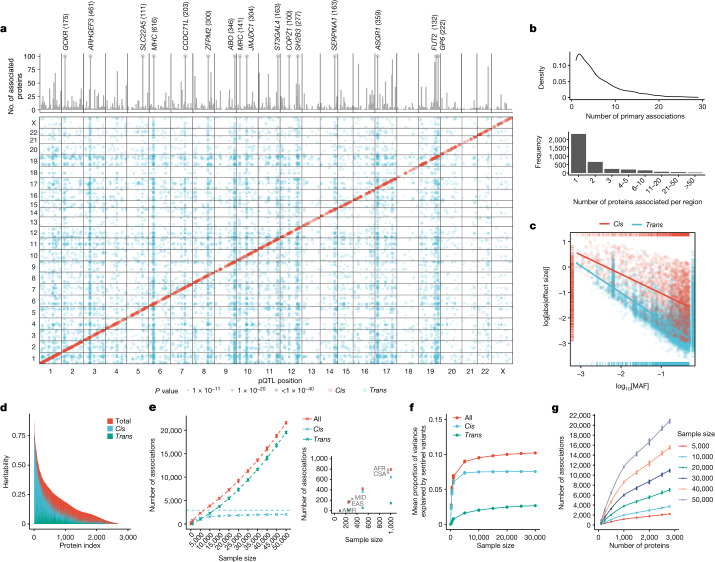
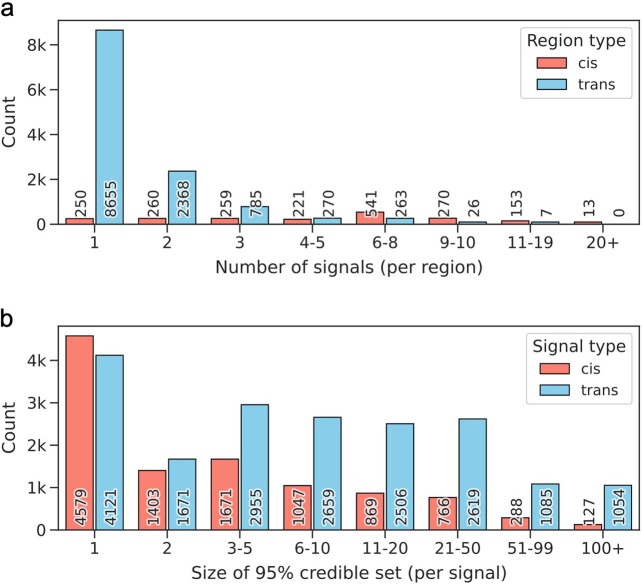
- In the European discovery cohort (n = 34,557), the study identified 14,287 primary pQTL associations across 3,760 independent genetic regions at P < 1.7 × 10⁻¹¹; 1,955 were cis and 12,332 were trans. Replication in n = 17,806 showed 95.6% of cis and 64.1% of trans associations remained significant and directionally concordant.
- 82.6% of tested proteins (2,414/2,922) had at least one pQTL, and 66.9% (1,954/2,922) had a cis association. 81% of primary associations (11,521/14,287) were previously undescribed; 89% of trans pQTLs were previously undescribed versus 27% of cis pQTLs.
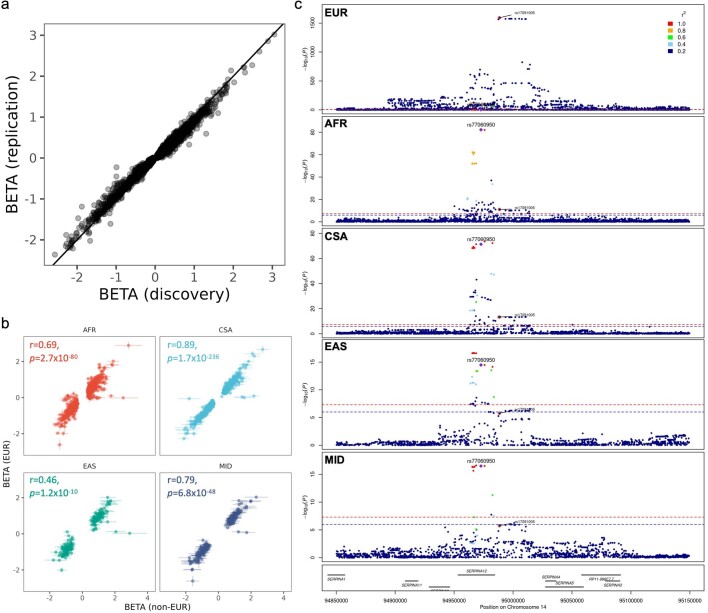
- Non-European ancestry-specific analyses found 785 (AFR, n = 931), 732 (CSA, n = 920), 227 (MID, n = 308), 179 (EAS, n = 262) and 9 (AMR, n = 97) primary associations; the paper highlights ancestry-specific allelic enrichments such as SERPINA12 rs77060950.
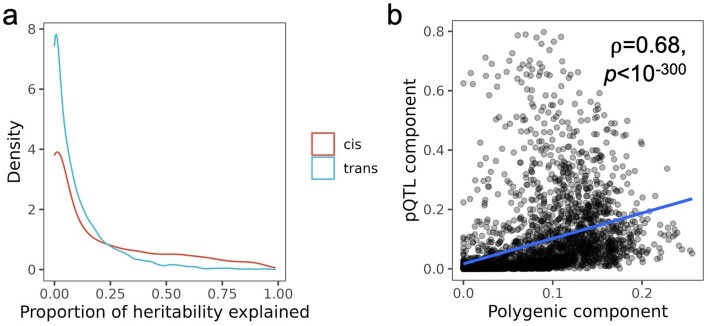
- Additional analyses identified 29,420 independent pQTL signals, mean total SNP-based heritability of 0.16, and colocalization of 65% (1,220/1,889) of genes with a significant eQTL in at least one tissue.
Methods
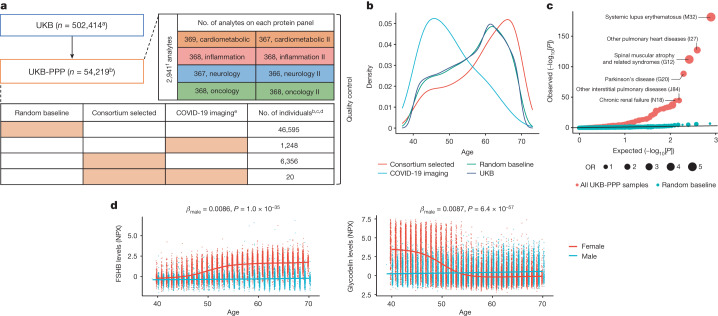
- Plasma proteomic profiling used the antibody-based Olink Explore 3072 PEA, measuring 2,941 protein analytes and 2,923 unique proteins across 54,219 UKB participants, including 46,595 randomly selected baseline, 6,376 consortium-selected and 1,268 COVID-19 repeat-imaging participants.
- Discovery pQTL analyses were performed in European-ancestry randomly selected baseline participants (n = 34,557) with replication in the remaining samples (n = 17,806), using REGENIE GWAS for up to 16.1 million imputed variants and a significance threshold of P < 1.7 × 10⁻¹¹; full-cohort mapping used n = 52,363 and up to 23.8 million variants.
- Downstream analyses included SuSiE fine-mapping, SNP-based heritability estimation, colocalization with GTEx eQTLs, ancestry-specific pQTL mapping in five pan-UKBB groups, sensitivity analyses for blood cell counts, BMI, season and fasting time, and Mendelian randomization exemplars such as PCSK9.
Limitations
- Stated: the predominantly white European ancestral composition of UKB does not capture full human genetic and phenotypic diversity, and the non-European ancestry groups were small and underpowered; the authors call for prioritizing under-represented and genetically diverse populations, resampling/longitudinal analyses, and orthogonal comparisons across proteomic assays.
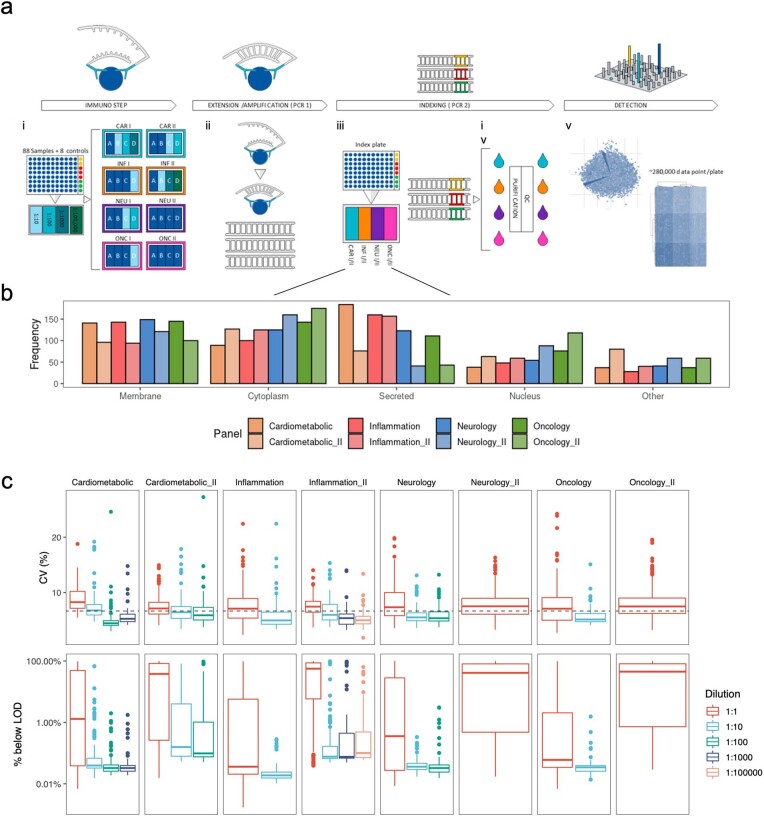
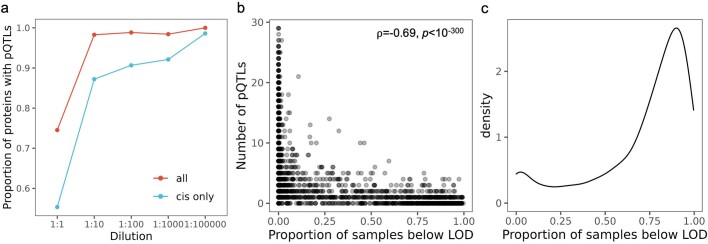
- Stated: pQTL discovery is affected by protein abundance and assay detection; proteins with lower expected concentrations had higher coefficients of variation, and 81.4% of proteins without a pQTL had more than 50% of samples below the limit of detection.
- Evident from the text: the main design is cross-sectional and observational, with causal inference limited to exemplar Mendelian randomization analyses; platform-specific antibody-based measurements may limit overlap with aptamer-based pQTL findings, as only 38% of previous aptamer-based associations replicated among common proteins.
Model-written summary. Check it against the paper before relying on it.
Integrity signals
Registry
Cites
Statistics
Figures
Verification
Claims the paper makes
15 Valid · 1 Not valid · 5 Not checked · 123 Own results and interpretations
The cited sources that could be checked couldn’t confirm or dispute this claim.
In the paper
“Liver expression of SERPINA12 was also higher in rs77060950-T carriers (P = 2.6 × 10 -8 ) 31”
§ Plasma proteomic associations with genetics and health in the UK Biobank > Non-European pQTL mapping
What the sources say
- Could not verifycites [31] The GTEx Consortium. The GTEx Consortium atlas of genetic regulatory effects across human tissues. Science 369, 1318-1330 (2020). sourceExperimental — accuracy not yet measured
The QTL discovery section describes associations between genetic variants and gene expression across tissues, but does not report this specific association. Searches for SERPINA12, rs77060950, and the stated P value found no passage establishing higher liver expression in T carriers; page numbers were not supplied in our copy. (LLM, conf=0.72)
plainstates an association- Asserted: passes — The authors put it forward as true.
- Checkable: passes — It can be checked against evidence.
- Load-bearing: unclear — It is unclear whether the paper’s conclusions depend on it.
- Based: passes — The paper gives a reason why it holds.
- Could not verify
The cited sources support only part of this claim — read each source’s verdict below.
In the paper
“These included well-established, previously identified [17][18][19][20] pleiotropic loci such as MHC, ABO, ZFPM2, ARHGEF3, GCKR, SERPINA1, SH2B3 and ASGR1”
§ Plasma proteomic associations with genetics and health in the UK Biobank > Discovery of pQTLs
What the sources say
- Partly supportedcites [17] Emilsson, V. et al. Co-regulatory networks of human serum proteins link genetics to disease. Science 361, 769-773 (2018). sourceExperimental — accuracy not yet measured
The section “Genetic variants influence serum protein levels” explicitly describes pleiotropy at ABO as well established. Our copy does not identify MHC, ZFPM2, ARHGEF3, GCKR, SERPINA1, SH2B3, or ASGR1 as previously identified pleiotropic loci, so it supports only part of the list. (LLM, conf=0.86)
- Partly supportedcites [18] Sun, B. B. et al. Genomic atlas of the human plasma proteome. Nature 558, 73-79 (2018). sourceExperimental — accuracy not yet measured
In “trans pQTLs identify pathways to disease” (page unavailable), the paper identifies ABO as a well-known pleiotropic locus, describes ZFPM2 as associated with many correlated proteins, and reports associations between a SERPINA1 variant and multiple proteins. It mentions MHC elsewhere but does not identify it there as a pleiotropic locus; the passages found do not establish ARHGEF3, GCKR, SH2B3 or ASGR1 as examples. (LLM, conf=0.88)
- Not checked — no full text of the sourcecites [19] Ferkingstad, E. et al. Large-scale integration of the plasma proteome with genetics and disease. Nat. Genet. 53, 1712-1721 (2021). source
- Partly supportedcites [20] Pietzner, M. et al. Mapping the proteo-genomic convergence of human diseases. Science 374, eabj1541 (2021). sourceExperimental — accuracy not yet measured
The Results section (‘Genetic associations for protein targets’; page unavailable) identifies ARF4-ARHGEF3, ABO and GCKR as substantially pleiotropic regions. The ‘A map of proteo-genomic connections across the phenome’ section also calls GCKR a known pleiotropic locus. Our copy does not establish the remaining named loci as previously identified pleiotropic loci, so it does not support the full list. (LLM, conf=0.87)
boostedstates an association- Asserted: passes — The authors put it forward as true.
- Checkable: passes — It can be checked against evidence.
- Load-bearing: unclear — It is unclear whether the paper’s conclusions depend on it.
- Based: passes — The paper gives a reason why it holds.
- Partly supported
The cited sources support only part of this claim — read each source’s verdict below.
In the paper
“The missense variant rs72938840 (Arg59Gln, MAF AFR = 7.9%) in the gene encoding rhomboid protease, RHBDL2, is mostly absent in EUR and other ancestries 28 and is associated in trans with concentrations of one of its cleavage substrates 29 , SPINT1 (P = 5.8 × 10 -12 )”
§ Plasma proteomic associations with genetics and health in the UK Biobank > Non-European pQTL mapping
What the sources say
- Could not verifycites [28] Karczewski, K. J. et al. The mutational constraint spectrum quantified from variation in 141,456 humans. Nature 581, 434-443 (2020). sourceExperimental — accuracy not yet measured
The cited paper’s population-comparison discussion (p. 439) concerns gene-level constraint, not rs72938840 or its frequency across ancestries. Searches for rs72938840, RHBDL2, Arg59Gln and SPINT1 found no passage reporting the variant’s 7.9% African-ancestry frequency or its association with SPINT1 concentrations. In the citing sentence, this source’s citation is attached to the ancestry-frequency statement, while a different citation follows the SPINT1 statement. (LLM, conf=0.72)
- Supportedcites [29] Johnson, N. et al. Quantitative proteomics screen identifies a substrate repertoire of rhomboid protease RHBDL2 in human cells and implicates it in epithelial homeostasis. Sci. Rep. 7, 7283 (2017). source
The citation to this paper identifies SPINT1 as a cleavage substrate of RHBDL2. In the Results section (page not available), the authors report RHBDL2-dependent cleavage of Spint-1 and identify its cleavage site. The variant association, allele frequency, and P value are not attributed to this source by the citation placement. (LLM, conf=0.93)
plainstates an association- Asserted: passes — The authors put it forward as true.
- Checkable: passes — It can be checked against evidence.
- Load-bearing: unclear — It is unclear whether the paper’s conclusions depend on it.
- Based: passes — The paper gives a reason why it holds.
- Could not verify
A result the paper reports from its own data — it cites no other source for it, so there is none to check. The quote shows it is in the paper.
In the paper
“we found a significant negative relationship between the number of pQTLs and the proportion of samples that were below the LOD (Spearman's ρ = -0.69,P < 10 -300”
§ Plasma proteomic associations with genetics and health in the UK Biobank > Discovery of pQTLs
plainstates an association- Asserted: passes — The authors put it forward as true.
- Checkable: passes — It can be checked against evidence.
- Load-bearing: unclear — It is unclear whether the paper’s conclusions depend on it.
- Based: passes — The paper gives a reason why it holds.
A result the paper reports from its own data — it cites no other source for it, so there is none to check. The quote shows it is in the paper.
In the paper
“with 66.9% of proteins tested (1,954 of 2,922 proteins) having a cis association (within 1 Mb from the gene encoding the protein)”
§ Plasma proteomic associations with genetics and health in the UK Biobank > Discovery of pQTLs
plainstates an association- Asserted: passes — The authors put it forward as true.
- Checkable: passes — It can be checked against evidence.
- Load-bearing: passes — The paper’s conclusions depend on it.
- Based: passes — The paper gives a reason why it holds.
52 more claims
Create a free account to see all 144 claims and to verify the 1 reference still open.
- It may state two separate claims as one. 58
- Probably not a substantial claim. 44
Claims other papers make about this one
Each is checked against this paper’s own text: does it say what the citing paper says it does?
The source backs part of the claim, not all of it — or backs it for a different population, condition or comparison.
In the citing paper
“In a separate array-based GWAS on the UKB-PPP cohort, we tested for the association between common variants (MAF > 0.1%) and 2,922 protein assays, resulting in 14,287 primary genetic associations5.”
From Rare variant associations with plasma protein levels in the UK Biobank (2023) · cites this paper as [5]
Experimental — accuracy not yet measuredThe source backs part of the claim, not all of it — or backs it for a different population, condition or comparison.
In the citing paper
“This pQTL was also CSF specific using Olink (table S5), independent of a subthreshold EGFR pQTL in plasma (rs56380922; R2 = 0.017), and not significant in plasma studies with 10 times our CSF sample size (9–11), implying a highly specific association in neurological contexts.”
From Low overlap of plasma and CSF protein quantitative trait loci affects protein discovery for neurological disease (2026) · cites this paper as [11]
Experimental — accuracy not yet measuredThe cited source says what the claim attributes to it.
In the citing paper
“Key plasma protein databases, such as the UK Biobank Pharma Proteomics Project (UKB-PPP) and deCODE [12,13], offer valuable resources for identifying therapeutic targets and risk factors across various diseases, including cancer [14,15].”
From Identifying novel drug targets for calcific aortic valve disease through Mendelian randomization (2025) · cites this paper as [12]
The cited source says what the claim attributes to it.
In the citing paper
“To date, most pQTLs have been discovered via genome-wide association studies (GWASs), which predominantly focus on common variants3,5–8.”
From Rare variant associations with plasma protein levels in the UK Biobank (2023) · cites this paper as [5]
The cited source says what the claim attributes to it.
In the citing paper
“The effect sizes (β) of nominally significant ExWAS pQTLs (P < 1 × 10⁻⁴) strongly correlated with the GWAS-derived pQTLs5 (r2 = 0.96; Supplementary Fig. 2).”
From Rare variant associations with plasma protein levels in the UK Biobank (2023) · cites this paper as [5]
10 more claims about this paper
Create a free account to see every claim other papers make about this one.
Self-check
Percentages, sums and reported differences re-computed from the paper’s own numbers.
Each contradiction between two passages listed here was confirmed by an independent check.
Rated minor: it would not touch a result — a value no result rests on, a p-value that stays on the same side of the significance level, or a conflict that is clerical, resolved elsewhere in the paper, or outside its own findings.
In the paper
§ Plasma proteomic associations with genetics and health in the UK Biobank > Additional information
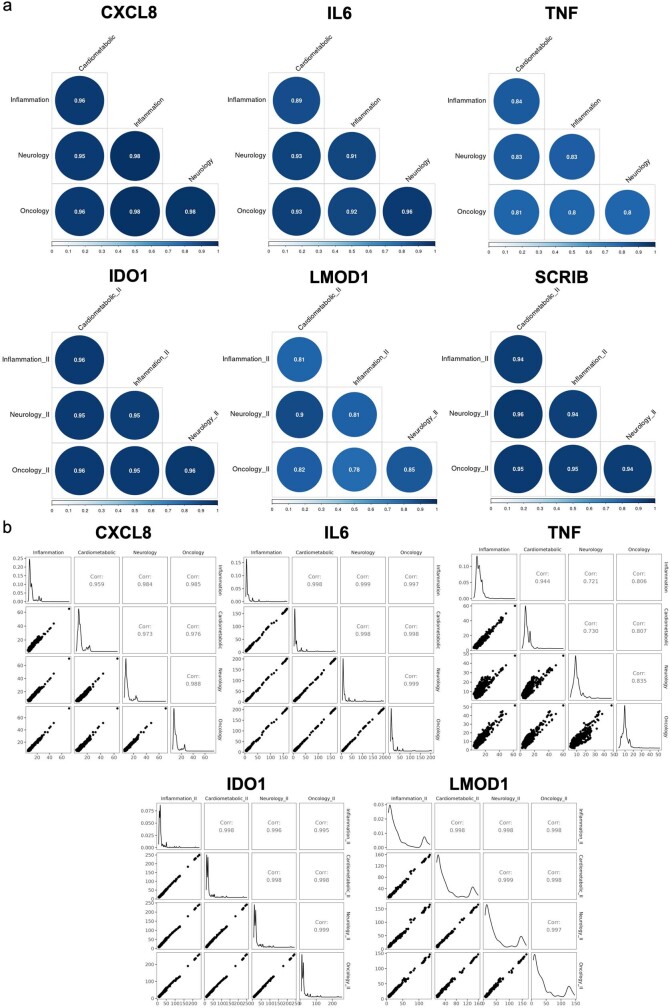
“on three proteins measured across multiple protein panels”
§ Plasma proteomic associations with genetics and health in the UK Biobank > Additional information
“(CXCL8, IL-6, TNF, IDO1, LMOD1, SCRIB).”
Rated minor: it would not touch a result — a value no result rests on, a p-value that stays on the same side of the significance level, or a conflict that is clerical, resolved elsewhere in the paper, or outside its own findings.
In the paper
§ Plasma proteomic associations with genetics and health in the UK Biobank > Discovery of pQTLs
“A total of 1,955 of the 14,287 primary associations were in cis”
§ Plasma proteomic associations with genetics and health in the UK Biobank > Comparisons with previous pQTL studies
“compared with cis pQTLs (27%; 518 out of 1,954).”
Citations
Cites
Regularization Paths for Generalized Linear Models via Coordinate Descent
Friedman, J., Hastie, T., & Tibshirani, R. (2010) · Journal of Statistical Software · doi:10.18637/jss.v033.i01 · Cited by 19,927 · cited 1×
“…eGFR and ABO blood groups (genetic ascertainment of blood groups is described in the ‘ABO blood group and FUT2 secretor status analysis’ section) separately using glmnet (R package v.4.1-4) 57 to tune the lambda.1se parameter with tenfold cross validation for 100 lambdas between 10 −5 and 1,000.”
MethodInfluentialTissue-based map of the human proteome
Uhlén, M., Fagerberg, L., Hallström, B. M., Lindskog, C., Oksvold, P., Mardinoglu, A., Sivertsson, Å., Kampf, C., Sjöstedt, E., Asplund, A., et al. (2015) · Science · doi:10.1126/science.1260419 · Cited by 15,286
Second-generation PLINK: rising to the challenge of larger and richer datasets
Chang, C. C., Chow, C. C., Tellier, L. C., Vattikuti, S., Purcell, S. M., & Lee, J. J. (2015) · Gigascience · doi:10.1186/s13742-015-0047-8 · Cited by 12,709
The mutational constraint spectrum quantified from variation in 141,456 humans
Karczewski, K. J., Francioli, L. C., Tiao, G., Cummings, B. B., Alföldi, J., Wang, Q., Collins, R. L., Laricchia, K. M., Ganna, A., Birnbaum, D. P., et al. (2020) · Nature · doi:10.1038/s41586-020-2308-7 · Cited by 9,434 · cited 3×
“%) and is nearly absent in EUR and other ances-tries 28 .”
BackgroundInfluentialSelf-citationThe UK Biobank resource with deep phenotyping and genomic data
Bycroft, C., Freeman, C., Petkova, D., Band, G., Elliott, L. T., Sharp, K., Motyer, A., Vukcevic, D., Delaneau, O., O’Connell, J., et al. (2018) · Nature · doi:10.1038/s41586-018-0579-z · Cited by 8,876 · cited 2×
“The open-access framework 24 , deep phenotypic characterization 7 and long-term development 9,10 of population studies like the UKB offer a unique opportunity to expand proteogenomics to a massive scale, broaden research use of high-throughput proteomic data, build more extensive pQTL databases,…”
BackgroundMethodSelf-citationThe MR-Base platform supports systematic causal inference across the human phenome
Hemani, G., Zheng, J., Elsworth, B., Wade, K. H., Haberland, V., Baird, D., Laurin, C., Burgess, S., Bowden, J., Langdon, R., et al. (2018) · eLife · doi:10.7554/elife.34408 · Cited by 7,959 · cited 1×
“Data for these outcomes were extracted from the OpenGWAS project 72,73 .”
MethodSelf-citationLD Score regression distinguishes confounding from polygenicity in genome-wide association studies
Schizophrenia Working Group of the Psychiatric Genomics Consortium, Bulik-Sullivan, B. K., Loh, P.-R., Finucane, H. K., Ripke, S., Yang, J., Patterson, N., Daly, M. J., Price, A. L., & Neale, B. M. (2015) · Nature Genetics · doi:10.1038/ng.3211 · Cited by 5,559 · cited 1×
“The polygenic component, which mostly likely satisfies the polygenic model of small genetic contributions across the genome, was estimated using LD-score regression 62 .”
MethodThe GTEx Consortium atlas of genetic regulatory effects across human tissues
The GTEx Consortium, Aguet, F., Anand, S., Ardlie, K. G., Gabriel, S., Getz, G. A., Graubert, A., Hadley, K., Handsaker, R. E., Huang, K. H., et al. (2020) · Science · doi:10.1126/science.aaz1776 · Cited by 5,547
Self-citationAnderson, N. L., & Anderson, N. G. (2002) · Molecular & Cellular Proteomics · doi:10.1074/mcp.r200007-mcp200 · Cited by 4,414
Estimating glomerular filtration rate from serum creatinine and cystatin C
Inker, L. A., Schmid, C. H., Tighiouart, H., Eckfeldt, J. H., Feldman, H. I., Greene, T., Kusek, J. W., Manzi, J., Van Lente, F., Zhang, Y. L., et al. (2012) · New England Journal of Medicine · doi:10.1056/nejmoa1114248 · Cited by 4,102
Cited by
Items 1,301–1,400 of 1,846
Kushnir, C. N., Taylor‐Bateman, V., Davies, N. M., & Anderson, E. L. (2025) · medRxiv · doi:10.1101/2025.08.01.25332834
“Exposure data for each selected DMARD target were sourced from a large-scale proteogenomic analysis as part of the UK Biobank Pharma Proteomics Project (UKB-PPP, n = 54,219), which provides detailed mapping of 2,923 proteins and their associations with genetic variants within blood plasma [21].”
Liu, C., Zhao, M., Wang, X., Wang, S., & Wang, X. (2025) · Cytokine · doi:10.1016/j.cyto.2025.157007
Kursawe, R., Bandesh, K., Krishnan, S. N., Liu, K. S., Bhuiyan, R. M., & Stitzel, M. L. (2025) · Annual Review of Genetics · doi:10.1146/annurev-genet-020525-114513
Decades-long elevation of interferon-α drives a Sjögren disease endotype: an interdisciplinary studyPreprint
Forbes, D., Jorgacevic, I., Tarn, J. R., Reid, K. R., Rioux, B., Thompson, K., Kleemann, K. L., McGlasson, S. L., Casement, J., Berry, J. S., et al. (2025) · bioRxiv (Cold Spring Harbor Laboratory) · doi:10.1101/2025.08.06.668845
Sleep chart of biological aging clocks in middle and late lifePreprint
O’Toole, C. K., Song, Z., Anagnostakis, F., Yang, Z., Tian, Y., Duggan, M. R., Zou, C., Leng, Y., Cai, Y., Bai, W., et al. (2025) · medRxiv · doi:10.1101/2025.08.08.25333313
Jiao, P., & Ding, J. (2025) · International Journal of High Speed Electronics and Systems · doi:10.1142/s0129156425408125
Li, Q., Chen, W., Li, X., Zhu, Z., Yang, Y., Xie, Y., & Zhu, H. Y. (2025) · Pancreatology · doi:10.1016/j.pan.2025.08.014
He, J., Feng, Y., Zheng, X., Zheng, X., Cai, J., Wu, K., Liang, J., Wu, X., Wang, Z., Hu, Y., et al. (2025) · SLEEP · doi:10.1093/sleep/zsaf243
Whole-genome sequencing analysis of left ventricular structure and sphericity in 80,000 peoplePreprint
Pirruccello, J. P. (2025) · medRxiv · doi:10.1101/2025.08.22.25334019
“A cis -proteomic Mendelian randomization was conducted using variants within 944 kilobases 35 of the genes encoding circulating proteins from the Olink Explore 3072 protein panel 36 as the exposure instruments and the LV GWAS as outcome instruments.”
Li, W., Chai, S., Zhang, N., Zeng, F., Tang, X., Zhang, F. S., Yang, F., Chen, Q., Wang, C., Li, B., et al. (2025) · Journal of Affective Disorders · doi:10.1016/j.jad.2025.120174
He, M., Chen, L., Zuo, Y., Du, J., & Tang, W. (2025) · International Archives of Allergy and Immunology · doi:10.1159/000548167
“As illustrated in Figure 1, the comprehensive protein gene association genetic statistical data utilized in this study were sourced from four large-scale proteomics studies (Sun 2023, Gudjonsson, Ferkingstad, Sun 2018) [12–15].”
Exploring Novel Biomarkers for Rosacea Through Cohort Study and Mendelian Randomisation
Mao, R., Wang, F., Zhang, T., & Li, J. (2025) · Experimental Dermatology · doi:10.1111/exd.70161
Pan, T., Zhang, J., Wang, X., & Song, Y. (2025) · Journal of Cancer · doi:10.7150/jca.115044 · Cited by 1
“We identified cis-single-nucleotide polymorphisms (cis-SNPs) linked to plasma protein levels from two extensive GWAS, the UK Biobank Pharma Proteomics Project (UKB-PPP) [8] and the deCODE Health Study [9].”
Chen, H., Liu, Z., Du, H., Zheng, M., Wan, Z., Zhao, N., Li, G., Bai, X., Wu, D., & Mi, J. (2025) · BMJ Open Gastroenterology · doi:10.1136/bmjgast-2025-001976
Zhou, D., Luo, W., Zou, J., Zhu, X., Hu, Z., Jie, X., Zhu, L., & Wu, M. (2025) · Medicine · doi:10.1097/md.0000000000044678
“[10] In this study, pQTLs served as instrumental variables (IVs).”
Bai, C., Hu, M., Zhao, H., Xu, J., Wu, J., Luan, X., & Biedelehan, S.-H. (2025) · Medicine · doi:10.1097/md.0000000000044693
“…comprehensive protein quantitative trait locus (pQTL) mapping for 2923 proteins, resulting in the identification of 14,287 primary genetic associations, [21] To obtain cis-pQTL, we screened pQTL based on the following criteria: pQTL exhibited genome-wide significant association ( P 5 × 10 −8 ).”
Yu, T., Zeng, P., & Zhou, H. (2025) · Health Science Reports · doi:10.1002/hsr2.71285 · Cited by 1
“…provided data on 35,559 proteins from 4907 Icelandic participants [10], Sun ′ s study contributed data on 3301 plasma proteins from 3994 European individuals [5], and the UK Biobank Pharmaceutical Proteomics Programme (UKBPP) provided data on 2941 proteins from 54,219 UK participants [11].”
McKeigue, P., Iakovliev, A., Erabadda, B., Colhoun, H. M., & Spiliopoulou, A. (2025) · Inflammatory Bowel Diseases · doi:10.1093/ibd/izaf214 · Cited by 3
Chen, G., Li, Y., Song, Z., Huang, T., Liu, Z., & Zhu, C. (2025) · Research Square · doi:10.21203/rs.3.rs-7510513/v1
Establishing the Groundwork of Aging Biology
Bazan, N. G. (2025) · Springer eBooks · doi:10.1007/978-3-031-94431-4_1
Sun, S., Wang, Y., Dong, Q., Bi, J., & Fu, Y. (2025) · Scientific Reports · doi:10.1038/s41598-025-17664-0
“The exposure data for the MR analyses were obtained from the UK Biobank Pharmaceutical Proteomics Project (UKB-PPP), which included 34,557 participants of European ancestry with 2940 plasma proteins 15 .”
Li, C., Sun, A., Liu, Y.-K., Sun, R., Hao, A.-Y., Lan, Y., Cao, J., & Wang, Z. (2025) · Medicine · doi:10.1097/md.0000000000044608 · Cited by 1
“Subsequently, sources of protein quantitative trait loci (pQTL) datasets (Sun: N = 3301 Europeans [24] ) were downloaded for our target gene (MMEL1).”
Liu, J., Huang, C., Jiao, J., Sun, Y., Ma, Y., Yang, Y., & Lan, C. (2025) · Research Square · doi:10.21203/rs.3.rs-7532908/v1
Hou, J., Guo, J., Shen, W., Xie, D., Li, P., Zhang, Y., & Zhao, Z. (2025) · Journal of Ophthalmology · doi:10.1155/joph/3972293 · Cited by 1
“A recent genome-wide association study (GWAS) of plasma proteomics provided a detailed mapping of quantitative protein trait loci (pQTL) for 2923 proteins, identifying 14,287 primary genetic associations [15].”
InfluentialHeydari, D., Langlois, S., Norouzi, M., Myette, R. L., Samuel, S. M., Zhou, S., Takano, T., Butler‐Laporte, G., & Downie, M. L. (2025) · medRxiv · doi:10.1101/2025.10.03.25337251
“TNXB, which colocalized at HLA-DQA1 , was also found to have a greater total amount of interactions (strong and weak) with HLA-DQA1 than other class II genes (Supplementary Data 17).”
InfluentialLiu, C., Seo, B., Hui, Q., Wilson, P. W. F., Quyyumi, A. A., & Sun, Y. V. (2025) · Proteomes · doi:10.3390/proteomes13040051 · Cited by 3
“A total of 2923 distinct proteins were measured [10].”
Zheng, P., Cao, Y., Wang, A., & Yi, K. (2025) · Psoriasis Targets and Therapy · doi:10.2147/ptt.s535791 · Cited by 3
Lin, X., Zheng, Q., Ma, J., Ouyang, W., & Chen, B. (2025) · Medicine · doi:10.1097/md.0000000000045102
“[24] The project has mapped quantitative trait loci (pQTLs) for 2923 proteins, uncovering 14,287 significant genetic associations, of which 81% were previously undoc-umented.”
Li, C., Liu, Y., Zhou, L., Chen, J., Wei, Z., & Li, J. (2025) · Medicine · doi:10.1097/md.0000000000045066
“[23] The pQTLs are usually located near genes that regulate specific proteins.”
Plasma Proteomic Biomarkers of Degenerative Cervical Myelopathy in the UK Biobank
Poulin, N. D., Yakdan, S. M., Benedict, B. C., Bucelli, R. C., Ray, W. Z., Vedantam, A., Badhiwala, J. H., Azad, T. D., Geisler, S., Patel, B., et al. (2025) · Neurosurgery · doi:10.1227/neu.0000000000003821
Wang, J., Bi, L., Zhao, H., Xu, Z., Zhou, Z., Chen, K., Ouyang, H., Xu, J., Sheng, Y., Wang, Z., et al. (2025) · The FASEB Journal · doi:10.1096/fj.202502071r
“The selection of pQTLs in these two replication cohorts adhered to the same criteria outlined for the deCODE cohort [10, 11].”
Plasma proteomic biomarkers underlying polygenic risk of idiopathic pulmonary fibrosis
Zhu, J., Zhou, D., Chen, Y., You, Z., & Li, Y. (2025) · American Journal of Respiratory and Critical Care Medicine · doi:10.1164/rccm.202505-1202rl · Cited by 2
Hujoel, I. A., Loh, P., & Hujoel, M. L. A. (2025) · Gastro Hep Advances · doi:10.1016/j.gastha.2025.100803
“12 The gluten-free diet was identified through survey answers, and it is possible that participants may not have answered truthfully.”
Association of metabolomics measurements with blood cell phenotypes
Chen, B. D., Tapia, A. L., Boerwinkle, E., Clish, C. B., Gerszten, R. E., Graff, M., Mohlke, K. L., Morrison, A. C., Pathmasiri, W., Rich, S. S., et al. (2025) · Blood Cells Molecules and Diseases · doi:10.1016/j.bcmd.2025.102966
Chen, A., Li, Q., Mao, H., Lu, Y., Liu, D., Zhang, L., Fang, Q., Wang, C., Li, H., & Jia, W. (2025) · Journal of Molecular Cell Biology · doi:10.1093/jmcb/mjaf035
“This group of individuals were selected from UKB-PPP (Ollier et al., 2005 ; Sun et al., 2023 ).”
Chen, Y., Dai, X., Zhang, P., Yao, L., Wang, Q., Qin, Z., Gao, T., & Zhang, J. (2025) · Discover Oncology · doi:10.1007/s12672-025-03910-4 · Cited by 1
Plasma proteome signatures are predictive of mortality in sickle cell diseasePreprint
Chignon, A., Zaouali, Y., Galactéros, F., Bartolucci, P., & Lettre, G. (2025) · medRxiv · doi:10.1101/2025.11.04.25339477
Plasma Protein Profile Associated With a Family History of Early-Onset Coronary Heart Disease
Wahrenberg, A., Lind, L., Åberg, N., Häbel, H., Ström, M., Mälarstig, A., Magnusson, P. K. E., Kuja‐Halkola, R., Bergström, G. M. L., Engström, G., et al. (2025) · Circulation Genomic and Precision Medicine · doi:10.1161/circgen.124.005220
A Modification to Two‐Stage Least Squares With Genetic Applications
Fang, L., & Pan, W. (2025) · Statistics in Medicine · doi:10.1002/sim.70308 · Cited by 1
Lin, E., Kuo, P., & Tsai, S. (2025) · Human Molecular Genetics · doi:10.1093/hmg/ddaf165
Naz, A., Whitcher, B. J., Ahmed, A., Thanaj, M., Sorokin, E. P., Bell, J. D., Thomas, E. L., Cule, M., & Yaghootkar, H. (2025) · medRxiv · doi:10.1101/2025.11.07.25339752
Self-citationSLAMF1 as a Risk Biomarker for Nontraumatic SAH: Evidence From a Multiomics Study
Renedo, D. B., Koo, A. B., Sujijantarat, N., Clocchiatti‐Tuozzo, S., Huo, S., Acosta, J., Hebert, R. M., Günel, M., Sansing, L. H., Sheth, K. N., et al. (2025) · Stroke · doi:10.1161/strokeaha.125.052604
(2025) · Amyotrophic Lateral Sclerosis and Frontotemporal Degeneration · doi:10.1080/21678421.2025.2564545
Song, W., Jin, S., Wang, G., Zhou, Y., & Yu, J. (2025) · Journal of Reproductive Immunology · doi:10.1016/j.jri.2025.104798
Decoding nuclear-encoded mitochondrial genes in major depressive disorder: A multi-omics perspective
Liao, J., Wang, X., Dai, G., Xu, H., Zhang, F., Yuan, X., & Feng, Q. (2025) · Psychological Medicine · doi:10.1017/s0033291725102559
“It identified over 14,000 significant genetic associations that characterize the heritable architecture of protein expression (Sun et al., 2023).”
Qin, Y., Wei, J., He, Y., Zheng, Y., Lin, Y., Liu, Z., & Huang, Y. (2025) · Journal of Translational Medicine · doi:10.1186/s12967-025-07301-9 · Cited by 1
“Additionally, we acquired cis-pQTL data for 2,923 plasma proteins from the UK Biobank Pharma Proteomics Project (UKB-PPP, h t t p : / / u k b - p p p . g w a s . e u / ) for replication validation [17].”
Wan, F. J., Shen, J., & Tang, J. (2025) · Medicine · doi:10.1097/md.0000000000045444
“[11] Proteome-wide MR has successfully prioritized drug targets for a range of diseases, including autoimmune, [12] neurological, [13] and oncologic conditions.”
Luo, X. W., Luo, D., Liu, C., Zhang, H., Long, M., Cao, S., & Liu, Y. (2025) · Medicine · doi:10.1097/md.0000000000045093
“…Exposure (plasma protein) deCODE (primary) 4907 Icelander Ferkingstad et al [12] (PMID: 34857953) UKB-PPP (validation) 33,469 European Sun et al [14] (PMID: 37794186) Outcomes Duodenal ulcer (primary) 462,933 European UK Biobank Duodenal ulcer (validation) 456,348 European Jiang et al [15]…”
Cárcel‐Márquez, J., Boldo, P., Llucià‐Carol, L., Muiño, E., Gallego-Fábrega, C., Cullell, N., Lledós, M., Martín-Campos, J. M., Villatoro-González, P., Mariné, L., et al. (2025) · Research Square · doi:10.21203/rs.3.rs-7978651/v1
A plasma-based protein signature association with all-cause mortality
Koziar, N., Whetton, A. D., & Geifman, N. (2025) · PLoS ONE · doi:10.1371/journal.pone.0336845
“Details on sample preparation, processing, and quality control have been previously described [8].”
Luan, W., Fan, S., Jiang, H., Jiang, D., Yang, J., & He, L. (2025) · Burns · doi:10.1016/j.burns.2025.107807
Jia, Q., Xiao, J., Zhang, W., Yu, C., Song, S., Li, Y., & Wang, T. (2025) · BMC Pulmonary Medicine · doi:10.1186/s12890-025-04006-z · Cited by 1
B2M regulates ELANE in pyroptosis to affect pancreatic cancer progression
xie, H., Hu, X., Cai, Y., Zhu, S., & Deng, Z. (2025) · Translational Oncology · doi:10.1016/j.tranon.2025.102613
“The dataset is hosted on the AWS cloud platform by Sage Bionetworks (ARN: arn:aws:s3:::ukbiobank. opendata.sagebase.org) [20].”
Proteome-wide Mendelian randomization identifies drug targets for atrial fibrillation/flutter
Jia, Q., Yang, Y., Chen, X., & Hu, Z. (2025) · BMC Cardiovascular Disorders · doi:10.1186/s12872-025-05383-3
“…in this study were publicly available obtained from the UK Biobank Pharma Proteomics Project (UKB-PPP) data-base (https://www.ukbiobank.ac.uk/) [10], the deCODE health study ( h t t p s : / / w w w . d e c o d e . c o m / s u m m a r y d a t a /) [11] and the FinnGen Study ( h t t p s : / / w…”
Lyu, J., Lin, F., Liu, Y., Chai, Y., Chen, X., Wang, M., Liu, F., Xiao, H., Sun, G., & Xie, Y. (2025) · Brain and Behavior · doi:10.1002/brb3.71096
Deng, B., Liao, Z., Huang, L., Chen, T., Chen, Q., Zhong, S., & Huang, Z. (2025) · Journal of Bioinformatics and Computational Biology · doi:10.1142/s0219720025500234
Xu, H., Li, B., Chen, Y., Lin, Y., Zhang, A., & Wu, L. (2025) · Communications Biology · doi:10.1038/s42003-025-09296-x
Wang, B., Ding, H., Qi, D., Tisminetzky, M. S., Murabito, J. M., & Lin, H. (2025) · Communications Medicine · doi:10.1038/s43856-025-01268-w · Cited by 1
“Proteins and their coding genes provide insights into the biological mechanisms underlying brain aging 7,8 .”
Wittenberg, G. M., Elwood, F., Houghton, A., Mansi, T., Smets, B., & Lovestone, S. (2025) · The Journal of Prevention of Alzheimer s Disease · doi:10.1016/j.tjpad.2025.100417 · Cited by 1
“By co-localizing a GWAS risk signal with an eQTL or pQTL, researchers can form a hypothesis that the genetic variant influences disease risk by altering the expression of a specific gene or protein [19 – 21].”
Lehrer, S. P. (2025) · Research Square · doi:10.21203/rs.3.rs-8204349/v1
Sensing regimes in potentiometric immunoassays
Macchia, E., & Torsi, L. (2025) · Nature Reviews Materials · doi:10.1038/s41578-025-00863-6 · Cited by 3
Þórólfsdóttir, R. B., Sveinbjörnsson, G., Eldjárn, G. H., Aegisdottir, H. M., Styrkársdóttir, U., Grétarsdóttir, S., Steinthórsdóttir, V., Tragante, V., Oddsson, Á., Stefánsdóttir, L., et al. (2025) · Human Molecular Genetics · doi:10.1093/hmg/ddaf177
Wu, T., Luo, J., Qiu, H., Shao, W., Lu, Y., Luo, M., Lin, Z., Zhang, Y., Zhang, L., Wang, H., et al. (2025) · Advanced Science · doi:10.1002/advs.202514130
Circulating Proteins Associated With Myocardial Interstitial Fibrosis
Cunningham, J. W., Wijdeveld, L. F. J. M., Nauffal, V., Jurgens, S. J., Hill, M. C., Brundel, B. J. J. M., Maddah, M., & Ellinor, P. T. (2025) · Journal of the American Heart Association · doi:10.1161/jaha.125.044156
Causal proteomic insights into drug target discovery for tension-type headache
Gao, R., Wang, R., & Xiong, Z. (2025) · The Journal of Headache and Pain · doi:10.1186/s10194-025-02235-5
“…levels, MR helps separate causal effects from confounding and reverse causation, providing a biological rationale for studying circulating proteins in TTH. Advances in high-throughput proteomics now allow for systematic assessment of thousands of circulating proteins across large populations [14].”
Murrin, O., Voller, B., Woodward, R. M., Carrasco-Ribelles, L. A., Türkmen, D., Gu, Q., Boddy, K., Farmer, L., Mancini, M., Khalid, S., et al. (2026) · Respiratory Research · doi:10.1186/s12931-026-03726-y
“…between disease pairs, we used proteomic data for 2,923 plasma proteins produced by the Olink platform in the UK Biobank pharma proteomic project ( N = 48,195 European individuals) to identify whether colocalising variants were protein quantitative trait loci (pQTLs) ( p 5 × 10 –5 ) [53].”
Watts, E. L., Watling, C. Z., Cheung, L. C., Abnet, C. C., Hicks, B. D., Huang, W., Hutchinson, A., Katki, H. A., Loftfield, E., Machiela, M. J., et al. (2025) · medRxiv · doi:10.64898/2025.12.08.25341832
Shui, W., Wu, X., Liu, H., Li, Z., & Zheng, G. (2025) · Human Genomics · doi:10.1186/s40246-025-00888-6
“…quantitative trait loci (pQTLs) databases, including the deCODE genetics dataset with systematic detection of 4907 plasma proteins based on 35,559 Icelandic individuals [18], and the UK Biobank Plasma Proteomics (UKB-PP) project analyzing 2922 plasma proteins in 54,219 UK Biobank participants [19].”
Lehrer, S. P., & Rheinstein, P. H. (2025) · Research Square · doi:10.21203/rs.3.rs-8328706/v1
Avocegamou, R., Jumentier, B., Fagbemi, K., Yazdanpanah, N., Yazdanpanah, M., Gamache, I., & Manousaki, D. (2025) · Scientific Reports · doi:10.1038/s41598-025-31836-y · Cited by 1
“First, we conducted MR analyses utilizing independent cis -genetic instruments identified within the UK Biobank Pharma Proteomics Project (UKB-PPP) study 20 by Sun et al. This study involved Olink-based measurements of 2,923 unique proteins 20 in a cohort of 34,557 individuals of European ancestry.”
InfluentialChen, L., Zeng, Z., Wu, M., Hu, X., & Wang, Y. (2025) · Medicine · doi:10.1097/md.0000000000046597
“[12,13] In this study, we aim to investigate the causal effects of these GABA receptor subtypes on height using Mendelian randomization (MR).”
Identification of therapeutic targets for insomnia through genetic and plasma proteomic approaches
Wang, X., Lu, J., Lin, F., Li, G., & Zhao, W. (2025) · Medicine · doi:10.1097/md.0000000000046687
“[24] In each study, we constructed genetic instruments based on cis-SNPs within a ± 1 Mb range of the target gene, with inclusion criteria of genome-wide significance ( P 5 × 10 ⁻⁸ ), minimum allele frequency ≥ 1%, and independence from each other in the 1000 Genomes reference for European…”
Kim, M. S., Durvasula, A., & Zhang, X. (2025) · bioRxiv (Cold Spring Harbor Laboratory) · doi:10.64898/2025.12.15.694350 · Cited by 1
Deep proteomics in cancer diagnostics: barriers and breakthroughs
Drake, J. M., Ball, H., White, F. M., & Antonarakis, E. S. (2025) · Expert Review of Molecular Diagnostics · doi:10.1080/14737159.2025.2607503
“…newer proteomic methods have been developed to overcome these limitations, such as the affinity-based Proximity Extension Assay (PEA) by Olink [7] and the aptamer-based SomaScan platform by SomaLogic [8], LC-MS/MS also allows for a relatively unbiased exploration of the plasma proteome,…”
Zhang, W., van der Most, P. J., Wang, S., Kamali, Z., Giontella, A., Enhörning, S., Gansevoort, R. T., van der Harst, P., Bakker, S. J. L., Melander, O., et al. (2025) · EBioMedicine · doi:10.1016/j.ebiom.2025.106014 · Cited by 1
“38 Genomic build conversion was performed using LiftOver, 39 and regional association plots for the CALCA and CALCB loci were generated with LocusZoom.”
Mitochondrial membrane junction-mediated ATP channeling drives activity-dependent glucose metabolismPreprint
Yang, D., Molinaro, G., Nijem, N., Zhang, C., Penny, D., Bai, M., Lin, M.-J., Wen, X., Peña, S., Wansapura, J. P., et al. (2025) · bioRxiv (Cold Spring Harbor Laboratory) · doi:10.64898/2025.12.18.695286
Associations between plasma ANGPTL4 levels and the risk of 24 cancers: a prospective cohort study
Cheng, X. R., Zhao, S., Du, M., Guo, C., Chen, X., Zhang, T., & Liu, Z. (2025) · Cytokine · doi:10.1016/j.cyto.2025.157089 · Cited by 1
Zhang, L., Xiong, Y., Zhang, J., Feng, Y., & Xu, A. (2024) · Figshare · doi:10.6084/m9.figshare.25547115
Sun, Z., Yun, Z., Lin, J., Sun, X., Wang, Q., Duan, J., Li, C., Zhang, X., Xu, S., Wang, Z., et al. (2024) · Figshare · doi:10.6084/m9.figshare.25727831
Zhao, Y., Li, X., Loscalzo, J., Smelik, M., Sysoev, O., Wang, Y., Mahmud, A. K. M. F., Mansour Aly, D., & Benson, M. (2024) · Figshare · doi:10.6084/m9.figshare.26719344
Luo, H. L., Huemer, M.-T., Petrera, A., Hauck, S. M., Rathmann, W., Herder, C., Köenig, W., Hoyer, A., Peters, A., & Thorand, B. (2024) · Figshare · doi:10.6084/m9.figshare.25139622
Zhao, Y., Li, X., Loscalzo, J., Smelik, M., Sysoev, O., Wang, Y., Mahmud, A. K. M. F., Mansour Aly, D., & Benson, M. (2024) · Figshare · doi:10.6084/m9.figshare.26719350
Si, S., Liu, H., Xu, L., & Zhan, S. (2024) · Figshare · doi:10.6084/m9.figshare.26066094
Sun, X., Chen, B., Qi, Y., Wei, M., Chen, W., Wu, X., Wang, Q., Li, J., Lei, X., & Luo, G. (2024) · Figshare · doi:10.6084/m9.figshare.26752402
Sun, Z., Yun, Z., Lin, J., Sun, X., Wang, Q., Duan, J., Li, C., Zhang, X., Xu, S., Wang, Z., et al. (2024) · Figshare · doi:10.6084/m9.figshare.25727908
Carland, C., Png, G., Mälarstig, A., Kho, P. F., Gustafsson, S., Michaelsson, K., Lind, L., Tsafantakis, E., Karaleftheri, M., Dedoussis, G. V., et al. (2024) · Figshare · doi:10.6084/m9.figshare.26608833
Self-citationSi, S., Liu, H., Xu, L., & Zhan, S. (2024) · Figshare · doi:10.6084/m9.figshare.26066199
Zhou, S., Tao, B., Guo, Y., Gu, J., Li, H., Zou, C., Tang, S., Jiang, S., Fu, D., & Li, J. (2024) · Figshare · doi:10.6084/m9.figshare.26732035
Zhang, L., Xiong, Y., Zhang, J., Feng, Y., & Xu, A. (2024) · Figshare · doi:10.6084/m9.figshare.25546984
Carland, C., Png, G., Mälarstig, A., Kho, P. F., Gustafsson, S., Michaelsson, K., Lind, L., Tsafantakis, E., Karaleftheri, M., Dedoussis, G. V., et al. (2024) · Figshare · doi:10.6084/m9.figshare.26608836
Self-citationZhao, Y., Li, X., Loscalzo, J., Smelik, M., Sysoev, O., Wang, Y., Mahmud, A. K. M. F., Aly, D. M., & Benson, M. (2024) · Figshare · doi:10.6084/m9.figshare.26719341
Zhao, Y., Li, X., Loscalzo, J., Smelik, M., Sysoev, O., Wang, Y., Mahmud, A. K. M. F., Mansour Aly, D., & Benson, M. (2024) · Figshare · doi:10.6084/m9.figshare.26719332
Zhao, Y., Li, X., Loscalzo, J., Smelik, M., Sysoev, O., Wang, Y., Mahmud, A. K. M. F., Mansour Aly, D., & Benson, M. (2024) · Figshare · doi:10.6084/m9.figshare.26719338
Zhao, Y., Li, X., Loscalzo, J., Smelik, M., Sysoev, O., Wang, Y., Mahmud, A. K. M. F., Aly, D. M., & Benson, M. (2024) · Figshare · doi:10.6084/m9.figshare.26719347
Ouyang, Y., Chen, Y., Chen, K., Tang, Z., Shi, G., Qu, C., Zhang, K., & Yang, H. (2024) · Figshare · doi:10.6084/m9.figshare.25687481
Luo, H. L., Huemer, M.-T., Petrera, A., Hauck, S. M., Rathmann, W., Herder, C., Köenig, W., Hoyer, A., Peters, A., & Thorand, B. (2024) · Figshare · doi:10.6084/m9.figshare.25139649
Zhao, Y., Li, X., Loscalzo, J., Smelik, M., Sysoev, O., Wang, Y., Mahmud, A. K. M. F., Mansour Aly, D., & Benson, M. (2024) · Figshare · doi:10.6084/m9.figshare.26719335
Zhao, Y., Li, X., Loscalzo, J., Smelik, M., Sysoev, O., Wang, Y., Mahmud, A. K. M. F., Mansour Aly, D., & Benson, M. (2024) · Figshare · doi:10.6084/m9.figshare.26719353
Wang, Z., Zhang, M., Liu, C., Zhang, Y., Cheng, R., Zhang, S., Yang, B., Wang, L., Guo, J., & Wang, X. (2026) · Naunyn-Schmiedeberg s Archives of Pharmacology · doi:10.1007/s00210-026-05926-1
Zhang, P., Chen, Y., Yao, L., Dai, X., Qin, Z., 秦志宏, Gao, T., & Zhang, J. (2025) · Critical Public Health · doi:10.1080/09581596.2025.2603520
Metadata
- Authors
- Sun, B. B., Chiou, J., Traylor, M., Benner, C., Hsu, Y.-H., Richardson, T. G., Surendran, P., Mahajan, A., Robins, C., Vasquez-Grinnell, S. G., Hou, L., Kvikstad, E. M., Burren, O. S., Davitte, J., Ferber, K. L., Gillies, C. E., Hedman, Å. K., Hu, S., Lin, T., Mikkilineni, R., Pendergrass, R. K., Pickering, C., Prins, B., Baird, D., Chen, C.-Y., Ward, L. D., Deaton, A. M., Welsh, S., Willis, C. M., Lehner, N., Arnold, M., Wörheide, M. A., Suhre, K., Kastenmüller, G., Sethi, A., Cule, M., Raj, A., Genetics, A. H., Initiative, A. G., Biogen Biobank Team, Squibb, B. M., Genetics, G. H., Sciences, G. G., Biology, P. I., Sciences, P. A. O. J. D., Regeneron Genetics Center, Kang, H. M., Burkitt-Gray, L., Melamud, E., Black, M. H., Fauman, E. B., Howson, J. M. M., Kang, H. M., McCarthy, M. I., Nioi, P., Petrovski, S., Scott, R. A., Smith, E. N., Szalma, S., Waterworth, D. M., Mitnaul, L. J., Szustakowski, J. D., Gibson, B. W., Miller, M. R., & Whelan, C. D.
- Affiliations
- Biogen (United States) (US)
- Pfizer (United States) (US)
- Genentech (US)
- Amgen (United States) (US)
- GlaxoSmithKline (United Kingdom) (GB)
- GlaxoSmithKline (United States) (US)
- Janssen Research & Development (United States) (US)
- Bristol-Myers Squibb (United States) (US)
- AstraZeneca (United Kingdom) (GB)
- Regeneron (United States) (US)
- Pfizer (Sweden) (SE)
- Takeda (United States) (US)
- UK Biobank (GB)
- Alnylam Pharmaceuticals (United States) (US)
- Helmholtz Munich (DE)
- Duke University (US)
- Weill Cornell Medical College in Qatar (QA)
- Calico Life Sciences (US)
- Corresponding author
- Sun, Benjamin B.
- Whelan, Christopher D.
- ORCID
- Sun, Benjamin B.
- Chiou, Joshua
- Traylor, Matthew
- Benner, Christian
- Hsu, Yi-Hsiang
- Richardson, Tom G.
- Surendran, Praveen
- Mahajan, Anubha
- Robins, Chloe
- Hou, Liping
- Kvikstad, Erika M.
- Burren, Oliver S.
- Davitte, Jonathan
- Ferber, Kyle L.
- Gillies, Christopher E.
- Hedman, Åsa K.
- Hu, Sile
- Lin, Tinchi
- Mikkilineni, Rajesh
- Prins, Bram
- Baird, Denis
- Chen, Chia-Yen
- Ward, Lucas D.
- Deaton, Aimee M.
- Welsh, Samantha
- Willis, Carissa M.
- Arnold, Matthias
- Wörheide, Maria A.
- Suhre, Karsten
- Kastenmüller, Gabi
- Sethi, Anurag
- Cule, Madeleine
- Raj, Anil
- Burkitt-Gray, Lucy
- Melamud, Eugene
- Black, Mary Helen
- Fauman, Eric B.
- Howson, Joanna M. M.
- Kang, Hyun Min
- McCarthy, Mark I.
- Nioi, Paul
- Petrovski, Slavé
- Scott, Robert A.
- Smith, Erin N.
- Szalma, Sándor
- Waterworth, Dawn M.
- Szustakowski, Joseph D.
- Gibson, Bradford W.
- Miller, Melissa R.
- Whelan, Christopher D.
- Venue
- Nature
- Published
- 2023-10-04
- Volume
- 622
- Issue
- 7982
- Pages
- 329-338
- ISSN
- 0028-0836 (ISSN-L)
- 1476-4687
- PMC
- PMC10567551
- OpenAlex
- W4387344289
- Semantic Scholar
- 9a677c53b58ffd1d81817d8c3334723edca321fd
- Cited by
- 1,880
- References
- 107
- Citations by year
- 2026: 805 · 2025: 703 · 2024: 313 · 2023: 54
- FWCI
- 233.27
- Type
- journal article
- Language
- en
- Open access
- hybrid
- doi.org
- Licence
- cc-by
- creativecommons.org/licenses/by/4.0 (tdm)
- creativecommons.org/licenses/by/4.0 (vor)
- Locations
- Nature (publishedVersion, cc-by)
- bioRxiv (Cold Spring Harbor Laboratory) (submittedVersion, cc-by-nc-nd)
- PubMed Central (publishedVersion, cc-by)
- PubMed (publishedVersion)
- RePEc: Research Papers in Economics (submittedVersion)
- PuSH - Publication Server of Helmholtz Zentrum München (submittedVersion, cc-by)
- Funders
- Amgen
- Bristol-Myers Squibb
- Pfizer
- AstraZeneca
- GlaxoSmithKline
- Biogen
- Alnylam Pharmaceuticals
- Regeneron Pharmaceuticals
- Novo Nordisk
- Genentech
- Medical Research Council (MC_PC_17228)
- Topics
- Life Sciences › Biochemistry, Genetics and Molecular Biology › Genetics › Genetic Associations and Epidemiology
- Life Sciences › Biochemistry, Genetics and Molecular Biology › Molecular Biology › Bioinformatics and Genomic Networks
- Life Sciences › Biochemistry, Genetics and Molecular Biology › Genetics › Genetic and phenotypic traits in livestock
- Keywords
- plasma proteome, protein quantitative trait loci, ligand-receptor interactions, cytokines, complement system, ABO blood group system, PCSK9, COVID-19 susceptibility, disease signatures, predictive modeling, UK Biobank
- MeSH terms
- ABO Blood-Group System, Proprotein Convertase 9, COVID-19, Galactoside 2-alpha-L-fucosyltransferase, Blood Proteins, Epistasis, Genetic, Fucosyltransferases, United Kingdom, Health, Humans, Plasma, Databases, Factual, Biological Specimen Banks, Genetic Predisposition to Disease, Proteome, Genomics, Quantitative Trait Loci, Proteomics, Drug Discovery, Public-Private Sector Partnerships
About these checks
Registry, retraction, Cites and statistics results are computed, not judged, with one exception: a printed reference that no index lists is read once by a model before it counts as a citation error. Claims are extracted by a model and kept only when their quote appears verbatim in the text; each cited source is then checked, with a model’s help, for whether it says what the claim relies on. Those verdicts can be wrong — read the claim’s quote and the cited source before relying on one.
The claim verdicts this report counts are experimental: their accuracy is not yet measured.
A language model drew the claims from the paper on 2026-10-31, under version 3 of the claim definition (model deepseek-v4.1-flash, prompt extract-v3).
A second model labelled each claim on 2026-10-31 (model jev-1.13-20260917, definition revision gold-guideline-v0.2).
Cited sources are checked with a language model’s help (gpt-6-sol).
Statistics and arithmetic are recomputed, not judged.
Confidence bands are shown only for fields calibrated on our annotated test set. None is calibrated yet, so no band is shown.
What counts as a claim ›How we measure confidence ›How we check this ›
Are you an author, or do you see a problem with this page? Request a review
Data sources
Bibliographic data: Semantic Scholar, OpenAlex, Crossref.
Contains information from the Semantic Scholar Academic Graph Datasets, made available under the ODC Attribution License (ODC-BY 1.0).
Semantic Scholar’s data is described in: Kinney, R., et al. (2023). The Semantic Scholar Open Data Platform. arXiv:2301.10140.
