

Plasma proteomic associations with genetics and health in the UK Biobank
Open accessPublished version of a preprint
The DOI matches its Crossref record; 125 of the 125 references it cites were found in a registry or an index; 25 of the 34 sources its claims cite were checked for support.
Abstract
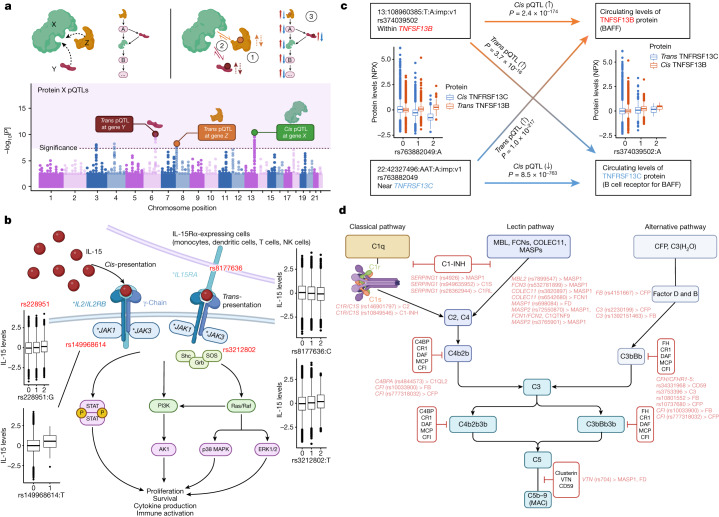
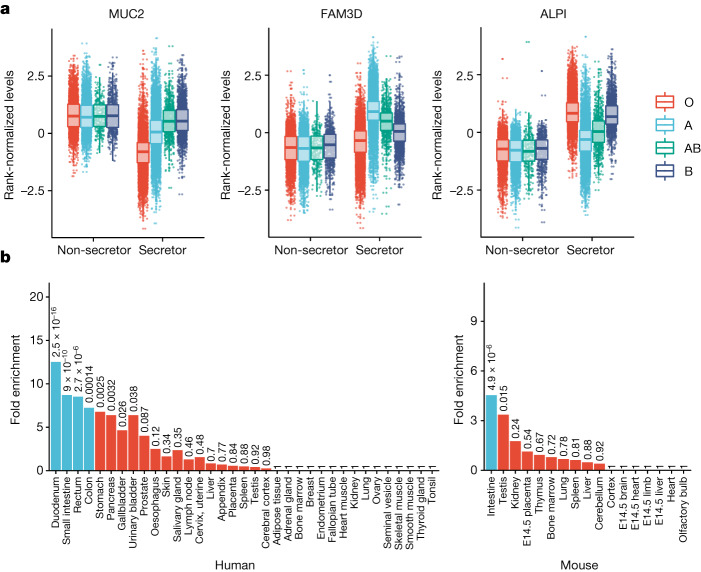
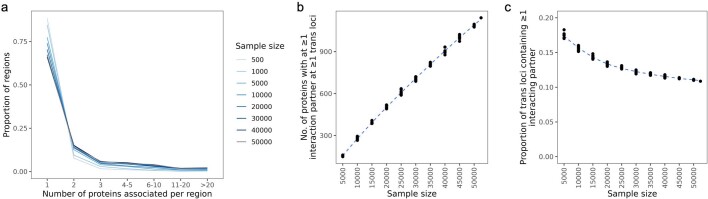
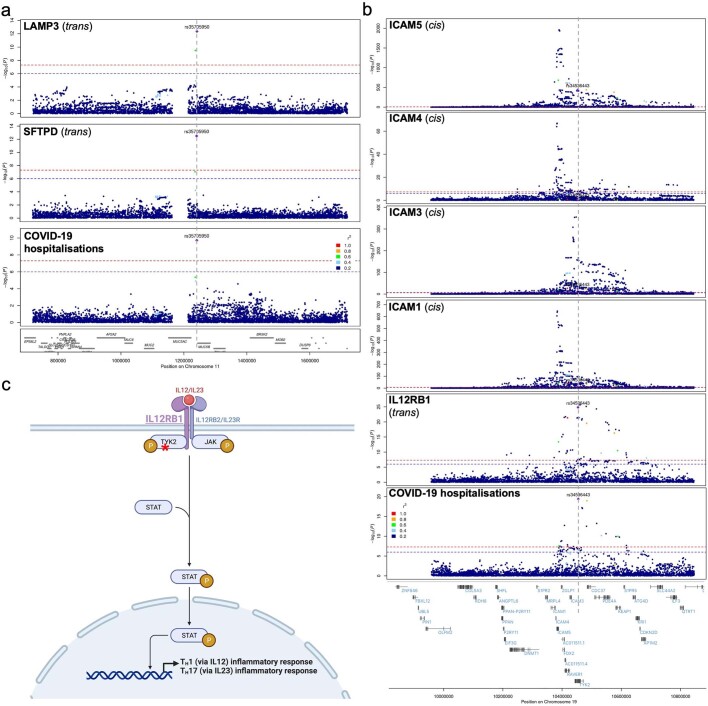
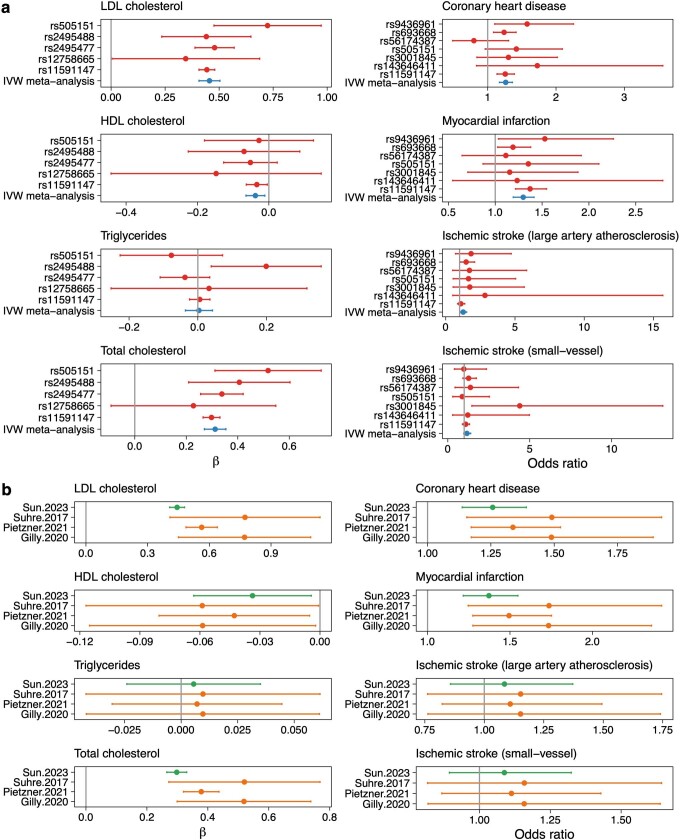
The Pharma Proteomics Project is a precompetitive biopharmaceutical consortium characterizing the plasma proteomic profiles of 54,219 UK Biobank participants. Here we provide a detailed summary of this initiative, including technical and biological validations, insights into proteomic disease signatures, and prediction modelling for various demographic and health indicators. We present comprehensive protein quantitative trait locus (pQTL) mapping of 2,923 proteins that identifies 14,287 primary genetic associations, of which 81% are previously undescribed, alongside ancestry-specific pQTL mapping in non-European individuals. The study provides an updated characterization of the genetic architecture of the plasma proteome, contextualized with projected pQTL discovery rates as sample sizes and proteomic assay coverages increase over time. We offer extensive insights into trans pQTLs across multiple biological domains, highlight genetic influences on ligand–receptor interactions and pathway perturbations across a diverse collection of cytokines and complement networks, and illustrate long-range epistatic effects of ABO blood group and FUT2 secretor status on proteins with gastrointestinal tissue-enriched expression. We demonstrate the utility of these data for drug discovery by extending the genetic proxied effects of protein targets, such as PCSK9, on additional endpoints, and disentangle specific genes and proteins perturbed at loci associated with COVID-19 susceptibility. This public–private partnership provides the scientific community with an open-access proteomics resource of considerable breadth and depth to help to elucidate the biological mechanisms underlying proteo-genomic discoveries and accelerate the development of biomarkers, predictive models and therapeutics 1 .
Overview
CoChat Summary
TL;DR
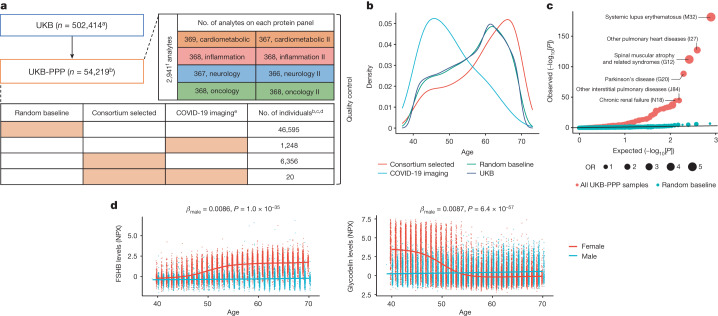
The UK Biobank Pharma Proteomics Project profiled plasma proteins in 54,219 UK Biobank participants using the Olink Explore 3072 proximity extension assay, measuring 2,923 unique proteins. It reports large-scale pQTL mapping, including 14,287 primary genetic associations in a European discovery cohort, of which 81% were previously undescribed.
Key findings
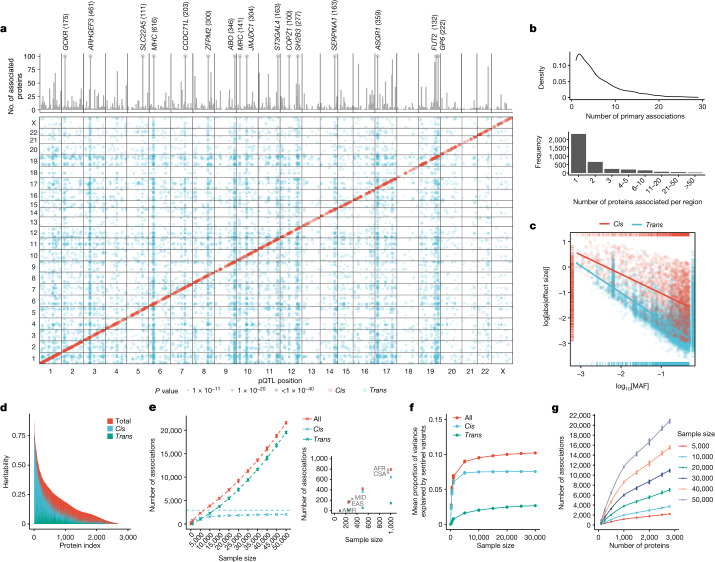
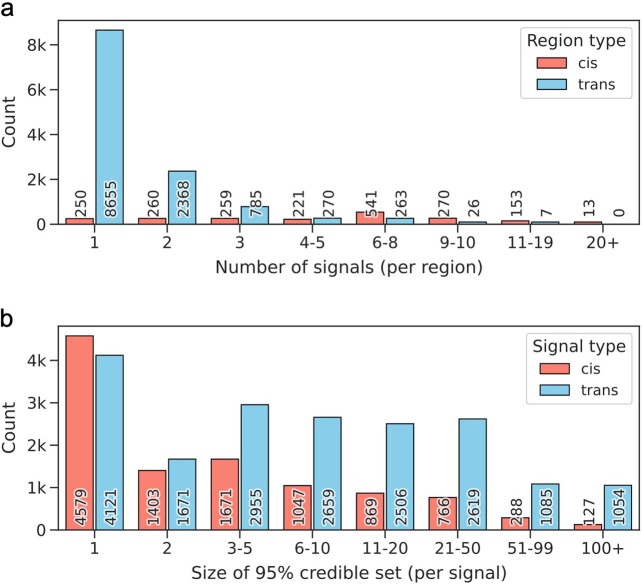
- In the European discovery cohort (n = 34,557), the study identified 14,287 primary pQTL associations across 3,760 independent genetic regions at P < 1.7 × 10⁻¹¹; 1,955 were cis and 12,332 were trans. Replication in n = 17,806 showed 95.6% of cis and 64.1% of trans associations remained significant and directionally concordant.
- 82.6% of tested proteins (2,414/2,922) had at least one pQTL, and 66.9% (1,954/2,922) had a cis association. 81% of primary associations (11,521/14,287) were previously undescribed; 89% of trans pQTLs were previously undescribed versus 27% of cis pQTLs.
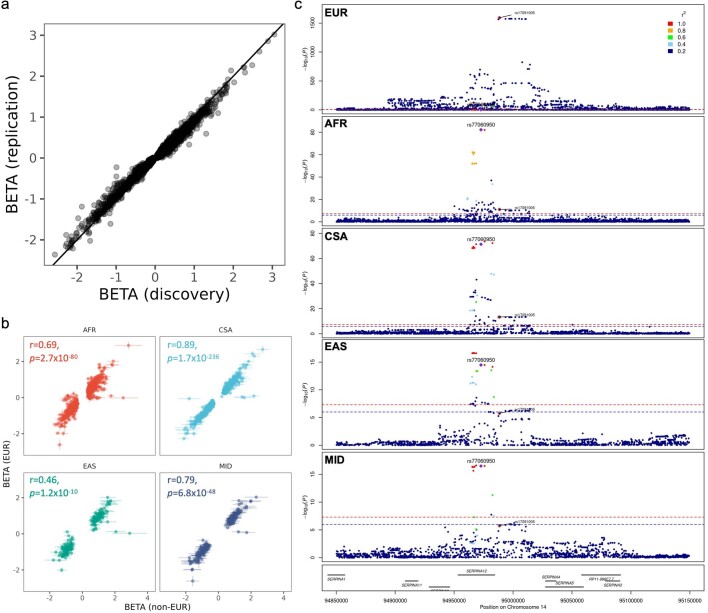
- Non-European ancestry-specific analyses found 785 (AFR, n = 931), 732 (CSA, n = 920), 227 (MID, n = 308), 179 (EAS, n = 262) and 9 (AMR, n = 97) primary associations; the paper highlights ancestry-specific allelic enrichments such as SERPINA12 rs77060950.
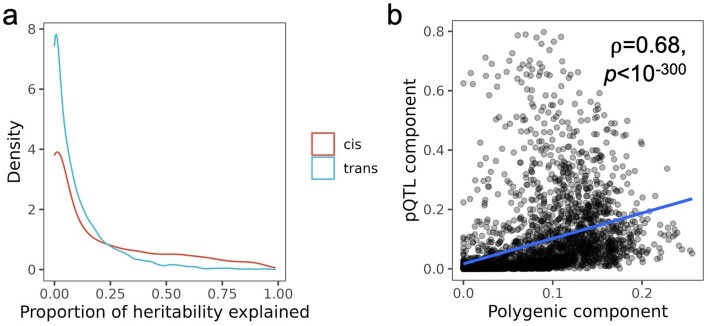
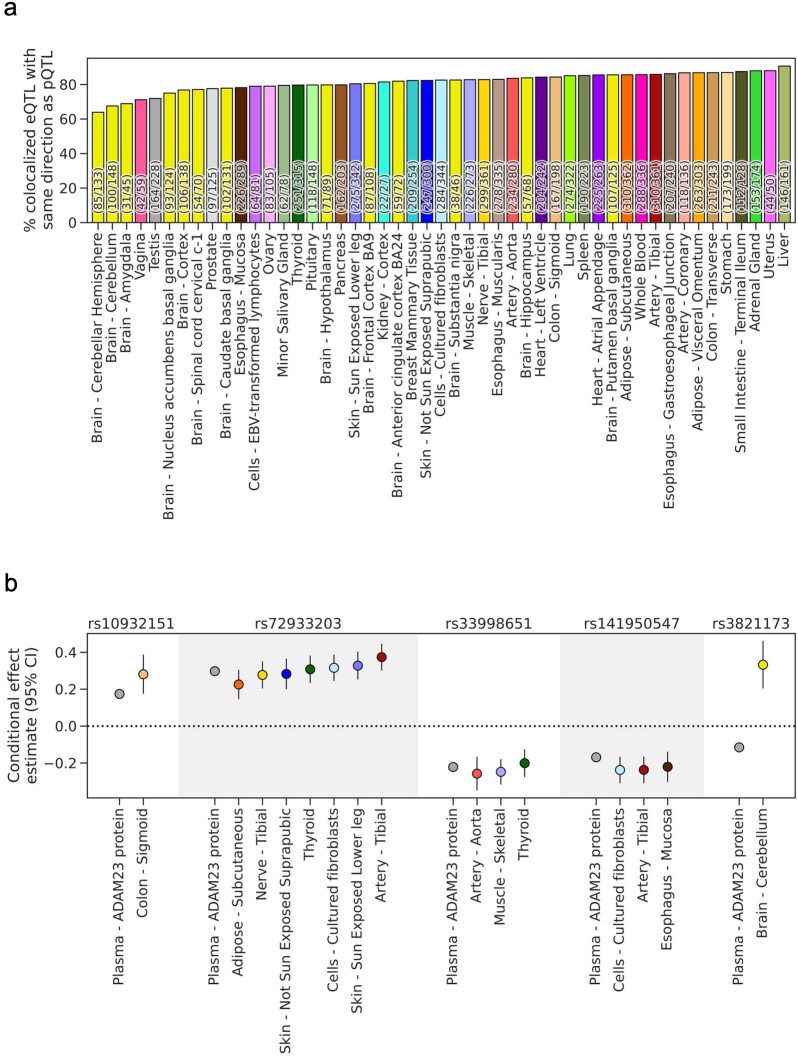
- Additional analyses identified 29,420 independent pQTL signals, mean total SNP-based heritability of 0.16, and colocalization of 65% (1,220/1,889) of genes with a significant eQTL in at least one tissue.
Methods
- Plasma proteomic profiling used the antibody-based Olink Explore 3072 PEA, measuring 2,941 protein analytes and 2,923 unique proteins across 54,219 UKB participants, including 46,595 randomly selected baseline, 6,376 consortium-selected and 1,268 COVID-19 repeat-imaging participants.
- Discovery pQTL analyses were performed in European-ancestry randomly selected baseline participants (n = 34,557) with replication in the remaining samples (n = 17,806), using REGENIE GWAS for up to 16.1 million imputed variants and a significance threshold of P < 1.7 × 10⁻¹¹; full-cohort mapping used n = 52,363 and up to 23.8 million variants.
- Downstream analyses included SuSiE fine-mapping, SNP-based heritability estimation, colocalization with GTEx eQTLs, ancestry-specific pQTL mapping in five pan-UKBB groups, sensitivity analyses for blood cell counts, BMI, season and fasting time, and Mendelian randomization exemplars such as PCSK9.
Limitations
- Stated: the predominantly white European ancestral composition of UKB does not capture full human genetic and phenotypic diversity, and the non-European ancestry groups were small and underpowered; the authors call for prioritizing under-represented and genetically diverse populations, resampling/longitudinal analyses, and orthogonal comparisons across proteomic assays.
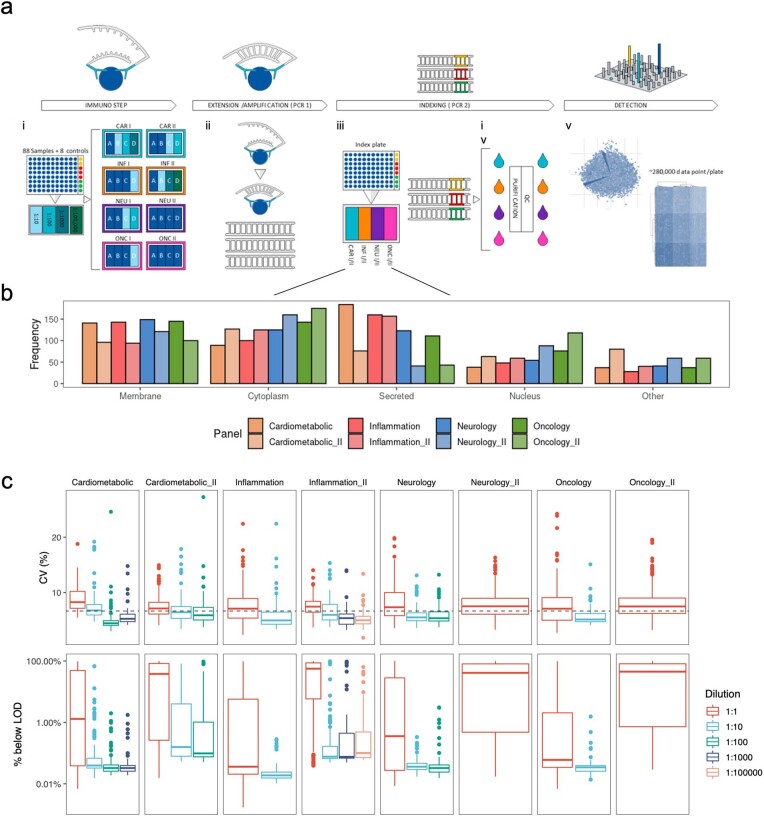
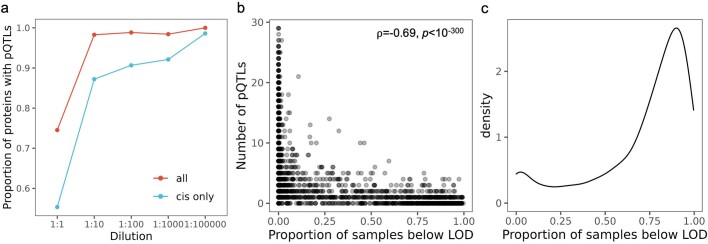
- Stated: pQTL discovery is affected by protein abundance and assay detection; proteins with lower expected concentrations had higher coefficients of variation, and 81.4% of proteins without a pQTL had more than 50% of samples below the limit of detection.
- Evident from the text: the main design is cross-sectional and observational, with causal inference limited to exemplar Mendelian randomization analyses; platform-specific antibody-based measurements may limit overlap with aptamer-based pQTL findings, as only 38% of previous aptamer-based associations replicated among common proteins.
Model-written summary. Check it against the paper before relying on it.
Integrity signals
Registry
Cites
Statistics
Figures
Verification
Claims the paper makes
15 Valid · 1 Not valid · 5 Not checked · 123 Own results and interpretations
The cited sources that could be checked couldn’t confirm or dispute this claim.
In the paper
“Liver expression of SERPINA12 was also higher in rs77060950-T carriers (P = 2.6 × 10 -8 ) 31”
§ Plasma proteomic associations with genetics and health in the UK Biobank > Non-European pQTL mapping
What the sources say
- Could not verifycites [31] The GTEx Consortium. The GTEx Consortium atlas of genetic regulatory effects across human tissues. Science 369, 1318-1330 (2020). sourceExperimental — accuracy not yet measured
The QTL discovery section describes associations between genetic variants and gene expression across tissues, but does not report this specific association. Searches for SERPINA12, rs77060950, and the stated P value found no passage establishing higher liver expression in T carriers; page numbers were not supplied in our copy. (LLM, conf=0.72)
plainstates an association- Asserted: passes — The authors put it forward as true.
- Checkable: passes — It can be checked against evidence.
- Load-bearing: unclear — It is unclear whether the paper’s conclusions depend on it.
- Based: passes — The paper gives a reason why it holds.
- Could not verify
The cited sources support only part of this claim — read each source’s verdict below.
In the paper
“These included well-established, previously identified [17][18][19][20] pleiotropic loci such as MHC, ABO, ZFPM2, ARHGEF3, GCKR, SERPINA1, SH2B3 and ASGR1”
§ Plasma proteomic associations with genetics and health in the UK Biobank > Discovery of pQTLs
What the sources say
- Partly supportedcites [17] Emilsson, V. et al. Co-regulatory networks of human serum proteins link genetics to disease. Science 361, 769-773 (2018). sourceExperimental — accuracy not yet measured
The section “Genetic variants influence serum protein levels” explicitly describes pleiotropy at ABO as well established. Our copy does not identify MHC, ZFPM2, ARHGEF3, GCKR, SERPINA1, SH2B3, or ASGR1 as previously identified pleiotropic loci, so it supports only part of the list. (LLM, conf=0.86)
- Partly supportedcites [18] Sun, B. B. et al. Genomic atlas of the human plasma proteome. Nature 558, 73-79 (2018). sourceExperimental — accuracy not yet measured
In “trans pQTLs identify pathways to disease” (page unavailable), the paper identifies ABO as a well-known pleiotropic locus, describes ZFPM2 as associated with many correlated proteins, and reports associations between a SERPINA1 variant and multiple proteins. It mentions MHC elsewhere but does not identify it there as a pleiotropic locus; the passages found do not establish ARHGEF3, GCKR, SH2B3 or ASGR1 as examples. (LLM, conf=0.88)
- Not checked — no full text of the sourcecites [19] Ferkingstad, E. et al. Large-scale integration of the plasma proteome with genetics and disease. Nat. Genet. 53, 1712-1721 (2021). source
- Partly supportedcites [20] Pietzner, M. et al. Mapping the proteo-genomic convergence of human diseases. Science 374, eabj1541 (2021). sourceExperimental — accuracy not yet measured
The Results section (‘Genetic associations for protein targets’; page unavailable) identifies ARF4-ARHGEF3, ABO and GCKR as substantially pleiotropic regions. The ‘A map of proteo-genomic connections across the phenome’ section also calls GCKR a known pleiotropic locus. Our copy does not establish the remaining named loci as previously identified pleiotropic loci, so it does not support the full list. (LLM, conf=0.87)
boostedstates an association- Asserted: passes — The authors put it forward as true.
- Checkable: passes — It can be checked against evidence.
- Load-bearing: unclear — It is unclear whether the paper’s conclusions depend on it.
- Based: passes — The paper gives a reason why it holds.
- Partly supported
The cited sources support only part of this claim — read each source’s verdict below.
In the paper
“The missense variant rs72938840 (Arg59Gln, MAF AFR = 7.9%) in the gene encoding rhomboid protease, RHBDL2, is mostly absent in EUR and other ancestries 28 and is associated in trans with concentrations of one of its cleavage substrates 29 , SPINT1 (P = 5.8 × 10 -12 )”
§ Plasma proteomic associations with genetics and health in the UK Biobank > Non-European pQTL mapping
What the sources say
- Could not verifycites [28] Karczewski, K. J. et al. The mutational constraint spectrum quantified from variation in 141,456 humans. Nature 581, 434-443 (2020). sourceExperimental — accuracy not yet measured
The cited paper’s population-comparison discussion (p. 439) concerns gene-level constraint, not rs72938840 or its frequency across ancestries. Searches for rs72938840, RHBDL2, Arg59Gln and SPINT1 found no passage reporting the variant’s 7.9% African-ancestry frequency or its association with SPINT1 concentrations. In the citing sentence, this source’s citation is attached to the ancestry-frequency statement, while a different citation follows the SPINT1 statement. (LLM, conf=0.72)
- Supportedcites [29] Johnson, N. et al. Quantitative proteomics screen identifies a substrate repertoire of rhomboid protease RHBDL2 in human cells and implicates it in epithelial homeostasis. Sci. Rep. 7, 7283 (2017). source
The citation to this paper identifies SPINT1 as a cleavage substrate of RHBDL2. In the Results section (page not available), the authors report RHBDL2-dependent cleavage of Spint-1 and identify its cleavage site. The variant association, allele frequency, and P value are not attributed to this source by the citation placement. (LLM, conf=0.93)
plainstates an association- Asserted: passes — The authors put it forward as true.
- Checkable: passes — It can be checked against evidence.
- Load-bearing: unclear — It is unclear whether the paper’s conclusions depend on it.
- Based: passes — The paper gives a reason why it holds.
- Could not verify
A result the paper reports from its own data — it cites no other source for it, so there is none to check. The quote shows it is in the paper.
In the paper
“we found a significant negative relationship between the number of pQTLs and the proportion of samples that were below the LOD (Spearman's ρ = -0.69,P < 10 -300”
§ Plasma proteomic associations with genetics and health in the UK Biobank > Discovery of pQTLs
plainstates an association- Asserted: passes — The authors put it forward as true.
- Checkable: passes — It can be checked against evidence.
- Load-bearing: unclear — It is unclear whether the paper’s conclusions depend on it.
- Based: passes — The paper gives a reason why it holds.
A result the paper reports from its own data — it cites no other source for it, so there is none to check. The quote shows it is in the paper.
In the paper
“with 66.9% of proteins tested (1,954 of 2,922 proteins) having a cis association (within 1 Mb from the gene encoding the protein)”
§ Plasma proteomic associations with genetics and health in the UK Biobank > Discovery of pQTLs
plainstates an association- Asserted: passes — The authors put it forward as true.
- Checkable: passes — It can be checked against evidence.
- Load-bearing: passes — The paper’s conclusions depend on it.
- Based: passes — The paper gives a reason why it holds.
52 more claims
Create a free account to see all 144 claims and to verify the 1 reference still open.
- It may state two separate claims as one. 58
- Probably not a substantial claim. 44
Claims other papers make about this one
Each is checked against this paper’s own text: does it say what the citing paper says it does?
The source backs part of the claim, not all of it — or backs it for a different population, condition or comparison.
In the citing paper
“In a separate array-based GWAS on the UKB-PPP cohort, we tested for the association between common variants (MAF > 0.1%) and 2,922 protein assays, resulting in 14,287 primary genetic associations5.”
From Rare variant associations with plasma protein levels in the UK Biobank (2023) · cites this paper as [5]
Experimental — accuracy not yet measuredThe source backs part of the claim, not all of it — or backs it for a different population, condition or comparison.
In the citing paper
“This pQTL was also CSF specific using Olink (table S5), independent of a subthreshold EGFR pQTL in plasma (rs56380922; R2 = 0.017), and not significant in plasma studies with 10 times our CSF sample size (9–11), implying a highly specific association in neurological contexts.”
From Low overlap of plasma and CSF protein quantitative trait loci affects protein discovery for neurological disease (2026) · cites this paper as [11]
Experimental — accuracy not yet measuredThe cited source says what the claim attributes to it.
In the citing paper
“Key plasma protein databases, such as the UK Biobank Pharma Proteomics Project (UKB-PPP) and deCODE [12,13], offer valuable resources for identifying therapeutic targets and risk factors across various diseases, including cancer [14,15].”
From Identifying novel drug targets for calcific aortic valve disease through Mendelian randomization (2025) · cites this paper as [12]
The cited source says what the claim attributes to it.
In the citing paper
“To date, most pQTLs have been discovered via genome-wide association studies (GWASs), which predominantly focus on common variants3,5–8.”
From Rare variant associations with plasma protein levels in the UK Biobank (2023) · cites this paper as [5]
The cited source says what the claim attributes to it.
In the citing paper
“The effect sizes (β) of nominally significant ExWAS pQTLs (P < 1 × 10⁻⁴) strongly correlated with the GWAS-derived pQTLs5 (r2 = 0.96; Supplementary Fig. 2).”
From Rare variant associations with plasma protein levels in the UK Biobank (2023) · cites this paper as [5]
10 more claims about this paper
Create a free account to see every claim other papers make about this one.
Self-check
Percentages, sums and reported differences re-computed from the paper’s own numbers.
Each contradiction between two passages listed here was confirmed by an independent check.
Rated minor: it would not touch a result — a value no result rests on, a p-value that stays on the same side of the significance level, or a conflict that is clerical, resolved elsewhere in the paper, or outside its own findings.
In the paper
§ Plasma proteomic associations with genetics and health in the UK Biobank > Additional information
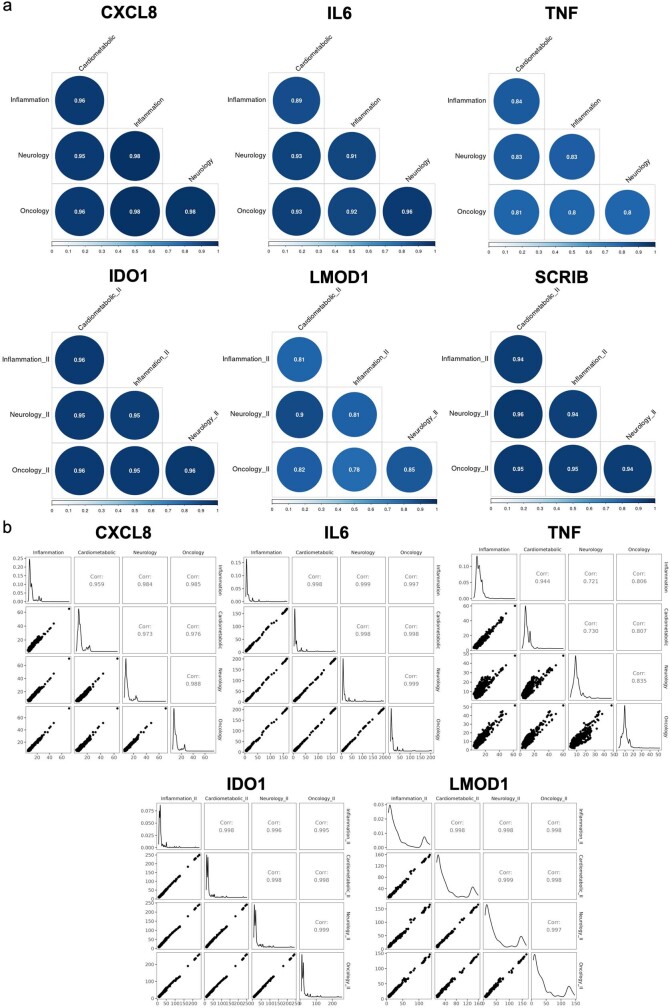
“on three proteins measured across multiple protein panels”
§ Plasma proteomic associations with genetics and health in the UK Biobank > Additional information
“(CXCL8, IL-6, TNF, IDO1, LMOD1, SCRIB).”
Rated minor: it would not touch a result — a value no result rests on, a p-value that stays on the same side of the significance level, or a conflict that is clerical, resolved elsewhere in the paper, or outside its own findings.
In the paper
§ Plasma proteomic associations with genetics and health in the UK Biobank > Discovery of pQTLs
“A total of 1,955 of the 14,287 primary associations were in cis”
§ Plasma proteomic associations with genetics and health in the UK Biobank > Comparisons with previous pQTL studies
“compared with cis pQTLs (27%; 518 out of 1,954).”
Citations
Cites
Regularization Paths for Generalized Linear Models via Coordinate Descent
Friedman, J., Hastie, T., & Tibshirani, R. (2010) · Journal of Statistical Software · doi:10.18637/jss.v033.i01 · Cited by 19,927 · cited 1×
“…eGFR and ABO blood groups (genetic ascertainment of blood groups is described in the ‘ABO blood group and FUT2 secretor status analysis’ section) separately using glmnet (R package v.4.1-4) 57 to tune the lambda.1se parameter with tenfold cross validation for 100 lambdas between 10 −5 and 1,000.”
MethodInfluentialTissue-based map of the human proteome
Uhlén, M., Fagerberg, L., Hallström, B. M., Lindskog, C., Oksvold, P., Mardinoglu, A., Sivertsson, Å., Kampf, C., Sjöstedt, E., Asplund, A., et al. (2015) · Science · doi:10.1126/science.1260419 · Cited by 15,286
Second-generation PLINK: rising to the challenge of larger and richer datasets
Chang, C. C., Chow, C. C., Tellier, L. C., Vattikuti, S., Purcell, S. M., & Lee, J. J. (2015) · Gigascience · doi:10.1186/s13742-015-0047-8 · Cited by 12,709
The mutational constraint spectrum quantified from variation in 141,456 humans
Karczewski, K. J., Francioli, L. C., Tiao, G., Cummings, B. B., Alföldi, J., Wang, Q., Collins, R. L., Laricchia, K. M., Ganna, A., Birnbaum, D. P., et al. (2020) · Nature · doi:10.1038/s41586-020-2308-7 · Cited by 9,434 · cited 3×
“%) and is nearly absent in EUR and other ances-tries 28 .”
BackgroundInfluentialSelf-citationThe UK Biobank resource with deep phenotyping and genomic data
Bycroft, C., Freeman, C., Petkova, D., Band, G., Elliott, L. T., Sharp, K., Motyer, A., Vukcevic, D., Delaneau, O., O’Connell, J., et al. (2018) · Nature · doi:10.1038/s41586-018-0579-z · Cited by 8,876 · cited 2×
“The open-access framework 24 , deep phenotypic characterization 7 and long-term development 9,10 of population studies like the UKB offer a unique opportunity to expand proteogenomics to a massive scale, broaden research use of high-throughput proteomic data, build more extensive pQTL databases,…”
BackgroundMethodSelf-citationThe MR-Base platform supports systematic causal inference across the human phenome
Hemani, G., Zheng, J., Elsworth, B., Wade, K. H., Haberland, V., Baird, D., Laurin, C., Burgess, S., Bowden, J., Langdon, R., et al. (2018) · eLife · doi:10.7554/elife.34408 · Cited by 7,959 · cited 1×
“Data for these outcomes were extracted from the OpenGWAS project 72,73 .”
MethodSelf-citationLD Score regression distinguishes confounding from polygenicity in genome-wide association studies
Schizophrenia Working Group of the Psychiatric Genomics Consortium, Bulik-Sullivan, B. K., Loh, P.-R., Finucane, H. K., Ripke, S., Yang, J., Patterson, N., Daly, M. J., Price, A. L., & Neale, B. M. (2015) · Nature Genetics · doi:10.1038/ng.3211 · Cited by 5,559 · cited 1×
“The polygenic component, which mostly likely satisfies the polygenic model of small genetic contributions across the genome, was estimated using LD-score regression 62 .”
MethodThe GTEx Consortium atlas of genetic regulatory effects across human tissues
The GTEx Consortium, Aguet, F., Anand, S., Ardlie, K. G., Gabriel, S., Getz, G. A., Graubert, A., Hadley, K., Handsaker, R. E., Huang, K. H., et al. (2020) · Science · doi:10.1126/science.aaz1776 · Cited by 5,547
Self-citationAnderson, N. L., & Anderson, N. G. (2002) · Molecular & Cellular Proteomics · doi:10.1074/mcp.r200007-mcp200 · Cited by 4,414
Estimating glomerular filtration rate from serum creatinine and cystatin C
Inker, L. A., Schmid, C. H., Tighiouart, H., Eckfeldt, J. H., Feldman, H. I., Greene, T., Kusek, J. W., Manzi, J., Van Lente, F., Zhang, Y. L., et al. (2012) · New England Journal of Medicine · doi:10.1056/nejmoa1114248 · Cited by 4,102
Cited by
Items 1,001–1,100 of 1,846
Gan, X., Zhang, Y., Zhang, Y., Ye, Z., Yang, S., Xiang, H., Huang, Y., Wu, Y., Zhang, Y., & Qin, X. (2026) · Inflammatory Bowel Diseases · doi:10.1093/ibd/izaf325 · Cited by 1
Genetic evidence supports therapeutic modulation of progranulin levels in Alzheimer’s Disease
Robins, C., Eicher, J. D., Liu, J., Lo, Y., Richardson, T. G., Western, D., Davitte, J., Cruchaga, C., Initiative, A. D. N., Kumar, U., et al. (2026) · Molecular Neurodegeneration Advances · doi:10.1186/s44477-025-00011-y · Cited by 2
“Plasma protein quantitative trait loci (pQTLs) come from a large pQTL dataset of genome-wide associations generated in the UK Biobank Pharma Proteomics Project (UKB-PPP) [17], http:// ukb-ppp. gwas. eu/).”
InfluentialSelf-citationHuang, Y., Tutino, M., Singh, A., Rayner, N. W., Barysenka, A., Bocher, O., & Zeggini, E. (2026) · Cardiovascular Diabetology · doi:10.1186/s12933-026-03083-6 · Cited by 2
“A subset of these participants underwent plasma proteomic profiling through the UK Biobank Pharma Proteomics Project (UKB-PPP), which was largely randomly selected from the full UKB population [21].”
Li, Y., Zhai, R., Yang, Z., Li, T., Pawitan, Y., & Shen, X. (2026) · GigaScience · doi:10.1093/gigascience/giaf155 · Cited by 1
Buianova, A. A., Adzhubei, I. A., Kryukova, O. V., Kost, O. A., Mironenko, I. V., Kozuch, A. J., Ilyina, G. A., Kuznetsova, A. A., Repinskaia, Z. A., Churov, A. V., et al. (2026) · Biomedicines · doi:10.3390/biomedicines14020275 · Cited by 2
“In large cohorts (Icelanders [21], UK Biobank [26], and several Russian datasets), a range between dozens and several hundred carriers of the Y215C mutation have been identified, corresponding to a frequency of approximately 1000–2500 per 100,000 individuals (with the highest value of 2571 in the…”
Bocher, O., Arruda, A. L., Yoshiji, S., Zhao, C., Huerta‐Chagoya, A., Su, C., Yin, X., Cammann, D., Taylor, H. J., Chen, J., et al. (2026) · Nature Metabolism · doi:10.1038/s42255-025-01444-1 · Cited by 3
Wang, N., Guo, Y., Lu, S., Sun, C., Wang, C., Ren, Q., Xu, Y., Liu, Q., Hu, J., Yan, C., et al. (2026) · Resuscitation · doi:10.1016/j.resuscitation.2026.110994 · Cited by 1
Kushnir, C. N., Taylor‐Bateman, V., Davies, N. M., & Anderson, E. L. (2026) · Brain Behavior & Immunity - Health · doi:10.1016/j.bbih.2026.101185 · Cited by 1
“…data for selected DMARD targets were sourced from a large-scale proteogenomic analysis as part of the UK Biobank Pharma Proteomics Project (UKB-PPP, n = 54,219), which provides detailed mapping of 2923 proteins and their associations with genetic variants within blood plasma (Sun et al., 2023).”
Wang, H., Li, X., Xu, X., Li, S., Xu, L. N., Shi, L., Huang, C., Sun, Y., You, H., Jia, J., et al. (2026) · International Journal of Biological Macromolecules · doi:10.1016/j.ijbiomac.2026.150634 · Cited by 2
Jiang, B., Wang, Y., Qu, C., Zhang, C., Jiang, C., Su, L., Guan, W., & Luo, Y. (2026) · Frontiers in Endocrinology · doi:10.3389/fendo.2026.1715937 · Cited by 2
Luo, Q., Wei, J., Ding, Y., Chen, Y., Wu, L., Chou, C. J., Luo, X., Ghafourian, N., Tao, J. Q., Jin, B., et al. (2026) · BMC Medicine · doi:10.1186/s12916-026-04639-9 · Cited by 2
“Furthermore, emerging multi-ancestry pro-teogenomic resources indicate that many circulating proteins, including GPX3, NID1, and PAPPA2, exhibit substantial cross-ancestry sharing of pQTL architecture (with some ancestry-specific signals), as shown in large UK Biobank analyses [72, 73].”
Peng, P., Song, X., Jia, D., Zhu, X., Zhang, X., xu, D., & Liu, H. (2026) · BMC Infectious Diseases · doi:10.1186/s12879-026-12748-2 · Cited by 1
“…plasma proteins from 35,559 participants [15] and (2) the UK Biobank Pharma Proteomics Project (UKB-PPP) ( h t t p s : / / w w w . s y n a p s e . o r g / S y n a p s e : s y n 5 1 3 6 4 9 4 3 / w i k i / 6 2 2 1 1 9), which includes data on 2,923 plasma proteins from 54,219 participants [16].”
Xie, R. X., Bhardwaj, M., Sha, S., Peng, L., Vlaški, T., Brenner, H., & Schöttker, B. (2025) · European Heart Journal · doi:10.1093/eurheartj/ehaf784.3480 · Cited by 1
Dardov, V. J., Vasanthakumar, A., Kulkarni, A. S., Sundararaman, N., Pandey, R., Bais, P., Van, J., Quinton, M. S., Landin, B., Vismer, D., et al. (2026) · Movement Disorders · doi:10.1002/mds.70183 · Cited by 1
“17 Within this evolving landscape, AMP PD contributes a unique and richly annotated dataset that supports the growing demand for large-scale, harmonized, and clinically integrated proteomics resources in PD research.”
van der Graaf, A., Rizi, S., Auwerx, C., & Kutalik, Z. (2026) · The American Journal of Human Genetics · doi:10.1016/j.ajhg.2025.12.013 · Cited by 1
Chen, R., Ge, S., Chang, F., Chen, M., Li, Y., Li, Y., You, D., Tang, P., & Yin, P. (2026) · iScience · doi:10.1016/j.isci.2026.114926 · Cited by 1
Selber‐Hnatiw, S., Trajanoska, K., Pelletier, J., Su, C., McClelland, P., Taliun, D., Yoshiji, S., Mooser, V., Bhérer, C., & Zhou, S. (2026) · Circulation Genomic and Precision Medicine · doi:10.1161/circgen.125.005159 · Cited by 4
Gao, J., Huang, P., & Zhang, Y. (2026) · Clinical Epigenetics · doi:10.1186/s13148-026-02072-6 · Cited by 1
“The discovery cohort utilized the atherosclerosis GWAS data from the FinnGen study (GWAS ID: Finn-Gen_R10_I9_ATHSCLE) [20], which consists 16,243 [24].”
Yuan, Y., Liu, B., Chen, S., Wang, M., Zhao, S., & Mao, Y. (2026) · Cytokine · doi:10.1016/j.cyto.2026.157127 · Cited by 1
Plasma Proteome Signature for Leukocyte Telomere Length and Its Link to Abdominal Aortic Aneurysm
Li, A., Austin, T. R., Steffen, B. T., Jacobson, I. E., Xie, J., Pankratz, N., Lane, J., Fitzpatrick, A., Bis, J. C., Arking, D. E., et al. (2026) · Journal of Cellular and Molecular Medicine · doi:10.1111/jcmm.71047 · Cited by 1
Tang, H., Liu, Z., Qi, B., Huang, Y., Yuan, D., Cheng, X., Zhao, R., Zhang, B., & Liu, J. (2026) · Journal of King Saud University - Science · doi:10.25259/jksus_1072_2025 · Cited by 1
Wu, Y., Deng, F., Bai, M., Zhang, G., Li, Z., Wen, M., Zhang, J., Li, R., Shi, Y., Lu, L., et al. (2026) · Nutrition & Metabolism · doi:10.1186/s12986-026-01081-9 · Cited by 1
“Summary statistics for leptin were obtained from the UK Biobank, which included 54,219 participants [21].”
Stephan, N., Halama, A., Thareja, G., Sarwath, H., Grallert, H., Peters, A., Gieger, C., Schmidt, F., Graumann, J., & Suhre, K. (2026) · Journal of Proteome Research · doi:10.1021/acs.jproteome.5c00887 · Cited by 1
Self-citationZhang, Y., Li, K., Chen, Y., Zhu, W., Zhang, J., Luo, P., & Lin, A. (2025) · Current Proteomics · doi:10.1016/j.curpro.2025.100053 · Cited by 2
Proteomic Risk Score for Prediction of Incident Hypertension
Kim, M. Y., Tavolinejad, H., Bustamante, M. S., Segers, P., Neirynck, R. E., Meyer, T. D., Buyzere, M. L. D., Rietzschel, E. R., & Chirinos, J. A. (2026) · Hypertension · doi:10.1161/hypertensionaha.125.26321 · Cited by 1
Wu, Y., Wong, O. W., Chen, S., Wang, Y., Zhang, G., Gao, Y., Chan, F. K. L., Ng, S. C., & Su, Q. (2026) · International Journal of Molecular Sciences · doi:10.3390/ijms27042006 · Cited by 2
“All spectrometry-based detection results accounted for fasting time and season, with neither showing significant influence [35,48].”
Proteome-wide Mendelian randomisation identifies causal links between blood proteins and myopia
Wu, F., Zhou, Y., Ma, X., Zhao, Z., Wang, S., Ma, K., Yang, S., Cao, M., Yi, G., & Fu, M. (2026) · Journal of Global Health · doi:10.7189/jogh.16.04003 · Cited by 1
“The UK Biobank-PPP provided pQTLs for 2940 proteins in 54 219 participants [ 19 ].”
Zhou, H., Wang, Z., Tan, Z., Deng, B., Yang, W., Huang, Z., Guo, X., Li, J., Wang, X., Yu, Y., et al. (2026) · EBioMedicine · doi:10.1016/j.ebiom.2026.106183 · Cited by 1
Plasma proteomic profiles linked to suicidal behaviors
Zhang, B., You, J., Rolls, E. T., Ren, P., Li, Y., Zhang, W., Sahakian, B. J., Li, F. R., Feng, J., & Cheng, W. (2026) · Nature Mental Health · doi:10.1038/s44220-025-00582-5 · Cited by 43
Fei, M., Lin, Z., Tu, J., Wang, C., Chen, H., Zeng, Q., Wu, B., Lin, Y. S., You, Z., Lin, K., et al. (2026) · Sleep Health · doi:10.1016/j.sleh.2025.12.009 · Cited by 2
Liu, W., Xu, W., Huang, J., Xu, J., Fu, Z., Yan, H., Jia, W., Yu, H., Zheng, B., 潘伟康, et al. (2026) · Pediatric Research · doi:10.1038/s41390-026-04789-9 · Cited by 1
Meena, D., Pansini, M., Fichera, A., Huang, J., Ahmed, A., Dehghan, A., Banerjee, R., & Yaghootkar, H. (2026) · Human Genomics · doi:10.1186/s40246-026-00913-2 · Cited by 3
“We leveraged protein quantitative trait locus (pQTL) data from the UK Biobank Pharma Proteomics Project (UKB-PPP; 2,031 proteins) [37] and deCODE Genetics (1,803 proteins) [38].”
Sobczyk, M. K., & Gaunt, T. R. (2026) · Scientific Reports · doi:10.1038/s41598-026-41818-3 · Cited by 3
“Figure 3 highlights the advantage of using multiple pQTL sources ( A – ARIC, B – deCODE, C - UK Biobank) for ulcerative colitis, the IMD showing the highest number of hits with strong colocalisation support.”
InfluentialContactin-2 protects against aortic valve calcification via osteogenic differentiation inhibition
Zhou, Z., Shen, R., Chen, S., Zhang, H., Chen, L., Weng, X., Lin, X., & Chai, D. (2026) · Scientific Reports · doi:10.1038/s41598-026-42767-7 · Cited by 1
“Plasma proteomic research has revealed new therapeutic targets for a multitude of cardiovascular diseases 23,24 .”
Association between IL-6 and hs-CRP and cardiovascular risk in clinically relevant subgroups
Bundgaard, J. S., Ahlberg, G., Rand, S. A., Lundegaard, P. R., Stender, S., Vilhjálmsson, B. J., Kaspersen, K. A., Larsen, O. H., Schmidt, R. F., Bundgaard, H., et al. (2026) · European Journal of Preventive Cardiology · doi:10.1093/eurjpc/zwag139 · Cited by 1
Zhao, Y., Wu, J., Li, C., Cheng, Y., Li, Q., Wu, J., Sun, Z., Zhang, S., & Wu, J. (2026) · Investigative Ophthalmology & Visual Science · doi:10.1167/iovs.67.3.14 · Cited by 1
“11,20 Although these studies provide a valuable “breadth” of the proteome across multiple diseases, our study focuses on “depth” specifically for glaucoma.”
Gao, W., Guo, Y., Liu, B., Sun, W., Sun, Y., & Liang, X. (2026) · Kidney Diseases · doi:10.1159/000551263 · Cited by 1
“…Genetics Study ( n = 614) and the Lothian Birth Cohorts ( n = 1,366). eQTL data were obtained from a published article [16], comprising genetic data on blood gene expression from 31,684 European individuals. pQTL data were sourced from a previous study [17], including 54,219 UKB participants.”
Bouka, M., Nimptsch, K., Pham, T. T., Bouras, E., Kanellopoulou, A., Phipps, A. I., Guelpen, B. R. V., Brenner, H., Li, L., Marchand, L. L., et al. (2026) · BMC Medicine · doi:10.1186/s12916-026-04736-9 · Cited by 2
“…dataset, our study had at least 80% power to detect the following HRs per SD: in deCODE, 1.05 for sIL6-RA, 1.14 for IL6ST, and 1.42 for both sTNF-R1 and sTNF-R2; in UK Biobank, 1.07 for sIL6-RA, 1.21 for IL6ST, 1.24 for TNF-α, and 1.23 for sTNF-R2 (Additional file 3: Table 1) [14, 46, 47, 50–55].”
InfluentialZhao, W., Li, X., Zhang, X., Guo, Y., Zhang, B., Cao, Y., Diao, Y., Wu, Z., Lu, C., Chen, Z., et al. (2026) · Cardiovascular Diabetology · doi:10.1186/s12933-026-03116-0 · Cited by 2
“Detailed study design and data collection procedures have been described previously [25, 26].”
Kan, S., Liu, W., Li, P., Zhou, M., Yu, H., Zheng, Y., Hu, W., & Zhu, R. (2026) · Journal of Orthopaedic Surgery and Research · doi:10.1186/s13018-026-06762-y · Cited by 1
“The application of multi-omics techniques—integrating expression quantitative trait loci (eQTL) [14], protein quantitative trait loci (pQTL) [15], and metabolomic data [16]—has substantially enhanced our ability to decipher the intricate biological networks underlying degenerative diseases.”
Nagra, D., Zuckerman, B. P., Odia, J., Patel, S., Ong, M., Adas, M. A., Yang, Z., Bechman, K., Russell, M., Bhandari, S., et al. (2026) · Frontiers in Immunology · doi:10.3389/fimmu.2026.1706949 · Cited by 1
“Genetic proxies for IL-17 proteins (A, C, D, F, receptor A, and receptor B) were identi fi ed from 54,306 participants in the UK Biobank Pharma Proteomics Project (13).”
Proteomic Signatures Related to Physical Activity Are Associated with Risks of Future Disease
Huang, S., Long, G., Li, G. X., Dai, S., Li, G., HE, Z., Chen, Y., LU, Q., Huang, H., ZHANG, A., et al. (2026) · Medicine & Science in Sports & Exercise · doi:10.1249/mss.0000000000003909 · Cited by 1
TNFR Pathway-Related Proteins and Recurrent Coronary Artery Disease Events
Lee, J., Bellomo, T. R., Halford, J. L., Cho, S. M. J., Koyama, S., Dron, J. S., Haidermota, S., Ruan, Y., Urbut, S., Truong, B. M. T., et al. (2026) · JACC Advances · doi:10.1016/j.jacadv.2026.102687 · Cited by 1
Large-scale proteomic analyses before depression diagnosis reveal novel pathophysiological insights
Cheng, B., Cheng, S., Pan, C., Wei, W., Feng, J., Qi, X., Zhao, B., Wen, Y., & Zhang, F. (2026) · Molecular Psychiatry · doi:10.1038/s41380-026-03540-4 · Cited by 1
“Olink ’ s quality assessment found no signi fi cant evidence of substantial NPX variability across processing batches [16].”
InfluentialA cross-sectional examination of immune adaptations during pregnancy in the ECHO Cohort
Banker, S. M., Shapiro-Thompson, R., Sinsel, S., Ghassabian, A., Douglas, C. E., Nelson, M. E., Peterson, L. A., Thyagarajan, B., Morales, S., Hockett, C. W., et al. (2026) · Frontiers in Immunology · doi:10.3389/fimmu.2026.1803430 · Cited by 1
Cronjé, H. T., Hu, S., Gurrell, R., Vujković, M., Larsson, S. C., Mason, R., Butt, R. P., & Gill, D. (2026) · BMC Medicine · doi:10.1186/s12916-026-04807-x · Cited by 3
Self-citationWu, Y., Yuan, Y., Zhou, X., Duan, S., Chu, Y., Zhu, L., Zhu, Y., Yang, X., Wu, J., Shen, Y., et al. (2026) · Journal of Affective Disorders · doi:10.1016/j.jad.2026.121672 · Cited by 1
Zheng, Y., 秦霖, Ji, J., Mo, H., & Wang, K. (2026) · Annals of Vascular Surgery · doi:10.1016/j.avsg.2026.03.008 · Cited by 1
Che, J., Li, X., Qiu, Z., Li, R., Yu, H., Xie, J., Guo, T., Tang, Z., Xia, P., Xu, K., et al. (2026) · Cardiovascular Diabetology · doi:10.1186/s12933-026-03147-7 · Cited by 1
“Details of data processing and quality control are available in Sun et al. [14] study.”
van der Burgt, Y. E. M., & Cobbaert, C. M. (2026) · Clinical Chemistry and Laboratory Medicine (CCLM) · doi:10.1515/cclm-2026-0109 · Cited by 2
“In close proximity the oligos hybridize to yield a unique DNA barcode for each protein [33 – 35].”
Cardiovascular risk assessment characterized by proteomics in cancer survivors
Wang, P., Peng, Y., Liu, F., Sheng, C., Chen, K., & Song, F. (2026) · Communications Medicine · doi:10.1038/s43856-026-01570-1 · Cited by 1
“Detailedinformationonproteomicassays,dataprocessing,andquality control has been published 16 .”
Integrative proteomics to illuminate host–parasite interactions in malaria
Attallah, N., Srivastava, H. R., Carlton, J. M., & Idaghdour, Y. (2026) · Trends in Parasitology · doi:10.1016/j.pt.2026.03.005 · Cited by 1
Stinson, S. E., Shadrin, A. A., Rahman, Z., Rødevand, L. N., Broce, I., Persson, K., Selbæk, G., Stefánsson, H., Haavik, J., Parker, N., et al. (2026) · EBioMedicine · doi:10.1016/j.ebiom.2026.106254 · Cited by 9
“5c, Supplementary Tables S17 and 18).”
InfluentialBlood-based biomarker discovery for early pregnancy loss using integrative multi-omics strategies
Shi, Y., Yang, Y., Guo, X., Shi, S., Li, Q., Wang, C. C., Poon, L. C., Chung, P. W., Xia, J., Wang, Y. F., et al. (2026) · EBioMedicine · doi:10.1016/j.ebiom.2026.106253 · Cited by 4
BinBin, L. I. U., Luo, S., Geng, Z., Jia, X., Wang, H., Pei, Z., Tang, T., Yang, X., Zhang, G., Zhang, S., et al. (2026) · Archives of Gerontology and Geriatrics · doi:10.1016/j.archger.2026.106240 · Cited by 2
Challenges and future directions for Mendelian randomization
Sanderson, E. C. M., Levin, M. G., Walker, V. M., Yuan, S., Badini, I., Dolce, J., Mahida, K. J., Nho, J.-W., Pingault, J., Damrauer, S. M., et al. (2026) · Nature Genetics · doi:10.1038/s41588-026-02546-6 · Cited by 7
“Robust genetic associations for protein levels, known as protein quantitative trait loci (pQTLs), are being extensively cataloged, particularly for a majority of those proteins that are easily assayable 75,78 .”
Duggan, M. R., Jacobsen, E. P., Yang, S., Zeng, X., Kandala, S., Joynes, C. M., Karikari, T. K., Nimgaonkar, V. L., Kamboh, M. I., Snitz, B. E., et al. (2026) · Journal of Neuroinflammation · doi:10.1186/s12974-026-03800-8 · Cited by 1
“Plasma proteomic data were obtained using methods previously described for MYHAT [24], BLSA [8], UKB [25], and GNPC [26].”
Luan, W., Fan, S., Jiang, H., Jiang, D., Yang, J., & He, L. (2026) · iScience · doi:10.1016/j.isci.2026.115797 · Cited by 1
Yu, H., Zhang, J., Qian, F., Liu, J., Zhu, K., Qiu, Z., Li, R., Li, R., Li, L., Wang, Y., et al. (2026) · American Journal of Clinical Nutrition · doi:10.1016/j.ajcnut.2026.101216 · Cited by 1
Biobank-Scale Plasma Proteomics Identifies Novel Biomarkers in Hypertrophic Cardiomyopathy
Chan, J., Grace, C., Mazidi, M., Clarke, R., Ho, C. Y., Neubauer, S., Kramer, C. M., Watkins, H. C., Goel, A., Weintraub, W. S., et al. (2026) · Circulation Genomic and Precision Medicine · doi:10.1161/circgen.125.005325 · Cited by 1
“7,8 The advent of biobank-scale plasma proteomic data sets, such as the UK Biobank Pharma Proteomics Project (UKB-PPP) measuring ≈ 3000 plasma proteins in > 50 000 individuals, 9 has enabled comprehensive, population-scale analyses.”
Empirical evaluation of analytic validity of polygenic scores
Lin, T., Zeng, J., Gordon, S. D., Wallace, L. M., Ziser, L., Shah, S. H., Pain, O., Nolte, I. M., Snieder, H., Study, L. C., et al. (2026) · Genome Medicine · doi:10.1186/s13073-026-01654-6 · Cited by 1
“European ancestry GWAS summary statistics for 32 binary traits and 83 quantitative traits (including 16 fatty acids [25], 10 proteins [26] and 34 blood/urine biomarkers [27]) (Additional file 1: Table S2; Additional file 2: Fig S1) are used in this study.”
Self-citationZha, C., Weng, M., Xu, C., Yuan, Y., He, Y., Qi, Y. X., Peijian, S. H. I., & Shen, X. (2026) · Journal of Pharmacology and Experimental Therapeutics · doi:10.1016/j.jpet.2026.104898 · Cited by 2
Ruan, Z.-F., Tu, J., 许红丽, Zhi, Y., Chen, C., Lin, K., & Guo, Y. (2026) · Clinical Cardiology · doi:10.1002/clc.70314 · Cited by 1
Self-citationPEBP1 inhibition as a therapeutic target for neurological recovery in ischemic stroke
Niu, Y.-Q., Cai, Z., Zhi, H., Zhu, Y., Xi, X.-Y., Yang, Z., & Feng, D. (2026) · Neurotherapeutics · doi:10.1016/j.neurot.2026.e00912 · Cited by 1
“Plasma protein quantitative trait loci (pQTL) summary statistics for 34,557 European-descent participants were obtained from the UK Bio-bank Pharma Proteomics Project [20,21].”
Aronoff, J. E., Franck, M., Cohen, A. A., & Trumble, B. C. (2026) · The Journals of Gerontology Series A · doi:10.1093/gerona/glag119 · Cited by 2
Chan, K. H., Clarke, J., Kakkoura, M., Iona, A., Wang, B., Clarke, C., Wright, N., Yao, P., Mazidi, M., Im, P. K., et al. (2026) · Scientific Reports · doi:10.1038/s41598-026-41444-z · Cited by 1
“However, most previous studies were conducted in European populations 7–10 , and did not provide systematic evaluations of impact of a wider spectrum of non-genetic factors on the plasma proteome 11,12 .”
Kheirkhah, A., Maio, S. D., Coassin, S., Schönherr, S., Lamina, C., Forer, L., Kronenberg, F., & Schachtl‐Riess, J. F. (2026) · JACC Basic to Translational Science · doi:10.1016/j.jacbts.2026.101564 · Cited by 2
Lu, J., Sun, S., Shang, X., Deng, Z., Wang, S., Jiang, S., & Li, W. (2026) · BMC Medicine · doi:10.1186/s12916-026-04909-6 · Cited by 1
“…consistent associations across both steps were prioritized as potential mediators linking air pollution to CKD. Additional file 2: Supplemental Methods provides full details regarding the proteomic data source, IV selection criteria, MR assumptions, and all sensitivity analyses performed [23–26].”
Multi-omics uncovers the pleiotropic genetic mechanisms linking MASLD and cardiometabolic syndromes
Yin, K., Zhang, C., Liu, B., Xu, R., Zeng, J., Eslam, M., & Ni, J. (2026) · Cardiovascular Diabetology · doi:10.1186/s12933-026-03180-6 · Cited by 2
“We performed proteome-wide association study (PWAS) using FUSION with cis-pQTL weights for 1,348 proteins measured in 7,213 European American participants from the ARIC study [40], and SMR analyses using cis-pQTL summary data from large deCODE [41], Fenland [42] and UKB-PPP cohorts [43].”
Han, X., Ding, J., Feng, S., Li, Y., Gao, Y., & Sun, R. (2026) · Biology of Sex Differences · doi:10.1186/s13293-026-00913-w · Cited by 1
“Between 2021 and 2022, plasma samples were sent to Olink Analytical Services and analyzed using the antibody-based OlinkTM Explore 3072 proximity extension assay technology for proteomics analysis [21, 22].”
ProtPhenoAge: Integrating plasma proteomics to predict Aging-Related disease Risks
Wang, Y., Sun, Y. X., Yang, F., Li, M., Qi, T., Lu, Z., Wang, Q., Bu, Q., Sun, L., 沃红梅, et al. (2026) · Journal of Advanced Research · doi:10.1016/j.jare.2026.05.022 · Cited by 1
Wang, Y., Zhai, Q., Lian, X., & Zhao, L. (2026) · Frontiers in Endocrinology · doi:10.3389/fendo.2026.1836392 · Cited by 1
“Detailed protocols regarding sample processing, plasma analysis using Olink technology, data handling, and quality control procedures have been comprehensively described in previous publications (20).”
Li, X., Shi, W.-H., Zhu, J., Chen, Y., Liu, B., Zheng, N., Wang, L., Yuan, L., Mao, Y.-Y., Cheng, X.-D., et al. (2026) · Gastric Cancer · doi:10.1007/s10120-026-01749-4 · Cited by 1
“The detailed methodology for antibody-based protein profiling using the Olink Explore 3072 platform, including study-wide protein measurements, processing, and quality control procedures, is described in a previous study [10].”
Molecular signatures of aberrant dynamic structure-function coupling in major depressive disorder
Zhang, J., Li, J., Sun, H., Li, W., Chen, J., Zhang, H., Shang, W., Wang, L., Wu, Z., & Wang, J. (2026) · Journal of Affective Disorders · doi:10.1016/j.jad.2026.121984 · Cited by 1
Huang, L., Wang, J., Tian, H., Wang, W. Y., Nie, Z., Cui, X., Zhang, L., Jin, Y., Ding, Y., Liu, Z., et al. (2026) · iScience · doi:10.1016/j.isci.2026.116003 · Cited by 1
Shao, N., Tan, K., Chen, P., & Luo, Q. (2026) · Clinical Kidney Journal · doi:10.1093/ckj/sfag176 · Cited by 1
“Summary statistics for CFH, complement component 3 ( C3) , and A proliferation-inducing ligand ( APRIL) were sourced from the UK Biobank Pharma Proteomics Project ( UKB-PPP) , which quantified plasma proteins using the Olink Proximity Extension Assay [ 12 ].”
Integrated multi-omics strategies for identifying novel therapies in psoriasis
Si, S., Wang, X., & Zhan, S. (2026) · Bioinformatics · doi:10.1093/bioinformatics/btag347 · Cited by 3
Liu, S., Xia, Y., Ding, L., Zhang, M., 王网珍, Zhou, J., & Liu, L. J. (2026) · Renal Failure · doi:10.1080/0886022x.2026.2671460 · Cited by 1
“Summary data on blood pQtls were sourced from research conducted by Sun et al. which included 54,219 participants [19]. dataset characteristics are summarized in Supplementary table S1. all summary statistics used for SMR analyses were extracted from previously published studies that had already…”
Predicting risk of mental health deterioration using multimodal data from the UK biobank
Yang, S., Lv, X., Huang, B., Lin, S., & Zhao, H. (2026) · Journal of Advanced Research · doi:10.1016/j.jare.2026.05.050 · Cited by 1
Plasma proteomic signatures of early retinal neurodegeneration in diabetes: a multi-cohort study
Li, H., Zhu, Z., Yang, S., Cheng, W., Tan, S., Xin, Z., Zhang, L., Zhu, Z., Chen, S., Huang, W., et al. (2026) · PLoS Medicine · doi:10.1371/journal.pmed.1004868 · Cited by 2
“Two large-scale prospective cohorts were used: the Guangzhou Diabetic Eye Study (GDES) as the discovery and training cohort, and the UKB as the external validation cohort [32–35].”
Wang, X., Shen, Y., Lin, Z. T., Zhuang, Z., Yang, Z., Zheng, D., & Lin, H. (2026) · Ecotoxicology and Environmental Safety · doi:10.1016/j.ecoenv.2026.120349 · Cited by 1
Xie, Z., Xiong, H., Lin, Y., He, D., Li, Y. M., Zhou, X., Zheng, Y., Feng, Y., Zhang, Y., Chen, X., et al. (2026) · Communications Biology · doi:10.1038/s42003-026-10426-2 · Cited by 1
“…ProteomicsProject(UKB-PPP). deCODEmeasuredplasmaprotein levelswith4907aptamersin35,559Icelanders 42 ; UKB-PPP covered 2923 plasma proteins in 54,219 subjects, with plasma proteins pro fi led using the antibody-based Olink Explore 3072 platform 43 .”
Chen, X., Tang, H., Xu, Z., Chen, X., Tian, C., Luo, N., Huang, J., Lin, H., Zhang, X., Yang, Q., et al. (2026) · Cardiovascular Diabetology · doi:10.1186/s12933-026-03243-8 · Cited by 1
“Proteomic profiling in the UKB was performed within UKB-PPP by using the Olink Explore platform [12–14].”
Donmez, T. B., & MohammedMansour (2026) · Journal of Proteomics · doi:10.1016/j.jprot.2026.105698 · Cited by 1
Luo, S., Ai, Y., Burgess, S., Yeung, S. L. A., & Ala‐Korpela, M. (2026) · Atherosclerosis · doi:10.1016/j.atherosclerosis.2026.120815 · Cited by 1
Zhang, X., Yan, W., Fan, X., Zhang, P., Gao, Y., Wang, Y., Shen, H. R., Cai, C., Zeng, S., & Zhu, J. (2026) · Genome Medicine · doi:10.1186/s13073-026-01696-w · Cited by 1
“…proportional hazards models (adjusted for age, sex, BMI, smoking status, alcohol intake, and Townsend deprivation index) were then fitted for all pre-specified disease locus (pQTL) overlap analysis using the comprehensive UKB-PPP resource [10], which catalogues sentinel pQTLs for 2,923 proteins.”
InfluentialZhang, W., Yao, Y., Wang, Y., Shen, L., Ding, J., Zhu, Y., Xu, H.-L., Shao, Y., Gu, X., Lu, H., et al. (2026) · Molecular Cancer · doi:10.1186/s12943-026-02713-7 · Cited by 2
“Beyond genomic alterations, increasing evidence suggests that early tumor-associated molecular changes can be captured in peripheral blood at the proteomic and metabolomic levels [14–16].”
Stein, M. J., Viallon, V., Leitzmann, M. F., Gunter, M. J., Smith‐Byrne, K., Ler, P., Ricceri, F., Masala, G., Beigrezaei, S., Koop, Y., et al. (2026) · Cardiovascular Diabetology · doi:10.1186/s12933-026-03263-4 · Cited by 1
“In brief, UK Biobank generated protein measurements using the Olink Proximity Extension Assay, capturing 2,923 unique proteins in 53,013 participants [30].”
Xiao, Q., Zheng, Y., Zhao, H., Li, Y., Wang, J., Wang, H., Chen, S. H., Jiang, Y., Chen, X. J., & Xu, K. (2026) · Diabetes Obesity and Metabolism · doi:10.1111/dom.71038 · Cited by 1
Associations of the inflammasome-dependent cytokine IL-18 with risk of coronary heart disease
Björkbacka, H., Gonçalves, I., Engström, G., Șchiopu, A., von Sydow, A., Ryaboshapkina, M., Varma, V., Moss, A., Shore, A. C., Natali, A., et al. (2026) · Cardiovascular Research · doi:10.1093/cvr/cvag135 · Cited by 1
Dan, L., Shu, H., Sun, Y., Wellens, J., Chen, Y., Deng, M., Yao, J., Ruan, X., Yanai, H., Li, X., et al. (2026) · npj Science of Food · doi:10.1038/s41538-026-00959-5 · Cited by 1
“The protein data were obtained from the UK Biobank Pharma Proteomics Project (UKB-PPP), which characterized the plasma proteomic pro fi les of UKB participants 45 .”
Kim, H.-S., Zavareh, M. S. R., Wang, Y., Attia, A. M., Kwak, M., Burm, S., Celtik, D., Legaspi, D., Khattab, O., Kim, N., et al. (2026) · Clinical Gastroenterology and Hepatology · doi:10.1016/j.cgh.2026.04.035 · Cited by 4
Hall, T. S., Beaumont, R. N., Fasham, J., Baple, E. L., Jackson, L. M., Weedon, M. N., & Wright, C. F. (2026) · European Journal of Human Genetics · doi:10.1038/s41431-026-02175-x · Cited by 2
Sakr, S. M., Medina‐Inojosa, J. R., Liu, C., Chuckaree, I., Agusala, V., Lodhi, R., Mecklai, Z., Owais, M., Kasem, M. A., Hritani, W., et al. (2026) · Journal of the American Heart Association · doi:10.1161/jaha.125.047057 · Cited by 1
“21 Proteomics-based suPAR levels, measured using the Olink immunoassay, 15,21,22 were used for this study.”
Sun, J., Yan, M., Jiang, D., Yang, C., Duan, F., Luo, J., Chen, H., Zhang, J. Z., & Lian, Q. (2026) · Journal of Advanced Research · doi:10.1016/j.jare.2026.07.001 · Cited by 1
Lian, L., Chen, Q., Xia, T., Huang, C., Wei, Y.-X., Targher, G., Byrne, C. D., Sperling, L. S., Lip, G. Y. H., Pang, Y., et al. (2026) · Metabolism · doi:10.1016/j.metabol.2026.156692 · Cited by 3
Human genetics across levels of biological organization
Trip, D. S. L., & Beltrão, P. (2026) · Nature Reviews Genetics · doi:10.1038/s41576-026-00991-x · Cited by 1
Lv, Y., Zhao, F., Zhang, Y., Zheng, Z., Hou, C., Gg, J., Lin, S., Liu, L., & Chen, L. (2026) · Nutrients · doi:10.3390/nu18152430 · Cited by 1
“For proteins with <20% missing data, we used the mean value as imputation [33].”
Cong, Y.-L., Wang, Y.-C., Huang, L.-Y., Yang, Z.-L., Tan, L., Chu, X.-H., & Xu, W. (2026) · Biological Psychiatry Global Open Science · doi:10.1016/j.bpsgos.2026.100800 · Cited by 1
“No mediation effect was detected in APOE ε 4 carriers (Supplements 27 and 28).”
Perfetto, S. E., Ruthirakuhan, M. T., Wong, Y. Y., Ryoo, S. W., Huang, C. H. L., Fan, F., Chenoweth, M. J., Nestor, S. M., Andreazza, A. C., Goubran, M., et al. (2026) · Journal of Affective Disorders · doi:10.1016/j.jad.2026.122353 · Cited by 1
Metadata
- Authors
- Sun, B. B., Chiou, J., Traylor, M., Benner, C., Hsu, Y.-H., Richardson, T. G., Surendran, P., Mahajan, A., Robins, C., Vasquez-Grinnell, S. G., Hou, L., Kvikstad, E. M., Burren, O. S., Davitte, J., Ferber, K. L., Gillies, C. E., Hedman, Å. K., Hu, S., Lin, T., Mikkilineni, R., Pendergrass, R. K., Pickering, C., Prins, B., Baird, D., Chen, C.-Y., Ward, L. D., Deaton, A. M., Welsh, S., Willis, C. M., Lehner, N., Arnold, M., Wörheide, M. A., Suhre, K., Kastenmüller, G., Sethi, A., Cule, M., Raj, A., Genetics, A. H., Initiative, A. G., Biogen Biobank Team, Squibb, B. M., Genetics, G. H., Sciences, G. G., Biology, P. I., Sciences, P. A. O. J. D., Regeneron Genetics Center, Kang, H. M., Burkitt-Gray, L., Melamud, E., Black, M. H., Fauman, E. B., Howson, J. M. M., Kang, H. M., McCarthy, M. I., Nioi, P., Petrovski, S., Scott, R. A., Smith, E. N., Szalma, S., Waterworth, D. M., Mitnaul, L. J., Szustakowski, J. D., Gibson, B. W., Miller, M. R., & Whelan, C. D.
- Affiliations
- Biogen (United States) (US)
- Pfizer (United States) (US)
- Genentech (US)
- Amgen (United States) (US)
- GlaxoSmithKline (United Kingdom) (GB)
- GlaxoSmithKline (United States) (US)
- Janssen Research & Development (United States) (US)
- Bristol-Myers Squibb (United States) (US)
- AstraZeneca (United Kingdom) (GB)
- Regeneron (United States) (US)
- Pfizer (Sweden) (SE)
- Takeda (United States) (US)
- UK Biobank (GB)
- Alnylam Pharmaceuticals (United States) (US)
- Helmholtz Munich (DE)
- Duke University (US)
- Weill Cornell Medical College in Qatar (QA)
- Calico Life Sciences (US)
- Corresponding author
- Sun, Benjamin B.
- Whelan, Christopher D.
- ORCID
- Sun, Benjamin B.
- Chiou, Joshua
- Traylor, Matthew
- Benner, Christian
- Hsu, Yi-Hsiang
- Richardson, Tom G.
- Surendran, Praveen
- Mahajan, Anubha
- Robins, Chloe
- Hou, Liping
- Kvikstad, Erika M.
- Burren, Oliver S.
- Davitte, Jonathan
- Ferber, Kyle L.
- Gillies, Christopher E.
- Hedman, Åsa K.
- Hu, Sile
- Lin, Tinchi
- Mikkilineni, Rajesh
- Prins, Bram
- Baird, Denis
- Chen, Chia-Yen
- Ward, Lucas D.
- Deaton, Aimee M.
- Welsh, Samantha
- Willis, Carissa M.
- Arnold, Matthias
- Wörheide, Maria A.
- Suhre, Karsten
- Kastenmüller, Gabi
- Sethi, Anurag
- Cule, Madeleine
- Raj, Anil
- Burkitt-Gray, Lucy
- Melamud, Eugene
- Black, Mary Helen
- Fauman, Eric B.
- Howson, Joanna M. M.
- Kang, Hyun Min
- McCarthy, Mark I.
- Nioi, Paul
- Petrovski, Slavé
- Scott, Robert A.
- Smith, Erin N.
- Szalma, Sándor
- Waterworth, Dawn M.
- Szustakowski, Joseph D.
- Gibson, Bradford W.
- Miller, Melissa R.
- Whelan, Christopher D.
- Venue
- Nature
- Published
- 2023-10-04
- Volume
- 622
- Issue
- 7982
- Pages
- 329-338
- ISSN
- 0028-0836 (ISSN-L)
- 1476-4687
- PMC
- PMC10567551
- OpenAlex
- W4387344289
- Semantic Scholar
- 9a677c53b58ffd1d81817d8c3334723edca321fd
- Cited by
- 1,880
- References
- 107
- Citations by year
- 2026: 805 · 2025: 703 · 2024: 313 · 2023: 54
- FWCI
- 233.27
- Type
- journal article
- Language
- en
- Open access
- hybrid
- doi.org
- Licence
- cc-by
- creativecommons.org/licenses/by/4.0 (tdm)
- creativecommons.org/licenses/by/4.0 (vor)
- Locations
- Nature (publishedVersion, cc-by)
- bioRxiv (Cold Spring Harbor Laboratory) (submittedVersion, cc-by-nc-nd)
- PubMed Central (publishedVersion, cc-by)
- PubMed (publishedVersion)
- RePEc: Research Papers in Economics (submittedVersion)
- PuSH - Publication Server of Helmholtz Zentrum München (submittedVersion, cc-by)
- Funders
- Amgen
- Bristol-Myers Squibb
- Pfizer
- AstraZeneca
- GlaxoSmithKline
- Biogen
- Alnylam Pharmaceuticals
- Regeneron Pharmaceuticals
- Novo Nordisk
- Genentech
- Medical Research Council (MC_PC_17228)
- Topics
- Life Sciences › Biochemistry, Genetics and Molecular Biology › Genetics › Genetic Associations and Epidemiology
- Life Sciences › Biochemistry, Genetics and Molecular Biology › Molecular Biology › Bioinformatics and Genomic Networks
- Life Sciences › Biochemistry, Genetics and Molecular Biology › Genetics › Genetic and phenotypic traits in livestock
- Keywords
- plasma proteome, protein quantitative trait loci, ligand-receptor interactions, cytokines, complement system, ABO blood group system, PCSK9, COVID-19 susceptibility, disease signatures, predictive modeling, UK Biobank
- MeSH terms
- ABO Blood-Group System, Proprotein Convertase 9, COVID-19, Galactoside 2-alpha-L-fucosyltransferase, Blood Proteins, Epistasis, Genetic, Fucosyltransferases, United Kingdom, Health, Humans, Plasma, Databases, Factual, Biological Specimen Banks, Genetic Predisposition to Disease, Proteome, Genomics, Quantitative Trait Loci, Proteomics, Drug Discovery, Public-Private Sector Partnerships
About these checks
Registry, retraction, Cites and statistics results are computed, not judged, with one exception: a printed reference that no index lists is read once by a model before it counts as a citation error. Claims are extracted by a model and kept only when their quote appears verbatim in the text; each cited source is then checked, with a model’s help, for whether it says what the claim relies on. Those verdicts can be wrong — read the claim’s quote and the cited source before relying on one.
The claim verdicts this report counts are experimental: their accuracy is not yet measured.
A language model drew the claims from the paper on 2026-10-31, under version 3 of the claim definition (model deepseek-v4.1-flash, prompt extract-v3).
A second model labelled each claim on 2026-10-31 (model jev-1.13-20260917, definition revision gold-guideline-v0.2).
Cited sources are checked with a language model’s help (gpt-6-sol).
Statistics and arithmetic are recomputed, not judged.
Confidence bands are shown only for fields calibrated on our annotated test set. None is calibrated yet, so no band is shown.
What counts as a claim ›How we measure confidence ›How we check this ›
Are you an author, or do you see a problem with this page? Request a review
Data sources
Bibliographic data: Semantic Scholar, OpenAlex, Crossref.
Contains information from the Semantic Scholar Academic Graph Datasets, made available under the ODC Attribution License (ODC-BY 1.0).
Semantic Scholar’s data is described in: Kinney, R., et al. (2023). The Semantic Scholar Open Data Platform. arXiv:2301.10140.
