

Skin-interfaced biosensors for advanced wireless physiological monitoring in neonatal and pediatric intensive-care units
Open accessThe DOI matches its Crossref record; 54 of the 55 references it cites were found in a registry or an index; 19 of the 45 sources its claims cite were checked for support.
Abstract
Standard clinical care in neonatal and pediatric intensive-care units (NICUs and PICUs, respectively) involves continuous monitoring of vital signs with hard-wired devices that adhere to the skin and, in certain instances, can involve catheter-based pressure sensors inserted into the arteries. These systems entail risks of causing iatrogenic skin injuries, complicating clinical care and impeding skin-to-skin contact between parent and child. Here we present a wireless, non-invasive technology that not only offers measurement equivalency to existing clinical standards for heart rate, respiration rate, temperature and blood oxygenation, but also provides a range of important additional features, as supported by data from pilot clinical studies in both the NICU and PICU. These new modalities include tracking movements and body orientation, quantifying the physiological benefits of skin-to-skin care, capturing acoustic signatures of cardiac activity, recording vocal biomarkers associated with tonality and temporal characteristics of crying and monitoring a reliable surrogate for systolic blood pressure. These platforms have the potential to substantially enhance the quality of neonatal and pediatric critical care. Soft electronic patches worn on the skin of infants or children in intensive-care units have a wide range of capabilities in aiding critical care, including monitoring of hemodynamic parameters, cardiac activity, movement and crying.
Overview
CoChat Summary
TL;DR
A pair of soft, skin-interfaced wireless biosensors was developed for neonatal and pediatric intensive care, with pilot studies showing clinical-quality vital signs plus added modalities such as movement/orientation, kangaroo-care tracking, seismocardiography, cry analysis, and a systolic blood pressure surrogate. The system was tested in 50 NICU/PICU patients across a wide age range, with comparisons to standard clinical instruments.
Key findings
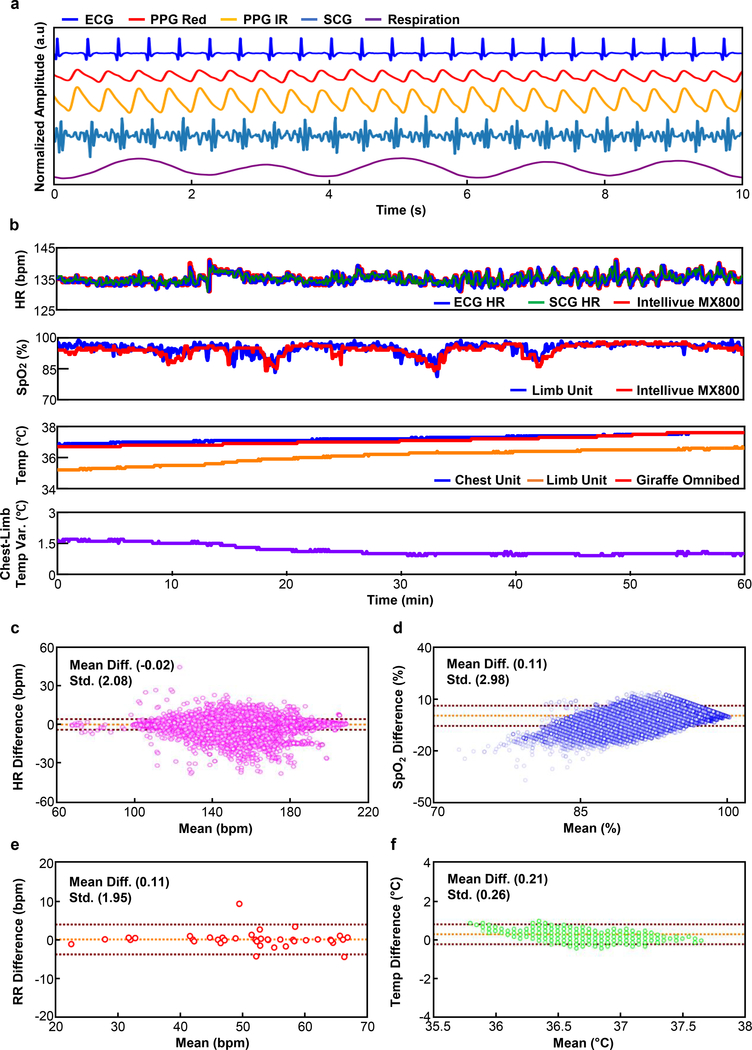
- In NICU/PICU pilot studies, the wireless system measured HR, SpO2, temperature, and RR with close agreement to standard monitoring: mean differences were −0.02 bpm for HR, 0.11% for SpO2, and 0.21 °C for temperature (n = 3); RR mean difference was 0.11 breaths per minute with SD 1.95 (n = 6, 41 data points).
- SpO2 accuracy root mean square was 2.99%, and a larger comparison included over 0.4 million aggregated HR/SpO2 data points from n = 20 patients, within FDA regulatory guidelines for HR and reflectance-mode SpO2.
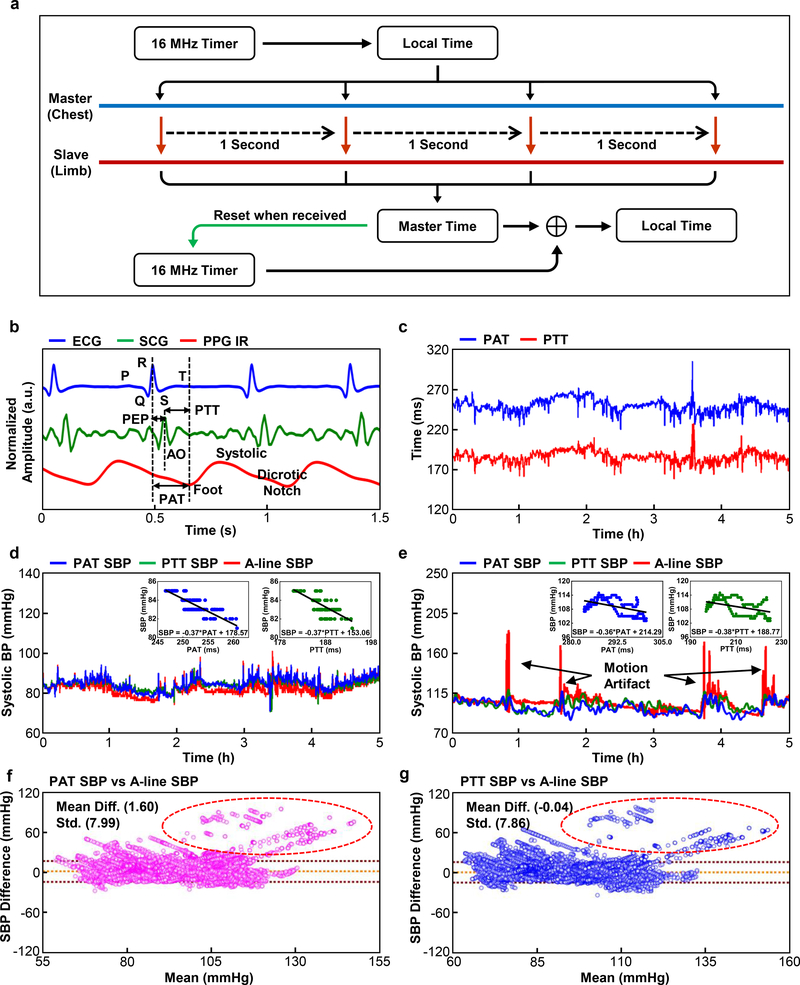
- Time-synchronized chest and limb units enabled PAT- and PTT-derived systolic blood pressure estimates versus arterial-line measurements, with mean differences of 1.60 and −0.04 mmHg and SDs of 7.99 and 7.86 mmHg, respectively (n = 5), within ANSI/AAMI SP10 limits.
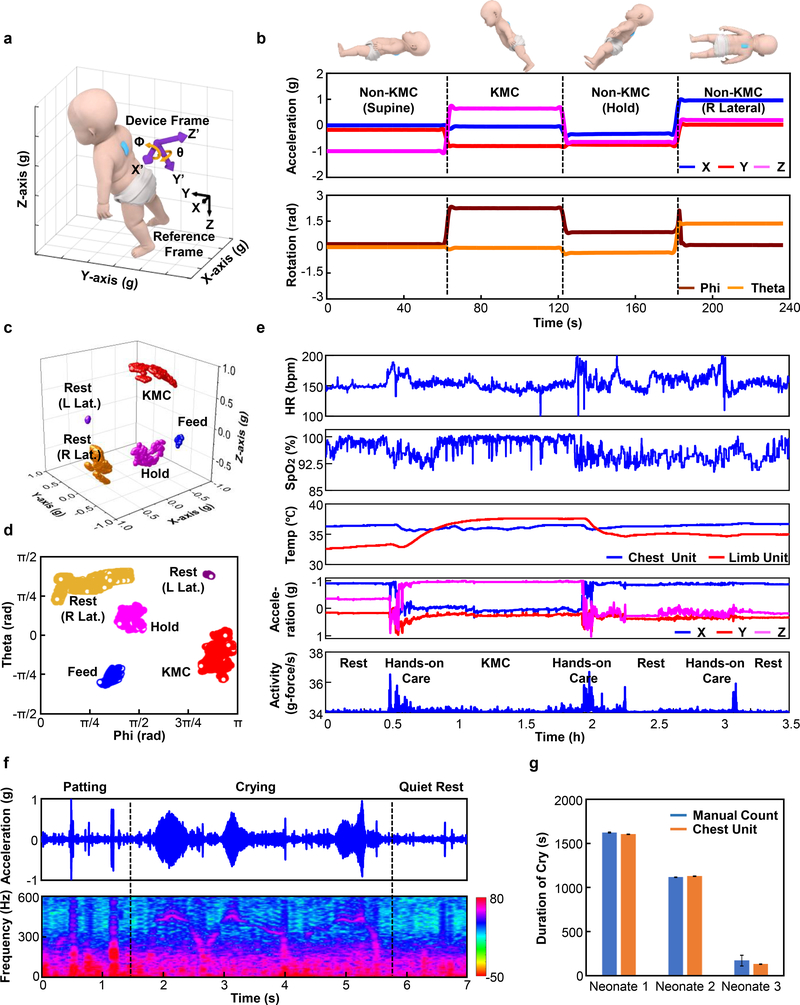
- Additional modalities included kangaroo-care orientation/activity tracking, SCG, and cry analysis: KC events showed phi/theta of 2.85 ± 0.10 rad and −0.29 ± 0.28 rad over 2.4 h; activity was 0.07 ± 0.02 g/s during rest/KC versus 0.24 ± 0.05 g/s during hands-on care; 11 cry events in n = 3 infants showed duration difference −3.9 ± 13.9 s and fundamental frequency 410.7 ± 47.9 Hz.
Methods
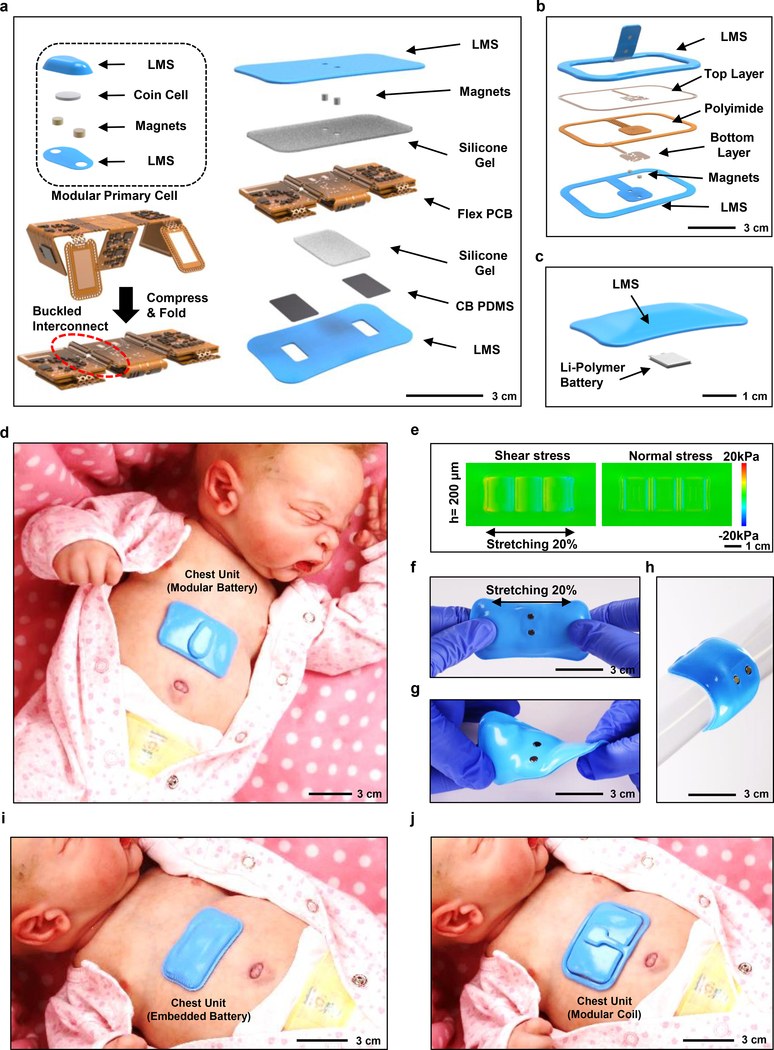
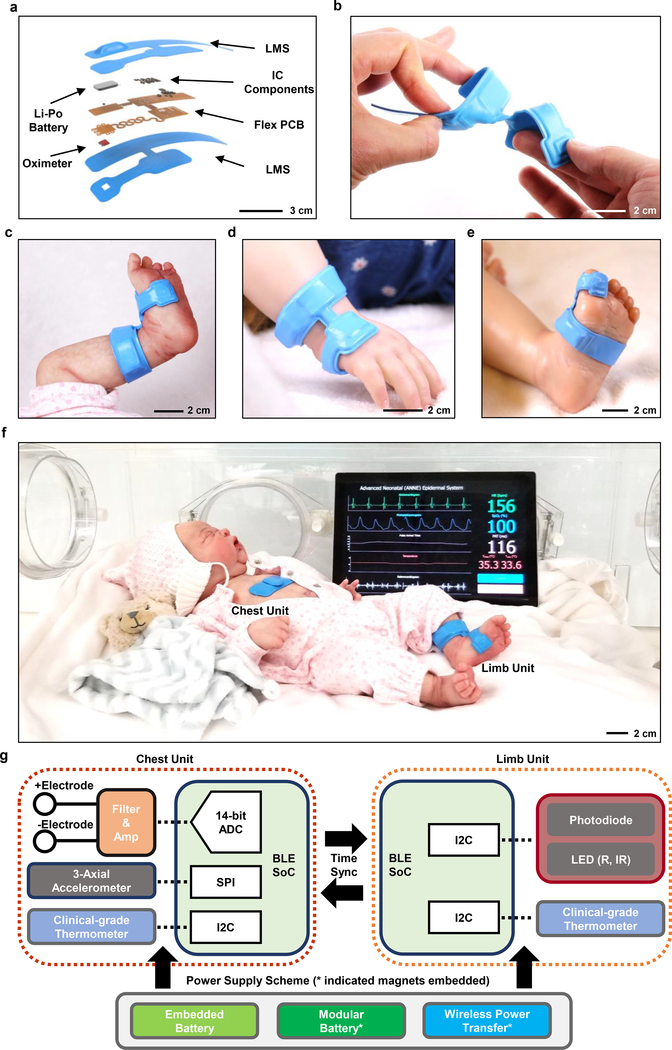
- Design: two mechanically soft, wireless devices—a chest unit for ECG, accelerometry, temperature, and acoustic/vibration signals, and a limb unit for reflectance PPG and temperature—using Bluetooth Low Energy, with modular/embedded/battery-free power options.
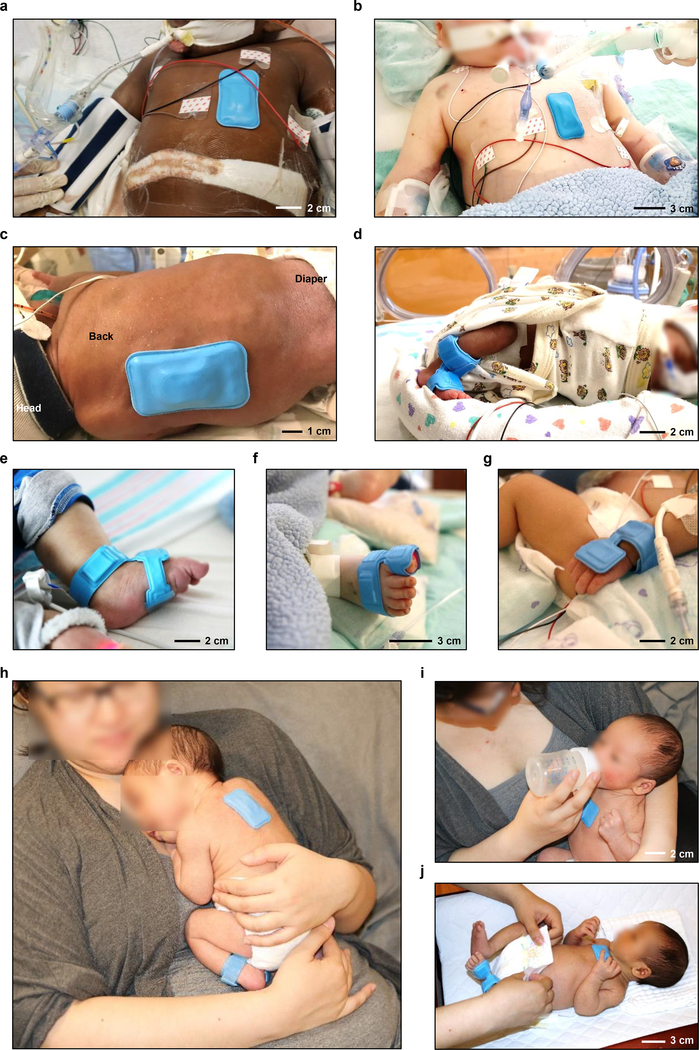
- Data/sample: pilot clinical studies in NICU and PICU patients, including 50 patients for safety/skin tolerability across 23–40 weeks gestational age and 1 week–4 years chronological age; vital-sign comparisons used smaller subsets (e.g., n = 3 for HR/SpO2/temperature, n = 6 for RR, n = 20 for aggregated HR/SpO2, n = 5 for BP).
- Analysis: Bland-Altman comparisons against standard clinical monitors; time-synchronized PAT/PTT calibrated against arterial-line SBP; accelerometer filtering for KC orientation/activity and cry detection; MANOVA for position/activity comparisons.
Limitations
- The paper states that in instances of low SpO2 (<90%), mean disagreement was higher than the overall comparison, likely reflecting different SpO2 de-noising algorithms rather than a true measurement difference.
- The paper notes that comparisons reflect real-world vital-sign calculations during clinical care, feeding, imaging, and other procedures, so motion artifact and noise are inherent and processed differently between the experimental system and clinical comparator.
- Evident from the text: key validation cohorts were small (e.g., n = 3 for HR/SpO2/temperature, n = 5 for BP, n = 3 for KC/cry), thermal safety testing used a subset of 3 patients over 24 h, and BP estimation required initial calibration against 5 min of arterial-line SBP data.
Model-written summary. Check it against the paper before relying on it.
Integrity signals
Registry
Cites
Statistics
Figures
Verification
Claims the paper makes
9 Valid · 9 Not valid · 13 Not checked · 63 Own results and interpretations
The cited sources support only part of this claim — read each source’s verdict below.
In the paper
“Ultimately, both PAT and PTT depend on vascular system geometry, elasticity, SBP, and other factors30,33,34.”
§ Skin-Interfaced Biosensors and Pilot Studies for Advanced Wireless Physiological Monitoring in Neonatal and Pediatric Intensive Care Units > Results > Time-synchronized Bi-nodal Communication for Non-invasive Blood Pressure Monitoring
What the sources say
- Partly supportedcites [30] Ma Y, Relation between blood pressure and pulse wave velocity for human arteries. PNAS 115, 11144– 11149 (2018). 30322935 PMC6217416 sourceExperimental — accuracy not yet measured
The In Vitro Experiments section relates pulse transit time to pulse wave velocity and reports pulse arrival times measured with ECG and PPG. It also states that the pressure–velocity relation depends on arterial material properties and geometry. The reported human measurements concern diastolic blood pressure, however, so the paper does not establish the stated dependence on SBP for both PAT and PTT. (LLM, conf=0.84)
- Not matchedcites [33] Kangaroo mother care: a practical guide, (World Health Organization, Dept. of Reproductive Health and Research, 2003).
Its entry has no title and year that we can search by.
- Not checked — no full text of the sourcecites [34] Liu G-Z, Guo Y-W, Zhu Q-S, Huang B-Y & Wang L Estimation of respiration rate from three-dimensional acceleration data based on body sensor network. Telemed. J. E-Health 17, 705– 711 (2011). 22035321 PMC3203837 source
plainstates an association- Asserted: passes — The authors put it forward as true.
- Checkable: passes — It can be checked against evidence.
- Load-bearing: unclear — It is unclear whether the paper’s conclusions depend on it.
- Based: passes — The paper gives a reason why it holds.
- Partly supported
The cited sources support only part of this claim — read each source’s verdict below.
In the paper
“Cry analysis can serve as a non-invasive method to analyze the neurophysiological state, often influenced by birth trauma, brain injury or pain stress13.”
§ Skin-Interfaced Biosensors and Pilot Studies for Advanced Wireless Physiological Monitoring in Neonatal and Pediatric Intensive Care Units > Results > Advanced Use Cases: Kangaroo Care and Cry Analysis
What the sources say
- Partly supportedcites [13] Shinya Y, Kawai M, Niwa F, Imafuku M & Myowa M Fundamental frequency variation of neonatal spontaneous crying predicts language acquisition in preterm and term infants. Front. Psychol. 8, 2195 (2017). 29312060 PMC5744644 sourceExperimental — accuracy not yet measured
The Introduction (page not specified) describes cry acoustics as a non-invasive index of neonatal neurophysiological states, including pain stress, and links abnormal cry frequency to neurological disturbances. It does not specifically identify birth trauma or brain injury as influences, so those examples are not supported by our copy. (LLM, conf=0.88)
plainstates an association- Asserted: passes — The authors put it forward as true.
- Checkable: passes — It can be checked against evidence.
- Load-bearing: passes — The paper’s conclusions depend on it.
- Based: passes — The paper gives a reason why it holds.
- Partly supported
The cited sources that could be checked couldn’t confirm or dispute this claim.
In the paper
“The fundamental frequency of 410.7 ± 47.9 (Supplementary Fig.24e) is consistent with published results46.”
§ Skin-Interfaced Biosensors and Pilot Studies for Advanced Wireless Physiological Monitoring in Neonatal and Pediatric Intensive Care Units > Results > Advanced Use Cases: Kangaroo Care and Cry Analysis
What the sources say
- Could not verifycites [46] Inan Omer T, Novel wearable seismocardiography and machine learning algorithms can assess clinical status of heart failure patients. Circ. Heart Fail. 11, e004313 (2018). 29330154 PMC5769154 sourceExperimental — accuracy not yet measured
The Methods (Pre-Processing and Feature Extraction; page unavailable) discuss frequency components of cardiac seismocardiography signals, not crying. Searches for crying, vocal pitch, and the reported frequency found no passage in our copy addressing whether 410.7 ± 47.9 is consistent with published results. (LLM, conf=0.77)
plain- Asserted: passes — The authors put it forward as true.
- Checkable: passes — It can be checked against evidence.
- Load-bearing: unclear — It is unclear whether the paper’s conclusions depend on it.
- Based: passes — The paper gives a reason why it holds.
- Could not verify
The cited sources support only part of this claim — read each source’s verdict below.
In the paper
“Continuous monitoring of vital signs is essential, yet existing technologies require the use of multiple electrodes and interfaces attached to the skin with adhesive tapes and connected by wires to electronic processing systems that are often tethered to the wall.”
§ Skin-Interfaced Biosensors and Pilot Studies for Advanced Wireless Physiological Monitoring in Neonatal and Pediatric Intensive Care Units > Abstract
What the sources say
- Partly supportedcites [3] Bonner O, Beardsall K, Crilly N & Lasenby J ‘ There were more wires than him’: the potential for wireless patient monitoring in neonatal intensive care. BMJ Innov. 3, 12– 18 (2017). PMC5293857 28250963 sourceExperimental — accuracy not yet measured
The Introduction (page unavailable) describes multiple vital-sign sensors in a neonatal intensive care unit connected by wires to a monitoring unit outside the incubator. The Results (page unavailable) describe adhesive ECG and temperature probes, but say the pulse oximeter is secured with Velcro. The paper does not establish that the monitoring units are tethered to a wall or that all the interfaces use adhesive tape. (LLM, conf=0.87)
plain- Asserted: passes — The authors put it forward as true.
- Checkable: passes — It can be checked against evidence.
- Load-bearing: passes — The paper’s conclusions depend on it.
- Based: passes — The paper gives a reason why it holds.
- Partly supported
The cited sources that could be checked couldn’t confirm or dispute this claim.
In the paper
“The data show that skin-to-skin contact during KC produced a pronounced, gradual increase in the peripheral skin temperature, consistent with expectation and as demonstrated in previous studies39.”
§ Skin-Interfaced Biosensors and Pilot Studies for Advanced Wireless Physiological Monitoring in Neonatal and Pediatric Intensive Care Units > Results > Advanced Use Cases: Kangaroo Care and Cry Analysis
What the sources say
- Could not verifycites [39] Huntsman RJ, Lowry NJ & Sankaran K Nonepileptic motor phenomena in the neonate. Paediatr. Child Health 13, 680– 684 (2008). 19436521 PMC2606074 sourceExperimental — accuracy not yet measured
The paper’s passages on neonatal tremor and jitteriness (section labeled Abstract; page unavailable) do not address Kangaroo Care or peripheral skin temperature. Searches for skin-to-skin contact, thermoregulation, and a gradual temperature increase found no passage supporting the attributed finding. (LLM, conf=0.78)
boostedstates a cause- Asserted: passes — The authors put it forward as true.
- Checkable: passes — It can be checked against evidence.
- Load-bearing: unclear — It is unclear whether the paper’s conclusions depend on it.
- Based: passes — The paper gives a reason why it holds.
- Could not verify
45 more claims
Create a free account to see all 94 claims and to verify the 2 references still open.
- It may state two separate claims as one. 39
- Probably not a substantial claim. 10
Claims other papers make about this one
Each is checked against this paper’s own text: does it say what the citing paper says it does?
The source backs part of the claim, not all of it — or backs it for a different population, condition or comparison.
In the citing paper
“Previous reports validated the performance of an FDA-cleared physiological monitoring system against gold standard monitoring platforms [18–23].”
From Pregnancy outcomes in infertility patients diagnosed with sleep disordered breathing with wireless wearable sensors (2022) · cites this paper as [19]
Experimental — accuracy not yet measuredThe source backs part of the claim, not all of it — or backs it for a different population, condition or comparison.
In the citing paper
“In previous work, we demonstrate the ability for the chest- and finger-mounted sensors to monitor vital signs in both children and adults; the abdominal sensor allows for maternal–fetal monitoring of pregnant women in both high- and low-resource settings as well as the clinical and home settings (22, 23).”
From Comprehensive pregnancy monitoring with a network of wireless, soft, and flexible sensors in high- and low-resource health settings (2021) · cites this paper as [22]
Experimental — accuracy not yet measuredThe source backs part of the claim, not all of it — or backs it for a different population, condition or comparison.
In the citing paper
“Additionally, as demonstrated by our previous work, neonatal vital signs can also be tracked with the same sensors in both high-resource and low-resource settings as well as support kangaroo care (22, 48).”
From Comprehensive pregnancy monitoring with a network of wireless, soft, and flexible sensors in high- and low-resource health settings (2021) · cites this paper as [22]
Experimental — accuracy not yet measuredThe source backs part of the claim, not all of it — or backs it for a different population, condition or comparison.
In the citing paper
“Previous wearables have been designed to condense the complicated setups in NICU monitoring into miniaturized wearables for facilitated monitoring4–6; however, they encounter problems with device longevity with either single-use or short-term use before replacement.”
From Soft, all-in-one, nanomembrane wearable system for advancing neonatal health monitoring in Ethiopia (2025) · cites this paper as [5]
Experimental — accuracy not yet measuredThe cited source says what the claim attributes to it.
In the citing paper
“and have been used in neonatal and pediatric intensive care units. 4,5”
From Advanced wireless monitoring for children in the cardiac perioperative setting (2023) · cites this paper as [5]
2 more claims about this paper
Create a free account to see every claim other papers make about this one.
Citations
Cites
STATISTICAL METHODS FOR ASSESSING AGREEMENT BETWEEN TWO METHODS OF CLINICAL MEASUREMENT
Martin Bland, J., & Altman, D. (1986) · The Lancet · doi:10.1016/s0140-6736(86)90837-8 · Cited by 47,965
Pickering, T. G., Hall, J. E., Appel, L. J., Falkner, B. E., Graves, J., Hill, M. N., Jones, D. W., Kurtz, T., Sheps, S. G., & Roccella, E. J. (2005) · Circulation · doi:10.1161/01.cir.0000154900.76284.f6 · Cited by 3,985
Pickering, T. G., Hall, J. E., Appel, L. J., Falkner, B. E., Graves, J., Hill, M. N., Jones, D. W., Kurtz, T., Sheps, S. G., & Roccella, E. J. (2005) · Hypertension · doi:10.1161/01.hyp.0000150859.47929.8e · Cited by 2,051
Scheer, B., Perel, A., & Pfeiffer, U. J. (2002) · Critical Care · doi:10.1186/cc1489 · Cited by 854
Binodal, wireless epidermal electronic systems with in-sensor analytics for neonatal intensive care
Chung, H. U., Kim, B. H., Lee, J. Y., Lee, J., Xie, Z., Ibler, E. M., Lee, K., Banks, A., Jeong, J. Y., Kim, J., et al. (2019) · Science · doi:10.1126/science.aau0780 · Cited by 807
Self-citationKangaroo Mother Care and Neonatal Outcomes: A Meta-analysis
Boundy, E. O., Dastjerdi, R., Spiegelman, D., Fawzi, W. W., Missmer, S. A., Lieberman, E., Kajeepeta, S., Wall, S., & Chan, G. J. (2016) · Pediatrics · doi:10.1542/peds.2015-2238 · Cited by 661
Pulse transit time measured from the ECG: an unreliable marker of beat-to-beat blood pressure
Payne, R. A., Symeonides, C. N., Webb, D. J., & Maxwell, S. R. J. (2006) · Journal of Applied Physiology · doi:10.1152/japplphysiol.00657.2005 · Cited by 418
Liu, Y., Norton, J. J. S., Qazi, R., Zou, Z., Ammann, K. R., Liu, H., Yan, L., Tran, P. L., Jang, K.-I., Lee, J. W., et al. (2016) · Science Advances · doi:10.1126/sciadv.1601185 · Cited by 397
Self-citationXu, J., Murphy, S. L., Kochanek, K. D., Bastian, B. A., & Arias, E. (2018) · PubMed · Cited by 391
Radial Artery Cannulation: A Comprehensive Review of Recent Anatomic and Physiologic Investigations
Brzezinski, M., Luisetti, T., & London, M. J. (2009) · Anesthesia & Analgesia · doi:10.1213/ane.0b013e3181bbd416 · Cited by 354
Research works printed but not linked: 1
- Wheeler DS, Wong HR & Shanley TP Pediatric critical care medicine: basic science and clinical evidence, (Springer, London, 2007).
Cited by
Items 301–400 of 476
Microring structure for flexible polymer waveguide-based optical pressure sensing
Li, H., Lin, Z., Cao, L., Ren, F., Zhang, L., Wang, Y., Zhao, R., Song, Z., Liu, Y., Hu, Y., et al. (2023) · Optics Express · doi:10.1364/oe.498784 · Cited by 7
Enhanced Discrete Wavelet Transform–Non-Local Means for Multimode Fiber Optic Vibration Signal
Peng, Z., Yu, K.-M., Zhang, Y., Zhu, P.-B., Chen, W., & Hao, J. (2024) · Photonics · doi:10.3390/photonics11070645 · Cited by 6
Lansac, Y., Choi, C., & Jang, Y. H. (2024) · Bulletin of the Korean Chemical Society · doi:10.1002/bkcs.12908 · Cited by 7
Intelligent algorithms powered smart devices for atrial fibrillation discrimination
Xie, L., Wang, L., Mo, D., Zhang, Z., & Liang, M. (2024) · Biomedical Signal Processing and Control · doi:10.1016/j.bspc.2024.107480 · Cited by 7
Comfort-holding in critically ill children: a scoping review
Lee, L. A., Moss, S. J., Martin, D.-A., Rosgen, B. K., Wollny, K., Gilfoyle, E., & Fiest, K. M. (2021) · Canadian Journal of Anesthesia/Journal canadien d anesthésie · doi:10.1007/s12630-021-02090-3 · Cited by 8
Construction of skin-electrode mechanosensing structure for wearable and epidermal electronic sensor
Yang, W., Liu, H., Liu, C., & Shen, C. (2021) · 中国科学通报:英文版 · doi:10.1016/j.scib.2021.11.011 · Cited by 6
Self-citationWalter, J. R., Lee, J. Y., Blake, S., Kalluri, L., Cziraky, M. J., Stanek, E. J., Miller, J., Harty, B. J., Yu, L., Park, J., et al. (2023) · Journal of Clinical Sleep Medicine · doi:10.5664/jcsm.10432 · Cited by 11
Self-citationBionanotechnology and bioMEMS (BNM): state-of-the-art applications, opportunities, and challenges
Borenstein, J. T., Cummins, G., Dutta, A., Hamad, E. M., Hughes, M. P., Jiang, X., Lee, H., Lei, K. F., Tang, X. S., Zheng, Y., et al. (2023) · Lab on a Chip · doi:10.1039/d3lc00296a · Cited by 10
Wireless monitoring in the ICU on the horizon
Shah, P. S. (2020) · Nature Medicine · doi:10.1038/s41591-020-0798-3 · Cited by 7
A biosensor that learns on the go
Tam, S., & Gosselin, B. J. (2021) · Nature Electronics · doi:10.1038/s41928-020-00526-0 · Cited by 7
Photoelectric dual-mode strain sensing based on piezoelectric effect
Lu, J., Peng, Y., Liu, W., Qiao, S., Li, F., Kan, C., & Xu, C. (2021) · Journal of Luminescence · doi:10.1016/j.jlumin.2021.118237 · Cited by 7
Khan, Y., Mauriello, M. L., Nowruzi, P., Motani, A., Hon, G., Vitale, N. H., Li, J., Kim, J., Foudeh, A. M., Duvio, D., et al. (2021) · bioRxiv (Cold Spring Harbor Laboratory) · doi:10.1101/2021.01.20.427496 · Cited by 8
Self-citationWang, X., Li, K., Li, X., Wu, S. J., Lv, Z., Guan, L., Cheng, J., & Wang, H. (2025) · Biosensors and Bioelectronics · doi:10.1016/j.bios.2025.117701 · Cited by 7
Integration of Artificial Intelligence and Wearable Devices in Pediatric Clinical Care: A Review
Zheng, H., Sharma, P., Johnson, M., Danieletto, M., Alleva, E., Charney, A. W., Nadkarni, G. N., Sarabu, C. R., Eskofier, B. M., Ahuja, Y., et al. (2025) · Bioengineering · doi:10.3390/bioengineering12121320 · Cited by 14
Huang, X., He, Y., Shi, Y., Hao, Y., Ge, Y., Zhang, H., Li, P., Xu, F., & Yao, Y. (2025) · npj Flexible Electronics · doi:10.1038/s41528-025-00476-7 · Cited by 11
Tissue-bioelectronics interfaces
Li, J., Qu, J., & Gao, W. (2026) · Chemical Society Reviews · doi:10.1039/d5cs01422k · Cited by 11
Comparison of Wired and Wireless Heart Rate Monitoring in the Neonatal Intensive Care Unit
Radeschi, D. J., Sénéchal, E., Tao, L., Lv, S., Shalish, W., SantʼAnna, G., & Kearney, R. E. (2023) · Annual International Conference of the IEEE Engineering in Medicine and Biology Society (EMBC) · doi:10.1109/embc40787.2023.10340972 · Cited by 6
“ANNE R (cid:13) One (Sibel Health, Chicago, USA) is a wireless monitoring system that uses soft, flexible, skin-mountable biosensors communicating with a mobile device application via Bluetooth R (cid:13) 5 [6].”
BackgroundA wireless, battery-free device for electrical neuromodulation of bladder contractions
Li, J., Deng, G., Li, X., Yin, L., Yuan, C., Shao, W., Xia, X., Yan, J., & Yao, J. (2024) · Materials Today Bio · doi:10.1016/j.mtbio.2024.101233 · Cited by 10
Towards device technologies non-invasive to our daily lives
Yoon, H., & Dağdeviren, C. (2025) · Nature Communications · doi:10.1038/s41467-025-56423-7 · Cited by 7
Sénéchal, E., Radeschi, D. J., Lv, S., Jeanne, E., Ruiz, A. S., Tao, L., Dulmage, B., Shalish, W., Kearney, R. E., & SantʼAnna, G. (2025) · Frontiers in Bioengineering and Biotechnology · doi:10.3389/fbioe.2025.1555882 · Cited by 6
Strain relief by controlled cracking in highly stretchable multi-layer composites
Kowol, P., Bargmann, S., Görrn, P., & Wilmers, J. (2022) · Extreme Mechanics Letters · doi:10.1016/j.eml.2022.101724 · Cited by 6
Delamination Behavior of Highly Stretchable Soft Islands Multi-Layer Materials
Kowol, P., Bargmann, S., Görrn, P., & Wilmers, J. (2023) · Applied Mechanics · doi:10.3390/applmech4020029 · Cited by 6
“, biomedical applications [1,2], robotics [3,4] or human-machine-interfaces [5].”
BackgroundWearable electronic devices in the intensive care units
Chen, J., Jiang, W., & Song, Y. (2024) · Clinical eHealth · doi:10.1016/j.ceh.2024.02.001 · Cited by 7
Self-powered direct-current type pressure sensor by polypyrrole/metal Schottky junction
Ying, S., Zhang, J., Yan, K., Xin, M., Zhang, J., Li, S., Liang, J., Shi, Y., & Pan, L. (2021) · Journal of Physics D Applied Physics · doi:10.1088/1361-6463/ac196c · Cited by 7
Soft Wearable Thermal Devices Integrated with Machine Learning
Zavareh, A. T., Tran, B., Orred, C., Rhodes, S., Rahman, M. S., Namkoong, M., Lee, R., Carlisle, C., Rosas, M., Pavlov, A. F., et al. (2023) · Advanced Materials Technologies · doi:10.1002/admt.202300206 · Cited by 6
Self-citationLee, A., Lee, J.-H., Leung, V., & Nurmikko, A. V. (2023) · Advanced Science · doi:10.1002/advs.202306111 · Cited by 6
Self-citationAll‐Dry Self‐Adhesive Soft Electrodes with Subsurface Pores for Long‐Term Skin Recording
Jeon, M. S., Yi, J., Hong, S., Lee, J., Jang, H., Kim, B., Lee, H., Lee, C. H., & Kim, D. R. (2025) · Small · doi:10.1002/smll.202507416 · Cited by 6
Self-citationPark, B., Ok, J., Park, S., Yang, Y. J., Jeon, H., & Kim, T. (2026) · Advanced Materials · doi:10.1002/adma.202517030 · Cited by 7
A battery-free wireless epidermal sensor network for continuous systolic blood pressure monitoring
Kurt, S. A., Kasper, K. A., Xu, Q., Yang, X. Y., Xiao, X., Zeng, Q., Stuart, T., Li, Z., Liu, Y., Song, J., et al. (2026) · Nature Electronics · doi:10.1038/s41928-026-01597-1 · Cited by 13
“Conventional cuff-based monitoring captures transient pressure values and requires the subject to be stationary 7 .”
Artificial Intelligence-Driven Wearable Sensors for Cardiovascular Health Monitoring
Deng, H. T., Ma, B., Chen, G., Chi, J., Tong, J., Yu, F., Lü, B., Chen, Y., Zhao, C., Zhang, C., et al. (2026) · ACS Sensors · doi:10.1021/acssensors.5c04840 · Cited by 8
Kim, S. K., Park, T. W., Cho, S., Yang, T., Yoo, S., Khaytin, I., McHaney, J. R., Jaffe, J., Kshetrapal, A., Carr, A. N., et al. (2026) · Science Advances · doi:10.1126/sciadv.aed3162 · Cited by 8
Self-citationAccurate low-delay QRS detection algorithm for real-time ECG acquisition in IoT sensors
Kim, S., Kim, C., Yoo, Y., & Kim, Y. (2025) · Internet of Things · doi:10.1016/j.iot.2025.101537 · Cited by 5
Self-citationFabrication and characterization of polymer optical waveguide Bragg grating for pulse signal sensing
Li, H., Meng, W., Cao, L., Zhang, L., Liu, Y., Lin, Z., Zhao, R., Song, Z., Ren, F., Zhang, S., et al. (2023) · Optics Express · doi:10.1364/oe.496427 · Cited by 5
Clinical Evaluation of a Wireless Device for Monitoring Vitals in Newborn Babies
Aggarwal, R., Gunaseelan, V., Manual, D., Sanker, M., & Prabaaker, S. (2023) · The Indian Journal of Pediatrics · doi:10.1007/s12098-022-04459-8 · Cited by 5
“Adult systems are minimally adapted for use in pediatrics and are limited by the use of rigid sensors that use strong adhesives to attach to the neonates’ skin and are connected to bulky units limiting movement of babies for feeding by mothers [15, 16].”
BackgroundMicrowave Metamaterials for Biomedical Sensing
Ho, J. S., & Li, Z. (2021) · Elsevier eBooks · doi:10.1016/b978-0-12-822548-6.00012-1 · Cited by 6
Intrinsically Soft Printed Electronics for Digitally Augmented Human Sensing and Vision
Zavanelli, N., Carneiro, M. R., Vinciguerra, M. R., Patel, D. K., Sue, G. N., Fu, Y., Tavakoli, M., & Majidi, C. (2025) · Advanced Functional Materials · doi:10.1002/adfm.202519702 · Cited by 5
Dang, T. B., Nguyen, C. C., Heo, S. Y., Nguyen, T. V., Tong, N., Ruppert, M. G., Truong, T. A., Listyawan, M. A., Davies, J., Zhao, S., et al. (2026) · Nature Communications · doi:10.1038/s41467-026-73636-6 · Cited by 5
Advances in Skin-interfaced Wireless Physiological Monitoring Systems
Lim, E. S., Lee, S. H., Choi, J., Lim, Y.-J., & Chung, H. U. (2025) · Journal of Sensor Science and Technology · doi:10.46670/jsst.2025.34.5.458 · Cited by 5
Self-citationMultichannel esophageal signals to monitor respiratory rate in preterm infants
Bürgin, C., Simmen, P., Gupta, N., Suter, L., Kreuzer, S., Haeberlin, A., Schulzke, S. M., Trachsel, D., Niederhäuser, T., & Jost, K. (2021) · Pediatric Research · doi:10.1038/s41390-021-01748-4 · Cited by 4
Inpatient comparison of wireless and wired pulse oximetry in neonates
Harrell, M. D., Dobson, N. R., Olsen, C., et al. (2022) · Journal of Neonatal-Perinatal Medicine · doi:10.3233/npm-210836 · Cited by 4
“A recent study acknowledged the potential usefulness of wireless pulse oximetry technology during skin-to-skin care in the delivery room [5].”
Low-cost and portable physiological signal monitor using PhysRate model
Tan, X., Zhu, Y., Cheng, Z., Hu, M., Zhang, X., Pei, G., Yu, C., Li, Q., Li, W., & Wang, J. (2023) · Displays · doi:10.1016/j.displa.2023.102605 · Cited by 6
Wei, T., Shi, Y., Zhang, B., Ding, Y., Qin, J., Hu, X., Yu, J., Liu, R., & Zhang, X. (2024) · Journal of Materials Chemistry C · doi:10.1039/d3tc04556k · Cited by 6
Wang, S., Dong, M., He, J., Wu, G., Li, X., Pan, X., Wu, J., Bao, R., & Pan, C. (2025) · Microelectronic Engineering · doi:10.1016/j.mee.2025.112346 · Cited by 5
Emergency delivery of particulate drugs by active ejection using in vivo wireless devices
Krishnan, S. R., O’Keeffe, L., Rudra, A., Gumustop, D. R., Khatib, N., Liu, C., Yang, J., Wang, A., Bochenek, M. A., Lu, Y., et al. (2025) · Nature Biomedical Engineering · doi:10.1038/s41551-025-01436-2 · Cited by 10
“To visualize changes in pill quality over time, an optically transparent ‘window’ through the back of the device was created using a layer of UV curable optical adhesive (Norland Optical Adhesive, 63) opposite the pill well and SMA recess.”
Self-citationScholten, A. W. J., Zhan, Z. Z., Niemarkt, H. J., Vervoorn, M., van Leuteren, R. W., de Jongh, F. H., van Kaam, A. H., van den Heuvel, E. R., & Hutten, G. J. (2022) · BMJ Paediatrics Open · doi:10.1136/bmjpo-2022-001430 · Cited by 4
Recent Progress of Smart Nano-Based Biosensors and their Applications in Biomedicine
Hasanzadeh, A., Azmand, H. R., Ebadati, A., Nourizadeh, H., Hashemzadeh, I., Noori, H., Seo, S. W., Aref, A. R., & Karimi, M. (2022) · NANO · doi:10.1142/s1793292022300067 · Cited by 4
Flexible and Scalable Dry Conductive Elastomeric Nanocomposites for Surface Stimulation Applications
Seshadri, D. R., Radwan, A. N., Bianco, N. D., Zorman, C. A., & Bogie, K. M. (2023) · IEEE Transactions on Biomedical Engineering · doi:10.1109/tbme.2023.3289059 · Cited by 5
[Research progress on wearable physiological parameter monitoring and its clinical applications].
Ma, C., Xu, H., Li, D., & Zhang, Z. (2021) · PubMed · doi:10.7507/1001-5515.202009031 · Cited by 5
Yao, P., Liu, Z., Xiao, X., et al. (2025) · IEEE Sensors Journal · doi:10.1109/jsen.2025.3564150 · Cited by 3
Skin-Inspired Healthcare Electronics
Li, S. Z., Xu, Q.-J., Zhou, Y., Chu, Z., Li, L., Sun, X., Huang, F., Wang, F., Chen, C., Guo, X., et al. (2025) · Biomimetics · doi:10.3390/biomimetics10080531 · Cited by 4
“…be transmitted continuously and at high speed within a space with a diameter of up to approximately 10 m. Rogers’ team has proposed wearable electronic devices with integrated BLE wireless data transmission for continuous monitoring of maternal, fetal, and neonatal movements and vital signs [131].”
Printable, self-healing and recyclable PEDOT:PSS/polyurethane composites for durable bioelectronics
Kim, J., & Cicoira, F. (2026) · Materials Horizons · doi:10.1039/d6mh00177g · Cited by 6
Self-citationThe opportunities of semiconductor fibres in clinical and translational medicine
Wang, Z., Zhang, Q., Chen, M., et al. (2024) · Clinical and Translational Medicine · doi:10.1002/ctm2.1685 · Cited by 3
AI-Powered Vigilance in Neonatal Vital Signs Monitoring for Optimal Health Care
Usha, S. G. A., & Bharathi, K. (2024) · Advances in medical technologies and clinical practice book series · doi:10.4018/979-8-3693-3711-0.ch007 · Cited by 3
AI plays a crucial role in the diagnosis and prognosis cardio pregnant women
Hilal, S. (2024) · Elsevier eBooks · doi:10.1016/b978-0-443-22008-1.00010-5 · Cited by 3
Smart biomaterials for skin tissue engineering and health monitoring
Martín, C., Medina, D. M., Matesanz, A., de Velasco, D. A. O.-G., Acedo, P., & Jorcano, J. L. (2023) · Elsevier eBooks · doi:10.1016/b978-0-323-85671-3.00010-5 · Cited by 3
Python code for modeling multi-layer structures with controlled cracking and delamination
Kowol, P., Bargmann, S., & Wilmers, J. (2023) · Software Impacts · doi:10.1016/j.simpa.2023.100524 · Cited by 3
Curvature-Matching Mechanics in Skin-Based Bioelectronics to Minimize Interfacial Stresses
Avila, R. O. (2023) · Journal of Applied Mechanics · doi:10.1115/1.4064211 · Cited by 4
Self-citationWireless wearable devices for continuous monitoring of body sounds and motions
Kim, S. H., Jeanne, E., Shalish, W., Yoo, J., & Rogers, J. A. (2024) · Clinical and Translational Medicine · doi:10.1002/ctm2.1593 · Cited by 4
“…soft electronic devices designed for sensing subtle body vibrations and sounds, with additional capabilities in tracking bulk motions of the body and noises 5,7–10 in the ambient environment through the use of multi-sensor designs and sound separation data analytics, respectively (Figure 1).”
BackgroundSelf-citationDisplaying images on a plane of rotation via mutual inductance coupling wireless controls
Wu, J., Shen, H., Yin, R., He, Y., Li, J., & Wang, C. (2020) · Ad Hoc Networks · doi:10.1016/j.adhoc.2020.102256 · Cited by 3
Advanced wireless monitoring for children in the cardiac perioperative setting
Chen, H., Soetikno, A., Xu, S., Suresh, S., & Walter, J. R. (2023) · Pediatric Anesthesia · doi:10.1111/pan.14684 · Cited by 2
Self-citationPediatric Monitoring Technologies and Congenital Heart Disease: A Systematic Review
Duffy, S. S., Lee, S. C. L., & Sen, D. G. (2024) · World Journal for Pediatric and Congenital Heart Surgery · doi:10.1177/21501351241247500 · Cited by 2
Self-citationAlkhaiat, M. M., Alhelali, I., Al-Benhassan, I., et al. (2025) · Journal of Ecohumanism · doi:10.62754/joe.v4i2.6722 · Cited by 2
Guo, T., Wang, R., Zheng, Y., Yang, H., Liu, Y., Yi, T., Tang, W., & Jiang, C. (2025) · Materials Horizons · doi:10.1039/d5mh00224a · Cited by 3
Wearable Smart Textile Band for Continuous Equine Health Monitoring
Park, T., Hong, S., Murray, L., Lee, J., Shah, A., Mesa, J. C., Lee, H., Couetil, L., & Lee, C. H. (2025) · Biosensors and Bioelectronics · doi:10.1016/j.bios.2025.118073 · Cited by 5
Self-citationMultimodal flexible sensor system toward telediagnosis
Lee, D. H., & Takei, K. (2026) · Proceedings of the Japan Academy Series B · doi:10.2183/pjab.102.004 · Cited by 2
Stretchable Antennas for Wearable Application: Materials Guideline With Design Considerations
Low, J.-H., Lim, E.-H., & Chee, P. S. (2026) · IEEE Journal of Radio Frequency Identification · doi:10.1109/jrfid.2026.3671254 · Cited by 3
Preparation and application of self-adhesive ultra-thin epidermal electrophysiological electrodes
Hu, W., Song, D., Shi, X., & Liu, N. (2022) · Scientia Sinica Chimica · doi:10.1360/ssc-2022-0019 · Cited by 3
Lin, C., & Yang, H. Y. (2022) · Materials Today Proceedings · doi:10.1016/j.matpr.2022.09.235 · Cited by 2
Biometric Vibration Signal Detection Devices for Swallowing Activity Monitoring
Kang, Y. J. (2024) · Signals · doi:10.3390/signals5030028 · Cited by 2
Potential anti-aging applications of microbial-derived surfactantsin cosmetic formulations
Bagheri, A. M., Mirzahashemi, M., Salarpour, S., Dehghnnoudeh, Y., Banat, I. M., Ohadi, M., & Dehghannoudeh, G. (2024) · Critical Reviews in Biotechnology · doi:10.1080/07388551.2024.2393420 · Cited by 4
“Skincare products are formulated to protect the skin, improve its appearance, and guard against the skin aging process [10,11].”
Shi, W., Mi, L., Dai, Z., Chen, C., Luo, W., Guo, W., & Wang, G. (2024) · IEEE Biomedical Circuits and Systems Conference (BioCAS) · doi:10.1109/biocas61083.2024.10798205 · Cited by 2
Accuracy and Safety of a Continuous Noninvasive Blood Pressure Monitor in Neonates
Hunter, R. B., Saruwatari, M., Bliss, N. D., Kim, S., Turcu, R. M., Krbec, B. A., Yusuf, K., Rao, A. V., Quan, X., & Soghier, L. M. (2025) · Neonatology · doi:10.1159/000546187 · Cited by 2
Self-citationPerioperative Monitoring: Beyond Arterial Blood Pressure and Beyond the Operating Room
Goeddel, L. A., & Bartels, K. (2025) · Anesthesia & Analgesia · doi:10.1213/ane.0000000000007534 · Cited by 2
Wireless monitoring in the ICU
Kanakry, C. G. (2020) · Science Translational Medicine · doi:10.1126/scitranslmed.abb2779 · Cited by 2
Disorders in the neonatal period
Revenis, M. E., & Wong, E. C. C. (2021) · Elsevier eBooks · doi:10.1016/b978-0-12-817962-8.00006-8 · Cited by 2
Right To Health of Differently-Abled People-Technology Intervention
Pandey, S., Gehlot, A., Dixit, A. K., Kathuria, S., & Singh, R. (2023) · International Conference on Artificial Intelligence and Smart Communication (AISC) · doi:10.1109/aisc56616.2023.10085642 · Cited by 2
“Work on sensor devices & gadgets for moment-in-time in time uses, such as on-body authentic vital sign data monitoring, has just already been conducted, and has exploded [5] the interaction with the outside world for older and motion-impaired people however has intensified well with help of incrementally evolved 5G an…”
BackgroundCosta, J. C., Pouryazdan, A., Prance, R. J., et al. (2020) · Technical digest - International Electron Devices Meeting/Technical digest · doi:10.1109/iedm13553.2020.9372123 · Cited by 2
Soft, all-in-one, nanomembrane wearable system for advancing neonatal health monitoring in Ethiopia
Zhou, L., Joseph, M., Lee, Y. J., Yadav, D., Nayak, L., Woodall, J., Matthews, J., Soltis, I., Mekuria, F. M., Yeshanew, K. H., et al. (2025) · npj Digital Medicine · doi:10.1038/s41746-025-01974-8 · Cited by 3
Han, X., Cai, F., Xiu, G., & Tao, D. (2023) · Conference proceedings/Conference proceedings - IEEE International Conference on Systems, Man, and Cybernetics · doi:10.1109/smc53992.2023.10394010 · Cited by 1
Reimagining apnea monitoring in the neonatal ICU
Jeanne, E., Alvaro, R. E., & Shalish, W. (2024) · Current Opinion in Pediatrics · doi:10.1097/mop.0000000000001432 · Cited by 1
Yusran, M. F. A., Azizul, Z. H., Kamar, A. A., & Saw, S. N. (2025) · Results in Engineering · doi:10.1016/j.rineng.2025.104841 · Cited by 1
Sénéchal, E., Radeschi, D. J., Kearney, R. E., Shalish, W., & SantʼAnna, G. (2025) · American Journal of Perinatology · doi:10.1055/a-2604-8329 · Cited by 4
Hua, J., Su, M., Cheng, W. M., Shi, Y., & Pan, L. (2025) · Review of Materials Research · doi:10.1016/j.revmat.2025.100089 · Cited by 5
Multimodal flexible sensors for edge AI system
Nakamura, H., Seimiya, N., & Takei, K. (2025) · Applied Physics Express · doi:10.35848/1882-0786/ae1367 · Cited by 2
Mazumdar, H., Khondakar, K. R., Das, S., & Kaushik, A. K. (2025) · Advanced Materials Technologies · doi:10.1002/admt.202501304 · Cited by 4
Slattery, S. M., Pessano, S., Yoo, J., et al. (2025) · BMJ Health & Care Informatics · doi:10.1136/bmjhci-2024-101283 · Cited by 1
Self-citationWearable Flexible Triboelectric Sensor Array for a Self-Powered Infant Care System
Zheng, M., Chen, L., Ruan, L., Wang, Y., & Shi, J. (2025) · ACS Omega · doi:10.1021/acsomega.5c08776 · Cited by 1
Tzirita, S., King, C., McCollum, E. D., Baker, K. S., López, M. B., & Schedwin, M. (2026) · BMJ Paediatrics Open · doi:10.1136/bmjpo-2025-003506 · Cited by 1
Liu, G., Luo, J., Xu, C., Miao, K., Lin, D., Gong, W., Song, G. Y., Zhou, Z., Li, N., Chen, M., et al. (2026) · Advanced Optical Materials · doi:10.1002/adom.202502767 · Cited by 3
A three-dimensional liquid pump generator for energy transfer and wireless sensing
Zhang, Y., Zhang, J., Li, X., Li, Y., Wang, J., Li, Z., Li, Y., Jiang, M., Liu, X., & Zheng, H. (2026) · Chemical Engineering Journal · doi:10.1016/j.cej.2026.174862 · Cited by 1
Wu, X., Zhu, C., Zheng, L., Song, Y., Wang, J., Zhang, X., Yao, Z., Han, Y., Wang, Z., Jiang, Z., et al. (2026) · Nature Sensors · doi:10.1038/s44460-026-00044-0 · Cited by 8
Huang, T., Yuan, Z., Ran, W., & Shen, G. (2026) · Science China Materials · doi:10.1007/s40843-026-4069-0 · Cited by 4
“However, the seamless integration of high-efficiency energy harvesters, storage units, low-power sensing circuits, and signal processing modules onto a single, ultra-flexible, and biocompatible platform remains a formidable challenge [68,69].”
Huang, H., Cai, X., Wan, S., & Sun, L. (2026) · Materials Today Bio · doi:10.1016/j.mtbio.2026.103241 · Cited by 5
“As a critical non-invasive tool, ECG signals are extensively utilized for diagnosing cardiac function and enabling early detection of abnormalities ( e.g. , arrhythmias, myocardial infarction, heart failure, sudden cardiac arrest) [21,22].”
Sibel Health: designing vital-sign sensors for delicate skin
Savage, N. J. (2020) · Nature · doi:10.1038/d41586-020-01806-7 · Cited by 1
Gao, X., Chen, X., & Xu, S. H. (2020) · Nature Biomedical Engineering · doi:10.1038/s41551-020-00629-1 · Cited by 1
Self-citationEckhardt, A., Abegg, A., Seferovic, G., Ibric, S., & Wolf, J. (2022) · vdf Hochschulverlag AG an der ETH Zürich eBooks · doi:10.3218/4138-5 · Cited by 1
Mariani, S., Piero, M. E. D., & Haverich, A. (2023) · Elsevier eBooks · doi:10.1016/b978-0-443-18918-0.00005-x · Cited by 4
Song, J., Yoon, J., Kim, S., Lee, J., Hong, J., & Kim, Y. (2023) · SID Symposium Digest of Technical Papers · doi:10.1002/sdtp.16884 · Cited by 1
Self-citationFlexible and wearable photoresponse amplification circuit for ubiquitous health monitoring
Liu, J., & Jiang, L. (2023) · Chinese Science Bulletin (Chinese Version) · doi:10.1360/tb-2023-0814 · Cited by 1
Sensing haemodynamics via wearables in sync
Estepp, J. R. (2023) · Nature Biomedical Engineering · doi:10.1038/s41551-023-01103-4 · Cited by 1
Metadata
- Authors
- Chung, H. U., Rwei, A. Y., Hourlier-Fargette, A., Xu, S., Lee, K., Dunne, E. C., Xie, Z., Liu, C., Carlini, A., Kim, D. H., Ryu, D., Kulikova, E., Cao, J., Odland, I. C., Fields, K. B., Hopkins, B., Banks, A., Ogle, C., Grande, D., Park, J. B., Kim, J., Irie, M., Jang, H., Lee, J., Park, Y., Kim, J., Jo, H. H., Hahm, H., Avila, R., Xu, Y., Namkoong, M., Kwak, J. W., Suen, E., Paulus, M. A., Kim, R. J., Parsons, B. V., Human, K. A., Kim, S. S., Patel, M., Reuther, W., Kim, H. S., Lee, S. H., Leedle, J. D., Yun, Y., Rigali, S., Son, T., Jung, I., Arafa, H., Soundararajan, V. R., Ollech, A., Shukla, A., Bradley, A., Schau, M., Rand, C. M., Marsillio, L. E., Harris, Z. L., Huang, Y., Hamvas, A., Paller, A. S., Weese-Mayer, D. E., Lee, J. Y., & Rogers, J. A.
- Affiliations
- Northwestern University (US)
- Lurie Children's Hospital (US)
- Dalian University of Technology (CN)
- Sibel (United States) (US)
- University of Illinois Urbana-Champaign (US)
- North Carolina State University (US)
- Kyung Hee University (KR)
- Corresponding author
- Lee, Jong Yoon
- Rogers, John A.
- ORCID
- Chung, Ha Uk
- Rwei, Alina Y.
- Hourlier-Fargette, Aurélie
- Xu, Shuai
- Lee, KunHyuck
- Dunne, Emma C.
- Xie, Zhaoqian
- Liu, Claire
- Carlini, Andrea
- Kim, Dong Hyun
- Cao, Jingyue
- Odland, Ian C.
- Banks, Anthony
- Grande, Dominic
- Park, Jun Bin
- Kim, Jongwon
- Jang, Hokyung
- Park, Yerim
- Jo, Han Heul
- Avila, Raudel
- Xu, Yeshou
- Namkoong, Myeong
- Kwak, Jean Won
- Human, Kelia A.
- Patel, Manish
- Reuther, William
- Lee, Sung Hoon
- Yun, Yeojeong
- Jung, Inhwa
- Arafa, Hany
- Ollech, Ayelet
- Rand, Casey M.
- Marsillio, Lauren E.
- Harris, Zena L.
- Huang, Yonggang
- Hamvas, Aaron
- Paller, Amy S.
- Weese-Mayer, Debra E.
- Lee, Jong Yoon
- Rogers, John A.
- Venue
- Nature Medicine
- Published
- 2020-03
- Volume
- 26
- Issue
- 3
- Pages
- 418-429
- ISSN
- 1078-8956 (ISSN-L)
- 1546-170X
- PMC
- PMC7315772
- OpenAlex
- W3012163988
- Semantic Scholar
- 9be51710140598d05f71429da3bc79c90db9cace
- Cited by
- 482
- References
- 55
- Citations by year
- 2026: 49 · 2025: 77 · 2024: 76 · 2023: 85 · 2022: 77 · 2021: 89 · 2020: 29
- FWCI
- 21.94
- Type
- journal article
- Language
- en
- Open access
- green
- www.ncbi.nlm.nih.gov
- Licence
- cc-by
- www.springer.com/tdm (tdm)
- www.springer.com/tdm (vor)
- Locations
- Nature Medicine (publishedVersion)
- PubMed (publishedVersion)
- PubMed Central (acceptedVersion, cc-by)
- eScholarship (California Digital Library) (submittedVersion, cc-by)
- Funders
- Bill and Melinda Gates Foundation (OPP1182909, OPP1193311)
- Gerber Foundation
- Topics
- Physical Sciences › Engineering › Biomedical Engineering › Non-Invasive Vital Sign Monitoring
- Physical Sciences › Engineering › Biomedical Engineering › Advanced Sensor and Energy Harvesting Materials
- Physical Sciences › Engineering › Biomedical Engineering › Wireless Body Area Networks
- Keywords
- wireless physiological monitoring, neonatal intensive care, pediatric intensive care, non-invasive vital sign monitoring, skin-to-skin care, vocal biomarkers, crying
- MeSH terms
- Child, Child, Preschool, Electrocardiography, Equipment Design, Humans, Infant, Newborn, Intensive Care Units, Neonatal, Monitoring, Physiologic, Skin, Time Factors, Intensive Care Units, Pediatric, Biosensing Techniques, Photoplethysmography, Blood Pressure Monitoring, Ambulatory, Wireless Technology
About these checks
Registry, retraction, Cites and statistics results are computed, not judged, with one exception: a printed reference that no index lists is read once by a model before it counts as a citation error. Claims are extracted by a model and kept only when their quote appears verbatim in the text; each cited source is then checked, with a model’s help, for whether it says what the claim relies on. Those verdicts can be wrong — read the claim’s quote and the cited source before relying on one.
The claim verdicts this report counts are experimental: their accuracy is not yet measured.
A language model drew the claims from the paper on 2026-10-10, under version 3 of the claim definition (model deepseek-v4.1-flash, prompt extract-v3).
A second model labelled each claim on 2026-10-10 (model jev-1.13-20260917, definition revision gold-guideline-v0.2).
Cited sources are checked with a language model’s help (gpt-6-sol).
Statistics and arithmetic are recomputed, not judged.
Confidence bands are shown only for fields calibrated on our annotated test set. None is calibrated yet, so no band is shown.
What counts as a claim ›How we measure confidence ›How we check this ›
Are you an author, or do you see a problem with this page? Request a review
Data sources
Bibliographic data: Semantic Scholar, OpenAlex, Crossref.
Contains information from the Semantic Scholar Academic Graph Datasets, made available under the ODC Attribution License (ODC-BY 1.0).
Semantic Scholar’s data is described in: Kinney, R., et al. (2023). The Semantic Scholar Open Data Platform. arXiv:2301.10140.
