

Skin-interfaced biosensors for advanced wireless physiological monitoring in neonatal and pediatric intensive-care units
Open accessThe DOI matches its Crossref record; 54 of the 55 references it cites were found in a registry or an index; 19 of the 45 sources its claims cite were checked for support.
Abstract
Standard clinical care in neonatal and pediatric intensive-care units (NICUs and PICUs, respectively) involves continuous monitoring of vital signs with hard-wired devices that adhere to the skin and, in certain instances, can involve catheter-based pressure sensors inserted into the arteries. These systems entail risks of causing iatrogenic skin injuries, complicating clinical care and impeding skin-to-skin contact between parent and child. Here we present a wireless, non-invasive technology that not only offers measurement equivalency to existing clinical standards for heart rate, respiration rate, temperature and blood oxygenation, but also provides a range of important additional features, as supported by data from pilot clinical studies in both the NICU and PICU. These new modalities include tracking movements and body orientation, quantifying the physiological benefits of skin-to-skin care, capturing acoustic signatures of cardiac activity, recording vocal biomarkers associated with tonality and temporal characteristics of crying and monitoring a reliable surrogate for systolic blood pressure. These platforms have the potential to substantially enhance the quality of neonatal and pediatric critical care. Soft electronic patches worn on the skin of infants or children in intensive-care units have a wide range of capabilities in aiding critical care, including monitoring of hemodynamic parameters, cardiac activity, movement and crying.
Overview
CoChat Summary
TL;DR
A pair of soft, skin-interfaced wireless biosensors was developed for neonatal and pediatric intensive care, with pilot studies showing clinical-quality vital signs plus added modalities such as movement/orientation, kangaroo-care tracking, seismocardiography, cry analysis, and a systolic blood pressure surrogate. The system was tested in 50 NICU/PICU patients across a wide age range, with comparisons to standard clinical instruments.
Key findings
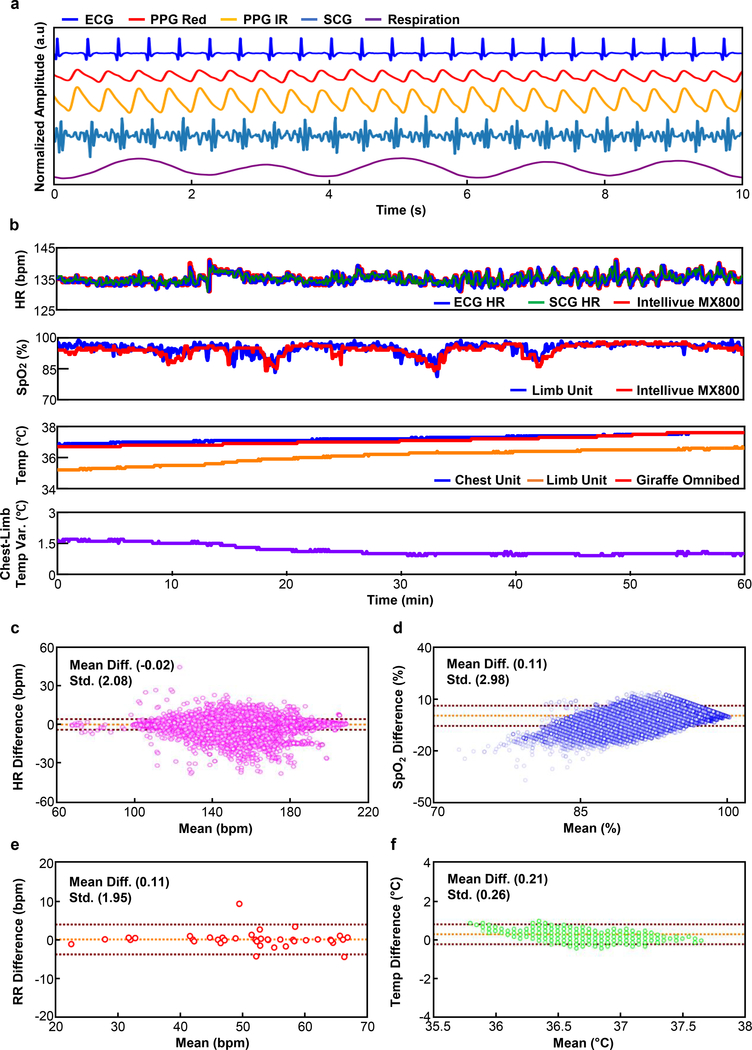
- In NICU/PICU pilot studies, the wireless system measured HR, SpO2, temperature, and RR with close agreement to standard monitoring: mean differences were −0.02 bpm for HR, 0.11% for SpO2, and 0.21 °C for temperature (n = 3); RR mean difference was 0.11 breaths per minute with SD 1.95 (n = 6, 41 data points).
- SpO2 accuracy root mean square was 2.99%, and a larger comparison included over 0.4 million aggregated HR/SpO2 data points from n = 20 patients, within FDA regulatory guidelines for HR and reflectance-mode SpO2.
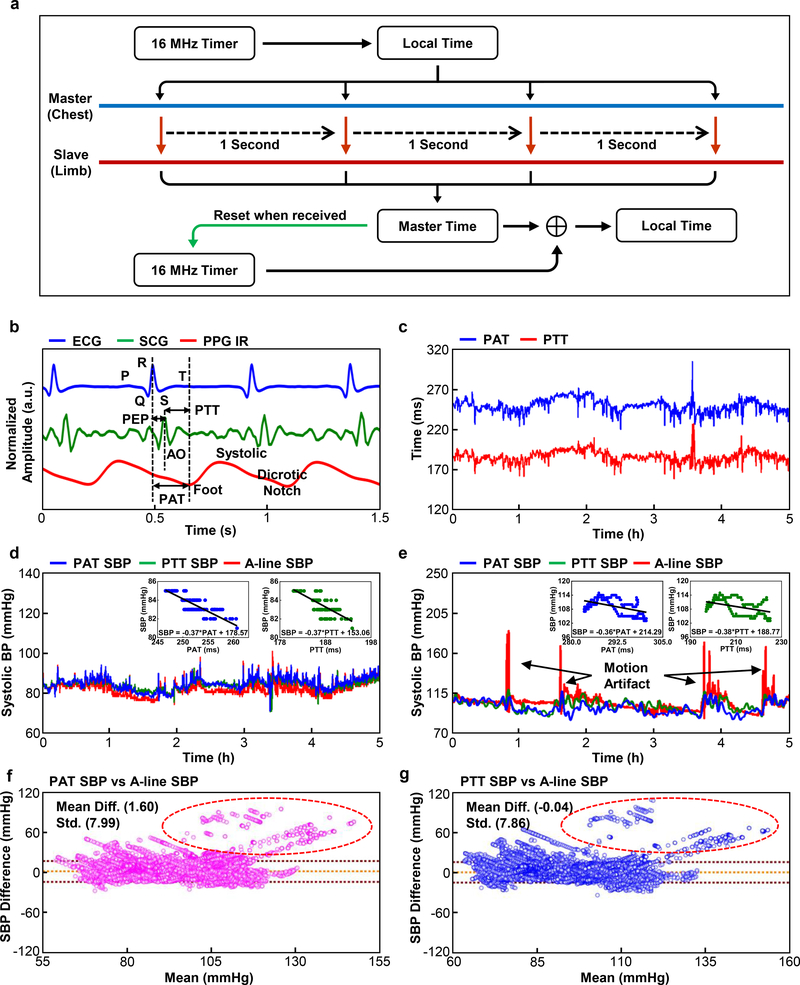
- Time-synchronized chest and limb units enabled PAT- and PTT-derived systolic blood pressure estimates versus arterial-line measurements, with mean differences of 1.60 and −0.04 mmHg and SDs of 7.99 and 7.86 mmHg, respectively (n = 5), within ANSI/AAMI SP10 limits.
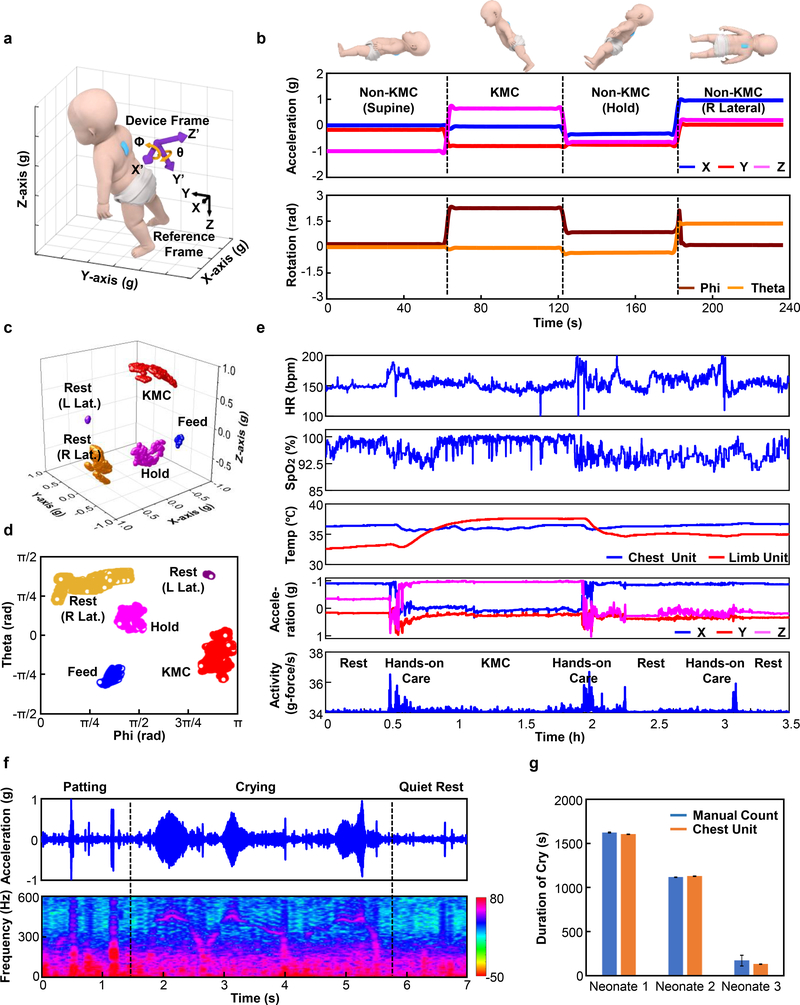
- Additional modalities included kangaroo-care orientation/activity tracking, SCG, and cry analysis: KC events showed phi/theta of 2.85 ± 0.10 rad and −0.29 ± 0.28 rad over 2.4 h; activity was 0.07 ± 0.02 g/s during rest/KC versus 0.24 ± 0.05 g/s during hands-on care; 11 cry events in n = 3 infants showed duration difference −3.9 ± 13.9 s and fundamental frequency 410.7 ± 47.9 Hz.
Methods
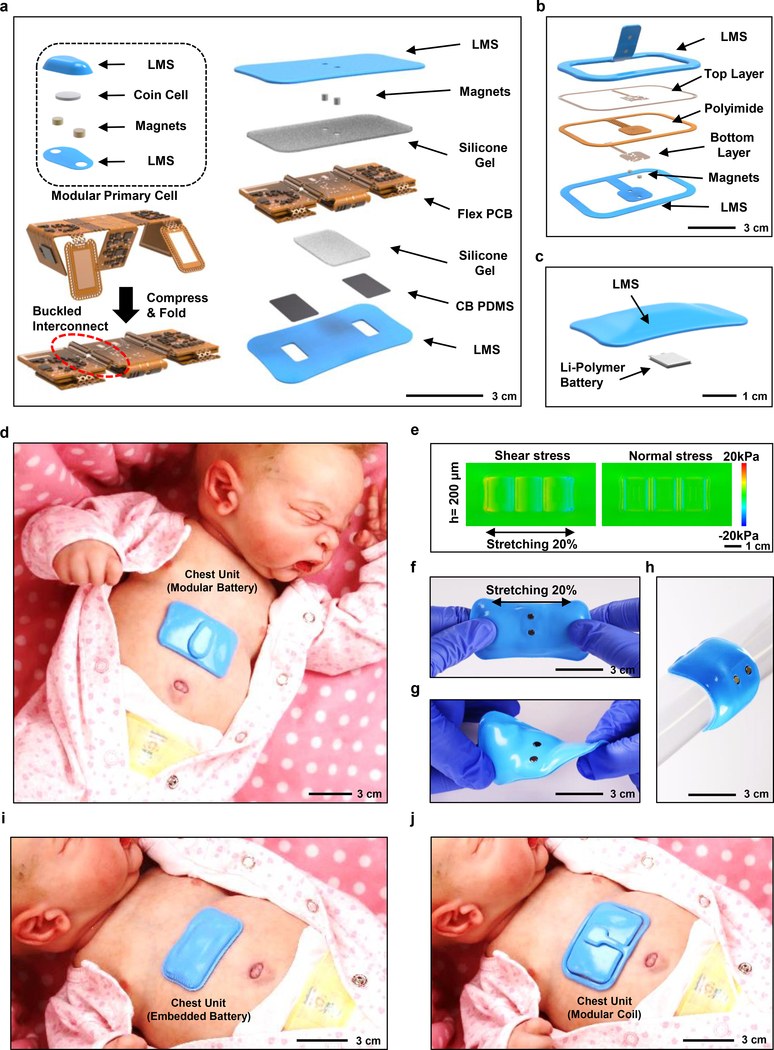
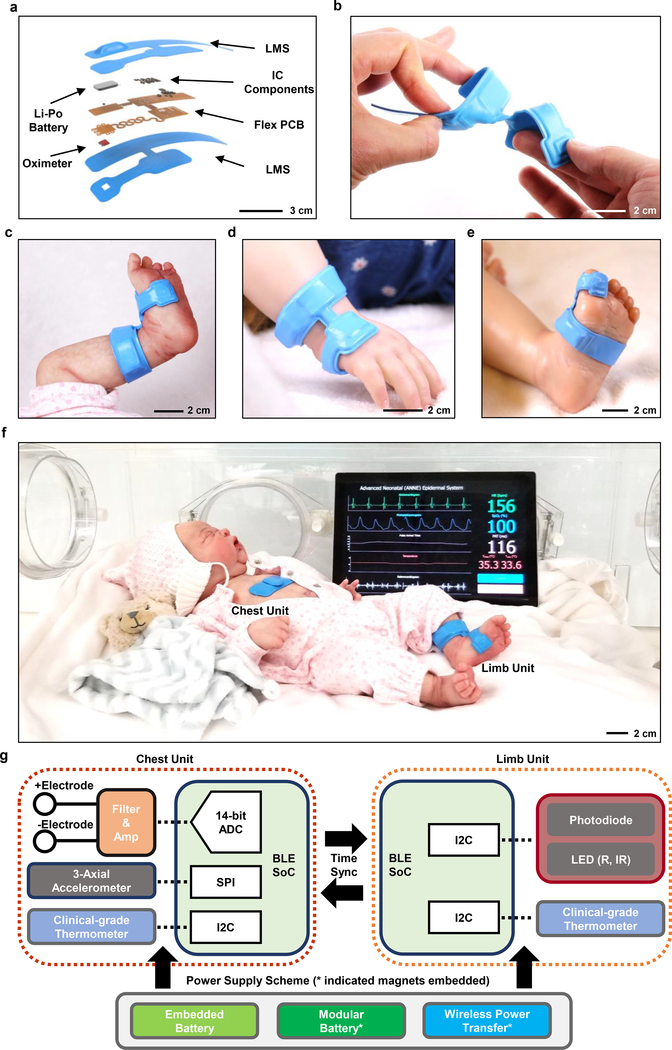
- Design: two mechanically soft, wireless devices—a chest unit for ECG, accelerometry, temperature, and acoustic/vibration signals, and a limb unit for reflectance PPG and temperature—using Bluetooth Low Energy, with modular/embedded/battery-free power options.
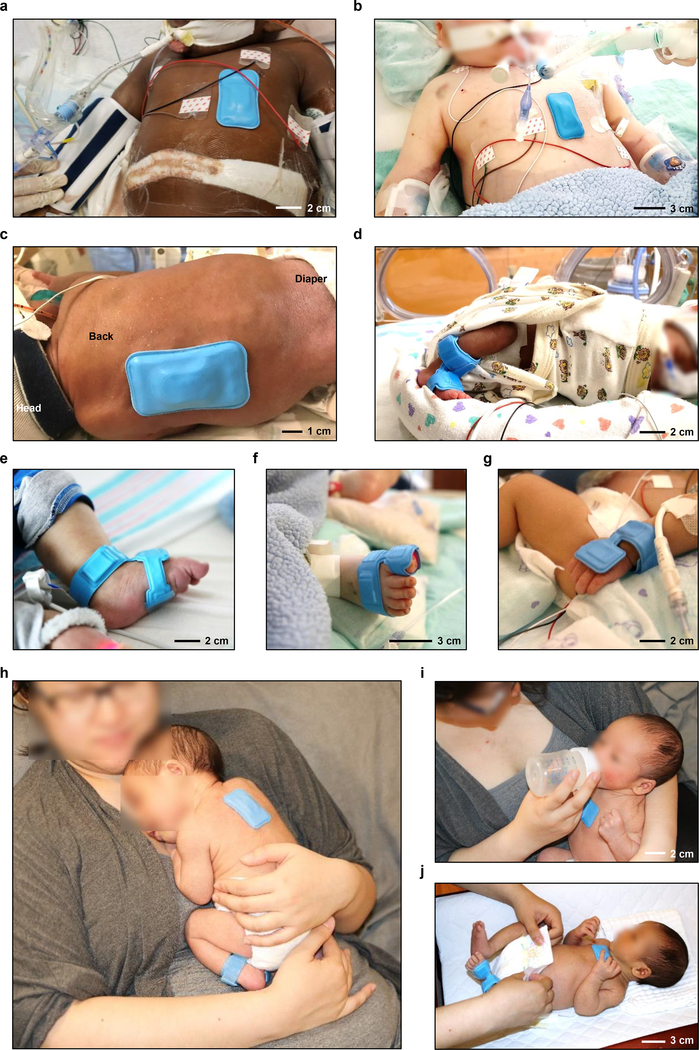
- Data/sample: pilot clinical studies in NICU and PICU patients, including 50 patients for safety/skin tolerability across 23–40 weeks gestational age and 1 week–4 years chronological age; vital-sign comparisons used smaller subsets (e.g., n = 3 for HR/SpO2/temperature, n = 6 for RR, n = 20 for aggregated HR/SpO2, n = 5 for BP).
- Analysis: Bland-Altman comparisons against standard clinical monitors; time-synchronized PAT/PTT calibrated against arterial-line SBP; accelerometer filtering for KC orientation/activity and cry detection; MANOVA for position/activity comparisons.
Limitations
- The paper states that in instances of low SpO2 (<90%), mean disagreement was higher than the overall comparison, likely reflecting different SpO2 de-noising algorithms rather than a true measurement difference.
- The paper notes that comparisons reflect real-world vital-sign calculations during clinical care, feeding, imaging, and other procedures, so motion artifact and noise are inherent and processed differently between the experimental system and clinical comparator.
- Evident from the text: key validation cohorts were small (e.g., n = 3 for HR/SpO2/temperature, n = 5 for BP, n = 3 for KC/cry), thermal safety testing used a subset of 3 patients over 24 h, and BP estimation required initial calibration against 5 min of arterial-line SBP data.
Model-written summary. Check it against the paper before relying on it.
Integrity signals
Registry
Cites
Statistics
Figures
Verification
Claims the paper makes
9 Valid · 9 Not valid · 13 Not checked · 63 Own results and interpretations
The cited sources support only part of this claim — read each source’s verdict below.
In the paper
“Ultimately, both PAT and PTT depend on vascular system geometry, elasticity, SBP, and other factors30,33,34.”
§ Skin-Interfaced Biosensors and Pilot Studies for Advanced Wireless Physiological Monitoring in Neonatal and Pediatric Intensive Care Units > Results > Time-synchronized Bi-nodal Communication for Non-invasive Blood Pressure Monitoring
What the sources say
- Partly supportedcites [30] Ma Y, Relation between blood pressure and pulse wave velocity for human arteries. PNAS 115, 11144– 11149 (2018). 30322935 PMC6217416 sourceExperimental — accuracy not yet measured
The In Vitro Experiments section relates pulse transit time to pulse wave velocity and reports pulse arrival times measured with ECG and PPG. It also states that the pressure–velocity relation depends on arterial material properties and geometry. The reported human measurements concern diastolic blood pressure, however, so the paper does not establish the stated dependence on SBP for both PAT and PTT. (LLM, conf=0.84)
- Not matchedcites [33] Kangaroo mother care: a practical guide, (World Health Organization, Dept. of Reproductive Health and Research, 2003).
Its entry has no title and year that we can search by.
- Not checked — no full text of the sourcecites [34] Liu G-Z, Guo Y-W, Zhu Q-S, Huang B-Y & Wang L Estimation of respiration rate from three-dimensional acceleration data based on body sensor network. Telemed. J. E-Health 17, 705– 711 (2011). 22035321 PMC3203837 source
plainstates an association- Asserted: passes — The authors put it forward as true.
- Checkable: passes — It can be checked against evidence.
- Load-bearing: unclear — It is unclear whether the paper’s conclusions depend on it.
- Based: passes — The paper gives a reason why it holds.
- Partly supported
The cited sources support only part of this claim — read each source’s verdict below.
In the paper
“Cry analysis can serve as a non-invasive method to analyze the neurophysiological state, often influenced by birth trauma, brain injury or pain stress13.”
§ Skin-Interfaced Biosensors and Pilot Studies for Advanced Wireless Physiological Monitoring in Neonatal and Pediatric Intensive Care Units > Results > Advanced Use Cases: Kangaroo Care and Cry Analysis
What the sources say
- Partly supportedcites [13] Shinya Y, Kawai M, Niwa F, Imafuku M & Myowa M Fundamental frequency variation of neonatal spontaneous crying predicts language acquisition in preterm and term infants. Front. Psychol. 8, 2195 (2017). 29312060 PMC5744644 sourceExperimental — accuracy not yet measured
The Introduction (page not specified) describes cry acoustics as a non-invasive index of neonatal neurophysiological states, including pain stress, and links abnormal cry frequency to neurological disturbances. It does not specifically identify birth trauma or brain injury as influences, so those examples are not supported by our copy. (LLM, conf=0.88)
plainstates an association- Asserted: passes — The authors put it forward as true.
- Checkable: passes — It can be checked against evidence.
- Load-bearing: passes — The paper’s conclusions depend on it.
- Based: passes — The paper gives a reason why it holds.
- Partly supported
The cited sources that could be checked couldn’t confirm or dispute this claim.
In the paper
“The fundamental frequency of 410.7 ± 47.9 (Supplementary Fig.24e) is consistent with published results46.”
§ Skin-Interfaced Biosensors and Pilot Studies for Advanced Wireless Physiological Monitoring in Neonatal and Pediatric Intensive Care Units > Results > Advanced Use Cases: Kangaroo Care and Cry Analysis
What the sources say
- Could not verifycites [46] Inan Omer T, Novel wearable seismocardiography and machine learning algorithms can assess clinical status of heart failure patients. Circ. Heart Fail. 11, e004313 (2018). 29330154 PMC5769154 sourceExperimental — accuracy not yet measured
The Methods (Pre-Processing and Feature Extraction; page unavailable) discuss frequency components of cardiac seismocardiography signals, not crying. Searches for crying, vocal pitch, and the reported frequency found no passage in our copy addressing whether 410.7 ± 47.9 is consistent with published results. (LLM, conf=0.77)
plain- Asserted: passes — The authors put it forward as true.
- Checkable: passes — It can be checked against evidence.
- Load-bearing: unclear — It is unclear whether the paper’s conclusions depend on it.
- Based: passes — The paper gives a reason why it holds.
- Could not verify
The cited sources support only part of this claim — read each source’s verdict below.
In the paper
“Continuous monitoring of vital signs is essential, yet existing technologies require the use of multiple electrodes and interfaces attached to the skin with adhesive tapes and connected by wires to electronic processing systems that are often tethered to the wall.”
§ Skin-Interfaced Biosensors and Pilot Studies for Advanced Wireless Physiological Monitoring in Neonatal and Pediatric Intensive Care Units > Abstract
What the sources say
- Partly supportedcites [3] Bonner O, Beardsall K, Crilly N & Lasenby J ‘ There were more wires than him’: the potential for wireless patient monitoring in neonatal intensive care. BMJ Innov. 3, 12– 18 (2017). PMC5293857 28250963 sourceExperimental — accuracy not yet measured
The Introduction (page unavailable) describes multiple vital-sign sensors in a neonatal intensive care unit connected by wires to a monitoring unit outside the incubator. The Results (page unavailable) describe adhesive ECG and temperature probes, but say the pulse oximeter is secured with Velcro. The paper does not establish that the monitoring units are tethered to a wall or that all the interfaces use adhesive tape. (LLM, conf=0.87)
plain- Asserted: passes — The authors put it forward as true.
- Checkable: passes — It can be checked against evidence.
- Load-bearing: passes — The paper’s conclusions depend on it.
- Based: passes — The paper gives a reason why it holds.
- Partly supported
The cited sources that could be checked couldn’t confirm or dispute this claim.
In the paper
“The data show that skin-to-skin contact during KC produced a pronounced, gradual increase in the peripheral skin temperature, consistent with expectation and as demonstrated in previous studies39.”
§ Skin-Interfaced Biosensors and Pilot Studies for Advanced Wireless Physiological Monitoring in Neonatal and Pediatric Intensive Care Units > Results > Advanced Use Cases: Kangaroo Care and Cry Analysis
What the sources say
- Could not verifycites [39] Huntsman RJ, Lowry NJ & Sankaran K Nonepileptic motor phenomena in the neonate. Paediatr. Child Health 13, 680– 684 (2008). 19436521 PMC2606074 sourceExperimental — accuracy not yet measured
The paper’s passages on neonatal tremor and jitteriness (section labeled Abstract; page unavailable) do not address Kangaroo Care or peripheral skin temperature. Searches for skin-to-skin contact, thermoregulation, and a gradual temperature increase found no passage supporting the attributed finding. (LLM, conf=0.78)
boostedstates a cause- Asserted: passes — The authors put it forward as true.
- Checkable: passes — It can be checked against evidence.
- Load-bearing: unclear — It is unclear whether the paper’s conclusions depend on it.
- Based: passes — The paper gives a reason why it holds.
- Could not verify
45 more claims
Create a free account to see all 94 claims and to verify the 2 references still open.
- It may state two separate claims as one. 39
- Probably not a substantial claim. 10
Claims other papers make about this one
Each is checked against this paper’s own text: does it say what the citing paper says it does?
The source backs part of the claim, not all of it — or backs it for a different population, condition or comparison.
In the citing paper
“Previous reports validated the performance of an FDA-cleared physiological monitoring system against gold standard monitoring platforms [18–23].”
From Pregnancy outcomes in infertility patients diagnosed with sleep disordered breathing with wireless wearable sensors (2022) · cites this paper as [19]
Experimental — accuracy not yet measuredThe source backs part of the claim, not all of it — or backs it for a different population, condition or comparison.
In the citing paper
“In previous work, we demonstrate the ability for the chest- and finger-mounted sensors to monitor vital signs in both children and adults; the abdominal sensor allows for maternal–fetal monitoring of pregnant women in both high- and low-resource settings as well as the clinical and home settings (22, 23).”
From Comprehensive pregnancy monitoring with a network of wireless, soft, and flexible sensors in high- and low-resource health settings (2021) · cites this paper as [22]
Experimental — accuracy not yet measuredThe source backs part of the claim, not all of it — or backs it for a different population, condition or comparison.
In the citing paper
“Additionally, as demonstrated by our previous work, neonatal vital signs can also be tracked with the same sensors in both high-resource and low-resource settings as well as support kangaroo care (22, 48).”
From Comprehensive pregnancy monitoring with a network of wireless, soft, and flexible sensors in high- and low-resource health settings (2021) · cites this paper as [22]
Experimental — accuracy not yet measuredThe source backs part of the claim, not all of it — or backs it for a different population, condition or comparison.
In the citing paper
“Previous wearables have been designed to condense the complicated setups in NICU monitoring into miniaturized wearables for facilitated monitoring4–6; however, they encounter problems with device longevity with either single-use or short-term use before replacement.”
From Soft, all-in-one, nanomembrane wearable system for advancing neonatal health monitoring in Ethiopia (2025) · cites this paper as [5]
Experimental — accuracy not yet measuredThe cited source says what the claim attributes to it.
In the citing paper
“and have been used in neonatal and pediatric intensive care units. 4,5”
From Advanced wireless monitoring for children in the cardiac perioperative setting (2023) · cites this paper as [5]
2 more claims about this paper
Create a free account to see every claim other papers make about this one.
Citations
Cites
STATISTICAL METHODS FOR ASSESSING AGREEMENT BETWEEN TWO METHODS OF CLINICAL MEASUREMENT
Martin Bland, J., & Altman, D. (1986) · The Lancet · doi:10.1016/s0140-6736(86)90837-8 · Cited by 47,965
Pickering, T. G., Hall, J. E., Appel, L. J., Falkner, B. E., Graves, J., Hill, M. N., Jones, D. W., Kurtz, T., Sheps, S. G., & Roccella, E. J. (2005) · Circulation · doi:10.1161/01.cir.0000154900.76284.f6 · Cited by 3,985
Pickering, T. G., Hall, J. E., Appel, L. J., Falkner, B. E., Graves, J., Hill, M. N., Jones, D. W., Kurtz, T., Sheps, S. G., & Roccella, E. J. (2005) · Hypertension · doi:10.1161/01.hyp.0000150859.47929.8e · Cited by 2,051
Scheer, B., Perel, A., & Pfeiffer, U. J. (2002) · Critical Care · doi:10.1186/cc1489 · Cited by 854
Binodal, wireless epidermal electronic systems with in-sensor analytics for neonatal intensive care
Chung, H. U., Kim, B. H., Lee, J. Y., Lee, J., Xie, Z., Ibler, E. M., Lee, K., Banks, A., Jeong, J. Y., Kim, J., et al. (2019) · Science · doi:10.1126/science.aau0780 · Cited by 807
Self-citationKangaroo Mother Care and Neonatal Outcomes: A Meta-analysis
Boundy, E. O., Dastjerdi, R., Spiegelman, D., Fawzi, W. W., Missmer, S. A., Lieberman, E., Kajeepeta, S., Wall, S., & Chan, G. J. (2016) · Pediatrics · doi:10.1542/peds.2015-2238 · Cited by 661
Pulse transit time measured from the ECG: an unreliable marker of beat-to-beat blood pressure
Payne, R. A., Symeonides, C. N., Webb, D. J., & Maxwell, S. R. J. (2006) · Journal of Applied Physiology · doi:10.1152/japplphysiol.00657.2005 · Cited by 418
Liu, Y., Norton, J. J. S., Qazi, R., Zou, Z., Ammann, K. R., Liu, H., Yan, L., Tran, P. L., Jang, K.-I., Lee, J. W., et al. (2016) · Science Advances · doi:10.1126/sciadv.1601185 · Cited by 397
Self-citationXu, J., Murphy, S. L., Kochanek, K. D., Bastian, B. A., & Arias, E. (2018) · PubMed · Cited by 391
Radial Artery Cannulation: A Comprehensive Review of Recent Anatomic and Physiologic Investigations
Brzezinski, M., Luisetti, T., & London, M. J. (2009) · Anesthesia & Analgesia · doi:10.1213/ane.0b013e3181bbd416 · Cited by 354
Research works printed but not linked: 1
- Wheeler DS, Wong HR & Shanley TP Pediatric critical care medicine: basic science and clinical evidence, (Springer, London, 2007).
Cited by
Technology Roadmap for Flexible Sensors
Luo, Y., Abidian, M. R., Ahn, J.-H., Akinwande, D., Andrews, A. M., Antonietti, M., Bao, Z., Berggren, M., Berkey, C. A., Bettinger, C. J., et al. (2023) · ACS Nano · doi:10.1021/acsnano.2c12606 · Cited by 1,383
Self-citationHydrogel interfaces for merging humans and machines
Yuk, H., Wu, J., & Zhao, X. (2022) · Nature Reviews Materials · doi:10.1038/s41578-022-00483-4 · Cited by 661
Wearable chemical sensors for biomarker discovery in the omics era
Sempionatto, J. R., Lasalde-Ramírez, J. A., Mahato, K., Wang, J., & Gao, W. (2022) · Nature Reviews Chemistry · doi:10.1038/s41570-022-00439-w · Cited by 613
Fabrication Methods for Microfluidic Devices: An Overview
Scott, S., & Ali, Z. (2021) · Micromachines · doi:10.3390/mi12030319 · Cited by 479
Flexible Wearable Sensors for Cardiovascular Health Monitoring
Chen, S., Qi, J., Fan, S., Qiao, Z., Yeo, J. C., & Lim, C. T. (2021) · Advanced Healthcare Materials · doi:10.1002/adhm.202100116 · Cited by 453
A three-dimensional liquid diode for soft, integrated permeable electronics
Zhang, B., Li, J., Zhou, J., Chow, L., Zhao, G., Huang, Y., Ma, Z., Zhang, Q., Yang, Y., Yiu, C. K., et al. (2024) · Nature · doi:10.1038/s41586-024-07161-1 · Cited by 417
Self-citationSkin-inspired soft bioelectronic materials, devices and systems
Zhao, C., Park, J., Root, S. E., & Bao, Z. (2024) · Nature Reviews Bioengineering · doi:10.1038/s44222-024-00194-1 · Cited by 408
“For example, a soft multimodal system was developed using serpentine stretchable interconnects for rigid commercial sensors (temperature, PPG and ECG sensors) 55,56 (Fig.”
Self-citationHybrid multimodal wearable sensors for comprehensive health monitoring
Mahato, K., Saha, T., Ding, S., Sandhu, S. S., Chang, A.-Y., & Wang, J. (2024) · Nature Electronics · doi:10.1038/s41928-024-01247-4 · Cited by 404
Wu, H., Yang, G., Zhu, K., Liu, S., Guo, W., Jiang, Z., & Li, Z. (2021) · Advanced Science · doi:10.1002/advs.202001938 · Cited by 395
Naturally sourced hydrogels: emerging fundamental materials for next-generation healthcare sensing
Wang, Z., Wei, H., Huang, Y., Wei, Y., & Chen, J. (2023) · Chemical Society Reviews · doi:10.1039/d2cs00813k · Cited by 392
Self-citationYang, Y., Guo, X., Zhu, M., Sun, Z., Zhang, Z., He, T., & Lee, C. (2023) · Advanced Energy Materials · doi:10.1002/aenm.202203040 · Cited by 337
Skin bioelectronics towards long-term, continuous health monitoring
Wang, Y., Haick, H., Guo, S., Wang, C., Lee, S., Yokota, T., & Someya, T. (2022) · Chemical Society Reviews · doi:10.1039/d2cs00207h · Cited by 318
Self-citationSelf-Powered Sensing in Wearable Electronics─A Paradigm Shift Technology
Tang, W., Sun, Q., & Wang, Z. L. (2023) · Chemical Reviews · doi:10.1021/acs.chemrev.3c00305 · Cited by 300
Ultrathin Hydrogel Films toward Breathable Skin‐Integrated Electronics
Cheng, S., Lou, Z., Zhang, L., Guo, H., Wang, Z., Guo, C., Fukuda, K., Ma, S., Wang, G., Someya, T., et al. (2023) · Advanced Materials · doi:10.1002/adma.202206793 · Cited by 291
Multifaceted Design and Emerging Applications of Tissue Adhesives
Ma, Z., Bao, G., & Li, J. (2021) · Advanced Materials · doi:10.1002/adma.202007663 · Cited by 269
Porous Conductive Textiles for Wearable Electronics
Ding, Y., Jiang, J., Wu, Y., Zhang, Y., Zhou, J., Zhang, Y., Huang, Q., & Zheng, Z. (2024) · Chemical Reviews · doi:10.1021/acs.chemrev.3c00507 · Cited by 269
A transient, closed-loop network of wireless, body-integrated devices for autonomous electrotherapy
Choi, Y. S., Jeong, H., Yin, R. T., Avila, R., Pfenniger, A., Yoo, J., Lee, J. Y., Tzavelis, A., Lee, Y. J., Chen, S. W., et al. (2022) · Science · doi:10.1126/science.abm1703 · Cited by 267
Self-citationCuticular pad–inspired selective frequency damper for nearly dynamic noise–free bioelectronics
Park, B., Shin, J. H., Ok, J., Park, S., Jung, W., Jeong, C., Choy, S., Jo, Y. J., & Kim, T.-I. (2022) · Science · doi:10.1126/science.abj9912 · Cited by 244
Multilayered electronic transfer tattoo that can enable the crease amplification effect
Tang, L., Shang, J., & Jiang, X. (2021) · Science Advances · doi:10.1126/sciadv.abe3778 · Cited by 231
A Wearable Body Condition Sensor System with Wireless Feedback Alarm Functions
Xu, K., Fujita, Y., Lu, Y., Honda, S., Shiomi, M., Arie, T., Akita, S., & Takei, K. (2021) · Advanced Materials · doi:10.1002/adma.202008701 · Cited by 207
A smart mask for exhaled breath condensate harvesting and analysis
Heng, W., Yin, S., Min, J., Wang, C., Han, H., Shirzaei Sani, E., Li, J., Song, Y., Rossiter, H. B., & Gao, W. (2024) · Science · doi:10.1126/science.adn6471 · Cited by 208
Skin-electrode iontronic interface for mechanosensing
Zhu, P., Du, H., Hou, X., Lu, P., Wang, L., Huang, J., Bai, N., Wu, Z., Fang, N. X., & Guo, C. F. (2021) · Nature Communications · doi:10.1038/s41467-021-24946-4 · Cited by 190
Diagnostic Features and Potential Applications of PPG Signal in Healthcare: A Systematic Review
Almarshad, M. A., Islam, M. S., Al-Ahmadi, S., & BaHammam, A. S. (2022) · Healthcare · doi:10.3390/healthcare10030547 · Cited by 188
“[193], designed a small PPG-based, noninvasive, and relatively small adhesive bandage that can be used in NICU or pediatric intensive-care units PICU for vital signs continuous monitoring.”
BackgroundThe 2023 wearable photoplethysmography roadmap
Charlton, P. H., Allen, J., Bailón, R., Baker, S., Behar, J. A., Chen, F., Clifford, G. D., Clifton, D. A., Davies, H. J., Ding, C., et al. (2023) · Physiological Measurement · doi:10.1088/1361-6579/acead2 · Cited by 187
Self-citationRecent Advances in Intelligent Wearable Medical Devices Integrating Biosensing and Drug Delivery
Tan, M., Xu, Y., Gao, Z., Yuan, T., Liu, Q., Yang, R., Zhang, B., & Peng, L. (2022) · Advanced Materials · doi:10.1002/adma.202108491 · Cited by 187
Self-citationBiomarkers and Detection Platforms for Human Health and Performance Monitoring: A Review
Sim, D., Brothers, M. C., Slocik, J. M., Islam, A. E., Maruyama, B., Grigsby, C. C., Naik, R. R., & Kim, S. S. (2022) · Advanced Science · doi:10.1002/advs.202104426 · Cited by 186
Self-citationAnalysis of factors affecting IoT-based smart hospital design
Uslu, B. Ç., Okay, E., & Dursun, E. (2020) · Journal of Cloud Computing · doi:10.1186/s13677-020-00215-5 · Cited by 181
“Biophysical and biochemical signal collection technologies are used to monitoring health remotely, which can reduce time on the training of individual person and make the patient monitoring process more reliable than manual monitoring [77].”
BackgroundCuffless Blood Pressure Measurement
Mukkamala, R., Stergiou, G. S., & Avolio, A. P. (2022) · Annual Review of Biomedical Engineering · doi:10.1146/annurev-bioeng-110220-014644 · Cited by 180
Electronic Skin for Health Monitoring Systems: Properties, Functions, and Applications
Yang, X., Chen, W., Fan, Q., Chen, J., Chen, Y., Lai, F., & Liu, H. (2024) · Advanced Materials · doi:10.1002/adma.202402542 · Cited by 175
Ultrathin, soft, radiative cooling interfaces for advanced thermal management in skin electronics
Li, J., Fu, Y., Zhou, J., Yao, K., Ma, X., Gao, S., Wang, Z., Dai, J.-G., Lei, D., & Yu, X. (2023) · Science Advances · doi:10.1126/sciadv.adg1837 · Cited by 174
Toward an AI Era: Advances in Electronic Skins
Fu, X., Cheng, W., Wan, G., Yang, Z., & Tee, B. C. K. (2024) · Chemical Reviews · doi:10.1021/acs.chemrev.4c00049 · Cited by 172
Textile Triboelectric Nanogenerators for Wearable Pulse Wave Monitoring
Chen, G., Au, C., & Chen, J. (2021) · Trends in Biotechnology · doi:10.1016/j.tibtech.2020.12.011 · Cited by 170
Soft bioelectronics for the management of cardiovascular diseases
Sunwoo, S.-H., Han, S. I., Park, C. S., Kim, J. H., Georgiou, J. S., Lee, S.-P., Kim, D.-H., & Hyeon, T. (2023) · Nature Reviews Bioengineering · doi:10.1038/s44222-023-00102-z · Cited by 167
Self-citationChen, S., Fan, S., Qiao, Z., Wu, Z., Lin, B., Li, Z., Riegler, M. A., Wong, M. Y. H., Opheim, A., Korostynska, O., et al. (2025) · Advanced Materials · doi:10.1002/adma.202500412 · Cited by 164
Metasurfaces for bioelectronics and healthcare
Li, Z., Tian, X., Qiu, C.-W., & Ho, J. S. (2021) · Nature Electronics · doi:10.1038/s41928-021-00589-7 · Cited by 159
Artificial Intelligence-Enabled Caregiving Walking Stick Powered by Ultra-Low-Frequency Human Motion
Guo, X., He, T., Zhang, Z., Luo, A., Wang, F., Ng, E. J., Zhu, Y., Liu, H., & Lee, C. (2021) · ACS Nano · doi:10.1021/acsnano.1c04464 · Cited by 157
Wen, F., He, T., Liu, H., Chen, H.-Y., Zhang, T., & Lee, C. (2020) · Nano Energy · doi:10.1016/j.nanoen.2020.105155 · Cited by 158
“Flexible physical and chemical sensors [13] targeted for diversified biophysical and biochemical signals collect information that is obviously valuable for the user’s health status monitoring [14,15],”
BackgroundContinuous on-body sensing for the COVID-19 pandemic: Gaps and opportunities
Jeong, H., Rogers, J. A., & Xu, S. (2020) · Science Advances · doi:10.1126/sciadv.abd4794 · Cited by 155
Self-citationMaterials and technologies for multifunctional, flexible or integrated supercapacitors and batteries
Fu, W., Turcheniuk, K., Naumov, O., Mysyk, R., Wang, F., Liu, M., Kim, D. Y., Ren, X., Magasinski, A., Yu, M., et al. (2021) · Materials Today · doi:10.1016/j.mattod.2021.01.026 · Cited by 161
Self-citationWearable sensors and devices for real-time cardiovascular disease monitoring
Lin, J., Fu, R., Zhong, X., Yu, P., Tan, G., Li, W., Zhang, H., Li, Y., Zhou, L., & Ning, C. (2021) · Cell Reports Physical Science · doi:10.1016/j.xcrp.2021.100541 · Cited by 124
Flexible Hybrid Sensor Systems with Feedback Functions
Xu, K., Lu, Y., & Takei, K. (2020) · Advanced Functional Materials · doi:10.1002/adfm.202007436 · Cited by 160
Arya, S. S., Dias, S. B., Jelinek, H. F., Hadjileontiadis, L. J., & Pappa, A. (2023) · Biosensors and Bioelectronics · doi:10.1016/j.bios.2023.115387 · Cited by 188
Chen, X., Li, R., Niu, G., Xin, M., Xu, G., Cheng, H., & Yang, L. (2022) · Chemical Engineering Journal · doi:10.1016/j.cej.2022.136631 · Cited by 153
Park, W., Seo, H., Kim, J., Hong, Y., Song, H., Joo, B. J., Kim, S., Kim, E., Yae, C., Kim, J., et al. (2024) · Nature Communications · doi:10.1038/s41467-024-47123-9 · Cited by 169
Self-citationAdvances in Biosensing and Environmental Monitoring Based on Electrospun Nanofibers
Kang, S., Zhao, K., Yu, D., Zheng, X., & Huang, C. (2022) · Advanced Fiber Materials · doi:10.1007/s42765-021-00129-0 · Cited by 140
A photoacoustic patch for three-dimensional imaging of hemoglobin and core temperature
Gao, X., Chen, X., Hu, H., Wang, X., Yue, W., Mu, J., Lou, Z., Zhang, R., Shi, K., Chen, X., et al. (2022) · Nature Communications · doi:10.1038/s41467-022-35455-3 · Cited by 136
“The recent advances in soft electronics have given rise to soft patches that can adhere to the human skin for continuous health monitoring 12 – 14 .”
Self-citationAdvances in Healthcare Electronics Enabled by Triboelectric Nanogenerators
Chen, X., Xie, X., Liu, Y., Zhao, C., Wen, M., & Wen, Z. (2020) · Advanced Functional Materials · doi:10.1002/adfm.202004673 · Cited by 133
Lee, S. H., Kim, Y., Yeo, M., Mahmood, M., Zavanelli, N., Chung, C., Heo, J. Y., Kim, Y., Jung, S. S., & Yeo, W. (2022) · Science Advances · doi:10.1126/sciadv.abo5867 · Cited by 152
Self-citationLa, T., & Le, L. H. (2021) · Advanced Materials Technologies · doi:10.1002/admt.202100798 · Cited by 150
Translational gaps and opportunities for medical wearables in digital health
Xu, S., Kim, J., Walter, J. R., Ghaffari, R., & Rogers, J. A. (2022) · Science Translational Medicine · doi:10.1126/scitranslmed.abn6036 · Cited by 148
“…only address requirements in monitoring traditional vital signs, without any of the drawbacks of conventional systems, but also offer additional capabilities in monitoring body motions, orientation, cardiac sounds, vocal biomarkers, pulse wave dynamics, and surrogates of blood pressure ( 22 , 51 ).”
BackgroundSelf-citationSelf-healing, stretchable, and highly adhesive hydrogels for epidermal patch electrodes
Zhou, X., Rajeev, A., Subramanian, A., Li, Y., Rossetti, N., Natale, G., Lodygensky, G. A., & Cicoira, F. (2021) · Acta Biomaterialia · doi:10.1016/j.actbio.2021.07.069 · Cited by 142
Wearable Biosensors for Body Computing
Lin, Y., Bariya, M., & Javey, A. (2020) · Advanced Functional Materials · doi:10.1002/adfm.202008087 · Cited by 139
Machine learning-assisted wearable sensing systems for speech recognition and interaction
Liu, T., Zhang, M., Li, Z., Dou, H., Zhang, W., Yang, J., Wu, P., Li, D., & Mu, X. (2025) · Nature Communications · doi:10.1038/s41467-025-57629-5 · Cited by 176
Bio-inspired flexible electronics for smart E-skin
Nie, B., Liu, S., Qu, Q., Zhang, Y., Zhao, M., & Liu, J. (2021) · Acta Biomaterialia · doi:10.1016/j.actbio.2021.06.018 · Cited by 130
Jeong, H., Lee, J. Y., Lee, K., Kang, Y. J., Kim, J.-T., Avila, R., Tzavelis, A., Kim, J., Ryu, H., Kwak, S. S., et al. (2021) · Science Advances · doi:10.1126/sciadv.abg3092 · Cited by 121
Self-citationWireless Power Transfer and Telemetry for Implantable Bioelectronics
Yoo, S., Lee, J. H., Joo, H., Sunwoo, S., Kim, S., & Kim, D. (2021) · Advanced Healthcare Materials · doi:10.1002/adhm.202100614 · Cited by 126
Self-citationHwang, H., Kong, M., Kim, K.-H., Park, D., Lee, S., Park, S., Song, H.-J., & Jeong, U. (2021) · Science Advances · doi:10.1126/sciadv.abh0171 · Cited by 116
Self-citationImprovements in Patient Monitoring in the Intensive Care Unit: Survey Study
Poncette, A.-S., Mosch, L., Spies, C., Schmieding, M., Schiefenhövel, F., Krampe, H., & Balzer, F. (2020) · Journal of Medical Internet Research · doi:10.2196/19091 · Cited by 115
“However, implementation into intensive care routines is still in its infancy [28].”
BackgroundMaterial Choice and Structure Design of Flexible Battery Electrode
Xia, X., Yang, J., Liu, Y., Zhang, J., Shang, J., Liu, B., Li, S., & Li, W. (2022) · Advanced Science · doi:10.1002/advs.202204875 · Cited by 120
Franklin, D., Tzavelis, A., Lee, J. Y., Chung, H. U., Trueb, J. T., Arafa, H., Kwak, S. S., Huang, I. A., Liu, Y., Rathod, M., et al. (2023) · Nature Biomedical Engineering · doi:10.1038/s41551-023-01098-y · Cited by 153
“The devices can form a network of time-synchronized nodes using methods described previously 51 .”
MethodSelf-citationGuo, S., Patel, S. B., Wang, J., Yu, Z., Qu, H., Zhang, S., Yu, K., Liu, S., Koh, J. J., Koh, X. Q., et al. (2025) · Science Advances · doi:10.1126/sciadv.adw5991 · Cited by 130
Sun, M., Gu, Y., Pei, X., Wang, J., Liu, J., Ma, C., Bai, J., & Zhou, M. (2021) · Nano Energy · doi:10.1016/j.nanoen.2021.106061 · Cited by 113
Toward Integrated Multifunctional Laser-Induced Graphene-Based Skin-Like Flexible Sensor Systems
Xu, K., Cai, Z., Luo, H., Lu, Y., Ding, C., Yang, G., Wang, L., Kuang, C., Liu, J., & Yang, H. (2024) · ACS Nano · doi:10.1021/acsnano.4c09062 · Cited by 115
Wearable devices for continuous monitoring of biosignals: Challenges and opportunities
Stuart, T., Hanna, J., & Gutruf, P. (2022) · APL Bioengineering · doi:10.1063/5.0086935 · Cited by 134
“81 and 82.”
Min, S., An, J., Lee, J. H., Kim, J. H., Joe, D. J., Eom, S. H., Yoo, C. D., Ahn, H., Hwang, J.-Y., Xu, S. H., et al. (2025) · Nature Reviews Cardiology · doi:10.1038/s41569-025-01127-0 · Cited by 177
“…for short-range data transfers with minimal power consumption, whereas Bluetooth Low Energy, which uses identical technology to standard Bluetooth but requires much less energy, provides a balance between power usage and range, making real-time updates possible over moderate distances 175,257,258 .”
Self-citationDevising Materials Manufacturing Toward Lab‐to‐Fab Translation of Flexible Electronics
Luo, Y., Wang, M., Wan, C., Cai, P., Loh, X. J., & Chen, X. (2020) · Advanced Materials · doi:10.1002/adma.202001903 · Cited by 122
2D Materials for Skin‐Mountable Electronic Devices
Kim, J., Lee, Y., Kang, M., Hu, L., Zhao, S., & Ahn, J. (2021) · Advanced Materials · doi:10.1002/adma.202005858 · Cited by 109
Self-citationState-of-the-Art Deep Learning Methods on Electrocardiogram Data: Systematic Review
Πετμεζάς, Γ., Stefanopoulos, L., Kilintzis, V., Tzavelis, A., Rogers, J. A., Katsaggelos, A. K., & Maglaveras, N. (2022) · JMIR Medical Informatics · doi:10.2196/38454 · Cited by 149
“Small wireless devices [351] such as these can extract continuous ECG; acceleration-based body orientation; physical activity [352]; vibrations such as heart sounds, breath sounds [353]; vocal processes [354]; and photoplethysmogram signals at multiple wavelengths and body locations.”
BackgroundSelf-citationFrom lab to life: how wearable devices can improve health equity
Walter, J. R., Xu, S., & Rogers, J. A. (2024) · Nature Communications · doi:10.1038/s41467-023-44634-9 · Cited by 121
Self-citationInterface Design for Stretchable Electronic Devices
Kim, D. W., Kong, M., & Jeong, U. (2021) · Advanced Science · doi:10.1002/advs.202004170 · Cited by 109
Self-citationRyu, D., Kim, D. H., Price, J. T., Lee, J. Y., Chung, H. U., Allen, E., Walter, J. R., Jeong, H., Cao, J., Kulikova, E., et al. (2021) · Proceedings of the National Academy of Sciences · doi:10.1073/pnas.2100466118 · Cited by 105
“Additionally, as demonstrated by our previous work, neonatal vital signs can also be tracked with the same sensors in both high-resource and low-resource settings as well as support kangaroo care (22, 48).”
Self-citationA vacuum-deposited polymer dielectric for wafer-scale stretchable electronics
Koo, J. H., Kang, J., Lee, S., Song, J., Choi, J., Yoon, J., Park, H. J., Sunwoo, S., Kim, D. C., Nam, W., et al. (2023) · Nature Electronics · doi:10.1038/s41928-023-00918-y · Cited by 108
Self-citationMucosa-interfacing electronics
Nan, K., Feig, V. R., Ying, B., Howarth, J. G., Kang, Z., Yang, Y., & Traverso, G. (2022) · Nature Reviews Materials · doi:10.1038/s41578-022-00477-2 · Cited by 108
Wireless broadband acousto-mechanical sensing system for continuous physiological monitoring
Yoo, J., Oh, S., Shalish, W., Maeng, W., Cerier, E. J., Jeanne, E., Chung, M., Lv, S., Wu, Y., Yoo, S., et al. (2023) · Nature Medicine · doi:10.1038/s41591-023-02637-5 · Cited by 115
“Furthermore, we previously reported on a slightly larger wireless wearable device using the same adhesive in a cohort of 50 neonates of gestational age 23–40 weeks and postnatal age 1 week to 4 years, with no instances of skin breakdown or dermatitis (as graded by a certified derma-tologist) 8 .”
BackgroundSelf-citationLuo, G., Shi, J., Deng, W., Chang, Z., Lu, Z., Zhang, Y., Pan, R., Jie, J., Zhang, X., & Zhang, X. (2023) · Advanced Materials · doi:10.1002/adma.202301020 · Cited by 100
A wireless, skin-interfaced biosensor for cerebral hemodynamic monitoring in pediatric care
Rwei, A. Y., Lu, W., Wu, C., Human, K. A., Suen, E., Franklin, D., Fabiani, M., Gratton, G., Xie, Z., Deng, Y., et al. (2020) · Proceedings of the National Academy of Sciences · doi:10.1073/pnas.2019786117 · Cited by 99
“The skin-interfacing adhesives and the device encapsulation materials are similar to those tested on over 100 neonatal and pediatric subjects, including premature babies born as young as 24-wk gestational age, for up to 24 h at 8 wk of postnatal life without any negative skin effects on their fragile premature skin (2…”
Self-citationRecent advances of flexible sensors for biomedical applications
Shen, G. (2021) · Progress in Natural Science Materials International · doi:10.1016/j.pnsc.2021.10.005 · Cited by 106
Jinkins, K. R., Li, S., Arafa, H., Jeong, H., Lee, Y. J., Wu, C., Campisi, E., Ni, X., Cho, D., Huang, Y. Y., et al. (2022) · Science Advances · doi:10.1126/sciadv.abo0537 · Cited by 98
Self-citationBioinspired Mechanically Interlocking Structures
Zhu, M. J., Zhang, F., & Chen, X. (2020) · Small Structures · doi:10.1002/sstr.202000045 · Cited by 102
Smart Skin‐Adhesive Patches: From Design to Biomedical Applications
Wong, S. H. D., Deen, G. R., Bates, J. S., Maiti, C., Lam, C. Y. K., Pachauri, A., AlAnsari, R., Bělský, P., Yoon, J., & Dodda, J. M. (2023) · Advanced Functional Materials · doi:10.1002/adfm.202213560 · Cited by 101
Elastic integrated electronics based on a stretchable n-type elastomer–semiconductor–elastomer stack
Shim, H., Sim, K., Wang, B., Zhang, Y., Patel, S. B., Jang, S., Marks, T. J., Facchetti, A. F., & Yu, C. (2023) · Nature Electronics · doi:10.1038/s41928-023-00966-4 · Cited by 107
Multifunctional Conductive Hydrogel Interface for Bioelectronic Recording and Stimulation
Tang, H., Li, Y., Liao, S., Liu, H., Qiao, Y., & Zhou, J. (2024) · Advanced Healthcare Materials · doi:10.1002/adhm.202400562 · Cited by 97
Xu, H., Gao, L., Zhao, H., Huang, H., Wang, Y., Chen, G., Qin, Y., Zhao, N., Xu, D., Duan, L., et al. (2021) · Microsystems & Nanoengineering · doi:10.1038/s41378-021-00318-2 · Cited by 93
Tayyab, M., Wang, J., Wang, J., Maksutoğlu, M., Yu, H., Sun, G., Yıldız, F., Eginligil, M., & Huang, W. (2020) · Nano Energy · doi:10.1016/j.nanoen.2020.105178 · Cited by 87
Kang, Y. J., Arafa, H., Yoo, J., Kantarcigil, Ç., Kim, J., Jeong, H., Yoo, S., Oh, S., Kim, J., Wu, C., et al. (2022) · npj Digital Medicine · doi:10.1038/s41746-022-00691-w · Cited by 102
Self-citationKharaziha, M., Scheibel, T., & Salehi, S. (2024) · Progress in Polymer Science · doi:10.1016/j.progpolymsci.2024.101792 · Cited by 95
Novel AI driven approach to classify infant motor functions
Reich, S., Zhang, D., Kulvičius, T., Bölte, S., Nielsen‐Saines, K., Pokorny, F. B., Peharz, R., Poustka, L., Wörgötter, F., Einspieler, C., et al. (2021) · Scientific Reports · doi:10.1038/s41598-021-89347-5 · Cited by 103
A Flexible, Wearable, and Wireless Biosensor Patch with Internet of Medical Things Applications
Phan, D. T., Nguyen, C. H., Pham, D. T. N., Tran, L. H., Park, S., Choi, J., Lee, B.-I., & Oh, J. (2022) · Biosensors · doi:10.3390/bios12030139 · Cited by 98
“[34,35].”
BackgroundSelf-powered and wireless physiological monitoring system with integrated power supply and sensors
Yan, W., Ma, C., Cai, X., Sun, Y., Zhang, G., & Song, W. (2023) · Nano Energy · doi:10.1016/j.nanoen.2023.108203 · Cited by 91
Beltrão, G., Stutz, R., Hornberger, F., Martins, W. A., Tatarinov, D., Alaee–Kerahroodi, M., Lindner, U., Stock, L., Kaiser, E., Goedicke‐Fritz, S., et al. (2022) · Scientific Reports · doi:10.1038/s41598-022-08836-3 · Cited by 97
Intelligent wearable devices based on nanomaterials and nanostructures for healthcare
Xie, L., Zhang, Z., Wu, Q., Gao, Z., Mi, G., Wang, R., Sun, H., Zhao, Y., & Du, Y. (2023) · Nanoscale · doi:10.1039/d2nr04551f · Cited by 88
Lou, Z., Tao, J., Wei, B., Jiang, X., Cheng, S., Wang, Z., Qin, C., Liang, R., Guo, H., Zhu, L., et al. (2023) · Advanced Science · doi:10.1002/advs.202304174 · Cited by 86
Beyond Flexible: Unveiling the Next Era of Flexible Electronic Systems
Kim, M. S., Almuslem, A. S., Babatain, W., Bahabry, R. R., Das, U. K., El‐Atab, N., Ghoneim, M. T., Hussain, A. M., Kutbee, A. T., Nassar, J. M., et al. (2024) · Advanced Materials · doi:10.1002/adma.202406424 · Cited by 121
Inamori, G., Kamoto, U., Nakamura, F., Isoda, Y., Uozumi, A., Matsuda, R., Shimamura, M., Okubo, Y., Ito, S., & Ota, H. (2021) · Science Advances · doi:10.1126/sciadv.abe3793 · Cited by 88
Passive Isothermal Flexible Sensor Enabled by Smart Thermal‐Regulating Aerogels
Zhong, S., Lu, B., Wang, D., Arianpour, B., Wang, S., Han, H., Yin, J., Bao, H., Liu, Y., Wen, Z., et al. (2025) · Advanced Materials · doi:10.1002/adma.202415386 · Cited by 90
A non-contact wearable device for monitoring epidermal molecular flux
Shin, J., Song, J. W., Flavin, M. T., Cho, S., Li, S., Tan, A., Pyun, K. R., Huang, A. G., Wang, H., Jeong, S., et al. (2025) · Nature · doi:10.1038/s41586-025-08825-2 · Cited by 102
Self-citationRecent Progress in Conducting Polymer Composite/Nanofiber-Based Strain and Pressure Sensors
Veeramuthu, L., Venkatesan, M., Benas, J., Cho, C., Lee, C., Lieu, F., Lin, J., Lee, R., & Kuo, C. (2021) · Polymers · doi:10.3390/polym13244281 · Cited by 84
Flexible and Stretchable Microwave Electronics: Past, Present, and Future Perspective
Zhang, H., Lan, Y., Qiu, S., Min, S., Jang, H., Park, J., Gong, S., & Ma, Z. (2020) · Advanced Materials Technologies · doi:10.1002/admt.202000759 · Cited by 79
Self-citationRodeheaver, N., Herbert, R., Kim, Y., Mahmood, M., Kim, H., Jeong, J., & Yeo, W. (2021) · Advanced Functional Materials · doi:10.1002/adfm.202104070 · Cited by 77
Self-citationLiu, T., Liu, L., Gou, G., Fang, Z., Sun, J., Chen, J., Cheng, J., Han, M., Ma, T., Liu, C., et al. (2023) · ACS Applied Materials & Interfaces · doi:10.1021/acsami.3c02690 · Cited by 80
Self-citation
Metadata
- Authors
- Chung, H. U., Rwei, A. Y., Hourlier-Fargette, A., Xu, S., Lee, K., Dunne, E. C., Xie, Z., Liu, C., Carlini, A., Kim, D. H., Ryu, D., Kulikova, E., Cao, J., Odland, I. C., Fields, K. B., Hopkins, B., Banks, A., Ogle, C., Grande, D., Park, J. B., Kim, J., Irie, M., Jang, H., Lee, J., Park, Y., Kim, J., Jo, H. H., Hahm, H., Avila, R., Xu, Y., Namkoong, M., Kwak, J. W., Suen, E., Paulus, M. A., Kim, R. J., Parsons, B. V., Human, K. A., Kim, S. S., Patel, M., Reuther, W., Kim, H. S., Lee, S. H., Leedle, J. D., Yun, Y., Rigali, S., Son, T., Jung, I., Arafa, H., Soundararajan, V. R., Ollech, A., Shukla, A., Bradley, A., Schau, M., Rand, C. M., Marsillio, L. E., Harris, Z. L., Huang, Y., Hamvas, A., Paller, A. S., Weese-Mayer, D. E., Lee, J. Y., & Rogers, J. A.
- Affiliations
- Northwestern University (US)
- Lurie Children's Hospital (US)
- Dalian University of Technology (CN)
- Sibel (United States) (US)
- University of Illinois Urbana-Champaign (US)
- North Carolina State University (US)
- Kyung Hee University (KR)
- Corresponding author
- Lee, Jong Yoon
- Rogers, John A.
- ORCID
- Chung, Ha Uk
- Rwei, Alina Y.
- Hourlier-Fargette, Aurélie
- Xu, Shuai
- Lee, KunHyuck
- Dunne, Emma C.
- Xie, Zhaoqian
- Liu, Claire
- Carlini, Andrea
- Kim, Dong Hyun
- Cao, Jingyue
- Odland, Ian C.
- Banks, Anthony
- Grande, Dominic
- Park, Jun Bin
- Kim, Jongwon
- Jang, Hokyung
- Park, Yerim
- Jo, Han Heul
- Avila, Raudel
- Xu, Yeshou
- Namkoong, Myeong
- Kwak, Jean Won
- Human, Kelia A.
- Patel, Manish
- Reuther, William
- Lee, Sung Hoon
- Yun, Yeojeong
- Jung, Inhwa
- Arafa, Hany
- Ollech, Ayelet
- Rand, Casey M.
- Marsillio, Lauren E.
- Harris, Zena L.
- Huang, Yonggang
- Hamvas, Aaron
- Paller, Amy S.
- Weese-Mayer, Debra E.
- Lee, Jong Yoon
- Rogers, John A.
- Venue
- Nature Medicine
- Published
- 2020-03
- Volume
- 26
- Issue
- 3
- Pages
- 418-429
- ISSN
- 1078-8956 (ISSN-L)
- 1546-170X
- PMC
- PMC7315772
- OpenAlex
- W3012163988
- Semantic Scholar
- 9be51710140598d05f71429da3bc79c90db9cace
- Cited by
- 482
- References
- 55
- Citations by year
- 2026: 49 · 2025: 77 · 2024: 76 · 2023: 85 · 2022: 77 · 2021: 89 · 2020: 29
- FWCI
- 21.94
- Type
- journal article
- Language
- en
- Open access
- green
- www.ncbi.nlm.nih.gov
- Licence
- cc-by
- www.springer.com/tdm (tdm)
- www.springer.com/tdm (vor)
- Locations
- Nature Medicine (publishedVersion)
- PubMed (publishedVersion)
- PubMed Central (acceptedVersion, cc-by)
- eScholarship (California Digital Library) (submittedVersion, cc-by)
- Funders
- Bill and Melinda Gates Foundation (OPP1182909, OPP1193311)
- Gerber Foundation
- Topics
- Physical Sciences › Engineering › Biomedical Engineering › Non-Invasive Vital Sign Monitoring
- Physical Sciences › Engineering › Biomedical Engineering › Advanced Sensor and Energy Harvesting Materials
- Physical Sciences › Engineering › Biomedical Engineering › Wireless Body Area Networks
- Keywords
- wireless physiological monitoring, neonatal intensive care, pediatric intensive care, non-invasive vital sign monitoring, skin-to-skin care, vocal biomarkers, crying
- MeSH terms
- Child, Child, Preschool, Electrocardiography, Equipment Design, Humans, Infant, Newborn, Intensive Care Units, Neonatal, Monitoring, Physiologic, Skin, Time Factors, Intensive Care Units, Pediatric, Biosensing Techniques, Photoplethysmography, Blood Pressure Monitoring, Ambulatory, Wireless Technology
About these checks
Registry, retraction, Cites and statistics results are computed, not judged, with one exception: a printed reference that no index lists is read once by a model before it counts as a citation error. Claims are extracted by a model and kept only when their quote appears verbatim in the text; each cited source is then checked, with a model’s help, for whether it says what the claim relies on. Those verdicts can be wrong — read the claim’s quote and the cited source before relying on one.
The claim verdicts this report counts are experimental: their accuracy is not yet measured.
A language model drew the claims from the paper on 2026-10-10, under version 3 of the claim definition (model deepseek-v4.1-flash, prompt extract-v3).
A second model labelled each claim on 2026-10-10 (model jev-1.13-20260917, definition revision gold-guideline-v0.2).
Cited sources are checked with a language model’s help (gpt-6-sol).
Statistics and arithmetic are recomputed, not judged.
Confidence bands are shown only for fields calibrated on our annotated test set. None is calibrated yet, so no band is shown.
What counts as a claim ›How we measure confidence ›How we check this ›
Are you an author, or do you see a problem with this page? Request a review
Data sources
Bibliographic data: Semantic Scholar, OpenAlex, Crossref.
Contains information from the Semantic Scholar Academic Graph Datasets, made available under the ODC Attribution License (ODC-BY 1.0).
Semantic Scholar’s data is described in: Kinney, R., et al. (2023). The Semantic Scholar Open Data Platform. arXiv:2301.10140.
