

A roadmap to increase diversity in genomic studies
Open accessThe DOI matches its Crossref record; 63 of the 63 references it cites were found in a registry or an index.
Abstract
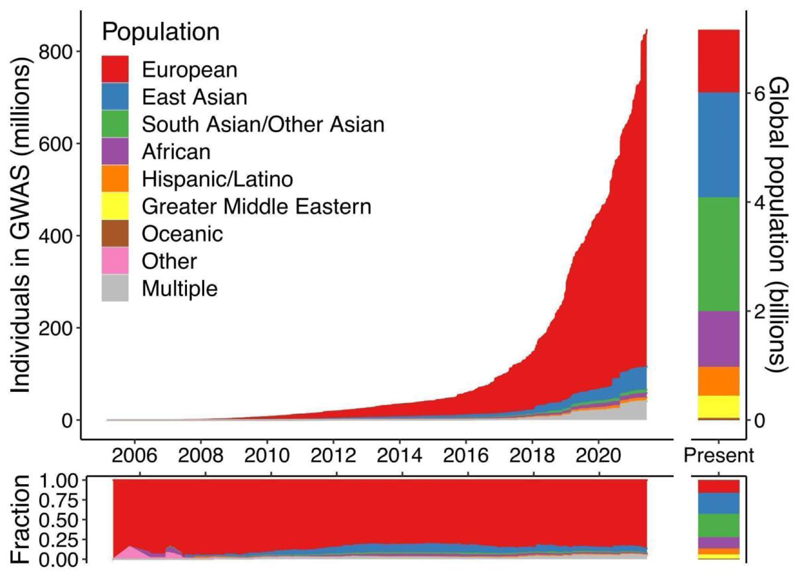
Two decades ago, the sequence of the first human genome was published. Since then, advances in genome technologies have resulted in whole-genome sequencing and microarray-based genotyping of millions of human genomes. However, genetic and genomic studies are predominantly based on populations of European ancestry. As a result, the potential benefits of genomic research-including better understanding of disease etiology, early detection and diagnosis, rational drug design and improved clinical care-may elude the many underrepresented populations. Here, we describe factors that have contributed to the imbalance in representation of different populations and, leveraging our experiences in setting up genomic studies in diverse global populations, we propose a roadmap to enhancing inclusion and ensuring equal health benefits of genomics advances. Our Perspective highlights the importance of sincere, concerted global efforts toward genomic equity to ensure the benefits of genomic medicine are accessible to all.
Overview
The claims and statistics of this paper haven’t been checked yet.
Free: it reads the open-access text and checks the first 5 claims that cite a source we can check. Create a free account to check every claim.
Integrity signals
Registry
Cites
Statistics
Figures
Verification
Claims the paper makes
The claims and statistics of this paper haven’t been checked yet.
Free: it reads the open-access text and checks the first 5 claims that cite a source we can check. Create a free account to check every claim.
Claims other papers make about this one
Each is checked against this paper’s own text: does it say what the citing paper says it does?
The source backs part of the claim, not all of it — or backs it for a different population, condition or comparison.
In the citing paper
“The lack of diversity in genetic studies on EduYears could lead to social and health disparities due to inadequate comprehension of EduYears and its impact on socioeconomic and health outcomes in understudied populations15.”
From Shared genetic architectures of educational attainment in East Asian and European populations (2024) · cites this paper as [15]
Experimental — accuracy not yet measuredIn the citing paper
“Large open datasets are more likely to come from the Global North, may prioritize research questions from these populations, and can have limited generalizability (e.g., the overrepresentation of European ancestry in genomic studies [115]).”
From Open Science 2.0: Towards a truly collaborative research ecosystem (2023) · cites this paper as [115]
Self-check
Percentages, sums and reported differences re-computed from the paper’s own numbers.
The self-check needs the paper’s full text.
Citations
Cites
The mutational constraint spectrum quantified from variation in 141,456 humans
Karczewski, K. J., Francioli, L. C., Tiao, G., Cummings, B. B., Alföldi, J., Wang, Q., Collins, R. L., Laricchia, K. M., Ganna, A., Birnbaum, D. P., et al. (2020) · Nature · doi:10.1038/s41586-020-2308-7 · Cited by 9,434
Buniello, A., MacArthur, J. A. L., Cerezo, M., Harris, L. W., Hayhurst, J., Malangone, C., McMahon, A., Morales, J., Mountjoy, E., Sollis, E., et al. (2019) · Nucleic Acids Research · doi:10.1093/nar/gky1120 · Cited by 4,000
Clinical use of current polygenic risk scores may exacerbate health disparities
Martin, A. R., Kanai, M., Kamatani, Y., Okada, Y., Neale, B. M., & Daly, M. J. (2019) · Nature Genetics · doi:10.1038/s41588-019-0379-x · Cited by 2,821
Self-citationThe personal and clinical utility of polygenic risk scores
Torkamani, A., Wineinger, N. E., & Topol, E. J. (2018) · Nature Reviews Genetics · doi:10.1038/s41576-018-0018-x · Cited by 1,623
The Missing Diversity in Human Genetic Studies
Sirugo, G., Williams, S. M., & Tishkoff, S. A. (2019) · Cell · doi:10.1016/j.cell.2019.02.048 · Cited by 1,516
Human Demographic History Impacts Genetic Risk Prediction across Diverse Populations
Martin, A. R., Gignoux, C. R., Walters, R. K., Wojcik, G. L., Neale, B. M., Gravel, S., Daly, M. J., Bustamante, C. D., & Kenny, E. E. (2017) · The American Journal of Human Genetics · doi:10.1016/j.ajhg.2017.03.004 · Cited by 1,391
Self-citationCohen, J., Pertsemlidis, A., Kotowski, I. K., Graham, R., Garcia, C. K., & Hobbs, H. H. (2005) · Nature Genetics · doi:10.1038/ng1509 · Cited by 1,381
Genomic Risk Prediction of Coronary Artery Disease in 480,000 Adults
Inouye, M., Abraham, G., Nelson, C. P., Wood, A. M., Sweeting, M. J., Dudbridge, F., Lai, F. Y., Kaptoge, S., Brozynska, M., Wang, T., et al. (2018) · Journal of the American College of Cardiology · doi:10.1016/j.jacc.2018.07.079 · Cited by 793
Genetics of blood lipids among ∼300,000 multi-ethnic participants of the Million Veteran Program
Global Lipids Genetics Consortium, Klarin, D., Myocardial Infarction Genetics (MIGen) Consortium, The Geisinger-Regeneron DiscovEHR Collaboration, Program, T. V. M. V., Damrauer, S. M., Cho, K., Sun, Y. V., Teslovich, T. M., Honerlaw, J., et al. (2018) · Nature Genetics · doi:10.1038/s41588-018-0222-9 · Cited by 625
Diversity in clinical and biomedical research: a promise yet to be fulfilled
Oh, S. S., Galanter, J., Thakur, N., Pino-Yanes, M., Barcelo, N. E., White, M. J., de Bruin, D. M., Greenblatt, R. M., Bibbins-Domingo, K., Wu, A. H. B., et al. (2015) · PLOS Medicine · doi:10.1371/journal.pmed.1001918 · Cited by 585
Cited by
15 years of GWAS discovery: Realizing the promise
Abdellaoui, A., Yengo, L., Verweij, K. J. H., & Visscher, P. M. (2023) · The American Journal of Human Genetics · doi:10.1016/j.ajhg.2022.12.011 · Cited by 547
Delivering precision oncology to patients with cancer
Mateo, J., Steuten, L., Aftimos, P., André, F., Davies, M., Garralda, E., Geissler, J., Husereau, D., Martinez-Lopez, I., Normanno, N., et al. (2022) · Nature Medicine · doi:10.1038/s41591-022-01717-2 · Cited by 375
Adams, M. J., Streit, F., Meng, X., Awasthi, S., Adey, B. N., Choi, K. W., Chundru, V. K., Coleman, J. R. I., Ferwerda, B., Foo, J. C., et al. (2025) · Cell · doi:10.1016/j.cell.2024.12.002 · Cited by 279
“34 Our study included data from 163,611 cases and 1,001,890 controls of non-European diverse ancestries.”
Principles and methods for transferring polygenic risk scores across global populations
Kachuri, L., Chatterjee, N., Hirbo, J., Schaid, D. J., Martin, I., Kullo, I. J., Kenny, E. E., Pasaniuc, B., Polygenic Risk Methods in Diverse Populations (PRIMED) Consortium Methods Working Group, Auer, P. L., et al. (2024) · Nature Reviews Genetics · doi:10.1038/s41576-023-00637-2 · Cited by 328
Polygenic scoring accuracy varies across the genetic ancestry continuum
Ding, Y., Hou, K., Xu, Z., Pimplaskar, A., Petter, E., Boulier, K., Privé, F., Vilhjálmsson, B. J., Olde Loohuis, L. M., & Pasaniuc, B. (2023) · Nature · doi:10.1038/s41586-023-06079-4 · Cited by 307
Transforming Cardiovascular Care With Artificial Intelligence: From Discovery to Practice
Khera, R., Oikonomou, E. K., Nadkarni, G. N., Morley, J. R., Wiens, J., Butte, A. J., & Topol, E. J. (2024) · Journal of the American College of Cardiology · doi:10.1016/j.jacc.2024.05.003 · Cited by 264
Andreassen, O. A., Hindley, G. F. L., Frei, O., & Smeland, O. B. (2023) · World Psychiatry · doi:10.1002/wps.21034 · Cited by 243
Whole-genome sequencing of 490,640 UK Biobank participants
Manuscript Writing Group, Carss, K., Halldórsson, B. V., Hou, L., Liu, J. Z., Wheeler, E., Lo, Y., Kundu, K., Huang, Z., Lacey, B., et al. (2025) · Nature · doi:10.1038/s41586-025-09272-9 · Cited by 313
“…human genomic reference and biobank data do not fully reflect the diversity of human populations and are still dominated by European ancestries 50 , thus limiting the detection of variation specific to non-European regions and leading to a fundamental bias in the understanding of the genetic…”
From target discovery to clinical drug development with human genetics
Trajanoska, K., Bhérer, C., Taliun, D., Zhou, S., Richards, J. B., & Mooser, V. (2023) · Nature · doi:10.1038/s41586-023-06388-8 · Cited by 220
“Thus, advancing diversity in genetic studies is now a priority for the research community 119,120 .”
BackgroundMeng, X., Navoly, G., Giannakopoulou, O., Levey, D. F., Koller, D., Pathak, G. A., Koen, N., Lin, K., Adams, M. J., Rentería, M. E., et al. (2024) · Nature Genetics · doi:10.1038/s41588-023-01596-4 · Cited by 187
Self-citationGenetics of human brain development
Zhou, Y., Song, H., & Ming, G.-L. (2024) · Nature Reviews Genetics · doi:10.1038/s41576-023-00626-5 · Cited by 166
“Therefore, it is crucial to study the effects of specific genetic variants in the context of different genetic backgrounds to fully understand their impact in various human populations, especially minority groups 97,98 .”
Polygenic scores in biomedical research
Kullo, I. J., Lewis, C. M., Inouye, M., Martin, A. R., Ripatti, S., & Chatterjee, N. (2022) · Nature Reviews Genetics · doi:10.1038/s41576-022-00470-z · Cited by 174
Self-citationLiquid Biopsy for Lung Cancer: Up-to-Date and Perspectives for Screening Programs
Casagrande, G. M. S., Silva, M. D. O., Reis, R. M., & Leal, L. F. (2023) · International Journal of Molecular Sciences · doi:10.3390/ijms24032505 · Cited by 159
“In addition, we must consider that the vast majority of studies analyze populations of European and North American, opening a gap for the genomic analyses referring to more heterogeneous populations, such as the population of South America and Africa [193,194].”
BackgroundGenomics and multiomics in the age of precision medicine
Mani, S., Lalani, S. R., & Pammi, M. (2025) · Pediatric Research · doi:10.1038/s41390-025-04021-0 · Cited by 162
“14 The participants of African, South Asian, and Hispanic descent together constitute less than 10% of the studies.”
Precision public health in the era of genomics and big data
Roberts, M. C., Holt, K. E., Fiol, G. D., Baccarelli, A., & Allen, C. G. (2024) · Nature Medicine · doi:10.1038/s41591-024-03098-0 · Cited by 149
“Currently, most of the data underpinning public health genomics come predominantly from European populations, which do not fully represent the racial and ethnic diversity of the USA 42 —a problem that is repeated and often magnified across the globe 43 .”
A new method for multiancestry polygenic prediction improves performance across diverse populations
Zhang, H., Zhan, J., Jin, J., Zhang, J., Lu, W., Zhao, R., Ahearn, T. U., Yu, Z., O’Connell, J., Jiang, Y., et al. (2023) · Nature Genetics · doi:10.1038/s41588-023-01501-z · Cited by 127
Indigenous Peoples' Rights in Data: a contribution toward Indigenous Research Sovereignty
Hudson, M., Carroll, S. R., Anderson, J., Blackwater, D., Cordova-Marks, F. M., Cummins, J., David-Chavez, D., Fernandez, A., Garba, I., Hiraldo, D., et al. (2023) · Frontiers in Research Metrics and Analytics · doi:10.3389/frma.2023.1173805 · Cited by 107
“This is particularly important as data diversity, increasing the diversity of available datasets for both AI and genomics, becomes an important issue for creating a data responsible society (Drosou et al., 2017; Hudson et al., 2020; Fatumo et al., 2022).”
BackgroundLearning from data with structured missingness
Mitra, R., McGough, S. F., Chakraborti, T., Holmes, C. C., Copping, R., Hagenbuch, N., Biedermann, S., Noonan, J., Lehmann, B., Shenvi, A., et al. (2023) · Nature Machine Intelligence · doi:10.1038/s42256-022-00596-z · Cited by 139
“Biomedical datasets, for example, are disproportionately made up of samples from Western individuals – in genomics, for instance, 86% of samples are from individuals of European descent (74), while in human microbiome studies, over 70% of samples come from Europe, the United States, or Canada (75).”
Recent advances in polygenic scores: translation, equitability, methods and FAIR tools
Xiang, R., Kelemen, M., Xu, Y., Harris, L. W., Parkinson, H., Inouye, M., & Lambert, S. A. (2024) · Genome Medicine · doi:10.1186/s13073-024-01304-9 · Cited by 115
“However, continued efforts should ensure that the benefits of PGS are not only available to those in wealthy countries and capacity building and ethical partnerships for data collection and analysis in under-represented groups, particularly low-middle income countries, should be promoted [166–170].”
BackgroundAlemu, R. G., Sharew, N. T., Arsano, Y. Y., Ahmed, M. B., Ayele, F. T., Baye, T. M., & Amare, A. T. (2025) · Human Genomics · doi:10.1186/s40246-025-00718-9 · Cited by 109
Health inequities: a persistent global challenge from past to future
Rad, J. (2025) · International Journal for Equity in Health · doi:10.1186/s12939-025-02526-y · Cited by 106
“Genomic research is often concentrated in high-income countries, leaving out much of the world’s population [17].”
Bridging genomics’ greatest challenge: The diversity gap
Corpas, M., Pius, M., Vincent, C. M., Guio, H., Dwek, M. V., Nagaraj, S. H., López-Correa, C., Popejoy, A. B., & Fatumo, S. (2024) · Cell Genomics · doi:10.1016/j.xgen.2024.100724 · Cited by 110
Self-citationGenome-wide association studies of cardiovascular disease
Walsh, R., Jurgens, S. J., Erdmann, J., & Bezzina, C. R. (2023) · Physiological Reviews · doi:10.1152/physrev.00024.2022 · Cited by 102
Kachuri, L., Mak, A. C. Y., Hu, D., Eng, C. S., Huntsman, S., Elhawary, J. R., Gupta, N., Gabriel, S., Xiao, S., Keys, K. L., et al. (2023) · Nature Genetics · doi:10.1038/s41588-023-01377-z · Cited by 106
Using human genetics to improve safety assessment of therapeutics
Carss, K., Deaton, A. M., Río-Espínola, A. D., Diogo, D., Fielden, M. R., Kulkarni, D. A., Moggs, J. G., Newham, P., Nelson, M. R., Sistare, F. D., et al. (2022) · Nature Reviews Drug Discovery · doi:10.1038/s41573-022-00561-w · Cited by 100
Prado, P., Medel, V., Gonzalez-Gomez, R., Sainz-Ballesteros, A., Vidal, V., Santamaría-García, H., Moguilner, S., Mejia, J., Slachevsky, A., Behrens, M. I., et al. (2023) · Scientific Data · doi:10.1038/s41597-023-02806-8 · Cited by 79
Asian diversity in human immune cells
Kock, K. H., Tan, L. M., Han, K. Y., Ando, Y., Jevapatarakul, D., Chatterjee, A., Lin, Q. X. X., Buyamin, E. V., Sonthalia, R., Rajagopalan, D., et al. (2025) · Cell · doi:10.1016/j.cell.2025.02.017 · Cited by 99
Chen, C.-Y., Chen, T.-T., Feng, Y.-C. A., Yu, M., Lin, S.-C., Longchamps, R. J., Wang, S.-H., Hsu, Y.-H., Yang, H.-I., Kuo, P.-H., et al. (2023) · Cell Genomics · doi:10.1016/j.xgen.2023.100436 · Cited by 82
“8–11 In East Asian (EAS) populations, Biobank Japan (BBJ) 5,12–14 has made important discoveries and publicly released genome-wide association summary statistics, thereby facilitating numerous other genetic studies.”
BackgroundAdegunsoye, A., Kropski, J. A., Behr, J., Blackwell, T. S., Corte, T. J., Cottin, V., Glanville, A. R., Glassberg, M. K., Griese, M., Hunninghake, G. M., et al. (2024) · American Journal of Respiratory and Critical Care Medicine · doi:10.1164/rccm.202401-0238so · Cited by 97
Clinical use of polygenic risk scores: current status, barriers and future directions
Kullo, I. J. (2025) · Nature Reviews Genetics · doi:10.1038/s41576-025-00900-8 · Cited by 95
“Strategies to enable equitable polygenic risk assessment across the globe are discussed in more detail in other reviews 25,26 .”
InfluentialThe contribution of copy number variants to psychiatric symptoms and cognitive ability
Mollon, J., Almasy, L. A., Jacquemont, S., & Glahn, D. C. (2023) · Molecular Psychiatry · doi:10.1038/s41380-023-01978-4 · Cited by 87
Wang, Y., Kanai, M., Tan, T., Kamariza, M., Tsuo, K., Yuan, K., Zhou, W., Okada, Y., The Biobank Japan Project, Huang, H., et al. (2023) · Cell Genomics · doi:10.1016/j.xgen.2023.100408 · Cited by 87
“15 However, these populations present unique opportunities to develop more generalizable PRSs, as their genetic effects can be estimated in more consistent environments, which helps reduce confounding factors compared withestimates across different ancestry groups in different populations.”
BackgroundSelf-citationFrom ‘Omics to Multi-omics Technologies: the Discovery of Novel Causal Mediators
Mohammadi‐Shemirani, P., Sood, T., & Paré, G. (2023) · Current Atherosclerosis Reports · doi:10.1007/s11883-022-01078-8 · Cited by 82
Twenty years of the Human Genome Diversity Project
Aneli, S., Birolo, G., & Matullo, G. (2022) · Green Energy and Sustainability · doi:10.47248/hpgg2202040005 · Cited by 75
Kintu, C., Soremekun, O. S., Kamiza, A. B., Kalungi, A., Mayanja, R., Kalyesubula, R., Bagaya, B. S., Jjingo, D., Fabian, J., Gill, D., et al. (2022) · EBioMedicine · doi:10.1016/j.ebiom.2023.104537 · Cited by 76
Self-citationMatalon, D. R., Zepeda‐Mendoza, C. J., Aarabi, M., Brown, K. M., Fullerton, S. M., Kaur, S., Quintero‐Rivera, F., & Vatta, M. (2023) · Genetics in Medicine · doi:10.1016/j.gim.2023.100812 · Cited by 75
The transition from genomics to phenomics in personalized population health
Yurkovich, J. T., Evans, S. J., Rappaport, N., Boore, J. L., Lovejoy, J. C., Price, N. D., & Hood, L. (2023) · Nature Reviews Genetics · doi:10.1038/s41576-023-00674-x · Cited by 81
“As we have seen from the burgeoning use of genetic sequencing technologies, the value of the insights gained is limited by the input data 134 .”
Open Science 2.0: Towards a truly collaborative research ecosystem
Thibault, R. T., Amaral, O. B., Argolo, F., Bandrowski, A. E., Davidson, A. R., & Drude, N. I. (2023) · PLOS Biology · doi:10.1371/journal.pbio.3002362 · Cited by 72
Pathophysiology of type 2 diabetes in sub-Saharan Africans
Goedecke, J. H., & Mendham, A. E. (2022) · Diabetologia · doi:10.1007/s00125-022-05795-2 · Cited by 249
“These characteristics help with fine mapping of GWAS signals and identification of target genes, which are not only required to gain mechanistic insights, but may also inform therapeutic targets [89].”
BackgroundGenetic basis of early onset and progression of type 2 diabetes in South Asians
Hodgson, S., Williamson, A., Bigossi, M., Stow, D., Jacobs, B. M., Samuel, M., Gafton, J., Zöllner, J., Spreckley, M., Akhtar, S., et al. (2024) · Nature Medicine · doi:10.1038/s41591-024-03317-8 · Cited by 78
“Phenotypic endotyping approaches have shown a preponderance of severe insulin-deficient diabetes (SIDD) in South Asians observed in two independent cohorts in India: 35% British Bangladeshi individuals living in the United Kingdom (UK) 19 , to investigate whether pPS can help unravel the etiological factors driving yo…”
InfluentialWhitmore, L., McCauley, M., Farrell, J., Stammnitz, M. R., Koda, S. A., Mashkour, N., Summers, V., Osborne, T. Z., Whilde, J., & Duffy, D. J. (2023) · Nature Ecology & Evolution · doi:10.1038/s41559-023-02056-2 · Cited by 74
Promoting the genomic revolution in Africa through the Nigerian 100K Genome Project
Fatumo, S., Yakubu, A., Oyedele, O., Popoola, J., Attipoe, D. A., Eze-Echesi, G., Modibbo, F. Z., Ado-Wanka, N., 54gene Team, Osakwe, Y., et al. (2022) · Nature Genetics · doi:10.1038/s41588-022-01071-6 · Cited by 66
Self-citationA call to action to scale up research and clinical genomic data sharing
Stark, Z., Glazer, D., Hofmann, O., Rendon, A., Marshall, C. R., Ginsburg, G. S., Lunt, C., Allen, N. E., Effingham, M., Ward, J. H., et al. (2024) · Nature Reviews Genetics · doi:10.1038/s41576-024-00776-0 · Cited by 71
Evolutionary Genetics and Admixture in African Populations
Pfennig, A., Petersen, L. N., Kachambwa, P., & Lachance, J. (2023) · Genome Biology and Evolution · doi:10.1093/gbe/evad054 · Cited by 70
Bandrés‐Ciga, S., Faghri, F., Majounie, E., Koretsky, M. J., Kim, J., Levine, K. S., Leonard, H. L., Makarious, M. B., Iwaki, H., Crea, P. W., et al. (2024) · Movement Disorders · doi:10.1002/mds.29902 · Cited by 62
Polygenic risk score portability for common diseases across genetically diverse populations
Moreno–Grau, S., Vernekar, M., Pineda, A. L., Montserrat, D. M., Barrabés, M., Quinto-Cortés, C. D., Moatamed, B., Lee, M. T. M., Yu, Z., Numakura, K., et al. (2024) · Human Genomics · doi:10.1186/s40246-024-00664-y · Cited by 62
“It should be noted that the gold standard solution to solve portability problems involves increasing the diversity of participants included and analyzed in genetic studies [10, 24].”
BackgroundAn ensemble penalized regression method for multi-ancestry polygenic risk prediction
Zhang, J., Zhan, J., Jin, J., Ma, C., Zhao, R., O’Connell, J., Jiang, Y., Koelsch, B. L., Zhang, H., & Chatterjee, N. (2024) · Nature Communications · doi:10.1038/s41467-024-47357-7 · Cited by 65
“6 and Supplementary Data 13) show that PROSPER generates the most predictive PRSfor the two analyzed anthropometric traits for the AFR population.”
InfluentialThe human microbiome in clinical translation: from bench to bedside
Bautista, J., Echeverría, C. E., Maldonado-Noboa, I., Ojeda-Mosquera, S., Hidalgo-Tinoco, C., & López-Cortés, A. (2025) · Frontiers in Microbiology · doi:10.3389/fmicb.2025.1632435 · Cited by 55
Abul‐Husn, N. S., Marathe, P. N., Kelly, N. R., Bonini, K. E., Sebastin, M., Odgis, J. A., Abhyankar, A., Brown, K. M., Biase, M. D., Gallagher, K. M., et al. (2023) · Genetics in Medicine · doi:10.1016/j.gim.2023.100880 · Cited by 56
Nguyen, A. B., Cavallari, L. H., Rossi, J. S., Stouffer, G. A., & Lee, C. R. (2022) · Frontiers in Cardiovascular Medicine · doi:10.3389/fcvm.2022.991646 · Cited by 54
“Therefore, failure to enhance ancestral diversity in genomic research studies will augment health disparities in underrepresented populations (58).”
BackgroundGenetic testing in early-onset atrial fibrillation
Kany, S., Jurgens, S. J., Rämö, J. T., Christophersen, I. E., Rienstra, M., Chung, M. K., OLESEN, M. S., Ackerman, M. J., McNally, E. M., Semsarian, C., et al. (2024) · European Heart Journal · doi:10.1093/eurheartj/ehae298 · Cited by 53
The landscape of genomic structural variation in Indigenous Australians
Reis, A. L. M., Rapadas, M., Hammond, J. W., Gamaarachchi, H., Stevanovski, I., Kumaheri, M. A., Chintalaphani, S. R., Dissanayake, D. S. B., Siggs, O. M., Hewitt, A. W., et al. (2023) · Nature · doi:10.1038/s41586-023-06842-7 · Cited by 54
“This underscores the need for ancestry-appropriate reference data for genomic medicine, of which there is a shortage 12–14 .”
BackgroundPolygenic Scores in Psychiatry: On the Road From Discovery to Implementation
Lewis, C. M., & Vassos, E. (2022) · American Journal of Psychiatry · doi:10.1176/appi.ajp.20220795 · Cited by 59
Genome annotation: from human genetics to biodiversity genomics
Guigó, R. (2023) · Cell Genomics · doi:10.1016/j.xgen.2023.100375 · Cited by 49
“Second, current human annotations are biased toward transcripts present in individuals of European ancestry due to their skewed representation in genomic datasets.(54) Efforts need to bemade to capture the diverse transcriptomicmakeup of human populations.”
BackgroundIncreasing diversity in genomics requires investment in equitable partnerships and capacity building
Martin, A. R., Stroud, R. E., Abebe, T., Akena, D. H., Alemayehu, M., Atwoli, L., Chapman, S. B., Flowers, K., Gelaye, B., Gichuru, S., et al. (2022) · Nature Genetics · doi:10.1038/s41588-022-01095-y · Cited by 50
Self-citationFatumo, S., Mugisha, J. O., Soremekun, O. S., Kalungi, A., Mayanja, R., Kintu, C., Makanga, R., Kakande, A., Abaasa, A. M., Asiki, G., et al. (2022) · Cell Genomics · doi:10.1016/j.xgen.2022.100209 · Cited by 47
“The genetic diversity in Africa is far greater than in any other region across the globe, but, unfortunately, the vast majority of genomic studies have been performed in European ancestry populations.(1,2) Uganda is located in East Africa with four major ethnic groups and over 40 languages.”
BackgroundSelf-citationIncluding diverse and admixed populations in genetic epidemiology research
Caliebe, A., Ayele, F. T., Darst, B. F., Wang, X., Song, Y. E., Gui, J., Sebro, R., Balding, D. J., Saad, M., & Dubé, M. (2022) · Genetic Epidemiology · doi:10.1002/gepi.22492 · Cited by 50
Addressing the Challenge of Biomedical Data Inequality: An Artificial Intelligence Perspective
Gao, Y., Sharma, T., & Cui, Y. (2023) · Annual Review of Biomedical Data Science · doi:10.1146/annurev-biodatasci-020722-020704 · Cited by 55
Personalized uncertainty quantification in artificial intelligence
Chakraborti, T., Banerji, C. R. S., Marandon, A., Hellon, V., Mitra, R., Lehmann, B., Bräuninger, L., McGough, S. F., Turkay, Ç., Frangi, A. F., et al. (2025) · Nature Machine Intelligence · doi:10.1038/s42256-025-01024-8 · Cited by 62
Busby, G., Kulm, S., Bolli, A., Kintzle, J., Domenico, P. D., & Bottà, G. (2023) · Nature Communications · doi:10.1038/s41467-023-42897-w · Cited by 43
“Historical biases in the collection and analyses of genomic data have led to an over-representation of individuals of Europeangeneticancestryinclinicaldatasets 15 ,whichinturnhasledto a lack of suf fi ciently diverse data with which to build PRSs.”
BackgroundA multi-ancestry genome-wide association study in type 1 diabetes
Michalek, D. A., Tern, C., Zhou, W., Robertson, C. C., Farber, E., Campolieto, P., Chen, W., Önengüt-Gümüşcü, S., & Rich, S. S. (2024) · Human Molecular Genetics · doi:10.1093/hmg/ddae024 · Cited by 45
“A major limitation in most human genetic studies has been a focus on populations of European (EUR) ancestry [31–33].”
BackgroundEquitable machine learning counteracts ancestral bias in precision medicine
Smith, L. A., Cahill, J. A., Lee, J., & Graim, K. S. (2025) · Nature Communications · doi:10.1038/s41467-025-57216-8 · Cited by 44
“Growing recognition of the impacts of ancestral diversity in human disease, the imbalance in sequenced populations and how this negatively affects precision medicine and other omics models have driven efforts to diversify sequencing 59 – 61 .”
Do, W. L., Sun, D., Meeks, K. A. C., Dugué, P., Demerath, E. W., Guan, W., Li, S., Chen, W., Milne, R. L., Adeyemo, A., et al. (2023) · The American Journal of Human Genetics · doi:10.1016/j.ajhg.2022.12.014 · Cited by 42
(In)visibility of LGBTQIA+ people and relationships in healthcare: A scoping review
Mitchell, L. A., Jacobs, C., & McEwen, A. (2023) · Patient Education and Counseling · doi:10.1016/j.pec.2023.107828 · Cited by 42
Privacy-Enhancing Technologies in Biomedical Data Science
Cho, H., Froelicher, D., Dokmai, N., Nandi, A., Sadhuka, S., Hong, M. M., & Berger, B. (2024) · Annual Review of Biomedical Data Science · doi:10.1146/annurev-biodatasci-120423-120107 · Cited by 48
Bobo, W. V., Ommeren, B. V., & Athreya, A. P. (2022) · Expert Review of Clinical Pharmacology · doi:10.1080/17512433.2022.2112949 · Cited by 44
“For the potential of genomics and machine learning-informed response prediction to be shared equitably, greater inclusion of under-represented racial and ethnic groups in genomic and other -omics studies is needed [93].”
BackgroundExamining the shared etiology of psychopathology with genome-wide association studies
Mallard, T. T., Grotzinger, A. D., & Smoller, J. W. (2023) · Physiological Reviews · doi:10.1152/physrev.00016.2022 · Cited by 40
Sengupta, D., Botha, G., Meintjes, A., Mbiyavanga, M., Hazelhurst, S., Mulder, N., Ramsay, M., & Choudhury, A. (2023) · Cell Genomics · doi:10.1016/j.xgen.2023.100332 · Cited by 40
“The under-representation of African ancestry populations in current GWASs has been flagged as a major concern, and the need to improve this representation has been highlighted repeatedly in recent literature.(16,22) Currently, only 2%of individuals included in GWASs are individuals of ‘‘African ancestry,’’ and the vas…”
BackgroundSelf-citationAddressing Ancestry and Sex Bias in Pharmacogenomics
Corpas, M., Siddiqui, M. K., Soremekun, O. S., Mathur, R., Gill, D., & Fatumo, S. (2023) · The Annual Review of Pharmacology and Toxicology · doi:10.1146/annurev-pharmtox-030823-111731 · Cited by 40
Self-citationNeuromuscular disease genetics in under-represented populations: increasing data diversity
Wilson, L. A., Macken, W. L., Perry, L., Record, C. J., Schon, K. R., Frezatti, R. S. S., Raga, S. V., Naidu, K., Köken, Ö. Y., Polat, İ., et al. (2023) · Brain · doi:10.1093/brain/awad254 · Cited by 38
Mitochondrial medicine: “from bench to bedside” 3PM-guided concept
Shao, Q., Noah, M. L. N., Golubnitschaja, O., & Zhan, X. (2025) · The EPMA Journal · doi:10.1007/s13167-025-00409-4 · Cited by 37
“…the evolution, localization, structure, function and editing of genomes, as well as their impact on living organisms, the structural genomics, functional genomics, epigenomics, and metagenomics are also produced to better understand the causes and help with early detection and diagnosis [109, 110].”
Fatumo, S., Sathan, D., Samtal, C., Isewon, I., Tamuhla, T., Soremekun, C., Jafali, J., Panji, S., Tiffin, N., & Fakim, Y. J. (2023) · Genome Medicine · doi:10.1186/s13073-023-01245-9 · Cited by 39
Self-citationPeruzzi, E., Roncato, R., Mattia, E. D., Bignucolo, A., Swen, J. J., Guchelaar, H., Toffoli, G., & Cecchin, E. (2023) · British Journal of Clinical Pharmacology · doi:10.1111/bcp.15956 · Cited by 34
Wang, Y., He, Y., Shi, Y., Qian, D. C., Gray, K. J., Winn, R. A., & Martin, A. R. (2024) · The American Journal of Human Genetics · doi:10.1016/j.ajhg.2024.04.002 · Cited by 38
Self-citationWang, X., Mina, T. H., Sadhu, N., Jain, P., Ng, H. K., Low, D. Y., Tay, D., Tong, T. Y. Y., Choo, W.-L., Lim, L., et al. (2025) · Nature Communications · doi:10.1038/s41467-025-65774-0 · Cited by 34
An Overview of Deep Generative Models in Functional and Evolutionary Genomics
Yelmen, B., & Jay, F. (2023) · Annual Review of Biomedical Data Science · doi:10.1146/annurev-biodatasci-020722-115651 · Cited by 40
Cavallari, L. H., Hicks, J. K., Patel, J. N., Elchynski, A. L., Smith, D. M., Bargal, S. A., Fleck, A., Aquilante, C. L., Killam, S. R., Lemke, L. K., et al. (2024) · Pharmacogenetics and Genomics · doi:10.1097/fpc.0000000000000547 · Cited by 33
Drug–Drug–Gene Interactions in Cardiovascular Medicine
Asiimwe, I. G., & Pirmohamed, M. (2022) · Pharmacogenomics and Personalized Medicine · doi:10.2147/pgpm.s338601 · Cited by 41
Biomarkers of neurodegeneration across the Global South
McGlinchey, E., Duran-Aniotz, C., Akinyemi, R., Arshad, F., Zimmer, E. R., Cho, H., Adewale, B. A., & Ibanez, A. (2024) · The Lancet Healthy Longevity · doi:10.1016/s2666-7568(24)00132-6 · Cited by 32
Harnessing omics data for drug discovery and development in ovarian aging
Zhang, F., Zhu, M., Chen, Y., Wang, G., Yang, H., Lu, X., Li, Y., Chang, H., Wu, Y., Ma, Y., et al. (2025) · Human Reproduction Update · doi:10.1093/humupd/dmaf002 · Cited by 32
Lesmann, H., Hustinx, A., Moosa, S., Klinkhammer, H., Marchi, E. J., Caro, P., Abdelrazek, I. M., Pantel, J. T., ten Hagen, M., Thong, M., et al. (2023) · medRxiv · doi:10.1101/2023.06.06.23290887 · Cited by 39
Dawood, M., Fayer, S., Pendyala, S., Post, M., Kalra, D., Patterson, K., Venner, E., Muffley, L. A., Fowler, D. M., Rubin, A. F., et al. (2024) · Genome Medicine · doi:10.1186/s13073-024-01392-7 · Cited by 31
Genetic architecture of routinely acquired blood tests in a British South Asian cohort
Jacobs, B. M., Stow, D., Hodgson, S., Zöllner, J., Samuel, M., Kanoni, S., Bidi, S., Akhtar, S., Anwar, M., Arciero, E., et al. (2024) · Nature Communications · doi:10.1038/s41467-024-53091-x · Cited by 33
“Thelistoftraitsadjustedformedicationsis shown in the supplement (Supplementary Data 2).”
InfluentialTowards a global view of multiple sclerosis genetics
Jacobs, B. M., Peter, M., Giovannoni, G., Noyce, A. J., Morris, H. R., & Dobson, R. (2022) · Nature Reviews Neurology · doi:10.1038/s41582-022-00704-y · Cited by 32
Mengelkoch, S., Rose, S. M. S., Lautman, Z., Alley, J. C., Roos, L. G., Ehlert, B., Moriarity, D. P., Lancaster, S. M., Snyder, M. P., & Slavich, G. M. (2023) · Brain Behavior and Immunity · doi:10.1016/j.bbi.2023.07.022 · Cited by 32
The ethical challenges of diversifying genomic data: A qualitative evidence synthesis
Hardcastle, F., Lyle, K., Horton, R. H., Samuel, G. N., Weller, S., Ballard, L. M., Thompson, R. L., Trindade, L. V. D. P., Urrego, J. D. G., Kochin, D., et al. (2023) · Cambridge Prisms Precision Medicine · doi:10.1017/pcm.2023.20 · Cited by 34
AIRR-C IG Reference Sets: curated sets of immunoglobulin heavy and light chain germline genes
Collins, A. M., Ohlin, M., Corcoran, M., Heather, J., Ralph, D., Law, M., Martínez-Barnetche, J., Ye, J., Richardson, E., Gibson, W. S., et al. (2024) · Frontiers in Immunology · doi:10.3389/fimmu.2023.1330153 · Cited by 31
“Rare alleles remain to be documented in all populations (31), and population coverage must be increased (37).”
The phenotype-genotype reference map: Improving biobank data science through replication
Bastarache, L. A., Delozier, S., Pandit, A., He, J., Lewis, A. J., Annis, A. C., LeFaive, J., Denny, J. C., Carroll, R. J., Altman, R. B., et al. (2023) · The American Journal of Human Genetics · doi:10.1016/j.ajhg.2023.07.012 · Cited by 32
“We hope that calls to increase diversity of the populations engaged in genetic research will lead to a more complete picture of genetic associations in under-studied ancestries so that the PGRM can expand to include more diverse ancestry associations.(48,49) While ancestry matching is necessary for computing accurate…”
BackgroundThe WHO genomics program of work for equitable implementation of human genomics for global health
Ambrosino, E., Tayoun, A. N. A., Abramowicz, M., Zilfalil, B. A., Boughtwood, T. F., Hamdi, Y., Hubbard, T., Kato, Y., Lopes‐Cendes, Í., Majumder, P. P., et al. (2024) · Nature Medicine · doi:10.1038/s41591-024-03225-x · Cited by 30
Heterogeneous genetic architectures of prostate cancer susceptibility in sub-Saharan Africa
Janivara, R., Chen, W. C., Hazra, U., Baichoo, S., Agalliu, I., Kachambwa, P., Simonti, C. N., Brown, L., Tambe, S. P., Kim, M. S., et al. (2024) · Nature Genetics · doi:10.1038/s41588-024-01931-3 · Cited by 33
“However, most genetic studies have focused on individuals of European descent 21,22 , and existing polygenic risk scores (PRS) for prostate cancer have less satisfactory performance when applied to populations of African descent 23,24 .”
The genetic basis of human height
Bicknell, L. S., Hirschhorn, J. N., & Savarirayan, R. (2025) · Nature Reviews Genetics · doi:10.1038/s41576-025-00834-1 · Cited by 32
“In addition to increasing our fundamental understanding of the biology of skeletal growth, understanding cellular mechanisms could be relevant to address other diseases where altered height is a risk factor, such as heart disease and cancer, or diseases that share the biological pathways that are…”
Jee, Y. H., Wang, Y., Jung, K. J., Lee, J., Kimm, H., Duan, R., Price, A. L., Martin, A. R., & Kraft, P. L. (2025) · Nature Communications · doi:10.1038/s41467-025-59950-5 · Cited by 33
Self-citationSex, racial, and ethnic diversity in clinical trials
Bøttern, J., Stage, T. B., & Dunvald, A. D. (2023) · Clinical and Translational Science · doi:10.1111/cts.13513 · Cited by 30
Leveraging genomes to support conservation and bioeconomy policies in a megadiverse country
Vilaça, S. T., Vidal, A. F., Pavan, A. C., Silva, B., Carvalho, C. D. S., Povill, C., Luna˗Lucena, D., Nunes, G. L., Figueiró, H. V., Mendes, I. S., et al. (2024) · Cell Genomics · doi:10.1016/j.xgen.2024.100678 · Cited by 29
Data-driven science and diversity in the All of Us Research Program
Ginsburg, G. S., Denny, J. C., & Schully, S. D. (2023) · Science Translational Medicine · doi:10.1126/scitranslmed.ade9214 · Cited by 31
“Numerous studies have highlighted the lack of diversity in publicly available genomic data sets ( 6 ).”
BackgroundConvergence and divergence of individual immune responses over the life course
Metcalf, C. J. E., Graham, A. L., Yates, A. J., & Cummings, D. A. T. (2025) · Science · doi:10.1126/science.ady9543 · Cited by 32
Lima, A. B., dos Reis, M. B., Matsushita, M., Reis, M. T., de Oliveira, M. A., Reis, R. M., & Guimarães, D. P. (2023) · Cancer Medicine · doi:10.1002/cam4.6224 · Cited by 30
Methods for Assessing Population Relationships and History Using Genomic Data
Moorjani, P., & Hellenthal, G. (2023) · Annual Review of Genomics and Human Genetics · doi:10.1146/annurev-genom-111422-025117 · Cited by 30
Rare variant contribution to the heritability of coronary artery disease
Rocheleau, G., Clarke, S. L., Auguste, G. E., Hasbani, N. R., Morrison, A. C., Heath, A. S., Bielak, L. F., Iyer, K. R., Young, E. P., Stitziel, N. O., et al. (2024) · Nature Communications · doi:10.1038/s41467-024-52939-6 · Cited by 30
“…is not unique to CAD and thatultra-rarevariants aremorelikely to be ancestry-speci fi c, it becomes imperative to recruit and sequence cohorts of non-European ancestry in order to characterize the genetic architecture not only for CAD but for other diseases across different ancestries 40 – 42 .”
Multi-omics in stress and health research: study designs that will drive the field forward
Mengelkoch, S., Gassen, J., Lev‐Ari, S., Alley, J. C., Rose, S. M. S., Snyder, M. P., & Slavich, G. M. (2024) · Stress · doi:10.1080/10253890.2024.2321610 · Cited by 27
“…1, the additional biological information that multi-omics approaches provide compared to single omes and clinical data alone often enables the development of superior prediction models that can be used to predict responses to treatments and stratify people into different therapeutic interventions”
Background
Metadata
- Authors
- Fatumo, S., Chikowore, T., Choudhury, A., Ayub, M., Martin, A. R., & Kuchenbaecker, K.
- Affiliations
- London School of Hygiene & Tropical Medicine (GB)
- University of the Witwatersrand (ZA)
- University College London (GB)
- Broad Institute (US)
- Corresponding author
- Fatumo, Segun
- ORCID
- Venue
- Nature Medicine
- Published
- 2022-02
- Volume
- 28
- Issue
- 2
- Pages
- 243-250
- ISSN
- 1078-8956 (ISSN-L)
- 1546-170X
- PMC
- PMC7614889
- OpenAlex
- W4211005061
- Cited by
- 707
- References
- 63
- Citations by year
- 2026: 169 · 2025: 188 · 2024: 152 · 2023: 132 · 2022: 64
- FWCI
- 20.80
- Type
- journal article
- Language
- en
- Open access
- green
- www.ncbi.nlm.nih.gov
- Licence
- cc-by
- www.springer.com/tdm (tdm)
- www.springer.com/tdm (vor)
- Locations
- Nature Medicine (publishedVersion)
- PubMed (publishedVersion)
- PubMed Central (acceptedVersion, cc-by)
- LSHTM Research Online (London School of Hygiene and Tropical Medicine) (acceptedVersion)
- UCL Discovery (University College London) (submittedVersion)
- Funders
- Wellcome Trust (214205, 214205/Z/18/Z)
- Topics
- Social Sciences › Anthropology › Race, Genetics, and Society
- Health Sciences › Medicine › Public Health, Environmental and Occupational Health › Ethics in Clinical Research
- Life Sciences › Biochemistry, Genetics and Molecular Biology › Genetics › Genetic Associations and Epidemiology
- Keywords
- genomic diversity, underrepresented groups, health equity, research inclusion, etiology, drug design
- MeSH terms
- Whole Genome Sequencing, Humans, Genome, Human, Genomics
About these checks
Registry, retraction, Cites and statistics results are computed, not judged, with one exception: a printed reference that no index lists is read once by a model before it counts as a citation error. Claims are extracted by a model and kept only when their quote appears verbatim in the text; each cited source is then checked, with a model’s help, for whether it says what the claim relies on. Those verdicts can be wrong — read the claim’s quote and the cited source before relying on one.
Statistics and arithmetic are recomputed, not judged.
Confidence bands are shown only for fields calibrated on our annotated test set. None is calibrated yet, so no band is shown.
What counts as a claim ›How we measure confidence ›How we check this ›
Are you an author, or do you see a problem with this page? Request a review
Data sources
Bibliographic data: Semantic Scholar, OpenAlex, Crossref.
Contains information from the Semantic Scholar Academic Graph Datasets, made available under the ODC Attribution License (ODC-BY 1.0).
Semantic Scholar’s data is described in: Kinney, R., et al. (2023). The Semantic Scholar Open Data Platform. arXiv:2301.10140.
