

A roadmap to increase diversity in genomic studies
Open accessThe DOI matches its Crossref record; 63 of the 63 references it cites were found in a registry or an index.
Abstract
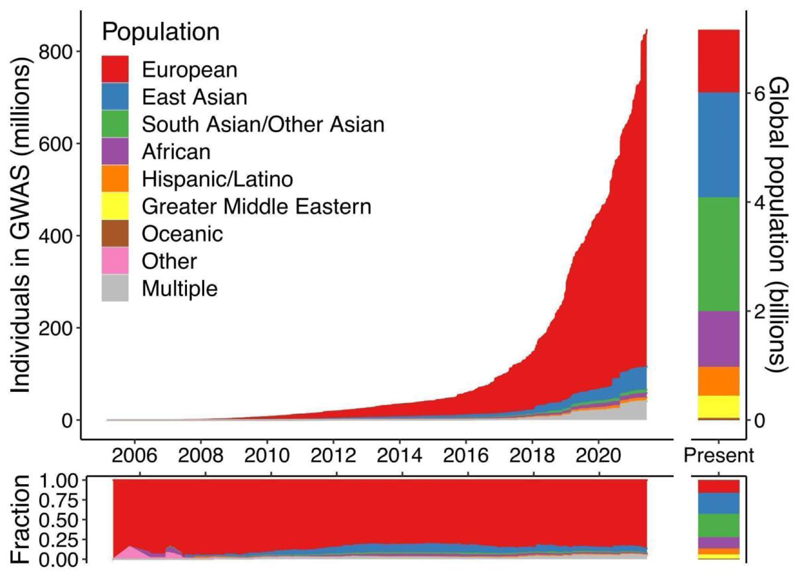
Two decades ago, the sequence of the first human genome was published. Since then, advances in genome technologies have resulted in whole-genome sequencing and microarray-based genotyping of millions of human genomes. However, genetic and genomic studies are predominantly based on populations of European ancestry. As a result, the potential benefits of genomic research-including better understanding of disease etiology, early detection and diagnosis, rational drug design and improved clinical care-may elude the many underrepresented populations. Here, we describe factors that have contributed to the imbalance in representation of different populations and, leveraging our experiences in setting up genomic studies in diverse global populations, we propose a roadmap to enhancing inclusion and ensuring equal health benefits of genomics advances. Our Perspective highlights the importance of sincere, concerted global efforts toward genomic equity to ensure the benefits of genomic medicine are accessible to all.
Overview
The claims and statistics of this paper haven’t been checked yet.
Free: it reads the open-access text and checks the first 5 claims that cite a source we can check. Create a free account to check every claim.
Integrity signals
Registry
Cites
Statistics
Figures
Verification
Claims the paper makes
The claims and statistics of this paper haven’t been checked yet.
Free: it reads the open-access text and checks the first 5 claims that cite a source we can check. Create a free account to check every claim.
Claims other papers make about this one
Each is checked against this paper’s own text: does it say what the citing paper says it does?
The source backs part of the claim, not all of it — or backs it for a different population, condition or comparison.
In the citing paper
“The lack of diversity in genetic studies on EduYears could lead to social and health disparities due to inadequate comprehension of EduYears and its impact on socioeconomic and health outcomes in understudied populations15.”
From Shared genetic architectures of educational attainment in East Asian and European populations (2024) · cites this paper as [15]
Experimental — accuracy not yet measuredIn the citing paper
“Large open datasets are more likely to come from the Global North, may prioritize research questions from these populations, and can have limited generalizability (e.g., the overrepresentation of European ancestry in genomic studies [115]).”
From Open Science 2.0: Towards a truly collaborative research ecosystem (2023) · cites this paper as [115]
Self-check
Percentages, sums and reported differences re-computed from the paper’s own numbers.
The self-check needs the paper’s full text.
Citations
Cites
The mutational constraint spectrum quantified from variation in 141,456 humans
Karczewski, K. J., Francioli, L. C., Tiao, G., Cummings, B. B., Alföldi, J., Wang, Q., Collins, R. L., Laricchia, K. M., Ganna, A., Birnbaum, D. P., et al. (2020) · Nature · doi:10.1038/s41586-020-2308-7 · Cited by 9,434
Buniello, A., MacArthur, J. A. L., Cerezo, M., Harris, L. W., Hayhurst, J., Malangone, C., McMahon, A., Morales, J., Mountjoy, E., Sollis, E., et al. (2019) · Nucleic Acids Research · doi:10.1093/nar/gky1120 · Cited by 4,000
Clinical use of current polygenic risk scores may exacerbate health disparities
Martin, A. R., Kanai, M., Kamatani, Y., Okada, Y., Neale, B. M., & Daly, M. J. (2019) · Nature Genetics · doi:10.1038/s41588-019-0379-x · Cited by 2,821
Self-citationThe personal and clinical utility of polygenic risk scores
Torkamani, A., Wineinger, N. E., & Topol, E. J. (2018) · Nature Reviews Genetics · doi:10.1038/s41576-018-0018-x · Cited by 1,623
The Missing Diversity in Human Genetic Studies
Sirugo, G., Williams, S. M., & Tishkoff, S. A. (2019) · Cell · doi:10.1016/j.cell.2019.02.048 · Cited by 1,516
Human Demographic History Impacts Genetic Risk Prediction across Diverse Populations
Martin, A. R., Gignoux, C. R., Walters, R. K., Wojcik, G. L., Neale, B. M., Gravel, S., Daly, M. J., Bustamante, C. D., & Kenny, E. E. (2017) · The American Journal of Human Genetics · doi:10.1016/j.ajhg.2017.03.004 · Cited by 1,391
Self-citationCohen, J., Pertsemlidis, A., Kotowski, I. K., Graham, R., Garcia, C. K., & Hobbs, H. H. (2005) · Nature Genetics · doi:10.1038/ng1509 · Cited by 1,381
Genomic Risk Prediction of Coronary Artery Disease in 480,000 Adults
Inouye, M., Abraham, G., Nelson, C. P., Wood, A. M., Sweeting, M. J., Dudbridge, F., Lai, F. Y., Kaptoge, S., Brozynska, M., Wang, T., et al. (2018) · Journal of the American College of Cardiology · doi:10.1016/j.jacc.2018.07.079 · Cited by 793
Genetics of blood lipids among ∼300,000 multi-ethnic participants of the Million Veteran Program
Global Lipids Genetics Consortium, Klarin, D., Myocardial Infarction Genetics (MIGen) Consortium, The Geisinger-Regeneron DiscovEHR Collaboration, Program, T. V. M. V., Damrauer, S. M., Cho, K., Sun, Y. V., Teslovich, T. M., Honerlaw, J., et al. (2018) · Nature Genetics · doi:10.1038/s41588-018-0222-9 · Cited by 625
Diversity in clinical and biomedical research: a promise yet to be fulfilled
Oh, S. S., Galanter, J., Thakur, N., Pino-Yanes, M., Barcelo, N. E., White, M. J., de Bruin, D. M., Greenblatt, R. M., Bibbins-Domingo, K., Wu, A. H. B., et al. (2015) · PLOS Medicine · doi:10.1371/journal.pmed.1001918 · Cited by 585
Cited by
Items 301–400 of 776
Power and Limitations of Inferring Genetic Ancestry
Bird, N., King, T., & Hellenthal, G. (2025) · Annals of Human Genetics · doi:10.1111/ahg.70007 · Cited by 5
Bracher‐Smith, M., & Escott‐Price, V. (2025) · Molecular Psychiatry · doi:10.1038/s41380-025-03330-4 · Cited by 7
“Though sample sizes in non-European genetic cohorts have increased, they are far from proportional to global population sizes [91], a disparity which limits applicability of models globally [92].”
Levens, A. D., Moes, D. J. A. R., Boer, Y., de Vries, A. P. J., de Vries, D. K., van der Helm, D., Meziyerh, S., Roelen, D. L., Böhringer, S., van Gelder, T., et al. (2025) · Clinical Pharmacology & Therapeutics · doi:10.1002/cpt.70162 · Cited by 5
Forecasting Influenza Epidemics and Pandemics in the Age of AI and Machine Learning
Kamyshnyi, O., Halabitska, I., Oksenych, V., Kamyshna, I. I., Petakh, P., & Kainov, D. E. (2026) · Reviews in Medical Virology · doi:10.1002/rmv.70107 · Cited by 5
Abdelhamid, A., Nasrallah, D., Al-Haneedi, Y., Ahmed, E. A., & Eid, A. H. (2026) · Journal of Cardiovascular Pharmacology · doi:10.1097/fjc.0000000000001803 · Cited by 5
Reporting and representation of population descriptors in public RNA-seq databases
Romero, I. G., Rodenberg, G., Arner, A. M., Li, L., Beasley, I. J., Rossow, R., Ryan, N., Wang, S., & Lea, A. J. (2026) · Cell Genomics · doi:10.1016/j.xgen.2026.101326 · Cited by 5
“1,11 Doing so is mission critical for all fields, because the current focus on White or European ancestry individuals living in urban settings in HICs provides only a narrow representation of both human biology and the range of social, cultural, and physical environments occupied by our species.”
Race and Ethnicity in Cardiac Surgery: A Missed Opportunity?
Elfaki, L. A., Nwakoby, A., Keshishi, M., Vervoort, D., Yanagawa, B., & Fremes, S. E. (2023) · The Annals of Thoracic Surgery · doi:10.1016/j.athoracsur.2023.10.025 · Cited by 5
Mining local exome and HLA data to characterize pharmacogenetic variants in Saudi Arabia
Abouelhoda, M. I., Almuqati, N., Abogosh, A., Alfraih, F. A., Maddirevula, S., & Alkuraya, F. S. (2023) · Human Genetics · doi:10.1007/s00439-023-02628-z · Cited by 6
“Historically, genomic studies, including PGx, have been heavily biased toward individuals of European ancestry (Fatumo et al. 2022; Flockhart et al. 2008; Shendre et al. 2018).”
Fine-scale genetic structure and rare variant frequencies
Gagnon, L., Moreau, C., Laprise, C., & Girard, S. (2024) · PLoS ONE · doi:10.1371/journal.pone.0313133 · Cited by 6
LEARNER: A Transfer Learning Method for Low‐Rank Matrix Estimation
McGrath, S., Zhu, C., O'Dea, R., Guo, M., & Duan, R. (2026) · Statistics in Medicine · doi:10.1002/sim.70669 · Cited by 5
“Although underrepre - sentation of target populations and heterogeneity across populations are well-known problems in this literature [ 12, 13], statistical methods adopting a transfer learning approach have not been applied in this context to the best of our knowledge.”
Ponikowska, M., Domenico, P. D., Bolli, A., Busby, G., Perez, E. F., & Bottà, G. (2025) · Nutrients · doi:10.3390/nu17050926 · Cited by 6
“The effect of differences in allele frequencies and linkage disequilibrium patterns among various ancestry groups on risk prediction accuracy in PRS models is well-documented [35].”
Zhou, K., Gheybi, K., Soh, P. X. Y., & Hayes, V. M. (2025) · Communications Medicine · doi:10.1038/s43856-025-00883-x · Cited by 6
“…the health equity gap for PCa, thereby contributing to improve the region ’ s health metrics 7 , we urge for caution in viewing Africa and Africans in singular terms 8 , as evidenced by over 2,000 representative language groups and the continent at the epicentre of human genetic diversity 9,10 .”
Core issues, case studies, and the need for expanded Legacy African American genomics
Jackson, F. L. C., Clinton, C. K., & Caldwell, J. (2023) · Frontiers in Genetics · doi:10.3389/fgene.2023.843209 · Cited by 5
“, better understanding of disease etiology, earlier detection ad diagnostics, rational drug design, and increased clinical care) would be available to underrepresented groups such as peoples of African descent (Fatumo et al., 2022).”
BackgroundScaling Precision Medicine: Singapore’s PRECISE-SG100K Genomic EnginePreprint
Bellis, C., Kolle, G., Yong, J., Hebrard, M., Lin, B. C. A., Koh, T. H., Cheng, P. C., Sunmugam, S., Heng, K., Xie, Z., et al. (2025) · bioRxiv (Cold Spring Harbor Laboratory) · doi:10.1101/2025.03.13.642552 · Cited by 5
Pope, N. S., Tallman, S., Jeffery, B., Mbuli-Robertson, D., Wong, Y., Karthikeyan, S., Ralph, P. L., & Kelleher, J. (2026) · bioRxiv (Cold Spring Harbor Laboratory) · doi:10.64898/2026.01.07.698223 · Cited by 6
EXaCT-2: an augmented and customizable oncology-focused whole exome sequencing platform
Waltman, P., Chandra, P., Eng, K. W., Wilkes, D. C., Park, H. H., Pabón-Peña, C., Delpe, P., Bhinder, B., Manohar, J., Kane, T., et al. (2026) · npj Precision Oncology · doi:10.1038/s41698-026-01390-5 · Cited by 4
Norton, S. A., Gorelik, A. J., Paul, S. E., Johnson, E. C., Baranger, D. A. A., Siudzinski, J. L., Li, Z. A., Bondy, E., Modi, H., Karcher, N. R., et al. (2024) · Brain Behavior and Immunity · doi:10.1016/j.bbi.2025.04.012 · Cited by 4
Liu, H.-Y., Xiang, J., Xie, Q., & Xiang, H. (2025) · Journal of Affective Disorders · doi:10.1016/j.jad.2025.119879 · Cited by 5
Pomales-Matos, D. A., Lyerly, M., Rivera-Madera, A., Echevarría-Bonilla, O. L., Alvarez-Cortes, M., Henriquez-Quiñones, S. E., Reyes-Sosa, G. M., Villanueva-Nogueras, R. A., & Peña-Martínez, E. G. (2026) · Frontiers in Genetics · doi:10.3389/fgene.2025.1647176 · Cited by 6
Precision Oncology in Ocular Melanoma: Integrating Molecular and Liquid Biopsy Biomarkers
Kaštelan, S., Gilevska, F., Tomić, Z., Živko, J., & Nikuševa-Martić, T. (2026) · Current Issues in Molecular Biology · doi:10.3390/cimb48020131 · Cited by 4
“Further progress requires global registries, harmonised biospecimen collection and diverse cohorts to address ancestry-related gaps [4,25,180].”
Precision Medicine, Genomics, and Health Equity Challenges and Opportunities
A., S. S., Ravikumar, R. N., & Aarthi, S. (2026) · IGI Global eBooks · doi:10.4018/979-8-3373-1330-6.ch012 · Cited by 4
Adversity, adiposity, nutrition and metabolic well-being in multi-ethnic Asia
Mina, T. H., Jain, P. R., Forouhi, N. G., & Chambers, J. C. (2026) · Nature Metabolism · doi:10.1038/s42255-025-01441-4 · Cited by 4
“114), and in the International Health Cohorts Consortium registry there were altogether only 10 Asian population cohorts representing ~60% of the world population compared to 33 European cohorts 115 .”
Tabane, E., Mnkandla, E., & Wang, Z. (2026) · Applied Sciences · doi:10.3390/app16031545 · Cited by 4
The Impact of Increased Homozygosity on Human Fertility: A Comprehensive Review
Prem, P., Muneshwar, K. N., Agrawal, S., & Jaiswal, A. (2023) · Cureus · doi:10.7759/cureus.49000 · Cited by 5
Transcriptome-wide association study identifies genes associated with bladder cancer risk
Li, S., Gui, J., Karagas, M. R., & Passarelli, M. N. (2025) · Scientific Reports · doi:10.1038/s41598-025-85565-3 · Cited by 4
Striving Towards Equity in Cardiovascular Genomics Research
Vélez, J. A. J., Anderson, N., Datcher, I., Foster, C., Jackson, P., & Hidalgo, B. (2025) · Current Atherosclerosis Reports · doi:10.1007/s11883-025-01277-z · Cited by 4
Rabinowitz, J. A., Thomas, N., Strickland, J. C., Meredith, J. J., Hung, I., Cupertino, R. B., Felton, J. W., Gelino, B. W., Stone, B. M., Maher, B. S., et al. (2025) · Genes Brain & Behavior · doi:10.1111/gbb.70020 · Cited by 5
Croock, D. A., Swart, Y., Sanko, T. J., Mavumengwana, V., Möller, M., Uren, C., & Petersen, D. C. (2025) · Tuberculosis · doi:10.1016/j.tube.2025.102650 · Cited by 4
Chen, J., Epstein, M. P., Schildkraut, J. M., & Kar, S. (2025) · Genes · doi:10.3390/genes16050575 · Cited by 4
“Finally, we emphasize that the results presented here are based on GWAS in individuals of European or predominantly European ancestry given the relative lack of ancestrally diverse GWAS data [54], which limits the statistical power of cross-ancestry analyses.”
Roy, È.-M., Georgieva, I., Fradet, L., Kaewkitipong, L., & Guitton, M. J. (2025) · Acta Psychologica · doi:10.1016/j.actpsy.2025.105176 · Cited by 4
Challenges and future directions of AIRR-seq-based diagnostics
Stervbo, U., Filippidis, P., Breden, F. J., Cowell, L. G., Davi, F., Greiff, V., Langerak, A. W., Prak, E. T. L., Sharland, A. F., Miho, E., et al. (2025) · ImmunoInformatics · doi:10.1016/j.immuno.2025.100056 · Cited by 5
Charoenngam, N., & Wannachalee, T. (2025) · European Journal of Endocrinology · doi:10.1093/ejendo/lvaf191 · Cited by 4
Im, C., Raduski, A. R., Mills, L. J., Bhattarai, K. R., Mobley, R. J., Barnett, K. R., Lu, Z., Liao, K. K., Anderson, N., Johnson, R. A., et al. (2025) · Nature Communications · doi:10.1038/s41467-025-64337-7 · Cited by 5
“The decreased transferability of a European allele-based B-ALL PRS to African American children is consistent with the broader literature describing the poor cross-population predictive performance of PRSs for other diseases 6,51 .”
VN1K is a pangenome-informed multi-omics and phenomics resource for the Vietnamese population
Tran, T. T. H., Hoang, T. H., Tran, M. H., Pham, T. M., Nguyen, N. N., Vu, G. M., Duong, V. C., Vu, Q. T., Nguyen, N. T., Hien, V. Q., et al. (2026) · Nature Communications · doi:10.1038/s41467-026-75375-0 · Cited by 5
“In addition, as the majority of genomic studies to date have been focused on Caucasian ancestry 41 – 43 , millions of population-speci fi c variants are missing.”
From GWASs toward Mechanistic Understanding with Case Studies in Dermatogenetics
Shen, S., Sobczyk, M. K., Paternoster, L., & Brown, S. (2024) · Journal of Investigative Dermatology · doi:10.1016/j.jid.2024.03.013 · Cited by 4
Ramos, M. A., Bonini, K. E., Scarimbolo, L., Kelly, N., Insel, B. J., Suckiel, S. A., Brown, K. M., Biase, M. D., Gallagher, K. M., Lopez, J., et al. (2024) · The American Journal of Human Genetics · doi:10.1016/j.ajhg.2024.10.015 · Cited by 4
Montgomery, T., Hickingbotham, M. R., & Smith, H. S. (2025) · European Journal of Human Genetics · doi:10.1038/s41431-025-01819-8 · Cited by 6
Diversifying Psychiatric Genomics
Giusti‐Rodríguez, P., Okewole, A., Jain, S., Montalvo‐Ortiz, J. L., & Peterson, R. E. (2025) · Psychiatric Clinics of North America · doi:10.1016/j.psc.2025.01.003 · Cited by 6
Boyd, A. E., Grizzard, P. J., Rorie, K. H., & Lima, S. (2023) · Cancers · doi:10.3390/cancers15082238 · Cited by 4
“Unfortunately, AA and individuals from other ethnic and racial minorities continue to be grossly underrepresented in modern molecular cancer studies and in clinical trials [27,30,31].”
BackgroundEnhancing polygenic risk prediction in diverse populations: opportunities and challenges
Zhang, H.-Y., & Chatterjee, N. (2023) · Nature Genetics · doi:10.1038/s41588-023-01502-y · Cited by 4
Hunter–gatherer genetics research: Importance and avenues
Padilla‐Iglesias, C., & Derkx, I. (2024) · Evolutionary Human Sciences · doi:10.1017/ehs.2024.7 · Cited by 8
Dannhauser, F. C., Taylor, L. C., Tung, J., & Usher‐Smith, J. A. (2024) · Journal of Community Genetics · doi:10.1007/s12687-024-00709-8 · Cited by 4
“The lack of diversity in genetic studies is well recognised (Fatumo et al. 2022) and different methods are being developed to construct PGS from distinct ancestry groups to improve prediction and accuracy (Weissbrod et al. 2022; Ruan et al. 2022; Cavazos and Witte 2021).”
Sheldon, M., Grimwood, R., & Nahas, S. (2022) · Biopreservation and Biobanking · doi:10.1089/bio.2022.0059 · Cited by 4
“Several factors such as inadequate recruitment programs and mistrust of the medical community by URM subjects has led to racial and ethnic disparities in large-scale genomics studies, 7 with as much as 86% of participants characterized as being of European descent.”
Are we nearly there yet? Starts and stops on the road to use of polygenic scores
Moorthie, S. A., Martschenko, D. O., & Fatumo, S. (2023) · Journal of Community Genetics · doi:10.1007/s12687-023-00672-w · Cited by 4
Self-citationCommon and Rare Variant Genetic Contributions in African Americans With AutismPreprint
Cirnigliaro, M., Lowe, J. K., Flynn-Carroll, A. O., Kumagai, M. E., Gibson, D. S., Williams, J. B., Fu, J. M., Dong, S., Hou, K., Pillalamarri, V., et al. (2025) · SSRN Electronic Journal · doi:10.1101/2025.11.18.25340532 · Cited by 4
Arunachalam, V., Lea, R. A., Hoy, W. E., Lee, S., Mott, S. A., Savige, J., Mathews, J. D., McMorran, B. J., & Nagaraj, S. H. (2024) · Genome Medicine · doi:10.1186/s13073-024-01299-3 · Cited by 4
“However, with few exceptions [16, 20, 22], the proportion of GWAS studies and publicly available databases involving underrepresented populations has either plateaued or decreased in the last several years [23].”
BackgroundSystematic analysis of population studies performed with the ForenSeq™ DNA Signature Prep kit
Martin, D. P., & Heathfield, L. J. (2025) · Journal of Forensic Sciences · doi:10.1111/1556-4029.70057 · Cited by 3
Ziegler, A. C., & Chung, W. K. (2025) · Trends in Genetics · doi:10.1016/j.tig.2025.04.001 · Cited by 3
Are diverse databases actually creating equity in genomics?
Carter, C. R., & Maricque, B. (2025) · The Lancet Regional Health - Americas · doi:10.1016/j.lana.2025.101112 · Cited by 3
Blood Biospecimen Recommendations for Research on Stroke Outcomes and Recovery
Braun, R. G., Edwardson, M. A., Aldridge, C., Cramer, S. C., Cruchaga, C., Engelter, S. T., Lee, J., Maguire, J. M., Stanne, T. M., Stamova, B. S., et al. (2025) · Stroke · doi:10.1161/strokeaha.125.050793 · Cited by 3
Measures of General Intelligence and Risk for Alcohol Use Disorder
Capusan, A. J., Davis, C. N., Thern, E., Rehm, J. T., Gelernter, J. E., Kranzler, H. R., & Heilig, M. A. (2025) · JAMA Psychiatry · doi:10.1001/jamapsychiatry.2025.2689 · Cited by 4
Integrating genomics, transcriptomics, proteomics, metabolomics, and other omics
Alexiou, P., Gruca, A., Basílio, J., Karađuzović-Hadžiabdić, K., Kreil, D. P., & Wettinger, S. B. (2025) · Elsevier eBooks · doi:10.1016/b978-0-443-33064-3.00008-6 · Cited by 4
Adebamowo, C., Akintola, A., Maduka, O. C., Ikhane, P. A., Jegede, A. S., Callier, S., Akintola, S., Ogundiran, T. O., Adeyemo, O., & Adebamowo, S. N. (2025) · JMIR Research Protocols · doi:10.2196/78557 · Cited by 3
“LMICs need to develop the right infrastructure, manpower, training, and oversight mechanisms for meaningful participation of their researchers and communities in global DSHR [53].”
Verrill, M. W., Lux, M. P., Gligorov, J., Geisler, J., Duchnowska, R., Elsberger, B., & Martín, M. (2025) · Future Oncology · doi:10.1080/14796694.2025.2577335 · Cited by 4
Pasookhush, P., Surawit, A., Suta, S., Pumeiam, S., Mongkolsucharitkul, P., Pinsawas, B., Ophakas, S., Udomphorn, Y., Tongsima, S., Wangkumhang, P., et al. (2025) · npj Genomic Medicine · doi:10.1038/s41525-025-00532-1 · Cited by 3
Shaping the future of ADHD genetic research through ancestral diversity
da Silva, B. S., Bau, C. H. D., Nicolini, H., Tavares, M. E., de Oliveira, V. F., Lima, Y. C., Vitola, E. S., Genis-Mendoza, A. D., Folego-Temoteo, I., Martínez-Levy, G. A., et al. (2026) · Nature Mental Health · doi:10.1038/s44220-025-00572-7 · Cited by 3
Personalized pain management: The use of pharmacogenomics in pain treatment strategies
Scott, E. N., Simonson, L., & Loucks, C. M. (2026) · Canadian Journal of Physiology and Pharmacology · doi:10.1139/cjpp-2025-0304 · Cited by 4
Fine-scale structure of a whole regional population through genetics and genealogies
Morin, G., Moreau, C., Barry, A. D., & Girard, S. (2026) · Nature Communications · doi:10.1038/s41467-026-70175-y · Cited by 5
“Further information on research design is available in the Nature Portfolio Reporting Summary linked to this article.”
The emerging role of high-throughput proteomics in advancing precision medicine
You, J., Deng, Y., Chen, L., Wang, L., Guo, Y., Li, Z.-Y., Feng, J., Yu, Y., & Cheng, W. (2026) · Science Bulletin · doi:10.1016/j.scib.2026.02.054 · Cited by 4
Polygenic risk scores for glaucoma: Impact on diagnosis and disease course
Kolovos, A., Aung, T., Khawaja, A. P., Wiggs, J. L., & Craig, J. E. (2026) · Progress in Retinal and Eye Research · doi:10.1016/j.preteyeres.2026.101469 · Cited by 3
Genome sequencing for the diagnosis of rare disorders: The Brazilian Rare Genomes Project
Coelho, A. V. C., de Albuquerque, R. S., Gomes, C. D. S., Junior, J. B. D. N., de Oliveira, G. S., Moura, L. M. S., Mofatto, L. S., Guedes, R. L. M., Barreiro, R., Caraciolo, M. P., et al. (2026) · Human Genetics and Genomics Advances · doi:10.1016/j.xhgg.2026.100624 · Cited by 4
Haydarlou, P., Kramarenko, D. R., Enzan, N., Klevjer, M., Vad, O. B., Corver, M. E., Zimmerman, D. S., The Biobank Japan Project, Matsuda, K., Morisaki, T., et al. (2026) · Nature Communications · doi:10.1038/s41467-026-72708-x · Cited by 3
Ardıç, N., & Dinç, R. (2026) · International Journal of Molecular Sciences · doi:10.3390/ijms27135984 · Cited by 3
“Improving ancestral diversity in genomic and multi-omics studies is therefore essential for robust external validation, preventing population-specific algorithmic bias, and ensuring the equitable implementation of precision cerebrovascular medicine [56].”
Amini, A. E., & Salari, K. (2024) · JCO Precision Oncology · doi:10.1200/po.23.00560 · Cited by 3
Approaches to enable equitable psychiatric genetic research in Africa
Kalungi, A., Stein, D. J., Okewole, A., & Fatumo, S. (2024) · Communications Medicine · doi:10.1038/s43856-024-00639-z · Cited by 3
Self-citationFriedrich, V. K., Hoke, M. K., & Schurr, T. G. (2024) · American Journal of Human Biology · doi:10.1002/ajhb.24170 · Cited by 4
On Accountability: Genetic Tools for Justice and Injustice in Criminal Proceedings
Greenwald, E., & Phiri, L. (2024) · Journal of Science Policy & Governance · doi:10.38126/jspg250109 · Cited by 3
Expanding the Agenda for a More Just Genomics
Dolan, D. D., Pacia, D. M., Johnston, J., Lee, S. S., & Cho, M. K. (2024) · The Hastings Center Report · doi:10.1002/hast.4924 · Cited by 7
Accountability for Reasonableness as a Framework for the Promotion of Fair and Equitable Research
Dupras, C., Dubé, M., Gravel, S., & Haidar, H. (2024) · The Hastings Center Report · doi:10.1002/hast.4931 · Cited by 3
Parental separation and children's genetic influences on education
Winkle, Z. V., & Baier, T. (2025) · Journal of Marriage and the Family · doi:10.1111/jomf.13067 · Cited by 3
Wichman, M. L., Wall, D. M., Mota, S. S. G., Killam, S. R., Brown, K. E., Aagaard, K. M., Swaney, J., Muzquiz, L. I., Corum, B. N., Claw, K. G., et al. (2025) · Clinical and Translational Science · doi:10.1111/cts.70194 · Cited by 3
Dick, D. M., & Austin, J. J. (2026) · PubMed · doi:10.1002/ajmg.b.33053 · Cited by 4
Adetiba, E., & Walker, A. (2025) · New Genetics and Society · doi:10.1080/14636778.2025.2587345 · Cited by 3
“Recent scholarship has begun to parse drivers and means of addressing the lack of diversity within genomic studies and databases, such as Fatumo et al. (2022)’s work showing that the lack of researchers from diverse backgrounds to help facilitate more trust and genuine partnerships among potential…”
How can research funders advance racial equity?
Baptista, D., Okeke, I. N., & Kalinga, C. (2022) · The Lancet · doi:10.1016/s0140-6736(22)02425-4 · Cited by 3
Rabinowitz, J. A., Reboussin, B. A., Sosnowski, D. W., Kuo, S. I., Strickland, J. C., García‐Marín, L. M., Rentería, M. E., Gillespie, N. A., Maher, B. S., Ialongo, N. S., et al. (2023) · Drug and Alcohol Dependence · doi:10.1016/j.drugalcdep.2023.110895 · Cited by 3
Associations of externalizing polygenic scores with externalizing disorders among Mexican youth
Martínez-Levy, G. A., Maya-Martínez, M., García‐Marín, L. M., Díaz‐Torres, S., Gómez, L., Benjet, C. L., Rentería, M. E., Cruz-Fuentes, C. S., & Rabinowitz, J. A. (2024) · Journal of Psychiatric Research · doi:10.1016/j.jpsychires.2024.01.030 · Cited by 3
Fu, S., Wheeler, W., Wang, X., Hua, X., Godbole, D., Duan, J., Zhu, B., Deng, L., Qin, F., Zhang, H., et al. (2024) · PLoS Genetics · doi:10.1371/journal.pgen.1011322 · Cited by 3
Chetta, M., Tarsitano, M., Bukvić, N., Fontana, L., & Miozzo, M. R. (2025) · Journal of Personalized Medicine · doi:10.3390/jpm15080390 · Cited by 3
“Data noise, stemming from sequencing errors, technical inconsistencies across platforms, and contamination, can introduce additional noise [60].”
Genomics of psychiatric disorders: Regional challenges and opportunities
Forero, D. A. (2023) · Biomédica · doi:10.7705/biomedica.6996 · Cited by 5
“In this context, the Latin American Genomics Consortium (LAGC) (12) has been recently created as a major and inclusive initiative in the region.”
BackgroundReplication or Generalizability? How Flexible Inferences Uphold Unfounded Universal ClaimsPreprint
Syed, M. (2023) · PsyArXiv (OSF Preprints) · doi:10.31234/osf.io/znv5r · Cited by 3
Generalisation of genomic findings and applications of polygenic risk scores
Corpas, M., & Fatumo, S. (2023) · BMC Medical Genomics · doi:10.1186/s12920-023-01615-7 · Cited by 4
“However, despite recent studies calling for more diversity in PRS models, the gap continues to widen [8].”
BackgroundSelf-citationLin, Y.-S., Tan, T., Wang, Y., Paşaniuc, B., Martin, A. R., & Atkinson, E. G. (2025) · bioRxiv (Cold Spring Harbor Laboratory) · doi:10.1101/2025.03.18.644029 · Cited by 3
Self-citationGenomic insights into substance use and disinhibitory disordersPreprint
Williams, C. M., Poore, H. E., Londoño-Correa, D., Ning, Y., Courchesne‐Krak, N. S., Choi, M., Tubbs, J. D., Rosenblatt, M., Tanksley, P. T., Alıev, F., et al. (2026) · medRxiv · doi:10.64898/2026.02.09.26344198 · Cited by 4
Xu, Z., & Wei, P. (2024) · PLoS Genetics · doi:10.1371/journal.pgen.1011483 · Cited by 4
“Large-scale genomic consortia and biobanks have facilitated genetic and genomic research by providing data and tools to probe into complex human diseases and traits with unparalleled depth and applicability (Fatumo et al., 2022; Wang et al., 2022; Bycroft et al., 2018).”
Chotiprasidhi, P., Nartey, Y. A., Sato‐Espinoza, K., Vierkant, R. A., Ma, J., Awuku, Y. A., Agyei-Nkansah, A. A., Afihene, M., Duah, A., Bampoh, S. A., et al. (2025) · Gastro Hep Advances · doi:10.1016/j.gastha.2025.100639 · Cited by 2
Shim, J. K., McMahon, C. E., Saco, L., Bentz, M., Foti, N., & Lee, S. S. (2025) · Journal of Clinical and Translational Science · doi:10.1017/cts.2025.45 · Cited by 2
Health Disparities and Precision Medicine
Shaaban, S., & Ji, Y. (2025) · Advances in Molecular Pathology · doi:10.1016/j.yamp.2025.05.008 · Cited by 2
Khalid, Z., Adams, M., Anees, M., Tehreem, R., Azeem, A., Ahmed, A., Ubeyratna, N., Salter, C. G., Leslie, J. S., Voutsina, N., et al. (2025) · American Journal of Medical Genetics Part A · doi:10.1002/ajmg.a.64191 · Cited by 2
Chen, F., Zhang, Y., Paulin, L. F., Sedlazeck, F. J., & Creighton, C. J. (2025) · Acta Neuropathologica Communications · doi:10.1186/s40478-025-02098-6 · Cited by 2
Thang, T. D., & Son, D. T. (2025) · Academia molecular biology and genomics. · doi:10.20935/acadmolbiogen7883 · Cited by 2
Frequency and Spectrum of Actionable Secondary Findings in the Maltese Population
Grech, L., Grech, C. A., Spiteri, J., Mintoff, D., & Pace, N. P. (2025) · Molecular Genetics & Genomic Medicine · doi:10.1002/mgg3.70143 · Cited by 2
“…impact on the translation of genomic findings, increase the likelihood of returning variants of uncertain significance, and lead to disparities in genetic counselling experiences and outcomes (Fatumo et al. 2022; Montgomery et al. 2025), thereby limiting the generalizability of genomic medicine.”
Real-time dynamic polygenic prediction for streaming data
Tubbs, J. D., Chen, Y., Duan, R., Huang, H., & Ge, T. (2025) · Nature Genetics · doi:10.1038/s41588-025-02381-1 · Cited by 2
“This ensures that advances in genomic medicine can benefit global populations 15,20,35,36 .”
Engaging migrants and immigrants in genetics research
Valdez-Aguilar, M., Conklin, J., & Abebe, D. (2025) · Nature Genetics · doi:10.1038/s41588-025-02373-1 · Cited by 4
“Diverse cohorts enhance the predictive accuracy of polygenic risk scores and other genomic tools for underrepresented populations, which is vital for ensuring the equitable translation of genomic discoveries 150,151 and has been shown to narrow health inequities 10,152,153 .”
InfluentialDental genomics in Africa: colonial legacies and research gaps
Kabbashi, S., Roomaney, I. A., & Chetty, M. (2025) · Frontiers in Oral Health · doi:10.3389/froh.2025.1655867 · Cited by 2
Beusink, M., Rebers, S., Broeks, A., Kist, I., van Luenen, H. G. A. M., van Oord, A., van Scheijen, S., & Schmidt, M. K. (2026) · BMC Medical Ethics · doi:10.1186/s12910-025-01367-2 · Cited by 2
“Diverse datasets are therefore highly important [52].”
Future Perspective Insights: Healthcare and Medical Sciences
Sargsyan, K. (2026) · Springer eBooks · doi:10.1007/978-3-032-10532-5_5 · Cited by 3
Salutogenomics: embracing the full spectrum of human health
Collins, N., Heyborne, G., Fuentes, A., Lund, J. R., & Ilardo, M. A. (2026) · Trends in Genetics · doi:10.1016/j.tig.2025.12.004 · Cited by 2
Strategies in Global Ancestry and Local Ancestry Inference
Akgün, B., & Rajabli, F. (2026) · Current Protocols · doi:10.1002/cpz1.70321 · Cited by 3
Ciliary Defects in Inherited Retinal Diseases
Guo, G., Li, L., Zhou, J., & Ran, J. (2026) · Advanced Genetics · doi:10.1002/ggn2.202500066 · Cited by 4
Reyed, R. M. (2026) · Advances in computational intelligence and robotics book series · doi:10.4018/979-8-3373-3121-8.ch001 · Cited by 3
Metadata
- Authors
- Fatumo, S., Chikowore, T., Choudhury, A., Ayub, M., Martin, A. R., & Kuchenbaecker, K.
- Affiliations
- London School of Hygiene & Tropical Medicine (GB)
- University of the Witwatersrand (ZA)
- University College London (GB)
- Broad Institute (US)
- Corresponding author
- Fatumo, Segun
- ORCID
- Venue
- Nature Medicine
- Published
- 2022-02
- Volume
- 28
- Issue
- 2
- Pages
- 243-250
- ISSN
- 1078-8956 (ISSN-L)
- 1546-170X
- PMC
- PMC7614889
- OpenAlex
- W4211005061
- Cited by
- 707
- References
- 63
- Citations by year
- 2026: 169 · 2025: 188 · 2024: 152 · 2023: 132 · 2022: 64
- FWCI
- 20.80
- Type
- journal article
- Language
- en
- Open access
- green
- www.ncbi.nlm.nih.gov
- Licence
- cc-by
- www.springer.com/tdm (tdm)
- www.springer.com/tdm (vor)
- Locations
- Nature Medicine (publishedVersion)
- PubMed (publishedVersion)
- PubMed Central (acceptedVersion, cc-by)
- LSHTM Research Online (London School of Hygiene and Tropical Medicine) (acceptedVersion)
- UCL Discovery (University College London) (submittedVersion)
- Funders
- Wellcome Trust (214205, 214205/Z/18/Z)
- Topics
- Social Sciences › Anthropology › Race, Genetics, and Society
- Health Sciences › Medicine › Public Health, Environmental and Occupational Health › Ethics in Clinical Research
- Life Sciences › Biochemistry, Genetics and Molecular Biology › Genetics › Genetic Associations and Epidemiology
- Keywords
- genomic diversity, underrepresented groups, health equity, research inclusion, etiology, drug design
- MeSH terms
- Whole Genome Sequencing, Humans, Genome, Human, Genomics
About these checks
Registry, retraction, Cites and statistics results are computed, not judged, with one exception: a printed reference that no index lists is read once by a model before it counts as a citation error. Claims are extracted by a model and kept only when their quote appears verbatim in the text; each cited source is then checked, with a model’s help, for whether it says what the claim relies on. Those verdicts can be wrong — read the claim’s quote and the cited source before relying on one.
Statistics and arithmetic are recomputed, not judged.
Confidence bands are shown only for fields calibrated on our annotated test set. None is calibrated yet, so no band is shown.
What counts as a claim ›How we measure confidence ›How we check this ›
Are you an author, or do you see a problem with this page? Request a review
Data sources
Bibliographic data: Semantic Scholar, OpenAlex, Crossref.
Contains information from the Semantic Scholar Academic Graph Datasets, made available under the ODC Attribution License (ODC-BY 1.0).
Semantic Scholar’s data is described in: Kinney, R., et al. (2023). The Semantic Scholar Open Data Platform. arXiv:2301.10140.
