

A roadmap to increase diversity in genomic studies
Open accessThe DOI matches its Crossref record; 63 of the 63 references it cites were found in a registry or an index.
Abstract
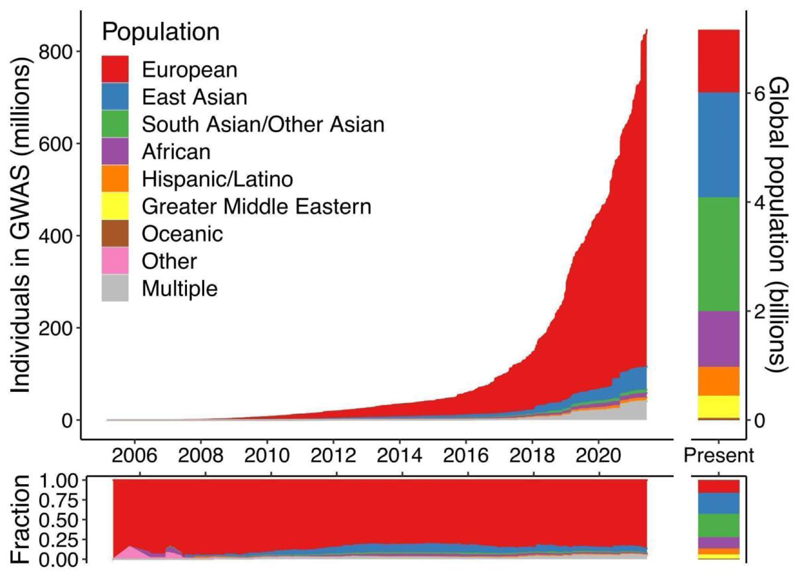
Two decades ago, the sequence of the first human genome was published. Since then, advances in genome technologies have resulted in whole-genome sequencing and microarray-based genotyping of millions of human genomes. However, genetic and genomic studies are predominantly based on populations of European ancestry. As a result, the potential benefits of genomic research-including better understanding of disease etiology, early detection and diagnosis, rational drug design and improved clinical care-may elude the many underrepresented populations. Here, we describe factors that have contributed to the imbalance in representation of different populations and, leveraging our experiences in setting up genomic studies in diverse global populations, we propose a roadmap to enhancing inclusion and ensuring equal health benefits of genomics advances. Our Perspective highlights the importance of sincere, concerted global efforts toward genomic equity to ensure the benefits of genomic medicine are accessible to all.
Overview
The claims and statistics of this paper haven’t been checked yet.
Free: it reads the open-access text and checks the first 5 claims that cite a source we can check. Create a free account to check every claim.
Integrity signals
Registry
Cites
Statistics
Figures
Verification
Claims the paper makes
The claims and statistics of this paper haven’t been checked yet.
Free: it reads the open-access text and checks the first 5 claims that cite a source we can check. Create a free account to check every claim.
Claims other papers make about this one
Each is checked against this paper’s own text: does it say what the citing paper says it does?
The source backs part of the claim, not all of it — or backs it for a different population, condition or comparison.
In the citing paper
“The lack of diversity in genetic studies on EduYears could lead to social and health disparities due to inadequate comprehension of EduYears and its impact on socioeconomic and health outcomes in understudied populations15.”
From Shared genetic architectures of educational attainment in East Asian and European populations (2024) · cites this paper as [15]
Experimental — accuracy not yet measuredIn the citing paper
“Large open datasets are more likely to come from the Global North, may prioritize research questions from these populations, and can have limited generalizability (e.g., the overrepresentation of European ancestry in genomic studies [115]).”
From Open Science 2.0: Towards a truly collaborative research ecosystem (2023) · cites this paper as [115]
Self-check
Percentages, sums and reported differences re-computed from the paper’s own numbers.
The self-check needs the paper’s full text.
Citations
Cites
The mutational constraint spectrum quantified from variation in 141,456 humans
Karczewski, K. J., Francioli, L. C., Tiao, G., Cummings, B. B., Alföldi, J., Wang, Q., Collins, R. L., Laricchia, K. M., Ganna, A., Birnbaum, D. P., et al. (2020) · Nature · doi:10.1038/s41586-020-2308-7 · Cited by 9,434
Buniello, A., MacArthur, J. A. L., Cerezo, M., Harris, L. W., Hayhurst, J., Malangone, C., McMahon, A., Morales, J., Mountjoy, E., Sollis, E., et al. (2019) · Nucleic Acids Research · doi:10.1093/nar/gky1120 · Cited by 4,000
Clinical use of current polygenic risk scores may exacerbate health disparities
Martin, A. R., Kanai, M., Kamatani, Y., Okada, Y., Neale, B. M., & Daly, M. J. (2019) · Nature Genetics · doi:10.1038/s41588-019-0379-x · Cited by 2,821
Self-citationThe personal and clinical utility of polygenic risk scores
Torkamani, A., Wineinger, N. E., & Topol, E. J. (2018) · Nature Reviews Genetics · doi:10.1038/s41576-018-0018-x · Cited by 1,623
The Missing Diversity in Human Genetic Studies
Sirugo, G., Williams, S. M., & Tishkoff, S. A. (2019) · Cell · doi:10.1016/j.cell.2019.02.048 · Cited by 1,516
Human Demographic History Impacts Genetic Risk Prediction across Diverse Populations
Martin, A. R., Gignoux, C. R., Walters, R. K., Wojcik, G. L., Neale, B. M., Gravel, S., Daly, M. J., Bustamante, C. D., & Kenny, E. E. (2017) · The American Journal of Human Genetics · doi:10.1016/j.ajhg.2017.03.004 · Cited by 1,391
Self-citationCohen, J., Pertsemlidis, A., Kotowski, I. K., Graham, R., Garcia, C. K., & Hobbs, H. H. (2005) · Nature Genetics · doi:10.1038/ng1509 · Cited by 1,381
Genomic Risk Prediction of Coronary Artery Disease in 480,000 Adults
Inouye, M., Abraham, G., Nelson, C. P., Wood, A. M., Sweeting, M. J., Dudbridge, F., Lai, F. Y., Kaptoge, S., Brozynska, M., Wang, T., et al. (2018) · Journal of the American College of Cardiology · doi:10.1016/j.jacc.2018.07.079 · Cited by 793
Genetics of blood lipids among ∼300,000 multi-ethnic participants of the Million Veteran Program
Global Lipids Genetics Consortium, Klarin, D., Myocardial Infarction Genetics (MIGen) Consortium, The Geisinger-Regeneron DiscovEHR Collaboration, Program, T. V. M. V., Damrauer, S. M., Cho, K., Sun, Y. V., Teslovich, T. M., Honerlaw, J., et al. (2018) · Nature Genetics · doi:10.1038/s41588-018-0222-9 · Cited by 625
Diversity in clinical and biomedical research: a promise yet to be fulfilled
Oh, S. S., Galanter, J., Thakur, N., Pino-Yanes, M., Barcelo, N. E., White, M. J., de Bruin, D. M., Greenblatt, R. M., Bibbins-Domingo, K., Wu, A. H. B., et al. (2015) · PLOS Medicine · doi:10.1371/journal.pmed.1001918 · Cited by 585
Cited by
Items 201–300 of 776
Digital health and artificial intelligence innovations for oncology in sub-Saharan Africa
Dako, F., de Moraes, F. Y., Doo, F. X., Abed, M., Anazodo, U., Patrick, L., Favorito, F. M., Fouad, E., Alabi, A. O., Avery, S., et al. (2025) · The Lancet Oncology · doi:10.1016/s1470-2045(25)00360-2 · Cited by 11
A Set of Rules for Model Validation
Camacho, J. (2026) · Journal of Chemometrics · doi:10.1002/cem.70110 · Cited by 11
Enriching African genome representation through the AGenDA project
Ramsay, M., Etheredge, H. R., Tluway, F. D., D’Amato, M. E., Chikwambi, Z., Hamdi, Y., Alhudiri, I., Fakim, Y., Ahmad, K. M., Belguith, N., et al. (2026) · Nature · doi:10.1038/s41586-025-09935-7 · Cited by 12
Self-citationCharacterization of Oncology Clinical Trials Using Germline Genetic Data
Kammula, A. V., Schäffer, A. A., & Rajagopal, P. S. (2022) · JAMA Network Open · doi:10.1001/jamanetworkopen.2022.42370 · Cited by 11
Phanthunane, C., Pongcharoen, S., Pannarunothai, S., Roboon, J., Phanthunane, P., & Nontarak, J. (2024) · Clinical and Translational Science · doi:10.1111/cts.13868 · Cited by 11
Polygene by environment interactions predicting depressive outcomes
Grillo, A. R. (2024) · American Journal of Medical Genetics Part B Neuropsychiatric Genetics · doi:10.1002/ajmg.b.33000 · Cited by 13
“Additionally, due at least in part to concerns about spurious results arising from ancestral genetic admixture, genetic research still predominantly focuses on samples of European ancestry (Fatumo et al., 2022; Need & Goldstein, 2009).”
InfluentialRosoff, D. B., Wagner, J., Jung, J., Pacher, P., Christodoulides, C., Davey Smith, G., Ray, D., & Lohoff, F. W. (2025) · Diabetes · doi:10.2337/db24-0451 · Cited by 10
The ancestry and geographical origins of St Helena’s liberated Africans
Sandoval‐Velasco, M., Jagadeesan, A., Ramos‐Madrigal, J., Ávila‐Arcos, M. C., Fortes‐Lima, C., Watson, J., Johannesdóttir, E., Dávalos, D. I. C., Gopalakrishnan, S., Moreno-Mayar, J. V., et al. (2023) · The American Journal of Human Genetics · doi:10.1016/j.ajhg.2023.08.001 · Cited by 10
Reiterated Fact-Making: Explaining Transformation and Continuity in Scientific Facts
Navon, D. (2024) · American Sociological Review · doi:10.1177/00031224241271100 · Cited by 10
“Indeed, the long-standing underrepresentation of people of non-European ancestry in genomic databases often makes it hard to determine whether some single-gene variants are even pathogenic in non-white patients (Fatumo et al. 2022).”
Advancing Equity in Rare Disease Research: Insights From the Undiagnosed Disease Network
Borja, N. A., Tinker, R. J., Bivona, S., Smith, C. A., Locker, T. K., Fernandes, S. A., Undiagnosed Diseases Network, Phillips, J. A., Stoler, J. B., Taylor, H. A., et al. (2024) · American Journal of Medical Genetics Part A · doi:10.1002/ajmg.a.63904 · Cited by 14
“…benchmarks that prioritize the enrollment of historically marginalized racial and ethnic groups in rare disease research to help ensure that the benefits of medical advancements rooted in genetic insights are equita-bly distributed (Fatumo et al. 2022; Hindorff et al. 2018; Miller et al. 2023).”
Genetic evidence linking retinol to birth weight: A two-sample Mendelian randomization study
Mu, F., Wang, K., Jiang, L., & Wang, F. (2024) · Reproductive Toxicology · doi:10.1016/j.reprotox.2024.108739 · Cited by 10
Agboli, E., Bitew, M., Malaka, C. N., Kallon, T. M. P. S., Jalloh, A., Yankonde, B., Shempela, D. M., Sikalima, J., Joseph, M., Kasonde, M., et al. (2025) · Tropical Medicine and Infectious Disease · doi:10.3390/tropicalmed10040090 · Cited by 12
Zhang, X., Brody, J. A., Graff, M., Highland, H. M., Chami, N., Xu, H., Wang, Z., Ferrier, K., Chittoor, G., Josyula, N. S., et al. (2025) · Nature Communications · doi:10.1038/s41467-025-58420-2 · Cited by 10
Lewandowski, L., Hiraki, L., Scott, C., Barrera-Vargas, A., Tena, J. R., Gómez-Martín, D., Ombrello, M., Aksentijevich, I., Deng, Z.-M., Musolf, A., et al. (2025) · Lupus Science and Medicine · doi:10.1136/lupus-2024-001475 · Cited by 9
“Our study demonstrates that patients with cSLE represent an important population to characterise through genomic sequencing in order to define the genetic contributions to SLE and develop more precise therapies for those at high risk of severe disease.”
Echoes of eugenics: confronting its effects in indigenous genomics
Sherman, C. A., Nataneli, S., Claw, K. G., & Mooney, J. A. (2025) · Genetics · doi:10.1093/genetics/iyaf127 · Cited by 11
Global spread of Streptococcus pyogenes A genomics-supported narrative review
Arcari, G., Colombini, L., Castelli, M., Novazzi, F., Clementi, N., Santoro, F., & Mancini, N. (2025) · FEMS Microbiology Reviews · doi:10.1093/femsre/fuaf058 · Cited by 10
Glycometabolic cardiac dysfunction in HFpEF: Lessons from multi-omics studies
Longo, S., Mollace, R., Casagrande, V., Bucciarelli, L. G., Martelli, E., Menghini, R., Fernández‐Real, J. M., & Federici, M. (2025) · Pharmacological Research · doi:10.1016/j.phrs.2025.108032 · Cited by 11
Bazakos, C., Vidović, M., Radanović, A., Bacu, A., Francesca, S., & Rigano, M. M. (2026) · Physiologia Plantarum · doi:10.1111/ppl.70760 · Cited by 10
“Inclusion of diverse populations is also critical for capturing broad genetic variation and avoiding biases that could mislead downstream interpretations (Fatumo et al. 2022).”
Evaluating genomic polygenic risk scores for childhood acute lymphoblastic leukemia in Latinos
Jeon, S., Lo, Y. C., Morimoto, L. M., Metayer, C., Ma, X., Wiemels, J. L., de Smith, A. J., & Chiang, C. W. K. (2023) · Human Genetics and Genomics Advances · doi:10.1016/j.xhgg.2023.100239 · Cited by 10
Bridging the gap: returning genetic results to indigenous communities in Latin America
Arango-Isaza, E., Aninao, M. J., Campbell, R., Martínez, F. I., Shimizu, K. K., & Barbieri, C. (2023) · Frontiers in Genetics · doi:10.3389/fgene.2023.1304974 · Cited by 13
The NIMH supports more comprehensive and inclusive genomic studies in psychiatry
Gitik, M., Bingaman, L., Rowland, L. M., & Marques, A. H. (2024) · World Psychiatry · doi:10.1002/wps.21211 · Cited by 10
Increasing Diversity, Equity, Inclusion, and Accessibility in Rare Disease Clinical Trials
Baynam, G. S., Baker, S., Steward, C. A., Summar, M. L., Halley, M. C., & Pariser, A. (2024) · Pharmaceutical Medicine · doi:10.1007/s40290-024-00529-8 · Cited by 10
“Almost 90% of genomic data collected to date is from “ populations of European ancestry ” [79, 80].”
Toolkit article: Approaches to measuring social inequities in health in human biology research
Thayer, Z. M., Uwizeye, G., & McKerracher, L. (2022) · American Journal of Human Biology · doi:10.1002/ajhb.23804 · Cited by 11
Evaluating High‐Confidence Genes in Conotruncal Cardiac Defects by Gene Burden Analyses
Chui, M. M. C., Mak, C. C. Y., Yu, M. H. C., Wong, S. Y. Y., Lun, K., Yung, T., Kwong, A. K., Chow, P., & Chung, B. H. (2023) · Journal of the American Heart Association · doi:10.1161/jaha.122.028226 · Cited by 10
Poortman, Y., Ens‐Dokkum, M. H., & Nippert, I. (2024) · Genes · doi:10.3390/genes15091162 · Cited by 11
“At the same time, the proportion of studies conducted in underrepresented populations has either stagnated or decreased; genetic studies including participants with multiple ancestries have increased but only very slightly, to 4.8% [128].”
BackgroundInfluentialKey elements for promoting public-private partnerships in research and innovation
Sikombe, S., Muleya, F., Phiri, J., Zulu, S. L., Simasiku, P. L., & Situtu, M. (2024) · Cogent Business & Management · doi:10.1080/23311975.2024.2401627 · Cited by 9
“…the correlation between education and entrepreneurship mindset is hypothetically high (liguori et al., 2024) and worth investigating in implementing such collaborations. this is particularly important for many african institutions that need more research from external funding (Fatumo et al., 2022).”
The Impact of Ancestry on Genome-Wide Association Studies
Jones, S. C., Cardone, K. M., Bradford, Y., Tishkoff, S. A., & Ritchie, M. D. (2024) · Pacific Symposium on Biocomputing (PSB) · doi:10.1142/9789819807024_0019 · Cited by 10
“The lack of diversity in genetic research limits our understanding of genetic variation in underrepresented ancestries and its relationship with complex traits 19,21 .”
Workforce Development in Genomic Data Science for Health: A Worldview
Lukhele, S., Ras, V., & Mulder, N. (2025) · Annual Review of Genomics and Human Genetics · doi:10.1146/annurev-genom-012224-122440 · Cited by 11
The Use of Biomarkers in Precision Health Symptom Science—Opportunities and Challenges
Harris, C., Conley, Y. P., Bai, J., & Hammer, M. J. (2025) · Seminars in Oncology Nursing · doi:10.1016/j.soncn.2025.151886 · Cited by 10
Ekusai‐Sebatta, D., Kyaddondo, D., Mafigiri, D. K., Barugahare, J., Ssentongo, J. S., Singh, S., & Mwaka, E. (2025) · Research Ethics · doi:10.1177/17470161251361575 · Cited by 10
“The Uganda Medical Informatics Centre (UMIC) is currently one of the largest health research-orientated computational resources in Sub-Saharan Africa with modern high-performance computing facilities (Fatumo et al., 2022).”
Bridging global diversity gaps in Parkinson disease research
dos Santos, D. T., Tan, A. H., Okubadejo, N. U., Kalia, L. V., & Schuh, A. F. S. (2026) · Nature Reviews Neurology · doi:10.1038/s41582-026-01183-1 · Cited by 11
Hassanin, E., Lee, K.-H., Hsieh, T., Aldisi, R. S., Lee, Y., Bobbili, D. R., Krawitz, P. M., May, P., Chen, C., & Maj, C. (2023) · Frontiers in Genetics · doi:10.3389/fgene.2023.1286561 · Cited by 9
“…of the trait (Momin et al., 2023), genetic correlation (Shi et al., 2021), causal variants allele frequencies (Cavazos and Witte, 2020), gene-environment interactions (Peterson et al., 2019), and the inclusion of multi-ancestry populations in GWAS (Fatumo et al., 2022; Yengo et al., 2022).”
BackgroundInterpreting SNP heritability in admixed populations
Huang, J., Kleman, N., Basu, S., Shriver, M. D., & Zaidi, A. A. (2025) · Genetics · doi:10.1093/genetics/iyaf100 · Cited by 10
Cannabis Use and CKD: Epidemiological Associations and Mendelian Randomization
Dellepiane, S., Paranjpe, I., Rajagopal, M., Kamat, S., O’Hagan, R., Gulamali, F. F., Rein, J. L., Charney, A. W., Do, R., Coca, S. G., et al. (2022) · Kidney Medicine · doi:10.1016/j.xkme.2022.100582 · Cited by 11
“SNP effect sizes for the Mendelian randomization analysis were obtained from the CUD-pooled GWAS.”
BackgroundInfluentialMatshabane, O. P., Whitted, C. G., & Koehly, L. M. (2022) · Frontiers in Genetics · doi:10.3389/fgene.2022.1021649 · Cited by 9
“Currently, however, the fields comprising genomic science as a whole are not meeting these goals, with 86% of genomics studies being conducted on individuals of European descent (Fatumo et al., 2022) and even greater discrepancies in psychiatric genomics (Dalvie et al.”
BackgroundSocial and Behavioral Genomics: What Does It Mean for Pediatrics?
Martschenko, D. O., Matthews, L. J., & Sabatello, M. (2023) · The Journal of Pediatrics · doi:10.1016/j.jpeds.2023.113735 · Cited by 10
Integrated clinical risk prediction of type 2 diabetes with a multifactorial polygenic risk scorePreprint
Ritchie, S. C., Taylor, H. J., Liang, Y., Manikpurage, H. D., Pennells, L. A. M., Foguet, C., Abraham, G., Gibson, J. T., Jiang, X., Liu, Y., et al. (2024) · medRxiv · doi:10.1101/2024.08.22.24312440 · Cited by 12
Gong, J., & Zaninotto, P. (2025) · International Journal of Environmental Research and Public Health · doi:10.3390/ijerph22060815 · Cited by 10
“The similar pattern is observed in genomics studies [47].”
Toward Realizing the Promise of AI in Precision Health Across the Spectrum of Care
Wiens, J., Spector‐Bagdady, K., & Mukherjee, B. (2024) · Annual Review of Genomics and Human Genetics · doi:10.1146/annurev-genom-010323-010230 · Cited by 9
Inferring human phenotypes using ancient DNA: from molecules to populations
Ferrando-Bernal, M., Brand, C. M., & Capra, J. A. (2024) · Current Opinion in Genetics & Development · doi:10.1016/j.gde.2024.102283 · Cited by 9
Rethinking the Genomic Diversity Problem: Rejecting Inclusion in Defense of Indigenous Sovereignty
Kolopenuk, J. (2025) · Annual Review of Genomics and Human Genetics · doi:10.1146/annurev-genom-022024-010010 · Cited by 8
Heng, T. H., Walter, K., Huang, Q., Karjalainen, J. M., Daly, M. J., Heyne, H., Malawsky, D. S., Kalantzis, G., Finer, S., van Heel, D. A., et al. (2025) · The American Journal of Human Genetics · doi:10.1016/j.ajhg.2025.03.020 · Cited by 9
“17 This further emphasizes the importance of performing genetic analyses in diverse cohorts, such as G&H. 76 With G&H, we were able to perform imputation with a within-cohort reference panel and demonstrated the advantage of using this to improve sensitivity, as previously re-ported by Bartonetal.”
InfluentialMethodological opportunities in genomic data analysis to advance health equity
Lehmann, B., Bräuninger, L., Cho, Y., Falck, F., Jayadeva, S., Katell, M. A., Nguyen, T., Perini, A., Tallman, S., Mackintosh, M. E., et al. (2025) · Nature Reviews Genetics · doi:10.1038/s41576-025-00839-w · Cited by 8
Self-citationBucheeri, S., Alcibahy, Y., Bucheeri, Y., Bucheeri, S., Alhermi, A., & Butler, A. E. (2025) · Cells · doi:10.3390/cells14221769 · Cited by 8
Ten Core Concepts for Ensuring Data Equity in Public Health
wang, Y., Boyd, A. E., Rountree, L., Ren, Y., Nyhan, K., Nagar, R., Higginbottom, J., Ranney, M. L., Parikh, H., & Mukherjee, B. (2026) · JAMA Health Forum · doi:10.1001/jamahealthforum.2025.6031 · Cited by 12
Advancing precision health discovery in a genetically diverse health system
Haas, R., Margolis, M. P., Wei, A., Yamaguchi, T. N., Feng, J. A., Tran, T., Tozzo, V., Queen, K. J., Mootor, M. F. E., Patil, V., et al. (2026) · Cell · doi:10.1016/j.cell.2026.03.007 · Cited by 8
Myocarditis: A multi-omics approach
Wang, L., Sun, T., Liu, X., Wang, Y., Qiao, X., Chen, N., Liu, F., Zhou, X., Wang, H. X., & Shen, H. (2024) · Clinica Chimica Acta · doi:10.1016/j.cca.2023.117752 · Cited by 8
Step, K., Sima, C. A. A. N., Mata, I. F., & Bardien, S. (2024) · Frontiers in Neuroscience · doi:10.3389/fnins.2024.1380860 · Cited by 8
Mohammed, S. G. A. A., Qoronfleh, M. W., Acar, A., & Al-Dewik, N. I. E. (2025) · FASEB BioAdvances · doi:10.1096/fba.2024-00198 · Cited by 11
“Recognizing the limited transferability of genomic medicine, other projects were launched 77 such as isolated populations like Iceland, Sardinia, and Faroe Islands, or small nations like Estonia and, more recently in other small countries in the Middle East and North Africa (MENA) like Qatar, UAE,…”
Wang, X., Zhong, Y., Wang, R., Zhang, D., Li, Y., Pan, Y., & Li, Y. (2025) · Psychology Research and Behavior Management · doi:10.2147/prbm.s516062 · Cited by 9
“For instance, it relies on limited population groups, which significantly restricts the generalizability of its findings to more diverse populations, 17 such as the US population examined in the current study.”
Tallman, S., Moutsianas, L., Nguyen, T., Cho, Y., Mackintosh, M. E., Kasperavičiūtė, D., Brown, M. A., Ellingford, J. M., Kuchenbaecker, K. B., & Silver, M. J. (2026) · EBioMedicine · doi:10.1016/j.ebiom.2026.106452 · Cited by 9
Self-citationHassanin, E., Maj, C., Klinkhammer, H., Krawitz, P. M., May, P., & Bobbili, D. R. (2023) · BMC Medical Genomics · doi:10.1186/s12920-023-01598-5 · Cited by 8
“This underscores the imperative to substantially increase their participation in genetic research [11].”
BackgroundAn Atlas of Indian Genetic DiversityPreprint
Subramanian, K., Bhattacharyya, C., Machha, P., Mukherjee, A., Tripathi, D., Chakraborty, S., Majumdar, S. S., Sengupta, S., Singh, P., More, V., et al. (2026) · medRxiv · doi:10.64898/2026.03.20.26348801 · Cited by 9
Intersecting transcriptomic landscapes of hypertension and kidney function in African American women
Abbas, M., Martin, P. M., Lindsey, M. L., Bennett, E. S., Brown, T. L., Nzerue, C. M., Williams, C. R., & Gaye, A. (2025) · American Journal of Physiology-Renal Physiology · doi:10.1152/ajprenal.00067.2025 · Cited by 7
Human genetic diversity across South Asian populations: A systematic review and meta-analysis
Rehman, S. U., & Abbas, G. H. (2025) · Medicine · doi:10.1097/md.0000000000044147 · Cited by 10
“[16,17] Research combining existing genetic studies across various South Asian populations allows scientists to identify ancestral connections and distinct genetic characteristics which the analysis uncovers through data synthesis.”
Deep learning methods and applications in single-cell multimodal data integration
Nunes, F. V. M., Behrens, L. M. P., Weimer, R. D., Gonçalves, G. F., Fernandes, G. D. S., & Dorn, M. (2025) · Molecular Omics · doi:10.1039/d5mo00062a · Cited by 10
Sokhansanj, B. A., & ROSEN, G. L. (2025) · Human Genetics · doi:10.1007/s00439-025-02768-4 · Cited by 8
“…transparency of initial pretraining data can help identify potential areas of bias, in the case of GLMs, even publicly available genomic data may be inherently biased due to uneven distributions of samples across populations (Kessler et al. 2016 ; Günther and Nettelblad 2019; Fatumo et al. 2022).”
Fetterman, J. L., Chinnery, P. F., McClellan, R., Wallace, D. C., Suomalainen, A., Ojala, T. H., Lewis, S. C., & Ballinger, S. W. (2025) · Circulation · doi:10.1161/cir.0000000000001393 · Cited by 8
Ancestral diversity in complex disease genetics: from discovery to translation
Kuchenbaecker, K. B., & Navoly, G. (2026) · Nature Reviews Genetics · doi:10.1038/s41576-025-00921-3 · Cited by 11
Self-citationGenerative AI for synthetic biology: Designing biological parts, circuits, and genomes
Kim, N., Carluccio, G. D., Zhang, K., & Collins, J. J. (2026) · Cell Systems · doi:10.1016/j.cels.2026.101533 · Cited by 13
“260 Addressing these challenges presents a bidirectional opportunity: AI models trained on functional data can accelerate synthetic biology design, while synthetic biology offers powerful platforms for generating such data.”
Ibe, C., Otu, A. A., & Mnyambwa, N. P. (2022) · Briefings in Functional Genomics · doi:10.1093/bfgp/elac040 · Cited by 8
Wang, C., Zhang, J., Veldsman, W. P., Zhou, X., & Zhang, L. (2022) · Briefings in Bioinformatics · doi:10.1093/bib/bbac552 · Cited by 7
Association of genetic ancestry with pre-eclampsia in multi-ethnic cohorts of pregnant women
Conti-Ramsden, F. I., de Marvao, A., Gill, C. A., Chappell, L. C., Myers, J., Vuckovic, D., Dehghan, A., & Hysi, P. G. (2024) · Pregnancy Hypertension · doi:10.1016/j.preghy.2024.101162 · Cited by 7
Schaffer, L. S., Breunig, S., Lawrence, J. M., Foote, I. F., & Grotzinger, A. D. (2024) · Molecular Autism · doi:10.1186/s13229-024-00624-2 · Cited by 10
“Efforts to broaden representation in GWAS analyses are crucial for extending genetic insights to other ancestral groups [55].”
BackgroundMorales-Rivera, M. I., Alemón‐Medina, R., Martínez-Hernández, A. G., Contreras-Cubas, C., Altamirano-Bustamante, N. F., Gómez-Garduño, J., Mendoza‐Caamal, E., Nunez-Gonzalez, J., García‐Álvarez, R., Revilla, M., et al. (2024) · Pharmaceuticals · doi:10.3390/ph17101385 · Cited by 9
“Despite the increasing body of research on SNVs associated with metformin PK or inadequate glycemic control (IGC), studies involving Amerindian-origin populations remain limited [33].”
BackgroundMethodSalunke, J. R., Byfield, G. E., Powell, S. N., Torres, D., Leon-Lozano, G., Jackson, J., Orphanides, A. K., Shaw, J. L., Owens, T. J., Berg, J. S., et al. (2024) · Public Health Genomics · doi:10.1159/000543227 · Cited by 10
Genetics of Restless Legs Syndrome
Schormair, B. (2025) · Sleep Medicine Clinics · doi:10.1016/j.jsmc.2025.02.008 · Cited by 7
Ethnic disparities in inherited retinal degenerations
Stephenson, K. A. J., Dhanji, S. R., Kolawole, O. U., Gregory, C. Y., & Gregory-Evans, K. (2025) · Canadian Journal of Ophthalmology · doi:10.1016/j.jcjo.2025.04.007 · Cited by 7
Nayak, S., Ladányi, E., Eising, E., Mekki, Y., Nitin, R., Bush, C. T., Gustavson, D. E., Anglada-Tort, M., Lancaster, H. S., Mosing, M. A., et al. (2025) · Nature Communications · doi:10.1038/s41467-025-60867-2 · Cited by 10
“We have now refined and focused the manuscript’s Discussion section, reducing its total word count by 25%.”
Diversity in Clinical Pharmacology: A Call to Action
Brown, K., Etrouth, S., Jayachandran, P., Moore, J. N., Oni‐Orisan, A., Vasist, L., Zheng, S., Zhou, Z., & Dresser, M. J. (2023) · Clinical Pharmacology & Therapeutics · doi:10.1002/cpt.2852 · Cited by 7
“unique genetic and environmental risk factors that can influence health outcomes.(1) Randomized, controlled trials are the gold standard for establishing the efficacy and safety of pharmacotherapeutic agents, and both novel and established therapies rely on clinical trials to inform new indications, guideline incorpor…”
BackgroundMoreno, D. A., Bonatelli, M., Antoniazzi, A. P., de Paula, F. E., Leal, L. F., Garcia, F. A. D. O., de Paula, A. E., Teixeira, G. R., Santana, I. V. V., Saggioro, F. P., et al. (2023) · Frontiers in Oncology · doi:10.3389/fonc.2023.1237170 · Cited by 8
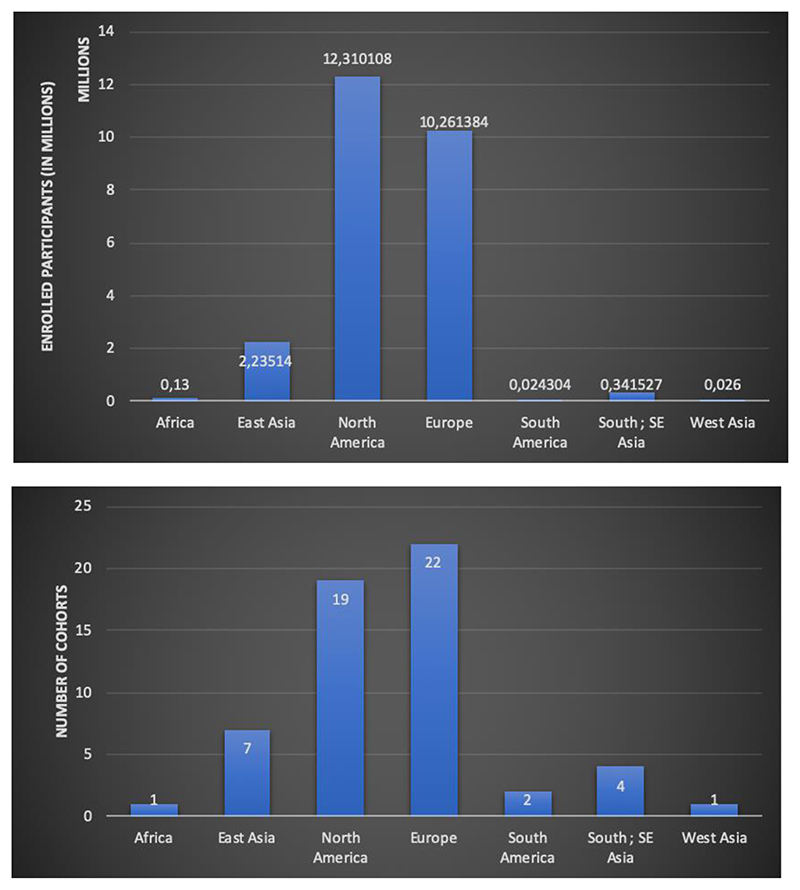
“Disparities in genomic studies due to the under-representation of some populations, such as from South America, were previously demonstrated (31).”
Passmore, S. R., Gerbitz, A., Hancock, G. R., Evans, L., Green‐Harris, G., Edwards, D. F., Jackson, T., & Thomas, S. B. (2024) · Journal of Empirical Research on Human Research Ethics · doi:10.1177/15562646231222665 · Cited by 7
“…a speci fi c condition or by a speci fi c institution, etc.,) or dynamic consent in which the use of interactive digital platforms afford participants the ability to be noti fi ed of study opportunities and monitor how their data are used (Fatumo et al., 2022; Nembaware et al., 2019; Petrini, 2010).”
BackgroundMethodPublic and patient involvement in research to support genome services development in the UK
Hunter, A., Lewis, C., Hill, M. K., Chitty, L. S., Leeson‐Beevers, K., McInnes‐Dean, H., Harvey, K., Pichini, A., Ormondroyd, E., & Thomson, K. L. (2023) · Journal of Translational Genetics and Genomics · doi:10.20517/jtgg.2022.19 · Cited by 8
Bocher, O., Gilly, A., Park, Y., Zeggini, E., & Morris, A. P. (2023) · Human Genetics and Genomics Advances · doi:10.1016/j.xhgg.2023.100214 · Cited by 8
The value of intersectionality for genomic research on human behavior
Matthews, L. J., Martschenko, D. O., & Sabatello, M. (2023) · Genetics in Medicine · doi:10.1016/j.gim.2023.100860 · Cited by 7
Hsieh, T., Lesmann, H., Hustinx, A., Moosa, S., Marchi, E. J., Martin, M. D. P. C., Abdelrazek, I. M., Pantel, J. T., Klinkhammer, H., ten Hagen, M., et al. (2024) · Research Square · doi:10.21203/rs.3.rs-4438861/v1 · Cited by 8
Genomic diversity improves disease discovery for all
Williamson, A., & Fatumo, S. (2024) · Science · doi:10.1126/science.adq7784 · Cited by 7
Self-citationRecent Advances in Genomic Studies of Gestational Duration and Preterm Birth
Srivastava, A. K., Monangi, N., Ravichandran, V., Solé-Navais, P., Jacobsson, B., Muglia, L. J., & Zhang, G. (2024) · Clinics in Perinatology · doi:10.1016/j.clp.2024.02.010 · Cited by 7
Munns, S., Brown, A. D. H., & Buckberry, S. (2025) · Frontiers in Molecular Biosciences · doi:10.3389/fmolb.2025.1502640 · Cited by 6
“…in T2D biomarker development The application of genomics for human health over the past decades has not been equitable, as biases in studies have arguably limited the benefits to specific populations, often to the disadvantage of Indigenous Peoples (Mills and Rahal, 2019; Fatumo et al., 2022).”
Tosato, S., Ristic, B., Zanini, A., Schimmenti, S., Maselli, F. M. C., & Vassos, E. (2025) · Epidemiology and Psychiatric Sciences · doi:10.1017/s204579602510022x · Cited by 6
“Molecular genetic studies are similarly biased, as a disproportionate majority of participants in published (Fatumo et al. , 2022).”
Banji, D., & Banji, O. J. F. (2025) · Journal of Hypertension · doi:10.1097/hjh.0000000000004212 · Cited by 7
Rosoff, D. B., Wagner, J., Perlstein, T., Reitz, J., Jung, J., Blaney, H. L., Gharib, A. M., Hsu, C., Heller, T., Koh, C., et al. (2026) · Journal of Hepatology · doi:10.1016/j.jhep.2026.01.025 · Cited by 7
Cancer genetic mutation prevalence in sub-Saharan Africa: A review of existing data
Shain, J., Michel, A. M., May, M. S., Qunaj, L., El‐Sadr, W., Chung, W. K., Appelbaum, P. S., Jacobson, J. S., Justman, J. E., & Neugut, A. I. (2023) · Seminars in Oncology · doi:10.1053/j.seminoncol.2023.12.001 · Cited by 6
Native Hawaiian and Pacific Islander populations in genomic research
Ha, E. K., Shriner, D., Callier, S., Riley, L., Adeyemo, A., Rotimi, C. N., & Bentley, A. R. (2024) · npj Genomic Medicine · doi:10.1038/s41525-024-00428-6 · Cited by 6
The Newborn Screening Programme Revisited: An Expert Opinion on the Challenges of Rett Syndrome
Singh, J., & Santosh, P. (2024) · Genes · doi:10.3390/genes15121570 · Cited by 6
Dick, D. M., Choi, M., Balcke, E., Alıev, F., Patel, D., Borle, K. J., & Austin, J. (2025) · Complex Psychiatry · doi:10.1159/000547783 · Cited by 8
“Though efforts are underway to enhance representation in genomic research and ensure that genomic advances are applicable to all individuals [39, 73, 74], remedying the extant discrepancies in the research base will take time.”
Near-perfect genome sequencing in medical genetics
Sabbagh, Q., Gilissen, C., Yntema, H. G., Vissers, L. E. L. M., & Hoischen, A. (2026) · Nature Genetics · doi:10.1038/s41588-026-02645-4 · Cited by 7
Artificial Intelligence Needs Data: Challenges Accessing Italian Databases to Train AI
Staunton, C., Biasiotto, R., Tschigg, K., & Mascalzoni, D. (2024) · Asian Bioethics Review · doi:10.1007/s41649-024-00282-9 · Cited by 6
“This is in part due to the issues relating to diversity and representativeness of global datasets, but could also be due to bias in the scientific design and collection of a study (Fatumo et al. 2022).”
BackgroundCarrasco, M., Dimanche, S., Fouladian, J. E., Neff, M., Scaramutti, C., Moloney, M., Blanc, J., & Seixas, A. A. (2024) · Frontiers in Psychiatry · doi:10.3389/fpsyt.2024.1481453 · Cited by 6
“Such work is timely, as the scienti fi c community has only recently begun to address the importance of including diverse populations in research (25, 26).”
Spectrum of germline and somatic mitochondrial DNA variants in Tuberous Sclerosis Complex
Giannikou, K., Martin, K. R., Abdel-Azim, A. G., Pamir, K. J., Hougard, T. R., Bagwe, S., Tang, Y., MacKeigan, J. P., Kwiatkowski, D. J., Henske, E. P., et al. (2023) · Frontiers in Genetics · doi:10.3389/fgene.2022.917993 · Cited by 6
Xavier, R. M., Shanavas, Y., Britt, B. M., & George, W. T. (2023) · PLoS ONE · doi:10.1371/journal.pone.0284356 · Cited by 6
“Despite concerted efforts (such as through policy initiatives by the NIH), this underrepresentation continues to widen [2, 39, 40].”
BackgroundSam, J., Reble, E., Kodida, R., Shaw, A., Clausen, M., Salazar, M., Shickh, S., Mighton, C. E., Carroll, J. C., Armel, S. R., et al. (2022) · Human Genetics · doi:10.1007/s00439-022-02466-5 · Cited by 6
Sadiq, F., Hegele, R. A., Catapano, A. L., & Grošelj, U. (2023) · Frontiers in Genetics · doi:10.3389/fgene.2023.1248435 · Cited by 6
“So far, genomic studies have predominantly focused on populations of European ancestry (Fatumo et al., 2022).”
Background(2023) · doi:10.1101/2023.08.04.551959 · Cited by 6
The Inclusion of Underrepresented Populations in Cardiovascular Genetics and Epidemiology
Chappell, E., Arbour, L. T., & Laksman, Z. (2024) · Journal of Cardiovascular Development and Disease · doi:10.3390/jcdd11020056 · Cited by 5
“%) are composed of participants of European ancestry [59].”
BackgroundUsing Genomics to Develop Personalized Cardiovascular Treatments
Sanghvi, M. M., Young, W. J., Naderi, H., Burns, R., Ramírez, J., Bell, C. G., & Munroe, P. B. (2025) · Arteriosclerosis Thrombosis and Vascular Biology · doi:10.1161/atvbaha.125.319221 · Cited by 5
“To 19–21 Second, leveraging GWAS findings to pursue personalized medicine approaches.”
Peter, M., Baptiste, R., Lewis, C., Chitty, L. S., & Hill, M. K. (2025) · BJOG An International Journal of Obstetrics & Gynaecology · doi:10.1111/1471-0528.18195 · Cited by 5
“Not only can researchers from different backgrounds build trust through researcher-participant concordance, but they may also prioritise studies that address their communities [87, 88].”
Insights from the Biorepository and Integrative Genomics pediatric resource
Buonaiuto, S., Marsico, F. L., Mohammed, A., Chinthala, L. K., Amos-Abanyie, E. K., Baras, A., Abecasis, G. R., Ferrando, A., Coppola, G., Deubler, A., et al. (2025) · Nature Communications · doi:10.1038/s41467-025-59375-0 · Cited by 6
“To date, most genetic data available for human research has predominantly originated from European populations, introducing a bias in medical research and healthcare that fails to accurately represent the genetic diversity of the global human population 1 – 5 .”
de Souza, F. G., Matos, G. B., Santos, C. S., de Souza, T. P., Gobbo, A. R., da Costa, P. F., Salgado, C. G., Eufraseo, G. L., Fernandes, A. V. D. S., Santos‐Lobato, B. L., et al. (2025) · Communications Biology · doi:10.1038/s42003-025-08126-4 · Cited by 6
“Worldwide GWAS are mainly concentrated in USA and European countries, which contribute to underrepresentation of the worldwide genomic diversity, and leads to a low prediction quality among underrepresented populations 22,26,27,42 .”
Shared genomic features of HIV+ diffuse large B-cell lymphoma in two African cohorts
Roush, S. M., Moodley, M., Coelho, J., Beck, S., Chirwa, A., Kasonkanji, E., Mponda, M., Mulenga, M., Tomoka, T., van Zijl, H., et al. (2025) · Scientific Reports · doi:10.1038/s41598-025-10529-6 · Cited by 5
Metadata
- Authors
- Fatumo, S., Chikowore, T., Choudhury, A., Ayub, M., Martin, A. R., & Kuchenbaecker, K.
- Affiliations
- London School of Hygiene & Tropical Medicine (GB)
- University of the Witwatersrand (ZA)
- University College London (GB)
- Broad Institute (US)
- Corresponding author
- Fatumo, Segun
- ORCID
- Venue
- Nature Medicine
- Published
- 2022-02
- Volume
- 28
- Issue
- 2
- Pages
- 243-250
- ISSN
- 1078-8956 (ISSN-L)
- 1546-170X
- PMC
- PMC7614889
- OpenAlex
- W4211005061
- Cited by
- 707
- References
- 63
- Citations by year
- 2026: 169 · 2025: 188 · 2024: 152 · 2023: 132 · 2022: 64
- FWCI
- 20.80
- Type
- journal article
- Language
- en
- Open access
- green
- www.ncbi.nlm.nih.gov
- Licence
- cc-by
- www.springer.com/tdm (tdm)
- www.springer.com/tdm (vor)
- Locations
- Nature Medicine (publishedVersion)
- PubMed (publishedVersion)
- PubMed Central (acceptedVersion, cc-by)
- LSHTM Research Online (London School of Hygiene and Tropical Medicine) (acceptedVersion)
- UCL Discovery (University College London) (submittedVersion)
- Funders
- Wellcome Trust (214205, 214205/Z/18/Z)
- Topics
- Social Sciences › Anthropology › Race, Genetics, and Society
- Health Sciences › Medicine › Public Health, Environmental and Occupational Health › Ethics in Clinical Research
- Life Sciences › Biochemistry, Genetics and Molecular Biology › Genetics › Genetic Associations and Epidemiology
- Keywords
- genomic diversity, underrepresented groups, health equity, research inclusion, etiology, drug design
- MeSH terms
- Whole Genome Sequencing, Humans, Genome, Human, Genomics
About these checks
Registry, retraction, Cites and statistics results are computed, not judged, with one exception: a printed reference that no index lists is read once by a model before it counts as a citation error. Claims are extracted by a model and kept only when their quote appears verbatim in the text; each cited source is then checked, with a model’s help, for whether it says what the claim relies on. Those verdicts can be wrong — read the claim’s quote and the cited source before relying on one.
Statistics and arithmetic are recomputed, not judged.
Confidence bands are shown only for fields calibrated on our annotated test set. None is calibrated yet, so no band is shown.
What counts as a claim ›How we measure confidence ›How we check this ›
Are you an author, or do you see a problem with this page? Request a review
Data sources
Bibliographic data: Semantic Scholar, OpenAlex, Crossref.
Contains information from the Semantic Scholar Academic Graph Datasets, made available under the ODC Attribution License (ODC-BY 1.0).
Semantic Scholar’s data is described in: Kinney, R., et al. (2023). The Semantic Scholar Open Data Platform. arXiv:2301.10140.
