

Disruption of neural periodicity predicts clinical response after deep brain stimulation for obsessive-compulsive disorder
Open accessThe DOI matches its Crossref record; 60 of the 60 references it cites were found in a registry or an index.
Abstract
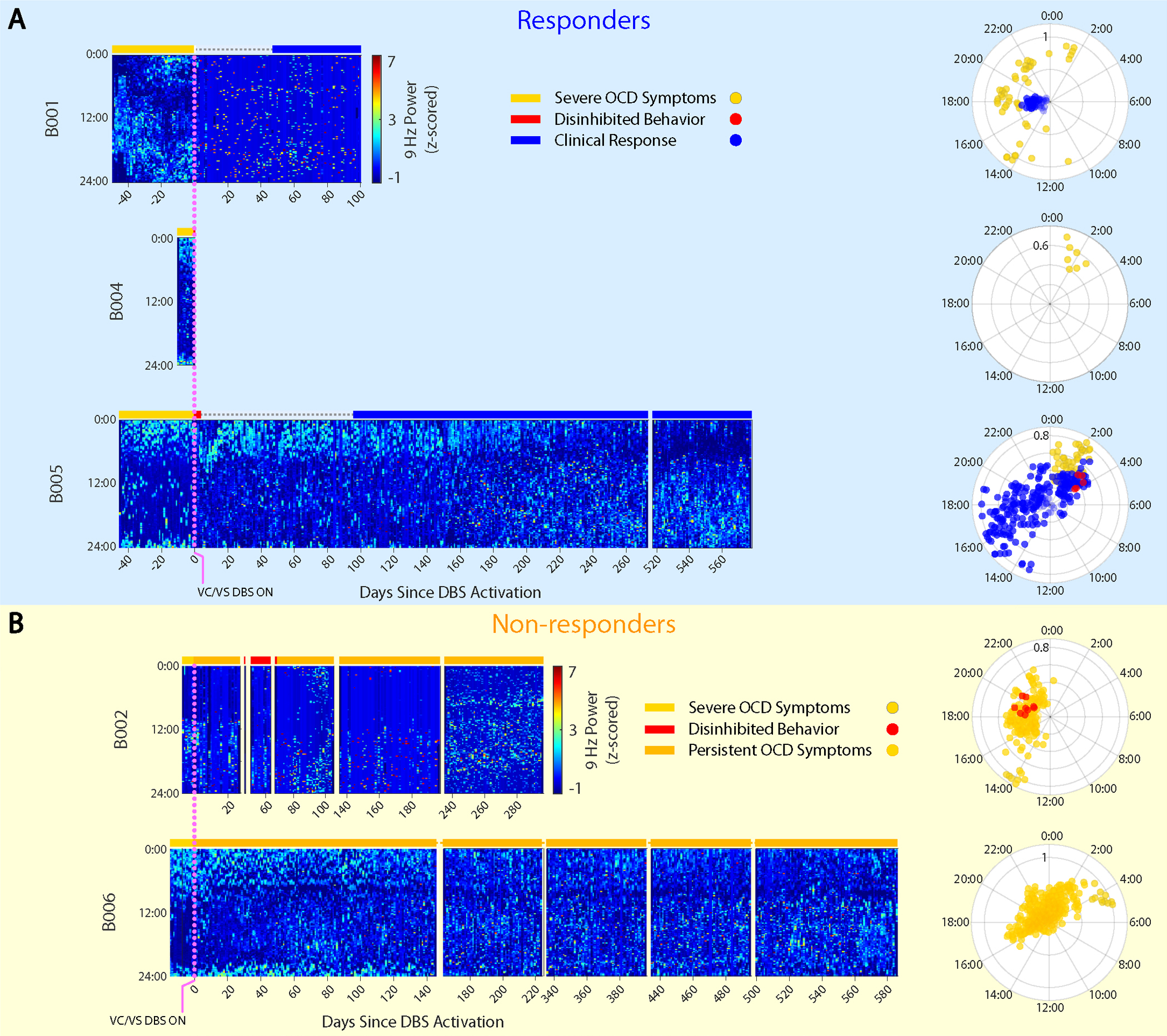
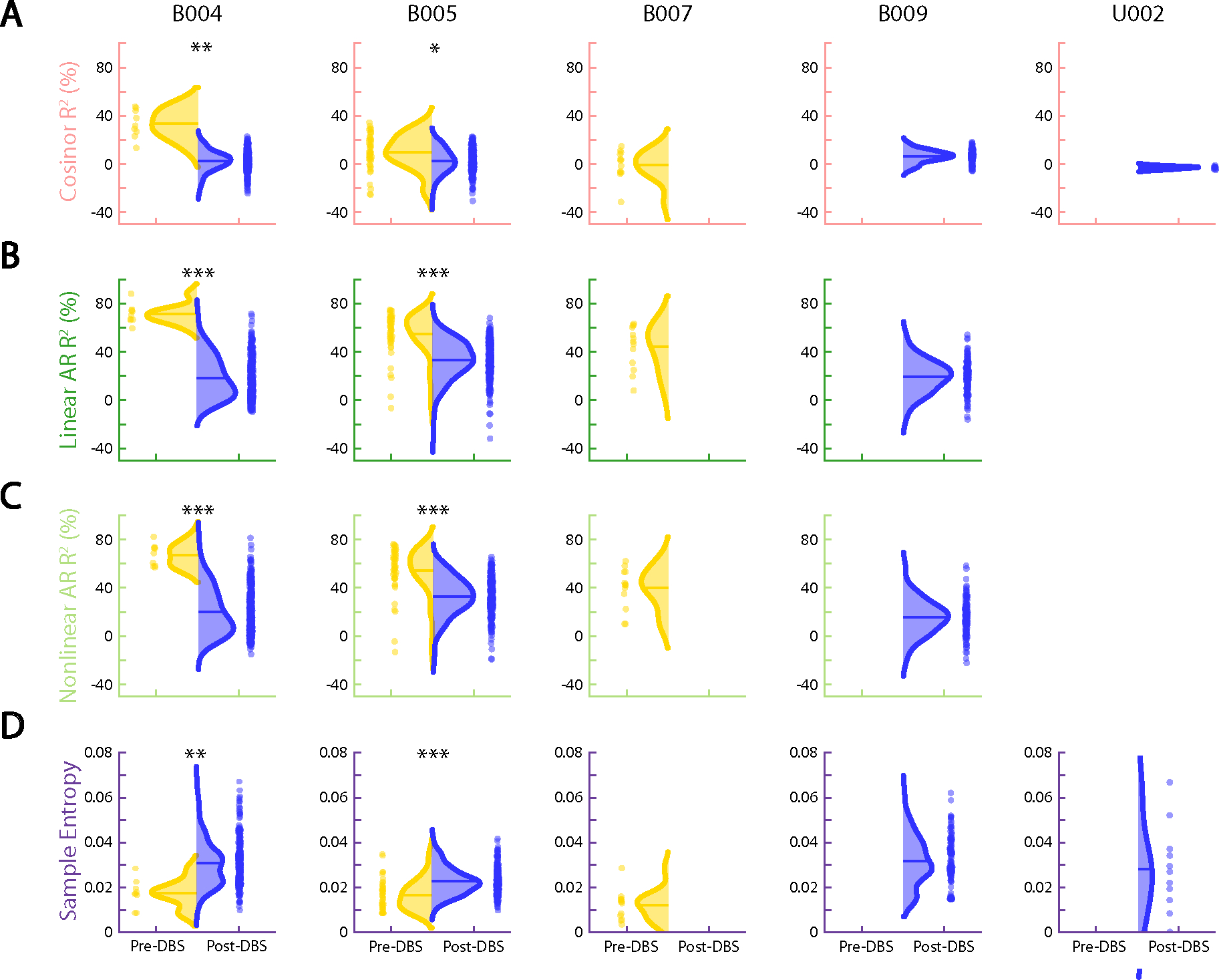
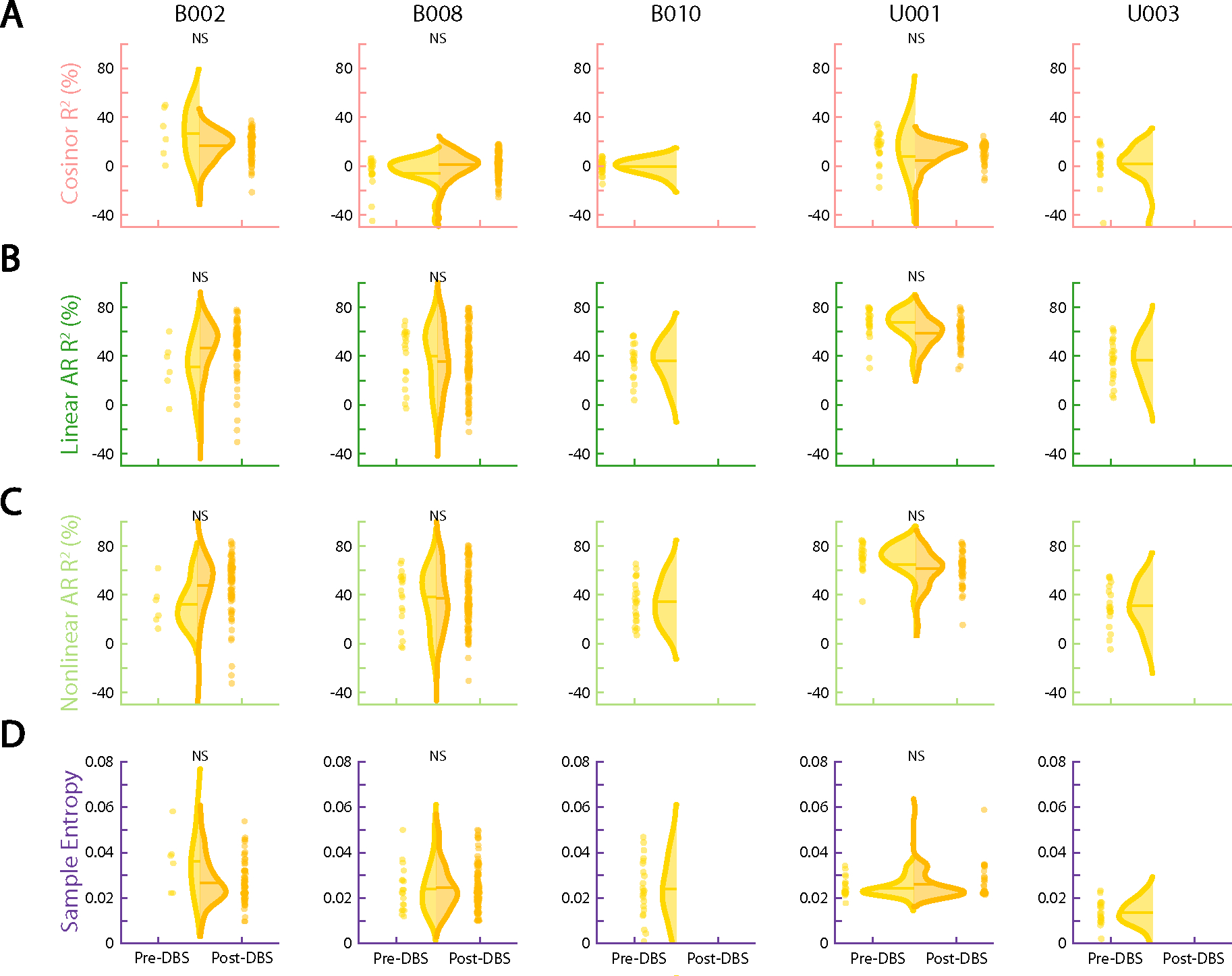
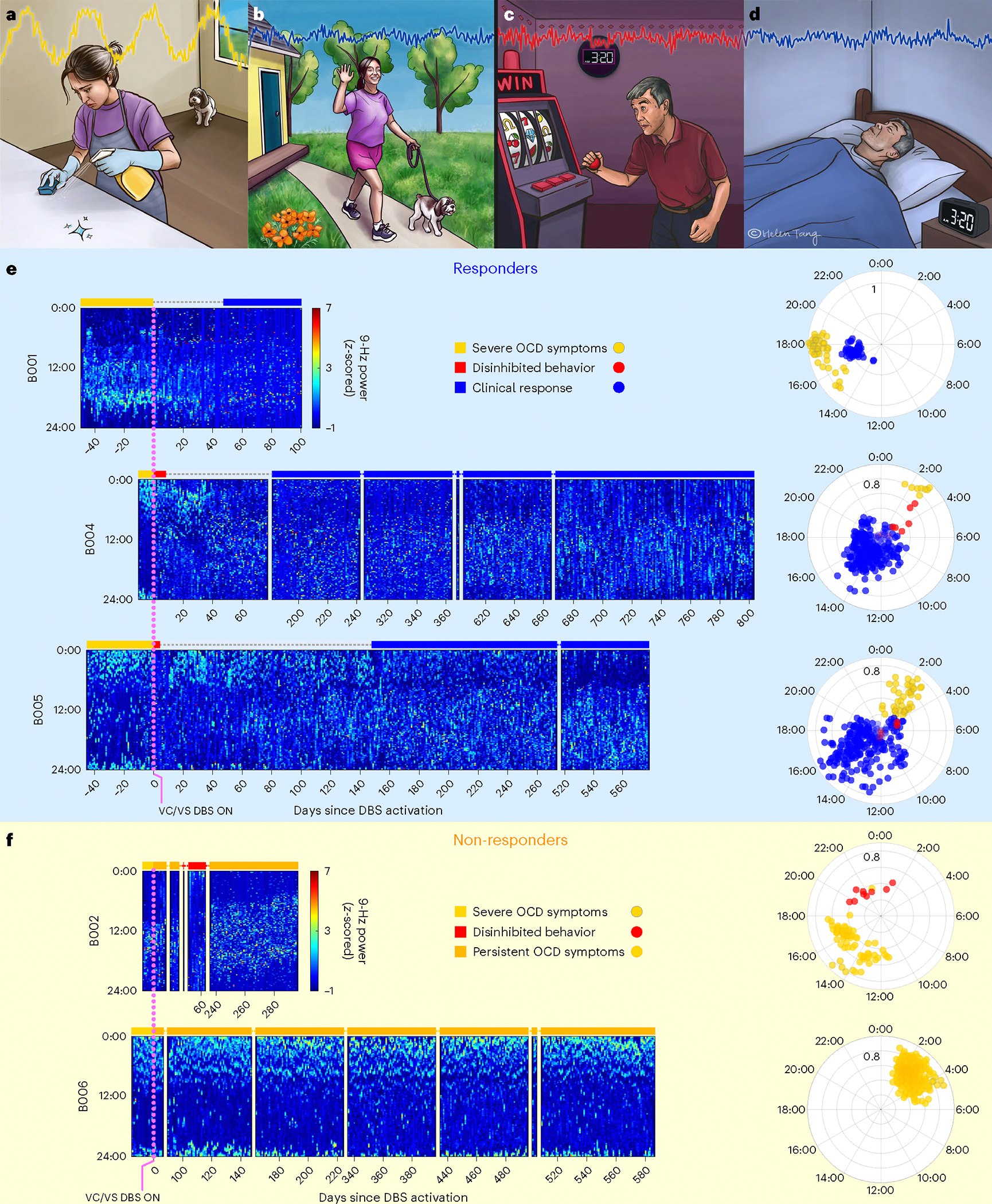
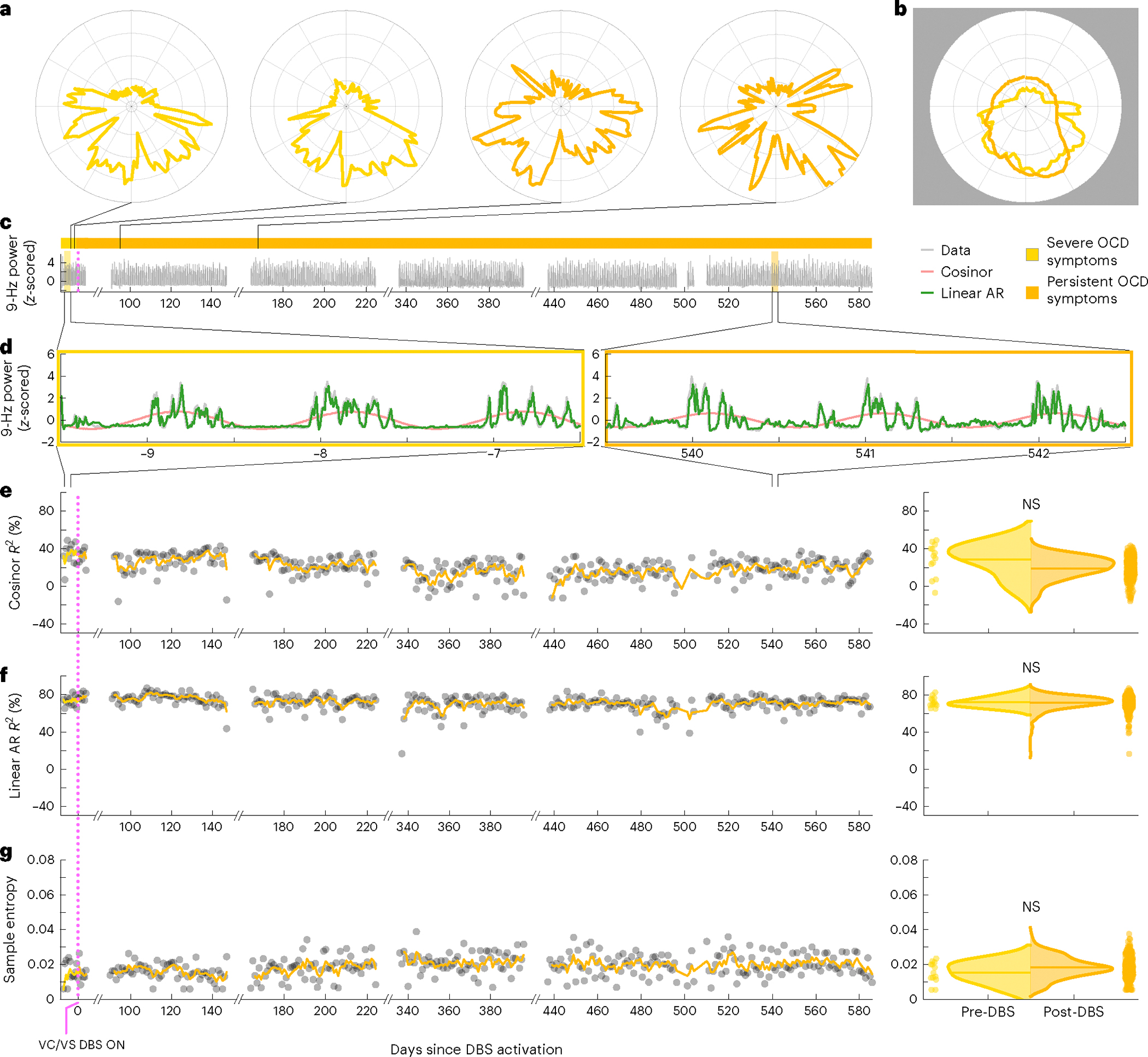
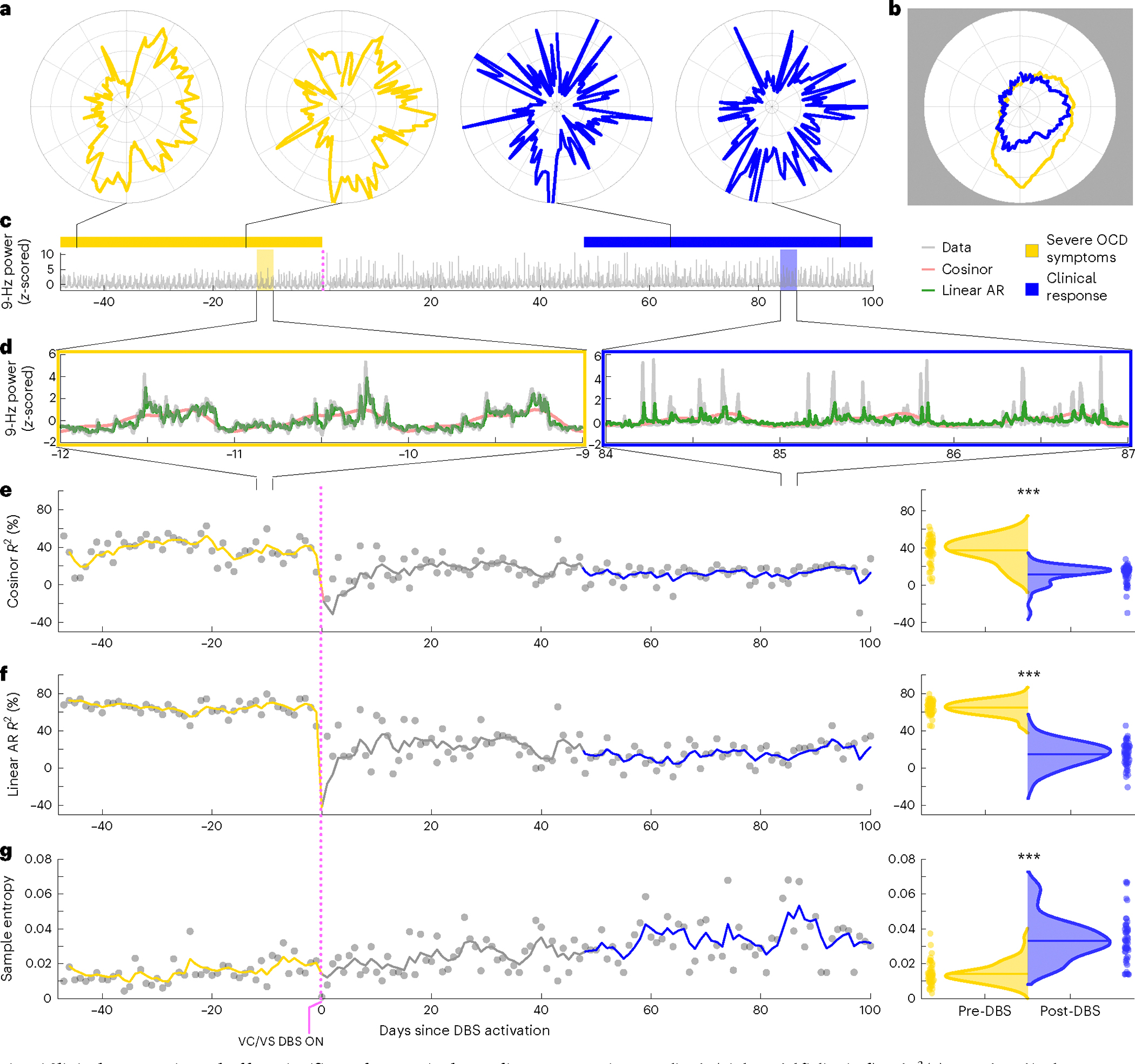
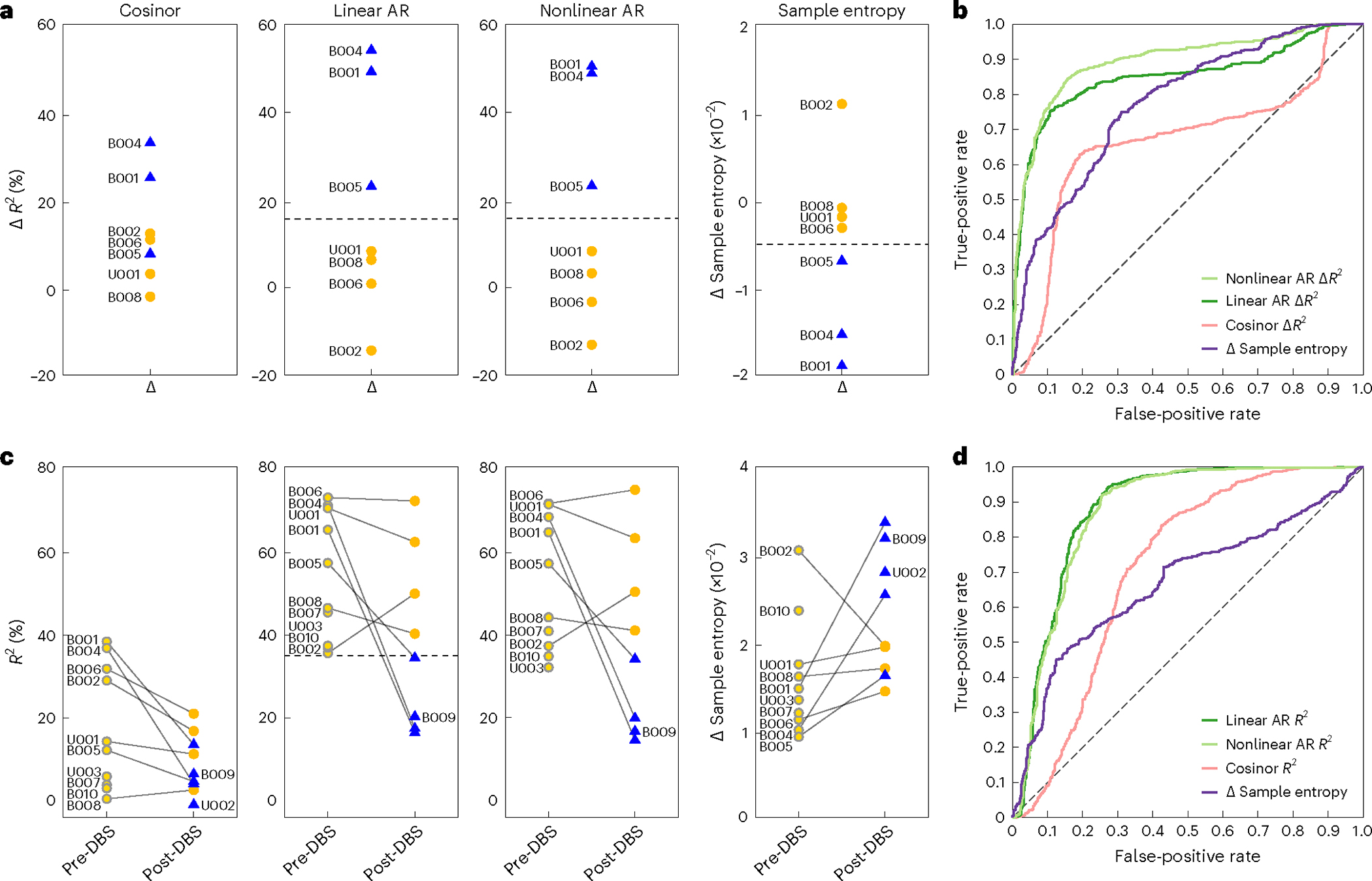
Recent advances in surgical neuromodulation have enabled chronic and continuous intracranial monitoring during everyday life. We used this opportunity to identify neural predictors of clinical state in 12 individuals with treatment-resistant obsessive-compulsive disorder (OCD) receiving deep brain stimulation (DBS) therapy (NCT05915741). We developed our neurobehavioral models based on continuous neural recordings in the region of the ventral striatum in an initial cohort of five patients and tested and validated them in a held-out cohort of seven additional patients. Before DBS activation, in the most symptomatic state, theta/alpha (9 Hz) power evidenced a prominent circadian pattern and a high degree of predictability. In patients with persistent symptoms (non-responders), predictability of the neural data remained consistently high. On the other hand, in patients who improved symptomatically (responders), predictability of the neural data was significantly diminished. This neural feature accurately classified clinical status even in patients with limited duration recordings, indicating generalizability that could facilitate therapeutic decision-making.
Overview
The claims and statistics of this paper haven’t been checked yet.
Free: it reads the open-access text and checks the first 5 claims that cite a source we can check. Create a free account to check every claim.
Integrity signals
Registry
Cites
Statistics
Figures
Verification
Claims the paper makes
The claims and statistics of this paper haven’t been checked yet.
Free: it reads the open-access text and checks the first 5 claims that cite a source we can check. Create a free account to check every claim.
Claims other papers make about this one
Each is checked against this paper’s own text: does it say what the citing paper says it does?
The source backs part of the claim, not all of it — or backs it for a different population, condition or comparison.
In the citing paper
“Recent closed-loop neuromodulation approaches, which can inform adaptation of stimulation based on real-time neural periodicity in key nodes of the CSTC circuits, such as the ventral striatum interconnected with the OFC and ACC, have been associated with clinical improvements in cognitive inflexibility-related symptoms, offering a personalized strategy to restore network balance (238).”
From Neural mechanisms underlying cognitive inflexibility in obsessive-compulsive disorder: a review (2026) · cites this paper as [238]
Experimental — accuracy not yet measured
Self-check
Percentages, sums and reported differences re-computed from the paper’s own numbers.
The self-check needs the paper’s full text.
Citations
Cites
An Integrative Theory of Prefrontal Cortex Function
Miller, E. K., & Cohen, J. D. (2001) · Annual Review of Neuroscience · doi:10.1146/annurev.neuro.24.1.167 · Cited by 12,803 · cited 1×
“Indeed, cognitive flexibility is one of the hallmark features of intelligent behavior 49 .”
Physiological time-series analysis using approximate entropy and sample entropy
Richman, J. S., & Moorman, J. R. (2000) · American Journal of Physiology-Heart and Circulatory Physiology · doi:10.1152/ajpheart.2000.278.6.h2039 · Cited by 7,880 · cited 1×
“Normalized LFP data were fitted to a sum of cosine functions using a linear regression model (equation (1)), as described by Moškon et al. (statsmodel 0.14.0) 57 .”
InfluentialThe Yale-Brown Obsessive Compulsive Scale: I. Development, Use, and Reliability
Goodman, W. K. (1989) · Archives of General Psychiatry · doi:10.1001/archpsyc.1989.01810110048007 · Cited by 7,712
Self-citationConflict monitoring and cognitive control
Botvinick, M. M., Braver, T. S., Barch, D. M., Carter, C. S., & Cohen, J. D. (2001) · Psychological Review · doi:10.1037/0033-295x.108.3.624 · Cited by 7,351 · cited 1×
“In the context of decision-making, these terms refer to the ability to identify environmental or internal factors relevant to a pending decision, ignore irrelevant factors and arrive at an optimal decision 2,3 .”
Insel, T., Cuthbert, B., Garvey, M., Heinssen, R., Pine, D. S., Quinn, K., Sanislow, C., & Wang, P. (2010) · American Journal of Psychiatry · doi:10.1176/appi.ajp.2010.09091379 · Cited by 7,067
Alpha-band oscillations, attention, and controlled access to stored information
Klimesch, W. (2012) · Trends in Cognitive Sciences · doi:10.1016/j.tics.2012.10.007 · Cited by 3,310 · cited 1×
“Our results demonstrate that 9-Hz (theta/ alpha border) VS neural activity is highly periodic in the symptomatic state.”
Hypothalamic regulation of sleep and circadian rhythms
Saper, C. B., Scammell, T. E., & Lu, J. (2005) · Nature · doi:10.1038/nature04284 · Cited by 2,804 · cited 1×
“One possibility is that the 9-Hz circadian rhythm that we observed is produced by pattern generators in the hypothalamus, as are many other such rhythms 43 .”
Frontal theta as a mechanism for cognitive control
Cavanagh, J. F., & Frank, M. J. (2014) · Trends in Cognitive Sciences · doi:10.1016/j.tics.2014.04.012 · Cited by 2,726 · cited 1×
“Low-frequency oscillations in the theta (4–8 Hz) to alpha (8–12 Hz) range play a prominent role in the large body of neuroscientific literature on cognitive control, from animal studies 23,24 to human non-invasive 25,26 and intracranial 27,28 neurophysiology.”
The Nucleus Accumbens: An Interface Between Cognition, Emotion, and Action
Floresco, S. B. (2015) · Annual Review of Psychology · doi:10.1146/annurev-psych-010213-115159 · Cited by 938 · cited 1×
“It behaved as expected in five of five responder hemispheres and in three of four non-responder hemispheres without sample size correction but in only four of five responder and in three of four non-responder hemispheres with the conservative sample size correction (Extended Data Table 4).”
Lead-DBS v2: Towards a comprehensive pipeline for deep brain stimulation imaging
Horn, A., Li, N., Dembek, T. A., Kappel, A., Boulay, C., Ewert, S., Tietze, A., Husch, A., Perera, T., Neumann, W.-J., et al. (2019) · NeuroImage · doi:10.1016/j.neuroimage.2018.08.068 · Cited by 739 · cited 1×
“All procedures were approved by the local institutional review board (IRB) at Baylor College of Medicine (BCM; IRB H-48392) and the University of Utah (IRB_00169174).”
Sleep disturbance as transdiagnostic: Consideration of neurobiological mechanisms
Harvey, A. G., Murray, G., Chandler, R. A., & Soehner, A. (2011) · Clinical Psychology Review · doi:10.1016/j.cpr.2010.04.003 · Cited by 609 · cited 1×
“Abnormalities in daily (circadian) periodicity are a cardinal feature of mental health disorders in general 29 and of OCD in particular 30,31 .”
Ewert, S., Plettig, P., Li, N., Chakravarty, M. M., Collins, D. L., Herrington, T. M., Kühn, A. A., & Horn, A. (2018) · NeuroImage · doi:10.1016/j.neuroimage.2017.05.015 · Cited by 602
Response Inhibition and Response Selection: Two Sides of the Same Coin
Mostofsky, S. H., & Simmonds, D. J. (2008) · Journal of Cognitive Neuroscience · doi:10.1162/jocn.2008.20500 · Cited by 514
Midfrontal conflict-related theta-band power reflects neural oscillations that predict behavior
Cohen, M. X., & Donner, T. H. (2013) · Journal of Neurophysiology · doi:10.1152/jn.00479.2013 · Cited by 494 · cited 1×
“Low-frequency oscillations in the theta (4–8 Hz) to alpha (8–12 Hz) range play a prominent role in the large body of neuroscientific literature on cognitive control, from animal studies 23,24 to human non-invasive 25,26 and intracranial 27,28 neurophysiology.”
Deep brain stimulation restores frontostriatal network activity in obsessive-compulsive disorder
Figee, M., Luigjes, J., Smolders, R., Valencia-Alfonso, C.-E., van Wingen, G., de Kwaasteniet, B., Mantione, M., Ooms, P., de Koning, P., Vulink, N., et al. (2013) · Nature Neuroscience · doi:10.1038/nn.3344 · Cited by 466 · cited 1×
“Functional imaging studies identified lateralized changes in blood flow 36 , metabolic activity 37 and functional connectivity 38 in response to pharmacological, cognitive-behavioral and even DBS therapy.”
Enhanced avoidance habits in obsessive-compulsive disorder
Gillan, C. M., Morein-Zamir, S., Urcelay, G. P., Sule, A., Voon, V., Apergis-Schoute, A. M., Fineberg, N. A., Sahakian, B. J., & Robbins, T. W. (2014) · Biological Psychiatry · doi:10.1016/j.biopsych.2013.02.002 · Cited by 399 · cited 2×
“Unlike disorders of addiction in which behavior is reward seeking, OCD-related compulsions are difficult-to-control avoidant responses to internal thoughts or external triggers that develop to evade distress or harm 5,6 .”
Goodman, W. K., Foote, K. D., Greenberg, B. D., Ricciuti, N., Bauer, R., Ward, H., Shapira, N. A., Wu, S. S., Hill, C. L., Rasmussen, S. A., et al. (2010) · Biological Psychiatry · doi:10.1016/j.biopsych.2009.11.028 · Cited by 362
Self-citationGilron, R., Little, S., Perrone, R., Wilt, R., de Hemptinne, C., Yaroshinsky, M. S., Racine, C. A., Wang, S. S., Ostrem, J. L., Larson, P. S., et al. (2021) · Nature Biotechnology · doi:10.1038/s41587-021-00897-5 · Cited by 343 · cited 1×
“…to the design of closed-loop algorithms, the temporally tight neural symptom relationship in Parkinson’s disease has led to the use of very short time constants relating detection of a neural signal (for example, increased beta power in the subthalamic nucleus) and adjustment of DBS settings 41 .”
7 Tesla MRI of the ex vivo human brain at 100 micron resolution
Edlow, B. L., Mareyam, A., Horn, A., Polimeni, J. R., Witzel, T., Tisdall, M. D., Augustinack, J. C., Stockmann, J. P., Diamond, B. R., Stevens, A., et al. (2019) · Scientific Data · doi:10.1038/s41597-019-0254-8 · Cited by 300 · cited 1×
“All patients had OCD for more than 5 years and had failed adequate trials of selective serotonin reuptake inhibitors (SSRIs), clomipramine and augmentation as well as expert ERP therapy.”
Cingulate dynamics track depression recovery with deep brain stimulation
Alagapan, S., Choi, K. S., Heisig, S., Riva-Posse, P., Crowell, A., Tiruvadi, V., Obatusin, M., Veerakumar, A., Waters, A. C., Gross, R. E., et al. (2023) · Nature · doi:10.1038/s41586-023-06541-3 · Cited by 274 · cited 1×
“The slower neurobehavioral time constant in our results, akin to the one for depression severity recently described by others 42 , suggests that building closed-loop classifiers for psychiatric disorders may benefit from using slowly evolving neural signals (for example, daily measures of neural…”
Common medial frontal mechanisms of adaptive control in humans and rodents
Narayanan, N. S., Cavanagh, J. F., Frank, M. J., & Laubach, M. (2013) · Nature Neuroscience · doi:10.1038/nn.3549 · Cited by 267 · cited 1×
“Low-frequency oscillations in the theta (4–8 Hz) to alpha (8–12 Hz) range play a prominent role in the large body of neuroscientific literature on cognitive control, from animal studies 23,24 to human non-invasive 25,26 and intracranial 27,28 neurophysiology.”
Cognitive inflexibility in Obsessive-Compulsive Disorder
Gruner, P., & Pittenger, C. (2017) · Neuroscience · doi:10.1016/j.neuroscience.2016.07.030 · Cited by 261 · cited 2×
“This rigid repertoire and perseverative behavior may stem from the cognitive inflexibility that has long been postulated to underlie the OC phenotype 9 .”
Rauch, S. L., Dougherty, D. D., Malone, D., Rezai, A., Friehs, G., Fischman, A. J., Alpert, N. M., Haber, S. N., Stypulkowski, P. H., Rise, M. T., et al. (2006) · Journal of Neurosurgery · doi:10.3171/jns.2006.104.4.558 · Cited by 260 · cited 1×
“Functional imaging studies identified lateralized changes in blood flow 36 , metabolic activity 37 and functional connectivity 38 in response to pharmacological, cognitive-behavioral and even DBS therapy.”
Harmonizing the Neurobiology and Treatment of Obsessive-Compulsive Disorder
Goodman, W. K., Storch, E. A., & Sheth, S. A. (2021) · American Journal of Psychiatry · doi:10.1176/appi.ajp.2020.20111601 · Cited by 250 · cited 1×
“OCD is common and debilitating, with a prevalence of 2–3% in the general population 10 .”
Self-citationEntropyHub: An open-source toolkit for entropic time series analysis
Flood, M. W., & Grimm, B. P. (2021) · PLoS ONE · doi:10.1371/journal.pone.0259448 · Cited by 160
Saxena, S., Gorbis, E., O'Neill, J., Baker, S. K., Mandelkern, M. A., Maidment, K. M., Chang, S., Salamon, N., Brody, A. L., Schwartz, J. M., et al. (2009) · Molecular Psychiatry · doi:10.1038/sj.mp.4002134 · Cited by 159 · cited 1×
“Functional imaging studies identified lateralized changes in blood flow 36 , metabolic activity 37 and functional connectivity 38 in response to pharmacological, cognitive-behavioral and even DBS therapy.”
Denys, D., Graat, I., Mocking, R., de Koning, P., Vulink, N., Figee, M., Ooms, P., Mantione, M., van den Munckhof, P., & Schuurman, R. (2020) · American Journal of Psychiatry · doi:10.1176/appi.ajp.2019.19060656 · Cited by 159 · cited 2×
“The early appearance of these behaviors is a possible predictor of eventual clinical response 18,19 , although notable counter-examples exist 16 .”
Gadot, R., Najera, R., Hirani, S., Anand, A., Storch, E., Goodman, W. K., Shofty, B., & Sheth, S. A. (2022) · Journal of Neurology, Neurosurgery & Psychiatry · doi:10.1136/jnnp-2021-328738 · Cited by 148 · cited 2×
“…feed-forward system would hopefully shed greater light on the neurophysiology of psychiatric disorders, better contextualize them within the cognitive neuroscience framework 8 and ultimately improve outcomes 14 and access 39,40 to these therapies for the tremendous number of affected individuals.”
Self-citationProvenza, N. R., Sheth, S. A., Rijn, E. M. D.-V., Mathura, R. K., Ding, Y., Vogt, G. S., Avendaño-Ortega, M., Ramakrishnan, N., Peled, N., Gelin, L. F. F., et al. (2021) · Nature Medicine · doi:10.1038/s41591-021-01550-z · Cited by 137 · cited 3×
“Recently available DBS systems have the ability to not only deliver stimulation but also record local field potentials (LFPs) 20 .”
InfluentialSelf-citationDefining clinical severity in adults with obsessive–compulsive disorder
Storch, E. A., De Nadai, A. S., Conceição do Rosário, M., Shavitt, R. G., Torres, A. R., Ferrão, Y. A., Miguel, E. C., Lewin, A. B., & Fontenelle, L. F. (2015) · Comprehensive Psychiatry · doi:10.1016/j.comppsych.2015.08.007 · Cited by 133 · cited 1×
“56) were administered before surgery and subsequently periodically throughout the course of DBS treatment.”
Self-citationSleep, arousal, and circadian rhythms in adults with obsessive–compulsive disorder: A meta-analysis
Nota, J. A., Sharkey, K. M., & Coles, M. E. (2015) · Neuroscience & Biobehavioral Reviews · doi:10.1016/j.neubiorev.2015.01.002 · Cited by 131 · cited 2×
“Several studies identified a relationship between OCD symptom severity and circadian pattern alteration, including tendencies for delayed sleep onset and/or insomnia 30,31 .”
Deep brain stimulation: Imaging on a group level
Treu, S., Strange, B., Oxenford, S., Neumann, W.-J., Kühn, A., Li, N., & Horn, A. (2020) · NeuroImage · doi:10.1016/j.neuroimage.2020.117018 · Cited by 128
Bed nucleus of the stria terminalis regulates fear to unpredictable threat signals
Goode, T. D., Ressler, R. L., Acca, G. M., Miles, O. W., & Maren, S. (2019) · eLife · doi:10.7554/elife.46525 · Cited by 125
Okun, M. S., Bowers, D., Springer, U., Shapira, N. A., Malone, D., Rezai, A. R., Nuttin, B., Heilman, K. M., Morecraft, R. J., Rasmussen, S. A., et al. (2004) · Neurocase · doi:10.1080/13554790490507632 · Cited by 123
Self-citationMcGovern, R. A., & Sheth, S. A. (2017) · Journal of Neurosurgery · doi:10.3171/2016.1.jns15601 · Cited by 117 · cited 2×
“We developed our neurobehavioral models based on continuous neural recordings in the region of the ventral striatum in an initial cohort of five patients and tested and validated them in a held-out cohort of seven additional patients.”
Self-citationWidespread temporal coding of cognitive control in the human prefrontal cortex
Smith, E. H., Horga, G., Yates, M. J., Mikell, C. B., Banks, G. P., Pathak, Y. J., Schevon, C. A., McKhann, G. M., Hayden, B. Y., Botvinick, M. M., et al. (2019) · Nature Neuroscience · doi:10.1038/s41593-019-0494-0 · Cited by 117 · cited 2×
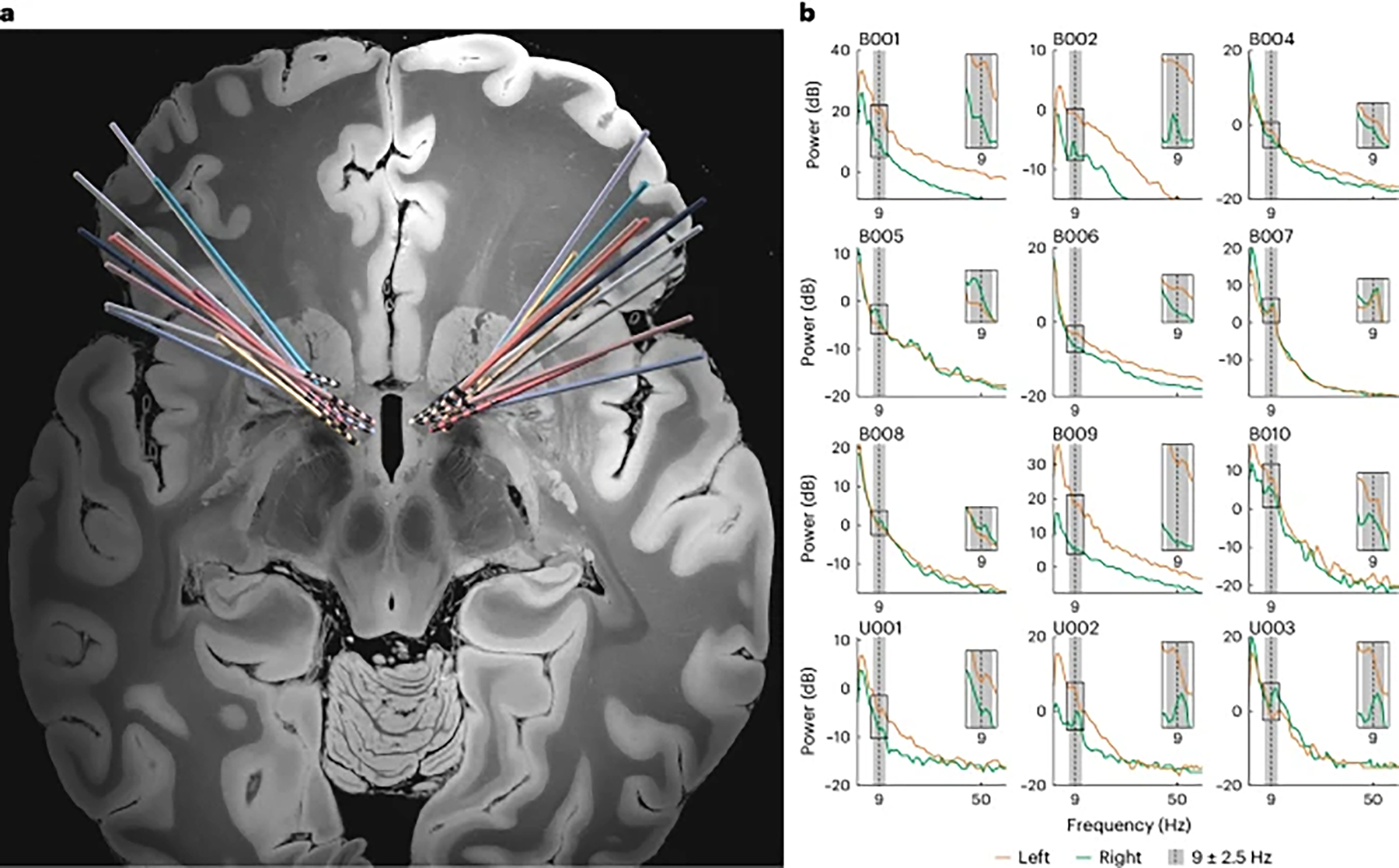
“The presence of the spectral feature that we observed in the first few participants near the theta/alpha border was consistent with the relevance of this frequency range to the cognitive processes underlying OCD 27,28 .”
Self-citationCosinorPy: a python package for cosinor-based rhythmometry
Moškon, M. (2020) · BMC Bioinformatics · doi:10.1186/s12859-020-03830-w · Cited by 114 · cited 1×
“Normalized LFP data were fitted to a sum of cosine functions using a linear regression model (equation (1)), as described by Moškon et al. (statsmodel 0.14.0) 57 .”
Influentialvan Rheede, J. J., Feldmann, L. K., Busch, J. L., Fleming, J. E., Mathiopoulou, V., Denison, T., Sharott, A., & Kühn, A. A. (2022) · npj Parkinson s Disease · doi:10.1038/s41531-022-00350-7 · Cited by 106 · cited 1×
“Decreased periodicity and predictability of this signal after DBS initiation characterized clinical response, whereas persistence of these features marked non-response.”
Deep brain stimulation for obsessive–compulsive disorder: a crisis of access
Visser-Vandewalle, V. E. R. M., Andrade, P., Mosley, P. E., Greenberg, B. D., Schuurman, R., McLaughlin, N. C. R., Voon, V., Krack, P., Foote, K. D., Mayberg, H. S., et al. (2022) · Nature Medicine · doi:10.1038/s41591-022-01879-z · Cited by 96 · cited 1×
“It behaved as expected in five of five responder hemispheres and in three of four non-responder hemispheres without sample size correction but in only four of five responder and in three of four non-responder hemispheres with the conservative sample size correction (Extended Data Table 4).”
Self-citationDeep Brain Stimulation for Obsessive-Compulsive Disorder and Depression
Sheth, S. A., & Mayberg, H. S. (2023) · Annual Review of Neuroscience · doi:10.1146/annurev-neuro-110122-110434 · Cited by 94 · cited 1×
“Based on our experience with this cohort and others 19–22 , we adopted the more general terminology of ‘approach’ behavior to characterize this response, as one of the most common observable changes is an increase in talkativeness, a desire to engage in activities and extroversion.”
Self-citationLaw, C., & Boisseau, C. L. (2019) · Psychology Research and Behavior Management · doi:10.2147/prbm.s211117 · Cited by 81 · cited 1×
“These factors, therefore, reflect a latent axis, or Article https://doi.org/10.1038/s41591-024-03125-0 Although certainly not the only pathological axis in OCD, it does capture important behavioral manifestations of the disorder.”
InfluentialLead-DBS v2: Towards a comprehensive pipeline for deep brain stimulation imagingPreprint
Horn, A., Li, N., Dembek, T. A., et al. (2018) · bioRxiv (Cold Spring Harbor Laboratory) · doi:10.1101/322008 · Cited by 79
A Case of Mania following Deep Brain Stimulation for Obsessive Compulsive Disorder
Haq, I. U., Foote, K. D., Goodman, W. K., Ricciuti, N., Ward, H., Sudhyadhom, A., Jacobson, C. E., Siddiqui, M. S., & Okun, M. S. (2010) · Stereotactic and Functional Neurosurgery · doi:10.1159/000319960 · Cited by 78 · cited 4×
“These acute effects of VC/VS DBS activation have been labeled ‘mirth’ or ‘positive affect’ responses, variably consisting of smiling (often a contralateral hemi-smile), laughter or feelings of increased energy 15–18 .”
InfluentialSelf-citationGilron, R., Little, S. J., Wilt, R., Perrone, R., Ansó, J., & Starr, P. A. (2021) · Frontiers in Neuroscience · doi:10.3389/fnins.2021.732499 · Cited by 68
The role of avoidance in the phenomenology of obsessive-compulsive disorder
Mcguire, J. F., Storch, E. A., Lewin, A. B., Price, L. H., Rasmussen, S. A., & Goodman, W. K. (2011) · Comprehensive Psychiatry · doi:10.1016/j.comppsych.2011.03.002 · Cited by 65 · cited 2×
“Greater degrees of avoidance are associated with greater OCD severity 7 and greater treatment resistance 11 .”
Self-citationOrexin 1 receptor antagonists in compulsive behavior and anxiety: possible therapeutic use
Merlo Pich, E., & Melotto, S. (2014) · Frontiers in Neuroscience · doi:10.3389/fnins.2014.00026 · Cited by 61
Predictors of hypomania during ventral capsule/ventral striatum deep brain stimulation
Widge, A. S., Licon, E., Zorowitz, S., Corse, A., Arulpragasam, A. R., Camprodon, J. A., Cusin, C., Eskandar, E. N., Deckersbach, T., & Dougherty, D. D. (2016) · The Journal of Neuropsychiatry and Clinical Neurosciences · doi:10.1176/appi.neuropsych.15040089 · Cited by 58 · cited 3×
“These acute effects of VC/VS DBS activation have been labeled ‘mirth’ or ‘positive affect’ responses, variably consisting of smiling (often a contralateral hemi-smile), laughter or feelings of increased energy 15–18 .”
Ewert, S., Plettig, P., Chakravarty, M. M., et al. (2016) · bioRxiv (Cold Spring Harbor Laboratory) · doi:10.1101/062851 · Cited by 56
Wheaton, M. G., Gershkovich, M., Gallagher, T., Foa, E. B., & Simpson, H. B. (2018) · Depression and Anxiety · doi:10.1002/da.22720 · Cited by 56 · cited 1×
“Greater degrees of avoidance are associated with greater OCD severity 7 and greater treatment resistance 11 .”
Angelakis, I., & Pseftogianni, F. (2021) · Journal of Psychiatric Research · doi:10.1016/j.jpsychires.2021.03.062 · Cited by 47 · cited 1×
“Unlike disorders of addiction in which behavior is reward seeking, OCD-related compulsions are difficult-to-control avoidant responses to internal thoughts or external triggers that develop to evade distress or harm 5,6 .”
Deep Brain Stimulation for Intractable Obsessive-Compulsive Disorder: Progress and Opportunities
Goodman, W. K., Storch, E. A., Cohn, J. F., & Sheth, S. A. (2020) · American Journal of Psychiatry · doi:10.1176/appi.ajp.2020.20010037 · Cited by 35 · cited 1×
“…circadian neural variations 32–34 , as well as the extended time period required to study the clinical trajectory of response to DBS (months) 35 , we leveraged the long-term recording capability of these DBS systems to track months ʼ worth of low-frequency power changes in 12 individuals…”
Self-citationToward Closed-Loop Intracranial Neurostimulation in Obsessive-Compulsive Disorder
Vissani, M., Nanda, P., Bush, A., Neudorfer, C., Dougherty, D. D., & Richardson, R. M. (2022) · Biological Psychiatry · doi:10.1016/j.biopsych.2022.07.003 · Cited by 34
Davis, R. A., Giordano, J. J., Hufford, D. B., Sheth, S. A., Warnke, P. C., Widge, A. S., Richardson, R. M., Rosenow, J. M., Rossi, P. J., Storch, E. A., et al. (2021) · Frontiers in Psychiatry · doi:10.3389/fpsyt.2021.706181 · Cited by 33 · cited 2×
“An early neural indicator of emerging treatment response would be extremely informative and could help guide therapy delivery, thus demystifying the process of DBS programming for OCD and making the therapy more accessible to a greater number of clinicians and patients 39,40 .”
Self-citationShofty, B., Gadot, R., Viswanathan, A., Provenza, N. R., Storch, E. A., McKay, S. A., Meyers, M. S., Hertz, A. G., Avendaño-Ortega, M., Goodman, W. K., et al. (2022) · Journal of neurosurgery · doi:10.3171/2022.10.jns221683 · Cited by 32 · cited 2×
“Low-frequency oscillations in the theta (4–8 Hz) to alpha (8–12 Hz) range play a prominent role in the large body of neuroscientific literature on cognitive control, from animal studies 23,24 to human non-invasive 25,26 and intracranial 27,28 neurophysiology.”
Self-citationViviani, D., Haegler, P., Jenck, F., & Steiner, M. A. (2014) · Psychopharmacology · doi:10.1007/s00213-014-3769-x · Cited by 30 · cited 3×
“Combining these lines of evidence, it is possible that pathological activity of pattern generators, such as orexin neurons, produces the avoidant behaviors observed in OCD concomitantly with the strongly periodic neural activity 44,45,48 .”
InfluentialDelayed circadian rhythms and insomnia symptoms in obsessive-compulsive disorder
Cox, R. C., & Olatunji, B. O. (2022) · Journal of Affective Disorders · doi:10.1016/j.jad.2022.08.118 · Cited by 29 · cited 2×
“Several studies identified a relationship between OCD symptom severity and circadian pattern alteration, including tendencies for delayed sleep onset and/or insomnia 30,31 .”
Diurnal Regulation of the Orexin/Hypocretin System in Mice
Ventzke, K., Oster, H., & Jöhren, O. (2019) · Neuroscience · doi:10.1016/j.neuroscience.2019.10.002 · Cited by 24
Haegens, S., Pathak, Y. J., Smith, E. H., Mikell, C. B., Banks, G. P., Yates, M. J., Bijanki, K. R., Schevon, C. A., McKhann, G. M., Schroeder, C. E., et al. (2021) · Psychophysiology · doi:10.1111/psyp.13901 · Cited by 22 · cited 2×
“The presence of the spectral feature that we observed in the first few participants near the theta/alpha border was consistent with the relevance of this frequency range to the cognitive processes underlying OCD 27,28 .”
Self-citationPsychotherapy for Treatment-Resistant Obsessive-Compulsive Disorder
Giridharan, N., Smárason, O., Provenza, N. R., Banks, G. P., Shofty, B., Goodman, W. K., Sheth, S. A., & Storch, E. A. (2023) · Advances in Psychiatry and Behavioral Health · doi:10.1016/j.ypsc.2023.03.010 · Cited by 9 · cited 1×
“Exposure and response prevention (ERP) therapy is an effective, evidence-based treatment built on the premise that obsessive-compulsive symptoms are a manifestation of an avoidant phenotype and that overcoming that avoidance (facilitating approach) can improve symptoms 12 .”
Self-citationDang, H. Q., Provenza, N. R., Banks, G. P., Giridharan, N., Avendaño-Ortega, M., McKay, S. A., Devara, E., Shofty, B., Storch, E. A., Sheth, S. A., et al. (2023) · Brain stimulation · doi:10.1016/j.brs.2023.03.010 · Cited by 8 · cited 1×
“Due to the direct connectivity between VS/BNST and the hypothalamus, DBS in this region may have direct physiological effects on the hypothalamus 47 .”
Self-citation
Cited by
From adaptive deep brain stimulation to adaptive circuit targeting
Horn, A., & Neumann, W. (2025) · Nature Reviews Neurology · doi:10.1038/s41582-025-01131-5 · Cited by 53
“…field potential recordings, for example, theta and delta activity fluctuations in the ventral capsule or ventral striatum and subthalamic nucleus 32,128 Symptom-specific treatment-response circuit defined 87,134–136 Tract-based targeting and reprogramming performed in individual patients 89…”
Deep Brain Stimulation Response Circuits in Obsessive-Compulsive Disorder
Horn, A., Li, N., Meyer, G. M., Gadot, R., Provenza, N. R., & Sheth, S. A. (2025) · Biological Psychiatry · doi:10.1016/j.biopsych.2025.03.008 · Cited by 30
Self-citationIntracranial directed connectivity links subregions of the prefrontal cortex to major depression
Myers, J. C., Xiao, J., Mathura, R. K., Shofty, B., Gates, V., Adkinson, J., Allawala, A. B., Anand, A., Gadot, R., Najera, R. A., et al. (2025) · Nature Communications · doi:10.1038/s41467-025-61487-6 · Cited by 19
“Such “ clinician in the loop ” strategies have recently been suggested 125 .”
Self-citationWhat can neuroimaging of neuromodulation reveal about the basis of circuit therapies for psychiatry?
Fujimoto, S., Fujimoto, A., Elorette, C., Choi, K. S., Mayberg, H. S., Russ, B. E., & Rudebeck, P. H. (2024) · Neuropsychopharmacology · doi:10.1038/s41386-024-01976-2 · Cited by 13
Status dystonicus is a distinct state characterized by pallidal beta-band activity
Balachandar, A., Vogt, L. M., Mithani, K., Coleman, S. C., Ebden, M., LeBlanc‐Millar, A., Breitbart, S. C., Fasano, A. A., Gorodetsky, C., & Ibrahim, G. M. (2025) · Nature Communications · doi:10.1038/s41467-025-64416-9 · Cited by 14
Metadata
- Authors
- Provenza, N. R., Reddy, S., Allam, A. K., Rajesh, S. V., Diab, N., Reyes, G., Caston, R. M., Katlowitz, K. A., Gandhi, A. D., Bechtold, R. A., Dang, H. Q., Najera, R. A., Giridharan, N., Kabotyanski, K. E., Momin, F., Hasen, M., Banks, G. P., Mickey, B. J., Kious, B. M., Shofty, B., Hayden, B. Y., Herron, J. A., Storch, E. A., Patel, A. B., Goodman, W. K., & Sheth, S. A.
- Affiliations
- Baylor College of Medicine (US)
- University of Utah (US)
- University of Washington (US)
- Corresponding author
- Sheth, Sameer A.
- ORCID
- Provenza, Nicole R.
- Allam, Anthony K.
- Rajesh, Sameer V.
- Diab, Nabeel
- Reyes, Gabriel
- Caston, Rose M.
- Katlowitz, Kalman A.
- Dang, Huy Q.
- Najera, Ricardo A.
- Giridharan, Nisha
- Kabotyanski, Katherine E.
- Banks, Garrett P.
- Mickey, Brian J.
- Kious, Brent M.
- Shofty, Ben
- Hayden, Benjamin Y.
- Herron, Jeffrey A.
- Storch, Eric A.
- Goodman, Wayne K.
- Sheth, Sameer A.
- Venue
- Nature Medicine
- Published
- 2024-07-12
- Volume
- 30
- Issue
- 10
- Pages
- 3004-3014
- ISSN
- 1078-8956 (ISSN-L)
- 1546-170X
- PMC
- PMC11485242
- OpenAlex
- W4400588660
- Cited by
- 68
- References
- 59
- Citations by year
- 2026: 34 · 2025: 33 · 2024: 1
- FWCI
- 34.09
- Type
- journal article
- Language
- en
- Update notices
- correction (2025-03-26)
- Open access
- hybrid
- doi.org
- Licence
- cc-by
- creativecommons.org/licenses/by/4.0 (tdm)
- creativecommons.org/licenses/by/4.0 (vor)
- Locations
- Nature Medicine (publishedVersion, cc-by)
- PubMed Central (publishedVersion, cc-by)
- PubMed (publishedVersion)
- Digital Commons-TMC (Texas Medical Center) (submittedVersion)
- Funders
- U.S. Department of Health & Human Services | NIH | National Institute of Neurological Disorders and Stroke (UH3NS100549)
- Robert and Janice McNair Foundation
- Topics
- Social Sciences › Psychology › Clinical Psychology › Obsessive-Compulsive Spectrum Disorders
- Health Sciences › Medicine › Clinical Neurology › Deep Brain Stimulation and Movement Disorders
- Life Sciences › Neuroscience › Neurology › Vagus Nerve Stimulation Research
- Keywords
- obsessive-compulsive disorder, deep brain stimulation, treatment-resistant OCD, ventral striatum, circadian rhythm, clinical response prediction, neuromodulation
- MeSH terms
- Adult, Female, Humans, Male, Middle Aged, Obsessive-Compulsive Disorder, Periodicity, Treatment Outcome, Deep Brain Stimulation, Ventral Striatum
About these checks
Registry, retraction, Cites and statistics results are computed, not judged, with one exception: a printed reference that no index lists is read once by a model before it counts as a citation error. Claims are extracted by a model and kept only when their quote appears verbatim in the text; each cited source is then checked, with a model’s help, for whether it says what the claim relies on. Those verdicts can be wrong — read the claim’s quote and the cited source before relying on one.
Statistics and arithmetic are recomputed, not judged.
Confidence bands are shown only for fields calibrated on our annotated test set. None is calibrated yet, so no band is shown.
What counts as a claim ›How we measure confidence ›How we check this ›
Are you an author, or do you see a problem with this page? Request a review
Data sources
Bibliographic data: Semantic Scholar, OpenAlex, Crossref.
Contains information from the Semantic Scholar Academic Graph Datasets, made available under the ODC Attribution License (ODC-BY 1.0).
Semantic Scholar’s data is described in: Kinney, R., et al. (2023). The Semantic Scholar Open Data Platform. arXiv:2301.10140.
