

Faulty autolysosome acidification in Alzheimer’s disease mouse models induces autophagic build-up of Aβ in neurons, yielding senile plaques
Open accessThe DOI matches its Crossref record; 63 of the 63 references it cites were found in a registry or an index.
Abstract
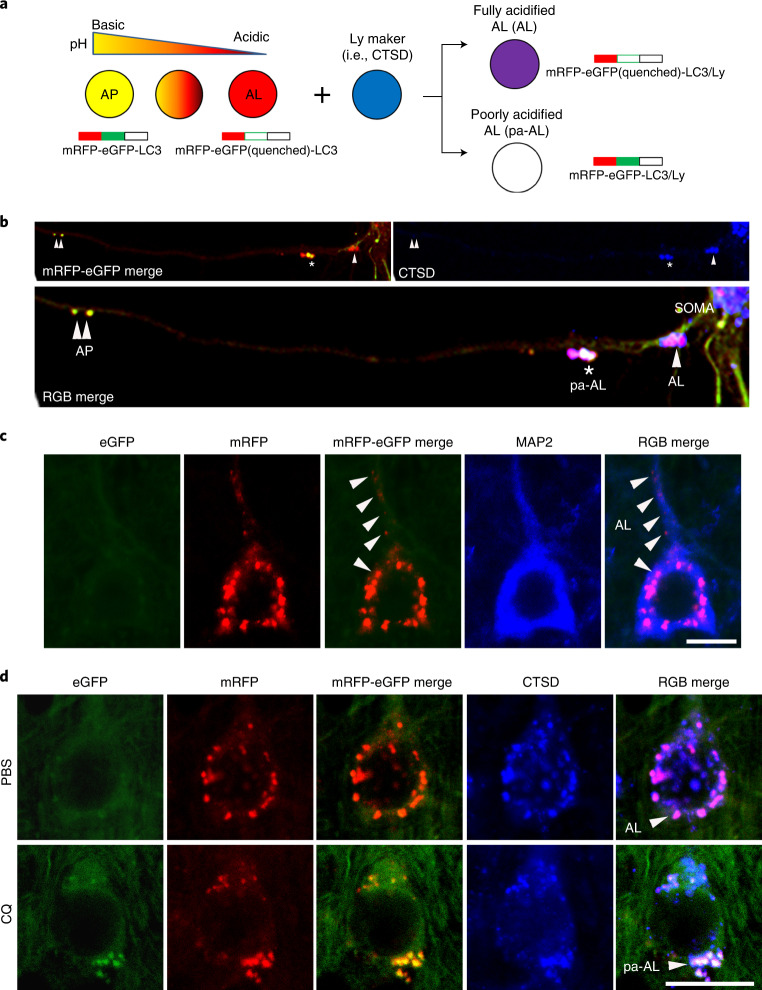
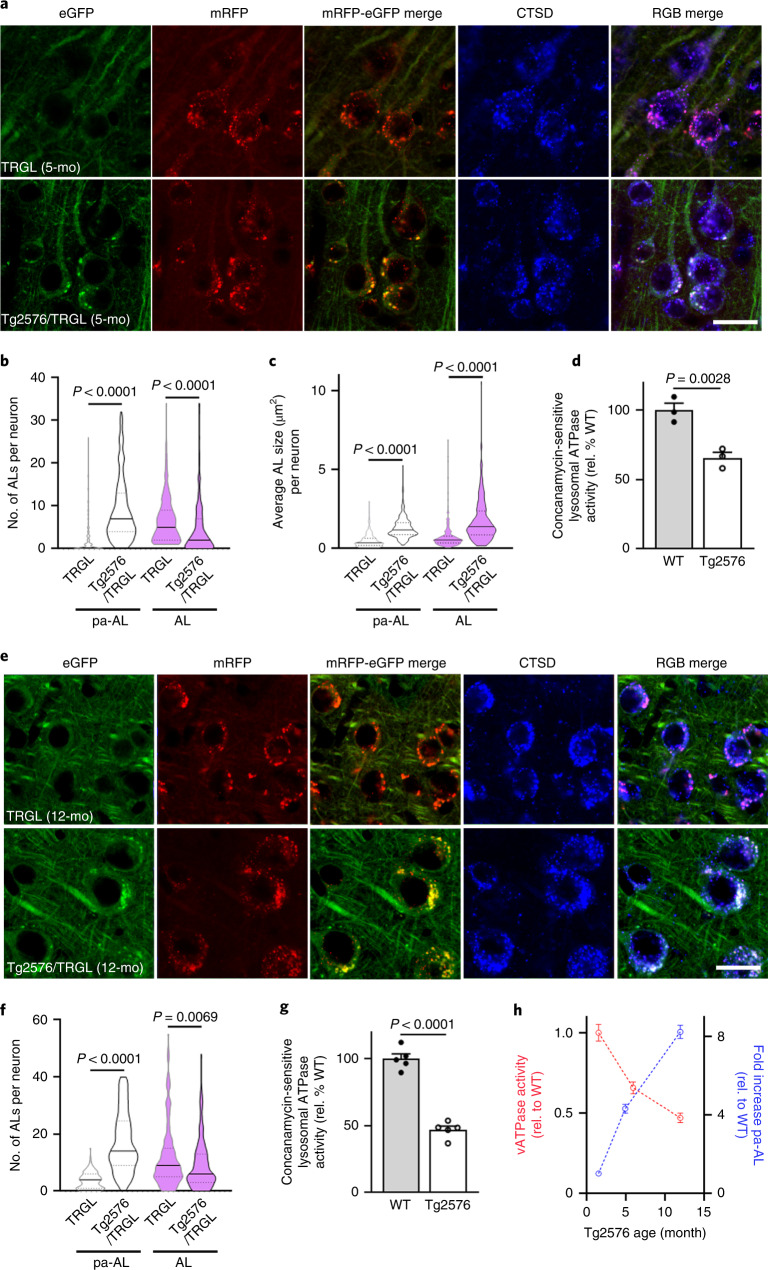
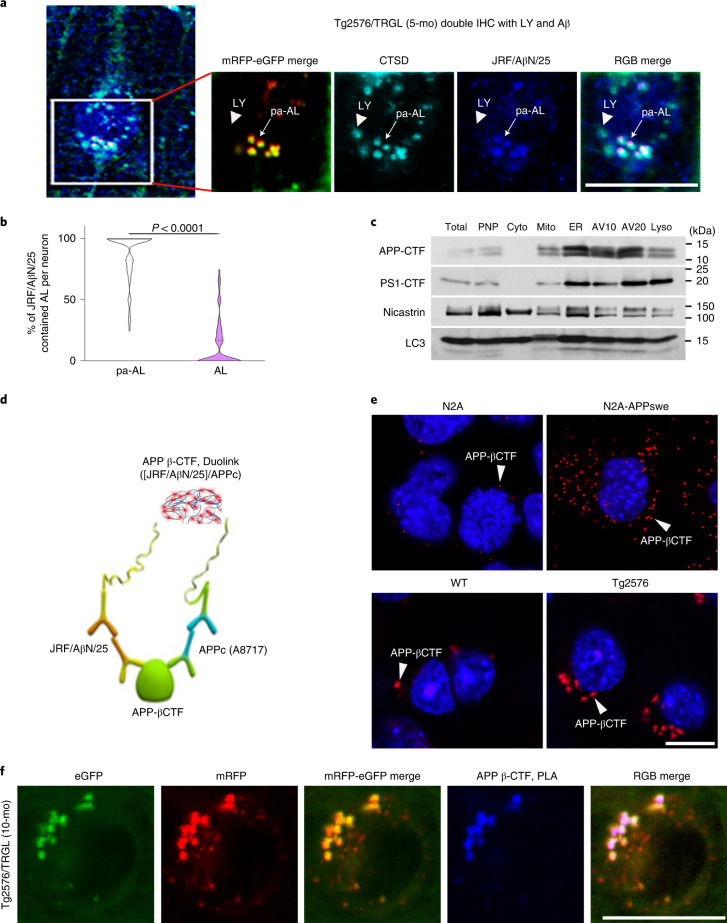
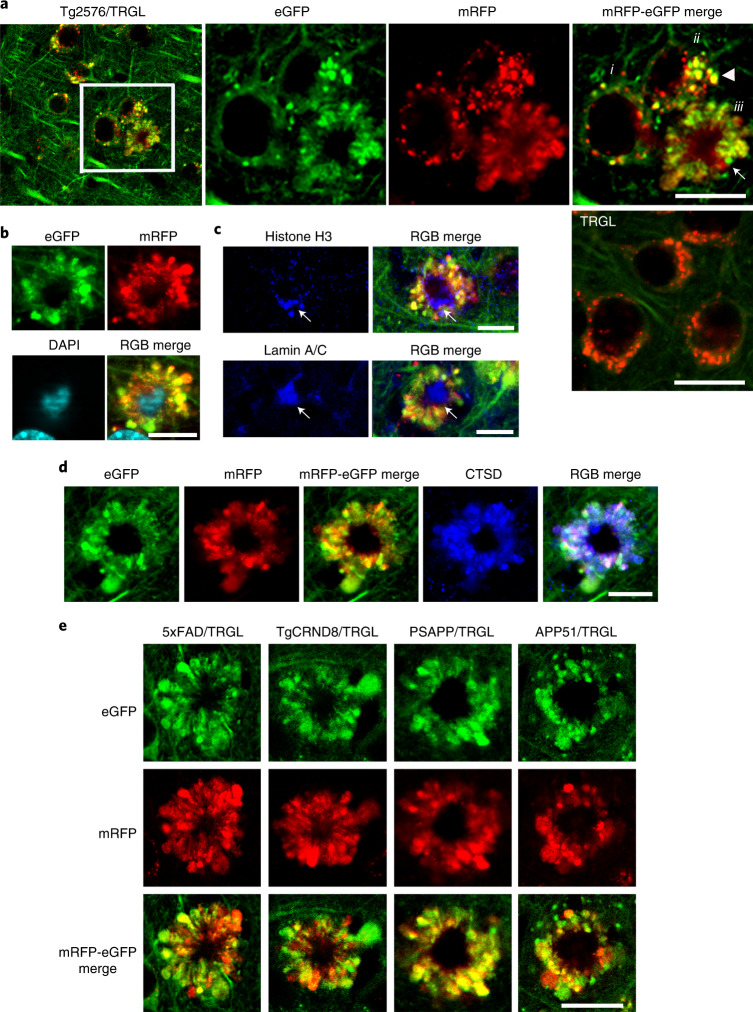
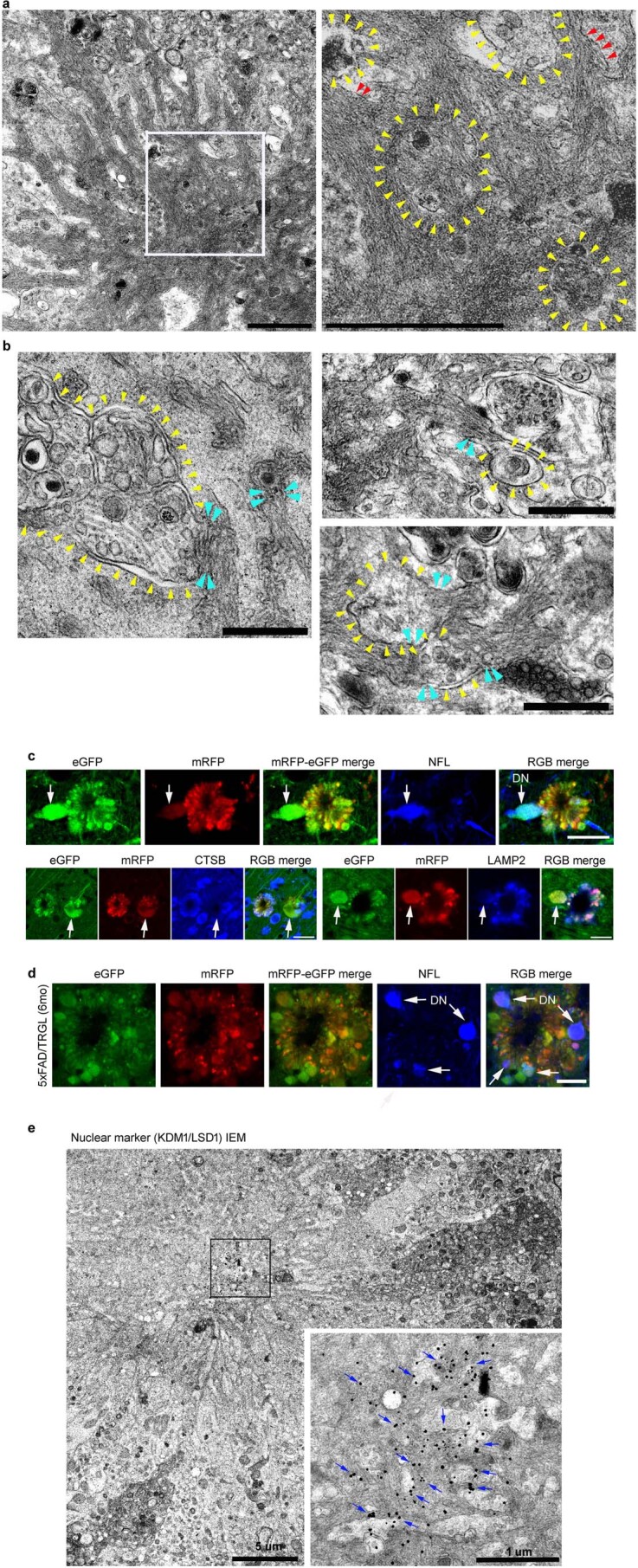
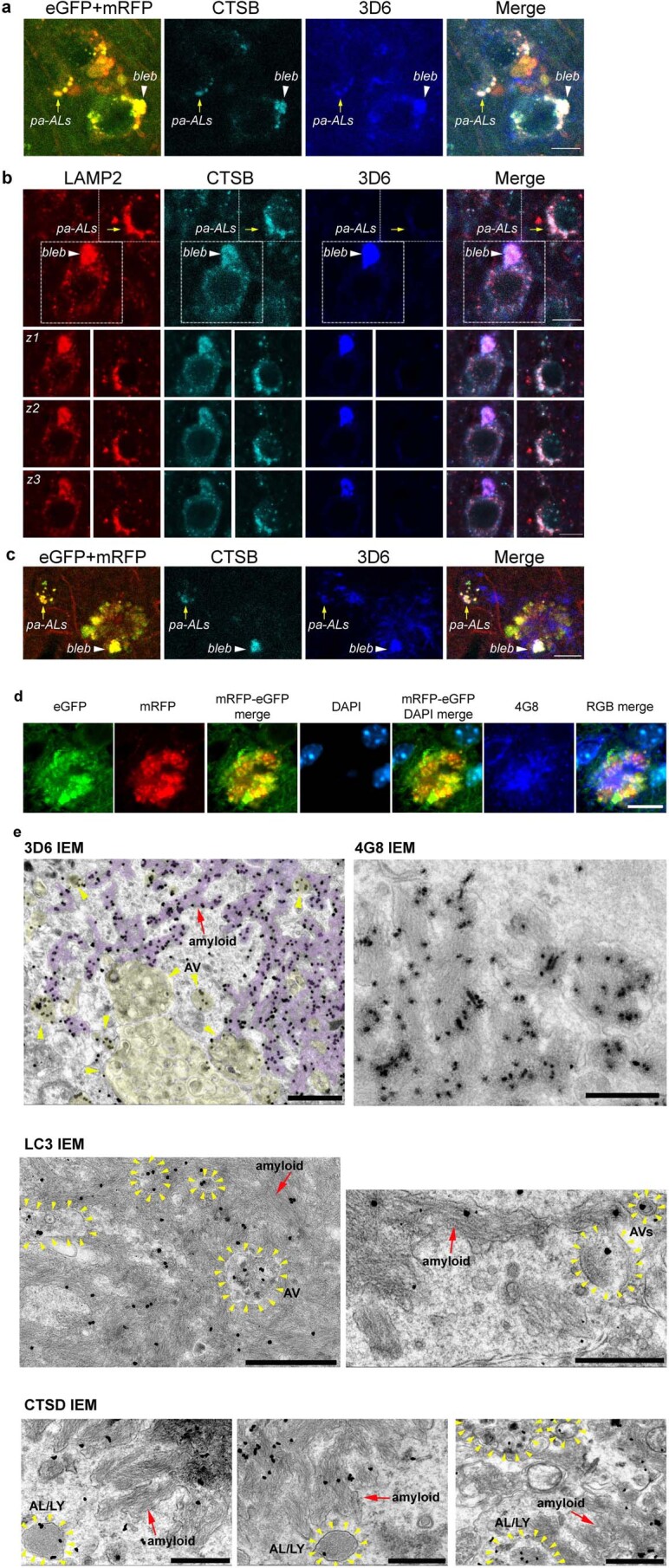
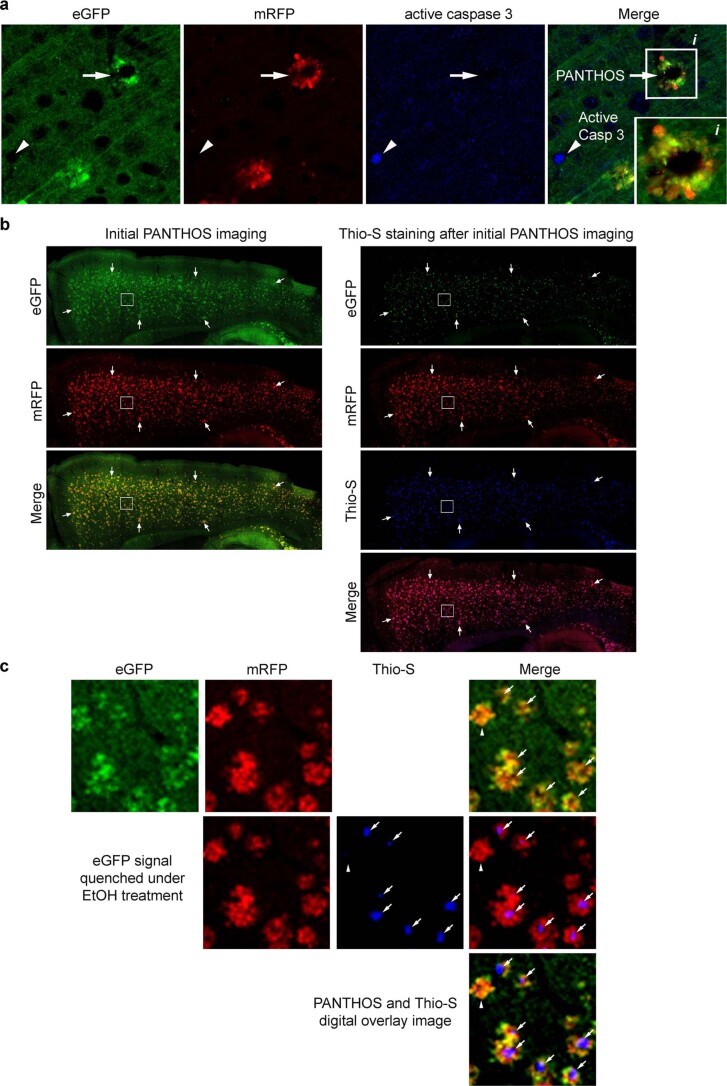
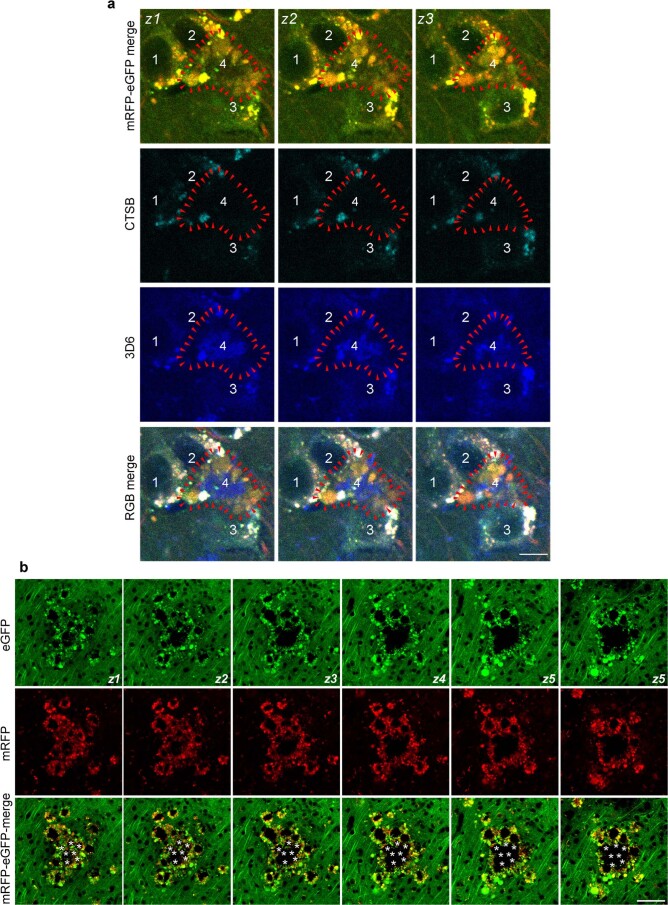
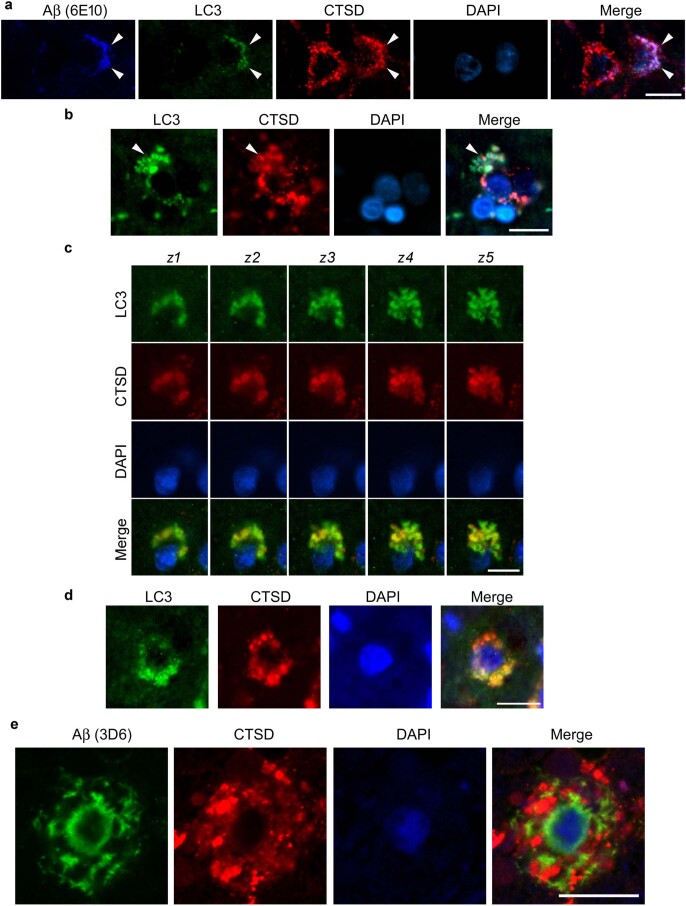
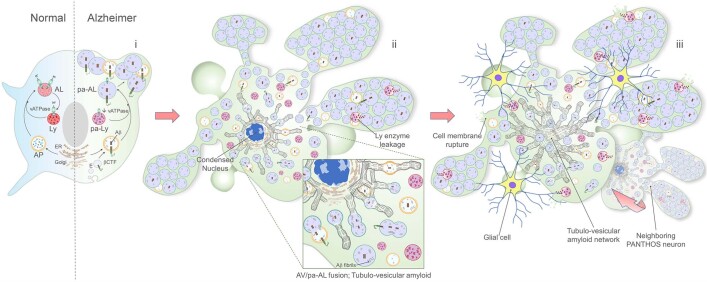
Autophagy is markedly impaired in Alzheimer’s disease (AD). Here we reveal unique autophagy dysregulation within neurons in five AD mouse models in vivo and identify its basis using a neuron-specific transgenic mRFP-eGFP-LC3 probe of autophagy and pH, multiplex confocal imaging and correlative light electron microscopy. Autolysosome acidification declines in neurons well before extracellular amyloid deposition, associated with markedly lowered vATPase activity and build-up of Aβ/APP-βCTF selectively within enlarged de-acidified autolysosomes. In more compromised yet still intact neurons, profuse Aβ-positive autophagic vacuoles (AVs) pack into large membrane blebs forming flower-like perikaryal rosettes. This unique pattern, termed PANTHOS (poisonous anthos (flower)), is also present in AD brains. Additional AVs coalesce into peri-nuclear networks of membrane tubules where fibrillar β-amyloid accumulates intraluminally. Lysosomal membrane permeabilization, cathepsin release and lysosomal cell death ensue, accompanied by microglial invasion. Quantitative analyses confirm that individual neurons exhibiting PANTHOS are the principal source of senile plaques in amyloid precursor protein AD models.
Overview
The claims and statistics of this paper haven’t been checked yet.
Free: it reads the open-access text and checks the first 5 claims that cite a source we can check. Create a free account to check every claim.
Integrity signals
Registry
Cites
Statistics
Figures
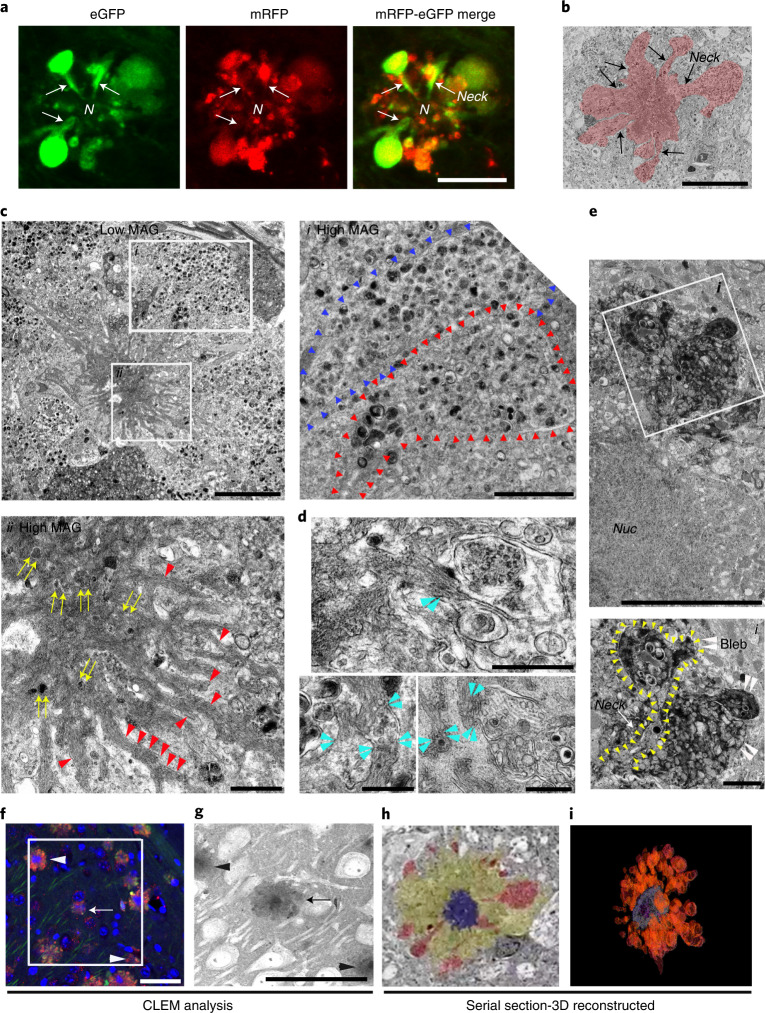
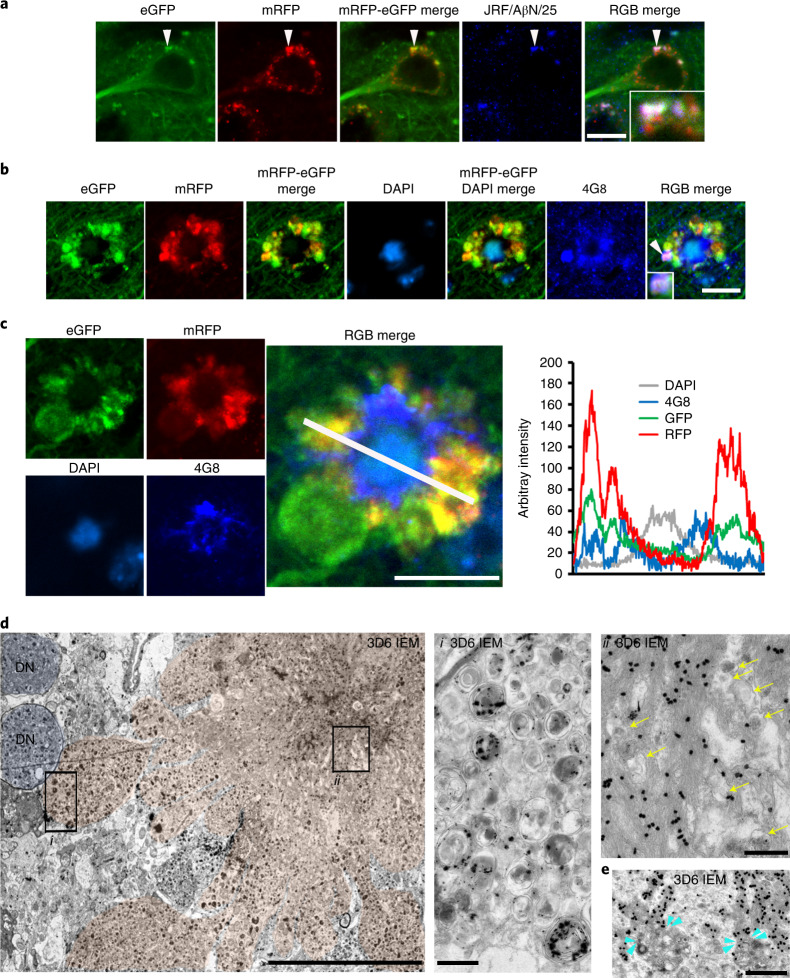
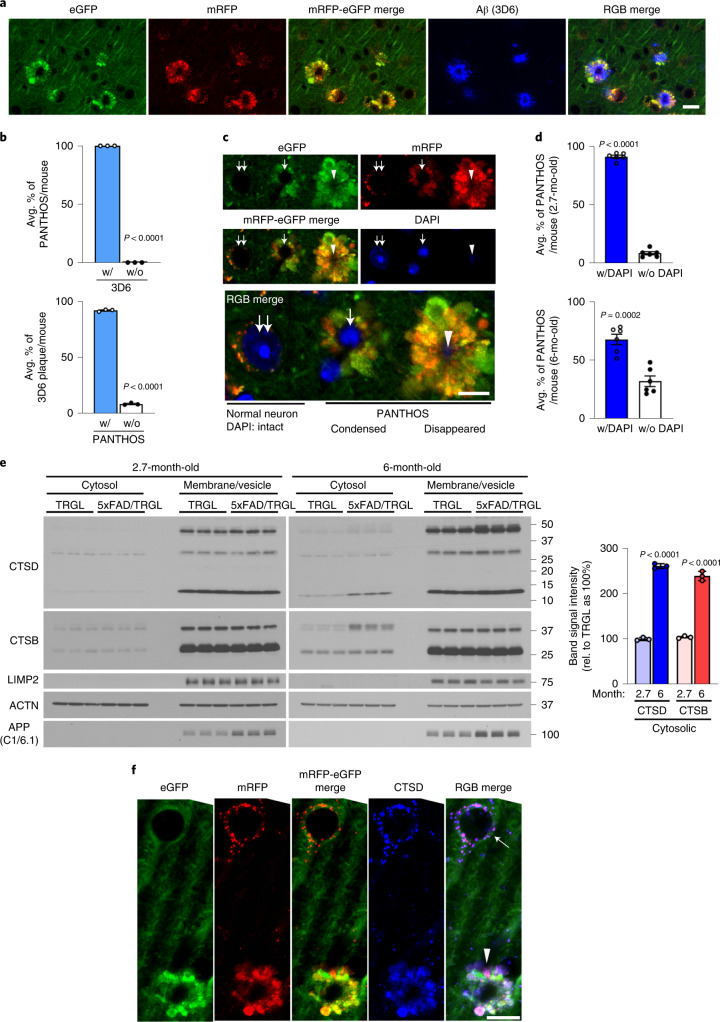
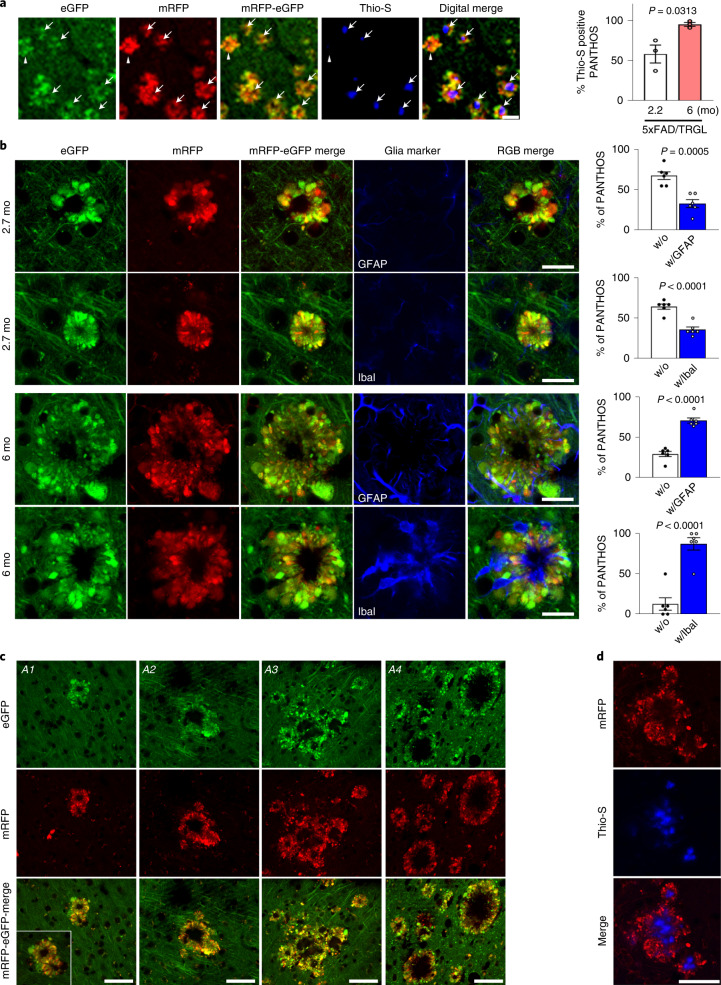
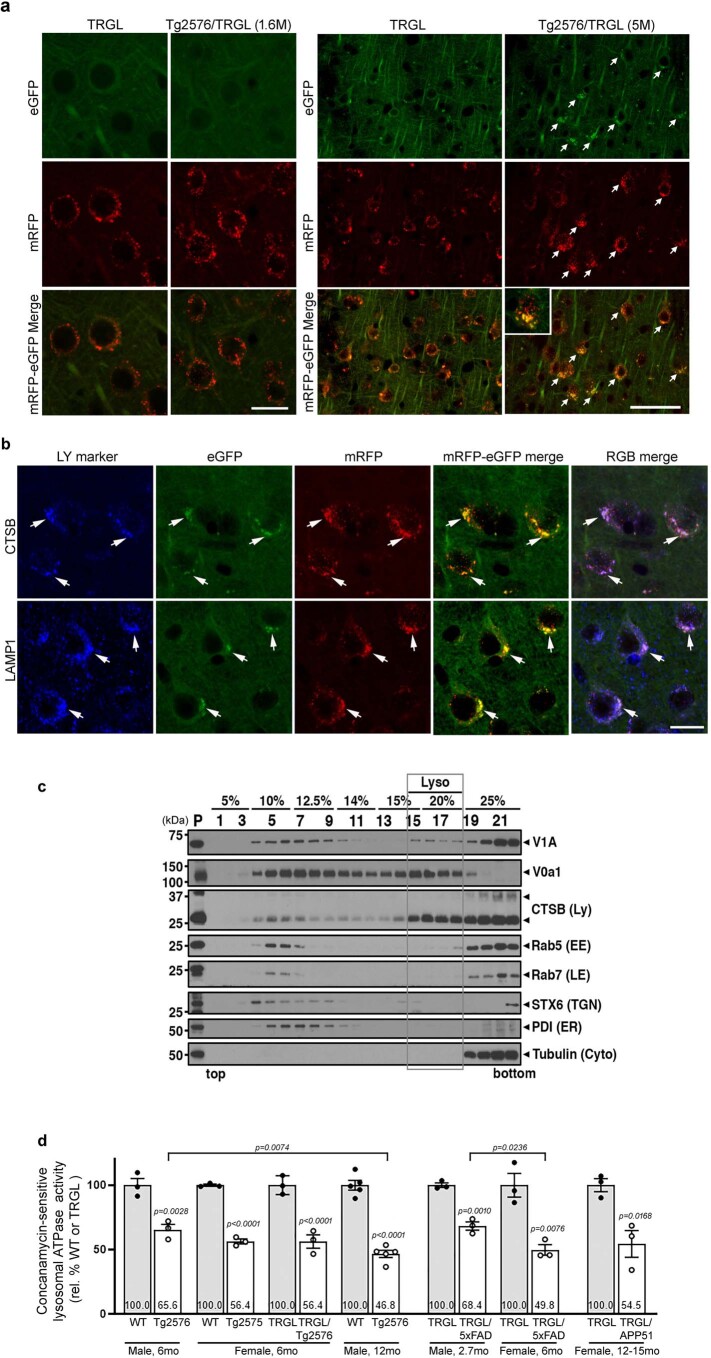
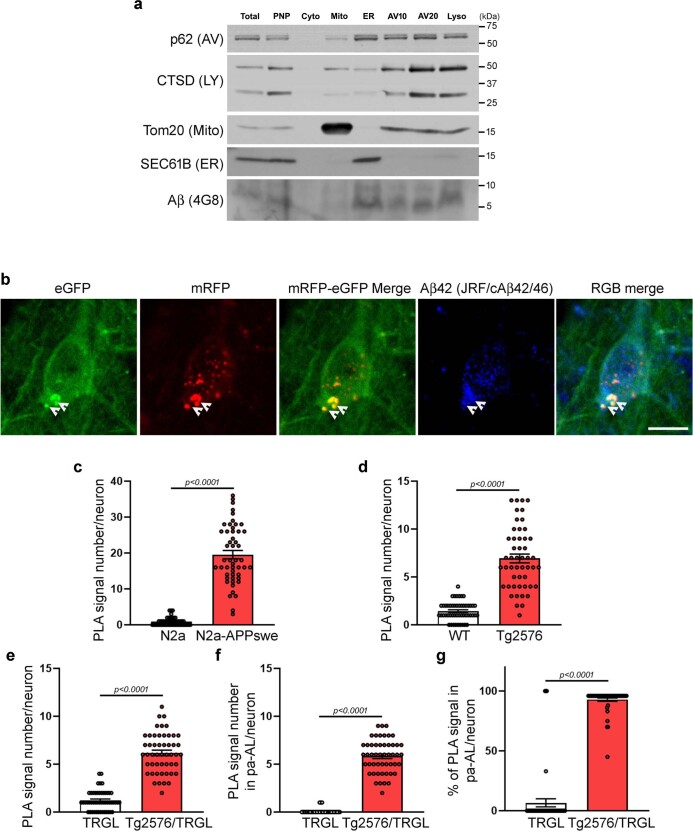
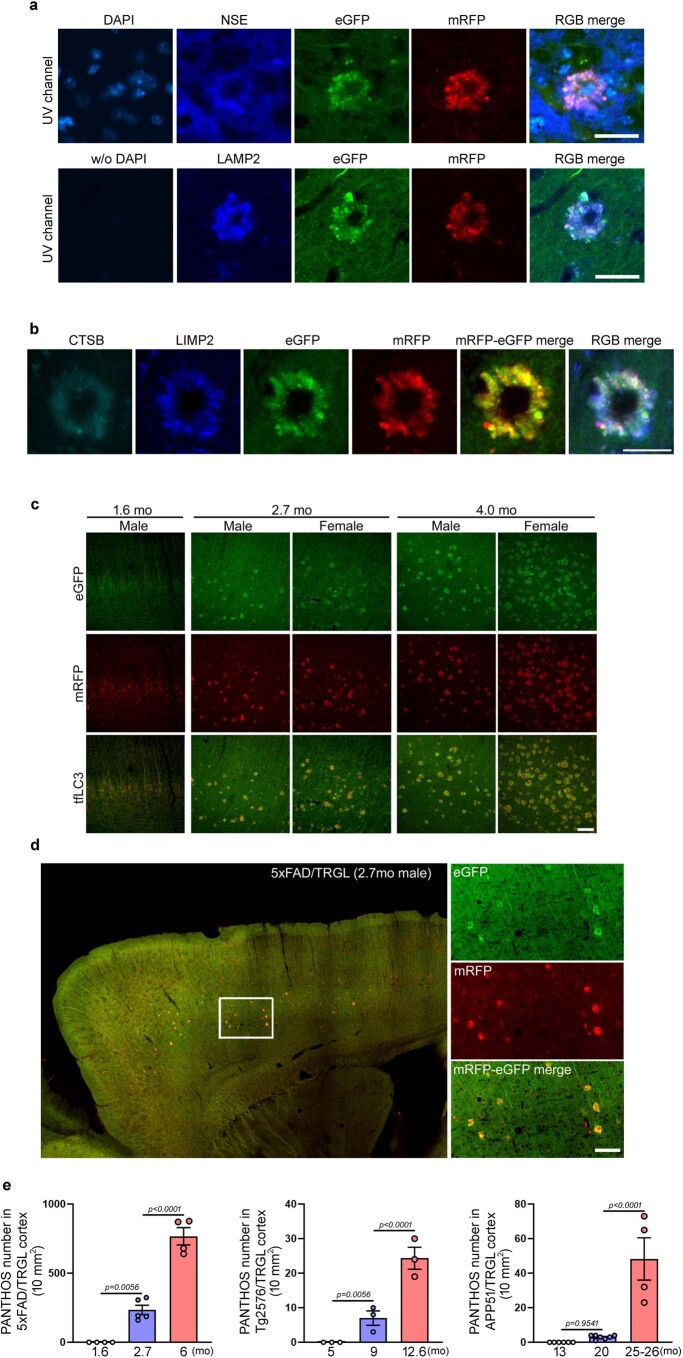
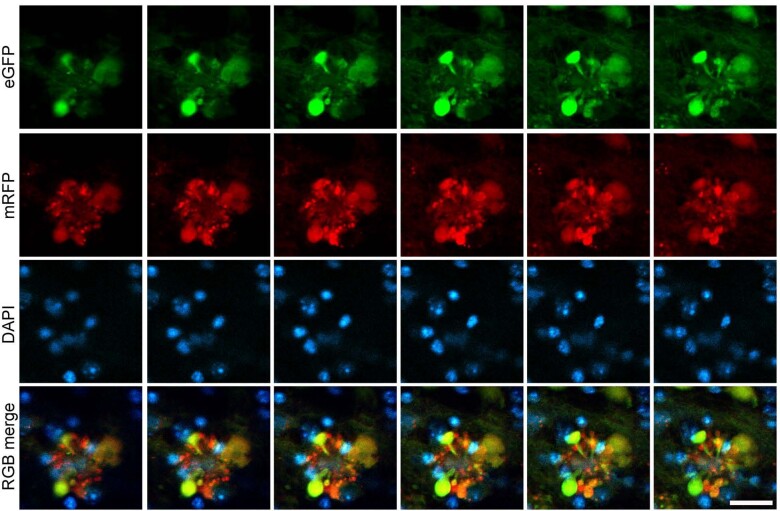
Verification
Claims the paper makes
The claims and statistics of this paper haven’t been checked yet.
Free: it reads the open-access text and checks the first 5 claims that cite a source we can check. Create a free account to check every claim.
Claims other papers make about this one
Each is checked against this paper’s own text: does it say what the citing paper says it does?
The source backs part of the claim, not all of it — or backs it for a different population, condition or comparison.
In the citing paper
“In consistent with this conception, the lysosomal dysfunction occurs earlier than neuronal Aβ-deposition but can prime Aβ accumulation of senile plaque in AD pathogenesis53.”
From PDCD4 triggers α-synuclein accumulation and motor deficits via co-suppressing TFE3 and TFEB translation in a model of Parkinson’s disease (2024) · cites this paper as [53]
Experimental — accuracy not yet measuredThe source backs part of the claim, not all of it — or backs it for a different population, condition or comparison.
In the citing paper
“Once lysosome acidification is hindered, the garbage decomposition pipeline stops, causing many garbage intermediate products to form and accumulate in the lysosome, including Aβ, Tau protein, and lipid droplets.[ 8 , 11 , 31 , 50 ]”
From Capsaicin Alleviates Autophagy‐Lysosomal Dysfunction via PPARA‐Mediated V‐ATPase Subunit ATP6V0E1 Signaling in 3xTg‐AD Mice (2025) · cites this paper as [11]
Experimental — accuracy not yet measuredThe cited source says what the claim attributes to it.
In the citing paper
“However, the abundant accumulation of autophagic vacuoles in swollen (malnourished) neurons is observed to have a linkage with Aβ/APP-βCTF, suggesting that autophagy clearance is severely disrupted under pathological conditions and is closely linked to amyloid pathology.115,225,230”
From Recent advances in Alzheimer's disease: Mechanisms, clinical trials and new drug development strategies. (2024) · cites this paper as [115]
The cited source says what the claim attributes to it.
In the citing paper
“In AD, lysosomal acidification deficits may weaken the clearance of Aβ, ultimately leading to the accumulation of extracellular Aβ plaques.115”
From Recent advances in Alzheimer's disease: Mechanisms, clinical trials and new drug development strategies. (2024) · cites this paper as [115]
The cited source says what the claim attributes to it.
In the citing paper
“This aligns with work from multiple laboratories showing that plaque formation depends on neuronal Aβ [45–48]”
From Selective suppression of oligodendrocyte-derived amyloid beta rescues neuronal dysfunction in Alzheimer’s disease (2024) · cites this paper as [45]
6 more claims about this paper
Create a free account to see every claim other papers make about this one.
Self-check
Percentages, sums and reported differences re-computed from the paper’s own numbers.
The self-check needs the paper’s full text.
Citations
Cites
Repertoires of Autophagy in the Pathogenesis of Ocular Diseases
Li, Y.-J., Jiang, Q., Cao, G.-F., Yao, J., & Yan, B. (2015) · Cellular Physiology and Biochemistry · doi:10.1159/000373980 · Cited by 16,304
Autophagy fights disease through cellular self-digestion
Mizushima, N., Levine, B., Cuervo, A. M., & Klionsky, D. J. (2008) · Nature · doi:10.1038/nature06639 · Cited by 6,452
Cui, C., Cui, J., Jin, F., Cui, Y., Li, R., Jiang, X., Tian, Y., Wang, K., Jiang, P., & Gao, J. (2017) · Cellular Physiology and Biochemistry · doi:10.1159/000479571 · Cited by 5,203
Correlative Memory Deficits, Aβ Elevation, and Amyloid Plaques in Transgenic Mice
Hsiao, K., Chapman, P., Nilsen, S., Eckman, C., Harigaya, Y., Younkin, S., Yang, F., & Cole, G. (1996) · Science · doi:10.1126/science.274.5284.99 · Cited by 4,210
Oakley, H., Cole, S. L., Logan, S., Maus, E., Shao, P., Craft, J., Guillozet-Bongaarts, A., Ohno, M., Disterhoft, J., Van Eldik, L., et al. (2006) · The Journal of Neuroscience · doi:10.1523/jneurosci.1202-06.2006 · Cited by 3,530
Neuropathological alterations in Alzheimer disease
Serrano-Pozo, A., Frosch, M. P., Masliah, E., & Hyman, B. T. (2011) · Cold Spring Harbor Perspectives in Medicine · doi:10.1101/cshperspect.a006189 · Cited by 3,345
Knopman, D. S., Amieva, H., Petersen, R. C., Chételat, G., Holtzman, D. M., Hyman, B. T., Nixon, R. A., & Jones, D. T. (2021) · Nature Reviews Disease Primers · doi:10.1038/s41572-021-00269-y · Cited by 2,606
Self-citationKimura, S., Noda, T., & Yoshimori, T. (2007) · Autophagy · doi:10.4161/auto.4451 · Cited by 2,278
The role of autophagy in neurodegenerative disease
Nixon, R. A. (2013) · Nature Medicine · doi:10.1038/nm.3232 · Cited by 2,059
Self-citationIntracellular amyloid-β in Alzheimer's disease
LaFerla, F. M., Green, K. N., & Oddo, S. (2007) · Nature Reviews Neuroscience · doi:10.1038/nrn2168 · Cited by 1,942
Research works printed but not linked: 5
- Yang, D.S., Stavrides, P., Mohan, P.S., Kaushik, S., Kumar, A., Ohno, M., Schmidt, S.D., Wesson, D., Bandyopadhyay, U., Jiang, Y., et al. (2011). Reversal of autophagy dysfunction in the TgCRND8 mouse model of Alzheimer's disease ameliorates amyloid pathologies and memory deficits. Brain 134, 258-277. · DOI · Paper page
- Cataldo, A.M., Peterhoff, C.M., Schmidt, S.D., Terio, N.B., Duff, K., Beard, M., Mathews, P.M., and Nixon, R.A. (2004). Presenilin mutations in familial Alzheimer disease and transgenic mouse models accelerate neuronal lysosomal pathology. J Neuropathol Exp Neurol 63, 821-830. · DOI · Paper page
- Mouse monoclonal anti-NFL was validated by our study: Yuan, A., Sershen, H., Veeranna, Basavarajappa, B.S., Kumar, A., Hashim, A., Berg, M., Lee, J.H., Sato, Y., Rao, M.V., et al. (2015). Neurofilament subunits are integral components of synapses and modulate neurotransmission and behavior in vivo. Mol Psychiatry 20, 986-994. JRF/AβN/25 was validated by our study: Mathews, P.M., Jiang, Y., Schmidt, S.D., Grbovic, O.M., Mercken, M., and Nixon, R.A. (2002). Calpain activity regulates the cell surface distribution of amyloid precursor protein. Inhibition of calpains enhances endosomal generation of beta-cleaved C-terminal APP fragments. J Biol Chem 277, 36415-36424. JRF/cAb42/26 was validated by this study: Janus, C. et al. Aβ peptide immunization reduces behavioural impairment and plaques in a model of Alzheimer's disease. Nature 408, 979-982 (2000). C1/6.1 was validated by our study: Jiang, Y., Mullaney, K.A., Peterhoff, C.M., Che, S., Schmidt, S.D., Boyer-Boiteau, A., Ginsberg, S.D., Cataldo, A.M., Mathews, P.M., and Nixon, R.A. (2010). Alzheimer's-related endosome dysfunction in Down syndrome is Aβ- independent but requires APP and is reversed by BACE-1 inhibition. Proc Natl Acad Sci U S A, 1630-1635. References · DOI · Paper page
- Bodendorf, U., Danner, S., Fischer, F., Stefani, M., Sturchler-Pierrat, C., Wiederhold, K.-H., Staufenbiel, M., and Paganetti, P. (2002). Expression of human β-secretase in the mouse brain increases the steady-state level of β-amyloid. Journal of Neurochemistry 80, 799-806.
- Anti-p62 C-terminal (Sqstm1) (https://us.progen.com/anti-p62-SQSTM1-C-terminus-guinea-pig-polyclonal-serum/GP62-C).. Anti-Sec1b (https://www.ptglab.com/products/SEC61B-Antibody-15087-1-AP.htm). Rabbit polyclonal anti-CTSD was validated by our study: Lee, J.-H., Yu, W.H., Kumar, A., Lee, S., Mohan, P.S., Peterhoff, C.M., Wolfe, D.M., Martinez-Vicente, M., Massey, A.C., Sovak, G., et al. (2010). Lysosomal proteolysis and autophagy require presenilin 1 and are disrupted by Alzheimer-related PS1 mutations. Cell 141, 1146-1158. · DOI · Paper page
Cited by
Items 201–300 of 640
In-Depth Characterization of Endo-Lysosomal Aβ in Intact Neurons
McKendell, A. K., Houser, M. C., Mitchell, S. P. C., Wolfe, M. S., Berezovska, O., & Maesako, M. (2022) · Biosensors · doi:10.3390/bios12080663 · Cited by 21
“Importantly, these unique blebs seed Aβ fibrils within the neurons, which could be the source of neuritic plaques in amyloidosis mouse models [29].”
BackgroundIntracellular acidification and glycolysis modulate inflammatory pathway in senescent cells
Kawakami, S., Johmura, Y., & Nakanishi, M. (2024) · The Journal of Biochemistry · doi:10.1093/jb/mvae032 · Cited by 16
Defective Lamtor5 Leads to Autoimmunity by Deregulating v‐ATPase and Lysosomal Acidification
Zhang, W. K., Sha, Z., Tang, Y., Jin, C., Gao, W., Chen, C., Yu, L., Lv, N., Liu, S., Xu, F., et al. (2024) · Advanced Science · doi:10.1002/advs.202400446 · Cited by 17
Meng, R., Li, Y., Yang, X., Cheng, Y., Xu, M., Zhou, L., Wu, C., Yu, S., Huang, W., Wang, T., et al. (2024) · Advanced Materials · doi:10.1002/adma.202413614 · Cited by 16
Li, S., Li, M., Li, G., Li, L., Yang, X., Zuo, Z., Zhang, L., Hu, X., & He, X. (2025) · Aging Cell · doi:10.1111/acel.14496 · Cited by 19
Niu, Z., Tang, G., Wang, X., Xu, Y., Zhao, Y., Wang, Y., Liu, Q., Zhang, F., Zhao, Y., Ding, X., et al. (2023) · Phytomedicine · doi:10.1016/j.phymed.2023.154720 · Cited by 19
Ups and downs of lysosomal pH: conflicting roles of LAMP proteins?
Handy, J., MacIntosh, G. C., & Jenny, A. (2023) · Autophagy · doi:10.1080/15548627.2023.2274253 · Cited by 18
“For example, dysregulation of lysosomal acidification is a significant risk factor for Alzheimer disease (AD) and Parkinson disease (PD) [2,7–10].”
BackgroundCerebral glymphatic system: Structure, regulation, ageing, and mechanisms of encephalopathy
Zhao, D., Wang, J., Zhang, F., Wang, Q., Zang, M., Niu, H., & Tong, Z. (2025) · Ageing Research Reviews · doi:10.1016/j.arr.2025.102986 · Cited by 23
Immunity in Alzheimer’s disease: From mechanisms to therapies
Chen, X., Holtzman, D. M., & Colonna, M. (2026) · Immunity · doi:10.1016/j.immuni.2026.02.004 · Cited by 23
Alzheimer’s disease: Pathophysiology and dental pulp stem cells therapeutic prospects
Xiong, W., Liu, Y., Zhou, H., Jing, S., He, Y., & Ye, Q. (2022) · Frontiers in Cell and Developmental Biology · doi:10.3389/fcell.2022.999024 · Cited by 18
Pathogenic Aspects and Therapeutic Avenues of Autophagy in Parkinson’s Disease
Kinet, R., & Dehay, B. (2023) · Cells · doi:10.3390/cells12040621 · Cited by 15
Menéndez‐González, M., Tamba, B.-I., Leclere, M., Mabrouk, M., Schreiner, T. G., Ciobanu, R. C., & Tomás‐Zapico, C. (2023) · Pharmaceutics · doi:10.3390/pharmaceutics15030768 · Cited by 16
Xue, W., Zhang, J., & Li, Y. (2023) · Neural Regeneration Research · doi:10.4103/1673-5374.371346 · Cited by 20
“During the pathogenesis of neurodegenerative diseases and aging, the functions of lysosomes are impaired, and the lysosomal degradative capacity is consequently reduced (Lee et al., 2022).”
InfluentialEckman, E. A., Clausen, D. M., Solé‐Domènech, S., Lee, C. W., Pereira, C. S., Domalewski, R. J., Nichols, M. R., & Pacheco‐Quinto, J. (2023) · Journal of Neuroscience · doi:10.1523/jneurosci.1318-23.2023 · Cited by 16
Gehlot, P., & Vyas, V. K. (2023) · Expert Opinion on Therapeutic Patents · doi:10.1080/13543776.2023.2280596 · Cited by 18
Tsering, W., Hery, G. P., Phillips, J. L., Lolo, K., Bathe, T., Villareal, J. A., Ruan, I. Y., & Prokop, S. (2023) · Acta Neuropathologica Communications · doi:10.1186/s40478-023-01688-6 · Cited by 17
“The second hypothesis postulates that Aβ /APP fragments accumulate in the lysosome and autophagic vesicles, and the failure of autolysosomal digestion of Aβ/APP fragments distorts the plasma membrane, forming flower-like neuritic dystrophy [17, 38, 55].”
BackgroundIntracellular tau fragment droplets serve as seeds for tau fibrils
Soeda, Y., Yoshimura, H., Bannai, H., Koike, R., Shiiba, I., & Takashima, A. (2024) · Structure · doi:10.1016/j.str.2024.06.018 · Cited by 17
Refining the interactions between microglia and astrocytes in Alzheimer’s disease pathology
Chen, J., Xu, S., Wang, L., Liu, X., Liu, G., Tan, Q., Li, W., Zhang, S., & Du, Y. (2025) · Neuroscience · doi:10.1016/j.neuroscience.2025.03.033 · Cited by 18
Feng, C., Jiang, Y., Li, S., Ge, Y., Shi, Y., Xue Ming, T. A. N. G., & Le, G. (2022) · Nutrients · doi:10.3390/nu14214503 · Cited by 15
“Studies have shown that the first manifestation of Alzheimer’s disease (AD) is neuronal death, not extracellular amyloid plaques [11].”
BackgroundA monocarboxylate transporter rescues frontotemporal dementia and Alzheimer’s disease models
Xu, D., Vincent, A. J., González‐Gutiérrez, A., Aleyakpo, B., Anoar, S., Giblin, A., Atilano, M. L., Adams, M. L., Shen, D., Thoeng, A., et al. (2023) · PLoS Genetics · doi:10.1371/journal.pgen.1010893 · Cited by 17
“Autophagic defects are thought to contribute to disease progression and facilitate the accumulation of amyloid beta [64], possibly because of faulty autolysosome acidification [55].”
Yu, H., Chen, J., Wang, F., Jia, D., Bi, S., Mao, Y., Zhang, Y., Gao, T., Yang, L., Du, J., et al. (2025) · Advanced Science · doi:10.1002/advs.202502707 · Cited by 23
Montoliu‐Gaya, L., Bian, S., Dammer, E. B., Alcolea, D. A., Sauer, M., Martá-Ariza, M., Ashton, N. J., Belbin, O., Fuchs, J., Watson, C. M., et al. (2025) · Nature Communications · doi:10.1038/s41467-025-61054-z · Cited by 20
Interconnections of insulin/IGF‐1 signaling and autophagy abnormalities in Alzheimer's disease
Liao, W., Xuan, J., Ryu, W., Bormann, M. K., Lee, Y., Dion, H., Evangelista, E., Li, R., Trambaiolli, L. R., Liu, J., et al. (2025) · Alzheimer s & Dementia · doi:10.1002/alz.70099 · Cited by 17
Human stefin B: from its structure, folding, and aggregation to its function in health and disease
Žerovnik, E. (2022) · Frontiers in Molecular Neuroscience · doi:10.3389/fnmol.2022.1009976 · Cited by 13
“Impaired lysosomal function and impaired autophagy are reported for AD (Orr and Oddo, 2013; Lai et al., 2021; Lee et al., 2022).”
BackgroundLi, J., Wang, P., Hou, M., & Zhu, B. T. (2023) · MedComm · doi:10.1002/mco2.301 · Cited by 18
Zhu, M. L., Gu, H., Bai, H., Li, Y., Zhong, C., & Huang, X. (2023) · Neurobiology of Aging · doi:10.1016/j.neurobiolaging.2023.09.015 · Cited by 14
Host-directed therapy for bacterial infections -Modulation of the phagolysosome pathway-
Taya, T., Teruyama, F., & Gojo, S. (2023) · Frontiers in Immunology · doi:10.3389/fimmu.2023.1227467 · Cited by 17
“In addition, acidic milieu plays an essential role in the following processes: neurotransmitter uptake (89), maturation by degradation of prohormone (90), nutrient sensing in association with mTORC1 (91), amino acid supply to the cytoplasm (92), and macroautophagy (93, 94).”
BackgroundGao, C., Liu, Y., Zhang, T., Luo, Y., Gao, J., Chu, J., Gong, B., Chen, X., Yin, T., Zhang, J., et al. (2023) · International Journal of Nanomedicine · doi:10.2147/ijn.s436774 · Cited by 19
Towards a Unitary Hypothesis of Alzheimer’s Disease Pathogenesis
Área-Gómez, E., & Schon, E. A. (2024) · Journal of Alzheimer s Disease · doi:10.3233/jad-231318 · Cited by 20
Li, Y., Li, Z., Grillo, E., Desler, C., Navarro, C., Bohr, V. A., Berliocchi, L., & Rasmussen, L. J. (2024) · Free Radical Biology and Medicine · doi:10.1016/j.freeradbiomed.2024.07.013 · Cited by 15
Regulation of tea polyphenols in gluten-glucose Maillard reaction: Evaluation and analysis
Liang, H.-Y., Gao, H.-X., Jing, Z., He, Q., & Zeng, W. (2024) · LWT · doi:10.1016/j.lwt.2024.116508 · Cited by 17
Reversal of neuronal tau pathology via adiponectin receptor activation
McGregor, E. R., Lasky, D. J., Rippentrop, O. J., Clark, J. P., Wright, S., Jones, M. V., & Anderson, R. M. (2025) · Communications Biology · doi:10.1038/s42003-024-07391-z · Cited by 17
Fernandes, S. M., Mayer, J., Nilsson, P., & Shimozawa, M. (2025) · Frontiers in Cell and Developmental Biology · doi:10.3389/fcell.2024.1520949 · Cited by 20
“Recently, the same group revealed that failed acidi fi cation of autolysosomes caused by lowered vATPase activity leads to autolysosome accumulation in AD transgenic mouse models (Lee et al., 2022).”
Apolipoprotein E intersects with amyloid-β within neurons
Konings, S. C., Nyberg, E., Martinsson, I., Torres-Garcia, L., Klementieva, O. L., Almeida, C. G., & Gouras, G. K. (2023) · Life Science Alliance · doi:10.26508/lsa.202201887 · Cited by 13
“Our study demonstrates that astrocyte-derived human ApoE is present at APP-processing sites, with co-localization of ApoE and humanA β /APP-β CTFinneuronsandneuroblastomacells.”
BackgroundInfluentialLv, Y., Yan, S., Ka, D., Chen, Z., Yang, Z., Li, F., & Luo, Q. (2024) · ACS Chemical Neuroscience · doi:10.1021/acschemneuro.3c00660 · Cited by 14
Isoform- and cell-state-specific APOE homeostasis and function
Lindner, K., & Gavin, A.-C. (2024) · Neural Regeneration Research · doi:10.4103/nrr.nrr-d-23-01470 · Cited by 13
Li, L., Li, W., Jiang, W., & Xu, R. (2024) · Cell Death Discovery · doi:10.1038/s41420-024-01827-5 · Cited by 14
Mishra, S., Jayadev, S., & Young, J. E. (2024) · Philosophical Transactions of the Royal Society B: Biological Sciences · doi:10.1098/rstb.2022.0389 · Cited by 16
Plasma exosomes impair microglial degradation of α‐synuclein through V‐ATPase subunit V1G1
Li, Y., Wang, Y., Kou, L., Yin, S., Chi, X., Sun, Y., Wu, J., Jin, Z., Zhou, Q., Zou, W., et al. (2024) · CNS Neuroscience & Therapeutics · doi:10.1111/cns.14738 · Cited by 19
“…the V- ATPases-dependent lysosomal pH and maintenance of lysosomal physiological functions are tightly associated with neurodegeneration diseases, 7 such as Alzheimer's dis - ease (AD), PD, and lysosomal storage diseases, 8,9 where lysosomes can degrade and clear pathological protein aggregates.”
BackgroundZhou, J., Wang, N., Wang, M., Hu, Y., Zhang, Z., Gu, Z., Wang, J., Shou, H., Cheng, X., Liu, H., et al. (2024) · Journal of Medicinal Chemistry · doi:10.1021/acs.jmedchem.4c00159 · Cited by 14
Far-Red Fluorescent Proteins: Tools for Advancing In Vivo Imaging
Shang, A., Shao, S., Zhao, L., & Liu, B. (2024) · Biosensors · doi:10.3390/bios14080359 · Cited by 17
The Lipid Invasion Model: Growing Evidence for This New Explanation of Alzheimer’s Disease
Rudge, J. D. (2023) · Journal of Alzheimer s Disease · doi:10.3233/jad-221175 · Cited by 16
Bayazid, A. B., Jeong, Y. H., Jeong, S. A., & Lim, B. O. (2023) · Food and Agricultural Immunology · doi:10.1080/09540105.2023.2234100 · Cited by 17
“Hence, A β could form aggregated, fi brils, which have shown neurotoxic e ff ects (Chételat, 2013; Lee et al., 2022; Oguchi et al., 2017; Wilson et al., 1999), and increased A β level has found in AD patients.”
BackgroundMorais, G. P., Neto, I. V. D. S., Veras, A. S. C., Teixeira, G. R., Paroschi, L. O., Pinto, A. P., dos Santos, J. R., Alberici, L. C., Cintra, D. E., Pauli, J. R., et al. (2025) · Molecular Neurobiology · doi:10.1007/s12035-025-05066-2 · Cited by 14
Peng, J., Gao, C. H., Chen, X., Wang, T., Luo, C., Zhang, M., Chen, X., & Tao, L. (2023) · Experimental Neurology · doi:10.1016/j.expneurol.2023.114347 · Cited by 12
Nam, E., Lin, Y., Park, J., Do, H., Han, J., Jeong, B., Park, S., Lee, D. Y., Kim, M., Han, J., et al. (2023) · Advanced Science · doi:10.1002/advs.202307182 · Cited by 13
Kim, Y., D’Acunzo, P., & Levy, E. (2024) · Current Opinion in Physiology · doi:10.1016/j.cophys.2024.100765 · Cited by 20
“Additionally, a faulty autolysosome acidification is typically found in AD brains and in mouse models of β -amyloidosis, as well as in DS [55], causing ILV accumulation and LE/MVB/amphisome enlargement (Figure 3) [4,56] and leading to a concomitant higher release of ILVs as exosomes (Figure 2,…”
BackgroundSelf-citationYang, Q., Yang, C., Lv, H., Zheng, X., Mao, S., Liu, N., Mo, S., Liao, B., Yang, M., Lü, Z., et al. (2024) · Inflammation · doi:10.1007/s10753-024-02043-0 · Cited by 15
Stevenson, M. E., Algarzae, N. K., & Moussa, C. (2024) · Frontiers in Dementia · doi:10.3389/frdem.2024.1458038 · Cited by 15
Anton, P. E., Maphis, N. M., Linsenbardt, D. N., & Coleman, L. G. (2025) · Advances in experimental medicine and biology · doi:10.1007/978-3-031-81908-7_10 · Cited by 13
Lane‐Donovan, C., Smith, A. W., Saloner, R., Miller, B. L., Casaletto, K. B., & Kao, A. W. (2025) · Alzheimer s & Dementia · doi:10.1002/alz.70320 · Cited by 15
“34,35 Although this overall is expectedtomakelysosomalproteasesfunctionlessoptimally,ourfind-ings indicate that lysosomal alkalinization would disproportionately impact cleavage of p-tau.”
Zhou, X., Zhang, L., Chen, G., Wang, S., He, J.-F., Zhuang, L., & Zhang, B. (2022) · Medicine · doi:10.1097/md.0000000000031177 · Cited by 12
“[3,4] However, the newly published articles believe that the onset of AD is related to poorly acidified autolysosomes.[5] As many countries enters into an aging society, the proportion of patients with Alzheimer’s disease will increase in the future.”
BackgroundKapadia, A., Theil, S., Opitz, S., Villacampa, N., Beckert, H., Schoch, S., Heneka, M. T., Kumar, S., & Walter, J. (2023) · Autophagy · doi:10.1080/15548627.2023.2252300 · Cited by 13
“However, additional modes of Aβ induced neurotoxicity like perturbation of plasma membrane integrity or rupture of vesicular membranes and Ca 2+ dysregulation could also contribute to the impairment of neuronal viability [8,15,68–70].”
BackgroundInfluentialPathobiology of the autophagy-lysosomal pathway in the Huntington’s disease brainPreprint
Berg, M. J., Veeranna, Rosa, C. M., Kumar, A. R., Mohan, P. S., Stavrides, P. H., Marchionini, D. M., Yang, D., & Nixon, R. A. (2024) · bioRxiv (Cold Spring Harbor Laboratory) · doi:10.1101/2024.05.29.596470 · Cited by 12
Self-citationLoss of lysosomal acid lipase contributes to Alzheimer's disease pathology and cognitive decline
Barnett, A. M., McNair, E. M., Dawkins, L., Zou, J., Nikolova, V. D., Moy, S. S., Sutherland, G. T., Stevens, J., Colie, M., Katemboh, K., et al. (2025) · Alzheimer's & Dementia · doi:10.1002/alz.70486 · Cited by 12
“12 However, the molecular drivers of lysosomal dysfunction associated with LOAD remain unknown.”
Exploring lysosomal biology: current approaches and methods
Yin, Q., & Yang, C. (2024) · Biophysics Reports · doi:10.52601/bpr.2023.230028 · Cited by 12
“1 expression cassette (Lee et al. 2022; Mizushima et al. 2004).”
Lee, E., Park, H., & Kim, S. (2024) · Molecules and Cells · doi:10.1016/j.mocell.2024.100089 · Cited by 13
Nanozymes in Alzheimer's disease diagnostics and therapy
Li, L., Zhang, W., Cao, H., Fang, L., Wang, W., Li, C., He, Q., Jiao, J., & Zheng, R. (2024) · Biomaterials Science · doi:10.1039/d4bm00586d · Cited by 13
Ye, K., Han, X., Tian, M., Liu, L., Gao, X., Xia, Q. H., & Wang, D. (2025) · Journal of Translational Medicine · doi:10.1186/s12967-025-06324-6 · Cited by 12
The future of Alzheimer’s treatment
Makin, S. J. (2025) · Nature · doi:10.1038/d41586-025-01102-2 · Cited by 13
BACE1 as an early biomarker and its relevance to risk factors for Alzheimer’s disease
Ohno, M. (2025) · Brain Research Bulletin · doi:10.1016/j.brainresbull.2025.111475 · Cited by 13
The NLRP6 inflammasome is activated by sterile or pathogen-induced endolysosomal damage
Boegli, A., Bernard, E. M., Lacante, L., Majeux, G., Hartenian, E., Mack, V., & Brož, P. (2025) · The EMBO Journal · doi:10.1038/s44318-025-00637-4 · Cited by 14
“Increased lysosomal membrane permeabilization has been implicated in different diseases such as lysosomal storage diseases, neurodegenerative diseases such as Parkinson ’ s and Alzheimer ’ s, as well as cancer (Iulianna et al, 2022; Kakuda et al, 2024; Lee et al, 2022; Micsenyi et al, 2013).”
“Dirty Dancing” of Calcium and Autophagy in Alzheimer’s Disease
Zhang, H., & Борисович, Б. И. (2023) · Life · doi:10.3390/life13051187 · Cited by 12
“A critical role of lysosomal proteolytic failure in AD neurons has been suggested by other investigators [89,90].”
ResultMa, J., Miao, Z., Zhang, X., Lü, J., & Gu, L. (2023) · BMC Complementary Medicine and Therapies · doi:10.1186/s12906-023-04290-4 · Cited by 11
“By repairing the lysosomal acid deficiency associated with PSEN1, autophagy disorders and other AD-related pathologies in AD models can be improved [41].”
BackgroundSánchez-Vidaña, D. I., Li, J., Abokyi, S., Chan, J. N.-M., Ngai, S. P. C., & Lau, B. W.-M. (2023) · Frontiers in Molecular Neuroscience · doi:10.3389/fnmol.2023.1168948 · Cited by 12
“In compromised neurons, autophagy vacuoles containing AB pack into large structures forming flower-like perikaryal rosettes known as PANTHOS (poisonous Anthos or flower) which occur in the brains of AD patients (Lee et al., 2022).”
BackgroundYoon, L., Botham, R. C., Verhelle, A., Wu, Y., Cole, C. M., Tan, E. P., Massey, L. A., Sanz-Martinez, P., Chou, C., Xu, J., et al. (2022) · bioRxiv (Cold Spring Harbor Laboratory) · doi:10.1101/2022.09.29.509997 · Cited by 15
Astrocytes mobilize a broader repertoire of lysosomal repair mechanisms than neurons
Smith, E. M., Chanaday, N. L., & Maday, S. (2026) · iScience · doi:10.1016/j.isci.2026.116866 · Cited by 15
Kim, Y., Ha, T.-Y., Kondaurova, O., Lee, M.-S., & Chang, K. (2026) · Journal of Neuroinflammation · doi:10.1186/s12974-026-03728-z · Cited by 13
“In AD models, genetic alterations such as presenilin-1 ( PSEN1) mutations impair autolysosomal acidification and proteolytic activity, thereby disrupting Aβ clearance and exacer-bating plaque accumulation [7, 8].”
Rethinking of Alzheimer's disease: Lysosomal overloading and dietary therapy
Yuan, S., Jiang, S., Zhang, Z.-W., Fu, Y., Yang, X., Li, Z.-L., & Hu, J. (2023) · Frontiers in Aging Neuroscience · doi:10.3389/fnagi.2023.1130658 · Cited by 12
Krasnobaev, V. D., Bershatsky, Y. V., Bocharova, O. V., Bocharov, E. V., & Batishchev, O. V. (2023) · Membranes · doi:10.3390/membranes13080706 · Cited by 10
Advancements of carbon dots: From the perspective of medicinal chemistry
Zhang, S., Shen, L., Xu, P., Yang, J., Song, P., Li, L., Li, Y., Zhang, Y., & Wu, S. (2024) · European Journal of Medicinal Chemistry · doi:10.1016/j.ejmech.2024.116931 · Cited by 10
Thioredoxin-1 protein interactions in neuronal survival and neurodegeneration
Islam, M. R., Sultana, S., Padmanabhan, N., Rashid, M., Siddiqui, T. J., Coombs, K. M., Vitiello, P. F., Karimi‐Abdolrezaee, S., & Eftekharpour, E. (2024) · Biochimica et Biophysica Acta (BBA) - Molecular Basis of Disease · doi:10.1016/j.bbadis.2024.167548 · Cited by 12
Visualizing ER-phagy and ER architecture in vivo
Sang, Y., Li, B., Su, T., Zhan, H., Xiong, Y., Huang, Z., Chang-jing, W., Cong, X., Du, M., Wu, Y., et al. (2024) · The Journal of Cell Biology · doi:10.1083/jcb.202408061 · Cited by 13
The role of microglia in the prion-like transmission of protein aggregates in neurodegeneration
Öztürk, M. M., Emgård, J., García‐Revilla, J., Fernández‐Calle, R., Yang, Y., Deierborg, T., & Roos, T. T. (2025) · Brain Communications · doi:10.1093/braincomms/fcaf087 · Cited by 17
“93,108,185 However, in a brain with well-functioning phagocytic microglia, the first neuronally produced prion-like seed may be simply exocytosed and then phagocytosed and degraded by microglia.”
Pu, Y., Dai, X., Wang, Y., Chen, Y., Wu, C., Zhou, X., Chen, M., Chen, Y., Shuai, X., Jin, R., et al. (2025) · Advanced Materials · doi:10.1002/adma.202418560 · Cited by 11
Si, M., Fu, J., Fang, M., Lu, Y., Huang, J., Li, H., Wang, P., Liao, M., Zhu, J., Li, P., et al. (2025) · Nature Communications · doi:10.1038/s41467-025-60819-w · Cited by 13
Hermey, G., & Klein, M. (2023) · Neural Regeneration Research · doi:10.4103/1673-5374.361544 · Cited by 10
“DNAJC5 associates with endosomal and lysosomal membranes or perinuclear compartments (Benitez et al., 2011; Nosková et al., 2011; Lee et al., 2022a).”
BackgroundInfluentialLi, H., Zhang, D., Wang, X., Wang, S., & Xiao, M. (2023) · Neuroscience Letters · doi:10.1016/j.neulet.2023.137194 · Cited by 11
“However, there is no significant change in GOT intervention for 12-month-old APP mice (late AD), which may be caused by the excessive formation of irreversible PANTHOS (poisonous anthos flower) neurons in the brains of 12-month-old AD mice [24].”
BackgroundToward a new nosology of neurodegenerative diseases
Menéndez‐González, M. (2023) · Alzheimer s & Dementia · doi:10.1002/alz.13041 · Cited by 12
Wu, S., Yang, F., Shan, C., Wang, B., Wang, W., Li, H., Yu, L., He, L., Li, X., Sun, L., et al. (2023) · Frontiers in Genetics · doi:10.3389/fgene.2023.1175864 · Cited by 11
“Interestingly, one recent study revealed that aberrant autolysosome acidification-induced autophagy barrier, but not amyloidogenic pathway, was likely to be the most fundamental causal factor for AD (Lee et al., 2022), which might provide us with a more promising therapeutic strategy against AD onset and progression.”
BackgroundHuang, H., Sharoar, M. G., Pathoulas, J., Fan, L., He, W., Xiang, R., & Yan, R. (2024) · Biochimica et Biophysica Acta (BBA) - Molecular Basis of Disease · doi:10.1016/j.bbadis.2024.167086 · Cited by 9
Dendrobine Ameliorates Alzheimer’s Disease-like Pathology and Cognitive Decline in 3 × Tg-AD Mice
Zhang, W., Huang, J., & Shi, J. (2024) · Brain Sciences · doi:10.3390/brainsci14030231 · Cited by 10
Role and limitation of cell therapy in treating neurological diseases
Li, Y., Li, P., Tao, Q., AbuQeis, I., & Xiyang, Y. (2024) · Ibrain · doi:10.1002/ibra.12152 · Cited by 10
“64,65 Microglia demonstrate a range of functional phenotypes in response to various conditions.”
BackgroundFrequent Alzheimer’s disease neuropathological change in patients with glioblastoma
Greutter, L., Miller-Michlits, Y., Klotz, S., Reimann, R., Nenning, K., Platzek, S., Krause, E., Kiesel, B., Widhalm, G., Langs, G., et al. (2024) · Neuro-Oncology Advances · doi:10.1093/noajnl/vdae118 · Cited by 14
“7,8 Neuropathologically, AD is characterized by the combination of pTau-positive neurofibrillary tangles (NFTs) and Abeta-positive plaques and occasional vascular deposits.”
BackgroundQi, G., Tang, H., Gong, P., Liu, Y., He, C., Hu, J., Kang, S., Chen, L., & Qin, S. (2024) · Cell & Bioscience · doi:10.1186/s13578-024-01295-5 · Cited by 11
Liu, Y., Liu, Q., Shang, H., Li, J., Chai, H., Wang, K., Guo, Z., Luo, T., Liu, S., Liu, Y., et al. (2024) · Pharmacology & Therapeutics · doi:10.1016/j.pharmthera.2024.108721 · Cited by 10
Wang, A., Huang, J., Ji, M., Huang, Y., Chen, L., Peng, Y., Wang, C., Shi, K., Zhang, C., Yu, R., et al. (2024) · Advanced Functional Materials · doi:10.1002/adfm.202416572 · Cited by 9
Visualizing bulk autophagy in vivo by tagging endogenous LC3B
Gao, X., Xiong, Y., Ma, H., Zhou, H., Liu, W., & Sun, Q. (2025) · Autophagy · doi:10.1080/15548627.2025.2457910 · Cited by 13
Zou, Y., Yang, L., Zhu, J., Fan, J., Zheng, H., Liao, X., Yang, Z., Zhang, K., Jia, H., Konnerth, A., et al. (2025) · Translational Psychiatry · doi:10.1038/s41398-025-03358-8 · Cited by 12
Interneuron transcriptomics reveals pathologic markers of Alzheimer's disease progression
Chen, K. S., Noureldein, M. H., Rigan, D. M., Hayes, J. M., Loi, K. J., Hur, J., Savelieff, M. G., & Feldman, E. L. (2025) · Neurobiology of Disease · doi:10.1016/j.nbd.2025.107012 · Cited by 11
“…et al., 2021; Eftekharzadeh et al., 2018; Hsieh et al., 2019; Mastroeni et al., 2013; Nuzzo et al., 2017) and especially protein (Ajoolabady et al., 2022; Cheng et al., 2018; Eshraghi et al., 2022; Lee et al., 2022) metabolism and/or transport defects are widely reported in AD and may occur early.”
Wang, M., Zhang, L., Huang, W., Huang, J., Luo, Y., & Huang, N. (2025) · Complementary Therapies in Medicine · doi:10.1016/j.ctim.2025.103222 · Cited by 10
Barrella, L., Ramírez-Ponce, M. P., Vázquez‐Román, V., Millán-Huang, M. S., y Aibar, M. D. M., Flores-Cordero, J. A., & Alés, E. (2025) · Brain Behavior and Immunity · doi:10.1016/j.bbi.2025.106170 · Cited by 9
Ji, X., Liu, T., Wei, A., Lei, H.-P., Chen, Y., Wu, L.-N., Liu, J., Zhang, Y., Yan, F., Chen, M., et al. (2023) · Frontiers in Aging Neuroscience · doi:10.3389/fnagi.2023.1218267 · Cited by 10
“Recent evidence reveals that extraneuronal Aβ is mainly derived from the pathology of “PANTHOS” generated by defective autophagy in neurons themselves (Lee et al., 2022).”
BackgroundChen, K., Padilla, C. G., Kiselyov, K. I., & Kozai, T. D. Y. (2023) · Biomaterials · doi:10.1016/j.biomaterials.2023.122316 · Cited by 9
Decoding the Cellular Trafficking of Prion-like Proteins in Neurodegenerative Diseases
Hu, C., Yan, Y., Jin, Y., Yang, J., Xi, Y., & Zhong, Z. (2023) · Neuroscience Bulletin · doi:10.1007/s12264-023-01115-9 · Cited by 12
“Further studies found that proton pump vacuolar ATPases (V-ATPase) activity on neuron lysosomes was significantly decreased in these AD mice [129].”
Zhao, L., Ren, H., Su, J., Zhang, Q., He, D., Wu, T.-Y., Zhang, Y.-H., Wang, Z., & Fan, Y. (2024) · Phytomedicine · doi:10.1016/j.phymed.2024.156091 · Cited by 9
Chen, X., Zuo, X., Becker, A., & Mobley, W. C. (2025) · Alzheimer s & Dementia · doi:10.1002/alz.70046 · Cited by 11
Liu, C., Li, X., Rong, X., Li, M., Yu, M., Sheng, W., & Zhu, B. (2023) · Analytica Chimica Acta · doi:10.1016/j.aca.2023.341338 · Cited by 9
Targeting mitophagy for neurological disorders treatment: advances in drugs and non-drug approaches
Yang, X., Zhang, Y., Luo, J.-X., Zhu, T., Zhao, R., Mu, B., & Lu, M. (2023) · Naunyn-Schmiedeberg s Archives of Pharmacology · doi:10.1007/s00210-023-02636-w · Cited by 9
“The recent report also showed that lysosomal dysfunction (reduced vacuolar ATPase activity) triggered Aβ accumulation in neurons in a mouse model of AD, indicating that mitophagy impairment may occur prior to Aβ deposition (Lee et al. 2022).”
BackgroundAmyloid-beta precursor protein contributes to brain aging and learning declinePreprint
de Bakker, D. E. M., Mihaljević, M., Gharat, K., Richter, Y., Bagnoli, S., van Bebber, F., Adam, L., Shamim-Schulze, F., Ohlenschläger, O., Bens, M., et al. (2024) · bioRxiv (Cold Spring Harbor Laboratory) · doi:10.1101/2024.10.11.617841 · Cited by 11
Metadata
- Authors
- Lee, J.-H., Yang, D.-S., Goulbourne, C. N., Im, E., Stavrides, P., Pensalfini, A., Chan, H., Bouchet-Marquis, C., Bleiwas, C., Berg, M. J., Huo, C., Peddy, J., Pawlik, M., Levy, E., Rao, M., Staufenbiel, M., & Nixon, R. A.
- Affiliations
- Nathan Kline Institute for Psychiatric Research (US)
- Thermo Fisher Scientific (United States) (US)
- Hertie Institute for Clinical Brain Research (DE)
- Corresponding author
- Lee, Ju-Hyun
- Nixon, Ralph A.
- ORCID
- Venue
- Nature Neuroscience
- Published
- 2022-06
- Volume
- 25
- Issue
- 6
- Pages
- 688-701
- ISSN
- 1097-6256 (ISSN-L)
- 1546-1726
- PMC
- PMC9174056
- OpenAlex
- W4281616414
- Cited by
- 638
- References
- 63
- Citations by year
- 2026: 110 · 2025: 153 · 2024: 152 · 2023: 159 · 2022: 62
- FWCI
- 81.80
- Type
- journal article
- Language
- en
- Open access
- hybrid
- doi.org
- Licence
- cc-by
- creativecommons.org/licenses/by/4.0 (tdm)
- creativecommons.org/licenses/by/4.0 (vor, 1 d)
- Locations
- Nature Neuroscience (publishedVersion, cc-by)
- PubMed Central (publishedVersion, cc-by)
- PubMed (publishedVersion)
- Funders
- University of South Florida
- National Institutes of Health (AG025688)
- Morsani College of Medicine
- National Institute on Aging (P50AG025688, P01AG017617, R01AG062376)
- Janssen Research and Development
- Topics
- Life Sciences › Neuroscience › Cellular and Molecular Neuroscience › Alzheimer's disease research and treatments
- Life Sciences › Biochemistry, Genetics and Molecular Biology › Cell Biology › Autophagy in Disease and Therapy
- Life Sciences › Biochemistry, Genetics and Molecular Biology › Physiology › Calcium signaling and nucleotide metabolism
- Keywords
- Alzheimer's disease, autophagy, amyloid-beta, amyloid plaques, autophagosomes, lysosomal membrane permeabilization, lysosomal cell death, amyloid precursor protein, neurons, mouse model
- MeSH terms
- Alzheimer Disease, Animals, Autophagy, Disease Models, Animal, Hydrogen-Ion Concentration, Lysosomes, Mice, Transgenic, Neurons, Amyloid beta-Peptides, Amyloid beta-Protein Precursor, Mice, Plaque, Amyloid
About these checks
Registry, retraction, Cites and statistics results are computed, not judged, with one exception: a printed reference that no index lists is read once by a model before it counts as a citation error. Claims are extracted by a model and kept only when their quote appears verbatim in the text; each cited source is then checked, with a model’s help, for whether it says what the claim relies on. Those verdicts can be wrong — read the claim’s quote and the cited source before relying on one.
Statistics and arithmetic are recomputed, not judged.
Confidence bands are shown only for fields calibrated on our annotated test set. None is calibrated yet, so no band is shown.
What counts as a claim ›How we measure confidence ›How we check this ›
Are you an author, or do you see a problem with this page? Request a review
Data sources
Bibliographic data: Semantic Scholar, OpenAlex, Crossref.
Contains information from the Semantic Scholar Academic Graph Datasets, made available under the ODC Attribution License (ODC-BY 1.0).
Semantic Scholar’s data is described in: Kinney, R., et al. (2023). The Semantic Scholar Open Data Platform. arXiv:2301.10140.
