

Faulty autolysosome acidification in Alzheimer’s disease mouse models induces autophagic build-up of Aβ in neurons, yielding senile plaques
Open accessThe DOI matches its Crossref record; 63 of the 63 references it cites were found in a registry or an index.
Abstract
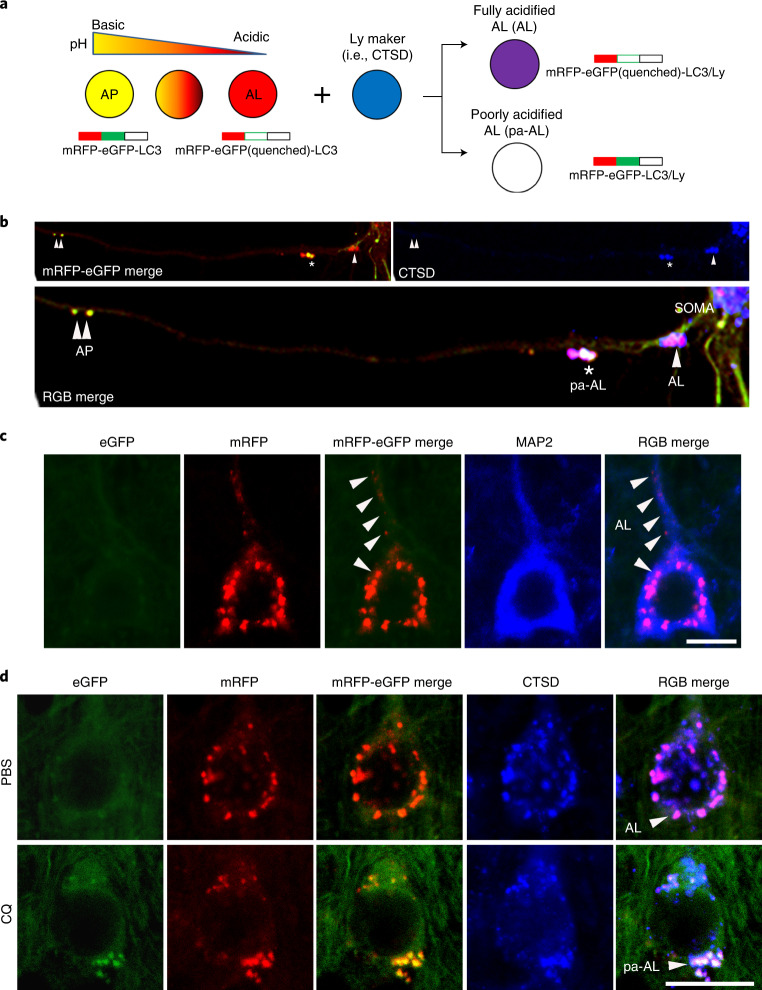
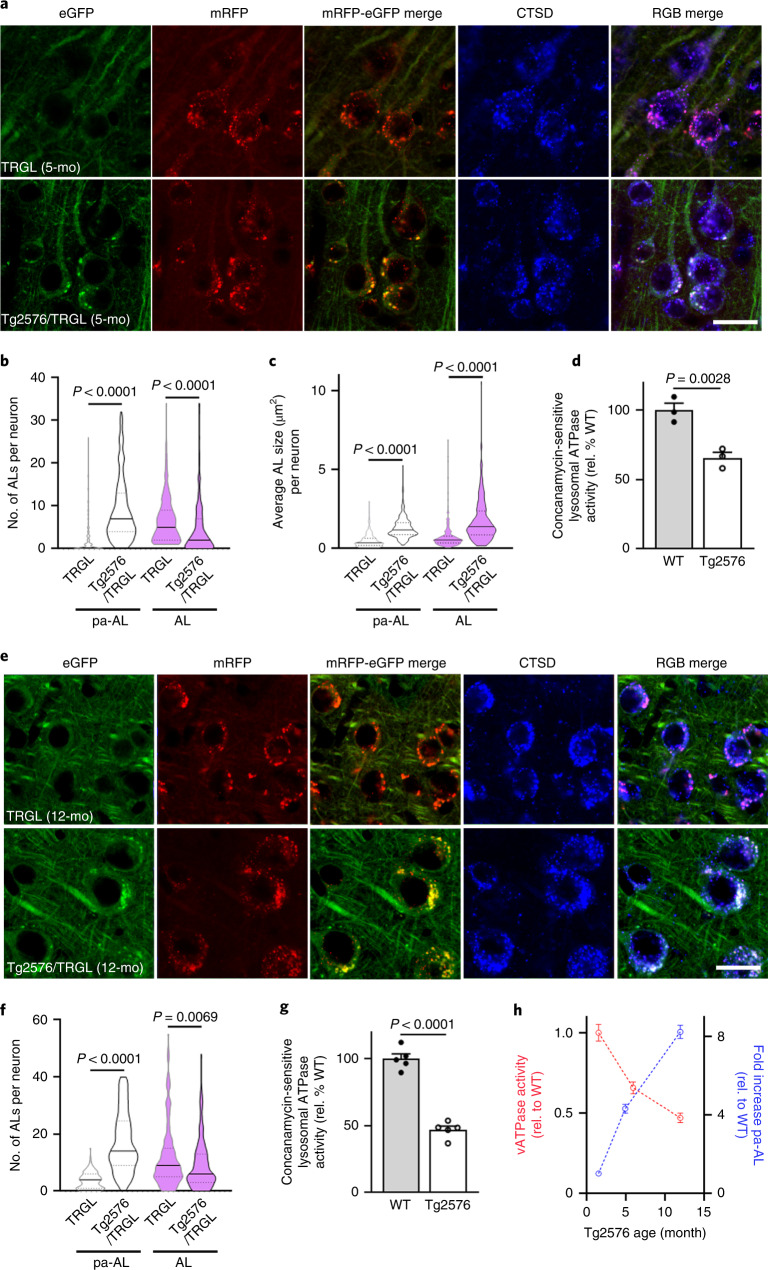
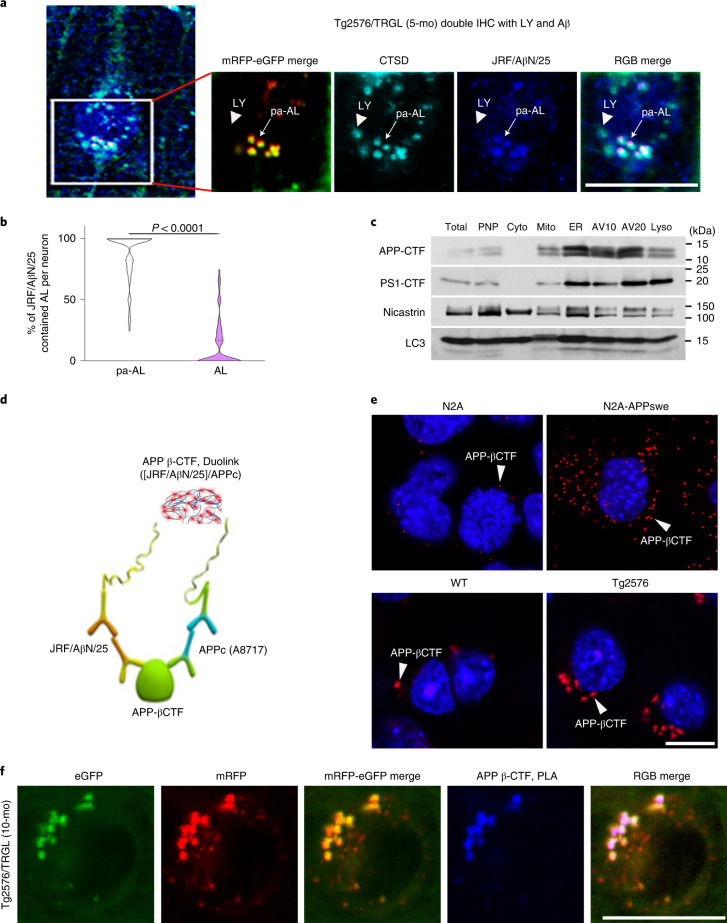
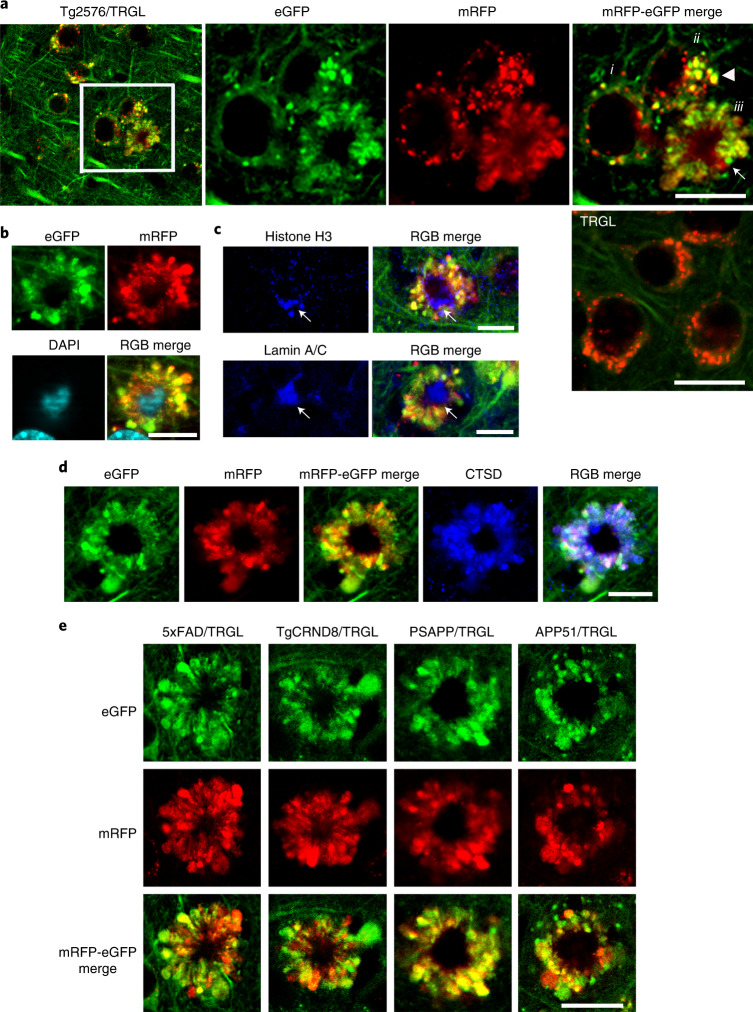
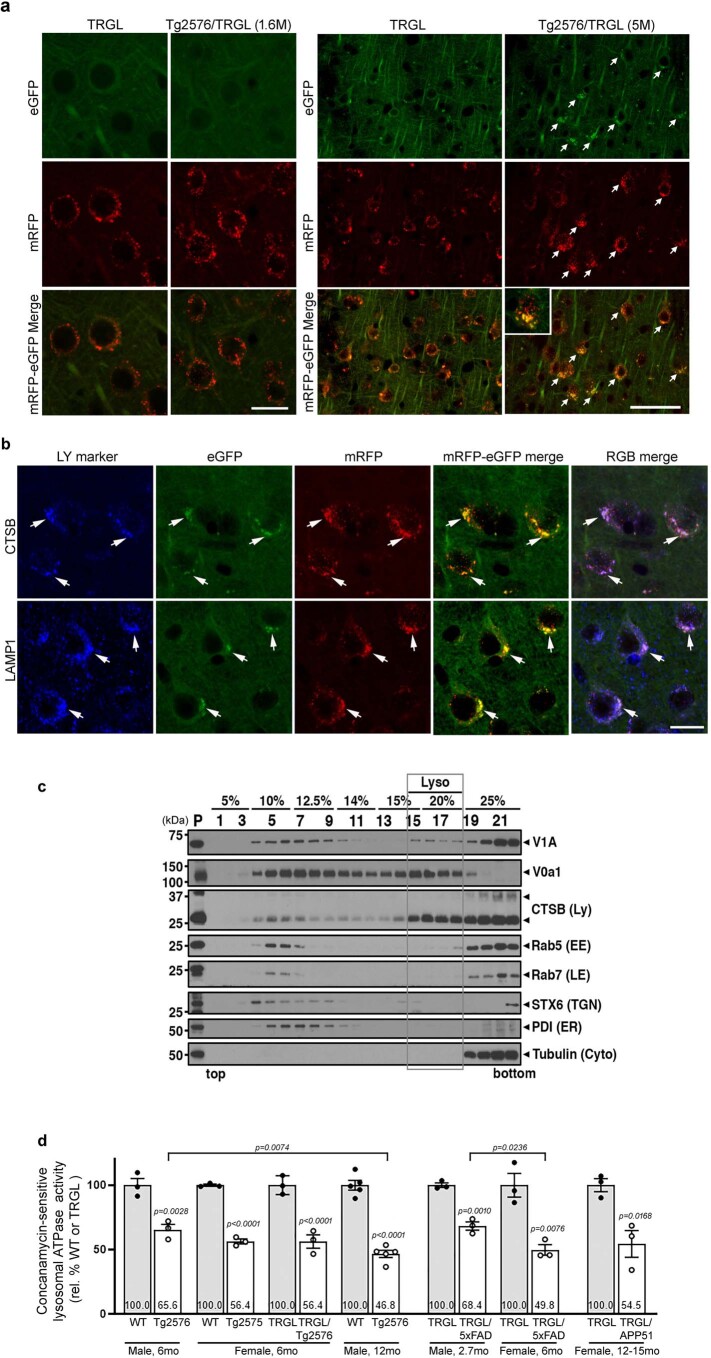
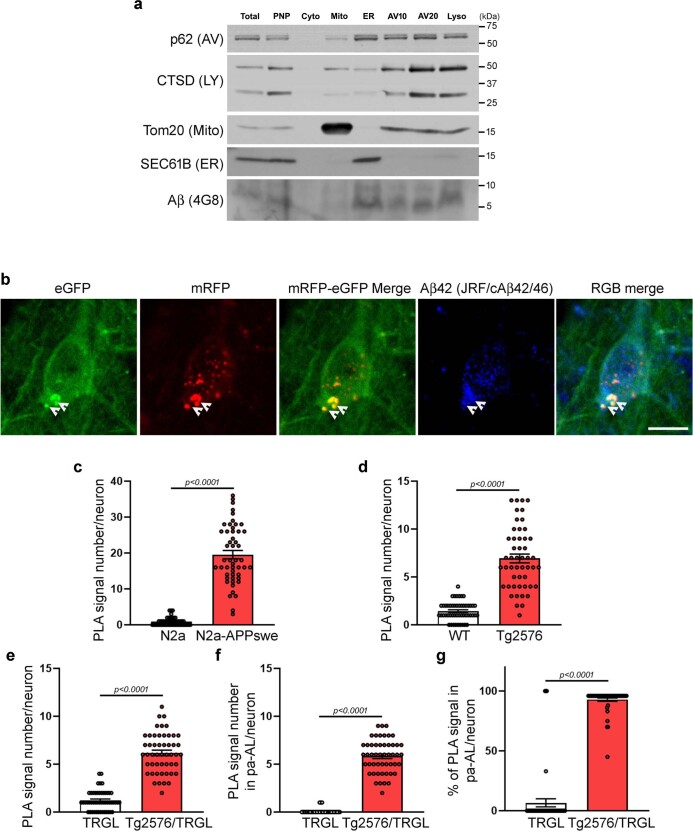
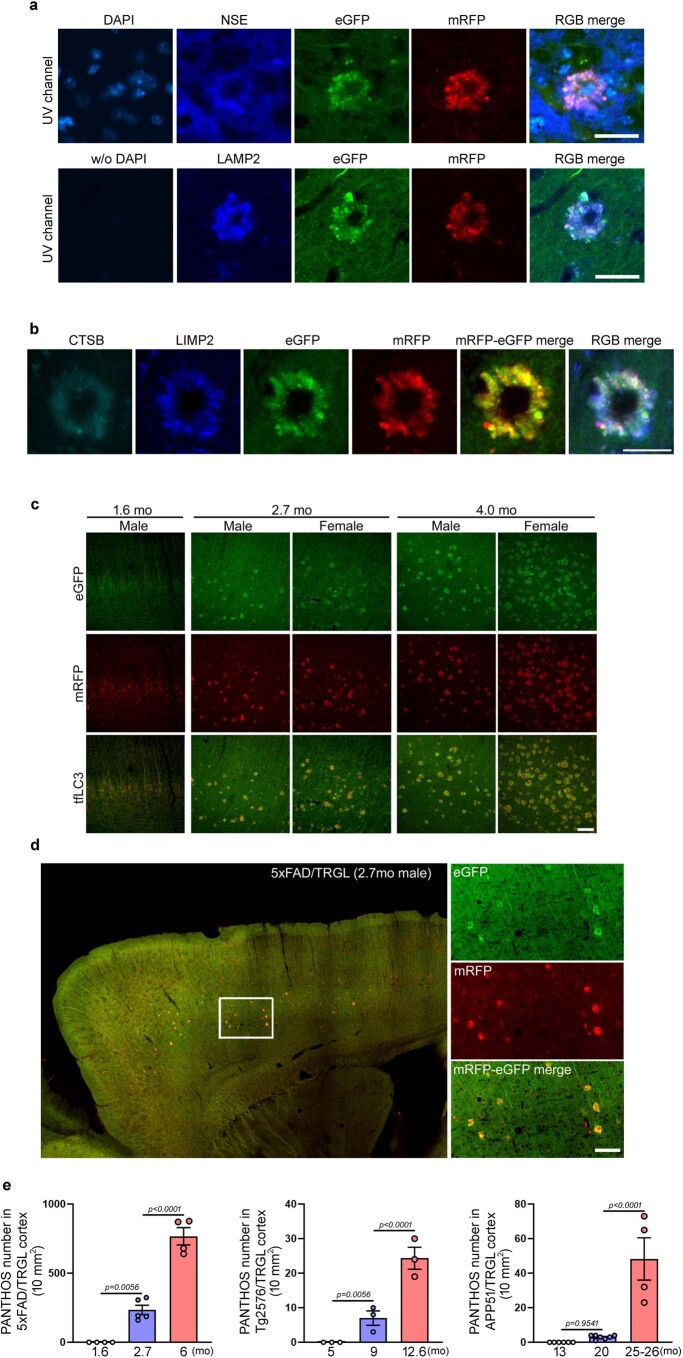
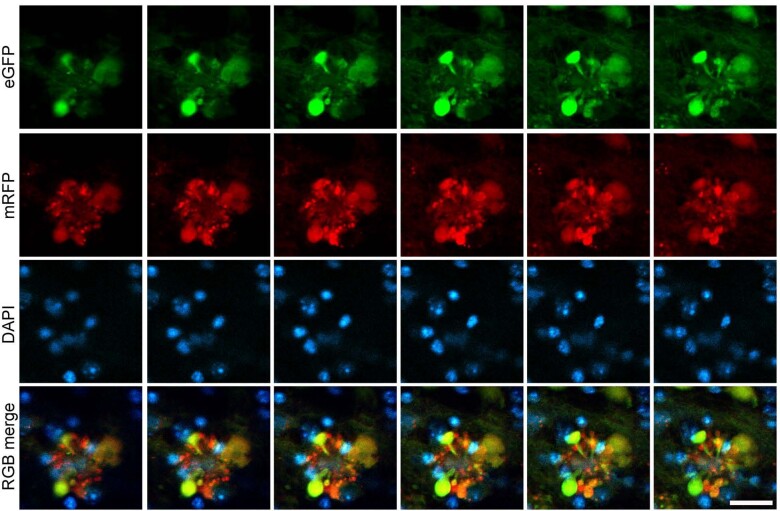
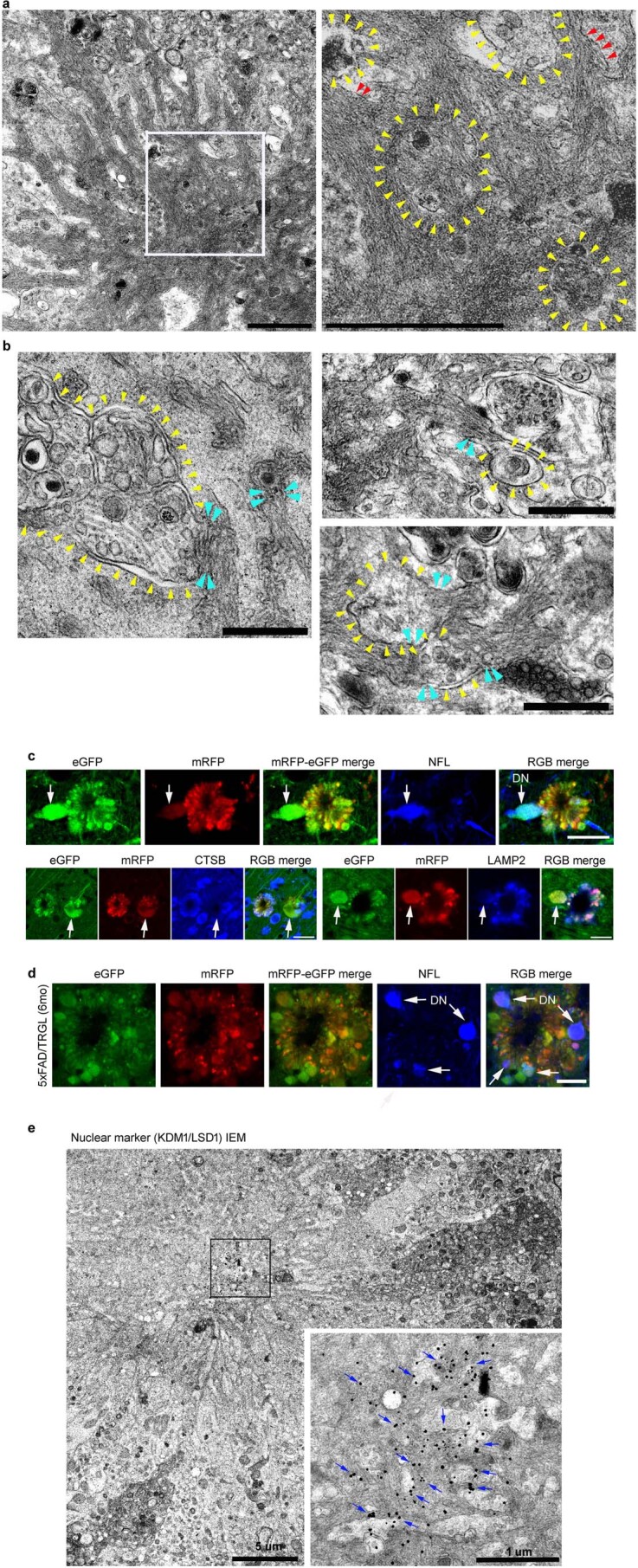
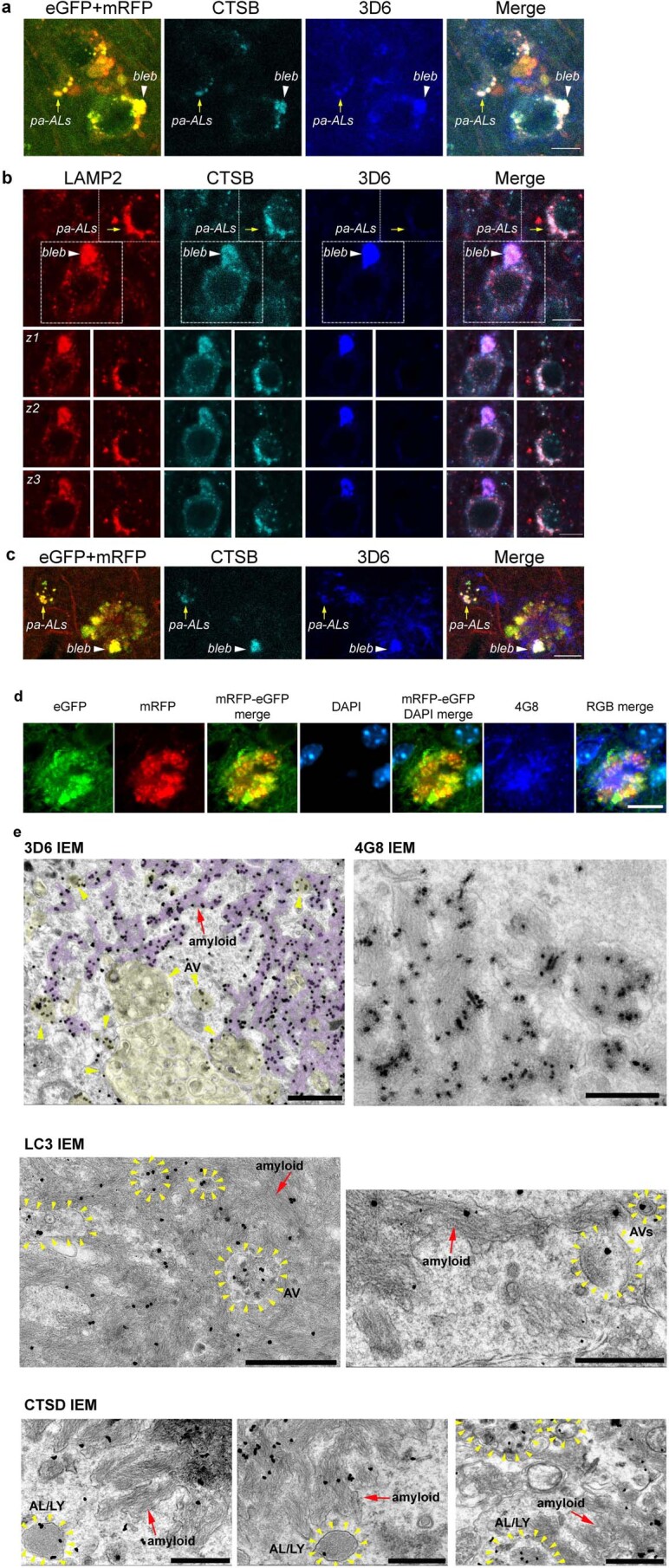
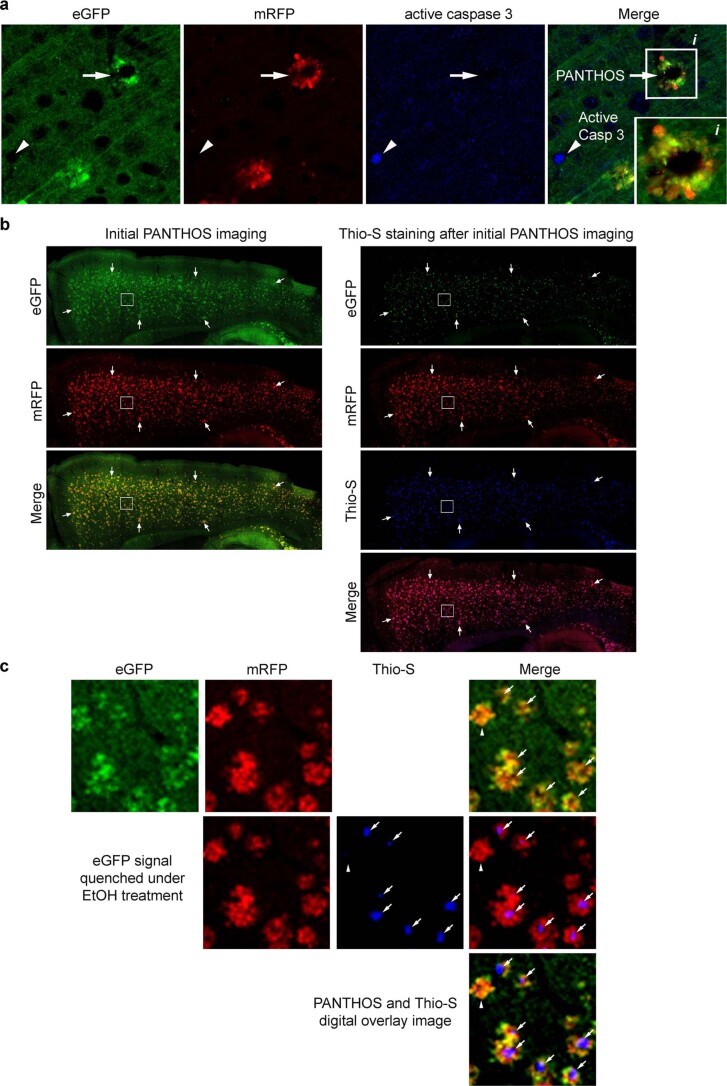
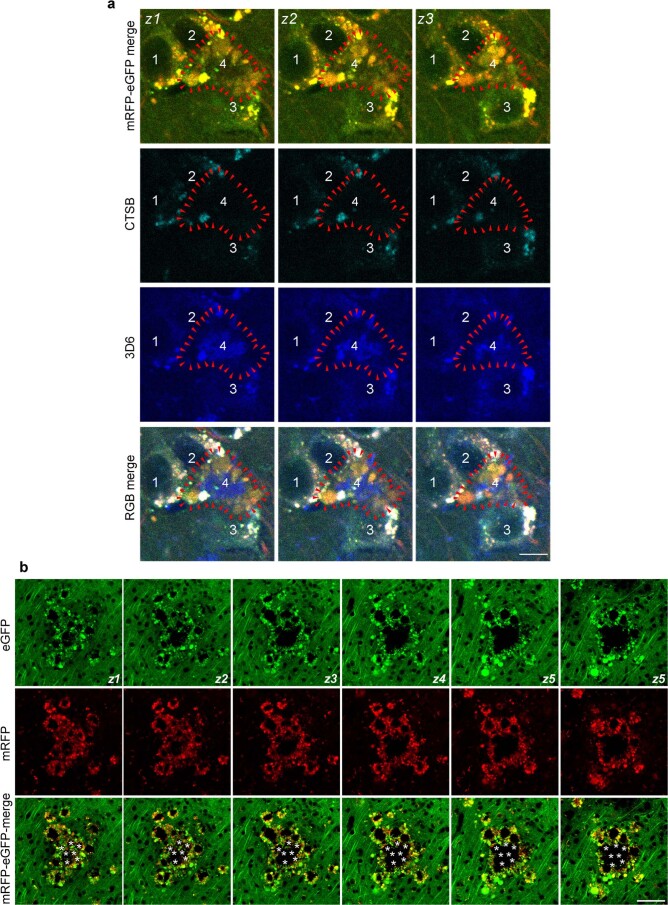
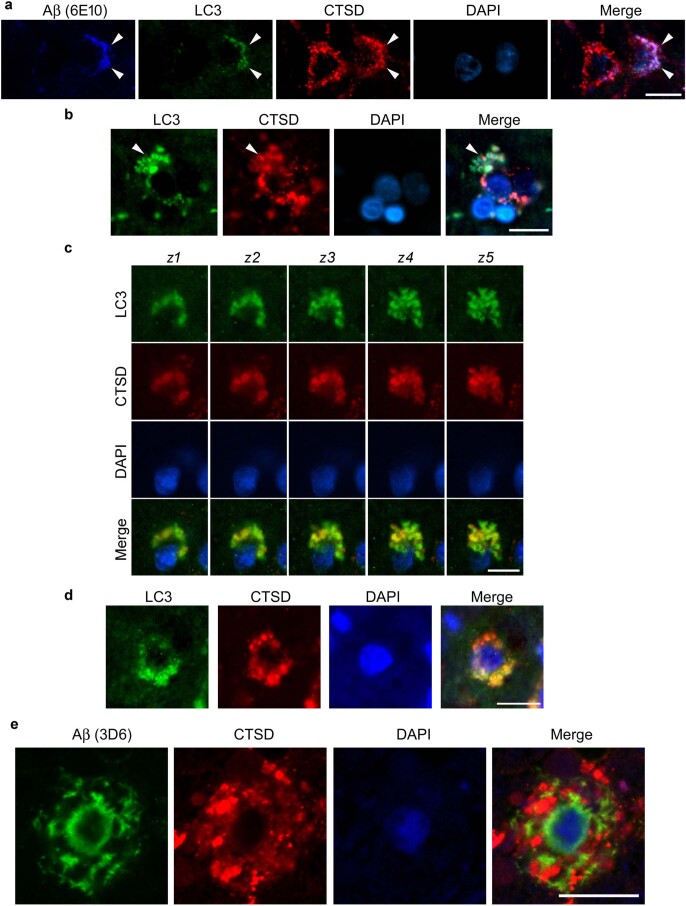
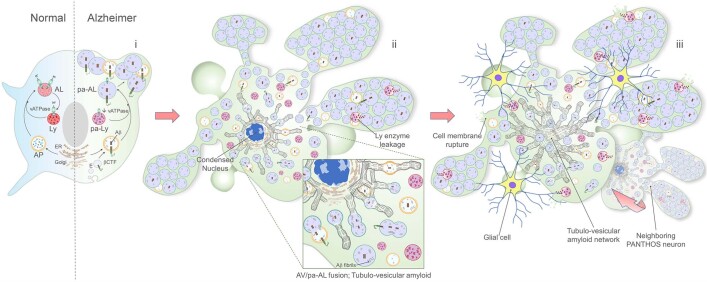
Autophagy is markedly impaired in Alzheimer’s disease (AD). Here we reveal unique autophagy dysregulation within neurons in five AD mouse models in vivo and identify its basis using a neuron-specific transgenic mRFP-eGFP-LC3 probe of autophagy and pH, multiplex confocal imaging and correlative light electron microscopy. Autolysosome acidification declines in neurons well before extracellular amyloid deposition, associated with markedly lowered vATPase activity and build-up of Aβ/APP-βCTF selectively within enlarged de-acidified autolysosomes. In more compromised yet still intact neurons, profuse Aβ-positive autophagic vacuoles (AVs) pack into large membrane blebs forming flower-like perikaryal rosettes. This unique pattern, termed PANTHOS (poisonous anthos (flower)), is also present in AD brains. Additional AVs coalesce into peri-nuclear networks of membrane tubules where fibrillar β-amyloid accumulates intraluminally. Lysosomal membrane permeabilization, cathepsin release and lysosomal cell death ensue, accompanied by microglial invasion. Quantitative analyses confirm that individual neurons exhibiting PANTHOS are the principal source of senile plaques in amyloid precursor protein AD models.
Overview
The claims and statistics of this paper haven’t been checked yet.
Free: it reads the open-access text and checks the first 5 claims that cite a source we can check. Create a free account to check every claim.
Integrity signals
Registry
Cites
Statistics
Figures
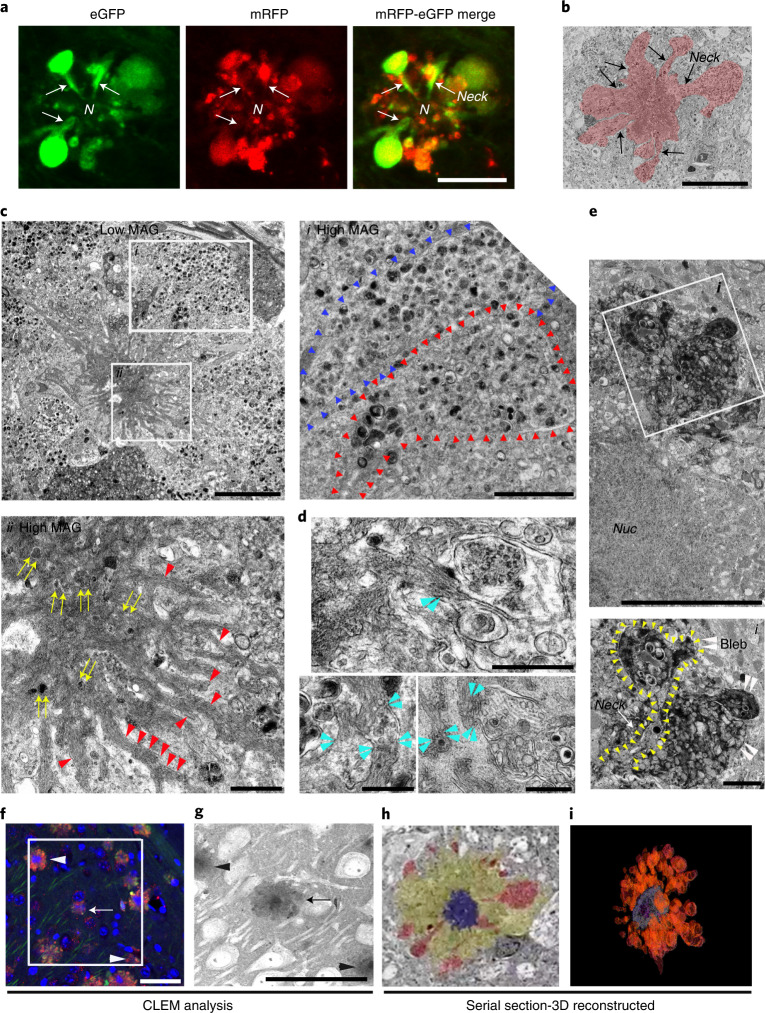
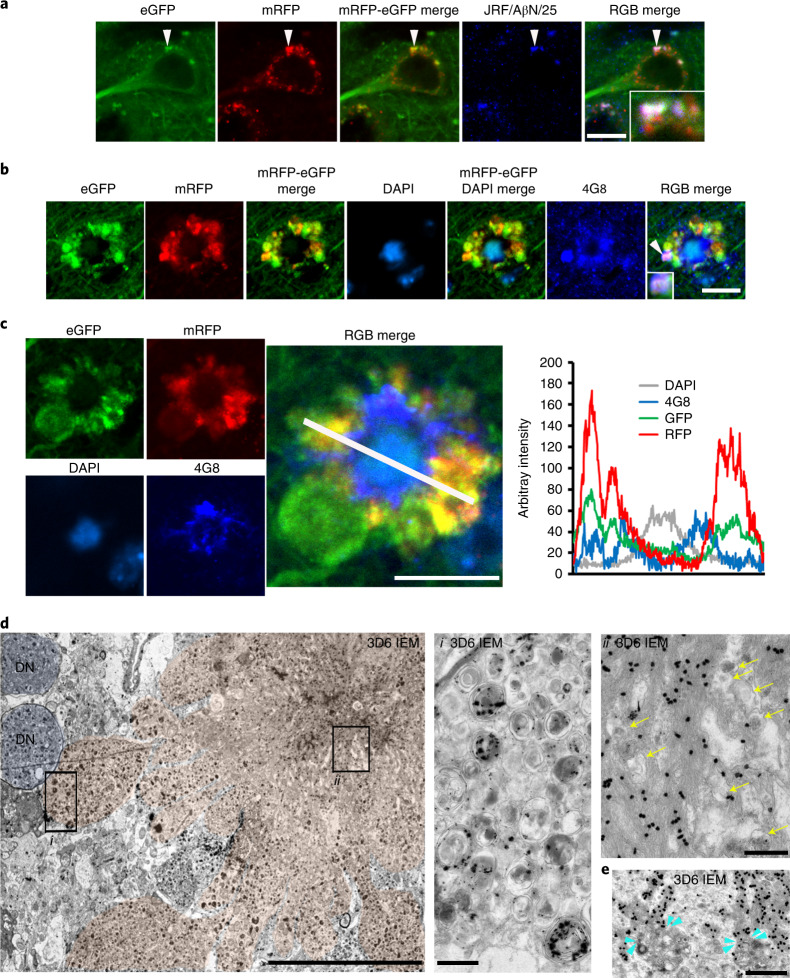
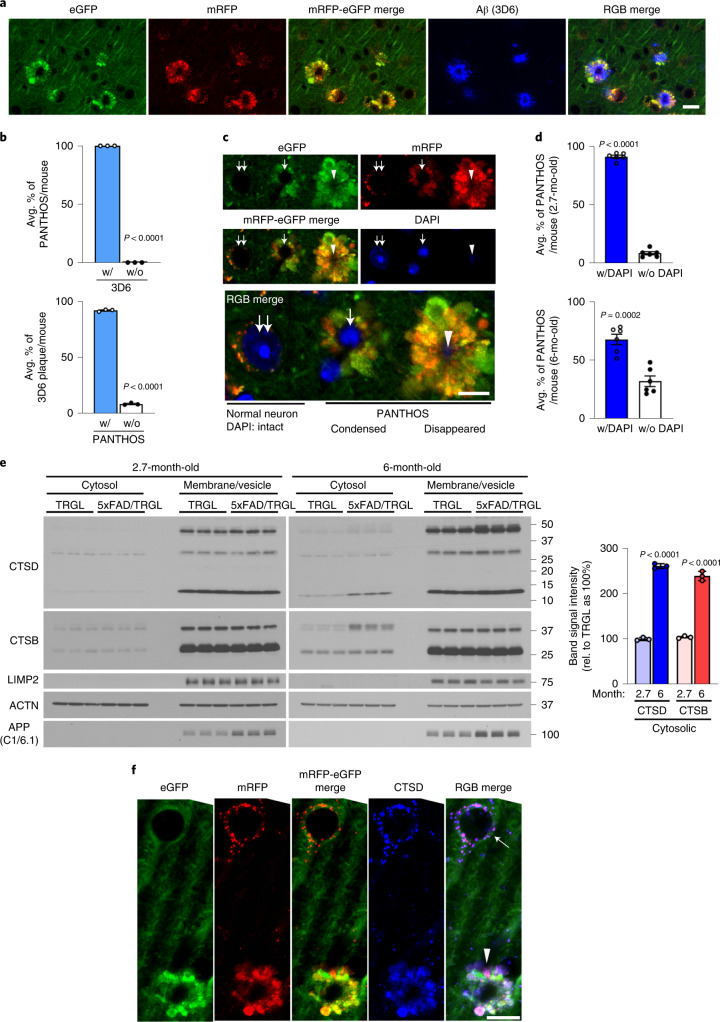
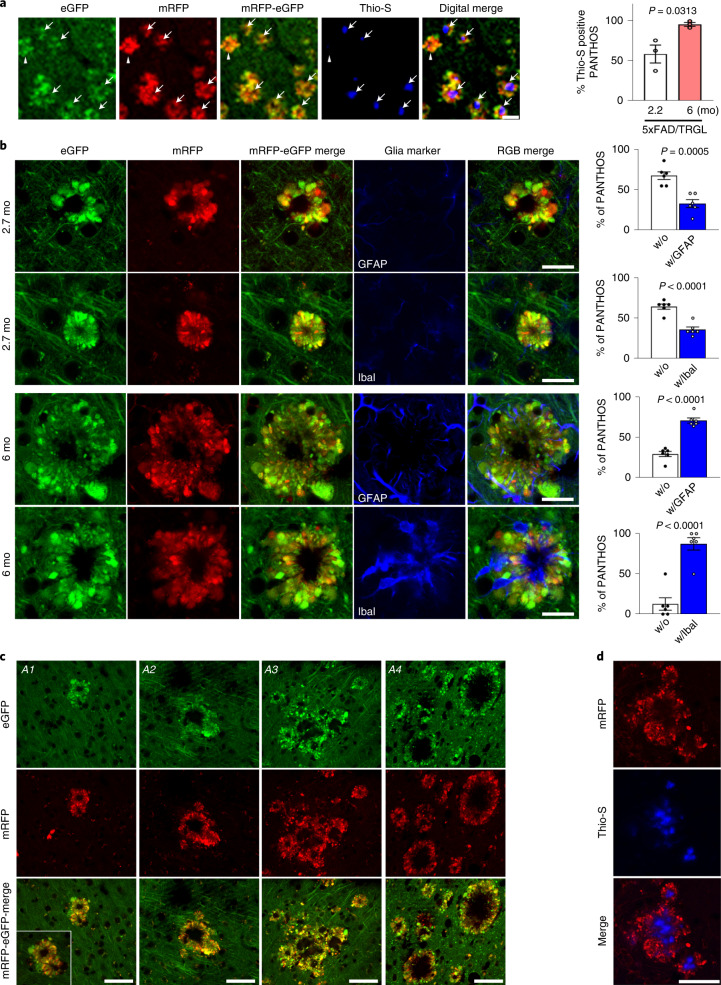
Verification
Claims the paper makes
The claims and statistics of this paper haven’t been checked yet.
Free: it reads the open-access text and checks the first 5 claims that cite a source we can check. Create a free account to check every claim.
Claims other papers make about this one
Each is checked against this paper’s own text: does it say what the citing paper says it does?
The source backs part of the claim, not all of it — or backs it for a different population, condition or comparison.
In the citing paper
“In consistent with this conception, the lysosomal dysfunction occurs earlier than neuronal Aβ-deposition but can prime Aβ accumulation of senile plaque in AD pathogenesis53.”
From PDCD4 triggers α-synuclein accumulation and motor deficits via co-suppressing TFE3 and TFEB translation in a model of Parkinson’s disease (2024) · cites this paper as [53]
Experimental — accuracy not yet measuredThe source backs part of the claim, not all of it — or backs it for a different population, condition or comparison.
In the citing paper
“Once lysosome acidification is hindered, the garbage decomposition pipeline stops, causing many garbage intermediate products to form and accumulate in the lysosome, including Aβ, Tau protein, and lipid droplets.[ 8 , 11 , 31 , 50 ]”
From Capsaicin Alleviates Autophagy‐Lysosomal Dysfunction via PPARA‐Mediated V‐ATPase Subunit ATP6V0E1 Signaling in 3xTg‐AD Mice (2025) · cites this paper as [11]
Experimental — accuracy not yet measuredThe cited source says what the claim attributes to it.
In the citing paper
“However, the abundant accumulation of autophagic vacuoles in swollen (malnourished) neurons is observed to have a linkage with Aβ/APP-βCTF, suggesting that autophagy clearance is severely disrupted under pathological conditions and is closely linked to amyloid pathology.115,225,230”
From Recent advances in Alzheimer's disease: Mechanisms, clinical trials and new drug development strategies. (2024) · cites this paper as [115]
The cited source says what the claim attributes to it.
In the citing paper
“In AD, lysosomal acidification deficits may weaken the clearance of Aβ, ultimately leading to the accumulation of extracellular Aβ plaques.115”
From Recent advances in Alzheimer's disease: Mechanisms, clinical trials and new drug development strategies. (2024) · cites this paper as [115]
The cited source says what the claim attributes to it.
In the citing paper
“This aligns with work from multiple laboratories showing that plaque formation depends on neuronal Aβ [45–48]”
From Selective suppression of oligodendrocyte-derived amyloid beta rescues neuronal dysfunction in Alzheimer’s disease (2024) · cites this paper as [45]
6 more claims about this paper
Create a free account to see every claim other papers make about this one.
Self-check
Percentages, sums and reported differences re-computed from the paper’s own numbers.
The self-check needs the paper’s full text.
Citations
Cites
Repertoires of Autophagy in the Pathogenesis of Ocular Diseases
Li, Y.-J., Jiang, Q., Cao, G.-F., Yao, J., & Yan, B. (2015) · Cellular Physiology and Biochemistry · doi:10.1159/000373980 · Cited by 16,304
Autophagy fights disease through cellular self-digestion
Mizushima, N., Levine, B., Cuervo, A. M., & Klionsky, D. J. (2008) · Nature · doi:10.1038/nature06639 · Cited by 6,452
Cui, C., Cui, J., Jin, F., Cui, Y., Li, R., Jiang, X., Tian, Y., Wang, K., Jiang, P., & Gao, J. (2017) · Cellular Physiology and Biochemistry · doi:10.1159/000479571 · Cited by 5,203
Correlative Memory Deficits, Aβ Elevation, and Amyloid Plaques in Transgenic Mice
Hsiao, K., Chapman, P., Nilsen, S., Eckman, C., Harigaya, Y., Younkin, S., Yang, F., & Cole, G. (1996) · Science · doi:10.1126/science.274.5284.99 · Cited by 4,210
Oakley, H., Cole, S. L., Logan, S., Maus, E., Shao, P., Craft, J., Guillozet-Bongaarts, A., Ohno, M., Disterhoft, J., Van Eldik, L., et al. (2006) · The Journal of Neuroscience · doi:10.1523/jneurosci.1202-06.2006 · Cited by 3,530
Neuropathological alterations in Alzheimer disease
Serrano-Pozo, A., Frosch, M. P., Masliah, E., & Hyman, B. T. (2011) · Cold Spring Harbor Perspectives in Medicine · doi:10.1101/cshperspect.a006189 · Cited by 3,345
Knopman, D. S., Amieva, H., Petersen, R. C., Chételat, G., Holtzman, D. M., Hyman, B. T., Nixon, R. A., & Jones, D. T. (2021) · Nature Reviews Disease Primers · doi:10.1038/s41572-021-00269-y · Cited by 2,606
Self-citationKimura, S., Noda, T., & Yoshimori, T. (2007) · Autophagy · doi:10.4161/auto.4451 · Cited by 2,278
The role of autophagy in neurodegenerative disease
Nixon, R. A. (2013) · Nature Medicine · doi:10.1038/nm.3232 · Cited by 2,059
Self-citationIntracellular amyloid-β in Alzheimer's disease
LaFerla, F. M., Green, K. N., & Oddo, S. (2007) · Nature Reviews Neuroscience · doi:10.1038/nrn2168 · Cited by 1,942
Research works printed but not linked: 5
- Yang, D.S., Stavrides, P., Mohan, P.S., Kaushik, S., Kumar, A., Ohno, M., Schmidt, S.D., Wesson, D., Bandyopadhyay, U., Jiang, Y., et al. (2011). Reversal of autophagy dysfunction in the TgCRND8 mouse model of Alzheimer's disease ameliorates amyloid pathologies and memory deficits. Brain 134, 258-277. · DOI · Paper page
- Cataldo, A.M., Peterhoff, C.M., Schmidt, S.D., Terio, N.B., Duff, K., Beard, M., Mathews, P.M., and Nixon, R.A. (2004). Presenilin mutations in familial Alzheimer disease and transgenic mouse models accelerate neuronal lysosomal pathology. J Neuropathol Exp Neurol 63, 821-830. · DOI · Paper page
- Mouse monoclonal anti-NFL was validated by our study: Yuan, A., Sershen, H., Veeranna, Basavarajappa, B.S., Kumar, A., Hashim, A., Berg, M., Lee, J.H., Sato, Y., Rao, M.V., et al. (2015). Neurofilament subunits are integral components of synapses and modulate neurotransmission and behavior in vivo. Mol Psychiatry 20, 986-994. JRF/AβN/25 was validated by our study: Mathews, P.M., Jiang, Y., Schmidt, S.D., Grbovic, O.M., Mercken, M., and Nixon, R.A. (2002). Calpain activity regulates the cell surface distribution of amyloid precursor protein. Inhibition of calpains enhances endosomal generation of beta-cleaved C-terminal APP fragments. J Biol Chem 277, 36415-36424. JRF/cAb42/26 was validated by this study: Janus, C. et al. Aβ peptide immunization reduces behavioural impairment and plaques in a model of Alzheimer's disease. Nature 408, 979-982 (2000). C1/6.1 was validated by our study: Jiang, Y., Mullaney, K.A., Peterhoff, C.M., Che, S., Schmidt, S.D., Boyer-Boiteau, A., Ginsberg, S.D., Cataldo, A.M., Mathews, P.M., and Nixon, R.A. (2010). Alzheimer's-related endosome dysfunction in Down syndrome is Aβ- independent but requires APP and is reversed by BACE-1 inhibition. Proc Natl Acad Sci U S A, 1630-1635. References · DOI · Paper page
- Bodendorf, U., Danner, S., Fischer, F., Stefani, M., Sturchler-Pierrat, C., Wiederhold, K.-H., Staufenbiel, M., and Paganetti, P. (2002). Expression of human β-secretase in the mouse brain increases the steady-state level of β-amyloid. Journal of Neurochemistry 80, 799-806.
- Anti-p62 C-terminal (Sqstm1) (https://us.progen.com/anti-p62-SQSTM1-C-terminus-guinea-pig-polyclonal-serum/GP62-C).. Anti-Sec1b (https://www.ptglab.com/products/SEC61B-Antibody-15087-1-AP.htm). Rabbit polyclonal anti-CTSD was validated by our study: Lee, J.-H., Yu, W.H., Kumar, A., Lee, S., Mohan, P.S., Peterhoff, C.M., Wolfe, D.M., Martinez-Vicente, M., Massey, A.C., Sovak, G., et al. (2010). Lysosomal proteolysis and autophagy require presenilin 1 and are disrupted by Alzheimer-related PS1 mutations. Cell 141, 1146-1158. · DOI · Paper page
Cited by
Aging and aging-related diseases: from molecular mechanisms to interventions and treatments
Guo, J., Huang, X., Dou, L., Yan, M., Shen, T., Tang, W., & Li, J. (2022) · Signal Transduction and Targeted Therapy · doi:10.1038/s41392-022-01251-0 · Cited by 1,718
“Further research has revealed that these nerve cells have autophagy disorders and cannot effectively decompose Aβ, leading to the corresponding phenotype.(209) Tau proteins may also aggregate and form neurofibrillary tangles.”
BackgroundZhang, J., Zhang, Y., Wang, J., Xia, Y., Zhang, J., & Chen, L. (2024) · Signal Transduction and Targeted Therapy · doi:10.1038/s41392-024-01911-3 · Cited by 1,138
Mechanisms of autophagy–lysosome dysfunction in neurodegenerative diseases
Nixon, R. A., & Rubinsztein, D. C. (2024) · Nature Reviews Molecular Cell Biology · doi:10.1038/s41580-024-00757-5 · Cited by 435
“…of AD brain, a uniquely extreme ‘autophagic stress’ 131 develops in the neuronal soma 131 , characterized by massive accumulation of inadequately acidified autolysosomes unable to degrade substrates, including APP-βCTF and amyloid-β, leading to intracellular formation of amyloid-β 131 (Figs.”
InfluentialSelf-citationAlzheimer’s disease: insights into pathology, molecular mechanisms, and therapy
Zheng, Q., & Wang, X. (2025) · Protein & Cell · doi:10.1093/procel/pwae026 · Cited by 410
Tau-targeting therapies for Alzheimer disease: Current status and future directions
Congdon, E. E., Ji, C., Tetlow, A. M., Jiang, Y., & Sigurdsson, E. M. (2023) · Nature Reviews Neurology · doi:10.1038/s41582-023-00883-2 · Cited by 371
Perluigi, M., Di Domenico, F., & Butterfield, D. A. (2024) · Physiological Reviews · doi:10.1152/physrev.00030.2022 · Cited by 282
Clinical trials of new drugs for Alzheimer disease: a 2020–2023 update
Huang, L.-K., Kuan, Y.-C., Lin, H.-W., & Hu, C.-J. (2023) · Journal of Biomedical Science · doi:10.1186/s12929-023-00976-6 · Cited by 252
“These formations constitute the primary source of the majority of amyloid plaques found in mouse models of AD [35].”
BackgroundAutophagy, aging, and age-related neurodegeneration
Palmer, J. E., Wilson, N., Son, S. M., Obrocki, P., Wrobel, L., Rob, M., Takla, M., Korolchuk, V. I., & Rubinsztein, D. C. (2025) · Neuron · doi:10.1016/j.neuron.2024.09.015 · Cited by 241
Quick, J. D., Silva, C., Wong, J. H., Lim, K. L., Reynolds, R., Barron, A. M., Zeng, J., & Lo, C. H. (2023) · Journal of Neuroinflammation · doi:10.1186/s12974-023-02866-y · Cited by 203
“To detect lysosomal pH in vivo, the Nixon group has developed an autophagy reporter mouse expressing mRFP-eGFP-LC3 in neurons [37].”
BackgroundAutophagy enables microglia to engage amyloid plaques and prevents microglial senescence
Choi, I., Wang, M., Yoo, S., Xu, P., Seegobin, S. P., Li, X., Han, X., Wang, Q., Peng, J., Zhang, B., et al. (2023) · Nature Cell Biology · doi:10.1038/s41556-023-01158-0 · Cited by 202
Stress granules plug and stabilize damaged endolysosomal membranes
Bussi, C., Mangiarotti, A., Vanhille-Campos, C., Aylan, B., Pellegrino, E., Athanasiadi, N., Fearns, A., Rodgers, A., Franzmann, T. M., Šarić, A., et al. (2023) · Nature · doi:10.1038/s41586-023-06726-w · Cited by 178
Compilation of reported protein changes in the brain in Alzheimer's disease
Askenazi, M., Kavanagh, T., Pires, G., Ueberheide, B., Wisniewski, T., & Drummond, E. (2023) · Nature Communications · doi:10.1038/s41467-023-40208-x · Cited by 174
Emerging degrader technologies engaging lysosomal pathways
Ding, Y., Xing, D., Fei, Y., & Lu, B. (2022) · Chemical Society Reviews · doi:10.1039/d2cs00624c · Cited by 170
Lysosomes in senescence and aging
Tan, J. X., & Finkel, T. (2023) · EMBO reports · doi:10.15252/embr.202357265 · Cited by 151
“…mutations in V-ATPase are known to cause or contribute to a number of human diseases, such as Cutis laxa (CL), wrinkly skin syndrome (WSS), distal renal tubular acidosis, Parkinson’s and Alzheimer’s diseases, as well as other neurodegenerative disorders (Jin et al , 2012; Lee et al , 2022).”
Roles of Oxidative Stress in Synaptic Dysfunction and Neuronal Cell Death in Alzheimer’s Disease
Plascencia‐Villa, G., & Perry, G. L. (2023) · Antioxidants · doi:10.3390/antiox12081628 · Cited by 189
“Autophagy is significantly impaired or dysregulated within neurons affected by AD, preceding the formation of amyloid plaques [66].”
BackgroundXu, F., Wu, Y., Yang, Q., Cheng, Y., Xu, J., Zhang, Y., Dai, H., Wang, B., Ma, Q., Chen, Y., et al. (2022) · Advanced Materials · doi:10.1002/adma.202207107 · Cited by 147
Urolithin A improves Alzheimer's disease cognition and restores mitophagy and lysosomal functions
Hou, Y., Chu, X., Park, J., Zhu, Q., Hussain, M., Li, Z., Madsen, H. B., Yang, B., Wei, Y., Wang, Y., et al. (2024) · Alzheimer's & Dementia · doi:10.1002/alz.13847 · Cited by 145
“…Lewy bodies), and HD. 84 In our study, one of the most significant findings was that Ctsz was highly expressed in multiple AD transgenic mouse models, and its expression was normalized by UA treatment (Figures 4 and 6), suggesting a critical role of Ctsz in UA-induced therapeutic effects for AD.”
BackgroundYang, Q., Dai, H., Cheng, Y., Wang, B., Xu, J., Zhang, Y., Chen, Y., Xu, F., Ma, Q., Fei, Z., et al. (2023) · Cell Reports · doi:10.1016/j.celrep.2023.112346 · Cited by 155
Wu, W., Gong, X.-X., Qin, Z.-H., & Wāng, Y. (2025) · Acta Pharmacologica Sinica · doi:10.1038/s41401-025-01576-w · Cited by 188
Lo, C. H., & Zeng, J. (2023) · Translational Neurodegeneration · doi:10.1186/s40035-023-00362-0 · Cited by 117
“Recent studies have demonstrated in different AD mouse models with APP and PSEN1 mutations, that early lysosomal acidification defects reduce autophagic degradation and increase accumulation of Aβ in neurons and late-stage deposition of Aβ plaques [12].”
BackgroundInfluentialWang, X., & Jia, J. (2023) · Biomedicine & Pharmacotherapy · doi:10.1016/j.biopha.2023.114473 · Cited by 130
Microneedle-mediated nose-to-brain drug delivery for improved Alzheimer's disease treatment
Ruan, S., Li, J., Ruan, H., Xia, Q., Hou, X. L., Wang, Z., Guo, T., Zhu, C., Feng, N., & Zhang, Y. (2024) · Journal of Controlled Release · doi:10.1016/j.jconrel.2024.01.013 · Cited by 125
Autophagy–lysosomal-associated neuronal death in neurodegenerative disease
Nixon, R. A. (2024) · Acta Neuropathologica · doi:10.1007/s00401-024-02799-7 · Cited by 134
Self-citationCryoET of β-amyloid and tau within postmortem Alzheimer’s disease brain
Gilbert, M. A. G., Fatima, N., Jenkins, J., O’Sullivan, T. J., Schertel, A., Halfon, Y., Wilkinson, M., Morrema, T. H. J., Geibel, M., Read, R. J., et al. (2024) · Nature · doi:10.1038/s41586-024-07680-x · Cited by 105
“We suggest these non-amyloid constituents are a component of AD pathology, perhaps related to β-amyloid biogenesis 42,43 or a cellular response to amyloid 44 .”
Chaperone‐mediated autophagy: Molecular mechanisms, biological functions, and diseases
Yao, R., & Shen, J. (2023) · MedComm · doi:10.1002/mco2.347 · Cited by 111
Wang, Z., Wang, C., Yuan, B., Liu, L., Zhang, H., Zhu, M., Chai, H., Peng, J., Huang, Y. H., Zhou, S., et al. (2025) · Microbiome · doi:10.1186/s40168-024-02001-w · Cited by 133
Yin, T., Liu, Y., Ji, W., Zhuang, J., Chen, X., Gong, B., Chu, J., Liang, W., Gao, J., & Yin, Y. (2023) · Theranostics · doi:10.7150/thno.81860 · Cited by 98
“In addition, autophagy activation was proven to be effective in Aβ plaque scavenging, indicating that autophagy activation represents a promising strategy against AD through clearance of abnormal protein accumulation [105].”
BackgroundProteostasis and lysosomal repair deficits in transdifferentiated neurons of Alzheimer’s disease
Chou, C.-C., Vest, R., Prado, M. A., Wilson-Grady, J., Paulo, J. A., Shibuya, Y., Moran-Losada, P., Lee, T.-T., Luo, J., Gygi, S. P., et al. (2025) · Nature Cell Biology · doi:10.1038/s41556-025-01623-y · Cited by 94
“…of in vivo lysosomal pH in transgenic mouse models for AD indicated that the emergence of lysosomal acidification deficits precedes Aβ depositions and that as disease progresses, neurons build up Aβ/APP-CTF selectively in perinuclear de-acidified lysosomes, leading to lysosomal damage 43 .”
InfluentialNeuroprotective Effects of Agri-Food By-Products Rich in Phenolic Compounds
Rojas-García, A., Fernández‐Ochoa, Á., Cádiz‐Gurrea, M. D. L. L., Arraéz-Román, D., & Segura‐Carretero, A. (2023) · Nutrients · doi:10.3390/nu15020449 · Cited by 98
“accumulation of Aβ inside brain cell lysosomes [32].”
BackgroundIGF2 in memory, neurodevelopmental disorders, and neurodegenerative diseases
Alberini, C. M. (2023) · Trends in Neurosciences · doi:10.1016/j.tins.2023.03.007 · Cited by 89
Im, E., Jiang, Y., Stavrides, P. H., Darji, S., Erdjument-Bromage, H., Neubert, T. A., Choi, J. Y., Wegiel, J., Lee, J.-H., & Nixon, R. A. (2023) · Science Advances · doi:10.1126/sciadv.adg1925 · Cited by 80
“, (26, 59) Rabbit anti-Rab5 Abcam Cat# ab218624; RRID: AB_2892717 Mouse anti-Rab7 Abcam Cat# ab50533; RRID: AB_882241 Mouse anti-PDI GeneTex Cat# GTX22792; RRID: AB_384853 Rabbit anti-Syntaxin 6 Cell Signaling Technology Cat# 2869; RRID: AB_2196500 Mouse anti-Tubulin Sigma-Aldrich Cat# T8535; RRID: AB_261795 Mouse ant…”
ResultSelf-citationNeurotoxic β-amyloid oligomers cause mitochondrial dysfunction—the trigger for PANoptosis in neurons
Meng, X., Song, Q., Liu, Z., Liu, X., Wang, Y., & Liu, J. (2024) · Frontiers in Aging Neuroscience · doi:10.3389/fnagi.2024.1400544 · Cited by 88
“The acidic environment within endosomes and lysosomes serves as a preferential site for A β O formation (Lee et al., 2022).”
BackgroundNaia, L., Shimozawa, M., Bereczki, E., Li, X., Liu, J., Jiang, R., Giraud, R., Leal, N. S., Pinho, C. M., Berger, E., et al. (2023) · Molecular Psychiatry · doi:10.1038/s41380-023-02289-4 · Cited by 79
“Additionally, acidi fi cation required for the fi nal degradative step in the autophagy-lysosomal pathway is largely controlled by vATPases, which impairment has been linked to FAD-causing PS1 mutations and altered early in the development of A β pathology [76].”
BackgroundBayazid, A. B., & Lim, B. O. (2022) · Nutrients · doi:10.3390/nu14235132 · Cited by 83
“Moreover, exogenous Aβ could develop AD by triggering a receptor expressed on myeloid cells 2 (TREM2) and formi g senile plaques [103,104].”
BackgroundTargeting autophagy in Alzheimer’s disease: Animal models and mechanisms
Zhang, X.-W., 澳门大学中华医药研究院中药质量研究国家重点实验室, 澳. 凼. 9., State Key Laboratory of Quality Research in Chinese Medicine, I. O. C. M. S., Zhu, X.-X., Tang, D.-S., Lu, J.-H., 佛山大学广东省动物分子设计与精准育种重点实验室, 广., & Guangdong Provincial Key Laboratory of Animal Molecular Design and Precise Breeding, G. E. T. C. O. G. P. (2023) · Zoological Research · doi:10.24272/j.issn.2095-8137.2023.294 · Cited by 77
Amyloid‐β PET in Alzheimer's disease: A systematic review and Bayesian meta‐analysis
Ruan, D., & Sun, L. (2023) · Brain and Behavior · doi:10.1002/brb3.2850 · Cited by 74
“Lee et al. (2022) proposed that neuronal cell death occurs first, followed by extracellular Aβ plaque formation.”
BackgroundHederagenin improves Alzheimer's disease through PPARα/TFEB-mediated autophagy
Xie, Z.-S., Zhao, J.-P., Wu, L.-M., Chu, S., Cui, Z.-H., Sun, Y.-R., Wang, H., Ma, H.-F., Ma, D.-R., Wang, P., et al. (2023) · Phytomedicine · doi:10.1016/j.phymed.2023.154711 · Cited by 77
Integrative metabolomics science in Alzheimer’s disease: Relevance and future perspectives
Lista, S., González‐Domínguez, R., López‐Ortiz, S., González‐Domínguez, Á., Menéndez, H., Martín-Hernández, J., Lucía, A., Emanuele, E., Centonze, D., Imbimbo, B. P., et al. (2023) · Ageing Research Reviews · doi:10.1016/j.arr.2023.101987 · Cited by 83
Applications of nanobodies in brain diseases
Zheng, F., Pang, Y., Li, L., Pang, Y., Zhang, J., Wang, X., & Raes, G. (2022) · Frontiers in Immunology · doi:10.3389/fimmu.2022.978513 · Cited by 69
Programmed cell death: molecular mechanisms, biological functions, diseases, and therapeutic targets
Qian, S., Long, Y., Tan, G., Li, X., Xiang, B., Tao, Y., Xie, Z., & Zhang, X. (2024) · MedComm · doi:10.1002/mco2.70024 · Cited by 97
Liu, X., Liu, Y., Liu, J., Zhang, H., Shan, C., Guo, Y., Gong, X., Cui, M., Li, X., & Tang, M. (2023) · Neural Regeneration Research · doi:10.4103/1673-5374.382223 · Cited by 84
“Intriguingly, one study provided a new perspective and reported that Aβ aggregates and autophagy dysregulation were uniquely observed within neurons in five mouse models at early stages of AD development (Lee et al., 2022).”
BackgroundPhospholipase D3 degrades mitochondrial DNA to regulate nucleotide signaling and APP metabolism
Van Acker, Z. P., Perdok, A., Hellemans, R., North, K., Vorsters, I., Cappel, C., Dehairs, J., Swinnen, J. V., Sannerud, R., Bretou, M., et al. (2023) · Nature Communications · doi:10.1038/s41467-023-38501-w · Cited by 67
Subramanian, A., Tamilanban, T., Alsayari, A., Ramachawolran, G., Wong, L. S., Sekar, M., Gan, S. H., Subramaniyan, V., Chinni, S. V., Rani, N. N. I. M., et al. (2022) · Frontiers in Pharmacology · doi:10.3389/fphar.2022.1094351 · Cited by 73
“But, recent study findings reveal the defective acidification of autolysosomes may induce faulty autophagic build-up of Aβ in neurons (Lee et al., 2022).”
BackgroundImbimbo, B. P., Ippati, S., Watling, M., & Imbimbo, C. (2023) · Pharmacological Research · doi:10.1016/j.phrs.2022.106631 · Cited by 65
Kim, S.-H., Cho, Y.-S., Kim, Y., Park, J., Yoo, S.-M., Gwak, J., Kim, Y., Gwon, Y., Kam, T.-I., & Jung, Y.-K. (2023) · Autophagy · doi:10.1080/15548627.2023.2181614 · Cited by 60
Morrone, C. D., Raghuraman, R., Hussaini, S. A., & Yu, W. H. (2023) · Molecular Neurodegeneration · doi:10.1186/s13024-023-00617-4 · Cited by 69
Wang, X., Liu, Q., Yu, H., Xie, J., Zhao, J., Fang, Z.-T., Qu, M., Zhang, Y., Yang, Y., & Wang, J. (2024) · Signal Transduction and Targeted Therapy · doi:10.1038/s41392-024-01812-5 · Cited by 71
“52,53 ATP production is crucial for these processes.”
BackgroundNeuritic Plaques — Gateways to Understanding Alzheimer’s Disease
Tsering, W., & Prokop, S. (2024) · Molecular Neurobiology · doi:10.1007/s12035-023-03736-7 · Cited by 59
Interaction between autophagy and the NLRP3 inflammasome in Alzheimer’s and Parkinson’s disease
Lu, R., Zhang, L., & Yang, X. (2022) · Frontiers in Aging Neuroscience · doi:10.3389/fnagi.2022.1018848 · Cited by 61
“To date, autophagy dysfunction has been shown to induce neurodegeneration and exacerbate disease progression (Lee et al., 2022).”
BackgroundRajani, R. M., Ellingford, R., Hellmuth, M., Harris, S. S., Taso, O. S., Graykowski, D., Lam, F. K. W., Arber, C., Fertan, E., Danial, J. S. H., et al. (2024) · PLOS Biology · doi:10.1371/journal.pbio.3002727 · Cited by 62
“This aligns with work from multiple laboratories showing that plaque formation depends on neuronal A β [45–48] and is consistent with the lower abundance of plaques observed in the white matter compared to the grey matter, although elevated levels of soluble A β have previously been reported in the…”
ResultGudkov, S. V., Burmistrov, D. E., Kondakova, E. V., Sarimov, R. M., Yarkov, R. S., Franceschi, C., & Vedunova, M. V. (2022) · Ageing Research Reviews · doi:10.1016/j.arr.2022.101775 · Cited by 58
Mustaly-Kalimi, S., Gallegos, W., Marr, R. A., Gilman-Sachs, A., Peterson, D. A., Sekler, I., & Stutzmann, G. E. (2022) · Proceedings of the National Academy of Sciences · doi:10.1073/pnas.2211999119 · Cited by 55
“However, a recent study showed that accumulation of intracellular Aβ/APP-βCTF within de-acidified autolysosomes occurs in early stages of AD, and the impaired clearance results in large autophagic vesicle packs that contribute to senile plaque formation (74).”
BackgroundBallesteros‐Álvarez, J., Nguyen, W., Sivapatham, R., Rane, A., & Andersen, J. K. (2022) · GeroScience · doi:10.1007/s11357-022-00708-y · Cited by 63
Ding, M., Ding, S., Du, D., Wang, X., Hu, X., Guan, P., Lyu, Z., & Lin, Y. (2023) · TrAC Trends in Analytical Chemistry · doi:10.1016/j.trac.2023.117087 · Cited by 59
Drosophila TMEM63 and mouse TMEM63A are lysosomal mechanosensory ion channels
Li, K., Guo, Y., Wang, Y., Zhu, R., Chen, W., Cheng, T., Zhang, X., Jia, Y., Liu, T., Zhang, W., et al. (2024) · Nature Cell Biology · doi:10.1038/s41556-024-01353-7 · Cited by 60
“Similarly, malfunction of lysosomal degradation was reported as an early pathological event to induce amyloid plaques in Alzheimer’s disease 49 .”
Lizama, B. N., Kahle, J., Catalano, S. M., Caggiano, A. O., Grundman, M., & Hamby, M. E. (2023) · International Journal of Molecular Sciences · doi:10.3390/ijms24076251 · Cited by 54
APP lysine 612 lactylation ameliorates amyloid pathology and memory decline in Alzheimer’s disease
Tian, Q., Li, J., Wu, B., Pang, Y., He, W., Xiao, Q., Wang, J., Yi, L., Tian, N., Shi, X., et al. (2025) · Journal of Clinical Investigation · doi:10.1172/jci184656 · Cited by 63
Vance, J. M., Farrer, L. A., Huang, Y., Cruchaga, C., Hyman, B. T., Pericak‐Vance, M. A., Goate, A. M., Greicius, M. D., Griswold, A. J., Haines, J. L., et al. (2024) · Annals of Neurology · doi:10.1002/ana.26864 · Cited by 52
Maniv, I., Sarji, M., Bdarneh, A., Feldman, A., Ankawa, R., Koren, E., Magid-Gold, I., Reis, N., Soteriou, D., Salomon‐Zimri, S., et al. (2023) · Nature Communications · doi:10.1038/s41467-023-41545-7 · Cited by 57
Webber, E. K., Fivaz, M., Stutzmann, G. E., & Griffioen, G. (2023) · Alzheimer's & Dementia · doi:10.1002/alz.13065 · Cited by 50
Sirtuins and their influence on autophagy
Baeken, M. W. (2023) · Journal of Cellular Biochemistry · doi:10.1002/jcb.30377 · Cited by 56
“84”
The regulatory role of lipophagy in central nervous system diseases
Lan, Z.-Q., Ge, Z.-Y., Lv, S.-K., Zhao, B., & Li, C.-X. (2023) · Cell Death Discovery · doi:10.1038/s41420-023-01504-z · Cited by 49
“Previous studies suggest that the dysfunction of lysosomes and autophagy possibly plays a role in the development of some neurodegenerative diseases [5, 6], suggesting the process of selective phagocytosis of lipids by lysosomes could be involved in the development of CNS diseases.”
BackgroundYang, J., Zhang, W., Zhang, S., Iyaswamy, A., Sun, J., Wang, J., & Yang, C. (2023) · Aging and Disease · doi:10.14336/ad.2022.0927 · Cited by 51
“Interestingly, a recent study highlighted that the failure of autolysosome acidification is responsible for AD pathogenesis such as plaque formation [61], highlighting the critical roles of lysosomal functions for AD therapeutics.”
BackgroundUllah, R., & Lee, E. J. (2023) · Experimental Neurobiology · doi:10.5607/en23014 · Cited by 57
“Furthermore, it is essential to recognize the critical role of the autophagy pathway in cellular homeostasis, facilitating the turnover of cell organelles and promoting the degradation of aggregated proteins in response to cellular stress [195].”
BackgroundYang, X., Chen, Y.-H., Liu, L., Gu, Z., You, Y., Hao, J., Sun, N., & Gao, C. (2024) · Pharmacological Research · doi:10.1016/j.phrs.2024.107357 · Cited by 60
Rappe, A., Vihinen, H., Suomi, F., Hassinen, A., Ehsan, H., Jokitalo, E., & McWilliams, T. G. (2024) · The EMBO Journal · doi:10.1038/s44318-024-00241-y · Cited by 51
“However, similar reporter strategies to ours have been used by the Nixon group to demonstrate profound accumulation of poorly-acidi fi ed autolysosomes (pa-ALs) in brains of Alzheimer ’ s disease preclinical models (Lee et al, 2022).”
The in-tissue molecular architecture of β-amyloid pathology in the mammalian brain
Leistner, C., Wilkinson, M., Burgess, A., Lovatt, C. A., Goodbody, S., Xu, Y., Deuchars, S. A., Radford, S. E., Ranson, N. A., & Frank, R. A. W. (2023) · Nature Communications · doi:10.1038/s41467-023-38495-5 · Cited by 51
Reduction of DHHC5-mediated beclin 1 S-palmitoylation underlies autophagy decline in aging
Guo, R., Liu, J., Min, X., Zeng, W., Shan, B., Zhang, M., He, Z., Zhang, Y., He, K., Yuan, J., et al. (2024) · Nature Structural & Molecular Biology · doi:10.1038/s41594-023-01163-9 · Cited by 48
“We found that autolysosomes (red puncta) rather than autophagosomes (yellow puncta) were the predominate species in neurons 65–67 .”
Xie, Y., Kuang, W., Wang, D., Yuan, K., & Yang, P. (2023) · European Journal of Medicinal Chemistry · doi:10.1016/j.ejmech.2023.115175 · Cited by 53
Regulated cell death and its role in Alzheimer’s disease and amyotrophic lateral sclerosis
Thal, D. R., Gawor, K., & Moonen, S. (2024) · Acta Neuropathologica · doi:10.1007/s00401-024-02722-0 · Cited by 51
Yin, L., Zhou, J., Li, T., Wang, X., Xue, W., Zhang, J., Lin, L., Wang, N., Kang, X., Zhou, Y., et al. (2022) · Alzheimer s & Dementia · doi:10.1002/alz.12776 · Cited by 45
Feng, B., Ma, Y., Zheng, F., Huang, X., Feng, X., Zhang, K., Liu, L., Chen, F., & Zeng, W. (2023) · Chemical Engineering Journal · doi:10.1016/j.cej.2023.142554 · Cited by 43
Hung, C., Fertan, E., Livesey, F. J., Klenerman, D., & Patani, R. (2024) · Brain · doi:10.1093/brain/awae092 · Cited by 44
Microglia degrade Alzheimer’s amyloid-beta deposits extracellularly via digestive exophagy
Jacquet, R. G., González Ibáñez, F., Picard, K., Funes, L., Khakpour, M., Gouras, G. K., Tremblay, M.-È., Maxfield, F. R., & Solé-Domènech, S. (2024) · Cell Reports · doi:10.1016/j.celrep.2024.115052 · Cited by 42
Carosi, J. M., & Sargeant, T. J. (2023) · Autophagy · doi:10.1080/15548627.2023.2175569 · Cited by 41
“Where does this new research leave the field? While rapamycin has numerous positive effects on biological aging outside of autophagy and could even ameliorate these aspects of aging in AD, it is important to note that AD is a deeply lysosomal disease both genetically [38] and biochemically [9].”
BackgroundInfluentialNeuronal ApoE4 in Alzheimer’s disease and potential therapeutic targets
Zhang, L., Xia, Y., & Gui, Y. (2023) · Frontiers in Aging Neuroscience · doi:10.3389/fnagi.2023.1199434 · Cited by 41
Yarbro, J. M., Han, X., Dasgupta, A., Yang, K., Liu, D., Shrestha, H. K., Zaman, M., Wang, Z., Yu, K., Lee, D. G., et al. (2025) · Nature Communications · doi:10.1038/s41467-025-56853-3 · Cited by 41
Gehlot, P., Kumar, S., Vyas, V. K., Choudhary, B. S., Sharma, M., & Malik, R. (2022) · Bioorganic & Medicinal Chemistry · doi:10.1016/j.bmc.2022.117047 · Cited by 47
Recent progress of nanomedicine in the treatment of Alzheimer’s disease
Hu, L., Tao, Y., Jiang, Y., & Qin, F. (2023) · Frontiers in Cell and Developmental Biology · doi:10.3389/fcell.2023.1228679 · Cited by 52
“Additionally, using imaging and histochemical methods, they showed that the neurons are the source of the great majority of senile plaques in AD mice models, leading to a re-evaluation of the generally understood sequence of events in plaque formation in AD (Lee et al., 2022).”
BackgroundMethodComprehensive Overview of Alzheimer’s Disease: Etiological Insights and Degradation Strategies
Singh, M. K., Shin, Y., Ju, S., Han, S., Kim, S. S., & Kang, I. (2024) · International Journal of Molecular Sciences · doi:10.3390/ijms25136901 · Cited by 49
Lysosome toxicities induced by nanoparticle exposure and related mechanisms
Feng, Y., Fu, H., Zhang, X., Liu, S., & Wei, X. (2024) · Ecotoxicology and Environmental Safety · doi:10.1016/j.ecoenv.2024.117215 · Cited by 45
Li, B., Chen, Y., Zhou, Y., Feng, X., Gu, G., Han, S., Cheng, N., Sun, Y., Zhang, Y., Cheng, J., et al. (2023) · Neural Regeneration Research · doi:10.4103/1673-5374.385839 · Cited by 52
Lysosomal acidification impairment in astrocyte-mediated neuroinflammation
Zeng, J., Indajang, J., Pitt, D., & Lo, C. H. (2025) · Journal of Neuroinflammation · doi:10.1186/s12974-025-03410-w · Cited by 46
Zhang, M., Qian, X., Hu, J., Zhang, Y., Lin, X., Hai, W., Shi, K., Jiang, X., Li, Y., Tang, H., et al. (2023) · European Journal of Nuclear Medicine and Molecular Imaging · doi:10.1007/s00259-023-06446-3 · Cited by 43
“Lee JH and colleagues’ study confirmed faulty autolysosome acidification in AD mouse models induced autophagic build-up of Aβ in neurons, yielding senile plaques [41].”
Zhou, X., Lee, Y.-K., Li, X., Kim, H., Sánchez-Priego, C., Han, X., Tan, H., Zhou, S., Fu, Y., Purtell, K., et al. (2024) · Nature Communications · doi:10.1038/s41467-024-47440-z · Cited by 40
“In Alzheimer ’ s disease (AD), dystrophic neurites and amyloid plaques are the important hallmarks of neuropathologies in the affected brains 72 .”
BackgroundPharmacological mTOR inhibitors in ameliorating Alzheimer’s disease: current review and perspectives
Xie, P.-L., Zheng, M.-Y., Han, R., Chen, W., & Mao, J.-H. (2024) · Frontiers in Pharmacology · doi:10.3389/fphar.2024.1366061 · Cited by 48
Jian, Y., Yuan, S., Yang, J., Lei, Y., Li, X., & Liu, W. (2022) · International Journal of Molecular Sciences · doi:10.3390/ijms23179921 · Cited by 41
“Studies have shown that decreased lysosomal acidification accompanied by impaired autophagic substrate clearance is an important factor in the induction of AD-related pathologies such as Aβ deposition [40].”
BackgroundTRIM16-mediated lysophagy suppresses high-glucose-accumulated neuronal Aβ
Chae, C. W., Yoon, J. H., Lim, J. R., Park, J. Y., Cho, J. H., Jung, Y. H., Choi, G. E., Lee, H. J., & Han, H. J. (2023) · Autophagy · doi:10.1080/15548627.2023.2229659 · Cited by 43
“Patients with AD who have PSEN1 mutations show lysosomal dysfunction, and accumulation of Aβ/C99 in the enlarged lysosomes causes LMP, cathepsin release, and cell death [5,30].”
BackgroundResultThe Role of Genetic, Environmental, and Dietary Factors in Alzheimer’s Disease: A Narrative Review
Mertaş, B., & Boşgelmez, İ. İ. (2025) · International Journal of Molecular Sciences · doi:10.3390/ijms26031222 · Cited by 35
Autolysosomal acidification failure as a primary driver of Alzheimer disease pathogenesis
Lee, J., & Nixon, R. A. (2022) · Autophagy · doi:10.1080/15548627.2022.2110729 · Cited by 35
Self-citationXiao, L., Yang, X., Sharma, V. K., Abebe, D. T., & Loh, Y. P. (2023) · Molecular Psychiatry · doi:10.1038/s41380-023-02135-7 · Cited by 43
Wu, J., Yu, H., Bi, S.-G., Wang, Z., Gong, J., Mao, Y.-M., Wang, F., Zhang, Y., Nie, Y., & Chai, G. (2023) · Autophagy · doi:10.1080/15548627.2023.2281134 · Cited by 40
“Emerging findings suggest that autolysosome acidification decline is closely related to autophagy deficits in AD, which results in lysosome dysfunction and Aβ clearance deficits, eventually leading to extracellular Aβ deposition and intracellular MAPT/tau accumulation [20].”
BackgroundInfluentialWang, J., Wang, L., Yang, Y., Li, H., Huang, X., Liu, Z., Yu, S., Tang, C., Chen, J., Shi, X., et al. (2023) · Advanced Materials · doi:10.1002/adma.202309862 · Cited by 40
Kloske, C. M., Belloy, M. E., Blue, E. E., Bowman, G. R., Carrillo, M. C., Chen, X., Chiba‐Falek, O., Davis, A. A., Paolo, G. D., Garretti, F., et al. (2024) · Alzheimer's & Dementia · doi:10.1002/alz.13877 · Cited by 33
Targeting NAD Metabolism for the Therapy of Age-Related Neurodegenerative Diseases
Li, F., Wu, C., & Wang, G. (2023) · Neuroscience Bulletin · doi:10.1007/s12264-023-01072-3 · Cited by 39
“In recent years, growing evidence suggests that the accumulation of protein aggregates in the nervous sys-tem is linked to lysosome dysfunction and the inadequate clearance of misfolded or damaged proteins by autophagy [53].”
BackgroundLysosome quality control in health and neurodegenerative diseases
Ferrari, V., Tedesco, B., Cozzi, M., Chierichetti, M., Casarotto, E., Pramaggiore, P., Cornaggia, L., Mohamed, A. A., Patelli, G., Piccolella, M., et al. (2024) · Cellular & Molecular Biology Letters · doi:10.1186/s11658-024-00633-2 · Cited by 48
“…[199, 200] FUS Toxicity mediated by aggregation ALS [202] IT15 Toxicity mediated by aggregation HD [241] APP Toxicity mediated by aggregation AD [215] demonstrated for various ND-related proteins, including alpha-synuclein (SNCA), β-amyloid (Aβ), tau, and superoxide dismutase 1 [83, 140,…”
BackgroundZhang, H., Knight, C., Chen, S. R. W., & Bezprozvanny, I. (2023) · The Journal of Neuroscience · doi:10.1523/jneurosci.1820-22.2022 · Cited by 32
Lin, W., Zhao, L., Liang, G., Zhou, R., Zheng, X., Tao, R., Huo, Q., Su, C.-F., Li, M., Xu, N., et al. (2023) · Journal of Neuroinflammation · doi:10.1186/s12974-023-02698-w · Cited by 33
“New evidence suggests that ALP deficiency, manifested by faulty autolysosome acidification in neurons, induces build-up of Aβ plaques in AD [12].”
BackgroundThe evolution of Alzheimer’s disease: From mitochondria to microglia
Yang, F., Liang, Y., Wang, X., Wang, J.-T., Gao, W., Ye, Q.-Y., Li, X., Yu, Y., & Li, H. (2025) · Ageing Research Reviews · doi:10.1016/j.arr.2025.102838 · Cited by 33
Cathepsin D: Analysis of its potential role as an amyloid beta degrading protease
Gallwitz, L., Schmidt, L., Marques, A. R. A., Tholey, A., Cassidy, L., Ulku, I., Multhaup, G., Spiezio, A. D., & Säftig, P. (2022) · Neurobiology of Disease · doi:10.1016/j.nbd.2022.105919 · Cited by 38
“Furthermore, recent observation highlighted that dysfunctional autophagosomes are the basis of intracellular fibrillar Aβ accumulation (Lee et al., 2022).”
Background
Metadata
- Authors
- Lee, J.-H., Yang, D.-S., Goulbourne, C. N., Im, E., Stavrides, P., Pensalfini, A., Chan, H., Bouchet-Marquis, C., Bleiwas, C., Berg, M. J., Huo, C., Peddy, J., Pawlik, M., Levy, E., Rao, M., Staufenbiel, M., & Nixon, R. A.
- Affiliations
- Nathan Kline Institute for Psychiatric Research (US)
- Thermo Fisher Scientific (United States) (US)
- Hertie Institute for Clinical Brain Research (DE)
- Corresponding author
- Lee, Ju-Hyun
- Nixon, Ralph A.
- ORCID
- Venue
- Nature Neuroscience
- Published
- 2022-06
- Volume
- 25
- Issue
- 6
- Pages
- 688-701
- ISSN
- 1097-6256 (ISSN-L)
- 1546-1726
- PMC
- PMC9174056
- OpenAlex
- W4281616414
- Cited by
- 638
- References
- 63
- Citations by year
- 2026: 110 · 2025: 153 · 2024: 152 · 2023: 159 · 2022: 62
- FWCI
- 81.80
- Type
- journal article
- Language
- en
- Open access
- hybrid
- doi.org
- Licence
- cc-by
- creativecommons.org/licenses/by/4.0 (tdm)
- creativecommons.org/licenses/by/4.0 (vor, 1 d)
- Locations
- Nature Neuroscience (publishedVersion, cc-by)
- PubMed Central (publishedVersion, cc-by)
- PubMed (publishedVersion)
- Funders
- University of South Florida
- National Institutes of Health (AG025688)
- Morsani College of Medicine
- National Institute on Aging (P50AG025688, P01AG017617, R01AG062376)
- Janssen Research and Development
- Topics
- Life Sciences › Neuroscience › Cellular and Molecular Neuroscience › Alzheimer's disease research and treatments
- Life Sciences › Biochemistry, Genetics and Molecular Biology › Cell Biology › Autophagy in Disease and Therapy
- Life Sciences › Biochemistry, Genetics and Molecular Biology › Physiology › Calcium signaling and nucleotide metabolism
- Keywords
- Alzheimer's disease, autophagy, amyloid-beta, amyloid plaques, autophagosomes, lysosomal membrane permeabilization, lysosomal cell death, amyloid precursor protein, neurons, mouse model
- MeSH terms
- Alzheimer Disease, Animals, Autophagy, Disease Models, Animal, Hydrogen-Ion Concentration, Lysosomes, Mice, Transgenic, Neurons, Amyloid beta-Peptides, Amyloid beta-Protein Precursor, Mice, Plaque, Amyloid
About these checks
Registry, retraction, Cites and statistics results are computed, not judged, with one exception: a printed reference that no index lists is read once by a model before it counts as a citation error. Claims are extracted by a model and kept only when their quote appears verbatim in the text; each cited source is then checked, with a model’s help, for whether it says what the claim relies on. Those verdicts can be wrong — read the claim’s quote and the cited source before relying on one.
Statistics and arithmetic are recomputed, not judged.
Confidence bands are shown only for fields calibrated on our annotated test set. None is calibrated yet, so no band is shown.
What counts as a claim ›How we measure confidence ›How we check this ›
Are you an author, or do you see a problem with this page? Request a review
Data sources
Bibliographic data: Semantic Scholar, OpenAlex, Crossref.
Contains information from the Semantic Scholar Academic Graph Datasets, made available under the ODC Attribution License (ODC-BY 1.0).
Semantic Scholar’s data is described in: Kinney, R., et al. (2023). The Semantic Scholar Open Data Platform. arXiv:2301.10140.
