

The DOI matches its Crossref record; 55 of the 57 references it cites were found in a registry or an index.
Towards a structurally resolved human protein interaction network
Open accessPublished version of a preprint
Abstract
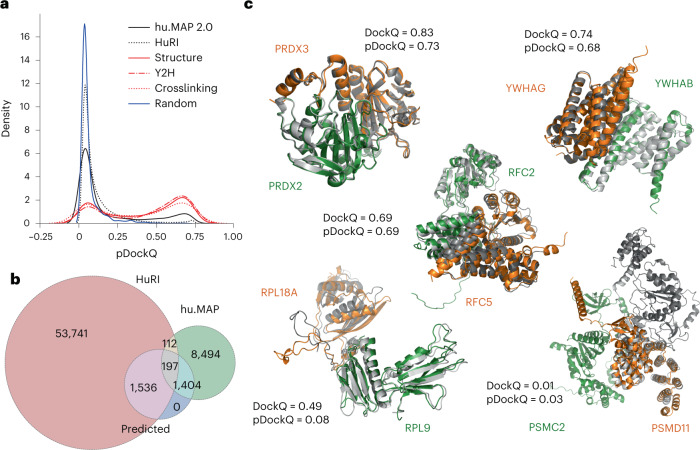
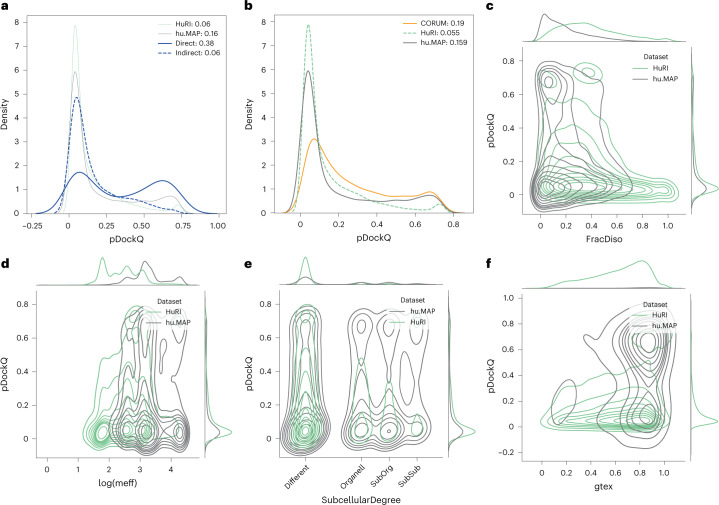
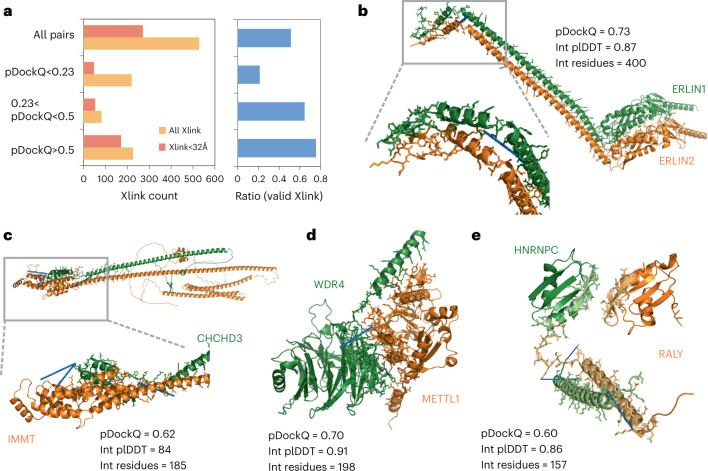
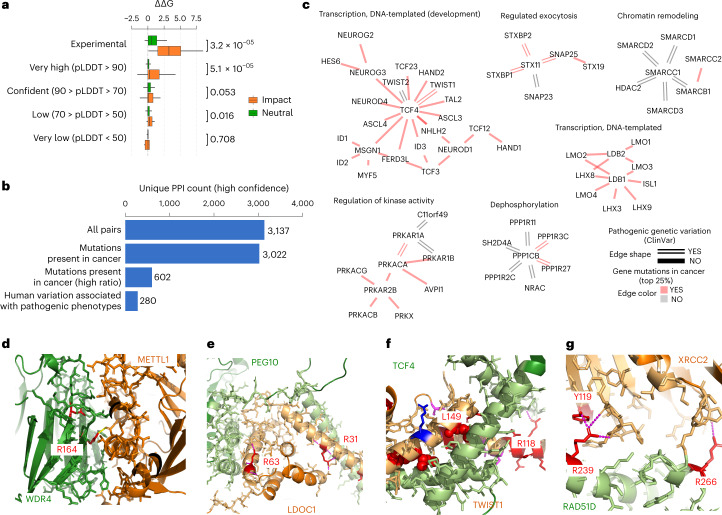
Cellular functions are governed by molecular machines that assemble through protein-protein interactions. Their atomic details are critical to studying their molecular mechanisms. However, fewer than 5% of hundreds of thousands of human protein interactions have been structurally characterized. Here we test the potential and limitations of recent progress in deep-learning methods using AlphaFold2 to predict structures for 65,484 human protein interactions. We show that experiments can orthogonally confirm higher-confidence models. We identify 3,137 high-confidence models, of which 1,371 have no homology to a known structure. We identify interface residues harboring disease mutations, suggesting potential mechanisms for pathogenic variants. Groups of interface phosphorylation sites show patterns of co-regulation across conditions, suggestive of coordinated tuning of multiple protein interactions as signaling responses. Finally, we provide examples of how the predicted binary complexes can be used to build larger assemblies helping to expand our understanding of human cell biology.
Overview
The claims and statistics of this paper haven’t been checked yet.
Run the check — free, no account needed. It reads the open-access text and checks the sources it cites.
Integrity signals
Registry
Cites
Statistics
Figures
Verification
Claims the paper makes
The claims and statistics of this paper haven’t been checked yet.
Run the check — free, no account needed. It reads the open-access text and checks the sources it cites.
Claims other papers make about this one
Each is checked against this paper’s own text: does it say what the citing paper says it does?
The source backs part of the claim, not all of it — or backs it for a different population, condition or comparison.
In the citing paper
“AF-M is being used to uncover PPIs on the scale of pathways and organisms15–24.”
From Predictomes, a classifier-curated database of AlphaFold-modeled protein-protein interactions (2025) · cites this paper as [17]
Experimental — accuracy not yet measured
Self-check
Percentages, sums and reported differences re-computed from the paper’s own numbers.
The self-check needs the paper’s full text.
Citations
Cites
Cytoscape: A software Environment for integrated models of biomolecular interaction networks
Shannon, P., Markiel, A., Ozier, O., Baliga, N. S., Wang, J. T., Ramage, D., Amin, N., Schwikowski, B., & Ideker, T. (2003) · Genome Research · doi:10.1101/gr.1239303 · Cited by 51,888
Highly accurate protein structure prediction with AlphaFold
Jumper, J., Evans, R., Pritzel, A., Green, T., Figurnov, M., Ronneberger, O., Tunyasuvunakool, K., Bates, R., Žídek, A., Potapenko, A., et al. (2021) · Nature · doi:10.1038/s41586-021-03819-2 · Cited by 43,764
Szklarczyk, D., Gable, A. L., Lyon, D., Junge, A., Wyder, S., Huerta-Cepas, J., Simonovic, M., Doncheva, N. T., Morris, J. H., Bork, P., et al. (2019) · Nucleic Acids Research · doi:10.1093/nar/gky1131 · Cited by 17,749
Accurate prediction of protein structures and interactions using a 3-track network
Baek, M., DiMaio, F., Anishchenko, I., Dauparas, J., Ovchinnikov, S., Lee, G. R., Wang, J., Cong, Q., Kinch, L. N., Schaeffer, R. D., et al. (2021) · doi:10.1101/2021.06.14.448402 · Cited by 5,549
The GTEx Consortium atlas of genetic regulatory effects across human tissues
The GTEx Consortium, Aguet, F., Anand, S., Ardlie, K. G., Gabriel, S., Getz, G. A., Graubert, A., Hadley, K., Handsaker, R. E., Huang, K. H., et al. (2020) · Science · doi:10.1126/science.aaz1776 · Cited by 5,547
Protein complex prediction with AlphaFold-Multimer
Evans, R., O’Neill, M., Pritzel, A., Antropova, N., Senior, A., Green, T., Žídek, A., Bates, R., Blackwell, S., Yim, J., et al. (2021) · doi:10.1101/2021.10.04.463034 · Cited by 3,808
PhosphoSitePlus, 2014: mutations, PTMs and recalibrations
Hornbeck, P. V., Zhang, B., Murray, B., Kornhauser, J. M., Latham, V., & Skrzypek, E. (2015) · Nucleic Acids Research · doi:10.1093/nar/gku1267 · Cited by 3,411
Scoring function for automated assessment of protein structure template quality
Zhang, Y., & Skolnick, J. (2004) · Proteins: Structure, Function, and Bioinformatics · doi:10.1002/prot.20264 · Cited by 2,392
UniProt: the universal protein knowledgebase
The UniProt Consortium (2018) · Nucleic Acids Research · doi:10.1093/nar/gky092 · Cited by 2,043
The MIntAct project—IntAct as a common curation platform for 11 molecular interaction databases
Orchard, S. E., Ammari, M. G., Aranda, B., Breuza, L., Briganti, L., Broackes-Carter, F. C., Campbell, N. H., Chavali, G. B., Chen, C. C. L., del‐Toro, N., et al. (2013) · Nucleic Acids Research · doi:10.1093/nar/gkt1115 · Cited by 1,845
Cited by
Sorted by citations
Improved prediction of protein-protein interactions using AlphaFold2
Bryant, P., Pozzati, G., & Elofsson, A. (2021) · doi:10.1101/2021.09.15.460468 · Cited by 1,022
Self-citationA structural biology community assessment of AlphaFold2 applications
Akdel, M., Pires, D. E. V., Pardo, E. P., Jänes, J., Zalevsky, A. O., Mészáros, B., Bryant, P., Good, L. L., Laskowski, R. A., Pozzati, G., et al. (2022) · Nature Structural & Molecular Biology · doi:10.1038/s41594-022-00849-w · Cited by 675
Self-citationThe HADDOCK2.4 web server for integrative modeling of biomolecular complexes
Honorato, R. V., Trellet, M. E., Jiménez‐García, B., Schaarschmidt, J., Giulini, M., Reys, V., Koukos, P. I., Rodrigues, J., Karaca, E., van Zundert, G. C. P., et al. (2024) · Nature Protocols · doi:10.1038/s41596-024-01011-0 · Cited by 666
AlphaFold2 and its applications in the fields of biology and medicine
Yang, Z., Zeng, X., Zhao, Y. C., & Chen, R. (2023) · Signal Transduction and Targeted Therapy · doi:10.1038/s41392-023-01381-z · Cited by 655
Clustering predicted structures at the scale of the known protein universe
Barrio-Hernandez, I., Yeo, J., Jänes, J., Mirdita, M., Gilchrist, C. L. M., Wein, T., Varadi, M., Velankar, S., Beltrao, P., & Steinegger, M. (2023) · Nature · doi:10.1038/s41586-023-06510-w · Cited by 362
Self-citationProtein structure predictions to atomic accuracy with AlphaFold
Jumper, J., & Hassabis, D. (2022) · Nature Methods · doi:10.1038/s41592-021-01362-6 · Cited by 265
Systematic identification of conditionally folded intrinsically disordered regions by AlphaFold2
Alderson, T. R., Pritišanac, I., Kolarić, Đ., Moses, A. M., & Forman-Kay, J. D. (2023) · Proceedings of the National Academy of Sciences · doi:10.1073/pnas.2304302120 · Cited by 240
Predicting the structure of large protein complexes using AlphaFold and Monte Carlo tree search
(2022) · doi:10.1038/s41467-022-33729-4 · Cited by 226
Self-citationDeepRank-GNN: a graph neural network framework to learn patterns in protein–protein interfaces
Réau, M., Renaud, N., Xue, L. C., & Bonvin, A. M. J. J. (2023) · Bioinformatics · doi:10.1093/bioinformatics/btac759 · Cited by 190
Protein structure prediction with in-cell photo-crosslinking mass spectrometry and deep learning
Stahl, K., Graziadei, A., Dau, T., Brock, O., & Rappsilber, J. (2023) · Nature Biotechnology · doi:10.1038/s41587-023-01704-z · Cited by 172
Discovery and significance of protein-protein interactions in health and disease
Greenblatt, J. F., Alberts, B., & Krogan, N. J. (2024) · Cell · doi:10.1016/j.cell.2024.10.038 · Cited by 181
An atlas of protein homo-oligomerization across domains of life
Schweke, H., Pacesa, M., Levin, T., Goverde, C. A., Kumar, P., Duhoo, Y., Dornfeld, L. J., Dubreuil, B., Georgeon, S., Ovchinnikov, S., et al. (2024) · Cell · doi:10.1016/j.cell.2024.01.022 · Cited by 144
Protein complexes in cells by AI‐assisted structural proteomics
(2023) · doi:10.15252/msb.202311544 · Cited by 147
Deep learning and protein structure modeling
Baek, M., & Baker, D. A. (2022) · Nature Methods · doi:10.1038/s41592-021-01360-8 · Cited by 132
Systematic discovery of protein interaction interfaces using AlphaFold and experimental validation
Lee, C. Y., Hubrich, D., Varga, J. K., Schäfer, C., Welzel, M., Schumbera, E., Djokic, M., Strom, J. M., Schönfeld, J., Geist, J. L., et al. (2024) · Molecular Systems Biology · doi:10.1038/s44320-023-00005-6 · Cited by 105
“While in-cell XL-MS is a very elegant approach to obtain experimental information on PPI interfaces in unperturbed settings, it is still a method that is only accessible to few experts in the fi eld.”
InfluentialSystematic discovery of protein interaction interfaces using AlphaFold and experimental validation
Lee, C. Y., Hubrich, D., Varga, J. K., Schäfer, C., Welzel, M., Schumbera, E., Đokić, M., Strom, J. M., Schönfeld, J., Geist, J. L., et al. (2023) · doi:10.1101/2023.08.07.552219 · Cited by 105
From interaction networks to interfaces, scanning intrinsically disordered regions using AlphaFold2
Bret, H., Gao, J., Zea, D. J., Andreani, J., & Guerois, R. (2024) · Nature Communications · doi:10.1038/s41467-023-44288-7 · Cited by 103
Predictomes, a classifier-curated database of AlphaFold-modeled protein-protein interactions
Schmid, E. W., & Walter, J. C. (2025) · Molecular Cell · doi:10.1016/j.molcel.2025.01.034 · Cited by 120
Democratizing protein language models with parameter-efficient fine-tuning
Sledzieski, S., Kshirsagar, M., Baek, M., Dodhia, R., Lavista Ferres, J., & Berger, B. (2024) · Proceedings of the National Academy of Sciences · doi:10.1073/pnas.2405840121 · Cited by 86
Recent Advances in Deep Learning for Protein-Protein Interaction Analysis: A Comprehensive Review
Lee, M. (2023) · Molecules · doi:10.3390/molecules28135169 · Cited by 97
Predicting protein-protein interactions in the human proteome
Zhang, J., Humphreys, I. R., Pei, J., Kim, J., Choi, C., Yuan, R., Durham, J., Liu, S., Choi, H.-J., Baek, M., et al. (2025) · Science · doi:10.1126/science.adt1630 · Cited by 87
Rui, H., Ashton, K. S., Min, J., Wang, C. W., & Potts, P. R. (2023) · RSC Chemical Biology · doi:10.1039/d2cb00207h · Cited by 87
Recent advances in predicting and modeling protein–protein interactions
Durham, J., Zhang, J., Humphreys, I. R., Pei, J., & Cong, Q. (2023) · Trends in Biochemical Sciences · doi:10.1016/j.tibs.2023.03.003 · Cited by 83
The evolution of post-translational modifications
Bradley, D. T. C. (2022) · Current Opinion in Genetics & Development · doi:10.1016/j.gde.2022.101956 · Cited by 79
AlphaFold two years on: Validation and impact
Kovalevskiy, O. V., Mateos-Garcia, J. C., & Tunyasuvunakool, K. (2024) · Proceedings of the National Academy of Sciences · doi:10.1073/pnas.2315002121 · Cited by 92
Enhanced Protein-Protein Interaction Discovery via AlphaFold-MultimerPreprint
Kim, A., Hu, Y., Comjean, A., Rodiger, J., Mohr, S. E., & Perrimon, N. (2024) · bioRxiv (Cold Spring Harbor Laboratory) · doi:10.1101/2024.02.19.580970 · Cited by 79
Rapid and sensitive protein complex alignment with Foldseek-Multimer
Kim, W., Mirdita, M., Karin, E. L., Gilchrist, C. L. M., Schweke, H., Söding, J., Levy, E. D., & Steinegger, M. (2025) · Nature Methods · doi:10.1038/s41592-025-02593-7 · Cited by 75
Critical Assessment of Methods for Predicting the 3D Structure of Proteins and Protein Complexes
Wodak, S. J., Vajda, S., Lensink, M. F., Kozakov, D., & Bates, P. A. (2023) · Annual Review of Biophysics · doi:10.1146/annurev-biophys-102622-084607 · Cited by 73
Deep learning for protein structure prediction and design—progress and applications
Jänes, J., & Beltrão, P. (2024) · Molecular Systems Biology · doi:10.1038/s44320-024-00016-x · Cited by 76
Computational drug development for membrane protein targets
Li, H., Sun, X., Cui, W., Xu, M., Dong, J., Ekundayo, B., Ni, D., Rao, Z., Guo, L., Stahlberg, H., et al. (2024) · Nature Biotechnology · doi:10.1038/s41587-023-01987-2 · Cited by 65
A paradigm shift in structural biology
Subramaniam, S., & Kleywegt, G. J. (2022) · Nature Methods · doi:10.1038/s41592-021-01361-7 · Cited by 60
Revolutionizing protein–protein interaction prediction with deep learning
Zhang, J., Durham, J., & Cong, Q. (2024) · Current Opinion in Structural Biology · doi:10.1016/j.sbi.2024.102775 · Cited by 58
Davey, N. E., Simonetti, L., & Ivarsson, Y. (2023) · Current Opinion in Structural Biology · doi:10.1016/j.sbi.2023.102593 · Cited by 53
Overview of AlphaFold2 and breakthroughs in overcoming its limitations
Wang, L., Wen, Z., Liu, S.-W., Zhang, L., Finley, C., Lee, H., & Fan, H. (2024) · Computers in Biology and Medicine · doi:10.1016/j.compbiomed.2024.108620 · Cited by 56
Cross-linking mass spectrometry for mapping protein complex topologies in situ
Lee, K., & O’Reilly, F. J. (2023) · Essays in Biochemistry · doi:10.1042/ebc20220168 · Cited by 50
New advances in cross-linking mass spectrometry toward structural systems biology
Yu, C., & Huang, L. (2023) · Current Opinion in Chemical Biology · doi:10.1016/j.cbpa.2023.102357 · Cited by 53
Xlink Mapping and AnalySis (XMAS) - Smooth Integrative Modeling in ChimeraXPreprint
Lagerwaard, I. M., Albanese, P., Jankevics, A., & Scheltema, R. A. (2022) · bioRxiv (Cold Spring Harbor Laboratory) · doi:10.1101/2022.04.21.489026 · Cited by 49
Self-citationXiong, D., Qiu, Y., Zhao, J., Zhou, Y., Lee, D., Gupta, S., Torres, M., Lü, W., Liang, S., Kang, J. J., et al. (2024) · Nature Biotechnology · doi:10.1038/s41587-024-02428-4 · Cited by 49
Illuminating the dark protein-protein interactome
Tabar, M. S., Parsania, C., Chen, H., Su, X., Bailey, C. G., & Rasko, J. E. J. (2022) · Cell Reports Methods · doi:10.1016/j.crmeth.2022.100275 · Cited by 45
Protein interactions in human pathogens revealed through deep learning
Humphreys, I. R., Zhang, J., Baek, M., Wang, Y., Krishnakumar, A., Pei, J., Anishchenko, I. V., Tower, C. A., Jackson, B. A., Warrier, T., et al. (2024) · Nature Microbiology · doi:10.1038/s41564-024-01791-x · Cited by 51
Protein–protein interaction prediction methods: from docking-based to AI-based approaches
Tsuchiya, Y., Yamamori, Y., & Tomii, K. (2022) · Biophysical Reviews · doi:10.1007/s12551-022-01032-7 · Cited by 46
Improved protein complex prediction with AlphaFold-multimer by denoising the MSA profile
Bryant, P., & Noé, F. (2024) · PLOS Computational Biology · doi:10.1371/journal.pcbi.1012253 · Cited by 53
Self-citationStructural determinants of co-translational protein complex assembly
Mallik, S., Venezian, J., Lobov, A., Heidenreich, M., Garcia-Seisdedos, H., Yeates, T. O., Shiber, A., & Levy, E. D. (2025) · Cell · doi:10.1016/j.cell.2024.11.013 · Cited by 42
McMaster, B., Thorpe, C. J., Ogg, G. S., Deane, C. M., & Koohy, H. (2024) · Nature Methods · doi:10.1038/s41592-024-02240-7 · Cited by 42
Label-free visual proteomics: Coupling MS- and EM-based approaches in structural biology
Klykov, O. V., Kopylov, M., Carragher, B. O., Heck, A. J. R., Noble, A. J., & Scheltema, R. A. (2022) · Molecular Cell · doi:10.1016/j.molcel.2021.12.027 · Cited by 37
Self-citationThrift, W. J., Perera, J. F., Cohen, S., Lounsbury, N., Gurung, H. R., Rose, C. M., Chen, J., Jhunjhunwala, S., & Liu, K. (2024) · Briefings in Bioinformatics · doi:10.1093/bib/bbae123 · Cited by 36
Challenges in bridging the gap between protein structure prediction and functional interpretation
Varadi, M., Tsenkov, M., & Velankar, S. (2025) · Proteins: Structure, Function, and Bioinformatics · doi:10.1002/prot.26614 · Cited by 36
Pei, J., Zhang, J., & Cong, Q. (2022) · Bioinformatics · doi:10.1093/bioinformatics/btac527 · Cited by 35
AlphaFold2 enables accurate deorphanization of ligands to single-pass receptors
Banhos Danneskiold-Samsøe, N., Kavi, D., Jude, K. M., Nissen, S. B., Wat, L. W., Coassolo, L., Zhao, M., Santana-Oikawa, G. A., Broido, B. B., Garcia, K. C., et al. (2024) · Cell Systems · doi:10.1016/j.cels.2024.10.004 · Cited by 35
A Perspective on the Prospective Use of AI in Protein Structure Prediction
Versini, R., Sritharan, S., Fas, B. A., Tubiana, T., Aimeur, S., Henri, J., Erard, M., Nüße, O., Andréani, J., Baaden, M., et al. (2023) · Journal of Chemical Information and Modeling · doi:10.1021/acs.jcim.3c01361 · Cited by 34
A combinatorial approach to uncover an additional Integrator subunit
Offley, S. R., Pfleiderer, M. M., Zucco, A. J., Fraudeau, A., Welsh, S. A., Rażew, M., Galej, W. P., & Gardini, A. (2023) · Cell Reports · doi:10.1016/j.celrep.2023.112244 · Cited by 35
Yang, J., Li, Y., Wang, G., Chen, Z., & Wu, D. (2024) · IEEE Transactions on Computational Biology and Bioinformatics · doi:10.1109/tcbb.2024.3486216 · Cited by 35
Weeratunga, S., Gormal, R. S., Liu, M., Eldershaw, D., Livingstone, E. K., Malapaka, A., Wallis, T. P., Bademosi, A. T., Jiang, A., Healy, M. D., et al. (2024) · Journal of Biological Chemistry · doi:10.1016/j.jbc.2023.105541 · Cited by 32
Trip, D. S. L., van Oostrum, M., Memon, D., Frommelt, F., Baptista, D., Panneerselvam, K., Bradley, G., Licata, L., Hermjakob, H., Orchard, S. E., et al. (2025) · Nature Biotechnology · doi:10.1038/s41587-025-02659-z · Cited by 46
Self-citationComputed cancer interactome explains the effects of somatic mutations in cancers
Zhang, J., Pei, J., Durham, J., Bos, T., & Cong, Q. (2022) · Protein Science · doi:10.1002/pro.4479 · Cited by 31
Varadi, M., Bordin, N., Orengo, C., & Velankar, S. (2023) · Current Opinion in Structural Biology · doi:10.1016/j.sbi.2023.102543 · Cited by 29
AI-guided pipeline for protein–protein interaction drug discovery identifies a SARS-CoV-2 inhibitor
Trepte, P., Secker, C., Olivet, J., Blavier, J., Kostova, S., Maseko, S. B., Minia, I., Silva Ramos, E., Cassonnet, P., Golusik, S., et al. (2024) · Molecular Systems Biology · doi:10.1038/s44320-024-00019-8 · Cited by 35
TT3D: Leveraging precomputed protein 3D sequence models to predict protein–protein interactions
Sledzieski, S., Devkota, K., Singh, R., Cowen, L., & Berger, B. (2023) · Bioinformatics · doi:10.1093/bioinformatics/btad663 · Cited by 27
Predicted mechanistic impacts of human protein missense variantsPreprint
Jänes, J., Müller, M., Selvaraj, S., Manoel, D., Stephenson, J. D., Gonçalves, C. I., Lafita, A., Polacco, B. J., Obernier, K., Alasoo, K., et al. (2024) · bioRxiv (Cold Spring Harbor Laboratory) · doi:10.1101/2024.05.29.596373 · Cited by 27
Self-citationContext-dependent, fuzzy protein interactions: Towards sequence-based insights
Fuxreiter, M. (2024) · Current Opinion in Structural Biology · doi:10.1016/j.sbi.2024.102834 · Cited by 31
GPCRome-wide analysis of G-protein-coupling diversity using a computational biology approach
Matic, M., Miglionico, P., Tatsumi, M., Inoue, A., & Raimondi, F. (2023) · Nature Communications · doi:10.1038/s41467-023-40045-y · Cited by 28
The Transformative Power of AI as Future GPTs in Propelling Society Into a New Era of Advancement
Sharma, R. (2023) · IEEE Engineering Management Review · doi:10.1109/emr.2023.3315191 · Cited by 27
Computing the Human InteractomePreprint
Zhang, J., Humphreys, I. R., Pei, J., Kim, J., Choi, C., Yuan, R., Durham, J., Liu, S., Choi, H., Baek, M., et al. (2024) · bioRxiv (Cold Spring Harbor Laboratory) · doi:10.1101/2024.10.01.615885 · Cited by 27
Substrate recognition principles for the PP2A-B55 protein phosphatase
Kruse, T., Garvanska, D. H., Varga, J. K., Garland, W., McEwan, B. C., Hein, J. B., Weisser, M. B., Benavides-Puy, I., Chan, C. B., Sotelo-Parrilla, P., et al. (2024) · Science Advances · doi:10.1126/sciadv.adp5491 · Cited by 26
Targeted protein degradation in CNS disorders: a promising route to novel therapeutics?
Kuemper, S., Cairns, A. G., Birchall, K., Yao, Z., & Large, J. M. (2024) · Frontiers in Molecular Neuroscience · doi:10.3389/fnmol.2024.1370509 · Cited by 32
Insights Into Glycobiology and the Protein-Glycan Interactome Using Glycan Microarray Technologies
Heimburg‐Molinaro, J., Mehta, A. Y., Tilton, C. A., & Cummings, R. D. (2024) · Molecular & Cellular Proteomics · doi:10.1016/j.mcpro.2024.100844 · Cited by 31
The prospects and opportunities of protein structure prediction with AI
Tunyasuvunakool, K. (2022) · Nature Reviews Molecular Cell Biology · doi:10.1038/s41580-022-00488-5 · Cited by 25
AlphaFold and what is next: bridging functional, systems and structural biology
Szczepski, K., & Jaremko, Ł. (2025) · Expert Review of Proteomics · doi:10.1080/14789450.2025.2456046 · Cited by 25
Molecular complex detection in protein interaction networks through reinforcement learning
Palukuri, M. V., Patil, R. S., & Marcotte, E. M. (2023) · BMC Bioinformatics · doi:10.1186/s12859-023-05425-7 · Cited by 27
Emerging frontiers in protein structure prediction following the AlphaFold revolution
Rennie, M. L., & Oliver, M. R. (2025) · Journal of The Royal Society Interface · doi:10.1098/rsif.2024.0886 · Cited by 34
Machine learning to predict de novo protein–protein interactions
Gaínza, P., Bunker, R. D., Townson, S. A., & Castle, J. C. (2025) · Trends in biotechnology · doi:10.1016/j.tibtech.2025.04.013 · Cited by 26
AlphaFold3, a secret sauce for predicting mutational effects on protein-protein interactionsPreprint
Lu, W., Zhang, J., Rao, J., Zhang, Z., & Zheng, S. (2024) · bioRxiv (Cold Spring Harbor Laboratory) · doi:10.1101/2024.05.25.595871 · Cited by 27
Afonso, A. L., Cavaleiro, C. T., Castanho, M. A. R. B., Neves, V., & Cavaco, M. C. (2025) · International Journal of Molecular Sciences · doi:10.3390/ijms26073117 · Cited by 26
MAVISp: A Modular Structure-Based Framework for Protein Variant Effects
Arnaudi, M., Utichi, M., Degn, K., Tiberti, M., Beltrame, L., Krzesińska, K., Sánchez-Izquierdo Besora, P., Kiachaki, E., Scrima, S., Bauer, L., et al. (2022) · doi:10.1101/2022.10.22.513328 · Cited by 20
Structural coverage of the human interactome
Kosoglu, K., Aydin, Z., Tuncbag, N., Gursoy, A., & Keskin, O. (2023) · Briefings in Bioinformatics · doi:10.1093/bib/bbad496 · Cited by 21
Bias in, bias out – AlphaFold-Multimer and the structural complexity of protein interfaces
Strom, J. M., & Luck, K. (2025) · Current Opinion in Structural Biology · doi:10.1016/j.sbi.2025.103002 · Cited by 23
Multimeric protein interaction and complex prediction: Structure, dynamics and function
Lu, D., Yu, S., Huang, Y., & Gong, X. (2025) · Computational and Structural Biotechnology Journal · doi:10.1016/j.csbj.2025.05.009 · Cited by 23
Robustness of microbiome function
Lee, K. K., Park, Y., & Kuehn, S. (2023) · Current Opinion in Systems Biology · doi:10.1016/j.coisb.2023.100479 · Cited by 20
The solute carrier superfamily interactome
Frommelt, F., Ladurner, R., Goldmann, U., Wolf, G., Inglés‐Prieto, Á., Liñeiro, E., Gelová, Z., Hopp, A.-K., Christodoulaki, E., Teoh, S. T., et al. (2025) · Molecular Systems Biology · doi:10.1038/s44320-025-00109-1 · Cited by 22
hu.MAP3.0: atlas of human protein complexes by integration of >25,000 proteomic experiments
Fischer, S. N., Claussen, E. R., Kourtis, S., Sdelci, S., Orchard, S., Hermjakob, H., Kustatscher, G., & Drew, K. (2025) · Molecular Systems Biology · doi:10.1038/s44320-025-00121-5 · Cited by 25
Tang, R., Yong, Z., Jiang, S., Chen, X., Liu, Y., Zhang, Y., Sun, G., & Wang, W. (2024) · Physics Reports · doi:10.1016/j.physrep.2024.11.006 · Cited by 21
Badonyi, M., & Marsh, J. A. (2025) · Nature Communications · doi:10.1038/s41467-025-63234-3 · Cited by 19
New opportunities in integrative structural modeling
Ziemianowicz, D. S., & Kosiński, J. (2022) · Current Opinion in Structural Biology · doi:10.1016/j.sbi.2022.102488 · Cited by 16
Chemical cross-linking and mass spectrometry enabled systems-level structural biology
Botticelli, L., Bakhtina, A. A., Kaiser, N. K., Keller, A., McNutt, S. W., Bruce, J. E., & Feixia Chu, C. (2024) · Current Opinion in Structural Biology · doi:10.1016/j.sbi.2024.102872 · Cited by 18
Self-citationDecoding the functional impact of the cancer genome through protein–protein interactions
Fu, H., Mo, X., & Ivanov, A. A. (2025) · Nature reviews. Cancer · doi:10.1038/s41568-024-00784-6 · Cited by 22
CASP16 Protein Monomer Structure Prediction Assessment
Yuan, R., Zhang, J., Kryshtafovych, A., Schaeffer, R. D., Zhou, J., Cong, Q., & Grishin, N. V. (2025) · Proteins Structure Function and Bioinformatics · doi:10.1002/prot.70031 · Cited by 24
Dörig, C., Marulli, C., Peskett, T. R., Volkmar, N., Pantolini, L., Studer, G., Paleari, C., Frommelt, F., Schwede, T. F., de Souza, N., et al. (2024) · Nature Biotechnology · doi:10.1038/s41587-024-02432-8 · Cited by 20
Recent progress and future challenges in structure-based protein-protein interaction prediction
Yuan, R., Zhang, J., Zhou, J., & Cong, Q. (2025) · Molecular Therapy · doi:10.1016/j.ymthe.2025.04.003 · Cited by 25
Protein structure-based evaluation of missense variants: Resources, challenges and future directions
David, A., & Sternberg, M. J. E. (2023) · Current Opinion in Structural Biology · doi:10.1016/j.sbi.2023.102600 · Cited by 18
AlphaFold2 Predicts Whether Proteins Interact Amidst Confounding Structural Compatibility
Martin, J. (2024) · Journal of Chemical Information and Modeling · doi:10.1021/acs.jcim.3c01805 · Cited by 20
Selected Approaches to Disrupting Protein–Protein Interactions within the MAPK/RAS Pathway
Harwood, S. J., Smith, C. R., Lawson, J. D., & Ketcham, J. M. (2023) · International Journal of Molecular Sciences · doi:10.3390/ijms24087373 · Cited by 17
AlphaPulldown2—a general pipeline for high-throughput structural modeling
Molodenskiy, D., Maurer, V. J., Yu, D., Chojnowski, G., Bienert, S., Tauriello, G., Gilep, K., Schwede, T., & Kosinski, J. (2025) · Bioinformatics · doi:10.1093/bioinformatics/btaf115 · Cited by 15
Barghout, R. A., Xu, Z.-Q. J., Betala, S., & Mahadevan, R. (2023) · Current Opinion in Biotechnology · doi:10.1016/j.copbio.2023.103007 · Cited by 16
Translation efficiency covariation identifies conserved coordination patterns across cell types
Liu, Y., Rao, S., Hoskins, I., Geng, M., Zhao, Q., Chacko, J., Ghatpande, V., Qi, K., Persyn, L., Wang, J., et al. (2026) · Nature Biotechnology · doi:10.1038/s41587-025-02718-5 · Cited by 15
Using metagenomic data to boost protein structure prediction and discovery
Hou, Q., Pucci, F., Pan, F., Xue, F., Rooman, M. J., & Feng, Q. (2022) · Computational and Structural Biotechnology Journal · doi:10.1016/j.csbj.2021.12.030 · Cited by 18
Integrating Large-Scale Protein Structure Prediction into Human Genetics Research
Marrero, M. C., Jänes, J., Baptista, D., & Beltrão, P. (2024) · Annual Review of Genomics and Human Genetics · doi:10.1146/annurev-genom-120622-020615 · Cited by 13
Accelerating protein–protein interaction screens with reduced AlphaFold-Multimer sampling
Bellinzona, G., Sassera, D., & Bonvin, A. M. J. J. (2024) · Bioinformatics Advances · doi:10.1093/bioadv/vbae153 · Cited by 13
Global profiling of arginine reactivity and ligandability in the human proteome
Wang, Y., Hu, T., Zhu, L., Xie, S., Yang, X., Xu, C., Zhai, Y., Li, Y., Huang, X., Yang, B., et al. (2026) · Nature Chemistry · doi:10.1038/s41557-025-02012-6 · Cited by 12
3 = 1 + 2: how the divide conquered de novo protein structure prediction and what is next?
Zhou, Y., Litfin, T., & Zhan, J. (2023) · National Science Review · doi:10.1093/nsr/nwad259 · Cited by 14
Hevler, J. F., & Heck, A. J. R. (2023) · Molecular & Cellular Proteomics · doi:10.1016/j.mcpro.2023.100657 · Cited by 12
Metadata
- Authors
- Burke, D. F., Bryant, P., Barrio-Hernandez, I., Memon, D., Pozzati, G., Shenoy, A., Zhu, W., Dunham, A. S., Albanese, P., Keller, A., Scheltema, R. A., Bruce, J. E., Leitner, A., Kundrotas, P., Beltrao, P., & Elofsson, A.
- Affiliations
- European Bioinformatics Institute (GB)
- Stockholm University (SE)
- Utrecht University (NL)
- University of Washington (US)
- ETH Zurich (CH)
- University of Kansas (US)
- Corresponding author
- Kundrotas, Petras
- Elofsson, Arne
- ORCID
- Venue
- Nature Structural & Molecular Biology
- Published
- 2023-01-23
- Volume
- 30
- Issue
- 2
- Pages
- 216-225
- ISSN
- 1545-9985 (ISSN-L)
- 1545-9993
- PMC
- PMC9935395
- OpenAlex
- W4317802023
- Cited by
- 269
- References
- 57
- Citations by year
- 2026: 50 · 2025: 60 · 2024: 80 · 2023: 58
- FWCI
- 22.10
- Type
- journal article
- Language
- en
- Open access
- hybrid
- doi.org
- Locations
- Nature Structural & Molecular Biology (publishedVersion, cc-by)
- bioRxiv (Cold Spring Harbor Laboratory) (acceptedVersion, cc-by-nd)
- Research Square (acceptedVersion, cc-by)
- PubMed Central (publishedVersion, cc-by)
- PubMed (publishedVersion)
- KU ScholarWorks (The University of Kansas) (submittedVersion, cc-by)
- Utrecht University Repository (Utrecht University) (submittedVersion, other-oa)
- Research Portal (King's College London) (submittedVersion, cc-by)
- Repository for Publications and Research Data (ETH Zurich) (submittedVersion, cc-by)
- ETH Zürich Research Collection (cc-by)
- ETH Zürich Research Collection
- Funders
- European Commission (823839, HORIZON2020)
- Eidgenössische Technische Hochschule Zürich
- Nederlandse Organisatie voor Wetenschappelijk Onderzoek (741.018.201)
- Linköpings Universitet (SNIC 2021/5-297)
- Knut och Alice Wallenbergs Stiftelse
- Vetenskapsrådet (2021-03979, 2016-03798, Berzelius-2021-29)
- Stockholms Universitet
- ETH Zürich Foundation
- Helmut Horten Stiftung
- National Supercomputer Centre, Linköpings Universitet
- National Institute on Aging (R56AG070096, R56AG078279)
- National Heart, Lung, and Blood Institute (R01HL144778)
- National Institute of General Medical Sciences (R35GM136255)
- Topics
- Life Sciences › Biochemistry, Genetics and Molecular Biology › Molecular Biology › Protein Structure and Dynamics
- Life Sciences › Biochemistry, Genetics and Molecular Biology › Molecular Biology › Machine Learning in Bioinformatics
- Life Sciences › Biochemistry, Genetics and Molecular Biology › Structural Biology › Enzyme Structure and Function
- Keywords
- protein-protein interaction network, AlphaFold2, interface residues, pathogenic variants, phosphorylation sites, co-regulation, protein complexes, molecular machines
- MeSH terms
- Humans, Mutation, Signal Transduction, Computational Biology, Protein Interaction Maps
About these checks
Registry, retraction, Cites and statistics results are computed, not judged, with one exception: a printed reference that no index lists is read once by a model before it counts as a citation error. Claims are extracted by a model and kept only when their quote appears verbatim in the text; each cited source is then checked, with a model’s help, for whether it says what the claim relies on. Those verdicts can be wrong — read the claim’s quote and the cited source before relying on one.
Statistics and arithmetic are recomputed, not judged.
Confidence bands are shown only for fields calibrated on our annotated test set. None is calibrated yet, so no band is shown.
What counts as a claim ›How we measure confidence ›How we check this ›
Are you an author, or do you see a problem with this page? Request a review
