

Cryo-EM reveals how Hsp90 and FKBP immunophilins co-regulate the glucocorticoid receptor
Open accessPublished version of a preprint
The DOI matches its Crossref record; 87 of the 87 references it cites were found in a registry or an index; 46 of the 70 sources its claims cite were checked for support.
Abstract
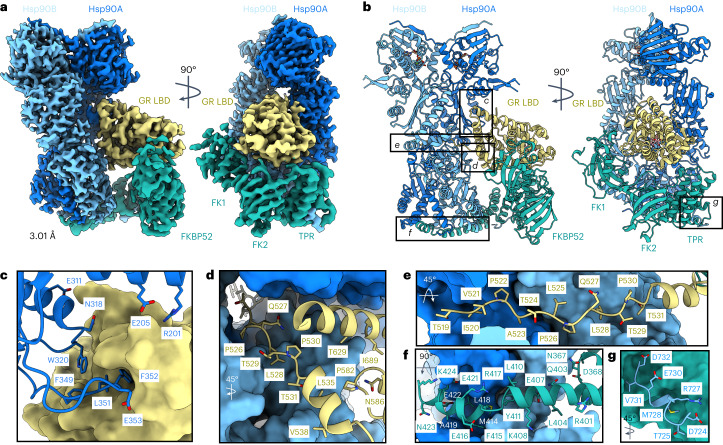
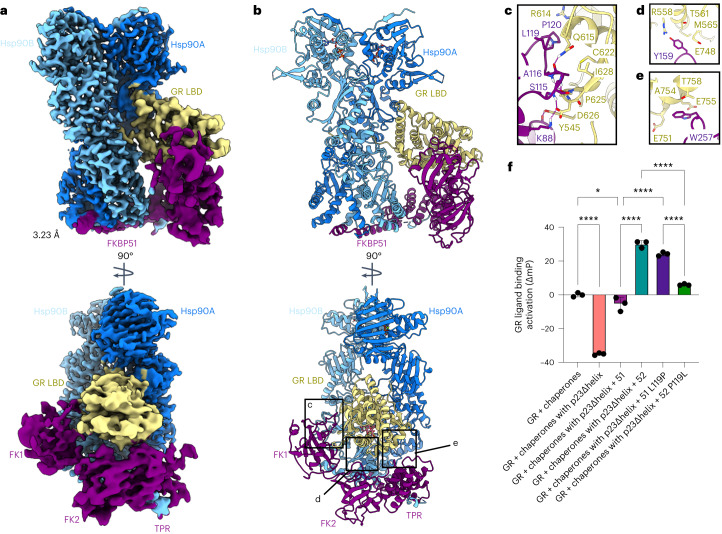
Hsp90 is an essential molecular chaperone responsible for the folding and activation of hundreds of 'client' proteins, including the glucocorticoid receptor (GR). Previously, we revealed that Hsp70 and Hsp90 remodel the conformation of GR to regulate ligand binding, aided by co-chaperones. In vivo, the co-chaperones FKBP51 and FKBP52 antagonistically regulate GR activity, but a molecular understanding is lacking. Here we present a 3.01 Å cryogenic electron microscopy structure of the human GR:Hsp90:FKBP52 complex, revealing how FKBP52 integrates into the GR chaperone cycle and directly binds to the active client, potentiating GR activity in vitro and in vivo. We also present a 3.23 Å cryogenic electron microscopy structure of the human GR:Hsp90:FKBP51 complex, revealing how FKBP51 competes with FKBP52 for GR:Hsp90 binding and demonstrating how FKBP51 can act as a potent antagonist to FKBP52. Altogether, we demonstrate how FKBP51 and FKBP52 integrate into the GR chaperone cycle to advance GR to the next stage of maturation.
Overview
CoChat Summary
## TL;DR
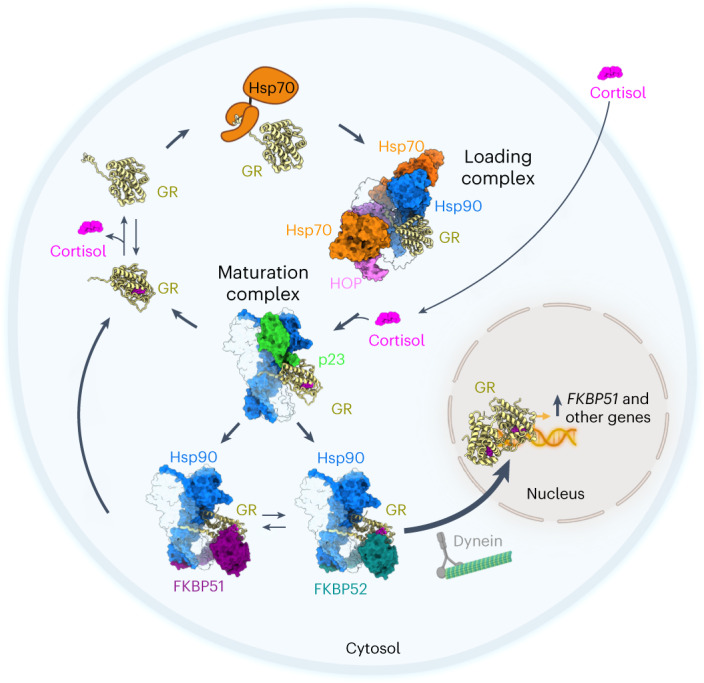
This paper reports two cryo-EM structures of human glucocorticoid receptor (GR) complexes with Hsp90 and either FKBP52 or FKBP51, showing that both immunophilins bind the folded, ligand-bound GR and help advance it to the next maturation stage. FKBP52 potentiates GR ligand binding, whereas FKBP51 binds in a similar structural manner but acts antagonistically, in part by competing with p23.
## Key findings
- The authors determined a 3.01 Å cryo-EM structure of the human GR:Hsp90:FKBP52 complex and a 3.23 Å structure of the human GR:Hsp90:FKBP51 complex.
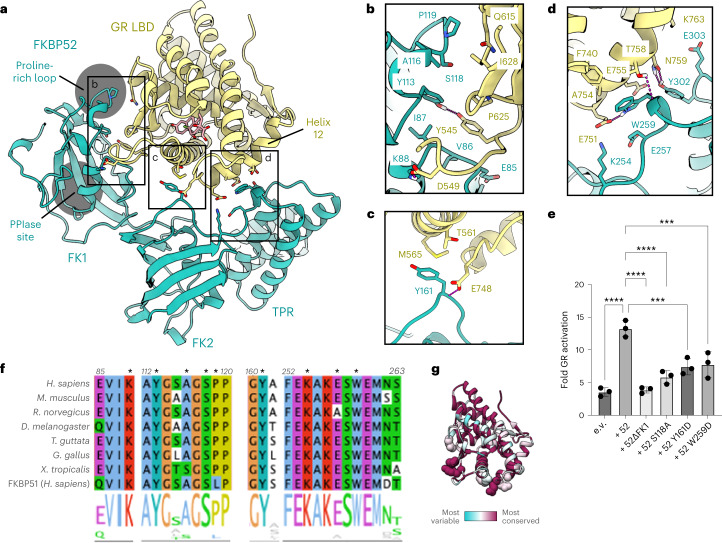
- In the GR:Hsp90:FKBP52 complex, FKBP52 directly and extensively binds GR through three major interfaces, and the paper states that these interfaces are critical for FKBP52-dependent potentiation in vivo.
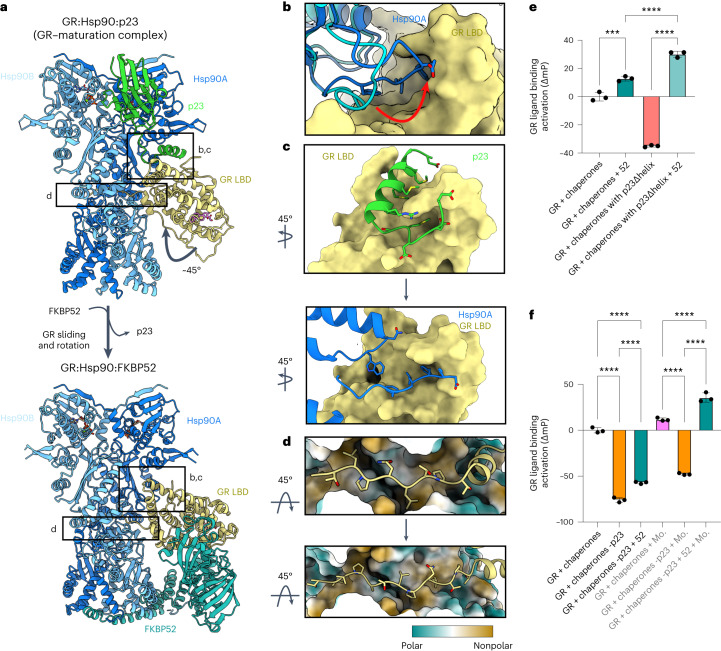
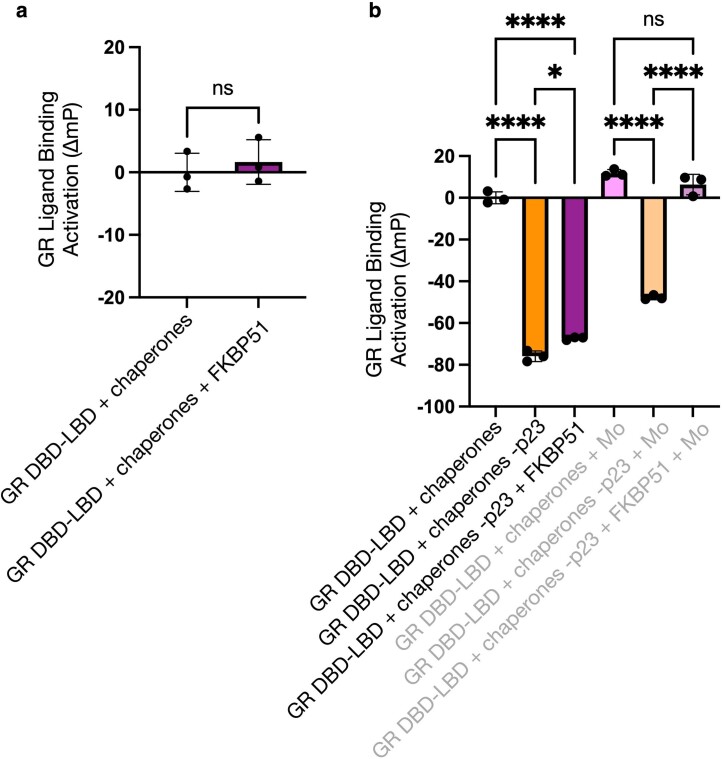
- In vitro, FKBP52 enhanced GR ligand binding beyond the chaperone control, and it fully rescued ligand binding in the p23Δhelix background; when p23 was omitted, FKBP52 plus molybdate fully reactivated ligand binding and even potentiated it over the control reaction.
- FKBP51 and FKBP52 are structurally similar in how they bind the GR:Hsp90 complex, but FKBP51 did not potentiate GR ligand binding in vitro; the authors report that swapping the divergent residue 119 largely reversed the FKBP51/52 functional effects, with FKBP51L119P potentiating GR ligand binding and FKBP52P119L reducing it.
## Methods
- The study used in vitro reconstitution of the complete GR chaperone cycle with purified proteins, adding FKBP51 or FKBP52, and then isolating complexes for structural analysis by cryo-EM.
- For functional assays, the authors measured GR ligand binding by fluorescence polarization using fluorescent dexamethasone, and assessed GR activity in vivo in Saccharomyces cerevisiae using a GRE-lacZ reporter.
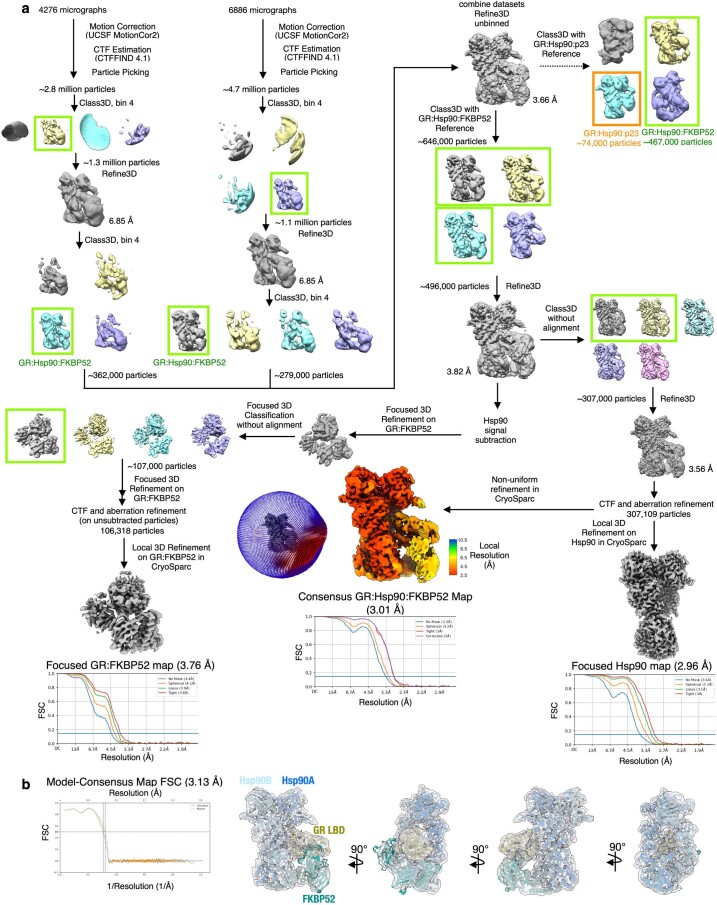
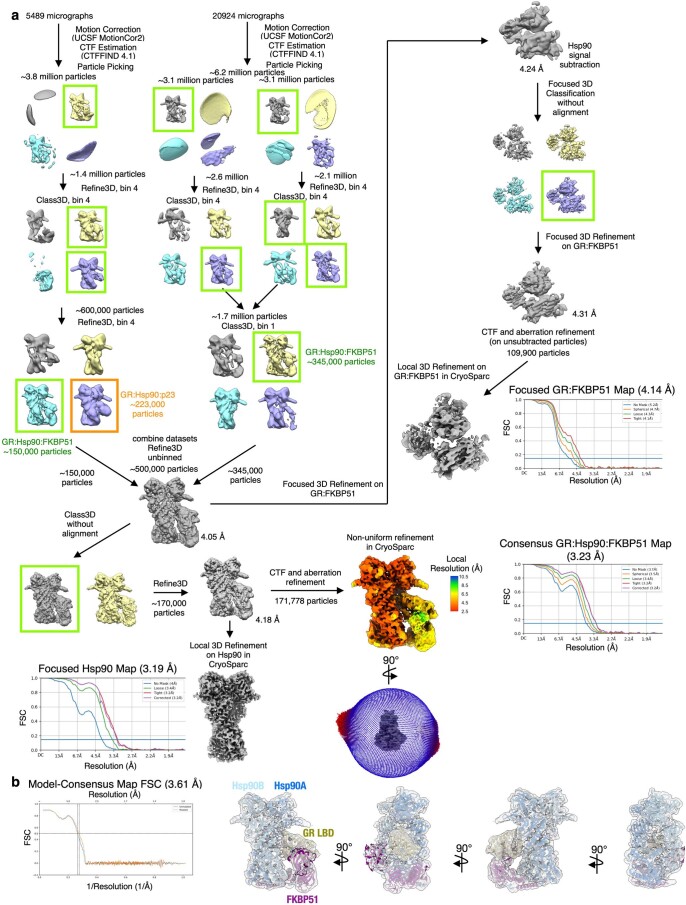
- Cryo-EM data were processed with RELION and CryoSparc, with model building/refinement using Rosetta; the paper reports combined particle stacks of about 496,000 particles for GR:Hsp90:FKBP52 and about 500,000 particles for GR:Hsp90:FKBP51.
## Limitations
- The paper states that no ligand-free GR complexes were identified during image analysis, suggesting ligand-free complexes were either too dynamic or quickly released from the complex.
- The authors note that the nucleotide state of Hsp90 could not be unambiguously determined from the reconstruction; ATP was modeled, but the density could also represent ADP:molybdate or a mixed state.
- Evident from the text: the work is based largely on in vitro reconstitution and yeast in vivo reporter assays, so the structural and functional conclusions are not directly derived from mammalian cells or tissues.
Model-written summary. Check it against the paper before relying on it.
Integrity signals
Registry
Cites
Statistics
Figures
Verification
Claims the paper makes
24 Valid · 2 Not valid · 4 Not checked · 66 Own results and interpretations
Every source the paper cites for this claim was checked and supports it.
In the paper
“In the GR chaperone cycle, understood in atomic detail through cryogenic electron microscopy (cryo-EM), GR ligand binding is regulated by a cycle of three distinct chaperone complexes12,13.”
§ Cryo-EM reveals how Hsp90 and FKBP immunophilins co-regulate the glucocorticoid receptor > Main
What the sources say
- Supportedcites [12] Wang RY Structure of Hsp90–Hsp70–Hop–GR reveals the Hsp90 client-loading mechanism Nature 2022 601 460 464 10.1038/s41586-021-04252-1 34937942 PMC9179170 source
The introductory text following the Abstract describes Hsp70-bound GR, the inactive GR–Hsp90–Hsp70–Hop loading complex, and the active GR–Hsp90–p23 maturation complex, with ligand binding inhibited and then restored across the cycle. The paper reports a cryo-EM structure of the loading complex and discusses it alongside the maturation-complex structure. Page numbers were not supplied. (LLM, conf=0.90)
- Supportedcites [13] Noddings CM Wang RY Johnson JL Agard DA Structure of Hsp90–p23–GR reveals the Hsp90 client-remodelling mechanism Nature 2022 601 465 469 10.1038/s41586-021-04236-1 34937936 PMC8994517 source
The introductory text following the Abstract describes three successive GR–chaperone complexes: GR inhibited by Hsp70, an inactive GR:Hsp90:Hsp70:Hop loading complex, and an active GR:Hsp90:p23 maturation complex that restores ligand binding. The paper presents a cryo-EM structure of the maturation complex and, with the loading-complex structure, describes the chaperone cycle. Page numbers are not provided in our copy. (LLM, conf=0.91)
boostedstates a cause- Asserted: passes — The authors put it forward as true.
- Checkable: passes — It can be checked against evidence.
- Load-bearing: passes — The paper’s conclusions depend on it.
- Based: passes — The paper gives a reason why it holds.
- Supported
Every source the paper cites for this claim was checked and supports it.
In the paper
“Although FKBP51 and FKBP52 are 70% similar in sequence, these co-chaperones have antagonistic functional effects on GR in vivo21.”
§ Cryo-EM reveals how Hsp90 and FKBP immunophilins co-regulate the glucocorticoid receptor > Main
What the sources say
- Supportedcites [21] Storer CL Dickey CA Galigniana MD Rein T Cox MB FKBP51 and FKBP52 in signaling and disease Trends Endocrinol. Metab. 2011 22 481 490 10.1016/j.tem.2011.08.001 21889356 PMC3229651 source
The Structure and Function section (page unavailable) states that FKBP51 and FKBP52 share 70% similarity, identifies FKBP52 as a positive regulator of GR, and describes FKBP51 as a negative regulator of steroid hormone receptor activity in most reported studies. The Stress-Related Diseases and Phenotypes section also describes their divergent actions on GR in the context of physiological findings. (LLM, conf=0.90)
plainstates a cause- Asserted: passes — The authors put it forward as true.
- Checkable: passes — It can be checked against evidence.
- Load-bearing: passes — The paper’s conclusions depend on it.
- Based: passes — The paper gives a reason why it holds.
- Supported
The cited sources support only part of this claim — read each source’s verdict below.
In the paper
“SHRs, including the glucocorticoid receptor (GR), are hormone-regulated transcription factors that depend on Hsp90 for function throughout their lifetimes5–10.”
§ Cryo-EM reveals how Hsp90 and FKBP immunophilins co-regulate the glucocorticoid receptor > Main
What the sources say
- Not checked — no full text of the sourcecites [5] Picard D Reduced levels of hsp90 compromise steroid receptor action in vivo Nature 1990 348 166 168 10.1038/348166a0 2234079 source
- Not checked — no full text of the sourcecites [6] Pratt WB Toft DO Steroid receptor interactions with heat shock protein and immunophilin chaperones Endocr. Rev. 1997 18 306 360 9183567 source
- Not checked yetcites [7] Morishima Y Murphy PJ Li DP Sanchez ER Pratt WB Stepwise assembly of a glucocorticoid receptor.hsp90 heterocomplex resolves two sequential ATP-dependent events involving first hsp70 and then hsp90 in opening of the steroid binding pocket J. Biol. Chem. 2000 275 18054 18060 10.1074/jbc.M000434200 10764743 source
Checked before — its earlier verdict is held back until a new check runs.
- Not checked — no full text of the sourcecites [8] Smith DF Toft DO Minireview: the intersection of steroid receptors with molecular chaperones: observations and questions Mol. Endocrinol. 2008 22 2229 2240 10.1210/me.2008-0089 18451092 PMC2582531 source
- Partly supportedcites [9] Nathan DF Lindquist S Mutational analysis of Hsp90 function: interactions with a steroid receptor and a protein kinase Mol. Cell. Biol. 1995 15 3917 3925 10.1128/MCB.15.7.3917 7791797 PMC230631 sourceExperimental — accuracy not yet measured
The Abstract identifies GR as a transcription factor, and the Discussion says Hsp90 is continuously required to maintain GR in a hormone-activable, transcriptionally competent state. But the section “G170D behaves like a classic ts mutant” says GR remains associated with Hsp90 only until hormone triggers dissociation. The paper therefore supports a continuing requirement before hormone activation, not dependence throughout the receptor’s entire lifetime or the same requirement for all steroid hormone receptors. (LLM, conf=0.87)
- Partly supportedcites [10] Weikum ER Knuesel MT Ortlund EA Yamamoto KR Glucocorticoid receptor control of transcription: precision and plasticity via allostery Nat. Rev. Mol. Cell Biol. 2017 18 159 174 10.1038/nrm.2016.152 28053348 PMC6257982 sourceExperimental — accuracy not yet measured
The opening passage (page not provided) describes GR as a hormone-gated transcription regulator and says cytoplasmic apo-GR associates with HSP90-containing chaperone complexes that promote hormone binding. It does not establish HSP90 dependence throughout the receptor’s lifetime or extend that dependence to all steroid hormone receptors. (LLM, conf=0.86)
plainstates a cause- Asserted: passes — The authors put it forward as true.
- Checkable: passes — It can be checked against evidence.
- Load-bearing: passes — The paper’s conclusions depend on it.
- Based: passes — The paper gives a reason why it holds.
Every source the paper cites for this claim was checked and supports it.
In the paper
“Proline 119 on FKBP52 was found to decrease dynamics of the proline-rich loop (80s loop, β4–β5 loop) by nuclear magnetic resonance, relative to leucine 119 on FKBP51 (ref. 64).”
§ Cryo-EM reveals how Hsp90 and FKBP immunophilins co-regulate the glucocorticoid receptor > Discussion
What the sources say
- Supportedcites [64] Mustafi SM LeMaster DM Hernandez G Differential conformational dynamics in the closely homologous FK506-binding domains of FKBP51 and FKBP52 Biochem. J. 2014 461 115 123 10.1042/BJ20140232 24749623 PMC4060953 source
The Results and Discussion section reports that the FKBP52 β4–β5 loop shows no conformational-exchange line-broadening, whereas replacing Pro119 with leucine induces it. The complementary L119P substitution in FKBP51 completely suppresses line-broadening in that loop. These NMR findings support the comparison for microsecond–millisecond loop dynamics; page numbers are not provided in our copy. (LLM, conf=0.93)
plainstates a cause- Asserted: passes — The authors put it forward as true.
- Checkable: passes — It can be checked against evidence.
- Load-bearing: passes — The paper’s conclusions depend on it.
- Based: passes — The paper gives a reason why it holds.
- Supported
The cited sources support only part of this claim — read each source’s verdict below.
In the paper
“unlike FKBP52, FKBP51 does not enhance GR ligand binding in vitro, consistent with in vivo studies23,27,29.”
§ Cryo-EM reveals how Hsp90 and FKBP immunophilins co-regulate the glucocorticoid receptor > Discussion
What the sources say
- Partly supportedcites [23] Riggs DL The Hsp90-binding peptidylprolyl isomerase FKBP52 potentiates glucocorticoid signaling in vivo EMBO J. 2003 22 1158 1167 10.1093/emboj/cdg108 12606580 PMC150341 sourceExperimental — accuracy not yet measured
The “FKBP52 and GR hormone binding” section reports greater GR hormone binding in yeast cells expressing FKBP52 than in cells expressing FKBP51. The assays used intact cells, however, so this paper does not establish the claim specifically for in vitro ligand binding. Page numbers are unavailable in our copy. (LLM, conf=0.86)
- Not checked — no full text of the sourcecites [27] Denny WB Valentine DL Reynolds PD Smith DF Scammell JG Squirrel monkey immunophilin FKBP51 is a potent inhibitor of glucocorticoid receptor binding Endocrinology 2000 141 4107 4113 10.1210/endo.141.11.7785 11089542 source
- Partly supportedcites [29] Riggs DL Noncatalytic role of the FKBP52 peptidyl-prolyl isomerase domain in the regulation of steroid hormone signaling Mol. Cell. Biol. 2007 27 8658 8669 10.1128/MCB.00985-07 17938211 PMC2169416 sourceExperimental — accuracy not yet measured
The Results and Discussion (pages unavailable) report that FKBP52 potentiates GR signaling whereas wild-type FKBP51 does not. They do not establish the more specific claim about GR ligand binding in vitro: the hormone-binding curves reported in Results are for AR in intact cells. (LLM, conf=0.84)
plain- Asserted: passes — The authors put it forward as true.
- Checkable: passes — It can be checked against evidence.
- Load-bearing: passes — The paper’s conclusions depend on it.
- Based: passes — The paper gives a reason why it holds.
- Partly supported
43 more claims · 3 with their cited sources checked
Create a free account to see all 96 claims and to verify the 6 references still open.
- It may state two separate claims as one. 42
- Probably not a substantial claim. 16
Citations
Cites
UCSF Chimera—A visualization system for exploratory research and analysis
Pettersen, E. F., Goddard, T. D., Huang, C. C., Couch, G. S., Greenblatt, D. M., Meng, E. C., & Ferrin, T. E. (2004) · Journal of Computational Chemistry · doi:10.1002/jcc.20084 · Cited by 45,828
Highly accurate protein structure prediction with AlphaFold
Jumper, J., Evans, R., Pritzel, A., Green, T., Figurnov, M., Ronneberger, O., Tunyasuvunakool, K., Bates, R., Žídek, A., Potapenko, A., et al. (2021) · Nature · doi:10.1038/s41586-021-03819-2 · Cited by 43,764 · cited 1×
“13) along with the AlphaFold 77,78 model of human FKBP52 (accession number AF-Q02790) were used as starting models.”
MethodJalview Version 2—a multiple sequence alignment editor and analysis workbench
Waterhouse, A. M., Procter, J. B., Martin, D. M. A., Clamp, M., & Barton, G. J. (2009) · Bioinformatics · doi:10.1093/bioinformatics/btp033 · Cited by 11,399
Varadi, M., Anyango, S., Deshpande, M., Nair, S., Natassia, C., Yordanova, G., Yuan, D., Stroe, O., Wood, G., Laydon, A., et al. (2022) · Nucleic Acids Research · doi:10.1093/nar/gkab1061 · Cited by 7,850
MotionCor2: anisotropic correction of beam-induced motion for improved cryo-electron microscopy
Zheng, S. Q., Palovcak, E., Armache, J.-P., Verba, K. A., Cheng, Y., & Agard, D. A. (2017) · Nature Methods · doi:10.1038/nmeth.4193 · Cited by 7,777
Self-citationUniProt: the universal protein knowledgebase in 2021
The UniProt Consortium, Bateman, A., Martin, M.-J., Orchard, S., Magrane, M., Agivetova, R., Ahmad, S., Alpi, E., Bowler-Barnett, E. H., Britto, R., et al. (2021) · Nucleic Acids Research · doi:10.1093/nar/gkaa1100 · Cited by 6,372
RELION: Implementation of a Bayesian approach to cryo-EM structure determination
Scheres, S. H. W. (2012) · Journal of Structural Biology · doi:10.1016/j.jsb.2012.09.006 · Cited by 5,446
UCSF ChimeraX: Meeting modern challenges in visualization and analysis
Goddard, T. D., Huang, C. C., Meng, E. C., Pettersen, E. F., Couch, G. S., Morris, J. H., & Ferrin, T. E. (2018) · Protein Science · doi:10.1002/pro.3235 · Cited by 5,267
CTFFIND4: Fast and accurate defocus estimation from electron micrographs
Rohou, A., & Grigorieff, N. (2015) · Journal of Structural Biology · doi:10.1016/j.jsb.2015.08.008 · Cited by 4,913
The EMBL-EBI search and sequence analysis tools APIs in 2019
Madeira, F., Park, Y. M., Lee, J., Buso, N., Gur, T., Madhusoodanan, N., Basutkar, P., Tivey, A. R. N., Potter, S. C., Finn, R. D., et al. (2019) · Nucleic Acids Research · doi:10.1093/nar/gkz268 · Cited by 4,167
A new bioinformatics analysis tools framework at EMBL-EBI
Goujon, M., McWilliam, H., Li, W., Valentin, F., Squizzato, S., Paern, J., & Lopez, R. (2010) · Nucleic Acids Research · doi:10.1093/nar/gkq313 · Cited by 1,846 · cited 1×
“2f, sequences were obtained from Uniprot 81 , aligned in Clustal Omega 82,83 and visualized in JalView 2.11.1.0 (ref.”
MethodInfluentialHSP90 at the hub of protein homeostasis: emerging mechanistic insights
Taipale, M., Jarosz, D. F., & Lindquist, S. (2010) · Nature Reviews Molecular Cell Biology · doi:10.1038/nrm2918 · Cited by 1,818 · cited 1×
“Hsp90 ‘clients’ are enriched in signaling proteins, such as steroid hormone receptors (SHRs), making Hsp90 an important clinical target 2–4 .”
BackgroundSteroid Receptor Interactions with Heat Shock Protein and Immunophilin Chaperones*
Pratt, W. B., & Toft, D. O. (1997) · Endocrine Reviews · doi:10.1210/edrv.18.3.0303 · Cited by 1,791 · cited 3×
“In vivo, additional Hsp90 co-chaperones are found associated with the GR chaperone cycle 6,14 , including the large immunophilins, FKBP51 and FKBP52 (ref.”
BackgroundSchopf, F. H., Biebl, M. M., & Buchner, J. (2017) · Nature Reviews Molecular Cell Biology · doi:10.1038/nrm.2017.20 · Cited by 1,540 · cited 1×
“Hsp90 ‘clients’ are enriched in signaling proteins, such as steroid hormone receptors (SHRs), making Hsp90 an important clinical target 2–4 .”
BackgroundHigh-Resolution Comparative Modeling with RosettaCM
Song, Y., DiMaio, F., Wang, R. Y.-R., Kim, D., Miles, C., Brunette, T., Thompson, J., & Baker, D. (2013) · Structure · doi:10.1016/j.str.2013.08.005 · Cited by 1,115 · cited 1×
“Structurally uncharacterized regions, including the FKBP52 TPR:Hsp90 CTD interaction, the FKBP51:HSP90 CTD interaction, and the Hsp90 lumen:GR pre-Helix 1 interaction, were built de novo into consensus maps or focused maps using RosettaCM 80 .”
MethodCrystal structure of an Hsp90–nucleotide–p23/Sba1 closed chaperone complex
Ali, M. M. U., Roe, S. M., Vaughan, C. K., Meyer, P., Panaretou, B., Piper, P. W., Prodromou, C., & Pearl, L. H. (2006) · Nature · doi:10.1038/nature04716 · Cited by 962 · cited 2×
“Given that FKBP52 can functionally replace p23 tail-helix , we wondered whether FKBP52 could also functionally replace p23 altogether. p23 is known to stabilize Hsp90 NTD closure through the globular p23 domain 13,51 in addition to stabilizing the ligand-bound GR through the p23 tail-helix13 .”
BackgroundQuantitative Analysis of Hsp90-Client Interactions Reveals Principles of Substrate Recognition
Taipale, M., Krykbaeva, I., Koeva, M., Kayatekin, C., Westover, K. D., Karras, G. I., & Lindquist, S. (2012) · Cell · doi:10.1016/j.cell.2012.06.047 · Cited by 879
Zhao, R., Davey, M., Hsu, Y.-C., Kaplanek, P., Tong, A., Parsons, A. B., Krogan, N., Cagney, G., Mai, D., Greenblatt, J., et al. (2005) · Cell · doi:10.1016/j.cell.2004.12.024 · Cited by 819 · cited 1×
“Hsp90 is required for the functional maturation of 10% of the eukaryotic proteome 1 .”
BackgroundBledsoe, R. K., Montana, V. G., Stanley, T. B., Delves, C. J., Apolito, C. J., McKee, D. D., Consler, T. G., Parks, D. J., Stewart, E. L., Willson, T. M., et al. (2002) · Cell · doi:10.1016/s0092-8674(02)00817-6 · Cited by 818 · cited 3×
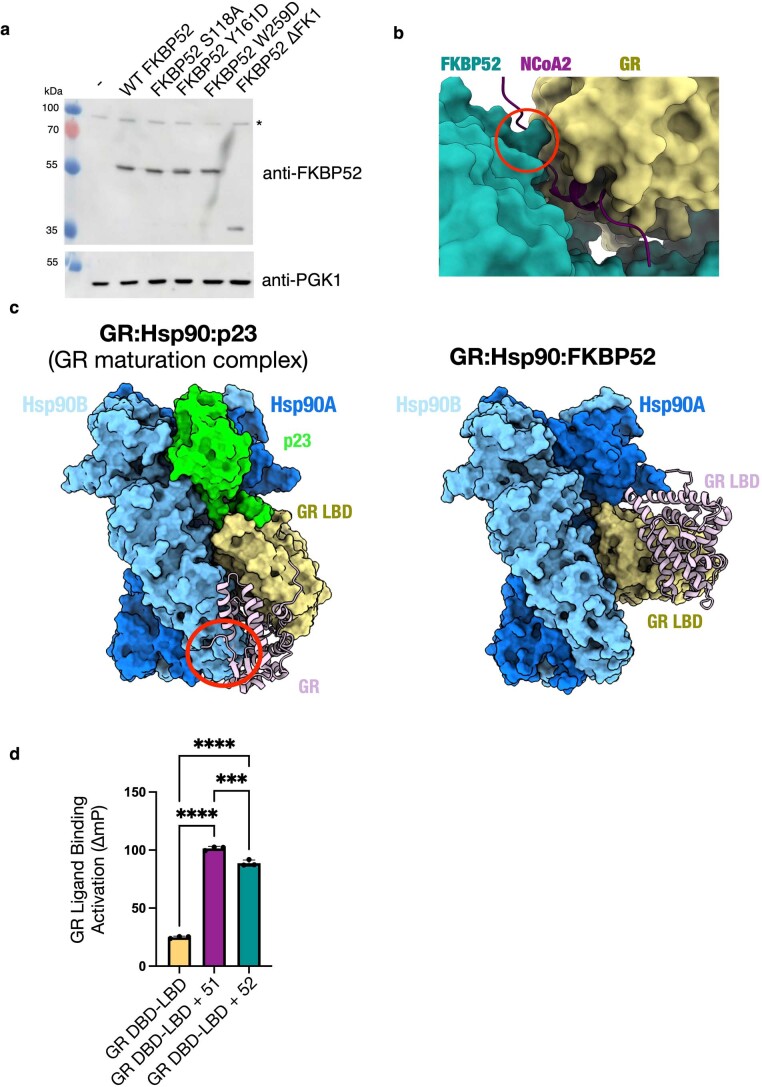
“While a significant portion of the GR Helix12 co-activator binding site is available in the FKBP52-bound GR, the N-terminus of a co-activator peptide would sterically clash with FKBP52 TPR based on the GR:co-activator peptide structure 48 (Extended Data Fig.”
BackgroundInfluentialReduced levels of hsp90 compromise steroid receptor action in vivo
Picard, D., Khursheed, B., Garabedian, M. J., Fortin, M. G., Lindquist, S., & Yamamoto, K. R. (1990) · Nature · doi:10.1038/348166a0 · Cited by 787 · cited 1×
“SHRs, including the glucocorticoid receptor (GR), are hormone-regulated transcription factors that depend on Hsp90 for function throughout their lifetimes 5–10 .”
BackgroundWochnik, G. M., Rüegg, J., Abel, G. A., Schmidt, U., Holsboer, F., & Rein, T. (2005) · Journal of Biological Chemistry · doi:10.1074/jbc.m407498200 · Cited by 638 · cited 2×
“FKBP52 stabilizes ligand-bound GR, resulting in enhanced ligand affinity, and facilitates rapid GR nuclear translocation on dynein 22,24,25,65 , allowing GR to proceed with dimerization and transcription activation.”
BackgroundGene–Stress–Epigenetic regulation of FKBP5: clinical and translational implications
Zannas, A. S., Wiechmann, T., Gassen, N. C., & Binder, E. B. (2016) · Neuropsychopharmacology · doi:10.1038/npp.2015.235 · Cited by 622
Glucocorticoid receptor control of transcription: precision and plasticity via allostery
Weikum, E. R., Knuesel, M. T., Ortlund, E. A., & Yamamoto, K. R. (2017) · Nature Reviews Molecular Cell Biology · doi:10.1038/nrm.2016.152 · Cited by 533 · cited 1×
“SHRs, including the glucocorticoid receptor (GR), are hormone-regulated transcription factors that depend on Hsp90 for function throughout their lifetimes 5–10 .”
BackgroundSoftware tools for automated transmission electron microscopy
Schorb, M., Haberbosch, I., Hagen, W. J. H., Schwab, Y., & Mastronarde, D. N. (2019) · Nature Methods · doi:10.1038/s41592-019-0396-9 · Cited by 504
AL2CO: calculation of positional conservation in a protein sequence alignment
Pei, J., & Grishin, N. V. (2001) · Bioinformatics · doi:10.1093/bioinformatics/17.8.700 · Cited by 483
Automated structure refinement of macromolecular assemblies from cryo-EM maps using Rosetta
Wang, R. Y.-R., Song, Y., Barad, B. A., Cheng, Y., Fraser, J. S., & DiMaio, F. (2016) · eLife · doi:10.7554/elife.17219 · Cited by 457
A New First Step in Activation of Steroid Receptors
Davies, T. H., Ning, Y.-M., & Sánchez, E. R. (2002) · Journal of Biological Chemistry · doi:10.1074/jbc.c100531200 · Cited by 427 · cited 1×
“In vivo, ligand addition dissociates GR:Hsp90:FKBP51/52 complexes 49 probably due to the rapid ligand-dependent nuclear translocation of GR 22,58 .”
BackgroundAtomic structure of Hsp90-Cdc37-Cdk4 reveals that Hsp90 traps and stabilizes an unfolded kinase
Verba, K. A., Wang, R. Y.-R., Arakawa, A., Liu, Y., Shirouzu, M., Yokoyama, S., & Agard, D. A. (2016) · Science · doi:10.1126/science.aaf5023 · Cited by 424 · cited 2×
“Our structures contribute to an emerging theme in which Hsp90 co-chaperones bind to distinct Hsp90 conformations, while simultaneously stabilizing specific client conformations to regulate client activity 12,13,41,42,54 .”
BackgroundSelf-citationMutational Analysis of Hsp90 Function: Interactions with a Steroid Receptor and a Protein Kinase
Nathan, D. F., & Lindquist, S. (1995) · Molecular and Cellular Biology · doi:10.1128/mcb.15.7.3917 · Cited by 423
Kirschke, E., Goswami, D., Southworth, D., Griffin, P. R., & Agard, D. A. (2014) · Cell · doi:10.1016/j.cell.2014.04.038 · Cited by 399 · cited 4×
“Our previous work demonstrated that Hsp90 needs to hydrolyze at least one ATP to reach the GR–maturation complex 11 , strongly suggesting the nucleotide is in a hydrolyzed ADP:molybdate state.”
BackgroundMethodInfluentialSelf-citationChaperone Function of Hsp90-Associated Proteins
Bose, S., Weikl, T., Bügl, H., & Buchner, J. (1996) · Science · doi:10.1126/science.274.5293.1715 · Cited by 371 · cited 1×
“Interestingly, FKBP52 also affected GR ligand binding independent of Hsp90, with addition of FKBP52 to GR resulting in enhanced ligand binding, probably due to an Hsp90-independent chaperoning effect 15,52 (Extended Data Fig.”
BackgroundThe Hsp90‐binding peptidylprolyl isomerase FKBP52 potentiates glucocorticoid signaling in vivo
Riggs, D. L., Roberts, P. J., Chirillo, S. C., Cheung‐Flynn, J., Prapapanich, V., Ratajczak, T., Gaber, R., Picard, D., & Smith, D. F. (2003) · The EMBO Journal · doi:10.1093/emboj/cdg108 · Cited by 353 · cited 10×
“FKBP51 is functionally antagonistic to FKBP52-dependent potentiation of GR in vivo; thus, the relative ratios of FKBP51 and FKBP52 dictate GR activity levels 23,28,55 .”
BackgroundMethodResultInfluentialA surface on the androgen receptor that allosterically regulates coactivator binding
Estébanez-Perpiñá, E., Arnold, L. A., Nguyen, P., Rodrigues, E. D., Mar, E., Bateman, R., Pallai, P., Shokat, K. M., Baxter, J. D., Guy, R. K., et al. (2007) · Proceedings of the National Academy of Sciences · doi:10.1073/pnas.0708036104 · Cited by 307 · cited 2×
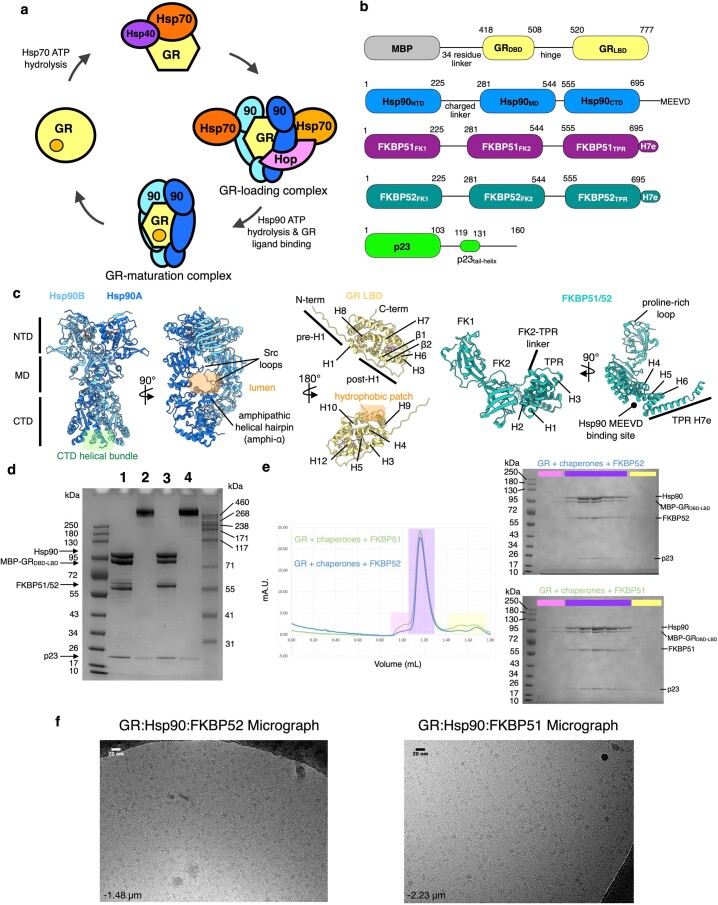
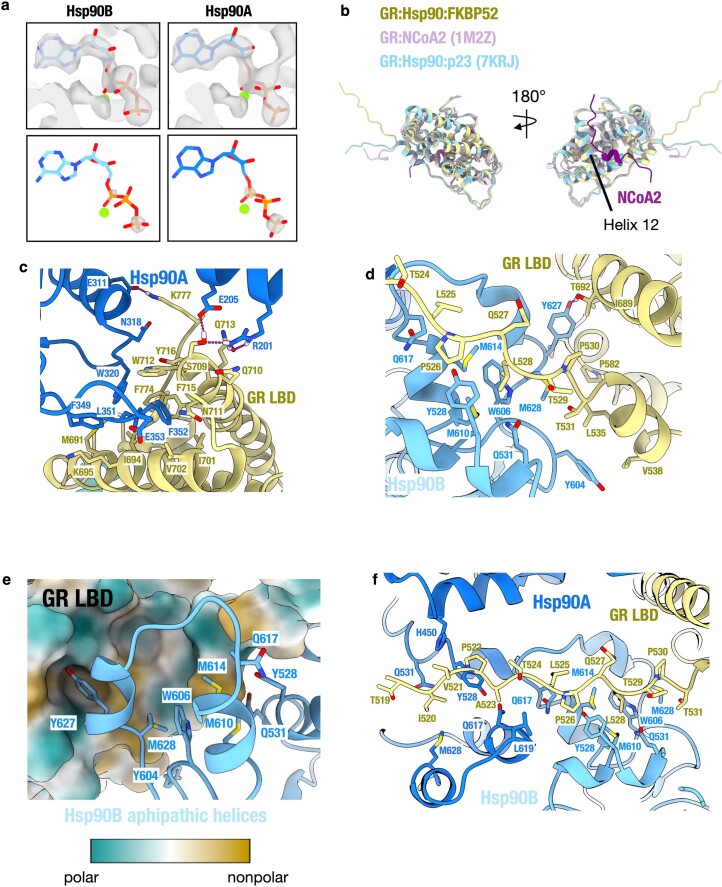
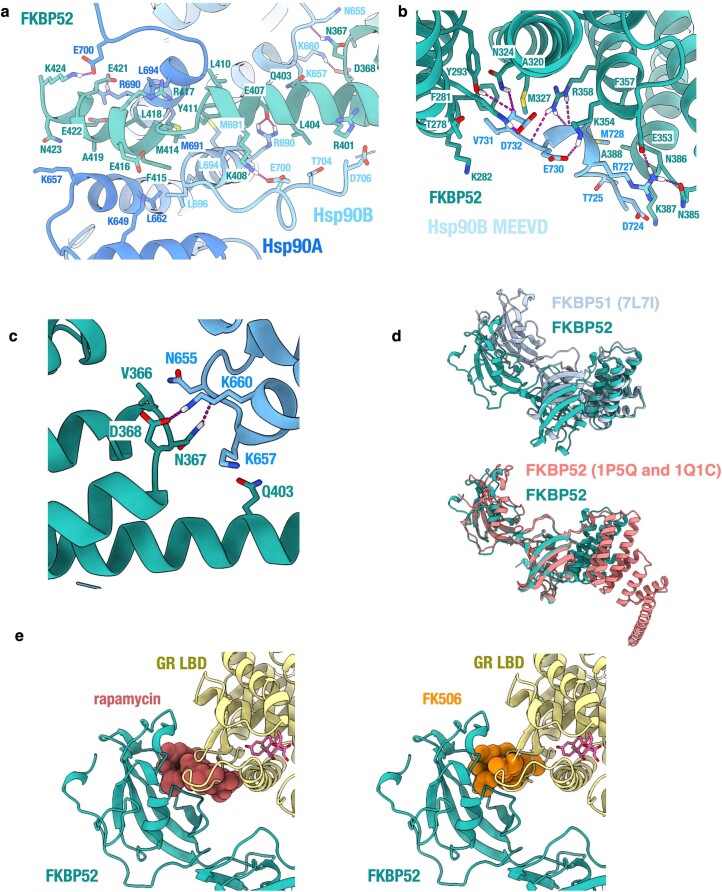
“Side chains in contact between GR and Hsp90 are shown, along with hydrogen bonds (dashed pink lines). c , Interface 1 of the GR:Hsp90 interaction depicting the GR hydrophobic patch (GR Helices 9 and 10) interacting with the Hsp90A Src loop (Hsp90 345–360 ), Hsp90A W320 , and Hsp90A NTD/MD helices. d , Interface 2 of t…”
BackgroundRole of hsp90 and the hsp90-binding immunophilins in signalling protein movement
Pratt, W. B., Galigniana, M. D., Harrell, J. M., & DeFranco, D. B. (2004) · Cellular Signalling · doi:10.1016/j.cellsig.2004.02.004 · Cited by 285 · cited 1×
“60) to regulate GR activity, as previously hypothesized 8,61–63 .”
BackgroundGene–environment interactions at the FKBP5 locus: sensitive periods, mechanisms and pleiotropism
Zannas, A. S., & Binder, E. B. (2014) · Genes, Brain and Behavior · doi:10.1111/gbb.12104 · Cited by 268
FKBP51 and FKBP52 in signaling and disease
Storer, C. L., Dickey, C. A., Galigniana, M. D., Rein, T., & Cox, M. B. (2011) · Trends in Endocrinology & Metabolism · doi:10.1016/j.tem.2011.08.001 · Cited by 266 · cited 10×
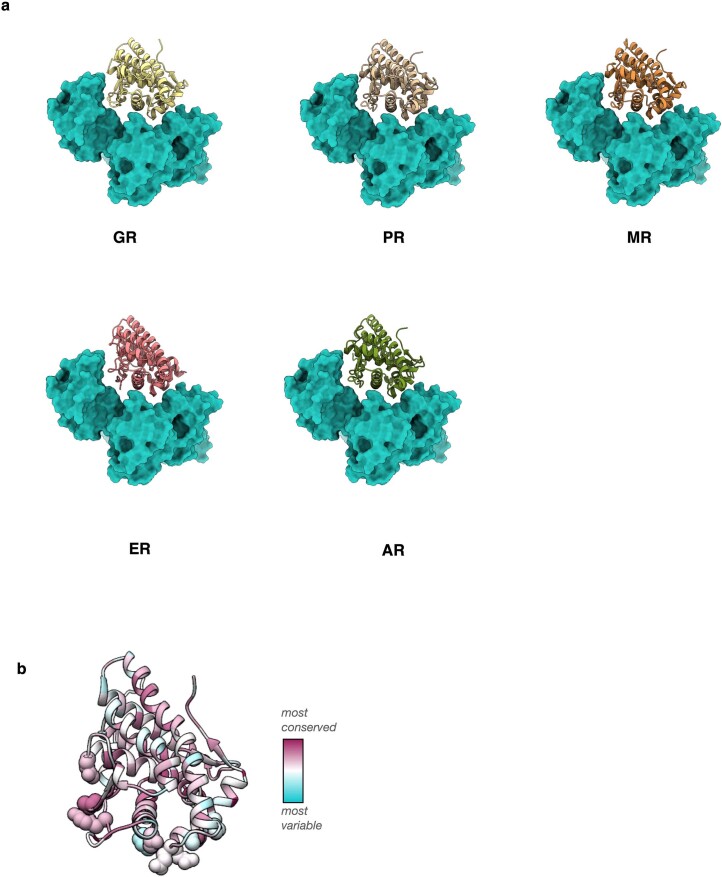
“The PDB IDs used to dock in the SHRs are as follows: PR (1A28), MR (2AA7), ERα (1ERE), AR (1T7R). b , Sequence conservation across human steroid hormone receptors (GR, MR, ERα, ERβ, AR) plotted onto the GR structure from the GR:Hsp90:FKBP52 atomic model.”
BackgroundInfluentialSinars, C. R., Cheung-Flynn, J., Rimerman, R. A., Scammell, J. G., Smith, D. F., & Clardy, J. (2003) · Proceedings of the National Academy of Sciences · doi:10.1073/pnas.0231020100 · Cited by 254
Selective inhibitors of the FK506-binding protein 51 by induced fit
Gaali, S., Kirschner, A., Cuboni, S., Hartmann, J., Kozany, C., Balsevich, G., Namendorf, C., Fernandez-Vizarra, P., Sippel, C., Zannas, A. S., et al. (2015) · Nature Chemical Biology · doi:10.1038/nchembio.1699 · Cited by 245 · cited 1×
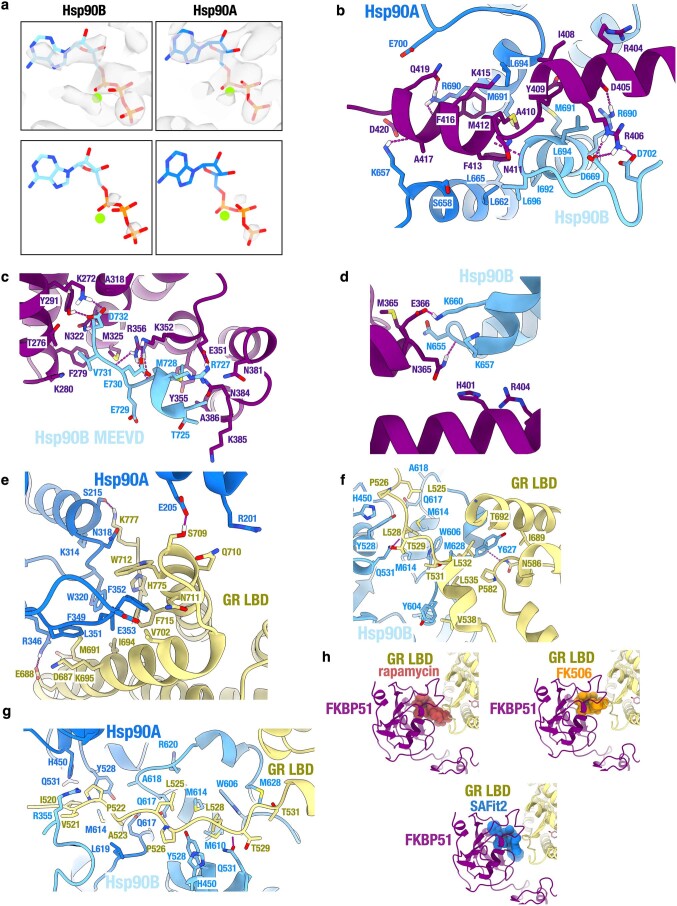
“Interestingly, the small FKBP51-specific inhibitor, SAFit2 (PDB ID: 6TXX) 35,57 , does not clash with the GR backbone and may be accommodated with only side chain rotations, consistent with in vivo data 49 (Extended Data Fig.”
BackgroundGaligniana, M. D., Radanyi, C., Renoir, J.-M., Housley, P. R., & Pratt, W. B. (2001) · Journal of Biological Chemistry · doi:10.1074/jbc.m010809200 · Cited by 236 · cited 4×
“In vivo, ligand addition dissociates GR:Hsp90:FKBP51/52 complexes 49 probably due to the rapid ligand-dependent nuclear translocation of GR 22,58 .”
BackgroundInfluentialDiscrimination between NL1- and NL2-Mediated Nuclear Localization of the Glucocorticoid Receptor
Savory, J. G. A., Hsu, B., Laquian, I. R., Giffin, W., Reich, T., Haché, R. J. G., & Lefebvre, Y. A. (1999) · Molecular and Cellular Biology · doi:10.1128/mcb.19.2.1025 · Cited by 222
Structure of Hsp90–Hsp70–Hop–GR reveals the Hsp90 client-loading mechanism
Wang, R. Y.-R., Noddings, C. M., Kirschke, E., Myasnikov, A. G., Johnson, J. L., & Agard, D. A. (2022) · Nature · doi:10.1038/s41586-021-04252-1 · Cited by 220 · cited 4×
“In the GR chaperone cycle, understood in atomic detail through cryogenic electron microscopy (cryo-EM), GR ligand binding is regulated by a cycle of three distinct chaperone complexes 12,13 .”
BackgroundInfluentialSelf-citationOn the Trail of the Glucocorticoid Receptor: Into the Nucleus and Back
Vandevyver, S., Dejager, L., & Libert, C. (2012) · Traffic · doi:10.1111/j.1600-0854.2011.01288.x · Cited by 219
Molecular Chaperone Interactions with Steroid Receptors: an Update
Cheung, J. C. Y., & Smith, D. F. (2000) · Molecular Endocrinology · doi:10.1210/me.14.7.939 · Cited by 207
Reynolds, P. D., Ruan, Y., Smith, D. F., & Scammell, J. G. (1999) · The Journal of Clinical Endocrinology & Metabolism · doi:10.1210/jcem.84.2.5429 · Cited by 184
Davies, T. H., Ning, Y.-M., & Sánchez, E. R. (2005) · Biochemistry · doi:10.1021/bi048503v · Cited by 180 · cited 2×
“Thus, the relative concentrations of FKBP51 and FKBP52 in the cell dictate the level of GR activity in vivo 23,28,55 .”
BackgroundPirkl, F., & Buchner, J. (2001) · Journal of Molecular Biology · doi:10.1006/jmbi.2001.4595 · Cited by 179
Smith, D. F., & Toft, D. O. (2008) · Molecular Endocrinology · doi:10.1210/me.2008-0089 · Cited by 173 · cited 1×
“60) to regulate GR activity, as previously hypothesized 8,61–63 .”
BackgroundSteroid up-regulation of FKBP51 and its role in hormone signaling
Jääskeläinen, T., Makkonen, H., & Palvimo, J. J. (2011) · Current Opinion in Pharmacology · doi:10.1016/j.coph.2011.04.006 · Cited by 167
Morishima, Y., Murphy, P. J. M., Li, D.-P., Sanchez, E. R., & Pratt, W. B. (2000) · Journal of Biological Chemistry · doi:10.1074/jbc.m000434200 · Cited by 166
Noddings, C. M., Wang, R. Y.-R., & Agard, D. A. (2020) · doi:10.1101/2020.09.12.294975 · Cited by 166
Self-citationWu, B., Li, P., Liu, Y., Lou, Z., Ding, Y., Shu, C., Ye, S., Bartlam, M., Shen, B., & Rao, Z. (2004) · Proceedings of the National Academy of Sciences · doi:10.1073/pnas.0305969101 · Cited by 165 · cited 1×
“However, the MEEVD peptide binds in an opposite orientation relative to the FKBP52:Hsp90 MEEVD crystal structure 17 , which may have been incorrectly modeled, as suggested 18,43 .”
BackgroundStructure of Hsp90–p23–GR reveals the Hsp90 client-remodelling mechanism
Noddings, C. M., Wang, R. Y.-R., Johnson, J. L., & Agard, D. A. (2022) · Nature · doi:10.1038/s41586-021-04236-1 · Cited by 164 · cited 10×
“Omitting p23 from the GR chaperone cycle drastically reduces GR ligand binding, as previously described 11,13 .”
BackgroundMethodInfluentialSelf-citationFKBP Ligands—Where We Are and Where to Go?
Kolos, J. M., Voll, A. M., Bauder, M., & Hausch, F. (2018) · Frontiers in Pharmacology · doi:10.3389/fphar.2018.01425 · Cited by 158 · cited 2×
“Notably, Hsp90A W320,F349 also make contact with GR in the GR–loading complex and GR–maturation complex, although at endocrine-related diseases, including cancers, infertility, anxiety disorders and immune-related diseases 21,33,34 .”
BackgroundRiggs, D. L., Cox, M. B., Tardif, H. L., Hessling, M., Buchner, J., & Smith, D. F. (2007) · Molecular and Cellular Biology · doi:10.1128/mcb.00985-07 · Cited by 150 · cited 9×
“2b and 4c) 29 , which we investigated further below.”
BackgroundResultInfluentialEcheverría, P. C., Mazaira, G., Erlejman, A., Gomez-Sanchez, C., Pilipuk, G. P., & Galigniana, M. D. (2009) · Molecular and Cellular Biology · doi:10.1128/mcb.00649-09 · Cited by 144
Baughman, G., Wiederrecht, G., Chang, F., Martin, M. M., & Bourgeois, S. (1997) · Biochemical and Biophysical Research Communications · doi:10.1006/bbrc.1997.6307 · Cited by 140 · cited 2×
“…the cortisol-bound GR can dimerize, nucleate the assembly of transcriptional regulatory complexes, and regulate transcription, including activating expression of FKBP51, leading to a negative feedback loop that regulates GR activity in the cell 27,66–70 . https://doi.org/10.1038/s41594-023-01128-y”
BackgroundInfluentialCryo-EM structure of the agonist-bound Hsp90-XAP2-AHR cytosolic complex
Gruszczyk, J., Grandvuillemin, L., Lai-Kee-Him, J., Paloni, M., Savva, C. G., Germain, P., Grimaldi, M., Boulahtouf, A., Kwong, H.-S., Bous, J., et al. (2022) · Nature Communications · doi:10.1038/s41467-022-34773-w · Cited by 137 · cited 2×
“Interest-ingly, FKBP52 W259 is also conserved in the FKBP-like co-chaperone XAP2 and a recent structure reveals XAP2 engages with an Hsp90–client using the analogous XAP2 W168 , suggesting this residue is critical more broadly for FKBP co-chaperone:client engagement 42 .”
BackgroundTatro, E. T., Everall, I. P., Kaul, M., & Achim, C. L. (2009) · Brain Research · doi:10.1016/j.brainres.2009.06.036 · Cited by 125 · cited 2×
“FKBP52 stabilizes ligand-bound GR, resulting in enhanced ligand affinity, and facilitates rapid GR nuclear translocation on dynein 22,24,25,65 , allowing GR to proceed with dimerization and transcription activation.”
BackgroundGaligniana, M. D., Echeverría, P. C., Erlejman, A. G., & Piwien-Pilipuk, G. (2010) · Nucleus · doi:10.4161/nucl.1.4.11743 · Cited by 114 · cited 2×
“FKBP52 stabilizes ligand-bound GR, resulting in enhanced ligand affinity, and facilitates rapid GR nuclear translocation on dynein 22,24,25,65 , allowing GR to proceed with dimerization and transcription activation.”
BackgroundStructure and pro-toxic mechanism of the human Hsp90/PPIase/Tau complex
Oroz, J., Chang, B. J., Wysoczanski, P., Lee, C.-T., Pérez-Lara, Á., Chakraborty, P., Hofele, R. V., Baker, J. D., Blair, L. J., Biernat, J., et al. (2018) · Nature Communications · doi:10.1038/s41467-018-06880-0 · Cited by 100 · cited 1×
“The FKBP51:Hsp90 interactions are analogous to the FKBP52:Hsp90 interactions, including Hsp90B MEEVD :FKBP TPR and Hsp90 CTD :FKBP H7e , also seen in the Hsp90:FKBP51:p23 structure 19 , but distinct from a previous nuclear magnetic resonance model 56 (Fig.”
Cheung-Flynn, J., Roberts, P. J., Riggs, D. L., & Smith, D. F. (2003) · Journal of Biological Chemistry · doi:10.1074/jbc.m300955200 · Cited by 96 · cited 2×
“Based on the observation that FKBP52 TPR is sufficient to bind Hsp90 and Hsp90:SHR complexes 19,20 , the FKBP52 single point mutants probably do not disrupt FKBP52 binding to the GR:Hsp90 complex, but specifically disrupt the GR:FKBP52 interaction and prevent stabilization of GR LBD by FKBP52.”
BackgroundBiological Actions of the Hsp90-binding Immunophilins FKBP51 and FKBP52
Zgajnar, N., De Leo, S., Lotufo, C., Erlejman, A., Piwien-Pilipuk, G., & Galigniana, M. (2019) · Biomolecules · doi:10.3390/biom9020052 · Cited by 94 · cited 2×
“Notably, Hsp90A W320,F349 also make contact with GR in the GR–loading complex and GR–maturation complex, although at endocrine-related diseases, including cancers, infertility, anxiety disorders and immune-related diseases 21,33,34 .”
BackgroundRegulation of steroid hormone receptor function by the 52-kDa FK506-binding protein (FKBP52)
Sivils, J. C., Storer, C. L., Galigniana, M. D., & Cox, M. B. (2011) · Current Opinion in Pharmacology · doi:10.1016/j.coph.2011.03.010 · Cited by 81
Lee, K., Thwin, A. C., Nadel, C. M., Tse, E., Gates, S. N., Gestwicki, J. E., & Southworth, D. R. (2021) · Molecular Cell · doi:10.1016/j.molcel.2021.07.023 · Cited by 76
Squirrel Monkey Immunophilin FKBP51 Is a Potent Inhibitor of Glucocorticoid Receptor Binding1
Denny, W. B., Valentine, D. L., Reynolds, P. D., Smith, D. F., & Scammell, J. G. (2000) · Endocrinology · doi:10.1210/en.141.11.4107 · Cited by 66 · cited 3×
“…the cortisol-bound GR can dimerize, nucleate the assembly of transcriptional regulatory complexes, and regulate transcription, including activating expression of FKBP51, leading to a negative feedback loop that regulates GR activity in the cell 27,66–70 . https://doi.org/10.1038/s41594-023-01128-y”
BackgroundInfluentialqPTM: an updated database for PTM dynamics in human, mouse, rat and yeast
Yu, K., Wang, Y., Zheng, Y., Liu, Z., Zhang, Q., Wang, S., Zhao, Q., Zhang, X.-L., Li, X., Xu, R., et al. (2022) · Nucleic Acids Research · doi:10.1093/nar/gkac820 · Cited by 57 · cited 1×
“In addition, S118 has been identified as a phosphorylation site on FKBP52, but not FKBP51 (qPTM data-base 47 ) (possibly due to the unique adjacent proline, FKBP52 P119 , which could recruit proline-directed kinases).”
BackgroundStructure-Based Design of High-Affinity Macrocyclic FKBP51 Inhibitors
Bauder, M., Meyners, C., Purder, P. L., Merz, S., Sugiarto, W. O., Voll, A. M., Heymann, T., & Hausch, F. (2021) · Journal of Medicinal Chemistry · doi:10.1021/acs.jmedchem.0c02195 · Cited by 53 · cited 1×
“Despite their importance, the absence of structures of the FKBPs bound to Hsp90:client complexes precludes a mechanistic understanding of how these co-chaperones regulate client function, or how to design selective small molecules 34–39 .”
BackgroundHsp90 provides a platform for kinase dephosphorylation by PP5
Jaime-Garza, M., Nowotny, C., Coutandin, D., Wang, F., Tabios, M., & Agard, D. A. (2023) · Nature Communications · doi:10.1038/s41467-023-37659-7 · Cited by 53 · cited 1×
“Our structures contribute to an emerging theme in which Hsp90 co-chaperones bind to distinct Hsp90 conformations, while simultaneously stabilizing specific client conformations to regulate client activity 12,13,41,42,54 .”
BackgroundSelf-citationSabbagh, J. J., Cordova, R. A., Zheng, D., Criado-Marrero, M., Lemus, A., Li, P., Baker, J. D., Nordhues, B. A., Darling, A. L., Martinez-Licha, C., et al. (2018) · ACS Chemical Biology · doi:10.1021/acschembio.8b00454 · Cited by 48
Ebong, I.-O., Beilsten-Edmands, V., Patel, N. A., Morgner, N., & Robinson, C. V. (2016) · Cell Discovery · doi:10.1038/celldisc.2016.2 · Cited by 47 · cited 1×
“This is consistent with mass spectrometry studies, demonstrating FKBP52 competes with p23 to form a stable GR:Hsp90:FKBP52 complex 50 .”
Bracher, A., Kozany, C., Hähle, A., Wild, P., Zacharias, M., & Hausch, F. (2013) · Journal of Molecular Biology · doi:10.1016/j.jmb.2013.07.041 · Cited by 45
Cortisol resistance in the New World revisited
Fuller, P. J., Smith, B. J., & Rogerson, F. M. (2004) · Trends in Endocrinology and Metabolism · doi:10.1016/j.tem.2004.07.001 · Cited by 44 · cited 1×
“Supporting this interaction, residues of GR post-Helix1 (GR 544–546 ) have previously been implicated in FKBP51/52-dependent regulation of GR activity 44,45 .”
BackgroundKumar, R., Moche, M., Winblad, B., & Pavlov, P. F. (2017) · Scientific Reports · doi:10.1038/s41598-017-14731-z · Cited by 40 · cited 3×
“4b), with multiple hydrogen bonds, salt bridges and hydrophobic interactions, analogous to FKBP51:Hsp90 MEEVD structures 18,19 .”
BackgroundA specialized Hsp90 co-chaperone network regulates steroid hormone receptor response to ligand
Backe, S. J., Sager, R., Regan, B., Sit, J., Major, L., Bratslavsky, G., Woodford, M. R., Bourboulia, D., & Mollapour, M. (2022) · Cell Reports · doi:10.1016/j.celrep.2022.111039 · Cited by 40 · cited 1×
“In vivo, additional Hsp90 co-chaperones are found associated with the GR chaperone cycle 6,14 , including the large immunophilins, FKBP51 and FKBP52 (ref.”
BackgroundWolf, I. M., Periyasamy, S., Hinds, T., Yong, W., Shou, W., & Sanchez, E. R. (2009) · The Journal of Steroid Biochemistry and Molecular Biology · doi:10.1016/j.jsbmb.2008.11.006 · Cited by 38
C. Guy, N., A. Garcia, Y., & B. Cox, M. (2015) · Current Molecular Pharmacology · doi:10.2174/1874467208666150519114115 · Cited by 36
The structure of FKBP38 in complex with the MEEVD tetratricopeptide binding-motif of Hsp90
Blundell, K. L. I. M., Pal, M., Roe, S. M., Pearl, L. H., & Prodromou, C. (2017) · PLOS ONE · doi:10.1371/journal.pone.0173543 · Cited by 36 · cited 1×
“However, the MEEVD peptide binds in an opposite orientation relative to the FKBP52:Hsp90 MEEVD crystal structure 17 , which may have been incorrectly modeled, as suggested 18,43 .”
BackgroundFKBP51 and FKBP52 regulate androgen receptor dimerization and proliferation in prostate cancer cells
Maeda, K., Habara, M., Kawaguchi, M., Matsumoto, H., Hanaki, S., Masaki, T., Sato, Y., Matsuyama, H., Kunieda, K., Nakagawa, H., et al. (2022) · Molecular Oncology · doi:10.1002/1878-0261.13030 · Cited by 32 · cited 1×
“FKBP51 and FKBP52 stabilize a rotated position of GR relative to the GR–maturation complex, which may facilitate post-translational modifications, interactor binding or GR dimerization, as suggested previously 59 , raising the possibility that the FKBPs promote the next step in maturation.”
BackgroundThe helix 1–3 loop in the glucocorticoid receptor LBD is a regulatory element for FKBP cochaperones
Cluning, C., Ward, B. K., Rea, S. L., Arulpragasam, A., Fuller, P. J., & Ratajczak, T. (2013) · Molecular Endocrinology · doi:10.1210/me.2012-1023 · Cited by 26 · cited 2×
“Consistent with this, mutation of GR prolines does not disrupt FKBP52-dependent regulation of GR 45 .”
BackgroundMustafi, S. M., LeMaster, D. M., & Hernández, G. (2014) · Biochemical Journal · doi:10.1042/bj20140232 · Cited by 25
Peptidylprolylisomerases, Protein Folders, or Scaffolders? The Example of FKBP51 and FKBP52
Rein, T. (2020) · BioEssays · doi:10.1002/bies.201900250 · Cited by 25 · cited 1×
“60) to regulate GR activity, as previously hypothesized 8,61–63 .”
BackgroundGlucocorticoid receptor complexes form cooperatively with the Hsp90 co-chaperones Pp5 and FKBPs
Kaziales, A., Barkovits, K., Marcus, K., & Richter, K. (2020) · Scientific Reports · doi:10.1038/s41598-020-67645-8 · Cited by 24 · cited 1×
“https://doi.org/10.1038/s41594-023-01128-y could be due to the inability of FKBP52 to sufficiently stabilize Hsp90 closure, as previously suggested 53 .”
BackgroundInfluentialRecent Progress in FKBP Ligand Development
Feng, X., Pomplun, S., & Hausch, F. (2015) · Current Molecular Pharmacology · doi:10.2174/1874467208666150519113313 · Cited by 22
Baischew, A., Engel, S., Taubert, M. C., Geiger, T. M., & Hausch, F. (2023) · Nature Structural & Molecular Biology · doi:10.1038/s41594-023-01098-1 · Cited by 22 · cited 3×
“A recent study 49 using in vivo chemical crosslinking validates our structures remarkably well, recapitulating all three major GR:FKBP51/52 contacts as well as the FKBP-mediated rotated GR position.”
BackgroundHinds, T. D., Stechschulte, L. A., Elkhairi, F., & Sanchez, E. R. (2014) · Pharmacology Research & Perspectives · doi:10.1002/prp2.76 · Cited by 20
Hybrid Screening Approach for Very Small Fragments: X-ray and Computational Screening on FKBP51
Draxler, S. W., Bauer, M., Eickmeier, C., Nadal, S., Nar, H., Rojas, D. R., Seeliger, D., Zeeb, M., & Fiegen, D. (2020) · Journal of Medicinal Chemistry · doi:10.1021/acs.jmedchem.0c00120 · Cited by 19 · cited 1×
“Interestingly, the small FKBP51-specific inhibitor, SAFit2 (PDB ID: 6TXX) 35,57 , does not clash with the GR backbone and may be accommodated with only side chain rotations, consistent with in vivo data 49 (Extended Data Fig.”
BackgroundWang, R. Y.-R., Noddings, C. M., Kirschke, E., Myasnikov, A. G., Johnson, J. L., & Agard, D. A. (2020) · doi:10.1101/2020.11.05.370247 · Cited by 10
Self-citation
Cited by
Discovery and significance of protein-protein interactions in health and disease
Greenblatt, J. F., Alberts, B. M., & Krogan, N. J. (2024) · Cell · doi:10.1016/j.cell.2024.10.038 · Cited by 156
The aryl hydrocarbon receptor: structure, signaling, physiology and pathology
Coumoul, X., Barouki, R., Esser, C., Haarmann‐Stemmann, T., Lawrence, B. P., Lehmann, J., Moura‐Alves, P., Murray, I. A., Opitz, C. A., Perdew, G. H., et al. (2026) · Signal Transduction and Targeted Therapy · doi:10.1038/s41392-025-02500-8 · Cited by 124
“Reminiscent of the previously reported glucocorticoid receptor cytosolic complexes, 131 – 133 the structures revealed a closed conformation Hsp90 dimer with AHR threaded through its lumen, leaving the two PAS domains at opposite faces of the chaperone dimer (Fig.”
Advances in the structures, mechanisms and targeting of molecular chaperones
Gu, J., He, Y., He, C., Zhang, Q., Huang, Q., Bai, S., Wang, R., You, Q., & Wang, L. (2025) · Signal Transduction and Targeted Therapy · doi:10.1038/s41392-025-02166-2 · Cited by 86
“37,38 43 The complex structures of the PPIs involving the HSP molecular chaperone systems have also been gradually obtained, 44,45 elucidating the biological mechanisms of the molecular chaperone cycles.”
Glucocorticoid receptor signaling: intricacies and therapeutic opportunities
Clarisse, D., Moortel, L. V., Leene, C. V., Gevaert, K., & Bosscher, K. D. (2024) · Trends in Biochemical Sciences · doi:10.1016/j.tibs.2024.01.012 · Cited by 57
Hsp90 provides a platform for kinase dephosphorylation by PP5
Jaime-Garza, M., Nowotny, C., Coutandin, D., Wang, F., Tabios, M., & Agard, D. A. (2023) · Nature Communications · doi:10.1038/s41467-023-37659-7 · Cited by 53
Self-citation
Metadata
- Authors
- Noddings, C. M., Johnson, J. L., & Agard, D. A.
- Affiliations
- University of California, San Francisco (US)
- University of Idaho (US)
- Corresponding author
- Agard, David A.
- Venue
- Nature Structural & Molecular Biology
- Published
- 2023-11-09
- Volume
- 30
- Issue
- 12
- Pages
- 1867-1877
- ISSN
- 1545-9985 (ISSN-L)
- 1545-9993
- PMC
- PMC10716051
- OpenAlex
- W4388524071
- Cited by
- 75
- References
- 85
- Citations by year
- 2026: 24 · 2025: 25 · 2024: 16 · 2023: 10
- FWCI
- 6.74
- Type
- journal article
- Language
- en
- Open access
- hybrid
- doi.org
- Licence
- cc-by
- creativecommons.org/licenses/by/4.0 (tdm)
- creativecommons.org/licenses/by/4.0 (vor)
- Locations
- Nature Structural & Molecular Biology (publishedVersion, cc-by)
- bioRxiv (Cold Spring Harbor Laboratory) (acceptedVersion, cc-by-nc-nd)
- PubMed Central (publishedVersion, cc-by)
- PubMed (publishedVersion)
- PubMed Central (submittedVersion, cc-by-nc-nd)
- eScholarship (California Digital Library) (submittedVersion, cc-by)
- Funders
- National Institutes of Health (1s10od021741-01, 1s10od020054-01)
- National Cancer Institute (F31CA265084)
- National Institute of General Medical Sciences (R35GM118099, P20GM104420, R01GM127675, R01GM129325)
- Topics
- Life Sciences › Biochemistry, Genetics and Molecular Biology › Molecular Biology › Heat shock proteins research
- Life Sciences › Biochemistry, Genetics and Molecular Biology › Molecular Biology › Protein Structure and Dynamics
- Life Sciences › Biochemistry, Genetics and Molecular Biology › Molecular Biology › Receptor Mechanisms and Signaling
- Keywords
- glucocorticoid receptor, HSP90, FKBP52, FKBP51, immunophilins, molecular chaperones, receptor maturation, ligand binding, co-chaperones, protein complex structure
About these checks
Registry, retraction, Cites and statistics results are computed, not judged, with one exception: a printed reference that no index lists is read once by a model before it counts as a citation error. Claims are extracted by a model and kept only when their quote appears verbatim in the text; each cited source is then checked, with a model’s help, for whether it says what the claim relies on. Those verdicts can be wrong — read the claim’s quote and the cited source before relying on one.
The claim verdicts this report counts are experimental: their accuracy is not yet measured.
A language model drew the claims from the paper on 2026-10-10, under version 3 of the claim definition (model deepseek-v4.1-flash, prompt extract-v3).
A second model labelled each claim on 2026-10-10 (model jev-1.13-20260917, definition revision gold-guideline-v0.2).
Cited sources are checked with a language model’s help (gpt-6-sol).
Statistics and arithmetic are recomputed, not judged.
Confidence bands are shown only for fields calibrated on our annotated test set. None is calibrated yet, so no band is shown.
What counts as a claim ›How we measure confidence ›How we check this ›
Are you an author, or do you see a problem with this page? Request a review
Data sources
Bibliographic data: Semantic Scholar, OpenAlex, Crossref.
Contains information from the Semantic Scholar Academic Graph Datasets, made available under the ODC Attribution License (ODC-BY 1.0).
Semantic Scholar’s data is described in: Kinney, R., et al. (2023). The Semantic Scholar Open Data Platform. arXiv:2301.10140.
