

Epidemiological data from the COVID-19 outbreak, real-time case information
Open accessThe DOI matches its Crossref record; 15 of the 16 references it cites were found in a registry or an index.
Abstract
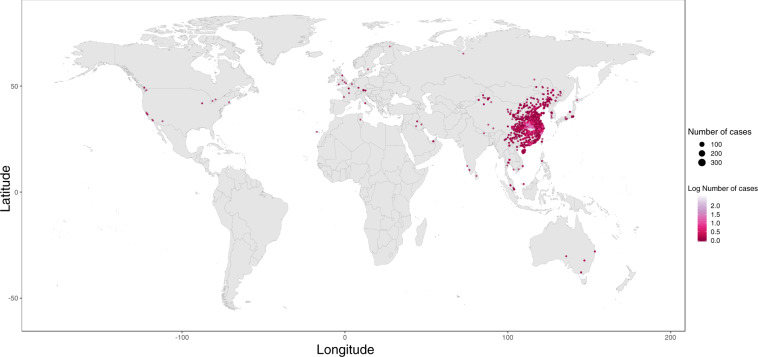
Cases of a novel coronavirus were first reported in Wuhan, Hubei province, China, in December 2019 and have since spread across the world. Epidemiological studies have indicated human-to-human transmission in China and elsewhere. To aid the analysis and tracking of the COVID-19 epidemic we collected and curated individual-level data from national, provincial, and municipal health reports, as well as additional information from online reports. All data are geo-coded and, where available, include symptoms, key dates (date of onset, admission, and confirmation), and travel history. The generation of detailed, real-time, and robust data for emerging disease outbreaks is important and can help to generate robust evidence that will support and inform public health decision making.
Overview
The claims and statistics of this paper haven’t been checked yet.
Free: it reads the open-access text and checks the first 5 claims that cite a source we can check. Create a free account to check every claim.
Integrity signals
Registry
Cites
Statistics
Figures
Verification
Claims the paper makes
The claims and statistics of this paper haven’t been checked yet.
Free: it reads the open-access text and checks the first 5 claims that cite a source we can check. Create a free account to check every claim.
Claims other papers make about this one
Each is checked against this paper’s own text: does it say what the citing paper says it does?
In the citing paper
“We aligned cases and seroprevalence on the basis of individual record data suggesting that exposure to a laboratory-confirmed case was typically 10–13 days36 and exposure to seroconversion was 14–17 days.37, 38, 39”
From Estimating global, regional, and national daily and cumulative infections with SARS-CoV-2 through Nov 14, 2021: a statistical analysis (2022) · cites this paper as [36]
Self-check
Percentages, sums and reported differences re-computed from the paper’s own numbers.
The self-check needs the paper’s full text.
Citations
Cites
Chen, N., Zhou, M., Dong, X., Qu, J., Gong, F., Han, Y., Qiu, Y., Wang, J., Liu, Y., Wei, Y., et al. (2020) · The Lancet · doi:10.1016/s0140-6736(20)30211-7 · Cited by 21,415 · cited 1×
“(1) columns with no variability across all records were removed, (2) the remaining data were hashed using a 32-bit variant of MurmurHash3 implemented in the R package FeatureHashing version 0.9.1.3 8, 9 , (3) a principle component analysis on the centered, scaled hashed feature matrix is performed for dimension reduct…”
MethodInfluentialEarly transmission dynamics in Wuhan, China, of novel coronavirus-infected pneumonia
Li, Q., Guan, X., Wu, P., Wang, X., Zhou, L., Tong, Y., Ren, R., Leung, K. S. M., Lau, E. H. Y., Wong, J. Y., et al. (2020) · New England Journal of Medicine · doi:10.1056/nejmoa2001316 · Cited by 16,575 · cited 2×
“Third, in some instances more detailed data are available, typically through peer-reviewed research articles 1, 7 , which were subsequently used to modify existing records in the database.”
BackgroundAn interactive web-based dashboard to track COVID-19 in real time
Dong, E., Du, H., & Gardner, L. (2020) · The Lancet Infectious Diseases · doi:10.1016/s1473-3099(20)30120-1 · Cited by 10,048 · cited 1×
“Third, in some instances more detailed data are available, typically through peer-reviewed research articles 1, 7 , which were subsequently used to modify existing records in the database.”
BackgroundPandemic Potential of a Strain of Influenza A (H1N1): Early Findings
Fraser, C., Donnelly, C. A., Cauchemez, S., Hanage, W. P., Van Kerkhove, M. D., Hollingsworth, T. D., Griffin, J., Baggaley, R. F., Jenkins, H. E., Lyons, E. J., et al. (2009) · Science · doi:10.1126/science.1176062 · Cited by 1,909 · cited 1×
“However, the dataset presented here includes fine grained geographic details and the most comprehensive list of cases.”
BackgroundSelf-citationZhao, S., Lin, Q., Ran, J., Musa, S. S., Yang, G., Wang, W., Lou, Y., Gao, D., Yang, L., He, D., et al. (2020) · International Journal of Infectious Diseases · doi:10.1016/j.ijid.2020.01.050 · Cited by 1,853
Feature hashing for large scale multitask learning
Weinberger, K., Dasgupta, A., Langford, J., Smola, A., & Attenberg, J. (2009) · Proceedings of the 26th Annual International Conference on Machine Learning · doi:10.1145/1553374.1553516 · Cited by 906 · cited 1×
“(1) columns with no variability across all records were removed, (2) the remaining data were hashed using a 32-bit variant of MurmurHash3 implemented in the R package FeatureHashing version 0.9.1.3 8, 9 , (3) a principle component analysis on the centered, scaled hashed feature matrix is performed for dimension reduct…”
MethodInfluentialBogoch, I. I., Watts, A., Thomas-Bachli, A., Huber, C., Kraemer, M. U. G., & Khan, K. (2020) · Journal of Travel Medicine · doi:10.1093/jtm/taaa008 · Cited by 898
Self-citationDigital disease detection - harnessing the Web for public health surveillance
Brownstein, J. S., Freifeld, C. C., & Madoff, L. C. (2009) · New England Journal of Medicine · doi:10.1056/nejmp0900702 · Cited by 819 · cited 1×
“Geo-positioned records of case data can be important for risk communication and evaluation during outbreaks, especially when they are available in real-time 4, 5 .”
BackgroundSelf-citationSun, K., Chen, J., & Viboud, C. (2020) · The Lancet Digital Health · doi:10.1016/s2589-7500(20)30026-1 · Cited by 517
The global compendium of Aedes aegypti and Ae. albopictus occurrence
Kraemer, M. U. G., Sinka, M. E., Duda, K. A., Mylne, A., Shearer, F. M., Brady, O. J., Messina, J. P., Barker, C. M., Moore, C. G., Carvalho, R. G., et al. (2015) · Scientific Data · doi:10.1038/sdata.2015.35 · Cited by 388 · cited 1×
“Going forward we will likely update records in the period described here which occurs frequently after outbreaks [13] [14] [15] [16] .”
BackgroundSelf-citation
Cited by
Items 101–200 of 407
COVID-19: Data-Driven Mean-Field-Type Game Perspective
Tembiné, H. (2020) · Games · doi:10.3390/g11040051 · Cited by 40
Nope-Giraldo, R. M., Illapuma-Ccallo, L. A., Cornejo, J., Palacios, P., Napan, J. L., Cruz, F., Palomares, R., Cornejo, J., & Vargas, M. (2021) · Global Medical Engineering Physics Exchanges/Pan American Health Care Exchanges (GMEPE/PAHCE) · doi:10.1109/gmepe/pahce50215.2021.9434874 · Cited by 34
“The COVID-19 pandemic caused by the SARS-CoV-2 virus, has presented the first cases located in Wuhan, China during December 2019, presents an exponential change in human life daily activities creating global health issues [1-5], therefore is important to take into account 2 main actions: “environmental, social, health…”
BackgroundHang, C. N., Tsai, Y.-Z., Yu, P.-D., Chen, J., & Tan, C. W. (2023) · Big Data and Cognitive Computing · doi:10.3390/bdcc7020108 · Cited by 38
“[126] 2020 Health Profile Individual-level Epidemiological Data for COVID-19 Outbreak https://github.”
BackgroundWang, P., Zheng, X., & Liu, H. (2022) · Frontiers in Public Health · doi:10.3389/fpubh.2022.1033432 · Cited by 35
“Xu et al. (97) collected and collated epidemiological data at the individual level, and identified them by geocoding to better monitor and predict the spread of infections at the spatial level.”
BackgroundMonitoring the West Nile virus outbreaks in Italy using open access data
Mingione, M., Branda, F., Maruotti, A., Ciccozzi, M., & Mazzoli, S. (2023) · Scientific Data · doi:10.1038/s41597-023-02676-0 · Cited by 32
A Conceptual Model for Geo-Online Exploratory Data Visualization: The Case of the COVID-19 Pandemic
Bernasconi, A., & Grandi, S. (2021) · Information · doi:10.3390/info12020069 · Cited by 32
Badr, H. S., Zaitchik, B. F., Kerr, G. H., Nguyen, N.-L. H., Chen, Y., Hinson, P., Colston, J. M., Kosek, M. N., Dong, E., Du, H., et al. (2023) · Scientific Data · doi:10.1038/s41597-023-02276-y · Cited by 35
Rastogi, S. (2020) · Journal of Ayurveda and Integrative Medicine · doi:10.1016/j.jaim.2019.09.009 · Cited by 29
Early warning of COVID-19 hotspots using human mobility and web search query data
Yabe, T., Tsubouchi, K., Sekimoto, Y., & Ukkusuri, S. V. (2021) · Computers Environment and Urban Systems · doi:10.1016/j.compenvurbsys.2021.101747 · Cited by 35
“With the availability of open datasets (Xu et al., 2020), there is great potential in further using web search query data for pandemic response and prevention.”
Advanced forecasting of SARS‐CoV‐2‐related deaths in Italy, Germany, Spain, and New York State
Sotgiu, G., Gerli, A. G., Centanni, S., Miozzo, M. R., Canonica, G. W., Soriano, J. B., & Virchow, J. C., Jr. (2020) · Allergy · doi:10.1111/all.14327 · Cited by 27
Aboulilah, H. M. A. E., Hossain, S. F. A., Vương, B. N., & Jebril, T. (2022) · SAGE Open · doi:10.1177/21582440221139447 · Cited by 26
“The novel coronavirus infection and the subsequent global crisis was testified in Wuhan, China, in December 2019 for the first time (Xu, Gutierrez et al., 2020), later spreading exceedingly rapidly across the globe.”
BackgroundUsing GIS in the Time of the COVID-19 Crisis, casting a glance at the future. A joint discussion
Dangermond, J., Vito, C. D., & Pesaresi, C. (2020) · IRIS Research product catalog (Sapienza University of Rome) · doi:10.4458/3099-16 · Cited by 26
Hashim, B. M., Al‐Naseri, S. K., Maliki, A. A., Sa’adi, Z., Malik, A., & Yaseen, Z. M. (2021) · Environmental Science and Pollution Research · doi:10.1007/s11356-021-13812-x · Cited by 25
Forero, D. A., Curioso, W. H., & Patrinos, G. P. (2021) · BMC Research Notes · doi:10.1186/s13104-021-05817-z · Cited by 29
“…in this pandemic, and we need more collaboration between private and public agencies, interdisciplinary approaches, universities, non-governmental organizations, and the civil society to promote an efficient use of open data repositories (as it has been demonstrated recently in the pandemic [51]).”
BackgroundDemographic aspects of the COVID-19 pandemic in Italy, Spain, Germany, and South Korea
Tesárková, K. H. (2020) · Geografie · doi:10.37040/geografie2020125020139 · Cited by 24
Artificial Intelligence Approach to Predict the COVID-19 Patient’s Recovery
Salama, A., Darwsih, A., & Hassanien, A. E. (2021) · Studies in systems, decision and control · doi:10.1007/978-3-030-63307-3_8 · Cited by 26
“Corona is now the common enemy to the whole world [2].”
BackgroundStatistical Deconvolution for Inference of Infection Time Series
Miller, A. C., Hannah, L. A., Futoma, J., Foti, N. J., Fox, E. B., D’Amour, A., Sandler, M., Saurous, R. A., & Lewnard, J. A. (2022) · Epidemiology · doi:10.1097/ede.0000000000001495 · Cited by 26
“Practically, COVID-19 line lists track the number of days between symptom onset and the reporting of individual cases, which can be used to form an estimate of the distribution θ [16, 31].”
BackgroundZhai, W., Yue, H., & Deng, Y. (2022) · Applied Geography · doi:10.1016/j.apgeog.2022.102768 · Cited by 26
“Specifically, we adopted the onset dates and confirmed dates of patients documented by Xu et al. (2020) to infer the probability distribution and cumulative distribution function of delayed days, respectively (Fig.”
Lessons from COVID-19 for rescalable data collection
Bhatia, S., Imai, N., Watson, O. J., Abbood, A., AbdelMalik, P., Cornelissen, T., Ghozzi, S., Lassmann, B., Nagesh, R., Ragonnet‐Cronin, M., et al. (2023) · The Lancet Infectious Diseases · doi:10.1016/s1473-3099(23)00121-4 · Cited by 28
Self-citationKowalczyk, A. (2024) · Medicina · doi:10.3390/medicina60060892 · Cited by 24
“Despite the widely held belief in the protective effects of vitamin C, epidemiological data from China during the COVID-19 pandemic indicate a substantial incidence of SARS-CoV-2 infection, suggesting that increased consumption of citrus fruits alone may not significantly affect the virus [86–90].”
BackgroundMohammed, M., Muhammad, S., Mohammed, F. Z., Mustapha, S., Sha’aban, A., Najib, Y. S., Ahmad, M. H., Bala, A. A., Ungogo, M. A., Alotaibi, N., et al. (2020) · Journal of Racial and Ethnic Health Disparities · doi:10.1007/s40615-020-00888-3 · Cited by 29
Transforming Disease Surveillance through Artificial Intelligence
Giri, P., & Gupta, M. K. (2024) · Indian Journal of Community Medicine · doi:10.4103/ijcm.ijcm_459_24 · Cited by 25
“[4,5] This approach provided real-time mapping of the virus’s trajectory, aiding public health officials in their response efforts.”
BackgroundErtuğrul, D. Ç., & Ulusoy, D. (2021) · Expert Systems · doi:10.1111/exsy.12716 · Cited by 26
“The researchers (Xu et al., 2020; Xu et al., 2020) collected an individual-based epidemiological data set from national, provincial, municipal health reports, and online reports to support the analysis and tracking of the COVID-19 epidemic in Hubei, China.”
BackgroundMethodInfluentialSchultz, B. T., Zaliani, A., Ebeling, C., Reinshagen, J., Bojková, D., Lage‐Rupprecht, V., Karki, R., Lukassen, S., Gadiya, Y., Ravindra, N. G., et al. (2021) · Scientific Reports · doi:10.1038/s41598-021-90296-2 · Cited by 25
Similarity maps and pairwise predictions for transmission dynamics of COVID-19 with neural networks
Hartono, P. (2020) · Informatics in Medicine Unlocked · doi:10.1016/j.imu.2020.100386 · Cited by 23
“Data from this outbreak have already been compiled and made available for research communities [3 – 5], which are rapidly studying various aspects of the transmission of this disease.”
COVID-19 second wave: District level study of concentration of confirmed cases and fatality in India
Ghosh, D., Sarkar, A., & Chouhan, P. (2021) · Environmental Challenges · doi:10.1016/j.envc.2021.100221 · Cited by 22
Implications of Sex Difference in CT Scan Findings and Outcome of Patients with COVID-19 Pneumonia
Moradi, B., Ghanaati, H., Kazemi, M. A., Gity, M., Hashemi, H., Tanha, F. D., Chavoshi, M., Rouzrokh, P., & Kolahdouzan, K. (2020) · Radiology Cardiothoracic Imaging · doi:10.1148/ryct.2020200248 · Cited by 27
“In a retrospective study on critically ill COVID-19 patients in Wuhan, China, the number of admitted men to the intensive care setting was twice that of women (10).”
BackgroundData-Driven Modeling for Different Stages of Pandemic Response
Adiga, A., Chen, J., MARATHE, M. V., Mortveit, H., Venkatramanan, S., & Vullikanti, A. K. S. (2020) · Journal of the Indian Institute of Science · doi:10.1007/s41745-020-00206-0 · Cited by 23
“more, age- and demographic/comorbidity information allow development of models that are age- and risk group stratied. One such crowdsourced line list was compiled during the early stages of COVID-19 [24] and later released by CDC for US cases [25]. Data from detailed clinical investigations from other countries such a…”
BackgroundSystems dynamics and the uncertainties of diagnostics, testing and contact tracing for COVID-19
Fair, J. M., LeClaire, R. J., Dauelsberg, L. R., Ewers, M., Pasqualini, D., Cleland, T., & Rosenberger, W. E. (2021) · Methods · doi:10.1016/j.ymeth.2021.03.008 · Cited by 23
Huang, Y., Wu, Y. L., & Zhang, W. (2020) · Chaos Solitons & Fractals · doi:10.1016/j.chaos.2020.110041 · Cited by 22
“[1] Xu B , Gutierrez B , Mekaru S , Sewalk K , Goodwin L , Loskill A , et al.”
Database of epidemic trends and control measures during the first wave of COVID-19 in mainland China
Fu, H. J., Wang, H., Xi, X., Boonyasiri, A., Wang, Y., Hinsley, W. R., Fraser, K., McCabe, R., Mesa, D. O., Skarp, J. E., et al. (2020) · International Journal of Infectious Diseases · doi:10.1016/j.ijid.2020.10.075 · Cited by 21
Impact of data accuracy on the evaluation of COVID-19 mitigation policies
Starnini, M., Aleta, A., Tizzoni, M., & Moreno, Y. (2021) · Data & Policy · doi:10.1017/dap.2021.25 · Cited by 26
“In addition, often the delay from symptom onset to reporting is computed from line list data collected in different countries (Xu et al., 2020), thus assuming that this is a general property of the epidemic neglecting the large heterogeneities existing in surveillance systems across the world and…”
BackgroundGupta, J., Abullais, S. S., Althomali, R. H., Chunata, D. M. G., Abdullaev, S. S., Yeslam, H. E., Sarsembenova, O., Ramadan, M. F., Alsalamy, A., & Alkhayyat, S. (2023) · Microchemical Journal · doi:10.1016/j.microc.2023.109268 · Cited by 21
An adaptive, interacting, cluster-based model for predicting the transmission dynamics of COVID-19
Ravinder, R., Singh, S., Bishnoi, S., Jan, A., Sinha, A., Sharma, A., Kodamana, H., & Krishnan, N. M. A. (2020) · Heliyon · doi:10.1016/j.heliyon.2020.e05722 · Cited by 20
In silico Investigation of Tridax procumbens Phyto-Constituents Against SARS-CoV-2 Infection
(2021) · Biointerface Research in Applied Chemistry · doi:10.33263/briac114.1212012148 · Cited by 20
“Even though all-inclusive efforts are being taken to cure the pandemic, clinicallyproven prophylaxis, and therapeutic strategy are still demanding [5].”
BackgroundNavaz, A. N., Kassabi, H. T. E., Serhani, M. A., Oulhaj, A., & Khalil, K. M. (2022) · Journal of Personalized Medicine · doi:10.3390/jpm12050768 · Cited by 23
Synthesis and characterization of ZnO and CuO coatings for antibacterial and antiviral applications
Mannai, Z., Bousslama, W., Karkouch, I., Bouslama, L., Khlifi, K., Aouadi, K., & Nouira, F. (2024) · Materials Chemistry and Physics · doi:10.1016/j.matchemphys.2024.130071 · Cited by 19
Verstraete, N., Jurman, G., Bertagnolli, G., Ghavasieh, A., Pancaldi, V., & Domenico, M. D. (2020) · Network and Systems Medicine · doi:10.1089/nsm.2020.0011 · Cited by 20
Shi, B., Ye, H., Zheng, J. D., Zhu, Y., Heidari, A. A., Zheng, L., Chen, H., Wang, L., & Wu, P. (2021) · IEEE Access · doi:10.1109/access.2021.3108447 · Cited by 20
“Immediately afterward, SARS-CoV2 has rapidly spread in China and has taken many human lives [1], [2].”
BackgroundSelf-citationCross-sectional cycle threshold values reflect epidemic dynamics of COVID-19 in Madagascar
Andriamandimby, S. F., Brook, C. E., Razanajatovo, N. H., Randriambolamanantsoa, T. H., Rakotondramanga, J. M., Rasambainarivo, F., Raharimanga, V., Razanajatovo, I. M., Mangahasimbola, R. T., Razafindratsimandresy, R., et al. (2021) · Epidemics · doi:10.1016/j.epidem.2021.100533 · Cited by 20
Deep-Risk: Deep Learning-Based Mortality Risk Predictive Models for COVID-19
Elshennawy, N. M., Ibrahim, D. M., Sarhan, A. M., & Arafa, M. M. (2022) · Diagnostics · doi:10.3390/diagnostics12081847 · Cited by 19
Social network analysis and community detection on spread of COVID-19
Wickramasinghe, A., & Muthukumarana, S. (2021) · Model Assisted Statistics and Applications · doi:10.3233/mas-210513 · Cited by 26
“This data set, which is a matrix of 13174 (rows) by 44 (columns), is extracted from the Johns Hopkins University’s dashboard using the methodology of Xu et al. (2020) and a sample of data set is given in Table 1.”
Shah, S. H. H., Steinnes, O.-M. H., Gustafsson, E. G., & Hameed, I. A. (2021) · Applied Sciences · doi:10.3390/app11167200 · Cited by 19
Sarkar, P. K., & Mukhopadhyay, C. D. (2022) · Journal of Herbal Medicine · doi:10.1016/j.hermed.2022.100554 · Cited by 22
“Researchers in every field are trying to find a clinically proven prophylactic or therapeutic strategy (Xu et al., 2020) to control worldwide morbidity and mortality caused by this virus.”
BackgroundResponsiveness of open innovation to COVID-19 pandemic: The case of data for good
Scotti, F., Pierri, F., Bonaccorsi, G., & Flori, A. (2022) · PLoS ONE · doi:10.1371/journal.pone.0267100 · Cited by 21
“This has been the case for the development of open data protocols for health reports during the Ebola virus crisis [34, 104], which resulted in an efficient implementation during the current COVID-19 pandemic [35, 105].”
MethodArneson, D. V., Elliott, M., Mosenia, A., Oskotsky, B., Solodar, S., Vashisht, R., Zack, T. I., Bleicher, P. A., Butte, A. J., & Rudrapatna, V. A. (2020) · Scientific Data · doi:10.1038/s41597-020-00731-8 · Cited by 18
Modeling the Effect of Population-Wide Vaccination on the Evolution of COVID-19 Epidemic in CanadaPreprint
Berkane, S., Harizi, I., & Tayebi, A. (2021) · medRxiv · doi:10.1101/2021.02.05.21250572 · Cited by 19
Zeng, W., Gautam, A., & Huson, D. H. (2021) · Computation · doi:10.3390/computation9010004 · Cited by 17
“[17] from Github [39], on 21 August 2020 (file latestdata.”
BackgroundMethodInfluentialBlauer, B., Brownstein, J. S., Gardner, L., Kraemer, M. U. G., Rioja, Z. B. L., Mathieu, E., Redies, I., & Morgan, O. W. (2023) · Eurosurveillance · doi:10.2807/1560-7917.es.2023.28.24.2200860 · Cited by 17
Self-citationArtificial Intelligence With Human-Computer Interaction
Renuka, D. D., A., S. M. T., & Vigneshwari, K. (2024) · Advances in business strategy and competitive advantage book series · doi:10.4018/979-8-3693-8442-8.ch008 · Cited by 17
A first insight about spatial dimension of COVID-19: analysis at municipality level
Arauzo‐Carod, J. (2020) · Journal of Public Health · doi:10.1093/pubmed/fdaa140 · Cited by 17
Infection dynamics of COVID-19 virus under lockdown and reopening
Svoboda, J., Tkadlec, J., Pavlogiannis, A., Chatterjee, K., & Nowak, M. A. (2022) · Scientific Reports · doi:10.1038/s41598-022-05333-5 · Cited by 18
From 5Vs to 6Cs: Operationalizing Epidemic Data Management with COVID-19 Surveillance
Peddireddy, A. S., Xie, D., Patil, P., Wilson, M., Machi, D., Venkatramanan, S., Klahn, B., Porebski, P. J., Bhattacharya, P., Dumbre, S., et al. (2020) · IEEE International Conference on Big Data (BigData) · doi:10.1109/bigdata50022.2020.9378435 · Cited by 17
Liu, X. F., Xu, X.-K., & Wu, Y. (2020) · Scientific Data · doi:10.1038/s41597-021-00844-8 · Cited by 17
Modeling the Coronavirus Disease 2019 Incubation Period: Impact on Quarantine Policy
Pak, D., Langohr, K., Ning, J., Cortés, J., Melis, G. G., & Shen, Y. (2020) · Mathematics · doi:10.3390/math8091631 · Cited by 16
Hossen, M. S., & Karmoker, D. (2020) · International Conference on Sustainable Technologies for Industry 5.0 (STI) · doi:10.1109/sti50764.2020.9350439 · Cited by 16
“As a result of the outbreak of this terrible virus a large amount of human lives were claimed [3] [4] [5].”
BackgroundTian, S., Wu, M., Chang, Z., Wang, Y., Zhou, G., Zhang, W., Xing, J., Tian, H., Zhang, X., Zou, X., et al. (2021) · BMC Public Health · doi:10.1186/s12889-021-10713-z · Cited by 16
Mahdi, A., Błaszczyk, P., Dłotko, P., Salvi, D., Chan, T.-S., Harvey, J., Gurnari, D., Wu, Y., Farhat, A., Hellmer, N., et al. (2021) · Scientific Reports · doi:10.1038/s41598-021-88481-4 · Cited by 16
Self-citationPandemic Analytics by Advanced Machine Learning for Improved Decision Making of COVID-19 Crisis
Demertzis, K., Taketzis, D., Tsiotas, D., Magafas, L., Iliadis, L., & Kikiras, P. K. (2021) · Processes · doi:10.3390/pr9081267 · Cited by 17
“Similar to a GAM, with time as a regressor, Prophet can adapt to many linear and non-linear functions of time as components, wherein its simplest form, three basic elements are used: trend, seasonality, and holidays, which are combined in the following equation [39,40]:”
BackgroundMethodSingh, A. K., Bajpai, M. K., & Gupta, S. L. (2023) · Lecture notes in electrical engineering · doi:10.1007/978-981-99-0189-0_7 · Cited by 16
COVID-19 Surveillance Data: A Primer for Epidemiology and Data Science
Tarantola, D. J. M., & Dasgupta, N. (2021) · American Journal of Public Health · doi:10.2105/ajph.2020.306088 · Cited by 17
Xiang, W., Chen, L., Yan, X., Wang, B., & Liu, X. (2023) · Cities · doi:10.1016/j.cities.2023.104238 · Cited by 15
Paul, T., Vainio, S. J., & Röning, J. (2020) · Genomics · doi:10.1016/j.ygeno.2020.10.009 · Cited by 15
“Severe acute respiratory syndrome coronavirus-2 (SARS-CoV-2) is the seventh family member of the coronavirus family [1,2].”
A Review on the Use of Machine Learning Against the Covid-19 Pandemic
Biabani, S. A. A., & Tayyib, N. (2022) · Engineering Technology & Applied Science Research · doi:10.48084/etasr.4628 · Cited by 16
“Besides these platforms that offer universal statistics, many country-focused datasets accumulate information about specific countries [15-17].”
BackgroundEvolution and Epidemic Spread of SARS-CoV-2 in Colombia: A Year into the Pandemic
Castañeda, S., Patiño, L. H., Muñoz, M., Ballesteros, N., Guerrero-Araya, E., Paredes‐Sabja, D., Flórez, C., Gomez, S., Ramírez-Santana, C., Salguero, G., et al. (2021) · Vaccines · doi:10.3390/vaccines9080837 · Cited by 15
DT2CAM: A Decision Tree to Content Addressable Memory Framework
Rakka, M., Fouda, M. E., Kanj, R. N., & Kurdahi, F. J. (2023) · IEEE Transactions on Emerging Topics in Computing · doi:10.1109/tetc.2023.3261748 · Cited by 14
“To evaluate our framework on a more recent dataset, we also test it on the COVID-19 (denoted as Covid) dataset compiled by [38].”
MethodDevelopment of minimal basic data set to report COVID-19
Shanbehzadeh, M., & Kazemi-Arpanahi, H. (2020) · Medical Journal of the Islamic Republic of Iran · doi:10.47176/mjiri.34.111 · Cited by 14
Arora, K., Rastogi, R., Arora, N. M., Parashar, D., Paliwal, J., Naqvi, A., Srivastava, A., Singh, S. K., Kalyanaraman, S., Potdar, S., et al. (2020) · bioRxiv (Cold Spring Harbor Laboratory) · doi:10.1101/2020.05.18.099234 · Cited by 15
“fronts, including health, economy, travel and social norms of living(1).”
BackgroundMNI-FTD templates, unbiased average templates of frontotemporal dementia variants
Dadar, M., Manera, A. L., Fonov, V., Ducharme, S., & Collins, D. L. (2021) · Scientific Data · doi:10.1038/s41597-021-01007-5 · Cited by 16
Web-Based COVID-19 Dashboards and Trackers in the United States: Survey Study
Clarkson, M. D. (2023) · JMIR Human Factors · doi:10.2196/43819 · Cited by 15
“They provide insights and lessons about the process of rapidly designing and developing visualizations [11-15]; efforts to curate global data [16]; the types of visualizations created and who they are for [17-19]; conceptual models linking tools, data, visualizations, and users [20]; and what it…”
COVID-19 Ayurveda treatment protocol of governments of Nepal and India: a review and perspective
Pandit, R. D., & Singh, R. K. (2020) · Applied Science and Technology Annals · doi:10.3126/asta.v1i1.30276 · Cited by 13
Community compliance with the covid-19 protocol hygiene policy in Klaten Regency, Indonesia
Disemadi, H. S., & Handika, D. O. (2020) · Jurnal Ilmiah Hukum LEGALITY · doi:10.22219/ljih.v28i2.12180 · Cited by 13
“Coronavirus Disease 2019 or better known as COVID-19 is a virus that originates from non-humans transmitted to humans (Bashir et al., 2020; Chen et al., 2020; Shereen, Khan, Kazmi, Bashir, & Siddique, 2020; Xie & Chen, 2020; Xu et al., 2020).”
BackgroundLiu, S., Yang, X., Duan, F., & Zhao, W. (2022) · International Journal of Environmental Research and Public Health · doi:10.3390/ijerph191912904 · Cited by 13
Role of big geospatial data in the COVID-19 crisis
Mir, S. A., Bhat, M. S., Rather, G. M., & Mattoo, D. (2022) · Elsevier eBooks · doi:10.1016/b978-0-323-90769-9.00031-1 · Cited by 14
The lessons of COVID-19, SARS, and MERS: Implications for preventive strategies
Semenova, Y. M., Trenina, V., Pivina, L. M., Glushkova, N., Е.Т., Ж., Ospanov, E., & Bjørklund, G. (2022) · International Journal of Healthcare Management · doi:10.1080/20479700.2022.2051126 · Cited by 13
Generating Similarity Map for COVID-19 Transmission Dynamics with Topological AutoencoderPreprint
Hartono, P. (2020) · arXiv (Cornell University) · doi:10.48550/arxiv.2004.01481 · Cited by 13
“Data from this outbreak have already been compiled and made available for research communities [3].”
MethodYang, R. (2020) · medRxiv · doi:10.1101/2020.06.07.20124933 · Cited by 14
Sherratt, K., Abbott, S., Meakin, S. R., Hellewell, J., Munday, J. D., Bosse, N., CMMID Covid-19 working group, Jit, M., & Funk, S. (2020) · medRxiv · doi:10.1101/2020.10.18.20214585 · Cited by 14
Tobías, A., Molina, T., Rodrigo, M., & Sáez, M. (2021) · One Health · doi:10.1016/j.onehlt.2021.100239 · Cited by 12
TINJAUAN TEKNOLOGI INAKTIVASI VIRUS UNTUK PENANGGULANGAN PANDEMI COVID-19
Prayitno, J., Darmawan, R. A., Susanto, J. P., & Nugroho, R. (2021) · Jurnal Bioteknologi & Biosains Indonesia (JBBI) · doi:10.29122/jbbi.v8i1.4612 · Cited by 15
The Effect of Face Mask Use on COVID-19 Models
Bai, F., & Brauer, F. (2021) · Epidemiologia · doi:10.3390/epidemiologia2010007 · Cited by 12
“A substantial portion of the US response to the coronavirus response has been a switch to a quite different model [2], predicting considerably fewer deaths.”
BackgroundGeneralizable prediction of COVID-19 mortality on worldwide patient data
Edelson, M., & Kuo, T.-T. (2022) · JAMIA Open · doi:10.1093/jamiaopen/ooac036 · Cited by 12
“To address the overall goal of model generalizability, we utilized an open-source COVID-19 dataset 14,15 collected from government sources, scientific papers, and news websites, which contained 2 676 403 COVID-19-confirmed patients from around the world as of March 31, 2021.”
A Survey on Data-driven COVID-19 and Future Pandemic Management
Tao, Y., Yang, C., Wang, T., Coltey, E., Jin, Y., Liu, Y., Jiang, R., Fan, Z., Song, X., Shibasaki, R., et al. (2022) · ACM Computing Surveys · doi:10.1145/3542818 · Cited by 17
“There are also data sets which exist for meta-populations at the level of cities, counties, or individual-level epidemiological data of COVID-19 cases in China [114, 180, 181].”
BackgroundInfluentialGlobal approaches to infectious disease surveillance and modeling
Khurana, M. P., Tsui, J. L.-H., Gutierrez, B., Chopra, A., Scheidwasser, N., Zhu, H. B. H., Chang, S. Y., Duchêne, D. A., Mills, C. L., Inward, R. P. D., et al. (2026) · Nature Medicine · doi:10.1038/s41591-026-04351-4 · Cited by 14
“…frameworks have already been developed (for example, Apache Hadoop 118 , Apache Spark 119 , Kubernetes 120 and Monolith 121 ) to facilitate secure model training across distributed data sources, leveraging secure multi-party computation, differential privacy 122,123 and homomorphic…”
Self-citationThe Impact of the COVID-19 Pandemic on Postpartum Maternal Mental Health
Chiara, L. D., Angeletti, G., Anibaldi, G., Chetoni, C., Gualtieri, F., Forcina, F., Bargagna, P., Kotzalidis, G. D., Callovini, T., Bonito, M., et al. (2022) · Journal of Personalized Medicine · doi:10.3390/jpm13010056 · Cited by 13
ANÁLISE BIBLIOMÉTRICA DA PRODUÇÃO BRASILEIRA SOBRE A COVID-19
Figueredo, W. N., de Macêdo, T. T. S., Cardoso, G. M. P., & Fernandes, E. T. B. S. (2020) · Revista Baiana de Enfermagem · doi:10.18471/rbe.v34.37107 · Cited by 18
“Diante desse cenário, a comunidade científica de diversas áreas, como por exemplo, epidemiologia((7)), medicina((8)), saúde pública((9)) e economia((10)), está empenhada em pesquisar, publicar e consolidar evidências científicas, que são imprescindíveis para a orientação da população, dos profissionais e dos gestores…”
BackgroundSoundrapandiyan, R., Manickam, A., Akhloufi, M. A., Murthy, Y. V. S., Sundaram, R. D. M., & Thirugnanasambandam, S. (2023) · BioMedInformatics · doi:10.3390/biomedinformatics3020023 · Cited by 10
“[6] actively collected more and more COVID-19 patient data.”
BackgroundTsiotas, D., Dialesiotis, S., & Christopoulou, O. G. (2023) · Environment Development and Sustainability · doi:10.1007/s10668-023-04240-7 · Cited by 10
Doyle, R. (2021) · JMIRx Med · doi:10.2196/29392 · Cited by 10
“Data Set Data for this study were obtained from a continuously updated repository [18] containing anonymized patient level information on 2,676,311 COVID-19–positive individuals across 146 countries.”
MethodL3-Net Deep Audio Embeddings to Improve COVID-19 Detection from Smartphone Data
Campana, M. G., Rovati, A., Delmastro, F., & Pagani, E. (2022) · IEEE International Conference on Smart Computing · doi:10.1109/smartcomp55677.2022.00029 · Cited by 12
Yehudi, Y., Hughes-Noehrer, L., Goble, C., & Jay, C. (2025) · Data & Policy · doi:10.1017/dap.2024.79 · Cited by 10
Koch, L., Nespoulous, O., Turc, J., Linard, C., Martigne, P., Beaussac, M., Murris, S., Ferraris, O., Grandadam, M., Frénois-Veyrat, G., et al. (2021) · Air Medical Journal · doi:10.1016/j.amj.2021.10.006 · Cited by 11
“In March 2020, the world faced an unprecedented outbreak of coronavirus called coronavirus disease 2019 (COVID-19).(1) In some French regions, especially in the east, an overwhelming influx of critically ill patients overloaded intensive care units (ICUs), whereas many other regions were less affected and had availabl…”
Özgüven, Y. M., & Eken, S. (2021) · Journal of Ambient Intelligence and Humanized Computing · doi:10.1007/s12652-021-03328-0 · Cited by 10
“…et al. 2020), and social-emotional guidance and panic elimination (Shah et al. 2020), which provided solid spatial information support for decision-making (Xu et al. 2020), measures formulation (Wong et al. 2020), and effectiveness assessment of COVID-19 prevention and control (Sun and Zhai 2020).”
BackgroundÜzer, F., Öktem, B., Güven, F. M. K., Kırhan, İ., & Topal, M. (2020) · Medical Gas Research · doi:10.4103/2045-9912.304224 · Cited by 10
Python, A., Bender, A., Blangiardo, M., Illian, J., Lin, Y., Liu, B., Lucas, T. C. D., Tan, S., Wen, Y., Svanidze, D., et al. (2021) · Journal of the Royal Statistical Society Series A (Statistics in Society) · doi:10.1111/rssa.12738 · Cited by 10
Identity and COVID-19 in Canada: Gender, ethnicity, and minority status
Pongou, R., Ahinkorah, B. O., Mabeu, M. C., Agarwal, A., Maltais, S., Moumouni, A. B., & Yaya, S. (2023) · PLOS Global Public Health · doi:10.1371/journal.pgph.0001156 · Cited by 10
“The first case of the novel Coronavirus, also known as SARS-CoV-2 or COVID-19, was reported in Wuhan, Hubei Province in China in December 2019 [1].”
BackgroundJillahi, K. B., & Iorliam, A. (2024) · Journal of Computing Theories and Applications · doi:10.62411/jcta.10350 · Cited by 10
Distributed Scalable Association Rule Mining over Covid-19 Data
Shahin, M., Inoubli, W., Shah, S. A., Yahia, S. B., & Draheim, D. (2021) · Lecture notes in computer science · doi:10.1007/978-3-030-91387-8_3 · Cited by 11
Statistical biases due to anonymization evaluated in an open clinical dataset from COVID-19 patients
Koll, C. E. M., Pütz, S. M., Meurers, T., Lee, C. H., Kohls, M., Stellbrink, C., Thibeault, C., Reinke, L., Steinbrecher, S., Schreiber, S., et al. (2022) · Scientific Data · doi:10.1038/s41597-022-01669-9 · Cited by 9
Wolfrath, N., Wolfrath, J., Hu, H., Banerjee, A., & Kothari, A. N. (2024) · arXiv (Cornell University) · doi:10.48550/arxiv.2409.12116 · Cited by 14
“This study uses a snapshot from a publicly available data source and contains roughly 29,000 cases [35, 54].”
Method
Metadata
- Authors
- Xu, B., Gutierrez, B., Mekaru, S., Sewalk, K., Goodwin, L., Loskill, A., Cohn, E. L., Hswen, Y., Hill, S. C., Cobo, M. M., Zarebski, A. E., Li, S., Wu, C.-H., Hulland, E., Morgan, J. D., Wang, L., O’Brien, K., Scarpino, S. V., Brownstein, J. S., Pybus, O. G., Pigott, D. M., & Kraemer, M. U. G.
- Affiliations
- University of Oxford (GB)
- Boston Children's Hospital (US)
- Boston University (US)
- University of Southampton (GB)
- University of Washington (US)
- Centre National de la Recherche Scientifique (FR)
- Northeastern University (US)
- Corresponding author
- Zarebski, Alexander E.
- Pigott, David M.
- Kraemer, Moritz U. G.
- ORCID
- Venue
- Scientific Data
- Published
- 2020-03-24
- Volume
- 7
- Issue
- 1
- Pages
- 106-106
- ISSN
- 2052-4463 (ISSN-L)
- PMC
- PMC7093412
- OpenAlex
- W3012798837
- Cited by
- 396
- References
- 16
- Citations by year
- 2026: 8 · 2025: 18 · 2024: 21 · 2023: 35 · 2022: 67 · 2021: 110 · 2020: 137
- Type
- data paper
- Language
- en
- Open access
- gold
- doi.org
- Licence
- cc-by
- creativecommons.org/licenses/by/4.0 (tdm)
- creativecommons.org/licenses/by/4.0 (vor)
- Locations
- Scientific Data (publishedVersion, cc-by)
- PubMed Central (publishedVersion, cc-by)
- PubMed (publishedVersion)
- ePrints Soton (University of Southampton) (acceptedVersion)
- Informationszentrum Lebenswissenschaften (ZB MED) (submittedVersion, cc-by)
- eScholarship (California Digital Library) (submittedVersion)
- eScholarship (California Digital Library) (submittedVersion, cc-by)
- Apollo (University of Cambridge) (submittedVersion, cc-by)
- Apollo (cc-by)
- Apollo
- Funders
- Bill and Melinda Gates Foundation (INV-006113)
- Wellcome Trust (220414/Z/20/Z)
- China Scholarship Council
- Topics
- Physical Sciences › Mathematics › Modeling and Simulation › COVID-19 epidemiological studies
- Health Sciences › Medicine › Epidemiology › Data-Driven Disease Surveillance
- Health Sciences › Medicine › Infectious Diseases › SARS-CoV-2 and COVID-19 Research
- Keywords
- COVID-19 pandemic, SARS-CoV-2, disease surveillance, human-to-human transmission, travel history, symptom data, outbreak surveillance, public health decision-making
- MeSH terms
- Betacoronavirus, COVID-19, SARS-CoV-2, China, Geography, Humans, Pneumonia, Viral, Public Health, Coronavirus Infections, Epidemics, Pandemics, Geographic Mapping
About these checks
Registry, retraction, Cites and statistics results are computed, not judged, with one exception: a printed reference that no index lists is read once by a model before it counts as a citation error. Claims are extracted by a model and kept only when their quote appears verbatim in the text; each cited source is then checked, with a model’s help, for whether it says what the claim relies on. Those verdicts can be wrong — read the claim’s quote and the cited source before relying on one.
Statistics and arithmetic are recomputed, not judged.
Confidence bands are shown only for fields calibrated on our annotated test set. None is calibrated yet, so no band is shown.
What counts as a claim ›How we measure confidence ›How we check this ›
Are you an author, or do you see a problem with this page? Request a review
Data sources
Bibliographic data: Semantic Scholar, OpenAlex, Crossref.
Contains information from the Semantic Scholar Academic Graph Datasets, made available under the ODC Attribution License (ODC-BY 1.0).
Semantic Scholar’s data is described in: Kinney, R., et al. (2023). The Semantic Scholar Open Data Platform. arXiv:2301.10140.
