

Epidemiological data from the COVID-19 outbreak, real-time case information
Open accessThe DOI matches its Crossref record; 15 of the 16 references it cites were found in a registry or an index.
Abstract
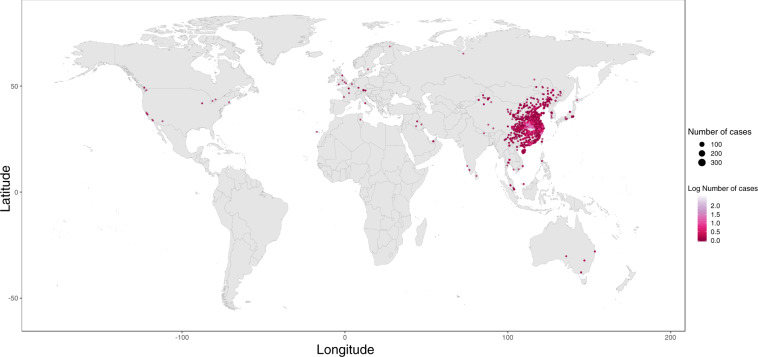
Cases of a novel coronavirus were first reported in Wuhan, Hubei province, China, in December 2019 and have since spread across the world. Epidemiological studies have indicated human-to-human transmission in China and elsewhere. To aid the analysis and tracking of the COVID-19 epidemic we collected and curated individual-level data from national, provincial, and municipal health reports, as well as additional information from online reports. All data are geo-coded and, where available, include symptoms, key dates (date of onset, admission, and confirmation), and travel history. The generation of detailed, real-time, and robust data for emerging disease outbreaks is important and can help to generate robust evidence that will support and inform public health decision making.
Overview
The claims and statistics of this paper haven’t been checked yet.
Free: it reads the open-access text and checks the first 5 claims that cite a source we can check. Create a free account to check every claim.
Integrity signals
Registry
Cites
Statistics
Figures
Verification
Claims the paper makes
The claims and statistics of this paper haven’t been checked yet.
Free: it reads the open-access text and checks the first 5 claims that cite a source we can check. Create a free account to check every claim.
Claims other papers make about this one
Each is checked against this paper’s own text: does it say what the citing paper says it does?
In the citing paper
“We aligned cases and seroprevalence on the basis of individual record data suggesting that exposure to a laboratory-confirmed case was typically 10–13 days36 and exposure to seroconversion was 14–17 days.37, 38, 39”
From Estimating global, regional, and national daily and cumulative infections with SARS-CoV-2 through Nov 14, 2021: a statistical analysis (2022) · cites this paper as [36]
Self-check
Percentages, sums and reported differences re-computed from the paper’s own numbers.
The self-check needs the paper’s full text.
Citations
Cites
Chen, N., Zhou, M., Dong, X., Qu, J., Gong, F., Han, Y., Qiu, Y., Wang, J., Liu, Y., Wei, Y., et al. (2020) · The Lancet · doi:10.1016/s0140-6736(20)30211-7 · Cited by 21,415 · cited 1×
“(1) columns with no variability across all records were removed, (2) the remaining data were hashed using a 32-bit variant of MurmurHash3 implemented in the R package FeatureHashing version 0.9.1.3 8, 9 , (3) a principle component analysis on the centered, scaled hashed feature matrix is performed for dimension reduct…”
MethodInfluentialEarly transmission dynamics in Wuhan, China, of novel coronavirus-infected pneumonia
Li, Q., Guan, X., Wu, P., Wang, X., Zhou, L., Tong, Y., Ren, R., Leung, K. S. M., Lau, E. H. Y., Wong, J. Y., et al. (2020) · New England Journal of Medicine · doi:10.1056/nejmoa2001316 · Cited by 16,575 · cited 2×
“Third, in some instances more detailed data are available, typically through peer-reviewed research articles 1, 7 , which were subsequently used to modify existing records in the database.”
BackgroundAn interactive web-based dashboard to track COVID-19 in real time
Dong, E., Du, H., & Gardner, L. (2020) · The Lancet Infectious Diseases · doi:10.1016/s1473-3099(20)30120-1 · Cited by 10,048 · cited 1×
“Third, in some instances more detailed data are available, typically through peer-reviewed research articles 1, 7 , which were subsequently used to modify existing records in the database.”
BackgroundPandemic Potential of a Strain of Influenza A (H1N1): Early Findings
Fraser, C., Donnelly, C. A., Cauchemez, S., Hanage, W. P., Van Kerkhove, M. D., Hollingsworth, T. D., Griffin, J., Baggaley, R. F., Jenkins, H. E., Lyons, E. J., et al. (2009) · Science · doi:10.1126/science.1176062 · Cited by 1,909 · cited 1×
“However, the dataset presented here includes fine grained geographic details and the most comprehensive list of cases.”
BackgroundSelf-citationZhao, S., Lin, Q., Ran, J., Musa, S. S., Yang, G., Wang, W., Lou, Y., Gao, D., Yang, L., He, D., et al. (2020) · International Journal of Infectious Diseases · doi:10.1016/j.ijid.2020.01.050 · Cited by 1,853
Feature hashing for large scale multitask learning
Weinberger, K., Dasgupta, A., Langford, J., Smola, A., & Attenberg, J. (2009) · Proceedings of the 26th Annual International Conference on Machine Learning · doi:10.1145/1553374.1553516 · Cited by 906 · cited 1×
“(1) columns with no variability across all records were removed, (2) the remaining data were hashed using a 32-bit variant of MurmurHash3 implemented in the R package FeatureHashing version 0.9.1.3 8, 9 , (3) a principle component analysis on the centered, scaled hashed feature matrix is performed for dimension reduct…”
MethodInfluentialBogoch, I. I., Watts, A., Thomas-Bachli, A., Huber, C., Kraemer, M. U. G., & Khan, K. (2020) · Journal of Travel Medicine · doi:10.1093/jtm/taaa008 · Cited by 898
Self-citationDigital disease detection - harnessing the Web for public health surveillance
Brownstein, J. S., Freifeld, C. C., & Madoff, L. C. (2009) · New England Journal of Medicine · doi:10.1056/nejmp0900702 · Cited by 819 · cited 1×
“Geo-positioned records of case data can be important for risk communication and evaluation during outbreaks, especially when they are available in real-time 4, 5 .”
BackgroundSelf-citationSun, K., Chen, J., & Viboud, C. (2020) · The Lancet Digital Health · doi:10.1016/s2589-7500(20)30026-1 · Cited by 517
The global compendium of Aedes aegypti and Ae. albopictus occurrence
Kraemer, M. U. G., Sinka, M. E., Duda, K. A., Mylne, A., Shearer, F. M., Brady, O. J., Messina, J. P., Barker, C. M., Moore, C. G., Carvalho, R. G., et al. (2015) · Scientific Data · doi:10.1038/sdata.2015.35 · Cited by 388 · cited 1×
“Going forward we will likely update records in the period described here which occurs frequently after outbreaks [13] [14] [15] [16] .”
BackgroundSelf-citation
Cited by
The effect of human mobility and control measures on the COVID-19 epidemic in China
Kraemer, M. U. G., Yang, C.-H., Gutierrez, B., Wu, C.-H., Klein, B., Pigott, D. M., Open COVID-19 Data Working Group, du Plessis, L., Faria, N. R., Li, R., et al. (2020) · Science · doi:10.1126/science.abb4218 · Cited by 2,950
Self-citationInferring the effectiveness of government interventions against COVID-19
Brauner, J. M., Mindermann, S., Sharma, M., Johnston, D., Salvatier, J., Gavenčiak, T., Stephenson, A. B., Leech, G., Altman, G., Mikulik, V., et al. (2021) · Science · doi:10.1126/science.abd9338 · Cited by 1,065
SARS-CoV-2 (COVID-19) by the numbers
Bar-On, Y. M., Flamholz, A., Phillips, R., & Milo, R. (2020) · eLife · doi:10.7554/elife.57309 · Cited by 962
Talic, S., Shah, S., Wild, H., Gasevic, D., Maharaj, A., Ademi, Z., Li, X., Xu, W., Mesa-Eguiagaray, I., Rostron, J., et al. (2021) · BMJ · doi:10.1136/bmj-2021-068302 · Cited by 787
Role of the chronic air pollution levels in the Covid-19 outbreak risk in Italy
Fattorini, D., & Regoli, F. (2020) · Environmental Pollution · doi:10.1016/j.envpol.2020.114732 · Cited by 616
“This virus was termed SARS-CoV-2 for its similarity with that responsible of 37 the global epidemic Severe Acute Respiratory Syndrome (SARS) occurred between 2002 and 2003 38 (Xu et al., 2020) . Patients affected by SARS-CoV-2 infection often experienced serious 39 complications, including organ failure, septic shock,…”
Modeling COVID-19 scenarios for the United States
IHME COVID-19 Forecasting Team, Reiner, R. C., Barber, R. M., Collins, J. K., Zheng, P., Adolph, C., Albright, J., Antony, C. M., Aravkin, A. Y., Bachmeier, S. D., et al. (2021) · Nature Medicine · doi:10.1038/s41591-020-1132-9 · Cited by 556
Self-citationArtificial Intelligence and COVID-19: Deep Learning Approaches for Diagnosis and Treatment
Jamshidi, M., Lalbakhsh, A., Talla, J., Peroutka, Z., Hadjilooei, F., Lalbakhsh, P., Jamshidi, M., Spada, L. L., Mirmozafari, M., Dehghani, M., et al. (2020) · IEEE Access · doi:10.1109/access.2020.3001973 · Cited by 551
“of inputs that can be completed by the database presented in [45].”
BackgroundMethodInfluentialMapping the landscape of Artificial Intelligence applications against COVID-19
Bullock, J., Luccioni, A., Hoffman Pham, K., Sin Nga Lam, C., & Luengo-Oroz, M. (2020) · Journal of Artificial Intelligence Research · doi:10.1613/jair.1.12162 · Cited by 348
IHME COVID-19 health service utilization forecasting team, & Murray, C. J. (2020) · medRxiv · doi:10.1101/2020.03.27.20043752 · Cited by 417
Abbas, J., Wang, D., Su, Z., & Ziapour, A. (2021) · Risk Management and Healthcare Policy · doi:10.2147/rmhp.s284313 · Cited by 365
“9 million verified patients in more than 188 countries and regions.(115) More than 15.”
BackgroundByrne, A. W., McEvoy, D., Collins, A. B., Hunt, K., Casey, M., Barber, A., Butler, F., Griffin, J., Lane, E. A., McAloon, C., et al. (2020) · BMJ Open · doi:10.1136/bmjopen-2020-039856 · Cited by 387
Self-citationPourhomayoun, M., & Shakibi, M. (2021) · Smart Health · doi:10.1016/j.smhl.2020.100178 · Cited by 331
“The disease confirmed by detection of virus nucleic acid (Xu et al., 2020).”
Mohamadou, Y., Halidou, A., & Kapen, P. T. (2020) · Applied Intelligence · doi:10.1007/s10489-020-01770-9 · Cited by 333
“[75] are currently collecting and sharing health information on persons with COVID-19 from local to national level, together with other information from online reports.”
BackgroundCovid-19 and Post Intensive Care Syndrome: A Call for Action
Stam, H., Stucki, G., & Bickenbach, J. (2020) · Journal of Rehabilitation Medicine · doi:10.2340/16501977-2677 · Cited by 328
“It is expected that the results for the rest of the world, once they are available, will be worse, especially for low and middle resource countries (3).”
BackgroundCrowding and the shape of COVID-19 epidemics
Rader, B., Scarpino, S. V., Nande, A., Hill, A. L., Adlam, B., Reiner, R. C., Pigott, D. M., Gutierrez, B., Zarebski, A. E., Shrestha, M., et al. (2020) · Nature Medicine · doi:10.1038/s41591-020-1104-0 · Cited by 274
Self-citationMask-wearing and control of SARS-CoV-2 transmission in the USA: a cross-sectional study
Rader, B., White, L. F., Burns, M. R., Chen, J., Brilliant, J., Cohen, J., Shaman, J., Brilliant, L., Kraemer, M. U. G., Hawkins, J. B., et al. (2021) · The Lancet Digital Health · doi:10.1016/s2589-7500(20)30293-4 · Cited by 307
Self-citationBarber, R. M., Sorensen, R. J. D., Pigott, D. M., Bisignano, C., Carter, A., Amlag, J. O., Collins, J. K., Abbafati, C., Adolph, C., Allorant, A., et al. (2022) · The Lancet · doi:10.1016/s0140-6736(22)00484-6 · Cited by 298
“Based on the same data and analysis used to determine the lag for cases, 36 we used a 10–13-day lag for hospitalisations.”
Self-citationCOVID-19 open source data sets: a comprehensive survey
Shuja, J., Alanazi, E., Alasmary, W., & Alashaikh, A. (2021) · Applied Intelligence · doi:10.1007/s10489-020-01862-6 · Cited by 274
“Researchers [19, 72] list and maintain the epidemiological data of COVID-19 cases in China.”
BackgroundZhang, C. H., & Schwartz, G. G. (2020) · The Journal of Rural Health · doi:10.1111/jrh.12476 · Cited by 253
“Since the outbreak of SARS-COV-2 in the United States, Geographic Information Systems (GIS) have been used to quickly map the distribution and diffusion of the pandemic.(19-22) However, to our knowledge, there has been little published analysis of geographic disparities in infections and deaths among urban, suburban,…”
MethodReCOVery: A Multimodal Repository for COVID-19 News Credibility Research
Zhou, X., Mulay, A., Ferrara, E., & Zafarani, R. (2020) · Proceedings of the 29th ACM International Conference on Information & Knowledge Management · doi:10.1145/3340531.3412880 · Cited by 202
“, [5] and [18]) and collecting scholarly COVID-19 articles for literaturebased discoveries (e.”
BackgroundRisk factors for mortality among COVID-19 patients
Albitar, O., Ballouze, R., Ooi, J. P., & Sheikh Ghadzi, S. M. (2020) · Diabetes Research and Clinical Practice · doi:10.1016/j.diabres.2020.108293 · Cited by 240
COVID-19 pandemic: A pragmatic plan for ayurveda intervention
Rastogi, S., Pandey, D. N., & Singh, R. H. (2022) · Journal of Ayurveda and Integrative Medicine · doi:10.1016/j.jaim.2020.04.002 · Cited by 229
“Despite worldwide efforts to contain it, the pandemic is continuing to spread for want of a clinically-proven prophylaxis and therapeutic strategy [4].”
Artificial intelligence for modelling infectious disease epidemics
Kraemer, M. U. G., Tsui, J. L.-H., Chang, S. Y., Lytras, S., Khurana, M. P., Vanderslott, S., Bajaj, S., Scheidwasser, N., Curran-Sebastian, J. L., Semenova, E., et al. (2025) · Nature · doi:10.1038/s41586-024-08564-w · Cited by 169
“In infectious disease modelling, the data landscape is more fragmented and harmonization of infectious disease surveillance data across countries remains a major challenge 131 .”
Self-citationDoes the pathogenesis of SARS-CoV-2 virus decrease at high-altitude?
Arias-Reyes, C., Zubieta-DeUrioste, N., Poma-Machicao, L., Aliaga-Raduan, F., Carvajal-Rodriguez, F., Dutschmann, M., Schneider-Gasser, E. M., Zubieta-Calleja, G., & Soliz, J. (2020) · Respiratory Physiology & Neurobiology · doi:10.1016/j.resp.2020.103443 · Cited by 207
A Cross-Domain Approach to Analyzing the Short-Run Impact of COVID-19 on the US Electricity Sector
Ruan, G., Wu, D., Zheng, X., Zhong, H., Kang, C., Dahleh, M. A., Sivaranjani, S., & Xie, L. (2020) · Joule · doi:10.1016/j.joule.2020.08.017 · Cited by 178
A survey on deep transfer learning to edge computing for mitigating the COVID-19 pandemic
Sufian, A., Ghosh, A., Sadiq, A. S., & Smarandache, F. (2020) · Journal of Systems Architecture · doi:10.1016/j.sysarc.2020.101830 · Cited by 156
A Survey on Applications of Artificial Intelligence in Fighting Against COVID-19
Chen, J., Li, K., Zhang, Z., Li, K., & Yu, P. S. (2022) · ACM Computing Surveys · doi:10.1145/3465398 · Cited by 135
IHME COVID-19 health service utilization forecasting team, & Murray, C. J. (2020) · medRxiv · doi:10.1101/2020.04.21.20074732 · Cited by 175
Nemati, M., Ansary, J., & Nemati, N. (2020) · Patterns · doi:10.1016/j.patter.2020.100074 · Cited by 139
“This dataset was collected by a group of researchers from different universities and research labs.(17) According to the dataset descriptions, data are mostly extracted from national health reports and online resources, released mainly by state/local health officials and hospitals of different countries.”
Mackey, T., Purushothaman, V., Li, J., Shah, N., Nali, M., Bardier, C., Liang, B., Cai, M., & Cuomo, R. (2020) · JMIR Public Health and Surveillance · doi:10.2196/19509 · Cited by 142
“Importantly, ascertaining accurate case estimations of the COVID-19 outbreak is critical to ensuring health care system capacity is not overburdened; evaluating the impact of public health interventions; better enabling comprehensive contact tracing (including methods of digital contact tracing); ensuring the accuracy…”
BackgroundDai, B., Fu, D., Meng, G., Liu, B., Li, Q., & Liu, X. (2020) · Public Administration Review · doi:10.1111/puar.13236 · Cited by 143
“This cannot be separated from the strict governmental supervision and people’s effective protective behaviors (Li, Chen, and Huang 2020).”
BackgroundChen, L., Hu, C., Hood, M., Zhang, X., Zhang, L., Kan, J., & Du, J. (2020) · Nutrients · doi:10.3390/nu12041193 · Cited by 131
Agha, S. (2020) · Ethics Medicine and Public Health · doi:10.1016/j.jemep.2020.100605 · Cited by 145
Izquierdo, J. L., Ancochea, J., Savana COVID-19 Research Group, & Soriano, J. B. (2020) · Journal of Medical Internet Research · doi:10.2196/21801 · Cited by 123
“Indeed, health systems have been or currently are near collapse, and independent modelling efforts have aimed at forecasting a number of epidemiological estimators, including ICU use [13-15].”
BackgroundYehualashet, S. S., Asefa, K. K., Mekonnen, A. G., Negese, B., Shiferaw, W. S., Aynalem, Y. A., Bilchut, A. H., Derseh, B. T., Mekuria, A. D., Negash, W., et al. (2021) · PLoS ONE · doi:10.1371/journal.pone.0246006 · Cited by 116
“Current estimates suggest a median incubation period from five to six days for COVID-19, with a range from one to up to 14 days [10].”
BackgroundSpread of COVID-19 in China: analysis from a city-based epidemic and mobility model
Wei, Y., Wang, J., Song, W., Xiu, C., Ma, L., & Pei, T. (2020) · Cities · doi:10.1016/j.cities.2020.103010 · Cited by 104
Xu, X.-K., Liu, X. F., Wu, Y., Ali, S. T., Du, Z., Bosetti, P., Lau, E. H. Y., Cowling, B. J., & Wang, L. (2020) · Clinical Infectious Diseases · doi:10.1093/cid/ciaa790 · Cited by 105
Self-citationA County-level Dataset for Informing the United States' Response to COVID-19
Killeen, B. D., Wu, J. Y., Shah, K., Zapaishchykova, A., Nikutta, P., Tamhane, A., Chakraborty, S., Wei, J., Gao, T., Thies, M., et al. (2020) · arXiv (Cornell University) · doi:10.48550/arxiv.2004.00756 · Cited by 71
“[43] While IHME records the categories for stay-at-home and gatherings,”
BackgroundInfluentialState-level variation of initial COVID-19 dynamics in the United States
White, E. R., & Hébert‐Dufresne, L. (2020) · PLoS ONE · doi:10.1371/journal.pone.0240648 · Cited by 103
“Later in the outbreak, large distributed teams were necessary to compile and curate epidemiological case data at the individual level [3].”
BackgroundPandemic preparedness of community pharmacies for COVID-19
Bahlol, M., & Dewey, R. S. (2020) · Research in Social and Administrative Pharmacy · doi:10.1016/j.sapharm.2020.05.009 · Cited by 110
A systematic review on AI/ML approaches against COVID-19 outbreak
Dogan, O., Tiwari, S., Jabbar, M. A., & Guggari, S. (2021) · Complex & Intelligent Systems · doi:10.1007/s40747-021-00424-8 · Cited by 87
Country-wide Mobility Changes Observed Using Mobile Phone Data During COVID-19 Pandemic
Heiler, G., Reisch, T., Hurt, J., Forghani, M. A., Omani, A., Hanbury, A., & Karimipour, F. (2020) · IEEE International Conference on Big Data (BigData) · doi:10.1109/bigdata50022.2020.9378374 · Cited by 85
“[14] use mobility data to calibrate epidemiological models.”
BackgroundMethodThe Promise of AI in Detection, Diagnosis, and Epidemiology for Combating COVID-19: Beyond the Hype
Abdulkareem, M., & Petersen, S. E. (2021) · Frontiers in Artificial Intelligence · doi:10.3389/frai.2021.652669 · Cited by 98
Dawood, F. S., Ricks, P., Njie, G. J., Daugherty, M., Davis, W. W., Fuller, J. A., Winstead, A. V., McCarron, M., Scott, L. C., Chen, D. A., et al. (2020) · The Lancet Infectious Diseases · doi:10.1016/s1473-3099(20)30581-8 · Cited by 80
Sáez, C., Romero, N., Conejero, J. A., & García-Gómez, J. M. (2021) · Journal of the American Medical Informatics Association · doi:10.1093/jamia/ocaa258 · Cited by 77
“Philippines would be assigned only to the high-severity subgroups 2, 3, 5, and 6.”
BackgroundResponse2covid19, a dataset of governments’ responses to COVID-19 all around the world
Porcher, S. (2020) · Scientific Data · doi:10.1038/s41597-020-00757-y · Cited by 78
Validity and usefulness of COVID-19 models
Eker, S. (2020) · Humanities and Social Sciences Communications · doi:10.1057/s41599-020-00553-4 · Cited by 78
“Open access data repositories have been rapidly established and have been enormously useful to track the situation and to inform the models (Xu et al., 2020a; Dong et al., 2020; Xu et al., 2020b).”
BackgroundAlshaabi, T., Arnold, M., Minot, J. R., Adams, J. L., Dewhurst, D. R., Reagan, A. J., Muhamad, R., Danforth, C. M., & Dodds, P. S. (2021) · PLoS ONE · doi:10.1371/journal.pone.0244476 · Cited by 77
Ambient PM2.5 exposure and rapid spread of COVID-19 in the United States
Chakrabarty, R. K., Beeler, P., Liu, P., Goswami, S., Harvey, R. D., Pervez, S., van Donkelaar, A., & Martin, R. V. (2020) · The Science of The Total Environment · doi:10.1016/j.scitotenv.2020.143391 · Cited by 67
Demertzis, K., Tsiotas, D., & Magafas, L. (2020) · International Journal of Environmental Research and Public Health · doi:10.3390/ijerph17134693 · Cited by 66
“This timely response have led Greece to be currently considered as a successful case in anti-COVID-19 management, comparatively both to the European and the global cases (Roser and Ritchie, 2020; Xu et al., 2020).”
BackgroundComprehensive Survey of Using Machine Learning in the COVID-19 Pandemic
El-Rashidy, N. M., Abdelrazek, S. M., Abuhmed, T., Amer, E., Ali, F., Hu, J. W., & El–Sappagh, S. (2021) · Diagnostics · doi:10.3390/diagnostics11071155 · Cited by 72
Modeling between-population variation in COVID-19 dynamics in Hubei, Lombardy, and New York City
Wilder, B., Charpignon, M., Killian, J. A., Ou, H.-C., Mate, A., Jabbari, S., Perrault, A., Desai, A. N., Tambe, M., & Majumder, M. S. (2020) · Proceedings of the National Academy of Sciences · doi:10.1073/pnas.2010651117 · Cited by 69
Hoertel, N., Blachier, M., Blanco, C., Olfson, M., Massetti, M., Limosin, F., & Leleu, H. (2020) · medRxiv · doi:10.1101/2020.04.23.20076885 · Cited by 64
“These findings may be explained by the assumption in the model and supported by prior studies ( 41, 52 ) that asymptomatic undiagnosed patients are responsible for a large hidden epidemic that exacerbates as soon as the confinement ends.”
Koliaki, C. C., Tentolouris, A., Eleftheriadou, I., Melidonis, A. J., Dimitriadis, G., & Tentolouris, N. (2020) · Journal of Clinical Medicine · doi:10.3390/jcm9072288 · Cited by 62
Gerli, A. G., Centanni, S., Miozzo, M. R., Virchow, J. C., Jr., Sotgiu, G., Canonica, G. W., & Soriano, J. B. (2020) · Minerva Medica · doi:10.23736/s0026-4806.20.06702-6 · Cited by 56
Data science approaches to confronting the COVID-19 pandemic: a narrative review
Zhang, Q., Gao, J., Wu, J. T. K., Cao, Z., & Zeng, D. D. (2021) · Philosophical Transactions of the Royal Society A Mathematical Physical and Engineering Sciences · doi:10.1098/rsta.2021.0127 · Cited by 59
“Xu et al. collected and curated individual-level patient data from official reports in China, and published it for public use [48].”
BackgroundEpidemiological Characteristics and Forecast of COVID-19 Outbreak in the Republic of Kazakhstan
Semenova, Y. M., Glushkova, N., Pivina, L. M., Khismetova, Z. A., Е.Т., Ж., Сандыбаев, М. Н., & Ivankov, A. (2020) · Journal of Korean Medical Science · doi:10.3346/jkms.2020.35.e227 · Cited by 52
Jiang, G., Wang, C., Song, L., Wang, X., Zhou, Y., Fei, C., & Liu, H. (2020) · Frontiers of Environmental Science & Engineering · doi:10.1007/s11783-021-1386-6 · Cited by 53
Kumar, V., Singh, D., Kaur, M., & Damaševičius, R. (2021) · PeerJ Computer Science · doi:10.7717/peerj-cs.564 · Cited by 54
Medical Imaging with Deep Learning for COVID- 19 Diagnosis: A Comprehensive ReviewPreprint
Bharati, S., Podder, P., Mondal, M. R. H., & Prasath, V. B. S. (2021) · arXiv (Cornell University) · doi:10.48550/arxiv.2107.09602 · Cited by 58
Technical requirements for cultured meat production: a review
Ramani, S., Ko, D., Kim, B., Cho, C., Kim, W., Jo, C., Lee, C., Kang, J., Hur, S. J., & Park, S. (2021) · Journal of Animal Science and Technology · doi:10.5187/jast.2021.e45 · Cited by 55
Nowcasting epidemics of novel pathogens: lessons from COVID-19
Wu, J. T. K., Leung, K. S. M., Lam, T. T., Ni, M. Y., Wong, C. K. H., Peiris, M. J. S., & Leung, G. M. (2021) · Nature Medicine · doi:10.1038/s41591-021-01278-w · Cited by 55
Aktar, S., Talukder, A., Ahamad, M. M., Kamal, A. H. M., Khan, J. R., Protikuzzaman, M., Hossain, N., Azad, A., Quinn, J. M. W., Summers, M. A., et al. (2021) · Diagnostics · doi:10.3390/diagnostics11081383 · Cited by 52
“Data Availability Statement: All the programming codes are available on a GitHub repository and data are available in another GitHub repository [17] and a spreadsheet [16]: https://github.”
MethodInfluentialUsing artificial intelligence technology to fight COVID-19: a review
Peng, Y., Liu, E., Peng, S., Chen, Q., Li, D., & Lian, D. (2022) · Artificial Intelligence Review · doi:10.1007/s10462-021-10106-z · Cited by 53
Individual-Level Fatality Prediction of COVID-19 Patients Using AI Methods
Li, Y., Horowitz, M. A., Liu, J., Chew, A., Lan, H., Liu, Q., Sha, D., & Yang, C. P. (2020) · Frontiers in Public Health · doi:10.3389/fpubh.2020.587937 · Cited by 51
“To monitor and anticipate spread of virus during the COVID-19 outbreak, a real-time database of individual-level epidemiological data is collected and published on GitHub (https://github.com/ beoutbreakprepared/nCoV2019) (6).”
BackgroundSun, Z., Sun, Y., Chang, X., Wang, F., Wang, Q., Ullah, A., & Shao, J. (2023) · Expert Systems with Applications · doi:10.1016/j.eswa.2023.120927 · Cited by 46
Jamshidi, M. B., Lalbakhsh, A., Talla, J., Peroutka, Z., Roshani, S., Matousek, V., Roshani, S., Mirmozafari, M., Malek, Z., Spada, L. L., et al. (2021) · Studies in systems, decision and control · doi:10.1007/978-3-030-67716-9_2 · Cited by 58
“epidemiological data are not available [33].”
Hawas, M. (2020) · Data in Brief · doi:10.1016/j.dib.2020.106175 · Cited by 46
An Optimized Model Based on Deep Learning and Gated Recurrent Unit for COVID-19 Death Prediction
Tarek, Z., Shams, M. Y., Towfek, S. K., Alkahtani, H. K., Ibrahim, A. F., Abdelhamid, A. A., Eid, M. M., Khodadadi, N., Abualigah, L., Khafaga, D. S., et al. (2023) · Biomimetics · doi:10.3390/biomimetics8070552 · Cited by 49
“Moreover, latitude and longitude information can be used with other demographic and environmental data to better understand the factors contributing to the spread of COVID-19, such as population density, air pollution levels, and weather patterns [50].”
BackgroundEkum, M. I., & Ogunsanya, A. S. (2020) · International Journal of Clinical Biostatistics and Biometrics · doi:10.23937/2469-5831/1510027 · Cited by 51
Roche, D. G., Berberi, I., Dhane, F., Lauzon, F., Soeharjono, S., Dakin, R., & Binning, S. A. (2022) · Proceedings of the Royal Society B Biological Sciences · doi:10.1098/rspb.2021.2780 · Cited by 48
Das, J. K., Tradigo, G., Veltri, P., Guzzi, P. H., & Roy, S. (2021) · Briefings in Bioinformatics · doi:10.1093/bib/bbaa420 · Cited by 47
“SCIENTIFIC DATA [42] Curated individual-level data fromnational, provincial and”
BackgroundThe Clinical Information Systems Response to the COVID-19 Pandemic
Reeves, J. J., Pageler, N. M., Wick, E. C., Melton, G. B., Tan, Y.-H. G., Clay, B. J., & Longhurst, C. (2021) · Yearbook of Medical Informatics · doi:10.1055/s-0041-1726513 · Cited by 48
“Several other well-known COVID-19 trackers have been developed and made available including the WHO Coronavirus (COVID-19) Dashboard, the CDC COVID-19 Data Tracker, and HealthMap [165-167].”
MethodAgag, G., Abdelmoety, Z. H. S., & Eid, R. (2023) · Journal of Travel Research · doi:10.1177/00472875231182110 · Cited by 51
“In addition, medical supplies are critical in a pandemic (Xu et al., 2020).”
BackgroundMultistakeholder Participation in Disaster Management—The Case of the COVID-19 Pandemic
Panneer, S., Kantamaneni, K., Pushparaj, R. R. B., Shekhar, S., Bhat, L. D., & Rice, L. (2021) · Healthcare · doi:10.3390/healthcare9020203 · Cited by 55
Hassan, E. M., & Mahmoud, H. N. (2021) · Nature Communications · doi:10.1038/s41467-021-21581-x · Cited by 47
Sherratt, K., Abbott, S., Meakin, S. R., Hellewell, J., Munday, J. D., Bosse, N. I., CMMID COVID-19 Working Group, Jit, M., & Funk, S. (2021) · Philosophical Transactions of the Royal Society B Biological Sciences · doi:10.1098/rstb.2020.0283 · Cited by 50
“Our delay from date of onset to date of positive test (either in the community or in hospital) was taken from a publicly available linelist of international cases (31).”
GSI: An Influential Node Detection Approach in Heterogeneous Network Using Covid-19 as Use Case
Shetty, R. D., Bhattacharjee, S., Dutta, A., & Namtirtha, A. (2022) · IEEE Transactions on Computational Social Systems · doi:10.1109/tcss.2022.3180177 · Cited by 43
“As we have considered COVID-19 as a case study, we have simulated the epidemiological data related to the COVID-19 pandemic [63].”
MethodPerspectives on the Economics of the Environment in the Shadow of Coronavirus
Cazcarro, I., Duarte, R., Sarasa, C., & Serrano, A. M. (2020) · Environmental and Resource Economics · doi:10.1007/s10640-020-00493-2 · Cited by 42
Wilder, B., Charpignon, M., Killian, J. A., Ou, H.-C., Mate, A., Jabbari, S., Perrault, A., Desai, A. N., Tambe, M., & Majumder, M. S. (2020) · SSRN Electronic Journal · doi:10.2139/ssrn.3564800 · Cited by 49
Tsiotas, D., & Magafas, L. (2020) · Physics · doi:10.3390/physics2020017 · Cited by 44
“This timely alert and response have led Greece to be currently in the last places among European Countries in terms of infection and mortality rates of COVID‐19 [13,21], setting the conditions to consider its case a success story in the war against the pandemic.”
BackgroundDietary Behaviors and Incident COVID-19 in the UK Biobank
Vu, T.-H. T., Rydland, K. J., Achenbach, C. J., Van Horn, L., & Cornelis, M. C. (2021) · Nutrients · doi:10.3390/nu13062114 · Cited by 30
Li, X., Xu, H., Huang, X., Guo, C., Kang, Y., & Ye, X. (2021) · Computational Urban Science · doi:10.1007/s43762-021-00022-x · Cited by 47
Wu, G., D’Souza, A. G., Quan, H., Southern, D. A., Youngson, E. R. E., Williamson, T. S., Eastwood, C. A., & Xu, Y. (2022) · BMJ Open · doi:10.1136/bmjopen-2021-057838 · Cited by 43
Deep learning approach to security enforcement in cloud workflow orchestration
Kassabi, H. T. E., Serhani, M. A., Masud, M. M., Shuaib, K., & Khalil, K. M. (2023) · Journal of Cloud Computing Advances Systems and Applications · doi:10.1186/s13677-022-00387-2 · Cited by 49
“The data are geocoded and include symptoms, key dates (date of onset, admission, and confirmation), and travel histories of different patients [40].”
BackgroundAn exhaustive comprehension of the role of herbal medicines in Pre- and Post-COVID manifestations
Prajapati, S. K., Malaiya, A., Mishra, G., Jain, D., Kesharwani, P., Mody, N., Ahmadi, A., Paliwal, R., & Jain, A. (2022) · Journal of Ethnopharmacology · doi:10.1016/j.jep.2022.115420 · Cited by 42
Chauhan, R., Conway, M., da Silva, D. C., Salon, D., Shamshiripour, A., Rahimi, E., Khoeini, S., Mohammadian, A., Derrible, S., & Pendyala, R. (2021) · Scientific Data · doi:10.1038/s41597-021-01020-8 · Cited by 38
Berry, I., O’Neill, M., Sturrock, S. L., Wright, J. E., Acharya, K. R., Brankston, G., Harish, V., Kornas, K., Maani, N., Naganathan, T., et al. (2021) · Scientific Data · doi:10.1038/s41597-021-00955-2 · Cited by 46
COVID-19 Flow-Maps an open geographic information system on COVID-19 and human mobility for Spain
Ponce-de-León, M., Valle, J. D., Fernández, J. M., Bernardo, M., Cirillo, D., Sánchez-Valle, J., Smith, M., Capella-Gutiérrez, S., Gullón, T., & Valencia, A. (2021) · Scientific Data · doi:10.1038/s41597-021-01093-5 · Cited by 37
Fiesco-Sepúlveda, K. Y., & Serrano‐Bermúdez, L. M. (2020) · PeerJ · doi:10.7717/peerj.9332 · Cited by 37
Strong link between coronavirus count and bad air: a case study of India
Gautam, S., Samuel, C., Gautam, A. S., & Kumar, S. (2021) · Environment Development and Sustainability · doi:10.1007/s10668-021-01366-4 · Cited by 37
Computational Intelligence-Based Model for Mortality Rate Prediction in COVID-19 Patients
Khan, I. U., Aslam, N., Aljabri, M., Aljameel, S. S., Kamaleldin, M. M. A., Alshamrani, F. M., & Chrouf, S. M. B. (2021) · International Journal of Environmental Research and Public Health · doi:10.3390/ijerph18126429 · Cited by 36
“The study used an open-source dataset introduced in [29].”
MethodPavel, M. R. S., Salam, A., Yesmin, M., Ahsan, N., Zaman, S. U., & Jeba, F. (2020) · Advances in Clinical Toxicology · doi:10.23880/act-16000197 · Cited by 35
Data curation during a pandemic and lessons learned from COVID-19
Kraemer, M. U. G., Scarpino, S. V., Marivate, V. N., Gutiérrez, B., Xu, B., Graham, L., Hawkins, J. B., Rivers, C., Pigott, D. M., Katz, R., et al. (2021) · Nature Computational Science · doi:10.1038/s43588-020-00015-6 · Cited by 35
Self-citationZoonotic Diseases in Sub-Saharan Africa: A Systematic Review and Meta-Analysis
Ateudjieu, J., Fodjo, J. N. S., Ambomatei, C., Tchio-Nighie, K. H., & Bissek, A. Z. K. (2023) · Zoonotic Diseases · doi:10.3390/zoonoticdis3040021 · Cited by 34
“Importantly, outbreak preparedness needs to be strengthened and contextually adapted to the local landscape of zoonotic outbreaks in this part of the world.”
BackgroundMeng, F., Gong, W., Liang, J., Xian, L., Zeng, Y., & Yang, L. (2021) · PLoS ONE · doi:10.1371/journal.pone.0248361 · Cited by 36
Kabir, K. M. A., Chowdhury, A., & Tanimoto, J. (2020) · Chaos Solitons & Fractals · doi:10.1016/j.chaos.2021.110918 · Cited by 35
Abdelouahed, M., Yateem, D., Amzil, C., Aribi, I., Abdelwahed, E. H., & Fredericks, S. (2025) · Frontiers in Education · doi:10.3389/feduc.2025.1518909 · Cited by 41
Facing the Pandemic: The Italian Experience From Health Management Experts’ Perspective
Fanelli, S., Lanza, G., Francesconi, A., & Zangrandi, A. (2020) · The American Review of Public Administration · doi:10.1177/0275074020942428 · Cited by 37
“It should therefore have been no surprise that the infection caused by the novel coronavirus (COVID-19) spread so quickly from the metropolitan city of Wuhan, China, to the whole world (Xu et al., 2020).”
BackgroundInformation Disclosure During the COVID-19 Epidemic in China: City-Level Observational Study
Hu, G., Li, P., Yuan, C., Tao, C., Wen, H., Liu, Q., & Qiu, W. (2020) · Journal of Medical Internet Research · doi:10.2196/19572 · Cited by 40
“Concerning the confirmed case reports, although the machine-accessible, detailed, real-time, and robust individual-level epidemiology data for COVID-19 are publicly available [21], the primary data records used in the official case reports face the same challenge as the epidemic surveillance summaries as presented in…”
Result
Metadata
- Authors
- Xu, B., Gutierrez, B., Mekaru, S., Sewalk, K., Goodwin, L., Loskill, A., Cohn, E. L., Hswen, Y., Hill, S. C., Cobo, M. M., Zarebski, A. E., Li, S., Wu, C.-H., Hulland, E., Morgan, J. D., Wang, L., O’Brien, K., Scarpino, S. V., Brownstein, J. S., Pybus, O. G., Pigott, D. M., & Kraemer, M. U. G.
- Affiliations
- University of Oxford (GB)
- Boston Children's Hospital (US)
- Boston University (US)
- University of Southampton (GB)
- University of Washington (US)
- Centre National de la Recherche Scientifique (FR)
- Northeastern University (US)
- Corresponding author
- Zarebski, Alexander E.
- Pigott, David M.
- Kraemer, Moritz U. G.
- ORCID
- Venue
- Scientific Data
- Published
- 2020-03-24
- Volume
- 7
- Issue
- 1
- Pages
- 106-106
- ISSN
- 2052-4463 (ISSN-L)
- PMC
- PMC7093412
- OpenAlex
- W3012798837
- Cited by
- 396
- References
- 16
- Citations by year
- 2026: 8 · 2025: 18 · 2024: 21 · 2023: 35 · 2022: 67 · 2021: 110 · 2020: 137
- Type
- data paper
- Language
- en
- Open access
- gold
- doi.org
- Licence
- cc-by
- creativecommons.org/licenses/by/4.0 (tdm)
- creativecommons.org/licenses/by/4.0 (vor)
- Locations
- Scientific Data (publishedVersion, cc-by)
- PubMed Central (publishedVersion, cc-by)
- PubMed (publishedVersion)
- ePrints Soton (University of Southampton) (acceptedVersion)
- Informationszentrum Lebenswissenschaften (ZB MED) (submittedVersion, cc-by)
- eScholarship (California Digital Library) (submittedVersion)
- eScholarship (California Digital Library) (submittedVersion, cc-by)
- Apollo (University of Cambridge) (submittedVersion, cc-by)
- Apollo (cc-by)
- Apollo
- Funders
- Bill and Melinda Gates Foundation (INV-006113)
- Wellcome Trust (220414/Z/20/Z)
- China Scholarship Council
- Topics
- Physical Sciences › Mathematics › Modeling and Simulation › COVID-19 epidemiological studies
- Health Sciences › Medicine › Epidemiology › Data-Driven Disease Surveillance
- Health Sciences › Medicine › Infectious Diseases › SARS-CoV-2 and COVID-19 Research
- Keywords
- COVID-19 pandemic, SARS-CoV-2, disease surveillance, human-to-human transmission, travel history, symptom data, outbreak surveillance, public health decision-making
- MeSH terms
- Betacoronavirus, COVID-19, SARS-CoV-2, China, Geography, Humans, Pneumonia, Viral, Public Health, Coronavirus Infections, Epidemics, Pandemics, Geographic Mapping
About these checks
Registry, retraction, Cites and statistics results are computed, not judged, with one exception: a printed reference that no index lists is read once by a model before it counts as a citation error. Claims are extracted by a model and kept only when their quote appears verbatim in the text; each cited source is then checked, with a model’s help, for whether it says what the claim relies on. Those verdicts can be wrong — read the claim’s quote and the cited source before relying on one.
Statistics and arithmetic are recomputed, not judged.
Confidence bands are shown only for fields calibrated on our annotated test set. None is calibrated yet, so no band is shown.
What counts as a claim ›How we measure confidence ›How we check this ›
Are you an author, or do you see a problem with this page? Request a review
Data sources
Bibliographic data: Semantic Scholar, OpenAlex, Crossref.
Contains information from the Semantic Scholar Academic Graph Datasets, made available under the ODC Attribution License (ODC-BY 1.0).
Semantic Scholar’s data is described in: Kinney, R., et al. (2023). The Semantic Scholar Open Data Platform. arXiv:2301.10140.
