

Connectome-harmonic decomposition of human brain activity reveals dynamical repertoire re-organization under LSD
Open accessPublished version of a preprint
The DOI matches its Crossref record; 78 of the 78 references it cites were found in a registry or an index.
Abstract
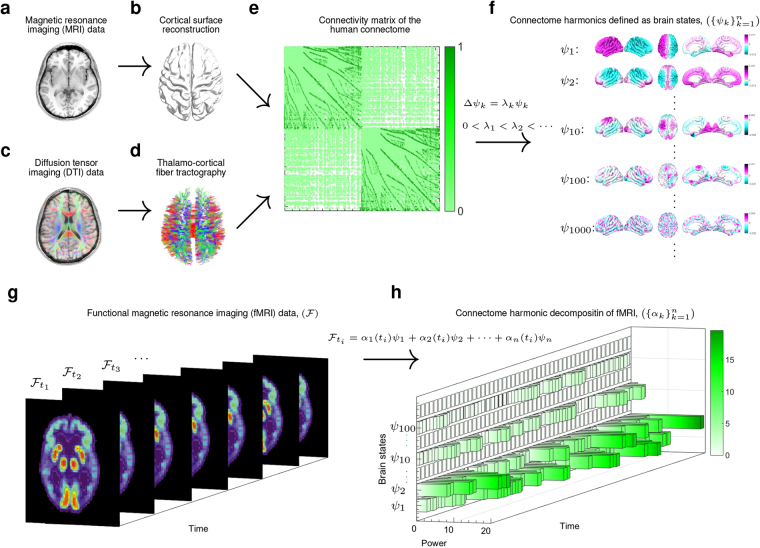
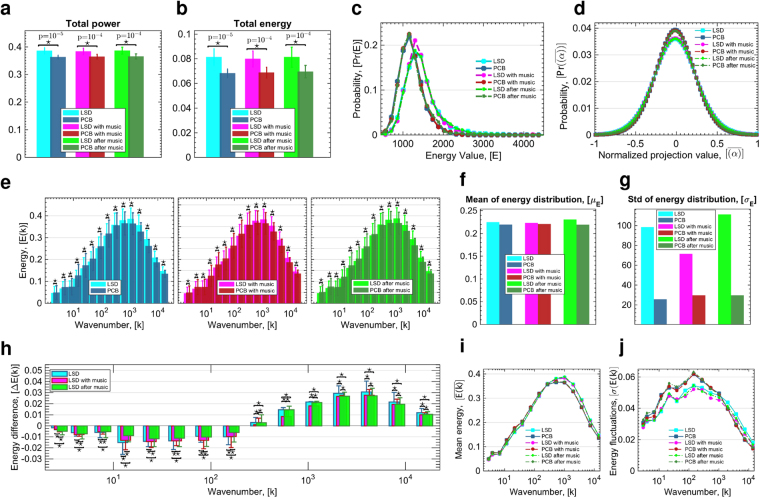
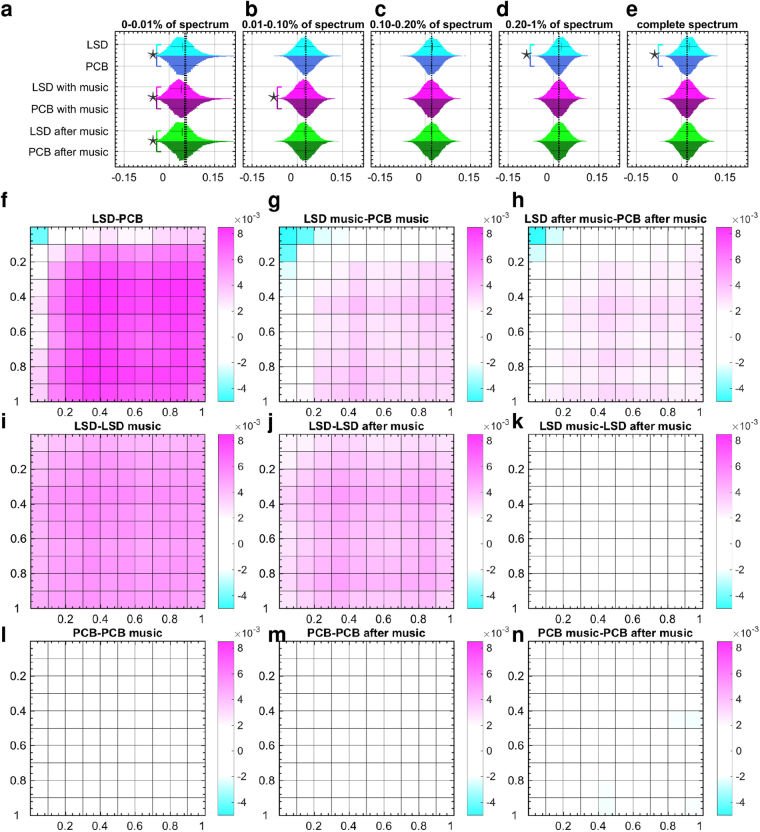
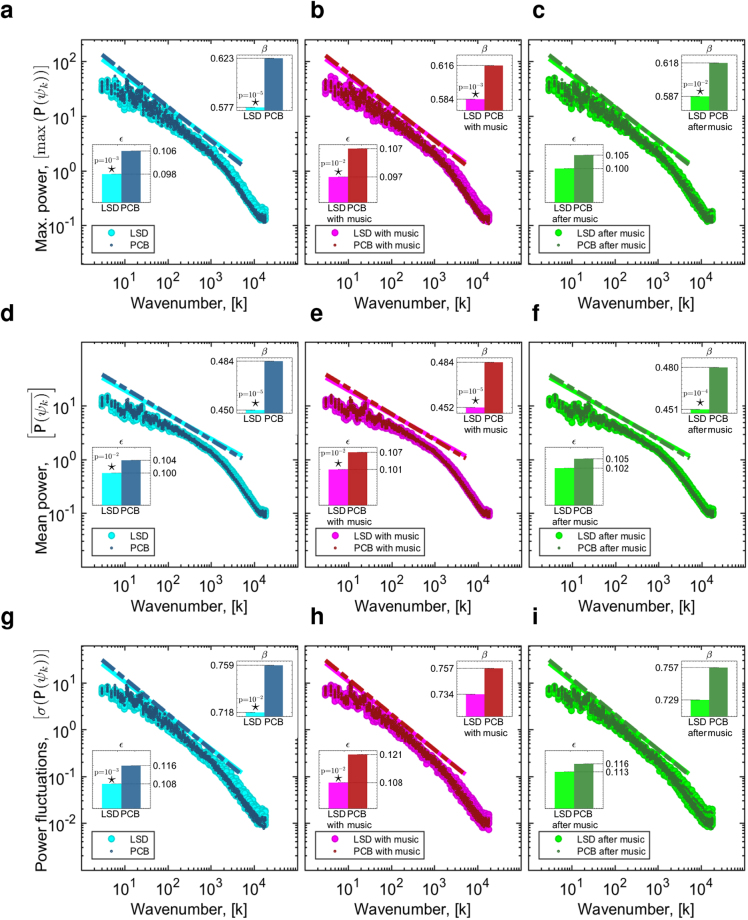
Recent studies have started to elucidate the effects of lysergic acid diethylamide (LSD) on the human brain but the underlying dynamics are not yet fully understood. Here we used ’connectome-harmonic decomposition’, a novel method to investigate the dynamical changes in brain states. We found that LSD alters the energy and the power of individual harmonic brain states in a frequency-selective manner. Remarkably, this leads to an expansion of the repertoire of active brain states, suggestive of a general re-organization of brain dynamics given the non-random increase in co-activation across frequencies. Interestingly, the frequency distribution of the active repertoire of brain states under LSD closely follows power-laws indicating a re-organization of the dynamics at the edge of criticality. Beyond the present findings, these methods open up for a better understanding of the complex brain dynamics in health and disease.
Overview
The claims and statistics of this paper haven’t been checked yet.
Free: it reads the open-access text and checks the first 5 claims that cite a source we can check. Create a free account to check every claim.
Integrity signals
Registry
Cites
Statistics
Figures
Verification
Claims the paper makes
The claims and statistics of this paper haven’t been checked yet.
Free: it reads the open-access text and checks the first 5 claims that cite a source we can check. Create a free account to check every claim.
Claims other papers make about this one
Each is checked against this paper’s own text: does it say what the citing paper says it does?
The source backs part of the claim, not all of it — or backs it for a different population, condition or comparison.
In the citing paper
“Intriguingly, hallucinogenic compounds expanded the repertoire of these harmonic modes (Atasoy et al., 2017), increasing spectral diversity and shifting the distribution of modes toward power-law distributions, a putative—albeit controversial (Touboul and Destexhe, 2017)—hallmark of criticality (Fontenele et al., 2019).”
From An Integrated World Modeling Theory (IWMT) of Consciousness (2020) · cites this paper as Atasoy et al., 2017
Experimental — accuracy not yet measured
Self-check
Percentages, sums and reported differences re-computed from the paper’s own numbers.
The self-check needs the paper’s full text.
Citations
Cites
Large-scale brain networks and psychopathology: a unifying triple network model
Menon, V. (2011) · Trends in Cognitive Sciences · doi:10.1016/j.tics.2011.08.003 · Cited by 4,168 · cited 6×
“Even for simple hallucinations, it is now understood that no one single brain area is responsible, but rather the interaction of multiple brain areas (51).”
InfluentialDynamic functional connectivity: Promise, issues, and interpretations
Hutchison, R. M., Womelsdorf, T., Allen, E. A., Bandettini, P. A., Calhoun, V. D., Corbetta, M., Della Penna, S., Duyn, J. H., Glover, G. H., Gonzalez-Castillo, J., et al. (2013) · NeuroImage · doi:10.1016/j.neuroimage.2013.05.079 · Cited by 2,962
Carhart-Harris, R. L., Bolstridge, M., Rucker, J., Day, C. M. J., Erritzoe, D., Kaelen, M., Bloomfield, M., Rickard, J. A., Forbes, B., Feilding, A., et al. (2016) · The Lancet Psychiatry · doi:10.1016/s2215-0366(16)30065-7 · Cited by 1,540 · cited 1×
“Such an action may explain the increasing body of evidence supporting the therapeutic potential of psychedelic drugs for treating disorders such as OCD (65), depression (66, 67) and addictions (68).”
Self-citationThe default mode network and self-referential processes in depression
Sheline, Y. I., Barch, D. M., Price, J. L., Rundle, M. M., Vaishnavi, S. N., Snyder, A. Z., Mintun, M. A., Wang, S., Coalson, R. S., & Raichle, M. E. (2009) · Proceedings of the National Academy of Sciences · doi:10.1073/pnas.0812686106 · Cited by 1,480 · cited 2×
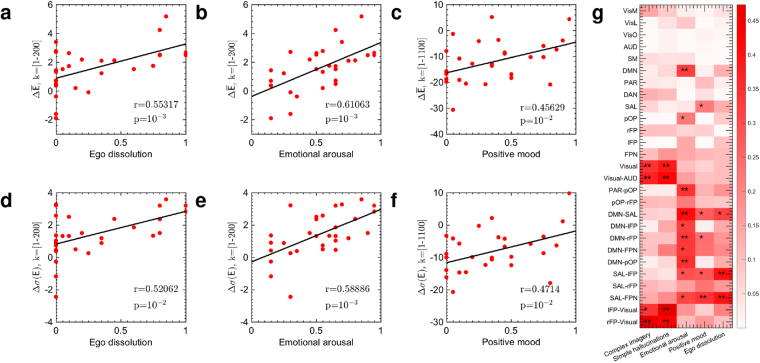
“All four pairs of networks, DMN-SAL, DMN-rFP, DMN-pOP, PAR-pOP, which significantly correlated with the ratings of emotional arousal, have been previously reported to show increased functional connectivity under LSD (17) and the DMN specifically has been linked to mood and emotion (51, 54, 55, 57, 60).”
Carhart-Harris, R. L., Leech, R., Hellyer, P. J., Shanahan, M., Feilding, A., Tagliazucchi, E., Chialvo, D. R., & Nutt, D. (2014) · Frontiers in Human Neuroscience · doi:10.3389/fnhum.2014.00020 · Cited by 1,252 · cited 1×
“ψ ψ α α = | | | | r r t t ( , ) ( ( ) , ( ) ) (11) i j i j”
Self-citationHuman hallucinogen research: guidelines for safety
Johnson, M., Richards, W., & Griffiths, R. (2008) · Journal of Psychopharmacology · doi:10.1177/0269881108093587 · Cited by 1,203 · cited 1×
“The importance of so-called ‘set and setting’ have been much emphasized by those working with psychedelics in humans (61, 62) and the very definition of the word ‘psychedelic’ is intended to refer to the putative”
Neural correlates of the psychedelic state as determined by fMRI studies with psilocybin
Carhart-Harris, R. L., Erritzoe, D., Williams, T., Stone, J. M., Reed, L. J., Colasanti, A., Tyacke, R. J., Leech, R., Malizia, A. L., Murphy, K., et al. (2012) · Proceedings of the National Academy of Sciences · doi:10.1073/pnas.1119598109 · Cited by 1,172 · cited 2×
“The presented method goes beyond the conventional fMRI analyses previously used to measure changes in brain activity under psychedelics (10, 56), to enable the study of fundamental properties of the relevant brain states and how these relate to important principles of dynamical systems, such as whole-brain criticality.”
Self-citationEmergent complex neural dynamics
Chialvo, D. R. (2010) · Nature Physics · doi:10.1038/nphys1803 · Cited by 1,165 · cited 2×
“the property of being optimally poised between order and disorder) has been hypothesised to reflect and underlie its advanced functionality (32, 37); remarkably however, here, using the above-described connectome-harmonic decomposition, we discover a tonic brain state (the LSD state), which exhibits more pronounced si…”
Long-Range Temporal Correlations and Scaling Behavior in Human Brain Oscillations
Linkenkaer-Hansen, K., Nikouline, V. V., Palva, J. M., & Ilmoniemi, R. J. (2001) · The Journal of Neuroscience · doi:10.1523/jneurosci.21-04-01370.2001 · Cited by 1,149 · cited 6×
“Finally, although in this study we apply this technqiue to fMRI data in order to extract the neural signatures of the LSD state, application of the connectome-harmonic decomposition can also be easily extended to other functional neuroimaging datasets such as MEG or high density scalp EEG.”
InfluentialPsilocybin induces schizophrenia-like psychosis in humans via a serotonin-2 agonist action
Vollenweider, F. X., Vollenweider-Scherpenhuyzen, M. F. I., Bäbler, A., Vogel, H., & Hell, D. (1998) · NeuroReport · doi:10.1097/00001756-199812010-00024 · Cited by 1,018 · cited 1×
“As with other classic psychedelic drugs (47), LSD’s principal psychoactive effects are mediated by serotonin 2A receptor agonism, and 5-HT2AR signalling has reliably been shown to induce cortical excitation (48).”
Research works printed but not linked: 2
- Grof, S. Realms of the human unconscious: Observations from LSD research (Viking Press: London, 1979).
- Chung, F. R. Spectral graph theory, vol. 92 (American Mathematical Soc., 1997).
Cited by
REBUS and the anarchic brain: Toward a unified model of the brain action of psychedelics
Carhart-Harris, R. L., & Friston, K. J. (2019) · Pharmacological Reviews · doi:10.1124/pr.118.017160 · Cited by 1,180
Self-citationRoseman, L., Nutt, D. J., & Carhart-Harris, R. L. (2018) · Frontiers in Pharmacology · doi:10.3389/fphar.2017.00974 · Cited by 808
“, 2014), to relate to high-level subjective experiences such as “ego-dissolution” (Nour et al., 2016; Atasoy et al., 2017; Schartner et al., 2017) that are relevant to the mystical-type experience, and to be predictive of longer-term trait changes— such as increased “openness” (Lebedev et al.”
BackgroundSelf-citationPsychedelic drugs: neurobiology and potential for treatment of psychiatric disorders
Vollenweider, F. X., & Preller, K. H. (2020) · Nature Reviews Neuroscience · doi:10.1038/s41583-020-0367-2 · Cited by 570
The entropic brain - revisited
Carhart-Harris, R. L. (2018) · Neuropharmacology · doi:10.1016/j.neuropharm.2018.03.010 · Cited by 522
“‘extreme disorder’ or super-criticality (Atasoy et al., 2017; Priesemann et al., 2013, 2014).”
InfluentialSelf-citationPsychedelics, meditation, and self-consciousness
Millière, R., Carhart-Harris, R. L., Roseman, L., Trautwein, F.-M., & Berkovich-Ohana, A. (2018) · Frontiers in Psychology · doi:10.3389/fpsyg.2018.01475 · Cited by 390
Self-citationDecoupling of brain function from structure reveals regional behavioral specialization in humans
Preti, M. G., & Van De Ville, D. (2019) · Nature Communications · doi:10.1038/s41467-019-12765-7 · Cited by 335
Neural correlates of the DMT experience assessed with multivariate EEG
Timmermann, C., Roseman, L., Schartner, M., Milliere, R., Williams, L. T. J., Erritzoe, D., Muthukumaraswamy, S., Ashton, M., Bendrioua, A., Kaur, O., et al. (2019) · Scientific Reports · doi:10.1038/s41598-019-51974-4 · Cited by 315
Self-citationStructure–function coupling in macroscale human brain networks
Fotiadis, P., Parkes, L., Davis, K. A., Satterthwaite, T. D., Shinohara, R. T., & Bassett, D. S. (2024) · Nature Reviews Neuroscience · doi:10.1038/s41583-024-00846-6 · Cited by 240
The use of the psychological flexibility model to support psychedelic assisted therapy
Watts, R., & Luoma, J. B. (2020) · Journal of Contextual Behavioral Science · doi:10.1016/j.jcbs.2019.12.004 · Cited by 269
Northoff, G., Wainio-Theberge, S., & Evers, K. (2020) · Physics of Life Reviews · doi:10.1016/j.plrev.2019.05.002 · Cited by 261
Lau, Z. J., Pham, T., Chen, S. H. A., & Makowski, D. (2022) · European Journal of Neuroscience · doi:10.1111/ejn.15800 · Cited by 235
“…of neural complexity and report increasingly intense subjective experiences, suggesting that these states are characterized by rich conscious experiences, although these findings have mostly been derived from MRI (Atasoy et al., 2017) and MEG signals (Schartner, Carhart-Harris, et al., 2017).”
InfluentialMason, N. L., Kuypers, K. P. C., Müller, F., Reckweg, J., Tse, D. H. Y., Toennes, S. W., Hutten, N. R. P. W., Jansen, J. F. A., Stiers, P., Feilding, A., et al. (2020) · Neuropsychopharmacology · doi:10.1038/s41386-020-0718-8 · Cited by 258
How critical is brain criticality?
O’Byrne, J., & Jerbi, K. (2022) · Trends in Neurosciences · doi:10.1016/j.tins.2022.08.007 · Cited by 258
Default Mode Network Modulation by Psychedelics: A Systematic Review
Gattuso, J. J., Perkins, D., Ruffell, S., Lawrence, A. J., Hoyer, D., Jacobson, L. H., Timmermann, C., Castle, D., Rossell, S. L., Downey, L. A., et al. (2023) · International Journal of Neuropsychopharmacology · doi:10.1093/ijnp/pyac074 · Cited by 256
“Entropy is a measure of the uncertainty of the system, and regarding the brain, it is associated with functional disorder, unpredictability, and flexibility, which may lead to an enhanced array of dynamic brain states (Tagliazucchi et al., 2014; Atasoy et al., 2017; Carhart-Harris, 2018).”
BackgroundNorthoff, G., & Lamme, V. (2020) · Neuroscience & Biobehavioral Reviews · doi:10.1016/j.neubiorev.2020.07.019 · Cited by 247
DMT Models the Near-Death Experience
Timmermann, C., Roseman, L., Williams, L., Erritzoe, D., Martial, C., Cassol, H., Laureys, S., Nutt, D., & Carhart-Harris, R. (2018) · Frontiers in Psychology · doi:10.3389/fpsyg.2018.01424 · Cited by 220
“Another recent thought, is that a return of the brain to ‘criticality’ (Atasoy et al., 2017), albeit temporarily, may offer a reminder of one’s closeness with nature (Carhart-Harris, 2018) and so what is left afterwards is as much an epistemic ‘reminder’ as anything else.”
BackgroundSelf-citationHuman brain effects of DMT assessed via EEG-fMRI
Timmermann, C., Roseman, L., Haridas, S., Rosas, F. E., Luan, L., Kettner, H., Martell, J., Erritzoe, D., Tagliazucchi, E., Pallavicini, C., et al. (2023) · Proceedings of the National Academy of Sciences · doi:10.1073/pnas.2218949120 · Cited by 216
“…or “integrity” (19, 20), increased between-network FC or decreased “segregation” (19, 21), a larger repertoire of brain connectivity profiles (22–24), a globally hyperconnected brain state (25), freer transitions between brain states (24, 26), and a reduction of its principal…”
Self-citationDynamical exploration of the repertoire of brain networks at rest is modulated by psilocybin
Lord, L.-D., Expert, P., Atasoy, S., Roseman, L., Rapuano, K., Lambiotte, R., Nutt, D. J., Deco, G., Carhart-Harris, R. L., Kringelbach, M. L., et al. (2019) · NeuroImage · doi:10.1016/j.neuroimage.2019.05.060 · Cited by 224
Self-citationDeco, G., Cruzat, J., Cabral, J., Knudsen, G. M., Carhart-Harris, R. L., Whybrow, P. C., Logothetis, N. K., & Kringelbach, M. L. (2018) · Current Biology · doi:10.1016/j.cub.2018.07.083 · Cited by 208
“Evidently, such evolving activity patterns are affected by diseases and may be eventually used to predict approaching ‘‘criticalities,’’ as the latter transitions are often preceded by robust gradual reorganization of complex systems in general [46].”
Self-citationWhy Brain Criticality Is Clinically Relevant: A Scoping Review
Zimmern, V. (2020) · Frontiers in Neural Circuits · doi:10.3389/fncir.2020.00054 · Cited by 194
Unifying Theories of Psychedelic Drug Effects
Swanson, L. R. (2018) · Frontiers in Pharmacology · doi:10.3389/fphar.2018.00172 · Cited by 181
LSD alters dynamic integration and segregation in the human brain
Luppi, A. I., Carhart-Harris, R. L., Roseman, L., Pappas, I., Menon, D. K., & Stamatakis, E. A. (2021) · NeuroImage · doi:10.1016/j.neuroimage.2020.117653 · Cited by 171
“This evidence is lso consistent with previous results obtained by Atasoy and colleagues n the same LSD dataset, as well as in psilocybin, by using an alternative ethod to study brain dynamics, known as connectome harmonic deompositions (CHD) ( Atasoy et al., 2018 , 2017 ).”
BackgroundResultInfluentialSelf-citationRevisiting the global workspace orchestrating the hierarchical organization of the human brain
Deco, G., Vidaurre, D., & Kringelbach, M. L. (2021) · Nature Human Behaviour · doi:10.1038/s41562-020-01003-6 · Cited by 162
Self-citationSingleton, S. P., Luppi, A. I., Carhart-Harris, R. L., Cruzat, J., Roseman, L., Nutt, D. J., Deco, G., Kringelbach, M. L., Stamatakis, E. A., & Kuceyeski, A. F. (2022) · Nature Communications · doi:10.1038/s41467-022-33578-1 · Cited by 172
Self-citationConsciousness is supported by near-critical slow cortical electrodynamics
Toker, D., Pappas, I., Lendner, J. D., Frohlich, J., Mateos, D. M., Muthukumaraswamy, S., Carhart-Harris, R., Paff, M., Vespa, P. M., Monti, M. M., et al. (2022) · Proceedings of the National Academy of Sciences · doi:10.1073/pnas.2024455119 · Cited by 138
“S1)—this result supports prior findings suggesting a transition closer to criticality in the LSD state (48).”
MethodResultSelf-citationSafron, A. (2020) · Frontiers in Artificial Intelligence · doi:10.3389/frai.2020.00030 · Cited by 133
“Intriguingly, hallucinogenic compounds expanded the repertoire of these harmonic modes (Atasoy et al., 2017), increasing spectral diversity and shifting the distribution of modes toward power-law distributions, a putative—albeit controversial (Touboul and Destexhe, 2017)—hallmark of criticality…”
BackgroundHarmonic brain modes: a unifying framework for linking space and time in brain dynamics
Atasoy, S., Deco, G., Kringelbach, M. L., & Pearson, J. (2018) · The Neuroscientist · doi:10.1177/1073858417728032 · Cited by 124
“…harmonic decomposition, as we discuss here, when applied to fMRI data in the LSD state reveals a frequency-selective expansion and dynamical re-organization of the repertoire of these harmonic brain states at the edge of criticality – transition between order and chaos (Atasoy et al., 2017).”
BackgroundMethodSelf-citationHuman brain connectivity: Clinical applications for clinical neurophysiology
Hallett, M., de Haan, W., Deco, G., Dengler, R., Iorio, R. D., Galléa, C., Gerloff, C. P., Grefkes, C., Helmich, R. C. G., Kringelbach, M. L., et al. (2020) · Clinical Neurophysiology · doi:10.1016/j.clinph.2020.03.031 · Cited by 131
“Two examples of datadriven methods include (1) estimation of spatiotemporal patterns in neuronal data using intrinsic ignition of brain regions, defined as their ability to propagate information to other brain regions (Deco and Kringelbach, 2017) and (2) directly using non-linear dimensionality reduction (manifold lea…”
MethodSelf-citationClassic Psychedelic Drugs: Update on Biological Mechanisms
Vollenweider, F. X., & Smallridge, J. W. (2022) · Pharmacopsychiatry · doi:10.1055/a-1721-2914 · Cited by 128
“An increased repertoire of different brain states including rapid brain dynamics and functional connectivity was reported after the administration of psilocybin and LSD in the same set of healthy individuals [148, 152].”
Distributed harmonic patterns of structure-function dependence orchestrate human consciousness
Luppi, A. I., Vohryzek, J., Kringelbach, M. L., Mediano, P. A. M., Craig, M. M., Ram, A., Carhart-Harris, R. L., Roseman, L., Pappas, I., Peattie, A. R. D., et al. (2023) · Communications Biology · doi:10.1038/s42003-023-04474-1 · Cited by 128
“Since previous work has shown that CHD can identify a consistent neural signature across the serotonergic psychedelics LSD and psilocybin 30,59 , extending this signature to ketamine (which is an N-methyl-D-aspartate receptor antagonist 60 ) will provide critical insights into CHD ’ s ability to…”
BackgroundResultInfluentialSelf-citationNorthoff, G., & Tumati, S. (2019) · Neuroscience & Biobehavioral Reviews · doi:10.1016/j.neubiorev.2019.06.030 · Cited by 122
McCulloch, D. E.-W., Knudsen, G. M., Barrett, F. S., Doss, M. K., Carhart-Harris, R. L., Rosas, F. E., Deco, G., Kringelbach, M. L., Preller, K. H., Ramaekers, J. G., et al. (2022) · Neuroscience & Biobehavioral Reviews · doi:10.1016/j.neubiorev.2022.104689 · Cited by 122
Self-citationCanalization and plasticity in psychopathology
Carhart-Harris, R. L., Chandaria, S., Erritzøe, D., Gazzaley, A. H., Girn, M., Kettner, H., Mediano, P. A. M., Nutt, D. J., Rosas, F. E., Roseman, L., et al. (2022) · Neuropharmacology · doi:10.1016/j.neuropharm.2022.109398 · Cited by 115
Self-citationNeural Mechanisms and Psychology of Psychedelic Ego Dissolution
Stoliker, D., Egan, G. F., Friston, K. J., & Razi, A. (2022) · Pharmacological Reviews · doi:10.1124/pharmrev.121.000508 · Cited by 81
Does Psychedelic Therapy Have a Transdiagnostic Action and Prophylactic Potential?
Kočárová, R., Horáček, J., & Carhart-Harris, R. (2021) · Frontiers in Psychiatry · doi:10.3389/fpsyt.2021.661233 · Cited by 96
Self-citationVarley, T. F., Carhart-Harris, R., Roseman, L., Menon, D. K., & Stamatakis, E. A. (2020) · NeuroImage · doi:10.1016/j.neuroimage.2020.117049 · Cited by 96
Self-citationDecreased directed functional connectivity in the psychedelic state
Barnett, L., Muthukumaraswamy, S. D., Carhart-Harris, R. L., & Seth, A. K. (2020) · NeuroImage · doi:10.1016/j.neuroimage.2019.116462 · Cited by 78
Self-citationLuppi, A. I., Mediano, P. A. M., Rosas, F. E., Allanson, J., Pickard, J. D., Williams, G. B., Craig, M. M., Finoia, P., Peattie, A. R. D., Coppola, P., et al. (2022) · Communications Biology · doi:10.1038/s42003-022-03330-y · Cited by 87
A complex systems perspective on psychedelic brain action
Girn, M., Rosas, F. E., Daws, R. E., Gallen, C. L., Gazzaley, A. H., & Carhart-Harris, R. L. (2023) · Trends in Cognitive Sciences · doi:10.1016/j.tics.2023.01.003 · Cited by 84
Self-citationVarley, T. F., Craig, M. M., Ram, A., Finoia, P., Williams, G. B., Alanson, J., Pickard, J. D., Menon, D. K., & Stamatakis, E. A. (2020) · PLoS ONE · doi:10.1371/journal.pone.0223812 · Cited by 79
Luppi, A. I., Hansen, J. Y., Ram, A., Carhart-Harris, R. L., Roseman, L., Timmermann, C., Golkowski, D., Ranft, A., Ilg, R., Jordan, D., et al. (2023) · Science Advances · doi:10.1126/sciadv.adf8332 · Cited by 76
Self-citationMiranda, L. (2025) · Brain Research · doi:10.1016/j.brainres.2024.149226 · Cited by 66
“…decrease the connectivity of rigid networks, decreasing connections within the components of both the SN and DMN, potentially through enhancement of AMPA/NMDA ratio which may weaken pre-existing connections while promoting entropic activity and internetwork connectivity (Atasoy et al., 2017).”
BackgroundLuppi, A. I., Golkowski, D., Ranft, A., Ilg, R., Jordan, D., Menon, D. K., & Stamatakis, E. A. (2021) · Human Brain Mapping · doi:10.1002/hbm.25405 · Cited by 71
Aqil, M., & Roseman, L. (2022) · Neuropharmacology · doi:10.1016/j.neuropharm.2022.109300 · Cited by 69
Self-citationUnderstanding brain states across spacetime informed by whole-brain modelling
Vohryzek, J., Cabral, J., Vuust, P., Deco, G., & Kringelbach, M. L. (2022) · Philosophical Transactions of the Royal Society A Mathematical Physical and Engineering Sciences · doi:10.1098/rsta.2021.0247 · Cited by 67
“Moreover, changes in temporal correlations have been observed in co-activations of various brain substates as described by connectome harmonic decomposition, suggesting a spatial grouping in a non-trivial manner [46].”
BackgroundInfluentialSelf-citationAtasoy, S., Vohryzek, J., Deco, G., Carhart-Harris, R. L., & Kringelbach, M. L. (2018) · Progress in brain research · doi:10.1016/bs.pbr.2018.08.009 · Cited by 65
Self-citationDifferential effects of propofol and ketamine on critical brain dynamics
Varley, T. F., Sporns, O., Puce, A., & Beggs, J. (2020) · PLOS Computational Biology · doi:10.1371/journal.pcbi.1008418 · Cited by 53
“diethylamide, dimethyltryptamine, etc) increase markers of criticality, both in 39 fMRI [23,24] and MEG/EEG/ECoG [25] studies.”
BackgroundBrain Entropy During Aging Through a Free Energy Principle Approach
Cieri, F., Zhuang, X., Caldwell, J., & Cordes, D. (2021) · Frontiers in Human Neuroscience · doi:10.3389/fnhum.2021.647513 · Cited by 68
Yang, W. F. Z., Chowdhury, A., Bianciardi, M., van Lutterveld, R., Sparby, T., & Sacchet, M. D. (2023) · Cerebral Cortex · doi:10.1093/cercor/bhad408 · Cited by 62
Spontaneous electrical low-frequency oscillations: a possible role in Hydra and all living systems
Hanson, A. J. (2021) · Philosophical Transactions of the Royal Society B Biological Sciences · doi:10.1098/rstb.2019.0763 · Cited by 57
“Interestingly, evidence suggests it is the SELFO in the human brain, the DMN, that might maintain the system near its critical point as disruption of the DMN results in more ‘fluid’ brain states in which neural activity patterns are more disordered and chaotic, correlating with psychedelic and psychotic states [57,118…”
BackgroundClose, J. B., Hajien, E. C., Watts, R., Roseman, L., & Carhart-Harris, R. L. (2020) · Journal of Contextual Behavioral Science · doi:10.1016/j.jcbs.2020.01.005 · Cited by 54
Self-citationLuppi, A. I., Uhrig, L., Tasserie, J., Signorelli, C. M., Stamatakis, E. A., Destexhe, A., Jarraya, B., & Cofré, R. (2024) · Nature Communications · doi:10.1038/s41467-024-46382-w · Cited by 62
“5) 63,64 .”
Connectome spectral analysis to track EEG task dynamics on a subsecond scale
Glomb, K., Rué‐Queralt, J., Pascucci, D., Defferrard, M., Tourbier, S., Carboni, M., Rubega, M., Vulliémoz, S., Plomp, G., & Hagmann, P. (2020) · NeuroImage · doi:10.1016/j.neuroimage.2020.117137 · Cited by 57
Characterizing the Dynamical Complexity Underlying Meditation
Escrichs, A., Sanjuán, A., Atasoy, S., López‐González, A., Garrido, C., Càmara, E., & Deco, G. (2019) · Frontiers in Systems Neuroscience · doi:10.3389/fnsys.2019.00027 · Cited by 54
Self-citationKotler, S., Mannino, M., Kelso, S., & Huskey, R. (2022) · Neuroscience & Biobehavioral Reviews · doi:10.1016/j.neubiorev.2022.104956 · Cited by 52
Neural Correlates of the Shamanic State of Consciousness
Huels, E. R., Kim, H., Lee, U., Bel-Bahar, T., Colmenero, A. V., Nelson, A., Blain-Moraes, S., Mashour, G. A., & Harris, R. E. (2021) · Frontiers in Human Neuroscience · doi:10.3389/fnhum.2021.610466 · Cited by 52
Stoliker, D., Novelli, L., Vollenweider, F. X., Egan, G. F., Preller, K. H., & Razi, A. (2024) · Biological Psychiatry · doi:10.1016/j.biopsych.2024.01.002 · Cited by 53
Serotonergic Psychedelics: Experimental Approaches for Assessing Mechanisms of Action
Canal, C. E. (2018) · Handbook of experimental pharmacology · doi:10.1007/164_2018_107 · Cited by 53
“…entrenched functional connectivity while sprouting new patterns of connectivity (Carhart-Harris et al. 2014; Petri et al. 2014; Tagliazucchi et al. 2014, 2016); for detailed discussions of this evolving topic, refer to Atasoy et al. (2017), Carhart-Harris et al. (2017), and Viol et al. (2017).”
BackgroundVejmola, Č., Tylš, F., Piorecká, V., Koudelka, V., Kadeřábek, L., Novák, T., & Páleníček, T. (2021) · Translational Psychiatry · doi:10.1038/s41398-021-01603-4 · Cited by 41
Burt, J. B., Preller, K. H., Demirtas, M., Ji, J. L., Krystal, J. H., Vollenweider, F. X., Anticevic, A., & Murray, J. D. (2021) · eLife · doi:10.7554/elife.69320 · Cited by 53
The Emergence of Integrated Information, Complexity, and ‘Consciousness’ at Criticality
Popiel, N. J. M., Khajehabdollahi, S., Abeyasinghe, P. M., Riganello, F., Nichols, E. S., Owen, A. M., & Soddu, A. (2020) · Entropy · doi:10.3390/e22030339 · Cited by 46
Safron, A., Klimaj, V., & Hipólito, I. (2022) · Frontiers in Systems Neuroscience · doi:10.3389/fnsys.2021.688424 · Cited by 53
“Could broader ranges of preferences or behaviors correspond to having a greater diversity of dynamics in functional networks (Beaty et al., 2015; Atasoy et al., 2017; Huang et al., 2020)?”
BackgroundLuppi, A. I., Mediano, P. A. M., Rosas, F. E., Harrison, D. J., Carhart-Harris, R. L., Bor, D., & Stamatakis, E. A. (2021) · Neuroscience of Consciousness · doi:10.1093/nc/niab027 · Cited by 51
“2015), or altered by psychedelics (Atasoy et al. 2017; Lord et al. 2019; Luppi et al. 2020c, 2021b).”
Self-citationYang, W. F. Z., Sparby, T., Wright, M., Kim, E., & Sacchet, M. D. (2024) · Heliyon · doi:10.1016/j.heliyon.2024.e31223 · Cited by 52
“For example, connectome harmonics have been shown to consistently identify signatures of psychedelic states in lysergic acid diethylamide (LSD) and psilocybin with a shift from low-to high-frequency harmonics, corresponding to increasingly complex neural dynamics [ 91,92].”
BackgroundVilliger, D., & Trachsel, M. (2023) · Journal of Medical Ethics · doi:10.1136/jme-2022-108816 · Cited by 45
Brain dynamics predictive of response to psilocybin for treatment-resistant depression
Vohryzek, J., Cabral, J., Lord, L.-D., Fernandes, H. M., Roseman, L., Nutt, D. J., Carhart-Harris, R. L., Deco, G., & Kringelbach, M. L. (2024) · Brain Communications · doi:10.1093/braincomms/fcae049 · Cited by 49
Self-citationLuppi, A. I., Golkowski, D., Ranft, A., Ilg, R., Jordan, D., Bzdok, D., Owen, A. M., Naçi, L., Stamatakis, E. A., Amico, E., et al. (2025) · Nature Human Behaviour · doi:10.1038/s41562-025-02121-9 · Cited by 45
“…psychedelics such as LSD and psilocybin (which induce hallucinations and highly bizarre subjective experiences) were recently found to have the opposite effect on structure–function coupling, making brain activity and connectivity less constrained by the underlying structural connectome 80–82 .”
Gradients of connectivity as graph Fourier bases of brain activity
Lioi, G., Gripon, V., Brahim, A., Rousseau, F., & Farrugia, N. (2021) · Network Neuroscience · doi:10.1162/netn_a_00183 · Cited by 39
The entropic tongue: Disorganization of natural language under LSD
Sanz, C., Pallavicini, C., Carrillo, F., Zamberlán, F., Sigman, M., Mota, N. B., Copelli, M., Ribeiro, S. T. G., Nutt, D. J., Carhart-Harris, R. L., et al. (2020) · Consciousness and Cognition · doi:10.1016/j.concog.2020.103070 · Cited by 38
Self-citationIncreased sensitivity to strong perturbations in a whole-brain model of LSD
Jobst, B., Atasoy, S., Ponce‐Alvarez, A., Sanjuán, A., Roseman, L., Kaelen, M., Carhart-Harris, R. L., Kringelbach, M. L., & Deco, G. (2021) · NeuroImage · doi:10.1016/j.neuroimage.2021.117809 · Cited by 42
Self-citationGervais, C., Boucher, L.-P., Villar, G. M., Lee, U., & Duclos, C. (2023) · Frontiers in Systems Neuroscience · doi:10.3389/fnsys.2023.1085902 · Cited by 36
“…state (Priesemann et al., 2014), measuring the deviations from criticality could also be a promising way to refine the diagnosis and prognosis of pathological ASC such as DOC (Priesemann et al., 2013; Atasoy et al., 2017; Fekete et al., 2018; Hagemann et al., 2021; O’Byrne and Jerbi, 2022).”
BackgroundInfluentialA Comprehensive Review of the Current Status of the Cellular Neurobiology of Psychedelics
Banushi, B., & Polito, V. (2023) · Biology · doi:10.3390/biology12111380 · Cited by 37
Diffusion-informed spatial smoothing of fMRI data in white matter using spectral graph filters
Abramian, D., Larsson, M., Eklund, A., Aganj, I., Westin, C., & Behjat, H. (2021) · NeuroImage · doi:10.1016/j.neuroimage.2021.118095 · Cited by 34
Connectome spatial smoothing (CSS): Concepts, methods, and evaluation
Sina Mansour, L., Seguin, C., Smith, R. E., & Zalesky, A. (2022) · NeuroImage · doi:10.1016/j.neuroimage.2022.118930 · Cited by 38
LSD-induced increase of Ising temperature and algorithmic complexity of brain dynamics
Ruffini, G., Damiani, G., Lozano‐Soldevilla, D., Deco, N., Rosas, F. E., Kiani, N. A., Ponce‐Alvarez, A., Kringelbach, M. L., Carhart-Harris, R. L., & Deco, G. (2023) · PLoS Computational Biology · doi:10.1371/journal.pcbi.1010811 · Cited by 37
Self-citationChowdhury, A., Bianciardi, M., Chapdelaine, E., Riaz, O. S., Timmermann, C., van Lutterveld, R., Sparby, T., & Sacchet, M. D. (2024) · NeuroImage · doi:10.1016/j.neuroimage.2024.120973 · Cited by 38
“…canonical functional brain networks (Yeo et al., 2011), as these networks consistently represent a gradient from unimodal (i.e., sensory) to transmodal (i.e., more abstract functions) organization in the brain (Atasoy et al., 2017; Huntenburg et al., 2018; Margulies et al., 2016; Mesulam, 1998).”
Singleton, S. P., Timmermann, C., Luppi, A. I., Eckernäs, E., Roseman, L., Carhart-Harris, R. L., & Kuceyeski, A. F. (2025) · Communications Biology · doi:10.1038/s42003-025-08078-9 · Cited by 35
Self-citationPsychedelics as potential catalysts of scientific creativity and insight
Gandy, S., Bonnelle, V., Jacobs, E., & Luke, D. P. (2022) · Drug Science Policy and Law · doi:10.1177/20503245221097649 · Cited by 36
“…of conscious experience in the ‘REBUS’ model (Relaxed beliefs under psychedelics - Carhart-Harris & Friston, 2019), may be part of the mechanism underpinning changes in creative thought (Atasoy et al., 2017; Carhart-Harris et al., 2014, Carhart-Harris & Friston, 2019; Tagliazucchi et al., 2014).”
A role for the serotonin 2A receptor in the expansion and functioning of human transmodal cortex
Luppi, A. I., Girn, M., Rosas, F. E., Timmermann, C., Roseman, L., Erritzøe, D., Nutt, D. J., Stamatakis, E. A., Spreng, R. N., Xing, L., et al. (2023) · Brain · doi:10.1093/brain/awad311 · Cited by 35
“More specifically, recent studies have observed that these two drugs induced a dissociation between the brain's macroscale network of white matter structural connections (the human connectome) and the patterns of functional activity 243,244 and connectivity 246 that unfold over it.”
Self-citationSingleton, S. P., Luppi, A. I., Carhart-Harris, R. L., Cruzat, J., Roseman, L., Nutt, D. J., Deco, G., Kringelbach, M. L., Stamatakis, E. A., & Kuceyeski, A. F. (2021) · bioRxiv (Cold Spring Harbor Laboratory) · doi:10.1101/2021.05.14.444193 · Cited by 36
Self-citationPadawer-Curry, J. A., Krentzman, O. J., Kuo, C., Wang, X., Bice, A. R., Nicol, G. E., Snyder, A. Z., Siegel, J. S., McCall, J. G., & Bauer, A. Q. (2025) · Nature Neuroscience · doi:10.1038/s41593-025-02069-z · Cited by 37
Graph neural fields: A framework for spatiotemporal dynamical models on the human connectome
Aqil, M., Atasoy, S., Kringelbach, M. L., & Hindriks, R. (2021) · PLoS Computational Biology · doi:10.1371/journal.pcbi.1008310 · Cited by 33
Self-citationShinozuka, K., Jerotic, K., Mediano, P. A. M., Zhao, A. T., Preller, K. H., Carhart-Harris, R. L., & Kringelbach, M. L. (2024) · Translational Psychiatry · doi:10.1038/s41398-024-03187-1 · Cited by 36
“We encourage future research to develop tools for modelling these relationships in order to improve our scienti fi c understanding of psychedelics.”
Self-citationSapienza, J., Bosia, M., Spangaro, M., Martini, F., Agostoni, G., Cuoco, F., Cocchi, F., & Cavallaro, R. (2022) · Molecular Psychiatry · doi:10.1038/s41380-022-01721-5 · Cited by 30
“Hyper-connection in psychedelic state The psychedelic state is characterized by increased connections between and within different neuronal networks sustained by enhanced phenomena of neuroplasticity [7, 9, 13, 15].”
BackgroundSpectral representation of EEG data using learned graphs with application to motor imagery decoding
Miri, M., Abootalebi, V., Saeedi‐Sourck, H., Ville, D. V. D., & Behjat, H. (2023) · Biomedical Signal Processing and Control · doi:10.1016/j.bspc.2023.105537 · Cited by 31
Psychedelia: The interplay of music and psychedelics
Jerotic, K., Vuust, P., & Kringelbach, M. L. (2023) · Annals of the New York Academy of Sciences · doi:10.1111/nyas.15082 · Cited by 29
Self-citationConnectivity steered graph Fourier transform for motor imagery BCI decoding
Georgiadis, K., Laskaris, N., Nikolopoulos, S., & Kompatsiaris, I. Y. (2019) · Journal of Neural Engineering · doi:10.1088/1741-2552/ab21fd · Cited by 29
Trujillo, L. T. (2019) · Frontiers in Neuroscience · doi:10.3389/fnins.2019.01292 · Cited by 36
The connectome spectrum as a canonical basis for a sparse representation of fast brain activity
Rué‐Queralt, J., Glomb, K., Pascucci, D., Tourbier, S., Carboni, M., Vulliémoz, S., Plomp, G., & Hagmann, P. (2021) · NeuroImage · doi:10.1016/j.neuroimage.2021.118611 · Cited by 27
Effects of classic psychedelic drugs on turbulent signatures in brain dynamics
Cruzat, J., Perl, Y. S., Escrichs, A., Vohryzek, J., Timmermann, C., Roseman, L., Luppi, A. I., Ibáñez, A. M., Nutt, D. J., Carhart-Harris, R. L., et al. (2022) · Network Neuroscience · doi:10.1162/netn_a_00250 · Cited by 33
“Psychedelic drugs appear to broaden the brain’s dynamical repertoire (Atasoy et al., 2017; Lord et al., 2019; Tagliazucchi et al., 2014) and enhance global functional connectivity by shifting the brain’s global working point towards a more globally connected profile (Preller et al., 2018;…”
BackgroundSelf-citationUnravelling consciousness and brain function through the lens of time, space, and information
Luppi, A. I., Rosas, F. E., Mediano, P. A. M., Demertzi, A., Menon, D. K., & Stamatakis, E. A. (2024) · Trends in Neurosciences · doi:10.1016/j.tins.2024.05.007 · Cited by 32
“…’ (CHD), revealed that the psychedelics LSD, psilocybin, and sub-anaesthetic ketamine induce decoupling of function from network structure: they increase the contribution of fi ne-grained (high-frequency) eigenmodes, at the expense of large-scale (low-frequency) ones [16,89] (Figure 3E).”
BackgroundResultNaze, S., Proix, T., Atasoy, S., & Kozloski, J. (2020) · NeuroImage · doi:10.1016/j.neuroimage.2020.117364 · Cited by 28
“Hence, further extension of these studies o the use of high-resolution connectomes such as utilized here and in Atasoy et al., 2016, 2017a) can be an important direction for future esearch.”
BackgroundMethodInfluentialSelf-citationThe broad edge of synchronization: Griffiths effects and collective phenomena in brain networks
Buendía, V., Villegas, P., Burioni, R., & Muñoz, M. A. (2022) · Philosophical Transactions of the Royal Society A Mathematical Physical and Engineering Sciences · doi:10.1098/rsta.2020.0424 · Cited by 24
“1This idea is also linked to the ‘entropic brain’ hypothesis [44,63].”
BackgroundBonnelle, V., Feilding, A., Rosas, F. E., Nutt, D. J., Carhart-Harris, R. L., & Timmermann, C. (2024) · Journal of Psychopharmacology · doi:10.1177/02698811241276788 · Cited by 25
“Increased brain entropy under psychedelics, a state associated with an expansion of the repertoire of active brain states (Atasoy et al., 2017), has been proposed to relate to psychological flexibility and insight and has been found to reflect the richness of subjective experience, possibly via the…”
BackgroundSelf-citationPsychedelics and the ‘inner healer’: Myth or mechanism?
Peill, J. M., Marguilho, M., Erritzøe, D., Barba, T., Greenway, K. T., Rosas, F. E., Timmermann, C., & Carhart-Harris, R. L. (2024) · Journal of Psychopharmacology · doi:10.1177/02698811241239206 · Cited by 26
“…some more substantive action on brain dynamics for example, shifting them into an entropic or critical regime conducive to regeneration and healing (Atasoy et al., 2017; Carhart-Harris et al., 2014; Schartner et al., 2017; Singleton et al., 2022; Toker et al., 2022; Varley et al., 2020) – see also…”
BackgroundSelf-citationChen, J., Han, G., Cai, H., Yang, D., Laurienti, P. J., Styner, M. A., & Wu, G. (2020) · IEEE Transactions on Medical Imaging · doi:10.1109/tmi.2020.3029063 · Cited by 25
“As each harmonic wave exhibits a unique self-organized oscillation pattern across the brain network, our learned set of common harmonic waves offers a new window to investigate the mechanism of neurodevelopment or neurodegeneration in the setting of brain networks using the classic physics concepts such as power and e…”
BackgroundMethodGlattfelder, J. B. (2019) · The frontiers collection · doi:10.1007/978-3-030-03633-1_14 · Cited by 26
“This line of research is being actively pursued (Atasoy et al. 2017): We found that LSD alters the energy and the power of individual harmonic brain states in a frequency-selective manner.”
BackgroundSinger, B., Meling, D., Hirsch‐Hoffmann, M., Michels, L., Kometer, M., Smigielski, L., Dornbierer, D., Seifritz, E., Vollenweider, F. X., & Scheidegger, M. (2024) · Scientific Reports · doi:10.1038/s41598-024-55726-x · Cited by 23
fasano.franceschini.test: An Implementation of a Multivariate KS Test in R
Puritz, C. H., Ness-Cohn, E., & Braun, R. (2023) · The R Journal · doi:10.32614/rj-2023-067 · Cited by 29
How Psychedelic-Assisted Treatment Works in the Bayesian Brain
Villiger, D. (2022) · Frontiers in Psychiatry · doi:10.3389/fpsyt.2022.812180 · Cited by 23
Metadata
- Authors
- Atasoy, S., Roseman, L., Kaelen, M., Kringelbach, M. L., Deco, G., & Carhart-Harris, R. L.
- Affiliations
- Universitat Pompeu Fabra (ES)
- Imperial College London (GB)
- Aarhus University (DK)
- Institució Catalana de Recerca i Estudis Avançats (ES)
- Corresponding author
- Atasoy, Selen
- ORCID
- Venue
- Scientific Reports
- Published
- 2017-12-15
- Volume
- 7
- Issue
- 1
- Pages
- 17661-17661
- ISSN
- 2045-2322 (ISSN-L)
- PMC
- PMC5732294
- OpenAlex
- W2949283084
- Semantic Scholar
- 4af7f9dd9b6f140500062abe9ad9bcbd80acf241
- Cited by
- 214
- References
- 77
- Citations by year
- 2026: 17 · 2025: 29 · 2024: 32 · 2023: 31 · 2022: 24 · 2021: 28 · 2020: 22 · 2019: 20 · 2018: 9 · 2017: 1
- FWCI
- 17.64
- Type
- journal article
- Language
- en
- Open access
- gold
- doi.org
- Licence
- cc-by
- creativecommons.org/licenses/by/4.0 (tdm)
- creativecommons.org/licenses/by/4.0 (vor)
- Locations
- Scientific Reports (publishedVersion, cc-by)
- bioRxiv (Cold Spring Harbor Laboratory) (acceptedVersion)
- Europe PMC (PubMed Central) (publishedVersion, cc-by)
- PubMed Central (publishedVersion, cc-by)
- PubMed (publishedVersion)
- RECERCAT (Consorci de Serveis Universitaris de Catalunya) (publishedVersion, other-oa)
- DOAJ (DOAJ: Directory of Open Access Journals) (submittedVersion)
- eScholarship (California Digital Library) (submittedVersion, cc-by)
- Max Planck Digital Library (submittedVersion, other-oa)
- Scopus (Elsevier) (submittedVersion)
- MPG.PuRe (Max Planck Society) (submittedVersion, other-oa)
- Repositori digital de la UPF (Universitat Pompeu Fabra) (submittedVersion, cc-by)
- Spiral (Imperial College London) (submittedVersion, cc-by)
- Funders
- European Commission (HBP SGA1, 720270, HORIZON2020)
- Agencia Estatal de Investigación (PSI2016-75688-P)
- FP7 Ideas: European Research Council (295129, 615539)
- Topics
- Social Sciences › Psychology › Clinical Psychology › Psychedelics and Drug Studies
- Life Sciences › Neuroscience › Cognitive Neuroscience › Functional Brain Connectivity Studies
- Life Sciences › Neuroscience › Cognitive Neuroscience › Neural dynamics and brain function
- Keywords
- LSD, lysergic acid diethylamide, brain dynamics, power-law distribution, criticality, CO activation, psychedelics, human brain activity
- MeSH terms
- Adult, Brain, Energy Metabolism, Female, Hallucinogens, Humans, Lysergic Acid Diethylamide, Magnetic Resonance Imaging, Male, Models, Theoretical, Music, Nervous System Physiological Phenomena, Young Adult, Connectome, Healthy Volunteers
About these checks
Registry, retraction, Cites and statistics results are computed, not judged, with one exception: a printed reference that no index lists is read once by a model before it counts as a citation error. Claims are extracted by a model and kept only when their quote appears verbatim in the text; each cited source is then checked, with a model’s help, for whether it says what the claim relies on. Those verdicts can be wrong — read the claim’s quote and the cited source before relying on one.
Statistics and arithmetic are recomputed, not judged.
Confidence bands are shown only for fields calibrated on our annotated test set. None is calibrated yet, so no band is shown.
What counts as a claim ›How we measure confidence ›How we check this ›
Are you an author, or do you see a problem with this page? Request a review
Data sources
Bibliographic data: Semantic Scholar, OpenAlex, Crossref.
Contains information from the Semantic Scholar Academic Graph Datasets, made available under the ODC Attribution License (ODC-BY 1.0).
Semantic Scholar’s data is described in: Kinney, R., et al. (2023). The Semantic Scholar Open Data Platform. arXiv:2301.10140.
