

The DOI matches its Crossref record; 54 of the 55 references it cites were found in a registry or an index.
Small-molecule MDM2 antagonists attenuate the senescence-associated secretory phenotype
Open accessAbstract
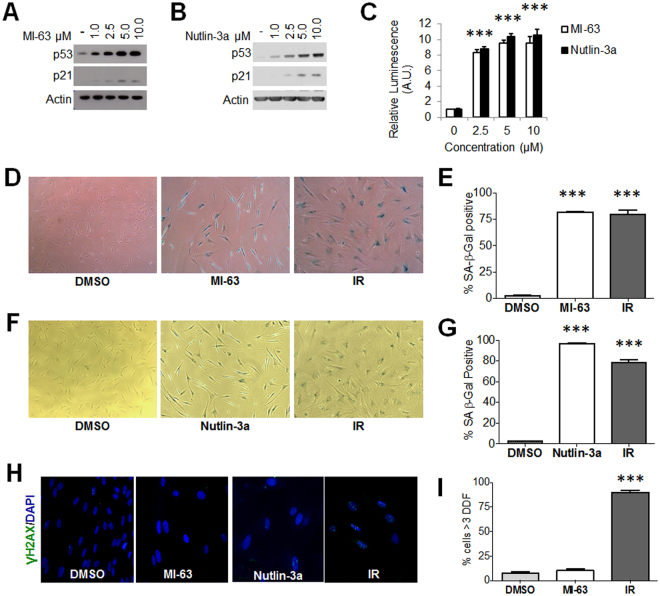
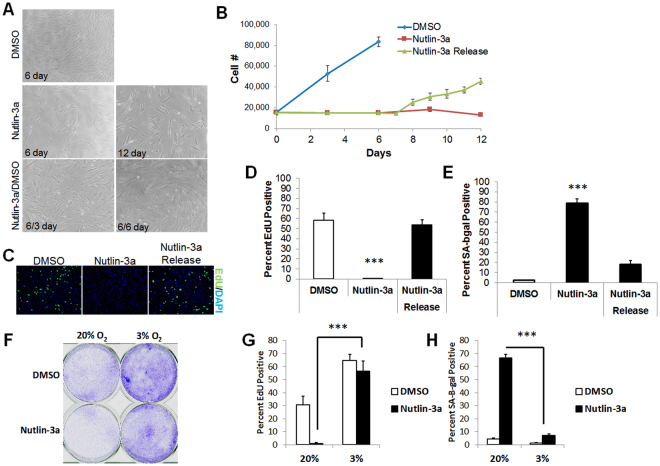
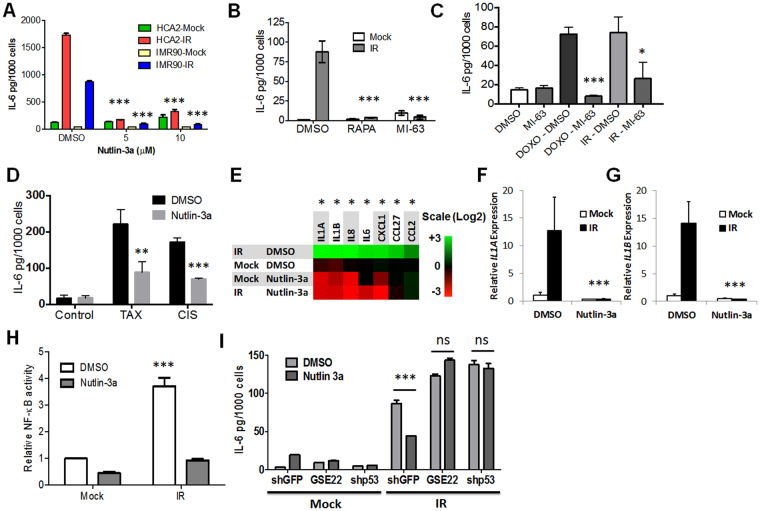
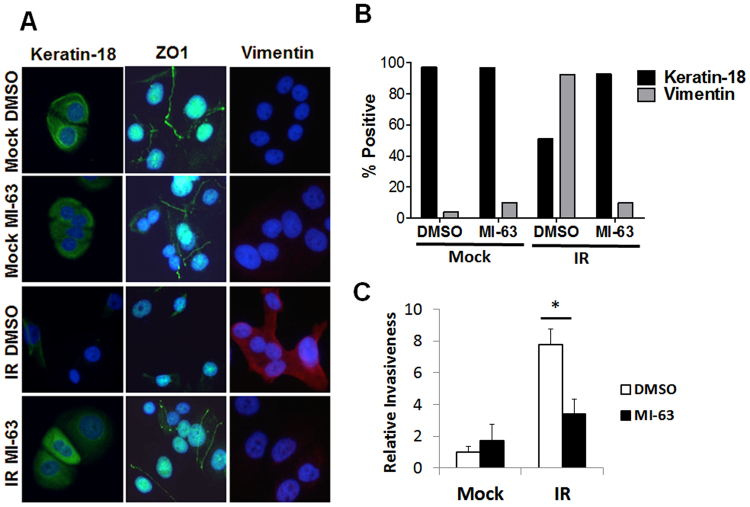
Processes that have been linked to aging and cancer include an inflammatory milieu driven by senescent cells. Senescent cells lose the ability to divide, essentially irreversibly, and secrete numerous proteases, cytokines and growth factors, termed the senescence-associated secretory phenotype (SASP). Senescent cells that lack p53 tumor suppressor function show an exaggerated SASP, suggesting the SASP is negatively controlled by p53. Here, we show that increased p53 activity caused by small molecule inhibitors of MDM2, which promotes p53 degradation, reduces inflammatory cytokine production by senescent cells. Upon treatment with the MDM2 inhibitors nutlin-3a or MI-63, human cells acquired a senescence-like growth arrest, but the arrest was reversible. Importantly, the inhibitors reduced expression of the signature SASP factors IL-6 and IL-1α by cells made senescent by genotoxic stimuli, and suppressed the ability of senescent fibroblasts to stimulate breast cancer cell aggressiveness. Our findings suggest that MDM2 inhibitors could reduce cancer progression in part by reducing the pro-inflammatory environment created by senescent cells.
Overview
The claims and statistics of this paper haven’t been checked yet.
Run the check — free, no account needed. It reads the open-access text and checks the sources it cites.
Integrity signals
Registry
Cites
Statistics
Figures
Verification
Claims the paper makes
The claims and statistics of this paper haven’t been checked yet.
Run the check — free, no account needed. It reads the open-access text and checks the sources it cites.
Claims other papers make about this one
Each is checked against this paper’s own text: does it say what the citing paper says it does?
In the citing paper
“We previously showed that p53 restrains segments of the SASP by antagonizing NF-kB signaling (Freund et al., 2011; Wiley et al., 2018).”
From Oxylipin biosynthesis reinforces cellular senescence and allows detection of senolysis (2021) · cites this paper as Wiley et al., 2018
Self-check
Percentages, sums and reported differences re-computed from the paper’s own numbers.
The self-check needs the paper’s full text.
Citations
Cites
Immunity, Inflammation, and Cancer
Grivennikov, S. I., Greten, F. R., & Karin, M. (2010) · Cell · doi:10.1016/j.cell.2010.01.025 · Cited by 10,755
A biomarker that identifies senescent human cells in culture and in aging skin in vivo.
Dimri, G. P., Lee, X., Basile, G., Acosta, M., Scott, G., Roskelley, C., Medrano, E. E., Linskens, M., Rubelj, I., & Pereira-Smith, O. (1995) · Proceedings of the National Academy of Sciences · doi:10.1073/pnas.92.20.9363 · Cited by 7,477
Self-citationVogelstein, B., Lane, D., & Levine, A. J. (2000) · Nature · doi:10.1038/35042675 · Cited by 6,607
The senescence-associated secretory phenotype: the dark side of tumor suppression
Coppé, J.-P., Desprez, P.-Y., Krtolica, A., & Campisi, J. (2010) · Annual Review of Pathology: Mechanisms of Disease · doi:10.1146/annurev-pathol-121808-102144 · Cited by 5,206
Self-citationIn Vivo Activation of the p53 Pathway by Small-Molecule Antagonists of MDM2
Vassilev, L. T., Vu, B. T., Graves, B., Carvajal, D., Podlaski, F., Filipovic, Z., Kong, N., Kammlott, U., Lukacs, C., Klein, C., et al. (2004) · Science · doi:10.1126/science.1092472 · Cited by 4,661
Cellular senescence: when bad things happen to good cells
Campisi, J., & d'Adda di Fagagna, F. (2007) · Nature Reviews Molecular Cell Biology · doi:10.1038/nrm2233 · Cited by 4,441
Self-citationMechanisms underlying inflammation in neurodegeneration
Glass, C. K., Saijo, K., Winner, B., Marchetto, M. C., & Gage, F. H. (2010) · Cell · doi:10.1016/j.cell.2010.02.016 · Cited by 3,580
Cellular senescence: from physiology to pathology
Muñoz-Espín, D., & Serrano, M. (2014) · Nature Reviews Molecular Cell Biology · doi:10.1038/nrm3823 · Cited by 2,818
Persistent DNA damage signalling triggers senescence-associated inflammatory cytokine secretion
Rodier, F., Coppé, J.-P., Patil, C. K., Hoeijmakers, W. A. M., Muñoz, D. P., Raza, S. R., Freund, A., Campeau, E., Davalos, A. R., & Campisi, J. (2009) · Nature Cell Biology · doi:10.1038/ncb1909 · Cited by 2,232
Self-citationFranceschi, C., Capri, M., Monti, D., Giunta, S., Olivieri, F., Sevini, F., Panourgia, M. P., Invidia, L., Celani, L., Scurti, M., et al. (2007) · Mechanisms of Ageing and Development · doi:10.1016/j.mad.2006.11.016 · Cited by 2,087
Cited by
Sorted by citations
The senescence-associated secretory phenotype and its physiological and pathological implications
Wang, B., Han, J., Elisseeff, J. H., & Demaria, M. (2024) · Nature Reviews Molecular Cell Biology · doi:10.1038/s41580-024-00727-x · Cited by 948
The metabolic roots of senescence: mechanisms and opportunities for intervention
Wiley, C. D., & Campisi, J. (2021) · Nature Metabolism · doi:10.1038/s42255-021-00483-8 · Cited by 691
Self-citationThe senescence-associated secretory phenotype and its regulation
Lopes-Paciencia, S., Saint-Germain, E., Rowell, M.-C., Ruiz, A. F., Kalegari, P., & Ferbeyre, G. (2019) · Cytokine · doi:10.1016/j.cyto.2019.01.013 · Cited by 601
Targeting senescent cells in translational medicine
Paez‐Ribes, M., González‐Gualda, E., Doherty, G. J., & Muñoz‐Espín, D. (2019) · EMBO Molecular Medicine · doi:10.15252/emmm.201810234 · Cited by 293
Lagoumtzi, S. M., & Chondrogianni, N. (2021) · Free Radical Biology and Medicine · doi:10.1016/j.freeradbiomed.2021.05.003 · Cited by 279
Skeletal Aging and Osteoporosis: Mechanisms and Therapeutics
Chandra, A., & Rajawat, J. (2021) · International Journal of Molecular Sciences · doi:10.3390/ijms22073553 · Cited by 281
Reducing Senescent Cell Burden in Aging and Disease
Pignolo, R. J., Passos, J. F., Khosla, S., Tchkonia, T., & Kirkland, J. L. (2020) · Trends in Molecular Medicine · doi:10.1016/j.molmed.2020.03.005 · Cited by 177
Tumor cell escape from therapy-induced senescence
Saleh, T., Tyutyunyk-Massey, L., Murray, G. F., Alotaibi, M. R., Kawale, A. S., Elsayed, Z., Henderson, S. C., Yakovlev, V., Elmore, L. W., Toor, A., et al. (2019) · Biochemical Pharmacology · doi:10.1016/j.bcp.2018.12.013 · Cited by 182
Cellular Senescence: Molecular Targets, Biomarkers, and Senolytic Drugs
Kudlová, N., Sanctis, J. B. D., & Hajdúch, M. (2022) · International Journal of Molecular Sciences · doi:10.3390/ijms23084168 · Cited by 186
Oxylipin biosynthesis reinforces cellular senescence and allows detection of senolysis
Wiley, C. D., Sharma, R., Davis, S. S., Lopez-Dominguez, J. A., Mitchell, K. P., Wiley, S., Alimirah, F., Kim, D. E., Payne, T., Rosko, A., et al. (2021) · Cell Metabolism · doi:10.1016/j.cmet.2021.03.008 · Cited by 173
Self-citationRegulation of senescence traits by MAPKs
Anerillas, C., Abdelmohsen, K., & Gorospe, M. (2020) · GeroScience · doi:10.1007/s11357-020-00183-3 · Cited by 172
Chambers, C. R., Ritchie, S., Pereira, B., & Timpson, P. (2021) · Molecular Oncology · doi:10.1002/1878-0261.13042 · Cited by 182
Targeting Senescent Cells for a Healthier Aging: Challenges and Opportunities
Song, S., Tchkonia, T., Jiang, J., Kirkland, J. L., & Sun, Y. (2020) · Advanced Science · doi:10.1002/advs.202002611 · Cited by 129
Targeting senescent cells: approaches, opportunities, challenges
von Kobbe, C. (2019) · Aging · doi:10.18632/aging.102557 · Cited by 132
The complementarity of DDR, nucleic acids and anti-tumour immunity
Kornepati, A. V. R., Rogers, C. M., Sung, P., & Curiel, T. J. (2023) · Nature · doi:10.1038/s41586-023-06069-6 · Cited by 117
Pharmacological CDK4/6 inhibition reveals a p53‐dependent senescent state with restricted toxicity
Wang, B., Varela‐Eirin, M., Brandenburg, S. M., Hernandez‐Segura, A., van Vliet, T., Jongbloed, E. M., Wilting, S. M., Ohtani, N., Jager, A., & Demaria, M. (2022) · The EMBO Journal · doi:10.15252/embj.2021108946 · Cited by 113
Ubiquitin–proteasome system and the role of its inhibitors in cancer therapy
Aliabadi, F., Sohrabi, B., Mostafavi, E., Pazoki–Toroudi, H., & Webster, T. J. (2021) · Open Biology · doi:10.1098/rsob.200390 · Cited by 101
Dolgin, E. (2020) · Nature Biotechnology · doi:10.1038/s41587-020-00750-1 · Cited by 95
DePianto, D. J., Heiden, J. A. V., Morshead, K. B., Sun, K.-H., Modrusan, Z. D., Teng, G., Wolters, P. J., & Arron, J. R. (2021) · JCI Insight · doi:10.1172/jci.insight.143626 · Cited by 95
FASN activity is important for the initial stages of the induction of senescence
Fafián‐Labora, J., Carpintero-Fernández, P., Jordan, S. J. D., Shikh-Bahaei, T., Abdullah, S. M., Mahenthiran, M., Rodríguez‐Navarro, J. A., Niklison-Chirou, M. V., & O’Loghlen, A. (2019) · Cell Death and Disease · doi:10.1038/s41419-019-1550-0 · Cited by 91
Aneuploid senescent cells activate NF-κB to promote their immune clearance by NK cells
Wang, R. W., Viganò, S., Ben‐David, U., Amon, A., & Santaguida, S. (2021) · EMBO Reports · doi:10.15252/embr.202052032 · Cited by 84
Current senolytics: Mode of action, efficacy and limitations, and their future
Rad, A. N., & Grillari, J. (2023) · Mechanisms of Ageing and Development · doi:10.1016/j.mad.2023.111888 · Cited by 87
Faheem, M. M., Seligson, N. D., Ahmad, S. M., Rasool, R. U., Gandhi, S. G., Bhagat, M., & Goswami, A. (2020) · Cell Death Discovery · doi:10.1038/s41420-020-0286-z · Cited by 84
Prognosis, Biology, and Targeting of TP53 Dysregulation in Multiple Myeloma
Flynt, E., Bisht, K. K., Sridharan, V., Ortiz, M., Towfic, F., & Thakurta, A. (2020) · Cells · doi:10.3390/cells9020287 · Cited by 79
Khavinson, V., Linkova, N. S., Dyatlova, A., Кантемирова, Р. К., & Kozlov, K. L. (2022) · Cells · doi:10.3390/cells12010106 · Cited by 80
Tighanimine, K., de Freitas, J. A. N. L. F., Nemazanyy, I., Bankolé, A., Benarroch, D., Brodesser, S., Doré, G. R. G., Robinson, L. J., Bénit, P., Ladraa, S., et al. (2024) · Nature Metabolism · doi:10.1038/s42255-023-00972-y · Cited by 80
Senescent cells as promising targets to tackle age-related diseases
Prašnikar, E., Borišek, J., & Perdih, A. (2020) · Ageing Research Reviews · doi:10.1016/j.arr.2020.101251 · Cited by 78
DOT1L modulates the senescence-associated secretory phenotype through epigenetic regulation of IL1A
Leon, K. E., Buj, R., Lesko, E., Dahl, E. S., Chen, C.-W., Tangudu, N. K., Imamura-Kawasawa, Y., Kossenkov, A. V., Hobbs, R. P., & Aird, K. M. (2021) · Journal of Cell Biology · doi:10.1083/jcb.202008101 · Cited by 70
Wu, C., Liu, R., Huan, S., Tang, W., Zeng, Y.-K., Zhang, J., Yang, J., Li, Z., Zhou, Y., Zha, Z., et al. (2022) · Arthritis Research & Therapy · doi:10.1186/s13075-022-02747-4 · Cited by 70
AMG-232 sensitizes high MDM2-expressing tumor cells to T-cell-mediated killing
Sahin, I., Zhang, S., Navaraj, A., Zhou, L., Dizon, D., Safran, H., & El-Deiry, W. S. (2020) · Cell Death Discovery · doi:10.1038/s41420-020-0292-1 · Cited by 66
Therapeutic targeting of senescent cells in the CNS
Riessland, M., Ximerakis, M., Jarjour, A. A., Zhang, B., & Orr, M. E. (2024) · Nature Reviews Drug Discovery · doi:10.1038/s41573-024-01033-z · Cited by 77
p53 in senescence – it's a marathon, not a sprint
Sheekey, E., & Narita, M. (2021) · FEBS Journal · doi:10.1111/febs.16325 · Cited by 64
Khalil, R., Diab‐Assaf, M., & Lemaître, J.-M. (2023) · Cells · doi:10.3390/cells12060915 · Cited by 68
Chae, J., Jang, H., Son, C., Park, C., Choi, H., Jin, S., Lee, H., Lee, H., Ryu, J., Kim, N., et al. (2021) · GeroScience · doi:10.1007/s11357-021-00457-4 · Cited by 64
Liu, X., Burke, R. M., Lighthouse, J. K., Baker, C. D., Dirkx, R. A., Kang, B., Chakraborty, Y., Mickelsen, D. M., Twardowski, J. J., Mello, S. S., et al. (2023) · Circulation Research · doi:10.1161/circresaha.121.320324 · Cited by 65
Rapamycin, proliferation and geroconversion to senescence
Blagosklonny, M. V. (2018) · Cell Cycle · doi:10.1080/15384101.2018.1554781 · Cited by 65
Senolytics: A Translational Bridge Between Cellular Senescence and Organismal Aging
Thoppil, H., & Riabowol, K. T. (2020) · Frontiers in Cell and Developmental Biology · doi:10.3389/fcell.2019.00367 · Cited by 60
Senescence under appraisal: hopes and challenges revisited
Davan-Wetton, C. S. A., Pessolano, E., Perretti, M., & Montero‐Melendez, T. (2021) · Cellular and Molecular Life Sciences · doi:10.1007/s00018-020-03746-x · Cited by 61
Bharti, V., Watkins, R., Kumar, A., Shattuck-Brandt, R. L., Mossing, A., Mittra, A., Shen, C., Tsung, A., Davies, A. E., Hanel, W. G., et al. (2022) · Cell Reports · doi:10.1016/j.celrep.2022.111826 · Cited by 60
Liu, Y., Dou, Y., Sun, X., & Yang, Q. (2024) · Journal of Orthopaedic Translation · doi:10.1016/j.jot.2024.02.003 · Cited by 60
Fan, X., He, Y., Wu, G., Chen, H., Cheng, X., Zhan, Y., An, C., Chen, T., & Wang, X. (2022) · Biochimica et Biophysica Acta (BBA) - Molecular Cell Research · doi:10.1016/j.bbamcr.2022.119411 · Cited by 53
Scott, G. K., Yau, C. S. F., Becker, B. C., Khateeb, S. I., Mahoney, S. A., Jensen, M. B., Hann, B. C., Cowen, B. J., Pegan, S. D., & Benz, C. C. (2019) · Molecular Cancer Therapeutics · doi:10.1158/1535-7163.mct-18-1323 · Cited by 47
Self-citationSenescent cells limit p53 activity via multiple mechanisms to remain viable
Sturmlechner, I., Sine, C. C., Jeganathan, K. B., Zhang, C., Velasco, R. O. F., Baker, D. J., Li, H., & van Deursen, J. M. (2022) · Nature Communications · doi:10.1038/s41467-022-31239-x · Cited by 45
Cellular senescence in neuroinflammatory disease: new therapies for old cells?
Nelke, C., Schroeter, C. B., Pawlitzki, M., Meuth, S. G., & Ruck, T. (2022) · Trends in Molecular Medicine · doi:10.1016/j.molmed.2022.07.003 · Cited by 46
A tale of the good and bad: Cell senescence in bone homeostasis and disease
Liu, X., & Wan, M. (2019) · International review of cytology · doi:10.1016/bs.ircmb.2019.03.005 · Cited by 45
Karaayvaz, M., Silberman, R. E., Langenbucher, A., Saladi, S. V., Ross, K. N., Zarcaro, E., Desmond, A. J., Yıldırım, M., Vivekanandan, V., Ravichandran, H., et al. (2020) · Science Advances · doi:10.1126/sciadv.aay2611 · Cited by 42
Keeping zombies alive: The ER-mitochondria Ca2+ transfer in cellular senescence
Ahumada-Castro, U., Puebla-Huerta, A., Cuevas-Espinoza, V., Lovy, A., & Cárdenas, C. (2021) · Biochimica et Biophysica Acta (BBA) - Molecular Cell Research · doi:10.1016/j.bbamcr.2021.119099 · Cited by 45
Senescent cells: A therapeutic target for osteoporosis
Wang, T., Huang, S., & He, C. (2022) · Cell Proliferation · doi:10.1111/cpr.13323 · Cited by 47
Advances and challenges in geroscience research: An update
Yabluchanskiy, A., Ungvari, Z. I., Csiszár, A., & Tarantini, S. (2018) · Physiology International · doi:10.1556/2060.105.2018.4.32 · Cited by 42
Genome-Protecting Compounds as Potential Geroprotectors
Proshkina, E., Shaposhnikov, M. V., & Moskalev, A. (2020) · International Journal of Molecular Sciences · doi:10.3390/ijms21124484 · Cited by 42
Senotherapeutics and Their Molecular Mechanism for Improving Aging
Park, J., & Shin, D. W. (2022) · Biomolecules & Therapeutics · doi:10.4062/biomolther.2022.114 · Cited by 45
Rubin de Celis, M. F., Garcia-Martin, R., Syed, I., Lee, J., Aguayo-Mazzucato, C., Bonner-Weir, S., & Kahn, B. B. (2022) · Proceedings of the National Academy of Sciences · doi:10.1073/pnas.2206923119 · Cited by 39
Miller, K. N., Li, B., Pierce-Hoffman, H. R., Patel, S., Lei, X., Rajesh, A., Teneche, M. G., Havas, A. P., Gandhi, A., Macip, C. C., et al. (2025) · Nature Communications · doi:10.1038/s41467-025-57229-3 · Cited by 47
Anti-aging: senolytics or gerostatics (unconventional view)
Blagosklonny, M. V. (2021) · Oncotarget · doi:10.18632/oncotarget.28049 · Cited by 38
Uddin, M. A., & Barabutis, N. (2020) · DNA repair · doi:10.1016/j.dnarep.2020.102952 · Cited by 36
Milani, D., Caruso, L., Zauli, E., Owaifeer, A. M. A., Secchiero, P., Zauli, G., Gemmati, D., & Tisato, V. (2022) · Frontiers in Pharmacology · doi:10.3389/fphar.2022.871583 · Cited by 37
Gómez‐Santos, B., de Urturi, D. S., Núñez-García, M., González‐Romero, F., Buqué, X., Aurrekoetxea, I., de Juan, V. G., Gonzalez-Rellan, M. J., García‐Monzón, C., González‐Rodríguez, Á., et al. (2020) · Aging Cell · doi:10.1111/acel.13183 · Cited by 33
Ghosh, A., Michels, J., Mezzadra, R., Venkatesh, D., Dong, L., Gomez, R., Samaan, F., Ho, Y.-J., Campesato, L. F., Mangarin, L. M. B., et al. (2022) · Journal of Clinical Investigation · doi:10.1172/jci148141 · Cited by 30
Nolt, G. L., Keeble, A. R., Wen, Y., Strong, A. C., Thomas, N. T., Valentino, T. R., Brightwell, C. R., Murach, K. A., Patrizia, S., Weinstabl, H., et al. (2023) · GeroScience · doi:10.1007/s11357-023-00976-2 · Cited by 27
Rolt, A., Nair, A., & Cox, L. S. (2019) · Biogerontology · doi:10.1007/s10522-019-09796-4 · Cited by 29
MDM2-p53 Interaction Inhibitors: The Current State-of-Art and Updated Patent Review (2010-Present)
Rusiecki, R., Witkowski, J., & Jaszczewska‐Adamczak, J. A. (2019) · Recent Patents on Anti-Cancer Drug Discovery · doi:10.2174/1574892814666191022163540 · Cited by 28
A GATA4-regulated secretory program suppresses tumors through recruitment of cytotoxic CD8 T cells
Patel, R. S., Romero, R., Watson, E. V., Liang, A. C. T., Burger, M. L., Westcott, P. M. K., Mercer, K. L., Bronson, R. T., Wooten, E. C., Bhutkar, A. J., et al. (2022) · Nature Communications · doi:10.1038/s41467-021-27731-5 · Cited by 25
Senescent neutrophils: a hidden role in cancer progression
Rys, R. N., & Calcinotto, A. (2024) · Trends in Cell Biology · doi:10.1016/j.tcb.2024.09.001 · Cited by 26
Modulation of Oxidative Stress-Induced Senescence during Non-Alcoholic Fatty Liver Disease
Pedroza-Díaz, J., Arroyave-Ospina, J. C., Salas, S. S., & Moshage, H. J. (2022) · Antioxidants · doi:10.3390/antiox11050975 · Cited by 27
p53 Signaling on Microenvironment and Its Contribution to Tissue Chemoresistance
Souza, L. C. D. M. E., Faletti, A., Veríssimo, C. P., Stelling, M. P., & Borges, H. L. (2022) · Membranes · doi:10.3390/membranes12020202 · Cited by 20
Weigel, C., Maczis, M. A., Palladino, E. N. D., Green, C. D., Maceyka, M. W., Guo, C., Wang, X., Dozmorov, M. G., Milstien, S., & Spiegel, S. (2022) · Cancer Research · doi:10.1158/0008-5472.can-22-1638 · Cited by 20
Rationale for Considering Oral Idasanutlin as a Therapeutic Option for COVID-19 Patients
Zauli, G., Tisato, V., & Secchiero, P. (2020) · Frontiers in Pharmacology · doi:10.3389/fphar.2020.01156 · Cited by 18
Matrix-free human lung organoids derived from induced pluripotent stem cells to model lung injury
Budeus, B., Kroepel, C., Stasch, L. M., & Klein, D. (2024) · Stem Cell Research & Therapy · doi:10.1186/s13287-024-04106-3 · Cited by 23
Koppula, S., Akther, M., Haque, M. E., & Kopalli, S. R. (2021) · Nutrients · doi:10.3390/nu13114058 · Cited by 18
The ageing immune system as a potential target of senolytics
Du, P. Y., Gandhi, A., Bawa, M., & Gromala, J. (2023) · Oxford Open Immunology · doi:10.1093/oxfimm/iqad004 · Cited by 20
Kim, Y. Y., Um, J., Shin, D. J., Jeong, D. J., Hong, Y. B., & Yun, J. (2021) · The FASEB Journal · doi:10.1096/fj.202002007r · Cited by 17
Recent Advances in the Aging Microenvironment of Breast Cancer
Jiang, X., Shen, H., Xi, S., Fang, J., Lu, Y., Lu, Y., Zheng, J., & Fu, P. (2022) · Cancers · doi:10.3390/cancers14204990 · Cited by 17
Kuehnemann, C., Hu, K., Butera, K., Patel, S. K., Bons, J., Schilling, B., Aguayo‐Mazzucato, C., & Wiley, C. D. (2022) · Frontiers in Endocrinology · doi:10.3389/fendo.2022.935106 · Cited by 18
Self-citationTonnessen-Murray, C. A., Ungerleider, N., Rao, S. G., Wasylishen, A. R., Frey, W. D., & Jackson, J. G. (2018) · Translational Oncology · doi:10.1016/j.tranon.2018.05.003 · Cited by 15
Senescence-related genes as prognostic indicators in breast cancer survival
Ungvari, Z. I., Ungvari, A., Fekete, M., Kiss, C., & Győrffy, B. (2024) · GeroScience · doi:10.1007/s11357-024-01384-w · Cited by 14
Wu, J., Liu, X., Liu, Y., Su, W., & Zhuo, Y. (2025) · Bioengineering · doi:10.3390/bioengineering12060563 · Cited by 14
MDM2 accelerated renal senescence via ubiquitination and degradation of HDAC1
Xiang, H., Qian, Y., Zeng, J., Xu, Z.-Y., Zhang, H.-Z., Huang, J., Song, A., Xiong, J., & Zhang, C. (2024) · Acta Pharmacologica Sinica · doi:10.1038/s41401-024-01294-9 · Cited by 12
Pang, S., Chen, Y., Dai, C., Liu, T., Zhang, W., Wang, J., Cui, X., Guo, X., & Jiang, F. (2021) · European Journal of Pharmacology · doi:10.1016/j.ejphar.2021.174303 · Cited by 12
Zauli, G., Alhilali, S. M., Al-Swailem, S. A., Secchiero, P., & Voltan, R. (2022) · Frontiers in Medicine · doi:10.3389/fmed.2022.902713 · Cited by 13
Molecular Mechanisms of Senescence and Implications for the Treatment of Myeloid Malignancies
Ernst, P., & Heidel, F. H. (2021) · Cancers · doi:10.3390/cancers13040612 · Cited by 9
Frediani, E., Anceschi, C., Ruzzolini, J., Ristori, S., Nerini, A., Laurenzana, A., Chillà, A., Germiniani, C. E. Z., Fibbi, G., Rosso, M. D., et al. (2024) · GeroScience · doi:10.1007/s11357-024-01399-3 · Cited by 10
Ullah, A., Singla, R. K., Cao, D., Chen, B., & Shen, B. (2025) · Genes & Diseases · doi:10.1016/j.gendis.2025.101606 · Cited by 9
Burnaevskiy, N., Oshima, J., & Mendenhall, A. (2022) · GeroScience · doi:10.1007/s11357-022-00709-x · Cited by 10
Marquez, C. M., Garcia, J. G., Antonio, J. G., Jacinto, S. D., & Velarde, M. C. (2020) · Asian Pacific Journal of Cancer Prevention · doi:10.31557/apjcp.2020.21.8.2453 · Cited by 7
Exploiting Extracellular Vesicles Strategies to Modulate Cell Death and Inflammation in COVID-19
Bortot, B., Romani, A., Ricci, G., & Biffi, S. (2022) · Frontiers in Pharmacology · doi:10.3389/fphar.2022.877422 · Cited by 6
Design principles of gene circuits for longevity
Godoy, P., & Hao, N. (2025) · Trends in Cell Biology · doi:10.1016/j.tcb.2025.02.006 · Cited by 5
Role of MicroRNAs in acceleration of vascular endothelial senescence
Toyama, K., Spin, J. M., Deng, A. C., Abe, Y., Tsao, P. S., & Mogi, M. (2022) · Biochemistry and Biophysics Reports · doi:10.1016/j.bbrep.2022.101281 · Cited by 5
Fang, J., Kuang, J., Hu, S., Yang, X., Wan, W., Li, J., & Fan, X. (2023) · Immunity Inflammation and Disease · doi:10.1002/iid3.767 · Cited by 4
Prediction of protein – peptide binding residues using classification algorithms
Shafiee, S., Fathi, A., & Abdali-Mohammadi, F. (2020) · IEEE International Conference on Bioinformatics and Bioengineering (BIBE) · doi:10.1109/bibe50027.2020.00013 · Cited by 5
Véret, D., & Brondello, J. (2020) · médecine/sciences · doi:10.1051/medsci/2020220 · Cited by 5
Mosaic Regulation of Stress Pathways Underlies Senescent Cell HeterogeneityPreprint
Avelar, R. A., Duffield, T., Lagger, C., Krstevska, N., Breuer, M., & de Magalhães, J. P. (2024) · bioRxiv (Cold Spring Harbor Laboratory) · doi:10.1101/2024.10.03.616489 · Cited by 5
Sucularlı, C., Demir, Y. D. Ş., Özdemir, A., & Ark, M. (2024) · Biosystems · doi:10.1016/j.biosystems.2024.105140 · Cited by 4
Cellular Senescence in Diffuse Gliomas: From Physiopathology to Possible Treatments
Ordóñez-Rubiano, E. G., Cómbita, A. L., Baldoncini, M., Payán‐Gómez, C., Gómez-Amarillo, D. F., Hakim, F., Camargo, J., Zorro-Sepúlveda, V., Luzzi, S., Zorro, Ó., et al. (2024) · World Neurosurgery · doi:10.1016/j.wneu.2024.08.060 · Cited by 6
Bar, S., Hilsabeck, T. A. U., Pattavina, B., López-Domínguez, J. A., Basisty, N., Bons, J., Watson, M., Schilling, B., Campisi, J., Kapahi, P., et al. (2025) · Aging · doi:10.18632/aging.206224 · Cited by 3
Self-citationTana, C., Soloperto, M., Giuliano, G., Erroi, G., Maggio, A. D., Tortorella, C., & Moffa, L. (2025) · Viruses · doi:10.3390/v17111482 · Cited by 3
Pharmacological CDK4/6 inhibition unravels a p53-induced secretory phenotype in senescent cellsPreprint
Wang, B., Brandenburg, S. M., Hernandez‐Segura, A., van Vliet, T., Jongbloed, E. M., Wilting, S. M., Ohtani, N., Jager, A., & Demaria, M. (2020) · bioRxiv (Cold Spring Harbor Laboratory) · doi:10.1101/2020.06.05.135715 · Cited by 4
Skeletal Aging and Osteoporosis: Cellular Senescence and BeyondPreprint
Chandra, A., & Rajawat, J. (2021) · Preprints.org · doi:10.20944/preprints202102.0127.v1 · Cited by 2
Reduction of lymphotoxin beta receptor induces cellular senescence via the MDMX-p53 pathway
Kim, S. Y., Lee, B., Lee, J., Kwak, M. S., Rhee, W. J., Park, I. H., & Shin, J. (2025) · Cell Death Discovery · doi:10.1038/s41420-025-02708-1 · Cited by 2
Cellular senescence during aging and chronic liver diseases
Jurk, D. (2021) · Elsevier eBooks · doi:10.1016/b978-0-12-822514-1.00005-5 · Cited by 2
Metadata
- Authors
- Wiley, C. D., Schaum, N., Alimirah, F., Lopez-Dominguez, J. A., Orjalo, A. V., Scott, G., Desprez, P.-Y., Benz, C., Davalos, A. R., & Campisi, J.
- Affiliations
- Buck Institute for Research on Aging (US)
- Corresponding author
- Davalos, Albert R.
- Campisi, Judith
- ORCID
- Venue
- Scientific Reports
- Published
- 2018-02-05
- Volume
- 8
- Issue
- 1
- Pages
- 2410-2410
- ISSN
- 2045-2322 (ISSN-L)
- PMC
- PMC5799282
- OpenAlex
- W2802384001
- Cited by
- 124
- References
- 55
- Citations by year
- 2026: 10 · 2025: 10 · 2024: 13 · 2023: 8 · 2022: 25 · 2021: 25 · 2020: 20 · 2019: 8 · 2018: 5
- FWCI
- 9.97
- Type
- journal article
- Language
- en
- Open access
- gold
- doi.org
- Locations
- Scientific Reports (publishedVersion, cc-by)
- PubMed Central (publishedVersion, cc-by)
- PubMed (publishedVersion)
- DOAJ (DOAJ: Directory of Open Access Journals) (submittedVersion)
- eScholarship (California Digital Library) (submittedVersion)
- Funders
- National Institutes of Health (AG09909, AG017242)
- National Institute on Aging (R56AG009909, R37AG009909, P01AG017242)
- Topics
- Life Sciences › Biochemistry, Genetics and Molecular Biology › Cell Biology › Telomeres, Telomerase, and Senescence
- Health Sciences › Medicine › Oncology › Cancer-related Molecular Pathways
- Life Sciences › Biochemistry, Genetics and Molecular Biology › Aging › Genetics, Aging, and Longevity in Model Organisms
- Keywords
- MDM2 inhibitors, senescence-associated secretory phenotype, cellular senescence, p53, Nutlin-3a, interleukin-6, IL-1α, inflammation, breast cancer progression, genotoxic stress, aging
- MeSH terms
- Interleukin-6 Inhibitors, Cell Line, Enzyme Inhibitors, Epithelial Cells, Fibroblasts, Gamma Rays, Humans, Imidazoles, Indoles, Lung, Male, Piperazines, Spiro Compounds, Interleukin-6, Tumor Suppressor Protein p53, Cellular Senescence, Proto-Oncogene Proteins c-mdm2, Foreskin, Interleukin-1alpha, Cell Cycle Checkpoints
About these checks
Registry, retraction, Cites and statistics results are computed, not judged, with one exception: a printed reference that no index lists is read once by a model before it counts as a citation error. Claims are extracted by a model and kept only when their quote appears verbatim in the text; each cited source is then checked, with a model’s help, for whether it says what the claim relies on. Those verdicts can be wrong — read the claim’s quote and the cited source before relying on one.
Statistics and arithmetic are recomputed, not judged.
Confidence bands are shown only for fields calibrated on our annotated test set. None is calibrated yet, so no band is shown.
What counts as a claim ›How we measure confidence ›How we check this ›
Are you an author, or do you see a problem with this page? Request a review
