

The effectiveness of virtual reality based interventions for symptoms of anxiety and depression: A meta-analysis
Open accessThe DOI matches its Crossref record; 56 of the 56 references it cites were found in a registry or an index; 12 of the 30 sources its claims cite were checked for support.
Abstract
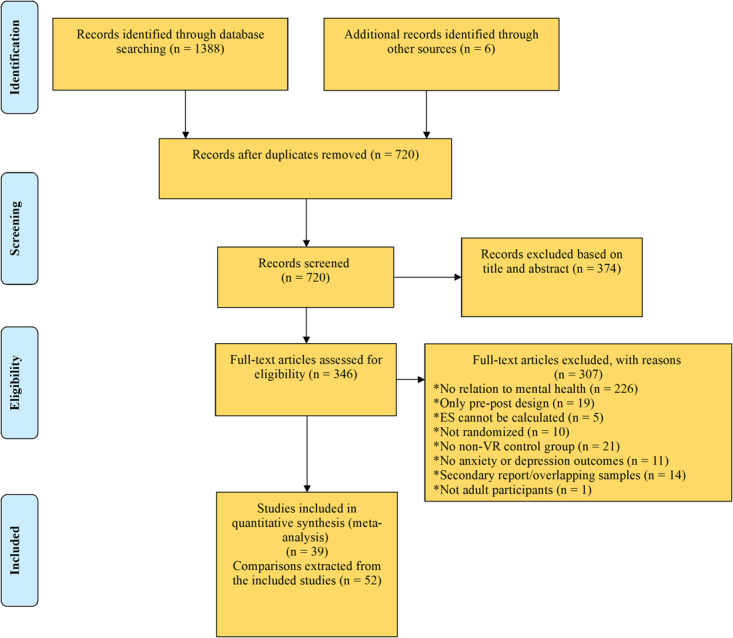
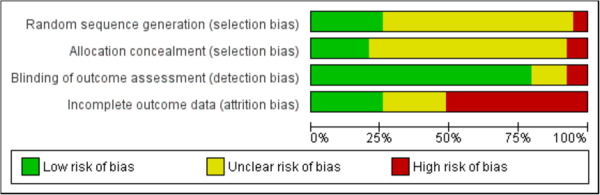
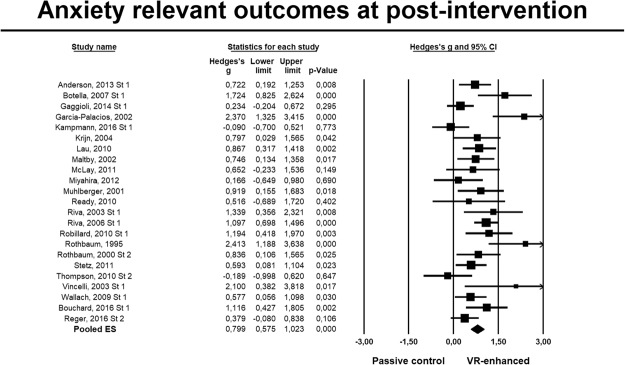
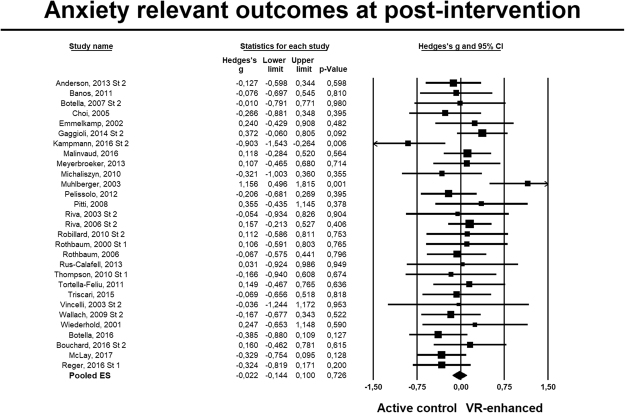
We report a meta-analysis of virtual reality (VR) interventions for anxiety and depression outcomes, as well as treatment attrition. We included randomized controlled trials comparing VR interventions, alone or in combination, to control conditions or other active psychological interventions. Effects sizes (Hedges’ g ) for anxiety and depression outcomes, as post-test and follow-up, were pooled with a random-effects model. Drop-outs were compared using odds ratio (OR) with a Mantel-Haenszel model. We included 39 trials (52 comparisons). Trial risk of bias was unclear for most domains, and high for incomplete outcome data. VR-based therapies were more effective than control at post-test for anxiety, g = 0.79, 95% CI 0.57 to 1.02, and depression, g = 0.73, 95% CI 0.25 to 1.21, but not for treatment attrition, OR = 1.34, 95% CI 0.95 to 1.89. Heterogeneity was high and there was consistent evidence of small study effects. There were no significant differences between VR-based and other active interventions. VR interventions outperformed control conditions for anxiety and depression but did not improve treatment drop-out. High heterogeneity, potential publication bias, predominant use of waitlist controls, and high or uncertain risk of bias of most trials question the reliability of these effects.
Overview
CoChat Summary
TL;DR
This meta-analysis of 39 RCTs found that virtual reality (VR)-based interventions outperformed control conditions for anxiety and depression symptoms, but did not differ from other active psychological interventions and did not improve treatment dropout. The control-condition effects were moderate to large but were undermined by high heterogeneity, small-study effects, and mostly high or uncertain risk of bias.
Key findings
- VR-based therapy was more effective than control at post-test for anxiety (23 RCTs, Hedges’ g = 0.79, 95% CI 0.57 to 1.02, NNT = 2.36, I² = 59%) and depression (10 RCTs, g = 0.73, 95% CI 0.25 to 1.21, NNT = 2.54, I² = 71%).
- There were no significant differences between VR-based and other active interventions: anxiety 29 RCTs, g = −0.02, 95% CI −0.14 to 0.10; depression 13 RCTs, g = 0.004, 95% CI −0.20 to 0.21. Follow-up anxiety (15 RCTs) was g = −0.07, 95% CI −0.28 to 0.13; follow-up depression (5 RCTs) was g = −0.19, 95% CI −0.62 to 0.23.
- Dropout did not differ significantly between VR and control (OR = 1.34, 95% CI 0.95 to 1.89, p = 0.08) or between VR and active interventions (OR = 1.05, 95% CI 0.77 to 1.43, p = 0.66).
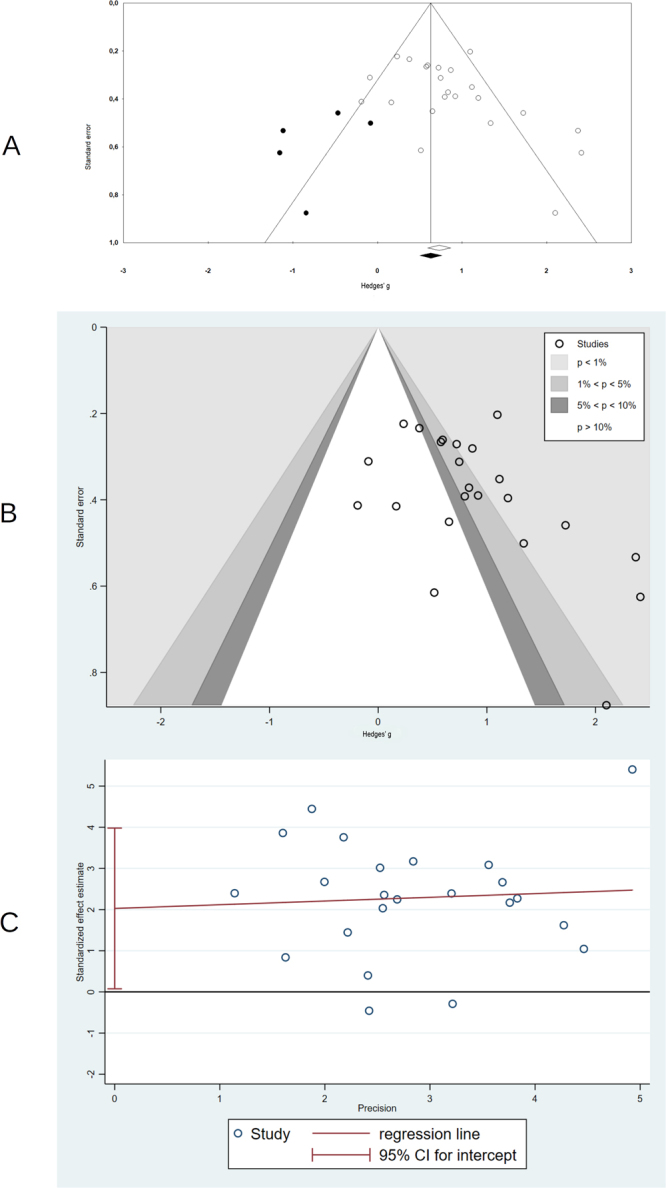
- Small-study effects were evident for anxiety and depression versus control: Egger’s test intercept = 2.03 (95% CI 0.07 to 3.98, p = 0.04) for anxiety and 3.24 (95% CI 0.10 to 6.39, p = 0.04) for depression; trim-and-fill reduced anxiety g from 0.79 to 0.62 and rendered depression non-significant. Most trials had unclear or high risk of bias; only 4 RCTs had low risk of bias on all four domains.
Methods
- Systematic search of PubMed, PsycInfo, EMBASE, and Cochrane Central Register of Controlled Trials through May 2015, updated March 2016 and August 2017; included RCTs comparing VR-enhanced interventions with control or active psychological interventions in adults, measuring anxiety/depression outcomes, published in peer-reviewed journals. The meta-analysis included 39 trials and 52 comparisons, with 869 participants in VR-enhanced conditions and 1122 in control/active conditions.
- Continuous outcomes were pooled with a random-effects model using Hedges’ g; dropout was analyzed with Mantel-Haenszel and Peto odds ratios. Heterogeneity was assessed with I²; subgroup and meta-regression analyses examined moderators; publication bias/small-study effects were assessed with funnel plots, Egger’s test, trim-and-fill, and Harbord test; risk of bias used four Cochrane domains.
Limitations
- The paper states high heterogeneity, especially in comparisons with control conditions, with large confidence intervals around I²; residual heterogeneity persisted after sensitivity analyses and moderator exploration. Many subgroup analyses were underpowered, few moderators were identified, follow-up data were too sparse for meaningful effect estimation, and three trials could not be included because effect sizes could not be calculated.
- The paper states most trials were small, had high or uncertain risk of bias, and often used waitlist controls, which may inflate effects; there was consistent evidence of small-study effects/publication bias for anxiety, and most trials involved VR program developers among authors, limiting independent evidence.
- Evident from the text: all but one trial were powered to test superiority rather than equivalence or non-inferiority, so the non-significant comparisons with active interventions should not be construed as proof of equivalent effects; dropout analyses excluded trials with zero dropouts in both arms, which may bias those results.
Model-written summary. Check it against the paper before relying on it.
Integrity signals
Registry
Cites
Statistics
Figures
Verification
Claims the paper makes
6 Valid · 1 Not valid · 9 Not checked · 84 Own results and interpretations
The cited sources support only part of this claim — read each source’s verdict below.
In the paper
“Assessment of quality6,7 relied on mixed and potentially inadequate tools that included items not linked to any type of trial bias (e.g., treatment fidelity)9, thereby potentially confounding the relationship between study quality and treatment effects.”
§ The effectiveness of virtual reality based interventions for symptoms of anxiety and depression: A meta-analysis > Introduction
What the sources say
- Not checked yetcites [6] McCann RA Virtual reality exposure therapy for the treatment of anxiety disorders: an evaluation of research quality Journal of anxiety disorders 2014 28 625 631 10.1016/j.janxdis.2014.05.010 25093964 source
- Could not verifycites [7] Turner WA Casey LM Outcomes associated with virtual reality in psychological interventions: where are we now? Clinical psychology review 2014 34 634 644 10.1016/j.cpr.2014.10.003 25455627 sourceExperimental — accuracy not yet measured
Our copy of Turner & Casey (2014) contains no characterisation of prior meta-analyses' quality-assessment tools as mixed or inadequate, and no mention of treatment fidelity or of checklist items 'not linked to any type of trial bias' (searched: treatment fidelity/therapist adherence; prior meta-analyses quality rating; inadequate tools). The Introduction ('Virtual Reality in Psychological Intervention') says only that earlier VR reviews focused on VRET for anxiety and that 'there has been little assessment of the methodological rigour of research into VR interventions', while 'Methodological Rigour in VR Research and the CONSORT Statements' presents CONSORT/CONSORT-EHEALTH as a concise way to assess reliability and validity, noting merely that not all items apply to VR studies. Where the paper does discuss the quality–effect relationship ('Treatment Efficacy and Methodological Rigour'; 'Associations between Treatment Efficacy and Methodological Rigour'), it reports no correlation between rigour and effect size (r[36] = -.21, p = .213) and attributes possible confounding to researcher allegiance, not to the assessment tool — so the claim's point is not addressed by our copy either way. (LLM, conf=0.65)
- Partly supportedcites [9] Armijo-Olivo S Fuentes J Ospina M Saltaji H Hartling L Inconsistency in the items included in tools used in general health research and physical therapy to evaluate the methodological quality of randomized controlled trials: a descriptive analysis BMC medical research methodology 2013 13 116 10.1186/1471-2288-13-116 24044807 PMC3848693 sourceExperimental — accuracy not yet measured
The Discussion reports extensive variation among quality-assessment tools and says many items may not indicate bias or relate to estimates of treatment effects. The Results also classify 27 items in general-health tools as unrelated to threats to validity or precision. Our copy does not identify treatment fidelity as one of those items or establish which tools the prior meta-analyses used. (LLM, conf=0.82)
hedgedstates a possible cause- Asserted: passes — The authors put it forward as true.
- Checkable: passes — It can be checked against evidence.
- Load-bearing: passes — The paper’s conclusions depend on it.
- Based: passes — The paper gives a reason why it holds.
Every source the paper cites for this claim was checked and supports it.
In the paper
“These findings contradict previous speculation of possible comparative benefit1,5,8.”
§ The effectiveness of virtual reality based interventions for symptoms of anxiety and depression: A meta-analysis > Discussion
What the sources say
- Supportedcites [1] Freeman D Virtual reality in the assessment, understanding, and treatment of mental health disorders Psychological medicine 2017 47 2393 2400 10.1017/S003329171700040X 28325167 PMC5964457 source
The citing sentence uses Freeman et al. 2017 as an instance of prior speculation about a possible comparative benefit of VR-enhanced interventions, and our copy of the paper does exactly that speculation: the Abstract states 'treatment outcomes could be enhanced by the technology's ability to create new realities', and the Discussion adds that VR 'could potentially generate the kind of results that even a course of standard treatment could not produce' and 'may become the method of choice for psychological treatment' (Introduction > VR and mental health). The speculation is likewise hedged ('could', 'potentially', 'may'), matching 'possible comparative benefit'; the Results > Anxiety disorders section's 'VR treatments seem to perform comparably in efficacy to face-to-face equivalent interventions' sits within the same cautious framing. No page numbers are available in our indexed copy; sections as labelled. (LLM, conf=0.85)
- Supportedcites [5] Meyerbroker K Emmelkamp PM Virtual reality exposure therapy in anxiety disorders: a systematic review of process-and-outcome studies Depression and anxiety 2010 27 933 944 10.1002/da.20734 20734361 source
The Introduction/Abstract of Meyerbröker & Emmelkamp (2010) states the comparative-benefit speculation the citing sentence attributes to it: VRET 'has become an interesting alternative for exposure in vivo' and 'has been found to be at least as effective as the state-of-the-art treatment exposure in vivo.' The Meta-Analyses section reinforces this ('In both studies VRET was found to be equally effective or superior to a variety of control groups... a small effect size (d = 0.35) favoring VRET over exposure in vivo'), and the Concluding Remarks add an acceptability advantage ('treatment refusal and drop-out rates may be lower in a treatment protocol using VR'). All are hedged as possibilities/speculations, matching the citing sentence's wording 'possible comparative benefit'; the paper's own sobering caveats concern generalizability across disorders, not the existence of that speculation. (LLM, conf=0.83)
- Supportedcites [8] Botella C Serrano B Banos RM Garcia-Palacios A Virtual reality exposure-based therapy for the treatment of post-traumatic stress disorder: a review of its efficacy, the adequacy of the treatment protocol, and its acceptability Neuropsychiatric disease and treatment 2015 11 2533 2545 10.2147/NDT.S89542 26491332 PMC4599639 source
Our copy of Botella et al. (2015) does advance exactly the sort of comparative-benefit speculation the citing sentence attributes to it: the VR-EBT in the treatment of PTSD section states VR 'can create fictitious, safe, and controllable situations that may be more acceptable to participants than in vivo exposure' and is 'an adequate alternative for cases where patients have limited ability to imagine', the VR in the treatment of mental disorders section lists advantages (therapist control, inaccessible stimuli, confidentiality, an alternative for those who find in vivo exposure aversive) that 'can facilitate the acceptability of exposure therapy' (76% more willing to be involved in VR-EBT), and the Conclusion claims 'VR-EBT offers other advantages that could play an important role, for example, in reducing aversion to prolonged exposure, treatment dropout, and generalization of the results'. The same review also reports equivalence rather than superiority ('no significant differences' between VR-EBT and CBT/imaginal exposure on efficacy and satisfaction), so the speculation it embodies is of possible comparative benefit, not of demonstrated superiority — which is precisely what the citing sentence characterises. (LLM, conf=0.85)
plain- Asserted: passes — The authors put it forward as true.
- Checkable: passes — It can be checked against evidence.
- Load-bearing: unclear — It is unclear whether the paper’s conclusions depend on it.
- Based: passes — The paper gives a reason why it holds.
- Supported
The cited sources support only part of this claim — read each source’s verdict below.
In the paper
“The persistent evidence of small study effects, as well as the significant heterogeneity, y casts doubts over the reliability of the large effects observed for anxiety25,37,38.”
§ The effectiveness of virtual reality based interventions for symptoms of anxiety and depression: A meta-analysis > Discussion
What the sources say
- Not checked yetcites [25] Ioannidis JP Patsopoulos NA Evangelou E Uncertainty in heterogeneity estimates in meta-analyses BMJ (Clinical research ed.) 2007 335 914 916 10.1136/bmj.39343.408449.80 PMC2048840 17974687 source
- Not checked yetcites [37] Dechartres A Altman DG Trinquart L Boutron I Ravaud P Association between analytic strategy and estimates of treatment outcomes in meta-analyses Jama 2014 312 623 630 10.1001/jama.2014.8166 25117131 source
- Partly supportedcites [38] Nuesch E Small study effects in meta-analyses of osteoarthritis trials: meta-epidemiological study BMJ (Clinical research ed.) 2010 341 c3515 10.1136/bmj.c3515 PMC2905513 20639294 sourceExperimental — accuracy not yet measured
Our copy supports the general methodological inference: the Discussion (opening paragraph) states that small study effects 'were more prominent in five of the 13 meta-analyses. These showed a large extent of statistical heterogeneity, larger pooled estimates of treatment benefit than would typically be expected', and the Comparison with other studies section treats large unexplained heterogeneity as 'an indication of residual uncertainty', with the Conclusions noting that restricting analyses to large trials may give more valid estimates. However, the paper's scope is meta-analyses of knee or hip osteoarthritis trials with a pain-related outcome (Methods, Selection of meta-analyses; Table 2, Table 3), and no passage in our copy mentions anxiety or effects observed for anxiety — searched for 'anxiety' and outcome terms with no hit. The part of the claim attributing doubt about 'the large effects observed for anxiety' to this source is therefore not supported by it. (LLM, conf=0.78)
plainstates a possible cause- Asserted: passes — The authors put it forward as true.
- Checkable: passes — It can be checked against evidence.
- Load-bearing: passes — The paper’s conclusions depend on it.
- Based: passes — The paper gives a reason why it holds.
Every source the paper cites for this claim was checked and supports it.
In the paper
“exclusion of participants from RCT analyses was shown to distort outcomes42,43”
§ The effectiveness of virtual reality based interventions for symptoms of anxiety and depression: A meta-analysis > Discussion
What the sources say
- Supportedcites [42] Abraha I Deviation from intention to treat analysis in randomised trials and treatment effect estimates: meta-epidemiological study BMJ (Clinical research ed.) 2015 350 h2445 PMC4445790 26016488 source
The Discussion (Comparison with other studies; page unavailable) reports that excluding patients from trial analyses could bias treatment-effect estimates. The Conclusion likewise identifies deviations from intention-to-treat analysis as a potential source of biased estimates. These passages support the claim as a statement about distorted trial results, not changes to patients’ actual outcomes. (LLM, conf=0.88)
- Supportedcites [43] Nuesch E The effects of excluding patients from the analysis in randomised controlled trials: meta-epidemiological study BMJ (Clinical research ed.) 2009 339 b3244 10.1136/bmj.b3244 PMC2739282 19736281 source
The Conclusions state that excluding patients from analyses often results in biased estimates of treatment effects in randomised trials. This supports the claim that exclusions can distort reported outcomes. (LLM, conf=0.94)
plainstates a cause- Asserted: passes — The authors put it forward as true.
- Checkable: passes — It can be checked against evidence.
- Load-bearing: passes — The paper’s conclusions depend on it.
- Based: passes — The paper gives a reason why it holds.
- Supported
The sources with a verdict support this claim; the rest weren’t checked yet, have no full text we could read, or their verdicts aren’t rated yet.
In the paper
“Use of waitlist controls might inadvertently and artificially inflate effect sizes for both anxiety and depression outcomes39,40.”
§ The effectiveness of virtual reality based interventions for symptoms of anxiety and depression: A meta-analysis > Discussion
What the sources say
- Supportedcites [39] Cuijpers P Cristea IA Karyotaki E Reijnders M Huibers MJ How effective are cognitive behavior therapies for major depression and anxiety disorders? A meta-analytic update of the evidence World psychiatry: official journal of the World Psychiatric Association (WPA) 2016 15 245 258 10.1002/wps.20346 27717254 PMC5032489 source
The Discussion (p. of DISCUSSION, 'The third problem we aimed to examine...') states that waiting list is probably a 'nocebo' that considerably overestimates the effects of psychological treatments, and that this was confirmed in their meta-analysis: for each disorder (MDD, GAD, PAD, SAD) studies with a waiting list control group yielded significantly higher effect sizes than care-as-usual or pill placebo. The Introduction likewise lists 'the nocebo effect of waiting list control groups' as a reason effects of psychotherapy have been overestimated, and the Abstract/Conclusion contrast large effects versus waiting list with small-to-moderate effects versus care-as-usual or pill placebo. This covers both depression (MDD) and anxiety (GAD/PAD/SAD) outcomes, matching the hedged 'might ... artificially inflate' phrasing. (LLM, conf=0.90)
- Not checked yetcites [40] Furukawa TA Waiting list may be a nocebo condition in psychotherapy trials: a contribution from network meta-analysis Acta psychiatrica Scandinavica 2014 130 181 192 10.1111/acps.12275 24697518 source
hedgedstates a possible cause- Asserted: passes — The authors put it forward as true.
- Checkable: passes — It can be checked against evidence.
- Load-bearing: passes — The paper’s conclusions depend on it.
- Based: passes — The paper gives a reason why it holds.
- Supported
44 more claims
Create a free account to see all 100 claims and to verify the 18 references still open.
- Probably not a substantial claim. 12
- It may state two separate claims as one. 44
Claims other papers make about this one
Each is checked against this paper’s own text: does it say what the citing paper says it does?
The cited source doesn’t support the claim as written.
In the citing paper
“A total of 5 meta-analyses on the efficacy of VRE-CBT versus control conditions, consisting mostly of studies on specific phobias, have been published.”
From The effectiveness of virtual reality exposure-based cognitive behavioral therapy for severe anxiety disorders, obsessive-compulsive disorder, and posttraumatic stress disorder: meta-analysis (2022) · cites this paper as [10]
Checked by a reasoning model — may be wrong.
Experimental — accuracy not yet measuredThe source backs part of the claim, not all of it — or backs it for a different population, condition or comparison.
In the citing paper
“In the case of VR exposure therapy for anxiety disorders, more than a dozen efficacy trials conducted over 20 years have convincingly shown that this intervention is efficacious (Carl et al. 2019;Fodor et al. 2018;Wechsler et al. 2019)”
From Better, Virtually: the Past, Present, and Future of Virtual Reality Cognitive Behavior Therapy (2021) · cites this paper as Fodor et al. 2018
Experimental — accuracy not yet measuredThe source backs part of the claim, not all of it — or backs it for a different population, condition or comparison.
In the citing paper
“Virtual reality exposure therapy is an efficacious treatment of anxiety disorders”
From Experiences of gamified and automated virtual reality exposure therapy for spider phobia: qualitative study (2020) · cites this paper as [4]
Experimental — accuracy not yet measuredThe source backs part of the claim, not all of it — or backs it for a different population, condition or comparison.
In the citing paper
“Although some reviews have examined the use of IMTs in treating depression [23-25], they have not focused primarily on depression as the assessment goal; nor have they focused on IMT applications specifically aimed at treating depression or on the psychotherapeutic aspects of these interventions.”
From Immersive technologies for depression care: scoping review (2024) · cites this paper as [23]
Experimental — accuracy not yet measuredThe source backs part of the claim, not all of it — or backs it for a different population, condition or comparison.
In the citing paper
“The primary facilitator for the implementation of IMT interventions for depressive symptoms described in the literature is the availability of evidence supporting the efficacy of the treatment [23,24].”
From Immersive technologies for depression care: scoping review (2024) · cites this paper as [23]
Experimental — accuracy not yet measured
5 more claims about this paper
Create a free account to see every claim other papers make about this one.
Citations
Cites
Preferred Reporting Items for Systematic Reviews and Meta-Analyses: the PRISMA statement
Moher, D., Liberati, A., Tetzlaff, J., Altman, D. G., & for the PRISMA Group (2009) · BMJ · doi:10.1136/bmj.b2535 · Cited by 83,823
Preferred Reporting Items for Systematic Reviews and Meta-Analyses: The PRISMA Statement
Moher, D., Liberati, A., Tetzlaff, J., Altman, D. G., & The PRISMA Group (2009) · PLoS Medicine · doi:10.1371/journal.pmed.1000097 · Cited by 64,042
Measuring inconsistency in meta-analyses
Higgins, J. P. T., Thompson, S. G., Deeks, J. J., & Altman, D. G. (2003) · BMJ · doi:10.1136/bmj.327.7414.557 · Cited by 63,139 · cited 1×
“Heterogeneity was assessed with the I 2 statistic, with values of 25%, 50% and respectively 75% indicating low, moderate and high heterogeneity 24 .”
MethodBias in meta-analysis detected by a simple, graphical test
Egger, M., Smith, G. D., Schneider, M., & Minder, C. (1997) · BMJ · doi:10.1136/bmj.315.7109.629 · Cited by 56,722 · cited 1×
“In the case of continuous outcomes, we conducted Egger’s test 28 for the asymmetry of the funnel plot and corresponding Galbraith plots 29 if the test indicated significant asymmetry.”
MethodPreferred reporting items for systematic reviews and meta-analyses: the PRISMA Statement.
(2009) · PubMed Central · Cited by 44,859
Meta-analysis in clinical trials
DerSimonian, R., & Laird, N. (1986) · Controlled Clinical Trials · doi:10.1016/0197-2456(86)90046-2 · Cited by 39,552 · cited 2×
“Continuous outcomes (anxiety, depression) were pooled with a random effects model using the inverse-variance DerSimonian and Laird method 17 .”
BackgroundMethodThe Cochrane Collaboration's tool for assessing risk of bias in randomised trials
Higgins, J. P. T., Altman, D. G., Gotzsche, P. C., Juni, P., Moher, D., Oxman, A. D., Savovic, J., Schulz, K. F., Weeks, L., Sterne, J. A. C., et al. (2011) · BMJ · doi:10.1136/bmj.d5928 · Cited by 33,817 · cited 2×
“In contrast, we used the Cochrane Risk of Bias tool 11 , which evaluates domains likely to distort outcomes.”
Dermyshi, E., Wang, Y., Yan, C., Hong, W., Qiu, G., Gong, X., & Zhang, T. (2017) · Neonatology · doi:10.1159/000454668 · Cited by 24,451
Wang, G., Ma, R., Qiao, G., Wada, K., Aizawa, Y., & Satoh, T. (2015) · Integrative Medicine International · doi:10.1159/000368408 · Cited by 18,657
Statistical Aspects of the Analysis of Data From Retrospective Studies of Disease
(1959) · JNCI: Journal of the National Cancer Institute · doi:10.1093/jnci/22.4.719 · Cited by 14,689
Borenstein, M., Hedges, L. V., Higgins, J. P. T., & Rothstein, H. R. (2009) · doi:10.1002/9780470743386 · Cited by 14,225 · cited 4×
“When a study used multiple measures from the same category, the average ES was computed using the CMA procedure 15 that assumes a correlation of 1 between outcomes.”
MethodInfluentialDuval, S., & Tweedie, R. (2000) · Biometrics · doi:10.1111/j.0006-341x.2000.00455.x · Cited by 14,099
Statistical Methods for Meta-Analysis
Wasserman, S., Hedges, L. V., & Olkin, I. (1988) · Journal of Educational Statistics · doi:10.2307/1164953 · Cited by 10,326
Borenstein, M., Hedges, L. V., Higgins, J. P. T., & Rothstein, H. R. (2021) · doi:10.1002/9781119558378 · Cited by 9,799
Beta blockade during and after myocardial infarction: An overview of the randomized trials
Yusuf, S., Peto, R., Lewis, J., Collins, R., & Sleight, P. (1985) · Progress in Cardiovascular Diseases · doi:10.1016/s0033-0620(85)80003-7 · Cited by 3,205
Publication and related bias in meta-analysis
Sterne, J. A. C., Gavaghan, D., & Egger, M. (2000) · Journal of Clinical Epidemiology · doi:10.1016/s0895-4356(00)00242-0 · Cited by 2,282
A modified test for small‐study effects in meta‐analyses of controlled trials with binary endpoints
Harbord, R. M., Egger, M., & Sterne, J. A. C. (2006) · Statistics in Medicine · doi:10.1002/sim.2380 · Cited by 2,267
Peters, J. L., Sutton, A. J., Jones, D. R., Abrams, K. R., & Rushton, L. (2008) · Journal of Clinical Epidemiology · doi:10.1016/j.jclinepi.2007.11.010 · Cited by 2,053
An Assessment of Clinically Useful Measures of the Consequences of Treatment
Laupacis, A., Sackett, D. L., & Roberts, R. S. (1988) · New England Journal of Medicine · doi:10.1056/nejm198806303182605 · Cited by 1,681
Virtual Reality in the Assessment, Understanding, and Treatment of Mental Health Disorders
Freeman, D., Reeve, S., Robinson, A., Ehlers, A., Clark, D., Spanlang, B., & Slater, M. (2017) · Psychological Medicine · doi:10.1017/s003329171700040x · Cited by 1,428
Uncertainty in heterogeneity estimates in meta-analyses
Ioannidis, J. P. A., Patsopoulos, N. A., & Evangelou, E. (2007) · BMJ · doi:10.1136/bmj.39343.408449.80 · Cited by 1,254
Size of Treatment Effects and Their Importance to Clinical Research and Practice
Kraemer, H. C., & Kupfer, D. J. (2006) · Biological Psychiatry · doi:10.1016/j.biopsych.2005.09.014 · Cited by 850
Estimation of a Common Effect Parameter from Sparse Follow-Up Data
Greenland, S., & Robins, J. M. (1985) · Biometrics · doi:10.2307/2530643 · Cited by 794
Journal of the National Cancer Institute
(1958) · JNCI: Journal of the National Cancer Institute · doi:10.1093/jnci/20.1.227 · Cited by 770
A note on graphical presentation of estimated odds ratios from several clinical trials
Galbraith, R. F. (1988) · Statistics in Medicine · doi:10.1002/sim.4780070807 · Cited by 663
Virtual reality exposure therapy in anxiety disorders: a quantitative meta-analysis
Opriş, D., Pintea, S., García-Palacios, A., Botella, C., Szamosközi, Ş., & David, D. (2012) · Depression and Anxiety · doi:10.1002/da.20910 · Cited by 636
Self-citationIoannidis, J. P. A. (1998) · JAMA · doi:10.1001/jama.279.4.281 · Cited by 632
Cuijpers, P., Cristea, I. A., Karyotaki, E., Reijnders, M., & Huibers, M. J. H. (2016) · World Psychiatry · doi:10.1002/wps.20346 · Cited by 572
Self-citationSmall study effects in meta-analyses of osteoarthritis trials: meta-epidemiological study
Nuesch, E., Trelle, S., Reichenbach, S., Rutjes, A. W. S., Tschannen, B., Altman, D. G., Egger, M., & Juni, P. (2010) · BMJ · doi:10.1136/bmj.c3515 · Cited by 559
Furukawa, T. A., Noma, H., Caldwell, D. M., Honyashiki, M., Shinohara, K., Imai, H., Chen, P., Hunot, V., & Churchill, R. (2014) · Acta Psychiatrica Scandinavica · doi:10.1111/acps.12275 · Cited by 521
Virtual reality exposure therapy for social anxiety disorder: A randomized controlled trial.
Anderson, P. L., Price, M., Edwards, S. M., Obasaju, M. A., Schmertz, S. K., Zimand, E., & Calamaras, M. R. (2013) · Journal of Consulting and Clinical Psychology · doi:10.1037/a0033559 · Cited by 371
Bouchard, S., Dumoulin, S., Robillard, G., Guitard, T., Klinger, É., Forget, H., Loranger, C., & Roucaut, F. X. (2017) · British Journal of Psychiatry · doi:10.1192/bjp.bp.116.184234 · Cited by 354
Klinger, E., Bouchard, S., Légeron, P., Roy, S., Lauer, F., Chemin, I., & Nugues, P. (2005) · CyberPsychology & Behavior · doi:10.1089/cpb.2005.8.76 · Cited by 327
Small studies are more heterogeneous than large ones: a meta-meta-analysis
IntHout, J., Ioannidis, J. P. A., Borm, G. F., & Goeman, J. J. (2015) · Journal of Clinical Epidemiology · doi:10.1016/j.jclinepi.2015.03.017 · Cited by 314
Numbers needed to treat derived from meta-analyses---sometimes informative, usually misleading
Smeeth, L., Haines, A., & Ebrahim, S. (1999) · BMJ · doi:10.1136/bmj.318.7197.1548 · Cited by 302
Meyerbröker, K., & Emmelkamp, P. M. G. (2010) · Depression and Anxiety · doi:10.1002/da.20734 · Cited by 290
Scammacca, N., Roberts, G., & Stuebing, K. K. (2014) · Review of Educational Research · doi:10.3102/0034654313500826 · Cited by 267
Nuesch, E., Trelle, S., Reichenbach, S., Rutjes, A. W. S., Burgi, E., Scherer, M., Altman, D. G., & Juni, P. (2009) · BMJ · doi:10.1136/bmj.b3244 · Cited by 248
Association Between Analytic Strategy and Estimates of Treatment Outcomes in Meta-analyses
Dechartres, A., Altman, D. G., Trinquart, L., Boutron, I., & Ravaud, P. (2014) · JAMA · doi:10.1001/jama.2014.8166 · Cited by 233
Reger, G. M., Koenen-Woods, P., Zetocha, K., Smolenski, D. J., Holloway, K. M., Rothbaum, B. O., Difede, J., Rizzo, A. A., Edwards-Stewart, A., Skopp, N. A., et al. (2016) · Journal of Consulting and Clinical Psychology · doi:10.1037/ccp0000134 · Cited by 226
Botella, C., Serrano, B., baños, R., & García-Palacios, A. (2015) · Neuropsychiatric Disease and Treatment · doi:10.2147/ndt.s89542 · Cited by 223
Methodology of superiority vs. equivalence trials and non-inferiority trials
Christensen, E. (2007) · Journal of Hepatology · doi:10.1016/j.jhep.2007.02.015 · Cited by 205
How to obtain nnt from cohen’s D: comparison of two methods
Furukawa, T. A., & Leucht, S. (2011) · PLoS ONE · doi:10.1371/journal.pone.0019070 · Cited by 179
Abraha, I., Cherubini, A., Cozzolino, F., De Florio, R., Luchetta, M. L., Rimland, J. M., Folletti, I., Marchesi, M., Germani, A., Orso, M., et al. (2015) · BMJ · doi:10.1136/bmj.h2445 · Cited by 165
Cheng, J., Pullenayegum, E., Marshall, J. K., Iorio, A., & Thabane, L. (2016) · BMJ Open · doi:10.1136/bmjopen-2015-010983 · Cited by 162
Virtual Reality Exposure Therapy for Post-Traumatic Stress Disorder and Other Anxiety Disorders
Gerardi, M., Cukor, J., Difede, J., Rizzo, A., & Rothbaum, B. O. (2010) · Current Psychiatry Reports · doi:10.1007/s11920-010-0128-4 · Cited by 154
Miloff, A., Lindner, P., Hamilton, W., Reuterskiöld, L., Andersson, G., & Carlbring, P. (2016) · Trials · doi:10.1186/s13063-016-1171-1 · Cited by 141
McCann, R. A., Armstrong, C. M., Skopp, N. A., Edwards-Stewart, A., Smolenski, D. J., June, J. D., Metzger-Abamukong, M., & Reger, G. M. (2014) · Journal of Anxiety Disorders · doi:10.1016/j.janxdis.2014.05.010 · Cited by 134
Riva, G., Bacchetta, M., Baruffi, M., & Molinari, E. (2001) · CyberPsychology & Behavior · doi:10.1089/109493101750527079 · Cited by 124
HETEROGI: Stata module to quantify heterogeneity in a meta-analysis
Orsini, N., Bottai, M., Higgins, J. P. T., & Buchan, I. E. (2005) · RePEc: Research Papers in Economics · Cited by 118
Outcomes associated with virtual reality in psychological interventions: where are we now?
Turner, W. A., & Casey, L. M. (2014) · Clinical Psychology Review · doi:10.1016/j.cpr.2014.10.003 · Cited by 116 · cited 2×
“In exploratory subgroup analysis, we did not find differences between studies with high/uncertain versus low RoB for incomplete outcome reporting, though the number of studies with low RoB was small, particularly in comparisons with control (7).”
BackgroundResultRiva, G., Bacchetta, M., Baruffi, M., & Molinari, E. (2002) · IEEE Transactions on Information Technology in Biomedicine · doi:10.1109/titb.2002.802372 · Cited by 97
Armijo-Olivo, S., Fuentes, J., Ospina, M., Saltaji, H., & Hartling, L. (2013) · BMC Medical Research Methodology · doi:10.1186/1471-2288-13-116 · Cited by 60
McLay, R. N., Baird, A., Webb-Murphy, J., Deal, W., Tran, L., Anson, H., Klam, W., & Johnston, S. (2017) · Cyberpsychology, Behavior, and Social Networking · doi:10.1089/cyber.2016.0554 · Cited by 57
Thompson, T., Steffert, T., Steed, A., & Gruzelier, J. (2010) · International Journal of Clinical and Experimental Hypnosis · doi:10.1080/00207144.2011.522917 · Cited by 32
New Directions in Virtual Reality-Based Therapy for Anxiety Disorders
David, D., Matu, S.-A., & David, O. A. (2013) · International Journal of Cognitive Therapy · doi:10.1521/ijct.2013.6.2.114 · Cited by 25
Self-citation
Cited by
Wechsler, T. F., Kümpers, F., & Mühlberger, A. (2019) · Frontiers in Psychology · doi:10.3389/fpsyg.2019.01758 · Cited by 282
Virtual reality exposure therapy for posttraumatic stress disorder (PTSD): a meta-analysis
Kothgassner, O. D., Goreis, A., Kafka, J. X., Van Eickels, R. L., Plener, P. L., & Felnhofer, A. (2019) · European Journal of Psychotraumatology · doi:10.1080/20008198.2019.1654782 · Cited by 246
“…of VRET has considered anxiety disorders in general, and the analyses have only included small numbers of PTSD related studies (Carl et al., 2019; Fodor et al., 2018; Opriş et al., 2012; Parsons & Rizzo, 2008; Powers & Emmelkamp, 2008), rendering it difficult to draw specific conclusions for…”
BackgroundResultInfluentialBoeldt, D., McMahon, E., McFaul, M., & Greenleaf, W. (2019) · Frontiers in Psychiatry · doi:10.3389/fpsyt.2019.00773 · Cited by 242
Smith, V., Warty, R. R., Sursas, J. A., Payne, O., Nair, A., Krishnan, S., da Silva Costa, F., Wallace, E. M., & Vollenhoven, B. (2020) · Journal of Medical Internet Research · doi:10.2196/17980 · Cited by 235
“A recent systematic review [51] demonstrated significantly reduced anxiety scores in individuals undergoing virtual reality therapy for treatment of anxiety disorders in comparison to those of controls.”
BackgroundSouchet, A. D., Philippe, S., Lourdeaux, D., & Leroy, L. (2022) · International Journal of Human–Computer Interaction · doi:10.1080/10447318.2021.1976509 · Cited by 204
“But HMDs are considered not only for learning but also for daily uses in the medical sector, e.g., see: (Carl et al., 2019; Chan et al., 2018; Fodor et al., 2018; Gilboa et al., 2018; Lindner et al., 2019; Olmos-Raya et al., 2018).”
Background
Metadata
- Authors
- Fodor, L. A., Coteț, C. D., Cuijpers, P., Szamoskozi, Ș., David, D., & Cristea, I. A.
- Affiliations
- Babeș-Bolyai University (RO)
- Amsterdam Public Health (NL)
- Corresponding author
- Cristea, Ioana A.
- Venue
- Scientific Reports
- Published
- 2018-07-09
- Volume
- 8
- Issue
- 1
- Pages
- 10323-10323
- ISSN
- 2045-2322 (ISSN-L)
- PMC
- PMC6037699
- OpenAlex
- W2810614978
- Semantic Scholar
- c93280658630740bc62e3b88e689bb4a53a6a5c7
- Cited by
- 284
- References
- 56
- Citations by year
- 2026: 38 · 2025: 45 · 2024: 38 · 2023: 33 · 2022: 37 · 2021: 47 · 2020: 26 · 2019: 17 · 2018: 3
- FWCI
- 3.15
- Type
- journal article
- Language
- en
- Open access
- gold
- doi.org
- Licence
- cc-by
- creativecommons.org/licenses/by/4.0 (tdm)
- creativecommons.org/licenses/by/4.0 (vor)
- Locations
- Scientific Reports (publishedVersion, cc-by)
- Europe PMC (PubMed Central) (publishedVersion, other-oa)
- PubMed Central (publishedVersion, cc-by)
- PubMed (publishedVersion)
- VU Research Portal (publishedVersion, other-oa)
- Padua Research Archive (University of Padova) (submittedVersion, cc-by)
- DOAJ (DOAJ: Directory of Open Access Journals) (submittedVersion)
- Data Archiving and Networked Services (DANS) (submittedVersion, other-oa)
- Funders
- Unitatea Executiva pentru Finantarea Invatamantului Superior, a Cercetarii, Dezvoltarii si Inovarii (PN-II-RU-TE-2014-4-1316)
- Topics
- Social Sciences › Psychology › Applied Psychology › Digital Mental Health Interventions
- Physical Sciences › Computer Science › Human-Computer Interaction › Virtual Reality Applications and Impacts
- Social Sciences › Psychology › Experimental and Cognitive Psychology › Anxiety, Depression, Psychometrics, Treatment, Cognitive Processes
- Keywords
- virtual reality intervention, anxiety, depression, treatment discontinuation, psychotherapy, waitlist control, publication bias, risk of bias
- MeSH terms
- Virtual Reality, Anxiety Disorders, Depressive Disorder, Humans, Odds Ratio, Randomized Controlled Trials as Topic, Treatment Outcome
About these checks
Registry, retraction, Cites and statistics results are computed, not judged, with one exception: a printed reference that no index lists is read once by a model before it counts as a citation error. Claims are extracted by a model and kept only when their quote appears verbatim in the text; each cited source is then checked, with a model’s help, for whether it says what the claim relies on. Those verdicts can be wrong — read the claim’s quote and the cited source before relying on one.
The claim verdicts this report counts are experimental: their accuracy is not yet measured.
A language model drew the claims from the paper on 2026-10-04, under version 3 of the claim definition (model deepseek-v4.1-flash, prompt extract-v3).
A second model labelled each claim on 2026-10-04 (model jev-1.13-20260917, definition revision gold-guideline-v0.2).
Cited sources are checked with a language model’s help (qwen3.8-omni-flash and gpt-6-sol).
Statistics and arithmetic are recomputed, not judged.
Confidence bands are shown only for fields calibrated on our annotated test set. None is calibrated yet, so no band is shown.
What counts as a claim ›How we measure confidence ›How we check this ›
Are you an author, or do you see a problem with this page? Request a review
Data sources
Bibliographic data: Semantic Scholar, OpenAlex, Crossref.
Contains information from the Semantic Scholar Academic Graph Datasets, made available under the ODC Attribution License (ODC-BY 1.0).
Semantic Scholar’s data is described in: Kinney, R., et al. (2023). The Semantic Scholar Open Data Platform. arXiv:2301.10140.
