

Clostridium ramosum regulates enterochromaffin cell development and serotonin release
Open accessThe DOI matches its Crossref record; 67 of the 67 references it cites were found in a registry or an index.
Abstract
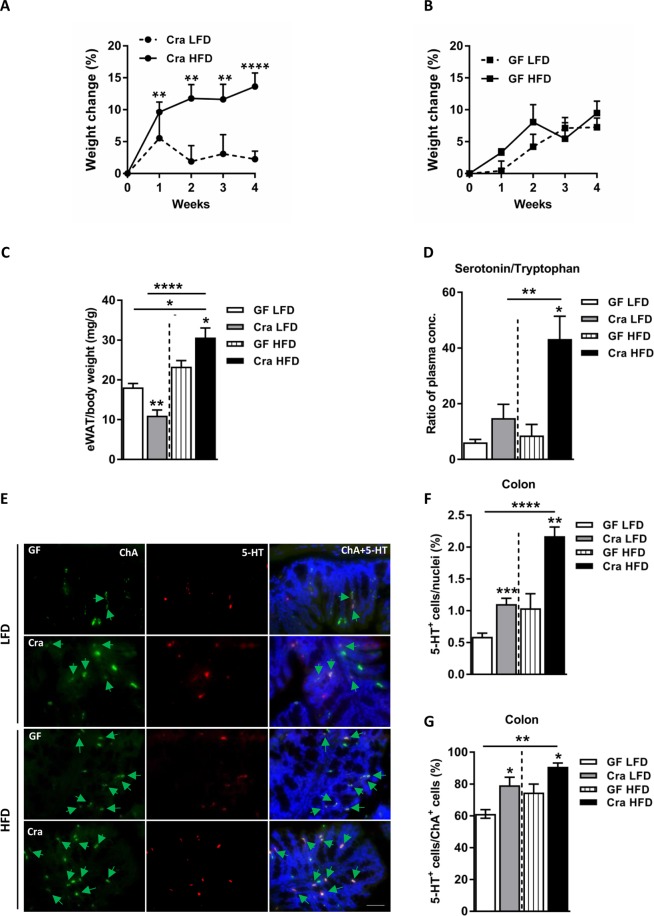
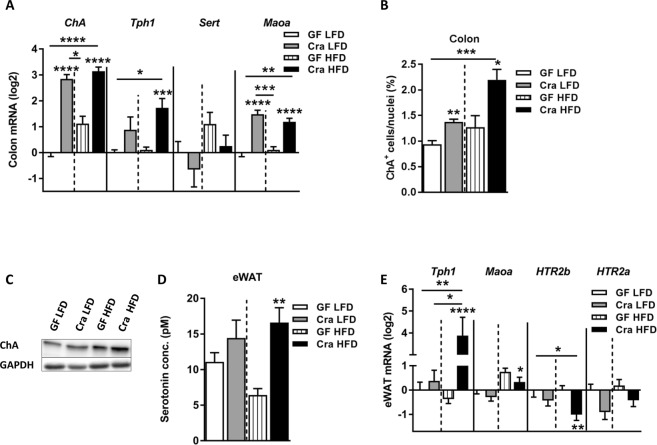
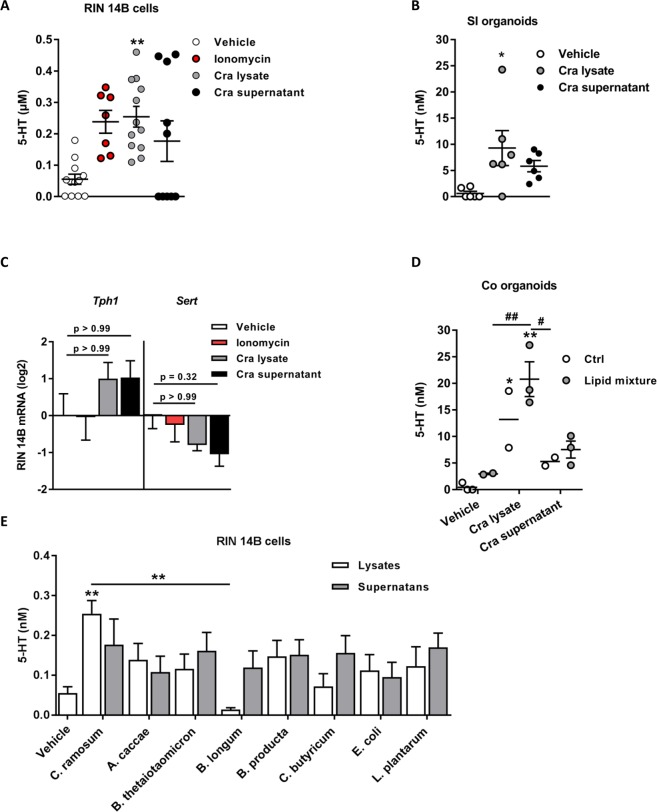
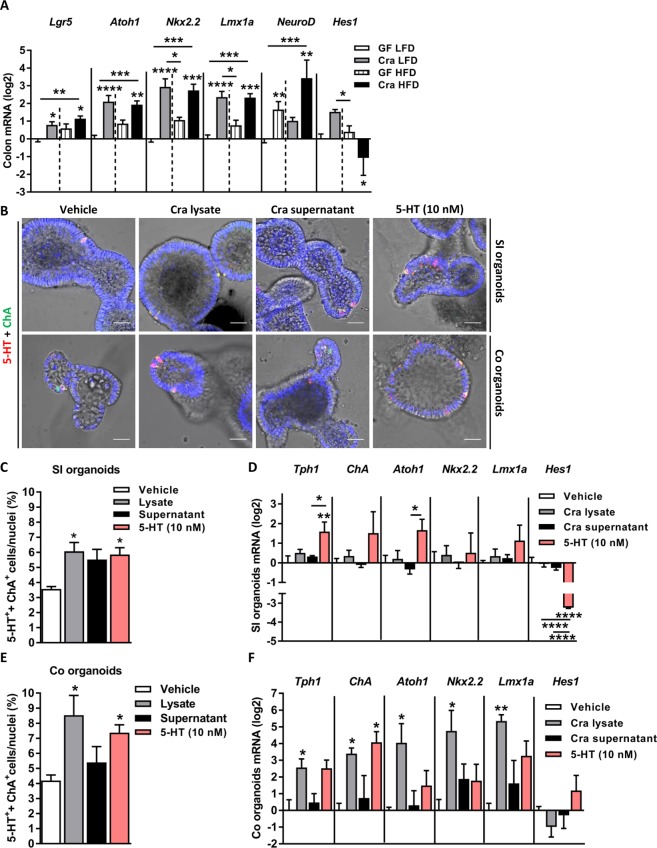
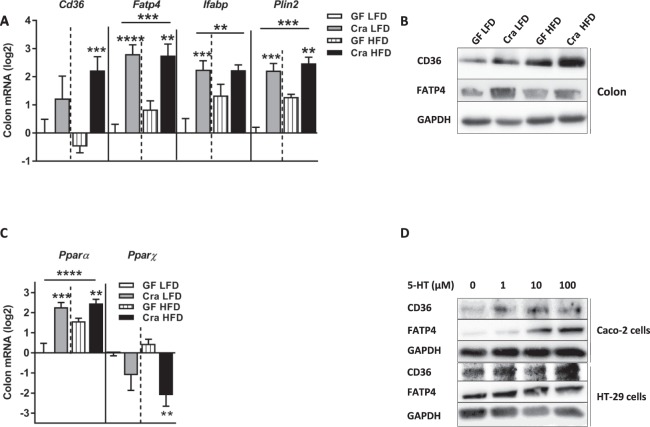
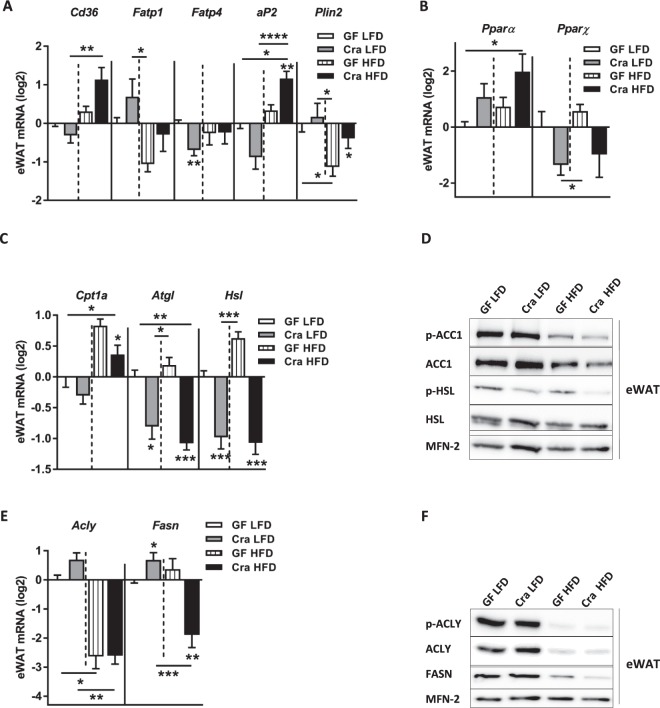
Peripheral serotonin (5-hydroxytryptamine: 5-HT) synthesized in the intestine by enterochromaffin cells (ECs), plays an important role in the regulation of peristaltic of the gut, epithelial secretion and promotes the development and maintenance of the enteric neurons. Recent studies showed that the indigenous gut microbiota modulates 5-HT signalling and that ECs use sensory receptors to detect dietary and microbiota-derived signals from the lumen to subsequently transduce the information to the nervous system. We hypothesized that Clostridium ramosum by increasing gut 5-HT availability consequently contributes to high-fat diet-induced obesity. Using germ-free mice and mice monoassociated with C . ramosum , intestinal cell lines and mouse organoids, we demonstrated that bacterial cell components stimulate host 5-HT secretion and program the differentiation of colonic intestinal stem progenitors toward the secretory 5-HT-producing lineage. An elevated 5-HT level regulates the expression of major proteins involved in intestinal fatty acid absorption in vitro , suggesting that the presence of C . ramosum in the gut promotes 5-HT secretion and thereby could facilitates intestinal lipid absorption and the development of obesity.
Overview
The claims and statistics of this paper haven’t been checked yet.
Free: it reads the open-access text and checks the first 5 claims that cite a source we can check. Create a free account to check every claim.
Integrity signals
Registry
Cites
Statistics
Figures
Verification
Claims the paper makes
The claims and statistics of this paper haven’t been checked yet.
Free: it reads the open-access text and checks the first 5 claims that cite a source we can check. Create a free account to check every claim.
Self-check
Percentages, sums and reported differences re-computed from the paper’s own numbers.
The self-check needs the paper’s full text.
Citations
Cites
Bradford, M. M. (1976) · Analytical Biochemistry · doi:10.1016/0003-2697(76)90527-3 · Cited by 255,302
Human gut microbes associated with obesity
Ley, R. E., Turnbaugh, P. J., Klein, S., & Gordon, J. I. (2006) · Nature · doi:10.1038/4441022a · Cited by 8,785
Single Lgr5 stem cells build crypt-villus structures in vitro without a mesenchymal niche
Sato, T., Vries, R. G., Snippert, H. J., van de Wetering, M., Barker, N., Stange, D. E., van Es, J. H., Abo, A., Kujala, P., Peters, P. J., et al. (2009) · Nature · doi:10.1038/nature07935 · Cited by 7,204
A metagenome-wide association study of gut microbiota in type 2 diabetes
Qin, J., Li, Y., Cai, Z., Li, S., Zhu, J., Zhang, F., Liang, S., Zhang, W., Guan, Y., Shen, D., et al. (2012) · Nature · doi:10.1038/nature11450 · Cited by 6,762
Obesity alters gut microbial ecology
Ley, R. E., Bäckhed, F., Turnbaugh, P., Lozupone, C. A., Knight, R. D., & Gordon, J. I. (2005) · Proceedings of the National Academy of Sciences · doi:10.1073/pnas.0504978102 · Cited by 6,176
Richness of human gut microbiome correlates with metabolic markers
Le Chatelier, E., Nielsen, T., Qin, J., Prifti, E., Hildebrand, F., Falony, G., Almeida, M., Arumugam, M., Batto, J.-M., Kennedy, S., et al. (2013) · Nature · doi:10.1038/nature12506 · Cited by 4,662
Indigenous bacteria from the gut microbiota regulate host serotonin biosynthesis
Yano, J. M., Yu, K., Donaldson, G. P., Shastri, G. G., Ann, P., Ma, L., Nagler, C. R., Ismagilov, R. F., Mazmanian, S. K., & Hsiao, E. Y. (2015) · Cell · doi:10.1016/j.cell.2015.02.047 · Cited by 3,614
Gut metagenome in European women with normal, impaired and diabetic glucose control
Karlsson, F. H., Tremaroli, V., Nookaew, I., Bergström, G., Behre, C. J., Fagerberg, B., Nielsen, J., & Bäckhed, F. (2013) · Nature · doi:10.1038/nature12198 · Cited by 3,115
PPARγ signaling and metabolism: the good, the bad and the future
Ahmadian, M., Suh, J. M., Hah, N., Liddle, C., Atkins, A. R., Downes, M., & Evans, R. M. (2013) · Nature Medicine · doi:10.1038/nm.3159 · Cited by 2,016
PPARγ Is Required for Placental, Cardiac, and Adipose Tissue Development
Barak, Y., Nelson, M. C., Ong, E. S., Jones, Y. Z., Ruiz-Lozano, P., Chien, K. R., Koder, A., & Evans, R. M. (1999) · Molecular Cell · doi:10.1016/s1097-2765(00)80209-9 · Cited by 1,956
Fatty acid-binding proteins: role in metabolic diseases and potential as drug targets
Furuhashi, M., & Hotamisligil, G. S. (2008) · Nature Reviews Drug Discovery · doi:10.1038/nrd2589 · Cited by 1,785
Reigstad, C. S., Salmonson, C. E., III, J. F. R., Szurszewski, J. H., Linden, D. R., Sonnenburg, J. L., Farrugia, G., & Kashyap, P. C. (2015) · The FASEB Journal · doi:10.1096/fj.14-259598 · Cited by 1,335
Abreu, M. T. (2010) · Nature Reviews Immunology · doi:10.1038/nri2707 · Cited by 1,288
Grygiel-Górniak, B. (2014) · Nutrition Journal · doi:10.1186/1475-2891-13-17 · Cited by 1,079
Naya, F. J., Huang, H.-P., Qiu, Y., Mutoh, H., DeMayo, F. J., Leiter, A. B., & Tsai, M.-J. (1997) · Genes & Development · doi:10.1101/gad.11.18.2323 · Cited by 1,021
Enterochromaffin cells are gut chemosensors that couple to sensory neural pathways
Bellono, N. W., Bayrer, J. R., Leitch, D. B., Castro, J., Zhang, C., O’Donnell, T. A., Brierley, S. M., Ingraham, H. A., & Julius, D. (2017) · Cell · doi:10.1016/j.cell.2017.05.034 · Cited by 910
High-fat diet alters gut microbiota physiology in mice
Daniel, H., Gholami, A. M., Berry, D., Desmarchelier, C., Hahne, H., Loh, G., Mondot, S., Lepage, P., Rothballer, M., Walker, A., et al. (2014) · The ISME Journal · doi:10.1038/ismej.2013.155 · Cited by 678
Self-citationPAT proteins, an ancient family of lipid droplet proteins that regulate cellular lipid stores
Bickel, P. E., Tansey, J. T., & Welte, M. A. (2009) · Biochimica et Biophysica Acta (BBA) - Molecular and Cell Biology of Lipids · doi:10.1016/j.bbalip.2009.04.002 · Cited by 670
Crane, J. D., Palanivel, R., Mottillo, E. P., Bujak, A. L., Wang, H., Ford, R. J., Collins, A., Blümer, R. M., Fullerton, M. D., Yabut, J. M., et al. (2015) · Nature Medicine · doi:10.1038/nm.3766 · Cited by 490
Kimmel, A. R., Brasaemle, D. L., McAndrews-Hill, M., Sztalryd, C., & Londos, C. (2010) · Journal of Lipid Research · doi:10.1194/jlr.r000034 · Cited by 452
(2021) · Journal of Lipid Research · doi:10.1194/jlr · Cited by 427
Paulmann, N., Grohmann, M., Voigt, J.-P., Bert, B., Vowinckel, J., Bader, M., Skelin, M., Jevšek, M., Fink, H., Rupnik, M., et al. (2009) · PLoS Biology · doi:10.1371/journal.pbio.1000229 · Cited by 404
Serotonin Has a Key Role in Pathogenesis of Experimental Colitis
Ghia, J., Li, N., Wang, H., Collins, M., Deng, Y., El–Sharkawy, R. T., Côté, F., Mallet, J., & Khan, W. I. (2009) · Gastroenterology · doi:10.1053/j.gastro.2009.08.041 · Cited by 392
Jones, R. M., Luo, L., Ardita, C. S., Richardson, A. N., Kwon, Y. M., Mercante, J. W., Alam, A., Gates, C. L., Wu, H., Swanson, P. A., et al. (2013) · The EMBO Journal · doi:10.1038/emboj.2013.224 · Cited by 391
Distinct but complementary contributions of PPAR isotypes to energy homeostasis
Dubois, V., Eeckhoute, J., Lefebvre, P., & Staels, B. (2017) · Journal of Clinical Investigation · doi:10.1172/jci88894 · Cited by 383
Price, A. E., Shamardani, K., Lugo, K. A., Deguine, J., Roberts, A. W., Lee, B. L., & Barton, G. M. (2018) · Immunity · doi:10.1016/j.immuni.2018.07.016 · Cited by 379
Metabolomic Analysis of Livers and Serum from High-Fat Diet Induced Obese Mice
Kim, H.-J., Kim, J. H., Noh, S., Hur, H. J., Sung, M. J., Hwang, J.-T., Park, J. H., Yang, H. J., Kim, M.-S., Kwon, D. Y., et al. (2011) · Journal of Proteome Research · doi:10.1021/pr100892r · Cited by 376
Brain Serotonin, Carbohydrate‐Craving, Obesity and Depression
Wurtman, R. J., & Wurtman, J. J. (1995) · Obesity Research · doi:10.1002/j.1550-8528.1995.tb00215.x · Cited by 344
Breton, J., Tennoune, N., Lucas, N., Francois, M., Legrand, R., Jacquemot, J., Goichon, A., Guérin, C., Peltier, J., Pestel-Caron, M., et al. (2016) · Cell Metabolism · doi:10.1016/j.cmet.2015.10.017 · Cited by 321
Ge, X., Ding, C., Zhao, W., Xu, L., Tian, H., Gong, J., Zhu, M., Li, J., & Li, N. (2017) · Journal of Translational Medicine · doi:10.1186/s12967-016-1105-4 · Cited by 274
Serotonin release and uptake in the gastrointestinal tract
Bertrand, P. P., & Bertrand, R. L. (2010) · Autonomic Neuroscience · doi:10.1016/j.autneu.2009.08.002 · Cited by 270
The roles of peripheral serotonin in metabolic homeostasis
El-Merahbi, R., Löffler, M., Mayer, A., & Sumara, G. (2015) · FEBS Letters · doi:10.1016/j.febslet.2015.05.054 · Cited by 263
Regulation of systemic energy homeostasis by serotonin in adipose tissues
Oh, C.-M., Namkung, J., Go, Y., Shong, K. E., Kim, K., Kim, H., Park, B.-Y., Lee, H. W., Jeon, Y. H., Song, J., et al. (2015) · Nature Communications · doi:10.1038/ncomms7794 · Cited by 258
Hyperphagia and Obesity Following Serotonin Depletion by Intraventricular p-Chlorophenylalanine
Breisch, S. T., Zemlan, F. P., & Hoebel, B. G. (1976) · Science · doi:10.1126/science.130678 · Cited by 252
Sigal, M., Rothenberg, M. E., Logan, C. Y., Lee, J. Y., Honaker, R. W., Cooper, R. L., Passarelli, B., Camorlinga, M., Bouley, D. M., Alvarez, G., et al. (2015) · Gastroenterology · doi:10.1053/j.gastro.2015.02.049 · Cited by 243
Clostridium ramosum Promotes High-Fat Diet-Induced Obesity in Gnotobiotic Mouse Models
Woting, A., Pfeiffer, N., Loh, G., Klaus, S., & Blaut, M. (2014) · mBio · doi:10.1128/mbio.01530-14 · Cited by 225
Self-citationGut-Derived Serotonin Is a Multifunctional Determinant to Fasting Adaptation
Sumara, G., Sumara, O., Kim, J. K., & Karsenty, G. (2012) · Cell Metabolism · doi:10.1016/j.cmet.2012.09.014 · Cited by 224
Regulation of gut luminal serotonin by commensal microbiota in mice
Hata, T., Asano, Y., Yoshihara, K., Kimura-Todani, T., Miyata, N., Zhang, X.-T., Takakura, S., Aiba, Y., Koga, Y., & Sudo, N. (2017) · PLOS ONE · doi:10.1371/journal.pone.0180745 · Cited by 211
Sancho, R., Cremona, C. A., & Behrens, A. (2015) · EMBO reports · doi:10.15252/embr.201540188 · Cited by 195
Kitahara, M., Takamine, F., Imamura, T., & Benno, Y. (2001) · International Journal of Systematic and Evolutionary Microbiology · doi:10.1099/00207713-51-1-39 · Cited by 189
Hnasko, T. S., & Hnasko, R. M. (2015) · Methods in Molecular Biology · doi:10.1007/978-1-4939-2742-5_9 · Cited by 187
Gimeno, R. E. (2007) · Current Opinion in Lipidology · doi:10.1097/mol.0b013e3281338558 · Cited by 174
Drover, V. A., Nguyen, D. V., Bastie, C. C., Darlington, Y. F., Abumrad, N. A., Pessin, J. E., London, E., Sahoo, D., & Phillips, M. C. (2008) · Journal of Biological Chemistry · doi:10.1074/jbc.m708086200 · Cited by 171
Neuronal Serotonin Regulates Growth of the Intestinal Mucosa in Mice
Gross, E. R., Gershon, M. D., Margolis, K. G., Gertsberg, Z. V., & Cowles, R. A. (2012) · Gastroenterology · doi:10.1053/j.gastro.2012.05.007 · Cited by 166
The SLC6A14 gene shows evidence of association with obesity
Suviolahti, E., Oksanen, L. J., Öhman, M., Cantor, R. M., Ridderstråle, M., Tuomi, T., Kaprio, J., Rissanen, A., Mustajoki, P., Jousilahti, P., et al. (2003) · Journal of Clinical Investigation · doi:10.1172/jci17491 · Cited by 149
Genome-wide analysis of PPARα activation in murine small intestine
Bünger, M., van den Bosch, H. M., van der Meijde, J., Kersten, S., Hooiveld, G. J. E. J., & Müller, M. (2007) · Physiological Genomics · doi:10.1152/physiolgenomics.00198.2006 · Cited by 144
5-HT2Areceptors: location and functional analysis in intestines of wild-type and 5-HT2Aknockout mice
Fiorica-Howells, E., Hen, R., Gingrich, J., Li, Z., & Gershon, M. D. (2002) · American Journal of Physiology-Gastrointestinal and Liver Physiology · doi:10.1152/ajpgi.00435.2001 · Cited by 127
Mahapatro, M., Foersch, S., Hefele, M., He, G.-W., Giner-Ventura, E., Mchedlidze, T., Kindermann, M., Vetrano, S., Danese, S., Günther, C., et al. (2016) · Cell Reports · doi:10.1016/j.celrep.2016.04.049 · Cited by 126
Serotonin as a New Therapeutic Target for Diabetes Mellitus and Obesity
Oh, C.-M., Park, S., & Kim, H. (2016) · Diabetes & Metabolism Journal · doi:10.4093/dmj.2016.40.2.89 · Cited by 123
Peripheral Serotonin: a New Player in Systemic Energy Homeostasis
Namkung, J., Kim, H., & Park, S. (2015) · Molecules and Cells · doi:10.14348/molcells.2015.0258 · Cited by 114
Lasar, D., Rosenwald, M., Kiehlmann, E., Balaz, M., Tall, B., Opitz, L., Lidell, M. E., Zamboni, N., Krznar, P., Sun, W., et al. (2018) · Cell Reports · doi:10.1016/j.celrep.2017.12.067 · Cited by 111
Serotonin paracrine signaling in tissue fibrosis
Mann, D. A., & Oakley, F. (2012) · Biochimica et Biophysica Acta (BBA) - Molecular Basis of Disease · doi:10.1016/j.bbadis.2012.09.009 · Cited by 109
Nkx2.2 regulates cell fate choice in the enteroendocrine cell lineages of the intestine
Desai, S., Loomis, Z., Pugh-Bernard, A., Schrunk, J., Doyle, M. J., Minic, A., McCoy, E., & Sussel, L. (2008) · Developmental Biology · doi:10.1016/j.ydbio.2007.09.047 · Cited by 107
Nzakizwanayo, J., Dedi, C., Standen, G., Macfarlane, W. M., Patel, B. A., & Jones, B. V. (2015) · Scientific Reports · doi:10.1038/srep17324 · Cited by 103
Deoxycholic acid formation in gnotobiotic mice associated with human intestinal bacteria
Narushima, S., Itoh, K., Miyamoto, Y., Park, S., Nagata, K., Kuruma, K., & Uchida, K. (2006) · Lipids · doi:10.1007/s11745-006-5038-1 · Cited by 102
A Western Diet Increases Serotonin Availability in Rat Small Intestine
Bertrand, R. L., Senadheera, S., Markus, I., Liu, L., Howitt, L., Chen, H., Murphy, T. V., Sandow, S. L., & Bertrand, P. P. (2011) · Endocrinology · doi:10.1210/en.2010-0377 · Cited by 102
Augmented capacity for peripheral serotonin release in human obesity
Young, R. L., Lumsden, A. L., Martin, A. M., Schober, G., Pezos, N., Thazhath, S. S., Isaacs, N. J., Cvijanovic, N., Sun, E. W. L., Wu, T., et al. (2018) · International Journal of Obesity · doi:10.1038/s41366-018-0047-8 · Cited by 87
PPARalpha-mediated effects of dietary lipids on intestinal barrier gene expression
de Vogel-van den Bosch, H. M., Bünger, M., de Groot, P. J., Bosch-Vermeulen, H., Hooiveld, G. J., & Müller, M. (2008) · BMC Genomics · doi:10.1186/1471-2164-9-231 · Cited by 76
Turvill, J. L., Connor, P., & Farthing, M. J. G. (2000) · British Journal of Pharmacology · doi:10.1038/sj.bjp.0703414 · Cited by 63
Platelet serotonin modulates immune functions
Mauler, M., Bode, C., & Duerschmied, D. (2015) · Hämostaseologie · doi:10.5482/hamo-14-11-0073 · Cited by 58
Halder, I., Muldoon, M. F., Ferrell, R. E., & Manuck, S. B. (2007) · Metabolic Syndrome and Related Disorders · doi:10.1089/met.2007.0008 · Cited by 52
Association of Variations in TPH1 and HTR2B with Gestational Weight Gain and Measures of Obesity
Kwak, S. H., Park, B. L., Kim, H., German, M. S., Go, M. J., Jung, H. S., Koo, B. K., Cho, Y. M., Choi, S. H., Cho, Y. S., et al. (2012) · Obesity · doi:10.1038/oby.2011.253 · Cited by 50
Western Blotting: Sample Preparation to Detection
Eslami, A., & Lujan, J. (2010) · Journal of Visualized Experiments · doi:10.3791/2359 · Cited by 49
Kundu, P., Ling, T. W., Korecka, A., Li, Y., D'Arienzo, R., Bunte, R. M., Berger, T., Arulampalam, V., Chambon, P., Mak, T. W., et al. (2014) · PLoS Pathogens · doi:10.1371/journal.ppat.1003887 · Cited by 48
Lmx1a functions in intestinal serotonin-producing enterochromaffin cells downstream of Nkx2.2
Gross, S., Garofalo, D. C., Balderes, D. A., Mastracci, T. L., Dias, J. M., Perlmann, T., Ericson, J., & Sussel, L. (2016) · Development · doi:10.1242/dev.130682 · Cited by 47
McCormick, D. (2002) · Gastroenterology Nursing · doi:10.1097/00001610-200205000-00004 · Cited by 34
Microbial Sensing by Intestinal Myeloid Cells Controls Carcinogenesis and Epithelial Differentiation
Miyata, N., Morris, L. L., Chen, Q., Thorne, C. A., Singla, A., Zhu, W., Winter, M. G., Melton, S. D., Li, H., Sifuentes-Dominguez, L., et al. (2018) · Cell Reports · doi:10.1016/j.celrep.2018.07.066 · Cited by 17
Cited by
Tryptophan Metabolism: A Link Between the Gut Microbiota and Brain
Gao, K., Mu, C.-L., Farzi, A., & Zhu, W.-Y. (2020) · Advances in Nutrition · doi:10.1093/advances/nmz127 · Cited by 1,029
“Previous studies have demonstrated that commensal bacteria— especially spore-forming bacteria of the mouse and human microbiota—promote serotonin biosynthesis in colonic ECs via a metabolite/cell component–dependent mechanism (47, 48).”
BackgroundTian, P., Chen, Y., Zhu, H., Wang, L., Qian, X., Zou, R., Zhao, J., Zhang, H., Qian, L., Wang, Q., et al. (2022) · Brain, Behavior, and Immunity · doi:10.1016/j.bbi.2021.11.023 · Cited by 356
The role of gut dysbiosis in Parkinson’s disease: mechanistic insights and therapeutic options
Wang, Q., Luo, Y., Ray Chaudhuri, K., Reynolds, R., Tan, E.-K., & Pettersson, S. (2021) · Brain · doi:10.1093/brain/awab156 · Cited by 281
Microbiota Metabolites in Health and Disease
McCarville, J. L., Chen, G. Y., Cuevas, V. D., Troha, K., & Ayres, J. S. (2020) · Annual Review of Immunology · doi:10.1146/annurev-immunol-071219-125715 · Cited by 241
The ever-changing roles of serotonin
Jones, L. A., Sun, E. W., Martin, A. M., & Keating, D. J. (2020) · The International Journal of Biochemistry & Cell Biology · doi:10.1016/j.biocel.2020.105776 · Cited by 240
Metadata
- Authors
- Mandić, A. D., Woting, A., Jaenicke, T., Sander, A., Sabrowski, W., Rolle-Kampcyk, U., von Bergen, M., & Blaut, M.
- Affiliations
- German Institute of Human Nutrition (DE)
- Corresponding author
- Mandić, Ana D.
- Venue
- Scientific Reports
- Published
- 2019-02-04
- Volume
- 9
- Issue
- 1
- Pages
- 1177-1177
- ISSN
- 2045-2322 (ISSN-L)
- PMC
- PMC6362283
- OpenAlex
- W2911259027
- Semantic Scholar
- 74638b37382f832d47689d42f13293c2d96aa6c8
- Cited by
- 150
- References
- 67
- Citations by year
- 2026: 18 · 2025: 22 · 2024: 26 · 2023: 22 · 2022: 21 · 2021: 21 · 2020: 13 · 2019: 7
- FWCI
- 5.13
- Type
- journal article
- Language
- en
- Open access
- gold
- doi.org
- Licence
- cc-by
- creativecommons.org/licenses/by/4.0 (tdm)
- creativecommons.org/licenses/by/4.0 (vor)
- Locations
- Scientific Reports (publishedVersion, cc-by)
- Europe PMC (PubMed Central) (publishedVersion, other-oa)
- PubMed Central (publishedVersion, cc-by)
- PubMed (publishedVersion)
- DOAJ (DOAJ: Directory of Open Access Journals) (submittedVersion)
- Funders
- Deutsche Forschungsgemeinschaft (CRC 1052 &#x201C;Mechanism of Obesity)
- Topics
- Life Sciences › Biochemistry, Genetics and Molecular Biology › Molecular Biology › Gut microbiota and health
- Health Sciences › Medicine › Gastroenterology › Gastrointestinal motility and disorders
- Life Sciences › Neuroscience › Endocrine and Autonomic Systems › Regulation of Appetite and Obesity
- Keywords
- Clostridium ramosum, enterochromaffin cells, serotonin release, gut microbiota, high-fat diet-induced obesity, intestinal organoids, intestinal fatty acid absorption, germ-free mice, monoassociation, enteric neurons
- MeSH terms
- Bacillota, Animals, Cell Line, Enterochromaffin Cells, Organoids, Serotonin, Serotonin Receptor Agonists, Mice
About these checks
Registry, retraction, Cites and statistics results are computed, not judged, with one exception: a printed reference that no index lists is read once by a model before it counts as a citation error. Claims are extracted by a model and kept only when their quote appears verbatim in the text; each cited source is then checked, with a model’s help, for whether it says what the claim relies on. Those verdicts can be wrong — read the claim’s quote and the cited source before relying on one.
Statistics and arithmetic are recomputed, not judged.
Confidence bands are shown only for fields calibrated on our annotated test set. None is calibrated yet, so no band is shown.
What counts as a claim ›How we measure confidence ›How we check this ›
Are you an author, or do you see a problem with this page? Request a review
Data sources
Bibliographic data: Semantic Scholar, OpenAlex, Crossref.
Contains information from the Semantic Scholar Academic Graph Datasets, made available under the ODC Attribution License (ODC-BY 1.0).
Semantic Scholar’s data is described in: Kinney, R., et al. (2023). The Semantic Scholar Open Data Platform. arXiv:2301.10140.
