

Federated learning in medicine: facilitating multi-institutional collaborations without sharing patient data
Open accessThe DOI matches its Crossref record; 36 of the 36 references it cites were found in a registry or an index.
Abstract
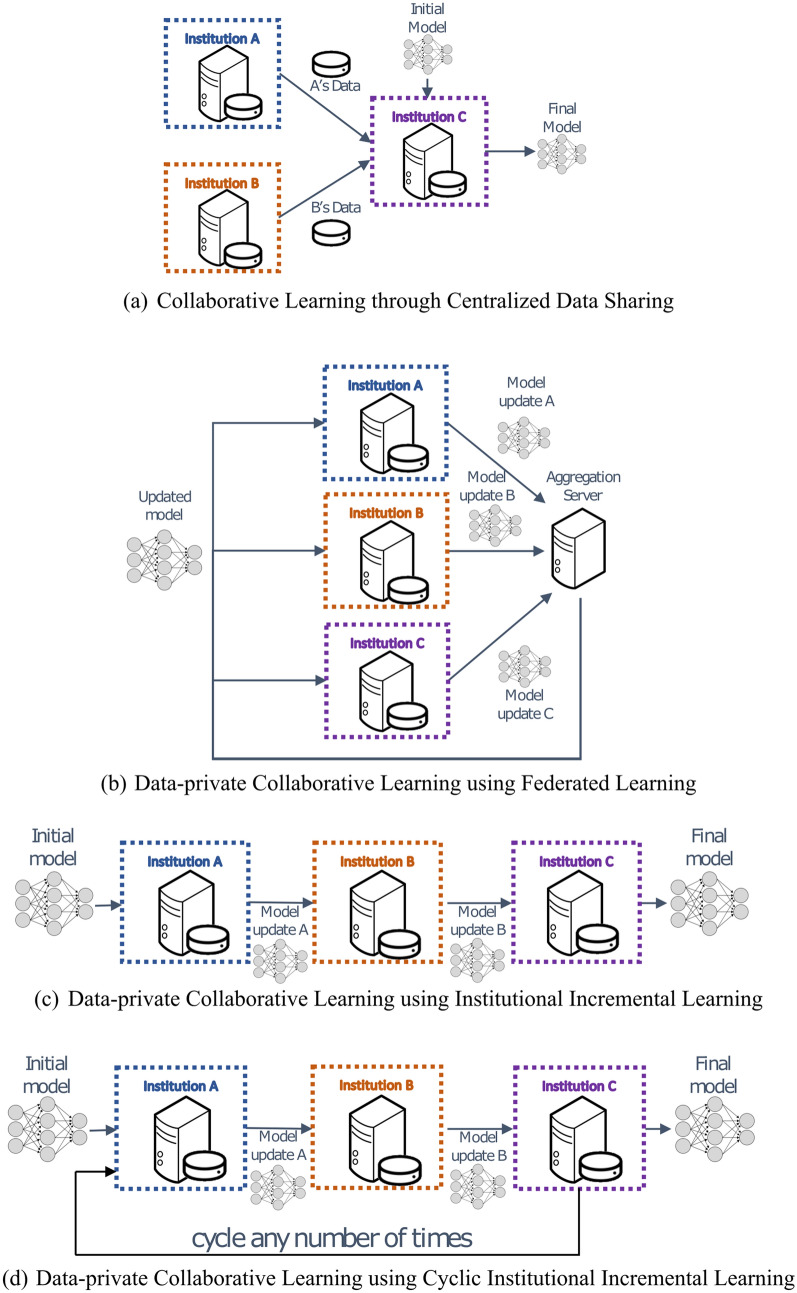
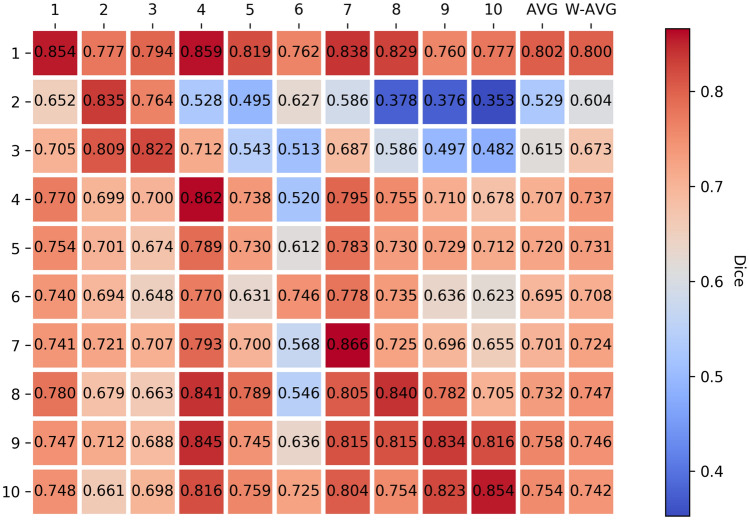
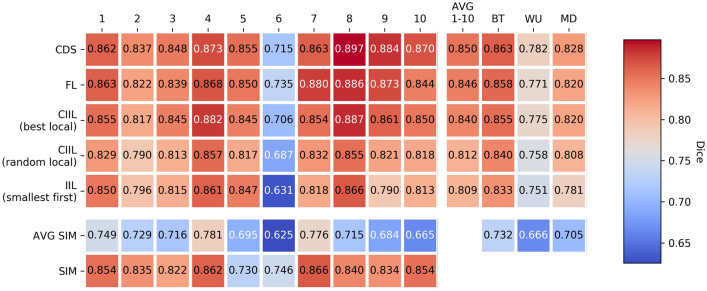
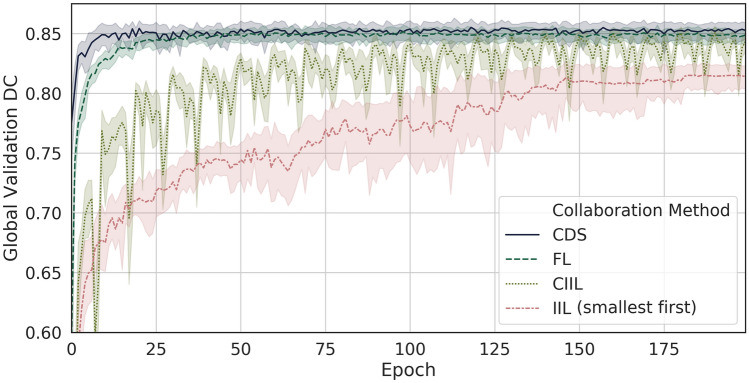
Several studies underscore the potential of deep learning in identifying complex patterns, leading to diagnostic and prognostic biomarkers. Identifying sufficiently large and diverse datasets, required for training, is a significant challenge in medicine and can rarely be found in individual institutions. Multi-institutional collaborations based on centrally-shared patient data face privacy and ownership challenges. Federated learning is a novel paradigm for data-private multi-institutional collaborations, where model-learning leverages all available data without sharing data between institutions, by distributing the model-training to the data-owners and aggregating their results. We show that federated learning among 10 institutions results in models reaching 99% of the model quality achieved with centralized data, and evaluate generalizability on data from institutions outside the federation. We further investigate the effects of data distribution across collaborating institutions on model quality and learning patterns, indicating that increased access to data through data private multi-institutional collaborations can benefit model quality more than the errors introduced by the collaborative method. Finally, we compare with other collaborative-learning approaches demonstrating the superiority of federated learning, and discuss practical implementation considerations. Clinical adoption of federated learning is expected to lead to models trained on datasets of unprecedented size, hence have a catalytic impact towards precision/personalized medicine.
Overview
The claims and statistics of this paper haven’t been checked yet.
Free: it reads the open-access text and checks the first 5 claims that cite a source we can check. Create a free account to check every claim.
Integrity signals
Registry
Cites
Statistics
Figures
Verification
Claims the paper makes
The claims and statistics of this paper haven’t been checked yet.
Free: it reads the open-access text and checks the first 5 claims that cite a source we can check. Create a free account to check every claim.
Claims other papers make about this one
Each is checked against this paper’s own text: does it say what the citing paper says it does?
The source backs part of the claim, not all of it — or backs it for a different population, condition or comparison.
In the citing paper
“Findings from these studies supported the superiority of the FL workflow used in the present study (i.e., based on an aggregation server10,14), which had almost identical performance to CL, for this use-case.”
From Federated learning enables big data for rare cancer boundary detection (2022) · cites this paper as [11]
Experimental — accuracy not yet measuredThe source backs part of the claim, not all of it — or backs it for a different population, condition or comparison.
In the citing paper
“We have identified this FL workflow (based on a central aggregation server) as the optimal for this use-case, following a performance evaluation11 for this very same task, i.e., detecting glioblastoma sub-compartment boundaries.”
From Federated learning enables big data for rare cancer boundary detection (2022) · cites this paper as [11]
Experimental — accuracy not yet measuredThe source backs part of the claim, not all of it — or backs it for a different population, condition or comparison.
In the citing paper
“However, works that examine the practical application of FL in radiological applications are still limited.20,21”
From Federated learning improves site performance in multicenter deep learning without data sharing (2021) · cites this paper as [21]
Experimental — accuracy not yet measuredThe source backs part of the claim, not all of it — or backs it for a different population, condition or comparison.
In the citing paper
“FL allows training of AI models through averaging of local updates from numerous healthcare facilities and smart devices, such as IoMT, despite the lack of local data.”
From Federated learning-based AI approaches in smart healthcare: Concepts, taxonomies, challenges and open issues (2023) · cites this paper as [12]
Experimental — accuracy not yet measuredThe source backs part of the claim, not all of it — or backs it for a different population, condition or comparison.
In the citing paper
“Federated Learning has presented itself as a viable method for implementing economic, innovative healthcare systems while ensuring privacy [11–15].”
From Federated learning-based AI approaches in smart healthcare: Concepts, taxonomies, challenges and open issues (2023) · cites this paper as [12]
Experimental — accuracy not yet measured
12 more claims about this paper
Create a free account to see every claim other papers make about this one.
Self-check
Percentages, sums and reported differences re-computed from the paper’s own numbers.
The self-check needs the paper’s full text.
Citations
Cites
Adam: A Method for Stochastic Optimization
Kingma, D. P., & Ba, J. (2014) · arXiv · doi:10.48550/arxiv.1412.6980 · Cited by 98,946
Measures of the Amount of Ecologic Association Between Species
Dice, L. R. (1945) · Ecology · doi:10.2307/1932409 · Cited by 11,874
The multimodal brain tumor image segmentation benchmark (BRATS)
Menze, B. H., Jakab, A., Bauer, S., Kalpathy-Cramer, J., Farahani, K., Kirby, J., Burren, Y., Porz, N., Slotboom, J., Wiest, R., et al. (2015) · IEEE Transactions on Medical Imaging · doi:10.1109/tmi.2014.2377694 · Cited by 6,781 · cited 10×
“The binarized whole tumor (WT) labels for the BraTS 2017 validation data and the additional 22 BraTS 2017 test cases that were moved to BraTS 2019 validation set, were provided to the lead author Micah Sheller after the conclusion of the BraTS 2018 competition and under a signed Non-Disclosure Agreement.”
MethodInfluentialThe Cancer Imaging Archive (TCIA): Maintaining and Operating a Public Information Repository
Clark, K., Vendt, B., Smith, K., Freymann, J., Kirby, J., Koppel, P., Moore, S., Phillips, S., Maffitt, D., Pringle, M., et al. (2013) · Journal of Digital Imaging · doi:10.1007/s10278-013-9622-7 · Cited by 4,599 · cited 4×
“The additional experiments conducted here attempt to evaluate model generalization under various training schemes comprising (1) single institution training, (2) LOO validation, and importantly (3) exhaustively evaluating performance differences between FL, IIL, and CIIL, by exploring convergence, “model selection”, a…”
BackgroundMethodInfluentialBakas, S., Akbari, H., Sotiras, A., Bilello, M., Rozycki, M., Kirby, J. S., Freymann, J. B., Farahani, K., & Davatzikos, C. (2017) · Scientific Data · doi:10.1038/sdata.2017.117 · Cited by 3,049
Self-citationThe EU General Data Protection Regulation (GDPR)
Voigt, P., & von dem Bussche, A. (2017) · doi:10.1007/978-3-319-57959-7 · Cited by 3,001 · cited 2×
“This study shows that data-private collaborative learning approaches, and particularly FL, can achieve the full learning capacity of the data while obviating the need to share patient data, and hence facilitate large-scale multi-institutional collaborations, while overcoming technical and data ownership concerns and a…”
BackgroundCatastrophic forgetting in connectionist networks
French, R. (1999) · Trends in Cognitive Sciences · doi:10.1016/s1364-6613(99)01294-2 · Cited by 2,311 · cited 1×
“We see this behavior as indicative of catastrophic forgetting 18 .”
BackgroundFederated Learning with Non-IID Data
Zhao, Y., Li, M., Lai, L., Suda, N., Civin, D., & Chandra, V. (2018) · arXiv · doi:10.48550/arxiv.1806.00582 · Cited by 2,077
Zech, J. R., Badgeley, M. A., Liu, M., Costa, A. B., Titano, J. J., & Oermann, E. K. (2018) · PLOS Medicine · doi:10.1371/journal.pmed.1002683 · Cited by 1,719
Bakas, S., Reyes, M., Jakab, A., Bauer, S., Rempfler, M., Crimi, A., Shinohara, R. T., Berger, C., Ha, S. M., Rozycki, M., et al. (2018) · Apollo - University of Cambridge Repository · doi:10.17863/cam.38755 · Cited by 1,441
Self-citation
Research works printed but not linked: 3
- Fredrikson, M., Jha, S. & Ristenpart, T. in Proceedings of the 22nd ACM SIGSAC Conference on Computer and Communications Security 1322–1333 (ACM, Denver, Colorado, USA, 2015).
- Hitaj, B., Ateniese, G. & Perez-Cruz, F. in Proceedings of the 2017 ACM SIGSAC Conference on Computer and Communications Security 603–618 (ACM, Dallas, Texas, USA, 2017).
- Ronneberger, O., Fischer, P. & Brox, T. in International Conference on Medical Image Computing and Computer-Assisted Intervention. 234–241 (Springer).
Cited by
Items 601–700 of 1,000
A Specificity-Preserving Generative Model for Federated MRI Translation
Dalmaz, O., Mirza, M. U., Elmas, G., Özbey, M., Dar, S. U. H., & Çukur, T. (2022) · Lecture notes in computer science · doi:10.1007/978-3-031-18523-6_8 · Cited by 14
“Aggregated models can be impaired by the heterogeneity in the data distribution naturally evident for multi-institutional datasets [29,32] due to different scanners, acquisition parameters etc. Previous studies on FL-based medical imaging have introduced several prominent approaches to cope with…”
Tastan, N., & Nandakumar, K. (2023) · IEEE Computer Society Conference on Computer Vision and Pattern Recognition/Proceedings - IEEE Computer Society Conference on Computer Vision and Pattern Recognition/Proceedings · doi:10.1109/cvpr52729.2023.00781 · Cited by 16
“Specifically, cross-silo FL (typically between 2-100 participants) has been touted as a promising solution to address the data fragmentation problem in finance [8] and healthcare [16,23].”
BackgroundFederated Learning in Ophthalmology: Retinopathy of Prematurity
Teo, Z. L., & Ting, D. S. W. (2022) · Ophthalmology Retina · doi:10.1016/j.oret.2022.03.019 · Cited by 9
Chowdhury, A. A., Mahmud, S. M. H., Elahe, M. F., Jahan, H., Shoombuatong, W., & Mahmud, M. (2023) · Research Square · doi:10.21203/rs.3.rs-3620182/v1 · Cited by 10
Artificial Intelligence in Clinical Oncology: From Productivity Enhancement to Creative Discovery
Kuno, M., Osumi, H., Udagawa, S., Yoshikawa, K., Ooki, A., Shinozaki, E., Ishikawa, T., Oba, J., Yamaguchi, K., & Sakurada, K. (2025) · Current Oncology · doi:10.3390/curroncol32110588 · Cited by 7
“First, teams must collect representative data across demographic groups, socioeconomic backgrounds, and geographic regions [119].”
Evolutionary Medical Data Modeling and Sharing via Federated Learning Over Sharded Blockchain
Zhang, M., Lin, F., Tian, L., Jia, R., Zheng, Z., & Li, M. (2024) · IEEE Internet of Things Journal · doi:10.1109/jiot.2024.3389593 · Cited by 8
“Sheller et al. [19] conducted a quantitative evaluation on the task of distinguishing healthy brain tissue from cancerous tissue.”
BackgroundKim, S., Kim, I., Yuh, W. T., Han, S.-C., Kim, C., Ko, Y. S., Cho, W., & Park, S. B. (2024) · Scientific Reports · doi:10.1038/s41598-024-82902-w · Cited by 11
SoK : Federated Learning and Unlearning for Medical Image Analysis
ElBedoui, K., Barhoumi, W., & Cho, J. (2025) · Expert Systems · doi:10.1111/exsy.70063 · Cited by 11
Enhancing Privacy in Oral Cancer Detection through Federated Learning: A Cross-Institutional Study
Firdaus, N., & Raza, Z. (2025) · Procedia Computer Science · doi:10.1016/j.procs.2025.03.296 · Cited by 7
Artificial Intelligence in the Diagnosis of Tongue Cancer: A Systematic Review with Meta-Analysis
Jeong, S.-R., Choi, H.-I., Yang, K.-I., Kim, J.-S., Ryu, J.-W., & Park, H. (2025) · Biomedicines · doi:10.3390/biomedicines13081849 · Cited by 11
“Emerging solutions include federated learning to preserve privacy across institutions, and explainable AI tools that increase model transparency and trustworthiness [43–45].”
Nanekaran, N. P., & Ukwatta, E. (2025) · Medical Physics · doi:10.1002/mp.18064 · Cited by 9
Zeng, X., Ahmed, A., & Tunio, M. H. (2025) · Electronics · doi:10.3390/electronics14183600 · Cited by 10
AI radiomics predicts spatial glioma recurrence on preoperative MRI: a systematic review
Bijlsma, S., Maal, T., Rubbert, C., Mannil, M., Meijer, F. J. A., van der Kolk, A. G., de Jong, G., & Henssen, D. J. H. A. (2025) · European Journal of Radiology · doi:10.1016/j.ejrad.2025.112412 · Cited by 10
Pallavi, M., Chaganti, K. R., Kumar, K. R., Rakesh, M., Bharathi, K. S., & Sai, R. U. (2025) · International Conference on Inventive Systems and Control (ICISC) · doi:10.1109/icisc65841.2025.11187656 · Cited by 9
“PL has demonstrated through research the capability of distributed network training across different institutions to achieve results that match centralized data sharing without data disclosure [1].”
Appasami, G., & Savarimuthu, N. (2025) · The Journal of Supercomputing · doi:10.1007/s11227-025-08051-7 · Cited by 16
“However, these models require large-scale annotated datasets, which are often difficult to obtain due to privacy concerns and institutional restrictions [12].”
InfluentialAI-Enhanced Patient-Derived Cancer Organoids: Integrating Machine Learning for Precision Oncology
Heinzelmann, E., & Piraino, F. (2025) · Organoids · doi:10.3390/organoids4040030 · Cited by 10
“Advanced strategies— transfer learning, self-supervised learning, and federated learning—enhance predictive capability, generalization, and cross-institutional collaboration while preserving patient privacy [30–33].”
Deng, W., Zhang, L., Yue, J.-R., & Huang, X.-L. (2026) · Frontiers in Public Health · doi:10.3389/fpubh.2025.1691682 · Cited by 11
“In FL, each institution trains models locally on its own data and shares only model parameters, which protects patient privacy (84, 85).”
Federated lung nodule segmentation using a hybrid transformer–U-Net architecture
Turjya, S. M., & Fawakherji, M. (2026) · Scientific Reports · doi:10.1038/s41598-026-35243-9 · Cited by 11
Gupta, S., Gupta, M., Kumar, R., & Abraham, A. (2026) · IEEE Access · doi:10.1109/access.2026.3660305 · Cited by 11
Federated Learning Model with Augmentation and Samples Exchange Mechanism
Połap, D., Srivastava, G., Lin, J. C., & Woźniak, M. (2021) · Lecture notes in computer science · doi:10.1007/978-3-030-87986-0_19 · Cited by 7
Multi-institutional Travelling Model for Tumor Segmentation in MRI Datasets
Souza, R., Tuladhar, A., Mouchès, P., Wilms, M., Tyagi, L., & Forkert, N. D. (2022) · Lecture notes in computer science · doi:10.1007/978-3-031-09002-8_37 · Cited by 7
Forecasting with Visibility Using Privacy Preserving Federated Learning
Zhang, B., Tan, W. J., Cai, W., & Zhang, A. N. S. (2022) · Winter Simulation Conference · doi:10.1109/wsc57314.2022.10015277 · Cited by 9
Almodóvar, A., Parras, J., & Zazo, S. (2024) · Computers in Biology and Medicine · doi:10.1016/j.compbiomed.2024.108779 · Cited by 12
An Experimental Survey of Incremental Transfer Learning for Multicenter Collaboration
Huang, Y., Bert, C., Gomaa, A., Fietkau, R., Maier, A., & Putz, F. (2024) · IEEE Access · doi:10.1109/access.2024.3431885 · Cited by 13
“P2PFLwith weight transfer [12], [13], [14] has been proposed for multicenter collaboration on medical applications.”
BackgroundMethodInfluentialHarnessing Federated Learning for Secure Data Sharing in Healthcare Systems
Attya, S. M., Jumaa, D. A., Hwezy, N. N. K., Sajid, W. A., Khaleefah, A. M., Zhyrov, G., & Haider, A. (2024) · Conference of Open Innovations Association (FRUCT) · doi:10.23919/fruct64283.2024.10749928 · Cited by 8
A federated LSTM network for load forecasting using multi-source data with homomorphic encryption
Wang, M., Xin, R., Xia, M., Zuo, Z., Ge, Y., Zhang, P., & Ye, H. (2025) · AIMS energy · doi:10.3934/energy.2025011 · Cited by 11
“Sheller et al. [18] showed that the data quality of the FL model across 10 institutions reached 99% of that of a centralized model.”
Artificial Intelligence in PET
Sitek, A., Ahn, S., Asma, E., Chandler, A. G., Ihsani, A., Prevrhal, S., Rahmim, A., Saboury, B., & Thielemans, K. (2021) · PET Clinics · doi:10.1016/j.cpet.2021.06.006 · Cited by 7
Synergy conformal prediction applied to large-scale bioactivity datasets and in federated learning
Norinder, U., Spjuth, O., & Svensson, F. (2021) · Journal of Cheminformatics · doi:10.1186/s13321-021-00555-7 · Cited by 7
Synthetic rainfall data generator development through decentralised model training
Welten, S., Holt, A., Hofmann, J., Schelter, L., Klopries, E., Wintgens, T., & Decker, S. (2022) · Journal of Hydrology · doi:10.1016/j.jhydrol.2022.128210 · Cited by 13
Anwar, U., Arslan, T., Hussain, A., & Lomax, P. (2022) · IEEE Access · doi:10.1109/access.2022.3195875 · Cited by 11
“Federated learning is another privacy learning ML algorithm which enables computation and insights without moving patient data beyond the firewalls of their residing institution [186].”
BackgroundLeveraging 2D Deep Learning ImageNet-trained Models for Native 3D Medical Image Analysis
Baheti, B., Pati, S., Menze, B. H., & Bakas, S. (2023) · Lecture notes in computer science · doi:10.1007/978-3-031-33842-7_6 · Cited by 17
Self-citationExternal Validation of a Bayesian Network for Error Detection in Radiotherapy Plans
Kalendralis, P., Eyssen, D., Canters, R. A. M., Luk, S. M. H., Kalet, A. M., van Elmpt, W., Fijten, R., Dekker, A. L. A. J., Zegers, C. M. L., & Bermejo, I. (2021) · IEEE Transactions on Radiation and Plasma Medical Sciences · doi:10.1109/trpms.2021.3070656 · Cited by 8
A Nearest Neighbor Under-sampling Strategy for Vertical Federated Learning in Financial Domain
Li, D., Wang, J., Kong, L., Si, S., Huang, Z., Huang, C., & Xiao, J. Z. (2022) · ACM Workshop on Information Hiding and Multimedia Security (IH&MMSec) · doi:10.1145/3531536.3532960 · Cited by 8
Federated Learning and Explainable AI for Personalized Healthcare in Resource-Limited SettingsPreprint
Rahmati, M. (2025) · Research Square · doi:10.21203/rs.3.rs-5691431/v1 · Cited by 7
Privacy-Centric AI: Navigating the Landscape with Federated Learning
Shrivastava, A. (2024) · International Journal for Research in Applied Science and Engineering Technology · doi:10.22214/ijraset.2024.61000 · Cited by 6
FLavourite: Horizontal and Vertical Federated Learning Setting Comparison
Riviera, W., Galazzo, I. B., & Menegaz, G. (2025) · IEEE Access · doi:10.1109/access.2025.3569158 · Cited by 9
“…the validity of our approach : 1) the Centralized experiments (CL) outperform the VFL and HFL results, as expected from the state of the art [2]; 2) results from our previous study [15], demonstrating the effectiveness of the Multi-Input (MI) model over the Tabular-only (TAB) or Image-only…”
InfluentialAlkhodari, M., Alefishat, E. A., Jelinek, H. F., Kaabneh, A., & Liatsis, P. (2025) · Artificial Intelligence Review · doi:10.1007/s10462-025-11311-w · Cited by 9
Koca, O., & Eşkazan, A. E. (2025) · British Journal of Haematology · doi:10.1111/bjh.70115 · Cited by 8
“34,35 This architecture preserves data privacy, complies with local data governance regulations and enables model training across geographically and institutionally diverse datasets.”
Ghanta, S., Boyapati, P., Biswas, S., Pradhan, A. K., & Mohanty, S. P. (2025) · PeerJ Computer Science · doi:10.7717/peerj-cs.3165 · Cited by 10
“Building on this foundation, FL was fi rst applied to medical image analysis, demonstrating its potential in sensitive domains ( Sheller et al., 2020 ).”
AI-driven aging digital twins: A roadmap for clinical translation in precision geriatrics
Li, C., Zuo, K., Duan, R., Ouyang, X., Zhang, L. Y., Zeng, L., & Ge, L. (2025) · Ageing Research Reviews · doi:10.1016/j.arr.2025.102931 · Cited by 6
Elshenawy, M. A., Tawfik, N. S., Hamada, N., Kadry, R., Fayed, S. F., & Ghatwary, N. (2025) · AI · doi:10.3390/ai6120316 · Cited by 13
“However, the reduced gains in the BCMID + BUS-UCLM pairing suggest that extreme heterogeneity still poses convergence challenges, a limitation also identified in [13,15], who emphasized that non-IID distributions remain a primary obstacle to the clinical implementation of FL.”
A survey on privacy issues and mitigation strategies for LLMs in healthcare
Alissa, K. A. (2025) · The Journal of Supercomputing · doi:10.1007/s11227-025-08146-1 · Cited by 8
Mukhopadhyay, S., Haider, N., Chakraborty, C., Singh, S., Changdar, S., & Mitra, P. (2026) · IEEE Transactions on Consumer Electronics · doi:10.1109/tce.2026.3651019 · Cited by 8
“Federated Learning (FL) enables decentralized AI training without data sharing [3], yet standard FL models often miss fine structural details in cervical images and lack trustworthy explanations [4].”
Ma, Y., Chen, D., & Xie, J. (2026) · Biomedicines · doi:10.3390/biomedicines14010223 · Cited by 11
“Scalable data processing platforms and distributed computing frameworks support real-time and batch integration with dynamic model updating, complemented by federated learning for privacy-preserving, cross-institutional model development [18].”
Gao, Q., Jin, Y., Sun, Y., Jin, M., Tang, L., Chen, Y., She, Y., & Li, M. (2026) · Diagnostics · doi:10.3390/diagnostics16050752 · Cited by 8
“…without the direct transfer of sensitive Protected Health Information (PHI)—striking an optimal balance between the data sharing required for algorithmic refinement and the strict preservation of institutional data sovereignty necessitates robust, dynamic governance frameworks [75,110,111].”
Ikegwu, A. C., Alo, U. R., Nweke, H. F., & Ebem, D. U. (2026) · International Journal of Computational Intelligence Systems · doi:10.1007/s44196-026-01274-3 · Cited by 6
Hossen, M. F., Sarkar, A., Majumder, T., Nabi, M. F., Ahamed, M. F., Shafi, F. B., Sarmun, R., & Chowdhury, M. E. H. (2026) · Neural Computing and Applications · doi:10.1007/s00521-026-12198-6 · Cited by 13
Exploring the Benefits and Challenges of Artificial Intelligence (AI) in Nursing
Romero, C. B., Opoku, O. A., Syabariyah, S., Astuti, D. A., Asif, I., & Rostinah (2023) · Engineering Science Letter · doi:10.56741/esl.v2i01.278 · Cited by 11
Experimenting FedML and NVFLARE for Federated Tumor Segmentation Challenge
Shi, Y., Gao, H., Avestimehr, S., & Yan, Y. (2023) · Lecture notes in computer science · doi:10.1007/978-3-031-44153-0_22 · Cited by 7
Federated learning in healthcare applications
Kanhegaonkar, P., & Prakash, S. (2024) · Elsevier eBooks · doi:10.1016/b978-0-44-313233-9.00013-8 · Cited by 7
Byzantine Fault-Tolerant Federated Learning Based on Trustworthy Data and Historical Information
Luo, X., & Tang, B. (2024) · Electronics · doi:10.3390/electronics13081540 · Cited by 14
Federated learning via reweighting information bottleneck with domain generalization
Li, F., Chen, X., Zhu, H., Du, Y., & Han, H. (2024) · Information Sciences · doi:10.1016/j.ins.2024.120825 · Cited by 6
Exploring Federated Learning for Emotion Recognition on Brain-Computer Interfaces
Mongardi, S., & Pinoli, P. (2024) · ACM Conference on User Modeling, Adaptation and Personalization (UMAP) · doi:10.1145/3631700.3665194 · Cited by 12
“This approach is more in line with privacy enforcing laws and is being adopted in many domains, including healthcare [11].”
BackgroundSarraf, É., Sadr, A. V., Abedi, V., & Bonavia, A. S. (2024) · Journal of Critical Care · doi:10.1016/j.jcrc.2024.154857 · Cited by 8
Artificial intelligence in cardiovascular imaging and intervention
Engelhardt, S., Dar, S. U. H., Sharan, L., André, F., Nagel, E. C., & Thomas, S. (2024) · Herz · doi:10.1007/s00059-024-05264-z · Cited by 7
“This concept called “federated learning” (FL) is especially interesting in the medical field, where large quantities of data are stored in distributed federated databases over different hospitals [24, 25].”
Security Strategy of Digital Medical Contents Based on Blockchain in Generative AI Model
Ko, H., & Ogiela, M. R. (2024) · Computers, materials & continua/Computers, materials & continua (Print) · doi:10.32604/cmc.2024.057257 · Cited by 8
NLP and AI for Public Health Intelligence: Automating Disease Surveillance from Unstructured Data
Methuku, V. (2025) · ICCK Transactions on Emerging Topics in Artificial Intelligence · doi:10.62762/tetai.2025.222799 · Cited by 11
“Recent work has explored the use of federated learning for collaborative disease surveillance while preserving data privacy [8, 15].”
Classifying Heart Diseases: An Ensemble Technique Combining With Federated Learning
Islam, A., Shanto, M. N. I., Dipta, T. R., Rabby, M. S. M., & Monna, H. F. (2024) · International Conference on Recent Progresses in Science, Engineering and Technology (ICRPSET) · doi:10.1109/icrpset64863.2024.10955879 · Cited by 6
“Micah J Sheller [10] discussed the potential of deep learning in medicine for diagnostic and prognostic biomarkers, introducing federated learning as a method for data-private multi-institutional collaborations without sharing patient data, and demonstrating that federated learning among 10…”
A review of federated learning technology and its research progress in healthcare applications
Ma, Z., Ruhaiyem, N. I. R., Zhang, M., Musa, K. I., Hanis, T. M., Xiao, T., Hua, D., & Li, H. (2025) · Applied Intelligence · doi:10.1007/s10489-025-06627-7 · Cited by 16
“Sheller et al. emphasized the advantages of federated learning in multi-institution collaborations, particularly in enhancing the quality and generalizability of models without sharing patient data [ 133 ].”
Android Web Security Solution using Cross-device Federated Learning
Singh, A. K., & Goyal, N. (2022) · International Conference on Communication Systems & Networks (COMSNETS) · doi:10.1109/comsnets53615.2022.9668449 · Cited by 7
Nadkarni, P. M., & Merchant, S. A. (2022) · Artificial Intelligence in Medical Imaging · doi:10.35711/aimi.v3.i3.55 · Cited by 7
Proof of Federated Training: Accountable Cross-Network Model Training and Inference
Chakraborty, S., & Chakraborty, S. (2022) · IEEE International Conference on Blockchain and Cryptocurrency (ICBC) · doi:10.1109/icbc54727.2022.9805548 · Cited by 11
Modeling the impact of data sharing on variant classification
Casaletto, J. A., Cline, M., & Shirts, B. H. (2022) · Journal of the American Medical Informatics Association · doi:10.1093/jamia/ocac232 · Cited by 7
CADUCEO: A Platform to Support Federated Healthcare Facilities through Artificial Intelligence
Menegatti, D., Giuseppi, A., Priscoli, F. D., Pietrabissa, A., Giorgio, A. D., Baldisseri, F., Mattioni, M., Monaco, S., Lanari, L., Panfili, M., et al. (2023) · Healthcare · doi:10.3390/healthcare11152199 · Cited by 9
“To date, FL is employed not only for predictive purposes based on information in electronic patient records, predicting hospitalizations for cardiac events [41], patient mortality [44], and ICU length of stay [80], but also in clinical research activities, such as the investigation of brain structural relationships [7…”
Federated Learning for Bronchus Cancer Detection Using Tiny Machine Learning Edge Devices
Genemo, M. D. (2024) · Indonesian Journal of Data and Science · doi:10.56705/ijodas.v5i1.116 · Cited by 6
Kang, D. H. E., Kim, D., Song, Y., Lee, D., Kwak, H., & Anthony, B. (2024) · Scientific Reports · doi:10.1038/s41598-024-63393-1 · Cited by 6
Synq: Public Policy Analytics Over Encrypted Data
Espiritu, Z., George, M., Kamara, S., & Qin, L. (2024) · IEEE Symposium on Security and Privacy (S&P) · doi:10.1109/sp54263.2024.00085 · Cited by 8
“It is well understood that more data—specifically, relevant data from different sources— leads to more robust and beneficial insights [39], [41], [84].”
BackgroundA Privacy-Preserving Federated Learning Framework for Financial Crime
Haseeb, A., Ekerete, I., & Moore, S. (2024) · Lecture notes in networks and systems · doi:10.1007/978-3-031-77571-0_70 · Cited by 9
Jabłecki, P., Ślazyk, F., & Malawski, M. (2021) · Lecture notes in computer science · doi:10.1007/978-3-030-90874-4_11 · Cited by 7
Center Dropout: A Simple Method for Speed and Fairness in Federated Learning
Linardos, A., Kushibar, K., & Lekadir, K. (2022) · Lecture notes in computer science · doi:10.1007/978-3-031-09002-8_42 · Cited by 8
A Blockchain-Empowered Federated Learning System and the Promising Use in Drug Discovery
Liang, X., Bandara, E., Zhao, J., & Shetty, S. S. (2022) · Blockchain technologies · doi:10.1007/978-981-19-2976-2_6 · Cited by 6
Movie Poster Classification Using Federated Learning
Popat, A., Gupta, L., Meedinti, G. N., & Perumal, B. (2023) · Procedia Computer Science · doi:10.1016/j.procs.2023.01.177 · Cited by 11
Privacy-preserving medical image analysisPreprint
Ziller, A., Passerat‐Palmbach, J., Ryffel, T., Usynin, D., Trask, A., Junior, I. D. L. C., Mancuso, J., Makowski, M. R., Rueckert, D., Braren, R., et al. (2020) · arXiv (Cornell University) · doi:10.48550/arxiv.2012.06354 · Cited by 20
“Data is typically anonymised or pseudonymised at the source site and stored at the institution performing data analysis and algorithm training [16].”
BackgroundBajunaid, R., Niu, C., Hambly, C., Liu, Z., Yamada, Y., Alemán-Mateo, H., Anderson, L. J., Arab, L., Baddou, I., Bandini, L. G., et al. (2025) · Nature Food · doi:10.1038/s43016-025-01175-2 · Cited by 7
Research status and progress of deep learning in automatic esophageal cancer detection
Chen, J., Fan, X., Chen, Q.-L., Ren, W., Li, Q., Wang, D., & He, J. (2025) · World Journal of Gastrointestinal Oncology · doi:10.4251/wjgo.v17.i5.104410 · Cited by 5
“Federated learning, a decentralized approach to training, provides a viable solution by enabling multi-institutional collaboration while maintaining data privacy, thereby overcoming barriers to data sharing[50,51].”
Daram, S. (2025) · International Journal of Artificial Intelligence Data Science and Machine Learning · doi:10.63282/3050-9262.ijaidsml-v6i2p107 · Cited by 5
The Potential of AI in Nursing Care: Multicenter Evaluation in Fall Risk Assessment
Nanevski, I., Jäger, S., Schulte‐Althoff, M., Behnke, E.-M., Fürstenau, D., & Bießmann, F. (2025) · Journal of Medical Internet Research · doi:10.2196/71034 · Cited by 7
“Numerous studies [39-42] have shown that FL can help in developing joint models by leveraging data from multiple medical institutions.”
Zepeda, A. A. C., García-Guerrero, E. E., Aguirre-Castro, O. A., Galindo-Aldana, G., Juárez‐Ramírez, R., Gómez-Guzmán, M. A., Raymond, C., & Inzunza-González, E. (2025) · Eng—Advances in Engineering · doi:10.3390/eng6090243 · Cited by 9
Broderick, J. P., Mistry, E. A., Wechsler, P. M., Elkind, M. S. V., Liebeskind, D. S., Harston, G., Wolenberg, J., Frontera, J. A., Kimberly, W. T., Favilla, C. G., et al. (2025) · Stroke · doi:10.1161/strokeaha.125.052146 · Cited by 7
“10 This approach avoids the need for central collection of deidentified data and reduces the risk of inadvertent sharing of sensitive health information.”
Exploring Uncertainty in Medical Federated Learning: A Survey
Zeng, X., Ahmed, A., & Tunio, M. H. (2025) · Electronics · doi:10.3390/electronics14204072 · Cited by 6
An in-depth review and analysis of deep learning methods and applications in spinal cord imaging
Hossain, M. S., Rahman, M., Ahmed, M., Rahman, A., Kabir, M. M., Mridha, M. F., & Shin, J. (2025) · Healthcare Analytics · doi:10.1016/j.health.2025.100429 · Cited by 8
Sajiv, G., & Meenakshisundaram, N. (2025) · International Conference on Electronics and Sustainable Communication Systems (ICESC) · doi:10.1109/icesc65114.2025.11212375 · Cited by 7
Chankhachon, S., Kansomkeat, S., Bhurayanontachai, P., & Intajag, S. (2025) · Diagnostics · doi:10.3390/diagnostics15212762 · Cited by 6
“This privacy-preserving paradigm aligns with earlier efforts, such as those of Sheller et al. [27], who demonstrated the feasibility of FL for brain tumor segmentation across multiple institutions, and Li et al. [28], who explored personalized FL strategies for medical image classification.”
Zhao, Z., Pang, S., Wang, L., Qiao, S., Zhao, Y., Wang, S., & Lv, Z. (2025) · Expert Systems with Applications · doi:10.1016/j.eswa.2025.130332 · Cited by 8
Explainable artificial intelligence for multi-modal cancer analysis: from genomics to immunology
Zhang, M., & Yin, L. (2026) · Critical Reviews in Oncology/Hematology · doi:10.1016/j.critrevonc.2025.105040 · Cited by 5
Amoah, A. S., Agnandji, S. T., Bengtson, M., Downs, J. A., Esen, M., Giddaluru, J., Jochems, S. P., Kaisar, M. M. M., Makinde, J., Manurung, M. D., et al. (2025) · The Lancet Microbe · doi:10.1016/j.lanmic.2025.101263 · Cited by 6
Maram, P., Parvathi, R., & Pattabiraman, V. (2025) · Results in Engineering · doi:10.1016/j.rineng.2025.108489 · Cited by 8
Kaur, A. P., Cherukuri, S. P., Handral, M. S., Kukunoor, H. R., Kc, R., Godugu, S., Lee, J., Yerrapragada, G., Elangovan, P., Shariff, M. N., et al. (2025) · Journal of Clinical Medicine · doi:10.3390/jcm14238500 · Cited by 8
“Federated learning allows shared model training across institutions while preserving patient privacy, improving generalizability without requiring data to be centralized [136].”
Merchant, S. A., Merchant, N., Varghese, S. L., & Shaikh, M. J. S. (2025) · World Journal of Radiology · doi:10.4329/wjr.v17.i11.114754 · Cited by 6
AI-Powered Histology for Molecular Profiling in Brain Tumors: Toward Smart Diagnostics from Tissue
Sakaguchi, M., Yoshizawa, A., Masui, K., Sakai, T., & Komori, T. (2025) · Cancers · doi:10.3390/cancers18010009 · Cited by 10
“Limited generalizability and interpretability could drop the performance [135–138].”
Federated Learning for Multi-Disease Ophthalmic Diagnostics Using OCT Angiography
Nabil, A. S., Gholami, S., Leng, T., Lim, J. I., & Alam, M. N. (2025) · Ophthalmology Science · doi:10.1016/j.xops.2025.101030 · Cited by 15
“This approach has shown remarkable success in various medical imaging applications, including chest x-ray analysis, 21 brain tumor segmentation, 22 and coronavirus disease 2019 detection.”
Singh, Y., Unal, O., Ali, F., Salehi, S., Kuanar, S. P., Elhanashi, A., Hathaway, Q., Chaudhary, A., Huo, Y.-K., Younis, K., et al. (2026) · Journal of Imaging Informatics in Medicine · doi:10.1007/s10278-025-01823-w · Cited by 9
“Standardization strategies, such as DICOM metadata harmonization and image preprocessing pipelines, partially mitigate these challenges but require continual refinement to remain effective [67].”
Learning with less: A survey of deep learning in medical imaging under varying supervision levels
Kumari, S., & Singh, P. P. (2026) · Artificial Intelligence in Medicine · doi:10.1016/j.artmed.2026.103375 · Cited by 8
Data mining in pediatric radiology in the era of artificial intelligence
Guarnera, A., Ghosh, A., Gikera, R., Vahdati, S., Zhang, K., & Gupta, A. (2026) · Pediatric Radiology · doi:10.1007/s00247-026-06551-z · Cited by 5
Toward next-generation machine learning and deep learning for spatial omics
Zirem, Y., Fournier, I., & Salzet, M. (2026) · Briefings in Bioinformatics · doi:10.1093/bib/bbag131 · Cited by 6
Kumar, R., Bouras, A., Phadke, R. A., Salman, S., Kaur, H., Sporn, K., Damian, A., Paladugu, P., Vaja, S., Tavakkoli, A., et al. (2026) · Discover Sensors · doi:10.1007/s44397-026-00053-1 · Cited by 5
Personalized federated learning based on self-excluding aggregation with knowledge distillation
Bi, W.-Z., Yu, W.-J., & Gong, L.-H. (2026) · Cluster Computing · doi:10.1007/s10586-026-06362-9 · Cited by 5
Privacy-Preserved Federated Learning for 3D Tooth Segmentation in Intra-Oral Mesh Scans
Liu, S., Yang, H. H., Tao, Y., Feng, Y., Hao, J., & Liu, Z. (2022) · Frontiers in Communications and Networks · doi:10.3389/frcmn.2022.907388 · Cited by 7
“In clinical situations, there have been some recent works adopting the federated learning framework for speci fi c medical tasks, such as brain-tumor segmentation Sheller et al. (2020), COVID-19 screening Feki et al. (2021), and prostate cancer classi fi cation Yan et al. (2021).”
MethodEmpowering Privacy-Preserving Machine Learning: A Comprehensive Survey on Federated Learning
Srihith, I. V. D., Donald, A. D., Srinivas, T. A. S., Thippanna, G., & Anjali, D. (2023) · International Journal of Advanced Research in Science Communication and Technology · doi:10.48175/ijarsct-9103 · Cited by 9
A Survey of Advances in Multimodal Federated Learning with Applications
Barry, G., Konyar, E., Harvill, B., & Johnstone, C. (2024) · Springer optimization and its applications · doi:10.1007/978-3-031-53092-0_15 · Cited by 7
Metadata
- Authors
- Sheller, M. J., Edwards, B., Reina, G. A., Martin, J., Pati, S., Kotrotsou, A., Milchenko, M., Xu, W., Marcus, D., Colen, R. R., & Bakas, S.
- Affiliations
- Intel (United States) (US)
- University of Pennsylvania (US)
- The University of Texas MD Anderson Cancer Center (US)
- Washington University in St. Louis (US)
- Corresponding author
- Bakas, Spyridon
- ORCID
- Venue
- Scientific Reports
- Published
- 2020-07-28
- Volume
- 10
- Issue
- 1
- Pages
- 12598-12598
- ISSN
- 2045-2322 (ISSN-L)
- PMC
- PMC7387485
- OpenAlex
- W3045674654
- Semantic Scholar
- ee6da0ca07fe062968a66887edddfc8a0034a409
- Cited by
- 1,646
- References
- 33
- Citations by year
- 2026: 482 · 2025: 401 · 2024: 227 · 2023: 215 · 2022: 201 · 2021: 110 · 2020: 10
- FWCI
- 52.64
- Type
- journal article
- Language
- en
- Open access
- gold
- doi.org
- Licence
- cc-by
- creativecommons.org/licenses/by/4.0 (tdm)
- creativecommons.org/licenses/by/4.0 (vor)
- Locations
- Scientific Reports (publishedVersion, cc-by)
- PubMed Central (publishedVersion, cc-by)
- PubMed (publishedVersion)
- Digital Commons@Becker (Washington University School of Medicine) (submittedVersion, cc-by)
- Funders
- National Cancer Institute (U24CA189523)
- UPMC CCSG (P30 CA047904)
- National Institute of Neurological Disorders and Stroke (R01NS042645)
- Topics
- Physical Sciences › Computer Science › Artificial Intelligence › Privacy-Preserving Technologies in Data
- Health Sciences › Medicine › Health Informatics › Artificial Intelligence in Healthcare and Education
- Physical Sciences › Computer Science › Artificial Intelligence › Domain Adaptation and Few-Shot Learning
- Keywords
- federated learning, multi-institutional collaboration, data privacy, patient data sharing, data ownership, model generalization, cooperative learning, precision medicine, deep learning in healthcare, biomarker discovery
- MeSH terms
- Humans, Interinstitutional Relations, Learning, Medicine, Patients, Privacy, Information Dissemination
About these checks
Registry, retraction, Cites and statistics results are computed, not judged, with one exception: a printed reference that no index lists is read once by a model before it counts as a citation error. Claims are extracted by a model and kept only when their quote appears verbatim in the text; each cited source is then checked, with a model’s help, for whether it says what the claim relies on. Those verdicts can be wrong — read the claim’s quote and the cited source before relying on one.
Statistics and arithmetic are recomputed, not judged.
Confidence bands are shown only for fields calibrated on our annotated test set. None is calibrated yet, so no band is shown.
What counts as a claim ›How we measure confidence ›How we check this ›
Are you an author, or do you see a problem with this page? Request a review
Data sources
Bibliographic data: Semantic Scholar, OpenAlex, Crossref.
Contains information from the Semantic Scholar Academic Graph Datasets, made available under the ODC Attribution License (ODC-BY 1.0).
Semantic Scholar’s data is described in: Kinney, R., et al. (2023). The Semantic Scholar Open Data Platform. arXiv:2301.10140.
