

Federated learning in medicine: facilitating multi-institutional collaborations without sharing patient data
Open accessThe DOI matches its Crossref record; 36 of the 36 references it cites were found in a registry or an index.
Abstract
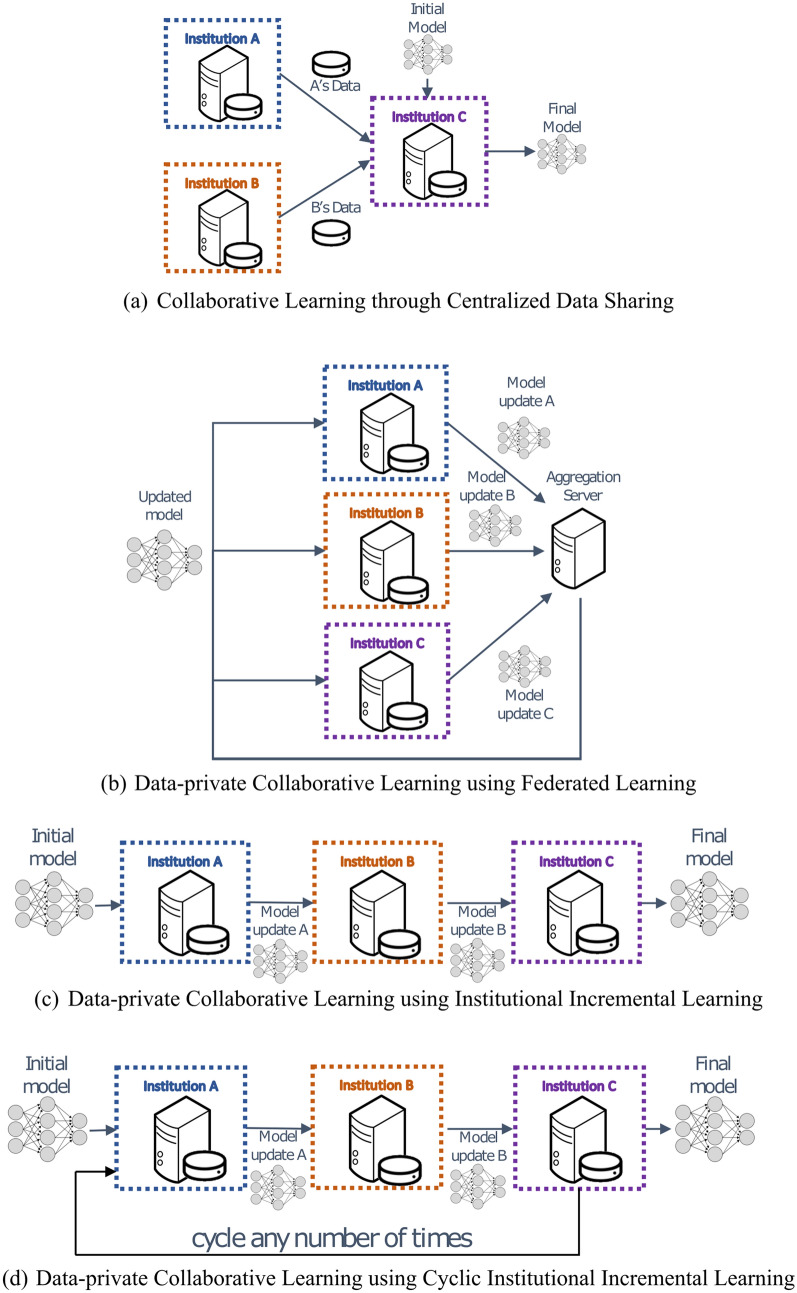
Several studies underscore the potential of deep learning in identifying complex patterns, leading to diagnostic and prognostic biomarkers. Identifying sufficiently large and diverse datasets, required for training, is a significant challenge in medicine and can rarely be found in individual institutions. Multi-institutional collaborations based on centrally-shared patient data face privacy and ownership challenges. Federated learning is a novel paradigm for data-private multi-institutional collaborations, where model-learning leverages all available data without sharing data between institutions, by distributing the model-training to the data-owners and aggregating their results. We show that federated learning among 10 institutions results in models reaching 99% of the model quality achieved with centralized data, and evaluate generalizability on data from institutions outside the federation. We further investigate the effects of data distribution across collaborating institutions on model quality and learning patterns, indicating that increased access to data through data private multi-institutional collaborations can benefit model quality more than the errors introduced by the collaborative method. Finally, we compare with other collaborative-learning approaches demonstrating the superiority of federated learning, and discuss practical implementation considerations. Clinical adoption of federated learning is expected to lead to models trained on datasets of unprecedented size, hence have a catalytic impact towards precision/personalized medicine.
Overview
The claims and statistics of this paper haven’t been checked yet.
Free: it reads the open-access text and checks the first 5 claims that cite a source we can check. Create a free account to check every claim.
Integrity signals
Registry
Cites
Statistics
Figures
Verification
Claims the paper makes
The claims and statistics of this paper haven’t been checked yet.
Free: it reads the open-access text and checks the first 5 claims that cite a source we can check. Create a free account to check every claim.
Claims other papers make about this one
Each is checked against this paper’s own text: does it say what the citing paper says it does?
The source backs part of the claim, not all of it — or backs it for a different population, condition or comparison.
In the citing paper
“Findings from these studies supported the superiority of the FL workflow used in the present study (i.e., based on an aggregation server10,14), which had almost identical performance to CL, for this use-case.”
From Federated learning enables big data for rare cancer boundary detection (2022) · cites this paper as [11]
Experimental — accuracy not yet measuredThe source backs part of the claim, not all of it — or backs it for a different population, condition or comparison.
In the citing paper
“We have identified this FL workflow (based on a central aggregation server) as the optimal for this use-case, following a performance evaluation11 for this very same task, i.e., detecting glioblastoma sub-compartment boundaries.”
From Federated learning enables big data for rare cancer boundary detection (2022) · cites this paper as [11]
Experimental — accuracy not yet measuredThe source backs part of the claim, not all of it — or backs it for a different population, condition or comparison.
In the citing paper
“However, works that examine the practical application of FL in radiological applications are still limited.20,21”
From Federated learning improves site performance in multicenter deep learning without data sharing (2021) · cites this paper as [21]
Experimental — accuracy not yet measuredThe source backs part of the claim, not all of it — or backs it for a different population, condition or comparison.
In the citing paper
“FL allows training of AI models through averaging of local updates from numerous healthcare facilities and smart devices, such as IoMT, despite the lack of local data.”
From Federated learning-based AI approaches in smart healthcare: Concepts, taxonomies, challenges and open issues (2023) · cites this paper as [12]
Experimental — accuracy not yet measuredThe source backs part of the claim, not all of it — or backs it for a different population, condition or comparison.
In the citing paper
“Federated Learning has presented itself as a viable method for implementing economic, innovative healthcare systems while ensuring privacy [11–15].”
From Federated learning-based AI approaches in smart healthcare: Concepts, taxonomies, challenges and open issues (2023) · cites this paper as [12]
Experimental — accuracy not yet measured
12 more claims about this paper
Create a free account to see every claim other papers make about this one.
Self-check
Percentages, sums and reported differences re-computed from the paper’s own numbers.
The self-check needs the paper’s full text.
Citations
Cites
Adam: A Method for Stochastic Optimization
Kingma, D. P., & Ba, J. (2014) · arXiv · doi:10.48550/arxiv.1412.6980 · Cited by 98,946
Measures of the Amount of Ecologic Association Between Species
Dice, L. R. (1945) · Ecology · doi:10.2307/1932409 · Cited by 11,874
The multimodal brain tumor image segmentation benchmark (BRATS)
Menze, B. H., Jakab, A., Bauer, S., Kalpathy-Cramer, J., Farahani, K., Kirby, J., Burren, Y., Porz, N., Slotboom, J., Wiest, R., et al. (2015) · IEEE Transactions on Medical Imaging · doi:10.1109/tmi.2014.2377694 · Cited by 6,781 · cited 10×
“The binarized whole tumor (WT) labels for the BraTS 2017 validation data and the additional 22 BraTS 2017 test cases that were moved to BraTS 2019 validation set, were provided to the lead author Micah Sheller after the conclusion of the BraTS 2018 competition and under a signed Non-Disclosure Agreement.”
MethodInfluentialThe Cancer Imaging Archive (TCIA): Maintaining and Operating a Public Information Repository
Clark, K., Vendt, B., Smith, K., Freymann, J., Kirby, J., Koppel, P., Moore, S., Phillips, S., Maffitt, D., Pringle, M., et al. (2013) · Journal of Digital Imaging · doi:10.1007/s10278-013-9622-7 · Cited by 4,599 · cited 4×
“The additional experiments conducted here attempt to evaluate model generalization under various training schemes comprising (1) single institution training, (2) LOO validation, and importantly (3) exhaustively evaluating performance differences between FL, IIL, and CIIL, by exploring convergence, “model selection”, a…”
BackgroundMethodInfluentialBakas, S., Akbari, H., Sotiras, A., Bilello, M., Rozycki, M., Kirby, J. S., Freymann, J. B., Farahani, K., & Davatzikos, C. (2017) · Scientific Data · doi:10.1038/sdata.2017.117 · Cited by 3,049
Self-citationThe EU General Data Protection Regulation (GDPR)
Voigt, P., & von dem Bussche, A. (2017) · doi:10.1007/978-3-319-57959-7 · Cited by 3,001 · cited 2×
“This study shows that data-private collaborative learning approaches, and particularly FL, can achieve the full learning capacity of the data while obviating the need to share patient data, and hence facilitate large-scale multi-institutional collaborations, while overcoming technical and data ownership concerns and a…”
BackgroundCatastrophic forgetting in connectionist networks
French, R. (1999) · Trends in Cognitive Sciences · doi:10.1016/s1364-6613(99)01294-2 · Cited by 2,311 · cited 1×
“We see this behavior as indicative of catastrophic forgetting 18 .”
BackgroundFederated Learning with Non-IID Data
Zhao, Y., Li, M., Lai, L., Suda, N., Civin, D., & Chandra, V. (2018) · arXiv · doi:10.48550/arxiv.1806.00582 · Cited by 2,077
Zech, J. R., Badgeley, M. A., Liu, M., Costa, A. B., Titano, J. J., & Oermann, E. K. (2018) · PLOS Medicine · doi:10.1371/journal.pmed.1002683 · Cited by 1,719
Bakas, S., Reyes, M., Jakab, A., Bauer, S., Rempfler, M., Crimi, A., Shinohara, R. T., Berger, C., Ha, S. M., Rozycki, M., et al. (2018) · Apollo - University of Cambridge Repository · doi:10.17863/cam.38755 · Cited by 1,441
Self-citation
Research works printed but not linked: 3
- Fredrikson, M., Jha, S. & Ristenpart, T. in Proceedings of the 22nd ACM SIGSAC Conference on Computer and Communications Security 1322–1333 (ACM, Denver, Colorado, USA, 2015).
- Hitaj, B., Ateniese, G. & Perez-Cruz, F. in Proceedings of the 2017 ACM SIGSAC Conference on Computer and Communications Security 603–618 (ACM, Dallas, Texas, USA, 2017).
- Ronneberger, O., Fischer, P. & Brox, T. in International Conference on Medical Image Computing and Computer-Assisted Intervention. 234–241 (Springer).
Cited by
Items 901–1,000 of 1,000
PedFed: A performance evaluation-driven federated learning framework for efficient communication
Niu, K., Tai, W., Peng, X., Guo, Z., Zhang, C., & Li, H. (2024) · Advances in Complex Systems · doi:10.1142/s1793962324400014 · Cited by 4
Kim, Y.-G., Yang, S. H., & Lee, K. Y. (2024) · Applied Sciences · doi:10.3390/app14166876 · Cited by 2
Influence of Federated Learning on Contemporary Research and Applications
Ivanović, M. D. (2024) · International Conference on Innovations in Intelligent Systems and Applications (INISTA) · doi:10.1109/inista62901.2024.10683819 · Cited by 2
“Characteristic strategies [9] are briefly presented below.”
BackgroundA Survey on Anomaly Detection in IoT and Cloud Computing Security
Gagan, P., Varghese, J. E., & Aarella, S. G. (2024) · International Conference on I-SMAC (IoT in Social, Mobile, Analytics and Cloud) (I-SMAC) · doi:10.1109/i-smac61858.2024.10714750 · Cited by 7
“Federated learning has been shown to be beneficial in healthcare applications in recent studies, where it enables the collaborative analysis of patient data across hospitals without compromising patient privacy [42].”
BackgroundA Comprehensive Survey on Federated Learning and its Applications in Health Care
Pacheco, S. A. B. (2024) · IEEE International Conference on Artificial Intelligence in Engineering and Technology (IICAIET) · doi:10.1109/iicaiet62352.2024.10730687 · Cited by 2
“Similarly, the authors in [33] explore federated multiple institutional partnerships for brain tissue based MRIs analytics.”
BackgroundEdge Federated Learning for Smart HealthCare Systems: Applications and Challenges
Ganesh, D., & Ramanaiah, O. B. V. (2024) · International Conference on Sustainable Expert Systems (ICSES) · doi:10.1109/icses63445.2024.10763213 · Cited by 6
Federated Learning for Enhanced Cell Nuclei Segmentation in Histopathological Images
Usai, M., Loddo, A., Putzu, L., & Ruberto, C. D. (2024) · IEEE International Conference on Big Data (BigData) · doi:10.1109/bigdata62323.2024.10825460 · Cited by 3
“FL enables multiple institutions to train DL learning models collaboratively without sharing sensitive patient data, thus addressing privacy concerns while still leveraging diverse datasets [8].”
Maurya, A. K., & Verma, K. (2025) · AIP conference proceedings · doi:10.1063/5.0248335 · Cited by 4
Predicting Breast Cancer Survival: Comparative Analysis of Machine Learning and Deep Learning Models
Bathool, S., Alashetty, A., & Farquad, M. A. H. (2024) · International Conference on Sustainable Communication Networks and Application (ICSCNA) · doi:10.1109/icscna63714.2024.10864307 · Cited by 3
“Federated learning, which allows training models simultaneously across multi-decentralized datasets without sharing patient data, has been proposed (Sheller et al., 2020).”
Souza, R., Stanley, E. A. M., Winder, A. J., Kang, C., Amador, K., Ohara, E. Y., Dagasso, G., Camicioli, R. M., Monchi, O., Ismail, Z., et al. (2025) · npj Digital Medicine · doi:10.1038/s41746-025-01499-0 · Cited by 3
“Distributed learning has also been explored for several medical image analysis tasks in recent years, including adult brain cancer diagnosis 12,21,22 , breast cancer diagnosis 23 , brain age prediction 14,24 , Parkinson ’ s disease diagnosis 25 , retinal age prediction 13 , and many more 26 – 28 .”
Zhu, B., & Ling, N. (2025) · Journal of Intelligent Information Systems · doi:10.1007/s10844-025-00927-7 · Cited by 4
Federated Learning Based Privacy Preserving for Brain Tumor Detection
Priya, N. H., Shymala Gowri, S., Dharaneesh, C. K. V., Pushparaj, A., & Krithik Ram, B. (2024) · IEEE Silchar Subsection Conference (SILCON) · doi:10.1109/silcon63976.2024.10910817 · Cited by 4
Huang, K. A., Hardin, W. M., & Prakash, N. S. (2025) · Cureus · doi:10.7759/cureus.86276 · Cited by 2
“In practice, transfer learning or federated learning approaches could be used to share insights across hospitals while preserving data privacy - a relevant direction given the current emphasis on collaborative, privacy-conscious AI in healthcare [16].”
Harnessing Deep Learning for Lung Cancer Detection and Prevention: A Comprehensive Survey
Tidke, D., & Banait, S. S. (2025) · EPJ Web of Conferences · doi:10.1051/epjconf/202532801007 · Cited by 3
Vara, J., & Jessintha, J. P. (2025) · International Conference Inventive Material Science Applications · doi:10.1109/icima64861.2025.11074172 · Cited by 2
“Federated learning enhances the generalizability of CNN models while ensuring compliance with data privacy regulations, which is critical for widespread adoption in healthcare [39].”
Developing federated time-to-event scores using heterogeneous real-world survival data
Li, S., Wang, Z., Shang, Y., Wu, Q., Hong, C., Ning, Y., Miao, D., Ong, M. E. H., Chakraborty, B., & Liu, N. (2025) · Computers in Biology and Medicine · doi:10.1016/j.compbiomed.2025.111084 · Cited by 6
“The approach avoids the need to exchange patient-level data[25], as model training is distributed to data owners, and their results are aggregated[26].”
Enabling Decentralized Clinical Insights: Federated Learning in Smart Healthcare Systems
Gupta, S., Gupta, P., Goel, L., & Jain, S. (2025) · Advances in computational intelligence and robotics book series · doi:10.4018/979-8-3373-3306-9.ch006 · Cited by 2
Frimpong, G., Anyebe, A. C. P., & Omachi, A. (2024) · International Journal of Scientific Research and Modern Technology. · doi:10.38124/ijsrmt.v3i12.962 · Cited by 3
MedLeak: Multimodal Medical Data Leakage in Secure Federated Learning with Crafted Models
Shi, S., Haque, M. S., Parida, A., Zhang, C., Linguraru, M. G., Hou, Y. T., Anwar, S. M., & Lou, W. (2025) · IEEE/ACM Conference on Connected Health: Applications, Systems and Engineering Technologies · doi:10.1145/3721201.3721375 · Cited by 10
“Federated learning (FL) has developed as a key enabling technology for the future implementation of AI-powered medical diagnosis and treatment systems [1, 5, 8, 20, 21, 24, 28, 31].”
Incentive Analysis for Agent Participation in Federated Learning
Yi, L., Niu, X., & Wei, E. (2025) · IEEE Conference on Decision and Control (CDC) · doi:10.1109/cdc57313.2025.11312956 · Cited by 4
“In particular, [17] experiments with the task of distinguishing healthy brain tissue from tissue affected by cancer cells.”
Federated Learning Study using Motion Recognition Model based on Joint Data
Bang, J., Hong, S., Jeon, S., Lee, J., & Kim, H. (2023) · The Journal of Korean Institute of Information Technology · doi:10.14801/jkiit.2023.21.3.39 · Cited by 2
Radiomics in clinical trials: perspectives on standardization
Nie, K., & Xiao, Y. (2022) · Physics in Medicine and Biology · doi:10.1088/1361-6560/aca388 · Cited by 2
Can Collaborative Learning Be Private, Robust and Scalable?
Usynin, D., Klause, H., Paetzold, J. C., Rueckert, D., & Kaissis, G. A. (2022) · Lecture notes in computer science · doi:10.1007/978-3-031-18523-6_4 · Cited by 3
Secure Sparse Gradient Aggregation in Distributed Architectures
van Rooij, M., van Rooij, S. B., Bouma, H., & Pimentel, A. D. (2022) · International Conference on Internet of Things: Systems, Management and Security (IOTSMS) · doi:10.1109/iotsms58070.2022.10062180 · Cited by 3
Evaluation of Federated Learning Techniques on Edge Devices Using Synthetic Medical Imaging Datasets
Alhonainy, A., & Rao, P. R. (2023) · IEEE Applied Imagery Pattern Recognition Workshop · doi:10.1109/aipr60534.2023.10440687 · Cited by 3
“For more information on FL in medicine/medical imaging, the reader is referred to recent surveys [18], [20], [22].”
BackgroundTowards Scalable Simulation of Federated Learning
Kołodziej, T., & Rościszewski, P. (2021) · Communications in computer and information science · doi:10.1007/978-3-030-92307-5_29 · Cited by 3
Personalized Federated Learning via Maximizing Correlation with Sparse and Hierarchical ExtensionsPreprint
YinchuanLi, XiaofengLiu, XuZhang, YunfengShao, QingWang, & YanhuiGeng (2021) · arXiv (Cornell University) · Cited by 2
Federated Synthetic Learning from Multi-institutional and Heterogeneous Medical DataPreprint
Chang, Q., Yan, Z., Qu, H. Y., Zhang, H., Baskaran, L., Zhang, S., & Metaxas, D. (2021) · Research Square · doi:10.21203/rs.3.rs-965641/v1 · Cited by 3
AI-Enabled ECG for Paroxysmal Atrial Fibrillation Detection
Kalscheur, M. M., & Akbilgiç, O. (2023) · JACC. Clinical electrophysiology · doi:10.1016/j.jacep.2023.05.023 · Cited by 2
The Minimal Dataset for Cancer of the 1+Million Genomes InitiativePreprint
Riba, M., Sala, C. F., Culhane, A. C., Flobak, Å., Patócs, A., Boye, K., Plevová, K., Pospı́šilová, Š., Gandolfi, G., Morelli, M. J., et al. (2023) · bioRxiv (Cold Spring Harbor Laboratory) · doi:10.1101/2023.10.07.561259 · Cited by 2
“Clinical and genomic data sharing will require multi-institutional and multi-national collaboration 4 and will provide a data platform of unprecedented size that will empower next generation precision medicine research.”
Benani, A., Ohayon, S., Laleye, F., Bauvin, P., Messas, E., Bodard, S., & Tannier, X. (2025) · medRxiv · doi:10.1101/2025.03.12.25322656 · Cited by 15
Asti, G., Apellániz, P. A., Carota, L., Casadei, F., Piscia, D., Delleani, M., Isasa, I., Duarte, D. M., Rollo, C., Martin, C. G., et al. (2025) · medRxiv · doi:10.1101/2025.08.07.25333044 · Cited by 4
Government and economic regulations on federated learning in emerging digital healthcare systems
Musa, A., Abdulfatai, A. O., Jacob, S. E., & Oluyemi, D. F. (2024) · Elsevier eBooks · doi:10.1016/b978-0-443-13897-3.00012-6 · Cited by 3
Fairness in artificial intelligence‐driven multi‐organ image segmentation
Li, Q., Zhang, Y., Sun, L., Sun, M., Liu, M., Wang, Z., Wang, Q., Wang, S., & Wang, C. (2024) · iRadiology · doi:10.1002/ird3.101 · Cited by 2
nnUNet for Brain Tumor Segmentation in Sub-Saharan Africa Patient Population
Abramova, V., Estrada, U. M. L.-T., Yalçın, C., Hamadache, R. E., Clèrigues, A., Sáez, F. A. T., Guirao, M., Salví, J., Oliver, A., & Lladó, X. (2024) · Lecture notes in computer science · doi:10.1007/978-3-031-76163-8_23 · Cited by 1
A systematic review of the foundations, applications, and challenges of federated learning
Fateh, H., Rezvani, M., & Tahanian, E. (2024) · Archives de l'Institut d'Hessarek. · doi:10.61186/jsdp.21.3.23 · Cited by 1
Intellectual Property Management in Open Innovation
Selvakumar, P., Deshpande, P. S., Karthick, V., Sivasubramani, K., Mohit, & Manjunath, T. C. (2025) · IGI Global eBooks · doi:10.4018/979-8-3693-9266-9.ch008 · Cited by 3
Privacy-Preserving Data Mining Methods Metrics and Applications in Healthcare Informatics
Shukla, A., Chaurasia, S., Pandey, G., Shukla, S. K., Parihar, S. S., & B, E. P. P. (2025) · ITM Web of Conferences · doi:10.1051/itmconf/20257604002 · Cited by 1
Heesen, P., Christ, S. M., Ciobanu-Caraus, O., Kahraman, A., Schelling, G., Studer, G., Bode‐Lesniewska, B., & Fuchs, B. (2025) · Diagnostic and Prognostic Research · doi:10.1186/s41512-025-00186-8 · Cited by 1
“(38) In this respect, the use of federated learning may represent a viable solution that allows to development of a machine learning or classical statistical model without sharing patient data beyond their respective institution [38, 39].”
Butt, H. A., Rashid, Z., Ahad, A., Yousaf, A., & Imran, I. (2025) · IGI Global eBooks · doi:10.4018/979-8-3373-0593-6.ch013 · Cited by 4
Saini, S. K., Yadav, A., Kumar, K., Sharma, P., Tailor, N. K., Puri, A., Satapathi, S., Gupta, G., Singh, R. K., & Kumar, M. (2025) · ACS Applied Electronic Materials · doi:10.1021/acsaelm.5c00567 · Cited by 1
Tailoring task arithmetic to address bias in models trained on multi-institutional datasets
Ding, X., Sheng, Z., Hur, B., Tauscher, J. S., Ben‐Zeev, D., Yetişgen, M., Pakhomov, S., & Cohen, T. (2025) · Journal of Biomedical Informatics · doi:10.1016/j.jbi.2025.104858 · Cited by 2
CAFE AU LAIT: Compute-Aware Federated Augmented Low-Rank AI Training
Wang, J., Gounley, J. P., & Hanson, H. A. (2025) · Platform for Advanced Scientific Computing Conference (PASC) · doi:10.1145/3732775.3733580 · Cited by 2
Precision Care in Screening, Surveillance, and Overall Management of Barrett’s Esophagus
Reddy, Y., Desai, M., Tumaliuan, B., & Thosani, N. C. (2025) · Journal of Personalized Medicine · doi:10.3390/jpm15080327 · Cited by 1
“These safeguards are crucial for protecting patient confidentiality while facilitating scalable and ethically responsible implementation [28,30].”
Padala, V. K., & Sundar, A. H. (2025) · International Journal of Advanced Research in Science Communication and Technology · doi:10.48175/ijarsct-28536 · Cited by 1
Benhammou, Y., Kalyan, S., & Kumar, S. (2026) · International Conference on Federated Learning and Intelligent Computing Systems (FLICS) · doi:10.1109/flics70075.2026.11621962 · Cited by 1
Hu, M., Gao, Y., Li, Y., Qiu, R. L. J., Chang, C., Shah, K. D., Kapoor, P., Bradshaw, B., Shao, Y., Roper, J. R., et al. (2025) · Medical Physics · doi:10.1002/mp.18067 · Cited by 2
“60 Although our sparse submanifold MIM strategy has demonstrated superior achievement in representation learning, several recent advances in MIM may also be considered as potential future directions to improve the pretraining stage.”
Sun, Y. J., & Sun, S. (2025) · IEEE Access · doi:10.1109/access.2025.3608163 · Cited by 1
Sivakumar, N., Renukadevi, S., Manujakshi, B. C., & Shashidhar, T. M. (2025) · Journal of Machine and Computing · doi:10.53759/7669/jmc202505190 · Cited by 2
FedShield: A Federated Learning Approach for Secure Heart Disease Monitoring
Khatril, K., Arpita, Manikanta, M., & Verma, K. (2025) · International Conference on Computing Technologies & Data Communication (ICCTDC) · doi:10.1109/icctdc64446.2025.11158020 · Cited by 1
“FL has gained significant traction in healthcare, with successful applications such as multi-institutional brain tumor segmentation and chronic disease prediction [7], [8].”
Archana, K. S., Shah, V. H., & Joseph, K. (2025) · International Conference on Intelligent Technologies (CONIT) · doi:10.1109/conit65521.2025.11166991 · Cited by 1
“• CNNs have achieved radiologist-level pneumonia de- tec-tion performance, but centralized training poses privacy risks [5], [26].”
InfluentialDeveloping an Automated Breast Cancer Diagnosis Tool from Mammograms Using Deep Learning
Sami, A. A., Hassan, S. S., Rahman, M. S., & Mony, M. J. I. (2025) · IEEE International Conference on Quantum Photonics, Artificial Intelligence & Networking (QPAIN) · doi:10.1109/qpain66474.2025.11171677 · Cited by 2
Deep learning for automatic vertebra analysis: A methodological survey of recent advances
Xie, Z., Lin, Z., Sun, E., Ding, F., Qi, J., & Zhao, S. (2025) · Computerized Medical Imaging and Graphics · doi:10.1016/j.compmedimag.2025.102652 · Cited by 3
Pande, D. B., Deshmukh, H., Kandari, S., & Verma, S. K. (2025) · Fertility Science and Research · doi:10.25259/fsr_28_2025 · Cited by 1
Maussion, C., Coindre, J., Blay, J., Schutte, K., Camara, A., Loarer, F. L., Perret, R. E., Jean‐Denis, M., Meurgey, A., Ducimetière, F., et al. (2025) · Scientific Reports · doi:10.1038/s41598-025-20495-8 · Cited by 3
Anti-Regulatory AI: How "AI Safety" is Leveraged Against Regulatory Oversight
Yew, R.-J., & Judge, B. (2025) · ACM Conference on Equity and Access in Algorithms, Mechanisms, and Optimization (EAAMO) · doi:10.1145/3757887.3763017 · Cited by 7
Singh, M., Kaur, G., Saxena, P., & Sharma, M. (2025) · Advances in computational intelligence and robotics book series · doi:10.4018/979-8-3373-3306-9.ch002 · Cited by 2
Balaban, B.-M., Sacală, I. Ş., & Petrescu-Niţă, A.-C. (2025) · Future Internet · doi:10.3390/fi17070314 · Cited by 2
Ren, R., Zhu, A., Li, Y., Liu, H., Huang, G., Gu, J., Ni, J., & Miao, Z. (2025) · Frontiers in Radiology · doi:10.3389/fradi.2025.1648145 · Cited by 2
Cognicare : An AI-Powered Conversational Agent for Mental Health Monitoring and Support
Chaitra, R., & Nishanth, R. (2025) · International Journal of Scientific Research in Science and Technology · doi:10.32628/ijsrst25126259 · Cited by 2
Song, J., Liu, D., Li, J., Cong, H., Deng, R., Lu, Y., Sun, J., & Zhang, J. (2026) · Journal of Medical Internet Research · doi:10.2196/78310 · Cited by 3
“Similarly, hybrid pretraining strategies [73] and federated learning techniques have reached up to 99% of the performance attained through centralized training [74].”
Khan, A. A., Nema, P., Kashaw, V., & Kashaw, S. K. (2025) · Talanta · doi:10.1016/j.talanta.2025.129132 · Cited by 1
Understanding Neurocognition With Deep Learning and MRI: A Systematic Review
Rahman, M. T., Orka, N. A., Khan, A., Lió, P., & Moni, M. A. (2025) · IEEE Transactions on Cognitive and Developmental Systems · doi:10.1109/tcds.2025.3635161 · Cited by 7
“Technical solutions for cross-site generalization include federated learning frameworks that enable multiinsti-tutional training without data sharing [97] as well as domain adaptation techniques that learn scanner-invariant features [98].”
Endler, C., Luetkens, J. A., & Nowak, S. (2025) · Die Unfallchirurgie · doi:10.1007/s00113-025-01653-z · Cited by 1
“Dies ermöglicht die Entwicklung robustererModelleohneKompromissebei der Datensicherheit [27].”
Mim, S. S., Logofătu, D., Guerrero-Contreras, G., & Medina‐Bulo, I. (2025) · International Conference on Innovations in Intelligent Systems and Applications (INISTA) · doi:10.1109/inista68122.2025.11249513 · Cited by 1
“FL has seen rapid adoption across various privacy-sensitive domains, particularly in healthcare [2], [3] and mobile computing [4].”
Towards an AI biomedical scientist: Accelerating discoveries in neurodegenerative disease
Roberts, K. F., Landsness, E. C., Reese, J., Elbert, D., Strobel, G., Wu, E., Chen, Y., Lai, A., Abrams, Z. B., Zhu, M., et al. (2026) · The Journal of Prevention of Alzheimer's Disease · doi:10.1016/j.tjpad.2025.100398 · Cited by 1
“Data privacy and security also remain critical concerns, particularly given the sensitive nature of biomedical information and the ethical and legal frameworks (e.g., HIPAA, GDPR) that govern its use [42,43,103, 104].”
FedTED: Federated Learning for Robust Thyroid Eye Disease Detection with Masked Autoencoders
Lau, W. T., McCarthy, A., Tian, Y., Nielsen, C., Chelliah, R., Gholami, S., Kossler, A. L., Alam, M. N., Glass, L. D., & Thakoor, K. A. (2025) · IEEE-EMBS International Conference on Biomedical and Health Informatics (BHI ...) · doi:10.1109/bhi67747.2025.11269560 · Cited by 3
“We test our model with collaborative cross-validation, inspired by [21], through which each institution’s data is split into k -folds, and fold i from both sites are paired for validation.”
Advancements and Challenges in Federated Learning for Privacy-Preserving Smart Healthcare: A Review
Rimi, H. A., Asaduzzaman, M., Bhuiyan, M. J. U., Shoaib, H. A., Fuad, K. M. N. R., & Rahman, M. A. (2025) · Studies in computational intelligence · doi:10.1007/978-981-96-8353-6_11 · Cited by 3
Ignac, B., Walusiak, Ł., Sitek-Ignac, N., Orzechowska-Wylęgała, B., & Wróbel, Z. (2025) · Applied Sciences · doi:10.3390/app16010147 · Cited by 1
A Unified Convergence Analysis of Decentralized Federated Learning at the Edge
Jiang, C., Fan, J., Halabi, T., & Haque, I. (2025) · IEEE Internet of Things Journal · doi:10.1109/jiot.2025.3648579 · Cited by 1
“2) Continuous Ring: The continuous ring DFL [5] comprises a network of devices interconnected in the form of a ring.”
InfluentialChen, Y., Guo, Y., & Yu, W. (2025) · IEEE Transactions on Mobile Computing · doi:10.1109/tmc.2025.3649621 · Cited by 1
“…camera can generate almost 25-30 frames per second (25-30 Hz) in video transmission ; even a Whilemost benchmark FEL frameworks [12], [13], [14] achieve high prediction performance, they often assume a simultaneous return of local models for aggregation, neglecting synchronization issues…”
Cruz, J. C., Mampuys, R., Reyes, G., & Dryhurst, S. (2026) · NATO science for peace and security series. A, Chemistry and biology · doi:10.1007/978-3-032-05246-9_7 · Cited by 1
Artificial intelligence in lymphedema: A systematic review of diagnostic and clinical applications
Buyuker, C., Özmen, B. B., Morkuzu, S., Kaya, M. A., Aksakal, B., Djohan, R. S., & Schwarz, G. S. (2026) · Journal of Plastic Reconstructive & Aesthetic Surgery · doi:10.1016/j.bjps.2025.12.035 · Cited by 1
Deep Learning Revolution in Medical Image Analysis
Jlassi, A., ElBedoui, K., & Barhoumi, W. (2025) · Springer eBooks · doi:10.1007/978-3-032-02963-8_5 · Cited by 1
Hansen, W., Munir, B., & Jarvis, E. E. (2026) · SN Comprehensive Clinical Medicine · doi:10.1007/s42399-026-02253-7 · Cited by 1
“Privacy-preserving methods such as federated learning and differential privacy may enable multi-centre development and validation while reducing exposure of raw patient data, although governance, standardisation, and computational burden remain practical barriers [ 38 , 39].”
Chen, K., Xu, C., & Wang, H. (2025) · IEEE International Conference on Parallel and Distributed Systems (ICPADS) · doi:10.1109/icpads67057.2025.11322948 · Cited by 2
Xie, M., Xiao, Q., Wu, H., Zhang, Y., Han, H., Xie, X., Zhang, W., Cheng, J., & Xu, J. (2026) · npj Digital Medicine · doi:10.1038/s41746-026-02347-5 · Cited by 5
Judge, E., Gramatikoff, K., Milović, L., Minchev, A., & Karabaliev, M. (2026) · The EuroBiotech Journal · doi:10.2478/ebtj-2026-0001 · Cited by 2
“Patient-level omics data are sensitive; privacy must be safeguarded through federated learning, controlled-access repositories, and compliance with GDPR or HIPAA [51,52].”
BIOFED: A Biomedical Federated and Explainable Framework for Object Detection
Mercaldo, F., Giammarco, M. D., Niro, F., Renzo, M. D., Cesarelli, M., Martinelli, F., Agnello, P., Petyx, M., & Santone, A. (2025) · IEEE International Conference on Bioinformatics and Biomedicine (BIBM) · doi:10.1109/bibm66473.2025.11357121 · Cited by 4
“In this context, Federated Learning (FL) has emerged as a promising paradigm [18], enabling collaborative training across distributed data silos, such as hospitals or research centers, without sharing raw patient data [16].”
Uma, D., & Yogi, M. K. (2026) · Studies in computational intelligence · doi:10.1007/978-3-032-03985-9_31 · Cited by 1
Future Trends in Federated Learning: Enabling Secure and Personalized Healthcare Solutions
Baghel, R. S., & Mamodiya, U. (2026) · Studies in computational intelligence · doi:10.1007/978-3-032-03985-9_40 · Cited by 1
Federated learning for prenatal detection of interrupted aortic arch using fetal ultrasound imaging
Han, J., Wang, H., Feng, Y., Yang, Q., Li, J., Zhang, H., He, Y., Liu, J., Nakamura, T., Cao, Y., et al. (2026) · Biomedical Signal Processing and Control · doi:10.1016/j.bspc.2026.109795 · Cited by 3
The Convergence of Federated Learning for the Digital Healthcare Market: An Overview
Rajput, K. G., Sharma, A., Jacob, B. S., & Devendrabhai, P. A. (2026) · Studies in computational intelligence · doi:10.1007/978-3-032-03985-9_7 · Cited by 2
Introduction to Federated Learning and Threat Landscape
Saxena, R., & Khullar, S. (2026) · Advances in computational intelligence and robotics book series · doi:10.4018/979-8-3373-6224-3.ch001 · Cited by 1
A review of graph neural networks for brain diseases analysis
Yang, H., Huang, R., Ye, S., Zhang, P., Guo, Y., Pan, S., & Zhang, Y. (2026) · Neurocomputing · doi:10.1016/j.neucom.2026.133174 · Cited by 4
Vijayasarathy, S. (2026) · International Journal of Medical Informatics · doi:10.1016/j.ijmedinf.2026.106365 · Cited by 1
Nash Bargaining and Coalition-Based Incentives for Federated Learning in Internet of Vehicles
Ni, Q., Jin, L., Wang, C., Guo, J., & Wu, W. (2026) · IEEE Transactions on Sustainable Computing · doi:10.1109/tsusc.2026.3672703 · Cited by 2
“This framework has achieved remarkable effectiveness across multiple fields, including smartphone keyboard prediction and disease diagnosis in medical institutions [4], [5].”
Azimi, M.-S., Karakatsanis, N. A., Sabet, H., Rafecas, M., Nehmeh, S. A., Abass, A. S., King, M. A., & Zaidi, H. (2026) · Computational and Structural Biotechnology Journal · doi:10.34133/csbj.0046 · Cited by 5
“In multicenter DT development, privacy-preserving collaborative strategies, such as federated learning, may play an important role by enabling distributed institutions to jointly train AI models without directly sharing sensitive imaging data or proprietary scanner information [ 210 ].”
Zhu, H., Togo, R., Ogawa, T., & Haseyama, M. (2026) · Journal of Biomedical Informatics · doi:10.1016/j.jbi.2026.105014 · Cited by 4
Yue, W., Guo, Q., Mehdi, M. R., Ponon, G., Dernek, O., Olatunde, A. E., Tripathi, P. K., Whitney, B., Spangenberger, A. G., Lados, D. A., et al. (2026) · Machine Learning Science and Technology · doi:10.1088/2632-2153/ae55f8 · Cited by 1
“However, prior studies have demonstrated successful FL deployments with a large number of clients in biomedical and financial domains [49, 50], highlighting the robustness and scalability of FL in large cross-silo settings.”
Ali, Y., Müller, J., Weinmann, A., & Gregori, J. (2026) · Frontiers in Digital Health · doi:10.3389/fdgth.2026.1715858 · Cited by 1
“Prior work has shown that FL can approach the performance of CL in relatively homogeneous collaborations ( 10, 11).”
MCDM-Fed: an adaptive federated learning approach for enhanced distributed intelligence
Naveed, H., Alamgir, Z., & Karim, S. (2026) · Journal of Cloud Computing Advances Systems and Applications · doi:10.1186/s13677-026-00896-4 · Cited by 1
“Sheller et al. [12] demonstrate that FL can facilitate large-scale multi-institutional collaborations to take advantage of the full learning capacity of data while eliminating the need to share private data.”
Saloum, A., Zaher, I., Stipho, C. T., Demir, E., Naravetla, V., Pahlevani, M., Yaghi, N. K., & Karsy, M. J. (2026) · BioMedInformatics · doi:10.3390/biomedinformatics6020020 · Cited by 1
“To address this limitation, approaches such as domain adaptation, data harmonization, and multi-institutional training have been proposed to reduce sensitivity to inter-institutional variability [46–48].”
InfluentialFederated Learning in Privacy Preservation and Security Enhancement for e-Healthcare Systems
Baidya, A., Jha, R. K., Modak, S., & Ghosh, S. (2026) · Springer optimization and its applications · doi:10.1007/978-3-032-15092-9_13 · Cited by 1
Manonmani, T., Umakanth, N., Kumar, M. S. M., Kannadhasan, S., Hareni, S. K., & Tharishana, P. S. S. (2026) · International Journal of Machine Learning and Cybernetics · doi:10.1007/s13042-026-03081-w · Cited by 3
Zhou, Q., Sun, L., Ou, Y., Liu, H., Gao, J., Dai, R., Li, Y., Cheng, G., Tao, Y., Pan, Y., et al. (2026) · Briefings in Bioinformatics · doi:10.1093/bib/bbag107 · Cited by 2
“The critical factor is the expansion of publicly available experimental data, which allows for the growth of datasets across institutions without compromising private data [107].”
Federated Learning Applications in Healthcare Informatics: A Comprehensive Review
Howlader, S. M. R. K., Liu, L., Chen, X., Wu, H., Yuan, B., & Bhattacharjee, A. (2026) · ACM Computing Surveys · doi:10.1145/3809485 · Cited by 5
“Sheller et al. demonstrated that FL achieved an impressive 99% accuracy through collaboration among 10 institutions [171].”
Wu, W., Shi, Z., & Pang, Q. (2026) · Biofabrication · doi:10.1088/1758-5090/ae647e · Cited by 3
“Mitigating these risks requires domain adaptation strategies to harmonize cross-institutional data distributions, complemented by differential privacy frameworks to provide formal mathematical guarantees against reverse engineering [52, 92].”
AI Applications Integrating Legal and Regulatory Perspectives in Mental Health: Systematic Review
Kandeel, M. E., Hamza, E. A., Abouahmed, A., Abdelaziz, G. M., Hashish, A., El-Wafa, T. A., Khalil, A., & Eldakak, A. (2026) · JMIR AI · doi:10.2196/84305 · Cited by 1
“Emerging techniques such as federated learning, where the AI models learn from decentralized data without raw data, reduce exposure [38], whereas differential privacy adds statistical noise to the datasets, preventing reidentification [41].”
InfluentialSegar, N., & Vijayan, V. (2026) · Frontiers in Artificial Intelligence · doi:10.3389/frai.2026.1804943 · Cited by 5
Metadata
- Authors
- Sheller, M. J., Edwards, B., Reina, G. A., Martin, J., Pati, S., Kotrotsou, A., Milchenko, M., Xu, W., Marcus, D., Colen, R. R., & Bakas, S.
- Affiliations
- Intel (United States) (US)
- University of Pennsylvania (US)
- The University of Texas MD Anderson Cancer Center (US)
- Washington University in St. Louis (US)
- Corresponding author
- Bakas, Spyridon
- ORCID
- Venue
- Scientific Reports
- Published
- 2020-07-28
- Volume
- 10
- Issue
- 1
- Pages
- 12598-12598
- ISSN
- 2045-2322 (ISSN-L)
- PMC
- PMC7387485
- OpenAlex
- W3045674654
- Semantic Scholar
- ee6da0ca07fe062968a66887edddfc8a0034a409
- Cited by
- 1,646
- References
- 33
- Citations by year
- 2026: 482 · 2025: 401 · 2024: 227 · 2023: 215 · 2022: 201 · 2021: 110 · 2020: 10
- FWCI
- 52.64
- Type
- journal article
- Language
- en
- Open access
- gold
- doi.org
- Licence
- cc-by
- creativecommons.org/licenses/by/4.0 (tdm)
- creativecommons.org/licenses/by/4.0 (vor)
- Locations
- Scientific Reports (publishedVersion, cc-by)
- PubMed Central (publishedVersion, cc-by)
- PubMed (publishedVersion)
- Digital Commons@Becker (Washington University School of Medicine) (submittedVersion, cc-by)
- Funders
- National Cancer Institute (U24CA189523)
- UPMC CCSG (P30 CA047904)
- National Institute of Neurological Disorders and Stroke (R01NS042645)
- Topics
- Physical Sciences › Computer Science › Artificial Intelligence › Privacy-Preserving Technologies in Data
- Health Sciences › Medicine › Health Informatics › Artificial Intelligence in Healthcare and Education
- Physical Sciences › Computer Science › Artificial Intelligence › Domain Adaptation and Few-Shot Learning
- Keywords
- federated learning, multi-institutional collaboration, data privacy, patient data sharing, data ownership, model generalization, cooperative learning, precision medicine, deep learning in healthcare, biomarker discovery
- MeSH terms
- Humans, Interinstitutional Relations, Learning, Medicine, Patients, Privacy, Information Dissemination
About these checks
Registry, retraction, Cites and statistics results are computed, not judged, with one exception: a printed reference that no index lists is read once by a model before it counts as a citation error. Claims are extracted by a model and kept only when their quote appears verbatim in the text; each cited source is then checked, with a model’s help, for whether it says what the claim relies on. Those verdicts can be wrong — read the claim’s quote and the cited source before relying on one.
Statistics and arithmetic are recomputed, not judged.
Confidence bands are shown only for fields calibrated on our annotated test set. None is calibrated yet, so no band is shown.
What counts as a claim ›How we measure confidence ›How we check this ›
Are you an author, or do you see a problem with this page? Request a review
Data sources
Bibliographic data: Semantic Scholar, OpenAlex, Crossref.
Contains information from the Semantic Scholar Academic Graph Datasets, made available under the ODC Attribution License (ODC-BY 1.0).
Semantic Scholar’s data is described in: Kinney, R., et al. (2023). The Semantic Scholar Open Data Platform. arXiv:2301.10140.
