

Federated learning in medicine: facilitating multi-institutional collaborations without sharing patient data
Open accessThe DOI matches its Crossref record; 36 of the 36 references it cites were found in a registry or an index.
Abstract
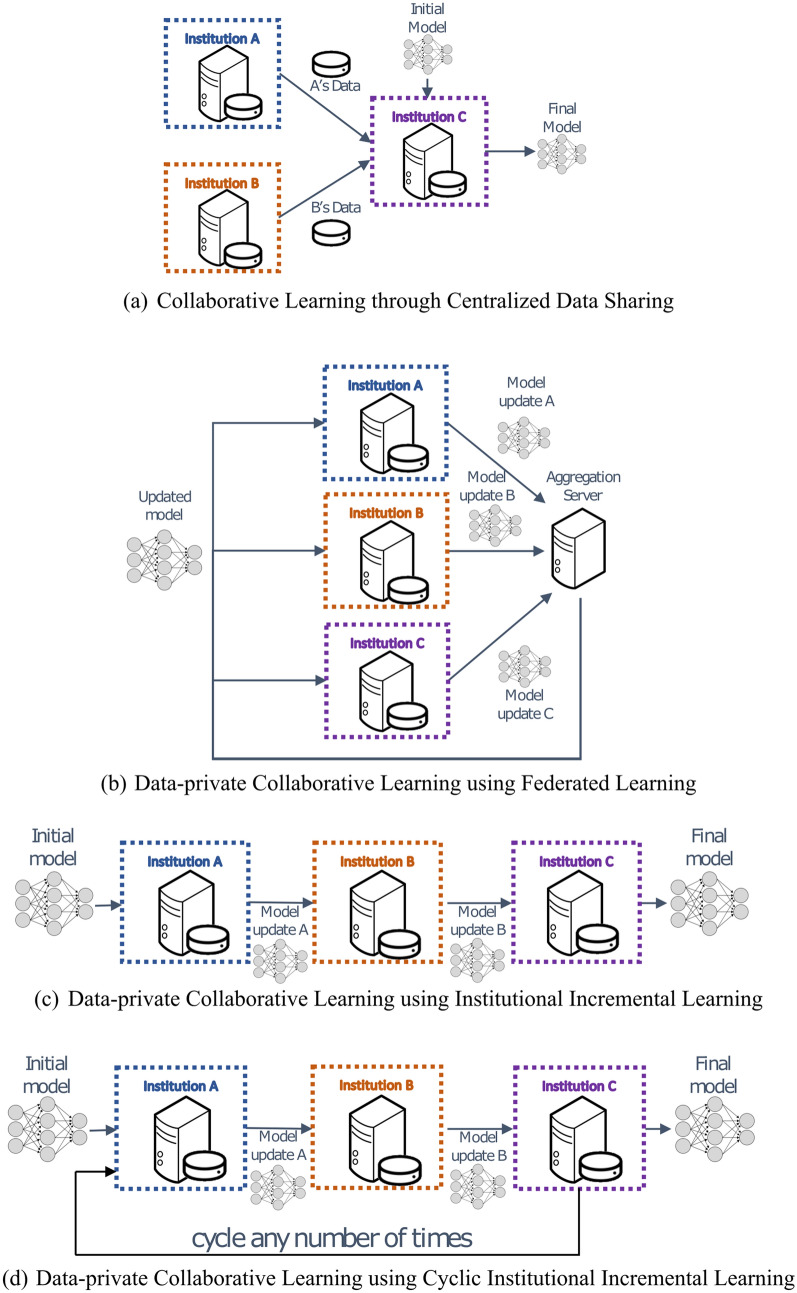
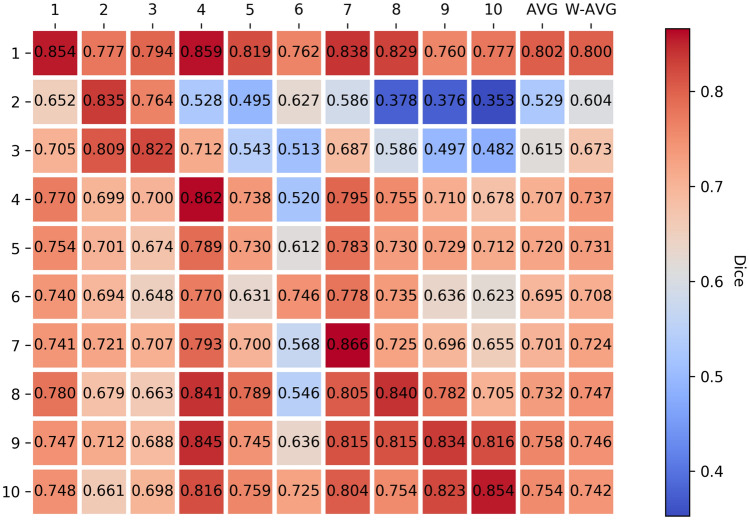
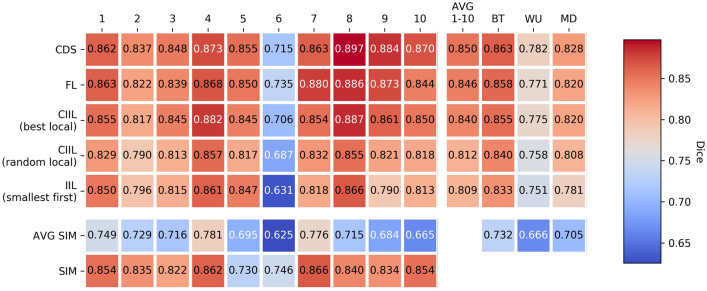
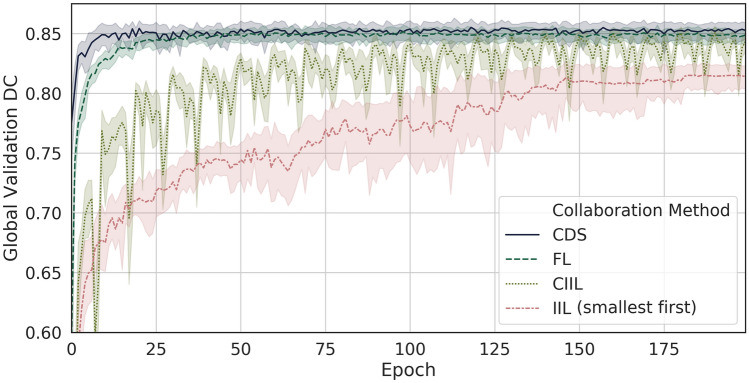
Several studies underscore the potential of deep learning in identifying complex patterns, leading to diagnostic and prognostic biomarkers. Identifying sufficiently large and diverse datasets, required for training, is a significant challenge in medicine and can rarely be found in individual institutions. Multi-institutional collaborations based on centrally-shared patient data face privacy and ownership challenges. Federated learning is a novel paradigm for data-private multi-institutional collaborations, where model-learning leverages all available data without sharing data between institutions, by distributing the model-training to the data-owners and aggregating their results. We show that federated learning among 10 institutions results in models reaching 99% of the model quality achieved with centralized data, and evaluate generalizability on data from institutions outside the federation. We further investigate the effects of data distribution across collaborating institutions on model quality and learning patterns, indicating that increased access to data through data private multi-institutional collaborations can benefit model quality more than the errors introduced by the collaborative method. Finally, we compare with other collaborative-learning approaches demonstrating the superiority of federated learning, and discuss practical implementation considerations. Clinical adoption of federated learning is expected to lead to models trained on datasets of unprecedented size, hence have a catalytic impact towards precision/personalized medicine.
Overview
The claims and statistics of this paper haven’t been checked yet.
Free: it reads the open-access text and checks the first 5 claims that cite a source we can check. Create a free account to check every claim.
Integrity signals
Registry
Cites
Statistics
Figures
Verification
Claims the paper makes
The claims and statistics of this paper haven’t been checked yet.
Free: it reads the open-access text and checks the first 5 claims that cite a source we can check. Create a free account to check every claim.
Claims other papers make about this one
Each is checked against this paper’s own text: does it say what the citing paper says it does?
The source backs part of the claim, not all of it — or backs it for a different population, condition or comparison.
In the citing paper
“Findings from these studies supported the superiority of the FL workflow used in the present study (i.e., based on an aggregation server10,14), which had almost identical performance to CL, for this use-case.”
From Federated learning enables big data for rare cancer boundary detection (2022) · cites this paper as [11]
Experimental — accuracy not yet measuredThe source backs part of the claim, not all of it — or backs it for a different population, condition or comparison.
In the citing paper
“We have identified this FL workflow (based on a central aggregation server) as the optimal for this use-case, following a performance evaluation11 for this very same task, i.e., detecting glioblastoma sub-compartment boundaries.”
From Federated learning enables big data for rare cancer boundary detection (2022) · cites this paper as [11]
Experimental — accuracy not yet measuredThe source backs part of the claim, not all of it — or backs it for a different population, condition or comparison.
In the citing paper
“However, works that examine the practical application of FL in radiological applications are still limited.20,21”
From Federated learning improves site performance in multicenter deep learning without data sharing (2021) · cites this paper as [21]
Experimental — accuracy not yet measuredThe source backs part of the claim, not all of it — or backs it for a different population, condition or comparison.
In the citing paper
“FL allows training of AI models through averaging of local updates from numerous healthcare facilities and smart devices, such as IoMT, despite the lack of local data.”
From Federated learning-based AI approaches in smart healthcare: Concepts, taxonomies, challenges and open issues (2023) · cites this paper as [12]
Experimental — accuracy not yet measuredThe source backs part of the claim, not all of it — or backs it for a different population, condition or comparison.
In the citing paper
“Federated Learning has presented itself as a viable method for implementing economic, innovative healthcare systems while ensuring privacy [11–15].”
From Federated learning-based AI approaches in smart healthcare: Concepts, taxonomies, challenges and open issues (2023) · cites this paper as [12]
Experimental — accuracy not yet measured
12 more claims about this paper
Create a free account to see every claim other papers make about this one.
Self-check
Percentages, sums and reported differences re-computed from the paper’s own numbers.
The self-check needs the paper’s full text.
Citations
Cites
Adam: A Method for Stochastic Optimization
Kingma, D. P., & Ba, J. (2014) · arXiv · doi:10.48550/arxiv.1412.6980 · Cited by 98,946
Measures of the Amount of Ecologic Association Between Species
Dice, L. R. (1945) · Ecology · doi:10.2307/1932409 · Cited by 11,874
The multimodal brain tumor image segmentation benchmark (BRATS)
Menze, B. H., Jakab, A., Bauer, S., Kalpathy-Cramer, J., Farahani, K., Kirby, J., Burren, Y., Porz, N., Slotboom, J., Wiest, R., et al. (2015) · IEEE Transactions on Medical Imaging · doi:10.1109/tmi.2014.2377694 · Cited by 6,781 · cited 10×
“The binarized whole tumor (WT) labels for the BraTS 2017 validation data and the additional 22 BraTS 2017 test cases that were moved to BraTS 2019 validation set, were provided to the lead author Micah Sheller after the conclusion of the BraTS 2018 competition and under a signed Non-Disclosure Agreement.”
MethodInfluentialThe Cancer Imaging Archive (TCIA): Maintaining and Operating a Public Information Repository
Clark, K., Vendt, B., Smith, K., Freymann, J., Kirby, J., Koppel, P., Moore, S., Phillips, S., Maffitt, D., Pringle, M., et al. (2013) · Journal of Digital Imaging · doi:10.1007/s10278-013-9622-7 · Cited by 4,599 · cited 4×
“The additional experiments conducted here attempt to evaluate model generalization under various training schemes comprising (1) single institution training, (2) LOO validation, and importantly (3) exhaustively evaluating performance differences between FL, IIL, and CIIL, by exploring convergence, “model selection”, a…”
BackgroundMethodInfluentialBakas, S., Akbari, H., Sotiras, A., Bilello, M., Rozycki, M., Kirby, J. S., Freymann, J. B., Farahani, K., & Davatzikos, C. (2017) · Scientific Data · doi:10.1038/sdata.2017.117 · Cited by 3,049
Self-citationThe EU General Data Protection Regulation (GDPR)
Voigt, P., & von dem Bussche, A. (2017) · doi:10.1007/978-3-319-57959-7 · Cited by 3,001 · cited 2×
“This study shows that data-private collaborative learning approaches, and particularly FL, can achieve the full learning capacity of the data while obviating the need to share patient data, and hence facilitate large-scale multi-institutional collaborations, while overcoming technical and data ownership concerns and a…”
BackgroundCatastrophic forgetting in connectionist networks
French, R. (1999) · Trends in Cognitive Sciences · doi:10.1016/s1364-6613(99)01294-2 · Cited by 2,311 · cited 1×
“We see this behavior as indicative of catastrophic forgetting 18 .”
BackgroundFederated Learning with Non-IID Data
Zhao, Y., Li, M., Lai, L., Suda, N., Civin, D., & Chandra, V. (2018) · arXiv · doi:10.48550/arxiv.1806.00582 · Cited by 2,077
Zech, J. R., Badgeley, M. A., Liu, M., Costa, A. B., Titano, J. J., & Oermann, E. K. (2018) · PLOS Medicine · doi:10.1371/journal.pmed.1002683 · Cited by 1,719
Bakas, S., Reyes, M., Jakab, A., Bauer, S., Rempfler, M., Crimi, A., Shinohara, R. T., Berger, C., Ha, S. M., Rozycki, M., et al. (2018) · Apollo - University of Cambridge Repository · doi:10.17863/cam.38755 · Cited by 1,441
Self-citation
Research works printed but not linked: 3
- Fredrikson, M., Jha, S. & Ristenpart, T. in Proceedings of the 22nd ACM SIGSAC Conference on Computer and Communications Security 1322–1333 (ACM, Denver, Colorado, USA, 2015).
- Hitaj, B., Ateniese, G. & Perez-Cruz, F. in Proceedings of the 2017 ACM SIGSAC Conference on Computer and Communications Security 603–618 (ACM, Dallas, Texas, USA, 2017).
- Ronneberger, O., Fischer, P. & Brox, T. in International Conference on Medical Image Computing and Computer-Assisted Intervention. 234–241 (Springer).
Cited by
Items 201–300 of 1,000
Peer-to-Peer Federated Continual Learning for Naturalistic Driving Action Recognition
Yuan, L., Ma, Y., Su, L., & Wang, Z. (2023) · 2023 IEEE/CVF Conference on Computer Vision and Pattern Recognition Workshops (CVPRW) · doi:10.1109/cvprw59228.2023.00553 · Cited by 45
“Continual learning has gained prominence in P2P FL because it propagates knowledge directly in the client without relying on average computation for knowledge aggregation [3, 13, 29, 30].”
BackgroundOn the Effectiveness of Partial Variance Reduction in Federated Learning with Heterogeneous Data
Li, B., Schmidt, M. N., Alstrøm, T. S., & Stich, S. U. (2023) · IEEE Computer Society Conference on Computer Vision and Pattern Recognition/Proceedings - IEEE Computer Society Conference on Computer Vision and Pattern Recognition/Proceedings · doi:10.1109/cvpr52729.2023.00386 · Cited by 81
“chemical hazards detection and diseases diagnosis [33].”
FedNN: Federated learning on concept drift data using weight and adaptive group normalizations
Kang, M., Kim, S., Jin, K. H., Adeli, E., Pohl, K. M., & Park, S. H. (2023) · Pattern Recognition · doi:10.1016/j.patcog.2023.110230 · Cited by 59
Adegoke, K., Adegoke, A., Dawodu, D., Adekoya, A., Bayowa, A., Kayode, T., & Singh, M. (2025) · International Journal of Environmental Research and Public Health · doi:10.3390/ijerph22101535 · Cited by 45
“To our knowledge, this is the first scoping review to synthesize interoperability, global standards (e.g., FHIR and SNOMED), and emerging technologies such as blockchain, federated learning, and AI across both HIC and LMIC settings [6,10,27,33,35].”
Beyond class-level privacy leakage: breaking record-level privacy in federated learning
Yuan, X., Ma, X., Zhang, L., Fang, Y., & Wu, D. (2022) · IEEE Internet of Things Journal · doi:10.1109/jiot.2021.3089713 · Cited by 45
Amrollahi, F., Shashikumar, S. P., Holder, A. L., & Nemati, S. (2022) · Scientific Reports · doi:10.1038/s41598-022-12497-7 · Cited by 44
Gupta, S., Kumar, S., Chang, K., Lu, C., Singh, P., & Kalpathy–Cramer, J. (2023) · Radiographics · doi:10.1148/rg.220107 · Cited by 63
Taha, Z. K., Yaw, C. T., Koh, S. P., Kiong, T. S., Kadirgama, K., Benedict, F., Tan, J. D., & Balasubramaniam, Y. (2023) · IEEE Access · doi:10.1109/access.2023.3267964 · Cited by 60
“In particular, the FL environment only has one or more nodes that have the label yi [5], [38].”
BackgroundChallenges and Opportunities in Multimodal Monitoring and Data Analytics in Traumatic Brain Injury
Foreman, B. P., Lissak, I. A., Kamireddi, N., Moberg, D., & Rosenthal, E. S. (2021) · Current Neurology and Neuroscience Reports · doi:10.1007/s11910-021-01098-y · Cited by 47
Jabbarpour, A., Mahdavi, S. R., Sadr, A. V., Esmaili, G., Shiri, I., & Zaidi, H. (2022) · Computers in Biology and Medicine · doi:10.1016/j.compbiomed.2022.105277 · Cited by 53
Federated Learning for Multicenter Collaboration in Ophthalmology
Lu, C., Hanif, A., Singh, P., Chang, K., Coyner, A. S., Brown, J. M., Ostmo, S. R., Chan, R. V. P., Rubin, D. L., Chiang, M. F., et al. (2022) · Ophthalmology Retina · doi:10.1016/j.oret.2022.02.015 · Cited by 51
Imaging and artificial intelligence for progression of age-related macular degeneration
Romond, K., Alam, M. N., Kravets, S., de Sisternes, L., Leng, T., Lim, J. I., Rubin, D. L., & Hallak, J. (2021) · Experimental Biology and Medicine · doi:10.1177/15353702211031547 · Cited by 46
“48,49 Federated learning allows the training and testing of algorithms collaboratively without the need to exchange data.”
BackgroundInfluentialDeveloping medical imaging AI for emerging infectious diseases
Huang, S.-C., Chaudhari, A. S., Langlotz, C. P., Shah, N., Yeung, S., & Lungren, M. P. (2022) · Nature Communications · doi:10.1038/s41467-022-34234-4 · Cited by 42
Federated Active Learning for Multicenter Collaborative Disease Diagnosis
Wu, X., Pei, J., Chen, C., Zhu, Y., Wang, J., Qian, Q., Zhang, J., Sun, Q., & Guo, Y. (2022) · IEEE Transactions on Medical Imaging · doi:10.1109/tmi.2022.3227563 · Cited by 51
“[22] studied federated learning in medicine and proposed a method to facilitate multi-institutional collaborations without sharing patient data.”
MethodPrivacy-Preserving Federated Learning in Healthcare
Moon, S., & Lee, W. H. (2023) · International Conference on Electronics, Information, and Communication (ICEIC) · doi:10.1109/iceic57457.2023.10049966 · Cited by 62
“FL can achieve the full learning capacity of the data by isolating each client’s data from others in the task of distinguishing healthy brain tissue from cancer [23].”
BackgroundAugmenting digital twins with federated learning in medicine
Nagaraj, D., Khandelwal, P., Steyaert, S., & Gevaert, O. (2023) · The Lancet Digital Health · doi:10.1016/s2589-7500(23)00044-4 · Cited by 47
Security and Privacy Issues and Solutions for UAVs in B5G Networks: A Review
Khan, M. A., Kumar, N., Alsamhi, S. H., Barb, G., Żywiołek, J., Ullah, I., Noor, F., Shah, J. A., & Almuhaideb, A. M. (2024) · IEEE Transactions on Network and Service Management · doi:10.1109/tnsm.2024.3487265 · Cited by 67
“FL is an ML method that allows devices or entities to collectively train a standard model locally and without revealing their direct information to the server [129], [130].”
Mohammed, S., & Malhotra, N. (2025) · BenchCouncil Transactions on Benchmarks Standards and Evaluations · doi:10.1016/j.tbench.2025.100215 · Cited by 66
Peyvandi, A., Majidi, B., Peyvandi, S., & Patra, J. C. (2022) · Multimedia Tools and Applications · doi:10.1007/s11042-022-12900-5 · Cited by 52
“Furthermore, federated learning has been utilized for training models on distributed data located in different medical institutions [55] .”
MethodRobust Blockchained Federated Learning with Model Validation and Proof-of-Stake Inspired Consensus
Chen, H., Asif, S. A., Park, J., Shen, C.-C., & Bennis, M. (2021) · arXiv (Cornell University) · doi:10.48550/arxiv.2101.03300 · Cited by 37
Nalepa, J., Kotowski, K., Machura, B., Adamski, S., Bożek, O., Eksner, B., Kokoszka, B., Pekala, T., Radom, M., Strzelczak, M., et al. (2023) · Computers in Biology and Medicine · doi:10.1016/j.compbiomed.2023.106603 · Cited by 49
Alsaedi, S. B., Ogasawara, M., Alarawi, M. S., Gao, X., & Gojobori, T. (2025) · NAR Genomics and Bioinformatics · doi:10.1093/nargab/lqaf038 · Cited by 59
“To address these requirements, federated learning algorithms are developed to encrypt sensitive data [ 38 , 50 ].”
LaF: Lattice-Based and Communication-Efficient Federated Learning
Xu, P., Hu, M., Chen, T., Wang, W., & Jin, H. (2022) · IEEE Transactions on Information Forensics and Security · doi:10.1109/tifs.2022.3186739 · Cited by 43
Rachakonda, S., Moorthy, S., Jain, A., Bukharev, A., Bucur, A., Manni, F., Quiterio, T. M., Joosten, L., & Mendez, N. I. (2023) · IEEE Journal of Biomedical and Health Informatics · doi:10.1109/jbhi.2022.3185418 · Cited by 43
“hospital centers) with limited collaboration and data sharing [3].”
BackgroundMori, M., Ariji, Y., Katsumata, A., Kawai, T., Araki, K., Kobayashi, K., & Ariji, E. (2021) · Odontology · doi:10.1007/s10266-021-00615-2 · Cited by 41
“Notably, federated learning is a data-private collaborative learning method [18], in which, the training model is distributed to the data owner institutions, learning is performed using data at each institution, and the parameters of the trained model are uploaded to the server [18].”
BackgroundMethodA Privacy-Preserving Distributed Analytics Platform for Health Care Data
Welten, S., Mou, Y., Neumann, L., Jaberansary, M., Yediel, Y. Ü., Kirsten, T., Decker, S., & Beyan, O. (2022) · Methods of Information in Medicine · doi:10.1055/s-0041-1740564 · Cited by 56
Survey on Federated-Learning Approaches in Distributed Environment
Gupta, R., & Alam, T. (2022) · Wireless Personal Communications · doi:10.1007/s11277-022-09624-y · Cited by 51
“The study exhibits that this federated-learning between ten institutions leads to trained model attaining 90% in quality of the model [16].”
BackgroundPrivacy-preserving federated neural network learning for disease-associated cell classification
Sav, S., Bossuat, J.-P., Troncoso-Pastoriza, J. R., Claassen, M., & Hubaux, J. (2022) · Patterns · doi:10.1016/j.patter.2022.100487 · Cited by 62
Radiomics and radiogenomics in pediatric neuro-oncology: A review
Madhogarhia, R., Haldar, D., Bagheri, S., Familiar, A., Anderson, H., Arif, S., Vossough, A., Storm, P., Resnick, A., Davatzikos, C., et al. (2022) · Neuro-Oncology Advances · doi:10.1093/noajnl/vdac083 · Cited by 39
Auto-FedAvg: Learnable Federated Averaging for Multi-Institutional Medical Image SegmentationPreprint
Xia, Y., Yang, D., Li, W., Myronenko, A., Xu, D., Obinata, H., Mori, H., An, P., Harmon, S. A., Turkbey, E. B., et al. (2021) · arXiv (Cornell University) · doi:10.48550/arxiv.2104.10195 · Cited by 87
“Examples of FL in medical imaging include multi-institutional brain tumor segmentation [23, 24], breast density classification [25] and fMRI analysis [26].”
BackgroundJekel, L., Brim, W. R., von Reppert, M., Staib, L. H., Petersen, G. C., Merkaj, S., Subramanian, H. E., Zeevi, T., Payabvash, S., Bousabarah, K., et al. (2022) · Cancers · doi:10.3390/cancers14061369 · Cited by 48
“Thereby, FL has been shown to perform comparably to conventional open interinstitutional data sharing models, while bypassing data privacy and confidentiality issues [65].”
BackgroundArtificial Intelligence for Dermatopathology: Current Trends and the Road Ahead
Chen, S. B., & Novoa, R. A. (2022) · Seminars in Diagnostic Pathology · doi:10.1053/j.semdp.2022.01.003 · Cited by 37
Bakas, S., Vollmuth, P., Galldiks, N., Booth, T. C., Aerts, H. J. W. L., Bi, W. L., Wiestler, B., Tiwari, P., Pati, S., Baid, U., et al. (2024) · The Lancet Oncology · doi:10.1016/s1470-2045(24)00315-2 · Cited by 36
Self-citationMajumder, S., Katz, S. I., Kontos, D., & Roshkovan, L. (2023) · BJR|Open · doi:10.1093/bjro/tzad004 · Cited by 56
“92,93 Standardization and harmonization of workflow Adherence to standardized imaging acquisition protocols and proper reporting of the reconstruction algorithms will be important for creating high-quality multicentre aggregate data, both in real-world imaging acquisition and clinical trials.”
CrowdGuard: Federated Backdoor Detection in Federated Learning
Rieger, P., Krauß, T., Miettinen, M., Dmitrienko, A., & Sadeghi, A.-R. (2024) · Proceedings 2024 Network and Distributed System Security Symposium · doi:10.14722/ndss.2024.23233 · Cited by 36
“As a result, FL has become a popular technology and is applied in various applications, including image recognition [74], [78], [79], [80], e.g., between multiple hospitals [33], [74], [79], natural language processing (NLP), e.g., text prediction on smartphones [34], [57], personalization [17],…”
BackgroundQuo vadis Radiomics? Bibliometric analysis of 10-year Radiomics journey
Volpe, S., Mastroleo, F., Krengli, M., & Jereczek‐Fossa, B. A. (2023) · European Radiology · doi:10.1007/s00330-023-09645-6 · Cited by 47
“…large amounts of imaging and clinical metadata, to encourage collaboration across participating institutions and to promote the development of advanced algorithms under the principles of federated learning, while promoting the real-life clinical application of this emerging discipline [19, 20].”
Multi-party Diabetes Mellitus risk prediction based on secure federated learning
Su, Y., Huang, C., Zhu, W., Lyu, X., & Ji, F. (2023) · Biomedical Signal Processing and Control · doi:10.1016/j.bspc.2023.104881 · Cited by 41
The FeatureCloud Platform for Federated Learning in Biomedicine: Unified Approach
Matschinske, J., Späth, J., Bakhtiari, M., Probul, N., Majdabadi, M. M. K., Nasirigerdeh, R., Torkzadehmahani, R., Hartebrodt, A., Orbán, B.-A., Fejér, S.-J., et al. (2023) · Journal of Medical Internet Research · doi:10.2196/42621 · Cited by 50
“Previous studies have shown that FL can achieve similar performance to centralized learning in many scenarios [14,15,39].”
BackgroundLee, S.-W., & Choi, W.-J. (2023) · Anesthesia and Pain Medicine · doi:10.17085/apm.23056 · Cited by 35
“Performance is improved through reinforcement learning, which involves receiving feedback from interactions and conversations with humans [2].”
BackgroundDecentralised, collaborative, and privacy-preserving machine learning for multi-hospital data
Fang, C., Dziedzic, A., Zhang, L., Oliva, L., Verma, A. A., Razak, F. A., Papernot, N., & Wang, B. (2024) · EBioMedicine · doi:10.1016/j.ebiom.2024.105006 · Cited by 55
“8 12 However, healthcare data usually contains highly sensitive information; data sharing across multiple institutions can threaten patients ’ privacy and is often subject to complex privacy regulations 13 that differ across jurisdictions.”
BackgroundThe Role of Blockchain in Transforming Industries Beyond Finance
Vanmathi, C., Farouk, A., Alhammad, S. M., Ramaiah, M., Bhattacharya, S., & Kasyapa, M. S. B. (2024) · IEEE Access · doi:10.1109/access.2024.3468611 · Cited by 46
“FL adapts to smartphone [86], IoT devices [87], [88]health-care [89], [90], autonomous vehicles [91], [92], fraudulent activities detection [93], [94] and insurance sector [95].”
BackgroundZhao, H., Sui, D., Wang, Y., Ma, L., & Wang, L. (2025) · Sensors · doi:10.3390/s25082374 · Cited by 59
“Sheller [26,27] introduces the first use of federated learning to perform brain tumor segmentation.”
A Multimodal Deep Learning Model for the Classification of Breast Cancer Subtypes
Rabah, C. B., Sattar, A., Ibrahim, A., & Serag, A. (2025) · Diagnostics · doi:10.3390/diagnostics15080995 · Cited by 48
“Furthermore, federated learning has emerged as a transformative approach for training multi-institutional AI models, enabling collaboration between healthcare institutions while preserving patient privacy and data security [56].”
Comparison of Privacy-Preserving Distributed Deep Learning Methods in Healthcare
Gawali, M., Arvind, C. S., Suryavanshi, S., Madaan, H., Gaikwad, A., Prakash, B., Kulkarni, V., & Pant, A. (2021) · Lecture notes in computer science · doi:10.1007/978-3-030-80432-9_34 · Cited by 41
Weikert, T., Francone, M., Abbara, S., Baessler, B., Choi, B. W., Gutberlet, M., Hecht, E. M., Loewe, C., Mousseaux, E., Natale, L., et al. (2021) · European Radiology · doi:10.1007/s00330-020-07417-0 · Cited by 34
“An approach that allows for collaborative training of an ML model without exchanging data samples is “Federated learning” [8]: a copy of an algorithm is downloaded and local data used to further improve it.”
MethodDigital phenotyping and sensitive health data: Implications for data governance
Perez-Pozuelo, I., Spathis, D., Gifford-Moore, J., Morley, J., & Cowls, J. (2021) · Journal of the American Medical Informatics Association · doi:10.1093/jamia/ocab012 · Cited by 50
Pseudo-Data Based Self-Supervised Federated Learning for Classification of Histopathological Images
Zhang, Y., Li, Z., Han, X., Ding, S., Li, J., Wang, J., Ying, S., & Shi, J. (2023) · IEEE Transactions on Medical Imaging · doi:10.1109/tmi.2023.3323540 · Cited by 38
“However, this training strategy suffers from the issues of privacy protection, data security, and data ownership [13].”
BackgroundMethodKokomoto, K., Kariya, R., Muranaka, A., Okawa, R., Nakano, K., & Nozaki, K. (2024) · BMC Oral Health · doi:10.1186/s12903-024-03928-0 · Cited by 45
“To reduce this bias and to overcome imbalanced datasets, adding the public datasets such as Tufts Dental Database [51] or federation learning across multiple medical institutions [52] could be solutions to be consider.”
BackgroundFederated learning for multi-omics: A performance evaluation in Parkinson’s disease
Danek, B. P., Makarious, M. B., Dadu, A., Vitale, D., Lee, P. S., Singleton, A., Nalls, M. A., Sun, J., & Faghri, F. (2024) · Patterns · doi:10.1016/j.patter.2024.100945 · Cited by 45
“Initially developed for learning user behavior patterns on personal mobile devices without breaching individual privacy, 9 FL has found valuable applications in numerous domains, including finance, 10 medicine, 11,12 and the pharmaceutical industry.”
How quantum computing can enhance biomarker discovery
Flöther, F. F., Blankenberg, D. J., Demidik, M., Jansen, K., Krishnakumar, R., Krishnakumar, R., Laanait, N., Parida, L., Saab, C. Y., & Utro, F. (2025) · Patterns · doi:10.1016/j.patter.2025.101236 · Cited by 62
“However, the quantum computers would have to be larger than the current generations or the initial image data would have to be downscaled with classical pre-processing techniques, such as passing the image through a residual networkbefore sending it through the QRC model.”
Genomic privacy and security in the era of artificial intelligence and quantum computing
Annan, R., Noland, J., Perkins, K., Yuan, X., Roy, K., & Qingge, L. (2025) · Discover Computing · doi:10.1007/s10791-025-09627-w · Cited by 47
“This context-sensitive model recognizes the source of authority, grants minimal necessary privileges, and uses the Research Authorization Service (RAS) to verify identities and issue authorization tokens [72].”
Dynamic and adaptive fault-tolerant asynchronous federated learning using volunteer edge devices
Morell, J. Á., & Alba, E. (2022) · Future Generation Computer Systems · doi:10.1016/j.future.2022.02.024 · Cited by 41
Aboian, M., Bousabarah, K., Kazarian, E., Zeevi, T., Holler, W., Merkaj, S., Petersen, G. C., Bahar, R. C., Subramanian, H. E., Sunku, P., et al. (2022) · Frontiers in Neuroscience · doi:10.3389/fnins.2022.860208 · Cited by 44
“Solutions to this problem include data sharing agreements, development of image databank consortiums (MIDRC, TCIA, BraTS), and federated learning (MIDRC, n.d.; Clark et al., 2013; Menze et al., 2015; Bakas et al., 2017a,b, 2018; Sheller et al., 2020).”
BackgroundSubramanian, M., Rajasekar, V., Easwaramoorthy, S. V., Shanmugavadivel, K., & Nandhini, P. S. (2022) · Electronics · doi:10.3390/electronics11244117 · Cited by 55
Artificial intelligence uncertainty quantification in radiotherapy applications − A scoping review
Wahid, K. A., Kaffey, Z. Y., Farris, D. P., Humbert‐Vidan, L., Moreno, A. C., Rasmussen, M. E., Ren, J., Naser, M. A., Netherton, T., Korreman, S., et al. (2024) · Radiotherapy and Oncology · doi:10.1016/j.radonc.2024.110542 · Cited by 54
Dhaarani, R., & Reddy, M. K. (2025) · Intelligence-Based Medicine · doi:10.1016/j.ibmed.2025.100251 · Cited by 46
Shah, S. T., Ali, Z., Waqar, M., & Kim, A. (2025) · Healthcare · doi:10.3390/healthcare13212760 · Cited by 54
CaPC Learning: Confidential and Private Collaborative LearningPreprint
Choquette-Choo, C. A., Dullerud, N., Dziedzic, A., Zhang, Y., Jha, S., Papernot, N., & Wang, X. (2021) · arXiv (Cornell University) · doi:10.48550/arxiv.2102.05188 · Cited by 70
“Unlike our approach, prior efforts involving few participants thus had to prioritize model utility over privacy and only guarantee confidentiality (Sheller et al., 2020).”
ResultReview on application progress of federated learning model and security hazard protection
Yang, A., Ma, Z., Zhang, C., Han, Y., Hu, Z., Zhang, W., Huang, X., & Wu, Y. (2022) · Digital Communications and Networks · doi:10.1016/j.dcan.2022.11.006 · Cited by 40
A survey on federated learning applications in healthcare, finance, and data privacy/data security
Nevrataki, T., Iliadou, A., Ntolkeras, G., Sfakianakis, I., Lazaridis, L., Maraslidis, G., Asimopoulos, N., & Fragulis, G. F. (2023) · AIP Conference Proceedings · doi:10.1063/5.0182160 · Cited by 32
Simultaneous Fault Diagnosis and Size Estimation Using Multitask Federated Incremental Learning
Zhong, K., Ding, Z., Zhang, H., Chen, H., & Zio, E. (2024) · IEEE Transactions on Reliability · doi:10.1109/tr.2024.3402308 · Cited by 35
“Recently, Sheller et al. [8] proposed an intrusion detection method for an industrial network physical system based on FL. Qi et al. [9] adopted a novel FL scheme and applied it to the next-word prediction task of smartphone virtual keyboard.”
Yao, I. Z., Dong, M., & Hwang, W. Y. K. (2025) · Mayo Clinic Proceedings Digital Health · doi:10.1016/j.mcpdig.2025.100253 · Cited by 63
Bleker, J., Kwee, T. C., Rouw, D. B., Roest, C., Borstlap, J., de Jong, I. J., Dierckx, R., Huisman, H. J., & Yakar, D. (2022) · European Radiology · doi:10.1007/s00330-022-08712-8 · Cited by 36
Langlais, É. L., Thériault-Lauzier, P., Marquis‐Gravel, G., Kulbay, M., So, D. Y. F., Tanguay, J., Ly, H. Q., Gallo, R., Lesage, F., & Avram, R. (2022) · Journal of Cardiovascular Translational Research · doi:10.1007/s12265-022-10260-x · Cited by 37
“In many cases, a single medical institution cannot provide enough data to develop a generalizable AI model [53].”
BackgroundMethodInfluentialAn Adaptive Model Averaging Procedure for Federated Learning (AdaFed)
Giuseppi, A., Torre, L. D., Menegatti, D., Priscoli, F. D., Pietrabissa, A., & Poli, C. (2022) · Journal of Advances in Information Technology · doi:10.12720/jait.13.6.539-548 · Cited by 36
Blockchain and Machine Learning in EHR Security: A Systematic Review
Zukaib, U., Cui, X., Hassan, M., Harris, S., Hadi, H. J., & Zheng, C. (2023) · IEEE Access · doi:10.1109/access.2023.3333229 · Cited by 43
“Sheller et al. [79] validated FL by using MRI and BraTS 2017 datasets, after training a quality model it achieved 99% accuracy on 10 rounds.”
MethodJeong, J., Lee, M.-H., Kuroda, N., Sakakura, K., O'Hara, N. B., Juhász, C., & Asano, E. (2022) · IEEE Journal of Biomedical and Health Informatics · doi:10.1109/jbhi.2022.3196330 · Cited by 34
“The federated learning approach [69] was recently proposed to facilitate”
DHSA: efficient doubly homomorphic secure aggregation for cross-silo federated learning
Liu, Z., Chen, S., Ye, J., Fan, J., Li, H., & Li, X. (2022) · The Journal of Supercomputing · doi:10.1007/s11227-022-04745-4 · Cited by 40
Moving Toward Findable, Accessible, Interoperable, Reusable Practices in Epidemiologic Research
García‐Closas, M., Ahearn, T. U., Gaudet, M. M., Hurson, A. N., Balasubramanian, J. B., Choudhury, P. P., Gerlanc, N., Patel, B. B., Russ, D. E., Abubakar, M., et al. (2023) · American Journal of Epidemiology · doi:10.1093/aje/kwad040 · Cited by 48
Deep learning in optical coherence tomography: Where are the gaps?
Li, D., Ran, A. R., Cheung, C. Y.-L., & Prince, J. L. (2023) · Clinical and Experimental Ophthalmology · doi:10.1111/ceo.14258 · Cited by 43
“79 Currently, FL has shown similar results to traditional DL in both applications of retinal microvascular segmentation and referable DR classification using OCT and OCTA 80 and improved classification performance in retinopathy of prematurity.”
ResultA comparative study of federated learning methods for COVID-19 detection
Darzidehkalani, E., Sijtsema, N. M., & van Ooijen, P. M. A. (2024) · Scientific Reports · doi:10.1038/s41598-024-54323-2 · Cited by 51
“Federated learning has demonstrated efficacy in an array of imaging modalities, including Magnetic Resonance Imaging (MRI) 3,4 , X-ray 5 , retinal imaging 5 , as well as in applications such as brain tumor segmentation 6,7 , diagnosis 8 , and treatment selection 7 .”
BackgroundMethodJeon, K., Park, W. Y., Kahn, C. E., Nagy, P. G., You, S. C., & Yoon, S. H. (2024) · Investigative Radiology · doi:10.1097/rli.0000000000001106 · Cited by 45
Selecting Privacy-Enhancing Technologies for Managing Health Data Use
Jordan, S. R., Fontaine, C., & Hendricks‐Sturrup, R. (2022) · Frontiers in Public Health · doi:10.3389/fpubh.2022.814163 · Cited by 46
“However, there are also benefits: FL models perform consistently better than local models trained on just a single party’s data (51).”
BackgroundDynamic Bank Learning for Semi-supervised Federated Image Diagnosis with Class Imbalance
Jiang, M., Yang, H., Li, X., Liu, Q., Heng, P., & Dou, Q. (2022) · Lecture notes in computer science · doi:10.1007/978-3-031-16437-8_19 · Cited by 42
Pan, W., Xu, Z., Rajendran, S., & Wang, F. (2023) · Patterns · doi:10.1016/j.patter.2023.100898 · Cited by 49
Enhancing Heart Disease Prediction with Federated Learning and Blockchain Integration
Otoum, Y., Hu, C., Said, E. H., & Nayak, A. R. (2024) · Future Internet · doi:10.3390/fi16100372 · Cited by 43
“Sheller et al.’s [9] research emphasizes federated learning’s potential to facilitate multi-institutional medical research without compromising patient data privacy, and its design allows for the collaborative training of algorithms without direct data exchange, aligning with strict data privacy…”
Sivakumar, N., Khan, A. R., Syed, U., Ravikumar, R. N., Bremnavas, I., Lunagaria, M., Vaghela, K. N., Tejani, G. G., & Sharma, S. K. (2025) · IEEE Access · doi:10.1109/access.2025.3549440 · Cited by 40
Wong, Y. J., Tham, M., Kwan, B.-H., Morris, E., & Owada, Y. (2022) · IEEE Access · doi:10.1109/access.2022.3218655 · Cited by 37
“It is a Python 3 opensource FL framework that supports many real world applications such as medical imaging [39], [56], [57].”
MethodMulti-level Federated Learning for Industry 4.0 - A Crowdsourcing Approach
Ullah, I., Hassan, U. U., & Ali, M. I. (2023) · Procedia Computer Science · doi:10.1016/j.procs.2022.12.238 · Cited by 42
Federated machine learning in data-protection-compliant research
Brauneck, A., Schmalhorst, L., Majdabadi, M. M. K., Bakhtiari, M., Völker, U., Saak, C. C., Baumbach, J., Baumbach, L., & Buchholtz, G. (2023) · Nature Machine Intelligence · doi:10.1038/s42256-022-00601-5 · Cited by 37
Federated learning approaches for fuzzy cognitive maps to support clinical decision-making in dengue
Hoyos, W., Aguilar, J., & Toro, M. (2023) · Engineering Applications of Artificial Intelligence · doi:10.1016/j.engappai.2023.106371 · Cited by 37
Li, J., Ellis, D. G., Kodym, O., Rauschenbach, L., Rieß, C., Sure, U., Wrede, K. H., Alvarez, C. M., Wodziński, M., Danioł, M., et al. (2023) · Medical Image Analysis · doi:10.1016/j.media.2023.102865 · Cited by 43
Survey of Medical Applications of Federated Learning
Choi, G., Cha, W. C., Lee, S. U., & Shin, S.-Y. (2024) · Healthcare Informatics Research · doi:10.4258/hir.2024.30.1.3 · Cited by 47
“[21,22,27,49-51] Image Nervous system diseases, - FL was used in studies of brain tumors, autism spectrum disorders, brain age prediction, and multiple sclerosis.”
MethodArtificial intelligence for drug delivery: Yesterday, today and tomorrow
Wu, Y., Wang, N., Xiong, P., Wang, R., Deng, J., & Ouyang, D. (2025) · Acta Pharmaceutica Sinica B · doi:10.1016/j.apsb.2025.09.022 · Cited by 46
“Together, these measures aim to build a trustworthy environment for AI applications in drug delivery, essential for developing abundant, high-quality, standardized, and reliable datasets for further advancements in computational modeling 223 .”
Novel technical and privacy-preserving technology for artificial intelligence in ophthalmology
Lim, J. S., Hong, M., Lam, W. S. T., Zhang, Z., Teo, Z. L., Liu, Y., Ng, W. Y., Foo, L. L., & Ting, D. S. W. (2022) · Current Opinion in Ophthalmology · doi:10.1097/icu.0000000000000846 · Cited by 33
Zhou, B., Miao, T., Mirian, N., Chen, X., Xie, H., Feng, Z., Guo, X., Li, X., Zhou, S. K., Duncan, J. S., et al. (2022) · IEEE Transactions on Radiation and Plasma Medical Sciences · doi:10.1109/trpms.2022.3194408 · Cited by 39
“To protect patient data privacy while enabling collaborative training, FL has also been applied to medical imaging tasks and demonstrated promising performance [24], [28], [36]–[39].”
Federated Medical Learning Framework Based on Blockchain and Homomorphic Encryption
Yang, X., & Xing, C. (2024) · Wireless Communications and Mobile Computing · doi:10.1155/2024/8138644 · Cited by 33
Federated attention consistent learning models for prostate cancer diagnosis and Gleason grading
Kong, F., Wang, X., Xiang, J., Yang, S., Wang, X., Yue, M., Zhang, J., Zhao, J., Han, X., Dong, Y., et al. (2024) · Computational and Structural Biotechnology Journal · doi:10.1016/j.csbj.2024.03.028 · Cited by 47
“Federated learning (FL) presents an innovative paradigm wherein models are trained by sharing model parameter updates from decentralized data sources [25–29].”
Ahmed, S. T., Mahesh, T. R., Srividhya, E., Kumar, V. V., Bhatia, S., Albuali, A., & Almusharraf, A. I. (2024) · BMC Medical Imaging · doi:10.1186/s12880-024-01279-4 · Cited by 35
“The orientation of these layers is to build a sustainable product for categorizing the devices based on the user demand and request [13].”
BackgroundShang, Y., Tian, Y., Lyu, K., Zhou, T., Zhang, P., Chen, J., & Li, J. (2024) · Journal of Medical Internet Research · doi:10.2196/54263 · Cited by 51
“Collaborative research networks such as the Observational Health Data Sciences and Informatics (OHDSI) offer valuable insights into addressing this issue [27,28].”
Privacy-preserving decentralized learning methods for biomedical applications
Tajabadi, M., Martin, R., & Heider, D. (2024) · Computational and Structural Biotechnology Journal · doi:10.1016/j.csbj.2024.08.024 · Cited by 36
Vargas-Santiago, M., León-Velasco, D. A., Maldonado-Sifuentes, C. E., & Chanona-Hernández, L. (2025) · Computers · doi:10.3390/computers14040143 · Cited by 47
Yazdinejad, A., & Kong, J. D. (2026) · Royal Society Open Science · doi:10.1098/rsos.250959 · Cited by 39
Lessons learned in transitioning to AI in the medical imaging of COVID-19
Naqa, I. M. E., Hu, Q., Chen, W., Li, H., Fuhrman, J. D., Gorre, N., & Giger, M. L. (2021) · Journal of medical imaging · doi:10.1117/1.jmi.8.s1.010902 · Cited by 32
Toward Federated Learning Models Resistant to Adversarial Attacks
Hu, F., Zhou, W., Liao, K., Li, H., & Tong, D. (2023) · IEEE Internet of Things Journal · doi:10.1109/jiot.2023.3272334 · Cited by 34
“FL already be used in many applications, such as next word prediction for mobile keyboards [10], medical imaging [11], digital health [12], [13], and IIoT [14].”
BackgroundTackling heterogeneity in medical federated learning via aligning vision transformers
Darzidehkalani, E., Shen, Y., Ou, Y., Sijtsema, N. M., & van Ooijen, P. M. A. (2024) · Artificial Intelligence in Medicine · doi:10.1016/j.artmed.2024.102936 · Cited by 34
Privacy-by-Design with Federated Learning will drive future Rare Disease Research
Süwer, S., Ullah, M. S., Probul, N., Maier, A., & Baumbach, J. (2024) · Journal of Neuromuscular Diseases · doi:10.1177/22143602241296276 · Cited by 38
“108,109 By limiting the transferred information to only model updates, FL mitigates the risk of data breaches, thereby addressing critical privacy and security concerns.”
Mușat, F., Păduraru, D. N., Bolocan, A., Palcău, A. C., Copăceanu, A.-M., Daniel, I., Jinga, V., & Andronic, O. (2024) · Biomedicines · doi:10.3390/biomedicines12122892 · Cited by 42
Huang, J., Shlobin, N. A., DeCuypere, M. G., & Lam, S. K. (2021) · Neurosurgery · doi:10.1227/neu.0000000000001736 · Cited by 33
“67 Although there is likely no universally feasible solution to limited data availability, increased collaboration among DL researchers in neurosurgery will facilitate more robust DL model development and validation.”
BackgroundZhou, Y., Mei, S., Wang, J., Xu, Q., Zhang, Z., Qin, S., Feng, J., Li, C., Xing, S., Wang, W., et al. (2024) · eClinicalMedicine · doi:10.1016/j.eclinm.2024.102772 · Cited by 26
Metadata
- Authors
- Sheller, M. J., Edwards, B., Reina, G. A., Martin, J., Pati, S., Kotrotsou, A., Milchenko, M., Xu, W., Marcus, D., Colen, R. R., & Bakas, S.
- Affiliations
- Intel (United States) (US)
- University of Pennsylvania (US)
- The University of Texas MD Anderson Cancer Center (US)
- Washington University in St. Louis (US)
- Corresponding author
- Bakas, Spyridon
- ORCID
- Venue
- Scientific Reports
- Published
- 2020-07-28
- Volume
- 10
- Issue
- 1
- Pages
- 12598-12598
- ISSN
- 2045-2322 (ISSN-L)
- PMC
- PMC7387485
- OpenAlex
- W3045674654
- Semantic Scholar
- ee6da0ca07fe062968a66887edddfc8a0034a409
- Cited by
- 1,646
- References
- 33
- Citations by year
- 2026: 482 · 2025: 401 · 2024: 227 · 2023: 215 · 2022: 201 · 2021: 110 · 2020: 10
- FWCI
- 52.64
- Type
- journal article
- Language
- en
- Open access
- gold
- doi.org
- Licence
- cc-by
- creativecommons.org/licenses/by/4.0 (tdm)
- creativecommons.org/licenses/by/4.0 (vor)
- Locations
- Scientific Reports (publishedVersion, cc-by)
- PubMed Central (publishedVersion, cc-by)
- PubMed (publishedVersion)
- Digital Commons@Becker (Washington University School of Medicine) (submittedVersion, cc-by)
- Funders
- National Cancer Institute (U24CA189523)
- UPMC CCSG (P30 CA047904)
- National Institute of Neurological Disorders and Stroke (R01NS042645)
- Topics
- Physical Sciences › Computer Science › Artificial Intelligence › Privacy-Preserving Technologies in Data
- Health Sciences › Medicine › Health Informatics › Artificial Intelligence in Healthcare and Education
- Physical Sciences › Computer Science › Artificial Intelligence › Domain Adaptation and Few-Shot Learning
- Keywords
- federated learning, multi-institutional collaboration, data privacy, patient data sharing, data ownership, model generalization, cooperative learning, precision medicine, deep learning in healthcare, biomarker discovery
- MeSH terms
- Humans, Interinstitutional Relations, Learning, Medicine, Patients, Privacy, Information Dissemination
About these checks
Registry, retraction, Cites and statistics results are computed, not judged, with one exception: a printed reference that no index lists is read once by a model before it counts as a citation error. Claims are extracted by a model and kept only when their quote appears verbatim in the text; each cited source is then checked, with a model’s help, for whether it says what the claim relies on. Those verdicts can be wrong — read the claim’s quote and the cited source before relying on one.
Statistics and arithmetic are recomputed, not judged.
Confidence bands are shown only for fields calibrated on our annotated test set. None is calibrated yet, so no band is shown.
What counts as a claim ›How we measure confidence ›How we check this ›
Are you an author, or do you see a problem with this page? Request a review
Data sources
Bibliographic data: Semantic Scholar, OpenAlex, Crossref.
Contains information from the Semantic Scholar Academic Graph Datasets, made available under the ODC Attribution License (ODC-BY 1.0).
Semantic Scholar’s data is described in: Kinney, R., et al. (2023). The Semantic Scholar Open Data Platform. arXiv:2301.10140.
