

Federated learning in medicine: facilitating multi-institutional collaborations without sharing patient data
Open accessThe DOI matches its Crossref record; 36 of the 36 references it cites were found in a registry or an index.
Abstract
Several studies underscore the potential of deep learning in identifying complex patterns, leading to diagnostic and prognostic biomarkers. Identifying sufficiently large and diverse datasets, required for training, is a significant challenge in medicine and can rarely be found in individual institutions. Multi-institutional collaborations based on centrally-shared patient data face privacy and ownership challenges. Federated learning is a novel paradigm for data-private multi-institutional collaborations, where model-learning leverages all available data without sharing data between institutions, by distributing the model-training to the data-owners and aggregating their results. We show that federated learning among 10 institutions results in models reaching 99% of the model quality achieved with centralized data, and evaluate generalizability on data from institutions outside the federation. We further investigate the effects of data distribution across collaborating institutions on model quality and learning patterns, indicating that increased access to data through data private multi-institutional collaborations can benefit model quality more than the errors introduced by the collaborative method. Finally, we compare with other collaborative-learning approaches demonstrating the superiority of federated learning, and discuss practical implementation considerations. Clinical adoption of federated learning is expected to lead to models trained on datasets of unprecedented size, hence have a catalytic impact towards precision/personalized medicine.
Overview
The claims and statistics of this paper haven’t been checked yet.
Free: it reads the open-access text and checks the first 5 claims that cite a source we can check. Create a free account to check every claim.
Integrity signals
Registry
Cites
Statistics
Figures
Verification
Claims the paper makes
The claims and statistics of this paper haven’t been checked yet.
Free: it reads the open-access text and checks the first 5 claims that cite a source we can check. Create a free account to check every claim.
Claims other papers make about this one
Each is checked against this paper’s own text: does it say what the citing paper says it does?
The source backs part of the claim, not all of it — or backs it for a different population, condition or comparison.
In the citing paper
“Findings from these studies supported the superiority of the FL workflow used in the present study (i.e., based on an aggregation server10,14), which had almost identical performance to CL, for this use-case.”
From Federated learning enables big data for rare cancer boundary detection (2022) · cites this paper as [11]
Experimental — accuracy not yet measuredThe source backs part of the claim, not all of it — or backs it for a different population, condition or comparison.
In the citing paper
“We have identified this FL workflow (based on a central aggregation server) as the optimal for this use-case, following a performance evaluation11 for this very same task, i.e., detecting glioblastoma sub-compartment boundaries.”
From Federated learning enables big data for rare cancer boundary detection (2022) · cites this paper as [11]
Experimental — accuracy not yet measuredThe source backs part of the claim, not all of it — or backs it for a different population, condition or comparison.
In the citing paper
“However, works that examine the practical application of FL in radiological applications are still limited.20,21”
From Federated learning improves site performance in multicenter deep learning without data sharing (2021) · cites this paper as [21]
Experimental — accuracy not yet measuredThe source backs part of the claim, not all of it — or backs it for a different population, condition or comparison.
In the citing paper
“FL allows training of AI models through averaging of local updates from numerous healthcare facilities and smart devices, such as IoMT, despite the lack of local data.”
From Federated learning-based AI approaches in smart healthcare: Concepts, taxonomies, challenges and open issues (2023) · cites this paper as [12]
Experimental — accuracy not yet measuredThe source backs part of the claim, not all of it — or backs it for a different population, condition or comparison.
In the citing paper
“Federated Learning has presented itself as a viable method for implementing economic, innovative healthcare systems while ensuring privacy [11–15].”
From Federated learning-based AI approaches in smart healthcare: Concepts, taxonomies, challenges and open issues (2023) · cites this paper as [12]
Experimental — accuracy not yet measured
12 more claims about this paper
Create a free account to see every claim other papers make about this one.
Self-check
Percentages, sums and reported differences re-computed from the paper’s own numbers.
The self-check needs the paper’s full text.
Citations
Cites
Adam: A Method for Stochastic Optimization
Kingma, D. P., & Ba, J. (2014) · arXiv · doi:10.48550/arxiv.1412.6980 · Cited by 98,946
Measures of the Amount of Ecologic Association Between Species
Dice, L. R. (1945) · Ecology · doi:10.2307/1932409 · Cited by 11,874
The multimodal brain tumor image segmentation benchmark (BRATS)
Menze, B. H., Jakab, A., Bauer, S., Kalpathy-Cramer, J., Farahani, K., Kirby, J., Burren, Y., Porz, N., Slotboom, J., Wiest, R., et al. (2015) · IEEE Transactions on Medical Imaging · doi:10.1109/tmi.2014.2377694 · Cited by 6,781 · cited 10×
“The binarized whole tumor (WT) labels for the BraTS 2017 validation data and the additional 22 BraTS 2017 test cases that were moved to BraTS 2019 validation set, were provided to the lead author Micah Sheller after the conclusion of the BraTS 2018 competition and under a signed Non-Disclosure Agreement.”
MethodInfluentialThe Cancer Imaging Archive (TCIA): Maintaining and Operating a Public Information Repository
Clark, K., Vendt, B., Smith, K., Freymann, J., Kirby, J., Koppel, P., Moore, S., Phillips, S., Maffitt, D., Pringle, M., et al. (2013) · Journal of Digital Imaging · doi:10.1007/s10278-013-9622-7 · Cited by 4,599 · cited 4×
“The additional experiments conducted here attempt to evaluate model generalization under various training schemes comprising (1) single institution training, (2) LOO validation, and importantly (3) exhaustively evaluating performance differences between FL, IIL, and CIIL, by exploring convergence, “model selection”, a…”
BackgroundMethodInfluentialBakas, S., Akbari, H., Sotiras, A., Bilello, M., Rozycki, M., Kirby, J. S., Freymann, J. B., Farahani, K., & Davatzikos, C. (2017) · Scientific Data · doi:10.1038/sdata.2017.117 · Cited by 3,049
Self-citationThe EU General Data Protection Regulation (GDPR)
Voigt, P., & von dem Bussche, A. (2017) · doi:10.1007/978-3-319-57959-7 · Cited by 3,001 · cited 2×
“This study shows that data-private collaborative learning approaches, and particularly FL, can achieve the full learning capacity of the data while obviating the need to share patient data, and hence facilitate large-scale multi-institutional collaborations, while overcoming technical and data ownership concerns and a…”
BackgroundCatastrophic forgetting in connectionist networks
French, R. (1999) · Trends in Cognitive Sciences · doi:10.1016/s1364-6613(99)01294-2 · Cited by 2,311 · cited 1×
“We see this behavior as indicative of catastrophic forgetting 18 .”
BackgroundFederated Learning with Non-IID Data
Zhao, Y., Li, M., Lai, L., Suda, N., Civin, D., & Chandra, V. (2018) · arXiv · doi:10.48550/arxiv.1806.00582 · Cited by 2,077
Zech, J. R., Badgeley, M. A., Liu, M., Costa, A. B., Titano, J. J., & Oermann, E. K. (2018) · PLOS Medicine · doi:10.1371/journal.pmed.1002683 · Cited by 1,719
Bakas, S., Reyes, M., Jakab, A., Bauer, S., Rempfler, M., Crimi, A., Shinohara, R. T., Berger, C., Ha, S. M., Rozycki, M., et al. (2018) · Apollo - University of Cambridge Repository · doi:10.17863/cam.38755 · Cited by 1,441
Self-citation
Research works printed but not linked: 3
- Fredrikson, M., Jha, S. & Ristenpart, T. in Proceedings of the 22nd ACM SIGSAC Conference on Computer and Communications Security 1322–1333 (ACM, Denver, Colorado, USA, 2015).
- Hitaj, B., Ateniese, G. & Perez-Cruz, F. in Proceedings of the 2017 ACM SIGSAC Conference on Computer and Communications Security 603–618 (ACM, Dallas, Texas, USA, 2017).
- Ronneberger, O., Fischer, P. & Brox, T. in International Conference on Medical Image Computing and Computer-Assisted Intervention. 234–241 (Springer).
Cited by
The Liver Tumor Segmentation Benchmark (LiTS)
Bilic, P., Christ, P., Li, H. B., Vorontsov, E., Ben-Cohen, A., Kaissis, G., Szeskin, A., Jacobs, C., Mamani, G. E. H., Chartrand, G., et al. (2023) · Medical Image Analysis · doi:10.1016/j.media.2022.102680 · Cited by 1,412
Self-citationThe Liver Tumor Segmentation Benchmark (LiTS)
Bilic, P., Christ, P., Li, H. B., Vorontsov, E., Ben-Cohen, A., Kaissis, G., Szeskin, A., Jacobs, C., Mamani, G. E. H., Chartrand, G., et al. (2019) · arXiv · doi:10.48550/arxiv.1901.04056 · Cited by 1,412
Self-citationTowards Personalized Federated Learning
Tan, A. Z., Yu, H., Cui, L., & Yang, Q. (2023) · IEEE Transactions on Neural Networks and Learning Systems · doi:10.1109/tnnls.2022.3160699 · Cited by 1,182
Deep learning in histopathology: the path to the clinic
van der Laak, J., Litjens, G., & Ciompi, F. (2021) · Nature Medicine · doi:10.1038/s41591-021-01343-4 · Cited by 902
Federated learning for smart healthcare: A survey
Nguyen, D. C., Pham, Q.-V., Pathirana, P. N., Ding, M., Seneviratne, A., Lin, Z., Dobre, O., & Hwang, W.-J. (2023) · ACM Computing Surveys · doi:10.1145/3501296 · Cited by 827
Predicting cancer outcomes with radiomics and artificial intelligence in radiology
Bera, K., Braman, N., Gupta, A., Velcheti, V., & Madabhushi, A. (2022) · Nature Reviews Clinical Oncology · doi:10.1038/s41571-021-00560-7 · Cited by 819
Federated learning for predicting clinical outcomes in patients with COVID-19
Dayan, I., Roth, H. R., Zhong, A., Harouni, A., Gentili, A., Abidin, A. Z., Liu, A., Costa, A. B., Wood, B. J., Tsai, C.-S., et al. (2021) · Nature Medicine · doi:10.1038/s41591-021-01506-3 · Cited by 842
Algorithmic fairness in artificial intelligence for medicine and healthcare
Chen, R. J., Wang, J. J., Williamson, D. F. K., Chen, T. Y., Lipkova, J., Lu, M. Y., Sahai, S., & Mahmood, F. (2023) · Nature Biomedical Engineering · doi:10.1038/s41551-023-01056-8 · Cited by 750
Federated learning for healthcare: Systematic review and architecture proposal
Antunes, R. S., André da Costa, C., Küderle, A., Yari, I. A., & Eskofier, B. (2022) · ACM Transactions on Intelligent Systems and Technology · doi:10.1145/3501813 · Cited by 595
“Sheller et al. [33] apply FL to train a model to identify cancer-affected brain tissue using as a case study the BraTS 2017 dataset.”
MethodPrivacy-preserving artificial intelligence in healthcare: Techniques and applications
Khalid, N., Qayyum, A., Bilal, M., Al-Fuqaha, A., & Qadir, J. (2023) · Computers in Biology and Medicine · doi:10.1016/j.compbiomed.2023.106848 · Cited by 581
Trustworthy AI: From Principles to Practices
Li, B., Qi, P., Liu, B., Di, S., Liu, J., Pei, J., Yi, J., & Zhou, B. (2023) · ACM Computing Surveys · doi:10.1145/3555803 · Cited by 612
Xu, M., Ng, W. C., Lim, W. Y. B., Kang, J., Xiong, Z., Niyato, D., Yang, Q., Shen, X., & Miao, C. (2023) · IEEE Communications Surveys & Tutorials · doi:10.1109/comst.2022.3221119 · Cited by 564
“, in healthcare [241], data privacy laws may”
BackgroundEnd-to-end privacy preserving deep learning on multi-institutional medical imaging
Kaissis, G., Ziller, A., Passerat-Palmbach, J., Ryffel, T., Usynin, D., Trask, A., Lima, I., Mancuso, J., Jungmann, F., Steinborn, M.-M., et al. (2021) · Nature Machine Intelligence · doi:10.1038/s42256-021-00337-8 · Cited by 513
Federated Learning and Differential Privacy for Medical Image Analysis
Adnan, M., Kalra, S., Cresswell, J. C., Taylor, G. W., & Tizhoosh, H. (2021) · doi:10.21203/rs.3.rs-1005694/v1 · Cited by 464
“The steps involved in creations of a mosaic are: (1) removal of non-tissue regions using colour thresholding; (2) grouping the remaining tissue-containing patches into a pre-set number of categories through a clustering algorithm; and (3) randomly selecting a portion of all clustered patches (e.”
MethodArtificial intelligence and machine learning for medical imaging: A technology review
Barragán-Montero, A., Javaid, U., Valdés, G., Nguyen, D., Desbordes, P., Macq, B., Willems, S., Vandewinckele, L., Holmström, M., Löfman, F., et al. (2021) · Physica Medica · doi:10.1016/j.ejmp.2021.04.016 · Cited by 450
The current and future state of AI interpretation of medical images
Rajpurkar, P., & Lungren, M. P. (2023) · New England Journal of Medicine · doi:10.1056/nejmra2301725 · Cited by 443
Feng, J., Phillips, R. V., Malenica, I., Bishara, A., Hubbard, A. E., Celi, L. A., & Pirracchio, R. (2022) · npj Digital Medicine · doi:10.1038/s41746-022-00611-y · Cited by 423
“The advantage of this option is that it minimizes the burden on the AI-QI team and the model vendor can leverage data from multiple institutions to improve model monitoring and maintenance 97,98 .”
BackgroundShifting machine learning for healthcare from development to deployment and from models to data
Zhang, A., Xing, L., Zou, J., & Wu, J. C. (2022) · Nature Biomedical Engineering · doi:10.1038/s41551-022-00898-y · Cited by 420
“…learning were found to achieve 99% of the performance of traditional centralized training even with imbalanced datasets or with relatively few samples per institution, thus showing that federated learning can be realistically implemented without sacrificing performance or generalization 77,78 .”
BackgroundFederated learning enables big data for rare cancer boundary detection
Pati, S., Baid, U., Edwards, B., Sheller, M., Wang, S.-H., Reina, G. A., Foley, P., Gruzdev, A., Karkada, D., Davatzikos, C., et al. (2022) · Nature Communications · doi:10.1038/s41467-022-33407-5 · Cited by 394
Self-citationVanguri, R. S., Luo, J., Aukerman, A. T., Egger, J. V., Fong, C. J., Horvat, N., Pagano, A., Araujo-Filho, J. D. A. B., Geneslaw, L., Rizvi, H., et al. (2022) · Nature Cancer · doi:10.1038/s43018-022-00416-8 · Cited by 395
Rahman, A., Hossain, M. S., Muhammad, G., Kundu, D., Debnath, T., Rahman, M., Khan, M. S. I., Tiwari, P., & Band, S. S. (2023) · Cluster Computing · doi:10.1007/s10586-022-03658-4 · Cited by 399
“Several other features of FL include its application in healthcare and medicine sectors as discussed in [12, 83].”
BackgroundHomomorphic Encryption-Based Privacy-Preserving Federated Learning in IoT-Enabled Healthcare System
Zhang, L., Xu, J., Vijayakumar, P., Sharma, P. K., & Ghosh, U. (2023) · IEEE Transactions on Network Science and Engineering · doi:10.1109/tnse.2022.3185327 · Cited by 376
Federated Learning for Privacy Preservation in Smart Healthcare Systems: A Comprehensive Survey
Ali, M., Naeem, F., Tariq, M., & Kaddoum, G. (2023) · IEEE Journal of Biomedical and Health Informatics · doi:10.1109/jbhi.2022.3181823 · Cited by 366
“In this context, the emerging concept of federated learning (FL) has shown promising solutions for providing privacy protection in smart-healthcare networks [5], [6].”
BackgroundRauniyar, A., Hagos, D. H., Jha, D., Håkegård, J. E., Bagci, U., Rawat, D. B., & Vlassov, V. (2024) · IEEE Internet of Things Journal · doi:10.1109/jiot.2023.3329061 · Cited by 315
“The model can learn from diverse data sets from different hospitals, enhancing its accuracy and generalization across various brain cancer types [134].”
BackgroundDecentralized Federated Learning: A Survey and Perspective
Yuan, L., Wang, Z., Sun, L., Yu, P. S., & Brinton, C. G. (2024) · IEEE Internet of Things Journal · doi:10.1109/jiot.2024.3407584 · Cited by 290
“The line variant is frequently used as a baseline for comparison due to its ease of implementation, intuitiveness, and efficiency [163], [164], [165], [166].”
BackgroundMethodFusion of Federated Learning and Industrial Internet of Things: A survey
Boobalan, P., Ramu, S. P., Pham, Q.-V., Dev, K., Pandya, S., Maddikunta, P. K. R., Gadekallu, T. R., & Huynh-The, T. (2022) · Computer Networks · doi:10.1016/j.comnet.2022.109048 · Cited by 280
A survey of federated learning for edge computing: Research problems and solutions
Xia, Q., Ye, W., Tao, Z., Wu, J., & Li, Q. (2021) · High-Confidence Computing · doi:10.1016/j.hcc.2021.100008 · Cited by 279
“Their extended work applied he final model selection mechanism in which each medical institution elects the best locally validated model for global model aggregation to chieve better performance for the medical image learning model [6] .”
BackgroundMethodUsing artificial intelligence to improve public health: a narrative review
Olawade, D. B., Wada, O. J., David-Olawade, A. C., Kunonga, E., Abaire, O., & Ling, J. (2023) · Frontiers in Public Health · doi:10.3389/fpubh.2023.1196397 · Cited by 274
“This technique ensures that data remains within its source institution while contributing to the development of a powerful, collective AI model (95).”
BackgroundMethodDou, Q., So, T. Y., Jiang, M., Liu, Q., Vardhanabhuti, V., Kaissis, G., Li, Z., Si, W., Lee, H. H. C., Yu, K., et al. (2021) · npj Digital Medicine · doi:10.1038/s41746-021-00431-6 · Cited by 278
Trustworthy ai: A computational perspective
Liu, H., Wang, Y., Fan, W., Liu, X., Li, Y., Jain, S., Liu, Y., Jain, A., & Tang, J. (2023) · ACM Transactions on Intelligent Systems and Technology · doi:10.1145/3546872 · Cited by 261
Molla, G., & Bitew, M. (2024) · Biomedicines · doi:10.3390/biomedicines12122750 · Cited by 246
“This approach holds the promise of delivering more effective and customized treatments to patients worldwide [180].”
Teo, Z. L., Jin, L., Liu, N., Li, S., Miao, D., Zhang, X., Ng, W. Y., Tan, T. F., Lee, D. M., Chua, K. J., et al. (2024) · Cell Reports Medicine · doi:10.1016/j.xcrm.2024.101419 · Cited by 255
“1,6 FL has been shown to remain robusttomultipledatatypesincludingimaging,suchasmagnetic resonance imaging (MRI) for brain tumor segmentation 7 ; chest X-rayforCOVID-19clinicaloutcomeprediction 8 ;electronicmed-ical records for predicting hospitalization 9 ; colored photographs, such as skin…”
BackgroundFederated learning improves site performance in multicenter deep learning without data sharing
Sarma, K. V., Harmon, S., Sanford, T., Roth, H. R., Xu, Z., Tetreault, J., Xu, D., Flores, M. G., Raman, A. G., Kulkarni, R., et al. (2021) · Journal of the American Medical Informatics Association · doi:10.1093/jamia/ocaa341 · Cited by 242
“21 In FL, models are trained simultaneously at each site and then periodically aggregated and redistrib-uted.”
BackgroundMethodPrivacy preservation for federated learning in health care
Pati, S., Kumar, S., Varma, A., Edwards, B., Lu, C., Qu, L., Wang, J. J., Lakshminarayanan, A., Wang, S.-H., Sheller, M. J., et al. (2024) · Patterns · doi:10.1016/j.patter.2024.100974 · Cited by 227
“22,43 In most FL algorithms, each institution independently performs training on their respective (local) data and provides the results of their computation (usually weights of a model) to be incorporated by the FL workflow (such as peer-to-peer aggregation or based on an aggregation server 25 ; see…”
BackgroundMethodInfluentialSelf-citationAccelerating antibiotic discovery through artificial intelligence
Melo, M. C. R., Maasch, J. R. M. A., & de la Fuente-Nunez, C. (2021) · Communications Biology · doi:10.1038/s42003-021-02586-0 · Cited by 234
“While expanding public sources of experimental data will be crucial, federated learning across institutions may facilitate empirical dataset expansion without sharing private data, as has been done in other areas of biomedical ML 138 .”
BackgroundFederated learning for secure IoMT-applications in smart healthcare systems: A comprehensive review
Rani, S., Kataria, A., Kumar, S., & Tiwari, P. (2023) · Knowledge-Based Systems · doi:10.1016/j.knosys.2023.110658 · Cited by 228
Privacy-first health research with federated learning
Sadilek, A., Liu, L., Nguyen, D., Kamruzzaman, M., Serghiou, S., Rader, B., Ingerman, A., Mellem, S., Kairouz, P., Nsoesie, E. O., et al. (2021) · npj Digital Medicine · doi:10.1038/s41746-021-00489-2 · Cited by 226
Computational pharmaceutics - A new paradigm of drug delivery
Wang, W., Ye, Z., Gao, H., & Ouyang, D. (2021) · Journal of Controlled Release · doi:10.1016/j.jconrel.2021.08.030 · Cited by 218
Rethinking Architecture Design for Tackling Data Heterogeneity in Federated Learning
Qu, L., Zhou, Y., Liang, P. P., Xia, Y., Wang, F., Adeli, E., Fei-Fei, L., & Rubin, D. (2022) · 2022 IEEE/CVF Conference on Computer Vision and Pattern Recognition (CVPR) · doi:10.1109/cvpr52688.2022.00982 · Cited by 200
“Prior research has shown that training FL models with FedAVG or CWT incurs issues such as weight divergence and catastrophic forgetting respectively [28, 53].”
BackgroundInfluentialOgier du Terrail, J., Leopold, A., Joly, C., Béguier, C., Andreux, M., Maussion, C., Schmauch, B., Tramel, E. W., Bendjebbar, E., Zaslavskiy, M., et al. (2023) · Nature Medicine · doi:10.1038/s41591-022-02155-w · Cited by 217
Prayitno, Shyu, C.-R., Putra, K. T., Chen, H.-C., Tsai, Y.-Y., Hossain, K. S. M. T., Jiang, W., & Shae, Z.-Y. (2021) · Applied Sciences · doi:10.3390/app112311191 · Cited by 210
Federated Learning for Healthcare Domain - Pipeline, Applications and Challenges
Joshi, M., Pal, A., & Sankarasubbu, M. (2022) · ACM Transactions on Computing for Healthcare · doi:10.1145/3533708 · Cited by 203
“Federated learning in medicine: facilitating multi-institutional collaborations without sharing patient data [100] 2020 Medicine This research shows that utilizing data from ten universities, the models achieve 99 percent model quality and discuss the impact of data distribution across participating institutions”
BackgroundMethodA review on deep-learning algorithms for fetal ultrasound-image analysis
Fiorentino, M. C., Villani, F. P., Di Cosmo, M., Frontoni, E., & Moccia, S. (2023) · Medical Image Analysis · doi:10.1016/j.media.2022.102629 · Cited by 200
“Federated learning is a novel paradigm for data-private multi-institutional collaborations, where model-learning leverages all available data without sharing data between institutions [176].”
BackgroundFroelicher, D., Troncoso-Pastoriza, J. R., Raisaro, J. L., Cuendet, M. A., Sousa, J. S., Cho, H., Berger, B., Fellay, J., & Hubaux, J.-P. (2021) · Nature Communications · doi:10.1038/s41467-021-25972-y · Cited by 195
OpenFL: the open federated learning library
Foley, P., Sheller, M. J., Edwards, B., Pati, S., Riviera, W., Sharma, M., Narayana Moorthy, P., Wang, S.-H., Martin, J., Mirhaji, P., et al. (2022) · Physics in Medicine & Biology · doi:10.1088/1361-6560/ac97d9 · Cited by 132
“However, accessing vast and importantly diverse annotated datasets remains challenging because the underlying data are either too large or too sensitive to transmit to a centralized server for training a machine learning (ML) model [2].”
BackgroundMethodInfluentialSelf-citationFountzilas, E., Pearce, T., Baysal, M. A., Chakraborty, A., & Tsimberidou, A. M. (2025) · npj Digital Medicine · doi:10.1038/s41746-025-01471-y · Cited by 190
Artificial Intelligence in Oncology: Current Landscape, Challenges, and Future Directions
Lotter, W., Hassett, M. J., Schultz, N., Kehl, K. L., Van Allen, E. M., & Cerami, E. (2024) · Cancer Discovery · doi:10.1158/2159-8290.cd-23-1199 · Cited by 196
Federated benchmarking of medical artificial intelligence with MedPerf
Karargyris, A., Umeton, R., Sheller, M. J., Aristizabal, A., George, J., Wuest, A., Pati, S., Kassem, H., Zenk, M., Baid, U., et al. (2023) · Nature Machine Intelligence · doi:10.1038/s42256-023-00652-2 · Cited by 188
Self-citationEvaluation and Mitigation of Racial Bias in Clinical Machine Learning Models: Scoping Review
Huang, J., Galal, G., Etemadi, M., & Vaidyanathan, M. (2022) · JMIR Medical Informatics · doi:10.2196/36388 · Cited by 186
“Another possible paradigm to mitigate bias by training on diversely representative data sets while maintaining data privacy is federated learning, which involves piecewise training of an ML model on separate data sets and removes the need for data sharing during model development [60].”
Yan, R., Qu, L., Wei, Q., Huang, S.-C., Shen, L., Rubin, D. L., Xing, L., & Zhou, Y. (2023) · IEEE Transactions on Medical Imaging · doi:10.1109/tmi.2022.3233574 · Cited by 183
“Therefore, this training paradigm has been widely adopted for critical medical applications such as the detection of brain tumors [2] and COVID-19 [3], [4], and applied to various types of data, including medical imaging data, electronic health records and sensor data [2], [5], [6].”
MethodReview on security of federated learning and its application in healthcare
Li, H., Li, C., Wang, J., Yang, A., Ma, Z., Zhang, Z., & Hua, D. (2023) · Future Generation Computer Systems · doi:10.1016/j.future.2023.02.021 · Cited by 181
HarmoFL: Harmonizing Local and Global Drifts in Federated Learning on Heterogeneous Medical Images
Jiang, M., Wang, Z., & Dou, Q. (2022) · Proceedings of the AAAI Conference on Artificial Intelligence · doi:10.1609/aaai.v36i1.19993 · Cited by 162
Medical imaging deep learning with differential privacy
Ziller, A., Usynin, D., Braren, R., Makowski, M., Rueckert, D., & Kaissis, G. (2021) · Scientific Reports · doi:10.1038/s41598-021-93030-0 · Cited by 172
Decentralized Federated Learning for Healthcare Networks: A Case Study on Tumor Segmentation
Camajori Tedeschini, B., Savazzi, S., Stoklasa, R., Barbieri, L., Stathopoulos, I., Nicoli, M., & Serio, L. (2022) · IEEE Access · doi:10.1109/access.2022.3141913 · Cited by 164
“First implementations of FL leveraged on a server-client architecture [6], [7] where the PS coordinates the learning process.”
BackgroundDiaz, O., Kushibar, K., Osuala, R., Linardos, A., Garrucho, L., Igual, L., Radeva, P., Prior, F., Gkontra, P., & Lekadir, K. (2021) · Physica Medica · doi:10.1016/j.ejmp.2021.02.007 · Cited by 152
“Such novel paradigms should enable larger and more representative samples while also assisting in protection of patient privacy [108,109].”
BackgroundFederated Learning for Medical Image Analysis with Deep Neural Networks
Nazir, S., & Kaleem, M. (2023) · Diagnostics · doi:10.3390/diagnostics13091532 · Cited by 187
“The model’s generalization performance is improved with diverse, and large-scale data [3].”
BackgroundMethodInfluentialMitigating Bias in Radiology Machine Learning: 1. Data Handling
Rouzrokh, P., Khosravi, B., Faghani, S., Moassefi, M., Vera Garcia, D. V., Singh, Y., Zhang, K., Conte, G. M., & Erickson, B. J. (2022) · Radiology: Artificial Intelligence · doi:10.1148/ryai.210290 · Cited by 145
Transforming Drug Therapy with Deep Learning: The Future of Personalized Medicine
Mulani, A. O., Deshmukh, M. S., Jadhav, V., Chaudhari, K., Mathew, A. A., & Salunkhe, S. S. (2025) · Drug Research · doi:10.1055/a-2682-5167 · Cited by 193
“In federated learning, DL models are trained on local datasets at each institution, and only the model parameters are shared, preserving patient privacy [32].”
InfluentialFederated machine learning for privacy preserving, collective supply chain risk prediction
Zheng, G., Kong, L., & Brintrup, A. M. (2023) · International Journal of Production Research · doi:10.1080/00207543.2022.2164628 · Cited by 194
“Non-mobile device applications included cross-institutional medical diagnosis (Sheller et al. 2020), forecasting hospitalisations in the USA (Brisimi et al. 2018; Dayan et al.2021), credit risk (Kawa et al. 2019), fraud detection (Yang et al. 2019; Li et al. 2019), energy demand forecasting…”
BackgroundA privacy preserving framework for federated learning in smart healthcare systems
Wang, W., Li, X., Qiu, X., Zhang, X., Brusić, V., & Zhao, J. (2022) · Information Processing & Management · doi:10.1016/j.ipm.2022.103167 · Cited by 161
VerSA: Verifiable Secure Aggregation for Cross-Device Federated Learning
Hahn, C., Kim, H.-D., Kim, M., & Hur, J. (2021) · IEEE Transactions on Dependable and Secure Computing · doi:10.1109/tdsc.2021.3126323 · Cited by 156
“In contrast, the cross-silo setting encompasses more stable environments where a small number of organizations equipped with rich computing resources participate as users, and the network channel is reliable [45], [46].”
BackgroundArtificial Intelligence for breast cancer detection: Technology, challenges, and prospects
Díaz, O., Rodríguez‐Ruiz, A., & Sechopoulos, I. (2024) · European Journal of Radiology · doi:10.1016/j.ejrad.2024.111457 · Cited by 191
Integrating multi-omics data with EHR for precision medicine using advanced artificial intelligence
Tong, L., Shi, W., Isgut, M., Zhong, Y., Lais, P., Gloster, L., Sun, J., Swain, A., Giuste, F., & Wang, M. D. (2024) · IEEE Reviews in Biomedical Engineering · doi:10.1109/rbme.2023.3324264 · Cited by 130
“Federated learning [151] is a novel paradigm for data-private multi-institutional collaborations.”
BackgroundA systematic review of federated learning applications for biomedical data
Crowson, M. G., Moukheiber, D., Arévalo, A. R., Lam, B. D., Mantena, S., Rana, A., Goss, D., Bates, D. W., & Celi, L. A. (2022) · PLOS Digital Health · doi:10.1371/journal.pdig.0000033 · Cited by 129
“, (2020) [19] (2) Peer-to-peer, Aggregation server (2) Decentralized, Centralized (1) Sequential (Cyclical Weight Transfer), Aggregation server Yes Yes”
BackgroundInfluentialLead federated neuromorphic learning for wireless edge artificial intelligence
Yang, H., Lam, K.-Y., Xiao, L., Xiong, Z., Hu, H., Niyato, D., & Vincent Poor, H. (2022) · Nature Communications · doi:10.1038/s41467-022-32020-w · Cited by 127
Do Gradient Inversion Attacks Make Federated Learning Unsafe?
Hatamizadeh, A., Yin, H., Molchanov, P., Myronenko, A., Li, W., Dogra, P., Feng, A., Flores, M. G., Kautz, J., Xu, D., et al. (2023) · IEEE Transactions on Medical Imaging · doi:10.1109/tmi.2023.3239391 · Cited by 125
UAV Communications for Sustainable Federated Learning
Pham, Q., Zeng, M., Ruby, R., Huynh‐The, T., & Hwang, W.-J. (2021) · IEEE Transactions on Vehicular Technology · doi:10.1109/tvt.2021.3065084 · Cited by 138
“Thanks to its characteristics, FL has been adopted in many applications such as Google keyboard suggestions [2], medicine [3], and mobile communications [4].”
Li, M., Xu, P., Hu, J., Tang, Z., & Yang, G. (2025) · Medical Image Analysis · doi:10.1016/j.media.2025.103497 · Cited by 229
Environmental Sustainability and AI in Radiology: A Double-Edged Sword
Doo, F. X., Vosshenrich, J., Cook, T. S., Moy, L. P., Almeida, E. P. R. P., Woolen, S. A., Gichoya, J. W., Heye, T. J., & Hanneman, K. A. (2024) · Radiology · doi:10.1148/radiol.232030 · Cited by 162
“Encouraging multi-institution collaboration can be achieved through strategies such as centralized data sharing and federated learning models, despite potential challenges related to logistics and regulations (24).”
FedAUX: Leveraging Unlabeled Auxiliary Data in Federated Learning
Sattler, F., Korjakow, T., Rischke, R., & Samek, W. (2021) · IEEE Transactions on Neural Networks and Learning Systems · doi:10.1109/tnnls.2021.3129371 · Cited by 181
“Since local training data never leaves the participating devices, FL can drastically improve privacy [2]–[4], ownership rights [5], and security [6] for”
BackgroundThe role of cross-silo federated learning in facilitating data sharing in the agri-food sector
Durrant, A., Marković, M., Matthews, D., May, D., Enright, J. A., & Leontidis, G. (2021) · Computers and Electronics in Agriculture · doi:10.1016/j.compag.2021.106648 · Cited by 162
“IoT [33] and mobile phones [21]), however there are also many settings where federated learning can be applicable to a relatively few number of participants [34].”
Advancing health equity with artificial intelligence
Thomasian, N. M., Eickhoff, C., & Adashi, E. Y. (2021) · Journal of Public Health Policy · doi:10.1057/s41271-021-00319-5 · Cited by 117
“Finally, collaborative training techniques such as federated learning and cyclic weight transfer are just two examples of options to boost data availability, as they can allow for model training across multiple institutions without transfer of patient data (See Box 1) [18, 19].”
BackgroundSaraswat, D., Verma, A., Bhattacharya, P., Tanwar, S., Sharma, G., Bokoro, P. N., & Sharma, R. (2022) · IEEE Access · doi:10.1109/access.2022.3161132 · Cited by 128
“Due to its inherent benefits, FL is increasingly employed in many generic applications like google keyboard suggestions, healthcare purposes, and cellular communications [2], [3].”
Artificial intelligence and digital health in global eye health: opportunities and challenges
Tan, T. F., Thirunavukarasu, A. J., Jin, L., Lim, J., Poh, S. S. J., Teo, Z. L., Ang, M., Chan, R. V. P., Ong, J., Turner, A. W., et al. (2023) · The Lancet Global Health · doi:10.1016/s2214-109x(23)00323-6 · Cited by 142
Reviewing Federated Machine Learning and Its Use in Diseases Prediction
Moshawrab, M., Adda, M., Bouzouane, A., Ibrahim, H., & Raad, A. (2023) · Sensors · doi:10.3390/s23042112 · Cited by 114
“Cancer Yes No Yes No [132] Same No Yes No [134] Same No Yes No [135] Same No Yes No [136] Same No Yes No [138] Yes No Yes No [139] Yes No Yes No [140] Not available No Yes No [141] Yes No Yes No [142] Not available No Yes No [143] No No Yes No [144] No No Yes No [145] Not available No Yes No”
BackgroundMethodResultUllah, F., Nadeem, M., Abrar, M. Y. B. T., Amin, F., Salam, A., & Khan, S. (2023) · Mathematics · doi:10.3390/math11194189 · Cited by 135
“[42] proposed a secure data-sharing method that uses homomorphic encryption to enable multiple institutions to collaborate on the training of a machine learning model without revealing sensitive data.”
MethodNg, F. Y. C., Thirunavukarasu, A. J., Cheng, H., Tan, T. F., Gutierrez, L., Lan, Y., Ong, J. C. L., Chong, Y. S., Ngiam, K. Y., Ho, D., et al. (2023) · Cell Reports Medicine · doi:10.1016/j.xcrm.2023.101230 · Cited by 113
Advancing pharmaceutical research: A comprehensive review of cutting-edge tools and technologies
Chen, J., Lin, A., & Luo, P. (2024) · Current Pharmaceutical Analysis · doi:10.1016/j.cpan.2024.11.001 · Cited by 112
Federated Learning and Meta Learning: Approaches, Applications, and Directions
Liu, X., Deng, Y., Nallanathan, A., & Bennis, M. (2023) · IEEE Communications Surveys & Tutorials · doi:10.1109/comst.2023.3330910 · Cited by 139
“Fortunately, FL is able to use interconnected medical systems to transform medical data into diagnostic evidence to assist doctors in forward-looking diagnosis of patients [284].”
BackgroundGenomics and multiomics in the age of precision medicine
Mani, S., Lalani, S. R., & Pammi, M. (2025) · Pediatric Research · doi:10.1038/s41390-025-04021-0 · Cited by 163
“80 The models shared by various institutions are aggregated to create a robust consensus model.”
Generating synthetic data for medical imaging
Koetzier, L. R., Wu, J., Mastrodicasa, D., Lutz, A., Chung, M., Koszek, W. A., Pratap, J., Chaudhari, A. S., Rajpurkar, P., Lungren, M. P., et al. (2024) · Radiology · doi:10.1148/radiol.232471 · Cited by 111
Zhang, L., Shen, B., Barnawi, A., Xi, S., Kumar, N., & Wu, Y. (2021) · Information Systems Frontiers · doi:10.1007/s10796-021-10144-6 · Cited by 111
Ong, J. C. L., Seng, B. J. J., Law, J. Z. F., Low, L. L., Kwa, A. L. H., Giacomini, K. M., & Ting, D. S. W. (2024) · Cell Reports Medicine · doi:10.1016/j.xcrm.2023.101356 · Cited by 111
“82,83 Block-chain technology facilitates secure and auditable exchange of sensitive patient data, safeguarding data integrity and immuta-bility.”
BackgroundNair, A. K., Sahoo, J., & Raj, E. D. (2023) · Computer Standards & Interfaces · doi:10.1016/j.csi.2023.103720 · Cited by 128
Privacy-Preserving Federated Depression Detection From Multisource Mobile Health Data
Xu, X., Peng, H. M., Bhuiyan, M. Z. A., Hao, Z., Liu, L., Sun, L., & He, L. (2021) · IEEE Transactions on Industrial Informatics · doi:10.1109/tii.2021.3113708 · Cited by 153
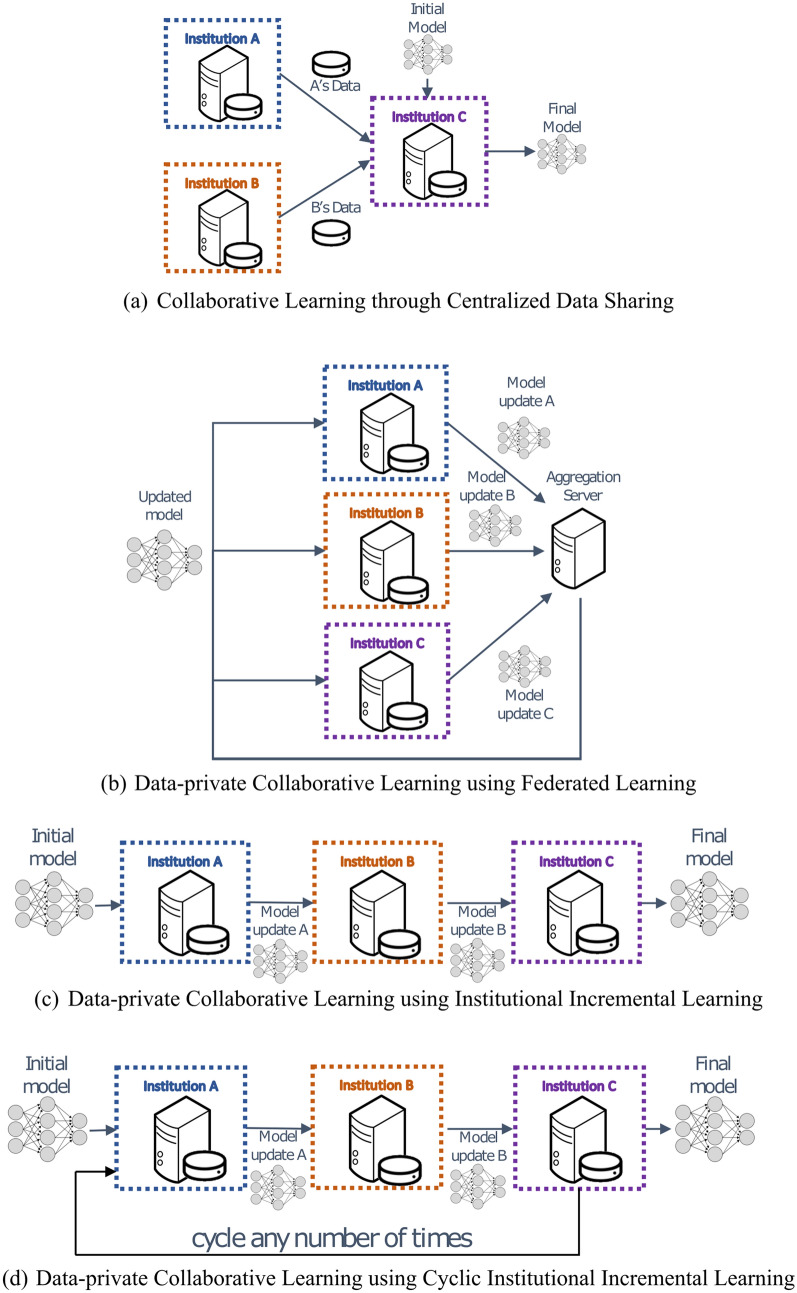
“CDS [33] : Collaborative data sharing is a traditional centralized machine learning strategy, which requires that each party uploads its patient data to the center server for training.”
BackgroundAdaptive Privacy-Preserving Federated Learning for Fault Diagnosis in Internet of Ships
Zhang, Z., Guan, C., Chen, H., Yang, X., Gong, W., & Yang, A. (2021) · IEEE Internet of Things Journal · doi:10.1109/jiot.2021.3115817 · Cited by 118
Lo, J., Yu, T. T., Ma, D., Zang, P., Owen, J. P., Zhang, Q., Wang, R. K., Beg, M. F., Lee, A. Y., Jia, Y., et al. (2021) · Ophthalmology Science · doi:10.1016/j.xops.2021.100069 · Cited by 105
“Federated learning is a distributed machine learning approach that enables model training on a large corpus of decentralized data originating from different sources without directly accessing the sensitive data.(19) Cross-device federated learning, as originally described by Google,(20) consists of a framework in whic…”
BackgroundExplainable, Domain-Adaptive, and Federated Artificial Intelligence in Medicine
Chaddad, A., Lu, Q., Li, J., Katib, Y., Kateb, R., Tanougast, C., Bouridane, A., & Abdulkadir, A. (2023) · IEEE/CAA Journal of Automatica Sinica · doi:10.1109/jas.2023.123123 · Cited by 141
“Unlike the shallow DA, deep DA methods can leverage deep networks to learn more transferable representations by embedding DA in a deep learning pipeline [50].”
BackgroundFederated learning for medical imaging radiology
Rehman, M. H. U., Pinaya, W. H. L., Nachev, P., Teo, J., Sebastien Ourselin, A., & Cardoso, M. J. (2023) · British Journal of Radiology · doi:10.1259/bjr.20220890 · Cited by 160
“(1) the learning process is initiated by an orchestration server, (2) the server selects, registers, and/or clusters participating institutions, (3) the server broadcasts the training and evaluation configurations along with information about datasets, (4) participating institutions execute their local single/multitas…”
A comprehensive review on federated learning based models for healthcare applications
Sharma, S., & Guleria, K. (2023) · Artificial Intelligence in Medicine · doi:10.1016/j.artmed.2023.102691 · Cited by 128
Federated learning in medical imaging: Part II: methods, challenges, and considerations
Darzidehkalani, E., Ghasemi-rad, M., & van Ooijen, P. M. A. (2022) · Journal of the American College of Radiology · doi:10.1016/j.jacr.2022.03.016 · Cited by 103
Huang, B. L., Sollee, J., Luo, Y., Reddy, A., Zhong, Z., Wu, J., Mammarappallil, J. G., Healey, T. T., Cheng, G., Azzoli, C. G., et al. (2022) · EBioMedicine · doi:10.1016/j.ebiom.2022.104127 · Cited by 121
RoFL: Robustness of Secure Federated Learning
Lycklama, H., Burkhalter, L., Viand, A., Küchler, N., & Hithnawi, A. (2023) · IEEE Symposium on Security and Privacy (S&P) · doi:10.1109/sp46215.2023.10179400 · Cited by 227
Federated disentangled representation learning for unsupervised brain anomaly detection
Bercea, C. I., Wiestler, B., Rueckert, D., & Albarqouni, S. (2022) · Nature Machine Intelligence · doi:10.1038/s42256-022-00515-2 · Cited by 153
Personalized Retrogress-Resilient Federated Learning Toward Imbalanced Medical Data
Chen, Z., Yang, C., Zhu, M., Peng, Z., & Yuan, Y. (2022) · IEEE Transactions on Medical Imaging · doi:10.1109/tmi.2022.3192483 · Cited by 97
“tion has been applied to a variety of medical tasks for exploratory attempts [17].”
BackgroundMultimodal federated learning: Concept, methods, applications and future directions
Huang, W. X., Wang, D., Ouyang, X., Wan, J., Liu, J., & Li, T. (2024) · Information Fusion · doi:10.1016/j.inffus.2024.102576 · Cited by 132
Fouda, M. M., Fadlullah, Z. M., Ibrahem, M. I., & Kato, N. (2024) · IEEE Communications Surveys & Tutorials · doi:10.1109/comst.2024.3486690 · Cited by 123
“A collaborative effort between Intel and UPenn [194] employed Intel SGX in the FL context to address medical imaging, where data is trained locally, encrypted, and aggregated using the SGX enclave before being transmitted to clients.”
Inverse Distance Aggregation for Federated Learning with Non-IID Data
Yeganeh, Y., Farshad, A., Navab, N., & Albarqouni, S. (2020) · Lecture notes in computer science · doi:10.1007/978-3-030-60548-3_15 · Cited by 140
Federated Semi-Supervised Learning for Medical Image Segmentation via Pseudo-Label Denoising
Qiu, L., Cheng, J., Gao, H., Xiong, W., & Ren, H. (2023) · IEEE Journal of Biomedical and Health Informatics · doi:10.1109/jbhi.2023.3274498 · Cited by 117
Federated Multi-Task Learning for Joint Diagnosis of Multiple Mental Disorders on MRI Scans
Huang, Z.-A., Hu, Y. F., Liu, R., Xue, X., Zhu, Z., Song, L., & Tan, K. C. (2022) · IEEE Transactions on Biomedical Engineering · doi:10.1109/tbme.2022.3210940 · Cited by 112
“They further concluded that the model trained via FL can achieve similar performance as the model achieved with centralized data [8].”
Result
Metadata
- Authors
- Sheller, M. J., Edwards, B., Reina, G. A., Martin, J., Pati, S., Kotrotsou, A., Milchenko, M., Xu, W., Marcus, D., Colen, R. R., & Bakas, S.
- Affiliations
- Intel (United States) (US)
- University of Pennsylvania (US)
- The University of Texas MD Anderson Cancer Center (US)
- Washington University in St. Louis (US)
- Corresponding author
- Bakas, Spyridon
- ORCID
- Venue
- Scientific Reports
- Published
- 2020-07-28
- Volume
- 10
- Issue
- 1
- Pages
- 12598-12598
- ISSN
- 2045-2322 (ISSN-L)
- PMC
- PMC7387485
- OpenAlex
- W3045674654
- Semantic Scholar
- ee6da0ca07fe062968a66887edddfc8a0034a409
- Cited by
- 1,646
- References
- 33
- Citations by year
- 2026: 482 · 2025: 401 · 2024: 227 · 2023: 215 · 2022: 201 · 2021: 110 · 2020: 10
- FWCI
- 52.64
- Type
- journal article
- Language
- en
- Open access
- gold
- doi.org
- Licence
- cc-by
- creativecommons.org/licenses/by/4.0 (tdm)
- creativecommons.org/licenses/by/4.0 (vor)
- Locations
- Scientific Reports (publishedVersion, cc-by)
- PubMed Central (publishedVersion, cc-by)
- PubMed (publishedVersion)
- Digital Commons@Becker (Washington University School of Medicine) (submittedVersion, cc-by)
- Funders
- National Cancer Institute (U24CA189523)
- UPMC CCSG (P30 CA047904)
- National Institute of Neurological Disorders and Stroke (R01NS042645)
- Topics
- Physical Sciences › Computer Science › Artificial Intelligence › Privacy-Preserving Technologies in Data
- Health Sciences › Medicine › Health Informatics › Artificial Intelligence in Healthcare and Education
- Physical Sciences › Computer Science › Artificial Intelligence › Domain Adaptation and Few-Shot Learning
- Keywords
- federated learning, multi-institutional collaboration, data privacy, patient data sharing, data ownership, model generalization, cooperative learning, precision medicine, deep learning in healthcare, biomarker discovery
- MeSH terms
- Humans, Interinstitutional Relations, Learning, Medicine, Patients, Privacy, Information Dissemination
About these checks
Registry, retraction, Cites and statistics results are computed, not judged, with one exception: a printed reference that no index lists is read once by a model before it counts as a citation error. Claims are extracted by a model and kept only when their quote appears verbatim in the text; each cited source is then checked, with a model’s help, for whether it says what the claim relies on. Those verdicts can be wrong — read the claim’s quote and the cited source before relying on one.
Statistics and arithmetic are recomputed, not judged.
Confidence bands are shown only for fields calibrated on our annotated test set. None is calibrated yet, so no band is shown.
What counts as a claim ›How we measure confidence ›How we check this ›
Are you an author, or do you see a problem with this page? Request a review
Data sources
Bibliographic data: Semantic Scholar, OpenAlex, Crossref.
Contains information from the Semantic Scholar Academic Graph Datasets, made available under the ODC Attribution License (ODC-BY 1.0).
Semantic Scholar’s data is described in: Kinney, R., et al. (2023). The Semantic Scholar Open Data Platform. arXiv:2301.10140.
