

Federated learning in medicine: facilitating multi-institutional collaborations without sharing patient data
Open accessThe DOI matches its Crossref record; 36 of the 36 references it cites were found in a registry or an index.
Abstract
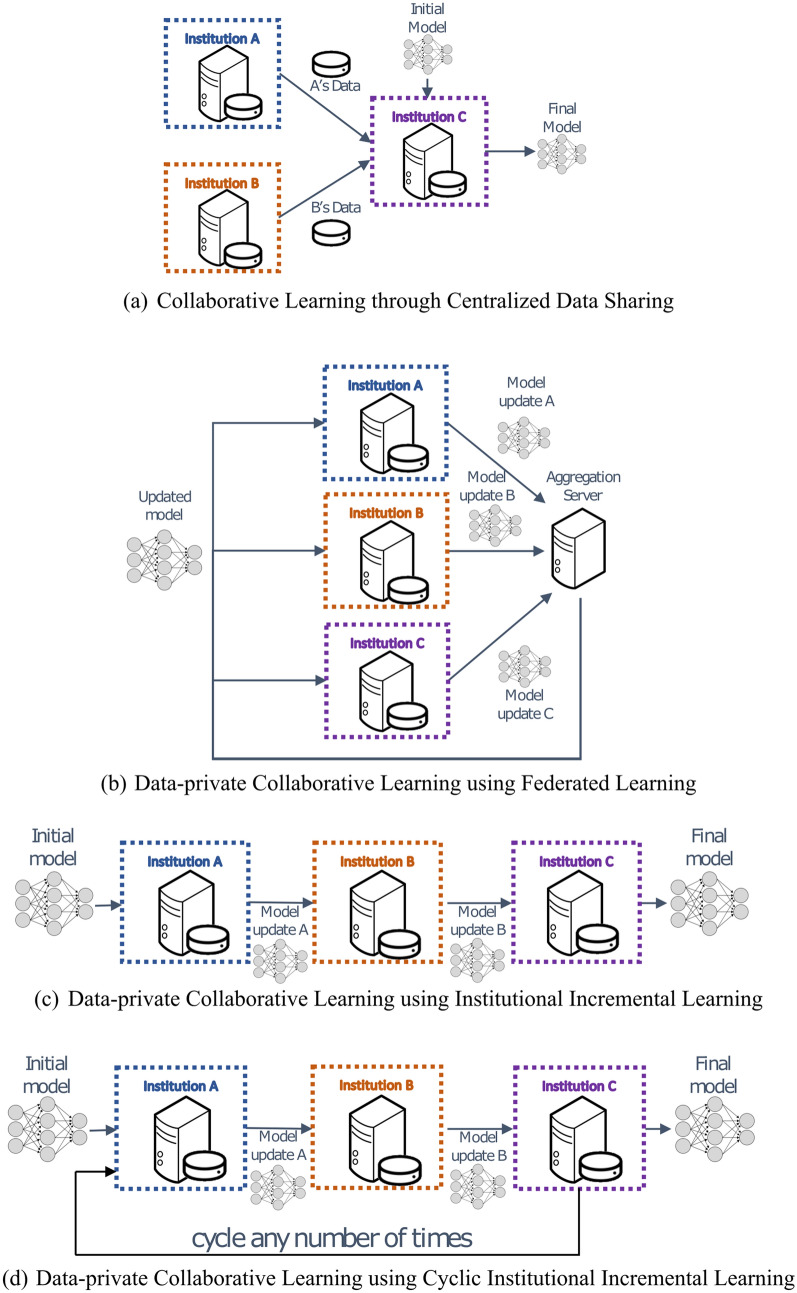
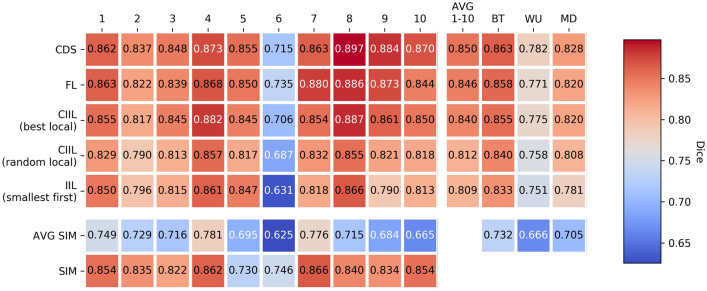
Several studies underscore the potential of deep learning in identifying complex patterns, leading to diagnostic and prognostic biomarkers. Identifying sufficiently large and diverse datasets, required for training, is a significant challenge in medicine and can rarely be found in individual institutions. Multi-institutional collaborations based on centrally-shared patient data face privacy and ownership challenges. Federated learning is a novel paradigm for data-private multi-institutional collaborations, where model-learning leverages all available data without sharing data between institutions, by distributing the model-training to the data-owners and aggregating their results. We show that federated learning among 10 institutions results in models reaching 99% of the model quality achieved with centralized data, and evaluate generalizability on data from institutions outside the federation. We further investigate the effects of data distribution across collaborating institutions on model quality and learning patterns, indicating that increased access to data through data private multi-institutional collaborations can benefit model quality more than the errors introduced by the collaborative method. Finally, we compare with other collaborative-learning approaches demonstrating the superiority of federated learning, and discuss practical implementation considerations. Clinical adoption of federated learning is expected to lead to models trained on datasets of unprecedented size, hence have a catalytic impact towards precision/personalized medicine.
Overview
The claims and statistics of this paper haven’t been checked yet.
Free: it reads the open-access text and checks the first 5 claims that cite a source we can check. Create a free account to check every claim.
Integrity signals
Registry
Cites
Statistics
Figures
Verification
Claims the paper makes
The claims and statistics of this paper haven’t been checked yet.
Free: it reads the open-access text and checks the first 5 claims that cite a source we can check. Create a free account to check every claim.
Claims other papers make about this one
Each is checked against this paper’s own text: does it say what the citing paper says it does?
The source backs part of the claim, not all of it — or backs it for a different population, condition or comparison.
In the citing paper
“Findings from these studies supported the superiority of the FL workflow used in the present study (i.e., based on an aggregation server10,14), which had almost identical performance to CL, for this use-case.”
From Federated learning enables big data for rare cancer boundary detection (2022) · cites this paper as [11]
Experimental — accuracy not yet measuredThe source backs part of the claim, not all of it — or backs it for a different population, condition or comparison.
In the citing paper
“We have identified this FL workflow (based on a central aggregation server) as the optimal for this use-case, following a performance evaluation11 for this very same task, i.e., detecting glioblastoma sub-compartment boundaries.”
From Federated learning enables big data for rare cancer boundary detection (2022) · cites this paper as [11]
Experimental — accuracy not yet measuredThe source backs part of the claim, not all of it — or backs it for a different population, condition or comparison.
In the citing paper
“However, works that examine the practical application of FL in radiological applications are still limited.20,21”
From Federated learning improves site performance in multicenter deep learning without data sharing (2021) · cites this paper as [21]
Experimental — accuracy not yet measuredThe source backs part of the claim, not all of it — or backs it for a different population, condition or comparison.
In the citing paper
“FL allows training of AI models through averaging of local updates from numerous healthcare facilities and smart devices, such as IoMT, despite the lack of local data.”
From Federated learning-based AI approaches in smart healthcare: Concepts, taxonomies, challenges and open issues (2023) · cites this paper as [12]
Experimental — accuracy not yet measuredThe source backs part of the claim, not all of it — or backs it for a different population, condition or comparison.
In the citing paper
“Federated Learning has presented itself as a viable method for implementing economic, innovative healthcare systems while ensuring privacy [11–15].”
From Federated learning-based AI approaches in smart healthcare: Concepts, taxonomies, challenges and open issues (2023) · cites this paper as [12]
Experimental — accuracy not yet measured
12 more claims about this paper
Create a free account to see every claim other papers make about this one.
Self-check
Percentages, sums and reported differences re-computed from the paper’s own numbers.
The self-check needs the paper’s full text.
Citations
Cites
Adam: A Method for Stochastic Optimization
Kingma, D. P., & Ba, J. (2014) · arXiv · doi:10.48550/arxiv.1412.6980 · Cited by 98,946
Measures of the Amount of Ecologic Association Between Species
Dice, L. R. (1945) · Ecology · doi:10.2307/1932409 · Cited by 11,874
The multimodal brain tumor image segmentation benchmark (BRATS)
Menze, B. H., Jakab, A., Bauer, S., Kalpathy-Cramer, J., Farahani, K., Kirby, J., Burren, Y., Porz, N., Slotboom, J., Wiest, R., et al. (2015) · IEEE Transactions on Medical Imaging · doi:10.1109/tmi.2014.2377694 · Cited by 6,781 · cited 10×
“The binarized whole tumor (WT) labels for the BraTS 2017 validation data and the additional 22 BraTS 2017 test cases that were moved to BraTS 2019 validation set, were provided to the lead author Micah Sheller after the conclusion of the BraTS 2018 competition and under a signed Non-Disclosure Agreement.”
MethodInfluentialThe Cancer Imaging Archive (TCIA): Maintaining and Operating a Public Information Repository
Clark, K., Vendt, B., Smith, K., Freymann, J., Kirby, J., Koppel, P., Moore, S., Phillips, S., Maffitt, D., Pringle, M., et al. (2013) · Journal of Digital Imaging · doi:10.1007/s10278-013-9622-7 · Cited by 4,599 · cited 4×
“The additional experiments conducted here attempt to evaluate model generalization under various training schemes comprising (1) single institution training, (2) LOO validation, and importantly (3) exhaustively evaluating performance differences between FL, IIL, and CIIL, by exploring convergence, “model selection”, a…”
BackgroundMethodInfluentialBakas, S., Akbari, H., Sotiras, A., Bilello, M., Rozycki, M., Kirby, J. S., Freymann, J. B., Farahani, K., & Davatzikos, C. (2017) · Scientific Data · doi:10.1038/sdata.2017.117 · Cited by 3,049
Self-citationThe EU General Data Protection Regulation (GDPR)
Voigt, P., & von dem Bussche, A. (2017) · doi:10.1007/978-3-319-57959-7 · Cited by 3,001 · cited 2×
“This study shows that data-private collaborative learning approaches, and particularly FL, can achieve the full learning capacity of the data while obviating the need to share patient data, and hence facilitate large-scale multi-institutional collaborations, while overcoming technical and data ownership concerns and a…”
BackgroundCatastrophic forgetting in connectionist networks
French, R. (1999) · Trends in Cognitive Sciences · doi:10.1016/s1364-6613(99)01294-2 · Cited by 2,311 · cited 1×
“We see this behavior as indicative of catastrophic forgetting 18 .”
BackgroundFederated Learning with Non-IID Data
Zhao, Y., Li, M., Lai, L., Suda, N., Civin, D., & Chandra, V. (2018) · arXiv · doi:10.48550/arxiv.1806.00582 · Cited by 2,077
Zech, J. R., Badgeley, M. A., Liu, M., Costa, A. B., Titano, J. J., & Oermann, E. K. (2018) · PLOS Medicine · doi:10.1371/journal.pmed.1002683 · Cited by 1,719
Bakas, S., Reyes, M., Jakab, A., Bauer, S., Rempfler, M., Crimi, A., Shinohara, R. T., Berger, C., Ha, S. M., Rozycki, M., et al. (2018) · Apollo - University of Cambridge Repository · doi:10.17863/cam.38755 · Cited by 1,441
Self-citation
Research works printed but not linked: 3
- Fredrikson, M., Jha, S. & Ristenpart, T. in Proceedings of the 22nd ACM SIGSAC Conference on Computer and Communications Security 1322–1333 (ACM, Denver, Colorado, USA, 2015).
- Hitaj, B., Ateniese, G. & Perez-Cruz, F. in Proceedings of the 2017 ACM SIGSAC Conference on Computer and Communications Security 603–618 (ACM, Dallas, Texas, USA, 2017).
- Ronneberger, O., Fischer, P. & Brox, T. in International Conference on Medical Image Computing and Computer-Assisted Intervention. 234–241 (Springer).
Cited by
Items 801–900 of 1,000
Refacing Defaced MRI with PixelCNN
Xiao, Y., Ashbee, W. S., Calhoun, V. D., & Plis, S. (2022) · International Joint Conference on Neural Networks (IJCNN) · doi:10.1109/ijcnn55064.2022.9891937 · Cited by 5
Kádár, A., & Hadházi, D. (2022) · International Joint Conference on Neural Networks (IJCNN) · doi:10.1109/ijcnn55064.2022.9892034 · Cited by 3
“In such cases, larger companies, organisations and groups of companies are seeking to apply secure collaborative learning for example in financial risk forecasting or pharmaceutical research [3].”
BackgroundFederated Feature Concatenate Method for Heterogeneous Computing in Federated Learning
Chung, W., Chang, Y.-C., Hsu, C., Chang, C., & Hung, C. (2023) · Computers, materials & continua/Computers, materials & continua (Print) · doi:10.32604/cmc.2023.035720 · Cited by 4
k-PFed: Communication-efficient Personalized Federated Clustering
Zhang, L., & Xu, Z. (2023) · IEEE International Conference on Electronic Technology, Communication and Information (ICETCI) · doi:10.1109/icetci57876.2023.10176651 · Cited by 4
“Recently, FL has achieved excellent achievements in various areas, including medical records analysis, medical image identification, and financial data analysis[1].”
BackgroundWeighting Schemes for Federated Learning in Heterogeneous and Imbalanced Segmentation Datasets
Otálora, S., Rafael‐Patiño, J., Madrona, A., Fischi-Gómez, E., Ravano, V., Kober, T., Christensen, S., Hakim, A., Wiest, R., Richiardi, J., et al. (2023) · Lecture notes in computer science · doi:10.1007/978-3-031-33842-7_4 · Cited by 8
Jacobs, P., Ehrengut, C., Bucher, A. M., Penzkofer, T., Lukas, M., Kleesiek, J., & Denecke, T. (2023) · Healthcare · doi:10.3390/healthcare11172377 · Cited by 5
Artificial intelligence in oncology
Likitlersuang, J., & Kann, B. H. (2023) · Elsevier eBooks · doi:10.1016/b978-0-443-15688-5.00045-0 · Cited by 3
A Client-Server Deep Federated Learning for Cross-Domain Surgical Image Segmentation
Subedi, R., Gaire, R. R., Ali, S., Nguyen, A., Stoyanov, D. V., & Bhattarai, B. (2023) · Lecture notes in computer science · doi:10.1007/978-3-031-44992-5_3 · Cited by 7
Mirza‐Aghazadeh‐Attari, M., Afyouni, S., Zandieh, G., Nia, I. Y., Mohseni, A., Borhani, A., Madani, S. P., Shahbazian, H., Ansari, G., Kim, A., et al. (2023) · Journal of Computer Assisted Tomography · doi:10.1097/rct.0000000000001557 · Cited by 3
Federated Learning Framework for IID and Non-IID datasets of Medical Images
Srinivasan, K., Prasanna, S., Midha, R., & Mohan, S. G. (2023) · EMITTER International Journal of Engineering Technology · doi:10.24003/emitter.v11i1.742 · Cited by 4
“The Sheller et al. evidenced this in 2020 using data-private collaborative learning approach for multi-institutional data [10].”
MethodSyu, J.-H., Lin, J. C., & Srivastava, G. (2024) · ACM Transactions on Sensor Networks · doi:10.1145/3640341 · Cited by 7
Federated Evaluation of nnU-Nets Enhanced with Domain Knowledge for Brain Tumor Segmentation
Kotowski, K., Adamski, S., Machura, B., Malara, W., Zarudzki, Ł., & Nalepa, J. (2023) · Lecture notes in computer science · doi:10.1007/978-3-031-44153-0_21 · Cited by 4
Automated Lung Nodule Segmentation Using Federated Learning Through CT Images
Bhattacharjee, A., Murugan, R., & Goel, T. (2023) · International Conference on Robotics and Automation Engineering (ICRAE) · doi:10.1109/icrae59816.2023.10458657 · Cited by 3
“Accessing a large, centralized pulmonary nodule dataset is difficult due to data privacy concerns [10].”
BackgroundFederated Learning for Enhanced Performance on Decentralized Healthcare Datasets
Ali, F., Kulkarni, A. V., Hussain, S., & Mhatre, N. (2024) · IEEE International Conference on Interdisciplinary Approaches in Technology and Management for Social Innovation (IATMSI) · doi:10.1109/iatmsi60426.2024.10503059 · Cited by 3
“Therefore, some researchers created their own client-server FL implementation in Python for future research using actual clinical data from hospitals [6].”
BackgroundMethodArtificial intelligence in diabetes management
Thomas, A., Gopi, V. P., & Francis, B. (2024) · Advances in Artificial Intelligence · doi:10.1016/b978-0-443-19073-5.00002-1 · Cited by 3
Making Federated Learning Accessible to Scientists: The AI4EOSC Approach
Díaz, J. S.-P., Canales, A. H., Heredia, I., Tran, V., Nguyen, G., Alibabaei, K., Ruiz, M. O., Ruiz, S. R., & García, Á. L. (2024) · ACM Workshop on Information Hiding and Multimedia Security (IH&MMSec) · doi:10.1145/3658664.3659642 · Cited by 10
“In the field of medical imaging, federated learning has shown promise for future advances [34, 45, 48].”
BackgroundWebQuorumChain: A web framework for quorum-based health care model learning
Shao, X., Pham, A., & Kuo, T.-T. (2024) · Informatics in Medicine Unlocked · doi:10.1016/j.imu.2024.101590 · Cited by 4
“This dual desire to facilitate big data analysis within the constraint of restricted privacy calls for the use of federated learning (FL) techniques [18,19].”
BackgroundKundalwal, M. K., & Mishra, D. (2025) · IEEE Transactions on Emerging Topics in Computational Intelligence · doi:10.1109/tetci.2025.3569759 · Cited by 4
“[8]andDayan etal.”
Yogananda, C. G. B., Truong, N. C. D., Wagner, B., Xi, Y., Bowerman, J., Reddy, D. D., Holcomb, J. M., Saadat, N., Hatanpaa, K. J., Patel, T., et al. (2025) · Neuro-Oncology Advances · doi:10.1093/noajnl/vdaf142 · Cited by 5
“26 FeTS co-registers the images to the SRI24 template space, 27 performs skull-stripping, and multi-class brain tumor segmentation.”
Krauze, A. V. (2022) · Oncology Insights · doi:10.55085/oi.2022.616 · Cited by 6
Specifications for the Routine Implementation of Federated Learning in Hospitals Networks
Lamer, A., Filiot, A., Bouillard, Y., Mangold, P., Andrey, P., & Schiro, J. (2021) · Studies in health technology and informatics · doi:10.3233/shti210134 · Cited by 6
“As an alternative approach, Federated Learning (FL) consists in training statistical models in a decentralized way, leaving the data on each site, running computations locally and communicating aggregated information between centers during the training phase [1].”
MethodST-FL: style transfer preprocessing in federated learning for COVID-19 segmentation
Georgiadis, A., Babbar, V., Silavong, F., Moran, S. J., & Otter, R. (2022) · SPIE Medical Imaging: Imaging Informatics for Healthcare, Research, and Applications · doi:10.1117/12.2611096 · Cited by 5
“Given the k client’s model prediction for the i example Gωk(xk) ∈ [0, 1] and the corresponding ground truth label, y k ∈ {0, 1} our client objective function is a simple cross entropy loss: LCE(y k,Gωk(xk)) = y k log(Gωk(xk)) + (1− y k) log(1− Gωk(xk)) (1)”
BackgroundSpecialty Society Support for Multicenter Research in Artificial Intelligence
Allen, B., Schmidt, K., Brink, L., Pisano, E. D., Coombs, L. P., Apgar, C., Dreyer, K. J., & Wald, C. (2023) · Academic Radiology · doi:10.1016/j.acra.2023.01.010 · Cited by 3
Towards Understanding the Risks of Gradient Inversion in Federated LearningPreprint
Hatamizadeh, A., Yin, H., Molchanov, P. A., Myronenko, A., Li, W., Dogra, P., Feng, A., Flores, M. G., Kautz, J., Xu, D., et al. (2021) · Research Square · doi:10.21203/rs.3.rs-1147182/v1 · Cited by 5
Synthetic data shuffling accelerates the convergence of federated learning under data heterogeneity
Li, B., Esfandiari, Y., Schmidt, M. N., Alstrøm, T. S., & Stich, S. U. (2023) · Transactions on machine learning research · doi:10.48550/arxiv.2306.13263 · Cited by 10
“…learning paradigm that allows a central server model to be learned collaboratively from distributed clients without ever requesting the client data, thereby dealing with the issue of data access rights (Konečný et al., 2016; Kairouz et al., 2019; Wang et al., 2021; Sheller et al., 2020).”
BackgroundAdewole, M., Rudie, J. D., Gbdamosi, A., Toyobo, O. O., Raymond, C., Zhang, D., Omidiji, O. A. T., Akinola, R., Suwaid, M. A., Emegoakor, A., et al. (2023) · PubMed Central · Cited by 56
Self-citationThe role of multimodality in clinical disease diagnosis: advances, challenges, and opportunities
Nawaz, A., Edinat, A., Rana, M. R. R., Ali, T., Mustafa, G., Tahir, S., & Lee, S. W. (2026) · Frontiers in public health · doi:10.3389/fpubh.2026.1788454 · Cited by 3
Investigation of distributed learning for automated lesion detection in head MR images
Yamada, A., Hanaoka, S., Takenaga, T., Miki, S., Yoshikawa, T., & Nomura, Y. (2024) · Radiological Physics and Technology · doi:10.1007/s12194-024-00827-5 · Cited by 4
“In contrast, FL is more stable than CWT, because FL updates the global model using updated information from all training institutions for each round [35].”
BackgroundMarletta, D. A., Nanni, M., Giuca, G., Sanzarello, I., Zampogna, B., & Leonetti, D. (2024) · Applied Sciences · doi:10.3390/app142411652 · Cited by 4
An Innovative Approach Towards Efficient Diabetes Mellitus Prediction Using Federated Forest
Madhu, G., De, A., & Pal, G. (2024) · IEEE Silchar Subsection Conference (SILCON) · doi:10.1109/silcon63976.2024.10910400 · Cited by 2
“This has high importance in the medical field, as patient populations and treatment protocols can vary widely from location to location of different institutes [5].”
A Comprehensive Review of Federated Learning in Cancer Diagnosis and Prognosis Prediction
Reddy, K. D., Anusha, S., & Ashalatha, N. (2025) · IgMin Research · doi:10.61927/igmin294 · Cited by 4
Secflh- Defending Federated Learning-Based IoT Health Prediction Systems Against Poisoning Attacks
Liyanage, S., Weerawardhane, V., Kheminda, J., Siriwardhana, Y., Weerasinghe, T. N., & Liyanage, M. (2025) · Joint European Conference on Networks and Communications & 6G Summit (EuCNC/6G Summit) · doi:10.1109/eucnc/6gsummit63408.2025.11037014 · Cited by 4
A Byzantine-robust federated learning against adversarial–majority attacks
Shi, Y., Hu, X., Bai, S., Liu, Y., & Lin, H. W. (2025) · The Journal of Supercomputing · doi:10.1007/s11227-025-07619-7 · Cited by 3
“Federated Learning (FL) [1], as an emerging distributed machine learning framework, has achieved significant progress in recent years across various industries, including intrusion detection [2, 3], autonomous driving [4, 5], and healthcare [6, 7].”
PathFL: Multi-alignment Federated Learning for pathology image segmentation
Zhang, Y., Chen, F., Qi, Y., Yang, G., & Fu, H. (2025) · Medical Image Analysis · doi:10.1016/j.media.2025.103670 · Cited by 6
Early Breast Cancer Detection Using Deep Learning Classification
Miled, A. B., & Cherif, A. (2025) · Engineering Technology & Applied Science Research · doi:10.48084/etasr.11030 · Cited by 2
van der Heijden, T. G. W., Hubel, N. J., de Ligt, K. M., Kist, I., Arndt, V., Verkooijen, H. M., Velikova, G., Hoedjes, M., de Rooij, B. H., Holzner, B., et al. (2025) · ESMO Real World Data and Digital Oncology · doi:10.1016/j.esmorw.2025.100172 · Cited by 4
“47,48 It can be an effective solution to these various interpretations of the GDPR as keeping data localized mitigates data protection concerns.”
Wang, H., Zhang, X., Ren, X., Zhang, Z., Yang, S., Lian, C., Ma, J., & Zeng, D. (2025) · Communications Engineering · doi:10.1038/s44172-025-00485-4 · Cited by 5
“(I) Traditional FL 8 – 11 focuses on improving model performance on internal clients but neglects model generalizability on unseen datasets outside the federation.”
A Personalized and Explainable Federated Learning Approach for Recommendation Systems
Alawadi, S., Awaysheh, F. M., Athukorala, T. A. J. S., Gande, S., & Alkhabbas, F. (2025) · IEEE International Conference on Edge Computing and Communications (EDGE) · doi:10.1109/edge67623.2025.00027 · Cited by 2
“[9] demonstrated FL’s effectiveness in medical imaging, while [10] integrated differential privacy into FL to strengthen data security [11].”
Triple Model Framework for Medical Diagnosis: Assist in the Decentralization of Medical Resources
Wang, C. G., Wang, H., Li, W., Wang, S., Wang, J., & Ji, K. (2025) · IEEE Access · doi:10.1109/access.2025.3601142 · Cited by 2
Federated Learning for Securing Medical Imaging Against Deepfakes in 6G Smart Hospitals
Perales, E., Verdy-Ricard, R., Labiod, M. A., Bendiab, G., & Chenoune, Y. (2025) · IEEE International Conference on Cyber Security and Resilience (CSR) · doi:10.1109/csr64739.2025.11130027 · Cited by 2
ClusFed: A Clustering-Based Defense for Secure Federated Learning
Kabbaj, H., El-Azouzi, R., & Kobbane, A. (2025) · IEEE Access · doi:10.1109/access.2025.3605870 · Cited by 2
Siomos, V., Passerat‐Palmbach, J., & Tarroni, G. (2025) · Lecture notes in computer science · doi:10.1007/978-3-032-04978-0_24 · Cited by 3
Gu, S., Tang, Z., Qiu, S., & Wang, X. (2025) · Lecture notes in computer science · doi:10.1007/978-3-032-05663-4_9 · Cited by 2
Yöner, S. I., Aksoy, M. E., Südor, H. C., İzzetoğlu, K., Bozkurt, B., & Dinçer, A. (2025) · Sensors · doi:10.3390/s25206340 · Cited by 3
EndoCompass project: artificial intelligence in endocrinology
Assié, G., Carneiro, G., Davies, E., Šojat, A. S., & Mertens, J. (2025) · European Journal of Endocrinology · doi:10.1093/ejendo/lvaf073 · Cited by 2
Artificial intelligence in medical imaging: bridging innovation, ethics, and clinical impact
Vadlapudi, V., & Kaladhar, D. S. V. G. K. (2025) · International Journal of Advances in Medicine · doi:10.18203/2349-3933.ijam20253360 · Cited by 3
Jraba, S., Elleuch, M., Ltifi, H., & Kherallah, M. (2025) · Procedia Computer Science · doi:10.1016/j.procs.2025.09.521 · Cited by 2
Toward security-aware portable sequencing
Stillman, C., Bravo, J. E., Boucher, C. A., & Rampazzi, S. (2025) · Nature Communications · doi:10.1038/s41467-025-66024-z · Cited by 2
Bridging gaps in AI-driven cardio-oncology: global advances and Middle East perspectives
Albulushi, A., & Al-Farhan, H. (2025) · Cardio-Oncology · doi:10.1186/s40959-025-00411-9 · Cited by 4
“Equally critical is ensuring that ethical principles are not merely aspirational but are embedded in local policy and practice, especially in low-and middle-income countries where governance structures may be underdevel-oped [14, 44].”
GradInvDiff: Stealing Medical Privacy in Federated Learning via Diffusion-Based Gradient Inversion
Wang, Z., Gan, D., Fang, W., Zhu, Y., & Liu, K. (2025) · Lecture notes in computer science · doi:10.1007/978-3-032-05185-1_26 · Cited by 4
Mathew, M., & Angelin Jeba, P. (2025) · International Conference on Automation, Computing and Renewable Systems (ICACRS) · doi:10.1109/icacrs67045.2025.11324386 · Cited by 2
“Similarly, Sheller et al. validated the feasibility of multi institutional federated learning for medical imaging tasks, achieving high accuracy in pneumonia detection without compromising privacy [7].”
Pellegrino, G., Arnone, F., Girlando, M. F., Berloco, D., Perazzo, C., Triggiani, S., & Carrafiello, G. (2026) · Applied Sciences · doi:10.3390/app16020893 · Cited by 2
A Federated Deep Learning Framework for Sleep-Stage Monitoring Using the ISRUC-Sleep Dataset
Amato, A. (2026) · Applied Sciences · doi:10.3390/app16021073 · Cited by 2
Safeguarding Federated Learning From Data Reconstruction Attacks via Gradient Dropout
Sotthiwat, E., Zhang, C., Xiao, X., & Zhen, L. (2026) · IEEE Transactions on Information Forensics and Security · doi:10.1109/tifs.2026.3659401 · Cited by 4
“This framework is particularly important in privacy-sensitive domains, such as healthcare [2], [3], [4] and banking [5], [6], where regulations strictly prohibit the sharing of personal medical records or financial transactions.”
Akbulut, S., & Çolak, C. (2026) · World Journal of Gastrointestinal Oncology · doi:10.4251/wjgo.v18.i2.113870 · Cited by 4
Verma, R. K. (2026) · Studies in computational intelligence · doi:10.1007/978-3-032-03985-9_28 · Cited by 2
From Injection to Detection: Analyzing the Impact of Anomalous Data in Federated Learning
Lengl, M., Benesch, M., Röhrl, S., Schumann, S., Knopp, M., Hayden, O., & Diepold, K. J. (2026) · SN Computer Science · doi:10.1007/s42979-026-04775-2 · Cited by 2
“Conversely, FL in biomedical imaging has been studied (e.g., Rieke et al. [59], Sheller et al. [61]), but without comprehensive consideration of adversarial anomalies or corruption.”
Firdaus, N., & Raza, Z. (2026) · International Journal of Machine Learning and Cybernetics · doi:10.1007/s13042-025-02875-8 · Cited by 3
“There are a handful of possibilities for applying FL in the healthcare domain, including the extraction and classification of data from EHR [ 44 ], diagnosis and prediction of disease [ 3, 12, 31, 46 ], grouping of similar patients [ 24 ], and classification of medical images [ 20 ].”
Egbunu, A. S., & Okedoye, A. M. (2026) · Journal of Computing Theories and Applications · doi:10.62411/jcta.15367 · Cited by 3
“Transparent disclosure of AI use to patients — including consent for the secondary use of data — further strengthens trust and aligns with human rights – based governance principles [49].”
Cheema, M. N., Nazir, A., Harmanci, A. O., Harmancı, A. S., Cheema, Y., Masood, S., & Khokhar, F. A. (2026) · The Visual Computer · doi:10.1007/s00371-026-04385-2 · Cited by 2
“Projects like FeTS (Federated Tumor Segmentation) and COVID-19 Federated Learning consortia have shown that federated averaging across institutions enhances fairness and accuracy [184, 185].”
Li, X., Li, Y., Ma, Q., Xu, Y., Zhu, Y. S., Zhang, J., SHEN, J., Cai, W., Wei, C., & Jiang, Z. (2026) · BMC Nephrology · doi:10.1186/s12882-026-04869-2 · Cited by 2
“In the future, federated learning represents a promising direction for enhancing multicenter generalizability while avoiding raw data sharing [31].”
Penzel, N., Scheliga, D., Oppermann, H., Mäder, P., Haueisen, J., Denzler, J., & Seeland, M. (2026) · Journal of Biomedical Informatics · doi:10.1016/j.jbi.2026.105010 · Cited by 3
Zhang, X., Xiao, N., Du, S., Anipindi, M., Lee, C.-H., Yoshino, T., Anand, A., Xiao, L., & Kumar, A. (2026) · Blood Neoplasia · doi:10.1016/j.bneo.2026.100217 · Cited by 4
SBM–Attention U-Net: A Hybrid Transformer Network for Liver Tumor Segmentation in Medical Images
Chen, Y., Li, X., Du, Y., Jiang, H., Liu, X.-H., Ma, N., & Wang, X.-M. (2026) · Italian National Conference on Sensors · doi:10.3390/s26061851 · Cited by 2
Automated Multi-Site Federated Learning Infrastructure with Terraform-Based IaC on AWS
Mazumder, A., Punniyamoorthy, V., Saha, S., Bodala, R. S., Malempati, S., Butra, L., Carimireddy, S. K. R., & Kirubakaran, A. M. (2025) · International Conference on Computer and Applications (ICCA) · doi:10.1109/icca66035.2025.11430957 · Cited by 2
“Prior work has shown that FL can match centralized training for brain tumor segmentation on the BraTS dataset and can support privacy-preserving multi-site fMRI analysis [12], [13].”
Kogut-Czarkowska, M., & Shabani, M. (2026) · Frontiers in Digital Health · doi:10.3389/fdgth.2026.1719728 · Cited by 2
“Sharing health data through federated networks has been promoted as a more secure and legally compliant approach to enabling biomedical research (1, 2).”
Parhi, R., Jena, G. K., Garg, A., Dhobi, M., & Mondal, S. (2026) · Journal of Holistic Integrative Pharmacy · doi:10.1016/j.jhip.2026.03.002 · Cited by 3
A Skip-Free Collaborative Residual U-Net for Secure Multi-Center Liver and Tumor Segmentation
Alirr, O. I. (2026) · Eng—Advances in Engineering · doi:10.3390/eng7040151 · Cited by 4
Wang, Y., Li, Y., Lin, T., & Guo, Y. (2026) · npj Digital Medicine · doi:10.1038/s41746-026-02563-z · Cited by 3
“Federated analytic approaches 67,68 (e.g., FedAvg 69 , FedDistill 70 ) enable coordinated estimation while preserving local data structures and privacy constraints, but they do not, by themselves, guarantee the existence of a single, transportable causal effect.”
Atmoko, R. A., Pramono, S. H., Purnomo, M. F. E., Mudjirahardjo, P., Rohmatillah, M., & Avian, C. (2026) · Engineering Technology & Applied Science Research · doi:10.48084/etasr.15817 · Cited by 3
“Model decisions align with medical knowledge while protecting patient privacy [60, 61].”
Spatial AI in cancer: mapping immune evasion topology through multi-modal omics and deep learning
Lang, L., Cui, Y., Wang, H., & Xiao, Y. (2026) · Frontiers in Oncology · doi:10.3389/fonc.2026.1762907 · Cited by 3
“This enables collaborative model development while maintaining patient con fi dentiality (184).”
N., R. R., Ahmad, R. B., Balaji, P., & Rahayu, S. B. (2026) · Applied Computational Intelligence and Soft Computing · doi:10.1155/acis/4797749 · Cited by 2
Machine Learning-Based Prediction of Critical Deterioration in the PICU
Mehta, S. D., Tweedy, E., Herrera, V. M. R., Shi, H. L., Morgan, R. W., Sutton, R. M., Nishisaki, A., & Tsui, F. R. (2026) · Critical Care Explorations · doi:10.1097/cce.0000000000001397 · Cited by 3
“Thus, this study implies that an effective path to implementation may not be a single, universal algorithm, but rather a federated system that enables powerful, locally attuned models (29).”
Weng, Z., Cai, W., & Zhou, B. (2026) · IEEE Transactions on Neural Networks and Learning Systems · doi:10.1109/tnnls.2026.3684321 · Cited by 9
“In contrast, the Continual paradigm [51], [52], [53] restricts each client to receiving a single peer model at a time and directly updating it via local learning, significantly simplifying system overhead.”
Radiomics in Diagnosis of Jaw Lesions
Sathish, S. (2026) · Springer eBooks · doi:10.1007/978-981-92-0489-2_12 · Cited by 3
Artificial intelligence in paediatric chest imaging: applications, challenges, and future directions
Muringathuparambil, J. J., Maharaj, S., Segal, B., & Mahomed, N. (2026) · Pediatric Radiology · doi:10.1007/s00247-026-06671-6 · Cited by 3
“Hospitals can collaboratively train shared models whilst keeping images behind local firewalls, exchanging only model updates [28, 29].”
Zhou, Z., & Zhou, J. (2026) · Frontiers in Immunology · doi:10.3389/fimmu.2026.1746927 · Cited by 2
“Recent reviews have highlighted practical challenges such as non-independent data distributions, communication costs, and model alignment dif fi culties, underscoring the need for harmonized standards across medical centers (44, 45).”
Translational gaps in immuno-AI: From algorithmic accuracy to clinical trust
Oisakede, E. O., Daniel, R. I. A., Olawuyi, O. F., Alabi, J. O., Analikwu, C. C., & Olawade, D. B. (2026) · Human Immunology · doi:10.1016/j.humimm.2026.111774 · Cited by 4
Segment Anything Model for medical image segmentation: A review
Xiao, H., Liu, S., Liu, X., Qian, L., & Jiang, J. (2026) · Computerized Medical Imaging and Graphics · doi:10.1016/j.compmedimag.2026.102789 · Cited by 4
Understanding the Barriers to Translating Artificial Intelligence into the Clinical Laboratory
Neale, M. H., Wong, C., Kreuter, D., Taylor, J. G., & Sivapalaratnam, S. (2026) · European Journal of Internal Medicine · doi:10.1016/j.ejim.2026.107029 · Cited by 2
Nationwide federated learning for histopathology: secure deployment across Germany behind firewalls
Babendererde, N., Lemke, N., Stieber, J., Fuchs, M., Weng, Z., Eich, M., Lingscheidt, T., Mairinger, F. D., Büttner, R., Tolkach, Y., et al. (2026) · npj Digital Medicine · doi:10.1038/s41746-026-02958-y · Cited by 3
“Sheller et al. 22 are training on MRI data between 10 hospitals.”
Olivier, L. S., Oprea, C. L., Stollenwerk, A., Orlikowsky, T. W., & Schoberer, M. (2026) · JMIR Pediatrics and Parenting · doi:10.2196/94280 · Cited by 2
“This approach allows AI algorithms to be trained independently at different locations using locally available data, such that only model parameters are shared and no explicit patient data are exchanged; this approach is known as federated learning [26].”
Amoozgar, B., Bangolo, A., Thor, D. C., Rajanna, S., Abdelwahab, S., Mohamed, A. S., Mansour, C., & Ehsanullah, S. U. M. (2026) · Cancers · doi:10.3390/cancers18162598 · Cited by 3
“Multi-institutional studies have shown that federated approaches can achieve performance comparable to centrally trained models while preserving data privacy, supporting their use in collaborative clinical research environments [45].”
Artificial Intelligence in Epidemiology
Lefèvre, T., & Delpierre, C. (2022) · Springer eBooks · doi:10.1007/978-3-030-64573-1_97 · Cited by 2
Resilient and Verifiable Federated Learning against Byzantine Colluding Attacks
Kamhoua, G. A., Bandara, E., Foytik, P. B., Aggarwal, P., & Shetty, S. S. (2021) · IEEE International Conference on Trust, Privacy and Security in Intelligent Systems and Applications (TPS-ISA) · doi:10.1109/tpsisa52974.2021.00004 · Cited by 3
Hong, J.-F., & Tseng, Y. (2022) · IEEE-EMBS International Conference on Biomedical and Health Informatics (BHI ...) · doi:10.1109/bhi56158.2022.9926935 · Cited by 2
“However, the validation results of Ittai Dayan et al. [8] and Micah Sheller et al. [9] show that whether in internal or external validation datasets, federated learning outperforms only learning with a single institution in most medical institutions, and it also has better generalization.”
BackgroundResultCommunication-Efficient Secure Federated Statistical Tests from Multiparty Homomorphic Encryption
Annamalai, M. S. M. S., Jin, C., & Aung, K. M. M. (2022) · Applied Sciences · doi:10.3390/app122211462 · Cited by 4
Jin, Y., Zhu, H., Xu, J., & Chen, Y. (2022) · Machine learning · doi:10.1007/978-981-19-7083-2_4 · Cited by 2
Enhancing Robustness in Federated Learning by Supervised Anomaly Detection
Quan, P., Lee, W., Srivatsa, M., & Srivastava, M. B. (2022) · Proceedings - International Conference on Pattern Recognition/Proceedings/International Conference on Pattern Recognition · doi:10.1109/icpr56361.2022.9956655 · Cited by 3
“can be building health prediction and monitor systems on personal devices such as mobile phone or smart watch using daily activity signals [22, 23].”
BackgroundDL4HC: Deep Learning for Healthcare
Bhat, R., Mannarswamy, S. S., & Shreyas, N. C. (2023) · Joint International Conference on Data Science & Management of Data (CODS-COMAD) · doi:10.1145/3570991.3571056 · Cited by 3
“• Discuss the Data Silo challenges and key contributors to the Data Silo • Highlight why Federated Learning is critical to adoption of AI in Healthcare in the context of Data Silo challenges [17] • What it takes to deploy Federated Learning in a Healthcare setup.”
Background$$B^2$$-FedGAN: Balanced Bi-directional Federated GAN
Anaissi, A., & Suleiman, B. (2023) · Lecture notes in computer science · doi:10.1007/978-3-031-35995-8_27 · Cited by 2
Dual Aggregated Federated Learning with Depthwise Separable Convolution for Smart Healthcare
Xia, Y., & Chen, S. (2023) · International Conference on Communications · doi:10.1109/icc45041.2023.10278978 · Cited by 4
“Although the application of federated learning in medical image classification [8]-[9] has achieved good results, there are still some problems.”
Elhussein, A., Megjhani, M., Nametz, D. C., Weiss, M., Savarraj, J. P. J., Kwon, S. B., Roh, D. J., Agarwal, S., Connolly, E. S., Velazquez, A. G., et al. (2023) · IEEE International Conference on Bioinformatics and Biomedicine (BIBM) · doi:10.1109/bibm58861.2023.10385383 · Cited by 3
“One major benefit of FL is the increase in sample size [15], [16].”
BackgroundGeneration of harmonised pluvial flood hazard maps through decentralised analytics
Welten, S., Holt, A., Hofmann, J., Weber, S., Klopries, E., Schüttrumpf, H., & Decker, S. (2024) · Journal of Hydroinformatics · doi:10.2166/hydro.2024.257 · Cited by 5
A Local Score Strategy for Weight Aggregation in Federated Learning
Singh, G. (2023) · Lecture notes in computer science · doi:10.1007/978-3-031-44153-0_13 · Cited by 2
Jiang, M., Yang, H., Zhang, X., Zhang, S., & Dou, Q. (2023) · Lecture notes in computer science · doi:10.1007/978-3-031-44153-0_16 · Cited by 3
Implementing the human right to science in the context of health-related data processing
Molnár‐Gábor, F. (2024) · Journal of Law and the Biosciences · doi:10.1093/jlb/lsae004 · Cited by 2
Moradi, A., Zerka, F., Bosma, J. S., Yakar, D., Geerdink, J., Huisman, H. J., Bathen, T. F., & Elschot, M. (2024) · SPIE Medical Imaging: Computer-Aided Diagnosis · doi:10.1117/12.2688568 · Cited by 5
“15 In particular, for PCa detection on MRI data, Sarma et al. 16 utilized a multi-center federated training approach to improve the accuracy of prostate gland segmentation.”
MethodDellacasa, C. M., Ortali, M., Rossi, E., Attieh, H. A., Osmo, T., Puskaric, M., Rinaldi, E., Praßer, F., Stellmach, C., Cataudella, S., et al. (2024) · Digital Health · doi:10.1177/20552076241248922 · Cited by 2
“23, 24 The architecture deployed in the project is shown in Figure 2 and involves three different components (i.e. dedicated Virtual Machines - VM).”
MethodAI-Enhanced Image Translation for Seamless Communication in Global Tourism
Rubasri, S., F, S. R. N., Syed Khalid, J., Vignesh Balaji, R., Prasath, R., & Krishna, B. V. (2024) · International Conference on Advances in Data Engineering and Intelligent Computing Systems (ADICS) · doi:10.1109/adics58448.2024.10533622 · Cited by 2
“This innovative approach outperformed existing methods, validated through experiments on benchmark datasets (CUB and Oxford-102), marking significant progress in text-to-image synthesis ShellerMJ, Edwards B [15].”
Method
Metadata
- Authors
- Sheller, M. J., Edwards, B., Reina, G. A., Martin, J., Pati, S., Kotrotsou, A., Milchenko, M., Xu, W., Marcus, D., Colen, R. R., & Bakas, S.
- Affiliations
- Intel (United States) (US)
- University of Pennsylvania (US)
- The University of Texas MD Anderson Cancer Center (US)
- Washington University in St. Louis (US)
- Corresponding author
- Bakas, Spyridon
- ORCID
- Venue
- Scientific Reports
- Published
- 2020-07-28
- Volume
- 10
- Issue
- 1
- Pages
- 12598-12598
- ISSN
- 2045-2322 (ISSN-L)
- PMC
- PMC7387485
- OpenAlex
- W3045674654
- Semantic Scholar
- ee6da0ca07fe062968a66887edddfc8a0034a409
- Cited by
- 1,646
- References
- 33
- Citations by year
- 2026: 482 · 2025: 401 · 2024: 227 · 2023: 215 · 2022: 201 · 2021: 110 · 2020: 10
- FWCI
- 52.64
- Type
- journal article
- Language
- en
- Open access
- gold
- doi.org
- Licence
- cc-by
- creativecommons.org/licenses/by/4.0 (tdm)
- creativecommons.org/licenses/by/4.0 (vor)
- Locations
- Scientific Reports (publishedVersion, cc-by)
- PubMed Central (publishedVersion, cc-by)
- PubMed (publishedVersion)
- Digital Commons@Becker (Washington University School of Medicine) (submittedVersion, cc-by)
- Funders
- National Cancer Institute (U24CA189523)
- UPMC CCSG (P30 CA047904)
- National Institute of Neurological Disorders and Stroke (R01NS042645)
- Topics
- Physical Sciences › Computer Science › Artificial Intelligence › Privacy-Preserving Technologies in Data
- Health Sciences › Medicine › Health Informatics › Artificial Intelligence in Healthcare and Education
- Physical Sciences › Computer Science › Artificial Intelligence › Domain Adaptation and Few-Shot Learning
- Keywords
- federated learning, multi-institutional collaboration, data privacy, patient data sharing, data ownership, model generalization, cooperative learning, precision medicine, deep learning in healthcare, biomarker discovery
- MeSH terms
- Humans, Interinstitutional Relations, Learning, Medicine, Patients, Privacy, Information Dissemination
About these checks
Registry, retraction, Cites and statistics results are computed, not judged, with one exception: a printed reference that no index lists is read once by a model before it counts as a citation error. Claims are extracted by a model and kept only when their quote appears verbatim in the text; each cited source is then checked, with a model’s help, for whether it says what the claim relies on. Those verdicts can be wrong — read the claim’s quote and the cited source before relying on one.
Statistics and arithmetic are recomputed, not judged.
Confidence bands are shown only for fields calibrated on our annotated test set. None is calibrated yet, so no band is shown.
What counts as a claim ›How we measure confidence ›How we check this ›
Are you an author, or do you see a problem with this page? Request a review
Data sources
Bibliographic data: Semantic Scholar, OpenAlex, Crossref.
Contains information from the Semantic Scholar Academic Graph Datasets, made available under the ODC Attribution License (ODC-BY 1.0).
Semantic Scholar’s data is described in: Kinney, R., et al. (2023). The Semantic Scholar Open Data Platform. arXiv:2301.10140.
