

The COVID-19 social media infodemic
Open accessThe DOI matches its Crossref record; 57 of the 57 references it cites were found in a registry or an index.
Abstract
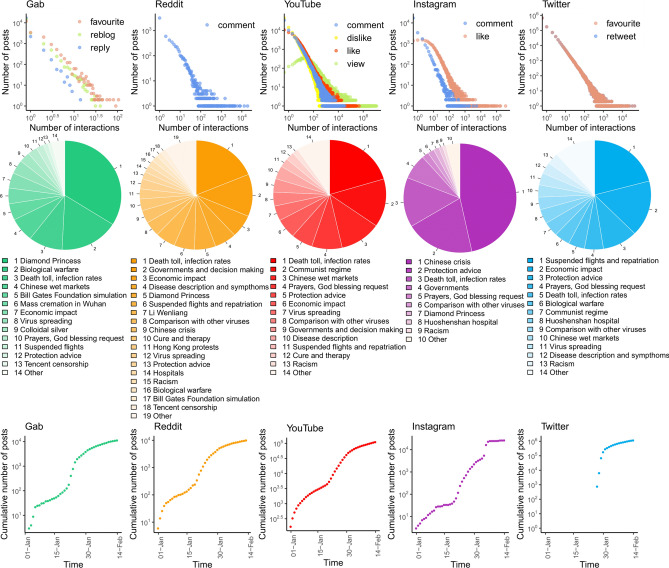
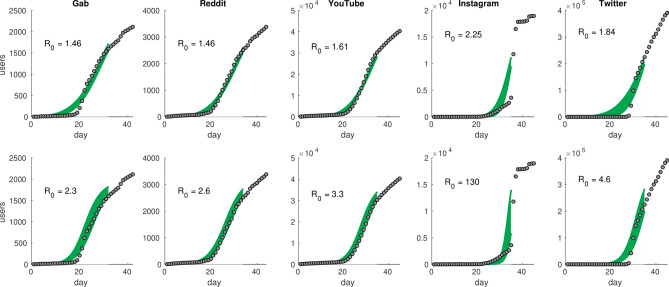
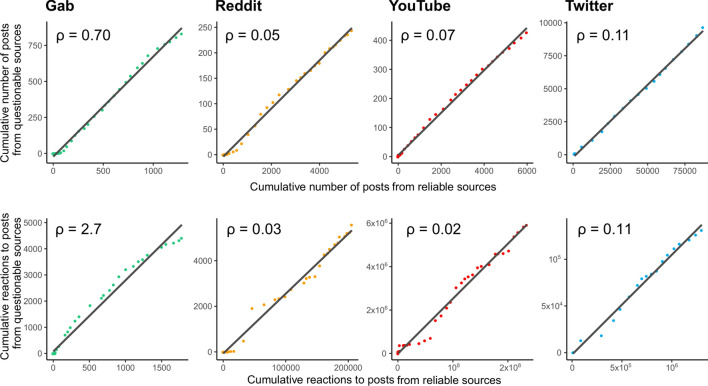
We address the diffusion of information about the COVID-19 with a massive data analysis on Twitter, Instagram, YouTube, Reddit and Gab. We analyze engagement and interest in the COVID-19 topic and provide a differential assessment on the evolution of the discourse on a global scale for each platform and their users. We fit information spreading with epidemic models characterizing the basic reproduction number $$R_0$$ R 0 for each social media platform. Moreover, we identify information spreading from questionable sources, finding different volumes of misinformation in each platform. However, information from both reliable and questionable sources do not present different spreading patterns. Finally, we provide platform-dependent numerical estimates of rumors’ amplification.
Overview
The claims and statistics of this paper haven’t been checked yet.
Free: it reads the open-access text and checks the first 5 claims that cite a source we can check. Create a free account to check every claim.
Integrity signals
Registry
Cites
Statistics
Figures
Verification
Claims the paper makes
The claims and statistics of this paper haven’t been checked yet.
Free: it reads the open-access text and checks the first 5 claims that cite a source we can check. Create a free account to check every claim.
Claims other papers make about this one
Each is checked against this paper’s own text: does it say what the citing paper says it does?
The source backs part of the claim, not all of it — or backs it for a different population, condition or comparison.
In the citing paper
“Our attention span remains limited (9, 10), and feed algorithms might limit our selection process by suggesting contents similar to the ones we are usually exposed to (11–13).”
From The echo chamber effect on social media (2021) · cites this paper as [12]
Experimental — accuracy not yet measuredThe cited source says what the claim attributes to it.
In the citing paper
“The uncontrolled dissemination of false or misleading health information via digital channels represents one of the most complex and urgent challenges currently facing Public Health (1, 2).”
From Health misinformation, digital health literacy, and attitudes toward science among university students: an exploratory cross-sectional survey (2026) · cites this paper as [2]
The cited source says what the claim attributes to it.
In the citing paper
“the amplification of questionable sources of COVID-19 misinformation is highly platform dependent, with some platforms amplifying questionable content less than reliable content 58 .”
From Measuring the impact of COVID-19 vaccine misinformation on vaccination intent in the UK and USA (2021) · cites this paper as [58]
The cited source says what the claim attributes to it.
In the citing paper
“The broad public reach of the Internet and social media favours the spread of rumours and dissemination of unreliable information [7].”
Self-check
Percentages, sums and reported differences re-computed from the paper’s own numbers.
The self-check needs the paper’s full text.
Citations
Cites
An Introduction to the Bootstrap
Efron, B., & Tibshirani, R. J. (1994) · doi:10.1201/9780429246593 · Cited by 40,500
Learning representations by back-propagating errors
Rumelhart, D. E., Hinton, G. E., & Williams, R. J. (1986) · Nature · doi:10.1038/323533a0 · Cited by 31,892 · cited 1×
“More formally, given a content represented by the sequence of words w 1 , w 2 , . . . , w T , we use stochastic gradient descent with gradient computed through backpropagation rule [39] for maximizing the average log probability where k is the size of the training window.”
MethodDistributed Representations of Words and Phrases and their Compositionality
Mikolov, T., Sutskever, I., Chen, K., Corrado, G., & Dean, J. (2013) · arXiv · doi:10.48550/arxiv.1310.4546 · Cited by 24,533
The spread of true and false news online
Vosoughi, S., Roy, D., & Aral, S. (2018) · Science · doi:10.1126/science.aap9559 · Cited by 8,847 · cited 2×
“Some studies pointed out that fake news and inaccurate information may spread faster and wider than fact-based news [22].”
BackgroundAn Introduction to the Bootstrap.
Buckland, S. T., Efron, B., & Tibshirani, R. J. (1994) · Biometrics · doi:10.2307/2532810 · Cited by 3,103
Linguistic Regularities in Continuous Space Word Representations
Mikolov, T., Yih, W.-T., & Zweig, G. (2013) · North American Chapter of the Association for Computational Linguistics · Cited by 2,912
The spread of behavior in an online social network experiment
Centola, D. (2010) · Science · doi:10.1126/science.1185231 · Cited by 2,692 · cited 1×
“While R0 is a good proxy for the engagement rate and a good predictor for epidemic-like information spreading, social contagion phenomena might be in general more complex [34, 35, 36].”
BackgroundThe spreading of misinformation online
Del Vicario, M., Bessi, A., Zollo, F., Petroni, F., Scala, A., Caldarelli, G., Stanley, H. E., & Quattrociocchi, W. (2016) · Proceedings of the National Academy of Sciences · doi:10.1073/pnas.1517441113 · Cited by 2,407 · cited 2×
“social perceptions [11] and the framing of narratives; it in uences policy-making, political communication, as well as the evolution of public debate [12, 13] especially when issues are controversial [14]. Indeed, users online tend to acquire information adhering to their worldviews [15], to ignore dissenting informat…”
BackgroundMethodSelf-citationZarocostas, J. (2020) · The Lancet · doi:10.1016/s0140-6736(20)30461-x · Cited by 2,344 · cited 1×
“The term infodemic [2, 3] has been coined to outline the perils of misinformation phenomena during the management of virus outbreaks [4, 5], since it could even speed up the epidemic process by influencing and fragmenting social response [6].”
BackgroundThe Mathematical Theory of Infectious Diseases and its applications
Ling, N. R. (1978) · Immunology · Cited by 1,934
Cited by
Items 401–500 of 1,008
Kandasamy, V., Trojovský, P., Machot, F. A., Kyamakya, K., Bačanin, N., Askar, S., & Abouhawwash, M. (2021) · Sensors · doi:10.3390/s21227582 · Cited by 34
Lee, S. H., Pandya, R. K., Hussain, J., Lau, R., Chambers, E. A. B., Geng, A., Jin, B. X., Zhou, O., Wu, T., Barr, L., et al. (2022) · Journal of Visual Communication in Medicine · doi:10.1080/17453054.2021.2020625 · Cited by 35
“The COVID-19 pandemic is occurring in a dynamic environment where social media platforms have reshaped the way people are getting informed, allowing users to both produce and consume information (Brown, Broderick, & Lee, 2007; Cinelli et al., 2020; Zarocostas, 2020).”
BackgroundHelfers, A., & Ebersbach, M. (2022) · Journal of Communications In Healthcare · doi:10.1080/17538068.2022.2047497 · Cited by 37
MacKay, M., Ford, C., Colangeli, T., Gillis, D. J., McWhirter, J. E., & Papadopoulos, A. (2022) · BMC Public Health · doi:10.1186/s12889-022-13129-5 · Cited by 38
“Social media platforms allow for access to an unprecedented amount of content and can have a large influence on behaviour [19].”
BackgroundRaza, S. H., Yousaf, M. T., Zaman, U., Khan, S. W., Core, R. S., & Malik, A. N. (2023) · Vaccine · doi:10.1016/j.vaccine.2023.01.047 · Cited by 36
“These individuals may turn to social media during a pandemic to enhance their understanding of the disease, the transmission process, and preventative methods [28].”
Social Media Influence on Emerging Adults’ Prosocial Behavior: A Systematic Review
Hui, E., Singh, S., Lin, P. K. F., & Dillon, D. (2024) · Basic and Applied Social Psychology · doi:10.1080/01973533.2024.2342396 · Cited by 33
“…are inclined to use social media in attempts to preserve their social identity during situations where physical access is limited (Schmalz et al., 2015) such as the recent COVID-19 pandemic during which there has been an increase in social media usage (Cinelli et al., 2020; Gottlieb & Dyer, 2020).”
BackgroundTwitter communication of university libraries in the face of Covid-19
Cardama, S. M., & Pacios, A. R. (2020) · El Profesional de la Informacion · doi:10.3145/epi.2020.nov.18 · Cited by 33
“Among others, the recent studies by Cinelli et al. (2020) and Kouzy et al. (2020) should be mentioned when considering the analysis of Twitter as a platform for the study of fake news and disinformation.”
BackgroundMorgan, G., Tagliamento, M., Lambertini, M., Devnani, B., Westphalen, C. B., Dienstmann, R., Božović‐Spasojević, I., Calles, A., Criscitiello, C., Fontecedro, A. C., et al. (2021) · ESMO Open · doi:10.1016/j.esmoop.2021.100104 · Cited by 34
Debate on online social networks at the time of COVID-19: An Italian case study
Trevisan, M., Vassio, L., & Giordano, D. (2021) · Online Social Networks and Media · doi:10.1016/j.osnem.2021.100136 · Cited by 38
“Finally, the authors of [35] analyzed engagement and interest in the COVID-19 topic on Twitter, Instagram, YouTube, Reddit and Gab, finding different volumes of misinformation in each platform.”
BackgroundFactors associated with the belief in COVID-19 related conspiracy theories in Pakistan
Ejaz, W., Ittefaq, M., Seo, H., & Naz, F. (2021) · Health Risk & Society · doi:10.1080/13698575.2021.1929865 · Cited by 49
Italian Twitter semantic network during the Covid-19 epidemic
Mattei, M., Caldarelli, G., Squartini, T., & Saracco, F. (2021) · EPJ Data Science · doi:10.1140/epjds/s13688-021-00301-x · Cited by 32
“([4])‘stay at home’, ‘italy’, ‘news’, ‘quarantine’ and Giuseppe ‘Conte’, the former Prime Minister.”
BackgroundMethodInfluentialCOVID‐19, media coverage of bats and related Web searches: a turning point for bat conservation?
Cerri, J., Mori, E., Ancillotto, L., Russo, D., & Bertolino, S. (2021) · Mammal Review · doi:10.1111/mam.12261 · Cited by 30
“The global importance of the COVID- 19 pandemic and the associated ‘infodemic’ (Cinelli et al. 2020) poses an unprecedented risk of global escalation in bat persecution, by amplifying pre- existing negative attitudes towards bats (Lu et al. 2021).”
BackgroundPredicting Anti-Asian Hateful Users on Twitter during COVID-19
An, J., Kwak, H., Lee, C. S., Jun, B., & Ahn, Y. (2021) · Findings of the Association for Computational Linguistics: EMNLP (Findings of EMNLP) · doi:10.18653/v1/2021.findings-emnlp.398 · Cited by 38
A deep dive into COVID-19-related messages on WhatsApp in Pakistan
Javed, R. T., Usama, M., Iqbal, W., Qadir, J., Tyson, G., Castro, I., & Garimella, K. V. (2021) · Social Network Analysis and Mining · doi:10.1007/s13278-021-00833-0 · Cited by 33
“Cinelli et al. (2020) analyze different social networks for COVID-19-related content.”
BackgroundSchemer, C., Ziegele, M., Schultz, T., Quiring, O., Jackob, N., & Jakobs, I. (2021) · Journalism & Mass Communication Quarterly · doi:10.1177/10776990211063527 · Cited by 32
“In addition, Cinelli et al. (2020) demonstrate that Twitter content is more balanced with respect to news from reliable vs. unreliable sources as compared with YouTube.”
BackgroundResultKhan, M. I., & Saleh, A. (2022) · Social Science Computer Review · doi:10.1177/08944393211066584 · Cited by 35
“Furthermore, dissemination of poor quality or simply misleading information can strongly in fl uence people ’ s behaviour and alter the effectiveness of the countermeasures deployed by governments and their agencies (Cinelli et al., 2020).”
BackgroundComputational linguistics and discourse complexology: Paradigms and research methods
Solovyev, V. D., Solnyshkina, M. I., & McNamara, D. S. (2022) · Russian Journal of Linguistics · doi:10.22363/2687-0088-31326 · Cited by 32
“Анализ контента социальных сетей, связанного с пандемией ковида, в том числе c распространением дезинформации, появился уже в начале эпидемии (Cinelli et al. 2020).”
Social communication pathways to COVID-19 vaccine side-effect expectations and experience
Clemens, K. S., Faasse, K., Tan, W., Colagiuri, B., Colloca, L., Webster, R., Vase, L., Jason, E. C., & Geers, A. L. (2022) · Journal of Psychosomatic Research · doi:10.1016/j.jpsychores.2022.111081 · Cited by 31
“Given the amount of true and misleading COVID-19 vaccine information shared across media and word-of-mouth [5], here we tested if pre-vaccination side-effect information received from personal acquaintances, news stories, and social media posts predict subsequent COVID-19 vaccine side-effect expectations and experienc…”
Multi-modal transformer for fake news detection
Yang, P., Ma, J., Liu, Y., & Liu, M. (2023) · Mathematical Biosciences & Engineering · doi:10.3934/mbe.2023657 · Cited by 38
Bhattacharya, S., & Singh, A. P. (2025) · Frontiers in Communication · doi:10.3389/fcomm.2025.1560936 · Cited by 37
Lehmann, P. L., Beck, S., de Brito, M. M., Gawel, E., Groß, M., Haase, A., Lepenies, R., Otto, D., Schiller, J., Strunz, S., et al. (2021) · Sustainability · doi:10.3390/su13168679 · Cited by 33
Thành, P. T., & Tùng, L. T. (2021) · International Journal of Sociology and Social Policy · doi:10.1108/ijssp-05-2021-0122 · Cited by 33
Impact of correcting misinformation on social disruption
Iizuka, R., Toriumi, F., Nishiguchi, M., Takano, M., & Yoshida, M. (2022) · PLoS ONE · doi:10.1371/journal.pone.0265734 · Cited by 31
Zhao, Y., Zhu, S., Wan, Q., Li, T., Zou, C., Wang, H., & Deng, S. (2022) · Journal of Medical Internet Research · doi:10.2196/37623 · Cited by 32
“Cinelli et al [28] found that while the number of posts from suspicious sources accounts for 70% of the volume of posts from trusted sources, the volume of responses to the former is three times higher than that to the latter.”
RDGT-GAN: Robust Distribution Generalization of Transformers for COVID-19 Fake News Detection
Varshini, U. S. S., Sree, R. P., Srinivas, M., & Subramanyam, R. B. V. (2023) · IEEE Transactions on Computational Social Systems · doi:10.1109/tcss.2023.3269595 · Cited by 31
“Furthermore, [5] coined COVID-19 misinformation as infodemic (misinformation during the management of disease outbreaks).”
BackgroundCharacterizing engagement dynamics across topics on Facebook
Etta, G., Sangiorgio, E., Marco, N. D., Avalle, M., Scala, A., Cinelli, M., & Quattrociocchi, W. (2023) · PLoS ONE · doi:10.1371/journal.pone.0286150 · Cited by 39
Self-citationDesinformação, infodemia e caos social: impactos negativos das fake news no cenário da COVID-19
Ferreira, J. R. S., Lima, P. R. S., & de Souza, E. D. (2020) · Em Questão · doi:10.19132/1808-5245271.30-53 · Cited by 29
Scientometric analysis of ICT-assisted intelligent control systems response to COVID-19 pandemic
Sood, S. K., Rawat, K. S., & Kumar, D. (2023) · Neural Computing and Applications · doi:10.1007/s00521-023-08788-3 · Cited by 28
Mental Health and Online Information During the COVID-19 Pandemic
da Silva, E. (2020) · InterAmerican Journal of Medicine and Health · doi:10.31005/iajmh.v3i0.108 · Cited by 28
“In this sense, the understanding of the social dynamics behind the consumption of informative content and social media is a relevant issue, since it can help to design more efficient epidemic models, responsible for social behavior and put into practice more efficient communication strategies in this moment of health…”
BackgroundПути российской инфодемии: от WhatsApp до Следственного комитета
Arkhipova, A., Radchenko, D., Козлова, И. В., Пейгин, Б. С., Гаврилова, М. В., & Петров, Н. В. (2020) · Monitoring obŝestvennogo mneniâ: èkonomičeskie i socialʹnye peremeny · doi:10.14515/monitoring.2020.6.1778 · Cited by 36
Guelmami, N., Khalifa, M. B., Chalghaf, N., Kong, J. D., Tannoubi, A., Wu, J., Azaiez, F., & Bragazzi, N. L. (2021) · JMIR Formative Research · doi:10.2196/27280 · Cited by 29
“In a descriptive study by Cinelli et al [23] on the dissemination of COVID-19–related information on five social media platforms—Twitter, Instagram, YouTube, Reddit, and Gab—analyses highlighted a great amount of information about the COVID-19 outbreak disseminated on social networks, a large part of which was false i…”
BackgroundAutomated Classification of Fake News Spreaders to Break the Misinformation Chain
Leonardi, S., Rizzo, G. F., & Morisio, M. (2021) · Information · doi:10.3390/info12060248 · Cited by 31
“[2] and by the World Health Organization, https://www.”
BackgroundA Look into COVID-19 Vaccination Debate on Twitter
Malagoli, L., Stancioli, J., Ferreira, C. H. G., Vasconcelos, M., da Silva, A. P. C., & Almeida, J. M. (2021) · ACM Web Science Conference (WebSci) · doi:10.1145/3447535.3462498 · Cited by 36
“[5] addressed the diffusion of information about the COVID-19 in five social platforms, namely Twitter, Instagram, YouTube, Reddit, and Gab.”
BackgroundLow eGFR Is a Strong Predictor of Worse Outcome in Hospitalized COVID-19 Patients
Mirijello, A., Piscitelli, P. A., de Matthaeis, A., Inglese, M., D’Errico, M. M., Massa, V., Greco, A., Fontana, A., Copetti, M., Florio, L., et al. (2021) · Journal of Clinical Medicine · doi:10.3390/jcm10225224 · Cited by 28
“Introduction Clinical features of the coronavirus disease 2019 (COVID-19) vary from asymptomatic to fulminant cases with a subset of patients developing the severe disease characterized by respiratory failure, multi-organ dysfunction, the need for ventilatory and cardiac support, and death [1,2].”
BackgroundRehman, U., Shahnawaz, M., Kashyap, D., Gupta, K., Kharshiing, K. D., Khursheed, M., Khan, N. H., & Uniyal, R. (2021) · Death Studies · doi:10.1080/07481187.2021.2006826 · Cited by 31
“Information on social media such as YouTube and Twitter can strongly influence the behavior of people and alter the effectiveness of the countermeasures deployed by governments (Cinelli et al., 2020).”
Background#CoronaVirus and public health: the role of social media in sharing health information
Kothari, A., Walker, K. K., & Burns, K. S. (2022) · Online Information Review · doi:10.1108/oir-03-2021-0143 · Cited by 32
Covid-19 and the Resurgence of the Hypodermic Needle Theory Applicability in Times of Crises
Ahmad, A. K., Aljalabneh, A. A., Mahmoud, A., & Safori, A. O. (2022) · Lecture notes in networks and systems · doi:10.1007/978-3-031-08954-1_124 · Cited by 34
Aboalshamat, K. T., Alharbi, J. J., Alharthi, S. A., Alnifaee, A., Alhusayni, A., & Alhazmi, R. (2023) · PLoS ONE · doi:10.1371/journal.pone.0281908 · Cited by 32
Hermann, B., Benghanem, S., Jouan, Y., Lafarge, A., & Beurton, A. (2023) · Annals of Intensive Care · doi:10.1186/s13613-023-01118-9 · Cited by 30
“Alongside policy makers, ICU caregivers have also gained recognition in the media through daily televised interventions, newspaper editorials [45–47] and social media involvement [48].”
BackgroundXiao, X., & Yang, W. (2023) · Online Information Review · doi:10.1108/oir-04-2023-0172 · Cited by 32
Advancing Infodemiology in a Digital Intensive Era
Mackey, T. K., Baur, C., & Eysenbach, G. (2022) · JMIR Infodemiology · doi:10.2196/37115 · Cited by 28
“Importantly, the convergence of factors—volume and speed of information, misinformation, and disinformation flow combined with political polarization [15-18]—makes the goal of forging a community of evidence-based practice for infodemic management one that we share as well.”
BackgroundDharawat, A., Lourentzou, I., Morales, A., & Zhai, C. (2020) · arXiv (Cornell University) · Cited by 36
Alam, F., Shaar, S., Dalvi, F., Sajjad, H., Nikolov, A., Mubarak, H., Martino, G. D. S., Abdelali, A., Durrani, N., Darwish, K., et al. (2020) · Conference on Empirical Methods in Natural Language Processing · doi:10.48550/arxiv.2005.00033 · Cited by 192
“In another study, the authors report media bias and rumor amplification patterns for COVID-19 (Cinelli et al., 2020) using five different social media platforms.”
MethodAcademic Library COVID-19 Subject Guides
Fraser-Arnott, M. (2020) · The Reference Librarian · doi:10.1080/02763877.2020.1862021 · Cited by 28
Machmud, M., Irawan, B., Karinda, K., Susilo, J. B., & Salahudin, S. (2021) · Academic Journal of Interdisciplinary Studies · doi:10.36941/ajis-2021-0087 · Cited by 29
“Second, data collection on Twitter account (Cinelli et al., 2020).”
Accuracy of health‐related information regarding COVID‐19 on Twitter during a global pandemic
Swetland, S. B., Rothrock, A. N., Andris, H., Davis, B., My, L. N. T., Davis, P. J., & Rothrock, S. G. (2021) · World Medical & Health Policy · doi:10.1002/wmh3.468 · Cited by 27
“Experts have noted misinformation and conspiracy theories were ampli fi ed and retweeted more than accurate tweets during the Zika outbreak (Brennan et al., 2020; Cinelli et al., 2020; Vosoughi et al., 2018).”
BackgroundWu, G., Deng, X., & Liu, B. (2021) · Cities · doi:10.1016/j.cities.2021.103490 · Cited by 28
“However, unofficial social media may contain misinformation and rumours (Cinelli et al., 2020).”
Han, R., Xu, J., & Pan, D. (2022) · International Journal of Environmental Research and Public Health · doi:10.3390/ijerph19073942 · Cited by 32
“, analyzed pandemic information on social media platforms and stated that information from both reliable and questionable sources did not present different spreading patterns, facilitating the amplification and spreading of rumors [18].”
BackgroundGreene, C. M., Laurent, C. D. S., Hegarty, K., & Murphy, G. (2022) · Applied Cognitive Psychology · doi:10.1002/acp.4002 · Cited by 30
“WHO, 2021), participants are likely to have encountered considerably more pro-vaccine information in their daily media diets (see Cinelli et al., 2020 for an analysis of the spread of COVID misinformation on social media).”
BackgroundLee, E. W. J., Zheng, H., Goh, D. H., Lee, C. S., & Theng, Y. L. (2023) · Health Communication · doi:10.1080/10410236.2023.2170201 · Cited by 28
Sustainable development goals as unifying narratives in large UK firms’ Twitter discussions
Patuelli, A., & Saracco, F. (2023) · Scientific Reports · doi:10.1038/s41598-023-34024-y · Cited by 30
Gatta, V. L., Luceri, L., Fabbri, F., & Ferrara, E. (2023) · ACM Conference on Hypertext and Social Media (HT) · doi:10.1145/3603163.3609058 · Cited by 35
Ünlü, A., Truong, S., Tammi, T., & Lohiniva, A. (2023) · Journal of Medical Internet Research · doi:10.2196/50199 · Cited by 31
“Given that COVID-19 has resulted in an infodemic where people mainly seek and access information through the internet [38,39], computational methods are essential to handle the large volume of user engagement and provide guidance to public health agencies [40].”
Babić, K., Petrović, M., Beliga, S., Martinčić-Ipšić, S., Matešić, M., & Meštrović, A. (2021) · Applied Sciences · doi:10.3390/app112110442 · Cited by 33
“Many of these studies used various NLP techniques in different tasks, such as analysis of infodemic and information spreading in general [22–25], fake news detection [26,27], and sentiment analysis [6–11].”
Ephemeral mimetics: memes, an X-ray of Covid-19
Cardama, S. M., & López, F. G. (2021) · European Journal of Humour Research · doi:10.7592/ejhr2021.9.4.558 · Cited by 26
The evolution dynamics of collective and individual opinions in social networks
Dong, J., Zhang, Y., & Kong, Y.-X. (2024) · Expert Systems with Applications · doi:10.1016/j.eswa.2024.124813 · Cited by 29
Relative engagement with sources of climate misinformation is growing across social media platforms
Storani, S., Falkenberg, M., Quattrociocchi, W., & Cinelli, M. (2025) · Scientific Reports · doi:10.1038/s41598-025-03082-9 · Cited by 38
Self-citationA First Look at COVID-19 Messages on WhatsApp in Pakistan
Javed, R. T., Shuja, M. E., Usama, M., Qadir, J., Iqbal, W., Gareth Tyson, A., Castro, I., & Garimella, K. (2020) · IEEE/ACM International Conference on Advances in Social Networks Analysis and Mining (ASONAM) · doi:10.1109/asonam49781.2020.9381360 · Cited by 26
“[23] provide a comprehensive analysis of the use of different social media platforms in the COVID-19 pandemic.”
BackgroundFindings of the NLP4IF-2021 Shared Tasks on Fighting the COVID-19 Infodemic and Censorship Detection
Shaar, S., Alam, F., Martino, G. D. S., Nikolov, A., Zaghouani, W., Nakov, P., & Feldman, A. (2021) · Workshop on Natural Language Processing for Internet Freedom: Censorship, Disinformation, and Propaganda (NLP4IF) · doi:10.18653/v1/2021.nlp4if-1.12 · Cited by 47
“Cinelli et al. (2020) studied COVID-19 rumor amplification in five social media platforms; their data was labeled using distant supervision.”
MethodAnalysis of lockdown perception in the United States during the COVID-19 pandemic
Surano, F. V., Porfiri, M., & Rizzo, A. (2021) · The European Physical Journal Special Topics · doi:10.1140/epjs/s11734-021-00265-z · Cited by 28
Leong, V., Raheel, K., Sim, J. Y., Kacker, K., Karlaftis, V. M., Vassiliu, C., Kalaivanan, K., Chen, S. A., Robbins, T. W., Sahakian, B. J., et al. (2022) · Journal of Medical Internet Research · doi:10.2196/28368 · Cited by 31
“…of online platforms such as video conferencing (Zoom [3] and Skype) and online learning [3,4] for day-to-day academic activities, and the use of social media platforms has surged, not just as a means for interacting and connecting with others, but also for participant recruitment and outreach [5].”
Rovetta, A., & Castaldo, L. (2022) · BMC Medical Research Methodology · doi:10.1186/s12874-022-01523-x · Cited by 31
“Since the advent of social networks has made the infodemic even more complex to administer [6], more attention must be paid to choosing a name.”
BackgroundZhang, R., Shan, Q., McKeever, B. W., Olatosi, B., & Li, X. (2022) · Vaccines · doi:10.3390/vaccines10071046 · Cited by 26
“Unlike the potential threat of questionable information sources on social media platforms [52], it is more effective to provide easily accessible and reliable information where people live, work, learn, pray, play, and gather [53].”
BackgroundOnline Self-Disclosure, Social Support, and User Engagement During the COVID-19 Pandemic
Lee, J., Rajtmajer, S. M., Srivatsavaya, E., & Wilson, S. (2023) · ACM Transactions on Social Computing · doi:10.1145/3617654 · Cited by 35
Predictors of COVID-19 Preventive Behavior Adoption Intention in Malaysia
Dawi, N. M., Namazi, H., & Marešová, P. (2021) · Frontiers in Psychology · doi:10.3389/fpsyg.2021.616749 · Cited by 29
A systemic framework for disinformation on social media platforms
Recuero, R. (2025) · Platforms & Society · doi:10.1177/29768624251367199 · Cited by 26
“In recent years, disinformation has emerged as a critical issue in public discourse, reshaping political landscapes, public health measures, and societal trust in institutions (Benkler, Faris and Roberts, 2018; Cinelli et al., 2020; Tucker et al., 2018).”
Cuomo, R. E., Purushothaman, V. L., Li, J., Cai, M., & Mackey, T. K. (2021) · BMC Public Health · doi:10.1186/s12889-021-10827-4 · Cited by 25
MetaDetector: Meta Event Knowledge Transfer for Fake News Detection
Ding, Y., Guo, B., Liu, Y., Liang, Y., Shen, H., & Yu, Z. (2022) · ACM Transactions on Intelligent Systems and Technology · doi:10.1145/3532851 · Cited by 29
“The mainstream social media platforms have witnessed an outbreak of the infodemic [7] about the COVID-19.”
BackgroundBok, S., Martin, D. E., & Lee, M. (2021) · Acta Psychologica · doi:10.1016/j.actpsy.2021.103382 · Cited by 26
“If users are in a COVID-19 misinformation bubble, they will likely see content that supports false S. Bok et al. Acta Psychologica 219 (2021) 103382 narratives (Cinelli et al., 2020).”
InfluentialToo close to work together? Identity conflicts induced by coworker friendships in cyberspace
Yang, F. X., Xu, Y. H., & Wong, I. A. (2021) · International Journal of Hospitality Management · doi:10.1016/j.ijhm.2021.103060 · Cited by 25
Disinformation in Poland: Thematic classification based on content analysis of fake news from 2019
Rosińska, K. A. (2021) · Cyberpsychology Journal of Psychosocial Research on Cyberspace · doi:10.5817/cp2021-4-5 · Cited by 32
“Some researchers have already begun to speak of “infodemia” (Cinelli et al., 2020) having equally tragic consequences as the virus.”
BackgroundHarnessing Twitter data to survey public attention and attitudes towards COVID-19 vaccines in the UK
Fazel, S., Zhang, L., Javid, B., Brikell, I., & Chang, Z. (2021) · Scientific Reports · doi:10.1038/s41598-021-02710-4 · Cited by 25
The supply and demand of news during COVID-19 and assessment of questionable sources production
Gravino, P., Prevedello, G., Martina, G., & Loreto, V. (2022) · Nature Human Behaviour · doi:10.1038/s41562-022-01353-3 · Cited by 34
Comparing the Impact of Social Media Regulations on News Consumption
Etta, G., Cinelli, M., Galeazzi, A., Valensise, C. M., Quattrociocchi, W., & Conti, M. (2022) · IEEE Transactions on Computational Social Systems · doi:10.1109/tcss.2022.3171391 · Cited by 31
“This aspect calls for urgent investigations of the turbulent dynamics of the online infos-phere, complementary to the monitoring of the spreading of infections [10]–[12].”
BackgroundMethodInfluentialSelf-citationCOVID-19 Misinformation Detection: Machine-Learned Solutions to the Infodemic
Kolluri, N., Liu, Y., & Murthy, D. (2022) · JMIR Infodemiology · doi:10.2196/38756 · Cited by 30
“Low information quality has led to adverse health outcomes for individuals during the COVID-19 pandemic [1-3].”
BackgroundNdung’u, J., Vertinsky, I. B., & Onyango, J. O. (2023) · Heliyon · doi:10.1016/j.heliyon.2023.e22946 · Cited by 27
“The outbreak of the Covid-19 pandemic has also contributed to the extensive use of social media, which has created an irresistible urge for organisations to review their operations and actively adopt social media [3].”
BackgroundKovan, A., Yıldırım, M., & Gülbahçe, A. (2024) · Social Sciences & Humanities Open · doi:10.1016/j.ssaho.2024.101084 · Cited by 31
Influencing overseas Chinese by tweets: text-images as the key tactic of Chinese propaganda
Wang, A. H., Lee, M.-C., Wu, M., & Shen, P. (2020) · Journal of Computational Social Science · doi:10.1007/s42001-020-00091-8 · Cited by 25
López, A. B., Pastor-Galindo, J., & Ruipérez-Valiente, J. A. (2026) · ACM Computing Surveys · doi:10.1145/3849797 · Cited by 2
Bi-stability of SUDR+K model of epidemics and test kits applied to COVID-19
Zlatić, V., Barjašić, I., Kadović, A., Štefančić, H., & Gabrielli, A. (2020) · Nonlinear Dynamics · doi:10.1007/s11071-020-05888-w · Cited by 27
“[3] Matteo Cinelli, Walter Quattrociocchi, Alessandro Galeazzi, Carlo Michele Valensise, Emanuele Brugnoli, Ana Lucia Schmidt, Paola Zola, Fabiana Zollo, and”
BackgroundInfluentialSimon, S., Tampenawas, A. R., Santoso, J., Nainupu, A. M. Y., Angkouw, S. R., & Poluan, A. (2021) · Evangelikal Jurnal Teologi Injili dan Pembinaan Warga Jemaat · doi:10.46445/ejti.v5i2.405 · Cited by 28
Democratic citizenship, critical literacy and educational policy in England: a conceptual paradox?
Ashbridge, C., Clarke, M., Bell, B. T., Sauntson, H., & Walker, E. M. (2021) · Cambridge Journal of Education · doi:10.1080/0305764x.2021.1977781 · Cited by 25
“(World Health Organisation, 2020) Scholars and commentators have been quick to attend to social media’s role in circulating these false claims and the failure of platforms to mitigate against them (see Cinelli et al., 2020; Kouzy et al., 2020; Mian & Khan, 2020).”
BackgroundA Second Pandemic? Analysis of Fake News About COVID-19 Vaccines in Qatar
Nakov, P., Alam, F., Shaar, S., Martino, G. D. S., & Zhang, Y. (2021) · International conference Recent advances in natural language processing · doi:10.26615/978-954-452-072-4_114 · Cited by 34
Shankar, S., & Tewari, V. (2021) · Journal of Intelligence · doi:10.3390/jintelligence9040056 · Cited by 30
Mututwa, W. T., & Mare, A. (2021) · African Journalism Studies · doi:10.1080/23743670.2022.2031244 · Cited by 24
“The World Health Organisation (WHO) renamed it COVID-19 before declaring it a global pandemic on 11 March 2020 (Cinelli et al. 2020).”
BackgroundMás que infodemia: Pandemia, posverdad y el peligro del irracionalismo
Waisbord, S. (2022) · InMediaciones de la Comunicación · doi:10.18861/ic.2022.17.1.3227 · Cited by 36
Zhen, L., Yan, B., Tang, J. L., Nan, Y., & Yang, A. (2022) · The Information Society · doi:10.1080/01972243.2022.2139031 · Cited by 29
Identifying cross-platform user relationships in 2020 U.S. election fraud and protest discussions
Murdock, I., Carley, K. M., & Yağan, O. (2023) · Online Social Networks and Media · doi:10.1016/j.osnem.2023.100245 · Cited by 28
Ye, S., Ho, K. K. W., Wakabayashi, K., & Kato, Y. (2023) · BMC Public Health · doi:10.1186/s12889-023-15485-2 · Cited by 25
“Literature review and background of research During the COVID pandemic, social media became the most convenient tool for communicating with others and the primary source of information and misinformation when lockdowns were in place [6].”
BackgroundDaume, S. (2024) · Environmental Research Communications · doi:10.1088/2515-7620/ad1b67 · Cited by 31
Artificial intelligence chatbots mimic human collective behaviour
He, J. K., Wallis, F. P. S., Gvirtz, A., & Rathje, S. (2024) · British Journal of Psychology · doi:10.1111/bjop.12764 · Cited by 35
“…collective behaviour impacts political movements (Wahlström & Törnberg, 2021), the acceptance of climate-friendly technologies (Zhang et al., 2020), the spread of misinformation (Cinelli et al., 2020; Rathje et al., 2022) and how societies become divided by echo chambers (Cinelli et al., 2021).”
Social listening, modern slavery, and COVID-19
Lucas, B., & Landman, T. (2020) · Journal of Risk Research · doi:10.1080/13669877.2020.1864009 · Cited by 29
“…catastrophe, and the various potential humanitarian risks and crises stemming from it, another challenge for researchers and policy makers, and where guidance is missing, is managing a sudden surge in COVID-19-related information diffusion (Yi and Kuri 2016; Cinelli et al. 2020; Garrett 2020).”
BackgroundCovid-19: desafios para a organização e repercussões nos sistemas e serviços de saúde
Portela, M. C., Reis, L. G. D. C., & Lima, S. M. L. (2022) · Série Informação para ação na Covid-19 | Fiocruz eBooks · doi:10.7476/9786557081587 · Cited by 58
Bailo, F., Johns, A., & Rizoiu, M.-A. (2023) · Information Communication & Society · doi:10.1080/1369118x.2023.2205479 · Cited by 24
“None-theless, other studies found that YouTube was less likely to amplify unreliable sources of information compared to less moderated platforms (Cinelli et al., 2020).”
BackgroundCianciulli, A., Santoro, E., Manente, R., Pacifico, A., Quagliarella, S., Bruno, N., Schettino, V., & Boccia, G. (2025) · Healthcare · doi:10.3390/healthcare13202623 · Cited by 30
“Digital misinformation was further amplified by automated bots, algorithmic recommender systems, and coordinated manipulation strategies, which intensified polarization and eroded confidence in health systems [6,7].”
A Rapid Advice Guideline for the Prevention of Novel Coronavirus Through Nutritional Intervention
Budhwar, S., Sethi, K., & Chakraborty, M. (2020) · Current Nutrition Reports · doi:10.1007/s13668-020-00325-1 · Cited by 28
“Cereals: whole grains, fortified cereals 121 Curr Nutr Rep (2020) 9:119–128”
BackgroundInfluentialSocial media use in government health agencies: The COVID-19 impact
Sandoval‐Almazán, R., & Valle-Cruz, D. (2021) · Information Polity · doi:10.3233/ip-210326 · Cited by 24
“Data is consistent with current research on the expansion of information to create an infodemic (Cinelli et al., 2020) and the everyday use of SM platforms to deliver COVID-19 messages (Chen et al., 2020)).”
How Frauds in Times of Crisis Target People
Taodang, D., & Gundur, R. V. (2022) · Victims & Offenders · doi:10.1080/15564886.2022.2043968 · Cited by 26
“…concerns, including precautions to be taken to avoid COVID19 and medications effective in combatting it, were spread through social media with varying viewpoints from various actors, including official government sources, media, and conspiracy theorists (Apuke & Omar, 2021; Cinelli et al., 2020).”
BackgroundThe Use of Dark Web as a COVID-19 Information Source: A Three-Country Study
Sirola, A., Nuckols, J. A., Nyrhinen, J., & Wilska, T. (2022) · Technology in Society · doi:10.1016/j.techsoc.2022.102012 · Cited by 28
“However, many social media platforms strive to regulate potentially harmful content, and accounts can be banned or shut down for spreading misinformation [12,15,16,94].”
A graph-based pivotal semantic mining framework for rumor detection
Yan, Y., Wang, Y., & Zheng, P. (2022) · Engineering Applications of Artificial Intelligence · doi:10.1016/j.engappai.2022.105613 · Cited by 25
Metadata
- Authors
- Cinelli, M., Quattrociocchi, W., Galeazzi, A., Valensise, C. M., Brugnoli, E., Schmidt, A. L., Zola, P., Zollo, F., & Scala, A.
- Affiliations
- Ca' Foscari University of Venice (IT)
- University of Brescia (IT)
- Politecnico di Milano (IT)
- Institute of Informatics and Telematics (IT)
- Corresponding author
- Quattrociocchi, Walter
- Venue
- Scientific Reports
- Published
- 2020-10-06
- Volume
- 10
- Issue
- 1
- Pages
- 16598-16598
- ISSN
- 2045-2322 (ISSN-L)
- PMC
- PMC7538912
- OpenAlex
- W3011345566
- Cited by
- 2,313
- References
- 57
- Citations by year
- 2026: 201 · 2025: 251 · 2024: 246 · 2023: 349 · 2022: 451 · 2021: 557 · 2020: 257
- FWCI
- 541.32
- Type
- journal article
- Language
- en
- Open access
- gold
- doi.org
- Licence
- cc-by
- creativecommons.org/licenses/by/4.0 (tdm)
- creativecommons.org/licenses/by/4.0 (vor)
- Locations
- Scientific Reports (publishedVersion, cc-by)
- PubMed Central (publishedVersion, cc-by)
- PubMed (publishedVersion)
- arXiv (Cornell University) (submittedVersion)
- Informationszentrum Lebenswissenschaften (ZB MED) (submittedVersion, cc-by)
- IRIS Research product catalog (Sapienza University of Rome) (submittedVersion)
- ARCA (Università Ca' Foscari Venezia) (submittedVersion, cc-by-nc)
- Padua Research Archive (University of Padova) (submittedVersion, cc-by)
- arXiv (Cornell University)
- Topics
- Social Sciences › Sociology and Political Science › Misinformation and Its Impacts
- Physical Sciences › Physics and Astronomy › Statistical and Nonlinear Physics › Complex Network Analysis Techniques
- Social Sciences › Communication › Communication and COVID-19 Impact
- Keywords
- COVID-19 pandemic, infodemic, social media, misinformation, information dissemination, basic reproduction number, epidemic modeling, engagement, Twitter, Instagram, YouTube, Reddit, Gab
- MeSH terms
- Betacoronavirus, Data Analysis, COVID-19, SARS-CoV-2, Humans, Pneumonia, Viral, Social Behavior, Linear Models, Neural Networks, Computer, Coronavirus Infections, Information Dissemination, Basic Reproduction Number, Pandemics, Social Media
About these checks
Registry, retraction, Cites and statistics results are computed, not judged, with one exception: a printed reference that no index lists is read once by a model before it counts as a citation error. Claims are extracted by a model and kept only when their quote appears verbatim in the text; each cited source is then checked, with a model’s help, for whether it says what the claim relies on. Those verdicts can be wrong — read the claim’s quote and the cited source before relying on one.
Statistics and arithmetic are recomputed, not judged.
Confidence bands are shown only for fields calibrated on our annotated test set. None is calibrated yet, so no band is shown.
What counts as a claim ›How we measure confidence ›How we check this ›
Are you an author, or do you see a problem with this page? Request a review
Data sources
Bibliographic data: Semantic Scholar, OpenAlex, Crossref.
Contains information from the Semantic Scholar Academic Graph Datasets, made available under the ODC Attribution License (ODC-BY 1.0).
Semantic Scholar’s data is described in: Kinney, R., et al. (2023). The Semantic Scholar Open Data Platform. arXiv:2301.10140.
