

The COVID-19 social media infodemic
Open accessThe DOI matches its Crossref record; 57 of the 57 references it cites were found in a registry or an index.
Abstract
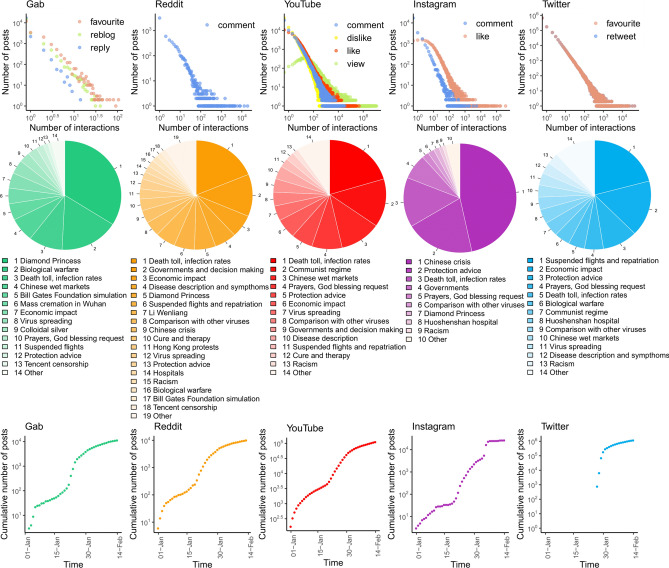
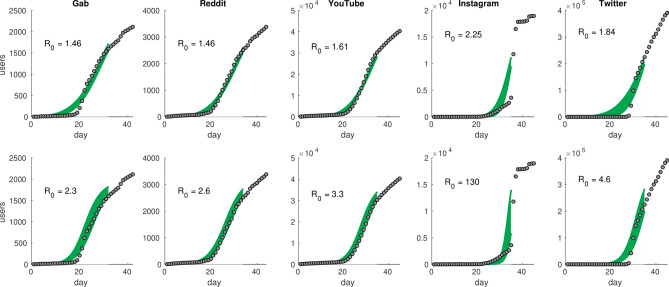
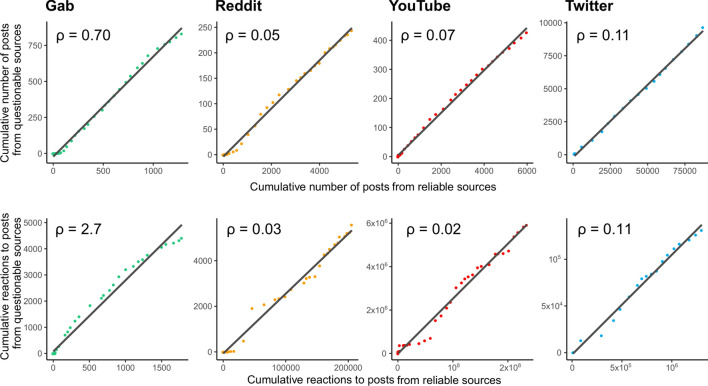
We address the diffusion of information about the COVID-19 with a massive data analysis on Twitter, Instagram, YouTube, Reddit and Gab. We analyze engagement and interest in the COVID-19 topic and provide a differential assessment on the evolution of the discourse on a global scale for each platform and their users. We fit information spreading with epidemic models characterizing the basic reproduction number $$R_0$$ R 0 for each social media platform. Moreover, we identify information spreading from questionable sources, finding different volumes of misinformation in each platform. However, information from both reliable and questionable sources do not present different spreading patterns. Finally, we provide platform-dependent numerical estimates of rumors’ amplification.
Overview
The claims and statistics of this paper haven’t been checked yet.
Free: it reads the open-access text and checks the first 5 claims that cite a source we can check. Create a free account to check every claim.
Integrity signals
Registry
Cites
Statistics
Figures
Verification
Claims the paper makes
The claims and statistics of this paper haven’t been checked yet.
Free: it reads the open-access text and checks the first 5 claims that cite a source we can check. Create a free account to check every claim.
Claims other papers make about this one
Each is checked against this paper’s own text: does it say what the citing paper says it does?
The source backs part of the claim, not all of it — or backs it for a different population, condition or comparison.
In the citing paper
“Our attention span remains limited (9, 10), and feed algorithms might limit our selection process by suggesting contents similar to the ones we are usually exposed to (11–13).”
From The echo chamber effect on social media (2021) · cites this paper as [12]
Experimental — accuracy not yet measuredThe cited source says what the claim attributes to it.
In the citing paper
“The uncontrolled dissemination of false or misleading health information via digital channels represents one of the most complex and urgent challenges currently facing Public Health (1, 2).”
From Health misinformation, digital health literacy, and attitudes toward science among university students: an exploratory cross-sectional survey (2026) · cites this paper as [2]
The cited source says what the claim attributes to it.
In the citing paper
“the amplification of questionable sources of COVID-19 misinformation is highly platform dependent, with some platforms amplifying questionable content less than reliable content 58 .”
From Measuring the impact of COVID-19 vaccine misinformation on vaccination intent in the UK and USA (2021) · cites this paper as [58]
The cited source says what the claim attributes to it.
In the citing paper
“The broad public reach of the Internet and social media favours the spread of rumours and dissemination of unreliable information [7].”
Self-check
Percentages, sums and reported differences re-computed from the paper’s own numbers.
The self-check needs the paper’s full text.
Citations
Cites
An Introduction to the Bootstrap
Efron, B., & Tibshirani, R. J. (1994) · doi:10.1201/9780429246593 · Cited by 40,500
Learning representations by back-propagating errors
Rumelhart, D. E., Hinton, G. E., & Williams, R. J. (1986) · Nature · doi:10.1038/323533a0 · Cited by 31,892 · cited 1×
“More formally, given a content represented by the sequence of words w 1 , w 2 , . . . , w T , we use stochastic gradient descent with gradient computed through backpropagation rule [39] for maximizing the average log probability where k is the size of the training window.”
MethodDistributed Representations of Words and Phrases and their Compositionality
Mikolov, T., Sutskever, I., Chen, K., Corrado, G., & Dean, J. (2013) · arXiv · doi:10.48550/arxiv.1310.4546 · Cited by 24,533
The spread of true and false news online
Vosoughi, S., Roy, D., & Aral, S. (2018) · Science · doi:10.1126/science.aap9559 · Cited by 8,847 · cited 2×
“Some studies pointed out that fake news and inaccurate information may spread faster and wider than fact-based news [22].”
BackgroundAn Introduction to the Bootstrap.
Buckland, S. T., Efron, B., & Tibshirani, R. J. (1994) · Biometrics · doi:10.2307/2532810 · Cited by 3,103
Linguistic Regularities in Continuous Space Word Representations
Mikolov, T., Yih, W.-T., & Zweig, G. (2013) · North American Chapter of the Association for Computational Linguistics · Cited by 2,912
The spread of behavior in an online social network experiment
Centola, D. (2010) · Science · doi:10.1126/science.1185231 · Cited by 2,692 · cited 1×
“While R0 is a good proxy for the engagement rate and a good predictor for epidemic-like information spreading, social contagion phenomena might be in general more complex [34, 35, 36].”
BackgroundThe spreading of misinformation online
Del Vicario, M., Bessi, A., Zollo, F., Petroni, F., Scala, A., Caldarelli, G., Stanley, H. E., & Quattrociocchi, W. (2016) · Proceedings of the National Academy of Sciences · doi:10.1073/pnas.1517441113 · Cited by 2,407 · cited 2×
“social perceptions [11] and the framing of narratives; it in uences policy-making, political communication, as well as the evolution of public debate [12, 13] especially when issues are controversial [14]. Indeed, users online tend to acquire information adhering to their worldviews [15], to ignore dissenting informat…”
BackgroundMethodSelf-citationZarocostas, J. (2020) · The Lancet · doi:10.1016/s0140-6736(20)30461-x · Cited by 2,344 · cited 1×
“The term infodemic [2, 3] has been coined to outline the perils of misinformation phenomena during the management of virus outbreaks [4, 5], since it could even speed up the epidemic process by influencing and fragmenting social response [6].”
BackgroundThe Mathematical Theory of Infectious Diseases and its applications
Ling, N. R. (1978) · Immunology · Cited by 1,934
Cited by
Items 701–800 of 1,008
Folk Models of Misinformation on Social Media
Sharevski, F., Devine, A., Pieroni, E., & Jachim, P. (2023) · Network and Distributed System Security Symposium · doi:10.14722/ndss.2023.24293 · Cited by 17
Circular Economy and Relationship-Based View
Casalegno, C., Civera, C., Mosca, F., & Freeman, R. E. (2020) · Symphonya Emerging Issues in Management · doi:10.4468/2020.1.12casalegno.civera.mosca.freeman · Cited by 15
“The repercussions of such a huge healthy emergency have impacted economies and societies everywhere in the world, modifying people’s everyday lives as well as markets and business relationships (Cinelli et al., 2020).”
BackgroundVandormael, A. M., Adam, M., Greuel, M., & Bärnighausen, T. (2020) · Trials · doi:10.1186/s13063-020-04942-7 · Cited by 20
Sit, S. M.-M., Gong, W. J., Ho, S. Y., Lai, A. Y. K., Wong, B. Y.-M., Wang, M. P., & Lam, T. (2022) · International Journal of Environmental Research and Public Health · doi:10.3390/ijerph19063577 · Cited by 15
“Social media is a crucial communication tool that provides direct and free access to unlimited information that may or may not be credible, possibly contributing to the ongoing infodemic [31].”
BackgroundChisita, C. T., & Ngulube, P. (2022) · Jàmbá Journal of Disaster Risk Studies · doi:10.4102/jamba.v14i1.1197 · Cited by 15
“Cinelli et al. (2020) observed that the onus is on researchers to determine how people seek or avoid information and how those decisions affect their behaviour, especially when the news cycle – dominated by the disintermediated diffusion of information – alters the way information is consumed and…”
BackgroundGesualdo, F., Bucci, L. M., Rizzo, C., & Tozzi, A. E. (2021) · Human Vaccines & Immunotherapeutics · doi:10.1080/21645515.2020.1865048 · Cited by 15
Health Misinformation Detection: Approaches, Challenges and Opportunities
Feng, X., Luo, J., Yang, Y., Baz, D. E., & Shi, L. (2025) · INQUIRY The Journal of Health Care Organization Provision and Financing · doi:10.1177/00469580251384784 · Cited by 22
Jiang, Y., Liang, R., Zhang, J., Sun, J., Liu, Y., & Qian, Y. (2021) · ACM Transactions on Knowledge Discovery from Data · doi:10.1145/3480246 · Cited by 17
Egala, S. B., Liang, D., & Boateng, D. (2022) · IEEE Transactions on Engineering Management · doi:10.1109/tem.2022.3225182 · Cited by 17
“In a recent study on the COVID-19 outbreak, Cinelli et al. [58] echoed a similar sentiment.”
BackgroundInfluentialGioia, F., Imperato, C., Boursier, V., Franceschini, C., Schimmenti, A., & Musetti, A. (2023) · Scientific Reports · doi:10.1038/s41598-023-30531-0 · Cited by 17
Syed, Z., Syed, F., Thabane, L., & Rodrigues, M. (2023) · Heliyon · doi:10.1016/j.heliyon.2023.e15184 · Cited by 14
News Waves: Hard News, Soft News, Fake News, Rumors, News Wavetrains
Vitanov, N. K., Dimitrova, Z. I., & Vitanov, K. N. (2023) · Entropy · doi:10.3390/e26010005 · Cited by 17
Misinformation and Disinformation in the Era of Social Media: The Need for Fact-Checking Skills
Oladokun, B. D., Aruwa, J. E., Ottah, G. A., & Ajani, Y. A. (2024) · Journal of Information and Knowledge · doi:10.17821/srels/2024/v61i1/171266 · Cited by 24
Vasist, P. N., & Krishnan, S. (2024) · Journal of Business Ethics · doi:10.1007/s10551-024-05686-z · Cited by 14
“…social media voices eroding trust in mainstream journalism (Schmann, 2019), the pandemic exacerbating health-related false information online (Cinelli et al., 2020), and the ubiquity of online fake news highlighting the critical role of librarianship and information sciences in enabling…”
On a Discrete-Time Networked SIV Epidemic Model With Polar Opinion Dynamics
Xu, Q., & Ishii, H. (2024) · IEEE Transactions on Network Science and Engineering · doi:10.1109/tnse.2024.3464852 · Cited by 14
“Thereproductionnumbercanbe affectedbyseveralfactorssuchasenvironmentalconditionsand thebehavioralpatternsofthepopulation[24],[25],[26],[27].”
Unveiling the hidden agenda: Biases in news reporting and consumption
Galeazzi, A., Peruzzi, A., Brugnoli, E., Delmastro, M., & Zollo, F. (2024) · PNAS Nexus · doi:10.1093/pnasnexus/pgae474 · Cited by 20
“…information environments in shaping public opinion has been widely investigated, with researchers addressing different aspects, from the dynamic and consequence of the spread of misinformation (3 – 9) to the role of suggestion algorithms (10, 11) and the ideological biases of new outlets (12 – 14).”
Self-citationDigital Flows: Online Hip Hop Music and Culture
Gamble, S. (2024) · doi:10.1093/oso/9780197656389.001.0001 · Cited by 20
Moral decisions in the age of COVID-19: Your choices really matter
Donnarumma, F., & Pezzulo, G. (2021) · Social Sciences & Humanities Open · doi:10.1016/j.ssaho.2021.100149 · Cited by 15
Probabilistic Model of Narratives Over Topical Trends in Social Media: A Discrete Time Model
Oghaz, T. A., Mutlu, E. Ç., Jasser, J., Yousefi, N., & Garibay, I. I. (2020) · ACM Conference on Hypertext and Social Media (HT) · doi:10.1145/3372923.3404790 · Cited by 20
“Social media and microblogging platforms, such as Twitter and Facebook, are becoming the primary sources of real-time content regarding ongoing socio-political events, such as United States Presidential Election in 2016 [11], and natural and man-made emergencies, such as COVID-19 pandemic in 2020 [9].”
BackgroundAutomated COVID-19 Emergency Response using Modern Technologies
Khan, I. H., & Javaid, M. (2020) · Apollo Medicine · doi:10.4103/am.am_68_20 · Cited by 14
An Analysis on COVID-19 Disinformation Triangle in Indonesia
Yustitia, S., & Ashrianto, P. D. (2020) · Komunikator · doi:10.18196/jkm.122040 · Cited by 14
“The restlessness on the condition, especially if globally related to COVID-19 pandemic, brings a term out called infodemic (Brennen, Simon, Howard, & Nielsen, 2020; Cinelli et al., 2020; Zarocostas, 2020).”
BackgroundCOVID-19 in Italy and issues in the communication of politics: bridging the knowledge-behaviour gap
Casalegno, C., Civera, C., & Cortese, D. (2020) · Knowledge Management Research & Practice · doi:10.1080/14778238.2020.1860664 · Cited by 14
“Furthermore, we will try to aid in the rebalancing of the KBG in times of emergency by discussing the key role of three main patterns that have emerged from some of the current institutional communications shortcomings: time, power and reactions based on relationships.”
BackgroundInfluentialZhou, Q., & Zhang, C. (2021) · Journal of Informetrics · doi:10.1016/j.joi.2021.101162 · Cited by 15
Beasy, K. M., & González, L. R. (2021) · Journal of Education for Sustainable Development · doi:10.1177/09734082211012081 · Cited by 16
“Cinelli, M., Quattrociocchi, W., Galeazzi, A., Valensise, C. M., Brugnoli, E., Schmidt, A. L., Zola, P., Zollo, F., & Scala, A. (2020).”
BackgroundInfluentialAn Exploration of Egyptian Facebook Users’ Perceptions and Behavior of COVID-19 Misinformation
Shehata, A. M. K., & Eldakar, M. A. M. (2021) · Science & Technology Libraries · doi:10.1080/0194262x.2021.1925203 · Cited by 16
Population dynamics and demography of Covid-19. Introduction
Egidi, V., & Manfredi, P. (2021) · Genus · doi:10.1186/s41118-021-00143-5 · Cited by 15
González, M. S., Gonzales, H. M. S., & Moreno, J. M. (2022) · Revista Latina de Comunicación Social · doi:10.4185/rlcs-2022-1535 · Cited by 14
“For verification organizations, social networks are a space of special importance to expand their work (Cinelli et al., 2020).”
BackgroundTrusting scientific experts in an online world
Boyd, K. M. (2022) · Synthese · doi:10.1007/s11229-022-03592-3 · Cited by 17
Visualizing Social Media Research in the Age of COVID-19
Michailidis, P. D. (2022) · Information · doi:10.3390/info13080372 · Cited by 15
Media Bias and Factors Affecting the Impartiality of News Agencies during COVID-19
Xu, M., Luo, Z., Han, X., & Wang, B. (2022) · Behavioral Sciences · doi:10.3390/bs12090313 · Cited by 15
“During the SARS epidemic in 2003, “infodemic” was adopted by health analyst Rothkopf to describe the situation at that time: fact, fear, speculation, and rumors were mixed and were rapidly amplified and spread worldwide by modern information technology [5,6].”
BackgroundPolyzos, E., Fotiadis, A., & Huan, T.-C. T. C. (2023) · Technology in Society · doi:10.1016/j.techsoc.2023.102198 · Cited by 14
“On the topic of information dissemination, the way information spreads among communities can play an important role in people’s behaviour and can impact the effectiveness of potential government measures [32].”
Freiman, O. (2023) · Minerva · doi:10.1007/s11024-023-09498-9 · Cited by 14
Pandemic, policy, and markets: insights and learning from COVID-19’s impact on global stock behavior
Yang, S. (2024) · Empirical Economics · doi:10.1007/s00181-024-02648-2 · Cited by 14
“At the same time, information is also spreading faster than ever and with the COVID-19 outbreak constantly making headlines across the media landscape, investors are facing substantial uncertainties (Cinelli et al. 2020).”
Harakawa, R., & Iwahashi, M. (2021) · IEEE Transactions on Computational Social Systems · doi:10.1109/tcss.2021.3063820 · Cited by 14
“Cinelli et al. [4], Shahi et al. [5], and Medford et al. [6] reported that COVID-19 has caused an infodemic on social media networks, such as Twitter, Instagram, 5 YouTube, and Reddit.”
BackgroundPolitical and Economic Patterns in COVID-19 News: From Lockdown to Vaccination
Sittar, A., Major, D., Mello, C. C. S., Mladenić, D., & Grobelnik, M. (2022) · IEEE Access · doi:10.1109/access.2022.3164692 · Cited by 14
“[6] addresses the diffusion of information about the COVID19 using a large amount of data from popular social media networks.”
BackgroundUsing Memes to Increase Health Literacy in Vulnerable Populations
Johnson, S.-A. H., Jones, T. R., Kanekar, A. S., & Vogelzang, J. L. (2021) · American Journal of Health Education · doi:10.1080/19325037.2021.2001777 · Cited by 14
“information because anyone can create memes, and online users tend to acquire and share information that aligns with their worldview.(29) However, health entities (Centers for Disease Control and Prevention, local health departments, doctor’s offices, etc.”
BackgroundAnalyse de « l’infodémie » de Covid-19 en Belgique francophonePreprint
Lits, G., Cougnon, L., Heeren, A., Hanseeuw, B. J., & Gurnet, N. (2020) · SocArXiv (OSF Preprints) · doi:10.31235/osf.io/wsuj3 · Cited by 16
Cognitive Biases Affecting the Maintenance of COVID-19 PandemicPreprint
Mohamed, K., Yazdanpanah, N., Saghazadeh, A., & Rezaei, N. (2020) · doi:10.22541/au.159863413.32498586 · Cited by 14
IMPACT OF FAKE NEWS AND MYTHS RELATED TO COVID-19
Kabha, R., Kamel, A. M., Elbahi, M., Hafiz, A. M. D., & Dafri, W. (2020) · Journal of Content Community and Communication · doi:10.31620/jccc.12.20/25 · Cited by 18
“Reposters of false information care more about likes than truth (Cinelli et al., 2020)”
BackgroundArtificial intelligence in hybrid and information warfare
Moy, W. R., & Gradoń, K. (2023) · Routledge eBooks · doi:10.4324/9781003284093-4 · Cited by 18
Information literacy in the age of internet conspiracism
Hannah, M. (2023) · Journal of Information Literacy · doi:10.11645/17.1.3277 · Cited by 18
Utilization of Uses and Gratifications in Media Use Literature During the Covid-19 Pandemic
Liestia, M. N. (2023) · Journal Of Social Research · doi:10.55324/josr.v2i8.1299 · Cited by 19
“Searching for news through social media makes the word "coronavirus" or "Covid-19" a trending word on various social media (Cinelli et al., 2020).”
BackgroundMandliya, A., Pandey, J., Hassan, Y., Behl, A., & Ishizaka, A. (2024) · International Studies of Management and Organization · doi:10.1080/00208825.2023.2301219 · Cited by 14
“The World Health Organization (WHO) noted that the pandemic also brought an epidemic of misinformation, fake news, and rumors, while calling it an infodemic (Cinelli et al. 2020; Zarocostas 2020).”
BackgroundSalzmann, S., Walther, C. M., & Kaspar, K. (2025) · Frontiers in Psychology · doi:10.3389/fpsyg.2025.1584695 · Cited by 13
“The internet has become the leading source for information and a key platform for acquiring scientific knowledge (Takahashi and Tandoc, 2016; Cinelli et al., 2020).”
Digital payment behaviour and financial well-being: implications for international marketing
Petroccione, G., Graziano, E. A., Musella, F., & Hadjielias, Ε. (2025) · International Marketing Review · doi:10.1108/imr-10-2024-0431 · Cited by 15
Explaining the Challenge: From Persuasion to Relativisation
Gregor, M., & Mlejnková, P. (2021) · Political campaigning and communication · doi:10.1007/978-3-030-58624-9_1 · Cited by 17
Mousavi, S. H., Delshad, M. H., Martellucci, C. A., Bhandari, D., Ozaki, A., Pourhaji, F., Pourhaji, F., Hosseini, S. M. R., Roien, R., Ramozi, A. A., et al. (2021) · Disaster Medicine and Public Health Preparedness · doi:10.1017/dmp.2021.135 · Cited by 14
“22 Considering their wide use, the government of Afghanistan could use these platforms to educate people about the risk of the disease and use them for critical planning of COVID-19 control measures.”
Losing the battle over best-science guidance early in a crisis: COVID-19 and beyond
Illari, L., Restrepo, N. J., & Johnson, N. F. (2022) · Science Advances · doi:10.1126/sciadv.abo8017 · Cited by 16
Jung, S., & Jung, S. (2022) · JMIR Formative Research · doi:10.2196/32552 · Cited by 14
Fault Lines in India’s COVID-19 Management: Lessons Learned and Future Recommendations
Dhar, R., Pethusamy, K., Jee, B., & Karmakar, S. (2021) · Risk Management and Healthcare Policy · doi:10.2147/rmhp.s320880 · Cited by 14
The Pandemic, Infodemic, and People’s Resilience in India: Viewpoint
Syed-Abdul, S., Ramaswamy, M., Fernández-Luque, L., John, O., Pitti, T., & Parashar, B. (2021) · JMIR Public Health and Surveillance · doi:10.2196/31645 · Cited by 15
“Misinformation is its own pandemic [25].”
Analyzing natural herd immunity media discourse in the United Kingdom and the United States
Zenone, M. A., Snyder, J., Marcon, A. R., & Caulfield, T. (2022) · PLOS Global Public Health · doi:10.1371/journal.pgph.0000078 · Cited by 14
“This is particularly important in the context of unprecedented misinformation during a public health emergency [29].”
BackgroundDigital artifacts reveal development and diffusion of climate research
Carneiro, B., Resce, G., & Sapkota, T. B. (2022) · Scientific Reports · doi:10.1038/s41598-022-17717-8 · Cited by 15
Infodemics during era of COVID-19 pandemic: A review of literature
Sharma, L., Joshi, K. J., Acharya, T. A., Dwivedi, M. G., & Sethy, G. B. (2022) · Journal of Family Medicine and Primary Care · doi:10.4103/jfmpc.jfmpc_2446_21 · Cited by 13
“[7] conducted a study by doing a comparative analysis of user’s activity on five different social medial platforms (Twitter, Instagram, YouTube, Gab, and Reddit) during COVID‑19 health emergency.”
BackgroundZhou, Y., Jian-gang, X., Yin, M., Zeng, J., Ming, H., & Wang, Y. (2022) · International Journal of Environmental Research and Public Health · doi:10.3390/ijerph191811306 · Cited by 15
Violência Online Contra as Mulheres: Relatos a Partir da Experiência da Pandemia da COVID-19
Simões, R. B., Amaral, I., Santos, S., & Alcântara, J. (2022) · Comunicação e Sociedade · doi:10.17231/comsoc.42(2022).3981 · Cited by 14
“Meios online, especialmente plataformas sociais, tornaram-se numa fonte preferencial de informações (verdadeiras, falsas ou enganosas), produzidas e espalhadas em quantidades sem precedentes, impactando a formação de discursos globais (Cinelli et al., 2020).”
BackgroundKusumaningrum, D. N., & Sulistyaningsih, T. (2021) · Journal of Community Service and Empowerment · doi:10.22219/jcse.v3i2.20595 · Cited by 17
Zhan, X., Zhang, K., Ge, L., Huang, J., Zhang, Z., Wei, L., Sun, G., Liu, C., & Zhang, Z. (2022) · IEEE Transactions on Network Science and Engineering · doi:10.1109/tnse.2022.3217419 · Cited by 13
“[18] analyzed the information diffusion data of COVID-19 on platforms such as Twitter, Instagram, YouTube, Reddit and Grab.”
BackgroundAnalyzing the changing landscape of the Covid-19 vaccine debate on Twitter
Santoro, A., Galeazzi, A., Scantamburlo, T., Baronchelli, A., Quattrociocchi, W., & Zollo, F. (2023) · Social Network Analysis and Mining · doi:10.1007/s13278-023-01127-3 · Cited by 16
“Indeed, events such as wars, political elections, epidemic outbreaks, and natural disasters can attract the users’ attention and shape online debates (Chen and Ferrara 2022; Bovet and Makse 2019; Cinelli et al. 2020; Sloggy et al. 2021).”
Self-citationYouTubing at Home: Media Sharing Behavior Change as Proxy for Mobility Around COVID-19 Lockdowns
Mejova, Y., & Kourtellis, N. (2021) · ACM Web Science Conference (WebSci) · doi:10.1145/3447535.3462494 · Cited by 14
Mutual Influence of Users Credibility and News Spreading in Online Social Networks
Carchiolo, V., Longheu, A., Malgeri, M., Mangioni, G., & Previti, M. (2021) · Future Internet · doi:10.3390/fi13050107 · Cited by 14
“in [65] present a massive data analysis related to COVID-19 on Twitter, Instagram, YouTube, Reddit and Gab.”
BackgroundAn Infodemiology and Infoveillance Study on COVID-19: Analysis of Twitter and Google Trends
Alshahrani, R., & Babour, A. (2021) · Sustainability · doi:10.3390/su13158528 · Cited by 14
Role of Time Scales in the Coupled Epidemic-Opinion Dynamics on Multiplex Networks
Jankowski, R., & Chmiel, A. (2022) · Entropy · doi:10.3390/e24010105 · Cited by 17
“We would like to emphasise that the issue of the COVID-19 infodemic [23], leveraging the threats of spreading misinformation (especially on social media [24]), is acknowledged as one of the possible factors that could devastate the effectiveness of public health measures.”
BackgroundFolk theories of false information: A mixed-methods study in the context of Covid-19 in Turkey
Koçer, S., Öz, B., Okçuoğlu, G., & Tapramaz, F. (2022) · New Media & Society · doi:10.1177/14614448221142310 · Cited by 15
“Indeed, recent studies on the Covid-19 infodemic further indicate that both verified and questionable Covid-19 information circulate alike in speed and scope, a condition that reinforces the definition of info-demic (Cinelli et al., 2020; Kouzy et al., 2020).”
COVID-19 Induced Misinformation on YouTube: An Analysis of User Commentary
Suter, V., Shahrezaye, M., & Meckel, M. (2022) · Frontiers in Political Science · doi:10.3389/fpos.2022.849763 · Cited by 15
“In addition, media scholarship indicates that social media platforms, as a primary source of news about the pandemic (Cinelli et al., 2020), contribute to the dissemination of inaccurate information about the virus and the pandemic (Allington et al., 2021).”
BackgroundOnline Information Search During COVID-19Preprint
Lucas, B., Elliot, B., & Landman, T. (2020) · arXiv (Cornell University) · doi:10.48550/arxiv.2004.07183 · Cited by 18
“C Y ] 1 5 A pr 2 02 0 et al., 2020; Cinelli et al., 2020; Ienca and Vayena, 2020; Ting et al., 2020), including in the use of Google Trends data (Hu et al., 2020; Husnayain et al., 2020; Strzelecki and Rizun 2020; Strzelecki 2020).”
MethodHow COVID-19 Is Changing Our Language : Detecting Semantic Shift in Twitter Word EmbeddingsPreprint
Guo, Y., Xypolopoulos, C., & Vazirgiannis, M. (2021) · arXiv (Cornell University) · doi:10.48550/arxiv.2102.07836 · Cited by 14
“Cinelli et al. (2020) addressed the diffusion of misinformation about COVID-19 on Twitter.”
Detecting East Asian Prejudice on Social Media
Vidgen, B., Botelho, A., Broniatowski, D. A., Guest, E., Hall, M., Margetts, H. Z., Tromble, R., Waseem, Z., & Hale, S. A. (2020) · Zenodo (CERN European Organization for Nuclear Research) · doi:10.5281/zenodo.3816666 · Cited by 13
Ng, J. Y., Liu, S., Maini, I., Pereira, W., Cramer, H., & Moher, D. (2023) · Integrative Medicine Research · doi:10.1016/j.imr.2023.100975 · Cited by 12
Usher, N. (2023) · The Annals of the American Academy of Political and Social Science · doi:10.1177/00027162231215655 · Cited by 15
“The World Health Organization has even called COVID-19 an “infodemic,” and the information disorder associated with health information has received significant scholarly attention (e.g., Cinelli et al. 2020; Hernandez et al. 2021).”
BackgroundChandra, R., Sonawane, J. M., & Lande, J. (2024) · Big Data and Cognitive Computing · doi:10.3390/bdcc8120186 · Cited by 15
“Social media has served as a tool for the dissemination of official information and connectivity during lockdowns [6,7]; however, it has been a tool for anti-vaccine activities and movements also known as “anti-vaxxers” [25].”
Lim, T. H., Yang, S., Ng, K. T., Quek, S., & Pang, A. (2025) · Journal of Communication Management · doi:10.1108/jcom-09-2024-0182 · Cited by 13
Generalized Local Prominence for Source Detection in Real-World Rumor Networks
Ali, S. S., Rastogi, A., Anwar, T., Rizvi, S. A. M., Yang, J., Wu, J. X., & Sheng, Q. Z. (2025) · IEEE Transactions on Knowledge and Data Engineering · doi:10.1109/tkde.2025.3567282 · Cited by 13
“Cinelli et al. [35] focused on information diffusion on COVID-19 performing a large-scale data analysis on Twitter, Instagram, etc.”
The physics of news, rumors, and opinions
Caldarelli, G., Artime, O., Fischetti, G., Guarino, S., Nowak, A. K., Saracco, F., Holme, P., & Domenico, M. D. (2026) · Physics Reports · doi:10.1016/j.physrep.2026.05.002 · Cited by 31
Uyurdağ, N., Eskicioğlu, G., Aksu, S., & Soyata, A. Z. (2021) · Anadolu Kliniği Tıp Bilimleri Dergisi · doi:10.21673/anadoluklin.783596 · Cited by 17
Agents for Fighting Misinformation Spread on Twitter: Design Challenges
Piccolo, L. S. G., Blackwood, A. C., Farrell, T., & Mensio, M. (2021) · ACM Conference on Conversational User Interfaces (CUI) · doi:10.1145/3469595.3469628 · Cited by 12
“The negative impact of misinformation1spread in social media is an evidenced threat to democratic systems [3] and public health worldwide [9, 11], challenging social media users, social media platforms, police makers at all levels, and fact-checkers to properly identify false information and, possibly, counteract it.”
BackgroundAhmad, W., Wang, B., Han, X., Xu, M., & Zeng, Z. (2021) · SN Computer Science · doi:10.1007/s42979-021-00789-0 · Cited by 13
Roy, R., de Castro, T. G., Haszard, J. J., Egli, V., Morenga, L. T., Teunissen, L., Decorte, P., Cuykx, I., Backer, C. J. S. D., & Gerritsen, S. (2021) · Nutrients · doi:10.3390/nu13113917 · Cited by 13
“access to food-related advice online or from family and friends, to continue eating a diet that supports good health [21].”
BackgroundFavaretti, C., Adam, M., Greuel, M., Hachaturyan, V., Gates, J., Bärnighausen, T., & Vandormael, A. M. (2021) · Health Promotion International · doi:10.1093/heapro/daab179 · Cited by 13
“Unfortunately, misinformation about COVID-19 has proliferated through various communication channels, including social media (Barua et al., 2020; Cinelli et al., 2020; Pennycook et al., 2020).”
Torcuato, M. S., Bautista‐Puig, N., Arrizabalaga, O., & Méndez, E. (2022) · Journal of Medical Internet Research · doi:10.2196/40011 · Cited by 12
“As a result, a global health crisis has been readily recognized as an information crisis or “infodemic” [8,9].”
Distinct spreading patterns induced by coexisting channels in information spreading dynamics
Wu, J., Xu, K., Zhang, X., & Zheng, M. (2022) · Chaos An Interdisciplinary Journal of Nonlinear Science · doi:10.1063/5.0102380 · Cited by 12
Fake News Detection of South African COVID-19 Related Tweets using Machine Learning
Khan, Y., & Thakur, S. C. (2022) · International Conference on Artificial Intelligence, Big Data, Computing and Data Communication Systems (icABCD) · doi:10.1109/icabcd54961.2022.9856272 · Cited by 17
“Data Science is a main driver of growing advances in Artificial Intelligence and provides intelligent insights by computationally tackling issues surrounding Big Data and Social Media [16]-[19].”
BackgroundHu, M., & Conway, M. (2022) · JMIR Infodemiology · doi:10.2196/36941 · Cited by 12
“In the early stages of the COVID-19 pandemic, a considerable volume of COVID-19–related rumors spread [66] making Reddit data less reliable for the purposes of monitoring the outbreak, but useful for monitoring disinformation and public concerns.”
Myneni, S., Cuccaro, P. M., Montgomery, S., Pakanati, V., Tang, J., Singh, T., Dominguez, O., Cohen, T., Reininger, B. M., Savas, L. S., et al. (2023) · JMIR Infodemiology · doi:10.2196/40156 · Cited by 14
“COVID-19 is the first global pandemic during this social media era, revealing several key shifts in health information consumption by the general public that challenge traditional knowledge and remediation pathways to combat health misinformation [2-5].”
BackgroundCan We Re-design Social Media to Persuade People to Challenge Misinformation? An Exploratory Study
Gurgun, S., Arden-Close, E. J., McAlaney, J., Phalp, K. T., & Ali, R. (2023) · Lecture notes in computer science · doi:10.1007/978-3-031-30933-5_9 · Cited by 15
Fairness-aware fake news mitigation using counter information propagation
Saxena, A., Bierbooms, C. G., & Pechenizkiy, M. (2023) · Applied Intelligence · doi:10.1007/s10489-023-04928-3 · Cited by 20
The role of perceived minority-group status in the conspiracy beliefs of factual majority groups
Gundersen, A. B., van der Linden, S., Piksa, M., Morzy, M., Piasecki, J., Ryguła, R., Gwiaździński, P., Noworyta, K., & Kunst, J. R. (2023) · Royal Society Open Science · doi:10.1098/rsos.221036 · Cited by 12
Survival analysis of the duration of rumors during the COVID-19 pandemic
Liu, X., Zhang, L., Sun, L., & Liu, R. (2024) · BMC Public Health · doi:10.1186/s12889-024-17991-3 · Cited by 14
“Other researchers have continued in the established tradition of creating predictive models to analyze the transmission patterns of rumors and to explore the effects of various factors on the spread of these rumors [14].”
BackgroundMishra, A. K. (2020) · Wiley eBooks · doi:10.1002/9781119602927.ch2 · Cited by 12
Stella, M. (2020) · Systems · doi:10.3390/systems8040038 · Cited by 13
An Exploratory Study of COVID-19 Information on Twitter in the Greater Region
Chen, N., Zhong, Z., & Pang, J. (2021) · Big Data and Cognitive Computing · doi:10.3390/bdcc5010005 · Cited by 15
Epidemiología de las pandemias
Roselli, D. (2020) · Medicina · doi:10.56050/01205498.1511 · Cited by 47
Kao, W.-T., Hsu, S., Chou, F. H., Chou, L., Hsieh, K.-Y., Li, D., Lin, G., Wu, P.-J., Chen, W. J., & Huang, J. (2021) · Frontiers in Psychiatry · doi:10.3389/fpsyt.2021.706443 · Cited by 12
A systematic review of the spread of information during pandemics: A case of the 2020 COVID-19 virus
Shobowale, O. (2021) · Journal of African Media Studies · doi:10.1386/jams_00045_1 · Cited by 12
Stipic, D., Bradac, M., Lipić, T., & Podobnik, B. (2021) · Chaos Solitons & Fractals · doi:10.1016/j.chaos.2021.111200 · Cited by 14
Topic Modelling of Croatian News During COVID-19 Pandemic
Bogović, P. K., Meštrović, A., Beliga, S., & Martinčić-Ipšić, S. (2021) · International Convention on Information and Communication Technology, Electronics and Microelectronics · doi:10.23919/mipro52101.2021.9597125 · Cited by 14
Vacinas contra a COVID-19 e o combate à desinformação na cobertura da Folha de S. Paulo
Massarani, L., Brotas, A. M. P., Costa, M. C. R., & Neves, L. F. F. (2021) · Fronteiras - estudos midiáticos · doi:10.4013/fem.2021.232.03 · Cited by 25
Coordinated campaigns on Twitter during the coronavirus health crisis in Mexico
Piña-García, C. A., & Espinoza, A. M. C. (2022) · Tapuya Latin American Science Technology and Society · doi:10.1080/25729861.2022.2035935 · Cited by 16
“Users’ engagement such as reactions, sharing information, and content consumption related to the COVID-19 topic rose to a high point in mainstream platforms, e.g. Twitter (30 January 2020), YouTube (31 January 2020), and Instagram (5 February 2020) (Cinelli et al. 2020).”
A Survey on Data-driven COVID-19 and Future Pandemic Management
Tao, Y., Yang, C., Wang, T., Coltey, E., Jin, Y., Liu, Y., Jiang, R., Fan, Z., Song, X., Shibasaki, R., et al. (2022) · ACM Computing Surveys · doi:10.1145/3542818 · Cited by 17
Metadata
- Authors
- Cinelli, M., Quattrociocchi, W., Galeazzi, A., Valensise, C. M., Brugnoli, E., Schmidt, A. L., Zola, P., Zollo, F., & Scala, A.
- Affiliations
- Ca' Foscari University of Venice (IT)
- University of Brescia (IT)
- Politecnico di Milano (IT)
- Institute of Informatics and Telematics (IT)
- Corresponding author
- Quattrociocchi, Walter
- Venue
- Scientific Reports
- Published
- 2020-10-06
- Volume
- 10
- Issue
- 1
- Pages
- 16598-16598
- ISSN
- 2045-2322 (ISSN-L)
- PMC
- PMC7538912
- OpenAlex
- W3011345566
- Cited by
- 2,313
- References
- 57
- Citations by year
- 2026: 201 · 2025: 251 · 2024: 246 · 2023: 349 · 2022: 451 · 2021: 557 · 2020: 257
- FWCI
- 541.32
- Type
- journal article
- Language
- en
- Open access
- gold
- doi.org
- Licence
- cc-by
- creativecommons.org/licenses/by/4.0 (tdm)
- creativecommons.org/licenses/by/4.0 (vor)
- Locations
- Scientific Reports (publishedVersion, cc-by)
- PubMed Central (publishedVersion, cc-by)
- PubMed (publishedVersion)
- arXiv (Cornell University) (submittedVersion)
- Informationszentrum Lebenswissenschaften (ZB MED) (submittedVersion, cc-by)
- IRIS Research product catalog (Sapienza University of Rome) (submittedVersion)
- ARCA (Università Ca' Foscari Venezia) (submittedVersion, cc-by-nc)
- Padua Research Archive (University of Padova) (submittedVersion, cc-by)
- arXiv (Cornell University)
- Topics
- Social Sciences › Sociology and Political Science › Misinformation and Its Impacts
- Physical Sciences › Physics and Astronomy › Statistical and Nonlinear Physics › Complex Network Analysis Techniques
- Social Sciences › Communication › Communication and COVID-19 Impact
- Keywords
- COVID-19 pandemic, infodemic, social media, misinformation, information dissemination, basic reproduction number, epidemic modeling, engagement, Twitter, Instagram, YouTube, Reddit, Gab
- MeSH terms
- Betacoronavirus, Data Analysis, COVID-19, SARS-CoV-2, Humans, Pneumonia, Viral, Social Behavior, Linear Models, Neural Networks, Computer, Coronavirus Infections, Information Dissemination, Basic Reproduction Number, Pandemics, Social Media
About these checks
Registry, retraction, Cites and statistics results are computed, not judged, with one exception: a printed reference that no index lists is read once by a model before it counts as a citation error. Claims are extracted by a model and kept only when their quote appears verbatim in the text; each cited source is then checked, with a model’s help, for whether it says what the claim relies on. Those verdicts can be wrong — read the claim’s quote and the cited source before relying on one.
Statistics and arithmetic are recomputed, not judged.
Confidence bands are shown only for fields calibrated on our annotated test set. None is calibrated yet, so no band is shown.
What counts as a claim ›How we measure confidence ›How we check this ›
Are you an author, or do you see a problem with this page? Request a review
Data sources
Bibliographic data: Semantic Scholar, OpenAlex, Crossref.
Contains information from the Semantic Scholar Academic Graph Datasets, made available under the ODC Attribution License (ODC-BY 1.0).
Semantic Scholar’s data is described in: Kinney, R., et al. (2023). The Semantic Scholar Open Data Platform. arXiv:2301.10140.
