

The COVID-19 social media infodemic
Open accessThe DOI matches its Crossref record; 57 of the 57 references it cites were found in a registry or an index.
Abstract
We address the diffusion of information about the COVID-19 with a massive data analysis on Twitter, Instagram, YouTube, Reddit and Gab. We analyze engagement and interest in the COVID-19 topic and provide a differential assessment on the evolution of the discourse on a global scale for each platform and their users. We fit information spreading with epidemic models characterizing the basic reproduction number $$R_0$$ R 0 for each social media platform. Moreover, we identify information spreading from questionable sources, finding different volumes of misinformation in each platform. However, information from both reliable and questionable sources do not present different spreading patterns. Finally, we provide platform-dependent numerical estimates of rumors’ amplification.
Overview
The claims and statistics of this paper haven’t been checked yet.
Free: it reads the open-access text and checks the first 5 claims that cite a source we can check. Create a free account to check every claim.
Integrity signals
Registry
Cites
Statistics
Figures
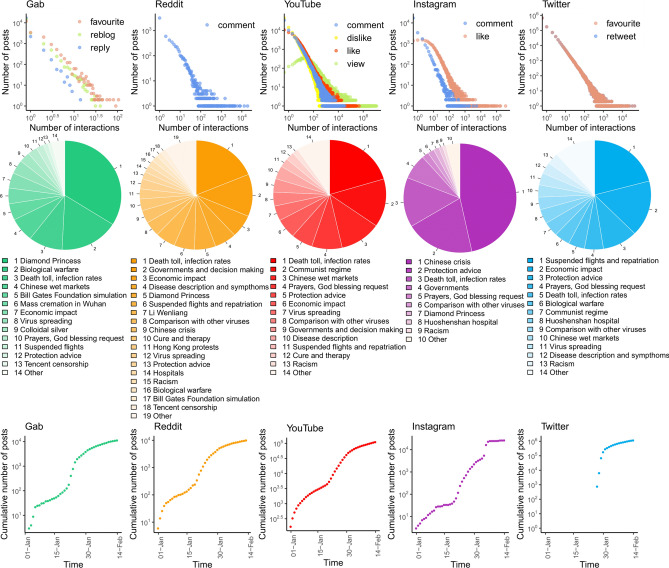
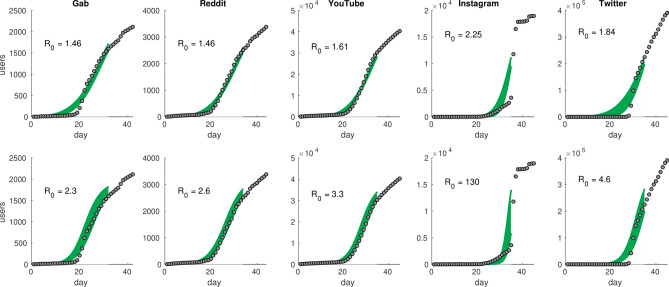
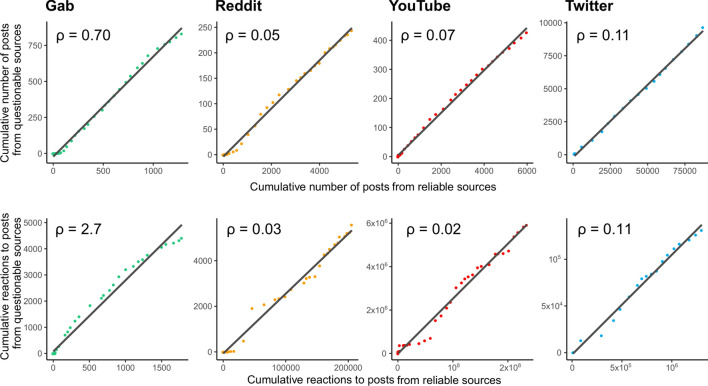
Verification
Claims the paper makes
The claims and statistics of this paper haven’t been checked yet.
Free: it reads the open-access text and checks the first 5 claims that cite a source we can check. Create a free account to check every claim.
Claims other papers make about this one
Each is checked against this paper’s own text: does it say what the citing paper says it does?
The source backs part of the claim, not all of it — or backs it for a different population, condition or comparison.
In the citing paper
“Our attention span remains limited (9, 10), and feed algorithms might limit our selection process by suggesting contents similar to the ones we are usually exposed to (11–13).”
From The echo chamber effect on social media (2021) · cites this paper as [12]
Experimental — accuracy not yet measuredThe cited source says what the claim attributes to it.
In the citing paper
“The uncontrolled dissemination of false or misleading health information via digital channels represents one of the most complex and urgent challenges currently facing Public Health (1, 2).”
From Health misinformation, digital health literacy, and attitudes toward science among university students: an exploratory cross-sectional survey (2026) · cites this paper as [2]
The cited source says what the claim attributes to it.
In the citing paper
“the amplification of questionable sources of COVID-19 misinformation is highly platform dependent, with some platforms amplifying questionable content less than reliable content 58 .”
From Measuring the impact of COVID-19 vaccine misinformation on vaccination intent in the UK and USA (2021) · cites this paper as [58]
The cited source says what the claim attributes to it.
In the citing paper
“The broad public reach of the Internet and social media favours the spread of rumours and dissemination of unreliable information [7].”
Self-check
Percentages, sums and reported differences re-computed from the paper’s own numbers.
The self-check needs the paper’s full text.
Citations
Cites
An Introduction to the Bootstrap
Efron, B., & Tibshirani, R. J. (1994) · doi:10.1201/9780429246593 · Cited by 40,500
Learning representations by back-propagating errors
Rumelhart, D. E., Hinton, G. E., & Williams, R. J. (1986) · Nature · doi:10.1038/323533a0 · Cited by 31,892 · cited 1×
“More formally, given a content represented by the sequence of words w 1 , w 2 , . . . , w T , we use stochastic gradient descent with gradient computed through backpropagation rule [39] for maximizing the average log probability where k is the size of the training window.”
MethodDistributed Representations of Words and Phrases and their Compositionality
Mikolov, T., Sutskever, I., Chen, K., Corrado, G., & Dean, J. (2013) · arXiv · doi:10.48550/arxiv.1310.4546 · Cited by 24,533
The spread of true and false news online
Vosoughi, S., Roy, D., & Aral, S. (2018) · Science · doi:10.1126/science.aap9559 · Cited by 8,847 · cited 2×
“Some studies pointed out that fake news and inaccurate information may spread faster and wider than fact-based news [22].”
BackgroundAn Introduction to the Bootstrap.
Buckland, S. T., Efron, B., & Tibshirani, R. J. (1994) · Biometrics · doi:10.2307/2532810 · Cited by 3,103
Linguistic Regularities in Continuous Space Word Representations
Mikolov, T., Yih, W.-T., & Zweig, G. (2013) · North American Chapter of the Association for Computational Linguistics · Cited by 2,912
The spread of behavior in an online social network experiment
Centola, D. (2010) · Science · doi:10.1126/science.1185231 · Cited by 2,692 · cited 1×
“While R0 is a good proxy for the engagement rate and a good predictor for epidemic-like information spreading, social contagion phenomena might be in general more complex [34, 35, 36].”
BackgroundThe spreading of misinformation online
Del Vicario, M., Bessi, A., Zollo, F., Petroni, F., Scala, A., Caldarelli, G., Stanley, H. E., & Quattrociocchi, W. (2016) · Proceedings of the National Academy of Sciences · doi:10.1073/pnas.1517441113 · Cited by 2,407 · cited 2×
“social perceptions [11] and the framing of narratives; it in uences policy-making, political communication, as well as the evolution of public debate [12, 13] especially when issues are controversial [14]. Indeed, users online tend to acquire information adhering to their worldviews [15], to ignore dissenting informat…”
BackgroundMethodSelf-citationZarocostas, J. (2020) · The Lancet · doi:10.1016/s0140-6736(20)30461-x · Cited by 2,344 · cited 1×
“The term infodemic [2, 3] has been coined to outline the perils of misinformation phenomena during the management of virus outbreaks [4, 5], since it could even speed up the epidemic process by influencing and fragmenting social response [6].”
BackgroundThe Mathematical Theory of Infectious Diseases and its applications
Ling, N. R. (1978) · Immunology · Cited by 1,934
Cited by
Items 801–900 of 1,008
Neves, J. C. B., de França, T. C., Bastos, M. P., de Carvalho, P. V. R., & Gomes, J. O. (2022) · Work · doi:10.3233/wor-211213 · Cited by 13
“When it came to communicating with the general public, social media played an important role as a communication channel [12].”
BackgroundWatch ’n’ Check: Towards a Social Media Monitoring Tool to Assist Fact-Checking Experts
Cerone, A., Naghizade, E., Scholer, F., Mallal, D., Skelton, R., & Spina, D. (2020) · IEEE International Conference on Data Science and Advanced Analytics (DSAA) · doi:10.1109/dsaa49011.2020.00085 · Cited by 16
Health-literacy education drives empowerment and agency
Paakkari, L. T., Balch-Crystal, E., Manu, M., Ruotsalainen, J., Salminen, J., Ulvinen, E., & Torppa, M. (2023) · The Lancet · doi:10.1016/s0140-6736(23)00107-1 · Cited by 12
Fischer, A. E., Van Tonder, T., Gumede, S. B., & Lalla-Edward, S. T. (2021) · JMIR Formative Research · doi:10.2196/25273 · Cited by 11
“In China there was a 30% increase in app use during their lockdown [5-7], while a global analysis of five popular social media platforms (Twitter, Instagram, YouTube, Reddit, and Gab) identified 8 million COVID-19–related posts and comments over the first 45 days of 2020 [8].”
InfluentialWidodo, A. (2020) · Jurnal Pendidikan Sosial Keberagaman · doi:10.29303/juridiksiam.v7i2.138 · Cited by 13
Sentiment analysis of the COVID-19 vaccine perception
Park, B., Jang, I.-S., & Kwak, D. (2024) · Health Informatics Journal · doi:10.1177/14604582241236131 · Cited by 4
Ünlü, A., Truong, S., Sawhney, N., Tammi, T., & Kotonen, T. (2025) · New Media & Society · doi:10.1177/14614448241312900 · Cited by 13
“The algorithms that govern the visibility of content on these platforms often create echo chambers, reinforcing existing prejudices and potentially radicalizing individuals by exposing them to more extreme content over time (Cinelli et al., 2020; Zuiderveen Borgesius et al., 2016).”
Modeling Information Diffusion on Social Media: The Role of the Saturation Effect
Atienza-Barthelemy, J., Losada, J. C., & Benito, R. M. (2025) · Mathematics · doi:10.3390/math13060963 · Cited by 15
Malek, S., Griffin, C. H., Fraleigh, R. D., Lennon, R. P., Monga, V., & Shen, L. (2026) · Journal of Medical Internet Research · doi:10.2196/75500 · Cited by 12
Qiu, X., Zhou, Y., Yuan, T., Wang, Q., Zou, Z., Wang, L., & Ding, Z. (2026) · Scientific Reports · doi:10.1038/s41598-025-34182-1 · Cited by 13
“While this approach mimics typical user behavior, popularity-driven sorting may not represent the full spectrum of available content, potentially skewing estimates of average information quality by excluding the “long tail” of less visible content 11 .”
Sánchez, L., Torres, B. D. F., & Martín, A. G. (2020) · Revista de Comunicación y Salud · doi:10.35669/rcys.2020.10(2).355-384 · Cited by 15
“…de miedo e inseguridad generada por la sobreexposición a noticias (sean falsas o verdaderas), en la crisis del coronavirus (Giménez et al., 2020; Cinelli et al. 2020; Hu et al., 2020) constituye terreno abonado para la desinformación y la propaganda política a nivel internacional (Sukhankin,…”
BackgroundThe Role of Media During COVID-19 Global Outbreak: A Conservation Perspective
Tarakini, G., Mwedzi, T., Manyuchi, T., & Tarakini, T. (2021) · Tropical Conservation Science · doi:10.1177/19400829211008088 · Cited by 14
Pandemocracy in Europe: Power, Parliaments and People in Times of COVID-19
Kettemann, M. C., & Lachmayer, K. (2021) · Hart Publishing eBooks · doi:10.5040/9781509946396 · Cited by 19
Kiss, E., Balla, D., & Kovács, A. D. (2022) · Sustainability · doi:10.3390/su14095138 · Cited by 13
Cyberchondria, Covid-19 phobia, and well-being: a relational study on teachers
Karakaş, N., Tekin, Ç. S., Bentlı, R., & Demir, E. (2022) · La Medicina del Lavoro · doi:10.23749/mdl.v113i3.12661 · Cited by 13
Sentiment Analysis on COVID-19 News Videos Using Machine Learning Techniques
Lekshmi, S., & Anoop, V. S. (2022) · Lecture notes in networks and systems · doi:10.1007/978-981-19-0105-8_54 · Cited by 11
Perceptions and Use of Warning Apps – Did Recent Crises Lead to Changes in Germany?
Haunschild, J., Kaufhold, M., & Reuter, C. (2022) · Mensch und Computer (MuC) · doi:10.1145/3543758.3543770 · Cited by 12
Sentiment Analysis of Tweets During the COVID-19 Pandemic Using Multinomial Logistic Regression
Raheja, S., & Asthana, A. K. (2022) · International Journal of Software Innovation · doi:10.4018/ijsi.315740 · Cited by 12
Crescentini, N., & Padricelli, G. M. (2022) · Athens Journal of Social Sciences · doi:10.30958/ajss.10-1-2 · Cited by 11
“Social media platforms such as Twitter or Facebook ensure, in fact, support and resilience between communities, “providing direct access to an unprecedented amount of content and amplifying rumours and questionable information” (Cinelli et al., 2020, p. 1).”
BackgroundRamjee, D., Pollack, C. C., Charpignon, M., Gupta, S., Rivera, J. M., Hayek, G. Y. E., Dunn, A. G., Desai, A. N., & Majumder, M. S. (2023) · Journal of Medical Internet Research · doi:10.2196/40706 · Cited by 11
“This is especially apparent when countering misinformation regarding individual-level behaviors [16-18].”
Bahri, P., Bowring, G., Edwards, B. D., Anton, C., Aronson, J. K., Caro-Rojas, A., Hugman, B., Mol, P. G. M., Trifirò, G., Ilić, K., et al. (2023) · Drug Safety · doi:10.1007/s40264-023-01285-5 · Cited by 11
“The content of the current infodemic has included sensational and distorted information about COVID‐19 vaccines [141] and medicines used off‐label to prevent or treat COVID‐19 [20], fuelled by social media [142, 143].”
BackgroundAcampa, S., Crescentini, N., & Padricelli, G. M. (2023) · Frontiers in Sociology · doi:10.3389/fsoc.2023.1143263 · Cited by 16
Shahbazi, M., Bunker, D., & Sorrell, T. C. (2023) · Journal of the Association for Information Science and Technology · doi:10.1002/asi.24814 · Cited by 19
Topic Analysis of Social Media Posts during the COVID-19 Pandemic: Evidence from Tweets in Turkish
Bătrâncea, I., Balcı, M. A., Batrancea, L. M., Akgüller, Ö., Tulai, H. I., Rus, M.-I., Masca, E. S., & Morar, I. D. (2023) · Journal of the Knowledge Economy · doi:10.1007/s13132-023-01565-6 · Cited by 11
“However, social networks entail several challenges, such as the potential for disseminating untrue stories, which can exacerbate fear and anxiety (Behera et al., 2022; Cinelli et al., 2020).”
Users Volatility on Reddit and Voat
Marco, N. D., Cinelli, M., Alipour, S., & Quattrociocchi, W. (2024) · IEEE Transactions on Computational Social Systems · doi:10.1109/tcss.2024.3379318 · Cited by 13
“In the information foraging process [20], [21], platforms may influence us; they use recommendation algorithms and other features [22], [23], [24] to suggest new content and potentially shape our interests [25].”
BackgroundSelf-citationŠtětka, V., Brandao, F., Tóth, F., Mihelj, S., Rothberg, D., Hallin, D. C., Klimkiewicz, B., & Ferracioli, P. (2024) · The International Journal of Press/Politics · doi:10.1177/19401612241302755 · Cited by 12
“However, research also suggests that the effects of social media use on COVID-19 misinformation beliefs are not homogeneous across platforms (Cinelli et al. 2020; Meppelink et al. 2022; Theocharis et al. 2021).”
Ilyas, H., Anwar, A., Yaqub, U., Alzamil, Z. S., & Appelbaum, D. A. (2021) · Global Knowledge, Memory and Communication · doi:10.1108/gkmc-01-2021-0006 · Cited by 11
Twitter Sentiment Analysis in Covid-19 Pandemic
Madanian, S., Airehrour, D., Samsuri, N. A., & Cherrington, M. (2021) · IEEE Annual Information Technology, Electronics and Mobile Communication Conference (IEMCON) · doi:10.1109/iemcon53756.2021.9623124 · Cited by 13
Twitter-based crowdsourcing: What kind of measures can help to end the COVID-19 pandemic faster?
Mondal, H., Parvanov, E. D., Singla, R. K., Rayan, R. Α., Nawaz, F. A., Ritschl, V., Eibensteiner, F., Sai, C. S., Cenanovic, M., Devkota, H. P., et al. (2022) · Frontiers in Medicine · doi:10.3389/fmed.2022.961360 · Cited by 12
“As Twitter is an open social media platform, it gives the public instant access to a massive volume of diverse user-created content that may either contain credible health information or rumors, myths, and false information (11, 12).”
BackgroundAnand, B., Kim, K., Sonne, C., & Bhardwaj, N. (2022) · Environmental Technology & Innovation · doi:10.1016/j.eti.2022.102924 · Cited by 12
Zhang, X., Fu, J., Hua, S., Liang, H., & Zhang, Z. (2023) · Nonlinear Dynamics · doi:10.1007/s11071-023-08427-5 · Cited by 11
“…whether their firstdomesticcaseofCOVID-19wasreportedbeforeor after the government’s warning statement, whether or not the government had a strict restriction on its domestic information spreading media, almost all countries suffered from the failure of controlling the pandemics of COVID-19 [1].”
BackgroundAre memes selfish? How Internet memes reflect crisis–Covid-19 pandemic in Israel
Laor, T. (2023) · Online Information Review · doi:10.1108/oir-07-2022-0381 · Cited by 12
Topics in Antivax and Provax Discourse: Yearlong Synoptic Study of COVID-19 Vaccine Tweets
Zaidi, Z., Ye, M., Samon, F., Jama, A., Gopalakrishnan, B., Gu, C., Karunasekera, S. A., Evans, J., & Kashima, Y. (2023) · Journal of Medical Internet Research · doi:10.2196/45069 · Cited by 12
“In this view, anti-and provaccination discourses run in parallel without interacting with each other; each coalescing around shared narratives while ignoring the information and arguments that challenge them [16,17].”
Anxiety about the pandemic and trust in financial markets
Cerqueti, R., & Ficcadenti, V. (2023) · The Annals of Regional Science · doi:10.1007/s00168-023-01243-0 · Cited by 12
Social Media Attributions in the Context of Water Crisis
Sarkar, R., Mahinder, S., Sarkar, H., & KhudaBukhsh, A. R. (2020) · Conference on Empirical Methods in Natural Language Processing (EMNLP) · doi:10.18653/v1/2020.emnlp-main.109 · Cited by 17
Saptarini, I., Novianti, N., Rizkianti, A., Maisya, I. B., Suparmi, S., Veridona, G., Sulistiyowati, N., & Sudikno, S. (2021) · Health Science Journal of Indonesia · doi:10.22435/hsji.v12i1.4754 · Cited by 14
Characterizing information leaders in Twitter during COVID-19 crisis.Preprint
Pastor-Escuredo, D., & Tarazona, C. (2020) · arXiv (Cornell University) · Cited by 13
Ability to detect fake news predicts sub-national variation in COVID-19 vaccine uptake across the UKPreprint
Loomba, S., Maertens, R., Roozenbeek, J., Götz, F. M., van der Linden, S., & de Figueiredo, A. (2023) · medRxiv · doi:10.1101/2023.05.10.23289764 · Cited by 12
“Second, since information is often transmitted between socially connected individuals, misinformation susceptibility is likely mediated by networked information ecosystems that individuals are a part of [10, 17], which requires a methodology that can account for any network effects.”
BackgroundGalinkala, P., Atkinson, E., & Campos‐Castillo, C. (2024) · JMIR Aging · doi:10.2196/56761 · Cited by 16
Detecting Misinformation on Social Media using Community Insights and Contrastive Learning
Ozcelik, O., Toraman, Ç., & Can, F. (2025) · ACM Transactions on Intelligent Systems and Technology · doi:10.1145/3709009 · Cited by 13
“The spread of misinformation can affect trust in scientific and financial information [58], as well as in public health information [9].”
Mapping the global election landscape on social media in 2024
Pecile, G., Marco, N. D., Cinelli, M., & Quattrociocchi, W. (2025) · PLoS ONE · doi:10.1371/journal.pone.0316271 · Cited by 13
“…have revealed to be critical arenas which saw an explosion of information and misinformation for global events, including the COVID-19 pandemic [16, 17], political events [18–20] and discussions on emerging technologies such as large language models [21, 22] and their implications for…”
Self-citationThe Role of Social Media for Health Communication During COVID-19: A Scoping Review
Wella, K., Mtambo, J., Lazaro, M., & Mapulanga, P. (2025) · Journal of Consumer Health on the Internet · doi:10.1080/15398285.2025.2463047 · Cited by 11
“Studies have demonstrated that trusted sources on social media have the potential to combat misinformation and potentially harmful behaviors among sub-scribers (Bowles, Larreguy, and Liu 2020; Cinelli et al. 2020; Khamis and Geng 2021; Talabi et al. 2022).”
A Survey on Opinion Dynamics in Social Media Networks: Analysis, Simulation, and Control
Zareer, M. N., & Šelmić, R. R. (2025) · IEEE Transactions on Computational Social Systems · doi:10.1109/tcss.2025.3622498 · Cited by 13
Large language models for spreading dynamics in complex systems
Jiang, S., Ren, H., Gao, Y., Zhang, Y., Li, Q., Xiao, D., Fan, J., Tang, R., & Wang, W. (2026) · Physics Reports · doi:10.1016/j.physrep.2026.01.006 · Cited by 11
Xue, J., Chen, J., Hu, R., Chen, C., Zheng, C., & Zhu, T. (2020) · Europe PMC (PubMed Central) · Cited by 11
Louden, J. E., Vaudreuil, E., Queen, C., Alvarez, M. E., & García, A. (2020) · Psychology Public Policy and Law · doi:10.1037/law0000284 · Cited by 10
Aschauer, W., Glatz, C., & Prandner, D. (2022) · Springer eBooks · doi:10.1007/978-3-658-34491-7 · Cited by 13
Herzog, N. K., Vasireddy, H., Drenner, D. A., & Rose, J. P. (2022) · Journal of Behavioral Medicine · doi:10.1007/s10865-022-00321-6 · Cited by 9
Gesualdo, F., Parisi, L., Croci, I., Comunello, F., Parente, A., Russo, L., Campagna, I., Lanfranchi, B., Rota, M. C., Filia, A., et al. (2022) · Frontiers in Public Health · doi:10.3389/fpubh.2022.824465 · Cited by 12
“The role of social media in spreading health information, both from reliable and from questionable sources, has increased during the pandemic (6), and the overabundance of information circulating on the web—defined by the World Health Organization (WHO) as the “infodemic” (7)—has made it difficult for users to find tr…”
BackgroundPublic reactions towards Covid-19 vaccination through twitter before and after second wave in India
Mishra, S., Verma, A., Meena, K., & Kaushal, R. (2022) · Social Network Analysis and Mining · doi:10.1007/s13278-022-00885-w · Cited by 10
“Comito (2021) studied a combination of peak detection and clustering method on a real-world tweet dataset related to Covid-19 in the US.”
MethodChen, J., Zhou, Y., & Lv, L. (2022) · Education and Information Technologies · doi:10.1007/s10639-022-11173-7 · Cited by 10
“Social networking sites such as Facebook, Twitter and Weibo, are also commonly used to communicate, exchange and share knowledge, opinions, and ideas, as well as encourage continuous member interactions (Cinelli et al., 2020; Fazel et al., 2021; Hussain et al., 2021; Li et al., 2020).”
BackgroundAttitudinal and Emotional Reactions to the Insurrection at the U.S. Capitol on January 6, 2021
Anderson, J. E., & Coduto, K. D. (2022) · American Behavioral Scientist · doi:10.1177/00027642221132796 · Cited by 11
“Unfortunately, as has become unnervingly apparent during the COVID-19 pandemic, misinformation and disinformation spreads rapidly, due to the ease of sharing information on social media (Cinelli et al., 2020; Grimes, 2021; Prieto Curiel & González Ramírez, 2021).”
BackgroundImpact of risk communication on patient’s safety during the pandemic
Zuluaga-Arias, H.-P., Alkhakany, M., Younus, M. M., Sefiani, H., Caro-Rojas, A., Alzubiedi, S., Albalawi, W. F., & Alshammari, T. M. (2023) · Therapeutic Advances in Drug Safety · doi:10.1177/20420986231159752 · Cited by 12
A Blessing or a Curse? The Role of Social Media During the COVID-19 Pandemic in Africa
Bhanye, J. I., & Bhanye, A. S. (2023) · Springer eBooks · doi:10.1007/978-3-030-68127-2_367-1 · Cited by 12
COVID-19-related health literacy and preparedness to what may come: a cross-sectional study
Moustafa, H. A. M., & Kassem, A. B. (2023) · Beni-Suef University Journal of Basic and Applied Sciences · doi:10.1186/s43088-023-00452-y · Cited by 10
“Noteworthy, the government should monitor social media platforms and ban false information [63–68].”
BackgroundLSTM Based Sentiment Analysis Model to Monitor COVID-19 Emotion
Arshed, M. A., Mumtaz, S., Liaqat, M. S., Haq, I. U., & Hussain, M. (2022) · VFAST Transactions on Software Engineering · doi:10.21015/vtse.v10i2.1006 · Cited by 11
Schüz, B., & Jones, C. M. (2024) · Bundesgesundheitsblatt - Gesundheitsforschung - Gesundheitsschutz · doi:10.1007/s00103-024-03836-2 · Cited by 14
Social Media and Urticaria - A Data Audit of Facebook®, LinkedIn®, and Twitter® Posts
Mondal, H., Dhabal, A., Mondal, S., & Podder, I. (2024) · Indian Journal of Dermatology · doi:10.4103/ijd.ijd_112_23 · Cited by 10
“[4,11] Thus, while social media has served as a boon in health promotion and management, it is important to regulate the quality and ensure the veracity of the information made available to users.”
InfluentialThe media risk of infodemic in public health emergencies: Consequences and mitigation approaches
Shi, R., Jia, X., Hu, Y., & Wang, H. (2024) · PLoS ONE · doi:10.1371/journal.pone.0308080 · Cited by 12
Social Power Evolution of Multiple DeGroot Individuals With Centralized Media
Hu, H., Cao, J., Zhou, J., Chen, Y., Zhang, T., & Wen, G. (2025) · IEEE Transactions on Computational Social Systems · doi:10.1109/tcss.2025.3574820 · Cited by 10
“For example, during the COVID-19 pandemic, positive media coverage of vaccines significantly reduced vaccine hesitancy, thereby curbing viral transmission [24].”
Scarpina, F. (2020) · Frontiers in Psychology · doi:10.3389/fpsyg.2020.02252 · Cited by 10
#TrendingNow: Instagram Versus Twitter Activity Among Radiation Oncology Patients and Professionals
Rahimy, E., Sandhu, N., Giao, D. M., & Pollom, E. L. (2021) · Practical Radiation Oncology · doi:10.1016/j.prro.2021.06.008 · Cited by 10
Bhattacharyya, R. (2021) · IntechOpen eBooks · doi:10.5772/intechopen.98841 · Cited by 10
Using Social Media to Analyze Public Concerns and Policy Responses to COVID-19 in Hong Kong
Liang, G., Zhao, J., Lau, H. Y. P., & Leung, C. W.-K. (2021) · ACM Transactions on Management Information Systems · doi:10.1145/3460124 · Cited by 12
COVID-19 vaccine online misinformation in Fiji: Preliminary findings
Kant, R., Varea, R., & Titifanue, J. (2021) · Pacific Journalism Review – Te Koakoa · doi:10.24135/pjr.v27i1and2.1189 · Cited by 10
Santoveña-Casal, S., & Pérez, M. D. F. (2022) · Technology in Society · doi:10.1016/j.techsoc.2022.101877 · Cited by 12
Identifying Information Superspreaders of COVID-19 from Arabic Tweets
Alqurashi, S., Alashaikh, A. S., Nabil, M., Alanazi, E., Sherif, A., & Alasmary, W. (2021) · IEEE Middle East and North Africa Communications Conference (MENACOMM) · doi:10.1109/menacomm50742.2021.9678304 · Cited by 10
Evaluating Public Sentiment of Covid-19 Vaccine Tweets Using Machine Learning Techniques
Akpatsa, S. K., Li, X., Lei, H., & Obeng, V.-H. K. S. (2022) · Informatica · doi:10.31449/inf.v46i1.3483 · Cited by 10
“Although some studies have highlighted the socio-economic impact of the pandemic [3]–[9], analysis of Covid-19 vaccine-related issues is rare.”
BackgroundSun, Y., Hamedani, M. F., Javidi, G., Sheybani, E., & Hao, F. (2022) · Health Promotion International · doi:10.1093/heapro/daac157 · Cited by 12
Albanesi, B., Clari, M., Gonella, S., Chiarini, D., Aimasso, C., Mansour, I., Coggiola, M., Charrier, L., & Dimonte, V. (2022) · Journal of Occupational Health · doi:10.1002/1348-9585.12376 · Cited by 11
“24 Consistently with previous literature 12,25 our male HBWs were more likely to adhere to the vaccination program.”
The Usage and Impact of ICTs during the Covid-19 Pandemic
Yang, S., Zhu, X. A., & Fichman, P. (2023) · Routledge eBooks · doi:10.4324/9781003231769 · Cited by 11
COVID-19 infodemic on Chinese social media: A 4P framework, selective review and research directions
Luo, J., Xue, R., & Hu, J. (2020) · Measurement and Control · doi:10.1177/0020294020967035 · Cited by 10
“This conclusion is confirmed by a recent research which has modeled the spread of information with epidemic models.(11) In their work, each social media platform is characterized by a basic reproduction number (R0) where the value of R0 for Twitter, Instagram and YouTube is 1.”
BackgroundA Short Review of Some Mathematical Methods to Detect Fake News
(2020) · International Journal of Circuits Systems and Signal Processing · doi:10.46300/9106.2020.14.37 · Cited by 11
“Just like the virus, rumours and falsehoods flow beyond borders, causing, what is now called the World Health Organization (WHO), universal infodemic [9].”
BackgroundFake News Shared on WhatsApp During Covid-19: An Analysis of Groups and Statuses in Pakistan
Ahmed, M., Riaz, M. Q., Qamar, M., & Asghar, R. (2021) · Mediaobrazovanie · doi:10.13187/me.2021.1.4 · Cited by 13
Agarwal, A., Uniyal, D., Toshniwal, D., & Deb, D. (2021) · IEEE Transactions on Emerging Topics in Computational Intelligence · doi:10.1109/tetci.2021.3067661 · Cited by 13
Alotiby, A. A., & Al‐Harbi, L. N. (2021) · International Journal of Environmental Research and Public Health · doi:10.3390/ijerph18116123 · Cited by 10
“For instance, misinformation circulated heavily in social media [6] and, with not enough resources available to label all misinformation as false, or unverified, herbal remedies started providing a false sense of security to the public [7].”
BackgroundReflexivity and Negotiation in Collaborative Journalism on air Quality
Verkest, S. (2021) · Journalism Studies · doi:10.1080/1461670x.2021.1950033 · Cited by 10
“Issues like the rapid spread of misinformation on social media (Cinelli et al. 2020) or political figures building their own partisan narrative around the crisis (Dunwoody 2020) are not necessarily new.”
BackgroundThe Colombian Media Industry on the Digital Social Consumption Agenda in Times of COVID-19
Rubio, A. B. (2021) · Information · doi:10.3390/info13010011 · Cited by 10
Shaar, S., Nikolov, A., Babulkov, N., Alam, F., Barrón-Cedeño, A., Elsayed, T., Hasanain, M., Suwaileh, R., Haouari, F., Martino, G. D. S., et al. (2020) · Qatar University QSpace (Qatar University) · Cited by 10
How Epidemic Psychology Works on Social Media: Evolution of responses to the COVID-19 pandemicPreprint
Aiello, L. M., Quercia, D., Zhou, K., Constantinides, M., Šćepanović, S., & Joglekar, S. P. (2020) · arXiv (Cornell University) · Cited by 13
On the dynamics emerging from pandemics and infodemicsPreprint
Leitner, S. (n.d.) · RePEc: Research Papers in Economics · Cited by 10
Curtailing Fake News Propagation with PsychographicsPreprint
Safadi, H., Li, W., Rahmati, P., & Soleymani, S. (2020) · SSRN Electronic Journal · doi:10.2139/ssrn.3558236 · Cited by 12
Communicating public health during COVID-19, implications for vaccine rollout
Bloomfield, P. S., Magnusson, J., Walsh, M. L., & Naylor, A. (2021) · Big Data & Society · doi:10.1177/20539517211023534 · Cited by 12
Remembering and forgetting information about the COVID-19 vaccine on Twitter
Bilgin, E., & Wang, Q. (2022) · Memory · doi:10.1080/09658211.2022.2144892 · Cited by 10
“…online, social media users are often exposed to some, but not all, information on a particular topic; and they can be exposed to diverse opinions and contrasting views thatmay ormay not be congruent with their attitudes and prior knowledge (Cinelli et al., 2020, 2021; Del Vicario et al., 2016).”
BackgroundPeters, N. (2024) · Journal of Science Communication · doi:10.22323/2.23060203 · Cited by 9
Choi, E., Carleton, E. L., Walsh, M. M., & Hancock, A. J. (2024) · Behaviour and Information Technology · doi:10.1080/0144929x.2024.2433031 · Cited by 12
“As much as social media offers timely information and the opportunity to connect and network, information obtained through social media may not be a reliable source (Cinelli et al. 2020).”
InfluentialModeling polarized information diffusion with SEI(A)I(D)Z: a stance-based epidemiological approach
Gurung, M. I., Agarwal, N., & Addai, E. (2025) · Social Network Analysis and Mining · doi:10.1007/s13278-025-01479-y · Cited by 9
“Additionally, studies have shown that bots and coordinated misinformation campaigns played a key role in propagating these theories, exacerbating their spread (Cinelli et al. 2020; Ahmed et al. 2020; Flaherty et al. 2022).”
Social polarization promoted by sparse higher-order interactions
Pérez-Martínez, H., Lamata-Otín, S., Malizia, F., Floría, L. M., Gómez‐Gardeñes, J., & Soriano‐Paños, D. (2025) · Communications Physics · doi:10.1038/s42005-025-02413-6 · Cited by 12
A Inteligência Artificial e os desafios da Ciência Forense Digital no século XXI
Padilha, R., Theóphilo, A., Andaló, F., Oliveros, D. A. V., Cardenuto, J. P., Bertocco, G. C., Nascimento, J., Yang, J., & Rocha, A. D. R. (2021) · Estudos Avançados · doi:10.1590/s0103-4014.2021.35101.009 · Cited by 19
Transfer deep learning approach for detecting coronavirus disease in X-ray images
AL-Smadi, M., Hammad, M., Baker, Q. B., Tawalbeh, S. K., & Al-Zboon, S. A. (2021) · International Journal of Power Electronics and Drive Systems/International Journal of Electrical and Computer Engineering · doi:10.11591/ijece.v11i6.pp4999-5008 · Cited by 9
“[15] collected large dataset obtained from the social media platforms (e.”
BackgroundÖzgüven, Y. M., & Eken, S. (2021) · Journal of Ambient Intelligence and Humanized Computing · doi:10.1007/s12652-021-03328-0 · Cited by 10
Chen, Y., Bredın, D., Potì, V., & Matkovskyy, R. (2021) · Digital Finance · doi:10.1007/s42521-021-00045-3 · Cited by 9
“Cinelli et al. (2020) fit the spreading of COVID-19 narratives on social medias with a basic epidemiological model to characterize the evolution. The model requires only a time series of the narrative intensity index as the input. There are other methods of modeling information contagion developed in the information d…”
BackgroundMethodInfluentialVivion, M., & Gauvin, L. I. (2022) · Canadian Journal of Public Health · doi:10.17269/s41997-021-00575-8 · Cited by 9
“En appliquant des méthodes quantitatives scientifiques et parfois en empruntant des modèles issus de l’épidémiologie des maladies infectieuses, l’infodémiologie avance les connaissances sur le volume et la circulation d’informations (incluant la vélocité et la qualité des informations) qui sont véhiculées par différen…”
BackgroundMethodInfluentialMadvig, F., Achiam, M., Adler‐Nissen, R., Johansen, N., & Whiteley, L. (2022) · Frontiers in Communication · doi:10.3389/fcomm.2022.822471 · Cited by 11
“Calls were made to “treat the infodemic” with fast rollouts of informational inoculation, and researchers used the metaphor as a framing for research (Cinelli et al., 2020; Scales et al., 2021).”
MethodPraktik Social Media Pandemic Communication Model pada Media Sosial Lembaga Pemerintah
Tania, S., & Cahyono, H. (2022) · Jurnal ILMU KOMUNIKASI · doi:10.24002/jik.v19i1.3861 · Cited by 10
Nagata, J. M., Ganson, K. T., Liu, J., Patel, K. P., Tai, J. C., Murray, S. B., & Bibbins-Domingo, K. B. (2022) · Preventive Medicine Reports · doi:10.1016/j.pmedr.2022.101900 · Cited by 10
“Spreading patterns of information from both reliable and questionable sources on social media do not differ (Cinelli et al., 2020).”
Values for a Post-Pandemic Future
Dennis, M., Ishmaev, G., Umbrello, S., & van den Hoven, J. (2022) · Philosophy of engineering and technology · doi:10.1007/978-3-031-08424-9 · Cited by 9
COVID-19 and social media: Beyond polarization
Nicola, G. D., Mambou, V. H. T., & Kauermann, G. (2023) · PNAS Nexus · doi:10.1093/pnasnexus/pgad246 · Cited by 12
“Social media, in particular, has been extensively used to exchange pandemic-related information as well as disinformation, leading to what has been defined as an “infodemic” alongside the pandemic [1–3].”
Martins, F., Yu, J., & Domahidi, E. (2023) · Annals of the International Communication Association · doi:10.1080/23808985.2023.2242817 · Cited by 9
“…had signi fi cant impacts on global society (Ryan, 2020; Tisdell, 2020), through, for example, the impact of large-scale lockdowns (Onyeaka et al., 2021), the rise of vaccine denial movements (Ska fl e et al., 2022) and the exponential growth of social media information (Cinelli et al., 2020).”
BackgroundNia, Z. M., Bragazzi, N. L., Ahamadi, A., Asgary, A., Garcia, B. R. M., Orbinski, J., Seyyed-Kalantari, L., Woldegerima, W. A., Wu, J., & Kong, J. D. (2023) · Journal of The Royal Society Interface · doi:10.1098/rsif.2023.0200 · Cited by 11
Metadata
- Authors
- Cinelli, M., Quattrociocchi, W., Galeazzi, A., Valensise, C. M., Brugnoli, E., Schmidt, A. L., Zola, P., Zollo, F., & Scala, A.
- Affiliations
- Ca' Foscari University of Venice (IT)
- University of Brescia (IT)
- Politecnico di Milano (IT)
- Institute of Informatics and Telematics (IT)
- Corresponding author
- Quattrociocchi, Walter
- Venue
- Scientific Reports
- Published
- 2020-10-06
- Volume
- 10
- Issue
- 1
- Pages
- 16598-16598
- ISSN
- 2045-2322 (ISSN-L)
- PMC
- PMC7538912
- OpenAlex
- W3011345566
- Cited by
- 2,313
- References
- 57
- Citations by year
- 2026: 201 · 2025: 251 · 2024: 246 · 2023: 349 · 2022: 451 · 2021: 557 · 2020: 257
- FWCI
- 541.32
- Type
- journal article
- Language
- en
- Open access
- gold
- doi.org
- Licence
- cc-by
- creativecommons.org/licenses/by/4.0 (tdm)
- creativecommons.org/licenses/by/4.0 (vor)
- Locations
- Scientific Reports (publishedVersion, cc-by)
- PubMed Central (publishedVersion, cc-by)
- PubMed (publishedVersion)
- arXiv (Cornell University) (submittedVersion)
- Informationszentrum Lebenswissenschaften (ZB MED) (submittedVersion, cc-by)
- IRIS Research product catalog (Sapienza University of Rome) (submittedVersion)
- ARCA (Università Ca' Foscari Venezia) (submittedVersion, cc-by-nc)
- Padua Research Archive (University of Padova) (submittedVersion, cc-by)
- arXiv (Cornell University)
- Topics
- Social Sciences › Sociology and Political Science › Misinformation and Its Impacts
- Physical Sciences › Physics and Astronomy › Statistical and Nonlinear Physics › Complex Network Analysis Techniques
- Social Sciences › Communication › Communication and COVID-19 Impact
- Keywords
- COVID-19 pandemic, infodemic, social media, misinformation, information dissemination, basic reproduction number, epidemic modeling, engagement, Twitter, Instagram, YouTube, Reddit, Gab
- MeSH terms
- Betacoronavirus, Data Analysis, COVID-19, SARS-CoV-2, Humans, Pneumonia, Viral, Social Behavior, Linear Models, Neural Networks, Computer, Coronavirus Infections, Information Dissemination, Basic Reproduction Number, Pandemics, Social Media
About these checks
Registry, retraction, Cites and statistics results are computed, not judged, with one exception: a printed reference that no index lists is read once by a model before it counts as a citation error. Claims are extracted by a model and kept only when their quote appears verbatim in the text; each cited source is then checked, with a model’s help, for whether it says what the claim relies on. Those verdicts can be wrong — read the claim’s quote and the cited source before relying on one.
Statistics and arithmetic are recomputed, not judged.
Confidence bands are shown only for fields calibrated on our annotated test set. None is calibrated yet, so no band is shown.
What counts as a claim ›How we measure confidence ›How we check this ›
Are you an author, or do you see a problem with this page? Request a review
Data sources
Bibliographic data: Semantic Scholar, OpenAlex, Crossref.
Contains information from the Semantic Scholar Academic Graph Datasets, made available under the ODC Attribution License (ODC-BY 1.0).
Semantic Scholar’s data is described in: Kinney, R., et al. (2023). The Semantic Scholar Open Data Platform. arXiv:2301.10140.
