

The COVID-19 social media infodemic
Open accessThe DOI matches its Crossref record; 57 of the 57 references it cites were found in a registry or an index.
Abstract
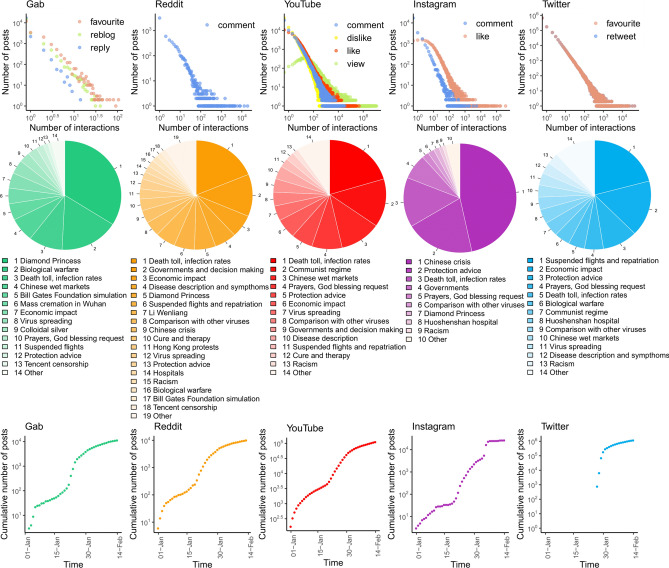
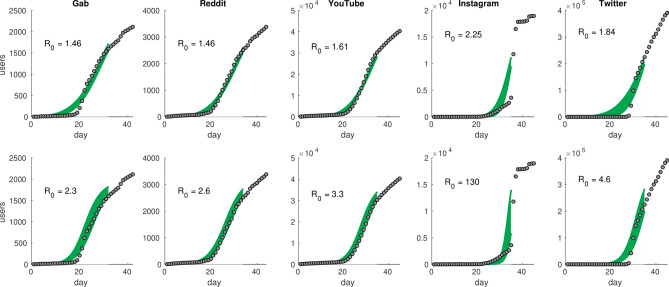
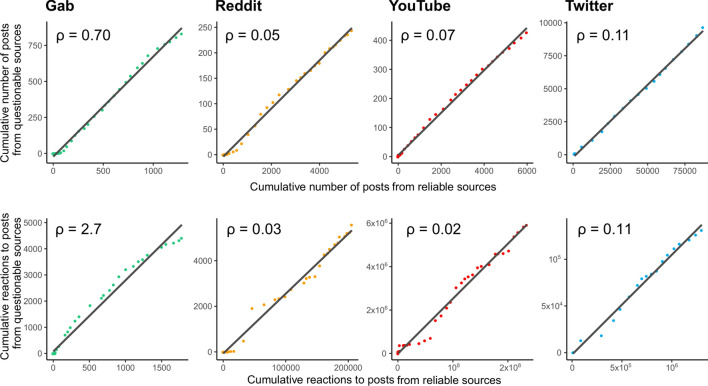
We address the diffusion of information about the COVID-19 with a massive data analysis on Twitter, Instagram, YouTube, Reddit and Gab. We analyze engagement and interest in the COVID-19 topic and provide a differential assessment on the evolution of the discourse on a global scale for each platform and their users. We fit information spreading with epidemic models characterizing the basic reproduction number $$R_0$$ R 0 for each social media platform. Moreover, we identify information spreading from questionable sources, finding different volumes of misinformation in each platform. However, information from both reliable and questionable sources do not present different spreading patterns. Finally, we provide platform-dependent numerical estimates of rumors’ amplification.
Overview
The claims and statistics of this paper haven’t been checked yet.
Free: it reads the open-access text and checks the first 5 claims that cite a source we can check. Create a free account to check every claim.
Integrity signals
Registry
Cites
Statistics
Figures
Verification
Claims the paper makes
The claims and statistics of this paper haven’t been checked yet.
Free: it reads the open-access text and checks the first 5 claims that cite a source we can check. Create a free account to check every claim.
Claims other papers make about this one
Each is checked against this paper’s own text: does it say what the citing paper says it does?
The source backs part of the claim, not all of it — or backs it for a different population, condition or comparison.
In the citing paper
“Our attention span remains limited (9, 10), and feed algorithms might limit our selection process by suggesting contents similar to the ones we are usually exposed to (11–13).”
From The echo chamber effect on social media (2021) · cites this paper as [12]
Experimental — accuracy not yet measuredThe cited source says what the claim attributes to it.
In the citing paper
“The uncontrolled dissemination of false or misleading health information via digital channels represents one of the most complex and urgent challenges currently facing Public Health (1, 2).”
From Health misinformation, digital health literacy, and attitudes toward science among university students: an exploratory cross-sectional survey (2026) · cites this paper as [2]
The cited source says what the claim attributes to it.
In the citing paper
“the amplification of questionable sources of COVID-19 misinformation is highly platform dependent, with some platforms amplifying questionable content less than reliable content 58 .”
From Measuring the impact of COVID-19 vaccine misinformation on vaccination intent in the UK and USA (2021) · cites this paper as [58]
The cited source says what the claim attributes to it.
In the citing paper
“The broad public reach of the Internet and social media favours the spread of rumours and dissemination of unreliable information [7].”
Self-check
Percentages, sums and reported differences re-computed from the paper’s own numbers.
The self-check needs the paper’s full text.
Citations
Cites
An Introduction to the Bootstrap
Efron, B., & Tibshirani, R. J. (1994) · doi:10.1201/9780429246593 · Cited by 40,500
Learning representations by back-propagating errors
Rumelhart, D. E., Hinton, G. E., & Williams, R. J. (1986) · Nature · doi:10.1038/323533a0 · Cited by 31,892 · cited 1×
“More formally, given a content represented by the sequence of words w 1 , w 2 , . . . , w T , we use stochastic gradient descent with gradient computed through backpropagation rule [39] for maximizing the average log probability where k is the size of the training window.”
MethodDistributed Representations of Words and Phrases and their Compositionality
Mikolov, T., Sutskever, I., Chen, K., Corrado, G., & Dean, J. (2013) · arXiv · doi:10.48550/arxiv.1310.4546 · Cited by 24,533
The spread of true and false news online
Vosoughi, S., Roy, D., & Aral, S. (2018) · Science · doi:10.1126/science.aap9559 · Cited by 8,847 · cited 2×
“Some studies pointed out that fake news and inaccurate information may spread faster and wider than fact-based news [22].”
BackgroundAn Introduction to the Bootstrap.
Buckland, S. T., Efron, B., & Tibshirani, R. J. (1994) · Biometrics · doi:10.2307/2532810 · Cited by 3,103
Linguistic Regularities in Continuous Space Word Representations
Mikolov, T., Yih, W.-T., & Zweig, G. (2013) · North American Chapter of the Association for Computational Linguistics · Cited by 2,912
The spread of behavior in an online social network experiment
Centola, D. (2010) · Science · doi:10.1126/science.1185231 · Cited by 2,692 · cited 1×
“While R0 is a good proxy for the engagement rate and a good predictor for epidemic-like information spreading, social contagion phenomena might be in general more complex [34, 35, 36].”
BackgroundThe spreading of misinformation online
Del Vicario, M., Bessi, A., Zollo, F., Petroni, F., Scala, A., Caldarelli, G., Stanley, H. E., & Quattrociocchi, W. (2016) · Proceedings of the National Academy of Sciences · doi:10.1073/pnas.1517441113 · Cited by 2,407 · cited 2×
“social perceptions [11] and the framing of narratives; it in uences policy-making, political communication, as well as the evolution of public debate [12, 13] especially when issues are controversial [14]. Indeed, users online tend to acquire information adhering to their worldviews [15], to ignore dissenting informat…”
BackgroundMethodSelf-citationZarocostas, J. (2020) · The Lancet · doi:10.1016/s0140-6736(20)30461-x · Cited by 2,344 · cited 1×
“The term infodemic [2, 3] has been coined to outline the perils of misinformation phenomena during the management of virus outbreaks [4, 5], since it could even speed up the epidemic process by influencing and fragmenting social response [6].”
BackgroundThe Mathematical Theory of Infectious Diseases and its applications
Ling, N. R. (1978) · Immunology · Cited by 1,934
Cited by
Items 201–300 of 1,008
Shams, A. B., Apu, E. H., Rahman, A., Raihan, M. M. S., Siddika, N., Preo, R. B., Hussein, M. R., Mostari, S., & Kabir, R. (2021) · Healthcare · doi:10.3390/healthcare9020156 · Cited by 62
“5 million comments on COVID-19 from several social media platforms [12].”
BackgroundPrevalence and source analysis of COVID-19 misinformation in 138 countries
Al-Zaman, M. S. (2021) · IFLA Journal · doi:10.1177/03400352211041135 · Cited by 59
“more responsible for COVID-19 misinformation propagation (1,4,10,22).”
Fatima, A., Li, Y., Hills, T. T., & Stella, M. (2021) · Big Data and Cognitive Computing · doi:10.3390/bdcc5040077 · Cited by 70
The simulation of judgment in LLMs
Loru, E., Nudo, J., Di Marco, N., Santirocchi, A., Atzeni, R., Cinelli, M., Cestari, V., Rossi-Arnaud, C., & Quattrociocchi, W. (2025) · Proceedings of the National Academy of Sciences · doi:10.1073/pnas.2518443122 · Cited by 57
“Whereas the first wave of research on social media emphasized the volume and velocity of information flows [17, 23], our findings highlight a second phase in which the problem shifts from information overload to the nature of judgment itself, as automated pipelines introduce epistemic opacity into…”
Self-citationCausal Modeling of Twitter Activity during COVID-19
Gencoglu, O., & Gruber, M. (2020) · Computation · doi:10.3390/computation8040085 · Cited by 64
In Science We Trust: The Effects of Information Sources on COVID-19 Risk Perceptions
Entradas, M. (2021) · Health Communication · doi:10.1080/10410236.2021.1914915 · Cited by 60
“…that social media served as a powerful means to amplify misinformation, rumors, and conspiracies that circulated widely early in the pandemic (Cinelli et al., 2020; Romer & Jamieson, 2020) and was significant in the increase of the online anti-vaccine movement (Center for Countering Digital…”
BackgroundIncidental news exposure and COVID-19 misperceptions: A moderated-mediation model
Borah, P., Su, Y., Xiao, X., & Lee, D. K. L. (2021) · Computers in Human Behavior · doi:10.1016/j.chb.2021.107173 · Cited by 59
The Influence of Vicarious Fear-Learning in “Infecting” Reactive Action Inhibition
Battaglia, S., Cardellicchio, P., Fazio, C. D., Nazzi, C., Fracasso, A., & Borgomaneri, S. (2022) · Frontiers in Behavioral Neuroscience · doi:10.3389/fnbeh.2022.946263 · Cited by 60
Chowdhury, A. H., Kabir, K. H., Abdulai, A., & Alam, M. F. (2023) · Sustainability · doi:10.3390/su15064753 · Cited by 70
“It is simple news items that are intentionally and occurrence in info, involving misinfo, disinfo, malinfo [32,67]. pandemic [89–91].”
Afzal, A., Saleel, C. A., Bhattacharyya, S., Satish, N., Samuel, O. D., & Badruddin, I. A. (2021) · Archives of Computational Methods in Engineering · doi:10.1007/s11831-021-09634-2 · Cited by 66
The use of social media for health research purposes: scoping review
Bour, C., Ahne, A., Schmitz, S., Perchoux, C., Dessenne, C., & Fagherazzi, G. (2021) · Journal of Medical Internet Research · doi:10.2196/25736 · Cited by 56
Santis, E. D., Martino, A., & Rizzi, A. (2020) · IEEE Access · doi:10.1109/access.2020.3010033 · Cited by 64
“…to a growing number of infodemiology studies [24]–[27] where, inter-estingly, the spread of news or rumors are evaluated with the same epidemic models adopted in real-world epidemics [28], for example measuring a R 0 parameter that, if found higher than the unitary value, it announces an infodemic.”
BackgroundYe, Y., Hou, S., Fan, Y., Zhang, Y., Qian, Y., Sun, S., Peng, Q., Ju, M., Song, W., & Loparo, K. A. (2020) · IEEE Journal of Biomedical and Health Informatics · doi:10.1109/jbhi.2020.3009314 · Cited by 63
Cognitive Network Science for Understanding Online Social Cognitions: A Brief Review
Stella, M. (2021) · Topics in Cognitive Science · doi:10.1111/tops.12551 · Cited by 65
COVID-19 Discourse on Twitter in Four Asian Countries: Case Study of Risk Communication
Park, S., Han, S., Kim, J., Molaie, M. M., Vu, H. D., Singh, K., Han, J., Lee, W., & Cha, M. (2021) · Journal of Medical Internet Research · doi:10.2196/23272 · Cited by 59
“One study used an epidemic model to represent the spread of misinformation about COVID-19 on various social media platforms such as Twitter, Instagram, YouTube, Reddit, and Gab; the study showed that users interact and consume information differently on each platform [28].”
Crabu, S., Giardullo, P., Sciandra, A., & Neresini, F. (2021) · PLoS ONE · doi:10.1371/journal.pone.0252034 · Cited by 64
Abuhashesh, M., Al-Dmour, H. H., Masa’deh, R. M. T., Salman, A. Z., Al-Dmour, R., Boguszewicz-Kreft, M., & AlAmaireh, Q. N. (2021) · Informatics · doi:10.3390/informatics8040080 · Cited by 68
Kaufman, J., Bagot, K. L., Tuckerman, J., Biezen, R., Oliver, J. R., Jos, C., Ong, D. S., Manski-Nankervis, J.-A. E., Seale, H., Sanci, L. A., et al. (2021) · Australian and New Zealand Journal of Public Health · doi:10.1111/1753-6405.13184 · Cited by 61
Management of the COVID-19 pandemic: challenges, practices, and organizational support
Hossny, E. K., Morsy, S. M., Ahmed, A. M., Saleh, M. S. M., Alenezi, A., & Sorour, M. S. (2022) · BMC Nursing · doi:10.1186/s12912-022-00972-5 · Cited by 59
Brodsky, J. E., Brooks, P. J., Scimeca, D., Galati, P., Todorova, R., & Caulfield, M. (2021) · AERA Open · doi:10.1177/23328584211038937 · Cited by 60
“Areas of inquiry include characterizing COVID-19-related false news and misinformation (e.g., Brennen et al., 2020), how it spreads via different social media platforms (e.g., Cinelli et al., 2020; Pulido et al., 2020), and strategies for reducing its spread (e.g., Pennycook et al., 2020).”
BackgroundMourali, M., & Drake, C. (2022) · Journal of Medical Internet Research · doi:10.2196/34831 · Cited by 55
“With the explosion of false and misleading health claims on social media, especially since the start of the COVID-19 pandemic [62,63], scientists, experts, and health care professionals have been called upon to increase their presence on social media and help combat this “infodemic” [20-27].”
BackgroundAhmed, I., Inam, A. B., Belli, S., Aḥmad, J., Khalil, W., & jafar, M. M. (2021) · European Journal of Physiotherapy · doi:10.1080/21679169.2021.1909649 · Cited by 56
Xu, J., & Liu, C. (2021) · Frontiers in Public Health · doi:10.3389/fpubh.2021.723648 · Cited by 61
“Big data analysis also showed that information from questionable sources or false information posted on social media only represents a small fraction compared to the reliable or science-based ones (27).”
ResultCruickshank, I. J., & Carley, K. M. (2020) · Applied Network Science · doi:10.1007/s41109-020-00317-8 · Cited by 64
“The spread of COVID-19 misinformation has become so problematic and widespread that many researchers are referring to it as an ‘Infodemic’ (Article19 2020; Cinelli et al. 2020; Gallotti et al. 2020).”
BackgroundPsychology of misinformation and the media: Insights from the COVID-19 pandemic
Banerjee, D., & Rao, T. S. (2020) · Indian Journal of Social Psychiatry · doi:10.4103/ijsp.ijsp_112_20 · Cited by 61
Han, C., Yang, M., & Piterou, A. (2021) · Technological Forecasting and Social Change · doi:10.1016/j.techfore.2021.120849 · Cited by 56
“Furthermore, social media has been found to be able to stimulate interests around certain topics [41,76], which may help address public concerns, improve public wellbeing and facilitate the implementation of the measures introduced by government for containing the outbreak of COVID-19 [27].”
Dark Web Marketplaces and COVID-19: before the vaccine
Bracci, A., Nadini, M., Aliapoulios, M., McCoy, D., Gray, I., Teytelboym, A., Gallo, A., & Baronchelli, A. (2021) · EPJ Data Science · doi:10.1140/epjds/s13688-021-00259-w · Cited by 66
COVID-19 and human reproduction: A pandemic that packs a serious punch
Anifandis, G., Tempest, H. G., Oliva, R., Swanson, G., Simopoulou, M., Easley, C. A., Primig, M., Messini, C. I., Turek, P. J., Šutovský, P., et al. (2021) · Systems Biology in Reproductive Medicine · doi:10.1080/19396368.2020.1855271 · Cited by 56
“The perils of this global epidemic of misinformation threaten public health and as aptly described this ‘infodemic’ adds another level of complexity in the management of the COVID-19 crisis (Zarocostas 2020; Cinelli et al. 2020).”
BackgroundA study on social media and higher education during the COVID-19 pandemic
Sengupta, S., & Vaish, A. (2023) · Universal Access in the Information Society · doi:10.1007/s10209-023-00988-x · Cited by 62
“A research study was done on initiatives for e-learning in Indian higher education institutions during the Corona-virus crisis [40] and it was found that social media-based e-learning is gaining huge popularity [41].”
The role of social media in public health crises caused by infectious disease: a scoping review
Terry, K., Yang, F. H., Yao, Q., & Liu, C. (2023) · BMJ Global Health · doi:10.1136/bmjgh-2023-013515 · Cited by 63
Detection of fake news from social media using support vector machine learning algorithms
Sudhakar, M., & Kaliyamurthie, K. P. (2024) · Measurement Sensors · doi:10.1016/j.measen.2024.101028 · Cited by 67
de Saint Laurent, C., Murphy, G., Hegarty, K., & Greene, C. M. (2022) · Cognitive Research: Principles and Implications · doi:10.1186/s41235-022-00437-y · Cited by 42
Model Generalization on COVID-19 Fake News Detection
Bang, Y., Ishii, E., Cahyawijaya, S., Ji, Z., & Fung, P. (2021) · Communications in Computer and Information Science · doi:10.1007/978-3-030-73696-5_13 · Cited by 52
Cao, L., & Liu, Q. (2024) · ACM Computing Surveys · doi:10.1145/3686150 · Cited by 61
Kauk, J., Kreysa, H., & Schweinberger, S. R. (2021) · PLoS ONE · doi:10.1371/journal.pone.0256179 · Cited by 61
Indonesia medical students’ knowledge, attitudes, and practices toward COVID-19
Sondakh, J. J. S., Warastuti, W., Susatia, B., Wildan, M., Sunindya, B. R., Budiyanto, M. A. K., & Fauzi, A. (2021) · Heliyon · doi:10.1016/j.heliyon.2021.e08686 · Cited by 57
“However, students must be critical in receiving information because of the large number of misinformation (Cinelli et al., 2020; Cox, 2021) and conspiracy theories about COVID-19 circulating on social media (Goreis and Kothgassner, 2020; Stephens, 2020).”
Rahman, M. M., Khatun, F., Sami, S. I., & Uzzaman, A. (2022) · Array · doi:10.1016/j.array.2022.100178 · Cited by 64
“Various social-media platforms, like Facebook, Twitter, Youtube, WhatsApp, Instagram, are currently used by the public to receive real-time updates as well as by the healthcare authorities to take initiatives and clarify uncertainties about COVID-19 pandemic [25,134,135].”
BackgroundTsoy, D., Godinić, D., Tong, Q., Obrenovic, B., Khudaykulov, A., & Kurpayanidi, K. I. (2022) · Sustainability · doi:10.3390/su14127192 · Cited by 75
Kor, P. P. K., Leung, A. Y. M., Parial, L. L., Wong, E. M. L., Dadaczynski, K., Okan, O., Amoah, P. A., Wang, S. S., Deng, R., Cheung, T. C. C., et al. (2021) · Journal of Nursing Scholarship · doi:10.1111/jnu.12616 · Cited by 52
“The overwhelming amount of misinformation on social media was regarded as the major cause of the infodemic (Cinelli et al., 2020).”
BackgroundKrawczyk, N., Bunting, A. M., Frank, D., Arshonsky, J., Gu, Y., Friedman, S. R., & Bragg, M. A. (2021) · International Journal of Drug Policy · doi:10.1016/j.drugpo.2021.103140 · Cited by 54
Rothmund, T., Farkhari, F., Ziemer, C., & Azevedo, F. (2022) · Public Understanding of Science · doi:10.1177/09636625211068131 · Cited by 58
“Social media play a crucial role in providing information about COVID-19 (Cinelli et al., 2020; Mohd Hanafiah and Wan, 2020; Moreno et al., 2020; Thelwall and Thelwall, 2020).”
BackgroundWeng, Z., & Lin, A. (2022) · International Journal of Environmental Research and Public Health · doi:10.3390/ijerph192416376 · Cited by 65
“Social media platforms, such as YouTube and Twitter, providing direct access to unprecedented content, can amplify rumors and suspicious news [18].”
BackgroundGurgun, S., Cemiloglu, D., Arden-Close, E. J., Phalp, K. T., Nakov, P., & Ali, R. (2023) · Technology in Society · doi:10.1016/j.techsoc.2023.102444 · Cited by 55
Dharawat, A., Lourentzou, I., Morales, A., & Zhai, C. (2022) · Proceedings of the International AAAI Conference on Web and Social Media · doi:10.1609/icwsm.v16i1.19372 · Cited by 90
“Cinelli et al. (2020) cluster word embed-dings to identify topics and measure the engagement of users on several social media platforms.”
BackgroundKumar, V., Singh, D., Kaur, M., & Damaševičius, R. (2021) · PeerJ Computer Science · doi:10.7717/peerj-cs.564 · Cited by 54
Ahmed, S., Rasul, M. E., & Cho, J. (2022) · Frontiers in Psychology · doi:10.3389/fpsyg.2022.900386 · Cited by 52
“Individuals have increasingly relied on social media for information related to COVID-19 due to the mass availability of news on multiple platforms, a term coined as an “infodemic” by scholars (Cinelli et al., 2020).”
BackgroundAl-Garadi, M. A., Yang, Y., & Sarker, A. (2022) · Healthcare · doi:10.3390/healthcare10112270 · Cited by 69
“The term infodemic refers to the massive information epidemic that occurs during a pandemic [5,68].”
BackgroundMEGA: Machine Learning-Enhanced Graph Analytics for Infodemic Risk Management
Hang, C. N., Yu, P.-D., Chen, S., Tan, C. W., & Chen, G. (2023) · IEEE Journal of Biomedical and Health Informatics · doi:10.1109/jbhi.2023.3314632 · Cited by 56
RetractedVerificación en la infodemia de la Covid-19. El caso Newtral
Aguado-Guadalupe, G., & Bernaola, I. (2020) · Revista Latina de Comunicación Social · doi:10.4185/rlcs-2020-1478 · Cited by 62
“Al mismo tiempo, en consonancia con estudios previos, como el de Cinelli et al. (2020) y MacNair (2018), se ha constatado el papel de las redes sociales en la difusión de los contenidos verificados por Newtral, observándose un predominio de mensajes de texto difundidos en redes sociales o a través…”
BackgroundAiello, L. M., Quercia, D., Zhou, K., Constantinides, M., Šćepanović, S., & Joglekar, S. P. (2021) · Humanities and Social Sciences Communications · doi:10.1057/s41599-021-00861-3 · Cited by 60
“…angles: social media posts have been analyzed in terms of content and behavioral markers (Hou, 2020; Li et al., 2020), and of tracking the diffusion of COVID-related information (Cinelli et al., 2020) and misinformation (Ferrara, 2020; Kouzy et al., 2020; Pulido et al., 2020; Yang et al., 2020).”
BackgroundBroniatowski, D. A., Kerchner, D., Farooq, F., Huang, X., Jamison, A. M., Dredze, M., Quinn, S. C., & Ayers, J. W. (2022) · PLOS ONE · doi:10.1371/journal.pone.0261768 · Cited by 49
León, B., Pérez, M. D. P. M.-C., Salaverría, R., & López‐Goñi, I. (2022) · PLoS ONE · doi:10.1371/journal.pone.0265995 · Cited by 58
“Different social media platforms spread different volumes of misinformation because of different interaction patterns and the peculiarity of the audience on each platform [32].”
BackgroundLewandowsky, S., Armaos, K., Bruns, H., Schmid, P., Holford, D. L., Hahn, U., Al‐Rawi, A., Sah, S., & Cook, J. (2022) · The Annals of the American Academy of Political and Social Science · doi:10.1177/00027162221084663 · Cited by 55
Sukhwal, P. C., & Kankanhalli, A. (2022) · Proceedings of the National Academy of Sciences · doi:10.1073/pnas.2117292119 · Cited by 50
Social media may hinder learning about science; social media's role in learning about COVID-19
Lee, S., Tandoc, E. C., & Lee, E. W. J. (2022) · Computers in Human Behavior · doi:10.1016/j.chb.2022.107487 · Cited by 56
“Compared with other previous pandemics, COVID-19 is unique such that it is also an infodemic (Cinelli et al., 2020), where public health officials and government agencies need to bring the battle to online spaces and address the multitudes of inaccuracies circulating on social media (Mian & Khan, 2020) and the politic…”
Analyzing COVID-19 on Online Social Media: Trends, Sentiments and EmotionsPreprint
Li, X., Zhou, M., Wu, J., Yuan, A., Wu, F. Q., & Li, J. (2020) · arXiv (Cornell University) · doi:10.48550/arxiv.2005.14464 · Cited by 57
“[8] provide an in-depth analysis on the diffusion of misinformation concerning COVID-19 on five different social platforms.”
BackgroundÁlamo, T., Reina, D. G., & Millán, P. (2020) · arXiv (Cornell University) · doi:10.48550/arxiv.2006.01731 · Cited by 52
“In this context, it is also important to mention social media, which is relevant to assess the mobility of the population and its awareness with regard to social distancing, the state of the economy and many other key indicators [256], [45].”
BackgroundCao, L., & Liu, Q. (2022) · doi:10.1101/2022.08.22.22279022 · Cited by 49
Drivers of social influence in the Twitter migration to Mastodon
Cava, L. L., Aiello, L. M., & Tagarelli, A. (2023) · Scientific Reports · doi:10.1038/s41598-023-48200-7 · Cited by 48
“This mass exodus from Twitter represents one of the largest digital migrations in the history of the Social Web and a unique example of collective behavioral change that is documented through large-scale digital traces, that can thus be studied quantitatively and at scale.”
BackgroundBurel, G., Farrell, T., & Alani, H. (2021) · Information Processing & Management · doi:10.1016/j.ipm.2021.102732 · Cited by 48
“The behaviours that misinformation could impact during COVID-19 include following government advice on social distancing and hygiene, self-isolating when necessary and (more recently) accepting a vaccine (Cinelli et al., 2020).”
BackgroundInfluentialSahashi, Y., Endo, H., Sugimoto, T., Nabeta, T., Nishizaki, K., Kikuchi, A., Matsumoto, S., Sato, H., Goto, T., Hasegawa, K., et al. (2021) · Humanities and Social Sciences Communications · doi:10.1057/s41599-021-00716-x · Cited by 51
“Further, it has been suggested that (mis) information has been widely spread in the social media and the “infodemic” status made difficult to obtain appropriate information (Cinelli et al., 2020; The Lancet Infectious, 2020).”
BackgroundWeb-archiving and social media: an exploratory analysis
Vlassenroot, E., Chambers, S., Lieber, S., Michel, A., Geeraert, F., Pranger, J., Birkholz, J. M., & Mechant, P. (2021) · International Journal of Digital Humanities · doi:10.1007/s42803-021-00036-1 · Cited by 56
“, 2011); accidents, natural disasters (Macdonald, 2019), COVID-19 crisis (Ashrafi-rizi & Kazempour, 2020; Cinelli et al., 2020).”
BackgroundPseudoscience and fraudulent products for COVID-19 management
Chavda, V. P., Sonak, S. S., Munshi, N. K., & Dhamade, P. N. (2022) · Environmental Science and Pollution Research · doi:10.1007/s11356-022-21967-4 · Cited by 53
“, by spreading scientific information worldwide (Cinelli et al. 2020).”
A Hybrid Multitask Learning Framework with a Fire Hawk Optimizer for Arabic Fake News Detection
Elaziz, M. A., Dahou, A., Orabi, D. A., AlShathri, S. I., Soliman, E. M., & Ewees, A. A. (2023) · Mathematics · doi:10.3390/math11020258 · Cited by 52
Massarani, L., Leal, T., Waltz, I., & Medeiros, A. (2021) · Liinc em Revista · doi:10.18617/liinc.v17i1.5689 · Cited by 47
Interplay Between Risk Perception, Behavior, and COVID-19 Spread
Dönges, P., Wagner, J., Contreras, S., Iftekhar, E. N., Bauer, S., Mohr, S., Dehning, J., Valdez, A. S. C., Kretzschmar, M., Mäs, M., et al. (2022) · Frontiers in Physics · doi:10.3389/fphy.2022.842180 · Cited by 53
“Hence, it is crucial during a disease outbreak to engage in extensive, expert-guided, and audience-tailored risk communication [56] and to prevent the spread of mis- and disinformation that could damage general trust [57, 58].”
BackgroundMarin, L. (2020) · Ethics and Information Technology · doi:10.1007/s10676-020-09550-2 · Cited by 51
“In such times of distress and uncertainty, users posted more frequently than usual (Cinelli et al. 2020) but some of the information posted was not meant to inform others, but rather to express one’s concerns and emotions related to the pandemic.”
BackgroundHow Dramatic Events Can Affect Emotionality in Social Posting: The Impact of COVID-19 on Reddit
Basile, V., Cauteruccio, F., & Terracina, G. (2021) · Future Internet · doi:10.3390/fi13020029 · Cited by 53
“A COVID-19 social media analysis is presented in [24].”
BackgroundUnmasking COVID-19 Vaccine “Infodemic” in the Social Media
Demuyakor, J., Nyatuame, I. N., & Obiri, S. (2021) · Online Journal of Communication and Media Technologies · doi:10.30935/ojcmt/11200 · Cited by 56
“…receive trusted information regarding the COVID-19 vaccines and mistrust engulfs, the main actors and institutions that are supposed to play a leading role in the immunization process, very little can be achieved (Cinelli et al., 2020; Kang-Xing, 2020; Smith et al., 2020; Wardle & Singerman, 2021).”
BackgroundEvaluating the effect of viral posts on social media engagement
Sangiorgio, E., Marco, N. D., Etta, G., Cinelli, M., Cerqueti, R., & Quattrociocchi, W. (2025) · Scientific Reports · doi:10.1038/s41598-024-84960-6 · Cited by 67
Self-citationRomán-San-Miguel, A., Valenzuela, N. C. S.-G., & Zambrano, R. E. (2020) · Revista Latina de Comunicación Social · doi:10.4185/rlcs-2020-1481 · Cited by 51
The COVID-19 Infodemic: Can the Crowd Judge Recent Misinformation Objectively?
Roitero, K., Soprano, M., Portelli, B., Spina, D., Della Mea, V., Serra, G., Mizzaro, S., & Demartini, G. (2020) · Proceedings of the 29th ACM International Conference on Information & Knowledge Management · doi:10.1145/3340531.3412048 · Cited by 40
“There is significant effort on analyzing COVID-19 information on social media, and linking to data from external factchecking organizations to quantify the spread of misinformation [7, 11, 32].”
BackgroundSocial media and COVID-19 misinformation: how ignorant Facebook users are?
Al-Zaman, M. S. (2021) · Heliyon · doi:10.1016/j.heliyon.2021.e07144 · Cited by 49
Moreno, V., Ramón, X., & Mauri-Ríos, M. (2022) · El Profesional de la Informacion · doi:10.3145/epi.2022.mar.15 · Cited by 56
Stewart, R. J., Madonsela, A., Tshabalala, N., Etale, L., & Theunissen, N. (2022) · Digital Health · doi:10.1177/20552076221085070 · Cited by 51
“Social media, including Twitter, Instagram and WhatsApp, differ from traditional media in the speed with which information travels; in the lack of central control as individuals can pass on information to hundreds and thousands of people in just a few seconds; and in the apparent reluctance of social media companies t…”
BackgroundPilditch, T. D., Roozenbeek, J., Madsen, J. K., & van der Linden, S. (2022) · Royal Society Open Science · doi:10.1098/rsos.211953 · Cited by 54
Abdoh, E. (2022) · The Journal of Academic Librarianship · doi:10.1016/j.acalib.2022.102603 · Cited by 45
Tuck, A. B., & Thompson, R. J. (2021) · JMIR Formative Research · doi:10.2196/26513 · Cited by 45
“Some researchers have postulated that the misinformation being spread across SNSs about the pandemic (eg, conspiracy theories) leads to increases in stress, anxiety, and panic in relation to COVID-19 [14-16].”
BackgroundArtificial Intelligence–Enabled Analysis of Statin-Related Topics and Sentiments on Social Media
Somani, S. S., van Buchem, M. M., Sarraju, A., Hernandez‐Boussard, T., & Rodríguez, F. (2023) · JAMA Network Open · doi:10.1001/jamanetworkopen.2023.9747 · Cited by 47
Ahmed, S., & Rasul, M. E. (2023) · Scientific Reports · doi:10.1038/s41598-023-42614-z · Cited by 57
Xu, J. J., Chen, J. T., Belin, T. R., Brookmeyer, R., Suchard, M. A., & Ramirez, C. M. (2021) · International Journal of Environmental Research and Public Health · doi:10.3390/ijerph18062921 · Cited by 50
Wired to Doubt: Why People Fear Vaccines and Climate Change and Mistrust Science
Dobson, G. P. (2022) · Frontiers in Medicine · doi:10.3389/fmed.2021.809395 · Cited by 59
“More clicks equal more advertising, and more advertising means higher profits (82, 83).”
BackgroundHua, Y., Jiang, H., Lin, S.-X., Yang, J., Plasek, J., Bates, D., & Zhou, L. (2022) · J. Am. Medical Informatics Assoc. · doi:10.1093/jamia/ocac114 · Cited by 47
(2020) · doi:10.2196/preprints.26513 · Cited by 45
Online silence: why do people not challenge others when posting misinformation?
Gurgun, S., Arden-Close, E. J., Phalp, K. T., & Ali, R. (2022) · Internet Research · doi:10.1108/intr-06-2022-0407 · Cited by 53
Actively open-minded thinking is key to combating fake news: A multimethod study
Mirhoseini, M., Early, S., Shamy, N. E., & Hassanein, K. (2023) · Information & Management · doi:10.1016/j.im.2023.103761 · Cited by 56
Hoheisel, R., van Capelleveen, G., Sarmah, D. K., & Junger, M. (2022) · Computers & Security · doi:10.1016/j.cose.2023.103158 · Cited by 47
Enhancing Fake News Detection with Word Embedding: A Machine Learning and Deep Learning Approach
Al-Tarawneh, M. A. B., Alirr, O. I., Al-Maaitah, K. S., Kanj, H., & Aly, W. H. F. (2024) · Computers · doi:10.3390/computers13090239 · Cited by 46
Ding, X., Shang, B., Xie, C., Xin, J., & Yu, F. (2025) · Humanities and Social Sciences Communications · doi:10.1057/s41599-025-04564-x · Cited by 55
“Similarly, Cinelli et al. (2020) analyzed COVID-19-related information across social media platforms and identi fi ed varying levels of misinformation.”
Bashaddadh, O. M. A., Omar, N., Mohd, M., & Khalid, M. N. A. (2025) · IEEE Access · doi:10.1109/access.2025.3572051 · Cited by 45
“…(PAHO), and United Nations Educational, Scientific and Cultural Organization (UNESCO) reports, the global health crisis triggered an unprecedented wave of online misinformation, termed an ‘‘infodemic’’, characterised by millions of posts spreading false or misleading claims [60], [61], [62].”
COVID-19 PANDEMİSİ VE İNFODEMİ
Koç, S. D. G., & Metintaş, S. (2020) · Eskişehir Türk Dünyası Uygulama ve Araştırma Merkezi Halk Sağlığı Dergisi · doi:10.35232/estudamhsd.797508 · Cited by 57
Public Emotional and Coping Responses to the COVID-19 Infodemic: A Review and Recommendations
Ying, W., & Cheng, C. (2021) · Frontiers in Psychiatry · doi:10.3389/fpsyt.2021.755938 · Cited by 49
“Research on the mental effects of the pandemic has shown that the COVID-19 infodemic is an “invisible disaster” with serious and far-reaching deleterious impacts (7, 41).”
BackgroundThe Coronavirus pandemic – 2022: Viruses, variants & vaccines
Alexandridi, M., Mazej, J., Palermo, E., & Hiscott, J. B. (2022) · Cytokine & Growth Factor Reviews · doi:10.1016/j.cytogfr.2022.02.002 · Cited by 51
Jones-Jang, S. M., & Chung, M. (2024) · New Media & Society · doi:10.1177/14614448221099591 · Cited by 43
“Other studies also questioned the differential role of diverse social media platforms in contributing to polarization (e.g. Cinelli et al., 2020; Yarchi et al., 2021).”
“Fact-checking” fact checkers: A data-driven approach
Lee, S., Xiong, A., Seo, H., & Lee, D. (2023) · Harvard Kennedy School Misinformation Review · doi:10.37016/mr-2020-126 · Cited by 70
“Our findings revealed a higher number of fact-checking articles during major events, such as the COVID-19 pandemic and the U.S. presidential election, where misinformation tends to spread widely (Cinelli et al., 2020; Grinberg et al., 2019; Sharma et al., 2022).”
Backgroundvan der Linden, S., Albarracín, D., Fazio, L. K., Freelon, D., Roozenbeek, J., Swire‐Thompson, B., & Bavel, J. J. V. (2026) · American Psychologist · doi:10.1037/amp0001598 · Cited by 61
“Numerous studies have shown that echo chambers exist within specific social media platforms (e.g., Cinelli et al., 2020; Del Vicario et al., 2016), though scholarly debate continues over their prevalence and boundaries (e.g., Eady et al., 2019).”
Informative Contagion: The Coronavirus (COVID-19) in Italian journalism
Papapicco, C. (2020) · Online Journal of Communication and Media Technologies · doi:10.29333/ojcmt/7938 · Cited by 49
“In relation to the information excessive emergency, the term “Infodemia” (Cinelli et al., 2020) has been coined, which mainly concerns the online context.”
BackgroundInfluentialCOVID-19 exposes digital divide, social stigma, and information crisis in Bangladesh
Aziz, A., Islam, M. M., & Zakaria, M. (2020) · Media Asia · doi:10.1080/01296612.2020.1843219 · Cited by 55
Pre-Service Teachers’ Analysis of Claims About COVID-19 in an Online Course
Sarıbaş, D., & Çetinkaya, E. (2020) · Science & Education · doi:10.1007/s11191-020-00181-z · Cited by 44
“The information that people get strongly affects their behavior (Cinelli et al. 2020) as well as their decisions.”
BackgroundMega-COV: A Billion-Scale Dataset of 100+ Languages for COVID-19
Abdul-Mageed, M., Elmadany, A., Nagoudi, E. M. B., Pabbi, D., Verma, K., & Lin, R. (2021) · Conference of the European Chapter of the Association for Computational Linguistics · doi:10.18653/v1/2021.eacl-main.298 · Cited by 57
“…(Do et al., 2019), check-worthiness (Wright and Augenstein, 2020), modeling the spread of misinformation and related networks about the pandemic (Cinelli et al., 2020; Osho et al., 2020; Pierri et al., 2020; Koubaa, 2020), estimating the rate of misinformation in COVID-19 associated tweets…”
Background
Metadata
- Authors
- Cinelli, M., Quattrociocchi, W., Galeazzi, A., Valensise, C. M., Brugnoli, E., Schmidt, A. L., Zola, P., Zollo, F., & Scala, A.
- Affiliations
- Ca' Foscari University of Venice (IT)
- University of Brescia (IT)
- Politecnico di Milano (IT)
- Institute of Informatics and Telematics (IT)
- Corresponding author
- Quattrociocchi, Walter
- Venue
- Scientific Reports
- Published
- 2020-10-06
- Volume
- 10
- Issue
- 1
- Pages
- 16598-16598
- ISSN
- 2045-2322 (ISSN-L)
- PMC
- PMC7538912
- OpenAlex
- W3011345566
- Cited by
- 2,313
- References
- 57
- Citations by year
- 2026: 201 · 2025: 251 · 2024: 246 · 2023: 349 · 2022: 451 · 2021: 557 · 2020: 257
- FWCI
- 541.32
- Type
- journal article
- Language
- en
- Open access
- gold
- doi.org
- Licence
- cc-by
- creativecommons.org/licenses/by/4.0 (tdm)
- creativecommons.org/licenses/by/4.0 (vor)
- Locations
- Scientific Reports (publishedVersion, cc-by)
- PubMed Central (publishedVersion, cc-by)
- PubMed (publishedVersion)
- arXiv (Cornell University) (submittedVersion)
- Informationszentrum Lebenswissenschaften (ZB MED) (submittedVersion, cc-by)
- IRIS Research product catalog (Sapienza University of Rome) (submittedVersion)
- ARCA (Università Ca' Foscari Venezia) (submittedVersion, cc-by-nc)
- Padua Research Archive (University of Padova) (submittedVersion, cc-by)
- arXiv (Cornell University)
- Topics
- Social Sciences › Sociology and Political Science › Misinformation and Its Impacts
- Physical Sciences › Physics and Astronomy › Statistical and Nonlinear Physics › Complex Network Analysis Techniques
- Social Sciences › Communication › Communication and COVID-19 Impact
- Keywords
- COVID-19 pandemic, infodemic, social media, misinformation, information dissemination, basic reproduction number, epidemic modeling, engagement, Twitter, Instagram, YouTube, Reddit, Gab
- MeSH terms
- Betacoronavirus, Data Analysis, COVID-19, SARS-CoV-2, Humans, Pneumonia, Viral, Social Behavior, Linear Models, Neural Networks, Computer, Coronavirus Infections, Information Dissemination, Basic Reproduction Number, Pandemics, Social Media
About these checks
Registry, retraction, Cites and statistics results are computed, not judged, with one exception: a printed reference that no index lists is read once by a model before it counts as a citation error. Claims are extracted by a model and kept only when their quote appears verbatim in the text; each cited source is then checked, with a model’s help, for whether it says what the claim relies on. Those verdicts can be wrong — read the claim’s quote and the cited source before relying on one.
Statistics and arithmetic are recomputed, not judged.
Confidence bands are shown only for fields calibrated on our annotated test set. None is calibrated yet, so no band is shown.
What counts as a claim ›How we measure confidence ›How we check this ›
Are you an author, or do you see a problem with this page? Request a review
Data sources
Bibliographic data: Semantic Scholar, OpenAlex, Crossref.
Contains information from the Semantic Scholar Academic Graph Datasets, made available under the ODC Attribution License (ODC-BY 1.0).
Semantic Scholar’s data is described in: Kinney, R., et al. (2023). The Semantic Scholar Open Data Platform. arXiv:2301.10140.
