

The COVID-19 social media infodemic
Open accessThe DOI matches its Crossref record; 57 of the 57 references it cites were found in a registry or an index.
Abstract
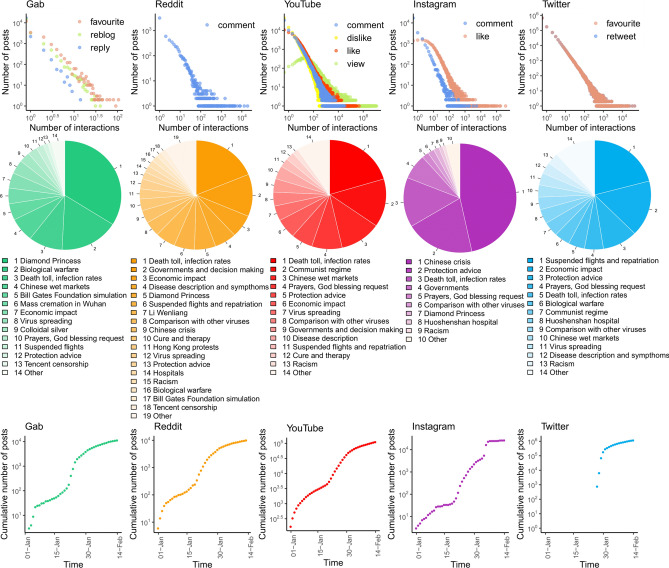
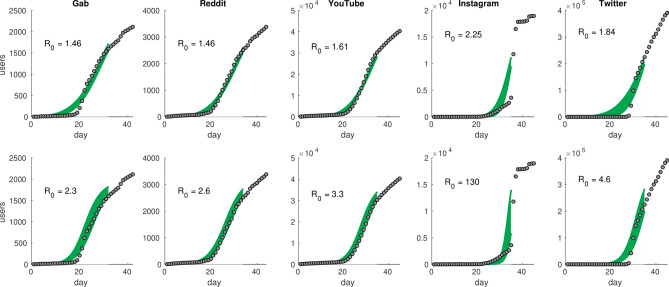
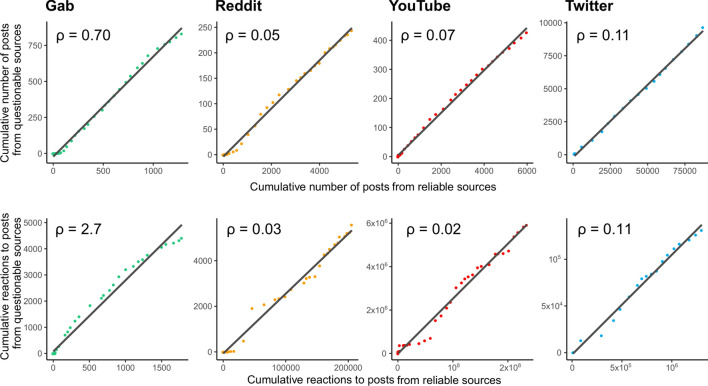
We address the diffusion of information about the COVID-19 with a massive data analysis on Twitter, Instagram, YouTube, Reddit and Gab. We analyze engagement and interest in the COVID-19 topic and provide a differential assessment on the evolution of the discourse on a global scale for each platform and their users. We fit information spreading with epidemic models characterizing the basic reproduction number $$R_0$$ R 0 for each social media platform. Moreover, we identify information spreading from questionable sources, finding different volumes of misinformation in each platform. However, information from both reliable and questionable sources do not present different spreading patterns. Finally, we provide platform-dependent numerical estimates of rumors’ amplification.
Overview
The claims and statistics of this paper haven’t been checked yet.
Free: it reads the open-access text and checks the first 5 claims that cite a source we can check. Create a free account to check every claim.
Integrity signals
Registry
Cites
Statistics
Figures
Verification
Claims the paper makes
The claims and statistics of this paper haven’t been checked yet.
Free: it reads the open-access text and checks the first 5 claims that cite a source we can check. Create a free account to check every claim.
Claims other papers make about this one
Each is checked against this paper’s own text: does it say what the citing paper says it does?
The source backs part of the claim, not all of it — or backs it for a different population, condition or comparison.
In the citing paper
“Our attention span remains limited (9, 10), and feed algorithms might limit our selection process by suggesting contents similar to the ones we are usually exposed to (11–13).”
From The echo chamber effect on social media (2021) · cites this paper as [12]
Experimental — accuracy not yet measuredThe cited source says what the claim attributes to it.
In the citing paper
“The uncontrolled dissemination of false or misleading health information via digital channels represents one of the most complex and urgent challenges currently facing Public Health (1, 2).”
From Health misinformation, digital health literacy, and attitudes toward science among university students: an exploratory cross-sectional survey (2026) · cites this paper as [2]
The cited source says what the claim attributes to it.
In the citing paper
“the amplification of questionable sources of COVID-19 misinformation is highly platform dependent, with some platforms amplifying questionable content less than reliable content 58 .”
From Measuring the impact of COVID-19 vaccine misinformation on vaccination intent in the UK and USA (2021) · cites this paper as [58]
The cited source says what the claim attributes to it.
In the citing paper
“The broad public reach of the Internet and social media favours the spread of rumours and dissemination of unreliable information [7].”
Self-check
Percentages, sums and reported differences re-computed from the paper’s own numbers.
The self-check needs the paper’s full text.
Citations
Cites
An Introduction to the Bootstrap
Efron, B., & Tibshirani, R. J. (1994) · doi:10.1201/9780429246593 · Cited by 40,500
Learning representations by back-propagating errors
Rumelhart, D. E., Hinton, G. E., & Williams, R. J. (1986) · Nature · doi:10.1038/323533a0 · Cited by 31,892 · cited 1×
“More formally, given a content represented by the sequence of words w 1 , w 2 , . . . , w T , we use stochastic gradient descent with gradient computed through backpropagation rule [39] for maximizing the average log probability where k is the size of the training window.”
MethodDistributed Representations of Words and Phrases and their Compositionality
Mikolov, T., Sutskever, I., Chen, K., Corrado, G., & Dean, J. (2013) · arXiv · doi:10.48550/arxiv.1310.4546 · Cited by 24,533
The spread of true and false news online
Vosoughi, S., Roy, D., & Aral, S. (2018) · Science · doi:10.1126/science.aap9559 · Cited by 8,847 · cited 2×
“Some studies pointed out that fake news and inaccurate information may spread faster and wider than fact-based news [22].”
BackgroundAn Introduction to the Bootstrap.
Buckland, S. T., Efron, B., & Tibshirani, R. J. (1994) · Biometrics · doi:10.2307/2532810 · Cited by 3,103
Linguistic Regularities in Continuous Space Word Representations
Mikolov, T., Yih, W.-T., & Zweig, G. (2013) · North American Chapter of the Association for Computational Linguistics · Cited by 2,912
The spread of behavior in an online social network experiment
Centola, D. (2010) · Science · doi:10.1126/science.1185231 · Cited by 2,692 · cited 1×
“While R0 is a good proxy for the engagement rate and a good predictor for epidemic-like information spreading, social contagion phenomena might be in general more complex [34, 35, 36].”
BackgroundThe spreading of misinformation online
Del Vicario, M., Bessi, A., Zollo, F., Petroni, F., Scala, A., Caldarelli, G., Stanley, H. E., & Quattrociocchi, W. (2016) · Proceedings of the National Academy of Sciences · doi:10.1073/pnas.1517441113 · Cited by 2,407 · cited 2×
“social perceptions [11] and the framing of narratives; it in uences policy-making, political communication, as well as the evolution of public debate [12, 13] especially when issues are controversial [14]. Indeed, users online tend to acquire information adhering to their worldviews [15], to ignore dissenting informat…”
BackgroundMethodSelf-citationZarocostas, J. (2020) · The Lancet · doi:10.1016/s0140-6736(20)30461-x · Cited by 2,344 · cited 1×
“The term infodemic [2, 3] has been coined to outline the perils of misinformation phenomena during the management of virus outbreaks [4, 5], since it could even speed up the epidemic process by influencing and fragmenting social response [6].”
BackgroundThe Mathematical Theory of Infectious Diseases and its applications
Ling, N. R. (1978) · Immunology · Cited by 1,934
Cited by
The echo chamber effect on social media
Cinelli, M., De Francisci Morales, G., Galeazzi, A., Quattrociocchi, W., & Starnini, M. (2021) · Proceedings of the National Academy of Sciences · doi:10.1073/pnas.2023301118 · Cited by 2,092
Self-citationMeasuring the impact of COVID-19 vaccine misinformation on vaccination intent in the UK and USA
Loomba, S., de Figueiredo, A., Piatek, S. J., de Graaf, K., & Larson, H. J. (2021) · Nature Human Behaviour · doi:10.1038/s41562-021-01056-1 · Cited by 1,800
Puri, N., Coomes, E. A., Haghbayan, H., & Gunaratne, K. (2020) · Human Vaccines & Immunotherapeutics · doi:10.1080/21645515.2020.1780846 · Cited by 1,157
“discourse, with Twitter reporting a COVID-19 related tweet every 45 milliseconds and the hashtag #coronavirus rapidly becoming the 2 most used in 2020.(41,42) Unfortunately, false and misleading information about COVID-19, potentially dangerous treatments, and eventual vaccination continues to grow on social media pla…”
BackgroundChatGPT and the rise of large language models: the new AI-driven infodemic threat in public health
De Angelis, L., Baglivo, F., Arzilli, G., Privitera, G. P., Ferragina, P., Tozzi, A. E., & Rizzo, C. (2023) · Frontiers in Public Health · doi:10.3389/fpubh.2023.1166120 · Cited by 708
“Even more than scientific literature, social media have been the ground of health information dissemination during the COVID-19 pandemic, with the rise of a phenomenon known as infodemic (8).”
BackgroundChatGPT and the Rise of Large Language Models: The New AI-Driven Infodemic Threat in Public Health
De Angelis, L., Baglivo, F., Arzilli, G., Privitera, G. P., Ferragina, P., Tozzi, A. E., & Rizzo, C. (2023) · doi:10.2139/ssrn.4352931 · Cited by 708
Misinformation: susceptibility, spread, and interventions to immunize the public
van der Linden, S. (2022) · Nature Medicine · doi:10.1038/s41591-022-01713-6 · Cited by 570
Mapping the landscape of Artificial Intelligence applications against COVID-19
Bullock, J., Luccioni, A., Hoffman Pham, K., Sin Nga Lam, C., & Luengo-Oroz, M. (2020) · Journal of Artificial Intelligence Research · doi:10.1613/jair.1.12162 · Cited by 348
What drives unverified information sharing and cyberchondria during the COVID-19 pandemic?
Laato, S., Islam, A. K. M. N., Islam, M. N., & Whelan, E. (2020) · European Journal of Information Systems · doi:10.1080/0960085x.2020.1770632 · Cited by 515
Growing polarization around climate change on social media
Falkenberg, M., Galeazzi, A., Torricelli, M., Di Marco, N., Larosa, F., Sas, M., Mekacher, A., Pearce, W., Zollo, F., Quattrociocchi, W., et al. (2022) · Nature Climate Change · doi:10.1038/s41558-022-01527-x · Cited by 367
Self-citationThe semiconducting principle of monetary and environmental values exchange
Vuong, Q.-H. (2021) · Economics and Business Letters · doi:10.17811/ebl.10.3.2021.284-290 · Cited by 443
Okan, O., Bollweg, T. M., Berens, E.-M., Hurrelmann, K., Bauer, U., & Schaeffer, D. (2020) · International Journal of Environmental Research and Public Health · doi:10.3390/ijerph17155503 · Cited by 418
An exploratory study of COVID-19 misinformation on Twitter
Shahi, G. K., Dirkson, A., & Majchrzak, T. A. (2021) · Online Social Networks and Media · doi:10.1016/j.osnem.2020.100104 · Cited by 352
“This method was also employed by [15] for the propagation of information to study how infectious information on COVID-19 is on Twitter.”
Garcia, K., & Berton, L. (2021) · Applied Soft Computing · doi:10.1016/j.asoc.2020.107057 · Cited by 369
Twitter discussions and emotions about the COVID-19 pandemic: Machine learning approach
Xue, J., Chen, J., Hu, R., Chen, C., Zheng, C., Su, Y., & Zhu, T. (2020) · Journal of Medical Internet Research · doi:10.2196/20550 · Cited by 369
“Existing studies have indicated the feasibility of using LDA to identify the patterns and themes of tweets related to COVID-19 [11,22].”
BackgroundMisinformation on Misinformation: Conceptual and Methodological Challenges
Altay, S., Berriche, M., & Acerbi, A. (2023) · Social Media + Society · doi:10.1177/20563051221150412 · Cited by 299
“Moreover, a cross-platform study found no difference in the spreading pattern of news from reliable and questionable sources (Cinelli et al., 2020).”
Camacho, D., Panizo-LLedot, Á., Bello-Orgaz, G., Gonzalez-Pardo, A., & Cambria, E. (2020) · Information Fusion · doi:10.1016/j.inffus.2020.05.009 · Cited by 329
COVID-19-related misinformation on social media: a systematic review
Gabarron, E., Oyeyemi, S. O., & Wynn, R. (2021) · Bulletin of the World Health Organization · doi:10.2471/blt.20.276782 · Cited by 345
Rustam, F., Khalid, M., Aslam, W., Rupapara, V., Mehmood, A., & Choi, G. S. (2021) · PLOS ONE · doi:10.1371/journal.pone.0245909 · Cited by 313
“The results report flaws in the information collected [13].”
BackgroundMadurai Elavarasan, R., & Pugazhendhi, R. (2020) · Science of The Total Environment · doi:10.1016/j.scitotenv.2020.138858 · Cited by 326
Semaan, A., Audet, C., Huysmans, E., Afolabi, B., Assarag, B., Banke-Thomas, A., Blencowe, H., Caluwaerts, S., Campbell, O. M. R., Cavallaro, F. L., et al. (2020) · BMJ Global Health · doi:10.1136/bmjgh-2020-002967 · Cited by 311
Enhancing public trust in COVID-19 vaccination: The role of governments
(2021) · OECD Policy Responses to Coronavirus (COVID-19) · doi:10.1787/eae0ec5a-en · Cited by 297
Blockchain and AI-Based Solutions to Combat Coronavirus (COVID-19)-Like Epidemics: A Survey
Nguyen, D. C., Ding, M., Pathirana, P. N., & Seneviratne, A. (2021) · IEEE Access · doi:10.1109/access.2021.3093633 · Cited by 286
“claims, and promotes racist forms of digital vigilantism and scapegoating [79].”
BackgroundThe epic battle against coronavirus misinformation and conspiracy theories
Ball, P., & Maxmen, A. (2020) · Nature · doi:10.1038/d41586-020-01452-z · Cited by 286
Leveraging Data Science to Combat COVID-19: A Comprehensive Review
Latif, S., Usman, M., Manzoor, S., Iqbal, W., Qadir, J., Tyson, G., Castro, I., Razi, A., Boulos, M. N. K., Weller, A., et al. (2020) · IEEE Transactions on Artificial Intelligence · doi:10.1109/tai.2020.3020521 · Cited by 270
“[148] analyse Twitter, Instagram, YouTube, Reddit and Gab data on COVID-19.”
BackgroundBermes, A. (2021) · Journal of Retailing and Consumer Services · doi:10.1016/j.jretconser.2021.102555 · Cited by 233
Cheikh Ismail, L., Osaili, T. M., Mohamad, M. N., Al Marzouqi, A., Jarrar, A. H., Abu Jamous, D. O., Magriplis, E., Ali, H. I., Al Sabbah, H., Hasan, H., et al. (2020) · Nutrients · doi:10.3390/nu12113314 · Cited by 254
“Studies have shown the negative and harmful effect of misinformation overload “infodemic” on the mental health of individuals [72,73].”
BackgroundA review on social spam detection: Challenges, open issues, and future directions
Rao, S., Verma, A. K., & Bhatia, T. (2021) · Expert Systems with Applications · doi:10.1016/j.eswa.2021.115742 · Cited by 213
COVID-19 on Social Media: Analyzing Misinformation in Twitter Conversations
Sharma, K., Seo, S., Meng, C., Rambhatla, S., & Liu, Y. (2020) · arXiv (Cornell University) · doi:10.48550/arxiv.2003.12309 · Cited by 130
The COVID-19 Infodemic: Twitter versus Facebook
Yang, K.-C., Pierri, F., Hui, P.-M., Axelrod, D., Torres-Lugo, C., Bryden, J., & Menczer, F. (2021) · Big Data & Society · doi:10.1177/20539517211013861 · Cited by 206
“…studies on the prevalence of links to low-credibility websites at scale have gained popularity in light of the recent development of computational meth-ods (Broniatowski et al., 2020; Cinelli et al., 2020; Gallotti et al., 2020; Guarino et al., 2021; Singh et al., 2020a, 2020b; Yang et al., 2020b).”
BackgroundExamining the effect of information channel on COVID-19 vaccine acceptance
Piltch-Loeb, R., Savoia, E., Goldberg, B., Hughes, B., Verhey, T., Kayyem, J., Miller-Idriss, C., & Testa, M. (2021) · PLOS ONE · doi:10.1371/journal.pone.0251095 · Cited by 217
“In a comparative analysis of the spread of COVID-19 misinformation on five social media platforms (Twitter, Instagram, YouTube, Reddit and Gab), Cinelli and colleagues (2020) analyzed more than 8 million comments and posts to model the spread of misinformation (9).”
BackgroundThematic Analysis as a New Culturomic Tool: The Social Media Coverage on COVID-19 Pandemic in Italy
Aria, M., Cuccurullo, C., D’Aniello, L., Misuraca, M., & Spano, M. (2022) · Sustainability · doi:10.3390/su14063643 · Cited by 178
Psychological Inoculation against Misinformation: Current Evidence and Future Directions
Traberg, C. S., Roozenbeek, J., & van der Linden, S. (2022) · The ANNALS of the American Academy of Political and Social Science · doi:10.1177/00027162221087936 · Cited by 224
What types of COVID-19 conspiracies are populated by Twitter bots?
Ferrara, E. (2020) · First Monday · doi:10.5210/fm.v25i6.10633 · Cited by 223
Jogezai, N. A., Baloch, F. A., Jaffar, M., Shah, T., Khilji, G. K., & Bashir, S. (2021) · Heliyon · doi:10.1016/j.heliyon.2021.e06781 · Cited by 177
“There has been frequent use of social media (SM) observed globally during the Covid-19 pandemic (Cinelli et al., 2020; Haman, 2020; Hus-sain, 2020; Limaye et al., 2020).”
Tahmasbi, F., Schild, L., Ling, C., Blackburn, J., Stringhini, G., Zhang, Y., & Zannettou, S. (2021) · International World Wide Web Conference (WWW) · doi:10.1145/3442381.3450024 · Cited by 327
“Cinelli et al. [11], Singh et al. [40], and Kouzy et al. [31] studied misinformation narratives about COVID-19 on Twitter.”
BackgroundCOVID-19 infodemic and digital health literacy in vulnerable populations: A scoping review
Choukou, M.-A., Sanchez-Ramirez, D. C., Pol, M., Uddin, M., Monnin, C., & Syed-Abdul, S. (2022) · DIGITAL HEALTH · doi:10.1177/20552076221076927 · Cited by 180
“This sea of online information related to COVID-19 can contain accurate and incorrect information, which has brought in the concept of ‘infodemic’ in this context.(5) An infodemic is defined by the WHO as ‘too much information including false or misleading information in digital and physical environments during a dise…”
BackgroundSentimental Analysis of COVID-19 Tweets Using Deep Learning Models
Chintalapudi, N., Battineni, G., & Amenta, F. (2021) · Infectious Disease Reports · doi:10.3390/idr13020032 · Cited by 188
“The information diffusion of COVID-19 with big data analysis on major social media platforms presented an individual assessment of the address on a large scale to provide an exploration of epidemic rumours [17].”
BackgroundDoes the platform matter? Social media and COVID-19 conspiracy theory beliefs in 17 countries
Theocharis, Y., Cardenal, A., Jin, S., Aalberg, T., Hopmann, D. N., Strömbäck, J., Castro, L., Esser, F., Van Aelst, P., de Vreese, C., et al. (2023) · New Media & Society · doi:10.1177/14614448211045666 · Cited by 161
“For example, recent research on the propagation of conspiracy theories during the COVID-19 pandemic shows that platforms differed not only with respect to the amount and volume of misinformation, but also with respect to the dynamics of amplification of such content (Cinelli et al., 2020b).”
BackgroundInfluentialPolitical polarization drives online conversations about COVID ‐19 in the United States
Jiang, J., Chen, E., Yan, S., Lerman, K., & Ferrara, E. (2020) · Human Behavior and Emerging Technologies · doi:10.1002/hbe2.202 · Cited by 171
“As of May 2020, there are also many pre-print papers providing preliminary analyses of online discussions surrounding COVID-19 (Alshaabi et al., 2020; Barrios & Hochberg, 2020; Cinelli et al., 2020; Ferrara, 2020; Gallotti et al., 2020; Gao et al., 2020; Kleinberg et al., 2020; Pennycook et al., 2020; Schild et al., 2…”
BackgroundResultInfluentialKozyreva, A., Lorenz-Spreen, P., Hertwig, R., Lewandowsky, S., & Herzog, S. M. (2021) · Humanities and Social Sciences Communications · doi:10.1057/s41599-021-00787-w · Cited by 150
“…have fostered the spread of false information about the COVID-19 pandemic and governments ’ responses to it, thereby reinforcing dangerous beliefs and conspiracy narratives (Cinelli et al., 2020; Thompson and Warzel, 2021; Zarocostas, 2020) and potentially hampering an ef fi cient public response.”
BackgroundDetecting Misleading Information on COVID-19
Elhadad, M. K., Li, K. F., & Gebali, F. (2020) · IEEE Access · doi:10.1109/access.2020.3022867 · Cited by 212
“It is very challenging to verify the validity, credibility, and correctness of the shared information, especially if it is related to a horrific disease that is a threat to humanity [11].”
BackgroundFighting fake news in the COVID-19 era: policy insights from an equilibrium model
Hartley, K., & Vu, M. K. (2020) · Policy Sciences · doi:10.1007/s11077-020-09405-z · Cited by 160
“Predictably, misinformation has proliferated with the rising salience of COVID-19 (Cinelli et al. 2020; Frenkel et al. 2020; Hanafiah and Wan 2020; Pennycook et al. 2020; Rodríguez et al. 2020; Singh et al. 2020).”
BackgroundQuantifying the impact of misinformation and vaccine-skeptical content on Facebook
Allen, J. N. L., Watts, D. J., & Rand, D. G. (2024) · Science · doi:10.1126/science.adk3451 · Cited by 261
Gozzi, N., Tizzani, M., Starnini, M., Ciulla, F., Paolotti, D., Panisson, A., & Perra, N. (2020) · Journal of Medical Internet Research · doi:10.2196/21597 · Cited by 160
“Several studies based on Twitter data have also highlighted how misinformation and low-quality information about COVID-19, although limited overall, spread before the local outbreak and rapidly expanded once local epidemics started [24-26].”
BackgroundAutopsy of a metaphor: The origins, use and blind spots of the ‘infodemic’
Simon, F. M., & Camargo, C. Q. (2023) · New Media & Society · doi:10.1177/14614448211031908 · Cited by 113
“Other scholars employed the term to frame their research on the diffusion of COVID-19-related information on social media (Cinelli et al., 2020), online search behaviour related to the COVID-19 pandemic (Rovetta and Bhagavathula, 2020), or the circulation of misinformation on Twitter (Pulido et al.”
BackgroundVisual media analysis for Instagram and other online platforms
Rogers, R. (2021) · Big Data & Society · doi:10.1177/20539517211022370 · Cited by 218
“, 2019), and also by purveyors of dubious content about COVID-19, vaccines and other contemporary topics (Cinelli et al., 2020; Colombo and De Gaetano, 2020; Massey et al., 2020).”
BackgroundVaccine Hesitancy and Exposure to Misinformation: a Survey Analysis
Neely, S. R., Eldredge, C. E., Ersing, R. L., & Remington, C. L. (2021) · Journal of General Internal Medicine · doi:10.1007/s11606-021-07171-z · Cited by 165
Maertens, R., Götz, F. M., Golino, H. F., Roozenbeek, J., Schneider, C. R., Kyrychenko, Y., Kerr, J. R., Stieger, S., McClanahan, W. P., Drabot, K., et al. (2023) · Behavior Research Methods · doi:10.3758/s13428-023-02124-2 · Cited by 104
RETRACTED: COVID-19 as an “Infodemic” in Public Health: Critical Role of the Social Media
Banerjee, D., & Meena, K. S. (2021) · Frontiers in Public Health · doi:10.3389/fpubh.2021.610623 · Cited by 154
“In the recent past, the outbreaks of Influenza, Zika, and Nipah viruses had caused rapid dissemination of information through social media that contributed to public behavior in terms of panic, health care, and precautionary measures (17).”
BackgroundMethodResultInfluentialRetractedFake News Reaching Young People on Social Networks: Distrust Challenging Media Literacy
Pérez-Escoda, A., Pedrero-Esteban, L. M., Rubio-Romero, J., & Jiménez-Narros, C. (2021) · Publications · doi:10.3390/publications9020024 · Cited by 115
“isi f r ation and fake news have become a great global concern since the start of the COVID-19 pandemic, affecting all citizens, as recent literature indicates [5,8,10,17].”
BackgroundInfluentialThe determinants of COVID-19 morbidity and mortality across countries
Chang, D., Chang, X., He, Y., & Tan, K. J. K. (2022) · Scientific Reports · doi:10.1038/s41598-022-09783-9 · Cited by 175
Countering Misinformation: Evidence, Knowledge Gaps, and Implications of Current Interventions
Roozenbeek, J., Culloty, E., & Suiter, J. (2023) · European Psychologist · doi:10.1027/1016-9040/a000492 · Cited by 189
Conspiracy theories and social media platforms
Cinelli, M., Etta, G., Avalle, M., Quattrociocchi, A., Marco, N. D., Valensise, C. M., Galeazzi, A., & Quattrociocchi, W. (2022) · Current Opinion in Psychology · doi:10.1016/j.copsyc.2022.101407 · Cited by 176
Self-citationAlam, F., Shaar, S., Dalvi, F., Sajjad, H., Nikolov, A., Mubarak, H., Da San Martino, G., Abdelali, A., Durrani, N., Darwish, K., et al. (2021) · Findings of the Association for Computational Linguistics: EMNLP 2021 · doi:10.18653/v1/2021.findings-emnlp.56 · Cited by 132
Rovetta, A. (2021) · Frontiers in Research Metrics and Analytics · doi:10.3389/frma.2021.670226 · Cited by 162
COVID-19-Related Social Media Fake News in India
Al-Zaman, M. S. (2021) · Journalism and Media · doi:10.3390/journalmedia2010007 · Cited by 159
Vaccination strategies against COVID-19 and the diffusion of anti-vaccination views
Prieto-Curiel, R., & Ramírez, H. G. (2021) · Scientific Reports · doi:10.1038/s41598-021-85555-1 · Cited by 152
Maison, D. A., Jaworska, D., Adamczyk, D., & Affeltowicz, D. (2021) · PLoS ONE · doi:10.1371/journal.pone.0258133 · Cited by 154
Fake news: Why do we believe it?
Beauvais, C. (2022) · Joint Bone Spine · doi:10.1016/j.jbspin.2022.105371 · Cited by 157
Thelwall, M. A., & Thelwall, S. (2020) · Aslib Journal of Information Management · doi:10.1108/ajim-05-2020-0134 · Cited by 139
Examining the impact of sharing COVID-19 misinformation online on mental health
Verma, G., Bhardwaj, A., Aledavood, T., De Choudhury, M., & Kumar, S. (2022) · Scientific Reports · doi:10.1038/s41598-022-11488-y · Cited by 112
Ruffo, G., Semeraro, A., Giachanou, A., & Rosso, P. (2022) · Computer Science Review · doi:10.1016/j.cosrev.2022.100531 · Cited by 148
“[53] studied the online discussion on the virus outbreak observing different social platforms, and analysing COVID-19 related topics by means of word embedding techniques.”
BackgroundExploratory Analysis of Covid-19 Tweets using Topic Modeling, UMAP, and DiGraphsPreprint
Ordun, C. Y., Purushotham, S., & Raff, E. (2020) · arXiv (Cornell University) · doi:10.13016/m24rdv-a0gg · Cited by 143
Social media trust: Fighting misinformation in the time of crisis
Shahbazi, M., & Bunker, D. (2024) · International Journal of Information Management · doi:10.1016/j.ijinfomgt.2024.102780 · Cited by 126
Public Health Messaging in an Era of Social Media
Merchant, R. M., South, E. C., & Lurie, N. (2021) · JAMA · doi:10.1001/jama.2020.24514 · Cited by 126
COVID-19 Self-quarantine and Weight Gain Risk Factors in Adults
Zeigler, Z. (2021) · Current Obesity Reports · doi:10.1007/s13679-021-00449-7 · Cited by 138
“In addition to self-quarantine, one’s occupation [51], whether one has been diagnosed with COVID-19 [52], and misinformation [53] are other reported sources of stress and anxiety.”
BackgroundInfodemics: a new challenge for public health
Briand, S. C., Cinelli, M., Nguyen, T., Lewis, R., Prybylski, D., Valensise, C. M., Colizza, V., Tozzi, A. E., Perra, N., Baronchelli, A., et al. (2021) · Cell · doi:10.1016/j.cell.2021.10.031 · Cited by 125
“non, which seems to be strongly related to the evolving business model of information dissemination, currently dominated by social media (Cinelli et al., 2020).”
Self-citationIsmail, L. C., Osaili, T. M. I., Mohamad, M. N., Marzouqi, A. M. A., Jarrar, A. H., Zampelas, A., Habib-Mourad, C., Jamous, D. O. A., Ali, H. I., Sabbah, H. A., et al. (2020) · British Journal Of Nutrition · doi:10.1017/s0007114520004547 · Cited by 134
“During the COVID-19 outbreak, misinformation overload ( ‘ infodemic ’ ) has bombarded social media, which might have harmed the mental health of individuals (23) .”
Conceptualizing “Dark Platforms”. Covid-19-Related Conspiracy Theories on 8kun and Gab
Zeng, J., & Schäfer, M. S. (2021) · Digital Journalism · doi:10.1080/21670811.2021.1938165 · Cited by 97
“When compared to findings from studies examining the sources of COVID-related information on mainstream popular social media sites (Cinelli, Quattrociocchi, and Galeazzi 2020; Yang et al. 2020), our study shows that low-credibility sources are much more prevalent on dark platforms.”
BackgroundResultPrevalence of Low-Credibility Information on Twitter During the COVID-19 OutbreakPreprint
Yang, K.-C., Torres-Lugo, C., & Menczer, F. (2020) · arXiv (Cornell University) · doi:10.48550/arxiv.2004.14484 · Cited by 153
“In response, quite a few research papers have been made public lately that estimate the prevalence of COVID19related misinformation on social media (Cinelli et al. 2020; Pulido et al. 2020; Laato et al. 2020) and characterize the Copyright c© 2020, Association for the Advancement of Artificial…”
BackgroundAn, L. C., Bacon, E. M., Hawley, S. T., Yang, P., Russell, D. M., Huffman, S. B., & Resnicow, K. (2021) · Journal of Medical Internet Research · doi:10.2196/25042 · Cited by 131
Singh, M., Adebayo, S. O., Saini, M., & Singh, J. (2021) · Education and Information Technologies · doi:10.1007/s10639-021-10585-1 · Cited by 154
Link, E. (2021) · Information Processing & Management · doi:10.1016/j.ipm.2021.102714 · Cited by 126
“2 Particularly during the COVID-19 pandemic—also termed as ‘infodemic’ (Cinelli et al., 2020; Galotti et al., 2020; United Nations, 2020; Zarocostas, 2020)—the amount and spread of misinformation can create a sense of information overload (Bawden & Robinson, 2009; Galotti, 2020).”
BackgroundThe rapid, massive growth of COVID-19 authors in the scientific literature
Ioannidis, J. P. A., Salholz-Hillel, M., Boyack, K. W., & Baas, J. (2021) · Royal Society Open Science · doi:10.1098/rsos.210389 · Cited by 107
Detecting Topic and Sentiment Dynamics Due to COVID-19 Pandemic Using Social Media
Yin, H., Yang, S., & Li, J. (2020) · Lecture notes in computer science · doi:10.1007/978-3-030-65390-3_46 · Cited by 142
The Role of the Crowd in Countering Misinformation: A Case Study of the COVID-19 Infodemic
Micallef, N., He, B., Kumar, S., Ahamad, M., & Memon, N. (2020) · 2020 IEEE International Conference on Big Data (Big Data) · doi:10.1109/bigdata50022.2020.9377956 · Cited by 116
“In future work, one can extend our analysis to different platforms, like WhatsApp, Facebook and Instagram, since previous research found that misinformation flows across multiple platforms [31].”
BackgroundImpact of the COVID-19 pandemic on stress and emotional reactions in Israel: a mixed-methods study
Levkovich, I., & Shinan‐Altman, S. (2020) · International Health · doi:10.1093/inthealth/ihaa081 · Cited by 125
“Moreover, most people locked down in their homes watch the news nonstop and tend to panic about the rising numbers of infections and deaths [20, 21].”
BackgroundRaman, R., Nair, V. K., Nedungadi, P., Sahu, A. K., Kowalski, R. M., Ramanathan, S., & Achuthan, K. (2024) · Heliyon · doi:10.1016/j.heliyon.2024.e24727 · Cited by 134
The social media Infodemic of health-related misinformation and technical solutions
Rodrigues, F., Newell, R., Babu, G. R., Chatterjee, T., Sandhu, N. K., & Gupta, L. (2024) · Health Policy and Technology · doi:10.1016/j.hlpt.2024.100846 · Cited by 142
Yu, J., Bekerian, D. A., & Osback, C. (2024) · Encyclopedia · doi:10.3390/encyclopedia4040109 · Cited by 135
Flamino, J., Galeazzi, A., Feldman, S., Macy, M. W., Cross, B., Zhou, Z., Serafino, M., Bovet, A., Makse, H. A., & Szymanski, B. K. (2023) · Nature Human Behaviour · doi:10.1038/s41562-023-01550-8 · Cited by 113
Self-citationSocial Consequences of the COVID-19 Pandemic. A Systematic Review
Hosseinzadeh, P., Zareipour, M., Baljani, E., & Moradali, M. R. (2022) · Investigación y Educación en Enfermería · doi:10.17533/udea.iee.v40n1e10 · Cited by 141
Framing the Origins of COVID-19
Bolsen, T., Palm, R. I., & Kingsland, J. T. (2020) · Science Communication · doi:10.1177/1075547020953603 · Cited by 136
“Despite attempts to “knock down” this unfounded rumor, the idea of the virus as a form of Chinese conspiracy persisted (Abd-Alrazaq et al., 2020; Cinelli et al., 2020; Shahsavari et al., 2020; Uscinski et al., 2020) and has been given support from those, including U.S. President Donald Trump, who…”
ResultA scientometric overview of CORD-19
Colavizza, G., Costas, R., Traag, V., van Eck, N. J., van Leeuwen, T. N., & Waltman, L. (2021) · PLoS ONE · doi:10.1371/journal.pone.0244839 · Cited by 138
“It has been readily recognized that health crises are also information crises [39, 11, 31, 20].”
BackgroundSingh, K., Lima, G., Cha, M., Cha, C., Kulshrestha, J., Ahn, Y., & Varol, O. (2022) · PLoS ONE · doi:10.1371/journal.pone.0263381 · Cited by 127
Chowdhury, N. A., Khalid, A., & Turin, T. C. (2021) · Journal of Public Health · doi:10.1007/s10389-021-01565-3 · Cited by 132
“Studies that analysed content and responses to misinformation by the different social media platforms found that while some social media such as YouTube and Reddit reduced unreliable posts or remained neutral (Twitter), some rather amplified posts containing misinformation (Gab) (Ghenai and Mejova 2017; Bora et al. 20…”
BackgroundTheodorakopoulos, L., Theodoropoulou, A., & Klavdianos, C. (2025) · Journal of theoretical and applied electronic commerce research · doi:10.3390/jtaer20020115 · Cited by 131
The COVID‐19 pandemic and the search for structure: Social media and conspiracy theories
Dow, B. J., Johnson, A. L., Wang, C. S., Whitson, J., & Menon, T. (2021) · Social and Personality Psychology Compass · doi:10.1111/spc3.12636 · Cited by 134
“…sort through the overwhelming amount of content social media users, guided by their cognitive biases and pre-existing beliefs (Bessi et al., 2015; Cinelli, Brugnoli, et al., 2020; Cinelli et al., 2021), tend to seek out information that is consistent with their existing views and ignore or…”
The digital rainbow: Digital determinants of health inequities
Jahnel, T., Dassow, H.-H., Gerhardus, A., & Schüz, B. (2022) · DIGITAL HEALTH · doi:10.1177/20552076221129093 · Cited by 96
“The increased exposure to health misinformation is thus not a bug, but a key feature of these algorithms in order to maximize the time people spend on these platforms, 51 which illustrates the intertwining of commercial interests with digital determinants of health.”
BackgroundSocial Media for Public Health: Framework for Social Media–Based Public Health Campaigns
Hunt, I. D. V., & Linos, E. (2022) · Journal of Medical Internet Research · doi:10.2196/42179 · Cited by 123
“It has also become a potent arena for widespread dissemination of misinformation and disinformation, posing its own public health threat [7-9].”
Sudharsanan, N., Didzun, O., Bärnighausen, T., & Geldsetzer, P. (2020) · Annals of Internal Medicine · doi:10.7326/m20-2973 · Cited by 95
“As the number of COVID-19 cases continues to increase worldwide (7), individuals are being exposed to a continuous flow of information (and misinformation) about the disease (8, 9).”
BackgroundUnderstanding patterns of COVID infodemic: A systematic and pragmatic approach to curb fake news
Gupta, A. V., Li, H., Farnoush, A., & Jiang, W. (2021) · Journal of Business Research · doi:10.1016/j.jbusres.2021.11.032 · Cited by 124
“Cinelli et al. (2020) found that the spreading of information is motivated by the interaction paradigm set by the specific social media platforms or/and by the interaction patterns of users who were engaged in the topic.”
Dynamics of online hate and misinformation
Cinelli, M., Pelicon, A., Mozetič, I., Quattrociocchi, W., Novak, P. K., & Zollo, F. (2021) · Scientific Reports · doi:10.1038/s41598-021-01487-w · Cited by 107
Self-citationComunicación política y Covid-19. Estrategias del Gobierno de España
Esparcia, A. C., Souto, A. B. F., & Rivera, I. P. (2020) · El Profesional de la Informacion · doi:10.3145/epi.2020.jul.19 · Cited by 107
The rapid, massive growth of COVID-19 authors in the scientific literature
Ioannidis, J. P. A., Salholz-Hillel, M., Boyack, K. W., & Baas, J. (2020) · doi:10.1101/2020.12.15.422900 · Cited by 107
“Flashy news, media, and editorializing may be prominent during the pandemic.(13-16) It is unknown whether non-peer-reviewed news stories and in-house”
BackgroundGarcía-Marín, D. (2020) · El Profesional de la Informacion · doi:10.3145/epi.2020.jul.11 · Cited by 140
Psychological inoculation protects against the social media infodemic
McPhedran, R., Ratajczak, M., Mawby, M., King, E., Yang, Y., & Gold, N. (2023) · Scientific Reports · doi:10.1038/s41598-023-32962-1 · Cited by 122
Tackling COVID-19 through Responsible AI Innovation: Five Steps in the Right Direction
Leslie, D. (2020) · Harvard Data Science Review · doi:10.1162/99608f92.4bb9d7a7 · Cited by 94
Hughes, B., Miller‐Idriss, C., Piltch-Loeb, R. N., White, K., Creizis, M., Cain, C., & Savoia, E. (2021) · International Journal of Environmental Research and Public Health · doi:10.3390/ijerph18147556 · Cited by 124
“In a comparative analysis of the spread of misinformation on five social media platforms (Twitter, Instagram, YouTube, Reddit, and Gab), Cinelli and colleagues [23] analyzed more than 8 million comments and posts over a time span of 45 days, to model the spread of misinformation and demonstrated that social media plat…”
BackgroundLee, S. (2020) · Research on Aging · doi:10.1177/0164027520975145 · Cited by 117
Metadata
- Authors
- Cinelli, M., Quattrociocchi, W., Galeazzi, A., Valensise, C. M., Brugnoli, E., Schmidt, A. L., Zola, P., Zollo, F., & Scala, A.
- Affiliations
- Ca' Foscari University of Venice (IT)
- University of Brescia (IT)
- Politecnico di Milano (IT)
- Institute of Informatics and Telematics (IT)
- Corresponding author
- Quattrociocchi, Walter
- Venue
- Scientific Reports
- Published
- 2020-10-06
- Volume
- 10
- Issue
- 1
- Pages
- 16598-16598
- ISSN
- 2045-2322 (ISSN-L)
- PMC
- PMC7538912
- OpenAlex
- W3011345566
- Cited by
- 2,313
- References
- 57
- Citations by year
- 2026: 201 · 2025: 251 · 2024: 246 · 2023: 349 · 2022: 451 · 2021: 557 · 2020: 257
- FWCI
- 541.32
- Type
- journal article
- Language
- en
- Open access
- gold
- doi.org
- Licence
- cc-by
- creativecommons.org/licenses/by/4.0 (tdm)
- creativecommons.org/licenses/by/4.0 (vor)
- Locations
- Scientific Reports (publishedVersion, cc-by)
- PubMed Central (publishedVersion, cc-by)
- PubMed (publishedVersion)
- arXiv (Cornell University) (submittedVersion)
- Informationszentrum Lebenswissenschaften (ZB MED) (submittedVersion, cc-by)
- IRIS Research product catalog (Sapienza University of Rome) (submittedVersion)
- ARCA (Università Ca' Foscari Venezia) (submittedVersion, cc-by-nc)
- Padua Research Archive (University of Padova) (submittedVersion, cc-by)
- arXiv (Cornell University)
- Topics
- Social Sciences › Sociology and Political Science › Misinformation and Its Impacts
- Physical Sciences › Physics and Astronomy › Statistical and Nonlinear Physics › Complex Network Analysis Techniques
- Social Sciences › Communication › Communication and COVID-19 Impact
- Keywords
- COVID-19 pandemic, infodemic, social media, misinformation, information dissemination, basic reproduction number, epidemic modeling, engagement, Twitter, Instagram, YouTube, Reddit, Gab
- MeSH terms
- Betacoronavirus, Data Analysis, COVID-19, SARS-CoV-2, Humans, Pneumonia, Viral, Social Behavior, Linear Models, Neural Networks, Computer, Coronavirus Infections, Information Dissemination, Basic Reproduction Number, Pandemics, Social Media
About these checks
Registry, retraction, Cites and statistics results are computed, not judged, with one exception: a printed reference that no index lists is read once by a model before it counts as a citation error. Claims are extracted by a model and kept only when their quote appears verbatim in the text; each cited source is then checked, with a model’s help, for whether it says what the claim relies on. Those verdicts can be wrong — read the claim’s quote and the cited source before relying on one.
Statistics and arithmetic are recomputed, not judged.
Confidence bands are shown only for fields calibrated on our annotated test set. None is calibrated yet, so no band is shown.
What counts as a claim ›How we measure confidence ›How we check this ›
Are you an author, or do you see a problem with this page? Request a review
Data sources
Bibliographic data: Semantic Scholar, OpenAlex, Crossref.
Contains information from the Semantic Scholar Academic Graph Datasets, made available under the ODC Attribution License (ODC-BY 1.0).
Semantic Scholar’s data is described in: Kinney, R., et al. (2023). The Semantic Scholar Open Data Platform. arXiv:2301.10140.
