

The DOI matches its Crossref record; 44 of the 44 references it cites were found in a registry or an index.
Characterizing the Qatar advanced-phase SARS-CoV-2 epidemic
Open accessPublished version of a preprint
Abstract
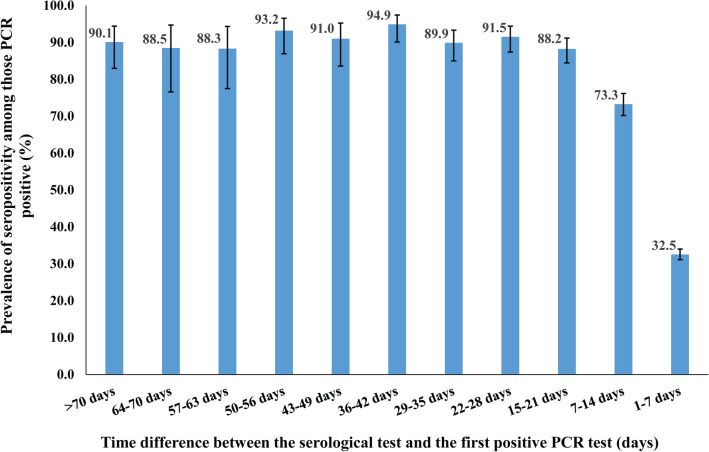
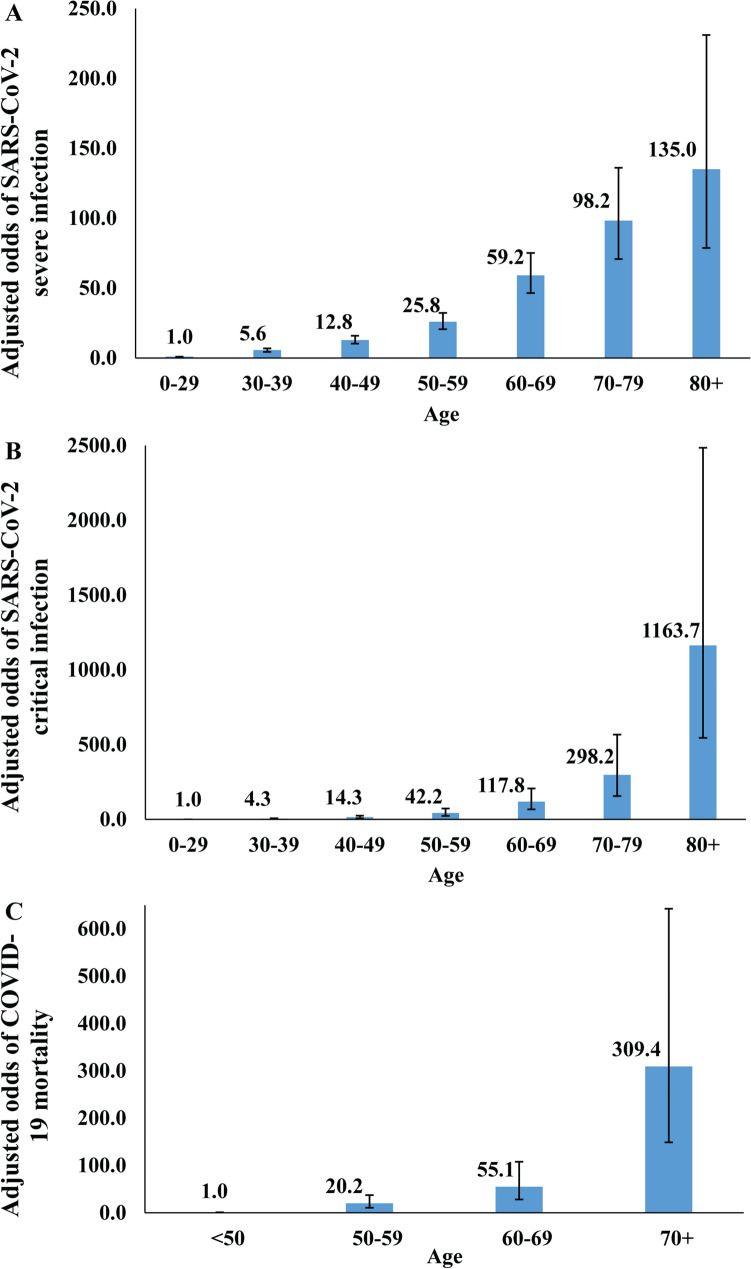
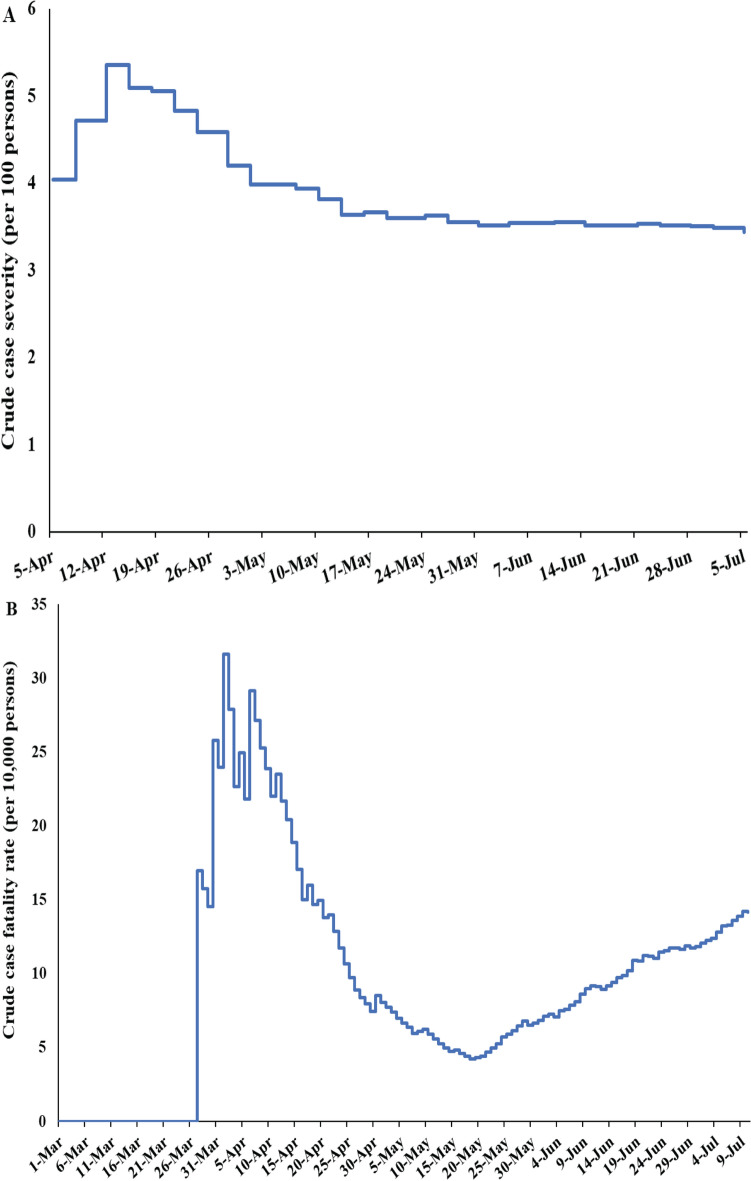
The overarching objective of this study was to provide the descriptive epidemiology of the severe acute respiratory syndrome coronavirus 2 (SARS-CoV-2) epidemic in Qatar by addressing specific research questions through a series of national epidemiologic studies. Sources of data were the centralized and standardized national databases for SARS-CoV-2 infection. By July 10, 2020, 397,577 individuals had been tested for SARS-CoV-2 using polymerase-chain-reaction (PCR), of whom 110,986 were positive, a positivity cumulative rate of 27.9% (95% CI 27.8–28.1%). As of July 5, case severity rate, based on World Health Organization (WHO) severity classification, was 3.4% and case fatality rate was 1.4 per 1,000 persons. Age was by far the strongest predictor of severe, critical, or fatal infection. PCR positivity of nasopharyngeal/oropharyngeal swabs in a national community survey (May 6–7) including 1,307 participants was 14.9% (95% CI 11.5–19.0%); 58.5% of those testing positive were asymptomatic. Across 448 ad-hoc testing campaigns in workplaces and residential areas including 26,715 individuals, pooled mean PCR positivity was 15.6% (95% CI 13.7–17.7%). SARS-CoV-2 antibody prevalence was 24.0% (95% CI 23.3–24.6%) in 32,970 residual clinical blood specimens. Antibody prevalence was only 47.3% (95% CI 46.2–48.5%) in those who had at least one PCR positive result, but 91.3% (95% CI 89.5–92.9%) among those who were PCR positive > 3 weeks before serology testing. Qatar has experienced a large SARS-CoV-2 epidemic that is rapidly declining, apparently due to growing immunity levels in the population.
Overview
The claims and statistics of this paper haven’t been checked yet.
Run the check — free, no account needed. It reads the open-access text and checks the sources it cites.
Integrity signals
Registry
Cites
Statistics
Figures
Verification
Claims the paper makes
The claims and statistics of this paper haven’t been checked yet.
Run the check — free, no account needed. It reads the open-access text and checks the sources it cites.
Claims other papers make about this one
Each is checked against this paper’s own text: does it say what the citing paper says it does?
In the citing paper
“With the small proportion of the population of Qatar being 50 years of age or older,10 our findings may not be generalizable to other countries in which elderly citizens constitute a larger proportion of the population.”
From Effects of Previous Infection and Vaccination on Symptomatic Omicron Infections (2022) · cites this paper as [10]
In the citing paper
“Cases (persons infected with BA.1, BA.2, or any-Omicron-subvariant) and controls (uninfected persons) were exact-matched by sex, 10-year-age group, nationality, and calendar week of polymerase chain reaction (PCR) test to control for established differences in the risk of exposure to SARS-CoV-2 infection in Qatar15–19.”
From Duration of mRNA vaccine protection against SARS-CoV-2 Omicron BA.1 and BA.2 subvariants in Qatar (2022) · cites this paper as [15]
In the citing paper
“With the lower severity of Omicron infections24,25 and the young population of Qatar15,26, case numbers were insufficient to estimate the duration of protection against COVID-19 hospitalization and death for each subvariant separately.”
From Duration of mRNA vaccine protection against SARS-CoV-2 Omicron BA.1 and BA.2 subvariants in Qatar (2022) · cites this paper as [15]
In the citing paper
“Matching was implemented to control for established differences in the risk of exposure to SARS-CoV-2 infection in Qatar15–19.”
From Duration of mRNA vaccine protection against SARS-CoV-2 Omicron BA.1 and BA.2 subvariants in Qatar (2022) · cites this paper as [15]
In the citing paper
“Qatar has young, international demographics. Only 9% of Qatar’s population is ≥50 years of age and 89% are international expatriates from over 150 countries15,41.”
From Duration of mRNA vaccine protection against SARS-CoV-2 Omicron BA.1 and BA.2 subvariants in Qatar (2022) · cites this paper as [15]
In the citing paper
“With only 9% of Qatar’s population ≥50 years of age15,41, our findings may not be generalizable to other countries in which elderly citizens constitute a larger proportion of the total population.”
From Duration of mRNA vaccine protection against SARS-CoV-2 Omicron BA.1 and BA.2 subvariants in Qatar (2022) · cites this paper as [15]
Self-check
Percentages, sums and reported differences re-computed from the paper’s own numbers.
The self-check needs the paper’s full text.
Citations
Cites
Clinical features of patients infected with 2019 novel coronavirus in Wuhan, China
Huang, C., Wang, Y., Li, X., Ren, L., Zhao, J., Hu, Y., Zhang, L., Fan, G., Xu, J., Gu, X., et al. (2020) · The Lancet · doi:10.1016/s0140-6736(20)30183-5 · Cited by 48,884
Meta-analysis in clinical trials
DerSimonian, R., & Laird, N. (1986) · Controlled Clinical Trials · doi:10.1016/0197-2456(86)90046-2 · Cited by 39,552
Clinical characteristics of coronavirus disease 2019 in China
Guan, W.-J., Ni, Z.-Y., Hu, Y., Liang, W.-H., Ou, C.-Q., He, J.-X., Liu, L., Shan, H., Lei, C.-L., Hui, D. S. C., et al. (2020) · New England Journal of Medicine · doi:10.1056/nejmoa2002032 · Cited by 30,246
Wu, Z., & McGoogan, J. M. (2020) · JAMA · doi:10.1001/jama.2020.2648 · Cited by 17,016
Lauer, S. A., Grantz, K. H., Bi, Q., Jones, F. K., Zheng, Q., Meredith, H. R., Azman, A. S., Reich, N. G., & Lessler, J. (2020) · Annals of Internal Medicine · doi:10.7326/m20-0504 · Cited by 5,970
SARS-CoV-2 Viral Load in Upper Respiratory Specimens of Infected Patients
Zou, L., Ruan, F., Huang, M.-X., Liang, L.-J., Huang, H., Hong, Z.-S., Yu, J.-X., Kang, M., Song, Y.-C., Xia, J., et al. (2020) · New England Journal of Medicine · doi:10.1056/nejmc2001737 · Cited by 4,590
Transmission of 2019-nCoV Infection from an Asymptomatic Contact in Germany
Rothe, C., Schunk, M., Sothmann, P., Bretzel, G., Froeschl, G., Wallrauch, C., Zimmer, T., Thiel, V., Jänke, C., Guggemos, W., et al. (2020) · New England Journal of Medicine · doi:10.1056/nejmc2001468 · Cited by 4,211
Li, R., Pei, S., Chen, B., Song, Y., Zhang, T., Yang, W., & Shaman, J. (2020) · Science · doi:10.1126/science.abb3221 · Cited by 3,633
Transformations Related to the Angular and the Square Root
Freeman, M. F., & Tukey, J. W. (1950) · The Annals of Mathematical Statistics · doi:10.1214/aoms/1177729756 · Cited by 2,634
Research works printed but not linked: 13
- Ministry of Public Health-State of Qatar. Coronavirus Disease 2019 (COVID-19). Available from: https://covid19.moph.gov.qa/EN/Pages/default.aspx. Accessed on: January 27, 2021 (2021).
- World Health Organization. International guidelines for certification and classification (coding) of COVID-19 as cause of death. Available from: https://www.who.int/classifications/icd/Guidelines_Cause_of_Death_COVID-19-20200420-EN.pdf?ua=1. Document Number: WHO/HQ/DDI/DNA/CAT. Accessed on June 1, 2020 (2020).
- Planning and Statistics Authority- State of Qatar. Qatar Monthly Statistics. Available from: https://www.psa.gov.qa/en/pages/default.aspx. Accessed on: May 26, 2020 (2020).
- Planning and Statistics Authority-State of Qatar. The Simplified Census of Population, Housing & Establishments. Available from: https://www.psa.gov.qa/en/statistics/Statistical%20Releases/Population/Population/2018/Population_social_1_2018_AE.pdf Accessed on: April 2, 2020 (2019).
- World Population Review. Qatar Population (Live). Available from: https://worldpopulationreview.com/countries/qatar-population/. Accessed on April 23, 2020 (2020).
- Planning and Statistics Authority- State of Qatar. Labor force sample survey. Available from: https://www.psa.gov.qa/en/statistics/Statistical%20Releases/Social/LaborForce/2017/statistical_analysis_labor_force_2017_En.pdf. Accessed on: May 01, 2020 (2017).
- De Bel-Air, F. Demography, Migration, and Labour Market in Qatar. Available from: https://www.researchgate.net/publication/323129801_Demography_Migration_and_Labour_Market_in_Qatar-_UPDATED_June_2017. Accessed on May 01, 2020 (Gulf Labour Markets and Migration, 2018).
- World Health Organization. Population-based age-stratified seroepidemiological investigation protocol for COVID-19 virus infection. Available from: https://apps.who.int/iris/handle/10665/331656. Accessed on: April 15, 2020 (2020).
- The Roche Group. Roche’s COVID-19 antibody test receives FDA Emergency Use Authorization and is available in markets accepting the CE mark. Available from: https://www.roche.com/media/releases/med-cor-2020-05-03.htm. Accessed on: June 5, 2020 (2020).
- National Health and Nutrition Examination Survey. Weighting. Available from:https://wwwn.cdc.gov/nchs/nhanes/tutorials/module3.aspx. Accessed on May 13, 2020 (2020).
- Centers for Disease Control and Prevention. Symptom-Based Strategy to Discontinue Isolation for Persons with COVID-19. Available from: https://www.cdc.gov/coronavirus/2019-ncov/community/strategy-discontinue-isolation.html. Accessed on June 2, 2020 (2020).
- World Health Organization. Report of the WHO-China Joint Mission on Coronavirus Disease 2019 (COVID-19). Available from :https://www.who.int/docs/default-source/coronaviruse/who-china-joint-mission-on-covid-19-final-report.pdf. Accessed on March 10, 2020 (2020).
- Public Health England. Evaluation of Roche Elecsys AntiSARS-CoV-2 serology assay for the detection of anti-SARS-CoV-2 antibodies. Available from: https://assets.publishing.service.gov.uk/government/uploads/system/uploads/attachment_data/file/891598/Evaluation_of_Roche_Elecsys_anti_SARS_CoV_2_PHE_200610_v8.1_FINAL.pdf. Accessed on June 5, 2020 (2020).
Cited by
Sorted by citations
Waning of BNT162b2 Vaccine Protection against SARS-CoV-2 Infection in Qatar
Chemaitelly, H., Tang, P., Hasan, M. R., AlMukdad, S., Yassine, H. M., Benslimane, F. M., Al Khatib, H. A., Coyle, P., Ayoub, H. H., Al Kanaani, Z., et al. (2021) · New England Journal of Medicine · doi:10.1056/nejmoa2114114 · Cited by 831
Self-citationInfection fatality rate of COVID-19 inferred from seroprevalence data
Ioannidis, J. P. A. (2021) · Bulletin of the World Health Organization · doi:10.2471/blt.20.265892 · Cited by 684
Effects of Previous Infection and Vaccination on Symptomatic Omicron Infections
Altarawneh, H. N., Chemaitelly, H., Ayoub, H. H., Tang, P., Hasan, M. R., Yassine, H. M., Al-Khatib, H. A., Smatti, M. K., Coyle, P., Al-Kanaani, Z., et al. (2022) · New England Journal of Medicine · doi:10.1056/nejmoa2203965 · Cited by 551
Self-citationBNT162b2 and mRNA-1273 COVID-19 vaccine effectiveness against the SARS-CoV-2 Delta variant in Qatar
Tang, P., Hasan, M. R., Chemaitelly, H., Yassine, H. M., Benslimane, F. M., Al Khatib, H. A., AlMukdad, S., Coyle, P., Ayoub, H. H., Al Kanaani, Z., et al. (2021) · Nature Medicine · doi:10.1038/s41591-021-01583-4 · Cited by 450
Self-citationProtection against the Omicron Variant from Previous SARS-CoV-2 Infection
Altarawneh, H. N., Chemaitelly, H., Hasan, M. R., Ayoub, H. H., Qassim, S., AlMukdad, S., Coyle, P., Yassine, H. M., Al-Khatib, H. A., Benslimane, F. M., et al. (2022) · New England Journal of Medicine · doi:10.1056/nejmc2200133 · Cited by 445
Self-citationChemaitelly, H., Yassine, H. M., Benslimane, F. M., Al Khatib, H. A., Tang, P., Hasan, M. R., Malek, J. A., Coyle, P., Ayoub, H. H., Al Kanaani, Z., et al. (2021) · Nature Medicine · doi:10.1038/s41591-021-01446-y · Cited by 386
Self-citationEffect of mRNA Vaccine Boosters against SARS-CoV-2 Omicron Infection in Qatar
Abu-Raddad, L. J., Chemaitelly, H., Ayoub, H. H., AlMukdad, S., Yassine, H. M., Al-Khatib, H. A., Smatti, M. K., Tang, P., Hasan, M. R., Coyle, P., et al. (2022) · New England Journal of Medicine · doi:10.1056/nejmoa2200797 · Cited by 380
Self-citationDuration of mRNA vaccine protection against SARS-CoV-2 Omicron BA.1 and BA.2 subvariants in Qatar
Chemaitelly, H., Ayoub, H. H., AlMukdad, S., Coyle, P., Tang, P., Yassine, H. M., Al-Khatib, H. A., Smatti, M. K., Hasan, M. R., Al-Kanaani, Z., et al. (2022) · Nature Communications · doi:10.1038/s41467-022-30895-3 · Cited by 228
Self-citation(2021) · doi:10.1016/j.eclinm.2021.100861 · Cited by 201
Self-citationAbu-Raddad, L. J., Chemaitelly, H. S., Malek, J. A., Ahmed, A. A., Mohamoud, Y. A., Younuskunju, S., Ayoub, H. H., Kanaani, Z. A., Al‐Khal, A., Al‐Kuwari, E., et al. (2020) · Clinical Infectious Diseases · doi:10.1093/cid/ciaa1846 · Cited by 176
Self-citationAbu-Raddad, L. J., Chemaitelly, H. S., Ayoub, H. H., Yassine, H. M., Benslimane, F. M., Al-Khatib, H. A., Tang, P., Hasan, M. R., Coyle, P. V., Kanaani, Z. A., et al. (2021) · JAMA · doi:10.1001/jama.2021.19623 · Cited by 168
Self-citationCOVID-19 (SARS-CoV-2) outbreak monitoring using wastewater-based epidemiology in Qatar
Saththasivam, J., El-Malah, S. S., Gomez, T., Jabbar, K. A., Remanan, R., Krishnankutty, A. K., Ogunbiyi, O. O., Rasool, K., Ashhab, S., Rashkeev, S. N., et al. (2021) · The Science of The Total Environment · doi:10.1016/j.scitotenv.2021.145608 · Cited by 150
Self-citationProtective Effect of Previous SARS-CoV-2 Infection against Omicron BA.4 and BA.5 Subvariants
Altarawneh, H. N., Chemaitelly, H. S., Ayoub, H. H., Hasan, M. R., Coyle, P. V., Yassine, H. M., Al-Khatib, H. A., Smatti, M. K., Kanaani, Z. A., Al‐Kuwari, E., et al. (2022) · New England Journal of Medicine · doi:10.1056/nejmc2209306 · Cited by 144
Self-citationCoronavirus Disease 2019 Disease Severity in Children Infected With the Omicron Variant
Butt, A. A., Dargham, S. R., Loka, S., Shaik, R. M., Chemaitelly, H., Tang, P., Hasan, M. R., Coyle, P. V., Yassine, H. M., Al-Khatib, H. A., et al. (2022) · Clinical Infectious Diseases · doi:10.1093/cid/ciac275 · Cited by 129
Self-citationIoannidis, J. P. A. (2021) · European Journal of Clinical Investigation · doi:10.1111/eci.13554 · Cited by 122
Chemaitelly, H. S., Ayoub, H. H., Tang, P., Coyle, P. V., Yassine, H. M., Thani, A. A. A., Al-Khatib, H. A., Hasan, M. R., Kanaani, Z. A., Al‐Kuwari, E., et al. (2023) · The Lancet Infectious Diseases · doi:10.1016/s1473-3099(23)00058-0 · Cited by 111
Self-citationDuration of immune protection of SARS-CoV-2 natural infection against reinfection
Chemaitelly, H. S., Nagelkerke, N. J. D., Ayoub, H. H., Coyle, P. V., Tang, P., Yassine, H. M., Al-Khatib, H. A., Smatti, M. K., Hasan, M. R., Kanaani, Z. A., et al. (2022) · Journal of Travel Medicine · doi:10.1093/jtm/taac109 · Cited by 108
Self-citationSeverity of Illness in Persons Infected With the SARS-CoV-2 Delta Variant vs Beta Variant in Qatar
Butt, A. A., Dargham, S. R., Chemaitelly, H. S., Al‐Khal, A., Tang, P., Hasan, M. R., Coyle, P. V., Thomas, A. G., Borham, A. M., Concepcion, E. G., et al. (2021) · JAMA Internal Medicine · doi:10.1001/jamainternmed.2021.7949 · Cited by 103
Self-citationRecent advances in chitosan-based nanocomposites for adsorption and removal of heavy metal ions
Rostami, M. S., & Khodaei, M. M. (2024) · International Journal of Biological Macromolecules · doi:10.1016/j.ijbiomac.2024.132386 · Cited by 105
Jeremijenko, A., Chemaitelly, H., Ayoub, H. H., Alishaq, M., Abou-Samra, A.-B., Al Ajmi, J. A. A. A., Al Ansari, N. A. A., Al Kanaani, Z., Al Khal, A., Al Kuwari, E., et al. (2021) · Emerging Infectious Diseases · doi:10.3201/eid2705.204365 · Cited by 97
Self-citationSARS-CoV-2 Infection Is at Herd Immunity in the Majority Segment of the Population of Qatar
Al-Thani, M. H., Farag, E., Bertollini, R., Al Romaihi, H. E., Abdeen, S., Abdelkarim, A., Daraan, F., Elhaj Ismail, A. I. H., Mostafa, N., Sahl, M., et al. (2021) · Open Forum Infectious Diseases · doi:10.1093/ofid/ofab221 · Cited by 85
Self-citationCoyle, P. V., Chemaitelly, H., Ben Hadj Kacem, M. A., Abdulla Al Molawi, N. H., El Kahlout, R. A., Gilliani, I., Younes, N., Al Anssari, G. A. A. A., Al Kanaani, Z., Al Khal, A., et al. (2021) · iScience · doi:10.1016/j.isci.2021.102646 · Cited by 86
Self-citationOmer, A. M., El-Sayed, M. A., El-Monaem, E. M. A., El-Subruiti, G. M., & Eltaweil, A. S. (2023) · International Journal of Biological Macromolecules · doi:10.1016/j.ijbiomac.2023.127437 · Cited by 86
Protection of Omicron sub-lineage infection against reinfection with another Omicron sub-lineage
(2022) · doi:10.1038/s41467-022-32363-4 · Cited by 84
Self-citationAbu-Raddad, L. J., Chemaitelly, H. S., Ayoub, H. H., Tang, P., Coyle, P. V., Hasan, M. R., Yassine, H. M., Benslimane, F. M., Al-Khatib, H. A., Kanaani, Z. A., et al. (2022) · Nature Communications · doi:10.1038/s41467-022-28199-7 · Cited by 80
Self-citationImmune Imprinting and Protection against Repeat Reinfection with SARS-CoV-2
Chemaitelly, H. S., Ayoub, H. H., Tang, P., Hasan, M. R., Coyle, P. V., Yassine, H. M., Al-Khatib, H. A., Smatti, M. K., Kanaani, Z. A., Al‐Kuwari, E., et al. (2022) · New England Journal of Medicine · doi:10.1056/nejmc2211055 · Cited by 77
Self-citationAyoub, H. H., Chemaitelly, H., Seedat, S., Makhoul, M., Al Kanaani, Z., Al Khal, A., Al Kuwari, E., Butt, A. A., Coyle, P., Jeremijenko, A., et al. (2021) · Journal of Global Health · doi:10.7189/jogh.11.05005 · Cited by 81
Self-citationEffectiveness of mRNA-1273 and BNT162b2 Vaccines in Qatar
Abu-Raddad, L. J., Chemaitelly, H., & Bertollini, R. (2022) · New England Journal of Medicine · doi:10.1056/nejmc2117933 · Cited by 79
Self-citationChemaitelly, H., Ayoub, H. H., AlMukdad, S., Coyle, P., Tang, P., Yassine, H. M., Al-Khatib, H. A., Smatti, M. K., Hasan, M. R., Al-Kanaani, Z., et al. (2022) · The Lancet Microbe · doi:10.1016/s2666-5247(22)00287-7 · Cited by 76
Self-citationCovid-19 Vaccine Protection among Children and Adolescents in Qatar
Chemaitelly, H. S., AlMukdad, S., Ayoub, H. H., Altarawneh, H. N., Coyle, P. V., Tang, P., Yassine, H. M., Al-Khatib, H. A., Smatti, M. K., Hasan, M. R., et al. (2022) · New England Journal of Medicine · doi:10.1056/nejmoa2210058 · Cited by 72
Self-citationOne Year of SARS-CoV-2: Genomic Characterization of COVID-19 Outbreak in Qatar
Benslimane, F. M., Al-Khatib, H. A., Al-Jamal, O., Albatesh, D., Boughattas, S., Ahmed, A. A., Bensaad, M., Younuskunju, S., Mohamoud, Y. A., Badr, M. A., et al. (2021) · Frontiers in Cellular and Infection Microbiology · doi:10.3389/fcimb.2021.768883 · Cited by 66
Self-citationHasan, M. R., Kalikiri, M. K. R., Mirza, F., Sundararaju, S., Sharma, A., Xaba, T., Lorenz, S., Chemaitelly, H. S., Kahlout, R. A. E., Tsui, C. K. M., et al. (2021) · International Journal of Infectious Diseases · doi:10.1016/j.ijid.2021.09.006 · Cited by 65
Self-citationSARS-CoV-2 infection hospitalization, severity, criticality, and fatality rates in Qatar
Seedat, S., Chemaitelly, H., Ayoub, H. H., Makhoul, M., Mumtaz, G. R., Al Kanaani, Z., Al Khal, A., Al Kuwari, E., Butt, A. A., Coyle, P., et al. (2021) · Scientific Reports · doi:10.1038/s41598-021-97606-8 · Cited by 63
Self-citationAbu-Raddad, L. J., Chemaitelly, H. S., Ayoub, H. H., Yassine, H. M., Benslimane, F. M., Al-Khatib, H. A., Tang, P., Hasan, M. R., Coyle, P. V., AlMukdad, S., et al. (2021) · Clinical Infectious Diseases · doi:10.1093/cid/ciab909 · Cited by 67
Self-citationA review of mathematical model-based scenario analysis and interventions for COVID-19
Padmanabhan, R., Abed, H. S., Meskin, N., Khattab, T. M., Shraim, M., & Al-Hitmi, M. A. E. (2021) · Computer Methods and Programs in Biomedicine · doi:10.1016/j.cmpb.2021.106301 · Cited by 65
Butt, A. A., Dargham, S. R., Tang, P., Chemaitelly, H. S., Hasan, M. R., Coyle, P. V., Kaleeckal, A. H., Latif, A. N., Loka, S., Shaik, R. M., et al. (2022) · Journal of Global Health · doi:10.7189/jogh.12.05032 · Cited by 59
Self-citationInfection fatality rate of COVID-19 in community-dwelling elderly populations
Axfors, C., & Ioannidis, J. P. A. (2022) · European Journal of Epidemiology · doi:10.1007/s10654-022-00853-w · Cited by 62
Differential protection against SARS-CoV-2 reinfection pre- and post-Omicron
Chemaitelly, H. S., Ayoub, H. H., Coyle, P. V., Tang, P., Hasan, M. R., Yassine, H. M., Thani, A. A. A., Kanaani, Z. A., Al‐Kuwari, E., Jeremijenko, A. M., et al. (2025) · Nature · doi:10.1038/s41586-024-08511-9 · Cited by 61
Self-citationFahimirad, S., Khaki, M., Ghaznavi‐Rad, E., & Abtahi, H. (2024) · International Journal of Pharmaceutics · doi:10.1016/j.ijpharm.2024.124341 · Cited by 55
Abu-Raddad, L. J., Chemaitelly, H., Ayoub, H. H., Coyle, P., Malek, J. A., Ahmed, A. A., Mohamoud, Y. A., Younuskunju, S., Tang, P., Al Kanaani, Z., et al. (2021) · PLOS Medicine · doi:10.1371/journal.pmed.1003879 · Cited by 54
“Qatar had a significant first wave of the severe acute respiratory syndrome coronavirus 2 (SARS-CoV-2) epidemic that peaked in late May 2020 [1,2].”
BackgroundMethodInfluentialSelf-citationAltarawneh, H. N., Chemaitelly, H. S., Ayoub, H. H., Tang, P., Hasan, M. R., Yassine, H. M., Al-Khatib, H. A., Thani, A. A. A., Coyle, P. V., Kanaani, Z. A., et al. (2023) · EBioMedicine · doi:10.1016/j.ebiom.2023.104734 · Cited by 58
Self-citationAyoub, H. H., Mumtaz, G. R., Seedat, S., Makhoul, M., Chemaitelly, H. S., & Abu-Raddad, L. J. (2021) · Global Epidemiology · doi:10.1016/j.gloepi.2021.100068 · Cited by 48
Self-citationFahimirad, S., Satei, P., Ganji, A., & Abtahi, H. (2023) · Journal of Drug Delivery Science and Technology · doi:10.1016/j.jddst.2023.104734 · Cited by 51
Qassim, S. H., Chemaitelly, H. S., Ayoub, H. H., AlMukdad, S., Tang, P., Hasan, M. R., Yassine, H. M., Al-Khatib, H. A., Smatti, M. K., Rahim, H. F. A., et al. (2022) · Journal of Travel Medicine · doi:10.1093/jtm/taac068 · Cited by 48
Self-citationReinforcement learning-based decision support system for COVID-19
Padmanabhan, R., Meskin, N., Khattab, T. M., Shraim, M., & Al-Hitmi, M. A. E. (2021) · Biomedical Signal Processing and Control · doi:10.1016/j.bspc.2021.102676 · Cited by 43
Tayar, E., Abdeen, S., Alah, M. A., Chemaitelly, H. S., Bougmiza, I. M., Ayoub, H. H., Kaleeckal, A. H., Latif, A. N., Shaik, R. M., Al‐Romaihi, H. E., et al. (2022) · Journal of Infection and Public Health · doi:10.1016/j.jiph.2022.12.016 · Cited by 44
Self-citationAll-cause and COVID-19 mortality in Qatar during the COVID-19 pandemic
Al-Nuaimi, A. A., Chemaitelly, H. S., Semaan, S., AlMukdad, S., Kanaani, Z. A., Kaleeckal, A. H., Latif, A. N., Al‐Romaihi, H. E., Butt, A. A., Al‐Thani, M. H., et al. (2023) · BMJ Global Health · doi:10.1136/bmjgh-2023-012291 · Cited by 41
Self-citationAyoub, H. H., Tomy, M., Chemaitelly, H. S., Altarawneh, H. N., Coyle, P. V., Tang, P., Hasan, M. R., Kanaani, Z. A., Al‐Kuwari, E., Butt, A. A., et al. (2023) · American Journal of Epidemiology · doi:10.1093/aje/kwad239 · Cited by 40
Self-citationAyoub, H. H., Chemaitelly, H. S., Mumtaz, G. R., Seedat, S., Awad, S. F., Makhoul, M., & Abu-Raddad, L. J. (2020) · Global Epidemiology · doi:10.1016/j.gloepi.2020.100042 · Cited by 43
Self-citationBertollini, R., Chemaitelly, H. S., Yassine, H. M., Al‐Thani, M. H., Al‐Khal, A., & Abu-Raddad, L. J. (2021) · JAMA · doi:10.1001/jama.2021.9970 · Cited by 39
Self-citationChemaitelly, H., Ayoub, H. H., AlMukdad, S., Tang, P., Hasan, M. R., Yassine, H. M., Khatib, H. A. A., Smatti, M. K., Coyle, P., Kanaani, Z. A., et al. (2022) · doi:10.1101/2022.02.07.22270568 · Cited by 30
Self-citationReagu, S. M., Wadoo, O., Latoo, J., Nelson, D., Ouanes, S., Masoodi, N. A., Karim, M. A., Iqbal, Y., Abdulla, S. A. A., Al-Nuaimi, S. K., et al. (2021) · BMJ Open · doi:10.1136/bmjopen-2020-045794 · Cited by 41
Chemaitelly, H. S., Faust, J. S., Krumholz, H. M., Ayoub, H. H., Tang, P., Coyle, P. V., Yassine, H. M., Thani, A. A. A., Al-Khatib, H. A., Hasan, M. R., et al. (2023) · International Journal of Infectious Diseases · doi:10.1016/j.ijid.2023.09.005 · Cited by 38
Self-citationQassim, S. H., Chemaitelly, H. S., Ayoub, H. H., Coyle, P. V., Tang, P., Yassine, H. M., Thani, A. A. A., Al-Khatib, H. A., Hasan, M. R., Kanaani, Z. A., et al. (2023) · EClinicalMedicine · doi:10.1016/j.eclinm.2023.102102 · Cited by 32
Self-citationMental health during COVID‐19 in Qatar
Wadoo, O., Latoo, J., Reagu, S. M., Amro, R., Masoodi, N. A., & Alabdulla, M. (2020) · General Psychiatry · doi:10.1136/gpsych-2020-100313 · Cited by 34
Bivalent mRNA-1273.214 vaccine effectiveness against SARS-CoV-2 omicron XBB* infections
Chemaitelly, H. S., Ayoub, H. H., AlMukdad, S., Faust, J. S., Tang, P., Coyle, P. V., Yassine, H. M., Thani, A. A. A., Al-Khatib, H. A., Hasan, M. R., et al. (2023) · Journal of Travel Medicine · doi:10.1093/jtm/taad106 · Cited by 32
Self-citationAyoub, H. H., Chemaitelly, H. S., Makhoul, M., Kanaani, Z. A., Al‐Kuwari, E., Butt, A. A., Coyle, P. V., Jeremijenko, A. M., Kaleeckal, A. H., Latif, A. N., et al. (2021) · BMJ Innovations · doi:10.1136/bmjinnov-2021-000677 · Cited by 30
Self-citationFahimirad, S., Satei, P., Latifi, A., Changizi‐Ashtiyani, S., Bahrami, M., & Abtahi, H. (2024) · Journal of Biomaterials Science Polymer Edition · doi:10.1080/09205063.2024.2384299 · Cited by 30
Nasrallah, G. K., Dargham, S. R., Shurrab, F. M., Al‐Sadeq, D. W., Al-Jighefee, H. T., Chemaitelly, H. S., Kanaani, Z. A., Al‐Khal, A., Al‐Kuwari, E., Coyle, P. V., et al. (2021) · Scientific Reports · doi:10.1038/s41598-021-91235-x · Cited by 29
Self-citationEl-Malah, S. S., Saththasivam, J., Jabbar, K. A., Arun, K. K., Gomez, T., Ahmed, A. A., Mohamoud, Y. A., Malek, J. A., Abu-Raddad, L. J., Halaweh, H. A. A., et al. (2022) · Environmental Technology & Innovation · doi:10.1016/j.eti.2022.102775 · Cited by 30
Self-citationAyoub, H. H., Tomy, M., Chemaitelly, H., Altarawneh, H. N., Coyle, P., Tang, P., Hasan, M. R., Kanaani, Z. A., Kuwari, E. A., Butt, A. A., et al. (2022) · doi:10.1101/2022.01.02.22268622 · Cited by 41
Self-citationWehbe, S., Fahme, S. A., Rizk, A., Mumtaz, G. R., DeJong, J., & Sibai, A. M. (2021) · BMJ Global Health · doi:10.1136/bmjgh-2021-005175 · Cited by 28
Chemaitelly, H. S., Ayoub, H. H., Faust, J. S., Coyle, P. V., Tang, P., Hasan, M. R., Yassine, H. M., Al-Khatib, H. A., Thani, A. A. A., Kanaani, Z. A., et al. (2023) · BMJ Public Health · doi:10.1136/bmjph-2023-000479 · Cited by 26
Self-citationChemaitelly, H. S., Ayoub, H. H., Coyle, P. V., Tang, P., Hasan, M. R., Yassine, H. M., Thani, A. A. A., Kanaani, Z. A., Al‐Kuwari, E., Jeremijenko, A. M., et al. (2025) · eLife · doi:10.7554/elife.103690 · Cited by 26
Self-citationAdib, K., Hancock, P. A., Rahimli, A., Mugisa, B., Abdulrazeq, F., Farag, N. H., Aguas, R. J., White, L. J., Hajjeh, R. A., Ariqi, L. A., et al. (2021) · BMJ Global Health · doi:10.1136/bmjgh-2021-005207 · Cited by 24
Two prolonged viremic SARS-CoV-2 infections with conserved viral genome for two months
Abu-Raddad, L. J., Chemaitelly, H. S., Malek, J. A., Ahmed, A. A., Mohamoud, Y. A., Younuskunju, S., Kanaani, Z. A., Al‐Khal, A., Al‐Kuwari, E., Butt, A. A., et al. (2020) · Infection Genetics and Evolution · doi:10.1016/j.meegid.2020.104684 · Cited by 22
Self-citationZaqout, A., Almaslamani, M., Chemaitelly, H. S., Hashim, S. A., Ittaman, A. V., Alimam, A., Rustom, F., Daghfal, J., Abukhattab, M., AlMukdad, S., et al. (2022) · International Journal of Infectious Diseases · doi:10.1016/j.ijid.2022.09.023 · Cited by 21
Self-citationProtection of natural infection against reinfection with SARS-CoV-2 JN.1 variant
Chemaitelly, H. S., Coyle, P. V., Kacem, M. A. B. H., Ayoub, H. H., Tang, P., Hasan, M. R., Yassine, H. M., Thani, A. A. A., Kanaani, Z. A., Al‐Kuwari, E., et al. (2024) · Journal of Travel Medicine · doi:10.1093/jtm/taae053 · Cited by 21
Self-citationAl‐Kuwari, M. G., Al-Nuaimi, A. A., Abdulmajeed, J., Semaan, S., Al‐Romaihi, H. E., Kandy, M. C., & Swamy, S. (2021) · Journal of Occupational Medicine and Toxicology · doi:10.1186/s12995-021-00311-5 · Cited by 21
Self-citationHistory of primary-series and booster vaccination and protection against Omicron reinfection
Chemaitelly, H. S., Ayoub, H. H., Tang, P., Coyle, P. V., Yassine, H. M., Thani, A. A. A., Al-Khatib, H. A., Hasan, M. R., Kanaani, Z. A., Al‐Kuwari, E., et al. (2023) · Science Advances · doi:10.1126/sciadv.adh0761 · Cited by 30
Self-citationKharrat, F. G. Z., Gagné, C., LESAGE, A. D., Gariépy, G., Pelletier, J., Brousseau‐Paradis, C., Rochette, L., Pelletier, É., Lévesque, P., Mohammed, M., et al. (2024) · PLoS ONE · doi:10.1371/journal.pone.0301117 · Cited by 24
Addressing bias in the definition of SARS-CoV-2 reinfection: implications for underestimation
Chemaitelly, H. S., Ayoub, H. H., Tang, P., Yassine, H. M., Thani, A. A. A., Hasan, M. R., Coyle, P. V., Kanaani, Z. A., Al‐Kuwari, E., Jeremijenko, A. M., et al. (2024) · Frontiers in Medicine · doi:10.3389/fmed.2024.1363045 · Cited by 17
Self-citationQassim, S. H., Hasan, M. R., Tang, P., Chemaitelly, H. S., Ayoub, H. H., Yassine, H. M., Al-Khatib, H. A., Smatti, M. K., Rahim, H. F. A., Nasrallah, G. K., et al. (2022) · Frontiers in Immunology · doi:10.3389/fimmu.2022.984784 · Cited by 19
Self-citationSukik, L., Chemaitelly, H. S., Ayoub, H. H., Coyle, P. V., Tang, P., Yassine, H. M., Thani, A. A. A., Hasan, M. R., Kanaani, Z. A., Al‐Kuwari, E., et al. (2024) · Vaccine · doi:10.1016/j.vaccine.2024.04.026 · Cited by 17
Self-citationSynthesis, Phase Behavior and Computational Simulations of a Pyridyl-Based Liquid Crystal System
Alamro, F. S., Ahmed, H. A., Popoola, S. A., & Aboelnaga, A. (2021) · Molecules · doi:10.3390/molecules26216416 · Cited by 15
Bsat, R., Chemaitelly, H. S., Coyle, P. V., Tang, P., Hasan, M. R., Kanaani, Z. A., Al‐Kuwari, E., Butt, A. A., Jeremijenko, A. M., Kaleeckal, A. H., et al. (2022) · Journal of Global Health · doi:10.7189/jogh.12.05004 · Cited by 14
Self-citationCOVID-19 primary series and booster vaccination and potential for immune imprintingPreprint
Chemaitelly, H. S., Ayoub, H. H., Tang, P., Coyle, P. V., Yassine, H. M., Thani, A. A. A., Al-Khatib, H. A., Hasan, M. R., Kanaani, Z. A., Al‐Kuwari, E., et al. (2022) · medRxiv · doi:10.1101/2022.10.31.22281756 · Cited by 14
Self-citationIskander, N. (2020) · Medical Anthropology Quarterly · doi:10.1111/maq.12625 · Cited by 13
Ismail, R. S. M., Kerdawy, A. M. E., Soliman, D. H., Georgey, H. H., Gawad, N. M. A., Angeli, A., & Supuran, C. T. (2023) · BMC Chemistry · doi:10.1186/s13065-023-00994-3 · Cited by 12
Mahmoud, M., Ayoub, H. H., Coyle, P. V., Tang, P., Hasan, M. R., Yassine, H. M., Thani, A. A. A., Kanaani, Z. A., Al‐Kuwari, E., Jeremijenko, A. M., et al. (2023) · Influenza and Other Respiratory Viruses · doi:10.1111/irv.13224 · Cited by 12
Self-citationSARS-CoV-2 vaccine effectiveness in immunosuppressed kidney transplant recipients
Chemaitelly, H., AlMukdad, S., Joy, J. P., Ayoub, H. H., Yassine, H. M., Benslimane, F. M., Al Khatib, H. A., Tang, P., Hasan, M. R., Coyle, P., et al. (2021) · doi:10.1101/2021.08.07.21261578 · Cited by 12
Self-citationSeroprevalence of herpes simplex virus type 1 and type 2 among the migrant workers in Qatar
Nasrallah, G. K., Dargham, S. R., Al‐Sadeq, D. W., Amanullah, F. H., Shurrab, F. M., Nizamuddin, P. B., Chemaitelly, H. S., Ayoub, H. H., Abdeen, S., Abdelkarim, A., et al. (2023) · Virology Journal · doi:10.1186/s12985-023-02157-1 · Cited by 11
Self-citationAlishaq, M., Jeremijenko, A. M., Kanaani, Z. A., Nafady‐Hego, H., Jboor, D. H., Saba, R., Al-Ajmi, J., Alansari, N. A., Thomas, A. G., Fareh, S. B., et al. (2021) · PLoS ONE · doi:10.1371/journal.pone.0257845 · Cited by 11
Self-citationAbu-Raddad, L. J., Dargham, S. R., Chemaitelly, H. S., Coyle, P. V., Kanaani, Z. A., Al‐Kuwari, E., Butt, A. A., Jeremijenko, A. M., Kaleeckal, A. H., Latif, A. N., et al. (2022) · PLoS ONE · doi:10.1371/journal.pone.0271324 · Cited by 11
Self-citationMechanisms underlying the loss of migratory behaviour in a long‐lived bird
Andrade, P., Franco, A. M. A., Acácio, M., Afonso, S., Marques, C. I., Moreira, F., Carneiro, M., & Catry, I. (2025) · Journal of Animal Ecology · doi:10.1111/1365-2656.70035 · Cited by 10
Chemaitelly, H. S., Ayoub, H. H., Coyle, P. V., Tang, P., Hasan, M. R., Yassine, H. M., Thani, A. A. A., Kanaani, Z. A., Al‐Kuwari, E., Jeremijenko, A. M., et al. (2024) · Influenza and Other Respiratory Viruses · doi:10.1111/irv.13357 · Cited by 8
Self-citationAntigen B modulates anti‐inflammatory cytokines in the EAE model of multiple sclerosis
Mariki, A., Barzin, Z., Harandi, M. F., Ravari, K. K., Davoodi, M., Mousavi, S., Rezakhani, S., Nazeri, M., & Shabani, M. (2022) · Brain and Behavior · doi:10.1002/brb3.2874 · Cited by 5
Albayat, S. S., Almaslamani, M., Al‐Romaihi, H. E., Khogali, H., Mundodan, J. M., Joury, J., & Haridy, H. (2023) · Vaccines · doi:10.3390/vaccines11050953 · Cited by 8
Self-citationPrevalence of hepatitis B and C viruses among migrant workers in Qatar
Nasrallah, G. K., Chemaitelly, H. S., Ismail, A. I. A., Nizamuddin, P. B., Al‐Sadeq, D. W., Shurrab, F. M., Amanullah, F. H., Al-Hamad, T., Mohammad, K. N., Alabdulmalek, M. A., et al. (2024) · Scientific Reports · doi:10.1038/s41598-024-61725-9 · Cited by 8
Self-citationHashing for secure optical information compression in a heterogeneous convolutional neural network
Solyanik‐Gorgone, M., Kang, H., Nouri, B. M., Dalir, H., & Sorger, V. J. (2023) · Applied Physics Reviews · doi:10.1063/5.0127492 · Cited by 7
Analyzing inherent biases in SARS-CoV-2 PCR and serological epidemiologic metrics
Makhoul, M., Abu-Hijleh, F. M., Seedat, S., Mumtaz, G. R., Chemaitelly, H. S., Ayoub, H. H., & Abu-Raddad, L. J. (2022) · BMC Infectious Diseases · doi:10.1186/s12879-022-07425-z · Cited by 7
Self-citationSukik, L., Chemaitelly, H. S., Ayoub, H. H., Coyle, P. V., Tang, P., Hasan, M. R., Yassine, H. M., Thani, A. A. A., Kanaani, Z. A., Al‐Kuwari, E., et al. (2025) · Open Forum Infectious Diseases · doi:10.1093/ofid/ofaf098 · Cited by 6
Self-citationChemaitelly, H. S., Akhtar, N., Jerdi, S. A., Kamran, S., Joseph, S., Morgan, D., Uy, R. S., Abid, F. B., Al‐Khal, A., Abou‐Samra, A., et al. (2025) · Expert Review of Vaccines · doi:10.1080/14760584.2025.2596676 · Cited by 6
Self-citationAssociation between COVID-19 vaccination and stroke: a nationwide case-control study in Qatar
Chemaitelly, H. S., Akhtar, N., Jerdi, S. A., Kamran, S., Joseph, S., Morgan, D., Uy, R. S., Abid, F. B., Al‐Khal, A., Bertollini, R., et al. (2024) · International Journal of Infectious Diseases · doi:10.1016/j.ijid.2024.107095 · Cited by 7
Self-citationBastaki, K., Dhieb, D., Elanbari, M., Velayutham, D., Khudadad, H., Ghuloum, S., & Jithesh, P. V. (2025) · Journal of Infection and Public Health · doi:10.1016/j.jiph.2025.102789 · Cited by 6
Global Estimates of COVID‐19 Morbidity and Mortality: A Cohort Study and Mathematical Model Analysis
Ayoub, H. H., Chemaitelly, H. S., & Abu-Raddad, L. J. (2025) · Influenza and Other Respiratory Viruses · doi:10.1111/irv.70154 · Cited by 5
Self-citationHerlinda, O., Bella, A., Kusnadi, G., Nurshadrina, D. S., Akbar, M. T., Nida, S., Salama, N., Ariawan, I., & Saminarsih, D. S. (2021) · PLoS ONE · doi:10.1371/journal.pone.0261931 · Cited by 7
Modeling the population-level impact of treatment on COVID-19 disease and SARS-CoV-2 transmission
Makhoul, M., Abu-Hijleh, F. M., Ayoub, H. H., Seedat, S., Chemaitelly, H. S., & Abu-Raddad, L. J. (2022) · Epidemics · doi:10.1016/j.epidem.2022.100567 · Cited by 5
Self-citationAsymptomatic viruses detectable in saliva in the first year of life: a narrative review
Goh, M., Joy, C., Gillespie, A. N., Soh, Q. R., He, F., & Sung, V. (2023) · Pediatric Research · doi:10.1038/s41390-023-02952-0 · Cited by 5
Chemaitelly, H. S., Faust, J. S., Krumholz, H. M., Ayoub, H. H., Tang, P., Coyle, P. V., Yassine, H. M., Thani, A. A. A., Al-Khatib, H. A., Hasan, M. R., et al. (2023) · medRxiv · doi:10.1101/2023.01.29.23285152 · Cited by 5
Self-citation
Metadata
- Authors
- Abu-Raddad, L. J., Chemaitelly, H., Ayoub, H. H., Al Kanaani, Z., Al Khal, A., Al Kuwari, E., Butt, A. A., Coyle, P., Jeremijenko, A., Kaleeckal, A. H., Latif, A. N., Owen, R. C., Rahim, H. F. A., Al Abdulla, S. A., Al Kuwari, M. G., Kandy, M. C., Saeb, H., Ahmed, S. N. N., Al Romaihi, H. E., Bansal, D., Dalton, L., Al-Thani, M. H., & Bertollini, R.
- Affiliations
- Cornell University (US)
- Qatar University (QA)
- Hamad Medical Corporation (QA)
- Primary Health Care (QA)
- Ministry of Public Health (QA)
- Corresponding author
- Abu-Raddad, Laith J.
- ORCID
- Venue
- Scientific Reports
- Published
- 2021-03-18
- Volume
- 11
- Issue
- 1
- Pages
- 6233-6233
- ISSN
- 2045-2322 (ISSN-L)
- PMC
- PMC7973743
- OpenAlex
- W3138604848
- Cited by
- 148
- References
- 40
- Citations by year
- 2026: 8 · 2025: 18 · 2024: 18 · 2023: 26 · 2022: 38 · 2021: 33
- FWCI
- 11.10
- Type
- journal article
- Language
- en
- Open access
- gold
- doi.org
- Locations
- Scientific Reports (publishedVersion, cc-by)
- medRxiv (acceptedVersion)
- PubMed Central (publishedVersion, cc-by)
- PubMed (publishedVersion)
- LSHTM Research Online (London School of Hygiene and Tropical Medicine) (acceptedVersion)
- DOAJ (DOAJ: Directory of Open Access Journals) (submittedVersion, cc-by-sa)
- Qatar University QSpace (Qatar University) (submittedVersion)
- Funders
- Qatar National Research Fund (NPRP grant number 9-040-3-008 and NPRP grant number 12S-0216-190094)
- Topics
- Physical Sciences › Mathematics › Modeling and Simulation › COVID-19 epidemiological studies
- Health Sciences › Medicine › Infectious Diseases › SARS-CoV-2 and COVID-19 Research
- Health Sciences › Medicine › Infectious Diseases › COVID-19 Clinical Research Studies
- Keywords
- SARS-CoV-2, COVID-19 epidemic, Qatar, case fatality rate, case severity, age as risk factor, asymptomatic infection, seroprevalence, community survey, herd immunity, epidemic decline
- MeSH terms
- COVID-19, SARS-CoV-2, COVID-19 Nucleic Acid Testing, Adolescent, Adult, Aged, Aged, 80 and over, Child, Child, Preschool, Cross-Sectional Studies, Female, Humans, Infant, Male, Middle Aged, Qatar, Young Adult, Asymptomatic Infections
About these checks
Registry, retraction, Cites and statistics results are computed, not judged, with one exception: a printed reference that no index lists is read once by a model before it counts as a citation error. Claims are extracted by a model and kept only when their quote appears verbatim in the text; each cited source is then checked, with a model’s help, for whether it says what the claim relies on. Those verdicts can be wrong — read the claim’s quote and the cited source before relying on one.
Statistics and arithmetic are recomputed, not judged.
Confidence bands are shown only for fields calibrated on our annotated test set. None is calibrated yet, so no band is shown.
What counts as a claim ›How we measure confidence ›How we check this ›
Are you an author, or do you see a problem with this page? Request a review
