

ChatGPT in education: global reactions to AI innovations
Open accessPublished version of a preprint
The DOI matches its Crossref record; 62 of the 62 references it cites were found in a registry or an index.
Abstract
The release and rapid diffusion of ChatGPT have caught the attention of educators worldwide. Some educators are enthusiastic about its potential to support learning. Others are concerned about how it might circumvent learning opportunities or contribute to misinformation. To better understand reactions about ChatGPT concerning education, we analyzed Twitter data (16,830,997 tweets from 5,541,457 users). Based on topic modeling and sentiment analysis, we provide an overview of global perceptions and reactions to ChatGPT regarding education. ChatGPT triggered a massive response on Twitter, with education being the most tweeted content topic. Topics ranged from specific (e.g., cheating) to broad (e.g., opportunities), which were discussed with mixed sentiment. We traced that authority decisions may influence public opinions. We discussed that the average reaction on Twitter (e.g., using ChatGPT to cheat in exams) differs from discussions in which education and teaching–learning researchers are likely to be more interested (e.g., ChatGPT as an intelligent learning partner). This study provides insights into people's reactions when new groundbreaking technology is released and implications for scientific and policy communication in rapidly changing circumstances.
Overview
The claims and statistics of this paper haven’t been checked yet.
Free: it reads the open-access text and checks the first 5 claims that cite a source we can check. Create a free account to check every claim.
Integrity signals
Registry
Cites
Statistics
Figures
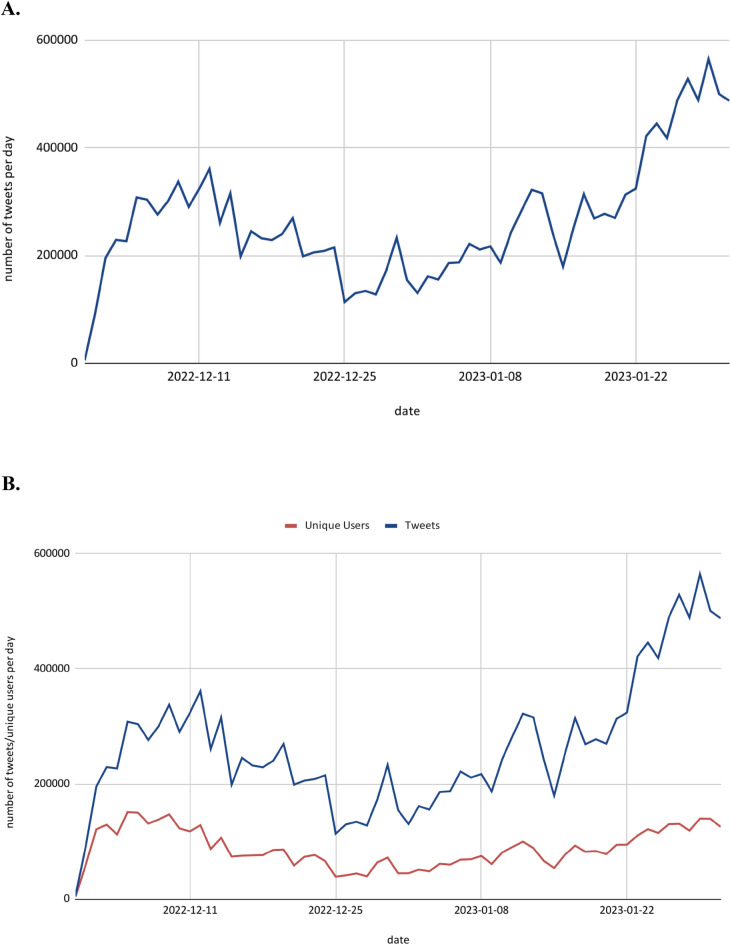
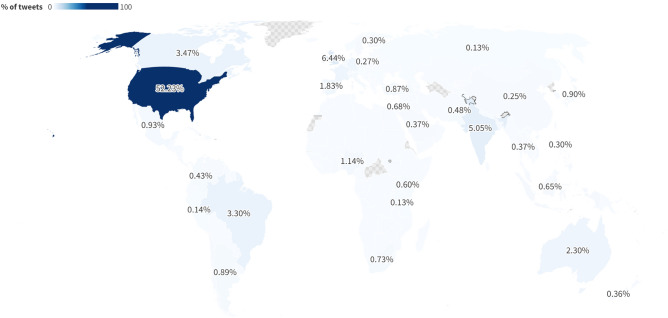
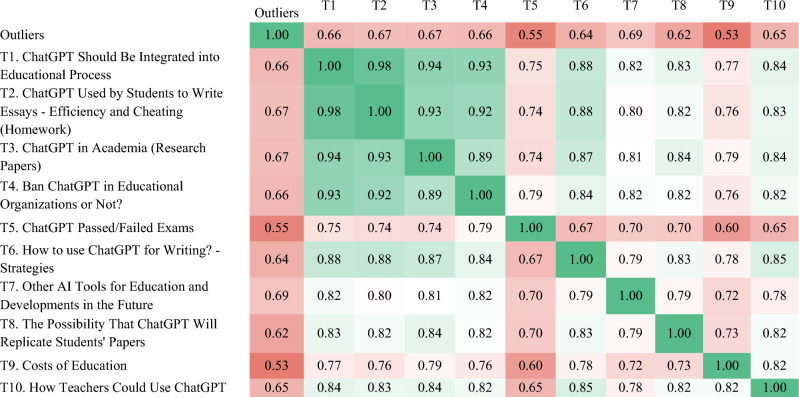
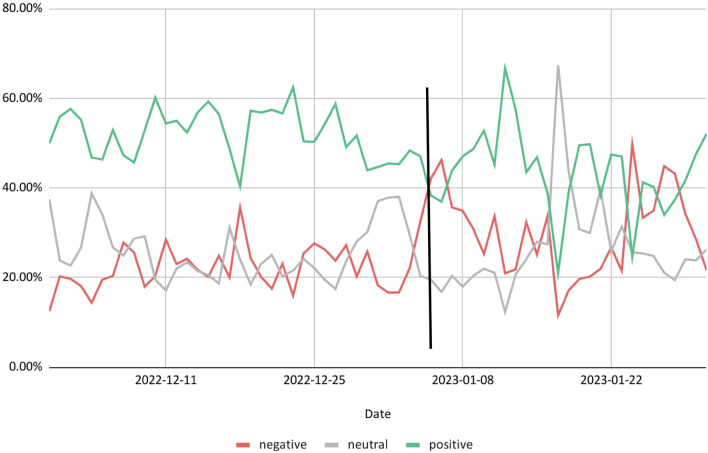
Verification
Claims the paper makes
The claims and statistics of this paper haven’t been checked yet.
Free: it reads the open-access text and checks the first 5 claims that cite a source we can check. Create a free account to check every claim.
Claims other papers make about this one
Each is checked against this paper’s own text: does it say what the citing paper says it does?
The source backs part of the claim, not all of it — or backs it for a different population, condition or comparison.
In the citing paper
“GenAI-driven tools may offer scalable and personalized support for reducing teachers' workloads (Fütterer et al., 2023; Kasneci et al., 2023; Steinert et al., 2024)”
From Enhancing School Students' Self-Regulated Learning through Generative AI Support: A Randomized Controlled Trial (2026) · cites this paper as Fütterer et al., 2023
Experimental — accuracy not yet measuredThe source backs part of the claim, not all of it — or backs it for a different population, condition or comparison.
In the citing paper
“By contrast, GenAI tools such as large language models (LLMs)-although likely less precise in instructional alignment and associated with challenges such as overreliance, reliability, and ethical concerns (Han et al. 2025a, b )-are more interactive and flexible in adapting to learners' needs through flexible dialogue without requiring extensive pre -modeling and could be used to support SRL by”
From Enhancing School Students' Self-Regulated Learning through Generative AI Support: A Randomized Controlled Trial (2026) · cites this paper as Fütterer et al., 2023
Experimental — accuracy not yet measuredThe source backs part of the claim, not all of it — or backs it for a different population, condition or comparison.
In the citing paper
“The results of questionnaire indicate ChatGPT can serve as an important educational tool, beneficial in a range of teaching contexts, including online classroom Q&A assistant, virtual tutor and facilitating language learning [24].”
From Exploring the potential of artificial intelligence to enhance the writing of english academic papers by non-native english-speaking medical students - the educational application of ChatGPT (2024) · cites this paper as [24]
Experimental — accuracy not yet measuredThe source backs part of the claim, not all of it — or backs it for a different population, condition or comparison.
In the citing paper
“Studies have suggested that the perceived usefulness of technology in the classroom is a strong predictor of intentions to participate in technology-related professional development (Fütterer et al., 2023a; Luckin et al., 2022).”
From Artificial intelligence in higher education: exploring faculty use, self-efficacy, distinct profiles, and professional development needs (2024) · cites this paper as Fütterer et al., 2023a
Experimental — accuracy not yet measuredIn the citing paper
“Fütterer et al. [68], in their article on global reactions to AI innovations, suggested that AI, such as ChatGPT, stressed the importance of AI literacy in shaping perceptions of the risks and opportunities associated with ChatGPT in education.”
From ChatGPT in Learning: Assessing Students’ Use Intentions through the Lens of Perceived Value and the Influence of AI Literacy (2024) · cites this paper as [68]
Self-check
Percentages, sums and reported differences re-computed from the paper’s own numbers.
The self-check needs the paper’s full text.
Citations
Cites
The theory of planned behavior
Ajzen, I. (1991) · Organizational Behavior and Human Decision Processes · doi:10.1016/0749-5978(91)90020-t · Cited by 134,657
(1975) · PhilPapers (PhilPapers Foundation) · Cited by 36,737
Language Models are Few-Shot Learners
Brown, T. B., Mann, B., Ryder, N., Subbiah, M., Kaplan, J., Dhariwal, P., Neelakantan, A., Shyam, P., Sastry, G., Askell, A., et al. (2020) · arXiv · doi:10.48550/arxiv.2005.14165 · Cited by 23,372
ChatGPT for good? On opportunities and challenges of large language models for education
Kasneci, E., Sessler, K., Küchemann, S., Bannert, M., Dementieva, D., Fischer, F., Gasser, U., Groh, G., Günnemann, S., Hüllermeier, E., et al. (2023) · Learning and Individual Differences · doi:10.1016/j.lindif.2023.102274 · Cited by 15,365
Kaugeranna, R., Kaugeranna, E., & Aion, (. S. 4. 6. (2023) · DROPS (Schloss Dagstuhl – Leibniz Center for Informatics) · doi:10.4230/lipics.giscience.2023.43 · Cited by 13,690
Hattie, J., & Timperley, H. (2007) · Review of Educational Research · doi:10.3102/003465430298487 · Cited by 12,905
ChatGPT for Good? On Opportunities and Challenges of Large Language Models for Education
Kasneci, E., Seßler, K., Küchemann, S., Bannert, M., Dementieva, D., Fischer, F., Gasser, U., Groh, G., Günnemann, S., Hüllermeier, E., et al. (2023) · doi:10.35542/osf.io/5er8f · Cited by 7,552
VADER: a parsimonious rule-based model for sentiment analysis of social media text
Hutto, C., & Gilbert, E. (2014) · Proceedings of the International AAAI Conference on Web and Social Media · doi:10.1609/icwsm.v8i1.14550 · Cited by 6,087
Training language models to follow instructions with human feedback
Ouyang, L., Wu, J., Jiang, X., Almeida, D., Wainwright, C. L., Mishkin, P., Zhang, C., Agarwal, S., Slama, K., Ray, A., et al. (2022) · arXiv · doi:10.48550/arxiv.2203.02155 · Cited by 4,208
BAİDOO-ANU, D., & OWUSU ANSAH, L. (2023) · Journal of AI · doi:10.61969/jai.1337500 · Cited by 3,939
Research works printed but not linked: 4
- Rogers, E. M. Diffusion of innovations (4th ed.). Free Press (2010).
- Trust T Whalen J Mouza C Editorial: ChatGPT: Challenges, opportunities, and implications for teacher education Contemp. Issues Technol. Teach. Educ. 2023 23 1 1 13
- Fishman, B. J. Possible futures for online teacher professional development. In C. Dede, A. Eisenkraft, K. Frumin, & A. Hartley (Eds.), Teacher learning in the digital age. Online professional development in STEM education (pp. 3–31). Harvard Education Press (2016).
- Borchers, C., Rosenberg, J. M., Gibbons, B., Burchfield, M. A., & Fischer, C. To scale or not to scale: Comparing popular sentiment analysis dictionaries on educational Twitter data. Fourteenth International Conference on Educational Data Mining (EDM 2021), Paris (2021).
Cited by
Items 101–200 of 242
AI-generated content and academic norms: perspectives and reflections of college students
He, Q., You, X., & Shen, J. (2025) · Interactive Learning Environments · doi:10.1080/10494820.2025.2511252 · Cited by 11
“Despite this, school bans have done little to discourage students from using generative AI in their academics and assignments (Futterer et al., 2023).”
Adoption of generative artificial intelligence in management education using unlearning mechanism
Sharma, S. (2025) · The International Journal of Management Education · doi:10.1016/j.ijme.2025.101249 · Cited by 8
ChatGPT in Computer Science Education: Exploring Benefits, Challenges, and Ethical Considerations
Kloub, L. H., & Gupta, A. (2024) · doi:10.18260/1-2--45758 · Cited by 6
The Practice of Enhancing Learning and Scientific Innovative Abilities Using LLM-Based AI Tools
Wang, B., Zhang, X., Li, S., & Wang, Y. (2024) · International Conference on Computer Science and Technologies in Education (CSTE) · doi:10.1109/cste62025.2024.00038 · Cited by 8
Generative AI Integration in Education: Challenges and Approaches
Watson, S., & Shi, S. (2024) · Intelligent systems reference library · doi:10.1007/978-3-031-71232-6_4 · Cited by 9
Sunarto, M. J. D., Hariadi, B., & Lemantara, J. (2024) · Jurnal Kependidikan Jurnal Hasil Penelitian dan Kajian Kepustakaan di Bidang Pendidikan Pengajaran dan Pembelajaran · doi:10.33394/jk.v10i2.11135 · Cited by 16
“One of the most exciting topics of using AI is its ability to assist educators in providing differentiated education, which is currently being intensified in the world of secondary education (Fütterer et al., 2023).”
BackgroundPublic Attitudes Toward ChatGPT on Twitter: Sentiments, Topics, and Occupations
Koonchanok, R., Pan, Y., & Jang, H. (2023) · arXiv · doi:10.48550/arxiv.2306.12951 · Cited by 5
“Studies that focused on specific areas like cybersecurity (Okey et al. 2023), healthcare (Praveen and Vajrobol 2023), or education (Li et al. 2023; Fütterer et al. 2023) examined tweets with relatively longer time spans, ranging from 2 to 4 months.”
Ellison, C., Coulby, C., Saunders, S., Lindsay, R., & Hands, C. (2026) · Perspectives: Policy and Practice in Higher Education · doi:10.1080/13603108.2025.2505883 · Cited by 5
“The use of Generative Artificial Intelligence (GenAI) has spread rapidly since the release of OpenAI’s ChatGPT in the autumn of 2022 (Dempere et al. 2023; Fütterer et al. 2023).”
Qadir, J. (2025) · IEEE Global Engineering Education Conference (EDUCON) · doi:10.1109/educon62633.2025.11016479 · Cited by 17
Hicham, N., & Habbat, N. (2025) · International Journal of Information Technology · doi:10.1007/s41870-025-02622-w · Cited by 5
AI for educational innovation: opportunities and challenges amidst protracted crises
Zeid, M. B., & Abouchedid, K. (2025) · Education and Information Technologies · doi:10.1007/s10639-025-13867-0 · Cited by 7
Human-machine in the vortex of digital synergy
Moravec, V., Gavurová, B., Hynek, N., & Rigelský, M. (2025) · Humanities and Social Sciences Communications · doi:10.1057/s41599-025-05014-4 · Cited by 7
“In the fi eld of education, ChatGPT has caused great changes (Fütterer et al. 2023).”
Shormani, M. Q. (2025) · Artificial Intelligence Review · doi:10.1007/s10462-025-11332-5 · Cited by 21
Karahan, B. N., Emekli, E., & Altın, M. A. (2025) · European Journal of Therapeutics · doi:10.58600/eurjther2599 · Cited by 8
From admiration to apprehension: the evolving role of generative AI in learning
Cingillioglu, I., & Barbieri, W. (2025) · International Journal of Information and Learning Technology · doi:10.1108/ijilt-11-2024-0262 · Cited by 8
Advantages and Disadvantages of Chatgpt in Science Learning: A Systematic Literature Review
Asmiddin, A. M., Nurhuda, P., & Megawati, R. (2023) · Jurnal Penelitian Pendidikan IPA · doi:10.29303/jppipa.v9i12.6576 · Cited by 6
“Previous research has been conducted on the Impact of the Implementation of ChatGPT in Education: A Systematic Review (Montenegro-Rueda et al., 2023); ChatGPT in education: global reactions to AI innovations (Fütterer et al., 2023”
MethodIntegrating ChatGPT in Education and Learning: A Case Study on Libyan Universities
Abolkasim, E., & Hasan, M. (2024) · Journal of Pure & Applied Sciences · doi:10.51984/jopas.v23i2.3082 · Cited by 14
AI in flow cytometry: Current applications and future directions
Yue, A., Brinkman, R. R., Nash, V., Junker, F., Bogdanoski, G., Divekar, A., Tyznik, A. J., Špidlen, J., Kern, W., Pétriz, J., et al. (2025) · Cytometry Part B Clinical Cytometry · doi:10.1002/cyto.b.22255 · Cited by 7
“While simpler models can be standardized, complex models like black box LLMs used for AI tutoring and diagnostics have high hallucination rates (Fütterer et al., 2023; Goktas et al., 2009).”
From Angels to Artificial Agents? AI as a Mirror for Human (Im)perfections
Haselager, P. (2024) · Zygon® · doi:10.16995/zygon.11659 · Cited by 19
da Rocha, B. M., & Figueira, Á. (2025) · Informatics · doi:10.3390/informatics12010006 · Cited by 5
Research trends and the impact of ChatGPT on educational environments
Firdaus, T., Mufidah, R., Hamida, R. N., Febrianti, R. I., & Guivara, A. E. R. (2025) · International Journal of Social Sciences and Education Research · doi:10.24289/ijsser.1609741 · Cited by 6
Exploring the Efficacy of ChatGPT in Adapting Reading Materials for Undergraduate Students
Nikolayeva, L. (2024) · International Conference on Higher Education Advances (HEAd) · doi:10.4995/head24.2024.17087 · Cited by 2
Rethinking Teacher Education in the ChatGPT Era through a Currere Perspective
Akbaş, O. (2025) · Journal of Teacher Education and Lifelong Learning · doi:10.51535/tell.1697199 · Cited by 3
Naqrash, N., Jarrah, M. A., Hasan, E., & Ali, S. A. K. (2025) · East European Journal of Psycholinguistics · doi:10.29038/eejpl.2025.12.1.naq · Cited by 8
INTEGRATING GENERATIVE AI IN STEM EDUCATION: A PATHWAY TO INCLUSIVE AND ENHANCED LEARNING
Mayilyan, A. (2024) · Education in the 21st Century · doi:10.46991/educ-21st-century.v6.i1.093 · Cited by 5
Teerakapibal, S., & Kusawat, P. (2025) · Journal of Education for Business · doi:10.1080/08832323.2025.2536255 · Cited by 5
“Similarly, Fütterer et al. (2023) uncovered topics ranging from specific issues, such as cheating, to discussions about educational opportunities.”
Xiong, P., & Zhang, Y. (2025) · Disability and Rehabilitation Assistive Technology · doi:10.1080/17483107.2025.2561927 · Cited by 5
“the advent of ai technology applications such as chatGPt has significantly impacted today’s higher education environment [1,2]. the application of various ai technologies in curriculum design, teaching process and evaluation of teaching outcomes has dramatically changed the forms and contents of…”
RetractedMindful machines: evaluating ChatGPT’s impact on higher education
Ravichandran, K., Srivastava, M., & Khanna, D. (2025) · International Journal of Systems Assurance Engineering and Management · doi:10.1007/s13198-025-02724-5 · Cited by 4
A Review on Conversational AI as a Tool in Academic Writing
Demiröz, H., & Tıkız‐Ertürk, G. (2025) · Eskiyeni (Online)/Eskiyeni · doi:10.37697/eskiyeni.1565854 · Cited by 7
ChatGPT: The End of Critical Thinking as We Know It
Adams, L. E., & Alzaabi, I. (2025) · IGI Global eBooks · doi:10.4018/979-8-3373-0771-8.ch007 · Cited by 6
Zhang, Y. (2025) · Literature Language and Cultural Studies · doi:10.63313/llcs.9032 · Cited by 2
Machine-Assisted Thematic Mapping of AI in Education Discourse: A Systematic Review from 2005-2024
Kaur, H., & Pavlova, M. (2025) · Humanities and Social Sciences Communications · doi:10.1057/s41599-026-07342-5 · Cited by 3
Artificial Intelligence Integration in Mathematics Education: A SWOT-BWM Analysis
Şahin, S., & Teke, B. (2025) · Journal of Learning and Teaching in Digital Age · doi:10.53850/joltida.1667650 · Cited by 6
Hicham, N., & Habbat, N. (2025) · Journal of Economy and Technology · doi:10.1016/j.ject.2025.07.003 · Cited by 6
Rauchfleisch, A., Suarez, J. P., Sales, N. M., & Jungherr, A. M. (2025) · Telematics and Informatics · doi:10.1016/j.tele.2025.102344 · Cited by 4
“In domain-specific analyses, for example, in the field of education, researchers find that while early responses were primarily positive, sentiment diversified throughout 2023, with some spikes in negativity on specific days (Fütterer et al., 2023).”
Yazma becerisini yapay zekâ odağında yeniden düşünmek: İmkân ve ihtimaller
Atasoy, A. (2025) · Alanyazın · doi:10.59320/alanyazin.1781293 · Cited by 2
AI-assisted language learning: ChatGPT's impact on mastering English tenses at the university level
Lukešová, A., & Jennings, P. (2026) · Social Sciences & Humanities Open · doi:10.1016/j.ssaho.2026.102532 · Cited by 13
ChatGPT in Language Education: Meta-Analysis
Amrullah, M. I., Firmansyah, Nabilah, A., Hendriwanto, H., & Muntiningsih, R. (2024) · Journal of World Englishes and Educational Practices · doi:10.32996/jweep.2024.6.2.2 · Cited by 3
Generative Künstliche Intelligenz: Mögliche Auswirkungen auf die psychologische Forschung
Buder, J., Lindner, M. A., Oestermeier, U., Huff, M., Gerjets, P. H., Utz, S., & Creß, U. (2024) · Psychologische Rundschau · doi:10.1026/0033-3042/a000699 · Cited by 4
Self-citationPesce, M. A., & Blanco, D. F. (2024) · European Journal of Education Studies · doi:10.46827/ejes.v11i12.5687 · Cited by 17
Technologie generatywnej sztucznej inteligencji – nowe perspektywy i nowe wyzwania edukacyjne
Kuruliszwili, S. (2024) · Forum Pedagogiczne · doi:10.21697/fp.2024.2.1.10 · Cited by 5
Petrov, I., Chikurtev, D., & Krusteva, A. (2025) · Conference on Electrical Machines, Drives and Power Systems (ELMA) · doi:10.1109/elma65795.2025.11083516 · Cited by 2
“Future research is expected to intensify its focus on these ethical, technical, and regulatory challenges, ensuring that the growing intelligence of educational systems is matched by their safety, transparency, and equity [30].”
Motivating older adults with special needs for learning using generative artificial intelligence
Chopra, K. (2025) · Educational Gerontology · doi:10.1080/03601277.2025.2538205 · Cited by 4
Ding, H., Shen, Y., Chen, J., & Wang, P. (2026) · Information Processing & Management · doi:10.1016/j.ipm.2026.105046 · Cited by 6
The Proficiency Paradox: Generative AI, Governance Capacity, and Knowledge-Sharing SystemsPreprint
Shankar, R., & Sim, J. (2024) · SSRN Electronic Journal · doi:10.2139/ssrn.4867815 · Cited by 4
Fütterer, T., Hoch, E., & Dumont, H. (2024) · Research Square · doi:10.21203/rs.3.rs-5238796/v1 · Cited by 2
Self-citationTo Be or Not To Be—After AI Revolution
Bakonyi, V., Illés, Z., & Szabó, D. (2024) · Lecture notes in networks and systems · doi:10.1007/978-981-97-3289-0_4 · Cited by 1
Whitacre, M. P., & Leavitt, L. (2024) · Advances in educational marketing, administration, and leadership book series · doi:10.4018/979-8-3693-6220-4.ch007 · Cited by 1
Chang, A., Jau, A., & Bujeng, B. (2024) · Progress in Computers and Learning · doi:10.37934/picl.1.1.3646 · Cited by 3
Garai-Fodor, M., & Huszák, N. (2025) · Frontiers in Education · doi:10.3389/feduc.2024.1477879 · Cited by 7
Balzotti, A., Gallelli, R., Renna, P., Ascione, A., Amati, I., Casolaro, M., & Depalo, L. (2025) · Studies in computational intelligence · doi:10.1007/978-3-031-82915-4_6 · Cited by 1
G(AI)etting with the program: Teaching IS and Analytics in the age of GAI
Urbaczewski, A., & Keeling, K. B. (2025) · Communications of the Association for Information Systems · doi:10.17705/1cais.05642 · Cited by 2
Bina, F. (2025) · International Journal of Data Science and Analysis · doi:10.11648/j.ijdsa.20251103.13 · Cited by 1
Usage of ChatGPT on English Language Skills of Students at Maputi Senior High School
Lariosa, J., Bajao, K., Talaroc, J., Amancio, E., Buna, J., & Villarin, S. J. (2025) · Psychology and Education A Multidisciplinary Journal · doi:10.70838/pemj.430309 · Cited by 3
Lost in Automation: How Generative AI Puts Communication Students' Skills at Risk
Iancu, I. R. (2025) · Advances in computational intelligence and robotics book series · doi:10.4018/979-8-3373-6018-8.ch012 · Cited by 1
ChatGPT in Education: A Review of Recent Advances and Applications
Karakatsoulis, D., Adam, S., Lazaros, K., Moustaka, I., Vlamos, P., Vrahatis, A. G., & Doukakis, S. (2025) · International Journal of Artificial Intelligence Tools · doi:10.1142/s021821302540010x · Cited by 2
Liang, Y., Wang, J., & Wang, J. (2025) · International Conference on Distance Education and Learning (ICDEL) · doi:10.1109/icdel65868.2025.11193480 · Cited by 1
“Although a small portion of people, who are more skeptical of new technologies, remain doubtful about Big Data and AI, it is undeniable that these technologies have begun to subtly impact various fields of people's lives, especially in the education sector [8][9].”
Albadry, H. (2025) · International Journal of Computer-Assisted Language Learning and Teaching · doi:10.4018/ijcallt.394883 · Cited by 3
Evaluating ChatGPT for Automated Creation and Grading of Essay Questions in Higher Education
Stowell, J. R., & Zhu, J. (2025) · Teaching of Psychology · doi:10.1177/00986283251408813 · Cited by 4
Karnalim, O., Santiadi, S., Natalia, D., Wijaya, J. S., Rupilu, G. E., Ivanayus, Sarean, A. R., & Hassabian, G. A. (2026) · Lecture notes in networks and systems · doi:10.1007/978-3-032-07316-7_17 · Cited by 1
Exploring Iranian university students’ behavioral intention to use ChatGPT for academic purposes
Valızadeh, M., Kotamjani, S. S., & Xodabande, I. (2026) · Discover Psychology · doi:10.1007/s44202-026-00705-8 · Cited by 7
Teaching Mathematics to Future Engineers in the Twenty-First Century
Małolepszy, M. (2026) · Canadian Journal of Science Mathematics and Technology Education · doi:10.1007/s42330-026-00488-z · Cited by 1
“Researchers have begun to consider its potential uses in education (Fütterer et al., 2023; Kasneci et al., 2023; Jürgen et al., 2023).”
Zhang, W., Song, X., Lin, M., & Vasile, E. (2026) · International Journal of Sustainability in Higher Education · doi:10.1108/ijshe-11-2025-1391 · Cited by 2
Requejo-Passoni, W. (2026) · Revista de educación y derecho · doi:10.1344/reyd2026.33.49094 · Cited by 2
Jauhiainen, J. S., & Guerra, A. G. (2026) · Frontiers of digital education. · doi:10.1007/s44366-026-0091-1 · Cited by 2
“They offer a relief from heavy grading work-loads while improving the efficiency of formative and summative assessments (Bui & Barrot, 2025; Fütterer et al., 2023; Hackl et al., 2023; Henkel et al., 2024; Jukiewicz, 2024; Mao et al., 2024; Pinto et al., 2023).”
Moody-Marshall, R., Mack, A. J., Stephens, A., McCaig, M., & Morrison, B. (2026) · Caribbean Educational Research Journal · doi:10.1108/cerj-03-2025-0005 · Cited by 1
Sun, L., & Zheng, Y. (2026) · Teaching and Teacher Education · doi:10.1016/j.tate.2026.105781 · Cited by 4
Holland, B. J. (2023) · Advances in library and information science (ALIS) book series · doi:10.4018/979-8-3693-2841-5.ch014 · Cited by 2
Khanna, S., Ghosh, N., & Kumar, S. (2024) · Advances in hospitality, tourism and the services industry (AHTSI) book series · doi:10.4018/979-8-3693-1239-1.ch009 · Cited by 1
Impact of Generative AI in Education 2030
Adhikari, S., Kumbhakar, D., Indra, N., & Karforma, S. (2024) · Advances in educational technologies and instructional design book series · doi:10.4018/979-8-3693-2440-0.ch025 · Cited by 1
Alfabetización crítica en IA: Recursos educativos para una pedagogía de la descajanegrización
Artopoulos, A., & Lliteras, A. B. (2024) · Trayectorias Universitarias · doi:10.24215/24690090e168 · Cited by 9
Comparing the Quality of Humans and Chatgpt Instruction on Students’ Generative Thinking
(2025) · Journal of Psychology and Neuroscience · doi:10.47485/2693-2490.1101 · Cited by 2
Lamanauskas, V. (2024) · Pro Edu International Journal of Educational Sciences · doi:10.26520/peijes.2024.11.6.47-60 · Cited by 1
Cornelison, B. R., Edwards, C., Zhang, C., Dean, J., Halloran, J., Middleton, A., & Erstad, B. L. (2025) · American Journal of Pharmaceutical Education · doi:10.1016/j.ajpe.2025.101910 · Cited by 1
Bakonyi, V., Illés, Z., Szabó, D., & Korom, S. (2023) · International Conference on Emerging eLearning Technologies and Applications (ICETA) · doi:10.1109/iceta61311.2023.10343676
“In our opinion, the only way forward is to adapt the chatbots and reorganize the courses to use chatbots during the lessons[15].”
BackgroundTutoring and Education: Identifying the Opportunities and Challenges of ChatGPT Among Students
Atiyah, A. N. (2024) · Communications in Mathematics and Applications · doi:10.26713/cma.v14i5.2687
“[6]).”
Chandel, A., Sharma, A. R., Chowdary, A. P., & Saluja, S. (2024) · Advances in marketing, customer relationship management, and e-services book series · doi:10.4018/979-8-3693-6660-8.ch011
The Implications of Utilizing AI for Learning on Generation Z
Surjandy, S., Nathanael, A., Wijaya, D., & Orlando, L. (2024) · International Seminar on Intelligent Technology and Its Applications · doi:10.1109/isitia63062.2024.10668233 · Cited by 2
“Learning involves the use of AI applications individually as well as through social or collaborative interactions between individuals or in a group context to support the learning process at school or university [11][12].”
BackgroundFeng, W., Li, Y., & Ma, C. (2024) · IEEE Access · doi:10.1109/access.2024.3481049
“This quickly made a significant impact on the global internet, including China [11].”
BackgroundReenvisioning Learning in the Modern Age Through New Technologies for Enhanced Student Involvement
Krishnan, R., Vel, R., Kandasamy, L., Batcha, H. M., & Rajagopal, N. K. (2024) · Advances in computational intelligence and robotics book series · doi:10.4018/979-8-3693-2157-7.ch004
The Use of Artificial Intelligence Algorithms in Foreign Languages Teaching
Shimichev, A. S., & Борисовна, Р. М. (2024) · International Conference "Quality Management, Transport and Information Security, Information Technologies" (IT&QM&IS) · doi:10.1109/qmtisit63393.2024.10762916
“Thus, digital technologies allow collecting and processing large amounts of data, which are necessary for training artificial intelligent systems, as well as creating new forms of interaction between people and machines, such as voice assistants and chatbots [3].”
Dguidegue, Y. (2025) · Learning Letters · doi:10.59453/ll.v4.32
Los Datos de X en la Investigación Científica: Tendencias y Desafíos
Rivadeneira, L., & Loor, I. (2025) · Revista Latina de Comunicación Social · doi:10.4185/rlcs-2025-2418 · Cited by 1
“En este ámbito, Fütterer et al. (2023) y Hu et al. (2021) han demostrado cómo los métodos computacionales facilitan la exploración de actitudes y percepciones colectivas en temas de interés común.”
Chetry, B. (2025) · Advances in analytics for learning and teaching · doi:10.1007/978-3-031-87740-7_11
(2025) · International Journal of Humanities and Educational Research · doi:10.47832/2757-5403.30.3
Brändle, M., Bahr, T., Arnold, J. B., & Zinn, B. (2025) · IEEE Global Engineering Education Conference (EDUCON) · doi:10.1109/educon62633.2025.11016452 · Cited by 3
“Here the lack of a comparison between early adopters and later users does not exist yet, with related studies only looking at one group [5]–[7], [9].”
The Use of Generative Artificial Intelligence in Higher Education
Miller, T., & Habada, P. (2025) · doi:10.55277/rhj.ql8ttmax
ChatGPT als Krisenfaktor des Literaturunterrichts?
Führer, C. (2025) · Deutschdidaktik · doi:10.1007/978-3-662-70683-1_8
Richie, C. (2025) · Oxford University Press eBooks · doi:10.1093/9780198945215.003.0009
Flip the script: leveraging blockchain and generative AI for a bottom-up learning paradigmPreprint
Franceschet, M. (2025) · SSRN Electronic Journal · doi:10.2139/ssrn.5296754
Halder, A., & Sultana, S. (2025) · Springer eBooks · doi:10.1007/978-3-031-89824-2_5
AI, Education, and World-Building
Powles, J. (2025) · Oxford University Press eBooks · doi:10.1093/oxfordhb/9780198940272.013.0033
Design Thinking mit ChatGPT?! Erste Erkenntnisse aus studentischen Innovationsprojekten
Köhler, C., Beinhauer, M., Mahl, T., & Mohnke, J. (2025) · Schwerpunkt Business Model Innovation · doi:10.1007/978-3-658-46410-3_4
Balancing AI and Pedagogy: The Future of Technology in Education
Manoj Kumar, A. (2025) · Advances in computational intelligence and robotics book series · doi:10.4018/979-8-3373-2185-1.ch012
On the Use of Large Language Models for Improving Student and Staff Experience in Higher Education
O’Neill, S. T., Mulgrew, D., & Bagdasar, O. D. (2025) · Open Education Studies · doi:10.1515/edu-2025-0086 · Cited by 2
Impact of Artificial Intelligence on Higher Education in Peru: A Pre-experimental Study
Vidaurre, S. M. E., Valdivia, A. N. M., Quelopana, R. L. G., Nolasco-Mamani, M. A., Iturry, I. E. A., & Rodríguez, N. C. V. (2025) · Lecture notes in networks and systems · doi:10.1007/978-3-031-93109-3_39
Prickett, T., & Foster, C. (2026) · doi:10.1145/3772338.3772347
Li, J., Zong, H., Wu, E., Wu, R., Peng, Z., Zhao, J., Yang, L., Xie, H., & Shen, B. (2024) · Figshare · doi:10.6084/m9.figshare.26231235
Metadata
- Authors
- Fütterer, T., Fischer, C., Alekseeva, A., Chen, X., Tate, T., Warschauer, M., & Gerjets, P.
- Affiliations
- University of Tübingen (DE)
- University of California, Irvine (US)
- Leibniz-Institut für Wissensmedien (DE)
- Corresponding author
- Fütterer, Tim
- ORCID
- Venue
- Scientific Reports
- Published
- 2023-09-15
- Volume
- 13
- Issue
- 1
- Pages
- 15310-15310
- ISSN
- 2045-2322 (ISSN-L)
- PMC
- PMC10504368
- OpenAlex
- W4386773699
- Cited by
- 242
- References
- 54
- Citations by year
- 2026: 45 · 2025: 93 · 2024: 95 · 2023: 9
- FWCI
- 56.69
- Type
- journal article
- Language
- en
- Open access
- gold
- doi.org
- Licence
- cc-by
- creativecommons.org/licenses/by/4.0 (tdm)
- creativecommons.org/licenses/by/4.0 (vor)
- Locations
- Scientific Reports (publishedVersion, cc-by)
- Research Square (acceptedVersion, cc-by)
- PubMed Central (publishedVersion, cc-by)
- PubMed (publishedVersion)
- eScholarship (California Digital Library) (submittedVersion, cc-by)
- DOAJ (DOAJ: Directory of Open Access Journals) (submittedVersion, cc-by-sa)
- Funders
- Eberhard Karls Universität Tübingen
- Topics
- Social Sciences › Education › Artificial Intelligence in Education
- Physical Sciences › Computer Science › Artificial Intelligence › Sentiment Analysis and Opinion Mining
- Social Sciences › Education › Educational Technology in Learning
- Keywords
- ChatGPT, generative AI in education, public perception of AI, academic dishonesty, misinformation, AI as learning partner, sentiment analysis, topic modeling, science communication, AI policy
About these checks
Registry, retraction, Cites and statistics results are computed, not judged, with one exception: a printed reference that no index lists is read once by a model before it counts as a citation error. Claims are extracted by a model and kept only when their quote appears verbatim in the text; each cited source is then checked, with a model’s help, for whether it says what the claim relies on. Those verdicts can be wrong — read the claim’s quote and the cited source before relying on one.
Statistics and arithmetic are recomputed, not judged.
Confidence bands are shown only for fields calibrated on our annotated test set. None is calibrated yet, so no band is shown.
What counts as a claim ›How we measure confidence ›How we check this ›
Are you an author, or do you see a problem with this page? Request a review
Data sources
Bibliographic data: Semantic Scholar, OpenAlex, Crossref.
Contains information from the Semantic Scholar Academic Graph Datasets, made available under the ODC Attribution License (ODC-BY 1.0).
Semantic Scholar’s data is described in: Kinney, R., et al. (2023). The Semantic Scholar Open Data Platform. arXiv:2301.10140.
