

ChatGPT in education: global reactions to AI innovations
Open accessPublished version of a preprint
The DOI matches its Crossref record; 62 of the 62 references it cites were found in a registry or an index.
Abstract
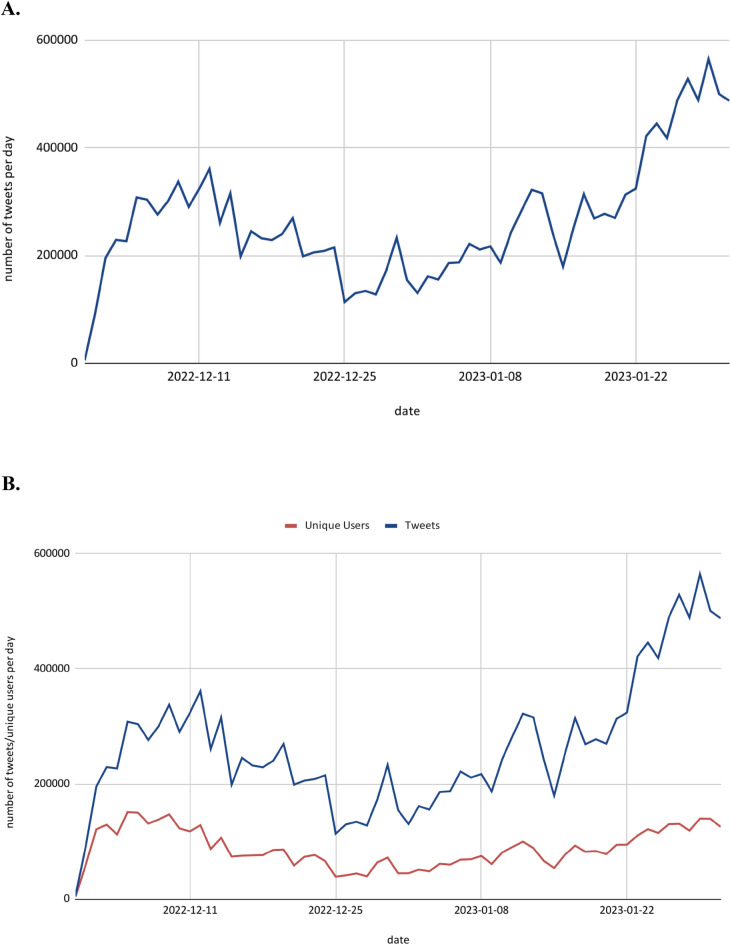
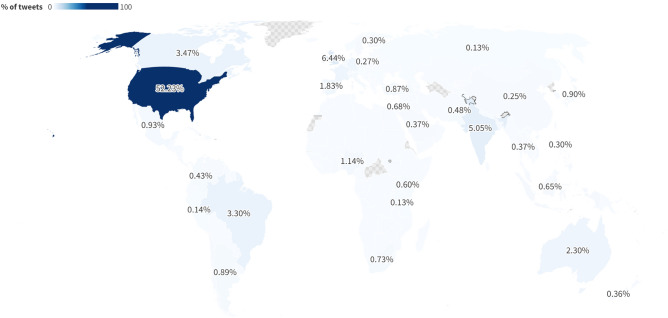
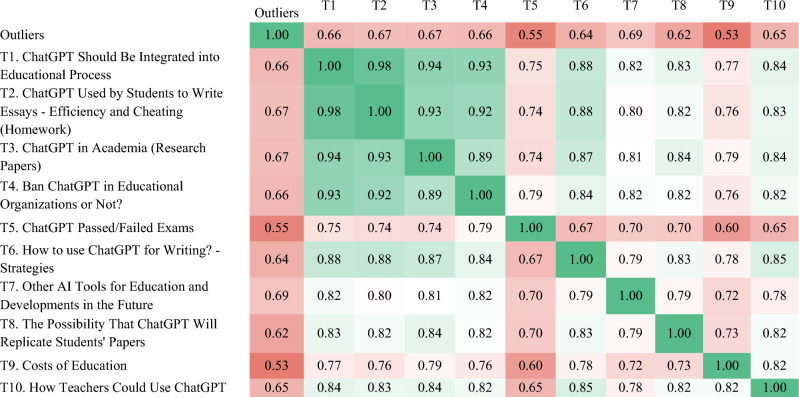
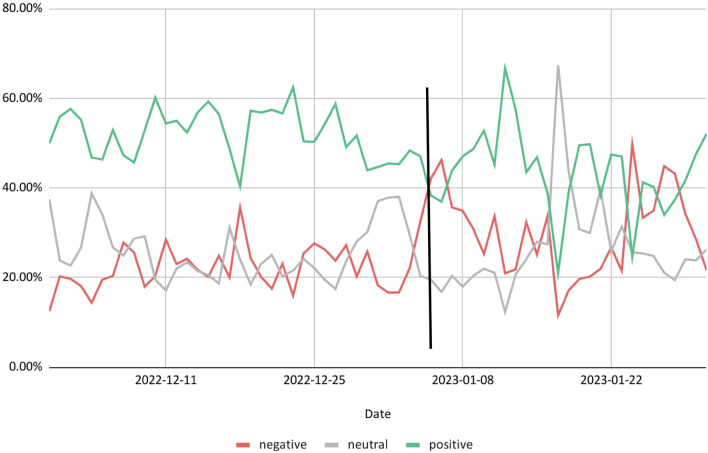
The release and rapid diffusion of ChatGPT have caught the attention of educators worldwide. Some educators are enthusiastic about its potential to support learning. Others are concerned about how it might circumvent learning opportunities or contribute to misinformation. To better understand reactions about ChatGPT concerning education, we analyzed Twitter data (16,830,997 tweets from 5,541,457 users). Based on topic modeling and sentiment analysis, we provide an overview of global perceptions and reactions to ChatGPT regarding education. ChatGPT triggered a massive response on Twitter, with education being the most tweeted content topic. Topics ranged from specific (e.g., cheating) to broad (e.g., opportunities), which were discussed with mixed sentiment. We traced that authority decisions may influence public opinions. We discussed that the average reaction on Twitter (e.g., using ChatGPT to cheat in exams) differs from discussions in which education and teaching–learning researchers are likely to be more interested (e.g., ChatGPT as an intelligent learning partner). This study provides insights into people's reactions when new groundbreaking technology is released and implications for scientific and policy communication in rapidly changing circumstances.
Overview
The claims and statistics of this paper haven’t been checked yet.
Free: it reads the open-access text and checks the first 5 claims that cite a source we can check. Create a free account to check every claim.
Integrity signals
Registry
Cites
Statistics
Figures
Verification
Claims the paper makes
The claims and statistics of this paper haven’t been checked yet.
Free: it reads the open-access text and checks the first 5 claims that cite a source we can check. Create a free account to check every claim.
Claims other papers make about this one
Each is checked against this paper’s own text: does it say what the citing paper says it does?
The source backs part of the claim, not all of it — or backs it for a different population, condition or comparison.
In the citing paper
“GenAI-driven tools may offer scalable and personalized support for reducing teachers' workloads (Fütterer et al., 2023; Kasneci et al., 2023; Steinert et al., 2024)”
From Enhancing School Students' Self-Regulated Learning through Generative AI Support: A Randomized Controlled Trial (2026) · cites this paper as Fütterer et al., 2023
Experimental — accuracy not yet measuredThe source backs part of the claim, not all of it — or backs it for a different population, condition or comparison.
In the citing paper
“By contrast, GenAI tools such as large language models (LLMs)-although likely less precise in instructional alignment and associated with challenges such as overreliance, reliability, and ethical concerns (Han et al. 2025a, b )-are more interactive and flexible in adapting to learners' needs through flexible dialogue without requiring extensive pre -modeling and could be used to support SRL by”
From Enhancing School Students' Self-Regulated Learning through Generative AI Support: A Randomized Controlled Trial (2026) · cites this paper as Fütterer et al., 2023
Experimental — accuracy not yet measuredThe source backs part of the claim, not all of it — or backs it for a different population, condition or comparison.
In the citing paper
“The results of questionnaire indicate ChatGPT can serve as an important educational tool, beneficial in a range of teaching contexts, including online classroom Q&A assistant, virtual tutor and facilitating language learning [24].”
From Exploring the potential of artificial intelligence to enhance the writing of english academic papers by non-native english-speaking medical students - the educational application of ChatGPT (2024) · cites this paper as [24]
Experimental — accuracy not yet measuredThe source backs part of the claim, not all of it — or backs it for a different population, condition or comparison.
In the citing paper
“Studies have suggested that the perceived usefulness of technology in the classroom is a strong predictor of intentions to participate in technology-related professional development (Fütterer et al., 2023a; Luckin et al., 2022).”
From Artificial intelligence in higher education: exploring faculty use, self-efficacy, distinct profiles, and professional development needs (2024) · cites this paper as Fütterer et al., 2023a
Experimental — accuracy not yet measuredIn the citing paper
“Fütterer et al. [68], in their article on global reactions to AI innovations, suggested that AI, such as ChatGPT, stressed the importance of AI literacy in shaping perceptions of the risks and opportunities associated with ChatGPT in education.”
From ChatGPT in Learning: Assessing Students’ Use Intentions through the Lens of Perceived Value and the Influence of AI Literacy (2024) · cites this paper as [68]
Self-check
Percentages, sums and reported differences re-computed from the paper’s own numbers.
The self-check needs the paper’s full text.
Citations
Cites
The theory of planned behavior
Ajzen, I. (1991) · Organizational Behavior and Human Decision Processes · doi:10.1016/0749-5978(91)90020-t · Cited by 134,657
(1975) · PhilPapers (PhilPapers Foundation) · Cited by 36,737
Language Models are Few-Shot Learners
Brown, T. B., Mann, B., Ryder, N., Subbiah, M., Kaplan, J., Dhariwal, P., Neelakantan, A., Shyam, P., Sastry, G., Askell, A., et al. (2020) · arXiv · doi:10.48550/arxiv.2005.14165 · Cited by 23,372
ChatGPT for good? On opportunities and challenges of large language models for education
Kasneci, E., Sessler, K., Küchemann, S., Bannert, M., Dementieva, D., Fischer, F., Gasser, U., Groh, G., Günnemann, S., Hüllermeier, E., et al. (2023) · Learning and Individual Differences · doi:10.1016/j.lindif.2023.102274 · Cited by 15,365
Kaugeranna, R., Kaugeranna, E., & Aion, (. S. 4. 6. (2023) · DROPS (Schloss Dagstuhl – Leibniz Center for Informatics) · doi:10.4230/lipics.giscience.2023.43 · Cited by 13,690
Hattie, J., & Timperley, H. (2007) · Review of Educational Research · doi:10.3102/003465430298487 · Cited by 12,905
ChatGPT for Good? On Opportunities and Challenges of Large Language Models for Education
Kasneci, E., Seßler, K., Küchemann, S., Bannert, M., Dementieva, D., Fischer, F., Gasser, U., Groh, G., Günnemann, S., Hüllermeier, E., et al. (2023) · doi:10.35542/osf.io/5er8f · Cited by 7,552
VADER: a parsimonious rule-based model for sentiment analysis of social media text
Hutto, C., & Gilbert, E. (2014) · Proceedings of the International AAAI Conference on Web and Social Media · doi:10.1609/icwsm.v8i1.14550 · Cited by 6,087
Training language models to follow instructions with human feedback
Ouyang, L., Wu, J., Jiang, X., Almeida, D., Wainwright, C. L., Mishkin, P., Zhang, C., Agarwal, S., Slama, K., Ray, A., et al. (2022) · arXiv · doi:10.48550/arxiv.2203.02155 · Cited by 4,208
BAİDOO-ANU, D., & OWUSU ANSAH, L. (2023) · Journal of AI · doi:10.61969/jai.1337500 · Cited by 3,939
Research works printed but not linked: 4
- Rogers, E. M. Diffusion of innovations (4th ed.). Free Press (2010).
- Trust T Whalen J Mouza C Editorial: ChatGPT: Challenges, opportunities, and implications for teacher education Contemp. Issues Technol. Teach. Educ. 2023 23 1 1 13
- Fishman, B. J. Possible futures for online teacher professional development. In C. Dede, A. Eisenkraft, K. Frumin, & A. Hartley (Eds.), Teacher learning in the digital age. Online professional development in STEM education (pp. 3–31). Harvard Education Press (2016).
- Borchers, C., Rosenberg, J. M., Gibbons, B., Burchfield, M. A., & Fischer, C. To scale or not to scale: Comparing popular sentiment analysis dictionaries on educational Twitter data. Fourteenth International Conference on Educational Data Mining (EDM 2021), Paris (2021).
Cited by
AI-generated feedback on writing: insights into efficacy and ENL student preference
Escalante, J., Pack, A., & Barrett, A. (2023) · International Journal of Educational Technology in Higher Education · doi:10.1186/s41239-023-00425-2 · Cited by 589
“The prevailing sentiment on GenAI seems to be that reforms are needed to adapt educational practices in accommodation of the technology (Fütterer et al., 2023; Tseng & Warschauer, 2023).”
BackgroundHigher education students’ perceptions of ChatGPT: A global study of early reactions
Ravšelj, D., Keržič, D., Tomaževič, N., Umek, L., Brezovar, N., A. Iahad, N., Abdulla, A. A., Akopyan, A., Aldana Segura, M. W., AlHumaid, J., et al. (2025) · PLOS ONE · doi:10.1371/journal.pone.0315011 · Cited by 376
Perkins, M., Furze, L., Roe, J., & MacVaugh, J. (2024) · Journal of University Teaching and Learning Practice · doi:10.53761/q3azde36 · Cited by 291
“While Tilli et al. (2023) note a cautious optimism and positive tone in social media discourse surrounding ChatGPT in HE, and Fütterer et al.’s (2023) findings from an analysis of posts on X (Twitter) are similarly positive, other research has been conflicting.”
ResultMah, D.-K., & Groß, N. (2024) · International Journal of Educational Technology in Higher Education · doi:10.1186/s41239-024-00490-1 · Cited by 218
“Studies have suggested that the perceived usefulness of technology in the classroom is a strong predictor of intentions to participate in technology-related professional development (Fütterer et al., 2023a; Luckin et al., 2022).”
Artificial Intelligence and the Transformation of Higher Education Institutions: A Systems Approach
Katsamakas, E., Pavlov, O. V., & Saklad, R. (2024) · Sustainability · doi:10.3390/su16146118 · Cited by 195
Hashem, R., Ali, N., El Zein, F., Fidalgo, P., & Abu Khurma, O. (2023) · Research and Practice in Technology Enhanced Learning · doi:10.58459/rptel.2024.19023 · Cited by 173
“The sophisticated GPT model, ChatGPT, has attracted the attention of various fields, including education (Fütterer et al., 2023; Williams et al., 2023).”
BackgroundLooking Beyond the Hype: Understanding the Effects of AI on Learning
Bauer, E., Greiff, S., Graesser, A. C., Scheiter, K., & Sailer, M. (2025) · Educational Psychology Review · doi:10.1007/s10648-025-10020-8 · Cited by 153
“ChatGPT seems too good to be true”: College students’ use and perceptions of generative AI
Baek, C., Tate, T., & Warschauer, M. (2024) · Computers and Education: Artificial Intelligence · doi:10.1016/j.caeai.2024.100294 · Cited by 306
Self-citationGenerative AI chatbots in higher education: a review of an emerging research area
McGrath, C., Farazouli, A., & Cerratto-Pargman, T. (2025) · Higher Education · doi:10.1007/s10734-024-01288-w · Cited by 136
“Major technological advances, such as GAI based on LLMs, can cause significant public and educational concerns (Barman et al., 2019; Fütterer et al., 2023).”
ChatGPT in Teaching and Learning: A Systematic Review
Ali, D., Fatemi, Y., Boskabadi, E., Nikfar, M., Ugwuoke, J., & Ali, H. (2024) · Education Sciences · doi:10.3390/educsci14060643 · Cited by 146
Will artificial intelligence drive the advancements in higher education? A tri-phased exploration
Kumar, S., Rao, P., Singhania, S., Verma, S., & Kheterpal, M. (2024) · Technological Forecasting and Social Change · doi:10.1016/j.techfore.2024.123258 · Cited by 131
Al-Abdullatif, A. M., & Alsubaie, M. A. (2024) · Behavioral Sciences · doi:10.3390/bs14090845 · Cited by 126
“This relationship suggests that a deeper comprehension of AI not only enhances the usability of ChatGPT, but also elevates its overall importance and value in the eyes of the students.”
Knoth, N., Decker, M., Laupichler, M. C., Pinski, M., Buchholtz, N., Bata, K., & Schultz, B. (2024) · Computers and Education Open · doi:10.1016/j.caeo.2024.100177 · Cited by 117
“Especially with the emergence of large language models (LLMs), the challenges and risks that AI poses to the education system have been widely discussed (e.g., [33,58,80,88]).”
Alshammarı, S. H., & Babu, E. (2025) · Scientific Reports · doi:10.1038/s41598-025-91634-4 · Cited by 188
Rossettini, G., Rodeghiero, L., Corradi, F., Cook, C., Pillastrini, P., Turolla, A., Castellini, G., Chiappinotto, S., Gianola, S., & Palese, A. (2024) · BMC Medical Education · doi:10.1186/s12909-024-05630-9 · Cited by 103
“Since their introduction, AI chatbots have gained considerable attention and sparked discussions in medical and health science education and clinical practice [4–7].”
BackgroundLi, J., Zong, H., Wu, E., Wu, R., Peng, Z., Zhao, J., Yang, L., Xie, H., & Shen, B. (2024) · BMC Medical Education · doi:10.1186/s12909-024-05738-y · Cited by 104
“Statistical analyses were performed using the R software package (version 4.2.0, The R Foundation, Boston, MA, USA), Graph Pad Prism 9 (GraphPad Software, CA, USA), and Empower (X&Y Solutions Inc., Boston, MA, USA) [23].”
MethodInfluentialPardos, Z. A., & Bhandari, S. (2024) · PLOS ONE · doi:10.1371/journal.pone.0304013 · Cited by 97
Precision public health in the era of genomics and big data
Roberts, M. C., Holt, K. E., Fiol, G. D., Baccarelli, A., & Allen, C. G. (2024) · Nature Medicine · doi:10.1038/s41591-024-03098-0 · Cited by 152
“This has been a challenge in AI research—for example, upon the release of the chatbot ChatGPT, a scramble ensued to develop policies addressing its unintended consequences across universities, funders and employers 100 .”
Sallam, M., El‐Sayed, W., Al‐Shorbagy, M. Y., Barakat, M. M., Khatib, S. E., Ghach, W., Alwan, N. H., Hallit, S. R., & Malaeb, D. N. (2024) · Frontiers in Education · doi:10.3389/feduc.2024.1414758 · Cited by 176
Artificial Intelligence in Health Professions Education assessment: AMEE Guide No. 178
Masters, K., MacNeil, H., Benjamin, J., Carver, T., Nemethy, K., Valanci-Aroesty, S., Taylor, D. C. M., Thoma, B., & Thesen, T. (2025) · Medical Teacher · doi:10.1080/0142159x.2024.2445037 · Cited by 80
“This is particularly true as we begin to navigate the use of AI by learners, whose reaction to AI in education was widespread and almost immediate [17,18].”
Yu, S., Androsov, A., Yan, H., & Chen, Y. (2024) · Computers & Education · doi:10.1016/j.compedu.2024.105111 · Cited by 112
Salih, S., Husain, O., Hamdan, M., Abdelsalam, S., Elshafie, H., & Motwakel, A. (2025) · Results in Engineering · doi:10.1016/j.rineng.2024.103837 · Cited by 74
Li, H., Wang, Y., Luo, S., & Huang, C. (2025) · Journal of Asian Public Policy · doi:10.1080/17516234.2024.2363128 · Cited by 60
“Based on the above situation, reforming to align generative AI tool usage with educational practices instead of prohibiting their use is increasingly being recognized as a consensus (Fütterer et al., 2023; Tseng & Warschauer, 2023).”
Artificial intelligence in medical education: promise, pitfalls, and practical pathways
Saroha, S. (2025) · Advances in Medical Education and Practice · doi:10.2147/amep.s523255 · Cited by 53
“Large Language Models (LLMs) such as ChatGPT, 34 generate human-like text by predicting likely continuations based on vast training datasets.”
Reddy, M. R., Walter, N. G., & Sevryugina, Y. V. (2024) · Journal of Chemical Education · doi:10.1021/acs.jchemed.4c00226 · Cited by 56
Schorcht, S., Buchholtz, N. F., & Baumanns, L. (2024) · Frontiers in Education · doi:10.3389/feduc.2024.1386075 · Cited by 105
Dunder, N., Lundborg, S., Wong, J., & Viberg, O. (2024) · Proceedings of the 14th Learning Analytics and Knowledge Conference · doi:10.1145/3636555.3636882 · Cited by 42
“With the emergence of ChatGPT in programming education, scholars argue that "generative AI-powered tools can transform programming education" ( [32], p.2 ) by using it as a bot for discussing source code and even generating code [29], among others.”
BackgroundLeveraging artificial intelligence to meet the sustainable development goals
Ziemba, E. W., Duong, C. D., Ejdys, J., González-Pérez, M. A., Universidad EAFIT, C., Kazlauskaitė, R., Korzyński, P., Mazurek, G., Paliszkiewicz, J. O., Stankevičienė, J., et al. (2024) · Journal of Economics and Management · doi:10.22367/jem.2024.46.19 · Cited by 75
Development and validation of the Artificial Intelligence Literacy Scale for Teachers (AILST)
Ning, Y., Zhang, W., Yao, D., Fang, B., Xu, B., & Wijaya, T. T. (2025) · Education and Information Technologies · doi:10.1007/s10639-025-13347-5 · Cited by 80
“Innovation can occur in various aspects, such as instructional environments, organizational strategies, and assessment methodologies to foster holistic student development (Fütterer et al., 2023).”
ChatGPT: An Automated Teacher's Guide to Learning
Kazi, K. S. L. (2024) · Advances in computational intelligence and robotics book series · doi:10.4018/979-8-3693-4268-8.ch001 · Cited by 52
Acceptability lies in the eye of the beholder: Self-other biases in GenAI collaborations
Celiktutan, B., Klesse, A.-K., & Tuk, M. A. (2024) · International Journal of Research in Marketing · doi:10.1016/j.ijresmar.2024.05.006 · Cited by 46
ChatGPT as a tool for honing teachers’ Socratic dialogue skills
Gregorcic, B., Polverini, G., & Sarlah, A. (2024) · Physics Education · doi:10.1088/1361-6552/ad3d21 · Cited by 36
“Despite the risks related to the use of AI-based chatbots [4,5], they hold the potential to be useful for both students and teachers.”
BackgroundMorina, F., Fütterer, T., Hübner, N., Zitzmann, S., & Fischer, C. (2025) · Computers & Education · doi:10.1016/j.compedu.2025.105247 · Cited by 99
Self-citationThe Role of Artificial Intelligence in Shaping the Future of Education: Opportunities and Challenges
Іванашко, О., Козак, А., Knysh, T., & Honchar, K. (2024) · Futurity Education · doi:10.57125/fed.2024.03.25.08 · Cited by 60
“ChatGPT helps students in solving problems, offering guidance on research, and providing explanations for challenging concepts (Fütterer et al., 2023).”
BackgroundAssessing the Current Limitations of Large Language Models in Advancing Health Care Education
Kim, J., & Vajravelu, B. N. (2025) · JMIR Formative Research · doi:10.2196/51319 · Cited by 46
Pre-Service Teachers’ Approaches in Solving Mathematics Tasks with ChatGPT
Noster, N., Gerber, S., & Siller, H.-S. (2024) · Digital Experiences in Mathematics Education · doi:10.1007/s40751-024-00155-8 · Cited by 69
“It was found that, in social media, the use of ChatGPT for educational purposes is being widely discussed across various domains (Fütterer et al., 2023).”
ChatGPT as an Instructor’s Assistant for Generating and Scoring Exams
Fernández, A., López-Torres, M., Fernández, J. J., & Vázquez-García, D. (2024) · Journal of Chemical Education · doi:10.1021/acs.jchemed.4c00231 · Cited by 49
A Study on the Efficacy of ChatGPT-4 in Enhancing Students’ English Communication Skills
Wang, Y. (2025) · SAGE Open · doi:10.1177/21582440241310644 · Cited by 102
“Some studies on the advent of ChatGPT-4 suggest that it marks the beginning of AI (F € utterer et al., 2023), where AI demonstrates the capacity to attain human-level intellect by moving from algorithmic intelligence to linguistic intelligence.”
Factors influencing educators' AI adoption: A grounded meta-analysis review
Taheri, R., Nazemi, N., Pennington, S. E., Clark, J. A., & Dadgostari, F. (2025) · Computers and Education Artificial Intelligence · doi:10.1016/j.caeai.2025.100464 · Cited by 89
Akolekar, H. D., Jhamnani, P., Kumar, V., Tailor, V., Pote, A., Meena, A., Kumar, K., Challa, J. S., & Kumar, D. (2025) · Scientific Reports · doi:10.1038/s41598-025-93871-z · Cited by 57
Wang, X., Niu, J., Fang, B., Han, G., & Ju-hou, H. (2025) · Teaching and Teacher Education · doi:10.1016/j.tate.2025.105091 · Cited by 53
Klímová, B., & Campos, V. (2024) · Cogent Education · doi:10.1080/2331186x.2024.2373512 · Cited by 54
“Despite the overall opinion on ChatGPT in society leaning towards optimism, a great number of people have mixed feelings about it, and one of the most trending topics regarding the new AI is education (Firaina & Sulisworo, 2023; F € utterer et al., 2023; Tlili et al., 2023).”
Lelescu, A., Sava, S., Grosseck, G., & Maliţa, L. (2025) · Humanities and Social Sciences Communications · doi:10.1057/s41599-025-06253-1 · Cited by 55
“12 (Aler Tubella et al., 2024; Ivanova et al., 2024; Bannister et al., 2024; Chan, 2023; Duah & McGivern, 2024; Espartinez, 2024; Fütterer et al., 2023; Kamoun et al., 2024; Lee et al., 2024; Ofosu-Ampong, 2024; Wang et al., 2024; Yusuf et al., 2024)”
Guo, Q., Zhen, J., Wu, F., He, Y., & Qiao, C. (2025) · Journal of Educational Computing Research · doi:10.1177/07356331241312365 · Cited by 28
“…highlighted the revolutionary potential of LLMs in reshaping traditional education, citing bene fi ts like accelerating personalized learning (Fütterer et al., 2023; Kong & Yang, 2024), enhancing human-computer interactions (Michel-Villarreal et al., 2023), and enabling real-time, automated…”
Exploring the Integration of ChatGPT in Inquiry-based Learning: Teacher Perspectives
Adeyele, V. O., & Ramnarain, U. D. (2024) · International Journal of Technology in Education · doi:10.46328/ijte.638 · Cited by 53
“Its standout feature lies in its ability to comprehend and engage with human inputs in a conversational manner, rendering it ideally suited for interactive applications (Fütterer et al., 2023).”
BackgroundUniversity Educators Perspectives on ChatGPT: A Technology Acceptance Model-Based Study
Barakat, M. M., Salim, N. A., & Sallam, M. (2025) · Open Praxis · doi:10.55982/openpraxis.17.1.718 · Cited by 61
“…education is set for a significant transformation with the impending integration of generative artificial intelligence (AI) models as routine valuable educational tools among university students and educators (Fütterer et al., 2023; Grassini, 2023; Kamalov et al., 2023; Southworth et al., 2023).”
Public attitudes toward chatgpt on twitter: sentiments, topics, and occupations
Koonchanok, R., Pan, Y., & Jang, H. (2024) · Social Network Analysis and Mining · doi:10.1007/s13278-024-01260-7 · Cited by 25
“Studies that focused on specific areas like cybersecurity (Okey et al. 2023), healthcare (Praveen and Vajrobol 2023), or education (Li et al. 2023; Fütterer et al. 2023) examined tweets with relatively longer time spans, ranging from 2 to 4 months.”
Agyare, B. O., Asare, J., Kraishan, A., Nkrumah, I., & Adjekum, D. K. (2025) · Computers and Education Artificial Intelligence · doi:10.1016/j.caeai.2025.100365 · Cited by 55
How Well Did ChatGPT Perform in Answering Questions on Different Topics in Gross Anatomy?
Bolgova, O., Shypilova, I., Sankova, L., & Mavrych, V. (2023) · European Journal of Medical and Health Sciences · doi:10.24018/ejmed.2023.5.6.1989 · Cited by 31
“The impact of ChatGPT as a Natural Language Processing (NLP) is profound, with its continuous evolution expected to significantly influence the landscape of conversational AI across various sectors [14].”
BackgroundInvestigating students' behavioral intention to use ChatGPT for educational purposes
Sun, P., Li, L., Hossain, M. S., & Zabin, S. (2025) · Sustainable Futures · doi:10.1016/j.sftr.2025.100531 · Cited by 47
Kejingyun, S., & Rao, M. (2025) · Nurse Educator · doi:10.1097/nne.0000000000001879 · Cited by 32
Rane, N. L., Choudhary, S., & Rane, J. (2024) · SSRN Electronic Journal · doi:10.2139/ssrn.4681720 · Cited by 23
Stadler, R. D., Sudah, S. Y., Moverman, M. A., Denard, P. J., Duralde, X. A., Garrigues, G. E., Klifto, C. S., Levy, J. C., Namdari, S., Sánchez‐Sotelo, J., et al. (2024) · Arthroscopy The Journal of Arthroscopic and Related Surgery · doi:10.1016/j.arthro.2024.06.045 · Cited by 32
Buldur, M., & Sezer, B. (2024) · BMC Oral Health · doi:10.1186/s12903-024-04358-8 · Cited by 30
“Since the first day ChatGPT was released, it has been reported that its effectiveness in topic modeling has increased with the updates to the program [36–38].”
BackgroundAsy’ari, M., & Шаров, С. (2024) · International Journal of Essential Competencies in Education · doi:10.36312/ijece.v3i2.2424 · Cited by 68
“Furthermore, research highlights its positive impact on student motivation and productivity in higher education settings, showcasing its role in creating engaging and effective learning experiences (Fütterer et al., 2023).”
Artificial Intelligence in battling infectious diseases: A transformative role
Li, C., Ye, G., Jiang, Y., Wang, Z., Yu, H., & Yang, M. (2024) · Journal of Medical Virology · doi:10.1002/jmv.29355 · Cited by 27
AI-driven translations for kidney transplant equity in Hispanic populations
Valencia, O. A. G., Thongprayoon, C., Jadlowiec, C. C., Mao, S. A., Leeaphorn, N., Budhiraja, P., Craici, I. M., Suarez, M. L. G., & Cheungpasitporn, W. (2024) · Scientific Reports · doi:10.1038/s41598-024-59237-7 · Cited by 24
Cooper, P. K. (2024) · International Journal of Music Education · doi:10.1177/02557614241249163 · Cited by 33
“However, as more sophistication is trained into GPT models and the results are increasingly human-like, educators report being concerned about an increase in plagiarism and cheating among students (Fütterer et al., 2023).”
One year in the classroom with ChatGPT: empirical insights and transformative impacts
Guo, F., Li, T., & Cunningham, C. J. L. (2025) · Frontiers in Education · doi:10.3389/feduc.2025.1574477 · Cited by 43
Twee neural network as a new tool for English language teacher
Evstigneev, M. N. (2023) · Вестник Тамбовского университета. Серия: Гуманитарные науки · doi:10.20310/1810-0201-2023-28-6-1428-1442 · Cited by 20
The use of AI Chatbots in higher education: the problem of plagiarism
Prokhorova, Y., Gujrati, R., & Uygun, H. (2024) · Review of Artificial Intelligence in Education · doi:10.37497/rev.artif.intell.educ.v5i00.31 · Cited by 26
ChatGPT in Education, Healthcare, and Cybersecurity: Opportunities and Challenges
Mohammed, S. P., & Hossain, G. (2024) · IEEE Annual Computing and Communication Workshop and Conference (CCWC) · doi:10.1109/ccwc60891.2024.10427923 · Cited by 29
AI Chatbots and Linguistic Injustice
Park, S. (2024) · Journal of Universal Language · doi:10.22425/jul.2024.25.1.99 · Cited by 26
“In education, there has been increasing number of studies on the benefits and challenges of using chatbots (Aydın & Karaarslan 2022, Stokel-Walker 2022, Adeshola & Adepoju 2023, Bonsu & Baffour-Koduah 2023, Fütterer et al. 2023, Hirsh-Pasek & Blinkoff 2023).”
BackgroundTurós, M., Nagy, R., & Szűts, Z. (2025) · Computers and Education Artificial Intelligence · doi:10.1016/j.caeai.2025.100394 · Cited by 37
Generative AI Applications and Tools in Engineering Education
Stankovski, S., Ostojić, G., Tegeltija, S., Stanojević, M., Babić, M., & Zhang, X. (2024) · International Symposium INFOTEH-JAHORINA (INFOTEH) · doi:10.1109/infoteh60418.2024.10495941 · Cited by 17
The Psychosocial Impacts of Generative AI Harms
Vassel, F.-M., Shieh, E., Sugimoto, C. R., & Monroe‐White, T. (2024) · Proceedings of the AAAI Symposium Series · doi:10.1609/aaaiss.v3i1.31251 · Cited by 29
The impact of LLM chatbots on learning outcomes in advanced driver assistance systems education
Murtaza, M., Cheng, C., Albahlal, B. M., Muslam, M. M. A., & Raza, M. S. (2025) · Scientific Reports · doi:10.1038/s41598-025-91330-3 · Cited by 30
“The widespread adoption of ChatGPT illustrates how LLM can quickly alter how we learn and communicate 36 .”
Public Attitudes Toward ChatGPT on Twitter: Sentiments, Topics, and OccupationsPreprint
Koonchanok, R., Pan, Y., & Jang, H. (2024) · Research Square · doi:10.21203/rs.3.rs-3945065/v1 · Cited by 20
Benefits and risks of using ChatGPT in higher education: A theoretical review
Bermus, A. G. (2024) · Pedagogy Theory & Practice · doi:10.30853/ped20240099 · Cited by 35
Loos, E. F., & Radicke, J. (2024) · AI and Ethics · doi:10.1007/s43681-024-00470-1 · Cited by 19
“[12] collected Twitter data (16,830,997 English tweets from 5,541,457 users) posted in the first two months after the release of ChatGPT that included the word ChatGPT.”
Capabilities and Limitations of ChatGPT in Anatomy Education: An Interaction With ChatGPT
Saluja, S. S., & Tigga, S. R. (2024) · Cureus · doi:10.7759/cureus.69000 · Cited by 20
“ChatGPT's influence on natural language processing (NLP) is immense, and its ongoing development is anticipated to have a major impact on the field of conversational AI in a number of areas [5].”
BackgroundEvaluating AI performance in nephrology triage and subspecialty referrals
Koirala, P., Thongprayoon, C., Miao, J., Valencia, O. A. G., Sheikh, M. S., Suppadungsuk, S., Mao, M. A., Pham, J. H., Craici, I. M., & Cheungpasitporn, W. (2025) · Scientific Reports · doi:10.1038/s41598-025-88074-5 · Cited by 24
Arum, R., Leon, M. D. C., Li, X., & Lopes, J. (2025) · AERA Open · doi:10.1177/23328584251331956 · Cited by 33
“Scholars have high-lighted ChatGPT’s potential utility in providing students with research and writing support (Dempere et al., 2023), personalized and immediate feedback on course assignments (Sok & Heng, 2024), and resources to overcome language barriers (Fütterer et al., 2023).”
Domrös-Zoungrana, D., Rajaeean, N., Boie, S. D., Fröling, E., & Lenz, C. (2024) · Journal of Medical Education and Curricular Development · doi:10.1177/23821205241284719 · Cited by 23
Mathebula, M., Modupe, A., & Marivate, V. N. (2024) · Applied Sciences · doi:10.3390/app142310782 · Cited by 19
Sallam, M., El‐Sayed, W., Al‐Shorbagy, M. Y., Barakat, M. M., Khatib, S. E., Ghach, W., Alwan, N. H., Hallit, S. R., & Malaeb, D. N. (2024) · Research Square · doi:10.21203/rs.3.rs-3905717/v1 · Cited by 13
Pedagogical Impact of Text-Generative AI and ChatGPT on Business Communication
Sharma, D., & Pandey, H. (2024) · Business and Professional Communication Quarterly · doi:10.1177/23294906241249113 · Cited by 20
“In another study, Twitter data and public sentiments were analyzed to discuss prominent themes regarding AI in the educational sphere (Fütterer et al., 2023).”
Schorcht, S., Peters, F., & Kriegel, J. (2024) · Digital Experiences in Mathematics Education · doi:10.1007/s40751-024-00161-w · Cited by 29
“LLMs have gained high attention in the educational research field (e.g. Baidoo-Anu & Owusu Ansah, 2023; Buchholtz et al., 2023; Chan & Hu, 2023; Cherian et al., 2022; Floridi & Chiriatti, 2020; Fütterer et al., 2023; Kasneci et al., 2023).”
Privacy awareness in generative AI: the case of ChatGPT
Dahabiyeh, L., Taha, N., Thneibat, M., & Bhat, M. A. (2025) · Interactive Technology and Smart Education · doi:10.1108/itse-01-2025-0009 · Cited by 15
The global landscape of academic guidelines for generative AI and LLMs
Jiao, J., Afroogh, S., Chen, K., Atkinson, D., & Dhurandhar, A. (2025) · Nature Human Behaviour · doi:10.1038/s41562-025-02124-6 · Cited by 11
Tierens, T., Decuypere, M., Hartong, S., & Alirezabeigi, S. (2025) · Postdigital Science and Education · doi:10.1007/s42438-025-00585-6 · Cited by 17
“Discussions about ChatGPT in education high-light the interest in the ‘transformative force’ of GenAI in shaping school education, particularly in the areas of knowledge and text production (Fütterer et al. 2023).”
ChatGPT in Research and Education: A SWOT Analysis of Its Academic Impact
Miah, A. S. M., Tusher, M. M. R., Hossain, M. M., Hossain, M. M., Rahim, M. A., Hamid, M. E., Islam, M. S., & Shin, J. (2025) · Computer Modeling in Engineering & Sciences · doi:10.32604/cmes.2025.064168 · Cited by 11
“Researchers have documented numerous ways in which AI technologies are reshaping educational systems, especially through adaptive learning, intelligent tutoring systems, and data-driven decision-making [1–4].”
Undergraduate students’ learning outcomes with ChatGPT: A meta-analytic study
Mo, F., Huang, J., Yang, Y., Ozen, Z., Maeda, Y., & Olenchak, F. R. (2025) · Computers and Education Artificial Intelligence · doi:10.1016/j.caeai.2025.100536 · Cited by 33
Barakat, M. M., Salim, N. A., & Sallam, M. (2024) · Research Square · doi:10.21203/rs.3.rs-3919524/v1 · Cited by 10
Large Language Models are Catalyzing Chemistry EducationPreprint
Du, Y., Duan, C., Bran, A. M., Sotnikova, A., Qu, Y., Kulik, H. J., Bosselut, A., Xu, J., & Schwaller, P. (2024) · ChemRxiv · doi:10.26434/chemrxiv-2024-h722v · Cited by 14
Li, K., Lan, J., & Hu, Y. (2025) · Educational Technology Research and Development · doi:10.1007/s11423-025-10467-0 · Cited by 15
“It can respond to student inquiries, provide detailed explanations, and facilitate engaging discussions, enhancing the overall learning experience and complementing traditional teaching methodologies (Fütterer et al., 2023).”
Fathy, E. A., Zidan, H. A. K. Y., Abdou, A. H. E. S. A., & Fouad, A. M. (2025) · Tourism and Hospitality Research · doi:10.1177/14673584251357510 · Cited by 17
Pinto, C. M., Munguía‐Realpozo, P., Etchegaray‐Morales, I., Ramírez‐Lara, E., Solís-Poblano, J. C., García-Flores, M. A., & Ayón-Aguilar, J. (2025) · Frontiers in Digital Health · doi:10.3389/fdgth.2025.1623399 · Cited by 11
Ebrahimi, Z., Kotamjani, S. S., Ugli, A. K. A., & Xodabande, I. (2025) · Discover Artificial Intelligence · doi:10.1007/s44163-025-00631-z · Cited by 25
“The increasing availability of large language model (LLM)-based tools such as Chat-GPT has generated substantial interest in their potential applications in education [1– 7].”
A review study of ChatGPT applications in education
Zaabi, M., Hariri, W., & Smaoui, N. (2023) · International Conference on Innovations in Intelligent Systems and Applications (INISTA) · doi:10.1109/inista59065.2023.10310439 · Cited by 10
“On the other side, in [21], the authors examined Twitter data (16,830,997 tweets from 5,541,457 users) to better understand how people felt about ChatGPT in relation to education.”
BackgroundChoi, K. Y., Wu, C., & Moorhouse, B. L. (2025) · Technology in Language Teaching & Learning · doi:10.29140/tltl.v7n3.102516 · Cited by 13
Lima, A. J. S., Senados, J. M., Senturias, M. G. R., & Simagala, M. J. L. (2025) · International Conference on Educational and Information Technology · doi:10.1109/iceit64364.2025.10975974 · Cited by 12
“Understanding this relationship is crucial for educational stakeholders aiming to implement ChatGPT and similar technologies in teacher education programs, as fostering positive attitudes could enhance the overall perception and successful integration of AI tools in the classroom [8].”
Wiangkham, A., & Vongvit, R. (2025) · Expert Systems with Applications · doi:10.1016/j.eswa.2025.128188 · Cited by 15
Intelligent Educational Environments: Recent Trends, Modeling, and Applications
Terzieva, V. T., Ivanova, T., Ivanova, M., Ilchev, S., Djambazova, E., & Petrov, I. (2025) · Applied Sciences · doi:10.3390/app15073800 · Cited by 14
Artificial Intelligence Policies in Higher Education: A Randomized Field Experiment
Greenspan, R. L. (2025) · Journal of Criminal Justice Education · doi:10.1080/10511253.2025.2449603 · Cited by 9
Bauer, N. F., Fütterer, T., Brucker, B., & Gerjets, P. H. (2026) · Computers and Education Open · doi:10.1016/j.caeo.2026.100351 · Cited by 19
Self-citationMatijević, M. M., Pisker, B., & Đokić, K. (2024) · Social Sciences · doi:10.3390/socsci13090479 · Cited by 9
Public attitudes toward higher education using sentiment analysis and topic modeling
Göçen, A., Ibrahim, M. M., & Khan, A. U. I. (2024) · Discover Artificial Intelligence · doi:10.1007/s44163-024-00195-4 · Cited by 18
“As we know, ChatGPT has revolutionized academia [16], making it both compelling and important to understand how it has influenced social media sentiments.”
Griesbeck, A., Zrenner, J., Moreira, A., & Au‐Yong‐Oliveira, M. (2024) · Lecture notes in networks and systems · doi:10.1007/978-3-031-60221-4_21 · Cited by 8
Fütterer, T., Bardach, L., Kuhn, J., Keller, S. D., & Gerjets, P. (2026) · Educational Psychology Review · doi:10.1007/s10648-026-10133-8 · Cited by 17
Self-citation
Metadata
- Authors
- Fütterer, T., Fischer, C., Alekseeva, A., Chen, X., Tate, T., Warschauer, M., & Gerjets, P.
- Affiliations
- University of Tübingen (DE)
- University of California, Irvine (US)
- Leibniz-Institut für Wissensmedien (DE)
- Corresponding author
- Fütterer, Tim
- ORCID
- Venue
- Scientific Reports
- Published
- 2023-09-15
- Volume
- 13
- Issue
- 1
- Pages
- 15310-15310
- ISSN
- 2045-2322 (ISSN-L)
- PMC
- PMC10504368
- OpenAlex
- W4386773699
- Semantic Scholar
- a45bde4fafe66475cd542477d6bb034e273aa8dc
- Cited by
- 242
- References
- 54
- Citations by year
- 2026: 45 · 2025: 93 · 2024: 95 · 2023: 9
- FWCI
- 56.69
- Type
- journal article
- Language
- en
- Open access
- gold
- doi.org
- Licence
- cc-by
- creativecommons.org/licenses/by/4.0 (tdm)
- creativecommons.org/licenses/by/4.0 (vor)
- Locations
- Scientific Reports (publishedVersion, cc-by)
- Research Square (acceptedVersion, cc-by)
- PubMed Central (publishedVersion, cc-by)
- PubMed (publishedVersion)
- eScholarship (California Digital Library) (submittedVersion, cc-by)
- DOAJ (DOAJ: Directory of Open Access Journals) (submittedVersion, cc-by-sa)
- Funders
- Eberhard Karls Universität Tübingen
- Topics
- Social Sciences › Education › Artificial Intelligence in Education
- Physical Sciences › Computer Science › Artificial Intelligence › Sentiment Analysis and Opinion Mining
- Social Sciences › Education › Educational Technology in Learning
- Keywords
- ChatGPT, generative AI in education, public perception of AI, academic dishonesty, misinformation, AI as learning partner, sentiment analysis, topic modeling, science communication, AI policy
About these checks
Registry, retraction, Cites and statistics results are computed, not judged, with one exception: a printed reference that no index lists is read once by a model before it counts as a citation error. Claims are extracted by a model and kept only when their quote appears verbatim in the text; each cited source is then checked, with a model’s help, for whether it says what the claim relies on. Those verdicts can be wrong — read the claim’s quote and the cited source before relying on one.
Statistics and arithmetic are recomputed, not judged.
Confidence bands are shown only for fields calibrated on our annotated test set. None is calibrated yet, so no band is shown.
What counts as a claim ›How we measure confidence ›How we check this ›
Are you an author, or do you see a problem with this page? Request a review
Data sources
Bibliographic data: Semantic Scholar, OpenAlex, Crossref.
Contains information from the Semantic Scholar Academic Graph Datasets, made available under the ODC Attribution License (ODC-BY 1.0).
Semantic Scholar’s data is described in: Kinney, R., et al. (2023). The Semantic Scholar Open Data Platform. arXiv:2301.10140.
