

Nutritional ecology of a prototypical generalist predator, the red fox (Vulpes vulpes)
Open accessPublished version of a preprint
The DOI matches its Crossref record; 77 of the 81 references it cites were found in a registry or an index; 25 of the 70 sources its claims cite were checked for support.
Abstract
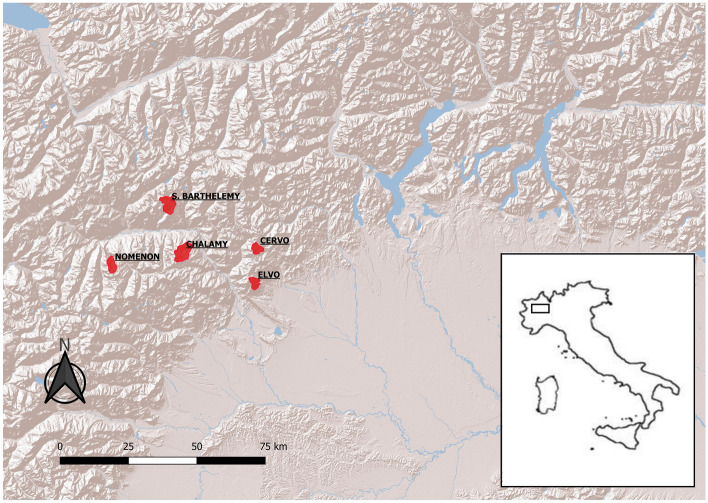
Generalist species, which exploit a wide range of food resources, are expected to be able to combine available resources as to attain their specific macronutrient ratio (percentage of caloric intake of protein, lipids and carbohydrates). Among mammalian predators, the red fox Vulpes vulpes is a widespread, opportunistic forager: its diet has been largely studied, outlining wide variation according to geographic and climatic factors. We aimed to check if, throughout the species’ European range, diets vary widely in macronutrient composition or foxes can combine complementary foods to gain the same nutrient intake. First, we assessed fox’s intake target in the framework of nutritional geometry. Secondly, we aimed to highlight the effects of unbalanced diets on fox density, which was assumed as a proxy for Darwinian fitness, as assessed in five areas of the western Italian Alps. Unexpectedly, the target macronutrient ratio of the fox (52.4% protein-, 38.7% lipid- and 8.9% carbohydrate energy) was consistent with that of hypercarnivores, such as wolves and felids, except for carbohydrate intakes in urban and rural habitats. The inverse relation between density and the deviation of observed macronutrient ratios from the intake target suggests that fox capability of surviving in a wide range of habitats may not be exempt from fitness costs and that nutrient availability should be regarded among the biotic factors affecting animal abundance and distribution.
Overview
CoChat Summary
TL;DR
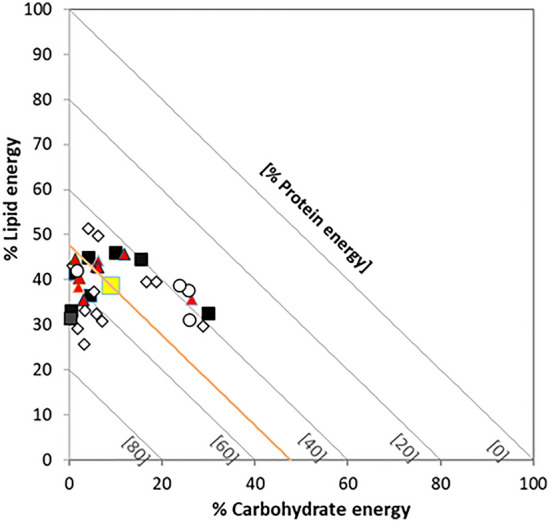
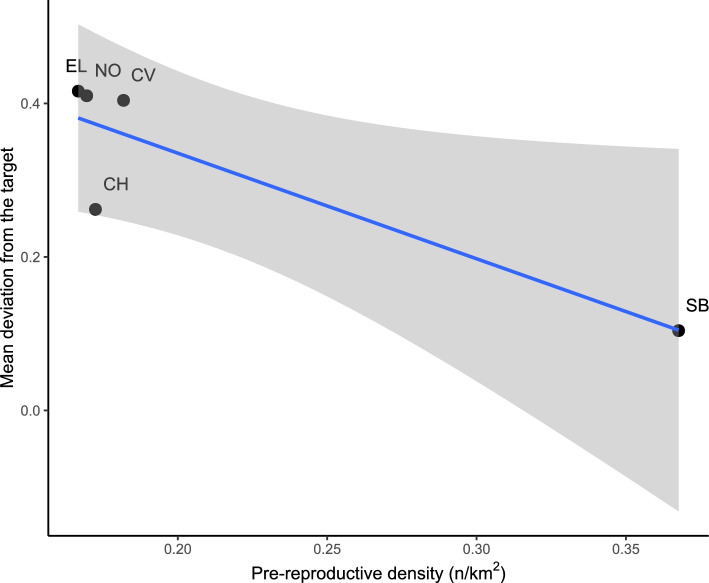
The red fox’s intake target across 30 European diet studies was 52.4% protein, 38.7% lipid, and 8.9% carbohydrate energy, similar to hypercarnivores, though urban/rural diets deviated most in carbohydrate. In five western Italian Alps populations, pre-reproductive density decreased as mean macronutrient deviation from the target increased (P = 0.037, R² = 0.78), suggesting unbalanced diets carry fitness costs.
Key findings
- Across 30 selected European diet studies, the target macronutrient ratio was 52.4 ± 1.7% protein energy, 38.7 ± 1.0% lipid energy, and 8.9 ± 1.6% carbohydrate energy; protein energy ranged 36.8–71.0%, lipid 25.7–51.4%, and carbohydrate 0.1–29.9%.
- Diets clustered into “average” (%P = 50 ± 5), “low P–high C” (%P = 40 ± 5), and “high P” (P% > 60%) groups. Carbohydrate energy increased along the natural-to-urban gradient; urban habitat averaged 43.4 ± 4.5% protein, 37.4 ± 2.3% lipid, and 19.2 ± 5.9% carbohydrate, versus forest at 55.0 ± 2.7%, 37.5 ± 2.1%, and 7.5 ± 2.2%.
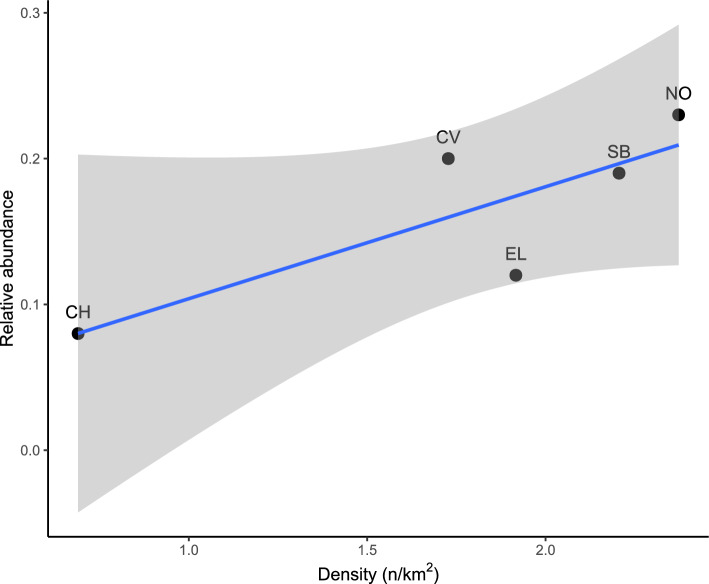
- In the five Alpine areas, 391 km of transects yielded 615 faecal samples. Densities were lowest in Chalamy (0.7 ind/km²) and highest in Nomenon (2.4 ind/km²); pre-reproductive density ranged 0.17–0.37 ind/km² (mean ± SE: 0.21 ± 0.04) and decreased with increasing deviation of macronutrient ratios from the target (P = 0.037, R² = 0.78).
- Saint-Barthélemy’s diet was closest to the intake target (mean deviation 10.4%), while the highest carbohydrate deviations were in Cervo (92.0%), Elvo (80.4%), and Chalamy (66.1%).
Methods
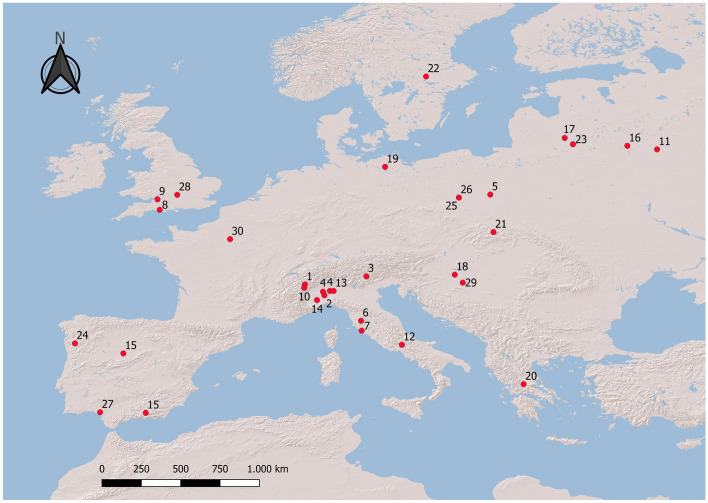
- Literature search found 73 papers and selected 30 studies meeting criteria: results as percent volume or biomass, study lasting at least one year/four seasons, and >60 analysed samples. Studies were split into Urban, Arable, Mixed, and Forest habitats; macronutrient ratios were calculated using food-item composition and Atwater coefficients, then compared with right-angled mixture triangles.
- Fieldwork in five western Italian Alps areas (12.1–31.4 km², 1000–2200 m a.s.l.) from March 2021 to March 2022; diet was assessed from faecal remains using Kruuk and Parish’s volume method, with chi-squared tests and Holm–Bonferroni correction.
- Fox numbers were estimated from faecal DNA: 30 fresh samples per area (September 2021–February 2022), 20 autosomal microsatellite loci, and CAPWIRE models (ECM/TIRM). Density was population size divided by surveyed area; pre-reproductive density was used as a rough fitness indicator, and linear regressions tested relationships with relative abundance and macronutrient deviation.
Limitations
- Stated: the reviewed dietary studies aimed to determine relative importance of food items rather than absolute food intake or macronutrient composition, so the intake target is a rough estimate; the authors also state that sample size is too low to draw sound conclusions about the density–nutrition relationship.
- Evident from the text: the intake target is based only on European studies, density is only a rough proxy for fitness, and the density–deviation relationship is observational and cannot establish causation.
- Evident from the text: the five field populations are within a ca. 30 km radius in one biogeographical region, limiting generalization to the species’ full range.
Model-written summary. Check it against the paper before relying on it.
Integrity signals
Registry
Cites
Statistics
Figures
Verification
Claims the paper makes
16 Valid · 1 Not valid · 25 Not checked · 29 Own results and interpretations
The sources with a verdict support this claim; the rest weren’t checked yet, have no full text we could read, or their verdicts aren’t rated yet.
In the paper
“As the macronutrient composition of the diet has been demonstrated to affect many fundamental fitness-related traits, including growth7,10, fecundity11 and lifespan12,13, we may expect that, for any species, suitable habitats are those which offer food resources capable of satisfying the nutritional requirements of a number of individuals in all the phases of their life cycle.”
§ Nutritional ecology of a prototypical generalist predator, the red fox (Vulpes vulpes) > Introduction
What the sources say
- Supportedcites [7] Raubenheimer D Simpson SJ Integrative models of nutrient balancing: Application to insects and vertebrates Nutr. Res. Rev. 1997 10 151 179 10.1079/NRR19970009 19094262 source
The cited paper is offered for the growth portion of the sentence (citations 7 and 10); fecundity and lifespan have separate citations. Its Perspectives section (Fig. 15; page unavailable) describes growth in locusts fed diets varying in protein and carbohydrate content, supporting the attributed point that macronutrient composition affects growth. (LLM, conf=0.90)
- Not checked — no full text of the sourcecites [10] Simpson SJ Sibly RM Lee KP Behmer ST Raubenheimer D Optimal foraging when regulating intake of multiple nutrients Anim. Behav. 2004 68 1299 1311 10.1016/j.anbehav.2004.03.003 source
- Supportedcites [11] Lee KP Lifespan and reproduction in Drosophila: New insights from nutritional geometry PNAS 2008 105 2498 2503 10.1073/pnas.0710787105 18268352 PMC2268165 source
The citation is attached to lifespan, rather than to the separately cited claims about growth and fecundity. The Abstract reports that lifespan in Drosophila was highest at a protein-to-carbohydrate ratio of 1:16, and the Discussion states that lifespan declined as protein intake increased. (LLM, conf=0.93)
- Not checked — no full text of the sourcecites [12] Solon-Biet SM Macronutrient balance, reproductive function, and lifespan. In aging mice PNAS 2015 112 3481 3486 10.1073/pnas.1422041112 25733862 PMC4371964 source
- Supportedcites [13] Le Couteur DG The impact of low-protein high-carbohydrate diets on aging and lifespan Cell. Mol. Life Sci. 2016 73 1237 1252 10.1007/s00018-015-2120-y 26718486 PMC11108352 source
The citation is attached to the lifespan portion of the sentence. The Introduction reports that diets differing in protein-to-carbohydrate ratio are associated with different lifespans, and the Rodents section reports that mice on low-protein, high-carbohydrate diets lived longest. Page numbers were not available in our copy. (LLM, conf=0.92)
boostedstates a cause- Asserted: passes — The authors put it forward as true.
- Checkable: passes — It can be checked against evidence.
- Load-bearing: passes — The paper’s conclusions depend on it.
- Based: passes — The paper gives a reason why it holds.
- Supported
The cited sources support only part of this claim — read each source’s verdict below.
In the paper
“Notwithstanding, in the last two decades, a growing body of evidence has outlined that foraging is not exclusively driven by energy acquisition and many species tend to regulate the macronutrient composition (percentage of caloric intake of protein, lipids and carbohydrates, P:L:C) of their diet to a target macronutrient ratio (“intake target”)7–9.”
§ Nutritional ecology of a prototypical generalist predator, the red fox (Vulpes vulpes) > Introduction
What the sources say
- Partly supportedcites [7] Raubenheimer D Simpson SJ Integrative models of nutrient balancing: Application to insects and vertebrates Nutr. Res. Rev. 1997 10 151 179 10.1079/NRR19970009 19094262 sourceExperimental — accuracy not yet measured
The ‘Identifying intake requirements’ section describes animals regulating nutrient intake toward a target and gives protein–carbohydrate examples in locusts, rats and chickens. The passages support the general idea of macronutrient intake targets, but do not establish regulation of a three-way protein–lipid–carbohydrate ratio expressed as percentages of caloric intake. (LLM, conf=0.84)
- Not matchedcites [8] Raubenheimer D Simpson SJ Unravelling the tangle of nutritional complexity Wissenschaftskolleg zu Berlin, Jahrbuch 2003 2002/2003 275 294
Its entry has no title and year that we can search by.
- Not checked — no full text of the sourcecites [9] Kohl KD Coogan SC Raubenheimer D Do wild carnivores forage for prey or for nutrients? Evidence for nutrient-specific foraging in vertebrate predators BioEssays 2015 37 701 709 10.1002/bies.201400171 25767065 source
plainstates an association- Asserted: passes — The authors put it forward as true.
- Checkable: passes — It can be checked against evidence.
- Load-bearing: passes — The paper’s conclusions depend on it.
- Based: passes — The paper gives a reason why it holds.
- Partly supported
The cited sources that could be checked couldn’t confirm or dispute this claim.
In the paper
“In contrast, generalists must be capable of shifting between resources before the opportunity occurs, which implies preexisting behavioural and physiological adaptations15, and need to combine several nutritionally complementary foods to achieve their intake target.”
§ Nutritional ecology of a prototypical generalist predator, the red fox (Vulpes vulpes) > Introduction
What the sources say
- Could not verifycites [15] Agosta SJ Janz N Brooks DR How specialists can be generalists: Resolving the ‘parasite paradox’ and implications for emerging infectious disease Zoologia 2010 27 151 162 10.1590/S1984-46702010000200001 sourceExperimental — accuracy not yet measured
The 'Achieving the fit' section says a potential host may possess some but not all required resources, but does not say generalists must combine foods to meet a nutritional intake target. The 'RESOLUTION Ecological fitting' section discusses generalists feeding on different hosts without addressing nutritional complementarity (searched: nutritionally complementary foods, intake target, and combining resources). (LLM, conf=0.72)
plainstates a cause- Asserted: passes — The authors put it forward as true.
- Checkable: passes — It can be checked against evidence.
- Load-bearing: passes — The paper’s conclusions depend on it.
- Based: passes — The paper gives a reason why it holds.
- Could not verify
The cited sources support only part of this claim — read each source’s verdict below.
In the paper
“Notwithstanding, the analysis of available studies providing a volumetric or biomass estimate of the importance of the food resources used by foxes throughout its European range revealed that, on average, the protein requirements of the fox are typical of strict carnivores such as wolves (54%)17 or domestic and feral cats (52%)34,35.”
§ Nutritional ecology of a prototypical generalist predator, the red fox (Vulpes vulpes) > Discussion
What the sources say
- Partly supportedcites [17] Bosch G Hagen-Plantinga EA Hendriks WH Dietary nutrient profiles of wild wolves: Insights for optimal dog nutrition? Br. J. Nutr. 2015 113 S40 S54 10.1017/S0007114514002311 25415597 sourceExperimental — accuracy not yet measured
In “Dietary and nutrient profiles consumed by wolves” (page unavailable), the paper reports that protein supplies 54% of energy in its calculated wolf dietary profile, supporting the wolf comparison. It describes a dietary profile, not a physiological protein requirement, and does not establish the red fox’s protein requirement. (LLM, conf=0.86)
- Partly supportedcites [34] Plantinga EA Bosch G Hendriks WH Estimation of the dietary nutrient profile of free-roaming feral cats: Possible implications for nutrition of domestic cats Br. J. Nutr. 2011 106 S35 S48 10.1017/S0007114511002285 22005434 sourceExperimental — accuracy not yet measured
The Discussion reports that protein supplies 52% of feral cats’ daily energy intake and cites a study finding the same percentage in adult domestic cats’ voluntary intake. These are measures of intake, not protein requirements. This paper does not establish the red fox’s protein requirements. (LLM, conf=0.88)
- Not checked — no full text of the sourcecites [35] Hewson-Hughes AK Hewson-Hughes VL Miller AT Hall SR Simpson SJ Raubenheimer D Geometric analysis of macronutrient selection in the adult domestic cat, Felis catus J. Exp. Biol. 2011 214 1039 1051 10.1242/jeb.049429 21346132 source
plain- Asserted: passes — The authors put it forward as true.
- Checkable: passes — It can be checked against evidence.
- Load-bearing: passes — The paper’s conclusions depend on it.
- Based: passes — The paper gives a reason why it holds.
- Partly supported
The cited sources support only part of this claim — read each source’s verdict below.
In the paper
“The identification of fox faeces was based on their morphology and size (diameter > 10 mm), which allow to distinguish them from those of other mesocarnivores, such as martens Martes spp.56.”
§ Nutritional ecology of a prototypical generalist predator, the red fox (Vulpes vulpes) > Materials and methods > Sampling methods
What the sources say
- Partly supportedcites [56] Lanszki J Zalewski A Horváth G Comparison of red fox Vulpes vulpes and pine marten Martes martes food habits in a deciduous forest in Hungary Wildl. Biol. 2007 13 258 271 10.2981/0909-6396(2007)13[258:CORFVV]2.0.CO;2 sourceExperimental — accuracy not yet measured
The ‘Scat collection and diet analysis’ section (page not provided) says fox and pine marten scats were distinguished by size, shape and smell. It does not give a diameter threshold of >10 mm, so the specific size criterion attributed to this paper is unsupported. (LLM, conf=0.88)
plainstates a cause- Asserted: passes — The authors put it forward as true.
- Checkable: passes — It can be checked against evidence.
- Load-bearing: passes — The paper’s conclusions depend on it.
- Based: passes — The paper gives a reason why it holds.
- Partly supported
16 more claims · 1 with their cited sources checked
Create a free account to see all 71 claims and every source verdict.
- Probably not a substantial claim. 22
- It may state two separate claims as one. 33
- The quote only partly states this claim. 1
Self-check
Percentages, sums and reported differences re-computed from the paper’s own numbers.
Each contradiction between two passages listed here was confirmed by an independent check.
Rated minor: it would not touch a result — a value no result rests on, a p-value that stays on the same side of the significance level, or a conflict that is clerical, resolved elsewhere in the paper, or outside its own findings.
In the paper
“yielding 615 faecal samples (mean ± SE: 126.7 ± 11.6 samples per area; min–max: 114–144).”
§ Nutritional ecology of a prototypical generalist predator, the red fox (Vulpes vulpes) > Results > Fox diet in Alpine habitats
Reported 126.7 · recomputed 123
Rated minor: it would not touch a result — a value no result rests on, a p-value that stays on the same side of the significance level, or a conflict that is clerical, resolved elsewhere in the paper, or outside its own findings.
In the paper
§ Nutritional ecology of a prototypical generalist predator, the red fox (Vulpes vulpes) > Results > Estimation of the intake target
“52.4 ± 1.7% protein energy, 38.7 ± 1.0% lipid energy and 8.9 ± 1.6% carbohydrate energy”
§ Nutritional ecology of a prototypical generalist predator, the red fox (Vulpes vulpes) > Results > Estimation of the intake target
“| SE | | 1.84 | 1.13 | 1.71 | | | |”
Rated minor: it would not touch a result — a value no result rests on, a p-value that stays on the same side of the significance level, or a conflict that is clerical, resolved elsewhere in the paper, or outside its own findings.
In the paper
§ Nutritional ecology of a prototypical generalist predator, the red fox (Vulpes vulpes) > Materials and methods > Genetic analysis
“20 autosomal microsatellite loci”
§ Nutritional ecology of a prototypical generalist predator, the red fox (Vulpes vulpes) > Materials and methods > Genetic analysis
“(RF 21, 59, 125, 127, 131, 143, 155, 156, 162, 165, 199, 20065; VVM 219, 85, 838, 529, 189, 844, 82866)”
Citations
Cites
Analyzing Tables of Statistical Tests
Rice, W. R. (1989) · Evolution · doi:10.2307/2409177 · Cited by 14,571
ANALYZING TABLES OF STATISTICAL TESTS
Rice, W. R. (1989) · Evolution · doi:10.1111/j.1558-5646.1989.tb04220.x · Cited by 14,547
On Optimal Use of a Patchy Environment
MacArthur, R. H., & Pianka, E. R. (1966) · The American Naturalist · doi:10.1086/282454 · Cited by 4,593
The Natural Regulation of Animal Numbers
(1955) · AIBS Bulletin · doi:10.1093/aibsbulletin/5.1.12-b · Cited by 1,683
Reliable genotyping of samples with very low DNA quantities using PCR
Taberlet, P. (1996) · Nucleic Acids Research · doi:10.1093/nar/24.16.3189 · Cited by 1,491 · cited 1×
“To lower the probability of retaining false homozygotes or false allele errors, a multitube-approach of 4 independent replicates was used 67 .”
MethodStephens, P. A., Sutherland, W. J., & Freckleton, R. P. (1999) · Oikos · doi:10.2307/3547011 · Cited by 1,379 · cited 1×
“To obtain, on a wet weight basis, the mean percentage of protein, lipids, and carbohydrates of the food items used by the red fox, we checked the available literature on the nutritional composition of food 17,31,32 (Table 5).”
MethodLifespan and reproduction in Drosophila : New insights from nutritional geometry
Lee, K. P., Simpson, S. J., Clissold, F. J., Brooks, R., Ballard, J. W. O., Taylor, P. W., Soran, N., & Raubenheimer, D. (2008) · Proceedings of the National Academy of Sciences · doi:10.1073/pnas.0710787105 · Cited by 1,032
Solon-Biet, S. M., McMahon, A. C., Ballard, J. W. O., Ruohonen, K., Wu, L. E., Cogger, V. C., Warren, A., Huang, X., Pichaud, N., Melvin, R. G., et al. (2014) · Cell Metabolism · doi:10.1016/j.cmet.2014.02.009 · Cited by 904 · cited 1×
“Although density is only a rough proxy for fitness, our results are consistent with laboratory experiments, which demonstrated that generalists pay the cost of relying on unbalanced diets, suffering either high mortality rates and disease risk 52,53 or low reproductive outputs 12 .”
ResultOptimal foraging when regulating intake of multiple nutrients
Simpson, S. J., Sibly, R. M., Lee, K. P., Behmer, S. T., & Raubenheimer, D. (2004) · Animal Behaviour · doi:10.1016/j.anbehav.2004.03.003 · Cited by 532
Integrative models of nutrient balancing: application to insects and vertebrates
Raubenheimer, D., & Simpson, S. J. (1997) · Nutrition Research Reviews · doi:10.1079/nrr19970009 · Cited by 454
REYNOLDS, J. C., & AEBISCHER, N. J. (1991) · Mammal Review · doi:10.1111/j.1365-2907.1991.tb00113.x · Cited by 426
Contesse, P., Hegglin, D., Gloor, S., Bontadina, F., & Deplazes, P. (2004) · Mammalian Biology · doi:10.1078/1616-5047-00123 · Cited by 337
Agosta, S. J., Janz, N., & Brooks, D. R. (2010) · Zoologia (Curitiba) · doi:10.1590/s1984-46702010000200001 · Cited by 316
Feeding Specialization of the European Badger Meles meles in Scotland
Kruuk, H., & Parish, T. (1981) · The Journal of Animal Ecology · doi:10.2307/4136 · Cited by 313 · cited 1×
“The percent mean volume (%Vm = total estimated volume of each food item as ingested/total number of faecal samples = %F × %V/100) reflects the proportional contribution of each food item to the overall diet 63 .”
BackgroundReliable microsatellite genotyping of the Eurasian badger (Meles meles) using faecal DNA
Frantz, A. C., Pope, L. C., Carpenter, P. J., Roper, T. J., Wilson, G. J., Delahay, R. J., & Burke, T. (2003) · Molecular Ecology · doi:10.1046/j.1365-294x.2003.01848.x · Cited by 266
A hierarchical pattern of limiting factors helps explain variation in home range size
Mcloughlin, P. D., & Ferguson, S. H. (2000) · Écoscience · doi:10.1080/11956860.2000.11682580 · Cited by 248
Macronutrient balance, reproductive function, and lifespan in aging mice
Solon-Biet, S. M., Walters, K. A., Simanainen, U. K., McMahon, A. C., Ruohonen, K., Ballard, J. W. O., Raubenheimer, D., Handelsman, D. J., Le Couteur, D. G., & Simpson, S. J. (2015) · Proceedings of the National Academy of Sciences · doi:10.1073/pnas.1422041112 · Cited by 243 · cited 1×
“Although density is only a rough proxy for fitness, our results are consistent with laboratory experiments, which demonstrated that generalists pay the cost of relying on unbalanced diets, suffering either high mortality rates and disease risk 52,53 or low reproductive outputs 12 .”
ResultNiche relations among three sympatric Mediterranean carnivores
Fedriani, J. M., Palomares, F., & Delibes, M. (1999) · Oecologia · doi:10.1007/s004420050915 · Cited by 236
Toward a quantitative nutritional ecology: the right-angled mixture triangle
Raubenheimer, D. (2011) · Ecological Monographs · doi:10.1890/10-1707.1 · Cited by 233
Relationship between Population Size and Fitness
REED, D. H. (2005) · Conservation Biology · doi:10.1111/j.1523-1739.2005.00444.x · Cited by 233
The Multidimensional Nutritional Niche
Machovsky-Capuska, G. E., Senior, A. M., Simpson, S. J., & Raubenheimer, D. (2016) · Trends in Ecology & Evolution · doi:10.1016/j.tree.2016.02.009 · Cited by 219 · cited 2×
“These results underpin the need for considering macronutrient ratios to draw an effective picture of generalist predators’ diets, because food diversity can conceal their actual nutritional requirements 21 .”
BackgroundThe impact of low-protein high-carbohydrate diets on aging and lifespan
Le Couteur, D. G., Solon-Biet, S., Cogger, V. C., Mitchell, S. J., Senior, A., de Cabo, R., Raubenheimer, D., & Simpson, S. J. (2016) · Cellular and Molecular Life Sciences · doi:10.1007/s00018-015-2120-y · Cited by 209
Plantinga, E. A., Bosch, G., & Hendriks, W. H. (2011) · British Journal of Nutrition · doi:10.1017/s0007114511002285 · Cited by 166
Carnivores of Australia: past, present and future
(2015) · Choice Reviews Online · doi:10.5860/choice.190838 · Cited by 162
Geometric analysis of macronutrient selection in the adult domestic cat, Felis catus
Hewson-Hughes, A. K., Hewson-Hughes, V. L., Miller, A. T., Hall, S. R., Simpson, S. J., & Raubenheimer, D. (2011) · Journal of Experimental Biology · doi:10.1242/jeb.049429 · Cited by 161 · cited 1×
“34,35 .”
Feeding Ecology of Red Foxes (Vulpes vulpes) in the City of Oxford, England
Doncaster, C. P., Dickman, C. R., & Macdonald, D. W. (1990) · Journal of Mammalogy · doi:10.2307/1382166 · Cited by 135
Kohl, K. D., Coogan, S. C. P., & Raubenheimer, D. (2015) · BioEssays · doi:10.1002/bies.201400171 · Cited by 125
Soe, E., Davison, J., Süld, K., Valdmann, H., Laurimaa, L., & Saarma, U. (2017) · Mammal Review · doi:10.1111/mam.12092 · Cited by 121
Serafini, P., & Lovari, S. (1993) · Acta Theriologica · doi:10.4098/at.arch.93-19 · Cited by 112
Diet of foxes and martens in central Poland
Goszczyński, J. (1986) · Acta Theriologica · doi:10.4098/at.arch.86-44 · Cited by 111
DNA-Based Individual and Sex Identification from Wolverine (Gulo Gulo) Faeces and Urine
Hedmark, E., Flagstad, Ø., Segerström, P., Persson, J., Landa, A. M., & Ellegren, H. (2004) · Conservation Genetics · doi:10.1023/b:coge.0000031224.88778.f5 · Cited by 104 · cited 1×
“The test-tubes, containing 95% ethanol, were frozen until DNA extraction 61 .”
MethodDietary nutrient profiles of wild wolves: insights for optimal dog nutrition?
Bosch, G., Hagen-Plantinga, E. A., & Hendriks, W. H. (2015) · British Journal of Nutrition · doi:10.1017/s0007114514002311 · Cited by 98 · cited 2×
“17 or domestic and feral cats (52”
MethodWinter severity limits red fox populations in Eurasia
Bartoń, K. A., & Zalewski, A. (2007) · Global Ecology and Biogeography · doi:10.1111/j.1466-8238.2007.00299.x · Cited by 95 · cited 1×
“Mean values were consistent with those reported by Bartoń and Zalewski by reviewing 69 studies throughout Europe and Asia 51 .”
ResultSidorovich, V. E., Sidorovich, A. A., & Izotova, I. V. (2006) · Mammalian Biology · doi:10.1016/j.mambio.2005.12.001 · Cited by 91
Surveying otter Lutra lutra populations: A discussion of problems with spraints
Kruuk, H., & Conroy, J. W. H. (1987) · Biological Conservation · doi:10.1016/0006-3207(87)90101-7 · Cited by 86 · cited 1×
“Although the use of marking intensity as an index of relative abundance or for assessing habitat preferences has been long challenged 47,48 , the recorded relationship between density and the index of relative abundance suggests that marking intensity can be used as an effective index to compare…”
BackgroundPadial, J. M., Avila, E., & Sanchez, J. M. (2002) · Mammalian Biology · doi:10.1078/1616-5047-00021 · Cited by 81
Capwire: a R package for estimating population census size from non‐invasive genetic sampling
Pennell, M. W., Stansbury, C. R., Waits, L. P., & Miller, C. R. (2013) · Molecular Ecology Resources · doi:10.1111/1755-0998.12019 · Cited by 78 · cited 1×
“To assess the size of the five populations we used CAPWIRE (“CApture WIth REplacement”) estimators 70 , applying the two available models: the Equal Capture Model (ECM), which assumes equal-capture probabilities among individuals; and the Two-Innate Rates Model (TIRM), which assumes that the…”
MethodPatalano, M., & Lovari, S. (1993) · Revue d'Écologie (La Terre et La Vie) · doi:10.3406/revec.1993.2107 · Cited by 78
Loxdale, H. D., & Harvey, J. A. (2016) · Biological Journal of the Linnean Society · doi:10.1111/bij.12816 · Cited by 66
Differential use of food and habitat by sympatric carnivores in the eastern Italian Alps
Prigioni, C., Balestrieri, A., Remonti, L., & Cavada, L. (2008) · Italian Journal of Zoology · doi:10.1080/11250000701885521 · Cited by 66
Self-citationFaeces count as an index of fox abundance
Cavallini, P. (1994) · Acta Theriologica · doi:10.4098/at.arch.94-49 · Cited by 66 · cited 1×
“Moreover, fox relative abundance (RA) was expressed as number of scats/100 m of transect 62 .”
BackgroundESTIMATION OF EUROPEAN OTTER (LUTRA LUTRA) POPULATION SIZE BY FECAL DNA TYPING IN SOUTHERN ITALY
Prigioni, C., Remonti, L., Balestrieri, A., Sgrosso, S., Priore, G., Mucci, N., & Randi, E. (2006) · Journal of Mammalogy · doi:10.1644/05-mamm-a-294r1.1 · Cited by 66 · cited 2×
“The relative volume (%V) of each food item “as ingested” was assessed following Kruuk and Parish’s method 60 , which has been widely used for assessing carnivore diets and provides volume estimates as accurate as those obtained by the analysis of stomach contents 40 .”
MethodInfluentialSelf-citationLanszki, J., Zalewski, A., & Horváth, G. (2007) · Wildlife Biology · doi:10.2981/0909-6396(2007)13[258:corfvv]2.0.co;2 · Cited by 64 · cited 1×
“56 .”
Baltrūnaitė, L. (2002) · Acta Zoologica Lituanica · doi:10.1080/13921657.2002.10512525 · Cited by 59
Variation in red fox Vulpes vulpes diet in five continents
Castañeda, I., Doherty, T. S., Fleming, P. A., Stobo‐Wilson, A. M., Woinarski, J. C. Z., & Newsome, T. M. (2022) · Mammal Review · doi:10.1111/mam.12292 · Cited by 59 · cited 1×
“This result implies that although foxes can adapt to local and seasonal variations in food availability and then survive in a wide variety of habitats 24 , this capability may not be exempt from fitness costs.”
BackgroundAssessing carnivore diet by faecal samples and stomach contents: a case study with Alpine red foxes
Balestrieri, A., Remonti, L., & Prigioni, C. (2011) · Open Life Sciences · doi:10.2478/s11535-010-0106-1 · Cited by 56 · cited 2×
“The relative volume (%V) of each food item “as ingested” was assessed following Kruuk and Parish’s method 60 , which has been widely used for assessing carnivore diets and provides volume estimates as accurate as those obtained by the analysis of stomach contents 40 .”
MethodSelf-citationChanges in red fox Vulpes vulpes diet due to colonisation by lynx Lynx lynx
Helldin, J. O., & Danielsson, A. V. (2007) · Wildlife Biology · doi:10.2981/0909-6396(2007)13[475:cirfvv]2.0.co;2 · Cited by 55
Carrion dependence and food habits of the red fox in an Alpine area
Cagnacci, F., Lovari, S., & Meriggi, A. (2003) · Italian Journal of Zoology · doi:10.1080/11250000309356493 · Cited by 53
Diet of the introduced red fox Vulpes vulpes in Australia: analysis of temporal and spatial patterns
Fleming, P. A., Crawford, H. M., Stobo‐Wilson, A. M., Dawson, S. J., Dickman, C. R., Dundas, S. J., Gentle, M. N., Newsome, T. M., O’Connor, J., Palmer, R., et al. (2021) · Mammal Review · doi:10.1111/mam.12251 · Cited by 53
Diet composition of the golden jackal and the sympatric red fox in an agricultural area (Hungary)
Lanszki, J., Kurys, A., Szabó, L., Nagyapáti, N., Porter, L. B., & Heltai, M. (2016) · Folia Zoologica · doi:10.25225/fozo.v65.i4.a3.2016 · Cited by 53
Drygala, F., & Zoller, H. (2014) · Bollettino del CILEA (CILEA) · doi:10.4404/hystrix-24.2-8867 · Cited by 49
Balestrieri, A., Remonti, L., Saino, N., & Raubenheimer, D. (2019) · Mammal Review · doi:10.1111/mam.12164 · Cited by 48
Self-citationTremblay, J.-P., Crête, M., & Huot, J. (1998) · Écoscience · doi:10.1080/11956860.1998.11682456 · Cited by 47 · cited 1×
“While shortage in animal prey, particularly in summer, has been reported to affect survival and/or fecundity in another canid, the coyote ( Canis latrans ) 37 , no information is available, to the best of our knowledge, about the detrimental effects of carbohydrate overeating.”
BackgroundLanszki, J., Hidas, A., Szentes, K., Révay, T., Lehoczky, I., & Weiss, S. (2008) · Mammalian Biology · doi:10.1016/j.mambio.2007.08.005 · Cited by 46 · cited 1×
“…abundance or for assessing habitat preferences has been long challenged 47,48 , the recorded relationship between density and the index of relative abundance suggests that marking intensity can be used as an effective index to compare fox abundances (see also Lanszki et al. about Lutra lutra 49 ).”
BackgroundWarbrick‐Smith, J., Raubenheimer, D., Simpson, S. J., & Behmer, S. T. (2009) · Entomologia Experimentalis et Applicata · doi:10.1111/j.1570-7458.2009.00870.x · Cited by 45 · cited 1×
“Although density is only a rough proxy for fitness, our results are consistent with laboratory experiments, which demonstrated that generalists pay the cost of relying on unbalanced diets, suffering either high mortality rates and disease risk 52,53 or low reproductive outputs 12 .”
ResultCarvalho, J. C., & Gomes, P. (2001) · Galemys Spanish Journal of Mammalogy · doi:10.7325/galemys.2001.2.a3 · Cited by 45
Remonti, L., Balestrieri, A., Ruiz‐González, A., Gómez‐Moliner, B. J., Capelli, E., & Prigioni, C. (2012) · Population Ecology · doi:10.1007/s10144-012-0326-5 · Cited by 41
Self-citationFunctional implications of omnivory for dietary nutrient balance
Remonti, L., Balestrieri, A., Raubenheimer, D., & Saino, N. (2016) · Oikos · doi:10.1111/oik.02801 · Cited by 40
Self-citationRuiz-González, A., Madeira, M. J., Randi, E., Urra, F., & Gómez-Moliner, B. J. (2013) · European Journal of Wildlife Research · doi:10.1007/s10344-012-0683-6 · Cited by 37 · cited 1×
“Genotyping was carried out using a multiplex PCR of 20 autosomal microsatellite loci (RF 21, 59, 125, 127, 131, 143, 155, 156, 162, 165, 199, 200 65 ; VVM 219, 85, 838, 529, 189, 844, 828 66 ), explicitly developed for the red fox.”
Remonti, L., Balestrieri, A., & Prigioni, C. (2011) · Ecological Research · doi:10.1007/s11284-011-0804-9 · Cited by 36
Self-citationMacronutritional consequences of food generalism in an invasive mammal, the wild boar
Senior, A. M., Grueber, C. E., Machovsky-Capuska, G., Simpson, S. J., & Raubenheimer, D. (2016) · Mammalian Biology · doi:10.1016/j.mambio.2016.07.001 · Cited by 36
Noninvasive Sampling Reveals Short-Term Genetic Rescue in an Insular Red Fox Population
Quinn, C. B., Alden, P. B., & Sacks, B. N. (2019) · Journal of Heredity · doi:10.1093/jhered/esz024 · Cited by 34
Evaluating river otter demography using noninvasive genetic methods
Brzeski, K. E., Gunther, M. S., & Black, J. M. (2013) · The Journal of Wildlife Management · doi:10.1002/jwmg.610 · Cited by 33 · cited 1×
“To construct consensus genotypes heterozygotes were accepted only when the two alleles were recorded in ≥ 2 replicates, while a single allele had to be recorded in ≥ 3 replicates to confirm homozygosity 68,69 .”
BackgroundJankowiak, Ł., Antczak, M., & Tryjanowski, P. (2008) · Cited by 33
Feeding behaviour of red fox and domestic cat populations in suburban areas in the south of Paris
Castañeda, I., Zarzoso‐Lacoste, D., & Bonnaud, E. (2020) · Urban Ecosystems · doi:10.1007/s11252-020-00948-w · Cited by 32
Food habits of the red fox in Greece
Papageorgiou, N. K., Sepougaris, A., Christopoulou, O. G., Vlachos, C. G., & Petamidis, J. S. (1988) · Acta Theriologica · doi:10.4098/at.arch.88-25 · Cited by 30
Korpimäki, E., Hongisto, K., Masoero, G., et al. (2020) · Journal of Avian Biology · doi:10.1111/jav.02508 · Cited by 24
Sidorovich, V. E., Sidorovich, A. A., & Krasko, D. A. (2009) · Mammalian Biology · doi:10.1016/j.mambio.2009.10.003 · Cited by 23
Estimating red deer (Cervus elaphus) population size based on non-invasive genetic sampling
Ebert, C., Sandrini, J., Welter, B., Thiele, B., & Hohmann, U. (2021) · European Journal of Wildlife Research · doi:10.1007/s10344-021-01456-8 · Cited by 22 · cited 1×
“Following Ebert et al. 57 , sample size for genetic analysis was calculated as 2.5–3 times the “assumed” number of foxes in each population and based on expected genotyping success (50%, average of previous studies 58–60 ).”
MethodInfluentialGazzola, A., & Balestrieri, A. (2020) · Mammal Review · doi:10.1111/mam.12177 · Cited by 21
Self-citationRode, K. D., Robbins, C. T., Stricker, C. A., Taras, B. D., & Tollefson, T. N. (2021) · Scientific Reports · doi:10.1038/s41598-021-94917-8 · Cited by 21
Lindsø, L. K., Dupont, P., Rød-Eriksen, L., Andersskog, I. P. Ø., Ulvund, K. R., Flagstad, Ø., Bischof, R., & Eide, N. E. (2022) · Oecologia · doi:10.1007/s00442-021-05087-3 · Cited by 19 · cited 1×
“%) was consistent with previous studies based on faecal DNA (e.g., 48% 44 , 58% 45 ).”
ResultLarivière, S., Crête, M., Huot, J., Patenaude, R., Price, C., & Thomas, D. W. (2001) · Canadian Journal of Zoology · doi:10.1139/z00-226 · Cited by 15 · cited 1×
“Nonetheless, there is no evidence that a high consumption of fruit during summer could impair the reproduction of red foxes during the following spring 39 , suggesting that carbohydrates may be well tolerated by foxes, or even partially necessary for a balanced diet.”
BackgroundIUCN (2016) · IUCN Red List of Threatened Species · doi:10.2305/iucn.uk.2016-1.rlts.t23062a46190249.en · Cited by 14
Jankowiak, Ł., & Tryjanowski, P. (2013) · TURKISH JOURNAL OF ZOOLOGY · doi:10.3906/zoo-1206-26 · Cited by 14
Food composition of red fox in the Tatra National Park
Borkowski, J. (1994) · ACTA THERIOLOGICA · doi:10.4098/at.arch.94-24 · Cited by 12
Spatial ecology of the stone marten in an Alpine area: combining camera-trapping and genetic surveys
Balestrieri, A., Mosini, A., Fonda, F., Piana, M., Tirozzi, P., Ruiz-González, A., Capelli, E., Vergara, M., Chueca, L. J., Chiatante, G., et al. (2021) · Mammal Research · doi:10.1007/s13364-021-00564-9 · Cited by 11 · cited 1×
“Following Ebert et al. 57 , sample size for genetic analysis was calculated as 2.5–3 times the “assumed” number of foxes in each population and based on expected genotyping success (50%, average of previous studies 58–60 ).”
MethodInfluentialSelf-citation(2014) · doi:10.1071/9780643103177.ch05 · Cited by 4
(2019) · Journal of Mountain Ecology · Cited by 4
Yu, J.-N., Chung, C.-U., Oh, K. H., Lee, B.-K., & Lim, C. E. (2015) · Genetics and Molecular Research · doi:10.4238/2015.april.27.12 · Cited by 3
Development of novel polymorphic microsatellite markers for the silver fox (Vulpes vulpes)
Yan, S. Q., Bai, C. Y., Qi, S. M., Li, Y. M., Li, W. J., & Sun, J. H. (2015) · Genetics and Molecular Research · doi:10.4238/2015.june.1.6 · Cited by 2
Research works printed but not linked: 15
- Newton I The role of food in limiting bird numbers Ardea 1980 68 11 30
- Recher HF Morrison ML Ralph CJ Verner J Jehl JR Specialist or generalist: Avian response to spatial and temporal changes in resources Avian Foraging: Theory, Methodology and Applications. Studies in Avian Biology 1990 Allen Press 333 336
- Raubenheimer D Simpson SJ Unravelling the tangle of nutritional complexity Wissenschaftskolleg zu Berlin, Jahrbuch 2003 2002/2003 275 294
- Sherry TW Morrison ML Ralph CJ Verner J Jehl JR When are birds dietarily specialized? Distinguishing ecological from evolutionary approaches Avian Foraging: Theory, Methodology and Applications. Studies in Avian Biology 1990 Allen Press 337 352
- Balestrieri A Remonti L Prigioni C Local feeding specialisation of the red fox (Vulpes vulpes) in response to eastern cottontail (Sylvilagus floridanus) introduction (NW Italy) Hystrix 2005 16 113 126
- Soulsbury CD Baker PJ Iossa G Harris S Gehrt SD Riley SPD Cypher BL Red foxes (Vulpesvulpes) Urban Carnivores 2010 The John Hopkins University Press 63 75
- Schünemann C Mühlum A Junker S Wilfarth H Meyer H Praecaecal and postileal digestibility of various starches, pH-values and concentrations of organic acids in intestinal chyme Adv. Anim. Physiol. Anim. Nutr. 1989 19 44 58
- Boitani L Vinditti RM La volpe rossa 1988 Edagricole
- Conroy JWH French DD The use of spraints to monitor populations of otters (Lutra lutra L.) Symp. Zool. Soc. Lond. 1987 58 247 262
- Cavallini P Santini S Reproduction of the red fox Vulpes vulpes in central Italy Ann. Zool. Fenn. 1996 33 267 274
- Simonetta AM Dessì-Fulgheri F Principi e tecniche di gestione faunistico-venatoria 1998 Greentime
- Saunders G White PCL Harris S Rayner JMV Urban foxes (Vulpes vulpes): Food acquisition, time and energy budgeting of a generalized predator Symp. Zool. Soc. Lond. 1993 65 215 234
- Prigioni C Tacchi F Trophic niche of the fox Vulpes vulpes in the Ticino Valley (Northern Italy) Hystrix, It. J. Mamm. 1991 3 65 75
- Rosa P Brangi A Gola L Food of the fox (Vulpes vulpes) in a mountain area of Northern Apennines Hystrix, It. J. Mamm. 1991 3 91 94
- Baltrūnaitė L Feeding habits, food niche overlap of red fox (Vulpes vulpes) and pine marten (Martes martes) in hilly moraine highland, Lithuania Ecologija 2001 2 27 31
Cited by
Functional significance and welfare implications of chewing in dogs (Canis familiaris)
Quinn, R., Masters, S., Starling, M., White, P., Mills, K., Raubenheimer, D., & McGreevy, P. D. (2025) · Frontiers in Veterinary Science · doi:10.3389/fvets.2025.1499933 · Cited by 11
Martin‐Garcia, S., Rodríguez‐Recio, M., Hernandez‐Hernandez, J., & Virgós, E. (2026) · Journal of Zoology · doi:10.1111/jzo.70161
Wolves increase germination speed and success of blueberries
Gross, A. D., Gable, T. D., Homkes, A. T., Winnett‐Murray, K., Woodside, R., Bump, J. K., & Murray, K. G. (2026) · Biology Letters · doi:10.1098/rsbl.2026.0279
Macronutrient regulation by mesocarnivores in a rodent-poor area
Balestrieri, A., Gazzola, A., Mendini, S., Turri, L., & Tremolada, P. (2026) · European Journal of Wildlife Research · doi:10.1007/s10344-026-02126-3
“…for many coexisting predators (Sidorovich et al. 2008), including mesocarnivores ( Martes spp., Gazzola and Balestrieri 2020; Vulpes vulpes , Balestrieri et al. 2024), which, in turn, usually show intake targets high in protein (Remonti et al. 2016) and have adapted to use protein as a…”
InfluentialSelf-citationWang, S., Xia, R., Liu, S., Li, F., Wang, J., Zhang, G., Liu, R., Zhao, Y., Huang, Y., Ye, Y., et al. (2026) · Biological Journal of the Linnean Society · doi:10.1093/biolinnean/blag060
Metadata
- Authors
- Balestrieri, A., Gigliotti, S., Caniglia, R., Velli, E., Zambuto, F., De Giorgi, E., Mucci, N., Tremolada, P., & Gazzola, A.
- Affiliations
- University of Milan (IT)
- University of Padua (IT)
- Istituto Superiore per la Protezione e la Ricerca Ambientale (IT)
- IRCCS Ospedale Galeazzi - Sant'Ambrogio (IT)
- University of Pavia (IT)
- Corresponding author
- Balestrieri, A.
- Venue
- Scientific Reports
- Published
- 2024-04-04
- Volume
- 14
- Issue
- 1
- Pages
- 7918-7918
- ISSN
- 2045-2322 (ISSN-L)
- PMC
- PMC10995161
- OpenAlex
- W4393947740
- Cited by
- 8
- References
- 74
- Citations by year
- 2026: 5 · 2025: 3
- FWCI
- 2.19
- Type
- journal article
- Language
- en
- Open access
- gold
- doi.org
- Licence
- cc-by
- creativecommons.org/licenses/by/4.0 (tdm)
- creativecommons.org/licenses/by/4.0 (vor)
- Locations
- Scientific Reports (publishedVersion, cc-by)
- Research Square (acceptedVersion, cc-by)
- PubMed Central (publishedVersion, cc-by)
- PubMed (publishedVersion)
- Archivio Istituzionale della Ricerca (Universita Degli Studi Di Milano) (submittedVersion, other-oa)
- DOAJ (DOAJ: Directory of Open Access Journals) (submittedVersion, cc-by-sa)
- Topics
- Physical Sciences › Environmental Science › Ecology › Wildlife Ecology and Conservation
- Physical Sciences › Environmental Science › Ecology › Animal Ecology and Behavior Studies
- Physical Sciences › Environmental Science › Ecology › Isotope Analysis in Ecology
- Keywords
- red fox, nutritional ecology, macronutrient ratio, nutritional geometry, diet, generalist predators, predator density, Darwinian fitness, unbalanced diet, carbohydrate intake, Western Italian Alps, nutrient availability
- MeSH terms
- Animals, Carbohydrates, Ecology, Foxes, Ecosystem
About these checks
Registry, retraction, Cites and statistics results are computed, not judged, with one exception: a printed reference that no index lists is read once by a model before it counts as a citation error. Claims are extracted by a model and kept only when their quote appears verbatim in the text; each cited source is then checked, with a model’s help, for whether it says what the claim relies on. Those verdicts can be wrong — read the claim’s quote and the cited source before relying on one.
The claim verdicts this report counts are experimental: their accuracy is not yet measured.
A language model drew the claims from the paper on 2026-09-30, under version 3 of the claim definition (model deepseek-v4.1-flash, prompt extract-v3).
A second model labelled each claim on 2026-09-30 (model jev-1.13-20260917, definition revision gold-guideline-v0.2).
Cited sources are checked with a language model’s help (gpt-6-sol).
Statistics and arithmetic are recomputed, not judged.
Confidence bands are shown only for fields calibrated on our annotated test set. None is calibrated yet, so no band is shown.
What counts as a claim ›How we measure confidence ›How we check this ›
Are you an author, or do you see a problem with this page? Request a review
Data sources
Bibliographic data: Semantic Scholar, OpenAlex, Crossref.
Contains information from the Semantic Scholar Academic Graph Datasets, made available under the ODC Attribution License (ODC-BY 1.0).
Semantic Scholar’s data is described in: Kinney, R., et al. (2023). The Semantic Scholar Open Data Platform. arXiv:2301.10140.
