

The state of artificial intelligence-based FDA-approved medical devices and algorithms: an online database
Open accessThe DOI matches its Crossref record; 24 of the 24 references it cites were found in a registry or an index.
Abstract
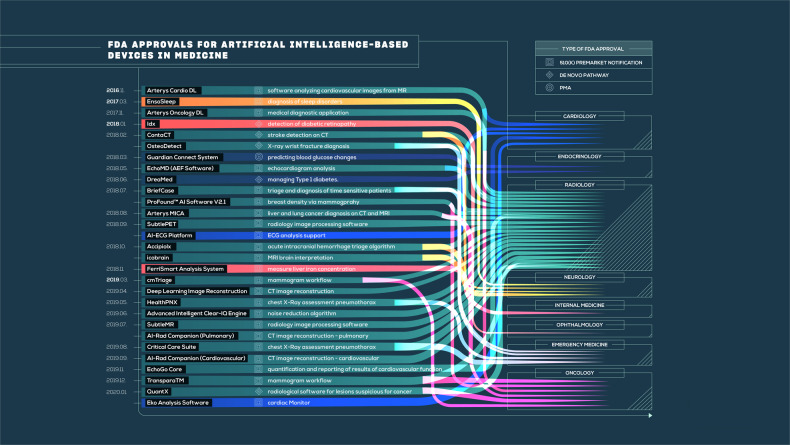
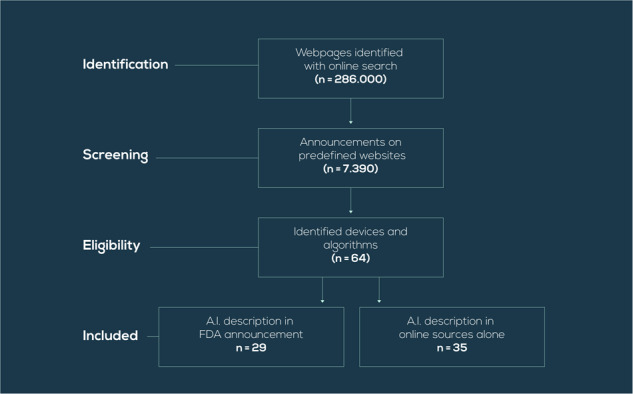
At the beginning of the artificial intelligence (AI)/machine learning (ML) era, the expectations are high, and experts foresee that AI/ML shows potential for diagnosing, managing and treating a wide variety of medical conditions. However, the obstacles for implementation of AI/ML in daily clinical practice are numerous, especially regarding the regulation of these technologies. Therefore, we provide an insight into the currently available AI/ML-based medical devices and algorithms that have been approved by the US Food & Drugs Administration (FDA). We aimed to raise awareness of the importance of regulatory bodies, clearly stating whether a medical device is AI/ML based or not. Cross-checking and validating all approvals, we identified 64 AI/ML based, FDA approved medical devices and algorithms. Out of those, only 29 (45%) mentioned any AI/ML-related expressions in the official FDA announcement. The majority (85.9%) was approved by the FDA with a 510(k) clearance, while 8 (12.5%) received de novo pathway clearance and one (1.6%) premarket approval (PMA) clearance. Most of these technologies, notably 30 (46.9%), 16 (25.0%), and 10 (15.6%) were developed for the fields of Radiology, Cardiology and Internal Medicine/General Practice respectively. We have launched the first comprehensive and open access database of strictly AI/ML-based medical technologies that have been approved by the FDA. The database will be constantly updated.
Overview
The claims and statistics of this paper haven’t been checked yet.
Free: it reads the open-access text and checks the first 5 claims that cite a source we can check. Create a free account to check every claim.
Integrity signals
Registry
Cites
Statistics
Figures
Verification
Claims the paper makes
The claims and statistics of this paper haven’t been checked yet.
Free: it reads the open-access text and checks the first 5 claims that cite a source we can check. Create a free account to check every claim.
Claims other papers make about this one
Each is checked against this paper’s own text: does it say what the citing paper says it does?
The source backs part of the claim, not all of it — or backs it for a different population, condition or comparison.
In the citing paper
“Dozens of companies have obtained US FDA and European CE approval for medical imaging AI 37 , and commercial markets have begun to form as sustainable business models are created.”
From Deep learning-enabled medical computer vision (2021) · cites this paper as [37]
Experimental — accuracy not yet measuredThe source backs part of the claim, not all of it — or backs it for a different population, condition or comparison.
In the citing paper
“The majority of AI interventions that are close to translation are in the field of medical diagnostics.3”
From Developing a reporting guideline for artificial intelligence-centred diagnostic test accuracy studies: the STARD-AI protocol (2021) · cites this paper as [3]
Experimental — accuracy not yet measuredThe source backs part of the claim, not all of it — or backs it for a different population, condition or comparison.
In the citing paper
“Moreover, diagnostics constitutes a substantial proportion of clinical AI focus, with most AI devices achieving regulatory approval thus far belonging to the diagnostic field 26 .”
From The STARD-AI reporting guideline for diagnostic accuracy studies using artificial intelligence (2025) · cites this paper as [26]
Experimental — accuracy not yet measuredThe cited source says what the claim attributes to it.
In the citing paper
“To date, 64 AI-powered medical devices and algorithms have been approved by the Food and Drug Administration in the United States [8].”
From Randomized Controlled Trials of Artificial Intelligence in Clinical Practice: Systematic Review (2022) · cites this paper as [8]
The cited source says what the claim attributes to it.
In the citing paper
“Another obstacle to the implementation of AI or ML in daily clinical practice is the regulation of these technologies [8].”
From Randomized Controlled Trials of Artificial Intelligence in Clinical Practice: Systematic Review (2022) · cites this paper as [8]
7 more claims about this paper
Create a free account to see every claim other papers make about this one.
Self-check
Percentages, sums and reported differences re-computed from the paper’s own numbers.
The self-check needs the paper’s full text.
Citations
Cites
High-performance medicine: the convergence of human and artificial intelligence
Topol, E. J. (2019) · Nature Medicine · doi:10.1038/s41591-018-0300-7 · Cited by 10,450 · cited 1×
“Despite its promise, the obstacles for implementation of AI/ML in daily clinical practice are numerous 10 .”
BackgroundWang, X., Peng, Y., Lu, L., Lu, Z., Bagheri, M., & Summers, R. M. (2017) · 2017 IEEE Conference on Computer Vision and Pattern Recognition (CVPR) · doi:10.1109/cvpr.2017.369 · Cited by 4,616
Deep Learning—A Technology With the Potential to Transform Health Care
Hinton, G. (2018) · JAMA · doi:10.1001/jama.2018.11100 · Cited by 667
Brown, J. M., Campbell, J. P., Beers, A., Chang, K., Ostmo, S., Chan, R. V. P., Dy, J., Erdogmus, D., Ioannidis, S., Kalpathy-Cramer, J., et al. (2018) · JAMA Ophthalmology · doi:10.1001/jamaophthalmol.2018.1934 · Cited by 657 · cited 1×
“Indeed, AI/ML-based technologies have been shown to support several medical specialties from radiology 2 and oncology 3 to ophthalmology 4 and general medical decision-making 5 .”
BackgroundArtificial Intelligence in Health Care: A Report From the National Academy of Medicine
Matheny, M. E., Whicher, D., & Thadaney Israni, S. (2020) · JAMA · doi:10.1001/jama.2019.21579 · Cited by 628
Wang, X., Peng, Y., Lu, L., Lu, Z., Bagheri, M., & Summers, R. M. (2019) · Advances in Computer Vision and Pattern Recognition · doi:10.1007/978-3-030-13969-8_18 · Cited by 371 · cited 1×
“Indeed, AI/ML-based technologies have been shown to support several medical specialties from radiology 2 and oncology 3 to ophthalmology 4 and general medical decision-making 5 .”
BackgroundLabovitz, D. L., Shafner, L., Reyes Gil, M., Virmani, D., & Hanina, A. (2017) · Stroke · doi:10.1161/strokeaha.116.016281 · Cited by 311
Horng, S., Sontag, D. A., Halpern, Y., Jernite, Y., Shapiro, N. I., & Nathanson, L. A. (2017) · PLOS ONE · doi:10.1371/journal.pone.0174708 · Cited by 310
van der Heijden, A. A., Abramoff, M. D., Verbraak, F., van Hecke, M. V., Liem, A., & Nijpels, G. (2018) · Acta Ophthalmologica · doi:10.1111/aos.13613 · Cited by 296
Artificial intelligence and the future of psychiatry: Insights from a global physician survey
Doraiswamy, P. M., Blease, C., & Bodner, K. (2020) · Artificial Intelligence in Medicine · doi:10.1016/j.artmed.2019.101753 · Cited by 253
Research works printed but not linked: 1
- Wang T Outpatient clinic process enhancement at children’s hospital: empoweredby information technology Chin. J. Hosp. Adm. 2018 34 753 755
Cited by
Items 401–500 of 1,000
Artificial Intelligence and Its Application in Cardiovascular Disease Management
Namasivayam, V., Senguttuvan, N., Saravanan, V., Palaniappan, S., & Kathiravan, M. K. (2022) · Springer eBooks · doi:10.1007/978-981-16-5993-5_9 · Cited by 26
Artificial intelligence and clinical deterioration
Malycha, J., Bacchi, S., & Redfern, O. (2022) · Current Opinion in Critical Care · doi:10.1097/mcc.0000000000000945 · Cited by 27
Sun, W., Song, C., Tang, C., Pan, C., Xue, P., Fan, J., & Qiao, Y. (2023) · iScience · doi:10.1016/j.isci.2023.106815 · Cited by 21
“For instance, the recent advancement of DL algorithms has rendered Food and Drug Administration (FDA) approves a few diagnosis tools for clinical practice.(8) In our context, numerous independent studies have investigated the performance of DL in glioma classification worldwide.”
BackgroundLarge language models and the emergence phenomena
Sorin, V., & Klang, E. (2023) · European Journal of Radiology Open · doi:10.1016/j.ejro.2023.100494 · Cited by 21
“We are in the early stages of integrating AI models into healthcare practice, in radiology in particular [16].”
BackgroundYearley, A. G., Goedmakers, C. M. W., Panahi, A., Doucette, J. A., Rana, A., Ranganathan, K., & Smith, T. R. (2023) · Artificial Intelligence in Medicine · doi:10.1016/j.artmed.2023.102607 · Cited by 22
Qi, W., Zhu, X., He, D., Wang, B., Cao, S., Dong, C., Li, Y., Chen, Y., Wang, B., Shi, Y., et al. (2024) · Journal of Medical Internet Research · doi:10.2196/57830 · Cited by 22
“While no AI devices specifically targeted at dementia have been approved yet, in the field of radiology, AI software such as SubtlePET and SubtleMR, which process imaging data, have been approved [105,219], indirectly advancing AI in the clinical diagnosis of dementia.”
Automatic Diagnostic Tool for Predicting Cancer Grade in Bladder Cancer Patients Using Deep Learning
Wetteland, R., Kvikstad, V., Eftestøl, T., Tøssebro, E., Lillesand, M., Janssen, E. A. M., & Engan, K. (2021) · IEEE Access · doi:10.1109/access.2021.3104724 · Cited by 21
“By looking at the list of US Food & Drugs Administration (FDA) approved artificial intelligence (AI) based medical technologies, most are in the fields of radiology, cardiology, and Internal Medicine/General Practice [15].”
BackgroundAksoy, S., Demircioglu, P., & Bogrekci, I. (2024) · Dermato · doi:10.3390/dermato4040015 · Cited by 20
Epistemo-ethical constraints on AI-human decision making for diagnostic purposes
Babushkina, D., & Votsis, A. (2022) · Ethics and Information Technology · doi:10.1007/s10676-022-09629-y · Cited by 20
Machine learning in dentistry: a scoping review
Lakhotia, S., Godrej, H., Kaur, A., Nutakki, C. S., Mun, M., Eber, P., & Celi, L. A. (2025) · PLOS Digital Health · doi:10.1371/journal.pdig.0000940 · Cited by 24
“Collaborations between dental professionals, data scientists, and regulatory bodies [15] are essential to harness the full potential of ML in dentistry while safeguarding ethical and equitable care.”
Țocu, G., Lisă, E. L., Tutunaru, D., Mihailov, R., Șerban, C., Luțenco, V., Dimofte, F., Guliciuc, M., Chiscop, I., Ștefănescu, B. I., et al. (2025) · Diagnostics · doi:10.3390/diagnostics15172169 · Cited by 23
“…with regulatory authorities, such as the Food and Drug Administration (FDA) or European Medicines Agency (EMA), is crucial for approval and certification of AI algorithms as medical decision support devices, thereby ensuring safe and standardized integration into clinical practice [81].”
Bolocan, V.-O., Mitoi, A., Nicu-Canareica, O., Băean, M.-L., Medar, C., & Popa, G.-A. (2025) · Journal of Imaging · doi:10.3390/jimaging11100335 · Cited by 22
“Artificial intelligence has emerged as a potentially transformative solution, with investment in medical AI growing in recent years and prostate imaging identified as a priority application by major funding agencies [10].”
Deep Mining Generation of Lung Cancer Malignancy Models from Chest X-ray Images
Horry, M. J., Chakraborty, S., Pradhan, B., Paul, M., Gomes, D. P. S., Ulhaq, A., & Alamri, A. (2021) · Sensors · doi:10.3390/s21196655 · Cited by 22
“Food and Drug Administration (FDA) has approved only 30 radiology related deep learning or machine learning based applications/devices of which only three utilize the Xray imaging mode [11] with the subject of one being wrist fracture diagnosis [12] and the other two being for pneumothorax assessment [13, 14] In contr…”
BackgroundGozzi, N., Giacomello, E., Sollini, M., Kirienko, M., Ammirabile, A., Lanzi, P. L., Loiacono, D., & Chiti, A. (2022) · Diagnostics · doi:10.3390/diagnostics12092084 · Cited by 21
Approaches to Sampling for Quality Control of Artificial Intelligence in Biomedical Research
Четвериков, С. Ф., Arzamasov, K. M., Андрейченко, А. Е., Novik, V. P., Bobrovskaya, T., & Vladzimirsky, A. V. (2023) · Современные технологии в медицине · doi:10.17691/stm2023.15.2.02 · Cited by 21
Chen, Y.-H., Lin, C., Lin, C. S., Tsai, D., Fang, W., Lee, C., Wang, C., & Chen, S. (2023) · Journal of Medical Systems · doi:10.1007/s10916-023-01980-x · Cited by 22
Nedbal, C., Cerrato, C., Jahrreiss, V., Castellani, D., Pietropaolo, A., Galosi, A. B., & Somani, B. K. (2023) · Therapeutic Advances in Urology · doi:10.1177/17562872231196676 · Cited by 20
Durur-Subasi, İ., & Özçelik, Ş. B. (2023) · Eurasian Journal of Medicine · doi:10.5152/eurasianjmed.2023.23360 · Cited by 20
OnRAMP for Regulating Artificial Intelligence in Medical Products
Higgins, D. C. (2021) · Advanced Intelligent Systems · doi:10.1002/aisy.202100042 · Cited by 21
Artificial Intelligence in Radiology Education: A Longitudinal Approach
Gowda, V., Jordan, S. G., & Awan, O. A. R. (2021) · Academic Radiology · doi:10.1016/j.acra.2021.08.022 · Cited by 20
Challenges and Opportunities in Deploying COVID-19 Cough AI Systems
Khanzada, A., Hegde, S., Sreeram, S., Bower, G., Wang, W. Y., Mediratta, R. P., Meister, K. D., & Rameau, A. (2021) · Journal of Voice · doi:10.1016/j.jvoice.2021.08.009 · Cited by 21
“Food and Drug Administration (FDA) can be slow-moving, and historically, they have been slow with AI technologies, although efficiency has been improving in recent years.(9) From our research, no US-based groups working on cough sound detection of COVID-19 have yet met the FDA’s bar for sensitivity and specificity for…”
BackgroundKazerooni, A. F., Familiar, A., Aboian, M., Brüningk, S. C., Vossough, A., Linguraru, M. G., Huang, R. Y., Hargrave, D. R., Peet, A. C., Resnick, A. C., et al. (2025) · The Lancet Oncology · doi:10.1016/s1470-2045(25)00489-9 · Cited by 19
Machine Learning vs. AI: Key Concepts
Sekti, B. A. (2025) · Advances in computational intelligence and robotics book series · doi:10.4018/979-8-3373-2252-0.ch001 · Cited by 19
Bartusik‐Aebisher, D., Raj, D. R. J., & Aebisher, D. (2026) · Applied Sciences · doi:10.3390/app16020728 · Cited by 25
Feng, J., Gossmann, A., Sahiner, B., & Pirracchio, R. (2022) · Journal of the American Medical Informatics Association · doi:10.1093/jamia/ocab280 · Cited by 20
Lu, Y., & Gao, X. (2022) · Wireless Communications and Mobile Computing · doi:10.1155/2022/5646234 · Cited by 22
“Correspondingly, three functional levels are formed, infrastructure layer ⟶ algorithm layer ⟶ application layer [24], as shown in Figure 5: In Figure 5, firstly, the manager contacts the application layer.”
BackgroundKhavandi, S., Zaghloul, F., Higham, A., Lim, E., de Pennington, N., & Celi, L. A. (2023) · JMIR Research Protocols · doi:10.2196/49374 · Cited by 21
“These AI technologies are already being shown to perform tasks previously entirely within the scope of human clinicians, from reading scans to replacing entire clinical consultations [2-4].”
BackgroundAritra, S., Shikha, C. B., & Indu, S. (2025) · Intelligent Pharmacy · doi:10.1016/j.ipha.2024.12.001 · Cited by 26
Özmen, B. B. (2025) · Aesthetic Surgery Journal · doi:10.1093/asj/sjaf051 · Cited by 21
Big Data and Artificial Intelligence for Precision Medicine in the Neuro-ICU: Bla, Bla, Bla
Citerio, G. (2022) · Neurocritical Care · doi:10.1007/s12028-021-01427-6 · Cited by 19
“Some tools available today are US Food and Drug Administration approved [9], such as the Rapid software for the detection of large cerebral vessel occlusion (LVO).”
Distributed Governance of Medical AI
Price, W. N. (2022) · SMU Science and Technology Law Review · doi:10.25172/smustlr.25.1.2 · Cited by 14
Prince, E. W., Ghosh, D., Görg, C., & Hankinson, T. C. (2023) · Diagnostics · doi:10.3390/diagnostics13061132 · Cited by 19
Advancing mental health care with AI-enabled precision psychiatry tools: A patent review
Kleine, A., Lermer, E., Cecil, J., Heinrich, A., & Gaube, S. (2023) · Computers in Human Behavior Reports · doi:10.1016/j.chbr.2023.100322 · Cited by 32
Artificial Intelligence in Healthcare: Lost In Translation?Preprint
Madai, V. I., & Higgins, D. (2021) · arXiv (Cornell University) · doi:10.48550/arxiv.2107.13454 · Cited by 28
“Only a few AI tools are available in the clinical setting [5, 6] and we are not aware of a single AI in healthcare tool appearing in clinical guidelines as a standard of care.”
Cross-Regional Analysis of Global AI Healthcare Regulation
Ullagaddi, P. (2025) · Journal of Computer and Communications · doi:10.4236/jcc.2025.135005 · Cited by 18
Poel, R., Rüfenacht, E., Scheib, S. G., Hemmatazad, H., Krcek, R., Tran, S., Romano, E., Rogers, S. J., Stieb, S., Poolakundan, M. R., et al. (2025) · Communications Medicine · doi:10.1038/s43856-025-01048-6 · Cited by 21
CALSTER, B. V., van Smeden, M., van Amsterdam, W. A. C., Coemans, M., Wynants, L., & Steyerberg, E. W. (2025) · Annual Review of Statistics and Its Application · doi:10.1146/annurev-statistics-042324-123749 · Cited by 29
Active Learning Performance in Labeling Radiology Images Is 90% Effective
Bangert, P. D., Moon, H., Woo, J. O., Didari, S., & Hao, H. (2021) · Frontiers in Radiology · doi:10.3389/fradi.2021.748968 · Cited by 21
“There are 64 FDA approved AI-based medical devices as of 2020, mostly in the areas of radiology and cardiology, where the definition of AI however remains unclear (49).”
BackgroundCheung, M., Campbell, J. J., Thomas, R. J., Braybrook, J. H., & Petzing, J. N. (2022) · International Journal of Molecular Sciences · doi:10.3390/ijms23063224 · Cited by 20
Informing a position statement on the use of artificial intelligence in dermatology in Australia
Caffery, L. J., Janda, M., Miller, R. E., Abbott, L. M., Arnold, C., Caccetta, T. P., Guitera, P., Shumack, S. P., Fernández‐Peñas, P., Mar, V., et al. (2022) · Australasian Journal of Dermatology · doi:10.1111/ajd.13946 · Cited by 19
Browd, S. R., Park, C., & Donoho, D. A. (2023) · The International Journal of Spine Surgery · doi:10.14444/8507 · Cited by 18
“The US Food and Drug Administration and other regulatory bodies will need to adopt strategies to deal with these emerging computational processes that will underpin technologies in surgery and across the care continuum.(42) Dynamic software that evolves with data is hampered by current regulations and the need for cod…”
BackgroundAI in cellular engineering and reprogramming
Capponi, S., & Wang, S. (2024) · Biophysical Journal · doi:10.1016/j.bpj.2024.04.001 · Cited by 20
Pawelczyk, J., Kraus, M., Eckl, L., Nehrer, S., Aurich, M. E., Izadpanah, K., Siebenlist, S., & Rupp, M. (2024) · Archives of Orthopaedic and Trauma Surgery · doi:10.1007/s00402-024-05408-0 · Cited by 19
“To date, rapid advancements in the field of AI have predominantly affected clinical specialties such as radiology, pathology, or cardiology [6].”
BackgroundConvolutional Neural Networks in ENT Radiology: Systematic Review of the Literature
Hasan, Z., Key, S., Habib, A.-R. R., Wong, E. H., Aweidah, L., Kumar, A., Sacks, R., & Singh, N. P. (2022) · Annals of Otology Rhinology & Laryngology · doi:10.1177/00034894221095899 · Cited by 22
Rochais, M. L., Brahim, I., Zeghlache, R., Redoulez, G., Guillard, M., Noach, P., Castillon, M., Bourhis, A., & Uguen, A. (2025) · Scientific Reports · doi:10.1038/s41598-025-94664-0 · Cited by 19
Key Information Influencing Patient Decision-Making About AI in Health Care: Survey Experiment Study
Zhu, X., Stroud, A. M., Minteer, S. A., Yoo, D. W., Ridgeway, J. L., Mooghali, M., Miller, J. E., & Barry, B. A. (2026) · Journal of Medical Internet Research · doi:10.2196/75615 · Cited by 20
“…(AI) and machine learning (ML) are increasingly being integrated into health care products and services due to their potential to enhance diagnostic accuracy, improve treatment planning, increase efficiency of health care systems, reduce costs, and ultimately improve patient outcomes [1-3].”
Machine learning in cancer imaging for enhanced precision in diagnosis and therapy
Chow, J. C. L. (2026) · Discover Computing · doi:10.1007/s10791-026-10078-0 · Cited by 17
“Key approval requirements include demonstrating clinical safety and efficacy through large-scale validation studies, ensuring transparency in model decision-making for inter-pretability and explainability, and continuously monitoring AI systems post-deployment to assess real-world performance [117].”
Artificial intelligence‐enhanced echocardiography in the emergency department
Stewart, J. E., Goudie, A., Mukherjee, A., & Dwivedi, G. (2021) · Emergency Medicine Australasia · doi:10.1111/1742-6723.13847 · Cited by 17
“Several AI algorithms have already been approved in the United States and other countries for use in echocardiography.(5) The integration of AI into FoCUS will have a number of implications for emergency physicians.”
BackgroundAlgorithmic legitimacy in clinical decision-making
Holm, S. (2023) · Ethics and Information Technology · doi:10.1007/s10676-023-09709-7 · Cited by 18
“A total of 29 AI/ML-based medical devices have been FDA-approved according to a recent survey in Benjamens et al. (2020). 4 How and where to set the threshold is a matter of debate.”
BackgroundHealthcare Monitoring-based Internet of Things (IOT)
Mathboob, Y., Abdul-Rahaim, L. A., & Ali, A. H. (2024) · Journal of Internet Services and Information Security · doi:10.58346/jisis.2024.i4.021 · Cited by 18
Regulatory challenges in ai-based diagnostics: Legal implications of ai use in medical diagnostics
Naili, Y. T., Mangkunegara, I. S., Purwono, P., & Baballe, M. A. (2025) · BIO Web of Conferences · doi:10.1051/bioconf/202515201034 · Cited by 20
Gouravani, M., Farahani, M. S., Salehi, M. A., Shojaei, S., Mirakhori, S., Harandi, H., Mohammadi, S., & Saleh, R. (2025) · BMC Cancer · doi:10.1186/s12885-025-13547-9 · Cited by 17
Rellum, S. R., Schuurmans, J., van der Ven, W. H., Eberl, S., Driessen, A. H. G., Vlaar, A. P. J., & Veelo, D. P. (2021) · Journal of Thoracic Disease · doi:10.21037/jtd-21-765 · Cited by 20
“This is done to ensure consistent, reproducible results and safety from the algorithm (90).”
BackgroundArtificial intelligence in intensive care: moving towards clinical decision support systems
Montomoli, J., Hilty, M. P., & İnce, C. (2022) · Minerva Anestesiologica · doi:10.23736/s0375-9393.22.16739-8 · Cited by 22
Klinische Entscheidungsfindung mit Künstlicher Intelligenz: Ein interdisziplinärer Governance-Ansatz
Samhammer, D., Beck, S., Budde, K., Burchardt, A., Faber, M., Gerndt, S., Möller, S., Osmanodja, B., Roller, R., & Dabrock, P. (2023) · Essentials · doi:10.1007/978-3-662-67008-8 · Cited by 18
Spatial transformation of multi-omics data unlocks novel insights into cancer biology
Sokač, M., Kjær, A., Dyrskjøt, L., Haibe‐Kains, B., Aerts, H. J. W. L., & Birkbak, N. J. (2023) · eLife · doi:10.7554/elife.87133 · Cited by 17
ECLAD: Extracting Concepts with Local Aggregated Descriptors
Posada-Moreno, A. F., Surya, N., & Trimpe, S. (2023) · Pattern Recognition · doi:10.1016/j.patcog.2023.110146 · Cited by 23
High-risk artificial intelligence
Sunyaev, A., Benlian, A., Pfeiffer, J., Jussupow, E., Thiebes, S., Maedche, A., & Gawlitza, J. (2025) · Business & Information Systems Engineering · doi:10.1007/s12599-025-00942-6 · Cited by 16
“This is reflected in the low number of FDA-approved algorithms compared to the dramatic increase in high-risk AI startups (Benjamens et al. 2020).”
Trading Artificial Intelligence: Economic Interests, Societal Choices, and Multilateral Rules
Ciuriak, D., & Rodionova, V. (2021) · Cambridge University Press eBooks · doi:10.1017/9781108954006.005 · Cited by 16
Levy, J., Chan, N., Marotti, J. D., Simoes, N. J. R., Ismail, A. A. O., Kerr, D. A., Gutmann, E. J., Glass, R. E., Dodge, C. P., Suriawinata, A. A., et al. (2023) · Cancer Cytopathology · doi:10.1002/cncy.22725 · Cited by 16
Expert and deep learning model identification of iEEG seizures and seizure onset times
Desai, S. A., Afzal, M. F., Barry, W., Kuo, J. T. W., Benard, S. W., Traner, C. B., Tcheng, T. K., Seale, C. G., & Morrell, M. J. (2023) · Frontiers in Neuroscience · doi:10.3389/fnins.2023.1156838 · Cited by 16
Towards improving the visual explainability of artificial intelligence in the clinical setting
Rao, A., & Aalami, O. (2023) · BMC Digital Health · doi:10.1186/s44247-023-00022-3 · Cited by 17
“In recent years, these systems have become increasingly capable leading to the wider adoption of AI-based imaging diagnostic tools at the point-of-care and the rise in approval of AI-based medical devices by the US Food and Drug Administration (FDA) [4].”
BackgroundGao, W., & Zhao, Z. (2023) · IEEE Transactions on Consumer Electronics · doi:10.1109/tce.2023.3321331 · Cited by 19
“Further research and validation are still needed by fully mining and exploring the association patterns and value information in communication data and applying them to practical health-care [8], [9].”
BackgroundHeart Murmur Classification Using a Capsule Neural Network
Tsai, Y., Liu, Y.-H., Zheng, Z., Chen, C., & Lin, M. (2023) · Bioengineering · doi:10.3390/bioengineering10111237 · Cited by 19
AI-Driven Medical Imaging Platform: Advancements in Image Analysis and Healthcare Diagnosis
Eldin, W. S., & Kaboudan, A. (2023) · Journal of ACS Advances in Computer Science · doi:10.21608/asc.2023.328064 · Cited by 28
Skinly: A novel handheld IoT device for validating biophysical skin characteristics
Tobar, M. D. P. B., Clemann, S., Hagens, R., Pagel‐Wolff, S., Hoppe, S., Behm, P., Engelhard, F., Langhals, M., Gallinat, S., Zhavoronkov, A. A., et al. (2024) · Skin Research and Technology · doi:10.1111/srt.13613 · Cited by 17
Ryan, M. L., Wang, S., & Pandya, S. R. (2024) · Journal of Pediatric Surgery · doi:10.1016/j.jpedsurg.2024.07.014 · Cited by 16
Hunter, J. G., Bera, K., Shah, N. R., Bukhari, S. M. A., Marshall, C., Caovan, D., Rosipko, B., & Gupta, A. B. (2024) · Academic Radiology · doi:10.1016/j.acra.2024.10.012 · Cited by 17
Lee, B., Patel, S., Favorito, C., Sandri, S., Jennings, M. R., & Dai, T. (2025) · NEJM AI · doi:10.1056/aira2500061 · Cited by 20
Chen, J., Qian, L., Urakov, T. M., Gu, W., & Liang, L. (2021) · SPIE Medical Imaging: Image Processing · doi:10.1117/12.2580852 · Cited by 18
“Several DNN-based medical image analysis systems have been FDA-cleared [4] and will make impacts on human lives.”
BackgroundLegal regulation of artificial intelligence software in healthcare in the Russian Federation
Gusev, A. V., Morozov, S. P., Kutichev, V. A., & Novitskiy, R. E. (2021) · Medical Technologies Assessment and Choice · doi:10.17116/medtech20214301136 · Cited by 18
Wu, J. T.-Y., de la Hoz, M. Á. A., Kuo, P., Paguio, J. A., Yao, J. S., Dee, E. C., Yeung, W. L. K., Jurado, J., Moulick, A. N., Milazzo, C., et al. (2022) · Journal of Imaging Informatics in Medicine · doi:10.1007/s10278-022-00674-z · Cited by 16
Bayesian Statistics for Medical Devices: Progress Since 2010
Campbell, G., Irony, T., Pennello, G. A., & Thompson, L. (2023) · Therapeutic Innovation & Regulatory Science · doi:10.1007/s43441-022-00495-w · Cited by 16
The Evolving Role of Artificial Intelligence in Cardiac Image Analysis
Thériault-Lauzier, P., Avram, R., Dey, D., Slomka, P. J., Afilalo, J., & Chow, B. J. W. (2021) · Canadian Journal of Cardiology · doi:10.1016/j.cjca.2021.09.030 · Cited by 18
Huo, T., Wu, W., Chen, X., Xue, M., Liu, P., Zhang, J., Xie, Y., Wang, H., Zhou, H., Yan, Z., et al. (2025) · Intelligent Oncology · doi:10.1016/j.intonc.2025.06.005 · Cited by 18
The state of the art in artificial intelligence and digital pathology in prostate cancer
Ni, H. M., Kouzy, R., Sabbagh, A., Rooney, M. K., Feng, J., Castillo, S. P., Gadoue, S. M., Kouzi, Z. E., Hoffman, K. E., Yuan, Y., et al. (2025) · Nature Reviews Urology · doi:10.1038/s41585-025-01070-2 · Cited by 23
“…levels of clearance for these software devices (that is, 510(k), premarket approval (most stringent), and the de novo pathway) depending on the risk associated with the intended use of the software and the existence of a ‘predicate device’ against which to judge the software performance 145,146 .”
Qin, X., Ran, T., Chen, Y., Zhang, Y., Wang, D., Zhou, C., & Zou, D. (2023) · Diagnostics · doi:10.3390/diagnostics13193054 · Cited by 16
Cherry on Top or Real Need? A Review of Explainable Machine Learning in Kidney Transplantation
de Souza, A. A., Stubbs, A., Hesselink, D. A., Baan, C. C., & Boer, K. (2024) · Transplantation · doi:10.1097/tp.0000000000005063 · Cited by 15
AI-Based Medical Devices and Regulations: A Cross-Country Perspective
Sharma, K., & Manchikanti, P. (2024) · Frontiers of artificial intelligence, ethics and multidisciplinary applications. · doi:10.1007/978-981-97-2954-8_3 · Cited by 19
Artificial intelligence utilization in the healthcare setting: perceptions of the public in the UAE
Jarab, A. S., Al-Qerem, W. A., Al‐Hajjeh, D. M., Heshmeh, S. A., Mukattash, T. L., Naser, A. Y., Alwafi, H. H., & Hamarneh, Y. N. A. (2024) · International Journal of Environmental Health Research · doi:10.1080/09603123.2024.2363472 · Cited by 19
“With the help of these technologies, healthcare delivery will be revolutionized, leading to better patient outcomes, easier access to healthcare, and lower associated costs (Benjamens et al. 2020).”
Differences between human and artificial/augmented intelligence in medicine
Monteith, S., Glenn, T., Geddes, J. R., Achtyes, E. D., Whybrow, P. C., & Bauer, M. (2024) · Computers in Human Behavior Artificial Humans · doi:10.1016/j.chbah.2024.100084 · Cited by 21
Role of Imaging in Screening for Hepatocellular Carcinoma
Kazi, I. A., Jahagirdar, V., Kabir, B., Syed, A. K., Kabir, A., & Perisetti, A. (2024) · Cancers · doi:10.3390/cancers16193400 · Cited by 18
“For instance, in recent years, the US Food and Drug Administration (FDA) has approved several advanced AI products specifically for use in breast cancer screening (BCS) [80,81].”
BackgroundWhat can machines learn about heart failure? A systematic literature review
Piadlo, A., Bond, R., Biglarbeigi, P., Brisk, R., Campbell, P. C., & MCENEANEY, D. J. (2021) · International Journal of Data Science and Analytics · doi:10.1007/s41060-021-00300-1 · Cited by 17
Comparing Detection Schemes for Adversarial Images against Deep Learning Models for Cancer Imaging
Joel, M. Z., Avesta, A., Yang, D. X., Zhou, J., Omuro, A. M. P., Herbst, R. S., Krumholz, H. M., & Aneja, S. (2023) · Cancers · doi:10.3390/cancers15051548 · Cited by 17
Kaas, M. H. L., Porter, Z., Lim, E., Higham, A., Khavandi, S., & Habli, I. (2023) · International Symposium on Trustworthy Autonomous Systems (TAS) · doi:10.1145/3597512.3599713 · Cited by 16
“tools range from clinical decision support systems (CDSS) [23], to AI-enabled clinical services that make fully autonomous diagnoses such as radiographic imaging systems [4].”
BackgroundLehoux, P., de Oliveira, R. R., Rivard, L., da Silva, H. P., Alami, H., Mörch, C., & Malas, K. (2023) · Journal of Medical Internet Research · doi:10.2196/48496 · Cited by 17
“Clinicians active in research have made great strides to work with DAI solution developers to address key clinical issues [6,43,44], and ground-breaking scholarly and policy work has brought to light the numerous ethical concerns that arise with their development and use [3,16,39,40].”
Personalized stratification of hospitalization risk amidst COVID-19: A machine learning approach
Lam, C., Calvert, J. S., Siefkas, A. C., Barnes, G., Pellegrini, E., Green‐Saxena, A., Hoffman, J. L., Mao, Q., & Das, R. (2021) · Health Policy and Technology · doi:10.1016/j.hlpt.2021.100554 · Cited by 15
Performance of adult-trained artificial intelligence models in paediatric imaging—a scoping review
Laborie, L. B., Lee, J., Antram, E., Lein, T. E., & Shelmerdine, S. C. (2026) · European Radiology · doi:10.1007/s00330-026-12354-5 · Cited by 14
RNA biomarkers for alcohol use disorder
Ferguson, L. B., Mayfield, R. D., & Messing, R. O. (2022) · Frontiers in Molecular Neuroscience · doi:10.3389/fnmol.2022.1032362 · Cited by 14
Value Proposition of FDA-Approved Artificial Intelligence Algorithms for Neuroimaging
Bajaj, S., Khunte, M., Moily, N. S., Payabvash, S., Wintermark, M., Gandhi, D., & Malhotra, A. (2023) · Journal of the American College of Radiology · doi:10.1016/j.jacr.2023.06.034 · Cited by 14
Topology-Aware Focal Loss for 3D Image Segmentation
Demir, A., Massaad, E., & Kızıltan, B. (2023) · IEEE/CVF Conference on Computer Vision and Pattern Recognition Workshops (CVPRW) · doi:10.1109/cvprw59228.2023.00065 · Cited by 25
Muhaisen, S. A., Safi, O., Ulayan, A., Aljawamis, S., Fakhoury, M., Baydoun, H., & Abuquteish, D. (2024) · Cureus · doi:10.7759/cureus.56945 · Cited by 19
Global perspectives on governing healthcare AI: prioritising safety, equity and collaboration
Laein, G. D. (2024) · BMJ Leader · doi:10.1136/leader-2023-000904 · Cited by 14
Singh, G., Singh, A., Bae, J., Manjila, S. V., Spektor, V., Prasanna, P., & Lignelli, A. (2024) · Cancer Imaging · doi:10.1186/s40644-024-00769-6 · Cited by 14
“The introduction of AI/machine learning models poses novel regulatory challenges, demanding specialized guidance for sub-missions seeking approval [76].”
BackgroundAlomran, A. K., Alomar, M. F., Akhdher, A. A., Qanber, A. R. A., Albik, A. K., Alumran, A. K., & Abdulwahab, A. H. (2024) · World Journal of Orthopedics · doi:10.5312/wjo.v15.i11.1023 · Cited by 14
Khairil, L., Benny, K. H. S., Jerry, J., Khatib, F. M., Ramli, M. D. C., & Kumar, S. (2026) · Pharmaceuticals · doi:10.3390/ph19060916 · Cited by 11
“Despite the FDA reviewing several thousands of submissions of AI-related content in medical products, a small number have gone through approval, an indication of ongoing concerns regarding generalisability, strength, and lifecycle management [86] as shown in Table 6.”
Integrated Analytical Framework for the Development of Artificial Intelligence-Based Medical Devices
Arima, H., & Kano, S. (2021) · Therapeutic Innovation & Regulatory Science · doi:10.1007/s43441-021-00292-x · Cited by 16
“The FDA has already approved image postprocessing analysis software used for viewing and quantifying cardiovascular MR images (Arterys Cardio DL) in November 2016, and up to March 2020, 29 AI-based medical devices that were mentioned as AI / ML-related in the FDA’s official announcements have been identified [30].”
MethodArtificial Intelligence in Cancer Care: Legal and Regulatory Dimensions
Gowda, V., Kwaramba, T., Hanemann, C. W., Garcia, J. A., & Barata, P. C. (2021) · The Oncologist · doi:10.1002/onco.13862 · Cited by 14
“Food and Drug Administration (FDA), with hundreds more under active development at research institutions worldwide [1].”
BackgroundArtificial Intelligence in Biomedical Image Processing
Selvaraj, J., Prabha, T., Kumar, T. D. A., & Palaniappan, S. (2022) · Springer eBooks · doi:10.1007/978-981-16-5993-5_8 · Cited by 19
Artificial intelligence: Advances and new frontiers in medical imaging
Fromherz, M., & Makary, M. S. (2022) · Artificial Intelligence in Medical Imaging · doi:10.35711/aimi.v3.i2.33 · Cited by 14
Metadata
- Authors
- Benjamens, S., Dhunnoo, P., & Meskó, B.
- Affiliations
- University Medical Center Groningen (NL)
- Semmelweis University (HU)
- Corresponding author
- Meskó, Bertalan
- Venue
- npj Digital Medicine
- Published
- 2020-09-11
- Volume
- 3
- Issue
- 1
- Pages
- 118-118
- ISSN
- 2398-6352 (ISSN-L)
- PMC
- PMC7486909
- OpenAlex
- W3086667591
- Semantic Scholar
- 0623ccb3694aae29857890809afe5868931a98ec
- Cited by
- 1,215
- References
- 24
- Citations by year
- 2026: 219 · 2025: 208 · 2024: 212 · 2023: 227 · 2022: 188 · 2021: 153 · 2020: 7
- FWCI
- 42.33
- Type
- journal article
- Language
- en
- Open access
- gold
- doi.org
- Licence
- cc-by
- creativecommons.org/licenses/by/4.0 (tdm)
- creativecommons.org/licenses/by/4.0 (vor)
- Locations
- npj Digital Medicine (publishedVersion, cc-by)
- PubMed Central (publishedVersion, cc-by)
- PubMed (publishedVersion)
- University of Groningen research database (University of Groningen / Centre for Information Technology) (publishedVersion, cc-by)
- DOAJ (DOAJ: Directory of Open Access Journals) (submittedVersion, cc-by-sa)
- University of Groningen research database (University of Groningen / Centre for Information Technology) (submittedVersion, cc-by)
- Topics
- Health Sciences › Medicine › Health Informatics › Artificial Intelligence in Healthcare and Education
- Health Sciences › Medicine › Public Health, Environmental and Occupational Health › Healthcare Regulation
- Physical Sciences › Computer Science › Information Systems › Internet of Things and AI
- Keywords
- artificial intelligence, machine learning, medical device regulation, 510(k) clearance, de novo pathway, premarket approval, clinical implementation of AI, radiology, online databases
About these checks
Registry, retraction, Cites and statistics results are computed, not judged, with one exception: a printed reference that no index lists is read once by a model before it counts as a citation error. Claims are extracted by a model and kept only when their quote appears verbatim in the text; each cited source is then checked, with a model’s help, for whether it says what the claim relies on. Those verdicts can be wrong — read the claim’s quote and the cited source before relying on one.
Statistics and arithmetic are recomputed, not judged.
Confidence bands are shown only for fields calibrated on our annotated test set. None is calibrated yet, so no band is shown.
What counts as a claim ›How we measure confidence ›How we check this ›
Are you an author, or do you see a problem with this page? Request a review
Data sources
Bibliographic data: Semantic Scholar, OpenAlex, Crossref.
Contains information from the Semantic Scholar Academic Graph Datasets, made available under the ODC Attribution License (ODC-BY 1.0).
Semantic Scholar’s data is described in: Kinney, R., et al. (2023). The Semantic Scholar Open Data Platform. arXiv:2301.10140.
