

The state of artificial intelligence-based FDA-approved medical devices and algorithms: an online database
Open accessThe DOI matches its Crossref record; 24 of the 24 references it cites were found in a registry or an index.
Abstract
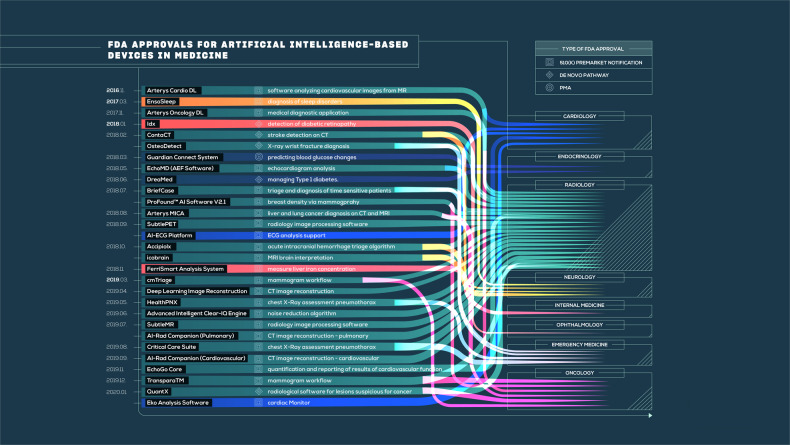
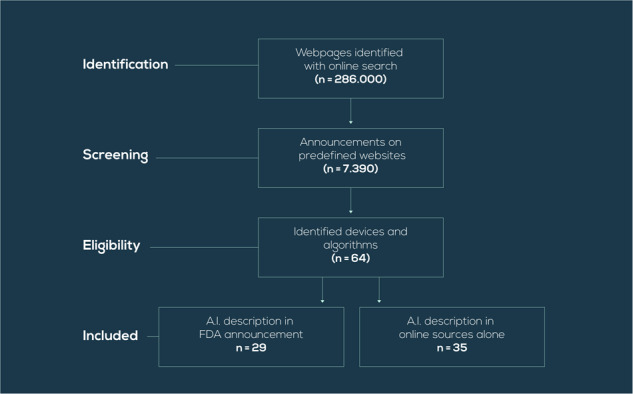
At the beginning of the artificial intelligence (AI)/machine learning (ML) era, the expectations are high, and experts foresee that AI/ML shows potential for diagnosing, managing and treating a wide variety of medical conditions. However, the obstacles for implementation of AI/ML in daily clinical practice are numerous, especially regarding the regulation of these technologies. Therefore, we provide an insight into the currently available AI/ML-based medical devices and algorithms that have been approved by the US Food & Drugs Administration (FDA). We aimed to raise awareness of the importance of regulatory bodies, clearly stating whether a medical device is AI/ML based or not. Cross-checking and validating all approvals, we identified 64 AI/ML based, FDA approved medical devices and algorithms. Out of those, only 29 (45%) mentioned any AI/ML-related expressions in the official FDA announcement. The majority (85.9%) was approved by the FDA with a 510(k) clearance, while 8 (12.5%) received de novo pathway clearance and one (1.6%) premarket approval (PMA) clearance. Most of these technologies, notably 30 (46.9%), 16 (25.0%), and 10 (15.6%) were developed for the fields of Radiology, Cardiology and Internal Medicine/General Practice respectively. We have launched the first comprehensive and open access database of strictly AI/ML-based medical technologies that have been approved by the FDA. The database will be constantly updated.
Overview
The claims and statistics of this paper haven’t been checked yet.
Free: it reads the open-access text and checks the first 5 claims that cite a source we can check. Create a free account to check every claim.
Integrity signals
Registry
Cites
Statistics
Figures
Verification
Claims the paper makes
The claims and statistics of this paper haven’t been checked yet.
Free: it reads the open-access text and checks the first 5 claims that cite a source we can check. Create a free account to check every claim.
Claims other papers make about this one
Each is checked against this paper’s own text: does it say what the citing paper says it does?
The source backs part of the claim, not all of it — or backs it for a different population, condition or comparison.
In the citing paper
“Dozens of companies have obtained US FDA and European CE approval for medical imaging AI 37 , and commercial markets have begun to form as sustainable business models are created.”
From Deep learning-enabled medical computer vision (2021) · cites this paper as [37]
Experimental — accuracy not yet measuredThe source backs part of the claim, not all of it — or backs it for a different population, condition or comparison.
In the citing paper
“The majority of AI interventions that are close to translation are in the field of medical diagnostics.3”
From Developing a reporting guideline for artificial intelligence-centred diagnostic test accuracy studies: the STARD-AI protocol (2021) · cites this paper as [3]
Experimental — accuracy not yet measuredThe source backs part of the claim, not all of it — or backs it for a different population, condition or comparison.
In the citing paper
“Moreover, diagnostics constitutes a substantial proportion of clinical AI focus, with most AI devices achieving regulatory approval thus far belonging to the diagnostic field 26 .”
From The STARD-AI reporting guideline for diagnostic accuracy studies using artificial intelligence (2025) · cites this paper as [26]
Experimental — accuracy not yet measuredThe cited source says what the claim attributes to it.
In the citing paper
“To date, 64 AI-powered medical devices and algorithms have been approved by the Food and Drug Administration in the United States [8].”
From Randomized Controlled Trials of Artificial Intelligence in Clinical Practice: Systematic Review (2022) · cites this paper as [8]
The cited source says what the claim attributes to it.
In the citing paper
“Another obstacle to the implementation of AI or ML in daily clinical practice is the regulation of these technologies [8].”
From Randomized Controlled Trials of Artificial Intelligence in Clinical Practice: Systematic Review (2022) · cites this paper as [8]
7 more claims about this paper
Create a free account to see every claim other papers make about this one.
Self-check
Percentages, sums and reported differences re-computed from the paper’s own numbers.
The self-check needs the paper’s full text.
Citations
Cites
High-performance medicine: the convergence of human and artificial intelligence
Topol, E. J. (2019) · Nature Medicine · doi:10.1038/s41591-018-0300-7 · Cited by 10,450 · cited 1×
“Despite its promise, the obstacles for implementation of AI/ML in daily clinical practice are numerous 10 .”
BackgroundWang, X., Peng, Y., Lu, L., Lu, Z., Bagheri, M., & Summers, R. M. (2017) · 2017 IEEE Conference on Computer Vision and Pattern Recognition (CVPR) · doi:10.1109/cvpr.2017.369 · Cited by 4,616
Deep Learning—A Technology With the Potential to Transform Health Care
Hinton, G. (2018) · JAMA · doi:10.1001/jama.2018.11100 · Cited by 667
Brown, J. M., Campbell, J. P., Beers, A., Chang, K., Ostmo, S., Chan, R. V. P., Dy, J., Erdogmus, D., Ioannidis, S., Kalpathy-Cramer, J., et al. (2018) · JAMA Ophthalmology · doi:10.1001/jamaophthalmol.2018.1934 · Cited by 657 · cited 1×
“Indeed, AI/ML-based technologies have been shown to support several medical specialties from radiology 2 and oncology 3 to ophthalmology 4 and general medical decision-making 5 .”
BackgroundArtificial Intelligence in Health Care: A Report From the National Academy of Medicine
Matheny, M. E., Whicher, D., & Thadaney Israni, S. (2020) · JAMA · doi:10.1001/jama.2019.21579 · Cited by 628
Wang, X., Peng, Y., Lu, L., Lu, Z., Bagheri, M., & Summers, R. M. (2019) · Advances in Computer Vision and Pattern Recognition · doi:10.1007/978-3-030-13969-8_18 · Cited by 371 · cited 1×
“Indeed, AI/ML-based technologies have been shown to support several medical specialties from radiology 2 and oncology 3 to ophthalmology 4 and general medical decision-making 5 .”
BackgroundLabovitz, D. L., Shafner, L., Reyes Gil, M., Virmani, D., & Hanina, A. (2017) · Stroke · doi:10.1161/strokeaha.116.016281 · Cited by 311
Horng, S., Sontag, D. A., Halpern, Y., Jernite, Y., Shapiro, N. I., & Nathanson, L. A. (2017) · PLOS ONE · doi:10.1371/journal.pone.0174708 · Cited by 310
van der Heijden, A. A., Abramoff, M. D., Verbraak, F., van Hecke, M. V., Liem, A., & Nijpels, G. (2018) · Acta Ophthalmologica · doi:10.1111/aos.13613 · Cited by 296
Artificial intelligence and the future of psychiatry: Insights from a global physician survey
Doraiswamy, P. M., Blease, C., & Bodner, K. (2020) · Artificial Intelligence in Medicine · doi:10.1016/j.artmed.2019.101753 · Cited by 253
Research works printed but not linked: 1
- Wang T Outpatient clinic process enhancement at children’s hospital: empoweredby information technology Chin. J. Hosp. Adm. 2018 34 753 755
Cited by
Rajpurkar, P., Chen, E., Banerjee, O., & Topol, E. J. (2022) · Nature Medicine · doi:10.1038/s41591-021-01614-0 · Cited by 3,212
Deep learning-enabled medical computer vision
Esteva, A., Chou, K., Yeung, S., Naik, N., Madani, A., Mottaghi, A., Liu, Y., Topol, E., Dean, J., & Socher, R. (2021) · npj Digital Medicine · doi:10.1038/s41746-020-00376-2 · Cited by 1,406
The imperative for regulatory oversight of large language models (or generative AI) in healthcare
Meskó, B., & Topol, E. J. (2023) · npj Digital Medicine · doi:10.1038/s41746-023-00873-0 · Cited by 1,047
Self-citationDiagnostic accuracy of deep learning in medical imaging: a systematic review and meta-analysis
Aggarwal, R., Sounderajah, V., Martin, G., Ting, D. S. W., Karthikesalingam, A., King, D., Ashrafian, H., & Darzi, A. (2021) · npj Digital Medicine · doi:10.1038/s41746-021-00438-z · Cited by 946
The Role of AI in Hospitals and Clinics: Transforming Healthcare in the 21st Century
Maleki Varnosfaderani, S., & Forouzanfar, M. (2024) · Bioengineering · doi:10.3390/bioengineering11040337 · Cited by 931
“For instance, in the United States, the Food and Drug Administration (FDA) is actively working on establishing clear guidelines for AI and machine learning-based medical devices [174].”
BackgroundUsing machine learning approaches for multi-omics data analysis: A review
Reel, P. S., Reel, S., Pearson, E., Trucco, E., & Jefferson, E. (2021) · Biotechnology Advances · doi:10.1016/j.biotechadv.2021.107739 · Cited by 903
Synthetic data in machine learning for medicine and healthcare
Chen, R. J., Lu, M. Y., Chen, T. Y., Williamson, D. F. K., & Mahmood, F. (2021) · Nature Biomedical Engineering · doi:10.1038/s41551-021-00751-8 · Cited by 728
Muehlematter, U. J., Daniore, P., & Vokinger, K. N. (2021) · The Lancet Digital Health · doi:10.1016/s2589-7500(20)30292-2 · Cited by 665
AI recognition of patient race in medical imaging: a modelling study
Gichoya, J. W., Banerjee, I., Bhimireddy, A. R., Burns, J. L., Celi, L. A., Chen, L.-C., Correa, R., Dullerud, N., Ghassemi, M., Huang, S.-C., et al. (2022) · The Lancet Digital Health · doi:10.1016/s2589-7500(22)00063-2 · Cited by 611
Sources of bias in artificial intelligence that perpetuate healthcare disparities—A global review
Celi, L. A., Cellini, J., Charpignon, M.-L., Dee, E. C., Dernoncourt, F., Eber, R., Mitchell, W. G., Moukheiber, L., Schirmer, J., Situ, J., et al. (2022) · PLOS Digital Health · doi:10.1371/journal.pdig.0000022 · Cited by 576
Wu, E., Wu, K., Daneshjou, R., Ouyang, D., Ho, D. E., & Zou, J. (2021) · Nature Medicine · doi:10.1038/s41591-021-01312-x · Cited by 494
van Leeuwen, K. G., Schalekamp, S., Rutten, M. J. C. M., van Ginneken, B., & de Rooij, M. (2021) · European Radiology · doi:10.1007/s00330-021-07892-z · Cited by 461
“Some AI product overviews have previously been published [14, 15].”
BackgroundLee, E. E., Torous, J., De Choudhury, M., Depp, C. A., Graham, S. A., Kim, H.-C., Paulus, M. P., Krystal, J. H., & Jeste, D. V. (2021) · Biological Psychiatry: Cognitive Neuroscience and Neuroimaging · doi:10.1016/j.bpsc.2021.02.001 · Cited by 429
“No FDA-approved or FDA-cleared AI applications currently exist in psychiatry (19). a However, such applications have long been envisioned – e.g., the potential of expert systems and computerized therapy (20). r Reasons for the delayed adoption of AI into routine psychiatric practice include the…”
BackgroundFeng, J., Phillips, R. V., Malenica, I., Bishara, A., Hubbard, A. E., Celi, L. A., & Pirracchio, R. (2022) · npj Digital Medicine · doi:10.1038/s41746-022-00611-y · Cited by 423
“Indeed, the list of AI/ML-based algorithms approved for clinical use by the United States Food and Drug Administration (FDA) continues to grow at a rapid rate 7 .”
BackgroundYoung, A. T., Amara, D., Bhattacharya, A., & Wei, M. L. (2021) · The Lancet Digital Health · doi:10.1016/s2589-7500(21)00132-1 · Cited by 400
Bias in AI-based models for medical applications: challenges and mitigation strategies
Mittermaier, M., Raza, M. M., & Kvedar, J. C. (2023) · npj Digital Medicine · doi:10.1038/s41746-023-00858-z · Cited by 372
“An AI algorithm can either be locked — once the algorithm is trained, the model provides the same result when the same input is applied — or adaptive 16 .”
Artificial intelligence for clinical oncology
Kann, B. H., Hosny, A., & Aerts, H. J. W. L. (2021) · Cancer Cell · doi:10.1016/j.ccell.2021.04.002 · Cited by 370
Dratsch, T., Chen, X., Rezazade Mehrizi, M., Kloeckner, R., Mähringer-Kunz, A., Püsken, M., Baeßler, B., Sauer, S., Maintz, D., & Pinto dos Santos, D. (2023) · Radiology · doi:10.1148/radiol.222176 · Cited by 369
The STARD-AI reporting guideline for diagnostic accuracy studies using artificial intelligence
Sounderajah, V., Guni, A., Liu, X., Collins, G. S., Karthikesalingam, A., Markar, S. R., Golub, R. M., Denniston, A. K., Shetty, S., Moher, D., et al. (2025) · Nature Medicine · doi:10.1038/s41591-025-03953-8 · Cited by 592
“As diagnostic tools currently dominate the landscape of regulatory-approved AI devices 26 , guidelines such as STARD-AI may help to enhance the quality and transparency of studies reported for these devices.”
Digital Pathology: Advantages, Limitations and Emerging Perspectives
Jahn, S. W., Plass, M., & Moinfar, F. (2020) · Journal of Clinical Medicine · doi:10.3390/jcm9113697 · Cited by 348
Economics of artificial intelligence in healthcare: Diagnosis vs. treatment
Khanna, N. N., Maindarkar, M. A., Viswanathan, V., Fernandes, J. F. E., Paul, S., Bhagawati, M., Ahluwalia, P., Ruzsa, Z., Sharma, A., Kolluri, R., et al. (2022) · Healthcare · doi:10.3390/healthcare10122493 · Cited by 347
Armoundas, A. A., Narayan, S. M., Arnett, D. K., Spector-Bagdady, K., Bennett, D. A., Celi, L. A., Friedman, P. A., Gollob, M. H., Hall, J. L., Kwitek, A. E., et al. (2024) · Circulation · doi:10.1161/cir.0000000000001201 · Cited by 347
“178 The FDA regulates AI/ML as a medical device, and they recently reaffirmed their commitment to improvement of AI/ML algorithms, mitigating against bias and improving robustness.”
BackgroundHan, R., Acosta, J. N., Shakeri, Z., Ioannidis, J. P. A., Topol, E. J., & Rajpurkar, P. (2024) · The Lancet Digital Health · doi:10.1016/s2589-7500(24)00047-5 · Cited by 336
“%] of 86) followed by academia (35 [41”
BackgroundSounderajah, V., Ashrafian, H., Golub, R. M., Shetty, S., De Fauw, J., Hooft, L., Moons, K., Collins, G., Moher, D., Bossuyt, P. M., et al. (2021) · BMJ Open · doi:10.1136/bmjopen-2020-047709 · Cited by 333
Machine learning in clinical decision making
Adlung, L., Cohen, Y., Mor, U., & Elinav, E. (2021) · Med · doi:10.1016/j.medj.2021.04.006 · Cited by 282
“In some cases, theMLmodel has been shown to perform at least as well as clinicians, yet many studies provide poor accuracy reports and neither perform ‘‘fair’’ comparisons nor external validations.(7,14) Recently suggested guidelines for ML-associated clinical trials(15,16) attempt to address these challenges by speci…”
BackgroundResultArtificial intelligence in oncology: current applications and future perspectives
Luchini, C., Pea, A., & Scarpa, A. (2022) · British Journal of Cancer · doi:10.1038/s41416-021-01633-1 · Cited by 281
van de Sande, D., van Genderen, M. E., Huiskens, J., Gommers, D., & van Bommel, J. (2021) · Intensive Care Medicine · doi:10.1007/s00134-021-06446-7 · Cited by 279
Chakraborty, C., Bhattacharya, M., Pal, S., & Lee, S.-S. (2024) · Current Research in Biotechnology · doi:10.1016/j.crbiot.2023.100164 · Cited by 274
Sounderajah, V., Ashrafian, H., Rose, S., Shah, N. H., Ghassemi, M., Golub, R., Kahn, C. E., Esteva, A., Karthikesalingam, A., Mateen, B., et al. (2021) · Nature Medicine · doi:10.1038/s41591-021-01517-0 · Cited by 262
Beware explanations from AI in health care
Babic, B., Gerke, S., Evgeniou, T., & Cohen, I. G. (2021) · Science · doi:10.1126/science.abg1834 · Cited by 252
The Fallacy of AI Functionality
Raji, I. D., Kumar, I. E., Horowitz, A., & Selbst, A. (2022) · 2022 ACM Conference on Fairness Accountability and Transparency · doi:10.1145/3531146.3533158 · Cited by 251
“In fact, healthcare is the field where AI product failures appear to be the most visible, in part due to the rigor of pre-established evaluation processes [20, 119, 160, 205].”
BackgroundMachine learning in point-of-care testing: innovations, challenges, and opportunities
Han, G.-R., Goncharov, A., Eryilmaz, M., Ye, S., Palanisamy, B., Ghosh, R., Lisi, F., Rogers, E., Guzman, D., Yigci, D., et al. (2025) · Nature Communications · doi:10.1038/s41467-025-58527-6 · Cited by 239
“Regulatorybodieslike the FDA and the European Medicines Agency (EMA) have stringent requirements to ensure the safety and ef fi cacy of AI/ML-enabled medical devices 168 – 170 .”
Swarm learning for decentralized artificial intelligence in cancer histopathology
Saldanha, O. L., Quirke, P., West, N. P., James, J. A., Loughrey, M. B., Grabsch, H. I., Salto-Tellez, M., Alwers, E., Cifci, D., Ghaffari Laleh, N., et al. (2022) · Nature Medicine · doi:10.1038/s41591-022-01768-5 · Cited by 227
Nam, D., Chapiro, J., Paradis, V., Seraphin, T. P., & Kather, J. N. (2022) · JHEP Reports · doi:10.1016/j.jhepr.2022.100443 · Cited by 226
“Implementation of AI in hepatology At this point, a number of ML/DL tools are already approved for clinical use by the US FDA and similar regulatory agencies worldwide.(15) Nevertheless, there is a wide gap between the burgeoning number of research articles and the limited number of clinically approved, available appl…”
BackgroundChen, Z., Pawar, K., Ekanayake, M., Pain, C., Zhong, S., & Egan, G. F. (2022) · Journal of Digital Imaging · doi:10.1007/s10278-022-00721-9 · Cited by 224
“Significantly, the promising initial results have motivated imaging device manufacturers to increase the range of deep learning-based solutions in their product portfolios [175].”
BackgroundBabel, A., Taneja, R., Mondello Malvestiti, F., Monaco, A., & Donde, S. (2021) · Frontiers in Digital Health · doi:10.3389/fdgth.2021.669869 · Cited by 199
Machine Learning Solutions for Osteoporosis—A Review
Smets, J., Shevroja, E., Hügle, T., Leslie, W. D., & Hans, D. (2020) · Journal of Bone and Mineral Research · doi:10.1002/jbmr.4292 · Cited by 197
“The story of OsteoDetect, a DL solution to automate wrist fractures detection, reassures us that the pathway to a validated clinical use of AI approaches in osteoporosis overall management is not unknown.((136))”
MethodArtificial Intelligence in Dermatology: Challenges and Perspectives
Liopyris, K., Gregoriou, S., Dias, J., & Stratigos, A. J. (2022) · Dermatology and Therapy · doi:10.1007/s13555-022-00833-8 · Cited by 189
“While there are already FDA-approved AI algorithms that have been embedded into clinical practice, mainly in radiology [11], there is no public clinical use of AI algorithm devices in dermatology.”
BackgroundInfluentialFederated benchmarking of medical artificial intelligence with MedPerf
Karargyris, A., Umeton, R., Sheller, M. J., Aristizabal, A., George, J., Wuest, A., Pati, S., Kassem, H., Zenk, M., Baid, U., et al. (2023) · Nature Machine Intelligence · doi:10.1038/s42256-023-00652-2 · Cited by 188
Artificial Intelligence in Current Diabetes Management and Prediction
Nomura, A., Noguchi, M., Kometani, M., Furukawa, K., & Yoneda, T. (2021) · Current Diabetes Reports · doi:10.1007/s11892-021-01423-2 · Cited by 183
The Impact of Multimodal Large Language Models on Health Care’s Future
Meskó, B. (2023) · Journal of Medical Internet Research · doi:10.2196/52865 · Cited by 182
“The US Food and Drug Administration has been providing examples of this approach regarding the regulation of AI-based medical technologies [3].”
Self-citationDigital therapeutics from bench to bedside
Wang, C., Lee, C., & Shin, H. (2023) · npj Digital Medicine · doi:10.1038/s41746-023-00777-z · Cited by 180
“Content is often developed based on the experience and expertise of clinicians; however, recently, cases of applying arti fi cial intelligence to treatment contents or treatment guides have been reported 43,44 , thus continuous attention is required.”
BackgroundAdvancing pharmacy and healthcare with virtual digital technologies
Trenfield, S. J., Awad, A., McCoubrey, L. E., Elbadawi, M., Goyanes, A., Gaisford, S., & Basit, A. W. (2022) · Advanced Drug Delivery Reviews · doi:10.1016/j.addr.2021.114098 · Cited by 178
“MediLedger has the aim to protect the pharmaceutical supply-chain end-to-end and enable compliance with the FDA Drug Supply Chain Security Act (DSCSA).”
BackgroundInfluentialArtificial Intelligence in Biological Sciences
Bhardwaj, A., Kishore, S., & Pandey, D. K. (2022) · Life · doi:10.3390/life12091430 · Cited by 210
Mesko, B. (2023) · Journal of Medical Internet Research · doi:10.2196/48392 · Cited by 154
“There have been hundreds of AI applications with regulatory approval; however, they were only available in limited health care institutions to a select group of physicians [15].”
Self-citationMathkor, D. M., Mathkor, N., Bassfar, Z., Bantun, F., Sláma, P., Ahmad, F., & Haque, S. (2024) · Journal of Infection and Public Health · doi:10.1016/j.jiph.2024.01.013 · Cited by 193
Allgaier, J., Mulansky, L., Draelos, R. L., & Pryss, R. (2023) · Artificial Intelligence in Medicine · doi:10.1016/j.artmed.2023.102616 · Cited by 170
Borys, K., Schmitt, Y. A., Nauta, M., Seifert, C., Krämer, N., Friedrich, C. M., & Nensa, F. (2023) · European Journal of Radiology · doi:10.1016/j.ejrad.2023.110787 · Cited by 169
Chomutare, T., Tejedor, M., Svenning, T. O., Marco-Ruiz, L., Tayefi, M., Lind, K., Godtliebsen, F., Moen, A., Ismail, L., Makhlysheva, A., et al. (2022) · International Journal of Environmental Research and Public Health · doi:10.3390/ijerph192316359 · Cited by 142
Koçak, B., Ponsiglione, A., Stanzione, A., Bluethgen, C., Santinha, J., Ugga, L., Huisman, M., Klontzas, M. E., Cannella, R., & Cuocolo, R. (2024) · Diagnostic and Interventional Radiology · doi:10.4274/dir.2024.242854 · Cited by 168
“138 Instead of becoming outdated after a few years, the AI model could be updated continuously as it learns from new data.”
The coming of age of interpretable and explainable machine learning models
Lisboa, P. J. G., Saralajew, S., Vellido, A., Fernández-Domenech, R., & Villmann, T. (2023) · Neurocomputing · doi:10.1016/j.neucom.2023.02.040 · Cited by 202
Translational precision medicine: an industry perspective
Hartl, D., Luca, V. D., Kostikova, A., Laramie, J. M., Kennedy, S., Ferrero, E., Siegel, R. W., Fink, M., Ahmed, S., Millholland, J. M., et al. (2021) · Journal of Translational Medicine · doi:10.1186/s12967-021-02910-6 · Cited by 186
“While traditionally regulatory authorities might not have been perceived as enthusiastic about advanced AI models in biomedical R&D, the landscape is evolving rapidly, exemplified by recent developments in the AI-based medical device space [116, 117] and the recent FDA pilot program Innovative Science and Technology A…”
BackgroundWoodman, R. J., & Mangoni, A. A. (2023) · Aging Clinical and Experimental Research · doi:10.1007/s40520-023-02552-2 · Cited by 129
Methods for clinical evaluation of artificial intelligence algorithms for medical diagnosis
Park, S. H., Han, K., Jang, H. Y., Park, J. E., Lee, J.-G., Kim, D. W., & Choi, J. (2023) · Radiology · doi:10.1148/radiol.220182 · Cited by 163
Bringing MRI to low‐ and middle‐income countries: Directions, challenges and potential solutions
Murali, S., Ding, H., Adedeji, F., Qin, C., Obungoloch, J., Asllani, I., Anazodo, U., Ntusi, N. A. B., Mammen, R., Niendorf, T., et al. (2024) · NMR in Biomedicine · doi:10.1002/nbm.4992 · Cited by 163
“160 AI can be used in many facets of data reconstruction, image processing and interpretation, including, but not limited to, image reconstruction, image classification, lesion detection and radiomics.”
MethodHow Can AI Help Improve Food Safety?
Qian, C., Murphy, S. I., Orsi, R. H., & Wiedmann, M. (2022) · Annual Review of Food Science and Technology · doi:10.1146/annurev-food-060721-013815 · Cited by 163
Bedrikovetski, S., Dudi-Venkata, N. N., Kroon, H. M., Seow, W., Vather, R., Carneiro, G., Moore, J. W., & Sammour, T. (2021) · BMC Cancer · doi:10.1186/s12885-021-08773-w · Cited by 162
Explainable Deep Learning Methods in Medical Image Classification: A Survey
Patrício, C., Neves, J. C., & Teixeira, L. F. (2024) · ACM Computing Surveys · doi:10.1145/3625287 · Cited by 161
“Additionally, the field of medical imaging is subject to rigorous regulations, and the development and deployment of XAI methods must comply with regulatory and legal requirements [41], such as FDA approvals [14], data privacy regulations, and liability concerns.”
Artificial intelligence in cardiology: Hope for the future and power for the present
Karatzia, L., Aung, N., & Aksentijević, D. (2022) · Frontiers in Cardiovascular Medicine · doi:10.3389/fcvm.2022.945726 · Cited by 169
“Table 4 illustrates examples of FDA approved medical devices used in the field of cardiovascular medicine (45).”
Aggarwal, R., Farag, S., Martin, G., Ashrafian, H., & Darzi, A. W. (2021) · Journal of Medical Internet Research · doi:10.2196/26162 · Cited by 160
“This is now especially important as regulatory approval has already been granted for AI-powered diagnostic software to be used in routine clinical practice [20].”
BackgroundComputational pathology: A survey review and the way forward
Hosseini, M. S., Bejnordi, B. E., Trinh, V. Q., Chan, L., Hasan, D., Li, X., Yang, S. C., Kim, T., Zhang, H., Wu, T., et al. (2024) · Journal of Pathology Informatics · doi:10.1016/j.jpi.2023.100357 · Cited by 176
Artificial intelligence in the diagnosis and management of colorectal cancer liver metastases
Rompianesi, G., Pegoraro, F., Ceresa, C. D. L., Montalti, R., & TROISI, R. I. (2021) · World Journal of Gastroenterology · doi:10.3748/wjg.v28.i1.108 · Cited by 145
Xue, P., Wang, J., Qin, D., Yan, H., Qu, Y., Seery, S., Jiang, Y., & Qiao, Y. (2022) · npj Digital Medicine · doi:10.1038/s41746-022-00559-z · Cited by 157
Artificial intelligence in pancreatic cancer
Huang, B., Huang, H., Zhang, S., Zhang, D., Shi, Q., Liu, J., & Guo, J. (2022) · Theranostics · doi:10.7150/thno.77949 · Cited by 142
“The lack of prospective studies may lead to unexpected conditions during the clinical application of AI devices [41,42].”
BackgroundLex, J. R., Michele, J. D., Koucheki, R., Pincus, D., Whyne, C. M., & Ravi, B. (2023) · JAMA Network Open · doi:10.1001/jamanetworkopen.2023.3391 · Cited by 162
The state of quantum computing applications in health and medicine
Flöther, F. F. (2023) · Research Directions Quantum Technologies · doi:10.1017/qut.2023.4 · Cited by 193
Deep Learning and Medical Image Analysis for COVID-19 Diagnosis and Prediction
Liu, T., Siegel, E. L., & Shen, D. G. (2022) · Annual Review of Biomedical Engineering · doi:10.1146/annurev-bioeng-110220-012203 · Cited by 160
Adversarial attacks and adversarial robustness in computational pathology
Ghaffari Laleh, N., Truhn, D., Veldhuizen, G. P., Han, T., van Treeck, M., Buelow, R. D., Langer, R., Dislich, B., Boor, P., Schulz, V., et al. (2022) · Nature Communications · doi:10.1038/s41467-022-33266-0 · Cited by 112
The role of AI for developing digital twins in healthcare: The case of cancer care
Kaul, R., Ossai, C. I., Forkan, A. R. M., Jayaraman, P. P., Zelcer, J., Vaughan, S., & Wickramasinghe, N. S. (2022) · Wiley Interdisciplinary Reviews Data Mining and Knowledge Discovery · doi:10.1002/widm.1480 · Cited by 178
van de Sande, D., Van Genderen, M. E., Smit, J. M., Huiskens, J., Visser, J. J., Veen, R. E. R., van Unen, E., BA, O. H., Gommers, D., & Bommel, J. V. (2022) · BMJ Health & Care Informatics · doi:10.1136/bmjhci-2021-100495 · Cited by 135
The role of artificial intelligence in surgical simulation
Park, J. J., Tiefenbach, J., & Demetriades, A. K. (2022) · Frontiers in Medical Technology · doi:10.3389/fmedt.2022.1076755 · Cited by 147
“Presently, a clear overview of all approved AI-based medical devices and algorithms does not exist (48).”
BackgroundCurrent challenges of implementing artificial intelligence in medical imaging
Saw, S. N., & Ng, K. H. (2022) · Physica Medica · doi:10.1016/j.ejmp.2022.06.003 · Cited by 149
“There are already 29 FDA-approved AI-based medical technologies [72].”
BackgroundZhu, S., Gilbert, M., Chetty, I., & Siddiqui, F. (2022) · International Journal of Medical Informatics · doi:10.1016/j.ijmedinf.2022.104828 · Cited by 131
Generalizability of FDA-Approved AI-Enabled Medical Devices for Clinical Use
Windecker, D., Baj, G., Shiri, I., Kazaj, P. M., Kaesmacher, J., Gräni, C., & Siontis, G. C. M. (2025) · JAMA Network Open · doi:10.1001/jamanetworkopen.2025.8052 · Cited by 142
Artificial intelligence for biomarker discovery in Alzheimer's disease and dementia
Winchester, L. M., Harshfield, E. L., Shi, L., Badhwar, A., Khleifat, A. A., Clarke, N., Dehsarvi, A., Lengyel, I., Lourida, I., Madan, C. R., et al. (2023) · Alzheimer's & Dementia · doi:10.1002/alz.13390 · Cited by 130
“117 These are assessed for both safety and effectiveness of the tool.”
BackgroundStevens, A., & Stetson, P. D. (2023) · Journal of Biomedical Informatics · doi:10.1016/j.jbi.2023.104550 · Cited by 149
The future of labor unions in the age of automation and at the dawn of AI
Nissim, G., & Simon, T. (2021) · Technology in Society · doi:10.1016/j.techsoc.2021.101732 · Cited by 144
Maassen, O., Fritsch, S., Palm, J., Deffge, S., Kunze, J., Marx, G., Riedel, M., Schuppert, A., & Bickenbach, J. (2021) · Journal of Medical Internet Research · doi:10.2196/26646 · Cited by 125
“On the other hand, only a few AI applications have passed the regulatory requirements and have been implemented in clinical routine practice [85].”
BackgroundCordeiro, J. V. (2021) · Frontiers in Medicine · doi:10.3389/fmed.2021.647897 · Cited by 89
“Prominent examples include telemedicine, electronic health records, wearable, implantable, injectable and ingestible medical devices, health mobile apps, and the application of artificial intelligence (AI) algorithms to health settings (3).”
BackgroundDingel, J., Kleine, A., Cecil, J., Sigl, A., Lermer, E., & Gaube, S. (2024) · Journal of Medical Internet Research · doi:10.2196/57224 · Cited by 138
“In addition, regulatory bodies such as the Food and Drug Administration need to ensure that available AI-CDSSs meet certain safety and performance standards [84,127,128].”
Artificial Intelligence and Heart Failure: A State-of-the-Art Review
Khan, M. S., Arshad, M. S., Greene, S. J., Spall, H. G. C. V., Pandey, A., Vemulapalli, S., Perakslis, E. D., & Butler, J. (2023) · European Journal of Heart Failure · doi:10.1002/ejhf.2994 · Cited by 124
Randomized Controlled Trials of Artificial Intelligence in Clinical Practice: Systematic Review
Lam, T. Y. T., Cheung, M. F. K., Munro, Y. L., Lim, K. M., Shung, D., & Sung, J. J. Y. (2022) · Journal of Medical Internet Research · doi:10.2196/37188 · Cited by 120
FDA-regulated AI Algorithms: Trends, Strengths, and Gaps of Validation Studies
Ebrahimian, S., Kalra, M. K., Agarwal, S., Bizzo, B. C., Elkholy, M., Wald, C., Allen, B., & Dreyer, K. J. (2022) · Academic Radiology · doi:10.1016/j.acra.2021.09.002 · Cited by 120
On the performance of lung nodule detection, segmentation and classification
Gu, D., Liu, G., & Xue, Z. (2021) · Computerized Medical Imaging and Graphics · doi:10.1016/j.compmedimag.2021.101886 · Cited by 120
Applications of machine learning in routine laboratory medicine: Current state and future directions
Rabbani, N., Kim, G. Y. E., Suarez, C. J., & Chen, J. H. (2022) · Clinical Biochemistry · doi:10.1016/j.clinbiochem.2022.02.011 · Cited by 118
Algorithm Change Protocols in the Regulation of Adaptive Machine Learning–Based Medical Devices
Gilbert, S., Fenech, M., Hirsch, M., Upadhyay, S., Biasiucci, A., & Starlinger, J. (2021) · Journal of Medical Internet Research · doi:10.2196/30545 · Cited by 100
“The regulation of ML-based SaMD has been identified as one of the more substantial barriers to their clinical adoption [8].”
InfluentialAdvances in artificial intelligence to predict cancer immunotherapy efficacy
Xie, J., Luo, X., Deng, X., Tang, Y., Tian, W., Cheng, H., Zhang, J., Zou, Y., Guo, Z., & Xie, X. (2023) · Frontiers in Immunology · doi:10.3389/fimmu.2022.1076883 · Cited by 125
Fraser, A. G., Biasin, E., Bijnens, B., Bruining, N., Caiani, E. G., Cobbaert, K., Davies, R. H., Gilbert, S. H., Hovestadt, L., Kamenjasevic, E., et al. (2023) · Expert Review of Medical Devices · doi:10.1080/17434440.2023.2184685 · Cited by 88
“In another study, only 9 out of 64 AI medical devices had undergone de novo or premarket approval [17].”
ResultAdvancing health equity with artificial intelligence
Thomasian, N. M., Eickhoff, C., & Adashi, E. Y. (2021) · Journal of Public Health Policy · doi:10.1057/s41271-021-00319-5 · Cited by 117
“1) [34, 35].”
Mackenzie, S. C., Sainsbury, C. A. R., & Wake, D. J. (2023) · Diabetologia · doi:10.1007/s00125-023-06038-8 · Cited by 130
“Most of these approvals are linked to radiology, cardiology and oncology, and only three AI-based medical devices were related to diabetes management [74].”
Background(2022) · doi:10.2196/34973 · Cited by 113
“On the basis of the number of current clinical trials leveraging artificial intelligence [36], the question is not whether artificial intelligence will be implemented in clinical settings but rather when it will become a standard in health care optimization.”
BackgroundLiu, L., Liu, J., Su, Q. F., Chu, Y., Xia, H., & Xu, R. (2024) · EClinicalMedicine · doi:10.1016/j.eclinm.2024.102992 · Cited by 136
Emerging Technologies for Next Generation Remote Health Care and Assisted Living
Ahmad, I., Asghar, Z., Kumar, T., Li, G., Manzoor, A., Mikhaylov, K., Shah, S. A., Höyhtyä, M., Reponen, J., Huusko, J., et al. (2022) · IEEE Access · doi:10.1109/access.2022.3177278 · Cited by 122
Global healthcare fairness: We should be sharing more, not less, data
Seastedt, K. P., Schwab, P., O’Brien, Z., Wakida, E. K., Herrera, K. V., Marcelo, P. G., Agha-Mir-Salim, L., Borrat, X., Ndulue, E. B., Marcelo, A., et al. (2022) · PLOS Digital Health · doi:10.1371/journal.pdig.0000102 · Cited by 120
“Increased availability of deidentified patient data has led to a global boom [36] in innovation with ML-driven software as a medical device (SaMD), with little data to support concerns over publicly available medical data security.”
Corti, C., Cobanaj, M., Dee, E. C., Criscitiello, C., Tolaney, S. M., Celi, L. A., & Curigliano, G. (2022) · Cancer Treatment Reviews · doi:10.1016/j.ctrv.2022.102498 · Cited by 121
Ge, J., Li, M., Delk, M. B., & Lai, J. C. (2024) · Gastroenterology · doi:10.1053/j.gastro.2023.12.019 · Cited by 94
Han, F., Huang, X., Wang, X., Chen, Y., Lu, C., Li, S., Lu, L., & Zhang, D. (2025) · MedComm · doi:10.1002/mco2.70260 · Cited by 114
“This dynamic framework includes mechanisms such as a predetermined change control plan and good machine learning practices, which aim to ensure both safety and adaptability throughout a product’s lifecycle [297].”
Voter, A. F., Larson, M. E., Garrett, J. W., & Yu, J.-P. J. (2021) · American Journal of Neuroradiology · doi:10.3174/ajnr.a7179 · Cited by 100
“findings.(12,13) These DSSs identify and subsequently flag studies with actionable results, allowing radiologists to prioritize them over scans with likely negative findings to speed the reporting of”
BackgroundEvaluating pointwise reliability of machine learning prediction
Nicora, G., Rios, M., Abu-Hanna, A., & Bellazzi, R. (2022) · Journal of Biomedical Informatics · doi:10.1016/j.jbi.2022.103996 · Cited by 97
Labelling instructions matter in biomedical image analysis
Rädsch, T., Reinke, A., Weru, V., Tizabi, M. D., Schreck, N., Kavur, A. E., Pekdemir, B., Roß, T., Kopp‐Schneider, A., & Maier‐Hein, L. (2023) · Nature Machine Intelligence · doi:10.1038/s42256-023-00625-5 · Cited by 121
“[3] Stan Benjamens, Pranavsingh Dhunnoo, and Bertalan Meskó.”
Background
Metadata
- Authors
- Benjamens, S., Dhunnoo, P., & Meskó, B.
- Affiliations
- University Medical Center Groningen (NL)
- Semmelweis University (HU)
- Corresponding author
- Meskó, Bertalan
- Venue
- npj Digital Medicine
- Published
- 2020-09-11
- Volume
- 3
- Issue
- 1
- Pages
- 118-118
- ISSN
- 2398-6352 (ISSN-L)
- PMC
- PMC7486909
- OpenAlex
- W3086667591
- Cited by
- 1,215
- References
- 24
- Citations by year
- 2026: 219 · 2025: 208 · 2024: 212 · 2023: 227 · 2022: 188 · 2021: 153 · 2020: 7
- FWCI
- 42.33
- Type
- journal article
- Language
- en
- Open access
- gold
- doi.org
- Licence
- cc-by
- creativecommons.org/licenses/by/4.0 (tdm)
- creativecommons.org/licenses/by/4.0 (vor)
- Locations
- npj Digital Medicine (publishedVersion, cc-by)
- PubMed Central (publishedVersion, cc-by)
- PubMed (publishedVersion)
- University of Groningen research database (University of Groningen / Centre for Information Technology) (publishedVersion, cc-by)
- DOAJ (DOAJ: Directory of Open Access Journals) (submittedVersion, cc-by-sa)
- University of Groningen research database (University of Groningen / Centre for Information Technology) (submittedVersion, cc-by)
- Topics
- Health Sciences › Medicine › Health Informatics › Artificial Intelligence in Healthcare and Education
- Health Sciences › Medicine › Public Health, Environmental and Occupational Health › Healthcare Regulation
- Physical Sciences › Computer Science › Information Systems › Internet of Things and AI
- Keywords
- artificial intelligence, machine learning, medical device regulation, 510(k) clearance, de novo pathway, premarket approval, clinical implementation of AI, radiology, online databases
About these checks
Registry, retraction, Cites and statistics results are computed, not judged, with one exception: a printed reference that no index lists is read once by a model before it counts as a citation error. Claims are extracted by a model and kept only when their quote appears verbatim in the text; each cited source is then checked, with a model’s help, for whether it says what the claim relies on. Those verdicts can be wrong — read the claim’s quote and the cited source before relying on one.
Statistics and arithmetic are recomputed, not judged.
Confidence bands are shown only for fields calibrated on our annotated test set. None is calibrated yet, so no band is shown.
What counts as a claim ›How we measure confidence ›How we check this ›
Are you an author, or do you see a problem with this page? Request a review
Data sources
Bibliographic data: Semantic Scholar, OpenAlex, Crossref.
Contains information from the Semantic Scholar Academic Graph Datasets, made available under the ODC Attribution License (ODC-BY 1.0).
Semantic Scholar’s data is described in: Kinney, R., et al. (2023). The Semantic Scholar Open Data Platform. arXiv:2301.10140.
