

The state of artificial intelligence-based FDA-approved medical devices and algorithms: an online database
Open accessThe DOI matches its Crossref record; 24 of the 24 references it cites were found in a registry or an index.
Abstract
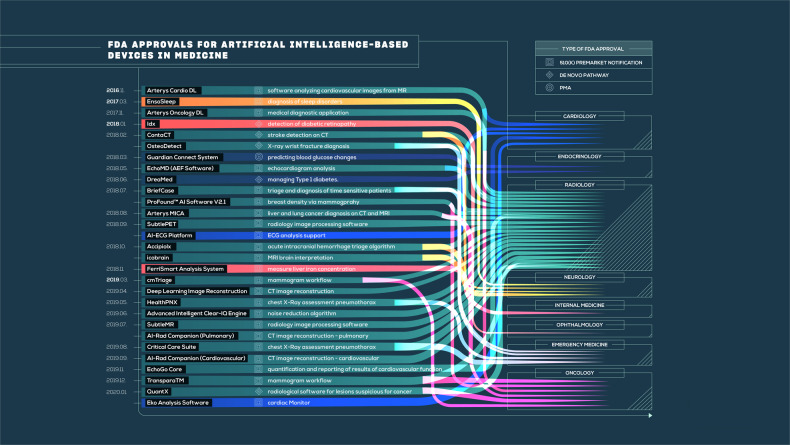
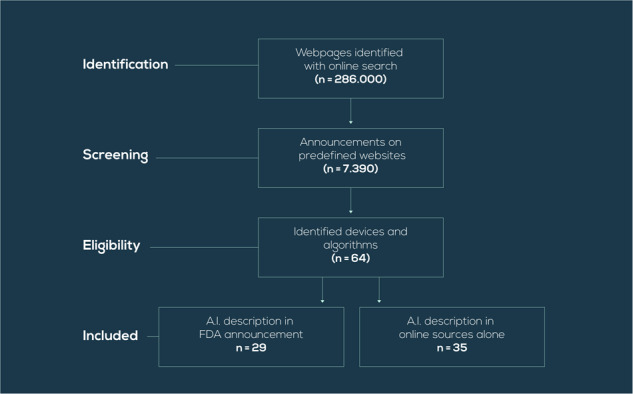
At the beginning of the artificial intelligence (AI)/machine learning (ML) era, the expectations are high, and experts foresee that AI/ML shows potential for diagnosing, managing and treating a wide variety of medical conditions. However, the obstacles for implementation of AI/ML in daily clinical practice are numerous, especially regarding the regulation of these technologies. Therefore, we provide an insight into the currently available AI/ML-based medical devices and algorithms that have been approved by the US Food & Drugs Administration (FDA). We aimed to raise awareness of the importance of regulatory bodies, clearly stating whether a medical device is AI/ML based or not. Cross-checking and validating all approvals, we identified 64 AI/ML based, FDA approved medical devices and algorithms. Out of those, only 29 (45%) mentioned any AI/ML-related expressions in the official FDA announcement. The majority (85.9%) was approved by the FDA with a 510(k) clearance, while 8 (12.5%) received de novo pathway clearance and one (1.6%) premarket approval (PMA) clearance. Most of these technologies, notably 30 (46.9%), 16 (25.0%), and 10 (15.6%) were developed for the fields of Radiology, Cardiology and Internal Medicine/General Practice respectively. We have launched the first comprehensive and open access database of strictly AI/ML-based medical technologies that have been approved by the FDA. The database will be constantly updated.
Overview
The claims and statistics of this paper haven’t been checked yet.
Free: it reads the open-access text and checks the first 5 claims that cite a source we can check. Create a free account to check every claim.
Integrity signals
Registry
Cites
Statistics
Figures
Verification
Claims the paper makes
The claims and statistics of this paper haven’t been checked yet.
Free: it reads the open-access text and checks the first 5 claims that cite a source we can check. Create a free account to check every claim.
Claims other papers make about this one
Each is checked against this paper’s own text: does it say what the citing paper says it does?
The source backs part of the claim, not all of it — or backs it for a different population, condition or comparison.
In the citing paper
“Dozens of companies have obtained US FDA and European CE approval for medical imaging AI 37 , and commercial markets have begun to form as sustainable business models are created.”
From Deep learning-enabled medical computer vision (2021) · cites this paper as [37]
Experimental — accuracy not yet measuredThe source backs part of the claim, not all of it — or backs it for a different population, condition or comparison.
In the citing paper
“The majority of AI interventions that are close to translation are in the field of medical diagnostics.3”
From Developing a reporting guideline for artificial intelligence-centred diagnostic test accuracy studies: the STARD-AI protocol (2021) · cites this paper as [3]
Experimental — accuracy not yet measuredThe source backs part of the claim, not all of it — or backs it for a different population, condition or comparison.
In the citing paper
“Moreover, diagnostics constitutes a substantial proportion of clinical AI focus, with most AI devices achieving regulatory approval thus far belonging to the diagnostic field 26 .”
From The STARD-AI reporting guideline for diagnostic accuracy studies using artificial intelligence (2025) · cites this paper as [26]
Experimental — accuracy not yet measuredThe cited source says what the claim attributes to it.
In the citing paper
“To date, 64 AI-powered medical devices and algorithms have been approved by the Food and Drug Administration in the United States [8].”
From Randomized Controlled Trials of Artificial Intelligence in Clinical Practice: Systematic Review (2022) · cites this paper as [8]
The cited source says what the claim attributes to it.
In the citing paper
“Another obstacle to the implementation of AI or ML in daily clinical practice is the regulation of these technologies [8].”
From Randomized Controlled Trials of Artificial Intelligence in Clinical Practice: Systematic Review (2022) · cites this paper as [8]
7 more claims about this paper
Create a free account to see every claim other papers make about this one.
Self-check
Percentages, sums and reported differences re-computed from the paper’s own numbers.
The self-check needs the paper’s full text.
Citations
Cites
High-performance medicine: the convergence of human and artificial intelligence
Topol, E. J. (2019) · Nature Medicine · doi:10.1038/s41591-018-0300-7 · Cited by 10,450 · cited 1×
“Despite its promise, the obstacles for implementation of AI/ML in daily clinical practice are numerous 10 .”
BackgroundWang, X., Peng, Y., Lu, L., Lu, Z., Bagheri, M., & Summers, R. M. (2017) · 2017 IEEE Conference on Computer Vision and Pattern Recognition (CVPR) · doi:10.1109/cvpr.2017.369 · Cited by 4,616
Deep Learning—A Technology With the Potential to Transform Health Care
Hinton, G. (2018) · JAMA · doi:10.1001/jama.2018.11100 · Cited by 667
Brown, J. M., Campbell, J. P., Beers, A., Chang, K., Ostmo, S., Chan, R. V. P., Dy, J., Erdogmus, D., Ioannidis, S., Kalpathy-Cramer, J., et al. (2018) · JAMA Ophthalmology · doi:10.1001/jamaophthalmol.2018.1934 · Cited by 657 · cited 1×
“Indeed, AI/ML-based technologies have been shown to support several medical specialties from radiology 2 and oncology 3 to ophthalmology 4 and general medical decision-making 5 .”
BackgroundArtificial Intelligence in Health Care: A Report From the National Academy of Medicine
Matheny, M. E., Whicher, D., & Thadaney Israni, S. (2020) · JAMA · doi:10.1001/jama.2019.21579 · Cited by 628
Wang, X., Peng, Y., Lu, L., Lu, Z., Bagheri, M., & Summers, R. M. (2019) · Advances in Computer Vision and Pattern Recognition · doi:10.1007/978-3-030-13969-8_18 · Cited by 371 · cited 1×
“Indeed, AI/ML-based technologies have been shown to support several medical specialties from radiology 2 and oncology 3 to ophthalmology 4 and general medical decision-making 5 .”
BackgroundLabovitz, D. L., Shafner, L., Reyes Gil, M., Virmani, D., & Hanina, A. (2017) · Stroke · doi:10.1161/strokeaha.116.016281 · Cited by 311
Horng, S., Sontag, D. A., Halpern, Y., Jernite, Y., Shapiro, N. I., & Nathanson, L. A. (2017) · PLOS ONE · doi:10.1371/journal.pone.0174708 · Cited by 310
van der Heijden, A. A., Abramoff, M. D., Verbraak, F., van Hecke, M. V., Liem, A., & Nijpels, G. (2018) · Acta Ophthalmologica · doi:10.1111/aos.13613 · Cited by 296
Artificial intelligence and the future of psychiatry: Insights from a global physician survey
Doraiswamy, P. M., Blease, C., & Bodner, K. (2020) · Artificial Intelligence in Medicine · doi:10.1016/j.artmed.2019.101753 · Cited by 253
Research works printed but not linked: 1
- Wang T Outpatient clinic process enhancement at children’s hospital: empoweredby information technology Chin. J. Hosp. Adm. 2018 34 753 755
Cited by
Items 201–300 of 1,000
Machine Learning Uncovers Adverse Drug Effects on Intestinal Bacteria
McCoubrey, L. E., Elbadawi, M., Orlu, M., Gaisford, S., & Basit, A. W. (2021) · Pharmaceutics · doi:10.3390/pharmaceutics13071026 · Cited by 59
Evaluating consumer and clinical sleep technologies: an American Academy of Sleep Medicine update
Schutte-Rodin, S., Deak, M. C., Khosla, S., Goldstein, C. A., Yurcheshen, M. E., Chiang, A. A.-P., Gault, D., Kern, J., O’Hearn, D. J., Ryals, S. M., et al. (2021) · Journal of Clinical Sleep Medicine · doi:10.5664/jcsm.9580 · Cited by 60
Abdar, M., Khosravi, A., Islam, S. M. S., Acharya, U. R., & Vasilakos, A. V. (2022) · IEEE Systems, Man, and Cybernetics Magazine · doi:10.1109/msmc.2022.3150144 · Cited by 55
Machine learning and pre-medical education
Kolachalama, V. B. (2022) · Artificial Intelligence in Medicine · doi:10.1016/j.artmed.2022.102313 · Cited by 50
“Since this approval, several other AI-based medical devices and algorithms have undergone regulatory clearance [3], and many more of them are in the pipeline to get reviewed and potentially gain FDA approval.”
BackgroundMedical school curriculum in the digital age: perspectives of clinical educators and teachers
Zainal, H., Xin, X., Thumboo, J., & Fong, K. Y. (2022) · BMC Medical Education · doi:10.1186/s12909-022-03454-z · Cited by 59
“Only about 16% were for internal medicine and general practices [43].”
BackgroundThe illusion of safety: A report to the FDA on AI healthcare product approvals
Abulibdeh, R., Celi, L. A., & Sejdić, E. (2025) · PLOS Digital Health · doi:10.1371/journal.pdig.0000866 · Cited by 58
“This foundational approach aimed to encourage innovation but failed to address the complexities of assessing safety and efficacy in AI systems [10,11].”
Henzler, D., Schmidt, S., Koçar, A., Herdegen, S., Lindinger, G. L., Maris, M. T., Bak, M. A. R., Willems, D. L., Tan, H. L., Lauerer, M., et al. (2025) · BMC Health Services Research · doi:10.1186/s12913-025-12664-2 · Cited by 54
“The search was restricted to original articles published in 2017 or later since following the first FDA approval of AI/ML medical technologies in the year 2016, with three approvals at the end of the year 2017 [17], there has been exponential growth in the application of AI in healthcare [18].”
Moving towards vertically integrated artificial intelligence development
Zhang, J., Budhdeo, S., William, W., Cerrato, P., Shuaib, H., Sood, H., Ashrafian, H., Halamka, J., & Teo, J. T. (2022) · npj Digital Medicine · doi:10.1038/s41746-022-00690-x · Cited by 54
“…in the application of arti fi cial intelligence (AI) to human health, including exponentially increasing published research since 2016 1 , increasing healthcare provider interest in AI solutions 2,3 , soaring investment into AI startups 4,5 , and year-on-year increases in regulatory approvals 6,7 .”
BackgroundMethodShin, H. J., Son, N., Kim, M. J., & Kim, E. (2022) · Scientific Reports · doi:10.1038/s41598-022-14519-w · Cited by 59
“An AI-based approach has been widely developed and studied for medical imaging, especially for chest radiology 10 .”
BackgroundTowards equitable AI in oncology
Viswanathan, V. S., Parmar, V. V., & Madabhushi, A. (2024) · Nature Reviews Clinical Oncology · doi:10.1038/s41571-024-00909-8 · Cited by 56
“Hence, tailored evaluation criteria and approval pathways are necessary to ensure AI devices meet essential minimum standards of safety, efficacy and clinical utility 81 .”
Das, S., Mazumdar, H., Khondakar, K. R., & Kaushik, A. K. (2024) · BMEMat · doi:10.1002/bmm2.12117 · Cited by 65
Koch, L. M., Baumgartner, C. F., & Berens, P. (2024) · npj Digital Medicine · doi:10.1038/s41746-024-01085-w · Cited by 53
“Undertheseregulations,arti fi cial intelligence (AI) algorithms for the automated analysis of retinal fundus images were among the fi rst to be approved and to be commercially available 3 .”
MethodHamamoto, R., Koyama, T., Kouno, N., Yasuda, T., Yui, S., Sudo, K., Hirata, M., Sunami, K., Kubo, T., Takasawa, K., et al. (2022) · Experimental Hematology & Oncology · doi:10.1186/s40164-022-00333-7 · Cited by 48
“Second, to date, medical image analysis has been the leading medical AI research and development method, and most AI-based medical device programs approved by the FDA are also targeted at medical image analysis [30, 31, 99, 180, 181].”
MethodAnxiety about artificial intelligence from patient and doctor-physician
Li, W., & Liu, X. (2024) · Patient Education and Counseling · doi:10.1016/j.pec.2024.108619 · Cited by 54
Artificial intelligence in multiparametric magnetic resonance imaging: A review
Li, C., Li, W., Liu, C., Zheng, H., Cai, J., & Wang, S. (2022) · Medical Physics · doi:10.1002/mp.15936 · Cited by 58
New frontiers in embryo selection
Glatstein, I. Z., Chávez-Badiola, A., & Curchoe, C. L. (2023) · Journal of Assisted Reproduction and Genetics · doi:10.1007/s10815-022-02708-5 · Cited by 63
“Conflict of interest CLC is founder and shareholder of ART Compass, IG is founder of Conceive NJ, and ACB is CEO and a shareholder at IVF 2.0 LTD.”
BackgroundInfluentialBiomarkers of Aging and Relevant Evaluation Techniques: A Comprehensive Review
Xue, T., Zhu, Z., Wang, L., Li, C., Sun, L., Wang, W., & Gong, W. (2024) · Aging and Disease · doi:10.14336/ad.2023.00808-1 · Cited by 63
“The FDA has also approved the creation of the first fully open-access database for AI/machine learning (ML)- based medical technologies, which will be continuously updated [237].”
BackgroundAI-powered techniques in anatomical imaging: Impacts on veterinary diagnostics and surgery
Vickram, A. S., Infant, S. S., Priyanka, & Chopra, H. (2024) · Annals of Anatomy - Anatomischer Anzeiger · doi:10.1016/j.aanat.2024.152355 · Cited by 59
Mohammed, S., & Malhotra, N. (2025) · BenchCouncil Transactions on Benchmarks Standards and Evaluations · doi:10.1016/j.tbench.2025.100215 · Cited by 66
Kim, E., Fischetti, A. J., Sreetharan, P., Weltman, J. G., & Fox, P. R. (2022) · Veterinary Radiology & Ultrasound · doi:10.1111/vru.13062 · Cited by 55
Artificial Intelligence to Reduce Ocular Health Disparities: Moving From Concept to Implementation
Campbell, J. P., Mathenge, C., Cherwek, H., Balaskas, K., Pasquale, L. R., Keane, P. A., & Chiang, M. F. (2021) · Translational Vision Science & Technology · doi:10.1167/tvst.10.3.19 · Cited by 54
Advancing food security: The role of machine learning in pathogen detection
Onyeaka, H. N., Akinsemolu, A. A., Miri, T., Nnaji, N. D., Okonkwo, C. E., Tamasiga, P., Pang, G., & Al-Sharify, Z. T. (2024) · Applied Food Research · doi:10.1016/j.afres.2024.100532 · Cited by 50
Belciug, S. (2022) · Computers in Biology and Medicine · doi:10.1016/j.compbiomed.2022.105623 · Cited by 55
“The Food and Drug Administration has already granted the regulatory approval for select DL diagnostic software to be used in clinical practice [19,20].”
BackgroundMethodArtificial Intelligence in Emergency Medicine: Benefits, Risks, and Recommendations
Vearrier, L., Derse, A. R., Basford, J. B., Larkin, G. L., & Moskop, J. C. (2022) · The Journal of Emergency Medicine · doi:10.1016/j.jemermed.2022.01.001 · Cited by 49
Medical reasoning in LLMs: an in-depth analysis of DeepSeek R1
Moëll, B., Sand Aronsson, F., & Akbar, S. (2025) · Frontiers in Artificial Intelligence · doi:10.3389/frai.2025.1616145 · Cited by 49
“• Situated/distributed cognition: Corresponds to retrieval-augmented generation (RAG) (Lewis et al., 2020) and mixture-of-experts (MoE) (Li and Zhou, 2024) .”
Leveraging physiology and artificial intelligence to deliver advancements in health care
Zhang, A., Wu, Z., Wu, E., Wu, M. A., Snyder, M. P., Zou, J., & Wu, J. C. (2023) · Physiological Reviews · doi:10.1152/physrev.00033.2022 · Cited by 51
Perumal, M. K. K., Renuka, R. R., Kumar, S. S., & Natarajan, P. M. (2025) · Frontiers in Oral Health · doi:10.3389/froh.2025.1592428 · Cited by 73
Tangri, N., Cheungpasitporn, W., Crittenden, S. D., Fornoni, A., Peralta, C. A., Singh, K., Usvyat, L. A., Waterman, A. D., & on behalf of the American Society of Nephrology (ASN) Artificial Intelligence (AI) Workgroup (2025) · Journal of the American Society of Nephrology · doi:10.1681/asn.0000000929 · Cited by 53
Clement, J., & Maldonado, A. Q. (2021) · Frontiers in Immunology · doi:10.3389/fimmu.2021.694222 · Cited by 48
Economic Evaluations of Artificial Intelligence in Ophthalmology
Ruamviboonsuk, P., Chantra, S., Seresirikachorn, K., Ruamviboonsuk, V., & Sangroongruangsri, S. (2021) · Asia-Pacific Journal of Ophthalmology · doi:10.1097/apo.0000000000000403 · Cited by 50
“26 Notably, IDx-DR underwent the Automatic Class III or De Novo premarket pathway and achieved Breakthrough Device designation.”
MethodThe unmet promise of trustworthy AI in healthcare: why we fail at clinical translation
Bürger, V. K., Amann, J., Bui, C. K. T., Fehr, J., & Madai, V. I. (2024) · Frontiers in Digital Health · doi:10.3389/fdgth.2024.1279629 · Cited by 56
Linguraru, M. G., Bakas, S., Aboian, M., Chang, P., Flanders, A. E., Kalpathy–Cramer, J., Kitamura, F., Lungren, M. P., Mongan, J., Prevedello, L. M. S., et al. (2024) · Radiology Artificial Intelligence · doi:10.1148/ryai.240225 · Cited by 52
Manlhiot, C., den Eynde, J. V., Kutty, S., & Ross, H. J. (2021) · Canadian Journal of Cardiology · doi:10.1016/j.cjca.2021.11.009 · Cited by 55
Deep Learning for Orthopedic Disease Based on Medical Image Analysis: Present and Future
Lee, J. H., & Chung, S. W. (2022) · Applied Sciences · doi:10.3390/app12020681 · Cited by 48
On the role of deep learning model complexity in adversarial robustness for medical images
Rodriguez, D., Nayak, T., Chen, Y., Krishnan, R., & Huang, Y. (2022) · BMC Medical Informatics and Decision Making · doi:10.1186/s12911-022-01891-w · Cited by 54
“Several DL based medical devices and algorithms in healthcare have been approved by the FDA to assist in diagnosing disease such as HealthPNX, Critical Care Suite & SubtleMR [9].”
MethodFritz, J. M., Kijowski, R., & Recht, M. P. (2021) · Skeletal Radiology · doi:10.1007/s00256-021-03802-y · Cited by 47
“Despite a growing number of regulatory agency-approved DL algorithms and artificial intelligence products [41], widespread adoption by musculoskeletal radiologists has not yet occurred.”
BackgroundHow will artificial intelligence change medical training?
Kundu, S. (2021) · Communications Medicine · doi:10.1038/s43856-021-00003-5 · Cited by 43
Korfiatis, P., Kline, T. L., Meyer, H. M., Khalid, S., Leiner, T., Loufek, B. T., Blezek, D., Vidal, D. E., Hartman, R. P., Joppa, L. J., et al. (2025) · Mayo Clinic Proceedings Digital Health · doi:10.1016/j.mcpdig.2024.100188 · Cited by 46
The impact of ChatGPT and LLMs on medical imaging stakeholders: Perspectives and use cases
Yang, J., Li, H. B., & Wei, D. (2023) · Meta-Radiology · doi:10.1016/j.metrad.2023.100007 · Cited by 46
“Some have already incorporated AI into their offerings, crafting medical imaging tools that provide more accurate diagnoses and predictions [4].”
BackgroundThe current and future roles of artificial intelligence in pediatric radiology
Otjen, J. P., Moore, M. M., Romberg, E. K., Perez, F. A., & Iyer, R. S. (2021) · Pediatric Radiology · doi:10.1007/s00247-021-05086-9 · Cited by 46
“As with any clinical tool, FDA or equivalent regulatory agency clearance is recommended before use, a substantial barrier that developers must overcome [8].”
BackgroundCurrent Trends in Readmission Prediction: An Overview of Approaches
Teo, K., Yong, C. W., Chuah, J. H., Hum, Y. C., Tee, Y. K., Xia, K., & Lai, K. W. (2021) · Arabian Journal for Science and Engineering · doi:10.1007/s13369-021-06040-5 · Cited by 55
“Such data-driven approach is now the state-of-the-art methodology for various domains, such as computer vision [28], natural language processing [29], and real industrial clinical applications [30].”
BackgroundSmart Diagnostics: Combining Artificial Intelligence and In Vitro Diagnostics
McRae, M. P., Rajsri, K. S., Alcorn, T. M., & McDevitt, J. T. (2022) · Sensors · doi:10.3390/s22176355 · Cited by 53
Mehrvar, S., Himmel, L. E., Babburi, P., Goldberg, A. L., Guffroy, M., Janardhan, K. S., Krempley, A. L., & Bawa, B. (2021) · Journal of Pathology Informatics · doi:10.4103/jpi.jpi_36_21 · Cited by 49
A perspective on data sharing in digital food safety systems
Qian, C., Liu, Y., Barnett-Neefs, C., Salgia, S., Serbetci, O., Adalja, A., Acharya, J., Zhao, Q. Q., Ivanek, R., & Wiedmann, M. (2022) · Critical Reviews in Food Science and Nutrition · doi:10.1080/10408398.2022.2103086 · Cited by 46
“For example, governmental agencies might provide licenses to approved models for internal use, similar to FDA-approved medical device and algorithms (Benjamens, Dhunnoo, and Meskó 2020).”
MethodFarah, L., Davaze‐Schneider, J., Martin, T., Nguyen, P., Borget, I., & Martelli, N. (2023) · Artificial Intelligence in Medicine · doi:10.1016/j.artmed.2023.102547 · Cited by 67
Algor-ethics: charting the ethical path for AI in critical care
Montomoli, J., Bitondo, M. M., Cascella, M., Rezoagli, E., Romeo, L., Bellini, V., Semeraro, F., Gamberini, E., Frontoni, E., Agnoletti, V., et al. (2024) · Journal of Clinical Monitoring and Computing · doi:10.1007/s10877-024-01157-y · Cited by 36
Artificial intelligence in cancer research: learning at different levels of data granularity
Cirillo, D., Núñez‐Carpintero, I., & Valencia, A. (2021) · Molecular Oncology · doi:10.1002/1878-0261.12920 · Cited by 52
“At present, 6 Food and Drug Administration (FDA)-approved AI-based radiological devices with applications in oncology are available for mammography analyses and computer tomography (CT)-based lesion detection [20], and 74 AI algorithms for digital pathology have received FDA clearance [21].”
BackgroundArtificial Intelligence for Early Sepsis Detection: A Word of Caution
Schinkel, M., van der Poll, T., & Wiersinga, W. J. (2023) · American Journal of Respiratory and Critical Care Medicine · doi:10.1164/rccm.202212-2284vp · Cited by 49
Meskó, B., Kristóf, T., Dhunnoo, P., Árvai, N., & Katonai, G. (2024) · Journal of Medical Internet Research · doi:10.2196/57148 · Cited by 46
“The US FDA regulating AI in the health care sector is an exemplary story to underscore this [79].”
Self-citationEfficacy of Various Dry Electrode‐Based ECG Sensors: A Review
Kumar, G., Duggal, B., Singh, J. P., & Shrivastava, Y. (2024) · Journal of Biomedical Materials Research Part A · doi:10.1002/jbm.a.37845 · Cited by 45
El-Sayed, A., Lovat, L. B., & Ahmad, O. F. (2025) · Gastroenterology · doi:10.1053/j.gastro.2025.01.254 · Cited by 47
Putting explainable AI in context: institutional explanations for medical AI
Theunissen, M., & Browning, J. (2022) · Ethics and Information Technology · doi:10.1007/s10676-022-09649-8 · Cited by 37
Taha, M., & Morren, J. A. (2023) · Muscle & Nerve · doi:10.1002/mus.28023 · Cited by 49
“105,106 In response to the evolving nature of technologies, the FDA introduced a new regulatory strategy called the total product lifecycle, which allows for continuous modifications of algorithms as they develop and learning occurs over time, enabling effective regulation of software as medical…”
BackgroundLung Nodule Malignancy Prediction in Sequential CT Scans: Summary of ISBI 2018 Challenge
Balagurunathan, Y., Beers, A. L., McNitt‐Gray, M. F., Hadjiiski, L. M., Napel, S. A., Goldgof, D. B., Perez, G., Arbeláez, P., Mehrtash, A., Kapur, T., et al. (2021) · IEEE Transactions on Medical Imaging · doi:10.1109/tmi.2021.3097665 · Cited by 48
Machine learning models for decision support in epilepsy management: A critical review
Smolyansky, E. D., Hakeem, H., Ge, Z., Chen, Z. Z., & Kwan, P. (2021) · Epilepsy & Behavior · doi:10.1016/j.yebeh.2021.108273 · Cited by 49
Urtnasan, E., Joo, E. Y., & Lee, K.-H. (2021) · Diagnostics · doi:10.3390/diagnostics11112054 · Cited by 46
“Currently, there are approximately thirty AIbased medical devices approved by the FDA as software as a device services for digital healthcare and digital medicine [30].”
BackgroundREVIEW OF AI APPLICATIONS IN HEALTHCARE: COMPARATIVE INSIGHTS FROM THE USA AND AFRICA
Babarinde, A. O., Ayo-Farai, O., Maduka, C. P., Okongwu, C. C., Ogundairo, O., & Sodamade, O. (2023) · International Medical Science Research Journal · doi:10.51594/imsrj.v3i3.641 · Cited by 42
Benefit-Risk Reporting for FDA-Cleared Artificial Intelligence−Enabled Medical Devices
Lin, J. C., Jain, B., Iyer, J. M., Rola, I., Srinivasan, A. R., Kang, C., Patel, H., & Parikh, R. B. (2025) · JAMA Health Forum · doi:10.1001/jamahealthforum.2025.3351 · Cited by 42
Automated 3D liver segmentation from hepatobiliary phase MRI for enhanced preoperative planning
Oh, N., Kim, J., Rhu, J., Jeong, W. K., Choi, G., Kim, J. M., & Joh, J. (2023) · Scientific Reports · doi:10.1038/s41598-023-44736-w · Cited by 46
How to Promote AI in the US Federal Government: Insights from Policy Process Frameworks
Khan, M. S., Shoaib, A., & Arledge, E. (2023) · Government Information Quarterly · doi:10.1016/j.giq.2023.101908 · Cited by 48
Ong, A. Y., Taribagil, P., Sevgi, M., Kale, A. U., Dow, E. R., Macdonald, T., Kras, A., Maniatopoulos, G., Liu, X., Keane, P. A., et al. (2025) · npj Digital Medicine · doi:10.1038/s41746-025-01726-8 · Cited by 46
“Other groups have developed an open-access database summarising information about FDA-approved AIaMDs 49 .”
Rajendran, A., Rajan, R. A., Balasubramaniyam, S., & Elumalai, K. (2025) · iRadiology · doi:10.1002/ird3.70027 · Cited by 43
Using artificial intelligence for diabetic retinopathy screening: Policy implications
Raman, R., Dasgupta, D., Ramasamy, K., George, R. J., Mohan, V., & Ting, D. S. W. (2021) · Indian Journal of Ophthalmology · doi:10.4103/ijo.ijo_1420_21 · Cited by 46
“[19] More recently in 2020, FDA gave clearance to another algorithm, EyeArt system for DR screening.”
MethodThe Perception of Health Professionals in Bangladesh toward the Digitalization of the Health Sector
Hossain, M. S., Syeed, M. M. M., Fatema, K., & Uddin, M. F. (2022) · International Journal of Environmental Research and Public Health · doi:10.3390/ijerph192013695 · Cited by 47
Shelmerdine, S. C., Rosendahl, K., & Arthurs, O. J. (2022) · Pediatric Radiology · doi:10.1007/s00247-021-05195-5 · Cited by 41
“Although it is encouraging that several AI tools have now ach i eved Un i t ed S t a t e s Food and Drug Administration (FDA) approval for clinical usage [8], there are none related to paediatric imaging.”
BackgroundUnderstanding Organizations’ Artificial Intelligence Journey: A Qualitative Approach
Radhakrishnan, J., Gupta, S., & Prashar, S. (2022) · Pacific Asia journal of the Association for Information Systems · doi:10.17705/1pais.14602 · Cited by 55
Artificial Intelligence in Obstetrics and Gynecology: Transforming Care and Outcomes
Patel, D. J., Chaudhari, K., Acharya, N., Shrivastava, D., & Muneeba, S. (2024) · Cureus · doi:10.7759/cureus.64725 · Cited by 52
Kaźmierska, J., Hope, A. J., Spezi, E., Beddar, S. A., Nailon, W. H., Osong, B., Ankolekar, A., Choudhury, A., Dekker, A. L. A. J., Redalen, K. R., et al. (2020) · Radiotherapy and Oncology · doi:10.1016/j.radonc.2020.09.054 · Cited by 51
Patcas, R., Bornstein, M. M., Schätzle, M. A., & Timofte, R. (2022) · Clinical Oral Investigations · doi:10.1007/s00784-022-04724-2 · Cited by 37
“Moreover, the algorithms should be monitored for their performance, robustness, and resilience to withstand changing clinical inputs and conditions [46].”
BackgroundAboian, M., Bousabarah, K., Kazarian, E., Zeevi, T., Holler, W., Merkaj, S., Petersen, G. C., Bahar, R. C., Subramanian, H. E., Sunku, P., et al. (2022) · Frontiers in Neuroscience · doi:10.3389/fnins.2022.860208 · Cited by 44
“…impact in the development of personalized medicine solutions in medical imaging, but only a few of these algorithms are readily available in standard clinical practice, regardless of whether they are FDA approved (ACR Data Science Institute, n.d.; Benjamens et al., 2020; Garderen et al., 2021).”
BackgroundMethodInfluentialArmero, W., Gray, K. J., Fields, K. G., Cole, N. M., Bates, D. W., & Kovacheva, V. P. (2022) · Journal of the American Medical Informatics Association · doi:10.1093/jamia/ocac200 · Cited by 37
Healthcare digital transformation through the adoption of artificial intelligence
Wong, B. K. M., Vengusamy, S., & Bastrygina, T. (2024) · Elsevier eBooks · doi:10.1016/b978-0-443-21598-8.00014-2 · Cited by 50
Chen, C., & Cui, Z. (2025) · Journal of Medical Internet Research · doi:10.2196/66083 · Cited by 46
“In the United States, the Food and Drug Administration has approved artificial intelligence (AI) use in various health care scenarios [1].”
Deep Learning of Histopathological Features for the Prediction of Tumour Molecular Genetics
Murchan, P., O’Brien, C. P., O’Connell, S., McNevin, C. S., Baird, A., Sheils, O. M., Broin, P. Ó., & Finn, S. P. (2021) · Diagnostics · doi:10.3390/diagnostics11081406 · Cited by 46
Vervoort, D., Tam, D. Y., & Wijeysundera, H. C. (2021) · Canadian Journal of Cardiology · doi:10.1016/j.cjca.2021.08.015 · Cited by 42
Artificial intelligence in arthroplasty
Purnomo, G., Yeo, S.-J., & Liow, M. H. L. (2021) · Arthroplasty · doi:10.1186/s42836-021-00095-3 · Cited by 41
“Some examples of clinical applications that have been approved by the US Food and Drug Administration (FDA) include Arterys for cardiac magnetic resonance image analysis, Idx for detection of diabetic retinopathy, and MammoScreen for breast cancer screening [25, 26].”
Unsworth, H., Wolfram, V., Dillon, B., Salmon, M., Greaves, F., Liu, X., MacDonald, T., Denniston, A. K., Sounderajah, V., Ashrafian, H., et al. (2022) · The Lancet Digital Health · doi:10.1016/s2589-7500(22)00030-9 · Cited by 40
Aisu, N., Miyake, M., Takeshita, K., Akiyama, M., Kawasaki, R., Kashiwagi, K., Sakamoto, T., Oshika, T., & Tsujikawa, A. (2022) · PLOS Digital Health · doi:10.1371/journal.pdig.0000001 · Cited by 41
“As this is the dawn of AI-based medical devices, the state of regulatory-approved AI-based medical devices in each country has not been sufficiently described; for instance, only one review article has reported the status of the United States [14].”
BackgroundMethodInfluentialShams, A. M. (2024) · Diagnostics · doi:10.3390/diagnostics14192174 · Cited by 49
“Currently, AI technologies are acknowledged to have some clinical uses, mainly in radiology [22], endoscopy, dermatology, and pathology, encompassing early imaging screening and diagnosis, detection of different pathological biomarkers, and optimized selection of therapeutic plans [20,23–27].”
BackgroundMethodChallenges in translational machine learning
Couckuyt, A., Seurinck, R., Emmaneel, A., Quintelier, K. L. A., Novák, D., Gassen, S. V., & Saeys, Y. (2022) · Human Genetics · doi:10.1007/s00439-022-02439-8 · Cited by 42
“A review by Benjamens et al. (2020) surveyed the literature for AI-or ML-assisted devices and algorithms that were approved by the FDA as “software as a medical device” and came up with 29 examples.”
MethodLi, P., Williams, R., Gilbert, S., & Anderson, S. (2023) · Law Technology and Humans · doi:10.5204/lthj.3073 · Cited by 41
Rom, Y., Aviv, R., Ianchulev, T., & Dvey-Aharon, Z. (2022) · BMJ Open Ophthalmology · doi:10.1136/bmjophth-2022-001140 · Cited by 34
Paiste, H. J., Godwin, R. C., Smith, A. D., Berkowitz, D. E., & Melvin, R. L. (2024) · Frontiers in Digital Health · doi:10.3389/fdgth.2024.1316931 · Cited by 41
Framework for AI Adoption in Healthcare Sector: Integrated DELPHI, ISM–MICMAC Approach
Gupta, A. K., & Srivastava, M. K. (2024) · IEEE Transactions on Engineering Management · doi:10.1109/tem.2024.3386580 · Cited by 44
“In addition, the stringent (rigorous) requirements imposed by regulators for medical device licensing (to supply in the market) create a huge void between suppliers and service providers [11].”
BackgroundMethodInfluentialCheXstray: Real-time Multi-Modal Data Concordance for Drift Detection in Medical Imaging AIPreprint
Soin, A., Merkow, J., Long, J., Cohen, J., Saligrama, S., Kaiser, S., Borg, S., Tarapov, I., & Lungren, M. P. (2022) · arXiv (Cornell University) · doi:10.48550/arxiv.2202.02833 · Cited by 37
“The growth is evident by both the rising volume of academic publications and the acceleration of commercial approvals for these applications in clinical practice [2, 3, 1, 4, 5].”
BackgroundA bibliometric analysis of the advance of artificial intelligence in medicine
Lin, M., Lin, L., Lin, L., Lin, Z., & Yan, X. (2025) · Frontiers in Medicine · doi:10.3389/fmed.2025.1504428 · Cited by 36
Deng, J., Elghobashy, M. E., Zang, K., Patel, S. K., Guo, E., & Heybati, K. (2025) · Medical Decision Making · doi:10.1177/0272989x251343082 · Cited by 41
“54 Certain ML-based tools deemed ‘‘high risk’’ for patients under the current FDA regulatory framework may even require an extensive premarket approval process involving detailed clinical validation as well as ongoing postmarket surveillance to ensure patient safety.”
The Need for Medical Artificial Intelligence That Incorporates Prior Images
Acosta, J. N., Falcone, G. J., & Rajpurkar, P. (2022) · Radiology · doi:10.1148/radiol.212830 · Cited by 36
Insights and trends review: artificial intelligence in hand surgery
Miller, R., Farnebo, S. J., & Horwitz, M. D. (2023) · Journal of Hand Surgery (European Volume) · doi:10.1177/17531934231152592 · Cited by 36
The leading global health challenges in the artificial intelligence era
Zaidan, A. M. (2023) · Frontiers in Public Health · doi:10.3389/fpubh.2023.1328918 · Cited by 37
McLean, A. L., Wu, Y., McLean, A. C. L., & Hristidis, V. (2024) · Journal of Cancer Research and Clinical Oncology · doi:10.1007/s00432-024-05673-x · Cited by 39
Zsidai, B., Kaarre, J., Narup, E., Senorski, E. H., Pareek, A., Grassi, A., Ley, C., Longo, U. G., Herbst, E., Hirschmann, M. T., et al. (2024) · Journal of Experimental Orthopaedics · doi:10.1002/jeo2.12025 · Cited by 35
“ML is probably the most widely used form of AI in medical research with clinical translation [6].”
MethodArpaïa, P., Bracale, U. M., Corcione, F., Benedetto, E. D., Bernardo, A. D., Capua, V. D., Duraccio, L., Peltrini, R., & Prevete, R. (2022) · Scientific Reports · doi:10.1038/s41598-022-16030-8 · Cited by 35
“The capillary diffusion of powerful calculators, along with the effort of researchers to develop effective algorithms 23–25 have contributed to the widespread adoption of this technology in a large variety of application contexts, such as healthcare 26,27 .”
BackgroundAlgorithmovigilance, lessons from pharmacovigilance
Balendran, A., Benchoufi, M., Evgeniou, T., & Ravaud, P. (2024) · npj Digital Medicine · doi:10.1038/s41746-024-01237-y · Cited by 34
“Given the scale and potential of AI medical devices 12 , ensuring their proper monitoring and potential recall or withdrawal is necessary to limit their potential negative impact, similar to drugs.”
BackgroundNo such thing as one-size-fits-all in AI ethics frameworks: a comparative case study
Qiang, V., Rhim, J., & Moon, A. (2023) · AI & Society · doi:10.1007/s00146-023-01653-w · Cited by 38
“(Health Canada 2004) Other regulatory agencies like the FDA have stringent assessment processes that may be unduly tedious and time consuming for AI developers (Benjamens et al. 2020).”
Jacobs, S. M., Lundy, N. N., Issenberg, S. B., & Chandran, L. (2023) · JMIR Medical Education · doi:10.2196/50903 · Cited by 33
“However, without proper training, how effectively will learners and clinicians explain an AI-derived prognosis calculator, Food and Drug Administration (FDA)–approved AI health care apps [43], or other more opaque forms of AI implementation?”
Backgroundvan Genderen, M. E., van de Sande, D., Hooft, L., Reis, A. A., Cornet, A. D., Oosterhoff, J. H. F., van der Ster, B. J. P., Huiskens, J., Townsend, R., van Bommel, J., et al. (2024) · npj Digital Medicine · doi:10.1038/s41746-024-01104-w · Cited by 36
Arjmandmazidi, S., Heidari, H. R., Ghasemnejad, T., Mori, Z., Molavi, L., Meraji, A., Kaghazchi, S., Aghdam, E. M., & Montazersaheb, S. (2025) · Journal of Translational Medicine · doi:10.1186/s12967-025-06488-1 · Cited by 34
The potential of AI in cancer care and research
Sharpless, N. E., & Kerlavage, A. R. (2021) · Biochimica et Biophysica Acta (BBA) - Reviews on Cancer · doi:10.1016/j.bbcan.2021.188573 · Cited by 37
Metadata
- Authors
- Benjamens, S., Dhunnoo, P., & Meskó, B.
- Affiliations
- University Medical Center Groningen (NL)
- Semmelweis University (HU)
- Corresponding author
- Meskó, Bertalan
- Venue
- npj Digital Medicine
- Published
- 2020-09-11
- Volume
- 3
- Issue
- 1
- Pages
- 118-118
- ISSN
- 2398-6352 (ISSN-L)
- PMC
- PMC7486909
- OpenAlex
- W3086667591
- Semantic Scholar
- 0623ccb3694aae29857890809afe5868931a98ec
- Cited by
- 1,215
- References
- 24
- Citations by year
- 2026: 219 · 2025: 208 · 2024: 212 · 2023: 227 · 2022: 188 · 2021: 153 · 2020: 7
- FWCI
- 42.33
- Type
- journal article
- Language
- en
- Open access
- gold
- doi.org
- Licence
- cc-by
- creativecommons.org/licenses/by/4.0 (tdm)
- creativecommons.org/licenses/by/4.0 (vor)
- Locations
- npj Digital Medicine (publishedVersion, cc-by)
- PubMed Central (publishedVersion, cc-by)
- PubMed (publishedVersion)
- University of Groningen research database (University of Groningen / Centre for Information Technology) (publishedVersion, cc-by)
- DOAJ (DOAJ: Directory of Open Access Journals) (submittedVersion, cc-by-sa)
- University of Groningen research database (University of Groningen / Centre for Information Technology) (submittedVersion, cc-by)
- Topics
- Health Sciences › Medicine › Health Informatics › Artificial Intelligence in Healthcare and Education
- Health Sciences › Medicine › Public Health, Environmental and Occupational Health › Healthcare Regulation
- Physical Sciences › Computer Science › Information Systems › Internet of Things and AI
- Keywords
- artificial intelligence, machine learning, medical device regulation, 510(k) clearance, de novo pathway, premarket approval, clinical implementation of AI, radiology, online databases
About these checks
Registry, retraction, Cites and statistics results are computed, not judged, with one exception: a printed reference that no index lists is read once by a model before it counts as a citation error. Claims are extracted by a model and kept only when their quote appears verbatim in the text; each cited source is then checked, with a model’s help, for whether it says what the claim relies on. Those verdicts can be wrong — read the claim’s quote and the cited source before relying on one.
Statistics and arithmetic are recomputed, not judged.
Confidence bands are shown only for fields calibrated on our annotated test set. None is calibrated yet, so no band is shown.
What counts as a claim ›How we measure confidence ›How we check this ›
Are you an author, or do you see a problem with this page? Request a review
Data sources
Bibliographic data: Semantic Scholar, OpenAlex, Crossref.
Contains information from the Semantic Scholar Academic Graph Datasets, made available under the ODC Attribution License (ODC-BY 1.0).
Semantic Scholar’s data is described in: Kinney, R., et al. (2023). The Semantic Scholar Open Data Platform. arXiv:2301.10140.
