

The state of artificial intelligence-based FDA-approved medical devices and algorithms: an online database
Open accessThe DOI matches its Crossref record; 24 of the 24 references it cites were found in a registry or an index.
Abstract
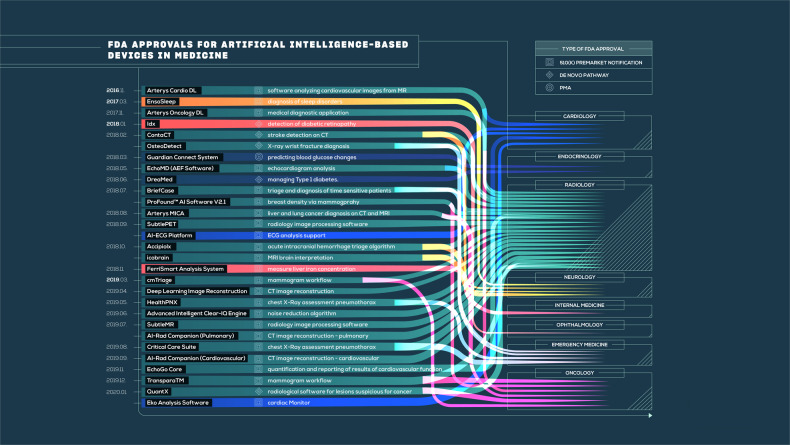
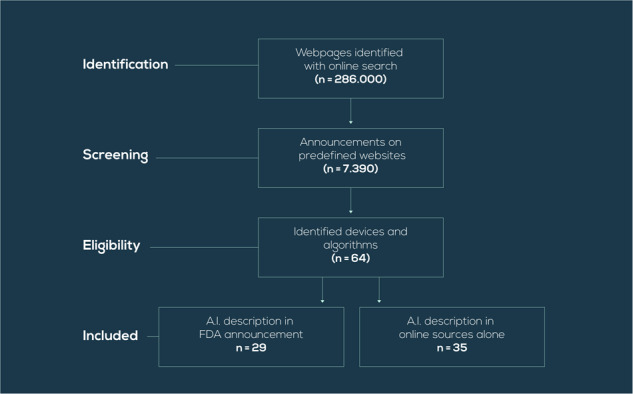
At the beginning of the artificial intelligence (AI)/machine learning (ML) era, the expectations are high, and experts foresee that AI/ML shows potential for diagnosing, managing and treating a wide variety of medical conditions. However, the obstacles for implementation of AI/ML in daily clinical practice are numerous, especially regarding the regulation of these technologies. Therefore, we provide an insight into the currently available AI/ML-based medical devices and algorithms that have been approved by the US Food & Drugs Administration (FDA). We aimed to raise awareness of the importance of regulatory bodies, clearly stating whether a medical device is AI/ML based or not. Cross-checking and validating all approvals, we identified 64 AI/ML based, FDA approved medical devices and algorithms. Out of those, only 29 (45%) mentioned any AI/ML-related expressions in the official FDA announcement. The majority (85.9%) was approved by the FDA with a 510(k) clearance, while 8 (12.5%) received de novo pathway clearance and one (1.6%) premarket approval (PMA) clearance. Most of these technologies, notably 30 (46.9%), 16 (25.0%), and 10 (15.6%) were developed for the fields of Radiology, Cardiology and Internal Medicine/General Practice respectively. We have launched the first comprehensive and open access database of strictly AI/ML-based medical technologies that have been approved by the FDA. The database will be constantly updated.
Overview
The claims and statistics of this paper haven’t been checked yet.
Free: it reads the open-access text and checks the first 5 claims that cite a source we can check. Create a free account to check every claim.
Integrity signals
Registry
Cites
Statistics
Figures
Verification
Claims the paper makes
The claims and statistics of this paper haven’t been checked yet.
Free: it reads the open-access text and checks the first 5 claims that cite a source we can check. Create a free account to check every claim.
Claims other papers make about this one
Each is checked against this paper’s own text: does it say what the citing paper says it does?
The source backs part of the claim, not all of it — or backs it for a different population, condition or comparison.
In the citing paper
“Dozens of companies have obtained US FDA and European CE approval for medical imaging AI 37 , and commercial markets have begun to form as sustainable business models are created.”
From Deep learning-enabled medical computer vision (2021) · cites this paper as [37]
Experimental — accuracy not yet measuredThe source backs part of the claim, not all of it — or backs it for a different population, condition or comparison.
In the citing paper
“The majority of AI interventions that are close to translation are in the field of medical diagnostics.3”
From Developing a reporting guideline for artificial intelligence-centred diagnostic test accuracy studies: the STARD-AI protocol (2021) · cites this paper as [3]
Experimental — accuracy not yet measuredThe source backs part of the claim, not all of it — or backs it for a different population, condition or comparison.
In the citing paper
“Moreover, diagnostics constitutes a substantial proportion of clinical AI focus, with most AI devices achieving regulatory approval thus far belonging to the diagnostic field 26 .”
From The STARD-AI reporting guideline for diagnostic accuracy studies using artificial intelligence (2025) · cites this paper as [26]
Experimental — accuracy not yet measuredThe cited source says what the claim attributes to it.
In the citing paper
“To date, 64 AI-powered medical devices and algorithms have been approved by the Food and Drug Administration in the United States [8].”
From Randomized Controlled Trials of Artificial Intelligence in Clinical Practice: Systematic Review (2022) · cites this paper as [8]
The cited source says what the claim attributes to it.
In the citing paper
“Another obstacle to the implementation of AI or ML in daily clinical practice is the regulation of these technologies [8].”
From Randomized Controlled Trials of Artificial Intelligence in Clinical Practice: Systematic Review (2022) · cites this paper as [8]
7 more claims about this paper
Create a free account to see every claim other papers make about this one.
Self-check
Percentages, sums and reported differences re-computed from the paper’s own numbers.
The self-check needs the paper’s full text.
Citations
Cites
High-performance medicine: the convergence of human and artificial intelligence
Topol, E. J. (2019) · Nature Medicine · doi:10.1038/s41591-018-0300-7 · Cited by 10,450 · cited 1×
“Despite its promise, the obstacles for implementation of AI/ML in daily clinical practice are numerous 10 .”
BackgroundWang, X., Peng, Y., Lu, L., Lu, Z., Bagheri, M., & Summers, R. M. (2017) · 2017 IEEE Conference on Computer Vision and Pattern Recognition (CVPR) · doi:10.1109/cvpr.2017.369 · Cited by 4,616
Deep Learning—A Technology With the Potential to Transform Health Care
Hinton, G. (2018) · JAMA · doi:10.1001/jama.2018.11100 · Cited by 667
Brown, J. M., Campbell, J. P., Beers, A., Chang, K., Ostmo, S., Chan, R. V. P., Dy, J., Erdogmus, D., Ioannidis, S., Kalpathy-Cramer, J., et al. (2018) · JAMA Ophthalmology · doi:10.1001/jamaophthalmol.2018.1934 · Cited by 657 · cited 1×
“Indeed, AI/ML-based technologies have been shown to support several medical specialties from radiology 2 and oncology 3 to ophthalmology 4 and general medical decision-making 5 .”
BackgroundArtificial Intelligence in Health Care: A Report From the National Academy of Medicine
Matheny, M. E., Whicher, D., & Thadaney Israni, S. (2020) · JAMA · doi:10.1001/jama.2019.21579 · Cited by 628
Wang, X., Peng, Y., Lu, L., Lu, Z., Bagheri, M., & Summers, R. M. (2019) · Advances in Computer Vision and Pattern Recognition · doi:10.1007/978-3-030-13969-8_18 · Cited by 371 · cited 1×
“Indeed, AI/ML-based technologies have been shown to support several medical specialties from radiology 2 and oncology 3 to ophthalmology 4 and general medical decision-making 5 .”
BackgroundLabovitz, D. L., Shafner, L., Reyes Gil, M., Virmani, D., & Hanina, A. (2017) · Stroke · doi:10.1161/strokeaha.116.016281 · Cited by 311
Horng, S., Sontag, D. A., Halpern, Y., Jernite, Y., Shapiro, N. I., & Nathanson, L. A. (2017) · PLOS ONE · doi:10.1371/journal.pone.0174708 · Cited by 310
van der Heijden, A. A., Abramoff, M. D., Verbraak, F., van Hecke, M. V., Liem, A., & Nijpels, G. (2018) · Acta Ophthalmologica · doi:10.1111/aos.13613 · Cited by 296
Artificial intelligence and the future of psychiatry: Insights from a global physician survey
Doraiswamy, P. M., Blease, C., & Bodner, K. (2020) · Artificial Intelligence in Medicine · doi:10.1016/j.artmed.2019.101753 · Cited by 253
Research works printed but not linked: 1
- Wang T Outpatient clinic process enhancement at children’s hospital: empoweredby information technology Chin. J. Hosp. Adm. 2018 34 753 755
Cited by
Items 301–400 of 1,000
Automated diagnosis of autism with artificial intelligence: State of the art
Valizadeh, A., Moassefi, M., Nakhostin-Ansari, A., Some’eh, S. H., Hosseini-Asl, S. H., Torbati, M. S., Aghajani, R., Ghorbani, Z. M., Oskouie, I. M., Aghajani, F., et al. (2023) · Reviews in the Neurosciences · doi:10.1515/revneuro-2023-0050 · Cited by 39
Ursin, F., Timmermann, C., Orzechowski, M., & Steger, F. (2021) · Frontiers in Medicine · doi:10.3389/fmed.2021.695217 · Cited by 32
Regulatory Considerations on the use of Machine Learning based tools in Clinical Trials
Massella, M., Dri, D. A., & Gramaglia, D. (2022) · Health and Technology · doi:10.1007/s12553-022-00708-0 · Cited by 35
“For instance, the international medical device regulators forum (IMDRF) [9] has released a framework for risk categorization based on the importance of the information provided and on the seriousness of the clinical condition, while FDA is giving various substantial contributions, for instance with the promotion of go…”
BackgroundInfluentialNovak, A., Ather, S., Gill, A., Aylward, P., Maskell, G., Cowell, G. W., Morgado, A. T. E., Duggan, T., Keevill, M., Gamble, O., et al. (2024) · Emergency Medicine Journal · doi:10.1136/emermed-2023-213620 · Cited by 34
Artificial intelligence perspective in the future of endocrine diseases
Hasanzad, M., Meybodi, H. R. A., Sarhangi, N., & Larijani, B. A. (2022) · Journal of Diabetes & Metabolic Disorders · doi:10.1007/s40200-021-00949-2 · Cited by 34
“The application of AI in medicine can be categorized in prediction, diagnosis, therapeutic approach, population health management, administration and regulation, and precision medicine [5, 10, 21].”
BackgroundMethodInfluentialRevolutionizing Medical Practice: The Impact of Artificial Intelligence (AI) on Healthcare
(2024) · Open Access Journal of Applied Science and Technology · doi:10.33140/oajast.02.01.07 · Cited by 40
Aquino, Y. S. J., Rogers, W., Jacobson, S. S., Richards, B. J., Houssami, N., Woode, M. E., Frazer, H. M. L., & Carter, S. M. (2024) · Health Policy and Technology · doi:10.1016/j.hlpt.2024.100892 · Cited by 38
Artificial Intelligence shaping the future of neurology practice
Vinny, P. W., Vishnu, V. Y., & Srivastava, M. V. P. (2021) · Medical Journal Armed Forces India · doi:10.1016/j.mjafi.2021.06.003 · Cited by 33
Selective Prediction-Set Models with Coverage Rate Guarantees
Feng, J., Sondhi, A., Perry, J., & Simon, N. (2021) · Biometrics · doi:10.1111/biom.13612 · Cited by 38
“Indeed, a growing number of ML-based software-as-a-medical devices (SaMDs) have now gained regulatory approval to analyze medical images, electronic health records, and more [4].”
Towards effective data sharing in ophthalmology: data standardization and data privacy
Halfpenny, W., & Baxter, S. L. (2022) · Current Opinion in Ophthalmology · doi:10.1097/icu.0000000000000878 · Cited by 31
“The application of deep learning to automated image-based diagnosis of diabetic retinopathy, for example, was one of the first healthcare AI algorithms to receive FDA approval and see clinical use [16,17].”
BackgroundChindelevitch, L., Jauneikaite, E., Wheeler, N. E., Allel, K., Ansiri-Asafoakaa, B. Y., Awuah, W. A., Bauer, D. C., Beisken, S., Fan, K., Grant, G. D., et al. (2022) · arXiv (Cornell University) · doi:10.48550/arxiv.2208.04683 · Cited by 37
“Most AI algorithms used for diagnostics are based on pattern recognition [80, 79].”
BackgroundMethodHenckert, D., Malorgio, A., Schweiger, G., Raimann, F. J., Piekarski, F., Zacharowski, K. D., Hottenrott, S., Meybohm, P., Tscholl, D. W., Spahn, D. R., et al. (2023) · Journal of Clinical Medicine · doi:10.3390/jcm12062096 · Cited by 36
A Justifiable Investment in AI for Healthcare: Aligning Ambition with Reality
Karpathakis, K., Morley, J., & Floridi, L. (2024) · Minds and Machines · doi:10.1007/s11023-024-09692-y · Cited by 31
“…Life Cycle regulatory approach that enables AI solutions, that have already been ‘proven’ to be safe and effective, to change along a predetermined con-trol plan if manufacturers abide by good practices (Benjamens et al., 2020; Reddy et al., 2019; U.S. Food Drug Administration., 2023a, 2023b).”
Özenbaş, C., Engin, D., Altınok, T., Akçay, E., Aktas, U., & Tabanlı, A. (2025) · Academic Radiology · doi:10.1016/j.acra.2025.01.033 · Cited by 30
Deep learning for electrocardiogram interpretation: Bench to bedside
Schots, B. B. S., Pizarro, C. S., Arends, B. K. O., Oerlemans, M. I. F. J., Ahmetagić, D., van der Harst, P., & van Es, R. (2025) · European Journal of Clinical Investigation · doi:10.1111/eci.70002 · Cited by 36
“6 Where ML methods require manual feature extraction, DL uses neural networks to automatically learn complex features and patterns from large datasets.”
Software as Medical Devices: requirements and regulatory landscape in the United States
Shah, S. A., Thakor, P., Shah, A., & Singh, O. V. (2025) · Expert Review of Medical Devices · doi:10.1080/17434440.2025.2561918 · Cited by 32
“Studies exploring technological implementation have primarily emphasized engineering challenges, including cybersecurity and the reliability of Internet of Things (IoT) devices, to facilitate the delivery of relevant digital health functionalities [32,61,63–65].”
Use of artificial intelligence in sports medicine: a report of 5 fictional cases
Rigamonti, L., Estel, K., Gehlen, T., Wolfarth, B., Lawrence, J. B., & Back, D. A. (2021) · BMC Sports Science Medicine and Rehabilitation · doi:10.1186/s13102-021-00243-x · Cited by 35
Ruini, C., Schlingmann, S., Jonke, Ž., Avci, P., Padrón‐Laso, V., Neumeier, F., Kövesházi, I., Ikeliani, I. U., Patzer, K., Kunrad, E., et al. (2021) · Cancers · doi:10.3390/cancers13215522 · Cited by 30
In vivo microscopy as an adjunctive tool to guide detection, diagnosis, and treatment
Bishop, K. W., Maitland, K. C., Rajadhyaksha, M. M., & Liu, J. T. C. (2022) · Journal of Biomedical Optics · doi:10.1117/1.jbo.27.4.040601 · Cited by 32
Dreizin, D., Staziaki, P. V., Khatri, G. D., Beckmann, N. M., Feng, Z., Liang, Y., DelProposto, Z., Klug, M., Spann, J. S., Sarkar, N., et al. (2023) · Emergency Radiology · doi:10.1007/s10140-023-02120-1 · Cited by 36
“While experts are optimistic regarding mainstream adoption of deep learning algorithms into future clinical practice [24, 25], implementation into practice is currently not widespread [26].”
BackgroundOnyekaonwu, C. B., Peter-Anyebe, A. C., & Raphael, F. O. (2019) · International Journal of Scientific Research in Science and Technology · doi:10.32628/ijsrst52310387 · Cited by 32
Incorporating Artificial Intelligence into Healthcare Workflows: Models and Insights
Dai, T., & Abràmoff, M. D. (2023) · Tutorials in Operations Research: Advancing the Frontiers of OR/MS: From Methodologies to Applications · doi:10.1287/educ.2023.0257 · Cited by 29
Pollock, J. R., Moore, M. L., Smith, J. F., & Elahi, M. A. (2024) · Elsevier eBooks · doi:10.1016/b978-0-323-85663-8.00085-4 · Cited by 29
Wagner, L., Jourdan, S., Mayer, L., Müller, C., Bernhard, L., Kolb, S., Harb, F., Jell, A., Berlet, M., Feußner, H., et al. (2024) · Communications Medicine · doi:10.1038/s43856-024-00581-0 · Cited by 35
“To acquire contemporary insights, we carried out a pre-study survey with 50 surgeons from clinics across Germany (survey demographics and reliability metrics can be found in Supplementary Tables 1 and 2).”
Timilsina, M., Buosi, S., Razzaq, M. A., Haque, R., Judge, C. S., & Curry, E. (2025) · Computers in Biology and Medicine · doi:10.1016/j.compbiomed.2025.109925 · Cited by 32
Reliability engineering, risk management, and trustworthiness assurance for AI systems
Zhang, X., Wang, T., Ma, L., & Mahadevan, S. (2025) · Journal of Reliability Science and Engineering · doi:10.1088/3050-2454/adcef2 · Cited by 34
Potential role of artificial intelligence in craniofacial surgery
Ryu, J. Y., Chung, H. Y., & Choi, K. Y. (2021) · Archives of Craniofacial Surgery · doi:10.7181/acfs.2021.00507 · Cited by 32
“…(FDA) has approved several medical AI applications in fields including cardiology, endocrinology, radiology, neurology, internal medicine, oph-thalmology, emergency medicine, and oncology; however, no AI models developed for plastic and reconstructive surgery have yet received FDA approval [1].”
BackgroundZinchenko, V. V., Arzamasov, K. M., Четвериков, С. Ф., Maltsev, A. V., Novik, V. P., Akhmad, E. S., Е., Ш. Д., Андрейченко, А. Е., Vladzymyrskyy, A. V., & Morozov, S. P. (2022) · Современные технологии в медицине · doi:10.17691/stm2022.14.5.02 · Cited by 31
“[9] raised concerns associated with rapid updating SaMD-AI as an intangible MD and, accordingly, extension of SaMD-AI re-registration timeline.”
BackgroundCherubini, A., & Dinh, N. N. (2023) · Bioengineering · doi:10.3390/bioengineering10040404 · Cited by 69
Cau, R., Pisu, F., Suri, J. S., Mannelli, L., Scaglione, M., Masala, S. A., & Saba, L. (2023) · Diagnostics · doi:10.3390/diagnostics13122061 · Cited by 29
Blazing the trail for innovative tuberculosis diagnostics
Yerlikaya, S., Broger, T., Isaacs, C., Bell, D., Holtgrewe, L., Gupta‐Wright, A., Nahid, P., Cattamanchi, A., & Denkinger, C. M. (2023) · Infection · doi:10.1007/s15010-023-02135-3 · Cited by 30
Artificial Intelligence in the Differential Diagnosis of Cardiomyopathy Phenotypes
Cau, R., Pisu, F., Suri, J. S., Montisci, R., Gatti, M., Mannelli, L., Gong, X., & Saba, L. (2024) · Diagnostics · doi:10.3390/diagnostics14020156 · Cited by 29
“These efforts aim to establish frameworks ensuring transparency, safety, and ethical standards in the handling, processing, and sharing of data related to healthcare [69–71].”
BackgroundDeep learning unmasks the ECG signature of Brugada syndrome
Melo, L., Ciconte, G., Christy, A., Vicedomini, G., Anastasia, L., Pappone, C., & Grant, E. R. (2023) · PNAS Nexus · doi:10.1093/pnasnexus/pgad327 · Cited by 28
“Additionally, next-generation electrocardiographs and new implantable or wearable devices could support operating systems that incorporate artificial intelligence built upon this DNN model for output processing (61).”
Rupp, M., Moser, L. B., Hess, S., Angele, P., Aurich, M. E., Dyrna, F. G. E., Nehrer, S., Neubauer, M., Pawelczyk, J., Izadpanah, K., et al. (2024) · Journal of Experimental Orthopaedics · doi:10.1002/jeo2.12080 · Cited by 28
Applications of Machine Learning on Electronic Health Record Data to Combat Antibiotic Resistance
Blechman, S. E., & Wright, E. S. (2024) · The Journal of Infectious Diseases · doi:10.1093/infdis/jiae348 · Cited by 29
Modernizing Medical Device Regulation: Challenges and Opportunities for the 510(k) Clearance Process
Kadakia, K. T., Rathi, V. K., Dhruva, S. S., Ross, J. S., & Krumholz, H. M. (2024) · Annals of Internal Medicine · doi:10.7326/annals-24-00728 · Cited by 28
AI-enabled clinical decision support tools for mental healthcare: A product review
Kleine, A., Kokje, E., Hummelsberger, P., Lermer, E., Schaffernak, I., & Gaube, S. (2024) · Artificial Intelligence in Medicine · doi:10.1016/j.artmed.2024.103052 · Cited by 29
“While research and patent data yield insights into technological developments and the intellectual property landscape, they do not shed light on the characteristics of tools that are regulated and may thus be used in clinical practice [7,25].”
InfluentialDeep learning approaches to surgical video segmentation and object detection: A scoping review
Kamtam, D. N., Shrager, J. B., Malla, S. D., Lin, N., Cardona, J. J., Kim, J., & Hu, C. (2025) · Computers in Biology and Medicine · doi:10.1016/j.compbiomed.2025.110482 · Cited by 31
Taylor, M., Liu, X., Denniston, A. K., Esteva, A., Ko, J., Daneshjou, R., & Chan, A. (2021) · Journal of Investigative Dermatology · doi:10.1016/j.jid.2021.02.744 · Cited by 31
“Although none of these devices has current United States Food and Drug Administration approval (Benjamens et al., 2020), Breakthrough Device Designations have been granted to 3Derm (Boston, MA) and Skin Analytics (London, United Kingdom) (Freeman et al., 2020).”
BackgroundWatson, M., Hasan, B. A. S., & Moubayed, N. A. (2022) · IEEE Winter Conference on Applications of Computer Vision · doi:10.1109/wacv51458.2022.00159 · Cited by 38
Experimental Study on Wound Area Measurement with Mobile Devices
Ferreira, F., Pires, I. M., Ponciano, V., Costa, M. I. T., Villasana, M. V., García, N. M., Zdravevski, E., Lameski, P., Chorbev, I., Mihajlov, M., et al. (2021) · Sensors · doi:10.3390/s21175762 · Cited by 28
Gajra, A., Zettler, M. E., Miller, K. A., Frownfelter, J. G., Showalter, J., Valley, A. W., Sharma, S., Sridharan, S., Kish, J. K., & Blau, S. (2021) · JCO Oncology Practice · doi:10.1200/op.21.00179 · Cited by 28
Analysis of super-enhancer using machine learning and its application to medical biology
Hamamoto, R., Takasawa, K., Shinkai, N., Machino, H., Kouno, N., Asada, K., Komatsu, M., & Kaneko, S. (2023) · Briefings in Bioinformatics · doi:10.1093/bib/bbad107 · Cited by 28
Alam, R., Seo, K. J., Abdul‐Ghafar, J., Yim, K., Lee, S. H., Jang, H., Jung, C. K., & Chong, Y. (2023) · Briefings in Bioinformatics · doi:10.1093/bib/bbad151 · Cited by 28
Advances in Real-Time 3D Reconstruction for Medical Endoscopy
Richter, A., Steinmann, T., Rosenthal, J.-C., & Rupitsch, S. J. (2024) · Journal of Imaging · doi:10.3390/jimaging10050120 · Cited by 31
“With three cameras, however, the reconstruction is performed between all possible camera pairs and the depth information is merged, respectively.”
Background“How I would like AI used for my imaging”: children and young persons’ perspectives
Lee, L., Salami, R. K., Martin, H. M., Shantharam, L., Thomas, K., Ashworth, E., Allan, E., Yung, K.-W., Pauling, C., Leyden, D., et al. (2024) · European Radiology · doi:10.1007/s00330-024-10839-9 · Cited by 29
Zendehbad, S. A., Ghasemi, J., & Khodadad, F. S. (2025) · Healthcare Technology Letters · doi:10.1049/htl2.70020 · Cited by 29
“AI-based AI-based diagnostic devices need to prove their clinical safety and reliability through FDA clearance by meeting accuracy requirements through clinical trials [223].”
Kirienko, M., Biroli, M., Gelardi, F., Seregni, E. C., Chiti, A., & Sollini, M. (2021) · Clinical and Translational Imaging · doi:10.1007/s40336-021-00411-6 · Cited by 30
Mass Spectrometry Imaging Spatial Tissue Analysis toward Personalized Medicine
Gonçalves, J. P. L., Bollwein, C., & Schwamborn, K. (2022) · Life · doi:10.3390/life12071037 · Cited by 29
Schaarup, J. R., Aggarwal, R., Dalsgaard, E., Norman, K., Dollerup, O. L., Ashrafian, H., Witte, D. R., Sandbæk, A., & Hulmán, Á. (2022) · Diabetes Epidemiology and Management · doi:10.1016/j.deman.2022.100114 · Cited by 28
Toward generalizing the use of artificial intelligence in nephrology and kidney transplantation
Badrouchi, S., Bacha, M. M., H, H. H. H., Abdallah, T. B., & Abderrahim, E. (2022) · Journal of Nephrology · doi:10.1007/s40620-022-01529-0 · Cited by 28
“After the explosion of numeric data availability, and the ability of AI algorithms to integrate and learn from large datasets, AI has been largely applied in clinical decision-making, biomedical research, and medical education [6].”
BackgroundA Future of Smarter Digital Health Empowered by Generative Pretrained Transformer
Miao, H., Li, C., & Wang, J. (2023) · Journal of Medical Internet Research · doi:10.2196/49963 · Cited by 27
“The built-in complexity of digital health tools and their significantly large number of data elements generated through such tools naturally call for the customization and application of artificial intelligence (AI)–based devices and algorithms [18-20].”
Implementing Ai Principles: Frameworks, Processes, and ToolsPreprint
Boza, P., & Evgeniou, T. (2021) · SSRN Electronic Journal · doi:10.2139/ssrn.3783124 · Cited by 36
Exploring explainable AI features in the vocal biomarkers of lung disease
Chen, Z., Liang, N., Li, H., Zhang, H., Li, H., Yan, L., Hu, Z., Chen, Y., Zhang, Y., Wang, Y., et al. (2024) · Computers in Biology and Medicine · doi:10.1016/j.compbiomed.2024.108844 · Cited by 26
Fischer, A., Rietveld, A., Teunissen, P., Hoogendoorn, M., & Bakker, P. (2023) · BMJ Open · doi:10.1136/bmjopen-2023-076017 · Cited by 26
Ma, L., & Liang, L. (2022) · Computers in Biology and Medicine · doi:10.1016/j.compbiomed.2022.105345 · Cited by 26
Artificial intelligence and deskilling in medicine
Monteith, S., Glenn, T., Geddes, J. R., Whybrow, P. C., Achtyes, E. D., Bauer, R., & Bauer, M. (2026) · The British Journal of Psychiatry · doi:10.1192/bjp.2025.10496 · Cited by 26
Ethical Considerations for Generative Artificial Intelligence in Plastic Surgery
Dhawan, R., Brooks, K. D., Shauly, O., Shay, D., & Losken, A. (2025) · Plastic & Reconstructive Surgery Global Open · doi:10.1097/gox.0000000000006825 · Cited by 29
“53,78 To date, 6 AI medical products, labeled by the FDA as plastic surgery devices, have been approved by the FDA.”
An effective tumor detection in MR brain images based on deep CNN approach: i- YOLOV5
Sivapathi, A., & Sethumathavan, G. (2022) · Applied Artificial Intelligence · doi:10.1080/08839514.2022.2151180 · Cited by 26
Hamilton, E., Romero, R. J., Tarca, A. L., & Warrick, P. A. (2023) · American Journal of Obstetrics and Gynecology · doi:10.1016/j.ajog.2022.12.005 · Cited by 30
Lu, Z., Morita, M., Yeager, T. S., Lyu, Y., Wang, S. Y., Wang, Z., & Fan, G. (2024) · Diagnostics · doi:10.3390/diagnostics14040420 · Cited by 26
“These include radiograph interpretation, glucose level management in diabetic patients, electrocardiogram analysis, sleep disorder diagnosis, and others [29].”
Sheikh, M. S., Thongprayoon, C., Qureshi, F., Suppadungsuk, S., KASHANI, K. B., Miao, J., Craici, I. M., & Cheungpasitporn, W. (2024) · Journal of Personalized Medicine · doi:10.3390/jpm14030233 · Cited by 29
“Informed Consent Statement: Not applicable.”
Yuba, M., & Iwasaki, K. (2022) · Scientific Reports · doi:10.1038/s41598-022-21426-7 · Cited by 25
“The main findings are as follows: (1) In the USA, devices classified as CAST were approved based on standalone software testing, and all devices classified as CADe/CADx were approved based on reader study testing.”
BackgroundPhi, N. T. T., Montori, V. M., Kunneman, M., Ravaud, P., & Tran, V.-T. (2025) · JAMA Network Open · doi:10.1001/jamanetworkopen.2025.7288 · Cited by 28
Park, D., So, K., Prabhakar, S. K., Kim, C., Lee, J. J., Sohn, J., Kim, J. H., Lee, S., & Won, D.-O. (2025) · Biomedical Engineering Letters · doi:10.1007/s13534-025-00486-4 · Cited by 28
Wang, X., Xiong, D., Cui, S., Duan, B., Ding, G., Huang, Y., & Wang, Q. (2026) · Frontiers in Immunology · doi:10.3389/fimmu.2026.1732079 · Cited by 29
“Regulatory approval also demands demonstration of analytical validity, clinical validity, and clinical utility, as well as cybersecurity and post-market surveillance; adaptive models raise additional issues of versioning, re-approval, and drift monitoring (126, 127).”
Yu, J., Zhang, J., & Sengoku, S. (2023) · Journal of Medical Internet Research · doi:10.2196/47505 · Cited by 28
“Most studies focus on medical devices embedded with artificial intelligence (AI) and machine learning (ML) algorithms and propose that regulatory requirements need to be strengthened to ensure effective regulation [15,16,19].”
Artificial intelligence in routine blood tests
Santos-Silva, M. A., Sousa, N., & Sousa, J. C. (2024) · Frontiers in Medical Engineering · doi:10.3389/fmede.2024.1369265 · Cited by 30
Doctor Chatbot: The EUʼs Regulatory Prescription for Generative Medical AI
Hauglid, M. K., & Mahler, T. (2023) · Oslo Law Review · doi:10.18261/olr.10.1.1 · Cited by 26
Advancing Laboratory Medicine Practice With Machine Learning: Swift yet Exact
You, J., Seok, H. S., Kim, S., & Shin, H. (2024) · Annals of Laboratory Medicine · doi:10.3343/alm.2024.0354 · Cited by 29
“IFCC recommendations that are less directly related to performance (e.g., 1, 3, 5, 6, 8, 13, and 14) were not commonly addressed in most studies, suggesting that ML is still in the early stages of adoption in the field of laboratory medicine and that confirming its potential for high performance…”
Filipow, N., Main, E., Sebire, N. J., Booth, J., Taylor, A. M., Davies, G., & Stanojevic, S. (2022) · BMJ Open Respiratory Research · doi:10.1136/bmjresp-2021-001165 · Cited by 29
Machine Learning in Cardiology: A Potential Real-World Solution in Low- and Middle-Income Countries
Alabdaljabar, M. S., Hasan, B. S., Noseworthy, P. A., Maalouf, J. F., Ammash, N. M., & Hashmi, S. K. (2023) · Journal of Multidisciplinary Healthcare · doi:10.2147/jmdh.s383810 · Cited by 26
“already been approved by the US Food and Drug Administration (US-FDA), including diagnostic software for CVD.(20)”
MethodMashar, M., Chawla, S., Chen, F., Lubwama, B., Patel, K., Kelshiker, M. A., Bächtiger, P., & Peters, N. S. (2023) · JMIR AI · doi:10.2196/42940 · Cited by 26
“While there has been a significant increase in the volume of literature describing ML since 2010 [5], the regulation of adaptive ML technology has lagged behind its rapid technological advancement.”
BackgroundArtificial Intelligence in Breast Imaging: Challenges of Integration Into Clinical Practice
Ozcan, B. B., Patel, B., Banerjee, I., & Doğan, B. E. (2023) · Journal of Breast Imaging · doi:10.1093/jbi/wbad007 · Cited by 26
Artificial intelligence in oncology: chances and pitfalls
Kather, J. N. (2023) · Journal of Cancer Research and Clinical Oncology · doi:10.1007/s00432-023-04666-6 · Cited by 24
The Evolution and Reliability of Machine Learning Techniques for Oncology
Owida, H. A., Moh’d, B. A.-H., Turab, N. M., Al-Nabulsi, J., & Abuowaida, S. F. A. (2023) · International Journal of Online and Biomedical Engineering (iJOE) · doi:10.3991/ijoe.v19i08.39433 · Cited by 29
Machine learning for antidepressant treatment selection in depression
Arnold, P. I. M., Janzing, J., & Hommersom, A. (2024) · Drug Discovery Today · doi:10.1016/j.drudis.2024.104068 · Cited by 28
Applications of Multimodal Artificial Intelligence in Non-Hodgkin Lymphoma B Cells
Isavand, P., Aghamiri, S. S., & Amin, R. (2024) · Biomedicines · doi:10.3390/biomedicines12081753 · Cited by 28
“Because of this uncertainty, healthcare professionals may be reluctant to employ algorithms in clinical settings until they have received official validation and regulatory approval [128,129].”
BackgroundArtificial intelligence in the management of metabolic disorders: a comprehensive review
Anwar, A., Rana, S., & Pathak, P. (2025) · Journal of Endocrinological Investigation · doi:10.1007/s40618-025-02548-x · Cited by 30
“While radiology, cardiology, and oncology account for the majority of these certifications, three AI-powered medical devices are expressly intended for the treatment of diabetes [52].”
Chidambaram, S., Sounderajah, V., Maynard, N., & Markar, S. R. (2021) · Annals of Surgical Oncology · doi:10.1245/s10434-021-10882-6 · Cited by 24
“24 15 Of the included studies, two studies evaluated the use of AI for prognosis after surgical resection for gastric cancers.”
Injectable Hydrogels for Articular Cartilage and Nucleus Pulposus Repair: Status Quo and Prospects
Zoetebier, B., Schmitz, T. C., Ito, K., Karperien, M., Tryfonidou, M. A., & Paez, J. I. (2022) · Tissue Engineering Part A · doi:10.1089/ten.tea.2021.0226 · Cited by 24
“No AC or NP specific algorithms have been approved by the FDA to our knowledge, 154 but may be adapted from already approved algorithms for other tissues and indications.”
Japan Ocular Imaging Registry: a national ophthalmology real-world database
Miyake, M., Akiyama, M., Kashiwagi, K., Sakamoto, T., & Oshika, T. (2022) · Japanese Journal of Ophthalmology · doi:10.1007/s10384-022-00941-0 · Cited by 24
Mitigating bias in clinical machine learning models
Perez-Downes, J. C., Tseng, A. S., McConn, K. A., Elattar, S. M., Sokumbi, O., Sebro, R. A., Allyse, M. A., Dangott, B. J., Carter, R. E., & Adedinsewo, D. (2024) · Current Treatment Options in Cardiovascular Medicine · doi:10.1007/s11936-023-01032-0 · Cited by 23
Artificial Intelligence in Undergraduate Medical Education
Mosch, L., Agha-Mir-Salim, L., Sarica, M. M., Balzer, F., & Poncette, A.-S. (2022) · Studies in Health Technology and Informatics · doi:10.3233/shti220597 · Cited by 15
Artificial Intelligence in Lung Imaging
Choe, J., Lee, S. M., Hwang, H. J., Yun, J., Kim, N., & Seo, J. B. (2022) · Seminars in Respiratory and Critical Care Medicine · doi:10.1055/s-0042-1755571 · Cited by 26
Rojas-Carabali, W. A., Cifuentes‐González, C., Gutiérrez-Sinisterra, L., Heng, L. Y., Tsui, E. Y. K., Gangaputra, S., Sadda, S. R., Nguyen, Q. D., Kempen, J. H., Pavesio, C. E., et al. (2024) · Asia-Pacific Journal of Ophthalmology · doi:10.1016/j.apjo.2024.100082 · Cited by 26
Folle, L., Meinderink, T., Simón, D., Liphardt, A., Krönke, G., Schett, G. A., Kleyer, A., & Maier, A. (2021) · Scientific Reports · doi:10.1038/s41598-021-89111-9 · Cited by 25
Chen, W.-P., Teng, W., Kuo, C. B., Yen, Y.-J., Lian, J.-Y., Sing, M., & Chen, P.-T. (2025) · JMIR Medical Informatics · doi:10.2196/67552 · Cited by 22
“…accuracy through the analysis of medical imaging data, enabling predictive analytics for disease outcomes, personalizing treatment plans based on patient characteristics, facilitating remote patient monitoring, expediting drug discovery, and improving surgical procedures through robotics [1,2].”
Real-World Monitoring of Artificial Intelligence in Radiology: Challenges and Best Practices
Dean, G., Montañà, E., Kyriazi, S., Shelmerdine, S. C., Buckens, C. F. M., Agrell, H., Ranschaert, E. R., Marušić, A., Davies, G. J., Wardle, P., et al. (2025) · Korean Journal of Radiology · doi:10.3348/kjr.2025.0962 · Cited by 23
Arboit, L., Schneider, D. N., Collins, T., Hashimoto, D. A., Perretta, S., Dallemagne, B., Marescaux, J., Mintz, Y., Nakajima, K., Diana, M., et al. (2025) · European Journal of Surgical Oncology · doi:10.1016/j.ejso.2025.110525 · Cited by 24
“C Y ] 9 J un 2025 applications in radiology have grown rapidly, with several AI models approved for clinical use [6].”
Software as a Medical Device: Regulating AI in Healthcare via Responsible AI
Ahmad, M. A., Overman, S., Allen, C. M. B., Kumar, V., Teredesai, A. M., & Eckert, C. (2021) · ACM SIGKDD Conference on Knowledge Discovery and Data Mining (KDD) · doi:10.1145/3447548.3470823 · Cited by 25
“have either promulgated or put forward regulatory frameworks for responsible AI [3][6][9].”
BackgroundChallenges and advances in optical 3D mesoscale imaging
Munck, S., Cawthorne, C., Escamilla‐Ayala, A., Kerstens, A., Gabarre, S., Wesencraft, K., Battistella, E., Craig, R., Reynaud, E. G., Swoger, J., et al. (2022) · Journal of Microscopy · doi:10.1111/jmi.13109 · Cited by 24
Liu, J., Varghese, B. A., Taravat, F., Eibschutz, L. S., & Gholamrezanezhad, A. (2022) · Diagnostics · doi:10.3390/diagnostics12061351 · Cited by 24
Computational pathology in ovarian cancer
Oršulić, S., John, J., Walts, A. E., & Gertych, A. (2022) · Frontiers in Oncology · doi:10.3389/fonc.2022.924945 · Cited by 23
“…computational imaging in pathology are promising, signi fi cant improvements need to be made to achieve the safety and reliability required for endorsement by medical specialty societies, legal approvals, and implementation of this technology into daily clinical pathological diagnostics (99 – 101).”
BackgroundBelciug, S., & Iliescu, D. G. (2023) · Journal of Biomedical Informatics · doi:10.1016/j.jbi.2023.104402 · Cited by 22
Mezrich, J. L. (2021) · PET Clinics · doi:10.1016/j.cpet.2021.08.002 · Cited by 23
The use of large language models in detecting Chinese ultrasound report errors
Yan, Y., Wang, K., Feng, B., Yao, J., Jiang, T., Jin, Z., Zheng, Y., Zhou, Y., Chen, C., Sui, L., et al. (2025) · npj Digital Medicine · doi:10.1038/s41746-025-01468-7 · Cited by 26
Sumrit, D. (2025) · Results in Engineering · doi:10.1016/j.rineng.2025.104499 · Cited by 21
Novel Blended Learning on Artificial Intelligence for Medical Students: Qualitative Interview Study
Oftring, Z. S., Deutsch, K., Tolks, D., Jungmann, F., & Kühn, S. (2025) · JMIR Medical Education · doi:10.2196/65220 · Cited by 22
“In 2012, the US Food and Drug Administration (FDA) certified a medical AI application for the first time [3].”
The Role of AI in Characterizing the DCM Phenotype
Asher, C., Anton, E. P., Rizvi, M., Ruijsink, B., Chiribiri, A., Razavi, R., & Carr‐White, G. (2021) · Frontiers in Cardiovascular Medicine · doi:10.3389/fcvm.2021.787614 · Cited by 22
Metadata
- Authors
- Benjamens, S., Dhunnoo, P., & Meskó, B.
- Affiliations
- University Medical Center Groningen (NL)
- Semmelweis University (HU)
- Corresponding author
- Meskó, Bertalan
- Venue
- npj Digital Medicine
- Published
- 2020-09-11
- Volume
- 3
- Issue
- 1
- Pages
- 118-118
- ISSN
- 2398-6352 (ISSN-L)
- PMC
- PMC7486909
- OpenAlex
- W3086667591
- Semantic Scholar
- 0623ccb3694aae29857890809afe5868931a98ec
- Cited by
- 1,215
- References
- 24
- Citations by year
- 2026: 219 · 2025: 208 · 2024: 212 · 2023: 227 · 2022: 188 · 2021: 153 · 2020: 7
- FWCI
- 42.33
- Type
- journal article
- Language
- en
- Open access
- gold
- doi.org
- Licence
- cc-by
- creativecommons.org/licenses/by/4.0 (tdm)
- creativecommons.org/licenses/by/4.0 (vor)
- Locations
- npj Digital Medicine (publishedVersion, cc-by)
- PubMed Central (publishedVersion, cc-by)
- PubMed (publishedVersion)
- University of Groningen research database (University of Groningen / Centre for Information Technology) (publishedVersion, cc-by)
- DOAJ (DOAJ: Directory of Open Access Journals) (submittedVersion, cc-by-sa)
- University of Groningen research database (University of Groningen / Centre for Information Technology) (submittedVersion, cc-by)
- Topics
- Health Sciences › Medicine › Health Informatics › Artificial Intelligence in Healthcare and Education
- Health Sciences › Medicine › Public Health, Environmental and Occupational Health › Healthcare Regulation
- Physical Sciences › Computer Science › Information Systems › Internet of Things and AI
- Keywords
- artificial intelligence, machine learning, medical device regulation, 510(k) clearance, de novo pathway, premarket approval, clinical implementation of AI, radiology, online databases
About these checks
Registry, retraction, Cites and statistics results are computed, not judged, with one exception: a printed reference that no index lists is read once by a model before it counts as a citation error. Claims are extracted by a model and kept only when their quote appears verbatim in the text; each cited source is then checked, with a model’s help, for whether it says what the claim relies on. Those verdicts can be wrong — read the claim’s quote and the cited source before relying on one.
Statistics and arithmetic are recomputed, not judged.
Confidence bands are shown only for fields calibrated on our annotated test set. None is calibrated yet, so no band is shown.
What counts as a claim ›How we measure confidence ›How we check this ›
Are you an author, or do you see a problem with this page? Request a review
Data sources
Bibliographic data: Semantic Scholar, OpenAlex, Crossref.
Contains information from the Semantic Scholar Academic Graph Datasets, made available under the ODC Attribution License (ODC-BY 1.0).
Semantic Scholar’s data is described in: Kinney, R., et al. (2023). The Semantic Scholar Open Data Platform. arXiv:2301.10140.
