

The state of artificial intelligence-based FDA-approved medical devices and algorithms: an online database
Open accessThe DOI matches its Crossref record; 24 of the 24 references it cites were found in a registry or an index.
Abstract
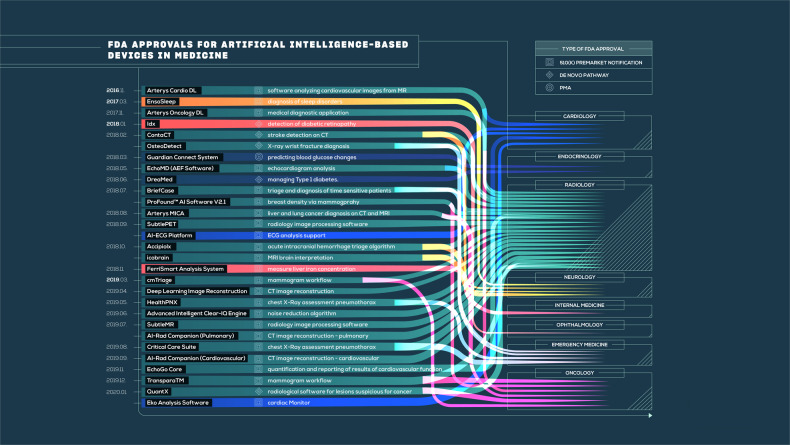
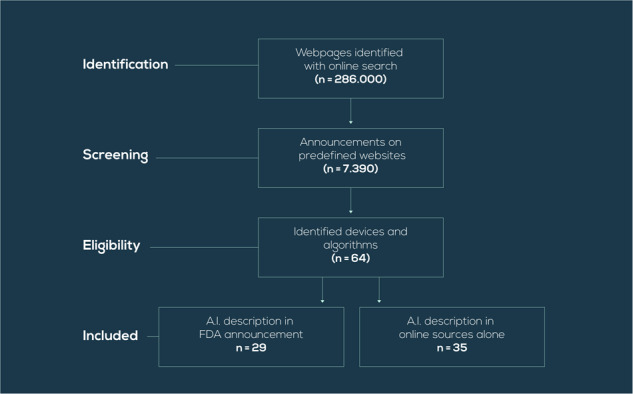
At the beginning of the artificial intelligence (AI)/machine learning (ML) era, the expectations are high, and experts foresee that AI/ML shows potential for diagnosing, managing and treating a wide variety of medical conditions. However, the obstacles for implementation of AI/ML in daily clinical practice are numerous, especially regarding the regulation of these technologies. Therefore, we provide an insight into the currently available AI/ML-based medical devices and algorithms that have been approved by the US Food & Drugs Administration (FDA). We aimed to raise awareness of the importance of regulatory bodies, clearly stating whether a medical device is AI/ML based or not. Cross-checking and validating all approvals, we identified 64 AI/ML based, FDA approved medical devices and algorithms. Out of those, only 29 (45%) mentioned any AI/ML-related expressions in the official FDA announcement. The majority (85.9%) was approved by the FDA with a 510(k) clearance, while 8 (12.5%) received de novo pathway clearance and one (1.6%) premarket approval (PMA) clearance. Most of these technologies, notably 30 (46.9%), 16 (25.0%), and 10 (15.6%) were developed for the fields of Radiology, Cardiology and Internal Medicine/General Practice respectively. We have launched the first comprehensive and open access database of strictly AI/ML-based medical technologies that have been approved by the FDA. The database will be constantly updated.
Overview
The claims and statistics of this paper haven’t been checked yet.
Free: it reads the open-access text and checks the first 5 claims that cite a source we can check. Create a free account to check every claim.
Integrity signals
Registry
Cites
Statistics
Figures
Verification
Claims the paper makes
The claims and statistics of this paper haven’t been checked yet.
Free: it reads the open-access text and checks the first 5 claims that cite a source we can check. Create a free account to check every claim.
Claims other papers make about this one
Each is checked against this paper’s own text: does it say what the citing paper says it does?
The source backs part of the claim, not all of it — or backs it for a different population, condition or comparison.
In the citing paper
“Dozens of companies have obtained US FDA and European CE approval for medical imaging AI 37 , and commercial markets have begun to form as sustainable business models are created.”
From Deep learning-enabled medical computer vision (2021) · cites this paper as [37]
Experimental — accuracy not yet measuredThe source backs part of the claim, not all of it — or backs it for a different population, condition or comparison.
In the citing paper
“The majority of AI interventions that are close to translation are in the field of medical diagnostics.3”
From Developing a reporting guideline for artificial intelligence-centred diagnostic test accuracy studies: the STARD-AI protocol (2021) · cites this paper as [3]
Experimental — accuracy not yet measuredThe source backs part of the claim, not all of it — or backs it for a different population, condition or comparison.
In the citing paper
“Moreover, diagnostics constitutes a substantial proportion of clinical AI focus, with most AI devices achieving regulatory approval thus far belonging to the diagnostic field 26 .”
From The STARD-AI reporting guideline for diagnostic accuracy studies using artificial intelligence (2025) · cites this paper as [26]
Experimental — accuracy not yet measuredThe cited source says what the claim attributes to it.
In the citing paper
“To date, 64 AI-powered medical devices and algorithms have been approved by the Food and Drug Administration in the United States [8].”
From Randomized Controlled Trials of Artificial Intelligence in Clinical Practice: Systematic Review (2022) · cites this paper as [8]
The cited source says what the claim attributes to it.
In the citing paper
“Another obstacle to the implementation of AI or ML in daily clinical practice is the regulation of these technologies [8].”
From Randomized Controlled Trials of Artificial Intelligence in Clinical Practice: Systematic Review (2022) · cites this paper as [8]
7 more claims about this paper
Create a free account to see every claim other papers make about this one.
Self-check
Percentages, sums and reported differences re-computed from the paper’s own numbers.
The self-check needs the paper’s full text.
Citations
Cites
High-performance medicine: the convergence of human and artificial intelligence
Topol, E. J. (2019) · Nature Medicine · doi:10.1038/s41591-018-0300-7 · Cited by 10,450 · cited 1×
“Despite its promise, the obstacles for implementation of AI/ML in daily clinical practice are numerous 10 .”
BackgroundWang, X., Peng, Y., Lu, L., Lu, Z., Bagheri, M., & Summers, R. M. (2017) · 2017 IEEE Conference on Computer Vision and Pattern Recognition (CVPR) · doi:10.1109/cvpr.2017.369 · Cited by 4,616
Deep Learning—A Technology With the Potential to Transform Health Care
Hinton, G. (2018) · JAMA · doi:10.1001/jama.2018.11100 · Cited by 667
Brown, J. M., Campbell, J. P., Beers, A., Chang, K., Ostmo, S., Chan, R. V. P., Dy, J., Erdogmus, D., Ioannidis, S., Kalpathy-Cramer, J., et al. (2018) · JAMA Ophthalmology · doi:10.1001/jamaophthalmol.2018.1934 · Cited by 657 · cited 1×
“Indeed, AI/ML-based technologies have been shown to support several medical specialties from radiology 2 and oncology 3 to ophthalmology 4 and general medical decision-making 5 .”
BackgroundArtificial Intelligence in Health Care: A Report From the National Academy of Medicine
Matheny, M. E., Whicher, D., & Thadaney Israni, S. (2020) · JAMA · doi:10.1001/jama.2019.21579 · Cited by 628
Wang, X., Peng, Y., Lu, L., Lu, Z., Bagheri, M., & Summers, R. M. (2019) · Advances in Computer Vision and Pattern Recognition · doi:10.1007/978-3-030-13969-8_18 · Cited by 371 · cited 1×
“Indeed, AI/ML-based technologies have been shown to support several medical specialties from radiology 2 and oncology 3 to ophthalmology 4 and general medical decision-making 5 .”
BackgroundLabovitz, D. L., Shafner, L., Reyes Gil, M., Virmani, D., & Hanina, A. (2017) · Stroke · doi:10.1161/strokeaha.116.016281 · Cited by 311
Horng, S., Sontag, D. A., Halpern, Y., Jernite, Y., Shapiro, N. I., & Nathanson, L. A. (2017) · PLOS ONE · doi:10.1371/journal.pone.0174708 · Cited by 310
van der Heijden, A. A., Abramoff, M. D., Verbraak, F., van Hecke, M. V., Liem, A., & Nijpels, G. (2018) · Acta Ophthalmologica · doi:10.1111/aos.13613 · Cited by 296
Artificial intelligence and the future of psychiatry: Insights from a global physician survey
Doraiswamy, P. M., Blease, C., & Bodner, K. (2020) · Artificial Intelligence in Medicine · doi:10.1016/j.artmed.2019.101753 · Cited by 253
Research works printed but not linked: 1
- Wang T Outpatient clinic process enhancement at children’s hospital: empoweredby information technology Chin. J. Hosp. Adm. 2018 34 753 755
Cited by
Items 701–800 of 1,000
Oladimeji, O. O., Imran, A.-A.-Z., Wang, X., & Unnikrishnan, S. (2025) · Image and Vision Computing · doi:10.1016/j.imavis.2025.105601 · Cited by 8
Ethical and Regulatory Considerations in Rehabilitation Robotics: Ensuring Safe and Equitable Care
Ali, A. (2025) · Studies in systems, decision and control · doi:10.1007/978-3-031-86977-8_17 · Cited by 5
Learning How to MIMIC: Using Model Explanations to Guide Deep Learning Training
Watson, M., Hasan, B. A. S., & Moubayed, N. A. (2023) · IEEE Winter Conference on Applications of Computer Vision · doi:10.1109/wacv56688.2023.00151 · Cited by 5
Data‐driven decisions about individual patients: The case of medical AI
Holm, S. (2023) · Journal of Evaluation in Clinical Practice · doi:10.1111/jep.13904 · Cited by 5
Considerations in the assessment of machine learning algorithm performance for medical imaging
Gossmann, A., Sahiner, B., Samala, R. K., Wen, S., Cha, K. H., & Petrick, N. (2024) · Elsevier eBooks · doi:10.1016/b978-0-32-385124-4.00029-5 · Cited by 5
Advancing medical imaging with GAN-based anomaly detection
Ounasser, N., Rhanoui, M., Mikram, M., & Asri, B. E. (2024) · Indonesian Journal of Electrical Engineering and Computer Science · doi:10.11591/ijeecs.v35.i1.pp570-582 · Cited by 5
“As a result, our model incorporates the Waserstein distance with a gradient penalty to improve training stability and adopts an adaptive update approach to accelerate training convergence [19], [20].”
MethodAnalyzing sex imbalance in EGA and dbGaP biological databases: Recommendations for better practices
Ruiz‐Serra, V., Buslón, N., Philippe, O., Saby, D., Morales, M. P., Pontes, C. F. T., Andirkó, A., Holliday, G. L., Jené, A., Moldes, M., et al. (2024) · iScience · doi:10.1016/j.isci.2024.110831 · Cited by 6
Artificial Intelligence: The Latest Advances in the Diagnosis of Bladder Cancer
Singh, S., & Shukla, R. M. (2024) · Journal of Urologic Oncology · doi:10.22465/juo.244800540027 · Cited by 5
Sex-Based Bias in Artificial Intelligence-Based Segmentation Models in Clinical Oncology
Doo, F. X., Naranjo, W. G., Kapouranis, T., Thor, M., Chao, M., Yang, X., & Marshall, D. C. (2025) · Clinical Oncology · doi:10.1016/j.clon.2025.103758 · Cited by 7
Artificial Intelligence in Ophthalmology: Promises, Hazards and Challenges
Grzybowski, A. E. (2021) · Springer eBooks · doi:10.1007/978-3-030-78601-4_1 · Cited by 9
Training, testing and benchmarking medical AI models using Clinical AIBench
Huang, Y., Miao, X., Zhang, R., Ma, L., Liu, W., Zhang, F., Guan, X., Liang, X., Lu, X., Tang, S., et al. (2022) · BenchCouncil Transactions on Benchmarks Standards and Evaluations · doi:10.1016/j.tbench.2022.100037 · Cited by 5
Бердутин, В. А., Abaeva, O. P., Romanova, T. E., & Romanov, S. V. (2023) · Sociology of Medicine · doi:10.17816/socm106054 · Cited by 5
Artificial Intelligence for Drug Toxicity and Safety
Joshi-Barr, S., & Wampole, M. E. (2024) · Springer eBooks · doi:10.1007/978-3-031-35529-5_134 · Cited by 6
Youssef, A., Fronk, D., Grimes, J. N., Cheuy, L. Y., & Larson, D. B. (2024) · medRxiv · doi:10.1101/2024.07.12.24309602 · Cited by 7
Advancements in materiovigilance: A comprehensive overview
Vikas, D. S., Venkataraman, R., & Hafis., A. (2025) · Perspectives in Clinical Research · doi:10.4103/picr.picr_66_24 · Cited by 7
“[14,15] Advances in materiovigilance, utilizing AI and machine learning, have significantly enhanced regulations and decision-making processes by enhancing monitoring capabilities and patient safety, enabling large-scale data analysis for timely detection of safety concerns or hazards.”
Harris, R. D., Taylor, O. A., Gramatges, M. M., Hughes, A. E., Zobeck, M. C., Pruitt, S. L., Bernhardt, M. B., Chavana, A. N., Huynh, V., Ludwig, K. F., et al. (2025) · The Oncologist · doi:10.1093/oncolo/oyaf055 · Cited by 4
Artificial Intelligence in Ocular Oncology: Differentiating Choroidal Melanocytic Lesions
Harby, L. A., Korot, E., Keane, P. A., Lally, S. E., Ferenczy, S. R., Dalvin, L. A., Pellegrini, M., Duker, J. S., Fung, A. T.-C., Kaliki, S., et al. (2025) · Ophthalmology Science · doi:10.1016/j.xops.2025.100948 · Cited by 4
AI-Augmented Fundus Disease Screening by Non-Ophthalmologist Physicians: A Paired Before–After Study
Kim, E., & Song, S. J. (2025) · Bioengineering · doi:10.3390/bioengineering12121304 · Cited by 4
“These results imply that deployment of AI tools in frontline can reduce missed referable cases, enhance the appropriateness of referrals to ophthalmology, and shorten time-to-definitive care, thereby avoiding work-flow delays and unnecessary retakes [27,28].”
Artificial Intelligence in Cardiology: The Current Applications and Future Directions
Mikeladze, B., Nikolaishvili, G., & Kobaladze, N. (2025) · Cureus · doi:10.7759/cureus.99270 · Cited by 4
“Access to standardized, high-quality datasets reflecting a diverse population and healthcare environment is crucial for the functionality of AI tools [19].”
Shi, Z., Zhang, C., Liu, Y., Liu, M., Li, N., Cui, Y. R., Sun, H., & Zhao, L. (2025) · Radiation Oncology · doi:10.1186/s13014-025-02784-8 · Cited by 4
“Classified as Software as a Medical Device (SaMD), these systems typically require Class II certification (e.g., FDA 510(k) or China NMPA registration), with a focus on demonstrating clinical validity in real-world settings rather than retrospective algorithmic accuracy [71, 72].”
Fantus, S., Li, J., Wang, T., & Tang, L. (2026) · Journal of Medical Internet Research · doi:10.2196/79613 · Cited by 5
“In addition, the pace of AI technology innovation often surpasses regulatory guidance at the federal and state levels [13].”
Gangemi, S., Allegra, A., Gioacchino, M. D., Gammeri, L., Cacciola, I., & Canonica, G. W. (2026) · Machine Learning and Knowledge Extraction · doi:10.3390/make8020038 · Cited by 4
“AI algorithms must be reliable to be successfully integrated into clinical practice [68].”
Thanapaul, R. J. R. S., Govindarajulu, M., Pundkar, C. Y., & Arun, P. (2026) · Military Medical Research · doi:10.1016/j.mmr.2026.100014 · Cited by 5
“Additional hurdles involve regulatory and reimbursement uncertainties and the need for targeted training programs to support AI-assisted clinical decision-making [266,267].”
Dunker, Ø., Bergsjø, L. O., Severinsen, G.-H., Glette, H., & Nilsen, K. B. (2026) · Clinical Neurophysiology Practice · doi:10.1016/j.cnp.2026.04.003 · Cited by 4
“Following this was an explosion in FDA-approved AI-based devices and algorithms for healthcare, predominantly within radiology and cardiology (Benjamens et al., 2020), but also within neurology, including systems such as Ensosleep for the diagnosis of sleep disorders (FDA, 2021) or BrainScope for…”
InfluentialJeong, M.-A., & Kim, S.-D. (2026) · Applied Sciences · doi:10.3390/app16105146 · Cited by 5
“First, the vast majority of published studies evaluating AI-CDSS diagnostic performance use retrospective or observational designs, which cannot establish causal effects on clinician decision-making [30–32 ,35, 36].”
Saraboji, K., Gopalakrishnan, K., Sood, D., Kaur, A., Shivaram, S., Helgeson, S. A., Arunachalam, S. P., & Mitra, D. (2026) · AI in Medicine · doi:10.3390/aimed1020016 · Cited by 4
“It further situates these mechanisms within broader governance and regulatory contexts, aligning with emerging expectations for lifecycle-based oversight and risk management in healthcare AI systems [35,43].”
InfluentialETHICS AND GOVERNANCE OF AI IN HEALTHCARE: CASE INDONESIA, EU, AND THE US
Romadhona, M. K., & Oktafenanda, R. D. (2025) · Jurnal Ilmiah Administrasi Pemerintahan Daerah · doi:10.33701/jiapd.v17i2.5683 · Cited by 8
“The FDA’s 2019 framework for AI and machine learning–based medical devices introduced a “total product lifecycle” approach, emphasizing premarket review, algorithmic transparency, and ongoing post-market monitoring (Benjamens et al., 2020).”
Romagnoli, A., Valentino, F., Zovi, A., Caprodossi, A., Vitiello, A., & Ferrara, F. (2023) · Journal of Pharmaceutical Innovation · doi:10.1007/s12247-023-09767-w · Cited by 5
The Role of Artificial Intelligence in Space Medicine
Greatbatch, C. J. (2024) · journal australiasian society aerospace medicine · doi:10.2478/asam-2024-0001 · Cited by 6
Sekar, P. K. C., & Veerabathiran, R. (2024) · Cardiology Discovery · doi:10.1097/cd9.0000000000000136 · Cited by 6
Zhu, S., Xie, Y., Tang, Y., Zhou, Y., Zhao, R., & Dong, X. (2025) · European Journal of Pediatrics · doi:10.1007/s00431-025-06602-x · Cited by 4
“Simultaneously, there is a strong call within academia to establish a rigorous AI-vigilance framework [96].”
Lichtner, G., Schiefenhövel, F., Gashi, B., Martin, I., Jurth, C., Vasiljewa, L., Kleimeier, D., Gibb, S., Heim, M. H., Brugger, J., et al. (2025) · Critical Care Medicine · doi:10.1097/ccm.0000000000006961 · Cited by 4
Historical Medical Principles Applied to the Future of Artificial Intelligence Software
Klavetter, E. W., Cruz, J., Daniels, S., Vidal, N. Y., & Vidal, D. E. (2023) · Mayo Clinic Proceedings Digital Health · doi:10.1016/j.mcpdig.2023.03.005 · Cited by 4
Revolutionizing Cancer Therapy: The Role of Artificial Intelligence in Enhancing Treatment Efficacy
Tousif, M. N., Akhter, R., Ushan, M. N. R., Labonno, T. M., Mahmud, S., & Islam, M. N. (2023) · International Conference on Information and Communication Technology for Sustainable Development (ICICT4SD) · doi:10.1109/icict4sd59951.2023.10303570 · Cited by 7
“By utilizing AI, treatment options have expanded over the years, leading to improved life expectancy, early detection, personalized radiation therapy, targeted chemotherapies, and immunotherapies [18].”
BackgroundPersonalized diabetes diagnosis using machine learning and electronic health records
Gowthami, S., Reddy, R. V. S., & Ahmed, M. R. (2024) · International Journal of Power Electronics and Drive Systems/International Journal of Electrical and Computer Engineering · doi:10.11591/ijece.v14i4.pp4791-4801 · Cited by 5
“The integration of machine learning and data analytics into diabetes diagnosis and prediction emerged as a significant advancement in the 2010s [17], [18].”
BackgroundTaneja, P., Marya, C. M., Nagpal, R., Bhardwaj, A., Josh, J., & Kataria, S. (2024) · Journal of Indian Association of Public Health Dentistry · doi:10.4103/jiaphd.jiaphd_111_24 · Cited by 4
Feature-Driven Priority Queuing
Singh, S., Gurvich, I., & Mieghem, J. A. V. (2026) · Operations Research · doi:10.1287/opre.2024.0754 · Cited by 4
Remote health monitoring using artificial intelligence
Jain, P., & Palei, S. (2025) · Elsevier eBooks · doi:10.1016/b978-0-443-13816-4.00008-5 · Cited by 5
Duckworth, C., Burns, D., Lamas‐Fernandez, C., Wright, M., Leyland, R., Stammers, M., George, M. R., & Boniface, M. (2025) · Scientific Reports · doi:10.1038/s41598-025-00825-6 · Cited by 4
“Specifically, the implementation of knowledge-based systems has been further expanded through the use of data-driven machine learning-based CDS systems 37,38 and medical devices 39,40 .”
Regulatory Complexities in MDSAP: Challenges and Pathways for Implantable Medical Device Approval
Kumbhar, S. T., Khadtare, S., Zoman, S., Rane, D., Patel, V. P., & Bhinge, S. (2025) · Biomedical Materials & Devices · doi:10.1007/s44174-025-00367-5 · Cited by 6
“These programs aim to har-monize global standards, streamline audit processes, and improve regulatory coherence across participating coun-tries—namely, the USA, Canada, Brazil, Japan, and Australia [11–13].”
Thomsen, H. B., Li, L. Y., Isaksen, A. A., Lebiecka-Johansen, B., Bour, C., Fagherazzi, G., van Doorn, W. P. T. M., Varga, T. V., & Hulmán, Á. (2025) · PLOS Digital Health · doi:10.1371/journal.pdig.0000918 · Cited by 4
“This highlights the complexity inherent in blood glucose prediction and the clinical relevance of error assessment beyond RMSE, especially with the increasing number of FDA approvals for AI/ML-enabled medical devices [32].”
Deep learning-based anomaly detection in orthopedic medical imaging: A systematic literature review
Ounasser, N., Rhanoui, M., Mikram, M., & Asri, B. E. (2025) · Journal of Orthopaedics · doi:10.1016/j.jor.2025.07.015 · Cited by 4
“53 Consequently, the number of commercially available orthopedic software solutions has significantly risen in recent years, largely driven by advancements in digital technologies and computer vision, predominantly powered by DL. 54 Nevertheless, orthopedics remains behind other medical fields such…”
Rodrigues, N., Bonfanti‐Gris, M., Bai, S., Pradíes, G., & Salido, M. P. (2025) · Journal of Dentistry · doi:10.1016/j.jdent.2025.106252 · Cited by 4
Deciphering musculoskeletal artificial intelligence for clinical applications: how do I get started?
Mutasa, S., & Yi, P. H. (2021) · Skeletal Radiology · doi:10.1007/s00256-021-03850-4 · Cited by 4
Legal Elements of an AI Regulatory Permit Program
Higgins, B. W. (2022) · Oxford University Press eBooks · doi:10.1093/oxfordhb/9780197579329.013.18 · Cited by 4
AI Driven Orthodontic Devices: Independent Tooth Movers (ITM)
Peikar, M. (2023) · Seminars in Orthodontics · doi:10.1053/j.sodo.2023.01.006 · Cited by 6
The brave new world of artificial intelligence: dawn of a new era
Napoli, G. D., & Lee, L. S. (2023) · iGIE · doi:10.1016/j.igie.2023.01.008 · Cited by 4
Baidillah, M. R., Busono, P., & Riyanto, R. (2023) · Measurement Science and Technology · doi:10.1088/1361-6501/acc11e · Cited by 6
Yuba, M., & Iwasaki, K. (2023) · PLOS Digital Health · doi:10.1371/journal.pdig.0000209 · Cited by 7
Artificial intelligence in medicine: has the time come to hang up the stethoscope?
Lyell, D., & Magrabi, F. (2023) · Internal Medicine Journal · doi:10.1111/imj.16216 · Cited by 4
Artificial intelligence in endocrinology
Brown, E. D. L., Hannah‐Shmouni, F., & Shekhar, S. (2023) · Elsevier eBooks · doi:10.1016/b978-0-443-15688-5.00022-x · Cited by 6
Haq, M. Z., Willett, A., & Holland, J. (2023) · Journal of Scientific Innovation in Medicine · doi:10.29024/jsim.179 · Cited by 4
Maki, J. H., Patel, N. U., Ulrich, E. J., Dhaouadi, J., & Jones, R. W. (2024) · Current Problems in Diagnostic Radiology · doi:10.1067/j.cpradiol.2024.04.002 · Cited by 4
Exarchos, K., & Κostikas, Κ. (2023) · European Respiratory Society eBooks · doi:10.1183/2312508x.10000823 · Cited by 4
Explainable Agentic Artificial Intelligence in Healthcare: A Scoping Review
Collaco, B. G., Prabha, S., Gomez-Cabello, C. A., Haider, S. A., Genovese, A., Wood, N. G., Gopala, N., Raman, R., Hester, E. O., & Forte, A. J. (2026) · Bioengineering · doi:10.3390/bioengineering13050513 · Cited by 3
“In this regard, the apparent predominance of intrinsic, workflow-native explainabil-ity aligns with international regulatory and governance frameworks (e.g., the EU AI Act and FDA framework) that emphasize transparency, traceability, documentation, and human oversight in healthcare AI [44–46].”
Machine Learning in Medical Systems: Toward a Sociological Agenda
Hu, W. (2024) · Oxford University Press eBooks · doi:10.1093/oxfordhb/9780197653609.013.28 · Cited by 5
Navigating the regulatory maze: a comparative analysis of digital therapeutics (DTx) regulations
Hussian, T., Tripathy, S., & Dureja, H. (2025) · Journal of Science and Technology Policy Management · doi:10.1108/jstpm-06-2023-0089 · Cited by 3
Data Transformation to Advance AI/ML Research and Implementation in Primary Care
Tsai, T. K., Lee, J., Phillips, R., & Lin, S. (2025) · The Annals of Family Medicine · doi:10.1370/afm.240459 · Cited by 3
Saini, M., Grishma, K. C., Williams, A. J., COPLAN, P. M., & Gressler, L. E. (2025) · Therapeutic Innovation & Regulatory Science · doi:10.1007/s43441-025-00896-7 · Cited by 6
Sayyari, M., Karimi, H., Keshtan, S. B., Saleknezhad, A., Bemana, R., & Rezaie, I. (2025) · InfoScience Trends · doi:10.61882/ist.202502.07.05 · Cited by 3
Huang, X., Goh, H. H., He, T., Zhang, D.-D., Dai, W., Kurniawan, T. A., Goh, K. C., Wong, H. Y., Islam, M. T., & Liang, X. (2026) · Journal of Chinese Integrative Medicine · doi:10.1016/j.joim.2026.02.004 · Cited by 3
Sharma, V., Chawla, G. K., Kukreti, S., Ahuja, K., & Singh, S. (2026) · Exploration of Medicine · doi:10.37349/emed.2026.1001383 · Cited by 3
Akkuş, İ., & Deniz, G. (2026) · Journal of Imaging Informatics in Medicine · doi:10.1007/s10278-026-01920-4 · Cited by 3
Wang, X., Xiong, D., Cui, S., Duan, B., Hung, Y., Jing, H. E., Ding, G., Tang, Y., & Wang, Q. (2026) · Discover Oncology · doi:10.1007/s12672-026-04864-x · Cited by 6
“Regulators typically expect the approved model to remain stable; substantial updates may trigger new review unless a predefined change-control plan exists [113].”
InfluentialIndustry perspective: Wearable electronic devices for remote patient monitoring
Nightingale, A., & Bird, G. (2026) · APL Electronic Devices · doi:10.1063/5.0317022 · Cited by 3
Spatial AI in cancer: mapping immune evasion topology through multi-modal omics and deep learning
Lang, L., Cui, Y., Wang, H., & Xiao, Y. (2026) · Frontiers in Oncology · doi:10.3389/fonc.2026.1762907 · Cited by 3
“Under the FDA ’ s predetermined change control plan, developers must prospectively de fi ne key elements, including training data curation protocols, model retraining triggers and validation strategies, real-time performance monitoring approaches, and demographic and genomic bias evaluation (169).”
Vienna International Centre, 100, P. B., Vienna, A.-1., Austria, 2600-0, T. +. (., & 2600-7, F. +. (. (2026) · IAEA human health series · doi:10.61092/iaea.9olq-aqa9 · Cited by 3
AI in medical devices: regulatory challenges and the path forward
Martínez-Licona, F. M. (2026) · Health and Technology · doi:10.1007/s12553-026-01077-8 · Cited by 4
Segment Anything Model for medical image segmentation: A review
Xiao, H., Liu, S., Liu, X., Qian, L., & Jiang, J. (2026) · Computerized Medical Imaging and Graphics · doi:10.1016/j.compmedimag.2026.102789 · Cited by 4
Navigating AI and machine learning in cancer research: an end-to-end translational framework
Saha, S., Ali, M. S., Tengli, A. K., Prasad, S. R., Mallikarjunaswamy, P., Pillappan, R., & Javarappa, K. K. (2026) · Journal of Translational Medicine · doi:10.1186/s12967-026-08503-5 · Cited by 3
“Thirdly, the regulatory framework should also change to accommodate AI-based medical technologies with the help of thorough validation using Indian population data for ensuring fairness, reliability, and generalizability [84, 90].”
AI-powered closed-loop wearable bioelectronics for personalized and autonomous healthcare
Gao, B., Ge, Z., Sun, X., Lin, B., Gao, Y., Min, J., Zhang, Q., Rogers, J. A., Yu, X., Gao, W. F., et al. (2026) · Nature Sensors · doi:10.1038/s44460-026-00105-4 · Cited by 6
“Systems often lack explicit provisions for safe shutdown, dosage rollback or clinician override when AI outputs become unreliable 72 .”
Large language medicine: defining a new paradigm in human health
Guni, A., Hu, W., Morley, J., Cohen, I. G., Barnaghi, P. M., & Ashrafian, H. (2026) · Frontiers in Science · doi:10.3389/fsci.2026.1810095 · Cited by 3
“These leverage the strengths of deep learning, and particularly convolutional neural networks (CNNs), in detecting and characterizing abnormal patterns within medical images (51).”
Putera, N. S. F. M. S., Abdullah, S. M., Rahman, N. A., Hassan, R. A., Saripan, H., & Haryanto, I. (2021) · Environment-Behaviour Proceedings Journal · doi:10.21834/ebpj.v6i16.2635 · Cited by 4
The clinicians’ perspectives on machine learning
Pattarabanjird, T., & McNamara, C. A. (2022) · Nature Cardiovascular Research · doi:10.1038/s44161-022-00033-9 · Cited by 3
Digital solutions in musculoskeletal health
Gudbergsen, H. (2023) · BMC Digital Health · doi:10.1186/s44247-023-00019-y · Cited by 3
“In the years to come we are likely to see an increase in the number digital health solutions embedding ML and AI in order to further advance the diagnostic process, disease management, and patient outcomes [15].”
BackgroundReevaluating Human Values for Patient Care in the Age of Artificial Intelligence:
Lopez, M. (2024) · Journal of AI Law and Regulation · doi:10.21552/aire/2024/1/7 · Cited by 3
Bsisu, I., Alqassieh, R., Aloweidi, A. S., Abu-Humdan, A., Subuh, A., & Masarweh, D. F. (2024) · Journal of Personalized Medicine · doi:10.3390/jpm14050447 · Cited by 4
“Although AI has found itself becoming increasingly used in anesthesia, little is known about the attitudes of medical professionals towards the integration of AI into their daily practice [11,12].”
BackgroundA brief on artificial intelligence in medicine
Ounasser, N., Rhanoui, M., Mikram, M., & Asri, B. E. (2024) · International Journal of Advances in Applied Sciences · doi:10.11591/ijaas.v13.i4.pp1055-1064 · Cited by 3
“Our research aims to address benefits of AI in medicine, it holds the promise of revolutionizing patient care on an unprecedented scale [2].”
BackgroundLin, L., Solano, A. V., Gonzales, F., Torrico, M. C., Illanes, D., Díez, N., Bermejo-Peláez, D., Dacal, E., Vallés-López, R., Pastor, L., et al. (2026) · PLoS neglected tropical diseases · doi:10.1371/journal.pntd.0012955 · Cited by 3
“This system could enable rapid, accurate parasite detection in field settings without advanced infrastructure, addressing”
Abdelmahdy, N. E. E., Suliman, E. T. A. A., Mohmed, F. M. O., Elamin, N. S. A., Yousif, B. A. H., & Ahmmed, N. A. M. (2025) · Cureus · doi:10.7759/cureus.83543 · Cited by 3
“First, the "black-box" nature of neural networks complicates interpretability, a concern highlighted in recent FDA guidelines for AI-based devices [25].”
Harnessing Deep Learning for Lung Cancer Detection and Prevention: A Comprehensive Survey
Tidke, D., & Banait, S. S. (2025) · EPJ Web of Conferences · doi:10.1051/epjconf/202532801007 · Cited by 3
Neuro-Symbolic AI for Supporting Chronic Disease Diagnosis and Monitoring
Magnini, M., Ciatto, G., Kuru, E., Sirocchi, C., & Montagna, S. (2025) · IEEE International Conference on Pervasive Computing and Communications Workshops (PerCom Workshops) · doi:10.1109/percomworkshops65533.2025.00106 · Cited by 3
“This is often attributable to the inadequacy of dataset sizes necessary for effectively training Machine Learning (ML) algorithms [3].”
Woite, N. L., Gameiro, R. R., Leite, M. G. H. S. J., Hammond, A., Cobanaj, M., & Celi, L. A. (2025) · Critical Care Science · doi:10.62675/2965-2774.20250380 · Cited by 7
Hu, W., & Lv, X. (2025) · International Journal of Electrochemical Science · doi:10.1016/j.ijoes.2025.101178 · Cited by 3
Katoh, M., & Katoh, M. (2021) · Frontiers in Molecular Medicine · doi:10.3389/fmmed.2021.720577 · Cited by 3
“Artificial intelligence or machine learning technologies are applied for target discovery and drug screening in preclinical studies as well as diagnostic medical devices in clinical practices of cardiology, endocrinology, gastroenterology, neurology, oncology, ophthalmology, pathology and radiology (Bera et al., 2019;…”
MethodA No-Math Primer on the Principles of Machine Learning for Radiologists
Lee, M., Elsayed, M., Chopra, S., & Lui, Y. W. (2022) · Seminars in Ultrasound CT and MRI · doi:10.1053/j.sult.2022.02.002 · Cited by 5
Sounderajah, V., Normahani, P., Aggarwal, R., Jayakumar, S., Markar, S. R., Ashrafian, H., & Darzi, A. W. (2022) · Springer eBooks · doi:10.1007/978-3-030-64573-1_34 · Cited by 3
The edge-cloud continuum in wearable sensing for respiratory analysis
Fotopoulos, A., Lappas, P. Z., & Melitsiotis, A. (2022) · Elsevier eBooks · doi:10.1016/b978-0-12-823447-1.00002-6 · Cited by 3
Shafiq, M., Mazzotti, D. R., & Gibson, C. (2022) · World Journal of Cardiology · doi:10.4330/wjc.v14.i11.565 · Cited by 3
Ecosystem of Patient-Centered Research and Information System Design
Hsueh, P.-Y. S. (2022) · Cognitive informatics in biomedicine and healthcare · doi:10.1007/978-3-031-07696-1_16 · Cited by 5
Applications of GNNs and m-Health for Disease Tracking
Sofi, A. Q., Kumar, R., & Sankat, M. (2023) · Advances in systems analysis, software engineering, and high performance computing book series · doi:10.4018/978-1-6684-6903-3.ch010 · Cited by 3
Vemulavada, S., Karthikvatsan, S., Babu, A., Kadalmani, B., Devi, T. R., Sasipraba, T., Manikkam, R., Parthasarathy, K., & Balaji, V. H. (2024) · Springer eBooks · doi:10.1007/978-981-97-1777-4_9 · Cited by 8
Bhat, R., Santhanam, V., Sekar, K., Gite, S., Naik, N., & Talyshinskii, A. (2024) · Elsevier eBooks · doi:10.1016/b978-0-443-32892-3.00002-6 · Cited by 4
From promise to practice: Artificial intelligence in skin cancer screenings
Li, Y., & Rotemberg, V. M. (2024) · Journal of the European Academy of Dermatology and Venereology · doi:10.1111/jdv.20376 · Cited by 3
Wan, T. T. H., & Wan, G. J. (2024) · Journal of Health Organization and Management · doi:10.1108/jhom-07-2024-0280 · Cited by 3
The fundamentals of AI ethics in medical imaging
Amann, J., Bürger, V. K., Livne, M., Bui, C. K. T., & Madai, V. I. (2025) · Elsevier eBooks · doi:10.1016/b978-0-44-323761-4.00010-9 · Cited by 3
Artificial intelligence in cancer research and precision medicine
Corti, C., Cobanaj, M., Criscitiello, C., & Curigliano, G. (2024) · Elsevier eBooks · doi:10.1016/b978-0-443-13671-9.00005-3 · Cited by 4
Integration of AI for Clinical Decision Support
Visweswaran, S., King, A. J., & Cooper, G. F. (2022) · Cognitive informatics in biomedicine and healthcare · doi:10.1007/978-3-031-09108-7_10 · Cited by 4
The role of inference in AI: Start S.M.A.L.L. with mindful modeling
Gendron, J., & Maduro, R. S. (2023) · Elsevier eBooks · doi:10.1016/b978-0-32-391919-7.00019-6 · Cited by 3
Metadata
- Authors
- Benjamens, S., Dhunnoo, P., & Meskó, B.
- Affiliations
- University Medical Center Groningen (NL)
- Semmelweis University (HU)
- Corresponding author
- Meskó, Bertalan
- Venue
- npj Digital Medicine
- Published
- 2020-09-11
- Volume
- 3
- Issue
- 1
- Pages
- 118-118
- ISSN
- 2398-6352 (ISSN-L)
- PMC
- PMC7486909
- OpenAlex
- W3086667591
- Semantic Scholar
- 0623ccb3694aae29857890809afe5868931a98ec
- Cited by
- 1,215
- References
- 24
- Citations by year
- 2026: 219 · 2025: 208 · 2024: 212 · 2023: 227 · 2022: 188 · 2021: 153 · 2020: 7
- FWCI
- 42.33
- Type
- journal article
- Language
- en
- Open access
- gold
- doi.org
- Licence
- cc-by
- creativecommons.org/licenses/by/4.0 (tdm)
- creativecommons.org/licenses/by/4.0 (vor)
- Locations
- npj Digital Medicine (publishedVersion, cc-by)
- PubMed Central (publishedVersion, cc-by)
- PubMed (publishedVersion)
- University of Groningen research database (University of Groningen / Centre for Information Technology) (publishedVersion, cc-by)
- DOAJ (DOAJ: Directory of Open Access Journals) (submittedVersion, cc-by-sa)
- University of Groningen research database (University of Groningen / Centre for Information Technology) (submittedVersion, cc-by)
- Topics
- Health Sciences › Medicine › Health Informatics › Artificial Intelligence in Healthcare and Education
- Health Sciences › Medicine › Public Health, Environmental and Occupational Health › Healthcare Regulation
- Physical Sciences › Computer Science › Information Systems › Internet of Things and AI
- Keywords
- artificial intelligence, machine learning, medical device regulation, 510(k) clearance, de novo pathway, premarket approval, clinical implementation of AI, radiology, online databases
About these checks
Registry, retraction, Cites and statistics results are computed, not judged, with one exception: a printed reference that no index lists is read once by a model before it counts as a citation error. Claims are extracted by a model and kept only when their quote appears verbatim in the text; each cited source is then checked, with a model’s help, for whether it says what the claim relies on. Those verdicts can be wrong — read the claim’s quote and the cited source before relying on one.
Statistics and arithmetic are recomputed, not judged.
Confidence bands are shown only for fields calibrated on our annotated test set. None is calibrated yet, so no band is shown.
What counts as a claim ›How we measure confidence ›How we check this ›
Are you an author, or do you see a problem with this page? Request a review
Data sources
Bibliographic data: Semantic Scholar, OpenAlex, Crossref.
Contains information from the Semantic Scholar Academic Graph Datasets, made available under the ODC Attribution License (ODC-BY 1.0).
Semantic Scholar’s data is described in: Kinney, R., et al. (2023). The Semantic Scholar Open Data Platform. arXiv:2301.10140.
