

The state of artificial intelligence-based FDA-approved medical devices and algorithms: an online database
Open accessThe DOI matches its Crossref record; 24 of the 24 references it cites were found in a registry or an index.
Abstract
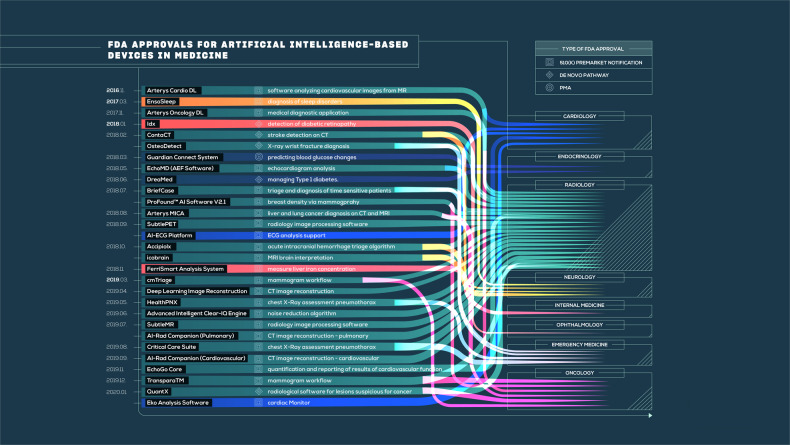
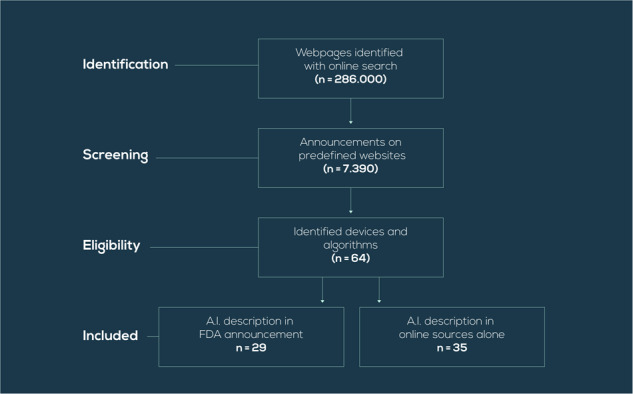
At the beginning of the artificial intelligence (AI)/machine learning (ML) era, the expectations are high, and experts foresee that AI/ML shows potential for diagnosing, managing and treating a wide variety of medical conditions. However, the obstacles for implementation of AI/ML in daily clinical practice are numerous, especially regarding the regulation of these technologies. Therefore, we provide an insight into the currently available AI/ML-based medical devices and algorithms that have been approved by the US Food & Drugs Administration (FDA). We aimed to raise awareness of the importance of regulatory bodies, clearly stating whether a medical device is AI/ML based or not. Cross-checking and validating all approvals, we identified 64 AI/ML based, FDA approved medical devices and algorithms. Out of those, only 29 (45%) mentioned any AI/ML-related expressions in the official FDA announcement. The majority (85.9%) was approved by the FDA with a 510(k) clearance, while 8 (12.5%) received de novo pathway clearance and one (1.6%) premarket approval (PMA) clearance. Most of these technologies, notably 30 (46.9%), 16 (25.0%), and 10 (15.6%) were developed for the fields of Radiology, Cardiology and Internal Medicine/General Practice respectively. We have launched the first comprehensive and open access database of strictly AI/ML-based medical technologies that have been approved by the FDA. The database will be constantly updated.
Overview
The claims and statistics of this paper haven’t been checked yet.
Free: it reads the open-access text and checks the first 5 claims that cite a source we can check. Create a free account to check every claim.
Integrity signals
Registry
Cites
Statistics
Figures
Verification
Claims the paper makes
The claims and statistics of this paper haven’t been checked yet.
Free: it reads the open-access text and checks the first 5 claims that cite a source we can check. Create a free account to check every claim.
Claims other papers make about this one
Each is checked against this paper’s own text: does it say what the citing paper says it does?
The source backs part of the claim, not all of it — or backs it for a different population, condition or comparison.
In the citing paper
“Dozens of companies have obtained US FDA and European CE approval for medical imaging AI 37 , and commercial markets have begun to form as sustainable business models are created.”
From Deep learning-enabled medical computer vision (2021) · cites this paper as [37]
Experimental — accuracy not yet measuredThe source backs part of the claim, not all of it — or backs it for a different population, condition or comparison.
In the citing paper
“The majority of AI interventions that are close to translation are in the field of medical diagnostics.3”
From Developing a reporting guideline for artificial intelligence-centred diagnostic test accuracy studies: the STARD-AI protocol (2021) · cites this paper as [3]
Experimental — accuracy not yet measuredThe source backs part of the claim, not all of it — or backs it for a different population, condition or comparison.
In the citing paper
“Moreover, diagnostics constitutes a substantial proportion of clinical AI focus, with most AI devices achieving regulatory approval thus far belonging to the diagnostic field 26 .”
From The STARD-AI reporting guideline for diagnostic accuracy studies using artificial intelligence (2025) · cites this paper as [26]
Experimental — accuracy not yet measuredThe cited source says what the claim attributes to it.
In the citing paper
“To date, 64 AI-powered medical devices and algorithms have been approved by the Food and Drug Administration in the United States [8].”
From Randomized Controlled Trials of Artificial Intelligence in Clinical Practice: Systematic Review (2022) · cites this paper as [8]
The cited source says what the claim attributes to it.
In the citing paper
“Another obstacle to the implementation of AI or ML in daily clinical practice is the regulation of these technologies [8].”
From Randomized Controlled Trials of Artificial Intelligence in Clinical Practice: Systematic Review (2022) · cites this paper as [8]
7 more claims about this paper
Create a free account to see every claim other papers make about this one.
Self-check
Percentages, sums and reported differences re-computed from the paper’s own numbers.
The self-check needs the paper’s full text.
Citations
Cites
High-performance medicine: the convergence of human and artificial intelligence
Topol, E. J. (2019) · Nature Medicine · doi:10.1038/s41591-018-0300-7 · Cited by 10,450 · cited 1×
“Despite its promise, the obstacles for implementation of AI/ML in daily clinical practice are numerous 10 .”
BackgroundWang, X., Peng, Y., Lu, L., Lu, Z., Bagheri, M., & Summers, R. M. (2017) · 2017 IEEE Conference on Computer Vision and Pattern Recognition (CVPR) · doi:10.1109/cvpr.2017.369 · Cited by 4,616
Deep Learning—A Technology With the Potential to Transform Health Care
Hinton, G. (2018) · JAMA · doi:10.1001/jama.2018.11100 · Cited by 667
Brown, J. M., Campbell, J. P., Beers, A., Chang, K., Ostmo, S., Chan, R. V. P., Dy, J., Erdogmus, D., Ioannidis, S., Kalpathy-Cramer, J., et al. (2018) · JAMA Ophthalmology · doi:10.1001/jamaophthalmol.2018.1934 · Cited by 657 · cited 1×
“Indeed, AI/ML-based technologies have been shown to support several medical specialties from radiology 2 and oncology 3 to ophthalmology 4 and general medical decision-making 5 .”
BackgroundArtificial Intelligence in Health Care: A Report From the National Academy of Medicine
Matheny, M. E., Whicher, D., & Thadaney Israni, S. (2020) · JAMA · doi:10.1001/jama.2019.21579 · Cited by 628
Wang, X., Peng, Y., Lu, L., Lu, Z., Bagheri, M., & Summers, R. M. (2019) · Advances in Computer Vision and Pattern Recognition · doi:10.1007/978-3-030-13969-8_18 · Cited by 371 · cited 1×
“Indeed, AI/ML-based technologies have been shown to support several medical specialties from radiology 2 and oncology 3 to ophthalmology 4 and general medical decision-making 5 .”
BackgroundLabovitz, D. L., Shafner, L., Reyes Gil, M., Virmani, D., & Hanina, A. (2017) · Stroke · doi:10.1161/strokeaha.116.016281 · Cited by 311
Horng, S., Sontag, D. A., Halpern, Y., Jernite, Y., Shapiro, N. I., & Nathanson, L. A. (2017) · PLOS ONE · doi:10.1371/journal.pone.0174708 · Cited by 310
van der Heijden, A. A., Abramoff, M. D., Verbraak, F., van Hecke, M. V., Liem, A., & Nijpels, G. (2018) · Acta Ophthalmologica · doi:10.1111/aos.13613 · Cited by 296
Artificial intelligence and the future of psychiatry: Insights from a global physician survey
Doraiswamy, P. M., Blease, C., & Bodner, K. (2020) · Artificial Intelligence in Medicine · doi:10.1016/j.artmed.2019.101753 · Cited by 253
Research works printed but not linked: 1
- Wang T Outpatient clinic process enhancement at children’s hospital: empoweredby information technology Chin. J. Hosp. Adm. 2018 34 753 755
Cited by
Items 601–700 of 1,000
Bottini, M., Ryu, S., Terander, A. E., Voglis, S., Maldaner, N., Bellut, D., Regli, L., Serra, C., & Staartjes, V. E. (2025) · Neurospine · doi:10.14245/ns.2449186.593 · Cited by 11
Wearable Bioelectronics: Toward Future Personal Health Monitoring
Li, B., Wang, Y., Mei, J., & He, X. (2026) · BIO Integration · doi:10.15212/bioi-2025-0219 · Cited by 9
Ong, A. Y., Kale, A. U., Antoun, J., Hogg, H. D. J., Hammond, B., Keane, P. A., Pearson, R. V., Harvey, H., & Denniston, A. K. (2026) · npj Digital Medicine · doi:10.1038/s41746-026-02407-w · Cited by 8
de Almeida, M. B., Pereira, L. F. A., Ren, T. I., Cavalcanti, G. D. C., & Sijbers, J. (2021) · SIBGRAPI Conference on Graphics, Patterns and Images (SIBGRAPI) · doi:10.1109/sibgrapi54419.2021.00026 · Cited by 10
Hasan, Z., Key, S., Lee, M., Chen, F., Aweidah, L., Esmaili, A., Sacks, R., & Singh, N. P. (2023) · The Journal of International Advanced Otology · doi:10.5152/iao.2023.231073 · Cited by 11
“27 Although wider usage in otolaryngology is still developing, 21 image-navigated systems in particular is an avenue AI may augment.”
BackgroundTowards quality management of artificial intelligence systems for medical applications
Mercolli, L., Rominger, A., & Shi, K. (2024) · Zeitschrift für Medizinische Physik · doi:10.1016/j.zemedi.2024.02.001 · Cited by 9
“[ 5 – 8].”
Lobig, F., Graham, J., Damania, A., Sattin, B., Reis, J., & Bharadwaj, P. (2024) · Frontiers in Digital Health · doi:10.3389/fdgth.2024.1359383 · Cited by 9
Antonoudiou, P., Basu, T., & Maguire, J. L. (2025) · Neuroinformatics · doi:10.1007/s12021-025-09719-4 · Cited by 10
“Artificial intelligence and Machine learning (ML) techniques hold great promise in assisting clinical diagnosis and transforming research (Rajpurkar et al., 2022; Yu et al., 2018); as can be seen by the prompt FDA approval of AI tools (Benjamens et al., 2020).”
Sumrit, D. (2025) · Healthcare Analytics · doi:10.1016/j.health.2025.100393 · Cited by 9
ShojaeiBaghini, M., Ghaemi, M. M., & Ahmadipour, A. (2025) · BMC Medical Informatics and Decision Making · doi:10.1186/s12911-025-03232-z · Cited by 8
“Despite the greater focus of most studies on the development of AI models, few have examined their translation into commercially available tools usable at the bedside [69, 70].”
Melvin, R. L., Broyles, M. G., Duggan, E. W., John, S., Smith, A. D., & Berkowitz, D. E. (2022) · Frontiers in Digital Health · doi:10.3389/fdgth.2022.872675 · Cited by 8
Memristive devices based hardware for unlabeled data processing
Xiao, Z., Yan, B., Zhang, T., Huang, R., & Yang, Y. (2022) · Neuromorphic Computing and Engineering · doi:10.1088/2634-4386/ac734a · Cited by 8
Wiebelitz, L., Schmid, P., Maier, T., & Volkwein, M. (2022) · IEEE International Conference on Digital Health (ICDH) · doi:10.1109/icdh55609.2022.00011 · Cited by 8
Secure Convolutional Neural Network-Based Internet-of-Healthcare Applications
Khriji, L., Bouaafia, S., Messaoud, S., Ammari, A. C., & Machhout, M. (2023) · IEEE Access · doi:10.1109/access.2023.3266586 · Cited by 10
“The food and drugs administration (FDA) has authorized many DL-based connected devices and methods in medicine, including HealthPNX, emergency medicine system, and subtle magnetic resonance (MR) [28].”
BackgroundA guide to optometrists for appraising and using artificial intelligence in clinical practice
Murphy, T. I., Armitage, J. A., van Wijngaarden, P., Abel, L. A., & Douglass, A. G. (2023) · Clinical and Experimental Optometry · doi:10.1080/08164622.2023.2197578 · Cited by 10
“The majority of AI systems used in optometry involve image processing, such as detecting diabetic retinopathy, 5,17,19 papilloedema 18 or glaucoma 5 risk factors from fundus photographs, with the most accurate results generally obtained with black-box systems because they are not constrained by a…”
BackgroundMethodInfluentialArtificial Intelligence (AI) in pediatric endocrinology
Winkelman, J., Nguyen, D., vanSonnenberg, E., Kirk, A. F., & Lieberman, S. A. (2023) · Journal of Pediatric Endocrinology and Metabolism · doi:10.1515/jpem-2023-0287 · Cited by 12
Deep learning methods for scientific and industrial research
Patra, G. K., Bhimala, K. R., Marndi, A., Chowdhury, S., Rahaman, J., Nandi, S., Sarkar, R. R., Gouda, K. C., Ramesh, K. V., Barnwal, R. P., et al. (2023) · Handbook of statistics · doi:10.1016/bs.host.2022.12.002 · Cited by 9
Recent advances in artificial intelligence-assisted endocrinology and diabetes
Oikonomakos, I. T., Anjana, R. M., Mohan, V., Steenblock, C., & Bornstein, S. R. (2024) · doi:10.37349/eemd.2023.00004 · Cited by 10
Artificial Intelligence in Translational Medicine
Brogi, S., & Calderone, V. (2021) · International Journal of Translational Medicine · doi:10.3390/ijtm1030016 · Cited by 17
Beyond building predictive models: TwinOps in biomanufacturingPreprint
Canzani, E., & Timmer, S. W. (2021) · doi:10.36227/techrxiv.16478856.v1 · Cited by 8
“In biomanufacturing, TwinOps would ensure high-quality target profile of the final drug product, thus obeying to the Quality by Design (QbD) paradigm [4,5].”
BackgroundMethodInfluentialConfidence-based prediction of antibiotic resistance at the patient level
Inda-Díaz, J. S., Johnning, A., Hessel, M., Sjöberg, A., Lokrantz, A., Helldal, L., Jirstrand, M., Svensson, L., & Kristiansson, E. (2026) · mBio · doi:10.1128/mbio.03431-25 · Cited by 7
The digital transformation of laboratory medicine: From instruments to intelligence
Adeli, K. (2025) · LabMed discovery. · doi:10.1016/j.lmd.2025.100095 · Cited by 7
Okposio, B. O., Richard, G. A., Olatokun, T. P., Akadiri, O. O., Akpevba, E. A., John, J. O., & Okonkwo, B. A. (2025) · International Journal of Biological and Pharmaceutical Sciences Archive · doi:10.53771/ijbpsa.2025.10.2.0076 · Cited by 7
Scaling medical device regulatory science using large language models
Li, H., He, X., Subbaswamy, A., Vossler, P., Gossmann, A., Singh, K., & Feng, J. S. (2026) · npj Digital Medicine · doi:10.1038/s41746-026-02353-7 · Cited by 15
SERS Meets Artificial Intelligence: A New Frontier in Cancer Diagnosis and Prognosis
Huda, N. U., Bari, R. Z. A., Javed, M., Kiani, M. N., & Jin, Y. (2026) · Analytical Chemistry · doi:10.1021/acs.analchem.6c00874 · Cited by 7
Al-Smadi, F., Al-Smadi, S., Xie, X., Abudourusuli, X., Ouyang, L., Zeng, R., Du, L., Liao, Y., Mi, B., & Liu, G. (2026) · Frontiers in Bioengineering and Biotechnology · doi:10.3389/fbioe.2026.1765936 · Cited by 9
Cepeda, S., Hernando-Pérez, E., Pérez-Riesgo, E., Rodríguez-Valle, I., Sinovas, O. E., Arrese, I., Salaverry, M. M. L., Zamora, T., Torres-Nieto, M. Á., Luppino, L. T., et al. (2026) · Neuro-Oncology · doi:10.1093/neuonc/noag088 · Cited by 7
Global approval and certification of ophthalmic AI devices: A comparative regulatory perspective
Grzybowski, A. E., Liu, T. Y. A., Popovic, M. M., Zhao, A., Miyake, M., Takahashi, H., Kawasaki, R., He, M., Gong, X., Göktaş, P., et al. (2026) · Asia-Pacific Journal of Ophthalmology · doi:10.1016/j.apjo.2026.100328 · Cited by 7
“14, 36 To support safety and effectiveness, the FDA expects robust clinical validation, including prospective studies where appropriate, such as IDx-DR's pivotal trial of more than 900 patients.”
Use of an electronic medical record to optimize a neonatal sepsis score for mortality prediction
Husain, A. N., Eiden, E., & Vesoulis, Z. A. (2022) · Journal of Perinatology · doi:10.1038/s41372-022-01573-5 · Cited by 7
Teeple, S., Chivers, C., Linn, K. A., Halpern, S. D., Eneanya, N. D., Draugelis, M. E., & Courtright, K. R. (2023) · BMJ Quality & Safety · doi:10.1136/bmjqs-2022-015173 · Cited by 11
Celsa, C., Quartararo, A., Maida, M. F., Giusino, G., Gaudioso, V., Sparacino, A., Cusimano, G., Rao, S., Grova, A., Ciccia, R., et al. (2025) · Hepatoma Research · doi:10.20517/2394-5079.2024.126 · Cited by 12
Deshpande, R., & Augustine, T. (2025) · Frontiers in Immunology · doi:10.3389/fimmu.2025.1567685 · Cited by 7
The Current State/ Trends in Digital Phenotyping for Mental Health Research and Care
Chen, K., Torous, J. B., & Cheong, J. (2025) · Psychiatric Clinics of North America · doi:10.1016/j.psc.2025.08.019 · Cited by 12
Nephrology Lagging Behind in Machine Learning Utilization
Cassol, C. A., & Sharma, S. G. (2021) · Kidney Medicine · doi:10.1016/j.xkme.2021.08.004 · Cited by 8
“…in radiology, 16 in cardiology, 6 in internal medicine, 5 in neurology, 3 in ophthalmology, 2 each in endocrinology and psychiatry, and 1 in pathology and urology, 26,27 again highlighting the paucity of nephrology-specific AI research leading to the development of clinical applications.”
BackgroundA comprehensive review of Hungarian futures studies in light of international journal articles
Nováky, E., & Kristóf, T. (2022) · European Journal of Futures Research · doi:10.1186/s40309-022-00201-x · Cited by 7
Chakraborty, C., Bhattacharya, M., Islam, M. A., & Agoramoorthy, G. (2023) · International Journal of Surgery · doi:10.1097/js9.0000000000000701 · Cited by 10
Fuchs, T., Kaiser, L., Müller, D., Papp, L., Fischer, R., & Tran‐Gia, J. (2023) · Nuklearmedizin - NuclearMedicine · doi:10.1055/a-2187-5701 · Cited by 9
Sridharan, K., & Sivaramakrishnan, G. (2024) · Expert Review of Clinical Pharmacology · doi:10.1080/17512433.2024.2363840 · Cited by 9
“These sophisticated machine learning algorithms, powered by deep neural networks and trained on extensive data-sets, are adept at mimicking human-like responses [18].”
Wang, P., Zhang, J., Liu, Y., Wu, J., Yu, H., Yu, C., & Jiang, R. (2024) · Scientific Reports · doi:10.1038/s41598-024-73415-7 · Cited by 7
“…closer to the original goal of artificial intelligence (AI) by endowing them with analytical and learning abilities equivalent to those of humans 12,13 , With capabilities of mimicking human activities such as perception and reasoning in available AI/ML-based medical devices and algorithms 14 .”
BackgroundTonti, S., Marzolini, B., & Bulgheroni, M. (2021) · JMIR Biomedical Engineering · doi:10.2196/15417 · Cited by 7
“This is still an open issue [35] whose resolution will be necessary to drive the successful use of monitoring systems as scalable and reliable supports for the clinical practice.”
BackgroundThe B Reader Program, Silicosis, and Physician Workload Management: A Niche for AI Technologies
Gowda, V., Cheng, G., & Saito, K. (2021) · Journal of Occupational and Environmental Medicine · doi:10.1097/jom.0000000000002271 · Cited by 7
“A prospective pilot program could bear two foci: (1) supporting existing FDA-cleared CADe products as they expand their approved indications to include pneumoconiosis and (2) furthering the development of novel platforms, such as those in the studies referenced above, for clinical use in the United States.”
BackgroundAn evaluation of information online on artificial intelligence in medical imaging
Mulryan, P., Chleirigh, N. N., O’Mahony, A. T., Crowley, C., Ryan, D. J., McLaughlin, P., McEntee, M. F., Maher, M. M., & O’Connor, O. J. (2022) · Insights into Imaging · doi:10.1186/s13244-022-01209-4 · Cited by 7
“Since 2016, the US Food and Drugs administration (FDA) has approved 64 AI ML-based medical imaging technologies with 21 of these specializing in the field of Radiology [22].”
BackgroundKishimoto, T., Kinoshita, S., Kikuchi, T., Bun, S., Kitazawa, M., Horigome, T., Tazawa, Y., Takamiya, A., Hirano, J., Mimura, M., et al. (2022) · Frontiers in Psychiatry · doi:10.3389/fpsyt.2022.1025517 · Cited by 7
“Similarly, the AI-based medical devices approved by the US food and drug administration (FDA) as of January 2020 did not include those mounted on wearable devices or those that can diagnose depression (21).”
BackgroundRomagnoli, A., Zovi, A., Sabbatucci, M., Ferrara, F., & Vitiello, A. (2023) · Journal of Interprofessional Education & Practice · doi:10.1016/j.xjep.2023.100656 · Cited by 7
Early quantum computing applications on the path towards precision medicine
Flöther, F. F. (2024) · Elsevier eBooks · doi:10.1016/b978-0-323-98808-7.00001-1 · Cited by 9
Interactive Segmentation via Deep Learning and B-Spline Explicit Active Surfaces
Williams, H., Pedrosa, J., Cattani, L., Housmans, S., Vercauteren, T. K., Deprest, J. A., & D’hooge, J. (2021) · Lecture notes in computer science · doi:10.1007/978-3-030-87193-2_30 · Cited by 11
The Regulation of Medical AI: Policy Approaches, Data, and Innovation IncentivesPreprint
Stern, A. D. (2022) · SSRN Electronic Journal · doi:10.2139/ssrn.4293608 · Cited by 9
Awasthi, R., Mishra, S. V., Cywiński, J. B., Maheshwari, K. K., Khanna, A. K., Papay, F., & Mathur, P. (2023) · medRxiv · doi:10.1101/2022.12.31.22284092 · Cited by 7
Long, Y., Li, Y., Zheng, Y., Lin, W. S., Qing, H., Zhou, P., & Liu, J. (2025) · Biomedicines · doi:10.3390/biomedicines13071600 · Cited by 6
“Currently, the Food and Drug Administration (FDA) has gradually approved AI-based tools in radiology, which provide related image information to radiologists and do not generate diagnoses directly [41].”
Artificial Intelligence as a Tool in the Diagnosis of Bladder Cancer: A Narrative Review
Ishtiaq, S., & Farouk, K. (2025) · Cureus · doi:10.7759/cureus.96958 · Cited by 8
Ghodrati, F., Zhang, A. B., & Mahmud, N. (2026) · Gastroenterology report · doi:10.1093/gastro/goag006 · Cited by 6
“In parallel, emerging machine learning and natural language processing approaches may help improve retrospective classification and population-level surveillance, building on applications already demonstrated in areas such as opioid use disorder, traumatic brain injury, and seizure monitoring [88].”
Bhalla, D., Ramachandran, A., Rangarajan, K., Dhanakshirur, R. R., Banerjee, S., & Arora, C. (2022) · Current Problems in Diagnostic Radiology · doi:10.1067/j.cpradiol.2022.04.003 · Cited by 7
Карпенко, О., Карпенко, Ю., Осьмак, А., & Kachmarskyi, Y. (2024) · University Scientific Notes · doi:10.37491/unz.97.5 · Cited by 6
Regulatory and Implementation Considerations for Artificial Intelligence
Chen, S., & Lobo, B. C. (2024) · Otolaryngologic Clinics of North America · doi:10.1016/j.otc.2024.04.007 · Cited by 6
Proceedings of the 2024 Transplant AI Symposium
Naimimohasses, S., Keshavjee, S. H., Wang, B., Brudno, M., Sidhu, A., & Bhat, M. (2024) · Frontiers in Transplantation · doi:10.3389/frtra.2024.1399324 · Cited by 7
Advancing Precision Nutrition in Endometriosis Care: The Role of Nutrigenomics and Nutrigenetics
Etekochay, M. O., Muraleedharan, D., Majumdar, S., & Nsengiyumva, M. (2024) · Academic Medicine & Surgery · doi:10.62186/001c.124784 · Cited by 7
Modise, L. M., Avanaki, M. A., Ameen, S., Celi, L. A., Chen, V. X. Y., Cordes, A., Elmore, M., Fiske, A., Gallifant, J., Hayes, M., et al. (2025) · PLOS Digital Health · doi:10.1371/journal.pdig.0000495 · Cited by 6
Chen, K., Kuo, M., Lee, C., Liao, H.-C., Tsai, D., Lin, S.-A., Hsiang, C.-W., Chang, C.-K., Ko, K., Hsu, Y., et al. (2025) · Journal of Medical Systems · doi:10.1007/s10916-025-02263-3 · Cited by 6
“However, our research revealed that PASTER, using a few dozen train - ing samples for linear probing can be more accurate than zero-shot prediction while requiring substantially fewer samples than the hundreds typically reported in regulatory guidance for clinical validation [ 19 ].”
Korkmaz, Y. Y., Aydın, O., Güngör, F., Kudaş, İ., Sarıgöz, T., & Bostancı, Ö. (2025) · Surgical Endoscopy · doi:10.1007/s00464-025-12315-x · Cited by 7
“…would align with current evidence emphasising the need for regular monitoring of real-world performance data of FDA-approved artificial intelligence devices [54] and go in parallel with European-focussed analyses discussing the ethical-legal framework of the ‘continuous learning’ approach [55].”
Kim, S., Kim, M.-J., Kim, J.-S., Jang, J., Choi, W., Lee, H., Song, J.-H., & Hoe, H. (2026) · Alzheimer s Research & Therapy · doi:10.1186/s13195-026-02013-8 · Cited by 6
“By contrast, wearable-derived gait and activity metrics provide objective and continuous indicators of motor and functional decline [27, 38–41], but their reliability depends on consistent use.”
Palermi, S., Pucciatti, R., Regnard, N.-E., Guermazi, A., Araujo, F., Demeco, A., Mekki, Y. M., D’Antona, G., Guarnera, A., Cerciello, S., et al. (2026) · Diagnostics · doi:10.3390/diagnostics16101448 · Cited by 7
“Additional emerging applications include wearable-based biomechanical monitoring systems, balance assessment platforms, and AI-assisted imaging reconstruction technologies [92,93].”
Zipori, A. B., Kerley, C. I., Klein, A., & Kenney, R. (2022) · Journal of Neuro-Ophthalmology · doi:10.1097/wno.0000000000001682 · Cited by 6
“In “locked” algorithms (41,42), the system is “locked,’ fixing it at a certain level of function.”
BackgroundMethodCao, H., Yao, C., & Yuan, Y. (2023) · Medical Review · doi:10.1515/mr-2023-0026 · Cited by 6
“Compared to almost non-Bayesian ML models, Bayesian ML models could automatically provide uncertainty quantification of model output through the posterior distribution [117].”
MethodWhat does it mean to be an agent?
Naidoo, M. (2023) · Frontiers in Psychology · doi:10.3389/fpsyg.2023.1273470 · Cited by 7
Nogaroli, R., & Júnior, J. L. D. M. F. (2023) · Law, governance and technology series · doi:10.1007/978-3-031-41264-6_12 · Cited by 11
Chagas, O. J., Gonçalves, F. A. R., Nagatomo, P. P., Buccheri, R., Pereira‐Chioccola, V. L., Negro, G. M. B. D., & Benard, G. (2024) · Scientific Reports · doi:10.1038/s41598-024-61174-4 · Cited by 6
Artificial Intelligence-Enabled Medical Device Standards: A Multidisciplinary Literature Review
Lynch, N. S. J., Loughran, R., McHugh, M., & McCaffery, F. (2024) · Communications in computer and information science · doi:10.1007/978-3-031-71139-8_8 · Cited by 7
Expert consensus document on artificial intelligence of the Italian Society of Cardiology
Indolfi, C., Agostoni, P., Barillà, F., Barison, A., Benenati, S., Bilo, G., Boriani, G., Brunetti, N. D., Calabrò, P., Carugo, S., et al. (2025) · Journal of Cardiovascular Medicine · doi:10.2459/jcm.0000000000001716 · Cited by 6
Chen, Z., Li, W., & Lin, Z. (2026) · PLOS Digital Health · doi:10.1371/journal.pdig.0001283 · Cited by 7
Machine Learning in Medical Imaging – Clinical Applications and Challenges in Computer Vision
Mehta, O., Liao, Z., Jenkinson, M., Carneiro, G., & Verjans, J. W. H. (2022) · Springer eBooks · doi:10.1007/978-981-19-1223-8_4 · Cited by 7
Chen, L., Xue, J., Zhao, L., He, Y., Fu, S., Ma, X., Yu, W., Tang, Y., Wang, Y., & Gao, Z. (2024) · Frontiers in Immunology · doi:10.3389/fimmu.2023.1295353 · Cited by 6
Jhang, H., Park, S. J., Sul, A.-R., Jang, H. Y., & Park, S. H. (2024) · Korean Journal of Radiology · doi:10.3348/kjr.2023.1281 · Cited by 6
Popa, I. V., Burlacu, A., Gavrilescu, O., Dranga, M., Prelipcean, C. C., & Mihai, C. (2021) · Neural Computing and Applications · doi:10.1007/s00521-021-06055-x · Cited by 6
Artificial Intelligence in Clinical Practice Is Here—Now What?
Vedula, S. S., Tsou, B. C., & Sikder, S. (2022) · JAMA Ophthalmology · doi:10.1001/jamaophthalmol.2022.0040 · Cited by 6
Howie, A. R., Gajera, J., Ong, D., & Roberts, M. (2022) · Journal of Medical Imaging and Radiation Oncology · doi:10.1111/1754-9485.13445 · Cited by 8
“Available emergency products include automated large vessel occlusion detection in CT angiography for stroke investigation, CT brain intracranial haemorrhage detection, pulmonary embolism detection, cervical spine and rib fracture detection on CT.(16,17) An example of practical use is improved sensitivity of intracran…”
MethodUrtnasan, E., Joo, E. Y., & Lee, K.-H. (2021) · doi:10.2196/preprints.32732 · Cited by 6
Stawicki, S. P., Martinez-Baladejo, M. T., & Ng-Pellegrino, A. (2023) · International Journal of Academic Medicine · doi:10.4103/ijam.ijam_63_23 · Cited by 6
Practical Application and Limitations of AI Certification Catalogues in the Light of the AI ActPreprint
Autischer, G., Waxnegger, K., & Kowald, D. (2025) · arXiv (Cornell University) · doi:10.13140/rg.2.2.28108.12167 · Cited by 6
Cohen, I. G., Slottje, A., & Gerke, S. (2024) · Elsevier eBooks · doi:10.1016/b978-0-323-95068-8.00007-8 · Cited by 5
Optimized Coupling Coil Geometry for High Wireless Power Transfer Efficiency in Mobile Devices
Alotaibi, F. M. (2025) · Journal of Low Power Electronics and Applications · doi:10.3390/jlpea15020036 · Cited by 5
AI Prognostication in Nonsmall Cell Lung Cancer: A Systematic Review
Augustin, M., Lyons, K., Kim, H., Kim, D., & Kim, Y. (2025) · American Journal of Clinical Oncology · doi:10.1097/coc.0000000000001238 · Cited by 5
Role of Artificial Intelligence in Nanomedicine and Organ-specific Therapy: An Updated Review
Rajpoot, K. (2025) · Current Drug Targets · doi:10.2174/0113894501394785250715165404 · Cited by 5
Al-Marzouqi, Z. K. D., Alshidi, A. S., Al-Reesi, H., Al-Dhoani, A., & Al-Sinani, H. (2025) · East Journal of Human Science · doi:10.63496/ejhs.vol1.iss5.151 · Cited by 5
“Within healthcare, AI is advancing rapidly through machine learning (ML) and deep learning (DL), which enable the analysis of large datasets, pattern recognition, and clinical decision support (Benjamens et al., 2020; Ronquillo et al., 2021).”
A guide for the deployment, validation, and accreditation of clinical digital pathology tools
Janowczyk, A. R., Ferrari, J., Brandt, N., Padayachy, L., Bornand, A., Chartier, S., Mallet, T., Roduit, N., Seed, P. T., Mizrakli, M. T., et al. (2026) · Journal of Pathology Informatics · doi:10.1016/j.jpi.2026.100694 · Cited by 5
Hong, E. K., Suh, C.-H., Nukala, M., Esfahani, A., Licaros, A., Madan, R., Hunsaker, A. R., & Hammer, M. M. (2025) · Journal of the American College of Radiology · doi:10.1016/j.jacr.2025.09.015 · Cited by 5
AI in Medical Imaging & Diagnostics: review
Abbood, S. H., & Hamed, H. N. A. (2025) · Wasit Journal of Pure sciences · doi:10.31185/wjps.752 · Cited by 5
“Agencies such as the FDA, EMA, and HIPAA impose extensive requirements for clinical validation, face validation, and long-term post-market surveillance before AI-based diagnostic systems can be widely adopted [50].”
Alshammari, A. H., Mahdi, M. F., Hirotsu, T., Morishita, M., Hatakeyama, H., & di Luccio, E. (2025) · Biomedicines · doi:10.3390/biomedicines13102409 · Cited by 5
“Because such models would be classified as Software as a Medical Device (SaMD), they are subject to rigorous regulatory frameworks that demand empirical evidence of analytical validity, clinical validity, and ultimately, clinical utility [85].”
Vela, V., Sonay, A. Y., Limani, P., Graf, L., Sabani, B., Gjermeni, D., Rroku, A., Zela, A., Gorica, E., Biefer, H. R. C., et al. (2025) · Journal of Clinical Medicine · doi:10.3390/jcm14217555 · Cited by 5
Generative AI Health Assistants in Modern Healthcare: Drivers and Barriers to Adoption
Al-Lataifeh, Z., Harris, M. A., Smith, J., & Chin, A. G. (2025) · Information Systems Frontiers · doi:10.1007/s10796-025-10681-4 · Cited by 8
“For example, AI applications in radi - ology, such as those from Arterys Inc., are integrated into existing Picture Archiving and Communication Systems (PACS) and are designed to assist clinicians in interpreting medical images (Benjamens et al., 2020 ).”
Hooshmandi, S., Tabatabaii, M., Arani, H. Z., Heidarian, A., & Nazemi, S. (2026) · Discover Artificial Intelligence · doi:10.1007/s44163-026-00843-x · Cited by 5
Data mining in pediatric radiology in the era of artificial intelligence
Guarnera, A., Ghosh, A., Gikera, R., Vahdati, S., Zhang, K., & Gupta, A. (2026) · Pediatric Radiology · doi:10.1007/s00247-026-06551-z · Cited by 5
Approval of AI-Based Medical Devices in China From 2020 to 2025: Retrospective Analysis
Zhang, L., & Yan, J. (2026) · JMIR Medical Informatics · doi:10.2196/85538 · Cited by 5
“In the United States, the Food and Drug Administration approved 691 AI-and machine learning (ML)–based medical devices by October 2023, with most cleared through the 510(k) pathway and concentrated in radiology and cardiology [9, 10].”
Freyer, O., Mathias, R., Muti, H. S., Orlovsky, H., Buch, S., Ostermann, M., Schönfelder, A., Poncette, A.-S., Bassily‐Marcus, A., & Gilbert, S. (2026) · npj Digital Medicine · doi:10.1038/s41746-026-02535-3 · Cited by 7
Kurnia, J. A. (2025) · Integrative Perspectives of Social and Science Journal · Cited by 5
Alhatem, A., Wong, T., & Lambert, W. C. (2024) · Clinics in Dermatology · doi:10.1016/j.clindermatol.2023.12.020 · Cited by 7
Machine learning in mental health and its relationship with epidemiological practice
DelPozo‐Baños, M., Stewart, R. J., & John, A. M. (2024) · Frontiers in Psychiatry · doi:10.3389/fpsyt.2024.1347100 · Cited by 6
Artificial intelligence and healthcare
Mittal, A., Afsar, A. P., Tayal, A., & Shetty, M. K. (2023) · MAMC Journal of Medical Sciences · doi:10.4103/mamcjms.mamcjms_27_23 · Cited by 5
The status of the AI medical industry in China: A database and statistical analysis
Zhang, S., Huang, Z., Feng, G., Yuan, X., Zhang, Q., Wang, Z., & Chen, Y. (2024) · Health Policy and Technology · doi:10.1016/j.hlpt.2024.100889 · Cited by 5
Enabling AI in Radiology: Evaluation of an AI Deployment Process
Silsand, L., Kannelønning, M. S., Severinsen, G.-H., & Ellingsen, G. (2024) · Studies in health technology and informatics · doi:10.3233/shti240480 · Cited by 10
Harnessing Artificial Intelligence for Global Health Advancement
Dhanjal, G. (2025) · Journal of Data Analysis and Information Processing · doi:10.4236/jdaip.2025.131004 · Cited by 5
Metadata
- Authors
- Benjamens, S., Dhunnoo, P., & Meskó, B.
- Affiliations
- University Medical Center Groningen (NL)
- Semmelweis University (HU)
- Corresponding author
- Meskó, Bertalan
- Venue
- npj Digital Medicine
- Published
- 2020-09-11
- Volume
- 3
- Issue
- 1
- Pages
- 118-118
- ISSN
- 2398-6352 (ISSN-L)
- PMC
- PMC7486909
- OpenAlex
- W3086667591
- Semantic Scholar
- 0623ccb3694aae29857890809afe5868931a98ec
- Cited by
- 1,215
- References
- 24
- Citations by year
- 2026: 219 · 2025: 208 · 2024: 212 · 2023: 227 · 2022: 188 · 2021: 153 · 2020: 7
- FWCI
- 42.33
- Type
- journal article
- Language
- en
- Open access
- gold
- doi.org
- Licence
- cc-by
- creativecommons.org/licenses/by/4.0 (tdm)
- creativecommons.org/licenses/by/4.0 (vor)
- Locations
- npj Digital Medicine (publishedVersion, cc-by)
- PubMed Central (publishedVersion, cc-by)
- PubMed (publishedVersion)
- University of Groningen research database (University of Groningen / Centre for Information Technology) (publishedVersion, cc-by)
- DOAJ (DOAJ: Directory of Open Access Journals) (submittedVersion, cc-by-sa)
- University of Groningen research database (University of Groningen / Centre for Information Technology) (submittedVersion, cc-by)
- Topics
- Health Sciences › Medicine › Health Informatics › Artificial Intelligence in Healthcare and Education
- Health Sciences › Medicine › Public Health, Environmental and Occupational Health › Healthcare Regulation
- Physical Sciences › Computer Science › Information Systems › Internet of Things and AI
- Keywords
- artificial intelligence, machine learning, medical device regulation, 510(k) clearance, de novo pathway, premarket approval, clinical implementation of AI, radiology, online databases
About these checks
Registry, retraction, Cites and statistics results are computed, not judged, with one exception: a printed reference that no index lists is read once by a model before it counts as a citation error. Claims are extracted by a model and kept only when their quote appears verbatim in the text; each cited source is then checked, with a model’s help, for whether it says what the claim relies on. Those verdicts can be wrong — read the claim’s quote and the cited source before relying on one.
Statistics and arithmetic are recomputed, not judged.
Confidence bands are shown only for fields calibrated on our annotated test set. None is calibrated yet, so no band is shown.
What counts as a claim ›How we measure confidence ›How we check this ›
Are you an author, or do you see a problem with this page? Request a review
Data sources
Bibliographic data: Semantic Scholar, OpenAlex, Crossref.
Contains information from the Semantic Scholar Academic Graph Datasets, made available under the ODC Attribution License (ODC-BY 1.0).
Semantic Scholar’s data is described in: Kinney, R., et al. (2023). The Semantic Scholar Open Data Platform. arXiv:2301.10140.
