

The state of artificial intelligence-based FDA-approved medical devices and algorithms: an online database
Open accessThe DOI matches its Crossref record; 24 of the 24 references it cites were found in a registry or an index.
Abstract
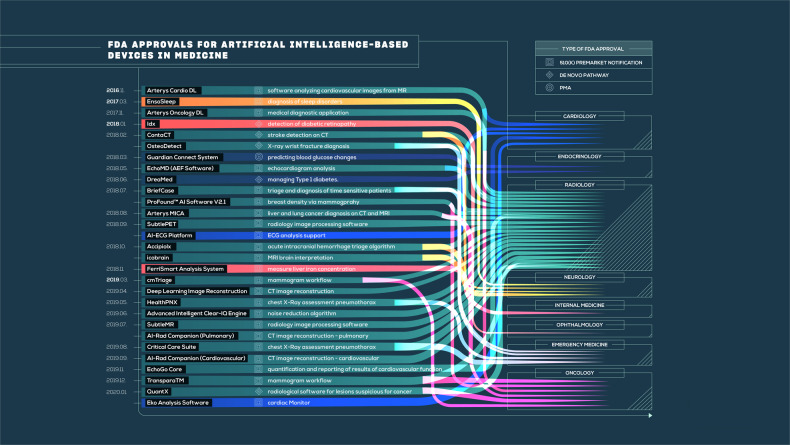
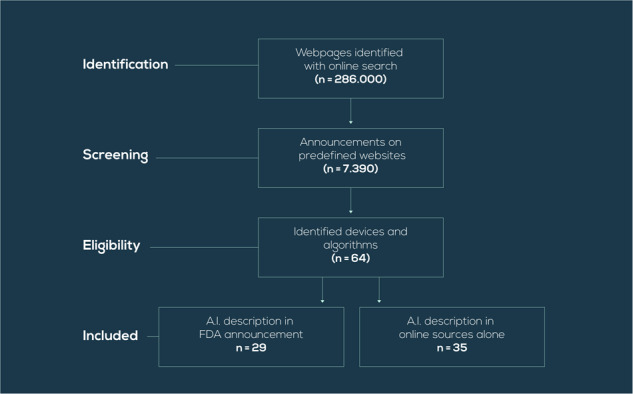
At the beginning of the artificial intelligence (AI)/machine learning (ML) era, the expectations are high, and experts foresee that AI/ML shows potential for diagnosing, managing and treating a wide variety of medical conditions. However, the obstacles for implementation of AI/ML in daily clinical practice are numerous, especially regarding the regulation of these technologies. Therefore, we provide an insight into the currently available AI/ML-based medical devices and algorithms that have been approved by the US Food & Drugs Administration (FDA). We aimed to raise awareness of the importance of regulatory bodies, clearly stating whether a medical device is AI/ML based or not. Cross-checking and validating all approvals, we identified 64 AI/ML based, FDA approved medical devices and algorithms. Out of those, only 29 (45%) mentioned any AI/ML-related expressions in the official FDA announcement. The majority (85.9%) was approved by the FDA with a 510(k) clearance, while 8 (12.5%) received de novo pathway clearance and one (1.6%) premarket approval (PMA) clearance. Most of these technologies, notably 30 (46.9%), 16 (25.0%), and 10 (15.6%) were developed for the fields of Radiology, Cardiology and Internal Medicine/General Practice respectively. We have launched the first comprehensive and open access database of strictly AI/ML-based medical technologies that have been approved by the FDA. The database will be constantly updated.
Overview
The claims and statistics of this paper haven’t been checked yet.
Free: it reads the open-access text and checks the first 5 claims that cite a source we can check. Create a free account to check every claim.
Integrity signals
Registry
Cites
Statistics
Figures
Verification
Claims the paper makes
The claims and statistics of this paper haven’t been checked yet.
Free: it reads the open-access text and checks the first 5 claims that cite a source we can check. Create a free account to check every claim.
Claims other papers make about this one
Each is checked against this paper’s own text: does it say what the citing paper says it does?
The source backs part of the claim, not all of it — or backs it for a different population, condition or comparison.
In the citing paper
“Dozens of companies have obtained US FDA and European CE approval for medical imaging AI 37 , and commercial markets have begun to form as sustainable business models are created.”
From Deep learning-enabled medical computer vision (2021) · cites this paper as [37]
Experimental — accuracy not yet measuredThe source backs part of the claim, not all of it — or backs it for a different population, condition or comparison.
In the citing paper
“The majority of AI interventions that are close to translation are in the field of medical diagnostics.3”
From Developing a reporting guideline for artificial intelligence-centred diagnostic test accuracy studies: the STARD-AI protocol (2021) · cites this paper as [3]
Experimental — accuracy not yet measuredThe source backs part of the claim, not all of it — or backs it for a different population, condition or comparison.
In the citing paper
“Moreover, diagnostics constitutes a substantial proportion of clinical AI focus, with most AI devices achieving regulatory approval thus far belonging to the diagnostic field 26 .”
From The STARD-AI reporting guideline for diagnostic accuracy studies using artificial intelligence (2025) · cites this paper as [26]
Experimental — accuracy not yet measuredThe cited source says what the claim attributes to it.
In the citing paper
“To date, 64 AI-powered medical devices and algorithms have been approved by the Food and Drug Administration in the United States [8].”
From Randomized Controlled Trials of Artificial Intelligence in Clinical Practice: Systematic Review (2022) · cites this paper as [8]
The cited source says what the claim attributes to it.
In the citing paper
“Another obstacle to the implementation of AI or ML in daily clinical practice is the regulation of these technologies [8].”
From Randomized Controlled Trials of Artificial Intelligence in Clinical Practice: Systematic Review (2022) · cites this paper as [8]
7 more claims about this paper
Create a free account to see every claim other papers make about this one.
Self-check
Percentages, sums and reported differences re-computed from the paper’s own numbers.
The self-check needs the paper’s full text.
Citations
Cites
High-performance medicine: the convergence of human and artificial intelligence
Topol, E. J. (2019) · Nature Medicine · doi:10.1038/s41591-018-0300-7 · Cited by 10,450 · cited 1×
“Despite its promise, the obstacles for implementation of AI/ML in daily clinical practice are numerous 10 .”
BackgroundWang, X., Peng, Y., Lu, L., Lu, Z., Bagheri, M., & Summers, R. M. (2017) · 2017 IEEE Conference on Computer Vision and Pattern Recognition (CVPR) · doi:10.1109/cvpr.2017.369 · Cited by 4,616
Deep Learning—A Technology With the Potential to Transform Health Care
Hinton, G. (2018) · JAMA · doi:10.1001/jama.2018.11100 · Cited by 667
Brown, J. M., Campbell, J. P., Beers, A., Chang, K., Ostmo, S., Chan, R. V. P., Dy, J., Erdogmus, D., Ioannidis, S., Kalpathy-Cramer, J., et al. (2018) · JAMA Ophthalmology · doi:10.1001/jamaophthalmol.2018.1934 · Cited by 657 · cited 1×
“Indeed, AI/ML-based technologies have been shown to support several medical specialties from radiology 2 and oncology 3 to ophthalmology 4 and general medical decision-making 5 .”
BackgroundArtificial Intelligence in Health Care: A Report From the National Academy of Medicine
Matheny, M. E., Whicher, D., & Thadaney Israni, S. (2020) · JAMA · doi:10.1001/jama.2019.21579 · Cited by 628
Wang, X., Peng, Y., Lu, L., Lu, Z., Bagheri, M., & Summers, R. M. (2019) · Advances in Computer Vision and Pattern Recognition · doi:10.1007/978-3-030-13969-8_18 · Cited by 371 · cited 1×
“Indeed, AI/ML-based technologies have been shown to support several medical specialties from radiology 2 and oncology 3 to ophthalmology 4 and general medical decision-making 5 .”
BackgroundLabovitz, D. L., Shafner, L., Reyes Gil, M., Virmani, D., & Hanina, A. (2017) · Stroke · doi:10.1161/strokeaha.116.016281 · Cited by 311
Horng, S., Sontag, D. A., Halpern, Y., Jernite, Y., Shapiro, N. I., & Nathanson, L. A. (2017) · PLOS ONE · doi:10.1371/journal.pone.0174708 · Cited by 310
van der Heijden, A. A., Abramoff, M. D., Verbraak, F., van Hecke, M. V., Liem, A., & Nijpels, G. (2018) · Acta Ophthalmologica · doi:10.1111/aos.13613 · Cited by 296
Artificial intelligence and the future of psychiatry: Insights from a global physician survey
Doraiswamy, P. M., Blease, C., & Bodner, K. (2020) · Artificial Intelligence in Medicine · doi:10.1016/j.artmed.2019.101753 · Cited by 253
Research works printed but not linked: 1
- Wang T Outpatient clinic process enhancement at children’s hospital: empoweredby information technology Chin. J. Hosp. Adm. 2018 34 753 755
Cited by
Items 101–200 of 1,000
Alami, H., Lehoux, P., Papoutsi, C., Shaw, S. E., Fleet, R. P., & Fortin, J. (2024) · BMC Health Services Research · doi:10.1186/s12913-024-11112-x · Cited by 122
“Several have already been approved for clinical use in real-world care and services [8].”
BackgroundBioelectronic Implantable Devices for Physiological Signal Recording and Closed‐Loop Neuromodulation
Oh, S., Jekal, J., Liu, J., Kim, J., Park, J., Lee, T., & Jang, K. (2024) · Advanced Functional Materials · doi:10.1002/adfm.202403562 · Cited by 114
The impact of artificial intelligence on the reading times of radiologists for chest radiographs
Shin, H. J., Han, K., Ryu, L., & Kim, E. (2023) · npj Digital Medicine · doi:10.1038/s41746-023-00829-4 · Cited by 118
Oculomics: Current concepts and evidence
Zhu, Z., Wang, Y., Qi, Z., Hu, W., Zhang, X., Wagner, S. K., Wang, Y., Ran, A. R., Ong, J., Waisberg, E., et al. (2025) · Progress in Retinal and Eye Research · doi:10.1016/j.preteyeres.2025.101350 · Cited by 120
“Recognizing this, the FDA is exploring a total product lifecycle-based regulatory framework to address the safety and effectiveness of adaptive algorithms, as current guidelines are insufficient to manage their unique characteristics (Benjamens et al., 2020).”
Characterizing the clinical adoption of medical AI devices through U.S. insurance claims
Wu, K., Wu, E., Theodorou, B., Liang, W., Mack, C., Glass, L., Sun, J., & Zou, J. (2024) · NEJM AI · doi:10.1056/aioa2300030 · Cited by 103
“26 As a whole, radiology AI devices are underrepresented in our analysis relative to their share of all FDA-approved AI devices 27 because they are commonly billed using existing CPT codes that are not speci fi c to AI.”
BackgroundUniversity of California, S. F., Adler-Milstein, J., Aggarwal, N., University of Wisconsin-Madison, Ahmed, M., National Academy of Medicine, Castner, J., Incorporated, C., Evans, B. J., University of Florida, et al. (2022) · NAM Perspectives · doi:10.31478/202209c · Cited by 82
“In fact, radiology boasts more Food and Drug Administration (FDA)-authorized (that is, cleared or approved) AI tools than any other medical specialty (Benjamens et al., 2020).”
BackgroundAccuracy of Artificial Intelligence-Based Photographic Detection of Gingivitis
Chau, R. C. W., Li, G.-H., Tew, I. M., Thu, K. M., McGrath, C. P. J., Lo, A. W.-L., Ling, B. W., Hsung, T.-C., & Lam, W. Y. H. (2023) · International Dental Journal · doi:10.1016/j.identj.2023.03.007 · Cited by 109
Translating promise into practice: a review of machine learning in suicide research and prevention
Kirtley, O. J., van Mens, K., Hoogendoorn, M., Kapur, N., & de Beurs, D. (2022) · The Lancet Psychiatry · doi:10.1016/s2215-0366(21)00254-6 · Cited by 100
Artificial intelligence and remote patient monitoring in US healthcare market: a literature review
Dubey, A., & Tiwari, A. (2023) · Journal of Market Access & Health Policy · doi:10.1080/20016689.2023.2205618 · Cited by 105
The Utility of Deep Learning in Breast Ultrasonic Imaging: A Review
Fujioka, T., Mori, M., Kubota, K., Oyama, J., Yamaga, E., Yashima, Y., Katsuta, L., Nomura, K., Nara, M., Oda, G., et al. (2020) · Diagnostics · doi:10.3390/diagnostics10121055 · Cited by 106
Stenzinger, A., Alber, M., Allgäuer, M., Jurmeister, P. S., Bockmayr, M. L., Budczies, J., Lennerz, J. K., Eschrich, J., Kazdal, D. N., Schirmacher, P., et al. (2021) · Seminars in Cancer Biology · doi:10.1016/j.semcancer.2021.02.011 · Cited by 102
Artificial Intelligence and Mapping a New Direction in Laboratory Medicine: A Review
Herman, D. S., Rhoads, D. D., Schulz, W. L., & Durant, T. J. S. (2021) · Clinical Chemistry · doi:10.1093/clinchem/hvab165 · Cited by 81
Cardiovascular Disease Screening in Women: Leveraging Artificial Intelligence and Digital Tools
Adedinsewo, D. A., Pollak, A. W., Phillips, S. D., Smith, T. L., Svatikova, A., Hayes, S. N., Mulvagh, S. L., Norris, C., Roger, V. L., Noseworthy, P. A., et al. (2022) · Circulation Research · doi:10.1161/circresaha.121.319876 · Cited by 85
Potnis, K. C., Ross, J. S., Aneja, S., Gross, C. P., & Richman, I. B. (2022) · JAMA Internal Medicine · doi:10.1001/jamainternmed.2022.4969 · Cited by 104
A Bibliometric Network Analysis of Coronavirus during the First Eight Months of COVID-19 in 2020
Furstenau, L. B., Rabaioli, B., Sott, M. K., Cossul, D., Bender, M. S., Farina, E. M. J. D. M., Filho, F. N. B., Severo, P. P., Dohan, M. S., & Bragazzi, N. L. (2021) · International Journal of Environmental Research and Public Health · doi:10.3390/ijerph18030952 · Cited by 104
Big data and predictive analytics in healthcare in Bangladesh: regulatory challenges
Hassan, S., Dhali, M., Zaman, F., & Tanveer, M. (2021) · Heliyon · doi:10.1016/j.heliyon.2021.e07179 · Cited by 121
“Further, the lack of a clear regulatory pathway in the USA and EU for approval and validation of arti fi cial intelligence-based medical devices or algorithms has also undermined these devices' ef fi cacy, quality, and safety (Benjamens et al., 2020; Muehlematter et al., 2021).”
BackgroundThe Role of Artificial Intelligence in the Future of Pharmacy Education
Cain, J., Malcom, D. R., & Aungst, T. D. (2023) · American Journal of Pharmaceutical Education · doi:10.1016/j.ajpe.2023.100135 · Cited by 80
ChatGPT and large language models in orthopedics: from education and surgery to research
Chatterjee, S., Bhattacharya, M., Pal, S., Lee, S., & Chakraborty, C. (2023) · Journal of Experimental Orthopaedics · doi:10.1186/s40634-023-00700-1 · Cited by 73
Requirements and reliability of AI in the medical context
Balagurunathan, Y., Mitchell, R., & El Naqa, I. (2021) · Physica Medica · doi:10.1016/j.ejmp.2021.02.024 · Cited by 91
“However, to be a reliable method performance accuracy along with added clinical value are considered, these aspects are well emphasized in the recent Food and Drug Administration’s (FDA) regulations on AI systems [66, 67].”
MethodAn overview and a roadmap for artificial intelligence in hematology and oncology
Rösler, W., Altenbuchinger, M., Baeßler, B., Beißbarth, T., Beutel, G., Bock, R., von Bubnoff, N. C. C., Eckardt, J., Foersch, S., Loeffler, C. M. L., et al. (2023) · Journal of Cancer Research and Clinical Oncology · doi:10.1007/s00432-023-04667-5 · Cited by 102
“In medicine, several ML-based algorithms have achieved regulatory approval in the last five years, while rule-based systems within AI are becoming less relevant to the practitioner (Shmatko et al. 2022; Benjamens et al. 2020).”
BackgroundLyell, D., Coiera, E., Chen, J., Shah, P., & Magrabi, F. (2021) · BMJ Health & Care Informatics · doi:10.1136/bmjhci-2020-100301 · Cited by 95
“12 Presently, the FDA only approves devices with ‘locked’ algorithms, 82 but are moving towards a framework that would permit ML devices which learn and adapt to real-world data.”
Engineering In vitro Models: Bioprinting of Organoids with Artificial Intelligence
Lee, H. (2023) · Cyborg and Bionic Systems · doi:10.34133/cbsystems.0018 · Cited by 97
“Multiple studies have been conducted in the field of data analysis for medical technology using artificial intelligence (AI) [21]; however, technologies that combine organoids, bioprinting, and AI are limited.”
BackgroundAre physicians and medical students ready for artificial intelligence applications in healthcare?
AlZaabi, A., AlMaskari, S., & AalAbdulsalam, A. (2023) · DIGITAL HEALTH · doi:10.1177/20552076231152167 · Cited by 93
“Machine learning is thought to transform healthcare systems profoundly in the coming years.(2) A plethora applications have been developed that aim to improve different aspects of clinical work such as improving medication compliance,(3) reducing waiting time at outpatient (1)Human and Clinical Anatomy Department, Col…”
BackgroundInfluentialPetersen, E., Potdevin, Y., Mohammadi, E., Zidowitz, S., Breyer, S., Nowotka, D., Henn, S., Pechmann, L., Leucker, M., Rostalski, P., et al. (2022) · IEEE Access · doi:10.1109/access.2022.3178382 · Cited by 113
“Nevertheless, a considerable number of devices have already received regulatory approval based on these regulations [37], [69].”
BackgroundBarrera, F. J., Brown, E. D. L., Rojo, A., Obeso, J., Plata, H., Lincango, E. P., Terry, N., Rodríguez-Gutiérrez, R., Hall, J. E., & Shekhar, S. (2023) · Frontiers in Endocrinology · doi:10.3389/fendo.2023.1106625 · Cited by 91
Barragán-Montero, A., Bibal, A., Dastarac, M. H., Draguet, C., Valdés, G., Nguyen, D., Willems, S., Vandewinckele, L., Holmström, M., Löfman, F., et al. (2022) · Physics in Medicine & Biology · doi:10.1088/1361-6560/ac678a · Cited by 84
“Progressively, ML models for diagnosis and treatment choice start to be applied in clinical routine ( Benjamens et al 2020, Savage 2020 ) ; some claim that the ML model rivals with or even outperforms human experts ( Esteva et al 2017 ) .”
Trustworthy and ethical AI-enabled cardiovascular care: a rapid review
Mooghali, M., Stroud, A. M., Yoo, D. W., Barry, B. A., Grimshaw, A. A., Ross, J. S., Zhu, X., & Miller, J. E. (2024) · BMC Medical Informatics and Decision Making · doi:10.1186/s12911-024-02653-6 · Cited by 94
“…cause of death in the US, given the high number of AI-based devices authorized for use and under review by the FDA for cardiovascular diseases, the breadth of use cases spanning clinical practice to consumer-facing AI-enabled solutions, and the potential for improving clinical outcomes [2–5].”
BackgroundSuri, J. S., Bhagawati, M., Paul, S., Protogeron, A., Sfikakis, P. P., Kitas, G. D., Khanna, N. N., Ruzsa, Z., Sharma, A. M., Saxena, S., et al. (2022) · Computers in Biology and Medicine · doi:10.1016/j.compbiomed.2021.105204 · Cited by 86
Accelerating 3D printing of pharmaceutical products using machine learning
Ong, J. J., Muñiz, B., Gaisford, S., Cabalar, P., Basit, A. W., Pérez, G., & Goyanes, Á. (2022) · International Journal of Pharmaceutics X · doi:10.1016/j.ijpx.2022.100120 · Cited by 110
“In healthcare, ML-powered products are increasingly receiving regulatory clearance, with a 2020 study finding that AI/ML systems are winning approval from the US Food and Drug Administration (FDA) at an accelerating rate (Benjamens et al., 2020; Rajpurkar et al., 2022).”
BackgroundFerro, M., Falagario, U. G., Barone, B., Maggi, M., Crocetto, F., Busetto, G. M., Giudice, F. D., Terracciano, D., Lucarelli, G. T., Lasorsa, F. M., et al. (2023) · Diagnostics · doi:10.3390/diagnostics13132308 · Cited by 89
Medical-informed machine learning: integrating prior knowledge into medical decision systems
Sirocchi, C., Bogliolo, A., & Montagna, S. (2024) · BMC Medical Informatics and Decision Making · doi:10.1186/s12911-024-02582-4 · Cited by 106
“However, while some of these systems have been FDA-approved for healthcare use, they were primarily developed within radiology and cardiovascular specialities [9, 10], followed by neurology and haematology [11].”
BackgroundChen, M. M., Golding, L. P., & Nicola, G. N. (2021) · Radiology: Artificial Intelligence · doi:10.1148/ryai.2021210030 · Cited by 81
“As of early 2020, there were approximately 21 medical devices and algorithms related to radiology approved by the U.S. Food and Drug Administration (FDA), which represented about 72% of all FDA-approved AI devices and algorithms in health care (1).”
BackgroundMüller, H., Holzinger, A., Plass, M., Brcic, L., Stumptner, C., & Zatloukal, K. (2022) · New Biotechnology · doi:10.1016/j.nbt.2022.05.002 · Cited by 87
Using Convolutional Neural Networks to Automate Aircraft Maintenance Visual Inspection
Dogru, A., Bouarfa, S., Arizar, R., & Aydogan, R. (2020) · doi:10.20944/preprints202011.0527.v1 · Cited by 86
“In fact, the technology has become so good in medical imaging diagnosis that the FDA has recently approved many use cases [12] such as:”
Artificial Intelligence in Thyroid Field—A Comprehensive Review
Bini, F., Pica, A., Azzimonti, L., Giusti, A., Ruinelli, L., Marinozzi, F., & Trimboli, P. (2021) · Cancers · doi:10.3390/cancers13194740 · Cited by 93
Guni, A., Sounderajah, V., Whiting, P. F., Bossuyt, P. M., Darzi, A. W., & Ashrafian, H. (2024) · JMIR Research Protocols · doi:10.2196/58202 · Cited by 100
Allen, B., Dreyer, K. J., Stibolt, R., Agarwal, S., Coombs, L. P., Treml, C., Elkholy, M., Brink, L., & Wald, C. (2021) · Journal of the American College of Radiology · doi:10.1016/j.jacr.2021.08.022 · Cited by 88
What Makes Artificial Intelligence Exceptional in Health Technology Assessment?
Bélisle-Pipon, J.-C., Couture, V., Roy, M.-C., Ganache, I., Goetghebeur, M., & Cohen, I. G. (2021) · Frontiers in Artificial Intelligence · doi:10.3389/frai.2021.736697 · Cited by 70
“Moreover, many authors have highlighted that these new technologies challenge traditional evaluation processes as well as the assessment of the ethical, legal and social implications (ELSI) that AIHTs may entail (He et al., 2019; Racine et al., 2019; Shaw et al., 2019; Ahmad et al., 2020; Benjamens et al., 2020), thus…”
BackgroundAI and machine learning ethics, law, diversity, and global impact
Drabiak, K., Kyzer, S., Nemov, V., & El Naqa, I. (2023) · The British Journal of Radiology · doi:10.1259/bjr.20220934 · Cited by 84
Singh, V., Cheng, S. C., Kwan, A. C., & Ebinger, J. E. (2025) · Mayo Clinic Proceedings Digital Health · doi:10.1016/j.mcpdig.2025.100231 · Cited by 105
“23,32 With the adaptation of new approval methods, the FDA may want to track company announcements to ensure manufacturers are honestly communicating with medical partners.”
InfluentialAutonomous AI systems in the face of liability, regulations and costs.
Saenz, A. D., Harned, Z., Banerjee, O., Abràmoff, M. D., & Rajpurkar, P. (2023) · npj Digital Medicine · doi:10.1038/s41746-023-00929-1 · Cited by 83
Juhn, Y. J., Ryu, E., Wi, C.-I., King, K. S., Malik, M., Romero-Brufau, S., Weng, C., Sohn, S., Sharp, R. R., & Halamka, J. D. (2022) · Journal of the American Medical Informatics Association · doi:10.1093/jamia/ocac052 · Cited by 83
Benchmarking foundation models as feature extractors for weakly supervised computational pathology
Neidlinger, P., El Nahhas, O. S. M., Muti, H. S., Lenz, T., Hoffmeister, M., Brenner, H., van Treeck, M., Langer, R., Dislich, B., Behrens, H. M., et al. (2025) · Nature Biomedical Engineering · doi:10.1038/s41551-025-01516-3 · Cited by 80
“Over 100 such tools are now approved for clinical use in the United States and the European Union 26,27 .”
Exploring the current and prospective role of artificial intelligence in disease diagnosis
Aamir, A., Iqbal, A., Jawed, F., Ashfaque, F., Hafsa, H., Anas, Z., Oduoye, M. O., Basit, A., Ahmed, S., Rauf, S. A., et al. (2024) · Annals of Medicine and Surgery · doi:10.1097/ms9.0000000000001700 · Cited by 98
Overcoming the challenges to implementation of artificial intelligence in pathology
Reis-Filho, J. S., & Kather, J. N. (2023) · JNCI: Journal of the National Cancer Institute · doi:10.1093/jnci/djad048 · Cited by 79
Aboy, M., Crespo, C., & Stern, A. D. (2024) · npj Digital Medicine · doi:10.1038/s41746-024-01021-y · Cited by 88
Alzubaidi, L., Al-Dulaimi, K., Salhi, A., Alammar, Z., Fadhel, M. A., Albahri, A. S., Alamoodi, A. H., Albahri, O. S., Hasan, A. F., Bai, J., et al. (2024) · Artificial Intelligence in Medicine · doi:10.1016/j.artmed.2024.102935 · Cited by 84
Anderson, P. G., Tarder-Stoll, H., Alpaslan, M., Keathley, N., Levin, D. L., Venkatesh, S., Bartel, E., Sicular, S., Howell, S., Lindsey, R. V., et al. (2024) · Scientific Reports · doi:10.1038/s41598-024-76608-2 · Cited by 101
The Enlightening Role of Explainable Artificial Intelligence in Chronic Wound Classification
Sarp, S., Kuzlu, M., Wilson, E., Cali, Ü., & Güler, Ö. (2021) · Electronics · doi:10.3390/electronics10121406 · Cited by 95
Kann, B. H., Likitlersuang, J., Bontempi, D., Ye, Z., Aneja, S., Bakst, R. L., Kelly, H. R., Juliano, A. F. T., Payabvash, S., Guenette, J. P., et al. (2023) · The Lancet Digital Health · doi:10.1016/s2589-7500(23)00046-8 · Cited by 82
“23 26 In previous work, some of the present authors developed, externally validated, and benchmarked a CT-based deep learning algorithm for identifying ENE in patients with head and neck cancers, 27,28 finding that it outperformed head and neck radiologists.”
Artificial intelligence and skin cancer
Wei, M. L., Tada, M., So, A., & Torres, R. (2024) · Frontiers in Medicine · doi:10.3389/fmed.2024.1331895 · Cited by 91
Zhu, C. (2024) · Journal of Cloud Computing Advances Systems and Applications · doi:10.1186/s13677-024-00675-z · Cited by 78
“…to identify patterns and trends in data, allowing healthcare professionals to make more accurate and personalized diagnoses [9]. computational intelligence-based classification systems can detect subtle changes in brain function that may be missed by traditional diagnostic methods [10, 11].”
BackgroundThe regulatory gap in digital health and alternative pathways to bridge it
Iqbal, J. D., & Biller-Andorno, N. (2022) · Health Policy and Technology · doi:10.1016/j.hlpt.2022.100663 · Cited by 66
Aldhafeeri, F. M. (2025) · Diagnostics · doi:10.3390/diagnostics15182300 · Cited by 85
“Such cases underscore the pressing need for clearer, radiology-specific liability frameworks that reflect the realities of AI-assisted clinical practice [43,55–57].”
Artificial Intelligence: Review of Current and Future Applications in Medicine
Thomas, L. B. (2021) · Federal Practitioner · doi:10.12788/fp.0174 · Cited by 89
“Furthermore, potential exists for AI to not only assist with prevention and diagnosis of ADHD, but 2 Additional AI applications include diagnosing patients with suspected sepsis, measuring liver iron concentrations, predicting hospital mortality at the time of admission, and more 2,108, 109 AI can…”
BackgroundDeep learning algorithm in detecting intracranial hemorrhages on emergency computed tomographies
Kundisch, A., Hönning, A., Mutze, S., Kreissl, L., Spohn, F., Lemcke, J., Sitz, M., Sparenberg, P., & Goelz, L. (2021) · PLOS ONE · doi:10.1371/journal.pone.0260560 · Cited by 66
“Additional larger studies are warranted to compare the performance of the available products prospectively [21].”
BackgroundPedro, A. R., Dias, M. B., Laranjo, L., Cunha, A. S., & Cordeiro, J. V. (2023) · PLOS ONE · doi:10.1371/journal.pone.0290613 · Cited by 74
Artificial Intelligence Advancements in Oncology: A Review of Current Trends and Future Directions
Huhulea, E. N., Huang, L., Eng, S., Sumawi, B., Huang, A., Aifuwa, E., Hirani, R., Tiwari, R. K., & Etienne, M. (2025) · Biomedicines · doi:10.3390/biomedicines13040951 · Cited by 74
“…years, the application of these methods has positioned AI to be a powerful tool for early detection, treatment selection, and personalized patient care [13,14]. that the Food and Drug Administration approving AI medical devices and algorithms, particularly those an increasingly rapid pace [15].”
Natural Language Processing in Radiology: Update on Clinical Applications
Úbeda, P. L., Martín‐Noguerol, T., Juluru, K., & Luna, A. (2022) · Journal of the American College of Radiology · doi:10.1016/j.jacr.2022.06.016 · Cited by 76
Gallifant, J., Zhang, J., del Pilar Arias Lopez, M., Zhu, T., Camporota, L., Celi, L. A., & Formenti, F. (2022) · British Journal of Anaesthesia · doi:10.1016/j.bja.2021.09.025 · Cited by 72
Zsidai, B., Hilkert, A., Kaarre, J., Narup, E., Senorski, E. H., Grassi, A., Ley, C., Longo, U. G., Herbst, E., Hirschmann, M. T., et al. (2023) · Journal of Experimental Orthopaedics · doi:10.1186/s40634-023-00683-z · Cited by 73
Chandrabhatla, A. S., Kuo, E. A., Sokolowski, J. D., Kellogg, R. T., Park, M. S., & Mastorakos, P. (2023) · Journal of Clinical Medicine · doi:10.3390/jcm12113755 · Cited by 79
“…previously described in the literature, this list does not have search or filter functionality to assess technology descriptions or approval letters [18]. previously described in the literature, this list does not have search or filter functionality to assess technology descriptions or approval…”
Ma, C., Zhang, H., Rao, Y., Jiang, X., Liu, B., Sun, Z., Song, Z., Gao, Y., Cui, Y., Liu, X., et al. (2025) · npj Digital Medicine · doi:10.1038/s41746-025-02198-6 · Cited by 76
Vasey, B., Novak, A., Ather, S., Ibrahim, M., & McCulloch, P. G. (2023) · Clinical Radiology · doi:10.1016/j.crad.2022.09.131 · Cited by 75
Wang, P., & Ding, H. (2024) · Information Processing & Management · doi:10.1016/j.ipm.2024.103732 · Cited by 68
Padash, S., Mohebbian, M. R., Adams, S. J., Henderson, R. D. E., & Babyn, P. (2022) · Pediatric Radiology · doi:10.1007/s00247-022-05368-w · Cited by 70
“Specific AI applications for chest radiography have rapidly proliferated within the last 5 years, with several commercial products for abnormality detection, including detection of lung nodules and cancer, pneumonia and pneumothorax, among others now available [3].”
BackgroundMethodPublic vs physician views of liability for artificial intelligence in health care
Khullar, D., Casalino, L. P., Qian, Y., Lu, Y., Chang, E., & Aneja, S. (2021) · Journal of the American Medical Informatics Association · doi:10.1093/jamia/ocab055 · Cited by 59
User-friendly and industry-integrated AI for medicinal chemists and pharmaceuticals
Kapustina, O., Burmakina, P., Gubina, N., Serov, N., & Vinogradov, V. V. (2024) · Artificial Intelligence Chemistry · doi:10.1016/j.aichem.2024.100072 · Cited by 92
Fernandez-Quilez, A. (2023) · AI and Ethics · doi:10.1007/s43681-022-00161-9 · Cited by 66
“A detailed and comprehensive list of the current CE and FDA cleared products and more details about CE and FDA marks can be found in [20, 21].”
BackgroundNeuroimaging in the Era of Artificial Intelligence: Current Applications
Monsour, R., Dutta, M., Mohamed, A.-Z., Borkowski, A., & Viswanadhan, N. A. (2022) · Federal Practitioner · doi:10.12788/fp.0231 · Cited by 76
Zheng, X., He, B., Hu, Y., Ren, M., Chen, Z., Zhang, Z., Ma, J., Ouyang, L., Chu, H., Gao, H., et al. (2022) · Frontiers in Public Health · doi:10.3389/fpubh.2022.938113 · Cited by 69
Machine Learning in Clinical Trials: A Primer with Applications to Neurology
Miller, M. I., Shih, L. C., & Kolachalama, V. B. (2023) · Neurotherapeutics · doi:10.1007/s13311-023-01384-2 · Cited by 67
Achieving large-scale clinician adoption of AI-enabled decision support
Scott, I. A., van der Vegt, A., Lane, P., McPhail, S., & Magrabi, F. (2024) · BMJ Health & Care Informatics · doi:10.1136/bmjhci-2023-100971 · Cited by 65
Does artificial intelligence have a role in the IVF clinic?
Chow, D. J. X., Wijesinghe, P., Dholakia, K., & Dunning, K. R. (2021) · Reproduction and Fertility · doi:10.1530/raf-21-0043 · Cited by 65
Self-eXplainable AI for medical image analysis: A survey and new outlooks
Hou, J., Liu, S., Bie, Y., Wang, H., Tan, A., Luo, L., & Chen, H. (2026) · Information Fusion · doi:10.1016/j.inffus.2026.104791 · Cited by 66
Kumar, R., Waisberg, E., Ong, J., Paladugu, P., Amiri, D., Saintyl, J., Yelamanchi, J., Nahouraii, R., Jagadeesan, R., & Tavakkoli, A. (2024) · Brain Sciences · doi:10.3390/brainsci14121266 · Cited by 65
Dacal, E., Bermejo-Peláez, D., Lin, L., Álamo, E., Cuadrado, D., Martínez, Á., Mousa, A., Postigo, M., Soto, A., Sukosd, E., et al. (2021) · PLoS neglected tropical diseases · doi:10.1371/journal.pntd.0009677 · Cited by 64
“However, only a few studies have made effort to meet rigorous standards to be approved by regulatory institutions such as the Food and Drug Administration (FDA) [13].”
BackgroundAdvances in Deep Neuropathological Phenotyping of Alzheimer Disease: Past, Present, and Future
Shakir, M., & Dugger, B. N. (2022) · Journal of Neuropathology & Experimental Neurology · doi:10.1093/jnen/nlab122 · Cited by 67
Corti, C., Cobanaj, M., Marian, F., Dee, E. C., Lloyd, M. R., Marcu, S., Dombrovschi, A., Biondetti, G. P., Batalini, F., Celi, L. A., et al. (2022) · Cancer Treatment Reviews · doi:10.1016/j.ctrv.2022.102410 · Cited by 68
Application of artificial intelligence to the public health education
Wang, X., He, X., Wei, J., Liu, J., Li, Y., & Liu, X. (2023) · Frontiers in Public Health · doi:10.3389/fpubh.2022.1087174 · Cited by 73
Hassan, N., Slight, R., Morgan, G., Bates, D. W., Gallier, S., Sapey, E., & Slight, S. (2023) · BMJ Health & Care Informatics · doi:10.1136/bmjhci-2023-100784 · Cited by 53
Pyper, E., Ruggiero, S. M., Hartmann‐Boyce, J., & powell, J. A. (2023) · Journal of Medical Internet Research · doi:10.2196/46992 · Cited by 69
“With this in mind, our result aligns with the findings that in recent years, select AI tools have progressed past testing to deployment [26], and regulatory approvals for products using AI are occurring at an accelerating rate, particularly for machine learning [27].”
Che, H., Gao, Y., Xu, Y., Xu, H., Eils, R., & Tian, M. (2026) · Signal Transduction and Targeted Therapy · doi:10.1038/s41392-025-02329-1 · Cited by 65
Using StyleGAN for Visual Interpretability of Deep Learning Models on Medical ImagesPreprint
Schutte, K., Moindrot, O., Hérent, P., Schiratti, J.-B., & Jégou, S. (2021) · arXiv (Cornell University) · doi:10.48550/arxiv.2101.07563 · Cited by 85
“As of September 2020, the FDA had approved 64 AI-based medical devices (Benjamens et al., 2020), and for the first time the Centers for Medicare & Medicaid Services (CMS) approved the reimbursement of deep-learning powered stroke detector for brain CT scans (Viz.ai, 2020).”
BackgroundInterpretation and Classification of Arrhythmia Using Deep Convolutional Network
Singh, P., & Sharma, A. (2022) · IEEE Transactions on Instrumentation and Measurement · doi:10.1109/tim.2022.3204316 · Cited by 79
Ghaffari Laleh, N., Ligero, M., Perez-Lopez, R., & Kather, J. N. (2023) · Clinical Cancer Research · doi:10.1158/1078-0432.ccr-22-0390 · Cited by 56
Strategies for promoting neurovascularization in bone regeneration
Li, X.-L., Zhao, Y., Li, M., An, Y.-X., Wu, F., Han, J.-Y., Han, J.-Y., Tay, F. R., 高木, 昭., Jiao, Y., et al. (2025) · Military Medical Research · doi:10.1186/s40779-025-00596-1 · Cited by 84
“In addition, continuous ethical review, the establishment of data-sharing platforms, and the definition of data standards are crucial for advancing the role of AI in biomaterial research [372, 373].”
Qaiser, T., Lee, C.-Y., Vandenberghe, M. E., Yeh, J., Gavrielides, M. A., Hipp, J., Scott, M. L. J., & Reischl, J. (2022) · npj Precision Oncology · doi:10.1038/s41698-022-00275-7 · Cited by 67
Oppenheimer, J., Lüken, S., Hamm, B., & Niehues, S. M. (2023) · Life · doi:10.3390/life13010223 · Cited by 61
Lyell, D., Wang, Y., Coiera, E. W., & Magrabi, F. (2023) · Journal of the American Medical Informatics Association · doi:10.1093/jamia/ocad065 · Cited by 67
Youn, Y. C., Pyun, J., Ryu, N., Baek, M. J., Jang, J., Park, Y. H., Ahn, S.-W., Shin, H., Park, K., & Kim, S. (2021) · Alzheimer s Research & Therapy · doi:10.1186/s13195-021-00821-8 · Cited by 60
“There is a growing interest in the use of artificial intelligence in clinical practice [1 – 3].”
BackgroundBernstam, E. V., Shireman, P. K., Meric‐Bernstam, F., Zozus, M. N., Jiang, X., Brimhall, B. B., Windham, A. K., Schmidt, S., Visweswaran, S., Ye, Y., et al. (2021) · Clinical and Translational Science · doi:10.1111/cts.13175 · Cited by 67
Duong‐Trung, N., Born, S., Kim, J. W., Schermeyer, M., Paulick, K., Borisyak, M., Bournazou, M. N. C., Werner, T., Scholz, R., Schmidt-Thieme, L., et al. (2022) · Biochemical Engineering Journal · doi:10.1016/j.bej.2022.108764 · Cited by 67
Artificial Intelligence and Cardiovascular Genetics
Krittanawong, C., Johnson, K. W., Choi, E., Kaplin, S. L., Venner, E., Murugan, M., Wang, Z., Glicksberg, B. S., Amos, C. I., Schatz, M. C., et al. (2022) · Life · doi:10.3390/life12020279 · Cited by 63
Artificial intelligence/machine learning for epilepsy and seizure diagnosis
Han, K., Liu, C., & Friedman, D. J. (2024) · Epilepsy & Behavior · doi:10.1016/j.yebeh.2024.109736 · Cited by 70
Abbas, A., Rehman, M. S., & Rehman, S. S. (2024) · Cureus · doi:10.7759/cureus.55991 · Cited by 58
“Recent studies have detailed the landscape of FDA-approved AI devices and algorithms, suggesting an accelerating integration of AI in medical diagnostics and patient care and reflecting a broader trend of digital transformation in healthcare [18].”
BackgroundBizzo, B. C., Dasegowda, G., Bridge, C., Miller, B., Hillis, J. M., Kalra, M. K., Durniak, K., Stout, M., Schultz, T., Alkasab, T., et al. (2023) · Journal of the American College of Radiology · doi:10.1016/j.jacr.2023.01.002 · Cited by 52
Petrick, N., Chen, W., Delfino, J. G., Gallas, B. D., Kang, Y., Krainak, D. M., Sahiner, B., & Samala, R. K. (2023) · Journal of medical imaging · doi:10.1117/1.jmi.10.5.051804 · Cited by 66
Liu, Y., Yu, W., & Dillon, T. S. (2024) · npj Digital Medicine · doi:10.1038/s41746-024-01254-x · Cited by 63
Artificial Intelligence (AI) for Lung Nodules, From the AJR Special Series on AI Applications
Liu, J. A., Yang, I. Y., & Tsai, E. B. (2022) · American Journal of Roentgenology · doi:10.2214/ajr.22.27487 · Cited by 60
Metadata
- Authors
- Benjamens, S., Dhunnoo, P., & Meskó, B.
- Affiliations
- University Medical Center Groningen (NL)
- Semmelweis University (HU)
- Corresponding author
- Meskó, Bertalan
- Venue
- npj Digital Medicine
- Published
- 2020-09-11
- Volume
- 3
- Issue
- 1
- Pages
- 118-118
- ISSN
- 2398-6352 (ISSN-L)
- PMC
- PMC7486909
- OpenAlex
- W3086667591
- Semantic Scholar
- 0623ccb3694aae29857890809afe5868931a98ec
- Cited by
- 1,215
- References
- 24
- Citations by year
- 2026: 219 · 2025: 208 · 2024: 212 · 2023: 227 · 2022: 188 · 2021: 153 · 2020: 7
- FWCI
- 42.33
- Type
- journal article
- Language
- en
- Open access
- gold
- doi.org
- Licence
- cc-by
- creativecommons.org/licenses/by/4.0 (tdm)
- creativecommons.org/licenses/by/4.0 (vor)
- Locations
- npj Digital Medicine (publishedVersion, cc-by)
- PubMed Central (publishedVersion, cc-by)
- PubMed (publishedVersion)
- University of Groningen research database (University of Groningen / Centre for Information Technology) (publishedVersion, cc-by)
- DOAJ (DOAJ: Directory of Open Access Journals) (submittedVersion, cc-by-sa)
- University of Groningen research database (University of Groningen / Centre for Information Technology) (submittedVersion, cc-by)
- Topics
- Health Sciences › Medicine › Health Informatics › Artificial Intelligence in Healthcare and Education
- Health Sciences › Medicine › Public Health, Environmental and Occupational Health › Healthcare Regulation
- Physical Sciences › Computer Science › Information Systems › Internet of Things and AI
- Keywords
- artificial intelligence, machine learning, medical device regulation, 510(k) clearance, de novo pathway, premarket approval, clinical implementation of AI, radiology, online databases
About these checks
Registry, retraction, Cites and statistics results are computed, not judged, with one exception: a printed reference that no index lists is read once by a model before it counts as a citation error. Claims are extracted by a model and kept only when their quote appears verbatim in the text; each cited source is then checked, with a model’s help, for whether it says what the claim relies on. Those verdicts can be wrong — read the claim’s quote and the cited source before relying on one.
Statistics and arithmetic are recomputed, not judged.
Confidence bands are shown only for fields calibrated on our annotated test set. None is calibrated yet, so no band is shown.
What counts as a claim ›How we measure confidence ›How we check this ›
Are you an author, or do you see a problem with this page? Request a review
Data sources
Bibliographic data: Semantic Scholar, OpenAlex, Crossref.
Contains information from the Semantic Scholar Academic Graph Datasets, made available under the ODC Attribution License (ODC-BY 1.0).
Semantic Scholar’s data is described in: Kinney, R., et al. (2023). The Semantic Scholar Open Data Platform. arXiv:2301.10140.
