

The state of artificial intelligence-based FDA-approved medical devices and algorithms: an online database
Open accessThe DOI matches its Crossref record; 24 of the 24 references it cites were found in a registry or an index.
Abstract
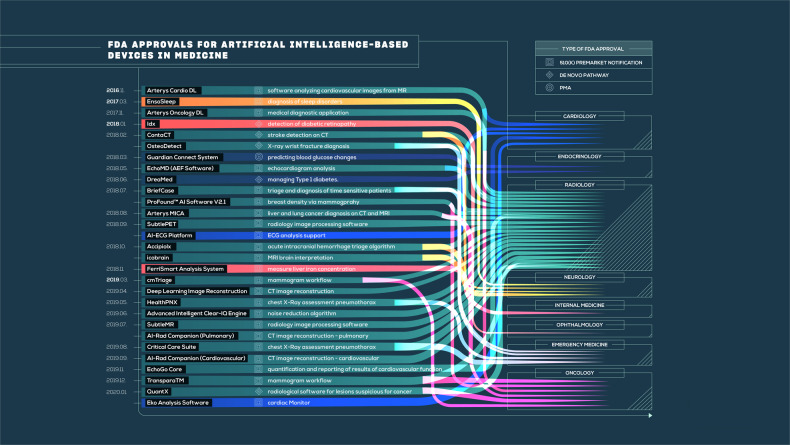
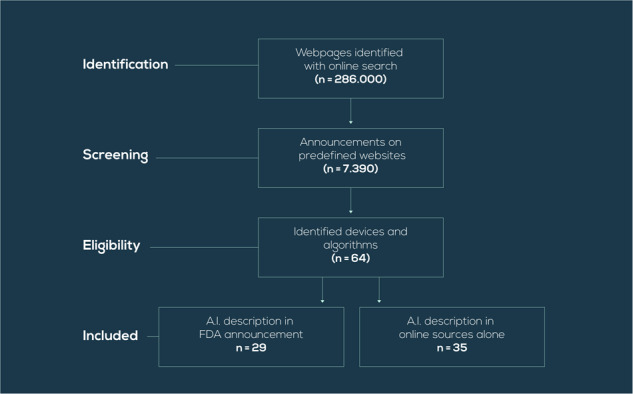
At the beginning of the artificial intelligence (AI)/machine learning (ML) era, the expectations are high, and experts foresee that AI/ML shows potential for diagnosing, managing and treating a wide variety of medical conditions. However, the obstacles for implementation of AI/ML in daily clinical practice are numerous, especially regarding the regulation of these technologies. Therefore, we provide an insight into the currently available AI/ML-based medical devices and algorithms that have been approved by the US Food & Drugs Administration (FDA). We aimed to raise awareness of the importance of regulatory bodies, clearly stating whether a medical device is AI/ML based or not. Cross-checking and validating all approvals, we identified 64 AI/ML based, FDA approved medical devices and algorithms. Out of those, only 29 (45%) mentioned any AI/ML-related expressions in the official FDA announcement. The majority (85.9%) was approved by the FDA with a 510(k) clearance, while 8 (12.5%) received de novo pathway clearance and one (1.6%) premarket approval (PMA) clearance. Most of these technologies, notably 30 (46.9%), 16 (25.0%), and 10 (15.6%) were developed for the fields of Radiology, Cardiology and Internal Medicine/General Practice respectively. We have launched the first comprehensive and open access database of strictly AI/ML-based medical technologies that have been approved by the FDA. The database will be constantly updated.
Overview
The claims and statistics of this paper haven’t been checked yet.
Free: it reads the open-access text and checks the first 5 claims that cite a source we can check. Create a free account to check every claim.
Integrity signals
Registry
Cites
Statistics
Figures
Verification
Claims the paper makes
The claims and statistics of this paper haven’t been checked yet.
Free: it reads the open-access text and checks the first 5 claims that cite a source we can check. Create a free account to check every claim.
Claims other papers make about this one
Each is checked against this paper’s own text: does it say what the citing paper says it does?
The source backs part of the claim, not all of it — or backs it for a different population, condition or comparison.
In the citing paper
“Dozens of companies have obtained US FDA and European CE approval for medical imaging AI 37 , and commercial markets have begun to form as sustainable business models are created.”
From Deep learning-enabled medical computer vision (2021) · cites this paper as [37]
Experimental — accuracy not yet measuredThe source backs part of the claim, not all of it — or backs it for a different population, condition or comparison.
In the citing paper
“The majority of AI interventions that are close to translation are in the field of medical diagnostics.3”
From Developing a reporting guideline for artificial intelligence-centred diagnostic test accuracy studies: the STARD-AI protocol (2021) · cites this paper as [3]
Experimental — accuracy not yet measuredThe source backs part of the claim, not all of it — or backs it for a different population, condition or comparison.
In the citing paper
“Moreover, diagnostics constitutes a substantial proportion of clinical AI focus, with most AI devices achieving regulatory approval thus far belonging to the diagnostic field 26 .”
From The STARD-AI reporting guideline for diagnostic accuracy studies using artificial intelligence (2025) · cites this paper as [26]
Experimental — accuracy not yet measuredThe cited source says what the claim attributes to it.
In the citing paper
“To date, 64 AI-powered medical devices and algorithms have been approved by the Food and Drug Administration in the United States [8].”
From Randomized Controlled Trials of Artificial Intelligence in Clinical Practice: Systematic Review (2022) · cites this paper as [8]
The cited source says what the claim attributes to it.
In the citing paper
“Another obstacle to the implementation of AI or ML in daily clinical practice is the regulation of these technologies [8].”
From Randomized Controlled Trials of Artificial Intelligence in Clinical Practice: Systematic Review (2022) · cites this paper as [8]
7 more claims about this paper
Create a free account to see every claim other papers make about this one.
Self-check
Percentages, sums and reported differences re-computed from the paper’s own numbers.
The self-check needs the paper’s full text.
Citations
Cites
High-performance medicine: the convergence of human and artificial intelligence
Topol, E. J. (2019) · Nature Medicine · doi:10.1038/s41591-018-0300-7 · Cited by 10,450 · cited 1×
“Despite its promise, the obstacles for implementation of AI/ML in daily clinical practice are numerous 10 .”
BackgroundWang, X., Peng, Y., Lu, L., Lu, Z., Bagheri, M., & Summers, R. M. (2017) · 2017 IEEE Conference on Computer Vision and Pattern Recognition (CVPR) · doi:10.1109/cvpr.2017.369 · Cited by 4,616
Deep Learning—A Technology With the Potential to Transform Health Care
Hinton, G. (2018) · JAMA · doi:10.1001/jama.2018.11100 · Cited by 667
Brown, J. M., Campbell, J. P., Beers, A., Chang, K., Ostmo, S., Chan, R. V. P., Dy, J., Erdogmus, D., Ioannidis, S., Kalpathy-Cramer, J., et al. (2018) · JAMA Ophthalmology · doi:10.1001/jamaophthalmol.2018.1934 · Cited by 657 · cited 1×
“Indeed, AI/ML-based technologies have been shown to support several medical specialties from radiology 2 and oncology 3 to ophthalmology 4 and general medical decision-making 5 .”
BackgroundArtificial Intelligence in Health Care: A Report From the National Academy of Medicine
Matheny, M. E., Whicher, D., & Thadaney Israni, S. (2020) · JAMA · doi:10.1001/jama.2019.21579 · Cited by 628
Wang, X., Peng, Y., Lu, L., Lu, Z., Bagheri, M., & Summers, R. M. (2019) · Advances in Computer Vision and Pattern Recognition · doi:10.1007/978-3-030-13969-8_18 · Cited by 371 · cited 1×
“Indeed, AI/ML-based technologies have been shown to support several medical specialties from radiology 2 and oncology 3 to ophthalmology 4 and general medical decision-making 5 .”
BackgroundLabovitz, D. L., Shafner, L., Reyes Gil, M., Virmani, D., & Hanina, A. (2017) · Stroke · doi:10.1161/strokeaha.116.016281 · Cited by 311
Horng, S., Sontag, D. A., Halpern, Y., Jernite, Y., Shapiro, N. I., & Nathanson, L. A. (2017) · PLOS ONE · doi:10.1371/journal.pone.0174708 · Cited by 310
van der Heijden, A. A., Abramoff, M. D., Verbraak, F., van Hecke, M. V., Liem, A., & Nijpels, G. (2018) · Acta Ophthalmologica · doi:10.1111/aos.13613 · Cited by 296
Artificial intelligence and the future of psychiatry: Insights from a global physician survey
Doraiswamy, P. M., Blease, C., & Bodner, K. (2020) · Artificial Intelligence in Medicine · doi:10.1016/j.artmed.2019.101753 · Cited by 253
Research works printed but not linked: 1
- Wang T Outpatient clinic process enhancement at children’s hospital: empoweredby information technology Chin. J. Hosp. Adm. 2018 34 753 755
Cited by
Items 501–600 of 1,000
CheXstray: A Real-Time Multi-Modal Monitoring Workflow for Medical Imaging AI
Merkow, J., Soin, A., Long, J., Cohen, J. P., Saligrama, S., Bridge, C., Yang, X., Kaiser, S., Borg, S., Tarapov, I., et al. (2023) · Lecture Notes in Computer Science · doi:10.1007/978-3-031-43898-1_32 · Cited by 13
Enhancing endoscopic precision: the role of artificial intelligence in modern gastroenterology
David-Olawade, A. C., Aderinto, N., Egbon, E., Olatunji, G. D., Kokori, E., & Olawade, D. B. (2025) · Journal of Gastrointestinal Surgery · doi:10.1016/j.gassur.2025.102195 · Cited by 13
Brass, I., & Mkwashi, A. (2022) · International Conference on the Internet of Things (IoT) · doi:10.1145/3567445.3571104 · Cited by 16
“This is confirmed by further studies, which demonstrate that a considerable proportion of FDA-cleared AI/ ML medical device software is not declared as such in official documentation [4] and that, at the moment, there are clear limitation with the evaluation process for approved medical AI devices [50].”
ResultTelemedicine Framework in COVID-19 Pandemic
Ali, F. I., Ali, T. E., & Hamad, A. H. (2022) · International Conference on Engineering and Emerging Technologies (ICEET) · doi:10.1109/iceet56468.2022.10007389 · Cited by 14
Toledo, O. F. D., Gutierrez‐Aguirre, S. F., Lara-Velazquez, M. A., Qureshi, A. I., Camp, W., Rodriguez‐Erazú, F., Benalia, V. H. C., Aghaebrahim, A., Sauvageau, E. A., & Hanel, R. A. (2024) · World Neurosurgery · doi:10.1016/j.wneu.2024.05.015 · Cited by 14
The CRyPTIC consortium (2024) · PLoS Computational Biology · doi:10.1371/journal.pcbi.1012260 · Cited by 13
Sharun, K., Banu, S. A., Mamachan, M., Abualigah, L., PAWDE, A. M., & Dhama, K. (2024) · Journal of Experimental Biology and Agricultural Sciences · doi:10.18006/2024.12(3).297.317 · Cited by 15
Regulatory Challenges in AI/ML-Enabled Medical Devices: A Scoping Review and Conceptual Framework
Kaladharan, S., Manayath, D., & Rejikumar, G. (2024) · Journal of Medical Devices · doi:10.1115/1.4066280 · Cited by 13
Dhawan, R., Shauly, O., Shay, D., Brooks, K., & Losken, A. (2024) · Aesthetic Surgery Journal · doi:10.1093/asj/sjae209 · Cited by 13
Werder, K., Cao, L., Park, E. H., & Ramesh, B. (2025) · Journal of Medical Internet Research · doi:10.2196/51785 · Cited by 15
“For instance, the Food and Drug Administration has been actively approving remote monitoring devices for patient care [6], while prominent hospital systems like Stanford Medical are developing AI monitoring solutions for senior care [7].”
Sardar, S., Dash, S., Roychowdhury, P., Solanki, J., Sikdar, P., Thangappan, J., & Dutta, S. (2026) · Briefings in Bioinformatics · doi:10.1093/bib/bbag269 · Cited by 13
“…AMR tool has yet received FDA clearance, and the existing Predetermined Change Control Plan (PCCP) framework does not accommodate continuously adaptive models that resistance surveillance demands necessitating collaborative development of domain-specific premarket evaluation pathways [ 144].”
Anterior Segment and Others in Teleophthalmology: Past, Present, and Future
Cui, T., Yun, D., Wu, X., & Lin, H. (2021) · Asia-Pacific Journal of Ophthalmology · doi:10.1097/apo.0000000000000396 · Cited by 13
Balogh, J., Szócska, M., Palicz, T., Kontsek, E., Pollner, P., Varga, G., Ugrin, I., Davidovics, K., & Joó, T. (2022) · IME - Az egészségügyi vezetők szaklapja · doi:10.53020/ime-2022-206 · Cited by 13
Barnett, J., & Diakopoulos, N. A. (2022) · Proceedings of the AAAI/ACM Conference on AI Ethics and Society · doi:10.1145/3514094.3534145 · Cited by 24
“Such algorithms are now acting to inform decisions across many aspects of society, such as governments on policy decisions [21], doctors and medical professionals on advances in medicine and care decisions [2], news organizations on which journalistic pieces to create and showcase [18], and even individuals on daily e…”
BackgroundNavigating US Regulation of Artificial Intelligence in Medicine—A Primer for Physicians
Vidal, D. E., Loufek, B. T., Kim, Y.-H., & Vidal, N. Y. (2023) · Mayo Clinic Proceedings Digital Health · doi:10.1016/j.mcpdig.2023.01.003 · Cited by 13
Ghantasala, G. S. P., Hùng, B. T., & Chakrabarti, P. (2023) · International Conference on Computer Communication and Informatics (ICCCI) · doi:10.1109/iccci56745.2023.10128454 · Cited by 14
“While additional critical analysis and independent external assessments are still awaiting [21 and 22], the Food and Drug Administration (FDA) recently endorsed a small group of deep learning-based diagnostic tools for medical use.”
BackgroundSelective Electrochemical Detection of SARS-CoV-2 Using Deep Learning
Gecgel, O., Ramanujam, A., & Botte, G. G. (2022) · Viruses · doi:10.3390/v14091930 · Cited by 14
Distribution Inference Risks: Identifying and Mitigating Sources of Leakage
Hartmann, V., Meynent, L., Peyrard, M., Dimitriadis, D., Tople, S., & West, R. (2023) · IEEE Conference on Secure and Trustworthy Machine Learning (SaTML) · doi:10.1109/satml54575.2023.00018 · Cited by 24
“For example, the models are deployed in user software such as for image processing or next-word-prediction on smartphones [2], [16], or they are shipped with medical devices [5].”
MethodAI and ML in radiology: Making progress
Rockall, A., Shelmerdine, S. C., & Chen, M. (2023) · Clinical Radiology · doi:10.1016/j.crad.2022.10.010 · Cited by 13
Yunike, Y., Rehana, R., Misinem, M., & Kusumawaty, I. (2023) · Poltekita Jurnal Ilmu Kesehatan · doi:10.33860/jik.v17i3.2958 · Cited by 12
Challenges and Potential of Artificial Intelligence in Neuroradiology
Winder, A. J., Stanley, E. A. M., Fiehler, J., & Forkert, N. D. (2024) · Clinical Neuroradiology · doi:10.1007/s00062-024-01382-7 · Cited by 13
“For example, AI and ML are not strictly regulated terms, and as a result, companies are not obligated to disclose that that their products incorporate AI or ML in any public-facing information [84].”
Transforming Skin Quality Evaluation With AI : From Subjective Grading to Data‐Driven Precision
Pooth, R., Sattler, S., Westerberg, F., Pavicic, T., & Kerscher, M. J. (2025) · Journal of Cosmetic Dermatology · doi:10.1111/jocd.70371 · Cited by 14
“Standardization efforts must also establish universal benchmarks for AI algorithms, promoting cross-platform compatibility and interoperability [59, 60].”
Biney, E., Asare, D., Cheong, K., Zhong, H.-J., Zhong, S., & Sathuvan, M. (2025) · Food Chemistry X · doi:10.1016/j.fochx.2025.103155 · Cited by 14
“AOS can be incorporated as a functional ingredient to improve the nutritional profile, texture, and health-promoting effects of foods (Benjamens et al., 2020; Saini et al., 2022).”
Patel, T. D., Ibrahim, H. Y., Henna, F., Nasir, F., Hussain, A., Naveed, R., Rehman, A. U., Kazmi, S. R. Z., Patel, B. D., Anand, N., et al. (2025) · Annals of Medicine and Surgery · doi:10.1097/ms9.0000000000004246 · Cited by 12
“Before any medical hardware or software is approved for the U.S. market, developers must undergo FDA evaluation, which involves three levels of regulatory clearance for medically oriented AI/ML-based algorithms [ 55 ] .”
Sirago, G., Vinci, A., Visci, P., Solarino, B., Dell'Erba, A. S., & Ferorelli, D. (2026) · Journal of Medical Systems · doi:10.1007/s10916-026-02382-5 · Cited by 14
The Emerging Role of Artificial Intelligence in Valvular Heart Disease
Canning, C., Guo, J., Narang, A., Thomas, J. D., & Ahmad, F. S. (2023) · Heart Failure Clinics · doi:10.1016/j.hfc.2023.03.001 · Cited by 13
Unlock the algorithms: regulation of adaptive algorithms in reproduction
Curchoe, C. L. (2023) · Fertility and Sterility · doi:10.1016/j.fertnstert.2023.05.152 · Cited by 12
Morales, U., Lopez, V., Joanan, S., & Julia, H. (2023) · Journal International Inspire Education Technology · doi:10.55849/jiiet.v1i3.207 · Cited by 12
“Basically, this use has been used in various aspects that require the help of this intelligence robot in honing the ability of memory, thinking, and quality in testing the ability of its users (Benjamens, 2020; ERKOÇ et al., 2023; Lin & Wu, 2021).”
MethodAlgorithmic fairness and resentment
Babic, B., & King, Z. J. (2023) · Philosophical Studies · doi:10.1007/s11098-023-02006-5 · Cited by 12
“(2001), Schauer (2003), Redmayne (2008), Buchak (2014), and Cheng (2013).”
InfluentialLopez-Perez, L., Georga, E. I., Conti, C. A., Vicente, V., García, R., Pecchia, L., Fotiadis, D. I., Licitra, L. F., Cabrera-Umpiérrez, M. F., Arredondo, M. T., et al. (2024) · Biomedical Signal Processing and Control · doi:10.1016/j.bspc.2024.106067 · Cited by 14
Sociodemographic biases in a commercial AI model for intracranial hemorrhage detection
Trang, A., Putman, K., Savani, D., Chatterjee, D., Zhao, J., Kamel, P. I., Jeudy, J. J., Parekh, V. S., & Yi, P. H. (2024) · Emergency Radiology · doi:10.1007/s10140-024-02270-w · Cited by 12
RETRACTED: AI-Driven Decision-Making in Healthcare Information Systems: A Comprehensive Review
Amiri, Z., Taghavirashidizadeh, A., & Khorrami, P. (2025) · Journal of Systems and Software · doi:10.1016/j.jss.2025.112470 · Cited by 12
RetractedBanerjee, D., Rajput, D., Banerjee, S., & Saharan, V. A. (2022) · Springer eBooks · doi:10.1007/978-981-16-5180-9_11 · Cited by 19
The IHI Rochester Report 2022 on Healthcare Informatics Research: Resuming After the CoViD-19
Combi, C., Facelli, J. C., Haddawy, P., Holmes, J. H., Koch, S., Liu, H., Meyer, J., Peleg, M., Pozzi, G., Štiglic, G., et al. (2023) · Journal of Healthcare Informatics Research · doi:10.1007/s41666-023-00126-5 · Cited by 12
“But there have been considerable discussions arguing both in favor and against a much higher level of regulatory framework [98, 101–104].”
BackgroundTejani, A. S., Dowling, T., Sanampudi, S., Yazdani, R. M., Canan, A., Malja, E., Xi, Y., Abbara, S., Peshock, R. M., & Kay, F. U. (2023) · Journal of Thoracic Imaging · doi:10.1097/rti.0000000000000746 · Cited by 12
“7 .”
Orbital learning: a novel, actively orchestrated decentralised learning for healthcare
Chakshu, N. K., & Nithiarasu, P. (2024) · Scientific Reports · doi:10.1038/s41598-024-60915-9 · Cited by 12
Diagnostic and Prognostic Electrocardiogram-Based Models for Rapid Clinical Applications
Islam, M. S., Kalmady, S. V., Hindle, A., Sandhu, R. K., Sun, W., Sepehrvand, N., Greiner, R., & Kaul, P. (2024) · Canadian Journal of Cardiology · doi:10.1016/j.cjca.2024.07.003 · Cited by 21
Ear‐Area Soft Electronics for Advanced Healthcare Monitoring
Yu, Y., Zhang, H., Pan, X., Yuan, M., Sun, Y., Han, P., Fang, Q., Li, B., Xu, F., & Fang, Y. (2025) · Advanced Functional Materials · doi:10.1002/adfm.202505046 · Cited by 12
Chauhan, S. B., Gaur, R., Akram, A., & Singh, I. (2025) · Global Clinical Engineering Journal · doi:10.31354/globalce.v7i2.210 · Cited by 12
Zhang, Y., Zhang, X., Qi, X., Wu, X., Chen, F., Yang, G., & Fu, H. (2025) · IEEE Reviews in Biomedical Engineering · doi:10.1109/rbme.2025.3619086 · Cited by 17
“2025 MExD [183] Feature Diffusion Mixture-of-experts class distribution synthesis for generative WSI classification.”
Wang, X., Wang, Q., Ding, G., Wang, J., Tang, Y., & Feng, Y. (2026) · iScience · doi:10.1016/j.isci.2026.114627 · Cited by 12
The future of robotic surgery in the age of artificial intelligence
Cella, L., Lin, J., Goldenberg, M. G., & Hung, A. J. (2026) · Nature Reviews Urology · doi:10.1038/s41585-026-01153-8 · Cited by 13
“…the vast majority of these devices are limited to diagnostic imaging or signal analysis, whereas only a small fraction involve intraoperative systems, and almost all devices operate at low levels of autonomy that require continuous human supervision, reflecting a fundamental asymmetry 87,88 .”
Hu, Z., Hu, R., Yau, O., Teng, M. Y., Wang, P., Hu, G., & Singla, R. (2022) · JMIR Medical Informatics · doi:10.2196/34304 · Cited by 11
“As such, the FDA has created recent guidelines, indicating that surveillance is required over the total product life cycle of the device, including model updates from retraining [6].”
BackgroundA Platform for Tracking Surgeon and Observer Gaze as a Surrogate for Attention in Ophthalmic Surgery
Nespolo, R. G., Cole, E. D., Wang, D., Yi, D., & Leiderman, Y. I. (2022) · Ophthalmology Science · doi:10.1016/j.xops.2022.100246 · Cited by 11
Nakai, H., Sakamoto, R., Kakigi, T., Coeur, C., Isoda, H., & Nakamoto, Y. (2023) · European Journal of Radiology · doi:10.1016/j.ejrad.2023.110823 · Cited by 11
A Survey of Threats to Research Literature-dependent Medical AI Solutions
Saini, S., & Saxena, N. (2023) · ACM Computing Surveys · doi:10.1145/3592597 · Cited by 14
“There has been an immense interest in MedAI since 2010 with a 20-fold increase in AI/ML-based research publications from 2010 to 2019 [15].”
BackgroundForecasting Artificial Intelligence Trends in Health Care: Systematic International Patent Analysis
Benjamens, S., Dhunnoo, P., Görög, M., & Meskó, B. (2023) · JMIR AI · doi:10.2196/47283 · Cited by 11
“Based on a previous study published by our group about FDA-approved AI- and ML-based medical technologies [1], radiology, cardiology, and oncology were already identified as specialties with many AI-based applications.”
BackgroundSelf-citationArtificial Intelligence-Supported Systems in Anesthesiology and Its Standpoint to Date—A Review
Pham, F. M. P. (2023) · Open Journal of Anesthesiology · doi:10.4236/ojanes.2023.137014 · Cited by 14
Using Machine Learning to Select Breast Implant Volume
Basile, F. V., & Oliveira, T. S. (2023) · Plastic & Reconstructive Surgery · doi:10.1097/prs.0000000000011146 · Cited by 12
The ménage à trois of healthcare: the actors in after-AI era under patient consent
Saccà, R., Turrini, R., Ausania, F., Turrina, S., & Leo, D. D. (2024) · Frontiers in Medicine · doi:10.3389/fmed.2023.1329087 · Cited by 11
Explicit Physics-Informed Deep Learning for Computer-Aided Diagnostic Tasks in Medical Imaging
Nemirovsky-Rotman, S., & Bercovich, E. (2024) · Machine Learning and Knowledge Extraction · doi:10.3390/make6010019 · Cited by 12
“The U.S. Food and Drug Administration (FDA) has approved a few diagnostic procedures utilizing deep learning and artificial intelligence (AI) technologies [12–14].”
BackgroundCao, S., Wei, Y., Yue, Y., Wang, D., Xiong, A., & Zeng, H. (2024) · Journal of Multidisciplinary Healthcare · doi:10.2147/jmdh.s477219 · Cited by 11
“69”
Large Language Models in Neurosurgery
Ieva, A. D., Stewart, C., & Molina, E. S. (2024) · Advances in experimental medicine and biology · doi:10.1007/978-3-031-64892-2_11 · Cited by 12
Lin, F., Wang, K., Lai, M., Yang, W., Chen, C., Wang, Y., & Wang, R. (2025) · Scientific Reports · doi:10.1038/s41598-024-72539-0 · Cited by 12
Real-World Surveillance of FDA-Cleared Artificial Intelligence Models: Rationale and Logistics
Dreyer, K. J., Allen, B., & Wald, C. (2021) · Journal of the American College of Radiology · doi:10.1016/j.jacr.2021.06.025 · Cited by 13
Artificial Intelligence in Hematology
Luchinin, A. S. (2022) · Clinical oncohematology · doi:10.21320/2500-2139-2022-15-1-16-27 · Cited by 12
Promoting Sustainability through Next-Generation Biologics Drug Development
Paulick, K., Seidel, S., Lange, C., Kemmer, A., Bournazou, M. N. C., Baier, A., & Haehn, D. (2022) · Sustainability · doi:10.3390/su14084401 · Cited by 11
Vats, A., Mohammed, A. M., Pedersen, M., & Wiratunga, N. (2023) · IEEE International Conference on Acoustics Speech and Signal Processing · doi:10.1109/icassp49357.2023.10096931 · Cited by 11
“There has been a rapid integration of deep learning based models in real-world applications, including high-risk ones such as healthcare and defence owing to their unparalleled predictive performance [5].”
BackgroundShao, R., Ma, R., An, X., Wang, C., & Sun, S. (2022) · Journal of Materials Chemistry C · doi:10.1039/d1tc04384f · Cited by 12
Terabyte-scale supervised 3D training and benchmarking dataset of the mouse kidney
Kuo, W., Rossinelli, D., Schulz, G. V., Wenger, R. H., Hieber, S. E., Müller, B., & Kurtcuoglu, V. (2023) · Scientific Data · doi:10.1038/s41597-023-02407-5 · Cited by 12
Ethical and Regulatory Considerations
Seeram, E., & Kanade, V. A. (2024) · Springer eBooks · doi:10.1007/978-3-031-64049-0_9 · Cited by 11
Increasing transparency of computer-aided detection impairs decision-making in visual search
Kunar, M. A., Watson, D., & Montana, G. (2024) · Psychonomic Bulletin & Review · doi:10.3758/s13423-024-02601-5 · Cited by 10
“Although, the FDA has already approved several AI systems (Benjamens, et al., 2020), the clinical and cognitive costs of human interaction with these systems are still not fully understood and human–AI interactions remain largely underresearched.”
Dreizin, D., Khatri, G. D., Staziaki, P. V., Buch, K. A., Unberath, M., Mohammed, M., Sodickson, A. D., Khurana, B., Agrawal, A., Spann, J. S., et al. (2024) · Emergency Radiology · doi:10.1007/s10140-024-02306-1 · Cited by 10
“Food and Drug Administration (FDA) Center for Devices and Radiological Health serves as the regulatory body for clearance through the 510k or de novo software as medical device (SaMD) pathway, ensuring that devices work as intended without major risks [27, 28].”
A Comprehensive Review on Biomedical Image Classification using Deep Learning Models
Tounsi, M., Aram, E., Azar, A. T., Alkhayyat, A. H., & Ibraheem, I. K. (2025) · Engineering Technology & Applied Science Research · doi:10.48084/etasr.8728 · Cited by 11
“D [19].”
Overview of artificial intelligence in hand surgery
Ryhänen, J., Wong, G. C., Anttila, T., & Chung, K. C. (2025) · Journal of Hand Surgery (European Volume) · doi:10.1177/17531934251322723 · Cited by 10
Geysels, A., Garofalo, G., Timmerman, S., Barreñada, L., Moor, B. D., Timmerman, D., Froyman, W., & CALSTER, B. V. (2025) · Gynecologic and Obstetric Investigation · doi:10.1159/000545850 · Cited by 12
“However, despite growing research interest, routine clinical integration of AI into gynecological ultrasound applications remains limited, evidenced by the relatively few AI-based devices that received approval from the US Food and Drug Administration (FDA) [9].”
Singh, Y., Hathaway, Q. A., Vera-Garcia, D. V., Povero, D., Salehi, S., Wei, Y., Horvat, N., Chaudhary, A., Kh, A. M., Keishing, V., et al. (2025) · npj gut and liver. · doi:10.1038/s44355-025-00049-5 · Cited by 11
Consorti, G., Catarzi, L., Frosolini, A., Vaira, L. A., Committeri, U., & Cirignaco, G. (2026) · International Journal of Oral and Maxillofacial Surgery · doi:10.1016/j.ijom.2026.02.020 · Cited by 12
Trust in Clinical AI: Expanding the Unit of Analysis
Browne, J., Bakker, S., Yu, B., Lloyd, P. A., & Allouch, S. B. (2022) · Frontiers in artificial intelligence and applications · doi:10.3233/faia220192 · Cited by 16
Baltaxe, E., Hsieh, H. W., Roca, J., & Cano, I. (2022) · Journal of Medical Internet Research · doi:10.2196/40976 · Cited by 11
“Two recent studies [41,42] explored this concept when applied to artificial intelligence MDSW.”
Kehayias, C. E., Yan, Y., Bontempi, D., Quirk, S., Bitterman, D. S., Bredfeldt, J. S., Aerts, H. J. W. L., Mak, R. H., & Guthier, C. V. (2024) · Frontiers in Oncology · doi:10.3389/fonc.2023.1305511 · Cited by 10
“Medical software must be evaluated by the Food and Drug Administration (FDA) before entering the US market, an untenably slow process prior to the FDA ’ s amended regulatory protocol in 2019 (24), and the cost of these systems may also be prohibitive for some less-resourced clinics.”
BackgroundHealthcare Artificial Intelligence in India and Ethical Aspects
Sarkar, A., Singh, P., & Varkey, M. (2024) · Springer eBooks · doi:10.1007/978-981-97-0503-0_7 · Cited by 14
Daalen, J. M. J., Doesburg, D., Hunik, L., Kessel, R., Herngreen, T., Knol, D. L., Ruys, T., van den Bemt, B. J. F., & Schers, H. (2024) · Clinical Pharmacology & Therapeutics · doi:10.1002/cpt.3293 · Cited by 10
Piatti, A., Rui, C., Gazzina, S., Tartaglino, B., Romeo, F., Manti, R., Doglio, M., Nada, E., & Giorda, C. B. (2024) · European Journal of Ophthalmology · doi:10.1177/11206721241272229 · Cited by 12
“18,24 Additionally, IDX-DR (Idx LLC, Iowa, USA) recorded 91% sensitivity and 84% speci fi city, 25 EYEART app reported 91.7% sensitivity and 91.5% speci fi city, 25,26 and RETMARKER app showed 85% sensitivity.”
InfluentialThe wizard of artificial intelligence: Are physicians prepared?
Radhwi, O., & Khafaji, M. A. (2024) · Journal of Family and Community Medicine · doi:10.4103/jfcm.jfcm_144_24 · Cited by 10
Use of blockchain technology for electronic prescriptions
Seaberg, R. W., Seaberg, T. R., & Seaberg, D. C. (2021) · Blockchain in Healthcare Today · doi:10.30953/bhty.v4.183 · Cited by 5
“Additionally, blockchain supports high-throughput data analysis as well as machine learning artificial intelligence (AI) strategies (12).”
BackgroundGlaudemans, A. W. J. M., Dierckx, R., Scheerder, B., Niessen, W. J., Pruim, J., Dewi, D. E. O., Borra, R., Lammertsma, A. A., Tsoumpas, C., & Slart, R. H. J. A. (2023) · European Journal of Nuclear Medicine and Molecular Imaging · doi:10.1007/s00259-023-06507-7 · Cited by 10
Phi, N. T. T., Oikonomidi, T., Ravaud, P., & Tran, V.-T. (2023) · JAMA Internal Medicine · doi:10.1001/jamainternmed.2023.2864 · Cited by 9
Mohammed, S. G. A. A., Qoronfleh, M. W., Acar, A., & Al-Dewik, N. I. E. (2025) · FASEB BioAdvances · doi:10.1096/fba.2024-00198 · Cited by 11
Shen, S., Qi, W., Li, S., Zeng, J., Liu, X., Zhu, X., Dong, C., Wang, B., Xu, Q., & Cao, S. (2025) · Digital Health · doi:10.1177/20552076251361614 · Cited by 12
Hussain, A., Guni, A., Gandhewar, R., Warner-Levy, J. J., Davidson, A., Shah, K., Darzi, A. W., & Ashrafian, H. (2025) · Heart · doi:10.1136/heartjnl-2025-326307 · Cited by 11
Navigating Medical Device Safety: Current Status, Challenges, and Future Regulatory Directions
Aimer, O., & Baldridge, C. (2025) · Drug Safety · doi:10.1007/s40264-025-01599-6 · Cited by 12
“Although currently approved AI-based medical devices (AIaMDs) are “locked” algorithms, meaning their learning capabilities are fixed at the time of approval, performance drift can still occur due to changes in the data distribution over time, potentially leading to safety concerns [48].”
Artificial intelligence‐enabled digital biomedical engineering
Song, P., Tang, X., Lv, X., Reis, R. L., Chen, X., Bai, L., & Su, J. (2025) · BMEMat · doi:10.1002/bmm2.70049 · Cited by 10
Raposo, S. R. F., Mascarenhas, M., Correia, R., & Ferreira, J. C. (2025) · Healthcare · doi:10.3390/healthcare13243286 · Cited by 11
“Ongoing interdisciplinary collaboration between healthcare professionals, developers, and regulatory bodies will be essential to ensure that AI develops as a tool for clinical equity rather than a driver of exclusion [83,85].”
Ye, J. (2026) · Artificial Intelligence Review · doi:10.1007/s10462-025-11487-1 · Cited by 11
AI-Driven Chemometrics for Multi-omics Data Integration: Advances, Challenges, and Future Directions
Polu, P. R. (2026) · Critical Reviews in Analytical Chemistry · doi:10.1080/10408347.2026.2657553 · Cited by 14
The requirements for performing artificial-intelligence-related research and model development
Pareek, A., Lungren, M. P., & Halabi, S. S. (2022) · Pediatric Radiology · doi:10.1007/s00247-022-05483-8 · Cited by 10
Stonko, D. P., & Hicks, C. W. (2023) · Seminars in Vascular Surgery · doi:10.1053/j.semvascsurg.2023.06.001 · Cited by 10
Regulatory frameworks for artificial intelligence in cardiovascular medicine and surgery
Maher, K., & Chang, A. C. (2023) · Elsevier eBooks · doi:10.1016/b978-0-323-90534-3.00026-3 · Cited by 9
Machine Learning Approaches for Stem Cells
Mazalan, M., Do, T.-D., Zaman, W. S. W. K., & Ramlan, E. I. (2023) · Current Stem Cell Reports · doi:10.1007/s40778-023-00228-1 · Cited by 9
Kromrey, M., Steiner, L., Schön, F., Gamain, J., Roller, C., & Malsch, C. (2024) · Healthcare · doi:10.3390/healthcare12222225 · Cited by 9
The Next Era of Biomedical Research: Prioritizing Health Equity in The Age of Digital Medicine
Brogan, J. (2021) · Voices in Bioethics · doi:10.52214/vib.v7i.8854 · Cited by 9
Sardanelli, F., Castiglioni, I., Colarieti, A., Schiaffino, S., & Leo, G. D. (2023) · European Radiology Experimental · doi:10.1186/s41747-022-00316-7 · Cited by 9
“Another major milestone was, in 2016, the first Food and Drug Administration approval of a software for analysing magnetic resonance cardiovascular images [16].”
BackgroundPrabhudesai, S., Hauth, J. M., Guo, D., Rao, A. U. K., Banović, N., & Huan, X. (2023) · Frontiers in Computer Science · doi:10.3389/fcomp.2023.1071174 · Cited by 15
“Food and Drug Administration (FDA) (Topol, 2019), with the goal to integrate them into clinical workflows (Benjamens et al., 2020).”
BackgroundOntologies, Machine Learning and Deep Learning in Obstetrics
Malgieri, L. E. (2023) · Springer eBooks · doi:10.1007/978-3-031-10067-3_3 · Cited by 12
Evolution in fracture risk assessment: artificial versus augmented intelligence
Hans, D. B., Shevroja, E., & Leslie, W. D. (2021) · Osteoporosis International · doi:10.1007/s00198-020-05737-x · Cited by 9
Lim, M. J. R. (2021) · Neurosurgery · doi:10.1093/neuros/nyab337 · Cited by 9
Supporting wound infection diagnosis: advancements and challenges with electronic noses
Wörner, J., Moelleken, M., Dissemond, J., & Pein-Hackelbusch, M. (2023) · Frontiers in Sensors · doi:10.3389/fsens.2023.1250756 · Cited by 8
Diagnosis of cardiac conditions from 12-lead electrocardiogram through natural language supervision
Zhou, X., Li, T., Hayama, H., Nakamura, K., Liu, S.-H., Chen, W., & Zhu, X. (2025) · npj Digital Medicine · doi:10.1038/s41746-025-02074-3 · Cited by 8
Moral Entrepreneurship and the Ethics of Artificial Intelligence in Digital Psychiatry
Vale, M. D. (2024) · Socius Sociological Research for a Dynamic World · doi:10.1177/23780231241259641 · Cited by 11
“Mobile and web applications purporting to provide mental health care abound, but few have validated their interventions’ effectiveness in clinical trials or pursued U.S. Food and Drug Administration (FDA) approval (Benjamens, Dhunnoo, and Meskó 2020).”
Metadata
- Authors
- Benjamens, S., Dhunnoo, P., & Meskó, B.
- Affiliations
- University Medical Center Groningen (NL)
- Semmelweis University (HU)
- Corresponding author
- Meskó, Bertalan
- Venue
- npj Digital Medicine
- Published
- 2020-09-11
- Volume
- 3
- Issue
- 1
- Pages
- 118-118
- ISSN
- 2398-6352 (ISSN-L)
- PMC
- PMC7486909
- OpenAlex
- W3086667591
- Semantic Scholar
- 0623ccb3694aae29857890809afe5868931a98ec
- Cited by
- 1,215
- References
- 24
- Citations by year
- 2026: 219 · 2025: 208 · 2024: 212 · 2023: 227 · 2022: 188 · 2021: 153 · 2020: 7
- FWCI
- 42.33
- Type
- journal article
- Language
- en
- Open access
- gold
- doi.org
- Licence
- cc-by
- creativecommons.org/licenses/by/4.0 (tdm)
- creativecommons.org/licenses/by/4.0 (vor)
- Locations
- npj Digital Medicine (publishedVersion, cc-by)
- PubMed Central (publishedVersion, cc-by)
- PubMed (publishedVersion)
- University of Groningen research database (University of Groningen / Centre for Information Technology) (publishedVersion, cc-by)
- DOAJ (DOAJ: Directory of Open Access Journals) (submittedVersion, cc-by-sa)
- University of Groningen research database (University of Groningen / Centre for Information Technology) (submittedVersion, cc-by)
- Topics
- Health Sciences › Medicine › Health Informatics › Artificial Intelligence in Healthcare and Education
- Health Sciences › Medicine › Public Health, Environmental and Occupational Health › Healthcare Regulation
- Physical Sciences › Computer Science › Information Systems › Internet of Things and AI
- Keywords
- artificial intelligence, machine learning, medical device regulation, 510(k) clearance, de novo pathway, premarket approval, clinical implementation of AI, radiology, online databases
About these checks
Registry, retraction, Cites and statistics results are computed, not judged, with one exception: a printed reference that no index lists is read once by a model before it counts as a citation error. Claims are extracted by a model and kept only when their quote appears verbatim in the text; each cited source is then checked, with a model’s help, for whether it says what the claim relies on. Those verdicts can be wrong — read the claim’s quote and the cited source before relying on one.
Statistics and arithmetic are recomputed, not judged.
Confidence bands are shown only for fields calibrated on our annotated test set. None is calibrated yet, so no band is shown.
What counts as a claim ›How we measure confidence ›How we check this ›
Are you an author, or do you see a problem with this page? Request a review
Data sources
Bibliographic data: Semantic Scholar, OpenAlex, Crossref.
Contains information from the Semantic Scholar Academic Graph Datasets, made available under the ODC Attribution License (ODC-BY 1.0).
Semantic Scholar’s data is described in: Kinney, R., et al. (2023). The Semantic Scholar Open Data Platform. arXiv:2301.10140.
