

The DOI matches its Crossref record; 64 of the 64 references it cites were found in a registry or an index.
Harnessing the power of single-cell large language models with parameter-efficient fine-tuning using scPEFT
Open accessPublished version of a preprint
Overview
The claims and statistics of this paper haven’t been checked yet.
Run the check — free, no account needed. It reads the open-access text and checks the sources it cites.
Integrity signals
Registry
Cites
Statistics
Figures
Verification
Claims the paper makes
The claims and statistics of this paper haven’t been checked yet.
Run the check — free, no account needed. It reads the open-access text and checks the sources it cites.
Self-check
Percentages, sums and reported differences re-computed from the paper’s own numbers.
The self-check needs the paper’s full text.
Citations
Cites
Vaswani, A., Shazeer, N., Parmar, N., Uszkoreit, J., Jones, L., Gomez, A. N., Kaiser, L., & Polosukhin, I. (2017) · arXiv · doi:10.48550/arxiv.1706.03762 · Cited by 120,404
Adam: A Method for Stochastic Optimization
Kingma, D. P., & Ba, J. (2014) · arXiv · doi:10.48550/arxiv.1412.6980 · Cited by 98,946
Subramanian, A., Tamayo, P., Mootha, V. K., Mukherjee, S., Ebert, B. L., Gillette, M. A., Paulovich, A., Pomeroy, S. L., Golub, T. R., Lander, E. S., et al. (2005) · Proceedings of the National Academy of Sciences · doi:10.1073/pnas.0506580102 · Cited by 53,625
Kirillov, A., Mintun, E., Ravi, N., Mao, H., Rolland, C., Gustafson, L., Xiao, T., Whitehead, S., Berg, A. C., Lo, W.-Y., et al. (2023) · 2023 IEEE/CVF International Conference on Computer Vision (ICCV) · doi:10.1109/iccv51070.2023.00371 · Cited by 11,953 · cited 1×
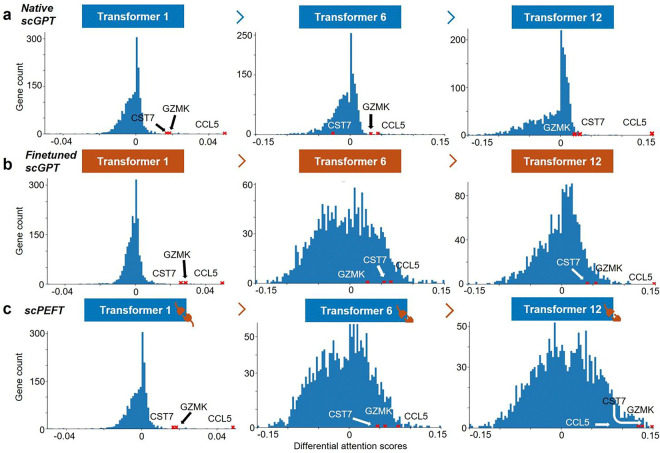
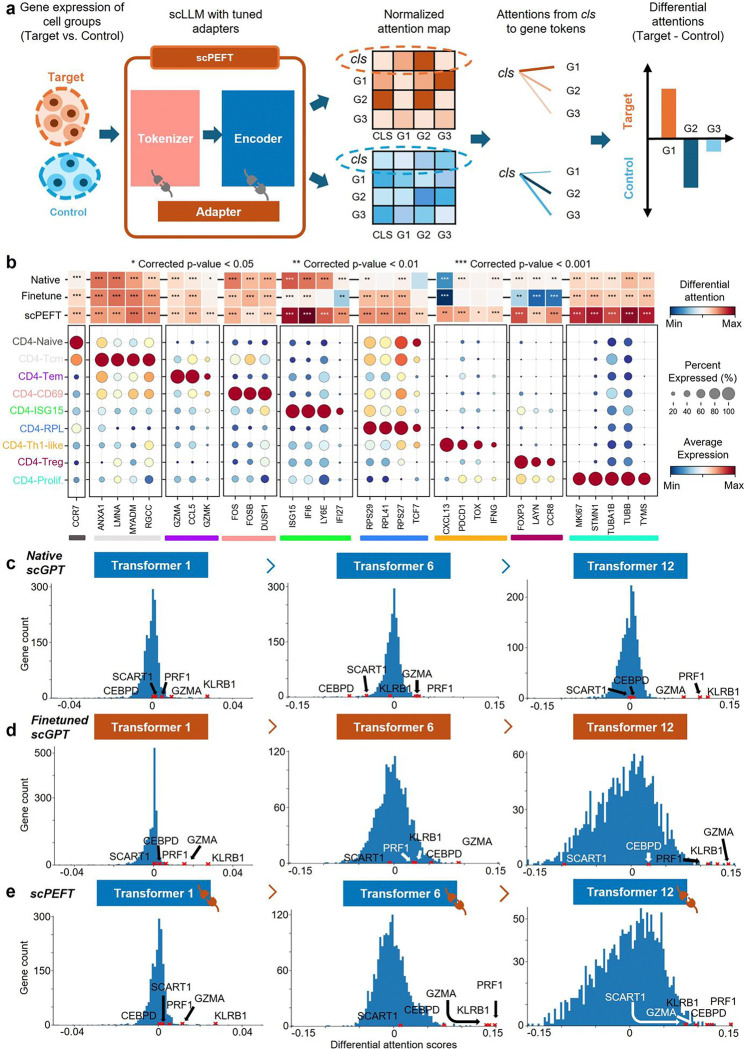
“…control cells from other T cell subtypes. n = 874, 391, 242, 724, 2,174, 203, 868, 1,941 and 205 cells were used for the test cases, respectively. c – e , Histograms of differential attention scores from native scGPT ( c ), fine-tuned scGPT ( d ) and scPEFT ( e ) models, in the analysis of…”
The control of the false discovery rate in multiple testing under dependency
Benjamini, Y., & Yekutieli, D. (2001) · The Annals of Statistics · doi:10.1214/aos/1013699998 · Cited by 10,490
Santos, A. G., da Rocha, G. O., & de Andrade, J. B. (2019) · Scientific Reports · doi:10.1038/s41598-018-37186-2 · Cited by 8,495
Evolutionary-scale prediction of atomic level protein structure with a language model
Lin, Z., Akin, H., Rao, R., Hie, B., Zhu, Z., Lu, W., Smetanin, N., Verkuil, R., Kabeli, O., Shmueli, Y., et al. (2022) · doi:10.1101/2022.07.20.500902 · Cited by 5,990
From Louvain to Leiden: guaranteeing well-connected communities
Traag, V. A., Waltman, L., & van Eck, N. J. (2019) · Scientific Reports · doi:10.1038/s41598-019-41695-z · Cited by 5,635
Dictionary learning for integrative, multimodal and scalable single-cell analysis
Hao, Y., Stuart, T., Kowalski, M. H., Choudhary, S., Hoffman, P., Hartman, A., Srivastava, A., Molla, G., Madad, S., Fernandez-Granda, C., et al. (2024) · Nature Biotechnology · doi:10.1038/s41587-023-01767-y · Cited by 5,631
Dimensionality reduction for visualizing single-cell data using UMAP
Becht, E., McInnes, L., Healy, J., Dutertre, C.-A., Kwok, I. W. H., Ng, L. G., Ginhoux, F., & Newell, E. W. (2019) · Nature Biotechnology · doi:10.1038/nbt.4314 · Cited by 5,358
Aran, D., Looney, A. P., Liu, L., Wu, E., Fong, V., Hsu, A., Chak, S., Naikawadi, R. P., Wolters, P. J., Abate, A. R., et al. (2019) · Nature Immunology · doi:10.1038/s41590-018-0276-y · Cited by 4,984
The Human Transcription Factors
Lambert, S. A., Jolma, A., Campitelli, L. F., Das, P. K., Yin, Y., Albu, M., Chen, X., Taipale, J., Hughes, T. R., & Weirauch, M. T. (2018) · Cell · doi:10.1016/j.cell.2018.01.029 · Cited by 3,399
Zhang, Y., & Zhang, Z. (2020) · Cellular and Molecular Immunology · doi:10.1038/s41423-020-0488-6 · Cited by 2,906
Deep generative modeling for single-cell transcriptomics
Lopez, R., Regier, J., Cole, M. B., Jordan, M. I., & Yosef, N. (2018) · Nature Methods · doi:10.1038/s41592-018-0229-2 · Cited by 2,530
Prefix-Tuning: Optimizing Continuous Prompts for Generation
Li, X. L., & Liang, P. (2021) · Proceedings of the 59th Annual Meeting of the Association for Computational Linguistics and the 11th International Joint Conference on Natural Language Processing (Volume 1: Long Papers) · doi:10.18653/v1/2021.acl-long.353 · Cited by 2,473
Conserved cell types with divergent features in human versus mouse cortex
Hodge, R. D., Bakken, T. E., Miller, J. A., Smith, K. A., Barkan, E. R., Graybuck, L. T., Close, J. L., Long, B., Johansen, N., Penn, O., et al. (2019) · Nature · doi:10.1038/s41586-019-1506-7 · Cited by 1,775
Shared and distinct transcriptomic cell types across neocortical areas
Tasic, B., Yao, Z., Graybuck, L. T., Smith, K. A., Nguyen, T. N., Bertagnolli, D., Goldy, J., Garren, E., Economo, M. N., Viswanathan, S., et al. (2018) · Nature · doi:10.1038/s41586-018-0654-5 · Cited by 1,746
scGPT: Towards Building a Foundation Model for Single-Cell Multi-omics Using Generative AI
Cui, H., Wang, C., Maan, H., Pang, K., Luo, F., & Wang, B. (2023) · doi:10.1101/2023.04.30.538439 · Cited by 1,694
PanglaoDB: a web server for exploration of mouse and human single-cell RNA sequencing data
Franzén, O., Gan, L.-M., & Björkegren, J. L. M. (2019) · Database · doi:10.1093/database/baz046 · Cited by 1,551
Benchmarking atlas-level data integration in single-cell genomics
Luecken, M. D., Büttner, M., Chaichoompu, K., Danese, A., Interlandi, M., Mueller, M. F., Strobl, D. C., Zappia, L., Dugas, M., Colomé-Tatché, M., et al. (2022) · Nature Methods · doi:10.1038/s41592-021-01336-8 · Cited by 1,438
Adamson, B., Norman, T. M., Jost, M., Cho, M. Y., Nuñez, J. K., Chen, Y., Villalta, J. E., Gilbert, L. A., Horlbeck, M. A., Hein, M. Y., et al. (2016) · Cell · doi:10.1016/j.cell.2016.11.048 · Cited by 1,193
Self-citationTransfer learning enables predictions in network biology
Theodoris, C. V., Xiao, L., Chopra, A., Chaffin, M. D., Al Sayed, Z. R., Hill, M. C., Mantineo, H., Brydon, E. M., Zeng, Z., Liu, X. S., et al. (2023) · Nature · doi:10.1038/s41586-023-06139-9 · Cited by 1,193
A taxonomy of transcriptomic cell types across the isocortex and hippocampal formation
Yao, Z., van Velthoven, C. T. J., Nguyen, T. N., Goldy, J., Sedeno-Cortes, A. E., Baftizadeh, F., Bertagnolli, D., Casper, T., Chiang, M., Crichton, K., et al. (2021) · Cell · doi:10.1016/j.cell.2021.04.021 · Cited by 1,065
Transcriptomic diversity of cell types across the adult human brain
Siletti, K., Hodge, R., Mossi Albiach, A., Lee, K. W., Ding, S.-L., Hu, L., Lönnerberg, P., Bakken, T., Casper, T., Clark, M., et al. (2023) · Science · doi:10.1126/science.add7046 · Cited by 832
Mapping information-rich genotype-phenotype landscapes with genome-scale Perturb-seq
Replogle, J. M., Saunders, R. A., Pogson, A. N., Hussmann, J. A., Lenail, A., Guna, A., Mascibroda, L., Wagner, E. J., Adelman, K., Lithwick-Yanai, G., et al. (2022) · Cell · doi:10.1016/j.cell.2022.05.013 · Cited by 795 · cited 1×
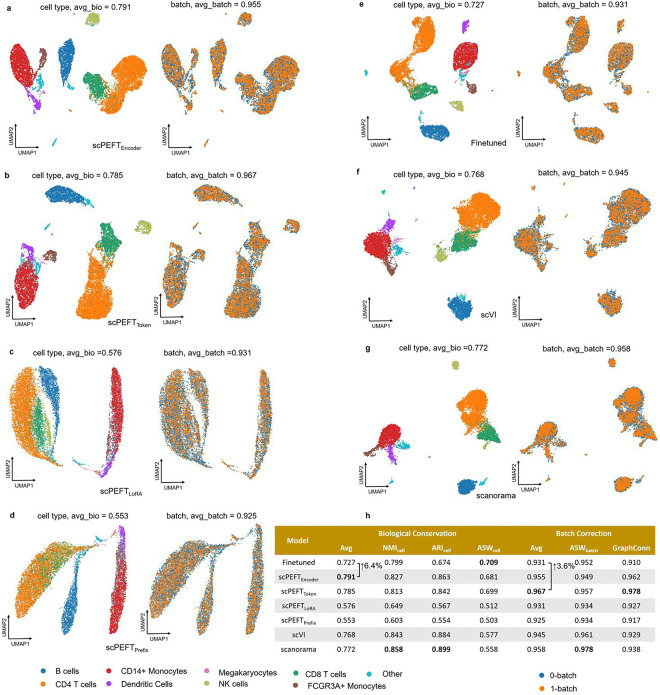
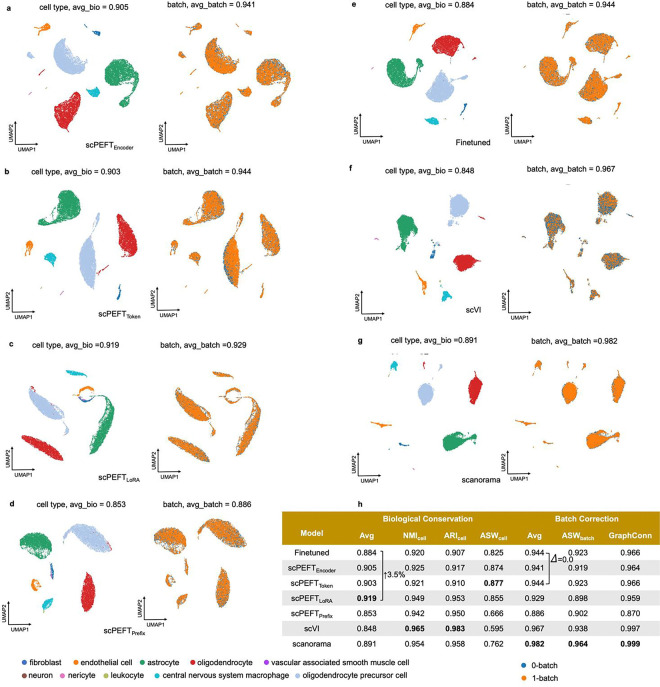
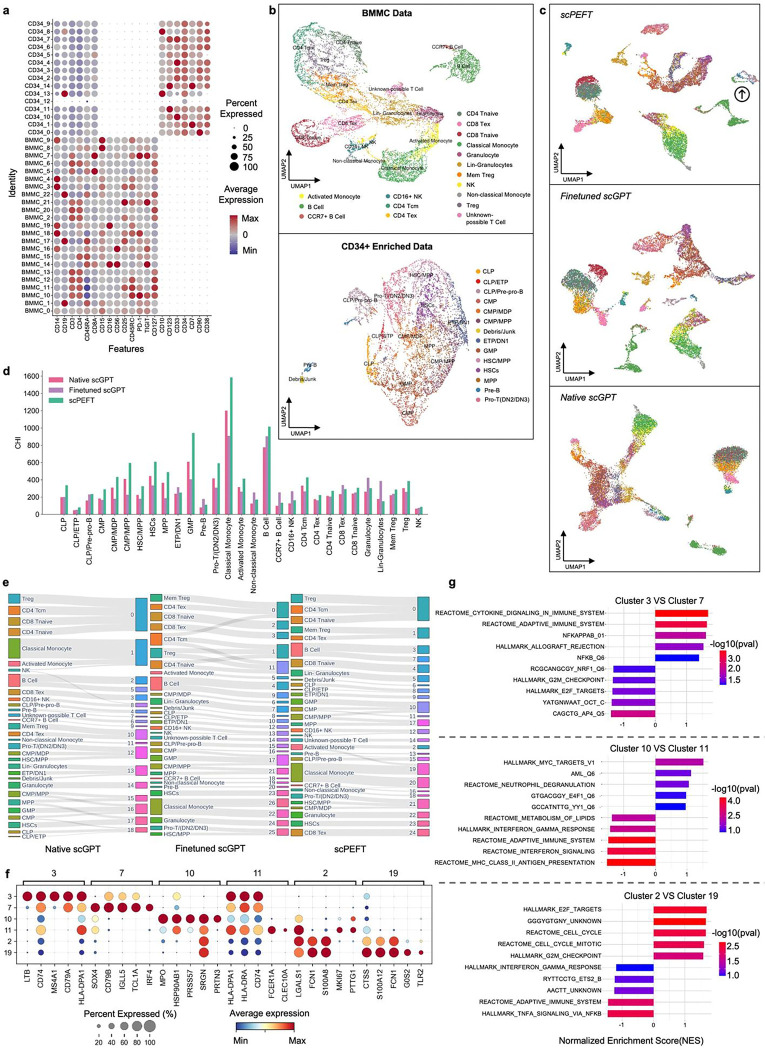
“The tuned models produce embeddings for all input cells, which are then clustered using Leiden 25 at a resolution of 1.5 to reveal potential new cell groups.”
InfluentialA Python library for probabilistic analysis of single-cell omics data
Gayoso, A., Lopez, R., Xing, G., Boyeau, P., Valiollah Pour Amiri, V., Hong, J., Wu, K., Jayasuriya, M., Mehlman, E., Langevin, M., et al. (2022) · Nature Biotechnology · doi:10.1038/s41587-021-01206-w · Cited by 789 · cited 1×
“The tuned models produce embeddings for all input cells, which are then clustered using Leiden 25 at a resolution of 1.5 to reveal potential new cell groups.”
InfluentialLarge Scale Foundation Model on Single-cell Transcriptomics
Hao, M., Gong, J., Zeng, X., Liu, C., Guo, Y., Cheng, X., Wang, T., Ma, J., Song, L., & Zhang, X. (2023) · doi:10.1101/2023.05.29.542705 · Cited by 639
Self-citationNeuronal vulnerability and multilineage diversity in multiple sclerosis
Schirmer, L., Velmeshev, D., Holmqvist, S., Kaufmann, M., Werneburg, S., Jung, D., Vistnes, S., Stockley, J. H., Young, A., Steindel, M., et al. (2019) · Nature · doi:10.1038/s41586-019-1404-z · Cited by 638
Large-scale foundation model on single-cell transcriptomics
Hao, M., Gong, J., Zeng, X., Liu, C., Guo, Y., Cheng, X., Wang, T., Ma, J., Zhang, X., & Song, L. (2024) · Nature Methods · doi:10.1038/s41592-024-02305-7 · Cited by 628 · cited 1×
“We investigated the functional interpretations of new subgroups (clusters 3 and 7, 2 and 19, and 10 and 11) identified by scPEFT using a gene set enrichment analysis 26 .”
Self-citationYang, F., Wang, W., Wang, F., Fang, Y., Tang, D., Huang, J., Lu, H., & Yao, J. (2021) · doi:10.1101/2021.12.05.471261 · Cited by 617
Mapping single-cell data to reference atlases by transfer learning
Lotfollahi, M., Naghipourfar, M., Luecken, M. D., Khajavi, M., Büttner, M., Wagenstetter, M., Avsec, Ž., Gayoso, A., Yosef, N., Interlandi, M., et al. (2022) · Nature Biotechnology · doi:10.1038/s41587-021-01001-7 · Cited by 602
O’Leary, N. A., Cox, E. D., Holmes, J. B., Anderson, W. R., Falk, R., Hem, V., Tsuchiya, M. T. N., Schuler, G. D., Zhang, X., Torcivia, J., et al. (2024) · Scientific Data · doi:10.1038/s41597-024-03571-y · Cited by 590
Self-citationSingle-cell multiomic analysis identifies regulatory programs in mixed-phenotype acute leukemia
Granja, J. M., Klemm, S., McGinnis, L. M., Kathiria, A. S., Mezger, A., Corces, M. R., Parks, B., Gars, E., Liedtke, M., Zheng, G. X. Y., et al. (2019) · Nature Biotechnology · doi:10.1038/s41587-019-0332-7 · Cited by 498
Liu, B., Hu, X., Feng, K., Gao, R., Xue, Z., Zhang, S., Zhang, Y., Corse, E., Hu, Y., Han, W., et al. (2021) · Nature Cancer · doi:10.1038/s43018-021-00292-8 · Cited by 473
Deep learning enables accurate clustering with batch effect removal in single-cell RNA-seq analysis
Li, X., Wang, K., Lyu, Y., Pan, H., Zhang, J., Stambolian, D. E., Suszták, K., Reilly, M. P., Hu, G., & Li, M. (2020) · Nature Communications · doi:10.1038/s41467-020-15851-3 · Cited by 419
Program, C. C. S., Abdulla, S., Aevermann, B., Assis, P., Badajoz, S., Bell, S. M., Bezzi, E., Cakir, B., Chaffer, J., Chambers, S., et al. (2025) · Nucleic Acids Research · doi:10.1093/nar/gkae1142 · Cited by 399
Exploring genetic interaction manifolds constructed from rich single-cell phenotypes
Norman, T. M., Horlbeck, M. A., Replogle, J. M., Ge, A. Y., Xu, A., Jost, M., Gilbert, L. A., & Weissman, J. S. (2019) · Science · doi:10.1126/science.aax4438 · Cited by 392
Predicting transcriptional outcomes of novel multigene perturbations with GEARS
Roohani, Y., Huang, K., & Leskovec, J. (2024) · Nature Biotechnology · doi:10.1038/s41587-023-01905-6 · Cited by 355
Single-cell RNA sequencing in cardiovascular development, disease and medicine
Paik, D. T., Cho, S., Tian, L., Chang, H. Y., & Wu, J. C. (2020) · Nature Reviews Cardiology · doi:10.1038/s41569-020-0359-y · Cited by 314
Shami, A. N., Zheng, X., Munyoki, S. K., Ma, Q., Manske, G. L., Green, C. D., Sukhwani, M., Orwig, K. E., Li, J. Z., & Hammoud, S. S. (2020) · Developmental Cell · doi:10.1016/j.devcel.2020.05.010 · Cited by 283
Self-citation(1974) · Communication in Statistics- Theory and Methods · doi:10.1080/03610928308827180 · Cited by 259
Ahlmann-Eltze, C., Huber, W., & Anders, S. (2025) · Nature Methods · doi:10.1038/s41592-025-02772-6 · Cited by 238
A cell atlas foundation model for scalable search of similar human cells
Heimberg, G., Kuo, T. C.-Y., DePianto, D. J., Salem, O., Heigl, T., Diamant, N., Scalia, G., Biancalani, T., Turley, S. J., Rock, J. R., et al. (2024) · Nature · doi:10.1038/s41586-024-08411-y · Cited by 204
Yang, X., Liu, G., Feng, G., Bu, D., Wang, P., Jiang, J., Chen, S., Yang, Q., Zhang, Y., Man, Z., et al. (2023) · doi:10.1101/2023.09.26.559542 · Cited by 148
Self-citationYang, X., Liu, G., Feng, G., Bu, D., Wang, P., Jiang, J., Chen, S., Yang, Q., Miao, H., Zhang, Y., et al. (2024) · Cell Research · doi:10.1038/s41422-024-01034-y · Cited by 148
Self-citationRosen, Y., Brbić, M., Roohani, Y., Swanson, K., Li, Z., & Leskovec, J. (2024) · Nature Methods · doi:10.1038/s41592-024-02191-z · Cited by 144
Program, C. S.-C. B., Abdulla, S., Aevermann, B., Assis, P., Badajoz, S., Bell, S. M., Bezzi, E., Cakir, B., Chaffer, J., Chambers, S., et al. (2023) · doi:10.1101/2023.10.30.563174 · Cited by 142
Yang, R., Cheng, S., Luo, N., Gao, R., Yu, K., Kang, B., Wang, L., Zhang, Q., Fang, Q., Zhang, L., et al. (2019) · Genome biology · doi:10.1186/s13059-019-1921-y · Cited by 129
Individual cell types in C. elegans age differently and activate distinct cell-protective responses
Roux, A. E., Yuan, H., Podshivalova, K., Hendrickson, D. G., Kerr, R. A., Kenyon, C. J., & Kelley, D. R. (2023) · Cell Reports · doi:10.1016/j.celrep.2023.112902 · Cited by 116
Zero-shot evaluation reveals limitations of single-cell foundation models
Kedzierska, K. Z., Crawford, L., Amini, A. P., & Lu, A. X. (2025) · Genome Biology · doi:10.1186/s13059-025-03574-x · Cited by 109 · cited 2×
“However, this approach risks distorting pretrained features 12 , especially in out-of-context applications where the data distribution diverges substantially from the pretraining corpus. scPEFT addresses this by reparameterizing the model parameters with low-dimensional proxies and restricting task…”
Predicting cellular responses to perturbation across diverse contexts with State
Adduri, A. K., Gautam, D., Bevilacqua, B., Naghipourfar, M., Imran, A., Shah, R., Teyssier, N., Verma, R., Carpenter, C., Eraslan, B., et al. (2026) · Cell · doi:10.1016/j.cell.2026.07.052 · Cited by 100
scTab: Scaling cross-tissue single-cell annotation models
Fischer, F., Fischer, D. S., Mukhin, R. S., Isaev, A. V., Biederstedt, E., Villani, A., & Theis, F. J. (2024) · Nature Communications · doi:10.1038/s41467-024-51059-5 · Cited by 71
Single-cell immune profiling reveals distinct immune response in asymptomatic COVID-19 patients
Zhao, X.-N., You, Y., Cui, X., Gao, H., Wang, G., Zhang, S., Lin, Y., Duan, L., Zhu, K.-L., Wang, Y., et al. (2021) · Signal Transduction and Targeted Therapy · doi:10.1038/s41392-021-00753-7 · Cited by 64
Assessing the limits of zero-shot foundation models in single-cell biology
Kedzierska, K. Z., Crawford, L., Amini, A. P., & Lu, A. X. (2023) · bioRxiv (Cold Spring Harbor Laboratory) · doi:10.1101/2023.10.16.561085 · Cited by 61 · cited 1×
“Single-cell sequencing has revolutionized biology and medicine by providing high-resolution insights into the complex roles and interactions of cell types within their native environments 1 .”
Scanorama: integrating large and diverse single-cell transcriptomic datasets
Hie, B., Kim, S., Rando, T. A., Bryson, B. D., & Berger, B. (2024) · Nature Protocols · doi:10.1038/s41596-024-00991-3 · Cited by 49
Fast, sensitive detection of protein homologs using deep dense retrieval
Hong, L., Hu, Z., Sun, S., Tang, X., Wang, J., Tan, Q., Zheng, L., Wang, S., Xu, S. Y., King, I., et al. (2024) · Nature Biotechnology · doi:10.1038/s41587-024-02353-6 · Cited by 46
Lee, C. H., Zhang, H. H., Singh, S. P., Koo, L. Y., Kabát, J., Tsang, H., Singh, T. P., & Farber, J. M. (2018) · eLife · doi:10.7554/elife.32532 · Cited by 44
Park, D., Kim, H. G., Kim, M., Park, T., Ha, H., Lee, D. H., Park, K., Park, S. J., Lim, H. J., & Lee, C. H. (2019) · Scientific Reports · doi:10.1038/s41598-019-43578-9 · Cited by 39
Harnessing the deep learning power of foundation models in single-cell omics
Ma, Q., Jiang, Y., Cheng, H., & Xu, D. (2024) · Nature Reviews Molecular Cell Biology · doi:10.1038/s41580-024-00756-6 · Cited by 34
Self-citationQuantized multi-task learning for context-specific representations of gene network dynamicsPreprint
Chen, H., Venkatesh, M. S., Ortega, J. G., Mahesh, S. V., Nandi, T., Madduri, R., Pelka, K., & Theodoris, C. V. (2024) · bioRxiv (Cold Spring Harbor Laboratory) · doi:10.1101/2024.08.16.608180 · Cited by 29
Deeper evaluation of a single-cell foundation model
Boiarsky, R., Singh, N. M., Buendia, A., Amini, A. P., Getz, G., & Sontag, D. (2024) · Nature Machine Intelligence · doi:10.1038/s42256-024-00949-w · Cited by 25
Teng, X., Mou, D., Li, H., Jiao, L., Wu, S.-S., Pi, J.-K., Wang, Y., Zhu, M., Tang, M., & Liu, Y. (2022) · Molecular Medicine · doi:10.1186/s10020-022-00563-9 · Cited by 13
He, F. (2025) · Zenodo (CERN European Organization for Nuclear Research) · doi:10.5281/zenodo.17781911 · Cited by 1
Self-citationProcessed datasets used in scPEFT study
He, F. (2025) · Figshare · doi:10.6084/m9.figshare.30763886 · Cited by 1
Self-citation
Research works printed but not linked: 1
- Hu, E. J. et al. LoRA: Low-rank adaptation of large language models. In The 10th International Conference on Learning Representations (ICLR, 2022).
Cited by
Sorted by citations
Sparse Autoencoders Reveal Interpretable Features in Single-Cell Foundation ModelsPreprint
Pedrocchi, F., Barkmann, F., Joudaki, A., & Boeva, V. (2025) · bioRxiv (Cold Spring Harbor Laboratory) · doi:10.1101/2025.10.22.681631 · Cited by 9
Benchmarking biomedical foundation models
Sáez-Rodríguez, J., Schäfer, P. S. L., Kalavros, N., & Stolovitzky, G. A. (2026) · Nature Methods · doi:10.1038/s41592-026-03182-y · Cited by 6
Zou, X., & Lei, X. (2026) · Bioinformatics · doi:10.1093/bioinformatics/btag503
Zhao, M., Ma, X., Shi, W., & Sun, Y. (2026) · Life Sciences · doi:10.1016/j.lfs.2026.124600 · Cited by 1
Wen, J., Wang, Z., Huang, J., Li, F., Chen, N., & Ma, Y. (2026) · Advanced Science · doi:10.1002/advs.77094
Metadata
- Authors
- He, F., Fei, R., Krull, J. E., Yu, Y., Zhang, X., Wang, X., Cheng, H., Gao, M., Su, L., Chen, Y., Li, J., Jin, B., Chang, Y., Ma, A., Ma, Q., & Xu, D.
- Affiliations
- University of Missouri (US)
- The Ohio State University (US)
- Corresponding author
- Ma, Qin
- Xu, Dong
- Venue
- Nature Machine Intelligence
- Published
- 2025-12-31
- Volume
- 8
- Issue
- 1
- Pages
- 118-133
- ISSN
- 2522-5839 (ISSN-L)
- PMC
- PMC12045372
- OpenAlex
- W7117735905
- Cited by
- 5
- References
- 62
- Citations by year
- 2026: 4 · 2025: 1
- FWCI
- 1.50
- Type
- journal article
- Language
- en
- Open access
- green
- doi.org
- Licence
- Locations
- Nature Machine Intelligence (publishedVersion)
- bioRxiv (Cold Spring Harbor Laboratory) (acceptedVersion, cc-by-nc)
- Research Square (acceptedVersion, cc-by)
- PubMed (publishedVersion)
- PubMed Central (submittedVersion, cc-by)
- Funders
- Foundation for the National Institutes of Health (R35GM126985, R01GM152585, P01CA278732, P01AI177687, U54AG075931, R01DK138504)
- Topics
- Life Sciences › Biochemistry, Genetics and Molecular Biology › Molecular Biology › Single-cell and spatial transcriptomics
- Physical Sciences › Computer Science › Artificial Intelligence › Domain Adaptation and Few-Shot Learning
- Life Sciences › Biochemistry, Genetics and Molecular Biology › Molecular Biology › Gene Regulatory Network Analysis
- Keywords
- parameter-efficient fine-tuning, adapters, catastrophic forgetting, zero-shot prediction, single-cell atlas, interspecies transmission, cell population identification, GPU memory reduction
About these checks
Registry, retraction, Cites and statistics results are computed, not judged, with one exception: a printed reference that no index lists is read once by a model before it counts as a citation error. Claims are extracted by a model and kept only when their quote appears verbatim in the text; each cited source is then checked, with a model’s help, for whether it says what the claim relies on. Those verdicts can be wrong — read the claim’s quote and the cited source before relying on one.
Statistics and arithmetic are recomputed, not judged.
Confidence bands are shown only for fields calibrated on our annotated test set. None is calibrated yet, so no band is shown.
What counts as a claim ›How we measure confidence ›How we check this ›
Are you an author, or do you see a problem with this page? Request a review
