

An allosteric pan-TEAD inhibitor blocks oncogenic YAP/TAZ signaling and overcomes KRAS G12C inhibitor resistance
Open accessThe DOI matches its Crossref record; 66 of the 66 references it cites were found in a registry or an index.
Abstract
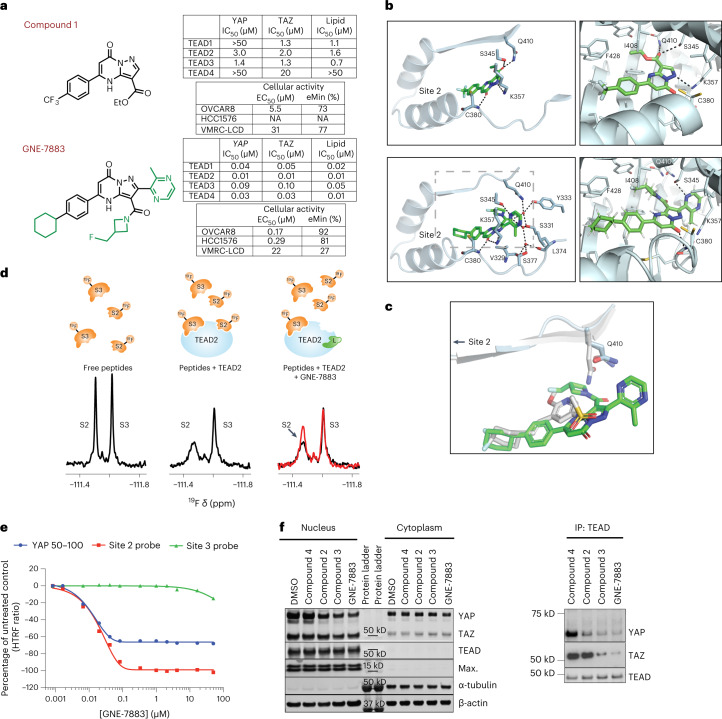
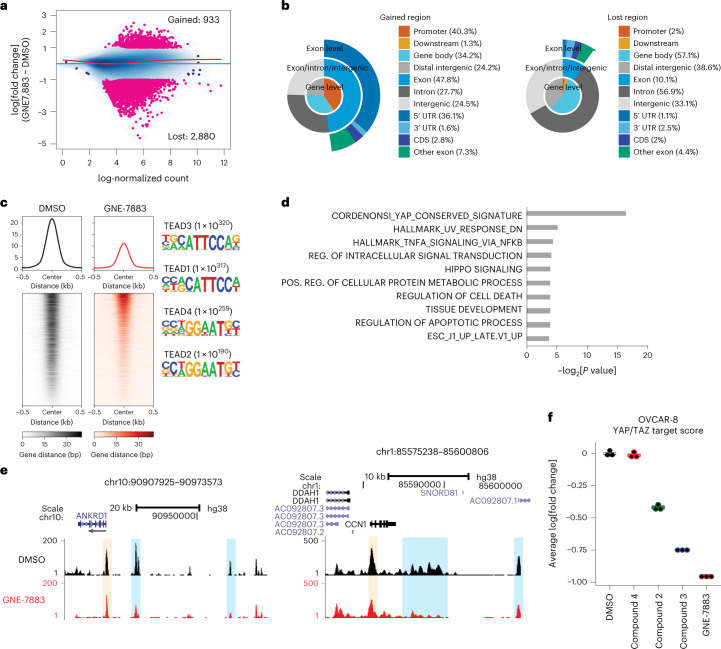
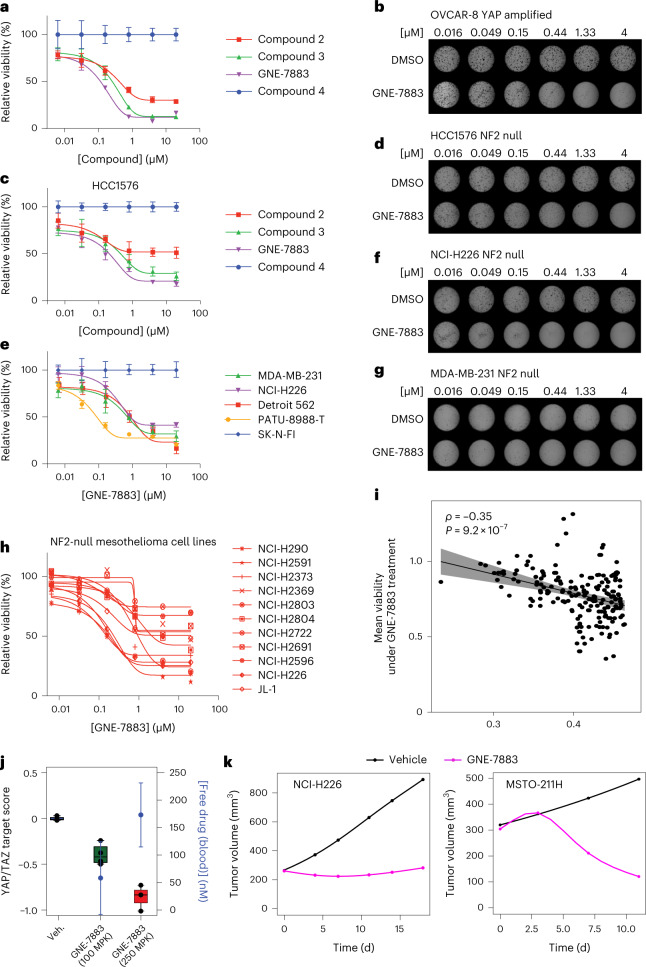
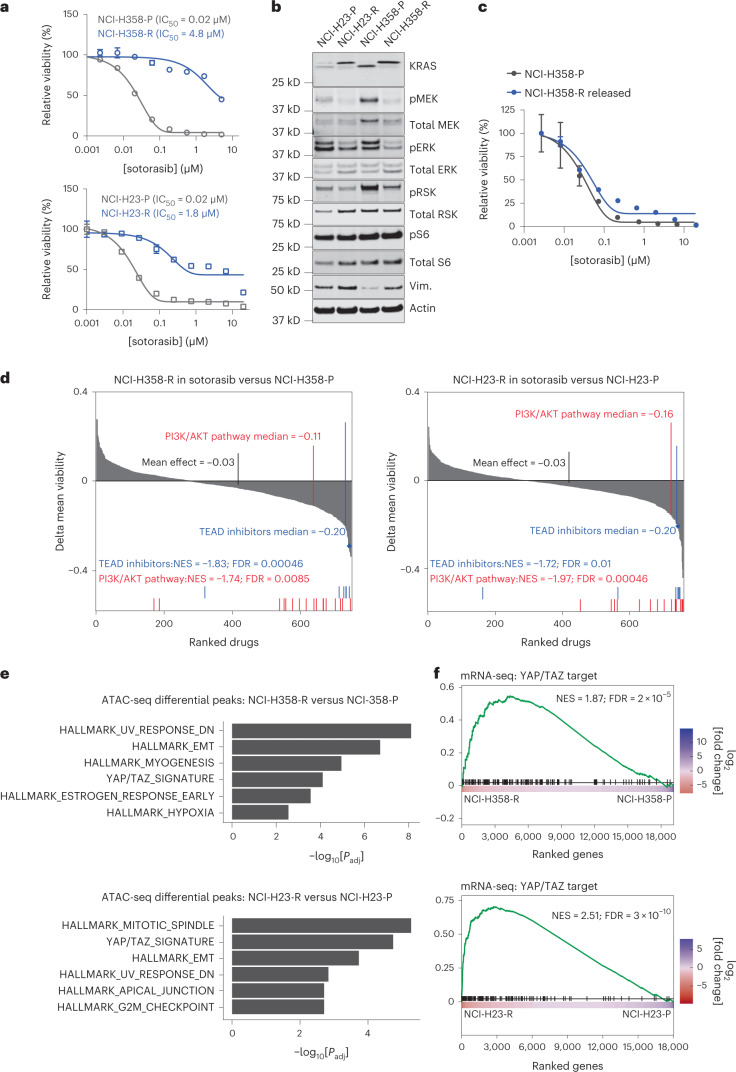
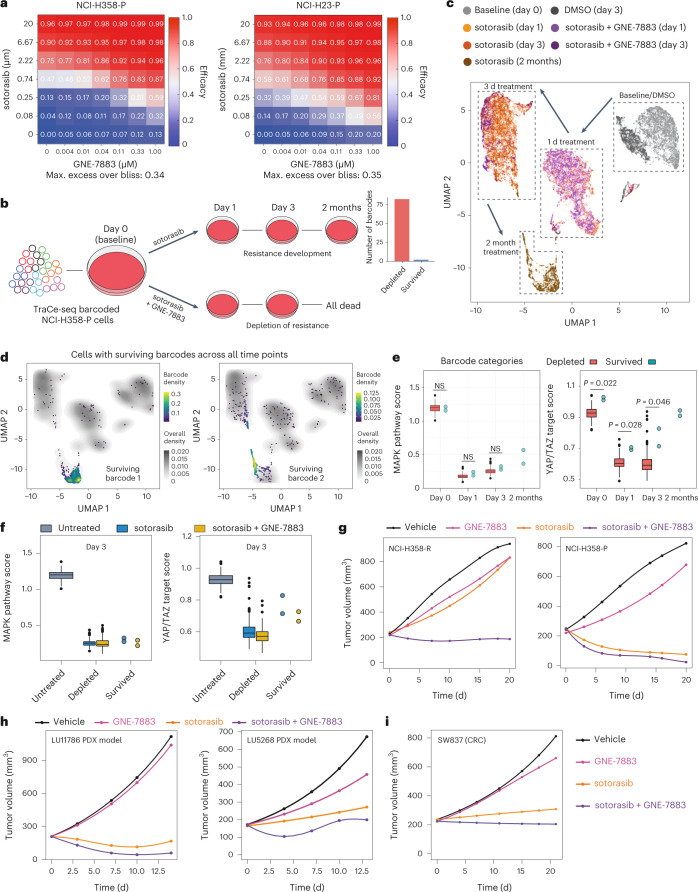
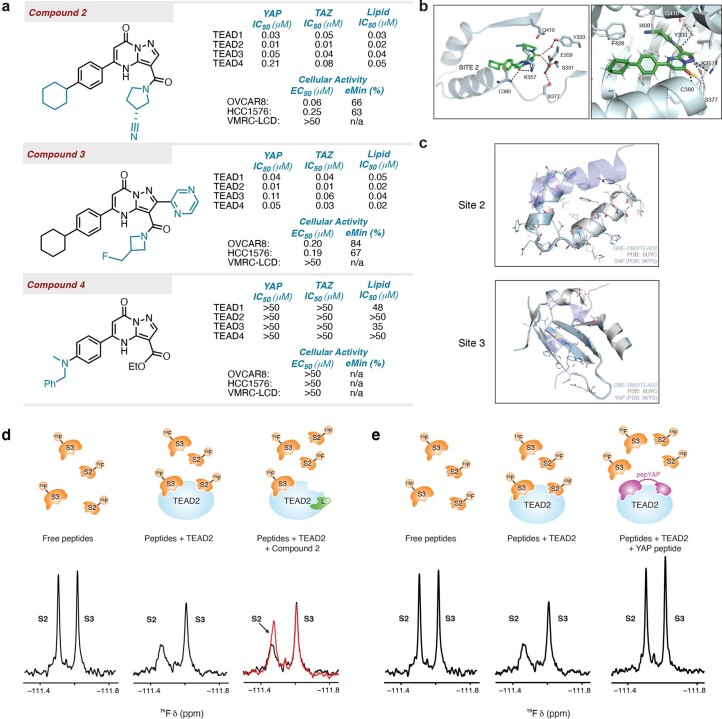
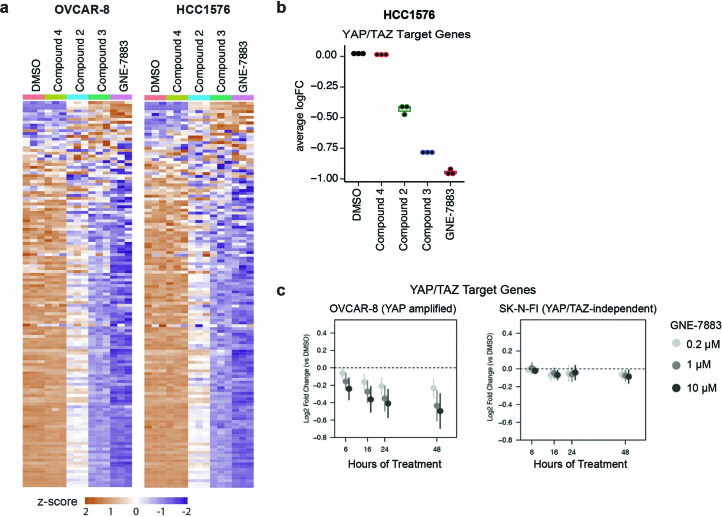
The Hippo pathway is a key growth control pathway that is conserved across species. The downstream effectors of the Hippo pathway, YAP (Yes-associated protein) and TAZ (transcriptional coactivator with PDZ-binding motif), are frequently activated in cancers to drive proliferation and survival. Based on the premise that sustained interactions between YAP/TAZ and TEADs (transcriptional enhanced associate domain) are central to their transcriptional activities, we discovered a potent small-molecule inhibitor (SMI), GNE-7883, that allosterically blocks the interactions between YAP/TAZ and all human TEAD paralogs through binding to the TEAD lipid pocket. GNE-7883 effectively reduces chromatin accessibility specifically at TEAD motifs, suppresses cell proliferation in a variety of cell line models and achieves strong antitumor efficacy in vivo. Furthermore, we uncovered that GNE-7883 effectively overcomes both intrinsic and acquired resistance to KRAS (Kirsten rat sarcoma viral oncogene homolog) G12C inhibitors in diverse preclinical models through the inhibition of YAP/TAZ activation. Taken together, this work demonstrates the activities of TEAD SMIs in YAP/TAZ-dependent cancers and highlights their potential broad applications in precision oncology and therapy resistance.
Overview
The claims and statistics of this paper haven’t been checked yet.
Free: it reads the open-access text and checks the first 5 claims that cite a source we can check. Create a free account to check every claim.
Integrity signals
Registry
Cites
Statistics
Figures
Verification
Claims the paper makes
The claims and statistics of this paper haven’t been checked yet.
Free: it reads the open-access text and checks the first 5 claims that cite a source we can check. Create a free account to check every claim.
Claims other papers make about this one
Each is checked against this paper’s own text: does it say what the citing paper says it does?
The cited source says what the claim attributes to it.
In the citing paper
“Particularly, YAP/TAZ plays a crucial role in the intrinsic and acquired resistance to inhibitors targeting RTK/MAPK pathway (24, 28–32).”
From YAP/TAZ mediates resistance to KRAS inhibitors through inhibiting proapoptosis and activating the SLC7A5/mTOR axis (2024) · cites this paper as [31]
The cited source says what the claim attributes to it.
In the citing paper
“a recent study has explored the potential of overcoming resistance to sotorasib by an allosteric pan-TEAD inhibitor called GNE-7883 (31).”
From YAP/TAZ mediates resistance to KRAS inhibitors through inhibiting proapoptosis and activating the SLC7A5/mTOR axis (2024) · cites this paper as [31]
The cited source says what the claim attributes to it.
In the citing paper
“Additionally, the upregulation of the YAP/TEAD pathway has been implicated as a mechanism of resistance to KRAS inhibition [125,126].”
From KRAS: Biology, Inhibition, and Mechanisms of Inhibitor Resistance (2024) · cites this paper as [125]
The cited source says what the claim attributes to it.
In the citing paper
“An alternative preclinical strategy being tested is combining inhibitors of TEAD proteins with KRASi, preventing feedback reactivation [125,127].”
From KRAS: Biology, Inhibition, and Mechanisms of Inhibitor Resistance (2024) · cites this paper as [125]
The cited source says what the claim attributes to it.
In the citing paper
“GNE7883, a small-molecule allosteric TEAD inhibitor, has been developed and shown to suppress oncogenic YAP/TAZ signaling and overcome KRAS G12C inhibitor resistance in both in vitro and in vivo models [105].”
From Differential Response and Resistance to KRAS-Targeted Therapy (2025) · cites this paper as [105]
1 more claim about this paper
Create a free account to see every claim other papers make about this one.
Self-check
Percentages, sums and reported differences re-computed from the paper’s own numbers.
The self-check needs the paper’s full text.
Citations
Cites
Subramanian, A., Tamayo, P., Mootha, V. K., Mukherjee, S., Ebert, B. L., Gillette, M. A., Paulovich, A., Pomeroy, S. L., Golub, T. R., Lander, E. S., et al. (2005) · Proceedings of the National Academy of Sciences · doi:10.1073/pnas.0506580102 · Cited by 53,625
Coot : model-building tools for molecular graphics
Emsley, P., & Cowtan, K. (2004) · Acta Crystallographica Section D Biological Crystallography · doi:10.1107/s0907444904019158 · Cited by 30,571
PHENIX : a comprehensive Python-based system for macromolecular structure solution
Adams, P. D., Afonine, P. V., Bunkóczi, G., Chen, V. B., Davis, I. W., Echols, N., Headd, J. J., Hung, L.-W., Kapral, G. J., Grosse-Kunstleve, R. W., et al. (2010) · Acta Crystallographica Section D Biological Crystallography · doi:10.1107/s0907444909052925 · Cited by 23,716
Kabsch, W. (2010) · Acta Crystallographica Section D Biological Crystallography · doi:10.1107/s0907444909047337 · Cited by 16,463
Overview of the CCP 4 suite and current developments
Winn, M. D., Ballard, C. C., Cowtan, K. D., Dodson, E. J., Emsley, P., Evans, P. R., Keegan, R. M., Krissinel, E. B., Leslie, A. G. W., McCoy, A., et al. (2011) · Acta Crystallographica Section D Biological Crystallography · doi:10.1107/s0907444910045749 · Cited by 12,353
Role of YAP/TAZ in mechanotransduction
Dupont, S., Morsut, L., Aragona, M., Enzo, E., Giulitti, S., Cordenonsi, M., Zanconato, F., Le Digabel, J., Forcato, M., Bicciato, S., et al. (2011) · Nature · doi:10.1038/nature10137 · Cited by 5,979
How good are my data and what is the resolution?
Evans, P. R., & Murshudov, G. N. (2013) · Acta Crystallographica Section D Biological Crystallography · doi:10.1107/s0907444913000061 · Cited by 4,697
Scaling and assessment of data quality
Evans, P. (2006) · Acta Crystallographica Section D Biological Crystallography · doi:10.1107/s0907444905036693 · Cited by 4,374
Oncogenic Signaling Pathways in The Cancer Genome Atlas
Sanchez-Vega, F., Mina, M., Armenia, J., Chatila, W. K., Luna, A., La, K. C., Dimitriadoy, S., Liu, D. L., Kantheti, H. S., Saghafinia, S., et al. (2018) · Cell · doi:10.1016/j.cell.2018.03.035 · Cited by 3,201
An improved ATAC-seq protocol reduces background and enables interrogation of frozen tissues
Corces, M. R., Trevino, A. E., Hamilton, E. G., Greenside, P. G., Sinnott-Armstrong, N. A., Vesuna, S., Satpathy, A. T., Rubin, A. J., Montine, K. S., Wu, B., et al. (2017) · Nature Methods · doi:10.1038/nmeth.4396 · Cited by 2,496
THE TOXICITY OF POISONS APPLIED JOINTLY1
BLISS, C. I. (1939) · Annals of Applied Biology · doi:10.1111/j.1744-7348.1939.tb06990.x · Cited by 2,419
The Clinical KRAS(G12C) Inhibitor AMG 510 Drives Anti-Tumour Immunity
Canon, J., Rex, K., Saiki, A. Y., Mohr, C., Cooke, K., Bagal, D., Gaida, K., Holt, T., Knutson, C. G., Koppada, N., et al. (2019) · Nature · doi:10.1038/s41586-019-1694-1 · Cited by 2,277
Data processing and analysis with the autoPROC toolbox
Vonrhein, C., Flensburg, C., Keller, P., Sharff, A., Smart, O., Paciorek, W., Womack, T., & Bricogne, G. (2011) · Acta Crystallographica Section D Biological Crystallography · doi:10.1107/s0907444911007773 · Cited by 2,029
YAP/TAZ at the Roots of Cancer
Zanconato, F., Cordenonsi, M., & Piccolo, S. (2016) · Cancer Cell · doi:10.1016/j.ccell.2016.05.005 · Cited by 1,970
Sotorasib for Lung Cancers with KRAS p.G12C Mutation
Skoulidis, F., Li, B. T., Dy, G. K., Price, T. J., Falchook, G. S., Wolf, J., Italiano, A., Schuler, M., Borghaei, H., Barlesi, F., et al. (2021) · New England Journal of Medicine · doi:10.1056/nejmoa2103695 · Cited by 1,849
The Hippo pathway and human cancer
Harvey, K. F., Zhang, X., & Thomas, D. M. (2013) · Nature Reviews Cancer · doi:10.1038/nrc3458 · Cited by 1,842
Solving structures of protein complexes by molecular replacement with Phaser
McCoy, A. J. (2007) · Acta Crystallographica Section D Biological Crystallography · doi:10.1107/s0907444906045975 · Cited by 1,595
Mechanobiology of YAP and TAZ in physiology and disease
Panciera, T., Azzolin, L., Cordenonsi, M., & Piccolo, S. (2017) · Nature Reviews Molecular Cell Biology · doi:10.1038/nrm.2017.87 · Cited by 1,461
Acquired Resistance to KRAS G12C Inhibition in Cancer
Awad, M. M., Liu, S., Rybkin, I. I., Arbour, K. C., Dilly, J., Zhu, V. W., Johnson, M. L., Heist, R. S., Patil, T., Riely, G. J., et al. (2021) · New England Journal of Medicine · doi:10.1056/nejmoa2105281 · Cited by 1,247
The Hippo pathway: regulators and regulations.
Yu, F.-X., & Guan, K.-L. (2013) · Genes & Development · doi:10.1101/gad.210773.112 · Cited by 1,231
Genome-wide association between YAP/TAZ/TEAD and AP-1 at enhancers drives oncogenic growth
Zanconato, F., Forcato, M., Battilana, G., Azzolin, L., Quaranta, E., Bodega, B., Rosato, A., Bicciato, S., Cordenonsi, M., & Piccolo, S. (2015) · Nature Cell Biology · doi:10.1038/ncb3216 · Cited by 1,219
Orchestrating single-cell analysis with Bioconductor
Amezquita, R. A., Lun, A. T. L., Becht, E., Carey, V. J., Carpp, L. N., Geistlinger, L., Marini, F., Rue-Albrecht, K., Risso, D., Soneson, C., et al. (2020) · Nature Methods · doi:10.1038/s41592-019-0654-x · Cited by 945
Transforming properties of YAP , a candidate oncogene on the chromosome 11q22 amplicon
Overholtzer, M., Zhang, J., Smolen, G. A., Muir, B., Li, W., Sgroi, D. C., Deng, C.-X., Brugge, J. S., & Haber, D. A. (2006) · Proceedings of the National Academy of Sciences · doi:10.1073/pnas.0605579103 · Cited by 885
The Hippo Signaling Pathway in Development and Disease
Zheng, Y., & Pan, D. (2019) · Developmental Cell · doi:10.1016/j.devcel.2019.06.003 · Cited by 867 · cited 1×
“These were based on either: (1) a Vgll1 peptide, a transcriptional coactivator that binds to TEAD at site 2 (site 2 probe); or (2) peptide 17, which binds to site 3 (site 3 probe) (refs.”
MethodTargeting the Hippo pathway in cancer, fibrosis, wound healing and regenerative medicine
Dey, A., Varelas, X., & Guan, K.-L. (2020) · Nature Reviews Drug Discovery · doi:10.1038/s41573-020-0070-z · Cited by 860 · cited 1×
“These were based on either: (1) a Vgll1 peptide, a transcriptional coactivator that binds to TEAD at site 2 (site 2 probe); or (2) peptide 17, which binds to site 3 (site 3 probe) (refs.”
MethodSelf-citationZhang, N., Bai, H., David, K. K., Dong, J., Zheng, Y., Cai, J., Giovannini, M., Liu, P., Anders, R. A., & Pan, D. (2010) · Developmental Cell · doi:10.1016/j.devcel.2010.06.015 · Cited by 804
KRAS and YAP1 Converge to Regulate EMT and Tumor Survival
Shao, D. D., Xue, W., Krall, E. B., Bhutkar, A., Piccioni, F., Wang, X., Schinzel, A. C., Sood, S., Rosenbluh, J., Kim, J. W., et al. (2014) · Cell · doi:10.1016/j.cell.2014.06.004 · Cited by 744
Yap1 Activation Enables Bypass of Oncogenic Kras Addiction in Pancreatic Cancer
Kapoor, A., Yao, W., Ying, H., Hua, S., Liewen, A., Wang, Q., Zhong, Y., Wu, C.-J., Sadanandam, A., Hu, B., et al. (2014) · Cell · doi:10.1016/j.cell.2014.06.003 · Cited by 716
Expression of Yes-associated protein in common solid tumors
Steinhardt, A. A., Gayyed, M. F., Klein, A. P., Dong, J., Maitra, A., Pan, D., Montgomery, E. A., & Anders, R. A. (2008) · Human Pathology · doi:10.1016/j.humpath.2008.04.012 · Cited by 552
The Hippo effector YAP promotes resistance to RAF- and MEK-targeted cancer therapies
Lin, L., Sabnis, A. J., Chan, E., Olivas, V., Cade, L., Pazarentzos, E., Asthana, S., Neel, D., Yan, J. J., Lu, X., et al. (2015) · Nature Genetics · doi:10.1038/ng.3218 · Cited by 551
Self-citationModular, efficient and constant-memory single-cell RNA-seq preprocessing
Melsted, P., Booeshaghi, A. S., Liu, L., Gao, F., Lu, L., Min, K. H., da Veiga Beltrame, E., Hjörleifsson, K. E., Gehring, J., & Pachter, L. (2021) · Nature Biotechnology · doi:10.1038/s41587-021-00870-2 · Cited by 510
Loss of the FAT1 Tumor Suppressor Promotes Resistance to CDK4/6 Inhibitors via the Hippo Pathway
Li, Z., Razavi, P., Li, Q., Toy, W., Liu, B., Ping, C., Hsieh, W., Sanchez-Vega, F., Brown, D. N., Da Cruz Paula, A. F., et al. (2018) · Cancer Cell · doi:10.1016/j.ccell.2018.11.006 · Cited by 508
Comprehensive Molecular Characterization of the Hippo Signaling Pathway in Cancer
Wang, Y., Xu, X., Maglic, D., Dill, M. T., Mojumdar, K., Ng, P. K.-S., Jeong, K. J., Tsang, Y. H., Moreno, D., Bhavana, V. H., et al. (2018) · Cell Reports · doi:10.1016/j.celrep.2018.10.001 · Cited by 500
Self-citationThe Hippo Signaling Network and Its Biological Functions
Misra, J. R., & Irvine, K. D. (2018) · Annual Review of Genetics · doi:10.1146/annurev-genet-120417-031621 · Cited by 497
Diverse alterations associated with resistance to KRAS(G12C) inhibition
Zhao, Y., Murciano-Goroff, Y. R., Xue, J. Y., Ang, A., Lucas, J., Mai, T. T., Da Cruz Paula, A. F., Saiki, A. Y., Mohn, D., Achanta, P., et al. (2021) · Nature · doi:10.1038/s41586-021-04065-2 · Cited by 479
Kurppa, K. J., Liu, Y., To, C., Zhang, T., Fan, M., Vajdi, A., Knelson, E. H., Xie, Y., Lim, K., Cejas, P., et al. (2020) · Cancer Cell · doi:10.1016/j.ccell.2019.12.006 · Cited by 475
GMAP and GSNAP for Genomic Sequence Alignment: Enhancements to Speed, Accuracy, and Functionality
Wu, T. D., Reeder, J., Lawrence, M., Becker, G., & Brauer, M. J. (2016) · Methods in Molecular Biology · doi:10.1007/978-1-4939-3578-9_15 · Cited by 431
Hippo Pathway in Cancer: Aberrant Regulation and Therapeutic Opportunities
Calses, P. C., Crawford, J. J., Lill, J. R., & Dey, A. (2019) · Trends in Cancer · doi:10.1016/j.trecan.2019.04.001 · Cited by 420
Self-citationStructural insights into the YAP and TEAD complex
Li, Z., Zhao, B., Wang, P., Chen, F., Dong, Z., Yang, H., Guan, K.-L., & Xu, Y. (2010) · Genes & Development · doi:10.1101/gad.1865810 · Cited by 401
YAP and TAZ: a signalling hub of the tumour microenvironment
Zanconato, F., Cordenonsi, M., & Piccolo, S. (2019) · Nature Reviews Cancer · doi:10.1038/s41568-019-0168-y · Cited by 381
RAP2 mediates mechanoresponses of the Hippo pathway
Meng, Z., Qiu, Y., Lin, K. C., Kumar, A., Placone, J. K., Fang, C., Wang, K.-C., Lu, S., Pan, M., Hong, A. W., et al. (2018) · Nature · doi:10.1038/s41586-018-0444-0 · Cited by 377
YAP Drives Growth by Controlling Transcriptional Pause Release from Dynamic Enhancers
Galli, G. G., Carrara, M., Yuan, W.-C., Valdes-Quezada, C., Gurung, B., Pepe-Mooney, B., Zhang, T., Geeven, G., Gray, N. S., de Laat, W., et al. (2015) · Molecular Cell · doi:10.1016/j.molcel.2015.09.001 · Cited by 290
Molecular pathogenesis of malignant mesothelioma
Sekido, Y. (2013) · Carcinogenesis · doi:10.1093/carcin/bgt166 · Cited by 279
Noland, C. L., Gierke, S., Schnier, P. D., Murray, J., Sandoval, W. N., Sagolla, M., Dey, A., Hannoush, R. N., Fairbrother, W. J., & Cunningham, C. N. (2016) · Structure · doi:10.1016/j.str.2015.11.005 · Cited by 262
Self-citationKaneda, A., Seike, T., Danjo, T., Nakajima, T., Otsubo, N., Yamaguchi, D., Tsuji, Y., Hamaguchi, K., Yasunaga, M., Nishiya, Y., et al. (2020) · American Journal of Cancer Research · Cited by 208
Wagle, M.-C., Kirouac, D., Klijn, C., Liu, B., Mahajan, S., Junttila, M., Moffat, J., Merchant, M., Huw, L., Wongchenko, M., et al. (2018) · npj Precision Oncology · doi:10.1038/s41698-018-0051-4 · Cited by 193
Nilsson, M. B., Sun, H., Robichaux, J., Pfeifer, M., McDermott, U., Travers, J., Diao, L., Xi, Y., Tong, P., Shen, L., et al. (2020) · Science Translational Medicine · doi:10.1126/scitranslmed.aaz4589 · Cited by 177
Zhang, Z., Lin, Z., Zhou, Z., Shen, H. C., Yan, S. F., Mayweg, A. V., Xu, Z., Qin, N., Wong, J. C., Zhang, Z., et al. (2014) · ACS Medicinal Chemistry Letters · doi:10.1021/ml500160m · Cited by 174
Structural and functional analysis of the YAP-binding domain of human TEAD2
Tian, W., Yu, J., Tomchick, D. R., Pan, D., & Luo, X. (2010) · Proceedings of the National Academy of Sciences · doi:10.1073/pnas.1000293107 · Cited by 169
Holden, J. K., Crawford, J. J., Noland, C. L., Schmidt, S., Zbieg, J. R., Lacap, J. A., Zang, R., Miller, G. M., Zhang, Y., Beroza, P., et al. (2020) · Cell Reports · doi:10.1016/j.celrep.2020.107809 · Cited by 161
Self-citationOrchestrating Single-Cell Analysis with BioconductorPreprint
Amezquita, R. A., Carey, V. J., Carpp, L. N., et al. (2019) · bioRxiv (Cold Spring Harbor Laboratory) · doi:10.1101/590562 · Cited by 142
Hippo Pathway Gene Mutations in Malignant Mesothelioma: Revealed by RNA and Targeted Exon Sequencing
Miyanaga, A., Masuda, M., Tsuta, K., Kawasaki, K., Nakamura, Y., Sakuma, T., Asamura, H., Gemma, A., & Yamada, T. (2015) · Journal of Thoracic Oncology · doi:10.1097/jto.0000000000000493 · Cited by 122
Integration of intercellular signaling through the Hippo pathway
Irvine, K. D. (2012) · Seminars in Cell & Developmental Biology · doi:10.1016/j.semcdb.2012.04.006 · Cited by 91
The Hippo pathway effector TAZ induces TEAD-dependent liver inflammation and tumors
Hagenbeek, T. J., Webster, J. D., Kljavin, N. M., Chang, M. T., Pham, T., Lee, H.-J., Klijn, C., Cai, A. G., Totpal, K., Ravishankar, B., et al. (2018) · Science Signaling · doi:10.1126/scisignal.aaj1757 · Cited by 89
Self-citationTsuji, T., Ozasa, H., Aoki, W., Aburaya, S., Yamamoto Funazo, T., Furugaki, K., Yoshimura, Y., Yamazoe, M., Ajimizu, H., Yasuda, Y., et al. (2020) · Nature Communications · doi:10.1038/s41467-019-13771-5 · Cited by 78
Targeting YAP to overcome acquired resistance to ALK inhibitors in ALK‐rearranged lung cancer
Yun, M. R., Choi, H. M., Lee, Y. W., Joo, H. S., Park, C. W., Choi, J. W., Kim, D. H., Kang, H. N., Pyo, K., Shin, E. J., et al. (2019) · EMBO Molecular Medicine · doi:10.15252/emmm.201910581 · Cited by 65
Pham, T. H., Hagenbeek, T. J., Lee, H.-J., Li, J., Rose, C. M., Lin, E., Yu, M., Martin, S. E., Piskol, R., Lacap, J. A., et al. (2021) · Cancer Discovery · doi:10.1158/2159-8290.cd-20-0706 · Cited by 64
Self-citationProgress with YAP/TAZ-TEAD inhibitors: a patent review (2018-present)
Zagiel, B., Melnyk, P., & Cotelle, P. (2022) · Expert Opinion on Therapeutic Patents · doi:10.1080/13543776.2022.2096436 · Cited by 50
Sturbaut, M., Bailly, F., Coevoet, M., Sileo, P., Pugnière, M., Liberelle, M., Magnez, R., Thuru, X., Chartier‐Harlin, M., Melnyk, P., et al. (2021) · European Journal of Medicinal Chemistry · doi:10.1016/j.ejmech.2021.113835 · Cited by 46
Identifying transcriptional programs underlying cancer drug response with TraCe-seq
Chang, M. T., Shanahan, F., Nguyen, T. T. T., Staben, S. T., Gazzard, L. J., Yamazoe, S., Wertz, I. E., Piskol, R., Yang, Y. A., Modrusan, Z. D., et al. (2021) · Nature Biotechnology · doi:10.1038/s41587-021-01005-3 · Cited by 45
Self-citationForrest, W. F., Alicke, B., Mayba, O., Osinska, M., Jakubczak, M., Piątkowski, P., Choniawko, L., Starr, A., & Gould, S. E. (2020) · Cancer Research · doi:10.1158/0008-5472.can-20-0342 · Cited by 38
Drug development against the hippo pathway in mesothelioma
Woodard, G. A., Yang, Y., You, L., & Jablons, D. M. (2017) · Translational Lung Cancer Research · doi:10.21037/tlcr.2017.06.02 · Cited by 34
The Surprising Features of the TEAD4‐Vgll1 Protein–Protein Interaction
Mesrouze, Y., Hau, J. C., Erdmann, D., Zimmermann, C., Fontana, P., Schmelzle, T., & Chêne, P. (2014) · ChemBioChem · doi:10.1002/cbic.201300715 · Cited by 32
Poly-Enrich: count-based methods for gene set enrichment testing with genomic regions
Lee, C. T., Cavalcante, R. G., Lee, C. K., Qin, T., Patil, S. B., Wang, S., Tsai, Z. T., Boyle, A. P., & Sartor, M. A. (2020) · NAR Genomics and Bioinformatics · doi:10.1093/nargab/lqaa006 · Cited by 29
Soyama, H., Nishio, M., Otani, J., Sakuma, T., Takao, S., Hara, S., Masuda, T., Mimori, K., Toyokuni, S., Lydon, J. P., et al. (2022) · Proceedings of the National Academy of Sciences · doi:10.1073/pnas.2123134119 · Cited by 26
Poly-Enrich: Count-based Methods for Gene Set Enrichment Testing with Genomic RegionsPreprint
Lee, C. T., Cavalcante, R. G., Lee, C. K., Qin, T., Patil, S. B., Wang, S., Tsai, Z. T., Boyle, A. P., & Sartor, M. A. (2018) · bioRxiv (Cold Spring Harbor Laboratory) · doi:10.1101/488734 · Cited by 5
Cited by
Current and future immunotherapeutic approaches in pancreatic cancer treatment
Farhangnia, P., Khorramdelazad, H., Nickho, H., & Delbandi, A.-A. (2024) · Journal of Hematology & Oncology · doi:10.1186/s13045-024-01561-6 · Cited by 229
A Small Molecule with Big Impact: MRTX1133 Targets the KRASG12D Mutation in Pancreatic Cancer
Wei, D., Wang, L., Zuo, X., Maitra, A., & Bresalier, R. S. (2023) · Clinical Cancer Research · doi:10.1158/1078-0432.ccr-23-2098 · Cited by 193
Acquired resistance in cancer: towards targeted therapeutic strategies
Soragni, A., Knudsen, E. S., O’Connor, T. N., Tognon, C. E., Tyner, J. W., Gini, B., Kim, D., Bivona, T. G., Zang, X., Witkiewicz, A. K., et al. (2025) · Nature reviews. Cancer · doi:10.1038/s41568-025-00824-9 · Cited by 182
Chapeau, E. A., Sansregret, L., Galli, G. G., Chène, P., Wartmann, M., Mourikis, T. P., Jaaks, P., Baltschukat, S., Barbosa, I. A. M., Bauer, D., et al. (2024) · Nature Cancer · doi:10.1038/s43018-024-00754-9 · Cited by 159
“Recently, allosteric TEAD inhibitors have been used to evaluate the activity of the combination of KRAS G12C inhibitor and TEAD inhibitor 45–47 .”
Epithelial-mesenchymal transition
Zhang, C. X., Huang, R. Y., Sheng, G., & Thiery, J. P. (2025) · Cell · doi:10.1016/j.cell.2025.08.033 · Cited by 134
Metadata
- Authors
- Hagenbeek, T. J., Zbieg, J. R., Hafner, M., Mroue, R., Lacap, J. A., Sodir, N. M., Noland, C. L., Afghani, S., Kishore, A., Bhat, K. P., Yao, X., Schmidt, S., Clausen, S., Steffek, M., Lee, W., Beroza, P., Martin, S., Lin, E., Fong, R., Di Lello, P., Kubala, M. H., Yang, M. N.-Y., Lau, J. T., Chan, E., Arrazate, A., An, L., Levy, E., Lorenzo, M. N., Lee, H.-J., Pham, T. H., Modrusan, Z., Zang, R., Chen, Y.-C., Kabza, M., Ahmed, M., Li, J., Chang, M. T., Maddalo, D., Evangelista, M., Ye, X., Crawford, J. J., & Dey, A.
- Affiliations
- Genentech (US)
- Roche (Canada) (CA)
- Corresponding author
- Evangelista, Marie
- Ye, Xin
- Crawford, James J.
- Dey, Anwesha
- ORCID
- Hagenbeek, Thijs J.
- Hafner, Marc
- Lacap, Jennifer A.
- Sodir, Nicole M.
- Noland, Cameron L.
- Afghani, Shervin
- Kishore, Ayush
- Bhat, Kamakoti P.
- Yao, Xiaosai
- Steffek, Micah
- Lee, Wendy
- Beroza, Paul
- Martin, Scott
- Lin, Eva
- Fong, Rina
- Lau, Jeffrey T.
- Chan, Emily
- Lee, Ho-June
- Modrusan, Zora
- Zang, Richard
- Chen, Yi-Chen
- Ahmed, Musaddeque
- Li, Jason
- Maddalo, Danilo
- Evangelista, Marie
- Ye, Xin
- Crawford, James J.
- Dey, Anwesha
- Venue
- Nature Cancer
- Published
- 2023-06-05
- Volume
- 4
- Issue
- 6
- Pages
- 812-828
- ISSN
- 2662-1347 (ISSN-L)
- PMC
- PMC10293011
- OpenAlex
- W4379468630
- Cited by
- 215
- References
- 66
- Citations by year
- 2026: 71 · 2025: 68 · 2024: 57 · 2023: 18
- FWCI
- 30.85
- Type
- journal article
- Language
- en
- Open access
- hybrid
- doi.org
- Licence
- cc-by
- creativecommons.org/licenses/by/4.0 (tdm)
- creativecommons.org/licenses/by/4.0 (vor)
- Locations
- Nature Cancer (publishedVersion, cc-by)
- PubMed Central (publishedVersion, cc-by)
- PubMed (publishedVersion)
- Topics
- Life Sciences › Biochemistry, Genetics and Molecular Biology › Cell Biology › Hippo pathway signaling and YAP/TAZ
- Life Sciences › Biochemistry, Genetics and Molecular Biology › Cell Biology › Microtubule and mitosis dynamics
- Life Sciences › Biochemistry, Genetics and Molecular Biology › Molecular Biology › Protein Kinase Regulation and GTPase Signaling
- Keywords
- YAP/TAZ signaling, Hippo signaling pathway, TEAD inhibitors, allosteric inhibition, chromatin accessibility, small molecule inhibitors, cancer therapy resistance, precision oncology
- MeSH terms
- Humans, Neoplasms, Transcription Factors, Signal Transduction, Proto-Oncogene Proteins p21(ras), Precision Medicine
About these checks
Registry, retraction, Cites and statistics results are computed, not judged, with one exception: a printed reference that no index lists is read once by a model before it counts as a citation error. Claims are extracted by a model and kept only when their quote appears verbatim in the text; each cited source is then checked, with a model’s help, for whether it says what the claim relies on. Those verdicts can be wrong — read the claim’s quote and the cited source before relying on one.
Statistics and arithmetic are recomputed, not judged.
Confidence bands are shown only for fields calibrated on our annotated test set. None is calibrated yet, so no band is shown.
What counts as a claim ›How we measure confidence ›How we check this ›
Are you an author, or do you see a problem with this page? Request a review
Data sources
Bibliographic data: Semantic Scholar, OpenAlex, Crossref.
Contains information from the Semantic Scholar Academic Graph Datasets, made available under the ODC Attribution License (ODC-BY 1.0).
Semantic Scholar’s data is described in: Kinney, R., et al. (2023). The Semantic Scholar Open Data Platform. arXiv:2301.10140.
