

The efficacy of chemotherapy is limited by intratumoral senescent cells expressing PD-L2
Open accessThe DOI matches its Crossref record; 60 of the 60 references it cites were found in a registry or an index.
Abstract
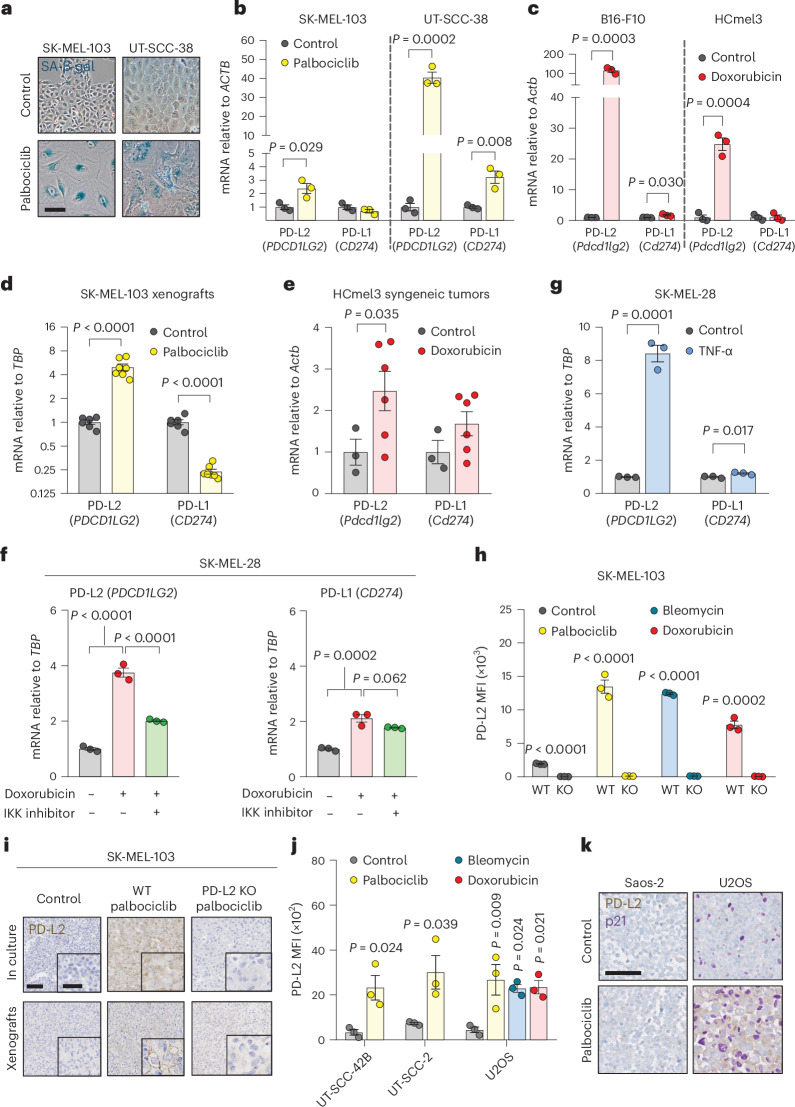
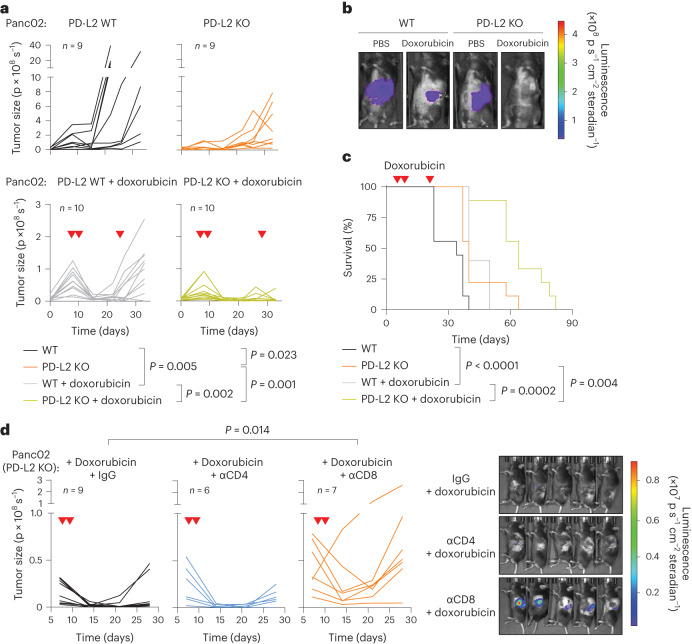
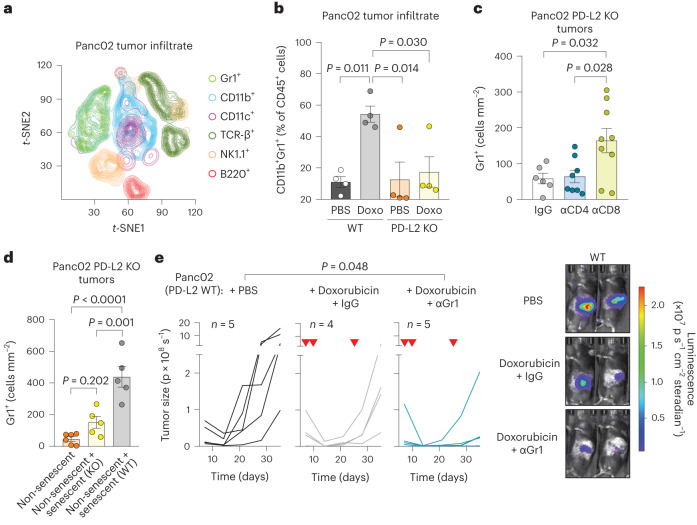
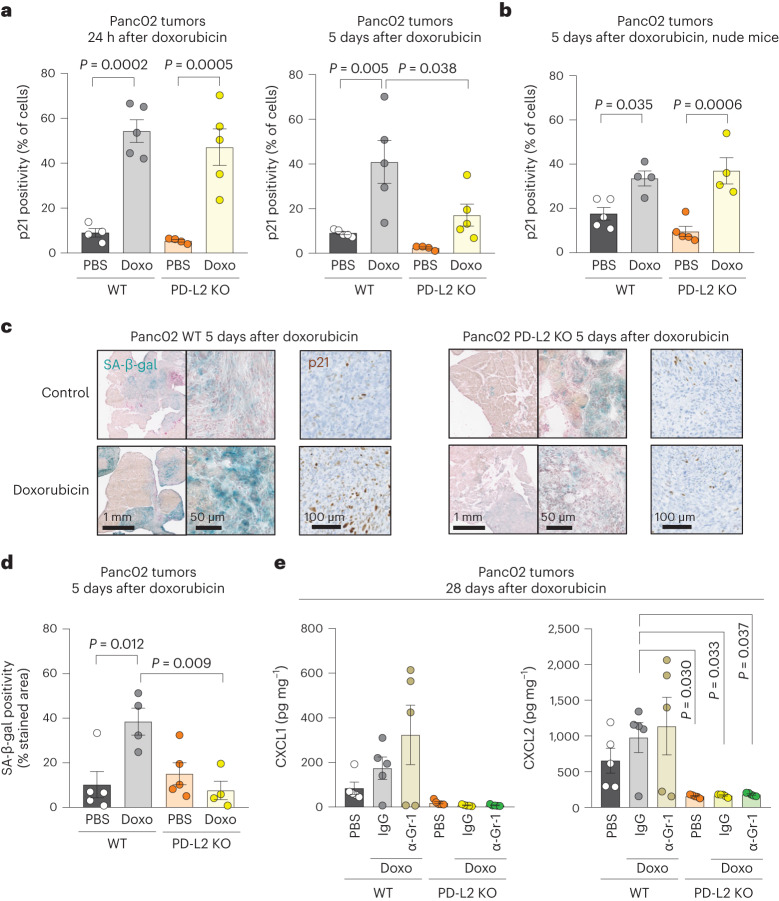
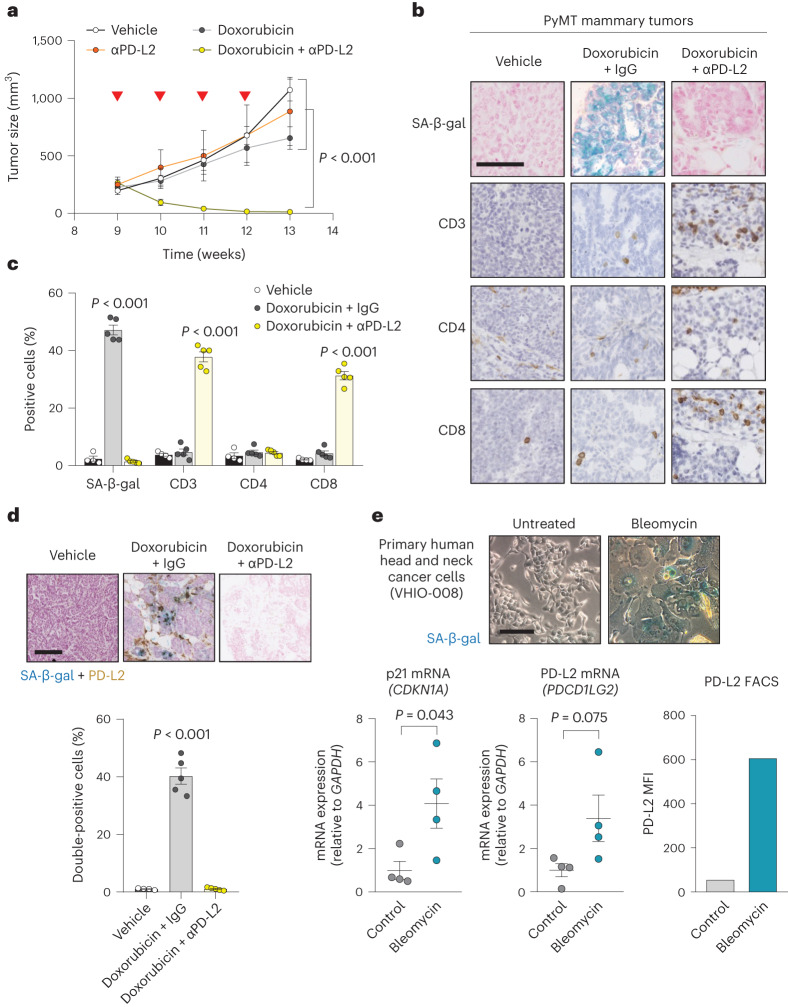
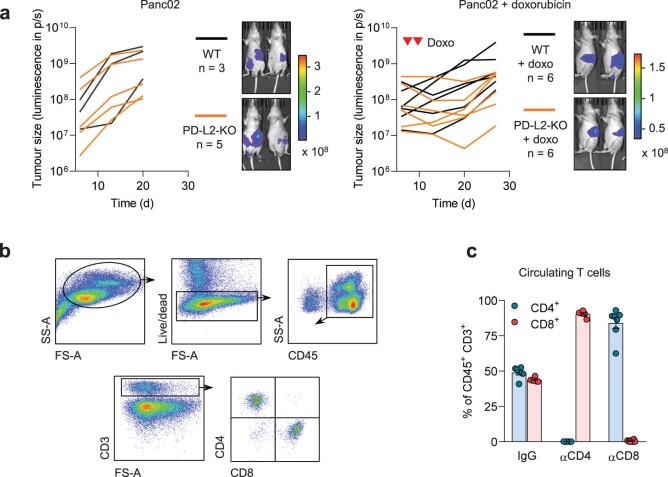
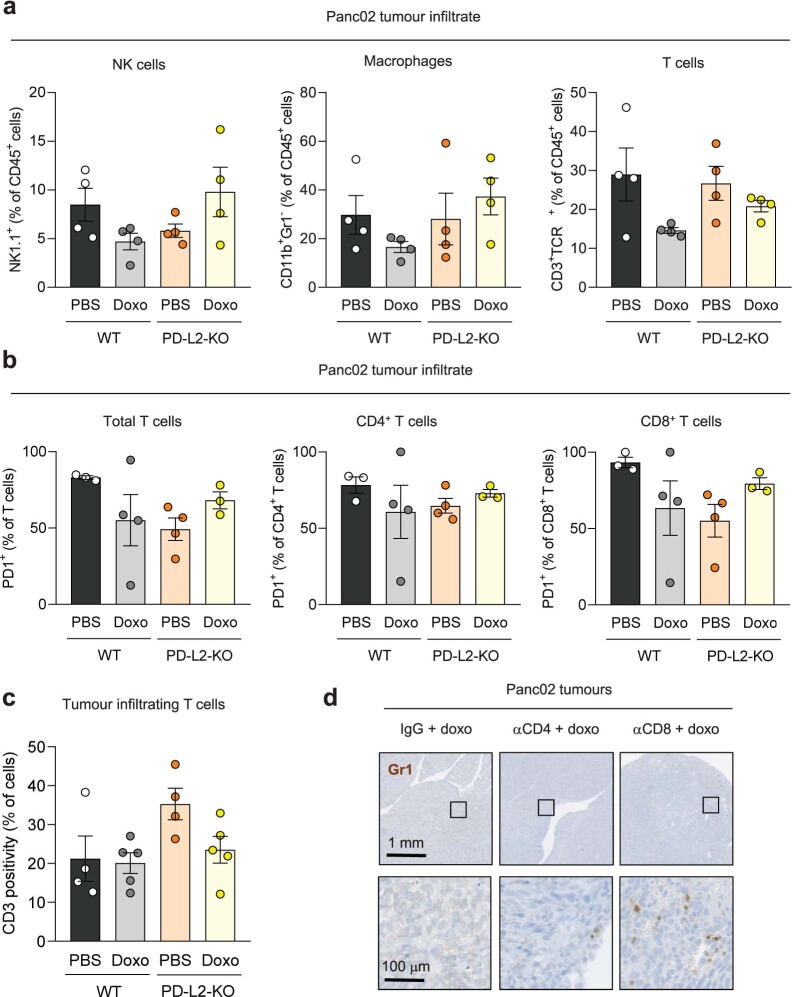
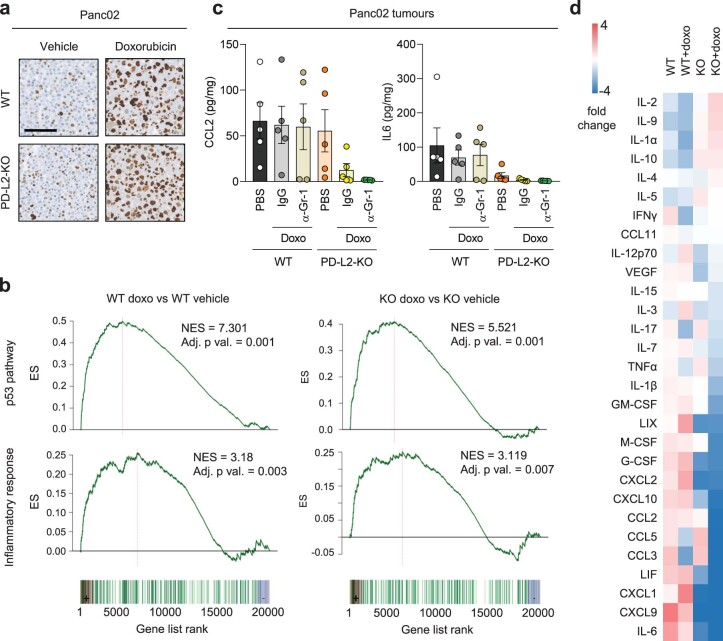
Chemotherapy often generates intratumoral senescent cancer cells that strongly modify the tumor microenvironment, favoring immunosuppression and tumor growth. We discovered, through an unbiased proteomics screen, that the immune checkpoint inhibitor programmed cell death 1 ligand 2 (PD-L2) is highly upregulated upon induction of senescence in different types of cancer cells. PD-L2 is not required for cells to undergo senescence, but it is critical for senescent cells to evade the immune system and persist intratumorally. Indeed, after chemotherapy, PD-L2-deficient senescent cancer cells are rapidly eliminated and tumors do not produce the senescence-associated chemokines CXCL1 and CXCL2. Accordingly, PD-L2-deficient pancreatic tumors fail to recruit myeloid-derived suppressor cells and undergo regression driven by CD8 T cells after chemotherapy. Finally, antibody-mediated blockade of PD-L2 strongly synergizes with chemotherapy causing remission of mammary tumors in mice. The combination of chemotherapy with anti-PD-L2 provides a therapeutic strategy that exploits vulnerabilities arising from therapy-induced senescence.
Overview
The claims and statistics of this paper haven’t been checked yet.
Free: it reads the open-access text and checks the first 5 claims that cite a source we can check. Create a free account to check every claim.
Integrity signals
Registry
Cites
Statistics
Figures
Verification
Claims the paper makes
The claims and statistics of this paper haven’t been checked yet.
Free: it reads the open-access text and checks the first 5 claims that cite a source we can check. Create a free account to check every claim.
Claims other papers make about this one
Each is checked against this paper’s own text: does it say what the citing paper says it does?
The source backs part of the claim, not all of it — or backs it for a different population, condition or comparison.
In the citing paper
“changes in MoCA scores were negatively correlated with changes in TNF-α and PDL-2 (a recently proposed serum marker of senescence47), such that larger reductions in these biomarkers were strongly and significantly correlated with larger improvements in MoCA scores.”
From A pilot study of senolytics to improve cognition and mobility in older adults at risk for Alzheimer's disease (2025) · cites this paper as [47]
Experimental — accuracy not yet measured
Self-check
Percentages, sums and reported differences re-computed from the paper’s own numbers.
The self-check needs the paper’s full text.
Citations
Cites
Moderated estimation of fold change and dispersion for RNA-seq data with DESeq2
Love, M. I., Huber, W., & Anders, S. (2014) · Genome Biology · doi:10.1186/s13059-014-0550-8 · Cited by 95,106 · cited 1×
“51) was used for differential expression analysis with fold change shrinkage as implemented in the lfcShrink function.”
PD-1 and PD-L1 Immune Checkpoint Blockade to Treat Breast Cancer
Hartkopf, A. D., Taran, F.-A., Wallwiener, M., Walter, C. B., Krämer, B., Grischke, E.-M., & Brucker, S. Y. (2016) · Breast Care · doi:10.1159/000453569 · Cited by 30,845
Safety, activity, and immune correlates of anti–PD-1 antibody in cancer
Topalian, S. L., Hodi, F. S., Brahmer, J. R., Gettinger, S. N., Smith, D. C., McDermott, D. F., Powderly, J. D., Carvajal, R. D., Sosman, J. A., Atkins, M. B., et al. (2012) · New England Journal of Medicine · doi:10.1056/nejmoa1200690 · Cited by 12,628
QuPath: Open source software for digital pathology image analysis
Bankhead, P., Loughrey, M. B., Fernández, J. A., Dombrowski, Y., McArt, D. G., Dunne, P. D., McQuaid, S., Gray, R. T., Murray, L. J., Coleman, H. G., et al. (2017) · Scientific Reports · doi:10.1038/s41598-017-17204-5 · Cited by 8,908
A biomarker that identifies senescent human cells in culture and in aging skin in vivo.
Dimri, G. P., Lee, X., Basile, G., Acosta, M., Scott, G., Roskelley, C., Medrano, E. E., Linskens, M., Rubelj, I., & Pereira-Smith, O. (1995) · Proceedings of the National Academy of Sciences · doi:10.1073/pnas.92.20.9363 · Cited by 7,477 · cited 1×
“A total of 10 6 SK-MEL-103 cells, either PD-L2 WT or PD-L2 KO, were collected, resuspended in a volume of 100 μl PBS/Matrigel and injected in both flanks of 8–16-week-old female athymic nude mice.”
Cancer immunotherapy using checkpoint blockade
Ribas, A., & Wolchok, J. D. (2018) · Science · doi:10.1126/science.aar4060 · Cited by 6,791 · cited 1×
“Interestingly, chemotherapy controlled the growth of PD-L2 KO tumors significantly better than their WT counterparts spectrum of tumors 3–5 , including melanoma and non-small cell lung cancer 6 .”
The senescence-associated secretory phenotype: the dark side of tumor suppression
Coppé, J.-P., Desprez, P.-Y., Krtolica, A., & Campisi, J. (2010) · Annual Review of Pathology: Mechanisms of Disease · doi:10.1146/annurev-pathol-121808-102144 · Cited by 5,206 · cited 6×
“The SASP is complex and heterogeneous, including pro-inflammatory cytokines, chemokines, matrix remodeling enzymes and growth factors, which result in cell-extrinsic effects known to facilitate tumor growth 22–25 .”
InfluentialThe future of immune checkpoint therapy
Sharma, P., & Allison, J. P. (2015) · Science · doi:10.1126/science.aaa8172 · Cited by 4,878 · cited 1×
“Interestingly, chemotherapy controlled the growth of PD-L2 KO tumors significantly better than their WT counterparts spectrum of tumors 3–5 , including melanoma and non-small cell lung cancer 6 .”
A Next Generation Connectivity Map: L1000 Platform and the First 1,000,000 Profiles
Subramanian, A., Narayan, R., Corsello, S. M., Peck, D. D., Natoli, T. E., Lu, X., Gould, J., Davis, J. F., Tubelli, A. A., Asiedu, J. K., et al. (2017) · Cell · doi:10.1016/j.cell.2017.10.049 · Cited by 3,515
PD-L2 is a second ligand for PD-1 and inhibits T cell activation
Latchman, Y., Wood, C. R., Chernova, T., Chaudhary, D., Borde, M., Chernova, I., Iwai, Y., Long, A. J., Brown, J. A., Nunes, R., et al. (2001) · Nature Immunology · doi:10.1038/85330 · Cited by 2,955 · cited 1×
“14,15).”
Liao, Y., Smyth, G. K., & Shi, W. (2019) · Nucleic Acids Research · doi:10.1093/nar/gkz114 · Cited by 2,936
Senescence of Activated Stellate Cells Limits Liver Fibrosis
Krizhanovsky, V., Yon, M., Dickins, R. A., Hearn, S., Simon, J., Miething, C., Yee, H., Zender, L., & Lowe, S. W. (2008) · Cell · doi:10.1016/j.cell.2008.09.015 · Cited by 2,027
Krtolica, A., Parrinello, S., Lockett, S., Desprez, P.-Y., & Campisi, J. (2001) · Proceedings of the National Academy of Sciences · doi:10.1073/pnas.211053698 · Cited by 1,730 · cited 1×
“The SASP is complex and heterogeneous, including pro-inflammatory cytokines, chemokines, matrix remodeling enzymes and growth factors, which result in cell-extrinsic effects known to facilitate tumor growth 22–25 .”
Ink4a/Arf expression is a biomarker of aging
Krishnamurthy, J., Torrice, C., Ramsey, M. R., Kovalev, G. I., Al-Regaiey, K., Su, L., & Sharpless, N. E. (2004) · Journal of Clinical Investigation · doi:10.1172/jci22475 · Cited by 1,486
Anti–PD-1/PD-L1 therapy of human cancer: past, present, and future
Chen, L., & Han, X. (2015) · Journal of Clinical Investigation · doi:10.1172/jci80011 · Cited by 1,437 · cited 1×
“https://doi.org/10.1038/s43018-023-00712-x”
InfluentialCellular senescence promotes adverse effects of chemotherapy and cancer relapse
Demaria, M., O'Leary, M. N., Chang, J., Shao, L., Liu, S., Alimirah, F., Koenig, K., Le, C., Mitin, N., Deal, A. M., et al. (2017) · Cancer Discovery · doi:10.1158/2159-8290.cd-16-0241 · Cited by 1,338 · cited 1×
“https://doi.org/10.1038/s43018-023-00712-x”
InfluentialTargeting cellular senescence prevents age-related bone loss in mice
Farr, J. N., Xu, M., Weivoda, M. M., Monroe, D. G., Fraser, D. G., Onken, J. L., Negley, B. A., Sfeir, J. G., Ogrodnik, M. B., Hachfeld, C. M., et al. (2017) · Nature Medicine · doi:10.1038/nm.4385 · Cited by 1,182
Self-citationSenescence and the SASP: many therapeutic avenues
Birch, J., & Gil, J. (2020) · Genes & Development · doi:10.1101/gad.343129.120 · Cited by 1,177 · cited 1×
“Then, 4 mg kg −1 doxorubicin (Sigma-Aldrich), or PBS as vehicle, was applied intraperitoneally in the indicated experimental groups at days 7, 10 and, unless otherwise noted, 24 after surgery.”
Cellular senescence and senolytics: the path to the clinic
Chaib, S., Tchkonia, T., & Kirkland, J. L. (2022) · Nature Medicine · doi:10.1038/s41591-022-01923-y · Cited by 1,134 · cited 7×
“The SASP is complex and heterogeneous, including pro-inflammatory cytokines, chemokines, matrix remodeling enzymes and growth factors, which result in cell-extrinsic effects known to facilitate tumor growth 22–25 .”
InfluentialSelf-citationSenolytic CAR T cells reverse senescence-associated pathologies
Amor, C., Feucht, J., Leibold, J., Ho, Y.-J., Zhu, C., Alonso-Curbelo, D., Mansilla-Soto, J., Boyer, J. A., Li, X., Giavridis, T., et al. (2020) · Nature · doi:10.1038/s41586-020-2403-9 · Cited by 1,098 · cited 3×
“Also, elimination of senescent cells using engineered CAR T cells leads to improved tumor control in combination with MEK inhibitors and palbociclib, an inhibitor of CDK4 and CDK6 32 .”
InfluentialChien, Y., Scuoppo, C., Wang, X., Fang, X., Balgley, B., Bolden, J. E., Premsrirut, P., Luo, W., Chicas, A., Lee, C. S., et al. (2011) · Genes & Development · doi:10.1101/gad.17276711 · Cited by 1,046 · cited 6×
“The SASP is complex and heterogeneous, including pro-inflammatory cytokines, chemokines, matrix remodeling enzymes and growth factors, which result in cell-extrinsic effects known to facilitate tumor growth 22–25 .”
InfluentialMechanisms Controlling PD-L1 Expression in Cancer
Cha, J.-H., Chan, L.-C., Li, C.-W., Hsu, J. L., & Hung, M.-C. (2019) · Molecular Cell · doi:10.1016/j.molcel.2019.09.030 · Cited by 1,045
Freund, A., Patil, C. K., & Campisi, J. (2011) · The EMBO Journal · doi:10.1038/emboj.2011.69 · Cited by 1,039 · cited 1×
“A conserved feature of cellular senescence is the constitutive hyperactivation of the transcription factor NF-kB, which is a key driver of the SASP 38,39 .”
Exploiting senescence for the treatment of cancer
Wang, L., Lankhorst, L., & Bernards, R. (2022) · Nature Reviews Cancer · doi:10.1038/s41568-022-00450-9 · Cited by 867 · cited 2×
“Multiple studies have demonstrated that therapies that selectively eliminate senescent cells, known as senolytic therapies, strongly synergize with cancer chemotherapy 20,30,31 .”
PD-L1 and PD-L2 are differentially regulated by Th1 and Th2 cells
Loke, P., & Allison, J. P. (2003) · Proceedings of the National Academy of Sciences · doi:10.1073/pnas.0931259100 · Cited by 634 · cited 1×
“14,15).”
Eggert, T., Wolter, K., Ji, J., Ma, C., Yevsa, T., Klotz, S., Medina-Echeverz, J., Longerich, T., Forgues, M., Reisinger, F., et al. (2016) · Cancer Cell · doi:10.1016/j.ccell.2016.09.003 · Cited by 609
PD-L2 Expression in Human Tumors: Relevance to Anti-PD-1 Therapy in Cancer
Yearley, J. H., Gibson, C., Yu, N., Moon, C., Murphy, E., Juco, J., Lunceford, J., Cheng, J., Chow, L. Q. M., Seiwert, T. Y., et al. (2017) · Clinical Cancer Research · doi:10.1158/1078-0432.ccr-16-1761 · Cited by 594 · cited 1×
“https://doi.org/10.1038/s43018-023-00712-x”
InfluentialLakins, M. A., Ghorani, E., Munir, H., Martins, C. P., & Shields, J. D. (2018) · Nature Communications · doi:10.1038/s41467-018-03347-0 · Cited by 578
Impaired immune surveillance accelerates accumulation of senescent cells and aging
Ovadya, Y., Landsberger, T., Leins, H., Vadai, E., Gal, H., Biran, A., Yosef, R., Sagiv, A., Agrawal, A., Shapira, A., et al. (2018) · Nature Communications · doi:10.1038/s41467-018-07825-3 · Cited by 578 · cited 1×
“The accumulation of senescent cells with aging and in multiple pathological conditions, including cancers, has been partially attributed to defective immunosurveillance by the innate immune system, mainly macrophages and NK cells 41–47 .”
ROAST: rotation gene set tests for complex microarray experiments
Wu, D., Lim, E., Vaillant, F., Asselin-Labat, M.-L., Visvader, J. E., & Smyth, G. K. (2010) · Bioinformatics · doi:10.1093/bioinformatics/btq401 · Cited by 560 · cited 1×
“The rotation-based approach for enrichment 52 , implemented in the R package limma, was used to represent the null distribution.”
Senescent cells evade immune clearance via HLA-E-mediated NK and CD8+ T cell inhibition
Pereira, B. I., Devine, O. P., Vukmanovic-Stejic, M., Chambers, E. S., Subramanian, P., Patel, N., Virasami, A., Sebire, N. J., Kinsler, V., Valdovinos, A., et al. (2019) · Nature Communications · doi:10.1038/s41467-019-10335-5 · Cited by 556
The role of cellular senescence in ageing and endocrine disease
Khosla, S., Farr, J. N., Tchkonia, T., & Kirkland, J. L. (2020) · Nature Reviews Endocrinology · doi:10.1038/s41574-020-0335-y · Cited by 523
Self-citationSenescent cell clearance by the immune system: Emerging therapeutic opportunities
Prata, L. G. P. L., Ovsyannikova, I. G., Tchkonia, T., & Kirkland, J. L. (2018) · Seminars in Immunology · doi:10.1016/j.smim.2019.04.003 · Cited by 497 · cited 1×
“The accumulation of senescent cells with aging and in multiple pathological conditions, including cancers, has been partially attributed to defective immunosurveillance by the innate immune system, mainly macrophages and NK cells 41–47 .”
Self-citationStromal senescence establishes an immunosuppressive microenvironment that drives tumorigenesis
Ruhland, M. K., Loza, A. J., Capietto, A.-H., Luo, X., Knolhoff, B. L., Flanagan, K. C., Belt, B. A., Alspach, E., Leahy, K., Luo, J., et al. (2016) · Nature Communications · doi:10.1038/ncomms11762 · Cited by 496 · cited 2×
“More specifically, the SASP includes immunosuppressive factors, such as tumor growth factor-β, and chemokines that recruit myeloid-derived suppressive cells (MDSCs) 26–29 .”
Blocking PD-L1–PD-1 improves senescence surveillance and ageing phenotypes
Wang, T.-W., Johmura, Y., Suzuki, N., Omori, S., Migita, T., Yamaguchi, K., Hatakeyama, S., Yamazaki, S., Shimizu, E., Imoto, S., et al. (2022) · Nature · doi:10.1038/s41586-022-05388-4 · Cited by 469 · cited 3×
“33–35).”
Bavik, C., Coleman, I., Dean, J. P., Knudsen, B., Plymate, S., & Nelson, P. S. (2006) · Cancer Research · doi:10.1158/0008-5472.can-05-1716 · Cited by 453
Toso, A., Revandkar, A., Di Mitri, D., Guccini, I., Proietti, M., Sarti, M., Pinton, S., Zhang, J., Kalathur, M., Civenni, G., et al. (2014) · Cell Reports · doi:10.1016/j.celrep.2014.08.044 · Cited by 418 · cited 2×
“We conclude that PD-L2 is not relevant for the induction of senescence in vitro, nor for the inflammatory program of senescent cells.”
Iannello, A., Thompson, T. W., Ardolino, M., Lowe, S. W., & Raulet, D. H. (2013) · Journal of Experimental Medicine · doi:10.1084/jem.20130783 · Cited by 414
DAPAR & ProStaR: software to perform statistical analyses in quantitative discovery proteomics
Wieczorek, S., Combes, F., Lazar, C., Giai Gianetto, Q., Gatto, L., Dorffer, A., Hesse, A.-M., Couté, Y., Ferro, M., Bruley, C., et al. (2017) · Bioinformatics · doi:10.1093/bioinformatics/btw580 · Cited by 348
Cellular Senescence Is Immunogenic and Promotes Antitumor Immunity
Marin, I., Boix, O., Garcia-Garijo, A., Sirois, I., Caballe, A., Zarzuela, E., Ruano, I., Attolini, C. S.-O., Prats, N., López-Domínguez, J. A., et al. (2023) · Cancer Discovery · doi:10.1158/2159-8290.cd-22-0523 · Cited by 346 · cited 16×
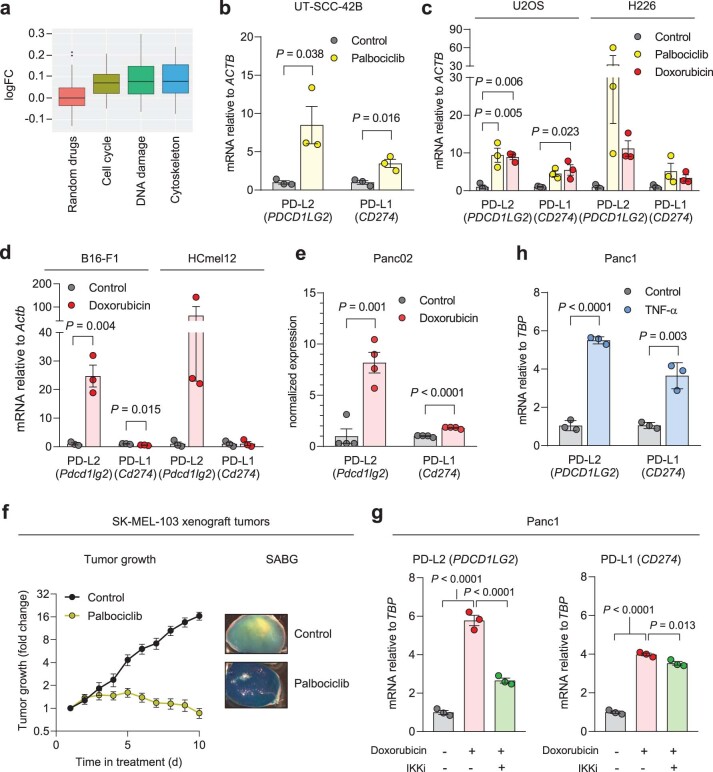
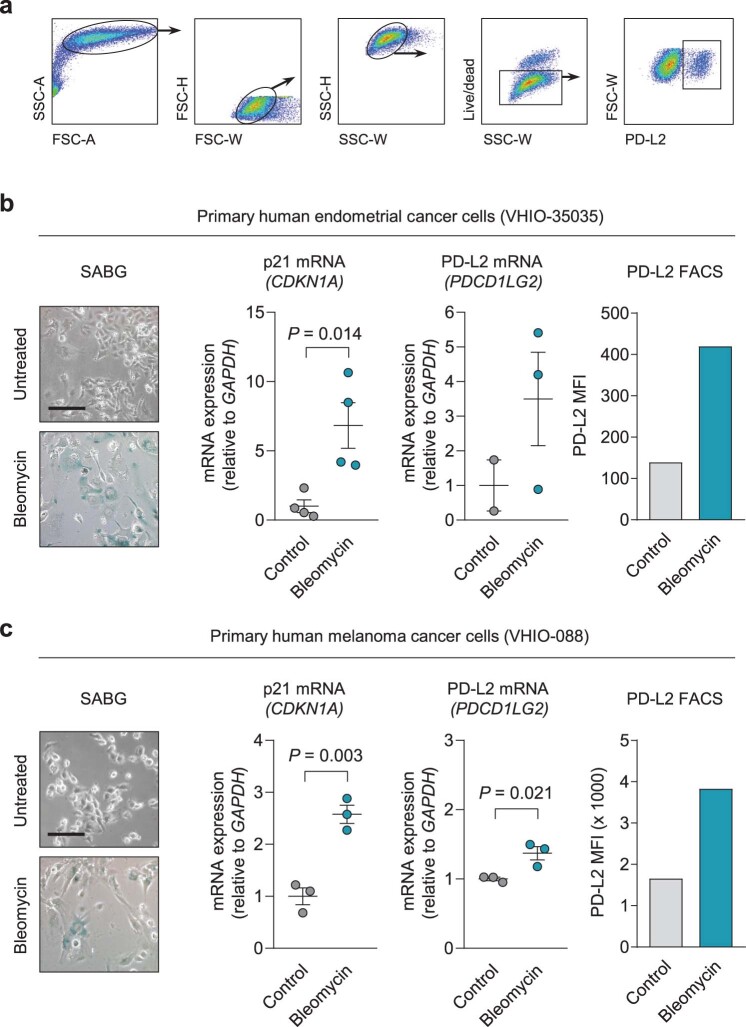
“Interestingly, among the upregulated plasma membrane proteins in both TIS conditions (doxorubicin and palbociclib) was PD-L2 (Supplementary Table 1).”
InfluentialSelf-citationNKG2D ligands mediate immunosurveillance of senescent cells
Sagiv, A., Burton, D. G. A., Moshayev, Z., Vadai, E., Wensveen, F., Ben-Dor, S., Golani, O., Polic, B., & Krizhanovsky, V. (2016) · Aging · doi:10.18632/aging.100897 · Cited by 345
Xiao, Y., Yu, S., Zhu, B., Bedoret, D., Bu, X., Francisco, L. M., Hua, P., Duke-Cohan, J. S., Umetsu, D. T., Sharpe, A. H., et al. (2014) · Journal of Experimental Medicine · doi:10.1084/jem.20130790 · Cited by 321 · cited 1×
“18).”
A snapshot of the PD-1/PD-L1 pathway
Ghosh, C., Luong, G., & Sun, Y. (2021) · Journal of Cancer · doi:10.7150/jca.57334 · Cited by 292
Senescence and Cancer: A Review of Clinical Implications of Senescence and Senotherapies
Wyld, L., Bellantuono, I., Tchkonia, T., Morgan, J., Turner, O., Foss, F., George, J., Danson, S., & Kirkland, J. L. (2020) · Cancers · doi:10.3390/cancers12082134 · Cited by 235 · cited 1×
“Multiple studies have demonstrated that therapies that selectively eliminate senescent cells, known as senolytic therapies, strongly synergize with cancer chemotherapy 20,30,31 .”
Self-citationSenescence Rewires Microenvironment Sensing to Facilitate Antitumor Immunity
Chen, H.-A., Ho, Y.-J., Mezzadra, R., Adrover, J. M., Smolkin, R., Zhu, C., Woess, K., Bernstein, N., Schmitt, G., Fong, L., et al. (2023) · Cancer Discovery · doi:10.1158/2159-8290.cd-22-0528 · Cited by 230
PD-L1 and PD-L2 differ in their molecular mechanisms of interaction with PD-1
Ghiotto, M., Gauthier, L., Serriari, N., Pastor, S., Truneh, A., Nunes, J. A., & Olive, D. (2010) · International Immunology · doi:10.1093/intimm/dxq049 · Cited by 229 · cited 1×
“8).”
Gorchs, L., Fernández Moro, C., Bankhead, P., Kern, K. P., Sadeak, I., Meng, Q., Rangelova, E., & Kaipe, H. (2019) · Frontiers in Immunology · doi:10.3389/fimmu.2019.00847 · Cited by 193
Targeting PD-L2–RGMb overcomes microbiome-related immunotherapy resistance
Park, J. S., Gazzaniga, F. S., Wu, M., Luthens, A. K., Gillis, J., Zheng, W., LaFleur, M. W., Johnson, S. B., Morad, G., Park, E. M., et al. (2023) · Nature · doi:10.1038/s41586-023-06026-3 · Cited by 191 · cited 1×
“19).”
Reducing Senescent Cell Burden in Aging and Disease
Pignolo, R. J., Passos, J. F., Khosla, S., Tchkonia, T., & Kirkland, J. L. (2020) · Trends in Molecular Medicine · doi:10.1016/j.molmed.2020.03.005 · Cited by 177
Self-citationMuñoz, D. P., Yannone, S. M., Daemen, A., Sun, Y., Vakar-Lopez, F., Kawahara, M., Freund, A. M., Rodier, F., Wu, J. D., Desprez, P.-Y., et al. (2019) · JCI Insight · doi:10.1172/jci.insight.124716 · Cited by 162
Upregulation of PD-L1 in Senescence and Aging
Onorati, A., Havas, A. P., Lin, B., Rajagopal, J., Sen, P., Adams, P. D., & Dou, Z. (2022) · Molecular and Cellular Biology · doi:10.1128/mcb.00171-22 · Cited by 129 · cited 2×
“33–35).”
Programmed cell death-ligand 2: A neglected but important target in the immune response to cancer?
Solinas, C., Aiello, M. M., Rozali, E. N., Lambertini, M., Willard-Gallo, K. E., & Migliori, E. (2020) · Translational Oncology · doi:10.1016/j.tranon.2020.100811 · Cited by 108 · cited 2×
“PD-L2 expression is detectable in a large variety of human cancers, being most prominent in triple-negative breast cancer, and head and neck squamous cell carcinomas 7,12 .”
Lysosomal trapping of palbociclib and its functional implications
Llanos, S., Megias, D., Blanco-Aparicio, C., Hernández-Encinas, E., Rovira, M., Pietrocola, F., & Serrano, M. (2019) · Oncogene · doi:10.1038/s41388-019-0695-8 · Cited by 96
Self-citationImmune Suppression by PD-L2 against Spontaneous and Treatment-Related Antitumor Immunity
Tanegashima, T., Togashi, Y., Azuma, K., Kawahara, A., Ideguchi, K., Sugiyama, D., Kinoshita, F., Akiba, J., Kashiwagi, E., Takeuchi, A., et al. (2019) · Clinical Cancer Research · doi:10.1158/1078-0432.ccr-18-3991 · Cited by 93 · cited 1×
“https://doi.org/10.1038/s43018-023-00712-x”
InfluentialMyeloid-derived suppressor cells (MDSC): an important partner in cellular/tissue senescence
Salminen, A., Kauppinen, A., & Kaarniranta, K. (2018) · Biogerontology · doi:10.1007/s10522-018-9762-8 · Cited by 84 · cited 2×
“More specifically, the SASP includes immunosuppressive factors, such as tumor growth factor-β, and chemokines that recruit myeloid-derived suppressive cells (MDSCs) 26–29 .”
Shahbandi, A., Chiu, F.-Y., Ungerleider, N. A., Kvadas, R., Mheidly, Z., Sun, M. J. S., Tian, D., Waizman, D. A., Anderson, A. Y., Machado, H. L., et al. (2022) · Nature Cancer · doi:10.1038/s43018-022-00466-y · Cited by 83 · cited 1×
“Interfering with PD-L1 or CD80 signaling promotes the immune clearance of senescent cells, resulting in beneficial effects on healthspan 35 and on cancer control when combined with chemotherapy 34 .”
Hurrell, B. P., Helou, D. G., Howard, E. D., Painter, J. D., Shafiei-Jahani, P., Sharpe, A. H., & Akbari, O. (2022) · Nature Communications · doi:10.1038/s41467-022-32899-5 · Cited by 52 · cited 1×
“Interestingly, PD-L2 is critical for the function of tolerogenic dendritic cells 9 .”
Sudo, S., Kajiya, H., Okano, S., Sasaki, M., Katsumata, Y., Ohno, J., Ikebe, T., Hiraki, A., & Okabe, K. (2020) · Cancer Science · doi:10.1111/cas.14336 · Cited by 34 · cited 1×
“https://doi.org/10.1038/s43018-023-00712-x”
InfluentialSengedorj, A., Hader, M., Heger, L., Frey, B., Dudziak, D., Fietkau, R., Ott, O. J., Scheidegger, S., Barba, S. M., Gaipl, U. S., et al. (2022) · Cancers · doi:10.3390/cancers14092050 · Cited by 28 · cited 1×
“Two recent reports found upregulation of PD-L2 in some cancer cell lines in vitro in response to cisplatin 16 or radiation 17 .”
vulcanSpot: a tool to prioritize therapeutic vulnerabilities in cancer
Perales-Patón, J., Domenico, T. D., Torre, C. F., Piñeiro-Yáñez, E., Carretero-Puche, C., Tejero, H., Valencia, A., Goméz-López, G., & Al‐Shahrour, F. (2019) · Bioinformatics · doi:10.1093/bioinformatics/btz465 · Cited by 9 · cited 1×
“Datasets from the LINCS L1000 project (http://www.lincsproject.org/) were analyzed and differential expression of PDCD1LG2 was detected by comparing control and treated samples introducing a correction by cell line and batch effect 53 .”
Self-citation
Cited by
Current and future immunotherapeutic approaches in pancreatic cancer treatment
Farhangnia, P., Khorramdelazad, H., Nickho, H., & Delbandi, A.-A. (2024) · Journal of Hematology & Oncology · doi:10.1186/s13045-024-01561-6 · Cited by 229
Senescence as a therapeutic target in cancer and age-related diseases
McHugh, D., Durán, I., & Gil, J. (2025) · Nature Reviews Drug Discovery · doi:10.1038/s41573-024-01074-4 · Cited by 197
“53) — can impair its clearance.”
Montégut, L., López-Otín, C., & Kroemer, G. (2024) · Molecular Cancer · doi:10.1186/s12943-024-02020-z · Cited by 190
“Moreover, senescence can result in local immunosuppression due to upregulation of the two PD-1 ligands PD-L1 and/or PD-L2 on malignant cells [70, 71], as well as in the secretion of pro-inflammatory and immunosuppressive factors exemplified by interleukins 6 and 8 [72].”
BackgroundColucci, M., Sarill, M., Maddalena, M., Valdata, A., Troiani, M., Massarotti, M., Bolis, M., Bressan, S., Kohl, A., Robesti, D., et al. (2025) · Cancer Cell · doi:10.1016/j.ccell.2025.05.015 · Cited by 164
Convergent inducers and effectors of T cell paralysis in the tumour microenvironment
Hanahan, D., Michielin, O. A., & Pittet, M. J. (2024) · Nature reviews. Cancer · doi:10.1038/s41568-024-00761-z · Cited by 121
“For example, senescent cancer cells can upregulate the immune checkpoint ligand PDL2, which protects both senescent and viable cancer cells from T cell killing 68 .”
Metadata
- Authors
- Chaib, S., López-Domínguez, J. A., Lalinde-Gutiérrez, M., Prats, N., Marin, I., Boix, O., García-Garijo, A., Meyer, K., Muñoz, M. I., Aguilera, M., Mateo, L., Stephan-Otto Attolini, C., Llanos, S., Pérez-Ramos, S., Escorihuela, M., Al-Shahrour, F., Cash, T. P., Tchkonia, T., Kirkland, J. L., Abad, M., Gros, A., Arribas, J., & Serrano, M.
- Affiliations
- Mayo Clinic (US)
- Vall d'Hebron Institute of Oncology (ES)
- Institute for Research in Biomedicine (ES)
- Spanish National Cancer Research Centre (ES)
- Altos Labs (US)
- Institució Catalana de Recerca i Estudis Avançats (ES)
- Corresponding author
- Serrano, Manuel
- ORCID
- Chaib, Selim
- López-Domínguez, José Alberto
- Lalinde-Gutiérrez, Marta
- Prats, Neus
- Boix, Olga
- García-Garijo, Andrea
- Meyer, Kathleen
- Aguilera, Mònica
- Mateo, Lidia
- Stephan-Otto Attolini, Camille
- Llanos, Susana
- Pérez-Ramos, Sandra
- Escorihuela, Marta
- Al-Shahrour, Fatima
- Tchkonia, Tamara
- Kirkland, James L.
- Abad, María
- Gros, Alena
- Arribas, Joaquín
- Serrano, Manuel
- Venue
- Nature Cancer
- Published
- 2024-01-24
- Volume
- 5
- Issue
- 3
- Pages
- 448-462
- ISSN
- 2662-1347 (ISSN-L)
- PMC
- PMC10965441
- OpenAlex
- W4391175022
- Cited by
- 114
- References
- 56
- Citations by year
- 2026: 40 · 2025: 39 · 2024: 35
- FWCI
- 32.44
- Type
- journal article
- Language
- en
- Update notices
- correction (2026-05-29)
- Open access
- hybrid
- doi.org
- Licence
- cc-by
- creativecommons.org/licenses/by/4.0 (tdm)
- creativecommons.org/licenses/by/4.0 (vor)
- Locations
- Nature Cancer (publishedVersion, cc-by)
- PubMed Central (publishedVersion, cc-by)
- PubMed (publishedVersion)
- Gredos (University of Salamanca) (publishedVersion, cc-by-nc-nd)
- Hispana (publishedVersion, cc-by-nc-nd)
- Repositori digital de la UPF (Universitat Pompeu Fabra) (acceptedVersion, cc-by)
- Dipòsit Digital de la Universitat de Barcelona (Universitat de Barcelona) (submittedVersion, cc-by)
- Funders
- Breast Cancer Research Foundation (BCRF-21-008, BCRF-21)
- Fundación BBVA (53/2021, MS15/00058)
- Noaber Foundation
- European Commission (ERC-2014-AdG)
- Generalitat de Catalunya (2017-SGR)
- Ministerio de Ciencia e Innovación (SAF2017-82613-R, 2017 SGR 282)
- Banco Bilbao Vizcaya Argentaria
- Universitat de Barcelona
- National Institutes of Health
- Instituto de Salud Carlos III (CB16/12/00449, PI19/01181, AC15/00062, MS15/00058)
- European Regional Development Fund (SAF2017, 2017 SGR 282, SAF2017-82613-R, RTI2018, ERC-2014- AdG/669622)
- National Institute on Aging (UH3AG056933, R01AG072301, UH2AG056933, R01AG013925, R56AG061414, R33AG061456, R37AG013925, P01AG062413)
- Topics
- Life Sciences › Biochemistry, Genetics and Molecular Biology › Cell Biology › Telomeres, Telomerase, and Senescence
- Health Sciences › Medicine › Oncology › Cancer Immunotherapy and Biomarkers
- Life Sciences › Immunology and Microbiology › Immunology › Immunotherapy and Immune Responses
- Keywords
- PD-L2, chemotherapy-induced senescence, tumor microenvironment, myeloid-derived suppressor cells, CXCL1, CXCL2, CD8+ T cells, combination therapy, pancreatic tumors, mammary tumors, immune checkpoint inhibitors
- MeSH terms
- Animals, Immune Tolerance, Immunosuppression Therapy, Pancreatic Neoplasms, Cellular Senescence, CD8-Positive T-Lymphocytes, Mice, Tumor Microenvironment
About these checks
Registry, retraction, Cites and statistics results are computed, not judged, with one exception: a printed reference that no index lists is read once by a model before it counts as a citation error. Claims are extracted by a model and kept only when their quote appears verbatim in the text; each cited source is then checked, with a model’s help, for whether it says what the claim relies on. Those verdicts can be wrong — read the claim’s quote and the cited source before relying on one.
Statistics and arithmetic are recomputed, not judged.
Confidence bands are shown only for fields calibrated on our annotated test set. None is calibrated yet, so no band is shown.
What counts as a claim ›How we measure confidence ›How we check this ›
Are you an author, or do you see a problem with this page? Request a review
Data sources
Bibliographic data: Semantic Scholar, OpenAlex, Crossref.
Contains information from the Semantic Scholar Academic Graph Datasets, made available under the ODC Attribution License (ODC-BY 1.0).
Semantic Scholar’s data is described in: Kinney, R., et al. (2023). The Semantic Scholar Open Data Platform. arXiv:2301.10140.
