

Multi-shape active composites by 3D printing of digital shape memory polymers
Open accessThe DOI matches its Crossref record; 30 of the 31 references it cites were found in a registry or an index.
Abstract
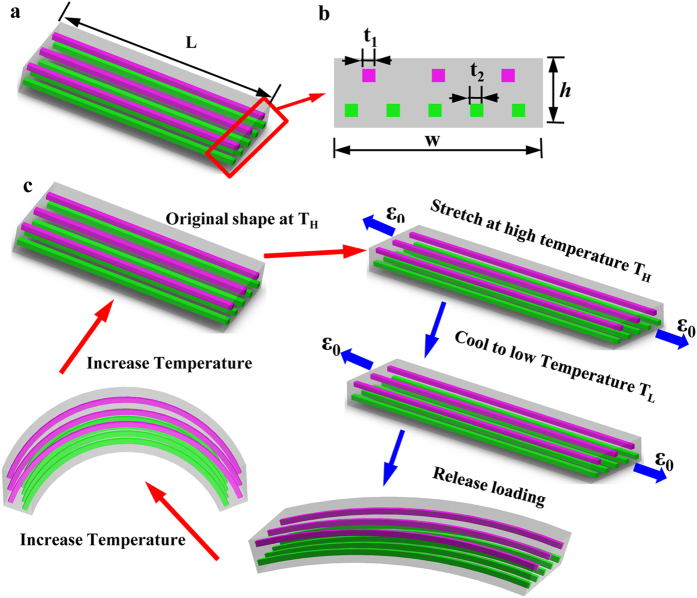
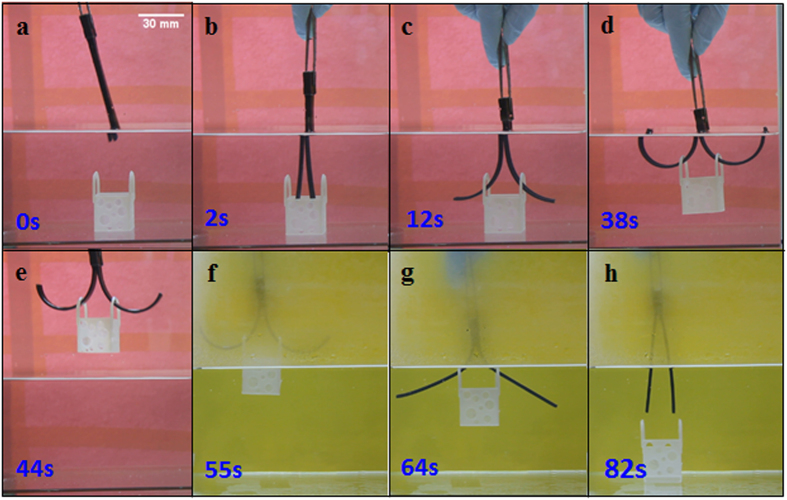
Recent research using 3D printing to create active structures has added an exciting new dimension to 3D printing technology. After being printed, these active, often composite, materials can change their shape over time; this has been termed as 4D printing. In this paper, we demonstrate the design and manufacture of active composites that can take multiple shapes, depending on the environmental temperature. This is achieved by 3D printing layered composite structures with multiple families of shape memory polymer (SMP) fibers – digital SMPs - with different glass transition temperatures (Tg) to control the transformation of the structure. After a simple single-step thermomechanical programming process, the fiber families can be sequentially activated to bend when the temperature is increased. By tuning the volume fraction of the fibers, bending deformation can be controlled. We develop a theoretical model to predict the deformation behavior for better understanding the phenomena and aiding the design. We also design and print several flat 2D structures that can be programmed to fold and open themselves when subjected to heat. With the advantages of an easy fabrication process and the controllable multi-shape memory effect, the printed SMP composites have a great potential in 4D printing applications.
Overview
The claims and statistics of this paper haven’t been checked yet.
Free: it reads the open-access text and checks the first 5 claims that cite a source we can check. Create a free account to check every claim.
Integrity signals
Registry
Cites
Statistics
Figures



Verification
Claims the paper makes
The claims and statistics of this paper haven’t been checked yet.
Free: it reads the open-access text and checks the first 5 claims that cite a source we can check. Create a free account to check every claim.
Claims other papers make about this one
Each is checked against this paper’s own text: does it say what the citing paper says it does?
The source backs part of the claim, not all of it — or backs it for a different population, condition or comparison.
In the citing paper
“the first example of 3D printed multiple-way SMPs was provided by Wu et al. [206], who fabricated layered composite structures with SMPs having different glass transition temperatures, by using a multi-material Polyjet 3D printer.”
From Two-Way and Multiple-Way Shape Memory Polymers for Soft Robotics: An Overview (2020) · cites this paper as [206]
Experimental — accuracy not yet measured
Self-check
Percentages, sums and reported differences re-computed from the paper’s own numbers.
The self-check needs the paper’s full text.
Citations
Cites
3D bioprinting of tissues and organs
Murphy, S. V., & Atala, A. (2014) · Nature Biotechnology · doi:10.1038/nbt.2958 · Cited by 7,034
Inkjet Printing—Process and Its Applications
Singh, M., Haverinen, H. M., Dhagat, P., & Jabbour, G. E. (2010) · Advanced Materials · doi:10.1002/adma.200901141 · Cited by 2,375 · cited 1×
“Active materials and structures that can change their properties and shape have great technological potential, e.g., in sensors, robotics, self-packaging devices, aerospace exploring and bio-medical applications 15–18 .”
Light-induced shape-memory polymers
Lendlein, A., Jiang, H., Jünger, O., & Langer, R. (2005) · Nature · doi:10.1038/nature03496 · Cited by 2,006 · cited 1×
“Among active materials, shape memory polymers (SMPs) have been intensively studied because of their ability to generate a large shape change under an external stimuli us, such as temperature 19–21 , light 22 , electric 23,24 and magnetic fields 25,26 .”
Review of progress in shape-memory polymers
Liu, C., Qin, H., & Mather, P. T. (2007) · Journal of Materials Chemistry · doi:10.1039/b615954k · Cited by 1,942
Evaluation of 3D Printing and Its Potential Impact on Biotechnology and the Chemical Sciences
Gross, B. C., Erkal, J. L., Lockwood, S. Y., Chen, C., & Spence, D. M. (2014) · Analytical Chemistry · doi:10.1021/ac403397r · Cited by 1,746 · cited 1×
“1038/srep24224 λ α = + − < < t T t T t t ( ) 1 [ ( ) ], 0 , (2) Thermal H 1”
Shape-memory polymers and their composites: stimulus methods and applications
Leng, J., Lan, X., Liu, Y., & Du, S. (2011) · Progress in Materials Science · doi:10.1016/j.pmatsci.2011.03.001 · Cited by 1,495 · cited 1×
“Active materials and structures that can change their properties and shape have great technological potential, e.g., in sensors, robotics, self-packaging devices, aerospace exploring and bio-medical applications 15–18 .”
A review on 3D micro-additive manufacturing technologies
Vaezi, M., Seitz, H., & Yang, S. (2013) · The International Journal of Advanced Manufacturing Technology · doi:10.1007/s00170-012-4605-2 · Cited by 1,293 · cited 1×
“e y t t t t y t t t ( , ) ln ( ) ( ) ( ) , (6) Thermal b 0 2 3”
Recent advances in polymer shape memory
Xie, T. (2011) · Polymer · doi:10.1016/j.polymer.2011.08.003 · Cited by 870
3D printing of composite calcium phosphate and collagen scaffolds for bone regeneration
Inzana, J. A., Olvera, D., Fuller, S. M., Kelly, J. P., Graeve, O. A., Schwarz, E. M., Kates, S. L., & Awad, H. A. (2014) · Biomaterials · doi:10.1016/j.biomaterials.2014.01.064 · Cited by 840 · cited 1×
“λ λ = ∆ y t y t y t ( , ) ( , ) ( , ), (7) Mech Thermal 0”
Mohr, R., Kratz, K., Weigel, T., Lucka-Gabor, M., Moneke, M., & Lendlein, A. (2006) · Proceedings of the National Academy of Sciences · doi:10.1073/pnas.0600079103 · Cited by 819 · cited 1×
“Among active materials, shape memory polymers (SMPs) have been intensively studied because of their ability to generate a large shape change under an external stimuli us, such as temperature 19–21 , light 22 , electric 23,24 and magnetic fields 25,26 .”
Research works printed but not linked: 1
- Tibbits, S. The emergence of “4D printing”. TED conference. (2013) Available at: http://www.ted.com/talks/skylar_tibbits_the_emergence_of_4d_printing?language=en (Accessed: 25th July 2013).
Cited by
Items 101–200 of 399
Kačergis, L., Mitkus, R., & Sinapius, M. (2019) · Smart Materials and Structures · doi:10.1088/1361-665x/ab3d18 · Cited by 104
3D and 4D printing for optics and metaphotonics
Jeong, H. Y., Lee, E., An, S., Lim, Y., & Jun, Y. C. (2020) · Nanophotonics · doi:10.1515/nanoph-2019-0483 · Cited by 102
“In the PolyJet method, UV-curable SMPs [13, 16, 42] such as photocurable polyurethane can be used.”
BackgroundMethodInfluentialCurrent developments in multifunctional smart materials for 3D/4D bioprinting
Castro, N. J., Meinert, C., Levett, P. A., & Hutmacher, D. W. (2017) · Current Opinion in Biomedical Engineering · doi:10.1016/j.cobme.2017.04.002 · Cited by 94
“A proof-of-principle was demonstrated by printing layered structures in which fibres of two shape memory polymers with glass transition temperatures of 38 °C and 57 °C were deposited in each layer [13].”
BackgroundLarge Shape Transforming 4D Auxetic Structures
Wagner, M., Chen, T., & Shea, K. (2017) · 3D Printing and Additive Manufacturing · doi:10.1089/3dp.2017.0027 · Cited by 92
Momeni, F., & Ni, J. (2020) · Engineering · doi:10.1016/j.eng.2020.01.015 · Cited by 102
Prakash, C., Singh, G., Singh, S., Linda, W. L., Zheng, H. Y., Ramakrishna, S., & Narayan, R. J. (2021) · Journal of Materials Engineering and Performance · doi:10.1007/s11665-021-05566-x · Cited by 92
Multistable Thermal Actuators Via Multimaterial 4D Printing
Jeong, H. Y., Lee, E., Ha, S., Kim, N., & Jun, Y. C. (2018) · Advanced Materials Technologies · doi:10.1002/admt.201800495 · Cited by 93
Zhao, Z., Peng, F., Cavicchi, K. A., Çakmak, M., Weiss, R. A., & Vogt, B. D. (2017) · ACS Applied Materials & Interfaces · doi:10.1021/acsami.7b07816 · Cited by 93
Current progress of 4D-printing technology
Subeshan, B., Baddam, Y., & Asmatulu, E. (2021) · Progress in Additive Manufacturing · doi:10.1007/s40964-021-00182-6 · Cited by 98
Review of mechanisms and deformation behaviors in 4D printing
Ding, H., Zhang, X., Liu, Y., & Ramakrishna, S. (2019) · The International Journal of Advanced Manufacturing Technology · doi:10.1007/s00170-019-03871-3 · Cited by 90
Mu, Q., Dunn, C. K., Wang, L., Dunn, M. L., Qi, H. J., & Wang, T. (2017) · Smart Materials and Structures · doi:10.1088/1361-665x/aa5cca · Cited by 91
Self-citationAhmadi, Y., & Ahmad, S. (2019) · Journal of macromolecular science. Part C, Reviews in macromolecular chemistry and physics/Journal of macromolecular science. Reviews in macromolecular chemistry and physics · doi:10.1080/15583724.2019.1673403 · Cited by 84
The chemistry behind 4D printing
Pinho, A. C., Buga, C. S., & Piedade, A. P. (2020) · Applied Materials Today · doi:10.1016/j.apmt.2020.100611 · Cited by 94
4D printing of polyurethane paint-based composites
Su, J.-W., Gao, W., Trinh, K., Kenderes, S. M., Tekin Pulatsu, E., Zhang, C., Whittington, A., Lin, M., & Lin, J. (2019) · International Journal of Smart and Nano Materials · doi:10.1080/19475411.2019.1618409 · Cited by 81
“Thus, PU has been explored as one of mainstream SMPs for 4D printing [25,30,35,36].”
Background3D printing of twisting and rotational bistable structures with tuning elements
Jeong, H. Y., An, S., Seo, I. C., Lee, E., Ha, S., Kim, N., & Jun, Y. C. (2019) · Scientific Reports · doi:10.1038/s41598-018-36936-6 · Cited by 88
Soft Actuators and Robots Enabled by Additive Manufacturing
Wang, D., Wang, J., Shen, Z., Jiang, C., Zou, J., Dong, L., Fang, N. X., & Gu, G. (2023) · Annual Review of Control Robotics and Autonomous Systems · doi:10.1146/annurev-control-061022-012035 · Cited by 88
Multi-metal 4D printing with a desktop electrochemical 3D printer
Chen, X., Liu, X., Ouyang, M., Chen, J., Taiwo, O. O., Xia, Y., Childs, P., Brandon, N. P., & Wu, B. (2019) · Scientific Reports · doi:10.1038/s41598-019-40774-5 · Cited by 78
A taxonomy of shape-changing behavior for 4D printed parts using shape-memory polymers
Nam, S., & Pei, E. (2019) · Progress in Additive Manufacturing · doi:10.1007/s40964-019-00079-5 · Cited by 87
Shaping soft materials via digital light processing-based 3D printing: A review
Ge, Q., Jian, B., & Li, H. (2022) · Forces in Mechanics · doi:10.1016/j.finmec.2022.100074 · Cited by 85
Keneth, E. S., Lieberman, R., Rednor, M., Scalet, G., Auricchio, F., & Magdassi, S. (2020) · Polymers · doi:10.3390/polym12030710 · Cited by 79
“The common technology for multi-material printing is Polyjet printing [18,22,27], however, a major limitation of this approach is the requirement to utilize only low-viscosity commercial materials.”
BackgroundArchitected material analogs for shape memory alloys
Zhang, Y., Velay-Lizancos, M., Restrepo, D., Mankame, N. D., & Zavattieri, P. D. (2021) · Matter · doi:10.1016/j.matt.2021.04.015 · Cited by 74
Additive Manufacturing of Shape Memory Polymer Composites for Futuristic Technology
Patadiya, J., Gawande, A., Joshi, G. N., & Kandasubramanian, B. (2021) · Industrial & Engineering Chemistry Research · doi:10.1021/acs.iecr.1c03083 · Cited by 74
McLellan, K., Sun, Y.-C., & Naguib, H. E. (2022) · Bioprinting · doi:10.1016/j.bprint.2022.e00217 · Cited by 84
A Brief Review of the Shape Memory Phenomena in Polymers and Their Typical Sensor Applications
Sun, L., Wang, T. X., Chen, H. M., Salvekar, A. V., Naveen, B. S., Xu, Q., Weng, Y., Guo, X., Chen, Y., & Huang, W. (2019) · Polymers · doi:10.3390/polym11061049 · Cited by 80
“3D printing is able to provide unique shape/surface feature for each individual piece produced in a cost-effective manner [45], so that 3D printing can be used in, for instance, various anti-counterfeit applications, as well.”
BackgroundSelf-citationMahjoubnia, A., Cai, D., Wu, Y., King, S. D., Torkian, P., Chen, A. C., Talaie, R., Chen, S., & Lin, J. (2024) · Acta Biomaterialia · doi:10.1016/j.actbio.2024.02.009 · Cited by 79
Xin, X., Liu, L., Liu, Y., & Leng, J. (2020) · Smart Materials and Structures · doi:10.1088/1361-665x/ab85a4 · Cited by 77
4D printed porous radiopaque shape memory polyurethane for endovascular embolization
Kashyap, D., Kumar, P. K., & Kanagaraj, S. (2018) · Additive manufacturing · doi:10.1016/j.addma.2018.04.009 · Cited by 84
Lu, C., Liu, Y., Liu, X., Wang, C., Wang, J., & Chu, F. (2018) · ACS Sustainable Chemistry & Engineering · doi:10.1021/acssuschemeng.8b00329 · Cited by 69
Abayazid, F. F., & Ghajari, M. (2020) · Additive manufacturing · doi:10.1016/j.addma.2020.101160 · Cited by 76
Tao, R., Shi, J., Granier, F., Moeini, M., Akbarzadeh, A., & Therriault, D. (2022) · Applied Materials Today · doi:10.1016/j.apmt.2022.101596 · Cited by 68
4D Printing of Multicomponent Shape-Memory Polymer Formulations
Razzaq, M. Y., González-Gutiérrez, J., Mertz, G., Ruch, D., Schmidt, D. F., & Westermann, S. (2022) · Applied Sciences · doi:10.3390/app12157880 · Cited by 74
“Nevertheless, DIW has relatively low printing speeds since parts are built by depositing strands of materials, and like FFF, it produces 3D structures with low surface quality due to the size of the nozzles used [111].”
Background4D Printing: The Shape-Morphing in Additive Manufacturing
Piedade, A. P. (2019) · Journal of Functional Biomaterials · doi:10.3390/jfb10010009 · Cited by 67
“produced composited structures using more of one type of thermal response SMPs, thus taking advantage of the fact that each SMP presents a single Tg temperature [33].”
MethodAn ontology-based framework to formalize and represent 4D printing knowledge in design
Dimassi, S., Demoly, F., Cruz, C., Qi, H. J., Kim, K.-Y. J., André, J., & Gomes, S. (2021) · Computers in Industry · doi:10.1016/j.compind.2020.103374 · Cited by 73
Self-citationRoach, D. J., Roberts, C. C., Wong, J., Kuang, X., Kovitz, J. M., Zhang, Q., Spence, T. G., & Qi, H. J. (2020) · Additive manufacturing · doi:10.1016/j.addma.2020.101544 · Cited by 77
Self-citationA 3D Printed Implantable Device for Voiding the Bladder Using Shape Memory Alloy (SMA) Actuators
Hassani, F. A., Peh, W. Y. X., Gammad, G. G. L., Mogan, R. P., Ng, T. K., Kuo, T. L. C., Ng, L. G., Luu, P., Yen, S., & Lee, C. (2017) · Advanced Science · doi:10.1002/advs.201700143 · Cited by 62
Four-dimensional printing using fused-deposition modeling: a review
Carrell, J., Gruss, G., & Gomez, E. (2020) · Rapid Prototyping Journal · doi:10.1108/rpj-12-2018-0305 · Cited by 63
Preparation of Smart Materials by Additive Manufacturing Technologies: A Review
Mondal, K., & Tripathy, P. K. (2021) · Materials · doi:10.3390/ma14216442 · Cited by 66
Rolled‐up Nanotechnology: Materials Issue and Geometry Capability
Xu, C., Wu, X., Huang, G., & Mei, Y. (2018) · Advanced Materials Technologies · doi:10.1002/admt.201800486 · Cited by 64
Enhanced Impact Resistance of Three-Dimensional-Printed Parts with Structured Filaments
Peng, F., Zhao, Z., Xia, X., Çakmak, M., & Vogt, B. D. (2018) · ACS Applied Materials & Interfaces · doi:10.1021/acsami.8b00866 · Cited by 59
Programming the deformation of a temperature-driven bilayer structure in 4D printing
Zeng, S., Gao, Y., Feng, Y., Zheng, H., Qiu, H. N., & Tan, J. (2019) · Smart Materials and Structures · doi:10.1088/1361-665x/ab39c9 · Cited by 60
Microfabrication Using Shape‐Transforming Soft Materials
Apsite, I., Biswas, A., Li, Y., & Ionov, L. (2020) · Advanced Functional Materials · doi:10.1002/adfm.201908028 · Cited by 61
Contactless reversible 4D-printing for 3D-to-3D shape morphing
Lee, A. Y., Zhou, A., An, J., Chua, C. K., & Zhang, Y. (2020) · Virtual and Physical Prototyping · doi:10.1080/17452759.2020.1822189 · Cited by 65
Park, Y., Chung, T. S., Lee, G., & Rogers, J. A. (2021) · Chemical Reviews · doi:10.1021/acs.chemrev.1c00639 · Cited by 62
Shape Morphing by Topological Patterns and Profiles in Laser-Cut Liquid Crystal Elastomer Kirigami
Chen, J., Jiang, J., Weber, J., Gimenez‐Pinto, V., & Peng, C. (2023) · ACS Applied Materials & Interfaces · doi:10.1021/acsami.2c20295 · Cited by 61
Gul, J. Z., Yang, B.-S., Yang, Y. J., Chang, D. E., & Choi, K. H. (2016) · Smart Materials and Structures · doi:10.1088/0964-1726/25/11/115009 · Cited by 60
“Due to these great advantages, 3D printing is attracting more and more research and development interest, to transform from a prototyping tool to a fabrication powerhouse for applications ranging from tissue engineering to aerospace parts and structures [26].”
BackgroundProgrammable Light‐Driven Liquid Crystal Elastomer Kirigami with Controlled Molecular Orientations
Chen, J., Johnson, A. S., Weber, J., Akomolafe, O. I., Jiang, J., & Peng, C. (2022) · Advanced Intelligent Systems · doi:10.1002/aisy.202100233 · Cited by 55
Advances in 3D and 4D Printing of Soft Robotics and Their Applications
Liu, H., Wu, C., Lin, S., Lam, J., Xi, N., & Chen, Y. (2025) · Advanced Intelligent Systems · doi:10.1002/aisy.202400699 · Cited by 59
4D Printing of Glass Fiber-Regulated Shape Shifting Structures with High Stiffness
Weng, S., Kuang, X., Zhang, Q., Hamel, C. M., Roach, D. J., Hu, N., & Qi, H. J. (2020) · ACS Applied Materials & Interfaces · doi:10.1021/acsami.0c18988 · Cited by 58
Self-citation4D Printing of Smart Stimuli-Responsive Polymers
Suriano, R., Bernasconi, R., Magagnin, L., & Levi, M. (2019) · Journal of The Electrochemical Society · doi:10.1149/2.0411909jes · Cited by 56
Advances and Applications of 4D-Printed High-Strength Shape Memory Polymers
Zhang, J., Xu, M., Zhang, N., Wang, T., Zhang, Y., Yang, Z., & Wang, Q. (2024) · Additive Manufacturing Frontiers · doi:10.1016/j.amf.2024.200115 · Cited by 62
Self-citationWang, F., Yuan, C., Wang, D., Rosen, D. W., & Ge, Q. (2020) · Smart Materials and Structures · doi:10.1088/1361-665x/ab7ab0 · Cited by 55
“We notice that the demonstrations of 4D printed bilayer composites in this work are similar to the previously reported demonstrations [11, 14, 41].”
ResultSelf-citationControlled mechanical assembly of complex 3D mesostructures and strain sensors by tensile buckling
Guo, X., Wang, X. S., Ou, D., Ye, J., Pang, W., Huang, Y. Y., Rogers, J. A., & Zhang, Y. (2018) · npj Flexible Electronics · doi:10.1038/s41528-018-0028-y · Cited by 59
3D printing and growth induced bending based on PET-RAFT polymerization
Bainbridge, C. W. A., Engel, K. E., & Jin, J. (2020) · Polymer Chemistry · doi:10.1039/d0py00600a · Cited by 55
Freund, R., Watschke, H., Heubach, J., & Vietor, T. (2019) · Applied Sciences · doi:10.3390/app9091782 · Cited by 54
“[2,5] Moreover, integration of conductive structures via MEX has been shown to be possible and can be utilized to produce heat radiant surfaces.”
MethodOn ZnO nano particle reinforced PVDF composite materials for 3D printing of biomedical sensors
Kumar, R., Singh, R., Singh, M., & Kumar, P. (2020) · Journal of Manufacturing Processes · doi:10.1016/j.jmapro.2020.10.027 · Cited by 50
Advancing smart dry adhesives with shape memory polymers
Linghu, C., Mu, T., Zhao, W. D., Liu, Y., Hsia, K. J., Leng, J., & Gao, H. (2024) · International Journal of Smart and Nano Materials · doi:10.1080/19475411.2024.2439954 · Cited by 55
Wang, G., Qin, F., Liu, H., Tao, Y., Zhang, Y., Zhang, Y. J., & Yao, L. (2020) · Proceedings of the ACM on Interactive Mobile Wearable and Ubiquitous Technologies · doi:10.1145/3432232 · Cited by 56
“Beyond HCI, biomimetic 4D printing [12, 18, 36], 4D printed robots [54], and reversible shape memory components [32, 68] have gained considerable interests recently.”
BackgroundAdditive manufacturing landscape and materials perspective in 4D printing
Farid, M. I., Wu, W., Liu, X., & Wang, P. (2021) · The International Journal of Advanced Manufacturing Technology · doi:10.1007/s00170-021-07233-w · Cited by 54
Breakthrough to the pragmatic evolution of direct ink writing: progression, challenges, and future
Pandya, K. S., Shindalkar, S. S., & Kandasubramanian, B. (2023) · Progress in Additive Manufacturing · doi:10.1007/s40964-023-00399-7 · Cited by 55
“Direct ink writing-based 3D printing could be applied in various industries in addition to electronics and biological domains [41].”
BackgroundProgrammable mechanical metamaterials: basic concepts, types, construction strategies—a review
Liu, C., Zhang, X., Chang, J., Lyu, Y., Zhao, J., & Qiu, S. (2024) · Frontiers in Materials · doi:10.3389/fmats.2024.1361408 · Cited by 61
Applications of four-dimensional printing in emerging directions: Review and prospects
Huang, J., Xia, S., Li, Z., Wu, X., & Ren, J. (2021) · Journal of Material Science and Technology · doi:10.1016/j.jmst.2021.02.040 · Cited by 51
Zhou, Y., Wang, F., Yang, Z., Hu, X., Pan, Y., Lu, Y., & Jiang, M. (2022) · Industrial Crops and Products · doi:10.1016/j.indcrop.2022.114831 · Cited by 50
Maróti, P., Várga, P., Ábrahám, H., Falk, G., Zsebe, T., Meiszterics, Z., Manó, S., Csernátony, Z., Rendeki, S., & Nyitrai, M. (2018) · Materials Research Express · doi:10.1088/2053-1591/aaf5a9 · Cited by 51
Zhang, H., Cheng, X., Yan, D., Zhang, Y., & Fang, D. (2019) · Composites Science and Technology · doi:10.1016/j.compscitech.2019.107822 · Cited by 46
Hydrogel-driven origami metamaterials for tunable swelling behavior
Chen, Z., Li, Y., & Li, Q. M. (2021) · Materials & Design · doi:10.1016/j.matdes.2021.109819 · Cited by 49
Effective software solutions for 4D printing: A review and proposal
Chung, S., Song, S. E., & Cho, Y. T. (2017) · International Journal of Precision Engineering and Manufacturing-Green Technology · doi:10.1007/s40684-017-0041-y · Cited by 52
Programming the time into 3D printing: current advances and future directions in 4D printing
Shen, B., Erol, O., Fang, L., & Kang, S. H. (2019) · Multifunctional Materials · doi:10.1088/2399-7532/ab54ea · Cited by 51
3D and 4D Printing of Multistable Structures
Jeong, H. Y., An, S., Lim, Y., Jeong, M. J., Kim, N., & Jun, Y. C. (2020) · Applied Sciences · doi:10.3390/app10207254 · Cited by 49
Shape transformable bifurcated stents
Kim, T., & Lee, Y. (2018) · Scientific Reports · doi:10.1038/s41598-018-32129-3 · Cited by 50
Mechanics-based design strategies for 4D printing: A review
Yuan, C., Lu, T., & Wang, T. J. (2022) · Forces in Mechanics · doi:10.1016/j.finmec.2022.100081 · Cited by 47
Self-citationLow-Voltage-Driven Large-Amplitude Soft Actuators Based on Phase Transition
Chellattoan, R., Yudhanto, A., & Lubineau, G. (2020) · Soft Robotics · doi:10.1089/soro.2019.0150 · Cited by 44
“21 Existing actuation technologies have some intrinsic limitations.”
Hu, G., & Bodaghi, M. (2023) · Advanced Engineering Materials · doi:10.1002/adem.202300334 · Cited by 46
Evaluation in 4D printing – A review
Kumar, S. B., JEEVAMALAR, J., Ramu, P., Suresh, G., & Senthilnathan, K. (2020) · Materials Today Proceedings · doi:10.1016/j.matpr.2020.07.335 · Cited by 52
Yi, H., & Kim, Y. (2021) · Journal of Building Engineering · doi:10.1016/j.jobe.2021.103076 · Cited by 56
Review: Application of 3D Printing Technology in Soft Robots
Dong, H., Weng, T., Zheng, K., Sun, H. R., & Chen, B. (2024) · 3D Printing and Additive Manufacturing · doi:10.1089/3dp.2023.0127 · Cited by 46
Lei, M., Hamel, C. M., Yuan, C., Lu, H., & Qi, H. J. (2018) · Composites Science and Technology · doi:10.1016/j.compscitech.2018.02.024 · Cited by 42
Self-citationSynthesis and properties of shape memory poly(aryl ether ketone)s
Zhao, Z., Gu, Y., Chao, D., & Liu, X. (2019) · European Polymer Journal · doi:10.1016/j.eurpolymj.2019.04.026 · Cited by 41
Additive manufacturing of smart materials exhibiting 4-D properties: A state of art review
Kumar, S., Singh, R., Batish, A., & Singh, T. (2019) · Journal of Thermoplastic Composite Materials · doi:10.1177/0892705719895052 · Cited by 43
Sequential Motion of 4D Printed Photopolymers with Broad Glass Transition
Inverardi, N., Pandini, S., Bignotti, F., Scalet, G., Marconi, S., & Auricchio, F. (2020) · Macromolecular Materials and Engineering · doi:10.1002/mame.201900370 · Cited by 39
Performance metrics for shape-morphing devices
Wang, J., & Chortos, A. (2024) · Nature Reviews Materials · doi:10.1038/s41578-024-00714-w · Cited by 47
Toward Patient-Specific 3D-Printed Robotic Systems for Surgical Interventions
Desai, J. P., Sheng, J., Cheng, S. S., Wang, X., Deaton, N. J., & Rahman, N. (2019) · IEEE Transactions on Medical Robotics and Bionics · doi:10.1109/tmrb.2019.2912444 · Cited by 44
4D printing polymeric biomaterials for adaptive tissue regeneration
Wang, Z., Ma, D., Liu, J., Xu, S., Qiu, F., Hu, L., Liu, Y., Ke, C., & Ruan, C. (2025) · Bioactive Materials · doi:10.1016/j.bioactmat.2025.01.033 · Cited by 65
Functional applications of 4D printing: a review
Mohol, S. S., & Sharma, V. (2021) · Rapid Prototyping Journal · doi:10.1108/rpj-10-2020-0240 · Cited by 38
Recent Progress in 3D Printing of Polymer Materials as Soft Actuators and Robots
Kong, X., Dong, M., Du, M., Qian, J. W., Yin, J., Zheng, Q., & Wu, Z. L. (2024) · Chem & Bio Engineering · doi:10.1021/cbe.4c00028 · Cited by 39
Bouguermouh, K., Habibi, M., Laperrière, L., Li, Z., & Abdin, Y. (2024) · Journal of Materials Science · doi:10.1007/s10853-024-09862-4 · Cited by 42
“Therefore, immersing the printed object in hot water allows the material to relax and relieve some of these internal stresses, resulting in bending [50].”
Chao, X., Hu, H., Lin, J., Ge, X., Wang, Y., Xie, L., Hu, B., Meng, L., Yu, S., Liang, F., et al. (2025) · Science Advances · doi:10.1126/sciadv.adw6179 · Cited by 38
Estelle, K. T., Blair, D., Evans, K. A., & Gozen, B. A. (2017) · Journal of Manufacturing Processes · doi:10.1016/j.jmapro.2017.04.018 · Cited by 38
Igarashi, T. (2017) · Seikei-Kakou · doi:10.4325/seikeikakou.29.254 · Cited by 34
Engineering (Bio)Materials through Shrinkage and Expansion
Wang, M., Li, W., Tang, G., Garciamendez‐Mijares, C. E., & Zhang, Y. S. (2021) · Advanced Healthcare Materials · doi:10.1002/adhm.202100380 · Cited by 41
Han, M., Yang, Y., & Li, L. (2020) · Additive manufacturing · doi:10.1016/j.addma.2020.101223 · Cited by 40
Lantean, S., Roppolo, I., Sangermano, M., Hayoun, M., Dammak, H., Barrera, G., Tiberto, P. M., Pirri, C. F., Bodelot, L., & Rizza, G. (2022) · Advanced Materials Technologies · doi:10.1002/admt.202200288 · Cited by 33
Nam, S., & Pei, E. (2020) · Materials · doi:10.3390/ma13173754 · Cited by 36
Shape-programmable and healable materials and devices using thermo- and photo-responsive vitrimer
Kuang, X., Mu, Q., Roach, D. J., & Qi, H. J. (2020) · Multifunctional Materials · doi:10.1088/2399-7532/abbdc1 · Cited by 36
“Three-dimensional (3D) architectures capable of altering the shape on-demand are highly desirable in many applications, including actuators [1, 2], deployable devices [3, 4], transformable electronics [5, 6], and biomedical devices [7–9].”
BackgroundSelf-citationRandhawa, A., Dutta, S. D., Ganguly, K., Patil, T. V., & Lim, K. (2024) · Small · doi:10.1002/smll.202309269 · Cited by 33
Accurately controlled sequential self-folding structures by polystyrene film
Deng, D., Yang, Y., Chen, Y., Lan, X., & Tice, J. B. (2017) · Smart Materials and Structures · doi:10.1088/1361-665x/aa7a4e · Cited by 31
The mechanical design of a hybrid intelligent hinge with shape memory polymer and spring sheet
Wang, C., & Wang, Y. (2017) · Composites Part B Engineering · doi:10.1016/j.compositesb.2017.09.039 · Cited by 31
Inkjet four-dimensional printing of shape memory polymers: a review
Nachimuthu, M., & Rajesh, P. K. (2022) · Rapid Prototyping Journal · doi:10.1108/rpj-08-2021-0198 · Cited by 35
Vidakis, N., Petousis, M., David, C., Nasikas, N. K., Sagris, D., Mountakis, N., Spiridaki, M., Moutsopoulou, A. J., & Stratakis, E. I. (2024) · Defence Technology · doi:10.1016/j.dt.2024.08.001 · Cited by 30
Ductile Shape-Memory Polymer Composite with Enhanced Shape Recovery Ability
Peng, K., Zhao, Y., Shahab, S., & Mirzaeifar, R. (2020) · ACS Applied Materials & Interfaces · doi:10.1021/acsami.0c18413 · Cited by 30
Design principles for 3D-printed thermally activated shape-morphing structures
Hanuhov, T., & Cohen, N. (2023) · International Journal of Mechanical Sciences · doi:10.1016/j.ijmecsci.2023.108716 · Cited by 29
Metadata
- Authors
- Wu, J., Yuan, C., Ding, Z., Isakov, M., Mao, Y., Wang, T., Dunn, M. L., & Qi, H. J.
- Affiliations
- Georgia Institute of Technology (US)
- Xi'an Jiaotong University (CN)
- Singapore University of Technology and Design (SG)
- Corresponding author
- Dunn, Martin L.
- Qi, H. Jerry
- Venue
- Scientific Reports
- Published
- 2016-04-13
- Volume
- 6
- Issue
- 1
- Pages
- 24224-24224
- ISSN
- 2045-2322 (ISSN-L)
- PMC
- PMC4829848
- OpenAlex
- W2336992486
- Cited by
- 399
- References
- 31
- Citations by year
- 2026: 12 · 2025: 23 · 2024: 39 · 2023: 37 · 2022: 43 · 2021: 55 · 2020: 57 · 2019: 49 · 2018: 39 · 2017: 36 · 2016: 8
- FWCI
- 39.13
- Type
- journal article
- Language
- en
- Open access
- gold
- doi.org
- Licence
- cc-by
- creativecommons.org/licenses/by/4.0 (tdm)
- creativecommons.org/licenses/by/4.0 (vor)
- Locations
- Scientific Reports (publishedVersion, cc-by)
- Europe PMC (PubMed Central) (publishedVersion, cc-by)
- PubMed Central (publishedVersion, cc-by)
- PubMed (publishedVersion)
- Funders
- National Science Foundation (1462895, 1462894, 1404621)
- National Research Foundation
- National Research Foundation Singapore
- Singapore University of Technology and Design
- Digital Manufacturing and Design Centre, Singapore University of Technology and Design
- Division of Civil, Mechanical and Manufacturing Innovation (CMMI-1462895, CMMI-1462894, 1462894, 1462895)
- Air Force Office of Scientific Research (FA9550-13-1-0088, FA9550-)
- Topics
- Physical Sciences › Engineering › Mechanical Engineering › Advanced Materials and Mechanics
- Physical Sciences › Materials Science › Polymers and Plastics › Polymer composites and self-healing
- Physical Sciences › Engineering › Industrial and Manufacturing Engineering › Additive Manufacturing and 3D Printing Technologies
- Keywords
- shape memory polymers, 4D printing, active composites, glass transition temperature, fiber volume fraction, bending deformation, folding and unfolding, deformation modeling, composite laminates
About these checks
Registry, retraction, Cites and statistics results are computed, not judged, with one exception: a printed reference that no index lists is read once by a model before it counts as a citation error. Claims are extracted by a model and kept only when their quote appears verbatim in the text; each cited source is then checked, with a model’s help, for whether it says what the claim relies on. Those verdicts can be wrong — read the claim’s quote and the cited source before relying on one.
Statistics and arithmetic are recomputed, not judged.
Confidence bands are shown only for fields calibrated on our annotated test set. None is calibrated yet, so no band is shown.
What counts as a claim ›How we measure confidence ›How we check this ›
Are you an author, or do you see a problem with this page? Request a review
Data sources
Bibliographic data: Semantic Scholar, OpenAlex, Crossref.
Contains information from the Semantic Scholar Academic Graph Datasets, made available under the ODC Attribution License (ODC-BY 1.0).
Semantic Scholar’s data is described in: Kinney, R., et al. (2023). The Semantic Scholar Open Data Platform. arXiv:2301.10140.
