

Infectious virus in exhaled breath of symptomatic seasonal influenza cases from a college community
Open accessPublished version of a preprint
The DOI matches its Crossref record; 36 of the 36 references it cites were found in a registry or an index.
Abstract
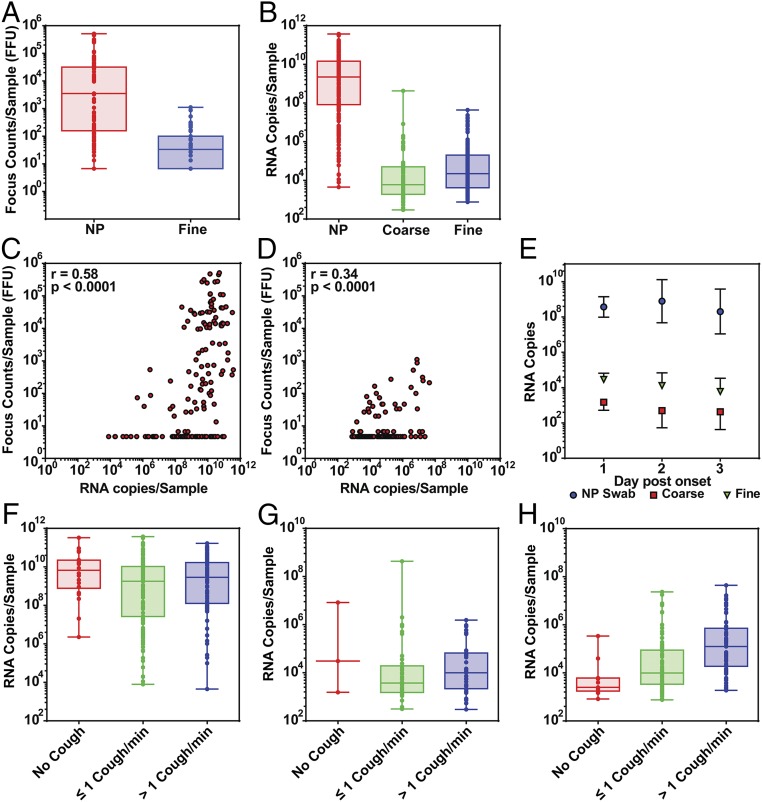
per NP swab. Fine- and coarse-aerosol viral RNA were positively associated with body mass index and number of coughs and negatively associated with increasing days since symptom onset in adjusted models. Fine-aerosol viral RNA was also positively associated with having influenza vaccination for both the current and prior season. NP swab viral RNA was positively associated with upper respiratory symptoms and negatively associated with age but was not significantly associated with fine- or coarse-aerosol viral RNA or their predictors. Sneezing was rare, and sneezing and coughing were not necessary for infectious aerosol generation. Our observations suggest that influenza infection in the upper and lower airways are compartmentalized and independent.
Overview
The claims and statistics of this paper haven’t been checked yet.
Free: it reads the open-access text and checks the first 5 claims that cite a source we can check. Create a free account to check every claim.
Integrity signals
Registry
Cites
Statistics
Figures
Verification
Claims the paper makes
The claims and statistics of this paper haven’t been checked yet.
Free: it reads the open-access text and checks the first 5 claims that cite a source we can check. Create a free account to check every claim.
Claims other papers make about this one
Each is checked against this paper’s own text: does it say what the citing paper says it does?
The cited source says what the claim attributes to it.
In the citing paper
“Numerous earlier studies have established that aerosol expelled during normal respiratory activities can contain infectious influenza virus [42, 45–54].”
From The protective performance of reusable cloth face masks, disposable procedure masks, KN95 masks and N95 respirators: Filtration and total inward leakage (2021) · cites this paper as [49]
Self-check
Percentages, sums and reported differences re-computed from the paper’s own numbers.
The self-check needs the paper’s full text.
Citations
Cites
Harris, P. A., Taylor, R., Thielke, R., Payne, J., Gonzalez, N., & Conde, J. G. (2009) · Journal of Biomedical Informatics · doi:10.1016/j.jbi.2008.08.010 · Cited by 51,384 · cited 2×
“We entered and cleaned data using locally hosted REDCap data-capture tools (34) and performed data management and analyses in R (v3.”
MethodChao, C. Y. H., Wan, M. P., Morawska, L., Johnson, G. R., Ristovski, Z. D., Hargreaves, M., Mengersen, K., Corbett, S., Li, Y., Xie, X., et al. (2009) · Journal of Aerosol Science · doi:10.1016/j.jaerosci.2008.10.003 · Cited by 1,087 · cited 1×
“Cough is thought to produce aerosols from large airways by shear forces that produce relatively coarse-aerosol droplets (23).”
BackgroundLouie, J. K. (2009) · JAMA · doi:10.1001/jama.2009.1583 · Cited by 1,019
Physiology of obesity and effects on lung function
Salome, C. M., King, G. G., & Berend, N. (2010) · Journal of Applied Physiology · doi:10.1152/japplphysiol.00694.2009 · Cited by 831
Review of Aerosol Transmission of Influenza A virus
Tellier, R. (2006) · Emerging Infectious Diseases · doi:10.3201/eid1211.060426 · Cited by 803
Self-citationTransmission of influenza A in human beings
Brankston, G., Gitterman, L., Hirji, Z., Lemieux, C., & Gardam, M. (2007) · The Lancet Infectious Diseases · doi:10.1016/s1473-3099(07)70029-4 · Cited by 744
Hayden, F. G., Fritz, R., Lobo, M. C., Alvord, W., Strober, W., & Straus, S. E. (1998) · Journal of Clinical Investigation · doi:10.1172/jci1355 · Cited by 677 · cited 1×
“(32), then our lack of finding a clear drop in nasal shedding over the next 2 d is reasonably consistent with the pattern reported for experimental infection.”
ResultMilton, D. K., Fabian, M. P., Cowling, B. J., Grantham, M. L., & McDevitt, J. J. (2013) · PLoS Pathogens · doi:10.1371/journal.ppat.1003205 · Cited by 669
Self-citationAerosol transmission of influenza A virus: a review of new studies
Tellier, R. (2009) · Journal of The Royal Society Interface · doi:10.1098/rsif.2009.0302.focus · Cited by 589 · cited 1×
“However, due to limitations inherent to sampling virus shedding via various routes from infected individuals, and the difficulty of distinguishing routes of transmission in observational studies, the quantitative dynamics and relative contributions of each route remain elusive (4, 8).”
BackgroundSelf-citationTransmission of Influenza: Implications for Control in Health Care Settings
Weinstein, R. A., Bridges, C. B., Kuehnert, M. J., & Hall, C. B. (2003) · Clinical Infectious Diseases · doi:10.1086/378292 · Cited by 536 · cited 1×
“Antiviral medication last 24 h (%) 2 11 (6) 7 (5) Age, y (IQR) 20 (19–22) 21 (19–22) 20 (19–21) BMI (IQR) 23.”
The Mechanism of Breath Aerosol Formation
Johnson, G. R., & Morawska, L. (2009) · Journal of Aerosol Medicine and Pulmonary Drug Delivery · doi:10.1089/jamp.2008.0720 · Cited by 434
Measurements of Airborne Influenza Virus in Aerosol Particles from Human Coughs
Lindsley, W. G., Blachere, F. M., Thewlis, R. E., Vishnu, A., Davis, K. A., Cao, G., Palmer, J. E., Clark, K. E., Fisher, M. A., Khakoo, R., et al. (2010) · PLoS ONE · doi:10.1371/journal.pone.0015100 · Cited by 423
Inhaling to mitigate exhaled bioaerosols
Edwards, D. A., Man, J. C., Brand, P., Katstra, J. P., Sommerer, K., Stone, H. A., Nardell, E., & Scheuch, G. (2004) · Proceedings of the National Academy of Sciences · doi:10.1073/pnas.0408159101 · Cited by 362 · cited 3×
“It has been hypothesized that during respiratory infections, airway closure and reopening frequency would be increased due to inflammation with a commensurate increase in aerosol generation and contagiousness (22).”
BackgroundShort-range airborne transmission of expiratory droplets between two people
Liu, L., Li, Y., Nielsen, P. V., Wei, J., & Jensen, R. L. (2017) · Indoor Air · doi:10.1111/ina.12314 · Cited by 310 · cited 1×
“Our observation that cases shed considerable quantities of virus into aerosols, GM >10(4) RNA copies per 30 min, and up to 10(3) infectious virus particles per 30 min, suggests that large numbers of variants could be transmitted via aerosols, especially via the short-range mode (16).”
BackgroundRoutes of influenza transmission
Killingley, B., & Nguyen‐Van‐Tam, J. (2013) · Influenza and Other Respiratory Viruses · doi:10.1111/irv.12080 · Cited by 255 · cited 1×
“Antiviral medication last 24 h (%) 2 11 (6) 7 (5) Age, y (IQR) 20 (19–22) 21 (19–22) 20 (19–21) BMI (IQR) 23.”
Self-citationEffect of airway opening on production of exhaled particles
Almstrand, A.-C., Bake, B., Ljungström, E., Larsson, P., Bredberg, A., Mirgorodskaya, E., & Olin, A.-C. (2010) · Journal of Applied Physiology · doi:10.1152/japplphysiol.00873.2009 · Cited by 226
Influenza A Virus Transmission Bottlenecks Are Defined by Infection Route and Recipient Host
Varble, A., Albrecht, R. A., Backes, S., Crumiller, M., Bouvier, N. M., Sachs, D., García-Sastre, A., & tenOever, B. R. (2014) · Cell Host & Microbe · doi:10.1016/j.chom.2014.09.020 · Cited by 215 · cited 3×
“(18) observed that intrahost viral variants differ in the nasopharynx and lung of ferrets.”
BackgroundQuantifying the Routes of Transmission for Pandemic Influenza
Atkinson, M. P., & Wein, L. M. (2008) · Bulletin of Mathematical Biology · doi:10.1007/s11538-007-9281-2 · Cited by 213 · cited 3×
“However, to design effective nonpharmaceutical interventions, it is necessary to accurately define the relative and absolute contribution of each route of transmission (8) and implement interventions that impede those of principal importance.”
BackgroundObesity and Respiratory Hospitalizations During Influenza Seasons in Ontario, Canada: A Cohort Study
Kwong, J. C., Campitelli, M. A., & Rosella, L. C. (2011) · Clinical Infectious Diseases · doi:10.1093/cid/cir442 · Cited by 196
Sex-related Differences in Cough Reflex Sensitivity in Patients with Chronic Cough
Kastelik, J. A., Thompson, R. H., Aziz, I., Ojoo, J. C., Redington, A. E., & Morice, A. H. (2002) · American Journal of Respiratory and Critical Care Medicine · doi:10.1164/rccm.2109061 · Cited by 192 · cited 2×
“An equally plausible explanation may be that women tend to have more sensitive cough reflexes (24).”
BackgroundRelative Contributions of Four Exposure Pathways to Influenza Infection Risk
Nicas, M., & Jones, R. M. (2009) · Risk Analysis · doi:10.1111/j.1539-6924.2009.01253.x · Cited by 190 · cited 1×
“Mathematical models that have been used to understand and estimate the contribution of each mode are very sensitive to estimates of unmeasured parameters (9, 10), such as the viral load in exhaled breath and coughs and the frequency of sneezing by influenza cases (8).”
BackgroundQuantifying influenza virus diversity and transmission in humans
Poon, L. L. M., Song, T., Rosenfeld, R., Lin, X., Rogers, M. B., Zhou, B., Sebra, R., Halpin, R. A., Guan, Y., Twaddle, A., et al. (2016) · Nature Genetics · doi:10.1038/ng.3479 · Cited by 169 · cited 3×
“Asthma, self-reported (%) – 38 (21) 30 (21) Smoker, current (%) – 30 (17) 21 (15)”
BackgroundSelf-citationTwisk, J. W. R., & Rijmen, F. (2009) · Journal of Clinical Epidemiology · doi:10.1016/j.jclinepi.2008.10.003 · Cited by 167 · cited 2×
“We used Spearman correlation, generalized linear models (SAS Proc GENMOD), and Tobit regression (35) with nested random effects of sample within subject in (SAS Proc NLMIXED) to analyze infectious virus counts, RNA copy numbers, and compute GM virus concentrations.”
MethodOrigin of Exhaled Breath Particles from Healthy and Human Rhinovirus-Infected Subjects
Fabian, P., Brain, J., Houseman, E. A., Gern, J., & Milton, D. K. (2011) · Journal of Aerosol Medicine and Pulmonary Drug Delivery · doi:10.1089/jamp.2010.0815 · Cited by 166 · cited 1×
“Asthma, self-reported (%) – 38 (21) 30 (21) Smoker, current (%) – 30 (17) 21 (15)”
Self-citationViable influenza A virus in airborne particles expelled during coughs versus exhalations
Lindsley, W. G., Blachere, F. M., Beezhold, D. H., Thewlis, R. E., Noorbakhsh, B., Othumpangat, S., Goldsmith, W. T., McMillen, C. M., Andrew, M. E., Burrell, C. N., et al. (2016) · Influenza and Other Respiratory Viruses · doi:10.1111/irv.12390 · Cited by 147
Anderson, T. K., Nelson, M. I., Kitikoon, P., Swenson, S. L., Korslund, J. A., & Vincent, A. L. (2013) · Influenza and Other Respiratory Viruses · doi:10.1111/irv.12193 · Cited by 141
Obesity-induced chronic inflammation is associated with the reduced efficacy of influenza vaccine
Park, H.-L., Shim, S.-H., Lee, E.-Y., Cho, W., Park, S., Jeon, H.-J., Ahn, S.-Y., Kim, H., & Nam, J.-H. (2014) · Human Vaccines & Immunotherapeutics · doi:10.4161/hv.28332 · Cited by 113 · cited 2×
“Male (%) 89 (50) 91 (51) 69 (49) Influenza vaccination current season (%) 53 (30) 42 (24) 31 (22)”
Sobel Leonard, A., Weissman, D. B., Greenbaum, B., Ghedin, E., & Koelle, K. (2017) · Journal of Virology · doi:10.1128/jvi.00171-17 · Cited by 113 · cited 2×
“The first published estimates of the numbers of influenza virus variants transmitted from donor to recipient host indicated that the bottleneck for transmission between humans is fairly wide and highly variable (mean 192 with 95% confidence 66–392) (14, 15).”
BackgroundSpicknall, I. H., Koopman, J. S., Nicas, M., Pujol, J. M., Li, S., & Eisenberg, J. N. S. (2010) · PLoS Computational Biology · doi:10.1371/journal.pcbi.1000969 · Cited by 81 · cited 1×
“Mathematical models that have been used to understand and estimate the contribution of each mode are very sensitive to estimates of unmeasured parameters (9, 10), such as the viral load in exhaled breath and coughs and the frequency of sneezing by influenza cases (8).”
BackgroundDevelopment and Performance Evaluation of an Exhaled-Breath Bioaerosol Collector for Influenza Virus
McDevitt, J. J., Koutrakis, P., Ferguson, S. T., Wolfson, J. M., Fabian, M. P., Martins, M., Pantelic, J., & Milton, D. K. (2013) · Aerosol Science and Technology · doi:10.1080/02786826.2012.762973 · Cited by 76 · cited 1×
“human source bioaerosol sampler, as previously described (12, 33).”
MethodSelf-citationAiello, A. E., Coulborn, R. M., Aragón, T., Baker, M. G., Burrus, B., Cowling, B. J., Duncan, A. R., Enanoria, W. T. A., Fabian, M. P., Ferng, Y., et al. (2010) · American Journal of Infection Control · doi:10.1016/j.ajic.2009.12.007 · Cited by 72 · cited 1×
“Nonpharmaceutical interventions have been employed to control and reduce the impact of influenza epidemics and pandemics (7).”
BackgroundSelf-citationObesity as a risk factor for severe influenza‐like illness
Cocoros, N. M., Lash, T. L., DeMaria, A., & Klompas, M. (2013) · Influenza and Other Respiratory Viruses · doi:10.1111/irv.12156 · Cited by 54
Questioning Aerosol Transmission of Influenza
Lemieux, C., Brankston, G., Gitterman, L., Hirji, Z., & Gardam, M. (2007) · Emerging Infectious Diseases · doi:10.3201/eid1301.061202 · Cited by 51 · cited 1×
“8°C plus cough or sore throat, and (2) presented within the first 3 days of symptom onset.”
BackgroundFrise, R., Bradley, K. C., van Doremalen, N., Galiano, M., Elderfield, R. A., Stilwell, P., Ashcroft, J., Fernández-Alonso, M., Miah, S., Lackenby, A., et al. (2016) · Scientific Reports · doi:10.1038/srep29793 · Cited by 50 · cited 2×
“Asthma, self-reported (%) – 38 (21) 30 (21) Smoker, current (%) – 30 (17) 21 (15)”
Braun, E., Crawford, F. W., Desai, M. M., Meek, J. I., Kirley, P. D., Miller, L. A., Anderson, E. J., Oni, O., Ryan, P., Lynfield, R., et al. (2015) · Infection · doi:10.1007/s15010-015-0802-x · Cited by 41
Adiposity and Influenza-Associated Respiratory Mortality: A Cohort Study
Zhou, Y., Cowling, B. J., Wu, P., Chan, W. M., Lee, S. Y., Lau, E. H. Y., & Schooling, C. M. (2015) · Clinical Infectious Diseases · doi:10.1093/cid/civ060 · Cited by 26
Self-citation
Cited by
Respiratory virus shedding in exhaled breath and efficacy of face masks
Leung, N. H. L., Chu, D. K. W., Shiu, E. Y. C., Chan, K.-H., McDevitt, J. J., Hau, B. J. P., Yen, H.-L., Li, Y., Ip, D. K. M., Peiris, J. S. M., et al. (2020) · Nature Medicine · doi:10.1038/s41591-020-0843-2 · Cited by 2,270
Self-citationConsistent Detection of 2019 Novel Coronavirus in Saliva
To, K. K.-W., Tsang, O. T.-Y., Yip, C. C.-Y., Chan, K.-H., Wu, T.-C., Chan, J. M.-C., Leung, W.-S., Chik, T. S.-H., Choi, C. Y.-C., Kandamby, D. H., et al. (2020) · Clinical Infectious Diseases · doi:10.1093/cid/ciaa149 · Cited by 1,873
Airborne transmission of respiratory viruses
Wang, C. C., Prather, K. A., Sznitman, J., Jimenez, J. L., Lakdawala, S. S., Tufekci, Z., & Marr, L. C. (2021) · Science · doi:10.1126/science.abd9149 · Cited by 1,543
“Many viruses have been isolated from breath and indoor air samples, including adenovirus (29, 99), coxsackievirus (100), influenza viruses (22, 23, 98, 101), rhinovirus (9, 26–28), measles virus (16, 17), RSV (25, 102), SARS-CoV (31), MERS-CoV (32, 103), andSARS-CoV-2 (34,35,40–44) (Table 1).”
An evidence review of face masks against COVID-19
Howard, J., Huang, A., Li, Z., Tufekci, Z., Zdimal, V., van der Westhuizen, H.-M., von Delft, A., Price, A., Fridman, L., Tang, L.-H., et al. (2021) · Proceedings of the National Academy of Sciences · doi:10.1073/pnas.2014564118 · Cited by 1,529
It is time to address airborne transmission of coronavirus disease 2019 (COVID-19)
Morawska, L., & Milton, D. K. (2020) · Clinical Infectious Diseases · doi:10.1093/cid/ciaa939 · Cited by 1,189
Self-citation
Metadata
- Authors
- Yan, J., Grantham, M., Pantelic, J., Bueno de Mesquita, P. J., Albert, B., Liu, F., Ehrman, S., Milton, D. K., EMIT Consortium, Adamson, W., Beato-Arribas, B., Bischoff, W., Booth, W., Cauchemez, S., Ehrman, S., Enstone, J., Ferguson, N., Forni, J., Gilbert, A., Grantham, M., Grohskopf, L., Hayward, A., Hewitt, M., Kang, A., Killingley, B., Lambkin-Williams, R., Mann, A., Milton, D., Nguyen-Van-Tam, J., Noakes, C., Oxford, J., Palmarini, M., Pantelic, J., Wang, J., Bennett, A., Cowling, B., Monto, A., & Tellier, R.
- Affiliations
- University of Maryland, College Park (US)
- Maryland Institute for Applied Environmental Health, School of Public Health, University of Maryland, College Park, MD 20742;
- ORCID
- Venue
- Proceedings of the National Academy of Sciences
- Publisher
- National Academy of Sciences
- Published
- 2018-01-18
- Volume
- 115
- Issue
- 5
- Pages
- 1081-1086
- ISSN
- 0027-8424 (ISSN-L)
- 1091-6490
- PMC
- PMC5798362
- OpenAlex
- W2783303681
- Cited by
- 534
- References
- 36
- Citations by year
- 2026: 22 · 2025: 36 · 2024: 35 · 2023: 52 · 2022: 70 · 2021: 128 · 2020: 140 · 2019: 37 · 2018: 13
- FWCI
- 62.61
- Type
- journal article
- Language
- en
- Open access
- hybrid
- doi.org
- Licence
- Locations
- Proceedings of the National Academy of Sciences (publishedVersion, cc-by-nc-nd)
- bioRxiv (Cold Spring Harbor Laboratory) (acceptedVersion)
- PubMed Central (publishedVersion, cc-by-nc-nd)
- PubMed (publishedVersion)
- eScholarship (California Digital Library) (submittedVersion, cc-by-nc-nd)
- Funders
- HHS | Centers for Disease Control and Prevention (1U01P000497)
- HHS | NIH | National Institute of Allergy and Infectious Diseases (5RC1AI086900)
- Topics
- Health Sciences › Medicine › Epidemiology › Influenza Virus Research Studies
- Health Sciences › Medicine › Pulmonary and Respiratory Medicine › Infection Control and Ventilation
- Health Sciences › Medicine › Epidemiology › Respiratory viral infections research
- Keywords
- seasonal influenza, respiratory aerosols, exhaled breath, viral RNA, nasal swabs, cough, sneezing, body mass index, influenza vaccination, upper respiratory tract, lower respiratory tract infection, respiratory infection transmission, university students
- MeSH terms
- Aerosols, Air Microbiology, Cough, Female, Humans, Influenza, Human, Male, Models, Theoretical, Respiratory System, Respiratory Tract Infections, RNA, Viral, Seasons, Students, Temperature, Universities, Vaccination, Body Mass Index, Prevalence, Exhalation, Young Adult
About these checks
Registry, retraction, Cites and statistics results are computed, not judged, with one exception: a printed reference that no index lists is read once by a model before it counts as a citation error. Claims are extracted by a model and kept only when their quote appears verbatim in the text; each cited source is then checked, with a model’s help, for whether it says what the claim relies on. Those verdicts can be wrong — read the claim’s quote and the cited source before relying on one.
Statistics and arithmetic are recomputed, not judged.
Confidence bands are shown only for fields calibrated on our annotated test set. None is calibrated yet, so no band is shown.
What counts as a claim ›How we measure confidence ›How we check this ›
Are you an author, or do you see a problem with this page? Request a review
Data sources
Bibliographic data: Semantic Scholar, OpenAlex, Crossref.
Contains information from the Semantic Scholar Academic Graph Datasets, made available under the ODC Attribution License (ODC-BY 1.0).
Semantic Scholar’s data is described in: Kinney, R., et al. (2023). The Semantic Scholar Open Data Platform. arXiv:2301.10140.
