

Regulation of nuclear epigenome by mitochondrial DNA heteroplasmy
Open accessThe DOI matches its Crossref record; 31 of the 31 references it cites were found in a registry or an index.
Abstract
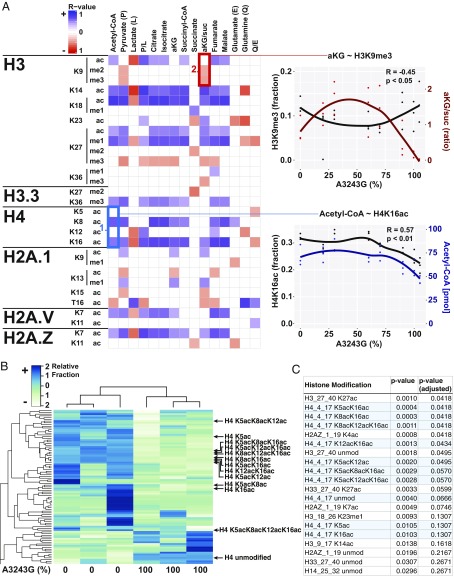
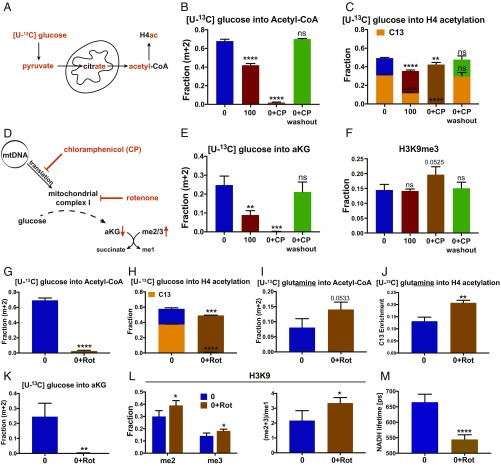
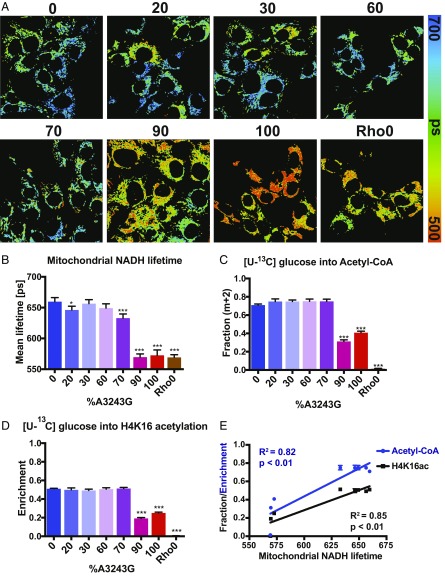
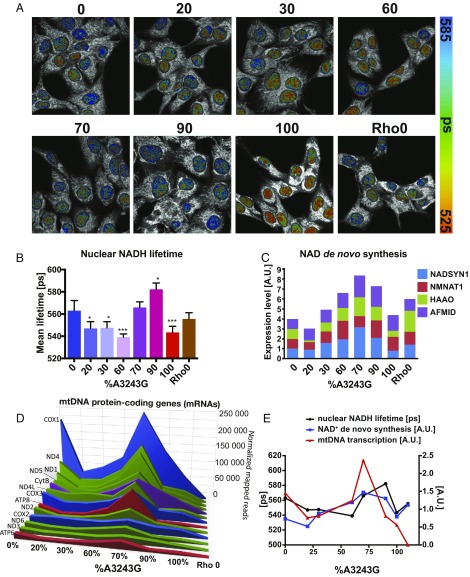
Diseases associated with mitochondrial DNA (mtDNA) mutations are highly variable in phenotype, in large part because of differences in the percentage of normal and mutant mtDNAs (heteroplasmy) present within the cell. For example, increasing heteroplasmy levels of the mtDNA tRNA Leu(UUR) nucleotide (nt) 3243A > G mutation result successively in diabetes, neuromuscular degenerative disease, and perinatal lethality. These phenotypes are associated with differences in mitochondrial function and nuclear DNA (nDNA) gene expression, which are recapitulated in cybrid cell lines with different percentages of m.3243G mutant mtDNAs. Using metabolic tracing, histone mass spectrometry, and NADH fluorescence lifetime imaging microscopy in these cells, we now show that increasing levels of this single mtDNA mutation cause profound changes in the nuclear epigenome. At high heteroplasmy, mitochondrially derived acetyl-CoA levels decrease causing decreased histone H4 acetylation, with glutamine-derived acetyl-CoA compensating when glucose-derived acetyl-CoA is limiting. In contrast, α-ketoglutarate levels increase at midlevel heteroplasmy and are inversely correlated with histone H3 methylation. Inhibition of mitochondrial protein synthesis induces acetylation and methylation changes, and restoration of mitochondrial function reverses these effects. mtDNA heteroplasmy also affects mitochondrial NAD + /NADH ratio, which correlates with nuclear histone acetylation, whereas nuclear NAD + /NADH ratio correlates with changes in nDNA and mtDNA transcription. Thus, mutations in the mtDNA cause distinct metabolic and epigenomic changes at different heteroplasmy levels, potentially explaining transcriptional and phenotypic variability of mitochondrial disease.
Overview
The claims and statistics of this paper haven’t been checked yet.
Free: it reads the open-access text and checks the first 5 claims that cite a source we can check. Create a free account to check every claim.
Integrity signals
Registry
Cites
Statistics
Figures
Verification
Claims the paper makes
The claims and statistics of this paper haven’t been checked yet.
Free: it reads the open-access text and checks the first 5 claims that cite a source we can check. Create a free account to check every claim.
Claims other papers make about this one
Each is checked against this paper’s own text: does it say what the citing paper says it does?
The cited source says what the claim attributes to it.
In the citing paper
“Finally, inhibiting the electron transport chain (Fig. 3G) would alter the mitochondrial metabolites, which serve as the substrates for the epigenome modification enzymes (Kopinski et al., 2019).”
From Comprehensive Multi-omics Analysis Reveals Mitochondrial Stress as a Central Biological Hub for Spaceflight Impact (2020) · cites this paper as Kopinski et al., 2019
Self-check
Percentages, sums and reported differences re-computed from the paper’s own numbers.
The self-check needs the paper’s full text.
Citations
Cites
Wallace, D. C. (2012) · Nature Reviews Cancer · doi:10.1038/nrc3365 · Cited by 2,404 · cited 1×
“This could occur by the conversion of glutamine to glutamate and then αKG, with αKG being converted to acetyl-CoA by either entering the TCA cycle to generate citrate or by reductive carboxylation (15).”
BackgroundSelf-citationATP-citrate lyase links cellular metabolism to histone acetylation
Wellen, K. E., Hatzivassiliou, G., Sachdeva, U. M., Bui, T. V., Cross, J. R., & Thompson, C. B. (2009) · Science · doi:10.1126/science.1164097 · Cited by 2,298 · cited 1×
“We incubated 0% and 100% mutant cells with uniformly (13)C -labeled glucose and traced the label through pyruvate, mitochondrial generation and exportation to the cytosol of citrate, conversion of cytosolic citrate into acetyl-CoA and oxaloacetate by ATPcitrate lyase (13), and use of the mitochondrially derived acetyl…”
MethodSelf-citationImpaired Mitochondrial Activity in the Insulin-Resistant Offspring of Patients with Type 2 Diabetes
Petersen, K. F., Dufour, S., Befroy, D., Garcia, R., & Shulman, G. I. (2004) · New England Journal of Medicine · doi:10.1056/nejmoa031314 · Cited by 2,193 · cited 1×
“This correlates with the chronic mitochondrial energy deficiency observed in type 2 diabetes (17, 18) and autism (19).”
BackgroundHistone demethylation by a family of JmjC domain-containing proteins
Tsukada, Y.-I., Fang, J., Erdjument-Bromage, H., Warren, M. E., Borchers, C. H., Tempst, P., & Zhang, Y. (2006) · Nature · doi:10.1038/nature04433 · Cited by 2,163 · cited 1×
“Because αKG is the required substrate for the JmjC histone demethylases (14), histone demethylation should be impaired by a protein synthesis defect resulting in increased histone methylation (Fig.”
BackgroundMitochondrial dysfunction in the elderly: possible role in insulin resistance
Petersen, K. F., Befroy, D., Dufour, S., Dziura, J., Ariyan, C., Rothman, D. L., DiPietro, L., Cline, G. W., & Shulman, G. I. (2003) · Science · doi:10.1126/science.1082889 · Cited by 2,107
NAD + in aging, metabolism, and neurodegeneration
Verdin, E. (2015) · Science · doi:10.1126/science.aac4854 · Cited by 1,319
Intracellular α-ketoglutarate maintains the pluripotency of embryonic stem cells
Carey, B. W., Finley, L. W. S., Cross, J. R., Allis, C. D., & Thompson, C. B. (2015) · Nature · doi:10.1038/nature13981 · Cited by 1,007 · cited 1×
“The inverse αKG-histone methylation association is expected, as Jumonji C (JmjC) histone demethylases known to be active on H3K9 require αKG to demethylate histones and are inhibited by succinate (11).”
BackgroundPrevalence of nuclear and mitochondrial DNA mutations related to adult mitochondrial disease
Gorman, G. S., Schaefer, A. M., Ng, Y., Gomez, N., Blakely, E. L., Alston, C. L., Feeney, C., Horvath, R., Yu‐Wai‐Man, P., Chinnery, P. F., et al. (2015) · Annals of Neurology · doi:10.1002/ana.24362 · Cited by 936 · cited 1×
“The overall prevalence of mtDNA mutations is about 1 in 5,000 (2, 3).”
BackgroundTrounce, I. A., Kim, Y. L., Jun, A. S., & Wallace, D. C. (1996) · Methods in Enzymology · doi:10.1016/s0076-6879(96)64044-0 · Cited by 746 · cited 2×
“Transmitochondrial cybrid cell lines were maintained in DMEM (4.5 g/L [25 mM] glucose + 110 mg/L sodium pyruvate [Gibco #10569]) supplemented with 50 μg/mL uridine, nonessential amino acids (1:100, Gibco #11140), and 10% FBS, grown at 37 °C in 5% CO2 (21).”
Self-citationMitochondrial Energetics and Therapeutics
Wallace, D. C., Fan, W., & Procaccio, V. (2010) · Annual Review of Pathology: Mechanisms of Disease · doi:10.1146/annurev.pathol.4.110807.092314 · Cited by 730
Self-citation
Cited by
Mitochondrial signal transduction
Picard, M., & Shirihai, O. S. (2022) · Cell Metabolism · doi:10.1016/j.cmet.2022.10.008 · Cited by 638
The evolving metabolic landscape of chromatin biology and epigenetics
Dai, Z., Ramesh, V., & Locasale, J. W. (2020) · Nature Reviews Genetics · doi:10.1038/s41576-020-0270-8 · Cited by 494
da Silveira, W. A., Fazelinia, H., Rosenthal, S. B., Laiakis, E. C., Kim, M. S., Meydan, C., Kidane, Y., Rathi, K. S., Smith, S. M., Stear, B., et al. (2020) · Cell · doi:10.1016/j.cell.2020.11.002 · Cited by 402
“3G) would alter the mitochondrial metabolites, which serve as the substrates for the epigenome modification enzymes (Kopinski et al., 2019).”
Self-citationMitochondrial DNA variation and cancer
Kopinski, P. K., Singh, L. N., Zhang, S., Lott, M. T., & Wallace, D. C. (2021) · Nature reviews. Cancer · doi:10.1038/s41568-021-00358-w · Cited by 301
Self-citationMitochondrial function in development and disease
Rossmann, M. P., Dubois, S. M., Agarwal, S., & Zon, L. I. (2021) · Disease Models & Mechanisms · doi:10.1242/dmm.048912 · Cited by 184
“Finally, 90-100% mutant mtDNA decreased acetyl-CoA and histone acetylation levels, resulting in global transcriptional repression (Kopinski et al., 2019).”
BackgroundHost mitochondria influence gut microbiome diversity: A role for ROS
Yardeni, T., Tanes, C. E., Bittinger, K., Mattei, L. M., Schaefer, P. M., Singh, L. N., Wu, G. D., Murdock, D. G., & Wallace, D. C. (2019) · Science Signaling · doi:10.1126/scisignal.aaw3159 · Cited by 170
Self-citationInter and Intracellular mitochondrial trafficking in health and disease
Shanmughapriya, S., Langford, D., & Natarajaseenivasan, K. (2020) · Ageing Research Reviews · doi:10.1016/j.arr.2020.101128 · Cited by 171
“Additionally, the mitochondrial genome encodes 22 transfer RNAs (tRNAs) and 2 mitochondrial ribosomal RNA (rRNA), which are essential components for the mitochondrial translational apparatus (Kopinski et al., 2019; Wallace, 2018).”
BackgroundMitochondrial-to-nuclear communication in aging: an epigenetic perspective
Zhu, D., Li, X., & Tian, Y. (2022) · Trends in Biochemical Sciences · doi:10.1016/j.tibs.2022.03.008 · Cited by 165
Mitochondrial metabolism and DNA methylation: a review of the interaction between two genomes
Lopes, A. F. C. (2020) · Clinical Epigenetics · doi:10.1186/s13148-020-00976-5 · Cited by 142
Frye, R. E., Rincon, N., McCarty, P. J., Brister, D., Scheck, A. C., & Rossignol, D. A. (2024) · Neurobiology of Disease · doi:10.1016/j.nbd.2024.106520 · Cited by 153
Adhikari, D., Lee, I., Yuen, W. S., & Carroll, J. (2022) · Biology of Reproduction · doi:10.1093/biolre/ioac024 · Cited by 127
“mtDNA heteroplasmy in cultured cybrid cell lines leads to distinct transcriptional profiles, altered mitochondrial metabolites, redox state and changes in histone modifications [98].”
BackgroundTwo genomes, one cell: Mitochondrial-nuclear coordination via epigenetic pathways
Wiese, M., & Bannister, A. J. (2020) · Molecular Metabolism · doi:10.1016/j.molmet.2020.01.006 · Cited by 112
“More specifically, changes in mtDNA heteroplasmy induce changes in mitochondrial metabolites and redox state, which results in specific alterations of histone modifications and transcriptional changes in both nDNA and mtDNA [7].”
BackgroundInfluentialStructure, mechanism, and regulation of mitochondrial DNA transcription initiation
Basu, U., Bostwick, A. M., Das, K., Dittenhafer‐Reed, K. E., & Patel, S. S. (2020) · Journal of Biological Chemistry · doi:10.1074/jbc.rev120.011202 · Cited by 136
Zhu, D., Wu, X., Zhou, J., Li, X., Huang, X., Li, J., Wu, J., Bian, Q., Wang, Y., & Tian, Y. (2020) · Science Advances · doi:10.1126/sciadv.abb2529 · Cited by 112
The mitochondrial derived peptide humanin is a regulator of lifespan and healthspan
Yen, K., Mehta, H. H., Kim, S.-J., Lue, Y., Hoang, J., Guerrero, N., Port, J., Bi, Q., Navarrete, G., Brandhorst, S., et al. (2020) · Aging · doi:10.18632/aging.103534 · Cited by 106
Self-citationMitochondrial DNA damage as driver of cellular outcomes
Nadalutti, C. A., Ayala‐Peña, S., & Santos, J. H. (2021) · American Journal of Physiology-Cell Physiology · doi:10.1152/ajpcell.00389.2021 · Cited by 99
Mitochondrial Metabolism in Carcinogenesis and Cancer Therapy
Moindjie, H., Rodrigues, S., & Nahmias, C. (2021) · Cancers · doi:10.3390/cancers13133311 · Cited by 95
“Given that there are hundreds of copies of mtDNA in each cell, mutations can affect all mtDNA molecules (homoplasmy) or a variable proportion of mtDNA molecules (heteroplasmy) which leads to different disease phenotypes [26].”
BackgroundHigh-frequency and functional mitochondrial DNA mutations at the single-cell level
Guo, X., Xu, W., Zhang, W., Pan, C., Thalacker‐Mercer, A. E., Zheng, H., & Gu, Z. (2022) · Proceedings of the National Academy of Sciences · doi:10.1073/pnas.2201518120 · Cited by 105
“Biologically, it was recently reported that transcriptional reprogramming starts to occur for some mutations with VAFs as low as 20%, and a defect in OXPHOS is usually detectable after the corresponding mutations reach high-frequency levels in cells (53–56).”
Mitochondria signaling to the epigenome: A novel role for an old organelle
Santos, J. H. (2020) · Free Radical Biology and Medicine · doi:10.1016/j.freeradbiomed.2020.11.016 · Cited by 87
“The authors focused on changes in H4K acetylation and demonstrated that only when heteroplasmy levels were above 70% the abundance of acetylated lysines on H4 decreased [78].”
BackgroundAging: All roads lead to mitochondria
Son, J. M., & Lee, C. D. (2021) · Seminars in Cell and Developmental Biology · doi:10.1016/j.semcdb.2021.02.006 · Cited by 92
Mitochondrial membrane potential acts as a retrograde signal to regulate cell cycle progression
Gorospe, C. M., Carvalho, G., Curbelo, A. H., Marchhart, L., Mendes, I. C., Niedźwiecka, K., & Wanrooij, P. H. (2023) · Life Science Alliance · doi:10.26508/lsa.202302091 · Cited by 68
“increased levels of ROS that can damage cellular constituents, changes in nuclear epigenetic marks or gene expression patterns, and even instability of the nuclear genome (Leadsham et al., 2013; Nunnari and Suomalainen, 2012; Kopinski et al., 2019; Veatch et al., 2009).”
BackgroundThe molecular pathology of pathogenic mitochondrial tRNA variants
Richter, U., McFarland, R., Taylor, R. W., & Pickett, S. J. (2021) · FEBS Letters · doi:10.1002/1873-3468.14049 · Cited by 64
Liao, J., He, W., Li, L., Wang, J., Gong, L., Zhang, Q., & Lin, Z. (2025) · Cell Biomaterials · doi:10.1016/j.celbio.2025.100016 · Cited by 77
Decoding the Rosetta stone of mitonuclear communication
English, J., Son, J. M., Cardamone, M. D., Lee, C., & Perissi, V. (2020) · Pharmacological Research · doi:10.1016/j.phrs.2020.105161 · Cited by 55
Mitochondrial DNA-targeted therapy: A novel approach to combat cancer
Lin, Y., Yang, B., Huang, Y., Zhang, Y., Yu, J., Ma, L., & Shen, Y. (2023) · Cell Insight · doi:10.1016/j.cellin.2023.100113 · Cited by 59
“(Kopinski et al., 2019) further delved into a more comprehensive examination of the impact of heteroplasmy level on the nDNA.”
BackgroundMitochondrial Heteroplasmy Shifting as a Potential Biomarker of Cancer Progression
Pérez-Amado, C. J., Bazan-Cordoba, A., Hidalgo‐Miranda, A., & Jiménez‐Morales, S. (2021) · International Journal of Molecular Sciences · doi:10.3390/ijms22147369 · Cited by 58
“For example, individuals carrying the A3243G mutation in heteroplasmy levels of 20%–30% commonly have type II diabetes mellitus; ranges from 50% to 80% of the mutated allele are manifested in myopathies, lactic acidosis or cardiomyopathies; in a homoplasmic state, A3243G carriers develop Leigh syndrome [78,79].”
BackgroundInfluentialSARS-CoV-2 mitochondrial metabolic and epigenomic reprogramming in COVID-19
Guarnieri, J. W., Haltom, J., Albrecht, Y. E. S., Lie, T., Olali, A. Z., Widjaja, G. A., Ranshing, S., Angelin, A., Murdock, D. G., & Wallace, D. C. (2024) · Pharmacological Research · doi:10.1016/j.phrs.2024.107170 · Cited by 59
Self-citationMitochondrial dysfunction and pancreatic islet β‑cell failure (Review)
Sha, W., Hu, F., & Bu, S. (2020) · Experimental and Therapeutic Medicine · doi:10.3892/etm.2020.9396 · Cited by 58
“In particular, DM, neuromuscular degenerative disease and perinatal lethality have all been previously associated with increased heteroplasmy levels of the mtDNA tRNALeu nucleotide muta‐ tion (15,16,35,36).”
BackgroundAging-associated accumulation of mitochondrial DNA mutations in tumor origin
Kong, M., Guo, L., Xu, W., He, C., Jia, X., Zhao, Z., & Gu, Z. (2022) · Life Medicine · doi:10.1093/lifemedi/lnac014 · Cited by 54
Standpoints in mitochondrial dysfunction: Underlying mechanisms in search of therapeutic strategies
Videla, L. A., Mariman, A. P., Ramos, B., Silva, M. J., & del Campo, A. (2022) · Mitochondrion · doi:10.1016/j.mito.2021.12.006 · Cited by 57
Mitonuclear genomics and aging
Reynolds, J. C., Bwiza, C. P., & Lee, C. D. (2020) · Human Genetics · doi:10.1007/s00439-020-02119-5 · Cited by 57
Resolving complexity in mitochondrial disease: Towards precision medicine
Boggan, R. M., Lim, A. Z., Taylor, R. W., McFarland, R., & Pickett, S. J. (2019) · Molecular Genetics and Metabolism · doi:10.1016/j.ymgme.2019.09.003 · Cited by 50
“scriptional reprogramming, the mechanism of which is likely related to epigenetic changes in nuclear DNA [49,50].”
BackgroundMitochondrial DNA Dynamics in Reprogramming to Pluripotency
Sercel, A. J., Carlson, N. M., Patananan, A. N., & Teitell, M. A. (2021) · Trends in Cell Biology · doi:10.1016/j.tcb.2020.12.009 · Cited by 46
“…muscle dysfunction may occur because speci fi c mtDNA mutations and/or an elevated mutant burden impairs mitochondrial gene expression and/or ETC function, secondarily affecting energy production, the tricarboxylic acid (TCA) cycle, and a range of other essential mitochondrial activities [24,25].”
BackgroundAn mtDNA mutant mouse demonstrates that mitochondrial deficiency can result in autism endophenotypes
Yardeni, T., Cristancho, A. G., McCoy, A. J., Schaefer, P. M., McManus, M. J., Marsh, E. D., & Wallace, D. C. (2021) · Proceedings of the National Academy of Sciences · doi:10.1073/pnas.2021429118 · Cited by 50
“These metabolites modulate histone modifications, which are associated with ∼ 150 discrete histone modifications (25).”
InfluentialSelf-citationTripathi, K. K., & Ben‐Shachar, D. (2024) · Cells · doi:10.3390/cells13050410 · Cited by 55
“According to recent findings, epigenetic histone methylation is also regulated by mtDNA heteroplasmy, [48,49].”
BackgroundMultisystem mitochondrial diseases due to mutations in mtDNA-encoded subunits of complex I
Daňhelovská, T., Kolářová, H., Zeman, J., Hansíková, H., Vaněčková, M., Lambert, L., Vidrová, V. K., Beránková, K., Honzík, T., & Tesarova, M. (2020) · BMC Pediatrics · doi:10.1186/s12887-020-1912-x · Cited by 48
Adhikari, D., Lee, I., Al-Zubaidi, U., Liu, J., Zhang, Q.-H., Yuen, W. S., He, L., Winstanley, Y. E., Sesaki, H., Mann, J. R., et al. (2022) · Science Advances · doi:10.1126/sciadv.abl8070 · Cited by 48
The contribution of mitochondrial DNA alterations to aging, cancer, and neurodegeneration
Picca, A., Guerra, F., Calvani, R., Coelho‐Júnior, H. J., Leeuwenburgh, C., Bucci, C., & Marzetti, E. (2023) · Experimental Gerontology · doi:10.1016/j.exger.2023.112203 · Cited by 46
“…of the tricarboxylic acid cycle have been indicated to induce cancers by modifying the epigenome (Dang et al., 2009; Letouz ´ e et al., 2013; Lu et al., 2012), while mutations in the mtDNA can result in epigenome modifications in osteosarcoma cells (Kopinski et al., 2019; Picard et al., 2014).”
Syndromic retinitis pigmentosa.
Karuntu, J. S., Almushattat, H., Nguyen, X.-T.-A., Plomp, A. S., Wanders, R. J. A., Hoyng, C. B., van Schooneveld, M. J., Schalij-Delfos, N. E., Brands, M. M., Leroy, B. P., et al. (2025) · Progress in Retinal and Eye Research · doi:10.1016/j.preteyeres.2024.101324 · Cited by 39
Accelerated expansion of pathogenic mitochondrial DNA heteroplasmies in Huntington's disease
Wang, Y., Guo, X., Ye, K., Orth, M., & Gu, Z. (2021) · Proceedings of the National Academy of Sciences · doi:10.1073/pnas.2014610118 · Cited by 36
“3243A>G, cells exhibit molecular phenotypes resembling those found in neurodegenerative diseases, including HD (50, 51).”
Rewiring cell signalling pathways in pathogenic mtDNA mutations
Chung, C.-Y., Valdebenito, G. E., Chacko, A. R., & Duchen, M. R. (2021) · Trends in Cell Biology · doi:10.1016/j.tcb.2021.10.005 · Cited by 39
“3243A>G mtDNA mutation, a mutant load of 20–30% measured in cord blood is associated with mild clinical manifestations such as diabetes [31].”
BackgroundInfluentialMitochondrial DNA homeostasis impairment and dopaminergic dysfunction: A trembling balance
Manini, A., Abati, E., Comi, G. P., Corti, S. P., & Ronchi, D. (2022) · Ageing Research Reviews · doi:10.1016/j.arr.2022.101578 · Cited by 40
An evolutionary, or “Mitocentric” perspective on cellular function and disease
Brown, J. A., Sammy, M. J., & Ballinger, S. W. (2020) · Redox Biology · doi:10.1016/j.redox.2020.101568 · Cited by 34
“Another recent report by Kopinski and coworkers revealed that changes in mitochondrial bioenergetics, mediated by a pathogenic mtDNA mutations impacted epigenetic signaling and thus gene expression [245].”
BackgroundBennett, J. P., & Onyango, I. G. (2021) · Biomedicines · doi:10.3390/biomedicines9020225 · Cited by 40
Colnaghi, M., Pomiankowski, A., & Lane, N. J. (2021) · eLife · doi:10.7554/elife.69344 · Cited by 29
“Based on the observed dependence of mitochondrial 205 diseases on mutation load [60-62], in which more serious phenotypes typically manifest 206”
BackgroundInfluential14-3-3ζ Constrains insulin secretion by regulating mitochondrial function in pancreatic β cells
Mugabo, Y., Zhao, C., Tan, J. J., Ghosh, A., Campbell, S. A., Fadzeyeva, E., Paré, F., Pan, S. S., Galipeau, M., Ast, J., et al. (2022) · JCI Insight · doi:10.1172/jci.insight.156378 · Cited by 30
Self-citationEvolution, systematics, and the unnatural history of mitochondrial DNA
Schwartz, J. H. (2021) · Mitochondrial DNA Part A · doi:10.1080/24701394.2021.1899165 · Cited by 32
Intermediary metabolism: An intricate network at the crossroads of cell fate and function
Ferreira, L. M. R., Li, A. M., Serafim, T. L., Sobral, M. C. M., Alpoim, M. C., & Urbano, A. M. (2020) · Biochimica et Biophysica Acta (BBA) - Molecular Basis of Disease · doi:10.1016/j.bbadis.2020.165887 · Cited by 30
“Given the central role of NAD as an electron acceptor for oxidative reactions (Section 3) [74], it is tempting to speculate that mitochondrial function and cellular energy status may be communicated through fluctuations in NAD+ levels to mediate nuclear sirtuin deacetylation activities [81].”
BackgroundMitochondrial genetics regulate nuclear gene expression through metabolites
Fetterman, J. L., & Ballinger, S. W. (2019) · Proceedings of the National Academy of Sciences · doi:10.1073/pnas.1909996116 · Cited by 28
Wang, Y., Yang, J.-S., Zhao, M., Chen, J., Xie, H.-X., Yu, H., Liu, N.-H., Yi, Z.-J., Liang, H., Xing, L., et al. (2024) · Advanced Drug Delivery Reviews · doi:10.1016/j.addr.2024.115355 · Cited by 27
Self-citationNew Insights into Mitochondrial–Nuclear Interactions Revealed through Analysis of Small RNAs
Pozzi, A., & Dowling, D. K. (2022) · Genome Biology and Evolution · doi:10.1093/gbe/evac023 · Cited by 27
Increased mtDNA mutation frequency in oocytes causes epigenetic alterations and embryonic defects
Han, L., Chen, Y., Li, L., Ren, C., Wang, H., Wu, X., Ge, J., Shu, W., Chen, M., & Wang, Q. (2022) · National Science Review · doi:10.1093/nsr/nwac136 · Cited by 29
“Mutations in themtDNAhave been found to induce distinctmetabolic changes at different heteroplasmy levels, causing transcriptional variability [49].”
BackgroundThe Role of Nuclear-Encoded Mitochondrial tRNA Charging Enzymes in Human Inherited Disease
Greco, C. D., & Antonellis, A. (2022) · Genes · doi:10.3390/genes13122319 · Cited by 26
“Additionally, mitochondria have secondary functio s, including (i) the generation of reactive oxyg n species, (ii) the regulation of metabolites, (iii) iron metabolism and heme synth is, (iv) the biosynthe is of pyrimidines and lipids, and (v) the regulation of the nuclear epig nome [10,11].”
BackgroundGenomic Balance: Two Genomes Establishing Synchrony to Modulate Cellular Fate and Function
John, J. C. S. (2019) · Cells · doi:10.3390/cells8111306 · Cited by 24
“Other studies using tumour cells, which have replaced their mitochondrial genomes with those harbouring mtDNA mutations that are associated with mtDNA disease, have shown that the genetic rearrangement induces changes to the epigenetic status of the cell by modulating histone modulators [64].”
Backgroundvan Tilburg, M. A. L., Parisien, M., Boles, R. G., Drury, G. L., Smith-Voudouris, J., Verma, V., Khoury, S., Chabot‐Doré, A., Nackley, A. G., Smith, S. B., et al. (2020) · Pain · doi:10.1097/j.pain.0000000000001996 · Cited by 25
Schaefer, P. M., Alves, L. S., Lvova, M., Huang, J. Y., Rathi, K. S., Janssen, K. A., Butic, A., Yardeni, T., Morrow, R. M., Lott, M. T., et al. (2022) · Proceedings of the National Academy of Sciences · doi:10.1073/pnas.2212417119 · Cited by 29
Self-citationMullin, N. K., Voigt, A. P., Flamme‐Wiese, M. J., Liu, X., Riker, M. J., Varzavand, K., Stone, E. M., Tucker, B. A., & Mullins, R. F. (2023) · JCI Insight · doi:10.1172/jci.insight.165937 · Cited by 29
Mitochondrial genomic integrity and the nuclear epigenome in health and disease
Morin, A. L., Win, P. W., Lin, A. Z., & Castellani, C. A. (2022) · Frontiers in Endocrinology · doi:10.3389/fendo.2022.1059085 · Cited by 21
“3243A>G reduces aKG and acetyl CoA pools (61).”
BackgroundMüller-Nedebock, A. C., van der Westhuizen, F. H., Kõks, S., & Bardien, S. (2021) · Movement Disorders · doi:10.1002/mds.28475 · Cited by 23
“Moreover, at different heteroplasmy levels, mtDNA mutations were recently shown to regulate the nuclear epigenome by causing changes in mitochondrial intermediates that result in histone modifications.(147) Studies also suggest that more than one DNA polymerase may operate in mitochondria.”
BackgroundQuality control of mitochondrial nucleoids
Liu, H., Zhuang, H., & Feng, D. (2025) · Trends in Cell Biology · doi:10.1016/j.tcb.2025.02.005 · Cited by 24
Mitochondrial protein synthesis and the bioenergetic cost of neurodevelopment
Bülow, P., Patgiri, A., & Faúndez, V. (2022) · iScience · doi:10.1016/j.isci.2022.104920 · Cited by 19
Metabolomics and mitochondrial dysfunction in cardiometabolic disease
Shastry, A., & Dunham‐Snary, K. J. (2023) · Life Sciences · doi:10.1016/j.lfs.2023.122137 · Cited by 24
Camus, M. F., Rodríguez, E., Kotiadis, V. N., Carter, H. F., & Lane, N. J. (2023) · Experimental Gerontology · doi:10.1016/j.exger.2023.112158 · Cited by 22
“Changes in steady-state concentration of Krebs cycle intermediates can have potent epigenetic effects, as can shifts in NAD/NADH ratio, ATP/ADP ratio and acetyl CoA availability (D ’ Aquila et al., 2015; Kopinski et al., 2019; Wallace and Fan, 2010).”
Vaught, R. C., Voigt, S., Dobler, R., Clancy, D. J., Reinhardt, K., & Dowling, D. K. (2020) · Journal of Evolutionary Biology · doi:10.1111/jeb.13605 · Cited by 21
“mechanisms (Grunau et al., 2018; Kopinski et al., 2019).”
Medini, H., Cohen, T., & Mishmar, D. (2020) · Annual Review of Genetics · doi:10.1146/annurev-genet-021920-105545 · Cited by 20
Targeting mitochondria: a novel approach for treating platinum-resistant ovarian cancer
Cui, X. Y., Xu, J., & Jia, X. (2024) · Journal of Translational Medicine · doi:10.1186/s12967-024-05770-y · Cited by 24
“%) led to elevated α-ketoglutarate levels, which were inversely correlated with histone H3 methylation [34].”
BackgroundRho/SRF Inhibitor Modulates Mitochondrial Functions
Patyal, P., Nguyen, B., Zhang, X., Azhar, G., Ameer, F. S., Verma, A., Crane, J., Grishma, K. C., Che, Y., & Wei, J. Y. (2022) · International Journal of Molecular Sciences · doi:10.3390/ijms231911536 · Cited by 19
The Mitochondrial m.3243A>G Mutation on the Dish, Lessons from In Vitro Models
Ryytty, S., & Hämäläinen, R. H. (2023) · International Journal of Molecular Sciences · doi:10.3390/ijms241713478 · Cited by 23
“3243A>G mutation load on the nuclear epigenome through metabolic tracing in 143B cybrids and found that different mutation levels cause distinct metabolic and epigenomic changes [32].”
BackgroundInfluentialChanoine, J., Thompson, D. M., & Lehman, A. (2024) · Diabetes · doi:10.2337/db24-0515 · Cited by 28
Brieba, L. G. (2019) · Plants · doi:10.3390/plants8120533 · Cited by 22
Brunst, K. J., Zhang, L., Zhang, X., Baccarelli, A., Bloomquist, T. R., & Wright, R. J. (2020) · Biological Psychiatry · doi:10.1016/j.biopsych.2020.09.013 · Cited by 18
“identified as a marker of oxidative damage (25) and linked to numerous human diseases ranging in severity, prevalence, and complexity (26) and serves as a marker of inefficient cellular respiration (27).”
Mitochondrial DNA Depletion Syndrome and Its Associated Cardiac Disease
Wang, H., Han, Y., Li, S., Chen, Y., Chen, Y., Wang, J., Zhang, Y., Zhang, Y., Wang, J., Xia, Y., et al. (2022) · Frontiers in Cardiovascular Medicine · doi:10.3389/fcvm.2021.808115 · Cited by 22
“Given that mtDNA encodes subunits of the respiratory chain complex, mutations in mtDNA can damage the enzymatic activity of oxidative phosphorylation reaction complex, in particular CI, affecting mitochondrial biogenesis (43).”
BackgroundMitochondrial Genetics and Function as Determinants of Bone Phenotype and Aging
Catheline, S. E., Kaiser, E., & Eliseev, R. A. (2023) · Current Osteoporosis Reports · doi:10.1007/s11914-023-00816-4 · Cited by 15
Mitochondria – the CEO of the cell
Lee-Glover, L. P., Picard, M. A., & Shutt, T. E. (2025) · Journal of Cell Science · doi:10.1242/jcs.263403 · Cited by 17
Liu, Y., Guo, S., Yin, C., Guo, X., Liu, M., Yuan, Z., Zhao, Z., Jia, Y., & Xing, J. (2020) · Journal of Molecular Diagnostics · doi:10.1016/j.jmoldx.2020.01.006 · Cited by 16
Siena, A., Yuzawa, J. M. C., Ramos, A. C., Henrique, E., Brito, M. D., Calvazara, M. B., & Rosenstock, T. R. (2021) · Molecular Neurobiology · doi:10.1007/s12035-021-02317-w · Cited by 17
Brunst, K. J., Hsu, H. L., Zhang, L., Zhang, X., Carroll, K. N., Just, A. C., Coull, B. A., Kloog, I., Wright, R. O., Baccarelli, A., et al. (2021) · Mitochondrion · doi:10.1016/j.mito.2021.11.003 · Cited by 16
Clinical Bioinformatics in Precise Diagnosis of Mitochondrial Disease
Shen, L., McCormick, E. M., Muraresku, C. C., Falk, M. J., & Gai, X. (2020) · Clinics in Laboratory Medicine · doi:10.1016/j.cll.2020.02.002 · Cited by 16
“Cybrid studies proved that the changes in mtDNA heteroplasmy cause distinctive epigenomic histone modification changes [40] and transcriptional reprogramming [39] thus induce distinct clinical phenotypes.”
BackgroundAtilano, S. R., Udar, N., Satalich, T. A., Udar, V., Chwa, M., & Kenney, M. C. (2021) · PLoS ONE · doi:10.1371/journal.pone.0246114 · Cited by 15
“3243A>G heteroplasmy led to lower levels of acetyl-CoA and histone H4 acetylation, while mid-levels of heteroplasmy increased alpha-ketoglutarate levels and decreased histone H3 methylation [54].”
BackgroundMitochondrial leak metabolism induces the Spemann-Mangold Organizer via Hif-1α in Xenopus
Garfinkel, A. M., Mnatsakanyan, N., Patel, J. H., Wills, A. E., Shteyman, A., Smith, P. J., Alavian, K. N., Jonas, E. A., & Khokha, M. K. (2023) · Developmental Cell · doi:10.1016/j.devcel.2023.08.015 · Cited by 17
Kaur, P., Nazeer, N., Gurjar, V., Tiwari, R. R., & Mishra, P. K. (2024) · Drug Discovery Today · doi:10.1016/j.drudis.2024.104086 · Cited by 11
Single-cell mitochondrial DNA sequencing: Methodologies and applications
Zhou, G., Gu, Z., & Xu, J. (2024) · Mitochondrial Communications · doi:10.1016/j.mitoco.2024.10.001 · Cited by 12
Targeting adaptive cellular responses to mitochondrial bioenergetic deficiencies in human disease
Bennett, C. F., Ronayne, C. T., & Puigserver, P. (2021) · FEBS Journal · doi:10.1111/febs.16195 · Cited by 13
Extracellular Mitochondrial Components and Effects on Cardiovascular Disease
Xu, Y., Yu, Y., Yang, B., Hui, J., Zhang, C., Hua, F., Bian, X., Tao, M., Lu, Y., & Shang, Z. (2021) · DNA and Cell Biology · doi:10.1089/dna.2021.0087 · Cited by 14
“The 13 essential proteins of the mitochondrial electron transport chain complex (I, III, IV, and V) are encoded by mtDNA (Kopinski et al. , 2019).”
Mito-Mendelian interactions alter in vivo glucose metabolism and insulin sensitivity in healthy mice
Sammy, M. J., Connelly, A. W., Brown, J. A., Holleman, C. L., Habegger, K. M., & Ballinger, S. W. (2021) · American Journal of Physiology-Endocrinology and Metabolism · doi:10.1152/ajpendo.00069.2021 · Cited by 12
Mitochondrial DNA competition: starving out the mutant genome
Spinazzola, A., Pérez‐Rodríguez, D., Ježek, J., & Holt, I. J. (2024) · Trends in Pharmacological Sciences · doi:10.1016/j.tips.2024.01.011 · Cited by 12
“For example, in the case of m.3243A>G, an increase in the mutant load alters the succinate: α -ketoglutarate ratio, and this correlates with changes in the activity of histone-modifying enzymes that remodel the epigenetic landscape [81,82].”
BackgroundAging through the lens of mitochondrial DNA mutations and inheritance paradoxes
Chen, J., Li, H., Liang, R., Huang, Y., & Tang, Q. (2024) · Biogerontology · doi:10.1007/s10522-024-10175-x · Cited by 14
“Notably, mtDNA mutations can lead to reprogramming of epigenetic marks in both mitochondria and the nucleus, including alterations in DNA methylation and histone modifications (Kopinski et al. 2019).”
Mitochondrial DNA lineages determine tumor progression through T cell reactive oxygen signaling
Yardeni, T., Olali, A. Z., Chen, H.-W., Wang, L., Haltom, J. A., Zenab, A., Morrow, R. M., Butic, A., Murdock, D. G., Waymire, K. G., et al. (2025) · Proceedings of the National Academy of Sciences · doi:10.1073/pnas.2417252121 · Cited by 13
Self-citationMiller, D. M., Archer, S. L., & Dunham-Snary, K. J. (2025) · Frontiers in Aging · doi:10.3389/fragi.2025.1585508 · Cited by 11
Ludwig‐Słomczyńska, A. H., & Rehm, M. (2022) · Obesity · doi:10.1002/oby.23424 · Cited by 12
“In reverse, mitochondrial gene variation can alter nuclear gene expression via histone modifications (86).”
BackgroundComplex I deficiency in m.3243A>G fibroblasts is alleviated by reducing NADH accumulation
Liufu, T., Yu, H., Yu, J., Yu, M., Tian, Y., Ou, Y., Deng, J., Xing, G., & Wang, Z.-X. (2023) · Frontiers in Physiology · doi:10.3389/fphys.2023.1164287 · Cited by 12
“In FLIM, decreased NADH lifetime is correlated with increased free NADH (Kopinski et al., 2019).”
BackgroundSun, X., Su, L., Bu, T., & Zhang, Y. (2023) · Frontiers in Public Health · doi:10.3389/fpubh.2023.1287421 · Cited by 10
Zhong, H., Pan, R., Ouyang, Y., Xiao, T., Gu, W., Yang, H., Wang, H., Li, H., Peng, T., & Chen, P. (2026) · Molecular Cancer · doi:10.1186/s12943-026-02571-3 · Cited by 18
“…TCA cycle metabolites—such as α-ketoglutarate, acetyl-CoA, and succinate—that serve as cofactors or substrates for chromatin-modifying enzymes, dysfunctional mitochondria can induce global changes in histone and DNA methylation, thereby driving pro-tumorigenic gene expression programs [174, 175].”
Mitochondrial transplantation: Triumphs, challenges, and impacts on nuclear genome remodelling
Shin, E. H., Le, Q., Barboza, R., Morin, A., Singh, S. M., & Castellani, C. A. (2025) · Mitochondrion · doi:10.1016/j.mito.2025.102042 · Cited by 13
Shimokhina, N. Y., Савченко, А. А., & Петрова, М. М. (2020) · Pharmaceuticals · doi:10.3390/ph13080169 · Cited by 11
Moore, T. M., Zhou, Z., Strumwasser, A. R., Cohn, W., Lin, A. J., Cory, K., Whitney, K. A., Ho, T., Ho, T., Lee, J. L., et al. (2020) · Aging Cell · doi:10.1111/acel.13166 · Cited by 11
“In vitro and in vivo data indicate that when specific thresholds of heteroplasmy are achieved, unique phenotypes are observed (Kopinski et al., 2019; Picard et al., 2014; Williams et al., 2010).”
BackgroundA systematic review on the biochemical threshold of mitochondrial genetic variants
Smith, K. K., Moreira, J. D., Wilson, C. R., Padera, J. O., Lamason, A. N., Xue, L., Gopal, D. M., Flynn, D., & Fetterman, J. L. (2024) · Genome Research · doi:10.1101/gr.278200.123 · Cited by 28
“…a pathogenic variant should evaluate multiple different mitochondrial functions, including mitochondrial dynamics, metabolism through metabolomics and metabolic flux analysis, and effects on epigenetic and post-translational modifications, among others (Kopinski et al. 2019; Monzel et al. 2023).”
BackgroundMitochondria and Their Relationship with Common Genetic Abnormalities in Hematologic Malignancies
Czegle, I., Gray, A. L., Wang, M., Liu, Y., Wang, J., & Wappler-Guzzetta, E. A. (2021) · Life · doi:10.3390/life11121351 · Cited by 12
Kumar, S. H., Acharyya, S., Chouksey, A., Soni, N., Nazeer, N., & Mishra, P. K. (2024) · Reproductive Toxicology · doi:10.1016/j.reprotox.2024.108675 · Cited by 11
Moreira, J. D., Gopal, D. M., Kotton, D. N., & Fetterman, J. L. (2021) · Genes · doi:10.3390/genes12111668 · Cited by 14
“The reductive stress as a result of elevated NADH/NAD+ alters cellular homeostasis and affects downstream signaling pathways, influencing epigenetic regulatory mechanisms and resultant transcriptional states [42].”
Background
Metadata
- Authors
- Kopinski, P. K., Janssen, K. A., Schaefer, P. M., Trefely, S., Perry, C. E., Potluri, P., Tintos-Hernandez, J. A., Singh, L. N., Karch, K. R., Campbell, S. L., Doan, M. T., Jiang, H., Nissim, I., Nakamaru-Ogiso, E., Wellen, K. E., Snyder, N. W., Garcia, B. A., & Wallace, D. C.
- Affiliations
- Children's Hospital of Philadelphia (US)
- University of Pennsylvania (US)
- Drexel University (US)
- Center for Mitochondrial and Epigenomic Medicine, Children’s Hospital of Philadelphia, Philadelphia, PA 19104;
- Department of Biochemistry and Biophysics, Perelman School of Medicine, University of Pennsylvania, Philadelphia, PA 19104;
- Corresponding author
- Wallace, Douglas C.
- ORCID
- Venue
- Proceedings of the National Academy of Sciences
- Publisher
- National Academy of Sciences
- Published
- 2019-06-28
- Volume
- 116
- Issue
- 32
- Pages
- 16028-16035
- ISSN
- 0027-8424 (ISSN-L)
- 1091-6490
- PMC
- PMC6689928
- OpenAlex
- W2955398568
- Cited by
- 159
- References
- 31
- Citations by year
- 2026: 10 · 2025: 24 · 2024: 22 · 2023: 18 · 2022: 23 · 2021: 28 · 2020: 26 · 2019: 8
- FWCI
- 7.03
- Type
- journal article
- Language
- en
- Open access
- hybrid
- doi.org
- Licence
- Locations
- Proceedings of the National Academy of Sciences (publishedVersion, cc-by-nc-nd)
- Europe PMC (PubMed Central) (publishedVersion, cc-by-nc-nd)
- PubMed Central (publishedVersion, cc-by-nc-nd)
- PubMed (publishedVersion)
- Funders
- Howard Hughes Medical Institute (Predoctoral Grant)
- HHS | NIH | National Institute of Neurological Disorders and Stroke (NS021328)
- HHS | NIH | National Institute of Mental Health (MH108592)
- HHS | NIH | National Institute of General Medical Sciences (OD010944)
- DOD | United States Army | MEDCOM | Academy of Health Sciences (W81XWH-16-1-0401)
- Topics
- Life Sciences › Biochemistry, Genetics and Molecular Biology › Molecular Biology › Mitochondrial Function and Pathology
- Life Sciences › Biochemistry, Genetics and Molecular Biology › Molecular Biology › Epigenetics and DNA Methylation
- Life Sciences › Biochemistry, Genetics and Molecular Biology › Molecular Biology › Genomics and Chromatin Dynamics
- Keywords
- mitochondrial heteroplasmy, m.3243A>G mutation, mitochondrial disease, histone H4 acetylation, histone H3 methylation, acetyl-CoA metabolism, alpha-ketoglutarate, NAD+/NADH ratio, mitochondrial translation, cybrid cells, mtDNA transcription, metabolic tracing
- MeSH terms
- Epigenome, Acetyl Coenzyme A, Cell Line, Cell Nucleus, DNA, Mitochondrial, Histones, Humans, Mitochondria, NAD, Transcription, Genetic, Metabolome
About these checks
Registry, retraction, Cites and statistics results are computed, not judged, with one exception: a printed reference that no index lists is read once by a model before it counts as a citation error. Claims are extracted by a model and kept only when their quote appears verbatim in the text; each cited source is then checked, with a model’s help, for whether it says what the claim relies on. Those verdicts can be wrong — read the claim’s quote and the cited source before relying on one.
Statistics and arithmetic are recomputed, not judged.
Confidence bands are shown only for fields calibrated on our annotated test set. None is calibrated yet, so no band is shown.
What counts as a claim ›How we measure confidence ›How we check this ›
Are you an author, or do you see a problem with this page? Request a review
Data sources
Bibliographic data: Semantic Scholar, OpenAlex, Crossref.
Contains information from the Semantic Scholar Academic Graph Datasets, made available under the ODC Attribution License (ODC-BY 1.0).
Semantic Scholar’s data is described in: Kinney, R., et al. (2023). The Semantic Scholar Open Data Platform. arXiv:2301.10140.
