

The DOI matches its Crossref record; 6 of the 6 references it cites were found in a registry or an index.
The mitochondrial derived peptide humanin is a regulator of lifespan and healthspan
Overview
The claims and statistics of this paper haven’t been checked yet.
Run the check — free, no account needed. It reads the open-access text and checks the sources it cites.
Integrity signals
Registry
Cites
Statistics
Figures
Verification
Claims the paper makes
The claims and statistics of this paper haven’t been checked yet.
Run the check — free, no account needed. It reads the open-access text and checks the sources it cites.
Claims other papers make about this one
Each is checked against this paper’s own text: does it say what the citing paper says it does?
The source backs part of the claim, not all of it — or backs it for a different population, condition or comparison.
In the citing paper
“Transgenic expression of humanin in C. elegans extends longevity through autophagy induction, and treatment of middle-aged mice with the humanin analogue HNG improves metabolic healthspan and reduces systemic inflammation 176 .”
From Hallmarks of aging: An expanding universe (2023) · cites this paper as [176]
Experimental — accuracy not yet measuredThe cited source says what the claim attributes to it.
In the citing paper
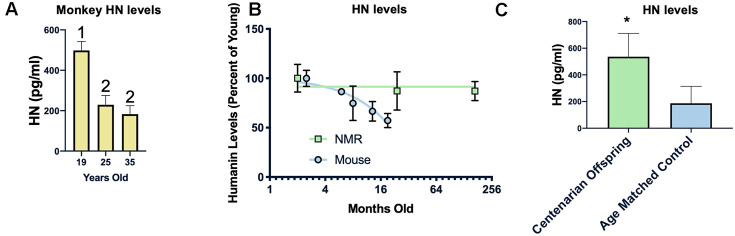
“However, centenarians and their offspring exhibit high levels of humanin 176 .”
From Hallmarks of aging: An expanding universe (2023) · cites this paper as [176]
Self-check
Percentages, sums and reported differences re-computed from the paper’s own numbers.
The self-check needs the paper’s full text.
Citations
Cites
Lee, C., Zeng, J., Drew, B. G., Sallam, T., Martin-Montalvo, A., Wan, J., Kim, S.-J., Mehta, H., Hevener, A. L., de Cabo, R., et al. (2015) · Cell Metabolism · doi:10.1016/j.cmet.2015.02.009 · Cited by 715
Self-citationMitochondrial Permeability Uncouples Elevated Autophagy and Lifespan Extension
Zhou, B., Kreuzer, J., Kumsta, C., Wu, L., Kamer, K. J., Cedillo, L., Zhang, Y., Li, S., Kacergis, M. C., Webster, C. M., et al. (2019) · Cell · doi:10.1016/j.cell.2019.02.013 · Cited by 220
Human Aging and Longevity Are Characterized by High Levels of Mitokines
Conte, M., Ostan, R., Fabbri, C., Santoro, A., Guidarelli, G., Vitale, G., Mari, D., Sevini, F., Capri, M., Sandri, M., et al. (2019) · The Journals of Gerontology: Series A · doi:10.1093/gerona/gly153 · Cited by 219
Regulation of nuclear epigenome by mitochondrial DNA heteroplasmy
Kopinski, P. K., Janssen, K. A., Schaefer, P. M., Trefely, S., Perry, C. E., Potluri, P., Tintos-Hernandez, J. A., Singh, L. N., Karch, K. R., Campbell, S. L., et al. (2019) · Proceedings of the National Academy of Sciences · doi:10.1073/pnas.1906896116 · Cited by 159
Self-citationThe mitochondrial‐derived peptide MOTS ‐c: a player in exceptional longevity?
Fuku, N., Pareja‐Galeano, H., Zempo, H., Alis, R., Arai, Y., Lucia, A., & Hirose, N. (2015) · Aging Cell · doi:10.1111/acel.12389 · Cited by 98 · cited 1×
“Another MDP, MOTS-c, has already been associated with longevity in centenarians [43], although association studies of”
Vitale, G., Brugts, M. P., Ogliari, G., Castaldi, D., Fatti, L. M., Varewijck, A. J., Lamberts, S. W., Monti, D., Bucci, L., Cevenini, E., et al. (2012) · Aging · doi:10.18632/aging.100484 · Cited by 90
Research works printed but not linked: 75
- Davies, 2000, Mitochondrial free radical generation, oxidative stress, and aging., Free Radic Biol Med, 2, 222, 10.1016/s0891-5849(00)00317-8 · DOI · Paper page
- Mobbs, Yen, Hoff. (2007). Mechanisms of Dietary Restriction in Aging and Disease. https://doi.org/10.1159/isbn.978-3-318-01390-0. · DOI
- Treberg, 2019, The exceptional longevity of the naked mole-rat may be explained by mitochondrial antioxidant defenses., Aging Cell, 1, e12916, 10.1111/acel.12916 · DOI
- Butterfield, 2004, Free radicals: key to brain aging and heme oxygenase as a cellular response to oxidative stress., J Gerontol A Biol Sci Med Sci, 5, 478, 10.1093/gerona/59.5.m478 · DOI
- Trifunovic, 2009, The mtDNA mutator mouse: dissecting mitochondrial involvement in aging., Aging (Albany NY), 1, 1028, 10.18632/aging.100109 · DOI
- Walker, 2010, Aging: dial M for mitochondria., Aging (Albany NY), 2, 69, 10.18632/aging.100118 · DOI
- Brunk, 2010, Mitochondrial turnover and aging of long-lived postmitotic cells: the mitochondrial-lysosomal axis theory of aging., Antioxid Redox Signal, 1, 503, 10.1089/ars.2009.2598 · DOI · Paper page
- Wallace, 1999, Mitochondrial diseases in man and mouse., Science, 28, 1482, 10.1126/science.283.5407.1482 · DOI · Paper page
- Kenyon, 2002, Rates of behavior and aging specified by mitochondrial function during development., Science, 29, 2398, 10.1126/science.1077780 · DOI · Paper page
- Hekimi, 2005, Evolutionary conservation of the clk-1-dependent mechanism of longevity: loss of mclk1 increases cellular fitness and lifespan in mice., Genes Dev, 1, 2424, 10.1101/gad.1352905 · DOI · Paper page
- Walker, 2010, Neuronal expression of a single-subunit yeast NADH-ubiquinone oxidoreductase (Ndi1) extends drosophila lifespan., Aging Cell, 9, 191, 10.1111/j.1474-9726.2010.00546.x · DOI
- Ristow, 2013, Mitochondria and metabolic homeostasis., Antioxid Redox Signal, 1, 240, 10.1089/ars.2013.5255 · DOI
- Artavanis-Tsakonas, 2006, Enigma, a mitochondrial protein affecting lifespan and oxidative stress response in drosophila., Proc Natl Acad Sci USA, 10, 1307, 10.1073/pnas.0510564103 · DOI
- Zarse, 2010, How increased oxidative stress promotes longevity and metabolic health: the concept of mitochondrial hormesis (mitohormesis)., Exp Gerontol, 4, 410, 10.1016/j.exger.2010.03.014 · DOI · Paper page
- Ristow, 2013, Mitochondrial hormesis links low-dose arsenite exposure to lifespan extension., Aging Cell, 1, 508, 10.1111/acel.12076 · DOI
- Mootha, 2016, MitoCarta2.0: an updated inventory of mammalian mitochondrial proteins., Nucleic Acids Res, 4, D1251, 10.1093/nar/gkv1003 · DOI · Paper page
- Robinson, 2012, MitoMiner: a data warehouse for mitochondrial proteomics data., Nucleic Acids Res, 4, D1160, 10.1093/nar/gkr1101 · DOI
- Cohen, 2016, Naturally occurring mitochondrial-derived peptides are age-dependent regulators of apoptosis, insulin sensitivity, and inflammatory markers., Aging (Albany NY), 8, 796, 10.18632/aging.100943 · DOI
- Couso, 2014, Extensive translation of small open reading frames revealed by poly-ribo-seq., Elife, 3, e03528, 10.7554/eLife.03528 · DOI
- Sergiev, 2018, Mining for small translated ORFs., J Proteome Res, 1, 1, 10.1021/acs.jproteome.7b00707 · DOI
- Saghatelian, 2016, Improved identification and analysis of small open reading frame encoded polypeptides., Anal Chem, 8, 3967, 10.1021/acs.analchem.6b00191 · DOI
- Saghatelian, 2018, MIEF1 microprotein regulates mitochondrial translation., Biochemistry, 5, 5564, 10.1021/acs.biochem.8b00726 · DOI
- Saghatelian, 2013, Peptidomic discovery of short open reading frame-encoded peptides in human cells., Nat Chem Biol, 9, 59, 10.1038/nchembio.1120 · DOI
- Akimitsu, 2018, Micropeptides encoded in transcripts previously identified as long noncoding RNAs: a new chapter in transcriptomics and proteomics., Front Genet, 9, 144, 10.3389/fgene.2018.00144 · DOI
- Cohen, 2019, Effects of air pollution on mitochondrial function, mitochondrial DNA methylation, and mitochondrial peptide expression., Mitochondrion, 4, 22, 10.1016/j.mito.2019.04.001 · DOI
- Cohen, 2019, MOTS-c: an equal opportunity insulin sensitizer., J Mol Med (Berl), 9, 487, 10.1007/s00109-019-01758-0 · DOI
- Yen, 2019, Metabolomic profile of diet-induced obesity mice in response to humanin and small humanin-like peptide 2 treatment., Metabolomics, 1, 88, 10.1007/s11306-019-1549-7 · DOI
- Langen, 2017, The mitochondrial-derived peptides, HumaninS14G and small humanin-like peptide 2, exhibit chaperone-like activity., Sci Rep, 7, 7802, 10.1038/s41598-017-08372-5 · DOI
- Muzumdar, 2018, Humanin is an endogenous activator of chaperone-mediated autophagy., J Cell Biol, 21, 635, 10.1083/jcb.201606095 · DOI
- Lefer, 2010, Acute humanin therapy attenuates myocardial ischemia and reperfusion injury in mice., Arterioscler Thromb Vasc Biol, 3, 1940, 10.1161/ATVBAHA.110.205997 · DOI
- Reed, 2003, Humanin peptide suppresses apoptosis by interfering with bax activation., Nature, 42, 456, 10.1038/nature01627 · DOI
- Tsuji, 2001, A rescue factor abolishing neuronal cell death by a wide spectrum of familial alzheimer’s disease genes and abeta., Proc Natl Acad Sci USA, 9, 6336, 10.1073/pnas.101133498 · DOI
- Cohen, 2003, Interaction between the alzheimer’s survival peptide humanin and insulin-like growth factor-binding protein 3 regulates cell survival and apoptosis., Proc Natl Acad Sci USA, 10, 13042, 10.1073/pnas.2135111100 · DOI
- Mousseau, 2014, Humanin attenuates alzheimer-like cognitive deficits and pathological changes induced by amyloid β-peptide in rats., Neurosci Bull, 3, 923, 10.1007/s12264-014-1479-3 · DOI
- Chua, 2006, Humanin is a novel neuroprotective agent against stroke., Stroke, 3, 2613, 10.1161/01.STR.0000242772.94277.1f · DOI
- Zhang, 2018, Humanin attenuates NMDA-induced excitotoxicity by inhibiting ROS-dependent JNK/p38 MAPK pathway., Int J Mol Sci, 1, 2982, 10.3390/ijms19102982 · DOI
- Cohen, 2014, IGF-I regulates the age-dependent signaling peptide humanin., Aging Cell, 1, 958, 10.1111/acel.12243 · DOI · Paper page
- Muzumdar, 2014, Humanin and age-related diseases: a new link?, Front Endocrinol (Lausanne), 5, 210, 10.3389/fendo.2014.00210 · DOI
- Harry, 2018, Humanin prevents age-related cognitive decline in mice and is associated with improved cognitive age in humans., Sci Rep, 8, 14212, 10.1038/s41598-018-32616-7 · DOI
- Cohen, 2013, The emerging role of the mitochondrial-derived peptide humanin in stress resistance., J Mol Endocrinol, 5, R11, 10.1530/JME-12-0203 · DOI
- Abou-Samra, 2019, Mitochondrial-derived peptides are down regulated in diabetes subjects., Front Endocrinol (Lausanne), 1, 331, 10.3389/fendo.2019.00331 · DOI
- Cohen, 2009, Humanin: a novel central regulator of peripheral insulin action., PLoS One, 4, e6334, 10.1371/journal.pone.0006334 · DOI
- Cohen, 2013, Pharmacokinetics and tissue distribution of humanin and its analogues in male rodents., Endocrinology, 15, 3739, 10.1210/en.2012-2004 · DOI
- Sävendahl, 2019, Humanin is a novel regulator of hedgehog signaling and prevents glucocorticoid-induced bone growth impairment., FASEB J, 3, 4962, 10.1096/fj.201801741R · DOI
- Wang, 2015, The potent humanin analogue (HNG) protects germ cells and leucocytes while enhancing chemotherapy-induced suppression of cancer metastases in male mice., Endocrinology, 15, 4511, 10.1210/en.2015-1542 · DOI
- Mirisola, 2015, A periodic diet that mimics fasting promotes multi-system regeneration, enhanced cognitive performance, and healthspan., Cell Metab, 2, 86, 10.1016/j.cmet.2015.05.012 · DOI · Paper page
- Siracusa, 2017, Understanding mitochondrial polymorphisms in cancer., Cancer Res, 7, 6051, 10.1158/0008-5472.CAN-17-1939 · DOI
- Kronenberg, 2019, Mitochondrial DNA copy number is associated with mortality and infections in a large cohort of patients with chronic kidney disease., Kidney Int, 9, 480, 10.1016/j.kint.2019.04.021 · DOI
- Li, 2018, Association between mitochondrial DNA copy number and cardiovascular disease: current evidence based on a systematic review and meta-analysis., PLoS One, 1, e0206003, 10.1371/journal.pone.0206003 · DOI
- Buffenstein, 2008, Negligible senescence in the longest living rodent, the naked mole-rat: insights from a successfully aging species., J Comp Physiol B, 17, 439, 10.1007/s00360-007-0237-5 · DOI · Paper page
- Buffenstein, 2005, The naked mole-rat: a new long-living model for human aging research., J Gerontol A Biol Sci Med Sci, 6, 1369, 10.1093/gerona/60.11.1369 · DOI
- Mele, 2008, The oxidative stress theory of aging: embattled or invincible? insights from non-traditional model organisms., Age (Dordr), 3, 99, 10.1007/s11357-008-9058-z · DOI
- Buffenstein, 2018, Naked Mole-Rat mortality rates defy gompertzian laws by not increasing with age., Elife, 7, e31157, 10.7554/eLife.31157 · DOI
- Barzilai, 2004, Clinical phenotype of families with longevity., J Am Geriatr Soc, 5, 274, 10.1111/j.1532-5415.2004.52068.x · DOI
- Monti, 2016, Centenarians’ offspring as a model of healthy aging: a reappraisal of the data on italian subjects and a comprehensive overview., Aging (Albany NY), 8, 510, 10.18632/aging.100912 · DOI
- Sell, 2014, Mice producing reduced levels of insulin-like growth factor type 1 display an increase in maximum, but not mean, life span., J Gerontol A Biol Sci Med Sci, 6, 410, 10.1093/gerona/glt108 · DOI
- Crandall, 2011, Exceptional longevity is associated with decreased reproduction., Aging (Albany NY), 3, 1202, 10.18632/aging.100415 · DOI · Paper page
- Barzilai, 2014, Low insulin-like growth factor-1 level predicts survival in humans with exceptional longevity., Aging Cell, 1, 769, 10.1111/acel.12213 · DOI
- Caswell-Chen, 2007, A demographic analysis of the fitness cost of extended longevity in caenorhabditis elegans., J Gerontol A Biol Sci Med Sci, 6, 126, 10.1093/gerona/62.2.126 · DOI
- Immler, 2017, Antagonistically pleiotropic allele increases lifespan and late-life reproduction at the cost of early-life reproduction and individual fitness., Proc Biol Sci, 28, 20170376, 10.1098/rspb.2017.0376 · DOI
- Maklakov, 2020, Dietary Restriction Improves Fitness of Aging Parents But Reduces Fitness of Their Offspring in Nematodes., J Gerontol A Biol Sci Med Sci, 7, 843, 10.1093/gerona/glz276 · DOI
- Sonntag, 2017, IGF-1 has sexually dimorphic, pleiotropic, and time-dependent effects on healthspan, pathology, and lifespan., Geroscience, 3, 129, 10.1007/s11357-017-9971-0 · DOI
- Buffenstein, 2012, Getting to the heart of the matter: age-related changes in diastolic heart function in the longest-lived rodent, the naked mole rat., J Gerontol A Biol Sci Med Sci, 6, 384, 10.1093/gerona/glr222 · DOI
- Buffenstein, 2002, Prolonged longevity in naked mole-rats: age-related changes in metabolism, body composition and gastrointestinal function., Comp Biochem Physiol A Mol Integr Physiol, 13, 835, 10.1016/s1095-6433(02)00198-8 · DOI
- Ungvari, 2007, Vascular aging in the longest-living rodent, the naked mole rat., Am J Physiol Heart Circ Physiol, 29, H919, 10.1152/ajpheart.01287.2006 · DOI
- Ungvari, 2009, Longevity is associated with increased vascular resistance to high glucose-induced oxidative stress and inflammatory gene expression in peromyscus leucopus., Am J Physiol Heart Circ Physiol, 29, H946, 10.1152/ajpheart.00693.2008 · DOI
- Buttemer, 2007, Life and death: metabolic rate, membrane composition, and life span of animals., Physiol Rev, 8, 1175, 10.1152/physrev.00047.2006 · DOI
- Tissenbaum, 2015, Uncoupling lifespan and healthspan in caenorhabditis elegans longevity mutants., Proc Natl Acad Sci USA, 11, E277, 10.1073/pnas.1412192112 · DOI · Paper page
- Tissenbaum, 2010, A comparative study of fat storage quantitation in nematode caenorhabditis elegans using label and label-free methods., PLoS One, 5, e12810, 10.1371/journal.pone.0012810 · DOI
- Jorgensen, 2012, Improved Mos1-mediated transgenesis in C. Elegans., Nat Methods, 9, 117, 10.1038/nmeth.1865 · DOI
- Wang, 2010, Opposing roles of insulin-like growth factor binding protein 3 and humanin in the regulation of testicular germ cell apoptosis., Endocrinology, 15, 350, 10.1210/en.2009-0577 · DOI
- Barzilai, 2002, Plasma HDL levels highly correlate with cognitive function in exceptional longevity., J Gerontol A Biol Sci Med Sci, 5, M712, 10.1093/gerona/57.11.m712 · DOI
- Barzilai, 2006, Lipoprotein genotype and conserved pathway for exceptional longevity in humans., PLoS Biol, 4, e113, 10.1371/journal.pbio.0040113 · DOI
- Shuldiner, 2003, Unique lipoprotein phenotype and genotype associated with exceptional longevity., JAMA, 29, 2030, 10.1001/jama.290.15.2030 · DOI
- Perin, 2014, Progressive increase in mtDNA 3243A>G heteroplasmy causes abrupt transcriptional reprogramming., Proc Natl Acad Sci USA, 11, E4033, 10.1073/pnas.1414028111 · DOI
Cited by
Sorted by citations
Hallmarks of aging: An expanding universe
López-Otín, C., Blasco, M. A., Partridge, L., Serrano, M., & Kroemer, G. (2023) · Cell · doi:10.1016/j.cell.2022.11.001 · Cited by 6,549
Mitochondrial-derived peptides in energy metabolism
Merry, T. L., Chan, A., Woodhead, J. S. T., Reynolds, J. C., Kumagai, H., Kim, S.-J., & Lee, C. (2020) · American Journal of Physiology-Endocrinology and Metabolism · doi:10.1152/ajpendo.00249.2020 · Cited by 141
Humanin-induced autophagy plays important roles in skeletal muscle function and lifespan extension
Kim, S.-J., Devgan, A., Miller, B., Lee, S. M., Kumagai, H., Wilson, K. A., Wassef, G., Wong, R., Mehta, H. H., Cohen, P., et al. (2022) · Biochimica et Biophysica Acta (BBA) - General Subjects · doi:10.1016/j.bbagen.2021.130017 · Cited by 30
Self-citation
Metadata
- Authors
- Yen, K., Mehta, H. H., Kim, S.-J., Lue, Y., Hoang, J., Guerrero, N., Port, J., Bi, Q., Navarrete, G., Brandhorst, S., Lewis, K. N., Wan, J., Swerdloff, R., Mattison, J. A., Buffenstein, R., Breton, C. V., Wang, C., Longo, V., Atzmon, G., Wallace, D., Barzilai, N., & Cohen, P.
- Affiliations
- Leonard Davis School of Gerontology, University of Southern California, Los Angeles, CA 90089, USA
- Department of Medicine, The Lundquist Institute at Harbor-UCLA Medical Center, Torrance, CA 90502, USA
- Department of Physiology, The Barshop Institute, University of Texas Health at San Antonio, TX 78229, USA
- Translational Gerontology Branch, National Institute on Aging, Dickerson, MD 20892, USA
- Department of Preventive Medicine, Keck School of Medicine, USC, Los Angeles, CA 90089, USA
- Department of Medicine, Albert Einstein College of Medicine, Bronx, NY 10461, USA
- Center for Mitochondrial and Epigenomic Medicine, Children’s Hospital of Philadelphia, Department of Pediatrics, Division of Human Genetics, Perelman School of Medicine, University of Pennsylvania, Philadelphia, PA 19104, USA
- Venue
- Aging
- Publisher
- Impact Journals, LLC
- Published
- 2020-06-23
- Volume
- 12
- Issue
- 12
- Pages
- 11185-11199
- ISSN
- 1945-4589
- PMC
- PMC7343442
- Cited by
- 106
- References
- 6
- Language
- en
About these checks
Registry, retraction, Cites and statistics results are computed, not judged, with one exception: a printed reference that no index lists is read once by a model before it counts as a citation error. Claims are extracted by a model and kept only when their quote appears verbatim in the text; each cited source is then checked, with a model’s help, for whether it says what the claim relies on. Those verdicts can be wrong — read the claim’s quote and the cited source before relying on one.
Statistics and arithmetic are recomputed, not judged.
Confidence bands are shown only for fields calibrated on our annotated test set. None is calibrated yet, so no band is shown.
What counts as a claim ›How we measure confidence ›How we check this ›
Are you an author, or do you see a problem with this page? Request a review
How to cite
Cite CoChat for the checks on this page, and the paper for its own findings.
- This page
- CoChat. (2026). Citation check: The mitochondrial derived peptide humanin is a regulator of lifespan and healthspan. https://app.cochat.ai/papers/10.18632/aging.103534
- The paper
- Yen, K., Mehta, H. H., Kim, S.-J., Lue, Y., Hoang, J., Guerrero, N., Port, J., Bi, Q., Navarrete, G., Brandhorst, S., Lewis, K. N., Wan, J., Swerdloff, R., Mattison, J. A., Buffenstein, R., Breton, C. V., Wang, C., Longo, V., Atzmon, G., . . . Cohen, P. (2020). The mitochondrial derived peptide humanin is a regulator of lifespan and healthspan. Aging. https://doi.org/10.18632/aging.103534
