

Miniaturized wireless, skin-integrated sensor networks for quantifying full-body movement behaviors and vital signs in infants
Open accessThe DOI matches its Crossref record; 38 of the 38 references it cites were found in a registry or an index; 14 of the 49 sources its claims cite were checked for support.
Abstract
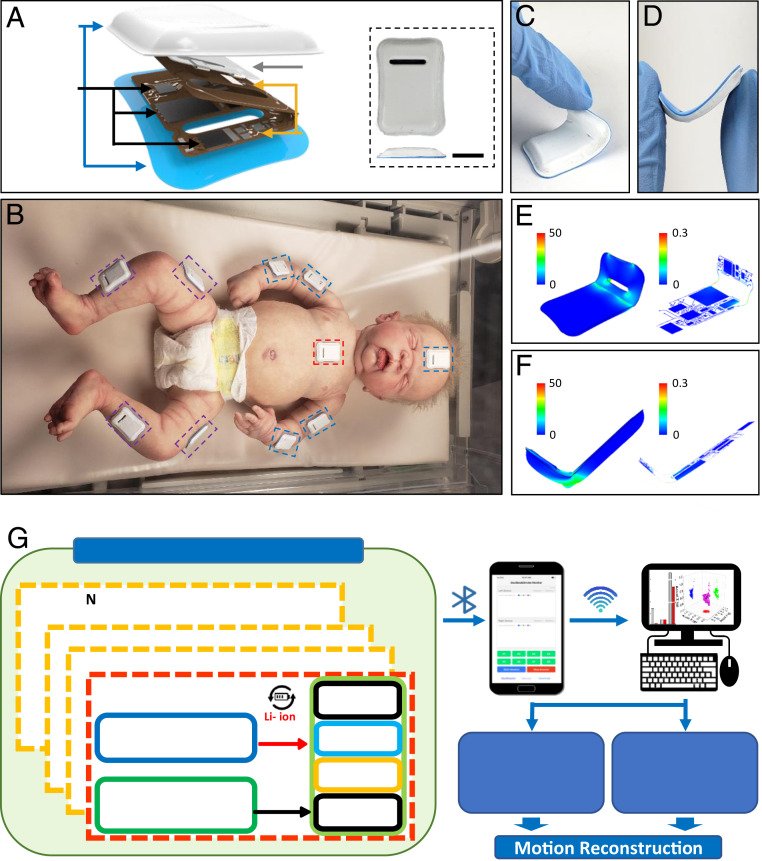
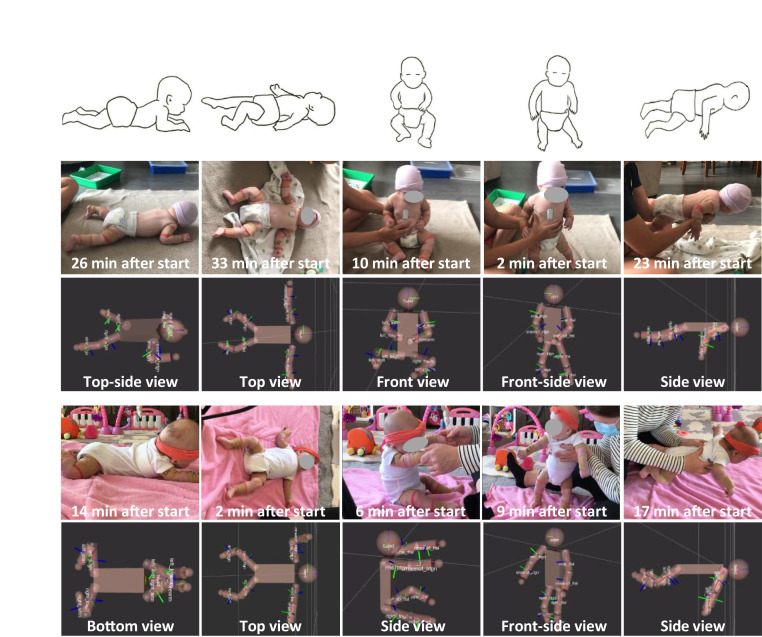
Significance Early detection of infant neuromotor pathologies is critical for timely therapeutic interventions that rely on early-life neuroplasticity. Traditional assessments rely on subjective expert evaluations or specialized medical facilities, making them challenging to scale in remote and/or resource-constrained settings. The results presented here aim to democratize these evaluations using wireless networks of miniaturized, skin-integrated sensors that digitize movement behaviors and vital signs of infants in a cost-effective manner. The resulting data yield full-body motion reconstructions in the form of deidentified infant avatars, along with a range of important cardiopulmonary information. This technology approach enables rapid, routine evaluations of infants at any age via an engineering platform that has potential for use in nearly any setting across developed and developing countries alike.
Overview
CoChat Summary
TL;DR
The paper presents miniaturized, wireless, skin-integrated CORB sensors for quantifying full-body movement behaviors and vital signs in infants. It demonstrates feasibility in low-risk and elevated-risk infants across 1 wk, 1 mo, and 3 mo, with 3D motion reconstruction and cardiopulmonary monitoring.
Key findings
- CORB sensors measure 32 × 21 × 3 mm, weigh less than 2.6 g, and are described as more than three times thinner, five times lighter, and two times smaller in volume than the Xsens MTw Awinda commercial motion-capture sensors.
- Time-synchronized sensor data achieved submillisecond accuracy, with a representative four-sensor arm test showing less than 1 ms timing difference; reconstructed motion drift was 0.013°/s, and differences from video-based reconstruction increased from less than 0.2° initially to 1.3° over the measurement.
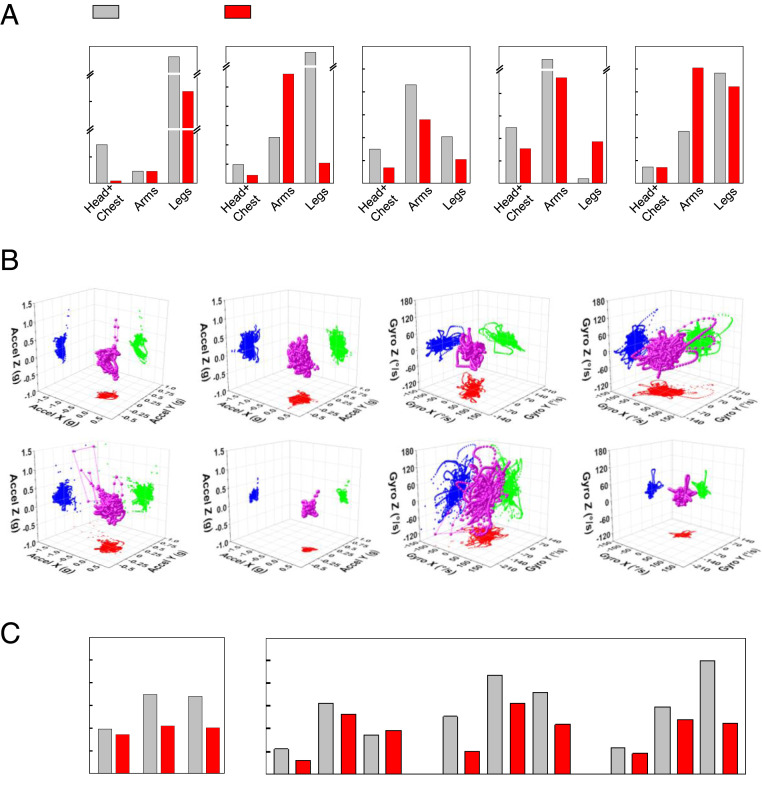
- In representative 3-mo-old infants, quantitative activity level (QAL) was 14%, 66%, and 68% higher in the low-risk infant than the elevated-risk infant at 1 wk, 1 mo, and 3 mo, respectively; at 1 mo, head/chest QAL was 154% greater, arms 40% higher, and legs 64% higher in the low-risk infant.
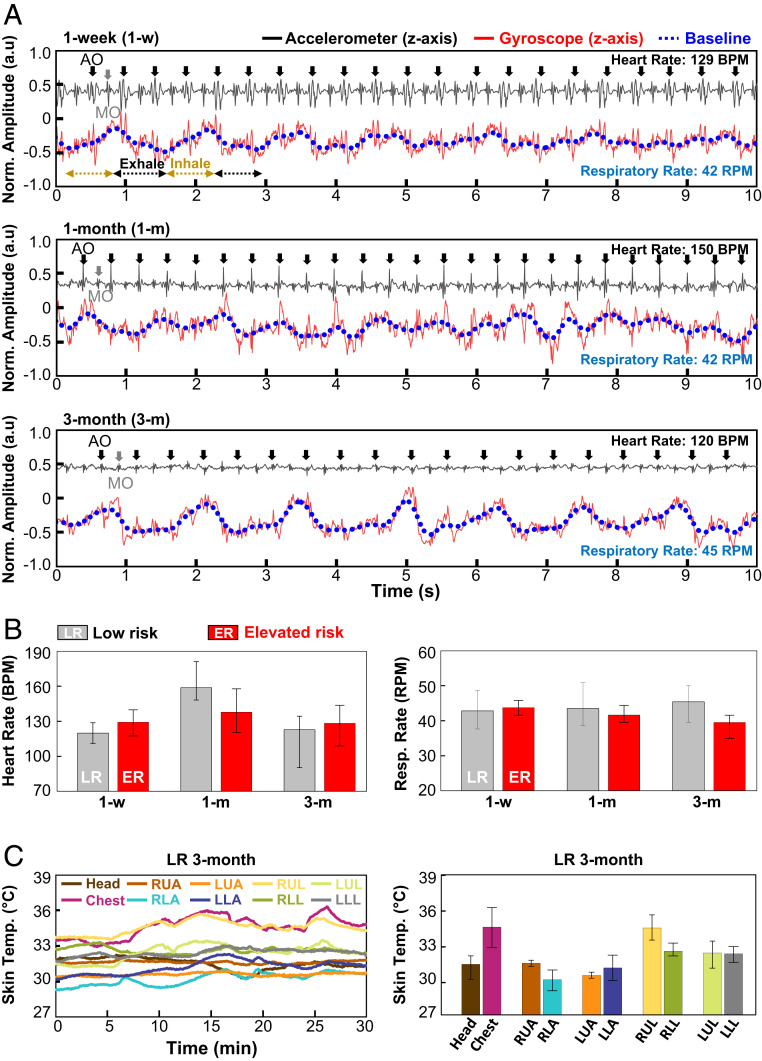
- Chest sensors captured heart rates of 120 to 160 beats per minute and respiration rates of 38 to 45 RPM; compared with an FDA-approved capnography device in three adults and 1,421 data points, respiratory rate showed a mean difference of 0.01 RPM and SD of 0.53 RPM.
Methods
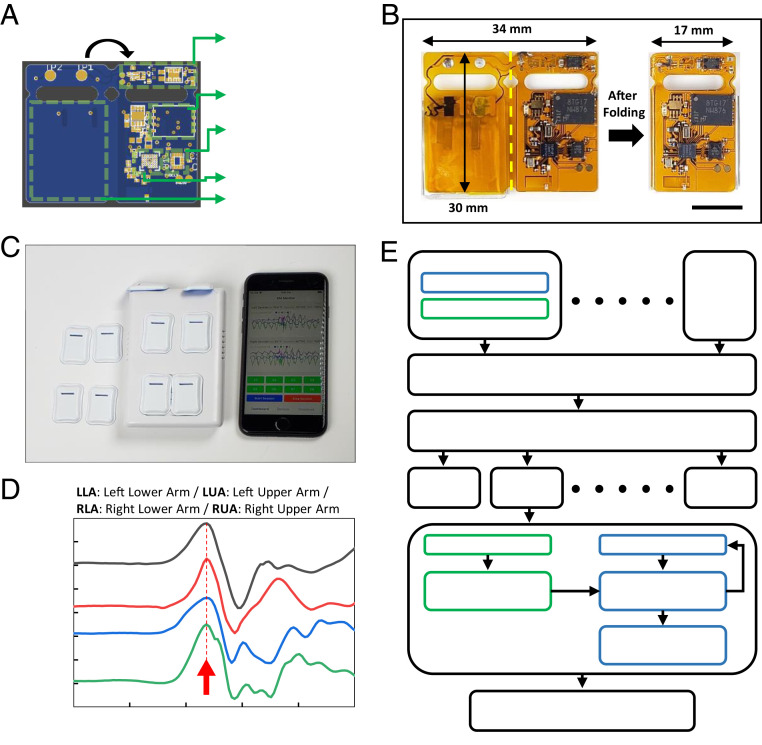
- The platform uses flexible printed circuit boards with a three-axis accelerometer and three-axis gyroscope, Bluetooth Low Energy, NAND flash memory, and a 7-mAh battery supporting more than 5 h of continuous operation; devices are encapsulated in silicone elastomer and attached with medical adhesive, bands, or wraps.
- Human studies included two representative infants, one low-risk and one elevated-risk, assessed at approximately 1 wk, 1 mo, and 3 mo; 10 sensors were used at 3 mo and 6 sensors at earlier ages, with additional demonstrations in a 7-y-old child and adult respiratory-rate validation.
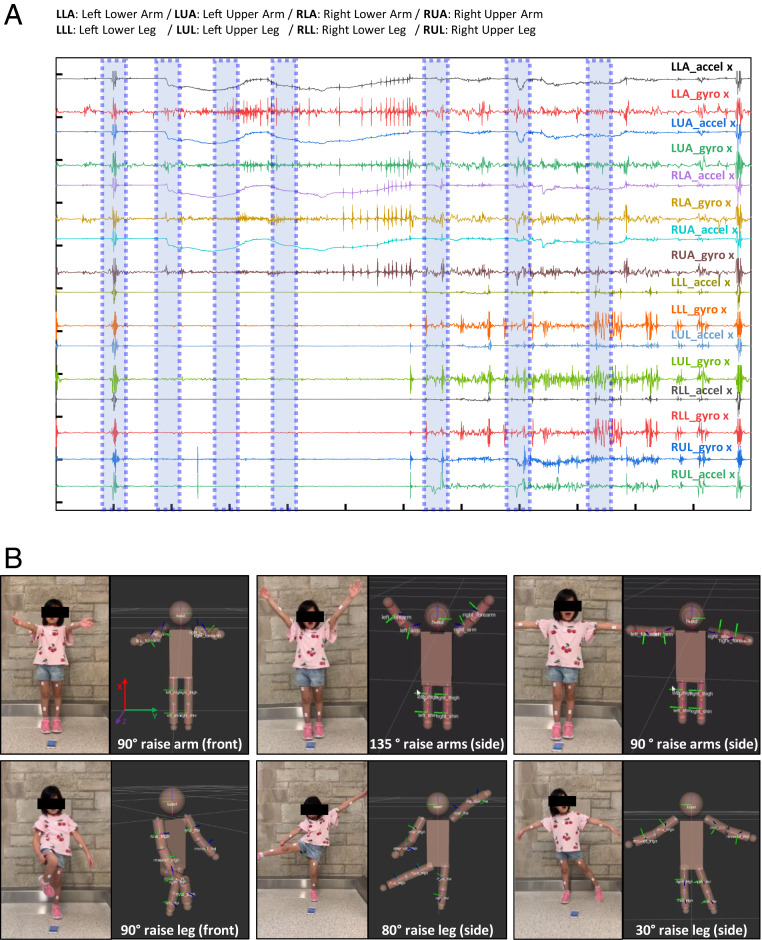
- Motion reconstruction used synchronized inertial data, bias correction, low-pass filtering above 20 Hz, orientation estimation, and ROS/Rviz 3D avatar reconstruction; QAL was computed from spectral power between 0.1 and 10 Hz.
Limitations
- The paper states that the infant results are feasibility demonstrations, that observed differences may reflect intersubject movement variability rather than underlying neuromotor disorders, and that larger-scale data are needed to define normative ranges.
- The paper states that comparison respiratory data were not collected from infants because of size constraints with the capnography device used.
- Evident from the text: the main QAL comparisons rely on two representative infants, motion reconstruction requires knowledge of initial body position and limb lengths, and the 200-Hz sampling setting prevents collection of phonocardiogram signals such as heart murmurs.
Model-written summary. Check it against the paper before relying on it.
Integrity signals
Registry
Cites
Statistics
Figures
Verification
Claims the paper makes
11 Valid · 3 Not valid · 14 Not checked · 65 Own results and interpretations
The sources with a verdict support this claim; the rest weren’t checked yet, have no full text we could read, or their verdicts aren’t rated yet.
In the paper
“A growing body of literature suggests that infant movement behaviors can reveal rich information about the developing central nervous system.”
§ Miniaturized wireless, skin-integrated sensor networks for quantifying full-body movement behaviors and vital signs in infants > Abstract
What the sources say
- Not checked — no full text of the sourcecites [1] A. Majnemer, L. Snider, A comparison of developmental assessments of the newborn and young infant. Ment. Retard. Dev. Disabil. Res. Rev. 11, 68– 73 (2005). 15856441 source
- Not checked — no full text of the sourcecites [2] D. M. Romeo., Early neurologic assessment in preterm-infants: Integration of traditional neurologic examination and observation of general movements. Eur. J. Paediatr. Neurol. 12, 183– 189 (2008). 17881261 source
- Not checked — no full text of the sourcecites [3] F. De Bock., Predictive value of General Movement Assessment for preterm infants’ development at 2 years—Implementation in clinical routine in a non-academic setting. Res. Dev. Disabil. 62, 69– 80 (2017). 28113095 source
- Supportedcites [4] I. Novak., Early, accurate diagnosis and early intervention in cerebral palsy: Advances in diagnosis and treatment. JAMA Pediatr. 171, 897– 907 (2017). 28715518 PMC9641643 source
The Advances in Diagnosis section describes infant movement quality and motor activity as signs of neurological abnormality. It also reports that assessment of general movements can help predict cerebral palsy before five months, supporting the broader point that infant movement can reveal information about the developing nervous system. Page numbers are not available in our copy. (LLM, conf=0.85)
hedgedstates an association- Asserted: passes — The authors put it forward as true.
- Checkable: passes — It can be checked against evidence.
- Load-bearing: passes — The paper’s conclusions depend on it.
- Based: passes — The paper gives a reason why it holds.
The cited sources support only part of this claim — read each source’s verdict below.
In the paper
“For example, the z-axis accelerometer data from the chest sensor of a 1-wk-old subject (Top in Fig. 6A) contains clear information on cardiac activity, as a seismocardiogram with prominent peaks induced by Aortic valve opening (black arrow) and Mitral valve opening (gray arrow) (30–32).”
§ Miniaturized wireless, skin-integrated sensor networks for quantifying full-body movement behaviors and vital signs in infants > Results and Discussion > Capturing Vital Signs Information in Infants.
What the sources say
- Not checked — no full text of the sourcecites [30] D. M. Salerno, J. Zanetti, Seismocardiography for monitoring changes in left ventricular function during ischemia. Chest 100, 991– 993 (1991). 1914618 source
- Not checked yetcites [31] O. T. Inan., Ballistocardiography and seismocardiography: A review of recent advances. IEEE J. Biomed. Health Inform. 19, 1414– 1427 (2015). 25312966 source
Checked before — its earlier verdict is held back until a new check runs.
- Partly supportedcites [32] E. M. I. Johnson., Detecting aortic valve-induced abnormal flow with seismocardiography and cardiac MRI. Ann. Biomed. Eng. 48, 1779– 1792 (2020). 32180050 PMC7286773 sourceExperimental — accuracy not yet measured
The Introduction (page unavailable) says chest-acceleration measurements form a seismocardiogram, and the Discussion (page unavailable) relates SCG oscillations to aortic-valve opening. But Methods > Data Collection describes adult volunteers, not a 1-week-old subject; the cited passages do not establish a z-axis trace or peaks induced by both aortic- and mitral-valve opening. (LLM, conf=0.88)
boostedstates a causeSingle case- Asserted: passes — The authors put it forward as true.
- Checkable: passes — It can be checked against evidence.
- Load-bearing: passes — The paper’s conclusions depend on it.
- Based: passes — The paper gives a reason why it holds.
The cited sources support only part of this claim — read each source’s verdict below.
In the paper
“However, IMUs with high sampling frequency characteristics (3.3 or 6.6 kHz) can capture high spectral features to measure acoustic signals in addition to mechanical signals induced by cardiac activities (26, 27).”
§ Miniaturized wireless, skin-integrated sensor networks for quantifying full-body movement behaviors and vital signs in infants > Results and Discussion > Capturing Vital Signs Information in Infants.
What the sources say
- Partly supportedcites [26] K. Lee., Mechano-acoustic sensing of physiological processes and body motions via a soft wireless device placed at the suprasternal notch. Nat. Biomed. Eng. 4, 148– 158 (2020). 31768002 PMC7035153 sourceExperimental — accuracy not yet measured
The Abstract describes a high-bandwidth accelerometer that captures mechano-acoustic signals, and the Results section on suprasternal-notch measurements reports both cardiac pulses at 20–50 Hz and acoustic components of swallowing at 100–800 Hz. Our copy does not establish the claimed 3.3 or 6.6 kHz sampling frequencies; searches for those values and for sampling rates found no supporting passage. (LLM, conf=0.86)
- Partly supportedcites [27] H. Jeong., Differential cardiopulmonary monitoring system for artifact-canceled physiological tracking of athletes, workers, and COVID-19 patients. Sci. Adv. 7, eabg3092 (2021). 33980495 PMC8115927 sourceExperimental — accuracy not yet measured
The Introduction says high-bandwidth accelerometers capture both skin motions associated with cardiac activity and features of body sounds. Materials and Methods reports a 1,666-Hz sampling rate adjustable up to 6,664 Hz, supporting the approximate 6.6-kHz figure, but our copy does not specify a 3.3-kHz rate. (LLM, conf=0.84)
plainstates a cause- Asserted: passes — The authors put it forward as true.
- Checkable: passes — It can be checked against evidence.
- Load-bearing: unclear — It is unclear whether the paper’s conclusions depend on it.
- Based: passes — The paper gives a reason why it holds.
- Partly supported
The cited sources support only part of this claim — read each source’s verdict below.
In the paper
“Early detection of infant neuromotor pathologies is critical for timely therapeutic interventions that rely on early-life neuroplasticity.”
- Also stated in: § Abstract · plain
“Detection at the earliest time in infancy is critically important for initiating clinical interventions that harness inherent neuroplasticity to promote early recovery and optimal long-term functional outcomes and quality of life (5–7).”
§ Miniaturized wireless, skin-integrated sensor networks for quantifying full-body movement behaviors and vital signs in infants > Abstract
What the sources say
- Not checked — no full text of the sourcecites [5] J. C. Constantinou, E. N. Adamson-Macedo, M. Mirmiran, B. E. Fleisher, Movement, imaging and neurobehavioral assessment as predictors of cerebral palsy in preterm infants. J. Perinatol. 27, 225– 229 (2007). 17304207 source
- Not checked — no full text of the sourcecites [6] C. A. Boyle., Trends in the prevalence of developmental disabilities in US children, 1997-2008. Pediatrics 127, 1034– 1042 (2011). 21606152 source
- Partly supportedcites [7] D. Christensen., Prevalence of cerebral palsy, co-occurring autism spectrum disorders, and motor functioning—Autism and Developmental Disabilities Monitoring Network, USA, 2008. Dev. Med. Child Neurol. 56, 59– 65 (2014). 24117446 PMC4351771 sourceExperimental — accuracy not yet measured
The Discussion (page unavailable in our copy) says children with multiple disabilities should be identified early so they can receive services and supports. That supports the general value of early identification, but the paper does not address detection of infant neuromotor pathologies, timely therapeutic intervention, or early-life neuroplasticity. (LLM, conf=0.84)
plainstates a cause- Asserted: passes — The authors put it forward as true.
- Checkable: unclear — It is unclear whether it could be checked against evidence.
- Load-bearing: passes — The paper’s conclusions depend on it.
- Based: passes — The paper gives a reason why it holds.
- Also stated in: § Abstract · plain
The cited sources support only part of this claim — read each source’s verdict below.
In the paper
“Atypical patterns can indicate underlying neuromotor pathologies that reflect or presage clinical conditions like cerebral palsy, autism spectrum disorder, or minor forms of other neurological dysfunctions (1–4).”
§ Miniaturized wireless, skin-integrated sensor networks for quantifying full-body movement behaviors and vital signs in infants > Abstract
What the sources say
- Not checked — no full text of the sourcecites [1] A. Majnemer, L. Snider, A comparison of developmental assessments of the newborn and young infant. Ment. Retard. Dev. Disabil. Res. Rev. 11, 68– 73 (2005). 15856441 source
- Not checked — no full text of the sourcecites [2] D. M. Romeo., Early neurologic assessment in preterm-infants: Integration of traditional neurologic examination and observation of general movements. Eur. J. Paediatr. Neurol. 12, 183– 189 (2008). 17881261 source
- Not checked — no full text of the sourcecites [3] F. De Bock., Predictive value of General Movement Assessment for preterm infants’ development at 2 years—Implementation in clinical routine in a non-academic setting. Res. Dev. Disabil. 62, 69– 80 (2017). 28113095 source
- Partly supportedcites [4] I. Novak., Early, accurate diagnosis and early intervention in cerebral palsy: Advances in diagnosis and treatment. JAMA Pediatr. 171, 897– 907 (2017). 28715518 PMC9641643 sourceExperimental — accuracy not yet measured
The Motor Dysfunction section describes atypical infant movements as signs relevant to cerebral palsy diagnosis. The False Positives and False Negatives section says some infants initially diagnosed with cerebral palsy were later diagnosed with another neurological disability, including autism. It does not establish that atypical movements predict autism specifically or minor forms of other neurological dysfunction. (LLM, conf=0.83)
plainstates an association- Asserted: passes — The authors put it forward as true.
- Checkable: passes — It can be checked against evidence.
- Load-bearing: passes — The paper’s conclusions depend on it.
- Based: passes — The paper gives a reason why it holds.
40 more claims · 3 with their cited sources checked
Create a free account to see all 93 claims and to verify the 3 references still open.
- Probably not a substantial claim. 32
- It may state two separate claims as one. 25
Self-check
Percentages, sums and reported differences re-computed from the paper’s own numbers.
Each contradiction between two passages listed here was confirmed by an independent check.
Rated minor: it would not touch a result — a value no result rests on, a p-value that stays on the same side of the significance level, or a conflict that is clerical, resolved elsewhere in the paper, or outside its own findings.
In the paper
§ Miniaturized wireless, skin-integrated sensor networks for quantifying full-body movement behaviors and vital signs in infants > Results and Discussion > Reconstructing Full-Body 3D Motions from Sensor Data.
“right upper leg (RUL, thigh), right lower leg (RLL, shin)”
§ Miniaturized wireless, skin-integrated sensor networks for quantifying full-body movement behaviors and vital signs in infants > Results and Discussion > Reconstructing Full-Body 3D Motions from Sensor Data.
“left upper leg (RUL, thigh), left lower leg (RLL, shin)”
Rated minor: it would not touch a result — a value no result rests on, a p-value that stays on the same side of the significance level, or a conflict that is clerical, resolved elsewhere in the paper, or outside its own findings.
In the paper
§ Miniaturized wireless, skin-integrated sensor networks for quantifying full-body movement behaviors and vital signs in infants > Results and Discussion > Quantifying Gross Motor Behaviors in Infants.
“Acceleration of right and left arms from LR (first and second columns on the Top row) and ER subjects (first and second columns on the Bottom row).”
§ Miniaturized wireless, skin-integrated sensor networks for quantifying full-body movement behaviors and vital signs in infants > Results and Discussion > Quantifying Gross Motor Behaviors in Infants.
“Angular velocity of right and left arms from LR (third and fourth columns on the Top row) and ER subjects (first and second columns on the Bottom row).”
Rated minor: it would not touch a result — a value no result rests on, a p-value that stays on the same side of the significance level, or a conflict that is clerical, resolved elsewhere in the paper, or outside its own findings.
In the paper
§ Miniaturized wireless, skin-integrated sensor networks for quantifying full-body movement behaviors and vital signs in infants > Results and Discussion > Quantifying Gross Motor Behaviors in Infants.
“prone and horizontal suspension (body angle > 135°, red shaded region in SI Appendix, Fig. S19)”
§ Miniaturized wireless, skin-integrated sensor networks for quantifying full-body movement behaviors and vital signs in infants > Results and Discussion > Quantifying Gross Motor Behaviors in Infants.
“sitting and standing (25° < body angle > 135°)”
Citations
Cites
Trends in the prevalence of developmental disabilities in US children, 1997-2008
Boyle, C. A., Boulet, S., Schieve, L. A., Cohen, R. A., Blumberg, S. J., Yeargin-Allsopp, M., Visser, S., & Kogan, M. D. (2011) · Pediatrics · doi:10.1542/peds.2010-2989 · Cited by 1,732
Novak, I., Morgan, C., Adde, L., Blackman, J., Boyd, R. N., Brunstrom-Hernandez, J., Cioni, G., Damiano, D., Darrah, J., Eliasson, A.-C., et al. (2017) · JAMA Pediatrics · doi:10.1001/jamapediatrics.2017.1689 · Cited by 1,721 · cited 1×
“Recent international protocols recommend additional evaluations for at-risk infants early in life, including visual observations of the infant’s general movements (GM) by an expert clinician throughout the preterm and term phase (2, 4, 10).”
BackgroundThe Technology of Accelerometry-Based Activity Monitors: Current and Future
CHEN, K. Y., & BASSETT, D. R. (2005) · Medicine & Science in Sports & Exercise · doi:10.1249/01.mss.0000185571.49104.82 · Cited by 996
Ballistocardiography and Seismocardiography: A Review of Recent Advances
Inan, O. T., Migeotte, P.-F., Park, K.-S., Etemadi, M., Tavakolian, K., Casanella, R., Zanetti, J., Tank, J., Funtova, I., Prisk, G. K., et al. (2015) · IEEE Journal of Biomedical and Health Informatics · doi:10.1109/jbhi.2014.2361732 · Cited by 775
(2009) · Cited by 701
Development of the EEG from 5 months to 4 years of age
Marshall, P. J., Bar-Haim, Y., & Fox, N. A. (2002) · Clinical Neurophysiology · doi:10.1016/s1388-2457(02)00163-3 · Cited by 633 · cited 1×
“Alternative strategies for high-resolution analysis of an infant’s motor development involve quantitative data from digital imaging systems or commercial wearable sensors packages (11–15), often also with electroencephalography (16) or electromyography (17).”
BackgroundEinspieler, C., Prechtl, H. F. R., Ferrari, F., Cioni, G., & Bos, A. F. (1997) · Early Human Development · doi:10.1016/s0378-3782(97)00092-3 · Cited by 461 · cited 1×
“Recent international protocols recommend additional evaluations for at-risk infants early in life, including visual observations of the infant’s general movements (GM) by an expert clinician throughout the preterm and term phase (2, 4, 10).”
BackgroundChristensen, D., Van Naarden Braun, K., Doernberg, N. S., Maenner, M. J., Arneson, C. L., Durkin, M. S., Benedict, R. E., Kirby, R. S., Wingate, M. S., Fitzgerald, R., et al. (2014) · Developmental Medicine & Child Neurology · doi:10.1111/dmcn.12268 · Cited by 442
Emery, J. L., & Mithal, A. (1960) · Archives of Disease in Childhood · doi:10.1136/adc.35.184.544 · Cited by 432
Lee, K., Ni, X., Lee, J. Y., Arafa, H., Pe, D. J., Xu, S., Avila, R., Irie, M., Lee, J. H., Easterlin, R. L., et al. (2019) · Nature Biomedical Engineering · doi:10.1038/s41551-019-0480-6 · Cited by 349 · cited 2×
“6B summarizes the heart and respiratory rate (26, 27) determined from such data averaged over a recording time of 60 min at each of these three ages in the form of bar graphs for LR (gray) and ER (red) subjects.”
BackgroundMethodSelf-citation
Cited by
High-efficiency stretchable light-emitting polymers from thermally activated delayed fluorescence
Liu, W., Zhang, C., Alessandri, R., Diroll, B. T., Li, Y., Liang, H., Fan, X., Wang, K., Cho, H., Liu, Y., et al. (2023) · Nature Materials · doi:10.1038/s41563-023-01529-w · Cited by 186
Yang, H., Li, J., Xiao, X., Wang, J., Li, Y., Li, K., Li, Z., Yang, H., Wang, Q., Yang, J., et al. (2022) · Nature Communications · doi:10.1038/s41467-022-33021-5 · Cited by 176
Kang, Y. J., Arafa, H., Yoo, J., Kantarcigil, Ç., Kim, J., Jeong, H., Yoo, S., Oh, S., Kim, J., Wu, C., et al. (2022) · npj Digital Medicine · doi:10.1038/s41746-022-00691-w · Cited by 102
Self-citationSoft, stretchable thermal protective substrates for wearable electronics
Nie, S., Cai, M., Huang, Y., Shen, L., Wang, S., Zhu, Y., & Song, J. (2022) · npj Flexible Electronics · doi:10.1038/s41528-022-00174-8 · Cited by 73
Self-citationSkin-interfaced wireless biosensors for perinatal and paediatric health
Kim, J., Yoo, S., Liu, C. Y., Kwak, S. S., Walter, J. R., Xu, S., & Rogers, J. A. (2023) · Nature Reviews Bioengineering · doi:10.1038/s44222-023-00090-0 · Cited by 74
Self-citationAdvanced Electrode Technologies for Noninvasive Brain–Computer Interfaces
Lin, S., Jiang, J., Huang, K., Li, L., He, X., Du, P. Y., Wu, Y., Liu, J., Li, X., Huang, Z., et al. (2023) · ACS Nano · doi:10.1021/acsnano.3c06781 · Cited by 59
Intelligent wearable allows out-of-the-lab tracking of developing motor abilities in infants
Airaksinen, M., Gallen, A., Tuiskula, A., Vijayakrishnan, P., Häyrinen, T., Ilén, E., Räsänen, O. J., Haataja, L. M., & Vanhatalo, S. (2022) · Communications Medicine · doi:10.1038/s43856-022-00131-6 · Cited by 60
Skin-interfacing wearable biosensors for smart health monitoring of infants and neonates
Zhou, L., Guess, M., Kim, K. R., & Yeo, W. (2024) · Communications Materials · doi:10.1038/s43246-024-00511-6 · Cited by 64
“Additional IMUs can be used to reconstruct and track 3D body motions 82 (Fig .6e) .”
Functional materials for powering and implementing next-generation miniature sensors
Wu, B., Ouro-Koura, H., Lu, S., Li, H., Wang, X. S., Xiao, J., & Deng, Z. D. (2023) · Materials Today · doi:10.1016/j.mattod.2023.09.001 · Cited by 56
Air Permeable Vibrotactile Actuators for Wearable Wireless Haptics
Li, Z., Ma, Y., Zhang, K., Wan, J., Zhao, D., Pi, Y., Chen, G., Zhang, J., Tang, W., Lin, L., et al. (2022) · Advanced Functional Materials · doi:10.1002/adfm.202211146 · Cited by 42
Recent Progress in Wearable Self‐Powered Biomechanical Sensors: Mechanisms and Applications
Zhang, S., Lin, X., Wan, J., Xu, C., & Han, M. (2024) · Advanced Materials Technologies · doi:10.1002/admt.202301895 · Cited by 45
Liu, C. Y., Kim, J., Yang, D. S., Cho, D., Yoo, S., Madhvapathy, S. R., Jeong, H., Yang, T., Luan, H., Avila, R. O., et al. (2023) · Advanced Functional Materials · doi:10.1002/adfm.202302256 · Cited by 47
Self-citationYan, K. Q., Chen, H., Li, X., Xu, F., Wang, J., Xu, Q., Zong, Y., & Zhang, Y. (2024) · ACS Applied Materials & Interfaces · doi:10.1021/acsami.3c18996 · Cited by 36
A noise-tolerant human–machine interface based on deep learning-enhanced wearable sensors
Chen, X., Lou, Z., Gao, X., Yin, L., Qin, S., Lin, M., Zhang, F., Lu, Y., Ding, S., Liu, R., et al. (2025) · Nature Sensors · doi:10.1038/s44460-025-00001-3 · Cited by 77
“…configuration (for example, on the torso and limbs) has also been explored to derive differential signals eliminating common motion artefacts 23 , but this approach suffers from sensor misalignment, asynchronization and inconsistent patterns of motion artefacts across different body…”
Self-citationOuyang, W., Kilner, K. J., Xavier, R., Liu, Y., Lu, Y., Feller, S. M., Pitts, K. M., Wu, M., Ausra, J., Jones, I., et al. (2024) · Neuron · doi:10.1016/j.neuron.2024.02.020 · Cited by 40
“22 This paper reports a collection of advances in materials science, electrical engineering, data analytics, and surgical procedures that successfully address these challenges in the form of a fully implantable, wireless device.”
BackgroundSelf-citationSoft electronics for advanced infant monitoring
Yuan, M., Long, Y., Liu, T., Liu, J., Qiu, S., Lin, T. Y., Xu, F., & Fang, Y. (2024) · Materials Today · doi:10.1016/j.mattod.2024.03.005 · Cited by 35
Advances in Biosignal Sensing and Signal Processing Methods with Wearable Devices
Matthews, J., Kim, J., & Yeo, W. (2022) · Analysis & Sensing · doi:10.1002/anse.202200062 · Cited by 42
Self-citationWu, X., Liang, Y., Lu, L., et al. (2025) · Research · doi:10.34133/research.0835 · Cited by 25
“Inertial motion capture suits [ 8 – 10 ] integrate inertial measurement units into suits at joint-specific locations, providing robust joint position tracking without environmental constraints.”
Park, S. U., Lee, H. K., Kim, H. B., Kim, D., Kim, W., Joo, J., Kim, B., Lee, B. W., Jung, Y. H., Park, S., et al. (2025) · Nature Communications · doi:10.1038/s41467-025-63644-3 · Cited by 38
Self-citationGrooby, E., Sitaula, C., Kwok, T. C., Sharkey, D., Marzbanrad, F., & Malhotra, A. K. (2023) · Pediatric Research · doi:10.1038/s41390-022-02416-x · Cited by 29
“Accelerometers placed on the chest can obtain seismocardiogram (SCG) and vocal biomarkers.(21,22) SCG is produced from the small vibrations of the chest due to sounds and is used to obtain HR, systolic interval, pre-ejection period, and left-ventricular ejection times.”
MethodSkin‐Integrated Wearable Electronics: A Dual‐Interface Perspective
Dong, F., Han, C., Cai, S. T., Lee, J., & Niu, S. (2025) · SmartSys · doi:10.1002/sys3.70013 · Cited by 26
Self-citationDeep learning empowered sensor fusion boosts infant movement classification
Kulvičius, T., Zhang, D., Poustka, L., Bölte, S., Jahn, L., Flügge, S., Kraft, M., Zweckstetter, M., Nielsen‐Saines, K., Wörgötter, F., et al. (2025) · Communications Medicine · doi:10.1038/s43856-024-00701-w · Cited by 25
Deng, W., O’Brien, M. K., Andersen, R. A., Rai, R., Jones, E. F., & Jayaraman, A. (2025) · npj Digital Medicine · doi:10.1038/s41746-025-01450-3 · Cited by 28
Self-citationFlexible sensor-based biomechanical evaluation of low-back exoskeleton use in lifting
Yin, W., Chen, Y., Reddy, C. P., Zheng, L., Mehta, R. K., & Zhang, X. (2023) · Ergonomics · doi:10.1080/00140139.2023.2216408 · Cited by 18
“…viability of these flexible sensors for measuring simple gait parameters (e.g. stride numbers, stride time) (Moon et al. 2017) and body kinematics (Jeong et al. 2021; Yin et al. 2021), and assessing physical activity or stress in clinical and field studies (Sen-Gupta et al. 2019; Zahabi et al.…”
BackgroundWireless monitoring devices in hospitalized children: a scoping review
Sénéchal, E., Jeanne, E., Tao, L., Kearney, R. E., Shalish, W., & SantʼAnna, G. (2023) · European Journal of Pediatrics · doi:10.1007/s00431-023-04881-w · Cited by 18
“Respiratory rate 10 (24) [27, 28, 35, 37, 43, 46, 48, 51, 59, 66] Method used to obtain HR: 25 (100)”
MethodA review: Machine learning for strain sensor-integrated soft robots
Yang, H., & Wu, W. (2022) · Frontiers in Electronic Materials · doi:10.3389/femat.2022.1000781 · Cited by 18
“Emerging approaches adopt wireless technology such as Bluetooth or near-field communication modules to facilitate data collection and wireless transmission (Lin et al., 2020; Yang et al., 2020; Jeong et al., 2021; Lin et al., 2022), yet they failed in the aspect of signal analyses due to the absence of computing unit.”
BackgroundDeng, W., Anastasopoulos, S., deRegnier, R.-A. O., Pouppirt, N. R., Barlow, A. K., Patrick, C., O’Brien, M. K., Babula, S., Sukal‐Moulton, T., Peyton, C., et al. (2023) · PLoS ONE · doi:10.1371/journal.pone.0291408 · Cited by 19
“6 g) collect tri-axial acceleration data and angular velocity data at 200 Hz [82].”
BackgroundMethodSelf-citationContinuous sensing and quantification of body motion in infants: A systematic review
Peng, Z. Q., Kommers, D. R., Liang, R.-H., Long, X., Cottaar, W., Niemarkt, H. J., Andriessen, P., & van Pul, C. (2023) · Heliyon · doi:10.1016/j.heliyon.2023.e18234 · Cited by 16
Flexible electrodes for non-invasive brain–computer interfaces: A perspective
Huang, Z., Zhou, Z., Zeng, J., Lin, S., & Wu, H. (2022) · APL Materials · doi:10.1063/5.0099722 · Cited by 14
Wang, J., Bai, J., Ma, C.-B., Gu, M., Sun, M., & Zhou, M. (2026) · ACS Sensors · doi:10.1021/acssensors.5c03838 · Cited by 9
Coupled mechanics in skin-interfaced electronics via computer vision methods
Kim, J., & Chamorro, L. P. (2024) · Soft Science · doi:10.20517/ss.2023.50 · Cited by 9
Self-citationShang, J., Tang, L., Guo, K., Yang, S., Cheng, J., Dou, J., Yang, R., Zhang, M., & Jiang, X. (2023) · Microsystems & Nanoengineering · doi:10.1038/s41378-023-00535-x · Cited by 8
Stretchable, Multi-Layered Stack Antenna for Smart/Wearable Electronic Applications
Hong, K., Cho, J., & Shin, G. (2022) · Materials · doi:10.3390/ma15093275 · Cited by 9
A soft-electronic sensor network tracks neuromotor development in infants
Khan, Y., & Bao, Z. (2021) · Proceedings of the National Academy of Sciences · doi:10.1073/pnas.2116943118 · Cited by 5
A soft, bioinspired artificial lymphatic system for interactive ascites transfer
Wang, P., Fu, J. S., Jin, P., Zeng, J., Miao, X., Wang, H., Ma, Y., & Feng, X. (2023) · Bioengineering & Translational Medicine · doi:10.1002/btm2.10567 · Cited by 4
Lin, B., Li, F., Hui, J., Xing, Z., Fu, J., Li, S., Shi, H., Liu, C., Mao, H., & Wu, Z. (2024) · ACS Sensors · doi:10.1021/acssensors.4c02141 · Cited by 6
Fu, J., Xia, Z., Zhong, H., et al. (2025) · Materials · doi:10.3390/ma18153537 · Cited by 4
Morphology Design of Soft Strain Sensors with Superior Stability for Wearable Rehabilitation Robots
Wang, Q., Seyram, O., Liu, Q., Yu, H., Ding, S., & Yang, H. (2023) · Lecture notes in computer science · doi:10.1007/978-981-99-6489-5_47 · Cited by 3
Wireless wearable devices for continuous monitoring of body sounds and motions
Kim, S. H., Jeanne, E., Shalish, W., Yoo, J., & Rogers, J. A. (2024) · Clinical and Translational Medicine · doi:10.1002/ctm2.1593 · Cited by 4
Self-citationDeng, W., Marmelat, V., Vanderbilt, D. L., Gennaro, F., & Smith, B. A. (2023) · Infancy · doi:10.1111/infa.12537 · Cited by 4
“Researchers are even able to reconstruct infant spontaneous movements in a 3D space with advanced algorithms (Jeong et al., 2021).”
BackgroundZhang, N., Ji, J., Wang, J., Shi, Z., & Zhang, C. (2023) · Journal of Micromechanics and Microengineering · doi:10.1088/1361-6439/acf93f · Cited by 2
Biometric Vibration Signal Detection Devices for Swallowing Activity Monitoring
Kang, Y. J. (2024) · Signals · doi:10.3390/signals5030028 · Cited by 2
“The fundamental concepts underlying mechano-acoustic measurements of bodily processes, employing soft, skin-mounted devices positioned near the neck, have been extensively discussed [20–23].”
BackgroundSelf-citationReimagining apnea monitoring in the neonatal ICU
Jeanne, E., Alvaro, R. E., & Shalish, W. (2024) · Current Opinion in Pediatrics · doi:10.1097/mop.0000000000001432 · Cited by 1
Hua, J., Su, M., Cheng, W. M., Shi, Y., & Pan, L. (2025) · Review of Materials Research · doi:10.1016/j.revmat.2025.100089 · Cited by 5
Slattery, S. M., Pessano, S., Yoo, J., et al. (2025) · BMJ Health & Care Informatics · doi:10.1136/bmjhci-2024-101283 · Cited by 1
Self-citationKaur, I., Kumar, Y., & Modi, N. (2026) · Infant Behavior and Development · doi:10.1016/j.infbeh.2026.102217 · Cited by 1
Contents IMIA Yearbook of Medical Informatics 2022
(2022) · Yearbook of Medical Informatics · doi:10.1055/s-0042-1742555
Aljebreen, M., Alshardan, A., Hassine, S. B. H., Miled, A. B., Al-Khawaja, H. A., Yafoz, A., & ALSINI, R. (2024) · Fractals · doi:10.1142/s0218348x25400109
Touchless monitoring of neonatal activity–a welcome technological leap in NICU care
Vesoulis, Z. A., Sprehe, D., & Kopotic, R. J. (2025) · Pediatric Research · doi:10.1038/s41390-025-04408-z
“Other technologies such as integrated accelerometers have been used to capture motion, 18 – 20 but these increase skin burden, complexity, and cost of sensors, all of which have a negative impact.”
Pierce, S. R., Ghazi, M. A., Kolobe, T. H. A., Fagg, A. H., Skorup, J. C., Ruwaih, N., Jawad, A. F., Prosser, L. A., & Smith, B. A. (2026) · Pediatric Neurology · doi:10.1016/j.pediatrneurol.2026.04.003
Wang, L., Geng, S., Deng, L., et al. (2026) · Small · doi:10.1002/smll.73937
Інноваційні технології фізичної терапії військових і спортсменів
Kozhemiako, T., Табакарь, К. В., & Будзин, В. Р. (2026) · Likarska sprava · doi:10.31640/ls-2026-2-32
Machine learning approaches in automated infant General Movements Assessment: A scoping review
Kaur, M., Abbasi, H., Williams, S. A., Besier, T. F., & McMorland, A. J. C. (2026) · Developmental Medicine & Child Neurology · doi:10.1111/dmcn.70308
Automated monitoring in clinical and operational workflows
Yen, J., Hsu, C.-A., & Hsu, M. (2026) · BMJ Health & Care Informatics · doi:10.1136/bmjhci-2026-102219
“5 The result is a model of pain assessment that shifts practice away from episodic human interpretation and towards continuous, sensor-based monitoring.”
Low-Cost Wearable Sensors for Monitoring Sleep: A Review of Recent Developments and Applications
Siuli, S. (2026) · Springer eBooks · doi:10.1007/978-3-032-19984-3_9
Bridging IC chips and deformable circuits: A packaging framework for high-density soft electronics
Lee, Y., Lee, Y., Park, S., Ham, H., Jang, H., Jung, Y., Lee, S., & Seo, J. (2026) · Materials Science and Engineering R Reports · doi:10.1016/j.mser.2026.101285
Self-citationSato, T., Takahashi, R., Watanabe, S., Yukita, W., Yokota, T., Someya, T., Kawahara, Y., Iwase, E., & Iwasaki, W. (2026) · ACS Applied Materials & Interfaces · doi:10.1021/acsami.6c06181 · Cited by 1
Metadata
- Authors
- Jeong, H., Kwak, S. S., Sohn, S., Lee, J. Y., Lee, Y. J., O’Brien, M. K., Park, Y., Avila, R., Kim, J.-T., Yoo, J.-Y., Irie, M., Jang, H., Ouyang, W., Shawen, N., Kang, Y. J., Kim, S. S., Tzavelis, A., Lee, K., Andersen, R. A., Huang, Y., Jayaraman, A., Davis, M. M., Shanley, T., Wakschlag, L. S., Krogh-Jespersen, S., Xu, S., Ryan, S. W., Lieber, R. L., & Rogers, J. A.
- Affiliations
- Northwestern University (US)
- Sibel (United States) (US)
- University of Wisconsin–Madison (US)
- Shirley Ryan AbilityLab (US)
- Department of Medical Social Sciences, Feinberg School of Medicine, Northwestern University, Chicago, IL 60611;
- Corresponding author
- Rogers, John A.
- ORCID
- Jeong, Hyoyoung
- Kwak, Sung Soo
- Lee, Jong Yoon
- Lee, Young Joong
- O’Brien, Megan K.
- Park, Yoonseok
- Avila, Raudel
- Kim, Jin-Tae
- Yoo, Jae-Young
- Irie, Masahiro
- Jang, Hokyung
- Ouyang, Wei
- Shawen, Nicholas
- Kang, Youn J.
- Tzavelis, Andreas
- Lee, KunHyuck
- Huang, Yonggang
- Jayaraman, Arun
- Davis, Matthew M.
- Shanley, Thomas
- Wakschlag, Lauren S.
- Xu, Shuai
- Lieber, Richard L.
- Rogers, John A.
- Venue
- Proceedings of the National Academy of Sciences
- Publisher
- National Academy of Sciences
- Published
- 2021-10-18
- Volume
- 118
- Issue
- 43
- ISSN
- 0027-8424 (ISSN-L)
- 1091-6490
- PMC
- PMC8639372
- OpenAlex
- W3206507112
- Semantic Scholar
- 6e1f5f10d6670bb2ebd713ee3473cfcb295c18eb
- Cited by
- 59
- References
- 38
- Citations by year
- 2026: 12 · 2025: 10 · 2024: 11 · 2023: 15 · 2022: 10 · 2021: 1
- FWCI
- 3.32
- Type
- journal article
- Language
- en
- Open access
- hybrid
- doi.org
- Licence
- Locations
- Proceedings of the National Academy of Sciences (publishedVersion, cc-by)
- PubMed Central (publishedVersion, cc-by)
- PubMed (publishedVersion)
- eScholarship (California Digital Library) (submittedVersion, cc-by)
- Funders
- Northwestern University
- Topics
- Physical Sciences › Computer Science › Computer Vision and Pattern Recognition › Context-Aware Activity Recognition Systems
- Physical Sciences › Engineering › Biomedical Engineering › Non-Invasive Vital Sign Monitoring
- Physical Sciences › Engineering › Biomedical Engineering › Wireless Body Area Networks
- Keywords
- infant motor assessment, wireless inertial sensors, full-body kinematics, vital signs monitoring, gross motor skills, low-cost wearable sensors
- MeSH terms
- Child, Equipment Design, Heart Rate, Humans, Infant, Miniaturization, Monitoring, Physiologic, Movement, Skin, Video Recording, Bias, Infant Behavior, Imaging, Three-Dimensional, Vital Signs, Respiratory Rate, Wireless Technology
About these checks
Registry, retraction, Cites and statistics results are computed, not judged, with one exception: a printed reference that no index lists is read once by a model before it counts as a citation error. Claims are extracted by a model and kept only when their quote appears verbatim in the text; each cited source is then checked, with a model’s help, for whether it says what the claim relies on. Those verdicts can be wrong — read the claim’s quote and the cited source before relying on one.
The claim verdicts this report counts are experimental: their accuracy is not yet measured.
A language model drew the claims from the paper on 2026-10-10, under version 3 of the claim definition (model deepseek-v4.1-flash, prompt extract-v3).
A second model labelled each claim on 2026-10-10 (model jev-1.13-20260917, definition revision gold-guideline-v0.2).
Cited sources are checked with a language model’s help (gpt-6-sol).
Statistics and arithmetic are recomputed, not judged.
Confidence bands are shown only for fields calibrated on our annotated test set. None is calibrated yet, so no band is shown.
What counts as a claim ›How we measure confidence ›How we check this ›
Are you an author, or do you see a problem with this page? Request a review
Data sources
Bibliographic data: Semantic Scholar, OpenAlex, Crossref.
Contains information from the Semantic Scholar Academic Graph Datasets, made available under the ODC Attribution License (ODC-BY 1.0).
Semantic Scholar’s data is described in: Kinney, R., et al. (2023). The Semantic Scholar Open Data Platform. arXiv:2301.10140.
