

Superoxide Fluxes Limit Nitric Oxide-induced Signaling
Open accessThe DOI matches its Crossref record; 55 of the 55 references it cites were found in a registry or an index.
Abstract
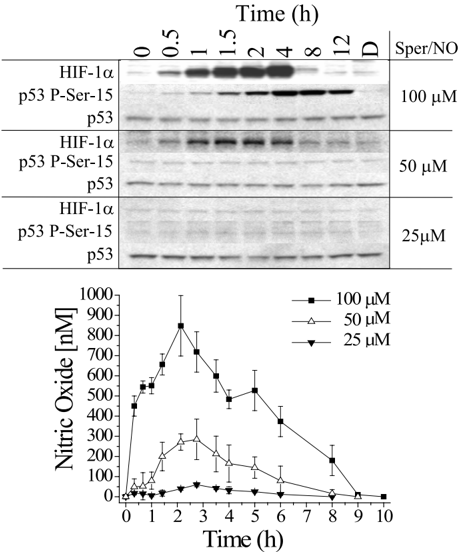
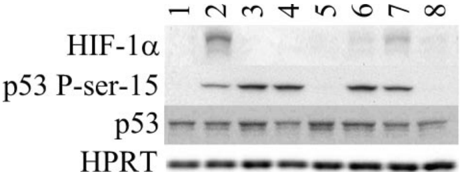
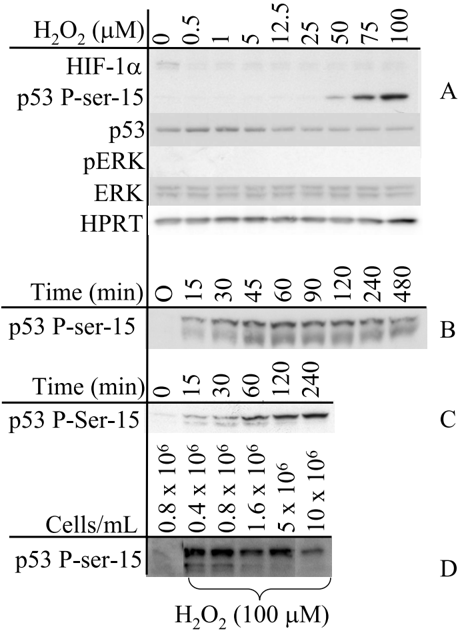
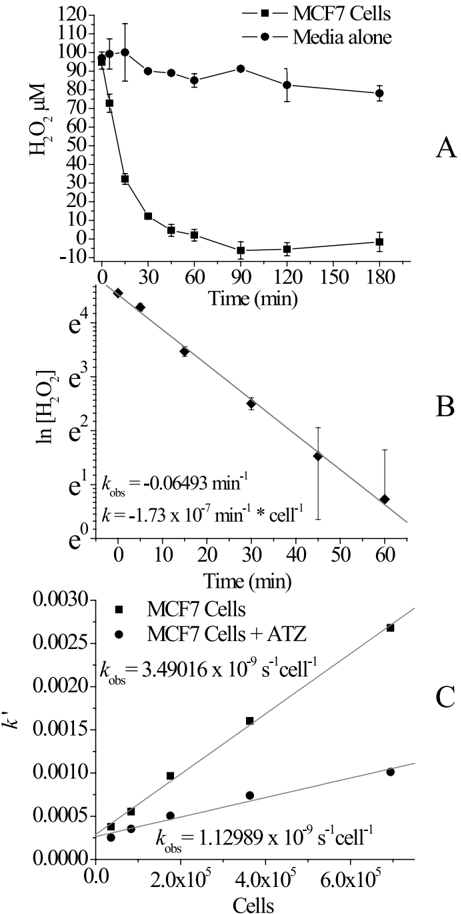
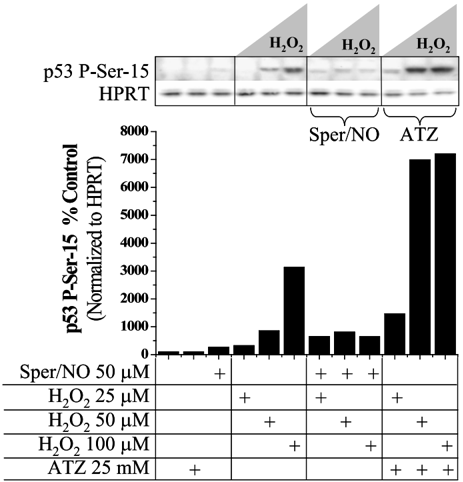
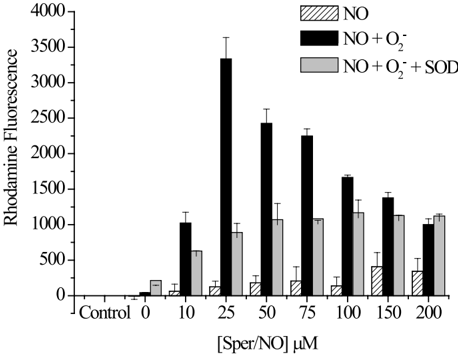
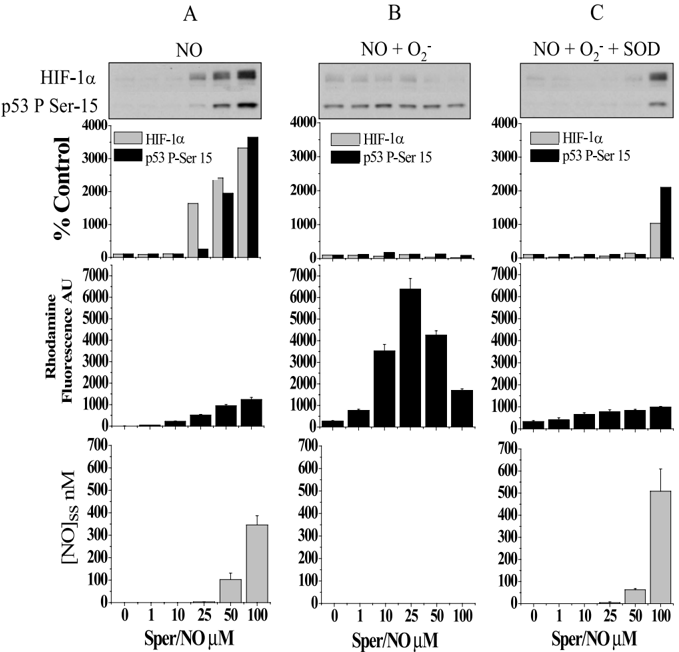
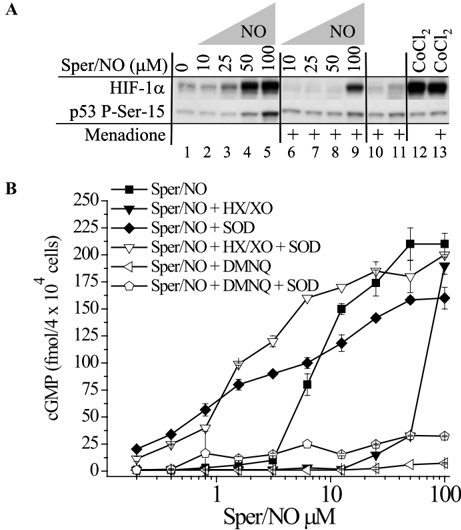
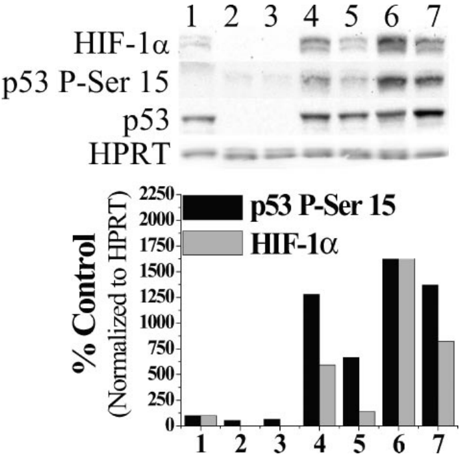
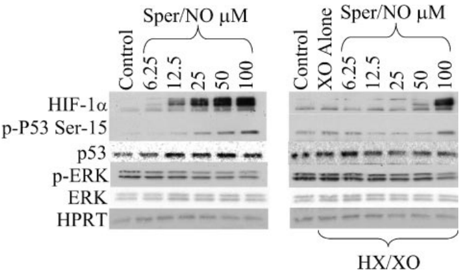
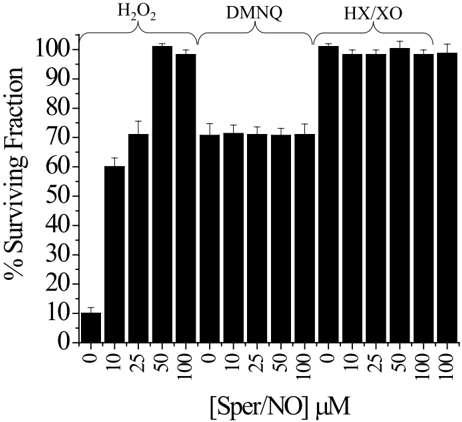
Independently, superoxide (O2-) and nitric oxide (NO) are biologically important signaling molecules. When co-generated, these radicals react rapidly to form powerful oxidizing and nitrating intermediates. Although this reaction was once thought to be solely cytotoxic, herein we demonstrate using MCF7, macrophage, and endothelial cells that when nanomolar levels of NO and O2- were produced concomitantly, the effective NO concentration was established by the relative fluxes of these two radicals. Differential regulation of sGC, pERK, HIF-1alpha, and p53 were used as biological dosimeters for NO concentration. Introduction of intracellular- or extracellular-generated O2- during NO generation resulted in a concomitant increase in oxidative intermediates with a decrease in steady-state NO concentrations and a proportional reduction in the levels of sGC, ERK, HIF-1alpha, and p53 regulation. NO responses were restored by addition of SOD. The intermediates formed from the reactions of NO with O2- were non-toxic, did not form 3-nitrotyrosine, nor did they elicit any signal transduction responses. H2O2 in bolus or generated from the dismutation of O2- by SOD, was cytotoxic at high concentrations and activated p53 independent of NO. This effect was completely inhibited by catalase, suppressed by NO, and exacerbated by intracellular catalase inhibition. We conclude that the reaction of O2- with NO is an important regulatory mechanism, which modulates signaling pathways by limiting steady-state levels of NO and preventing H2O2 formation from O2-.
Overview
The claims and statistics of this paper haven’t been checked yet.
Free: it reads the open-access text and checks the first 5 claims that cite a source we can check. Create a free account to check every claim.
Integrity signals
Registry
Cites
Statistics
Figures
Verification
Claims the paper makes
The claims and statistics of this paper haven’t been checked yet.
Free: it reads the open-access text and checks the first 5 claims that cite a source we can check. Create a free account to check every claim.
Claims other papers make about this one
Each is checked against this paper’s own text: does it say what the citing paper says it does?
In the citing paper
“However, NO-induced HIF-1α stabilization and p53 phosphorylation levels are decreased by O2− [57, 283].”
From Signaling and stress: The redox landscape in NOS2 biology (2015) · cites this paper as [283]
Self-check
Percentages, sums and reported differences re-computed from the paper’s own numbers.
The self-check needs the paper’s full text.
Citations
Cites
Beckman, J. S., Beckman, T. W., Chen, J., Marshall, P. A., & Freeman, B. A. (1990) · Proceedings of the National Academy of Sciences · doi:10.1073/pnas.87.4.1620 · Cited by 7,029
Superoxide anion is involved in the breakdown of endothelium-derived vascular relaxing factor
Gryglewski, R. J., Palmer, R. M. J., & Moncada, S. (1986) · Nature · doi:10.1038/320454a0 · Cited by 2,400
Nitric oxide: A cytotoxic activated macrophage effector molecule
Hibbs, J. B., Taintor, R. R., Vavrin, Z., & Rachlin, E. M. (1988) · Biochemical and Biophysical Research Communications · doi:10.1016/s0006-291x(88)80015-9 · Cited by 2,030
Hussain, S. P., Hofseth, L. J., & Harris, C. C. (2003) · Nature Reviews Cancer · doi:10.1038/nrc1046 · Cited by 1,690
Self-citationSuperoxide Anion Radical (O·̄2), Superoxide Dismutases, and Related Matters
Fridovich, I. (1997) · Journal of Biological Chemistry · doi:10.1074/jbc.272.30.18515 · Cited by 1,337
Ischiropoulos, H. (1998) · Archives of Biochemistry and Biophysics · doi:10.1006/abbi.1998.0755 · Cited by 1,022
Roles of nitric oxide in tumor growth.
Jenkins, D. C., Charles, I. G., Thomsen, L. L., Moss, D. W., Holmes, L. S., Baylis, S. A., Rhodes, P., Westmore, K., Emson, P. C., & Moncada, S. (1995) · Proceedings of the National Academy of Sciences · doi:10.1073/pnas.92.10.4392 · Cited by 780
The biological lifetime of nitric oxide: Implications for the perivascular dynamics of NO and O 2
Thomas, D. D., Liu, X., Kantrow, S. P., & Lancaster, J. R. (2001) · Proceedings of the National Academy of Sciences · doi:10.1073/pnas.98.1.355 · Cited by 760
Self-citationAn assay for superoxide dismutase activity in mammalian tissue homogenates
Spitz, D. R., & Oberley, L. W. (1989) · Analytical Biochemistry · doi:10.1016/0003-2697(89)90192-9 · Cited by 752
Peroxynitrite-mediated oxidation of dihydrorhodamine 123
Kooy, N. W., Royall, J. A., Ischiropoulos, H., & Beckman, J. S. (1994) · Free Radical Biology and Medicine · doi:10.1016/0891-5849(94)90138-4 · Cited by 719
Research works printed but not linked: 4
- Ekmekcioglu, S., Ellerhorst, J., Smid, C. M., Prieto, V. G., Munsell, M., Buzaid, A. C., and Grimm, E. A. (2000) Clin. Cancer Res. 6, 4768 -4775
- Liu, P., Xu, B., Hock, C. E., Nagele, R., Sun, F. F., and Wong, P. Y. (1998) Am. J. Physiol. 275, H2191-H2198
- Morandini, R., Boeynaems, J. M., Duhant, X., Jacquemotte, F., Kinnaert, E., and Ghanem, G. (1999) Cell Mol. Biol. 45, 1053-1063
- Pervin, S., Singh, R., Freije, W. A., and Chaudhuri, G. (2003) Cancer Res. 63, 8853-8860
Cited by
Items 101–122 of 122
NO in Cancer—Carcinogenesis, Metastasis, and Therapy
Somasundaram, V., Basudhar, D., Greer, M., Cheng, R. Y. S., Ridnour, L. A., & Wink, D. A. (2017) · Elsevier eBooks · doi:10.1016/b978-0-12-804273-1.00028-4 · Cited by 4
Self-citationRole of Nitric Oxide for Modulation of Cancer Therapy Resistance
Efferth, T. (2010) · Springer eBooks · doi:10.1007/978-1-4419-1432-3_14 · Cited by 2
O pénis e o endotélio. Aspectos extra genitais da disfunção eréctil
Costa, C., & Vendeira, P. (2007) · Revista Internacional de Andrología · doi:10.1016/s1698-031x(07)74033-5 · Cited by 6
Wink, D. A., Coutinho, L. L., Cheng, R. Y. S., Ridnour, L. A., & Fukuto, J. M. (2025) · Polyhedron · doi:10.1016/j.poly.2025.117866 · Cited by 1
Self-citationCoutinho, L. L., Palmieri, E. M., Ridnour, L. A., Cheng, R. Y. S., Heinz, W. F., Anderson, S. K., Billiar, T. R., Chang, J. C., Lockett, S., Rangel, M. C., et al. (2026) · Redox Biology · doi:10.1016/j.redox.2026.104245 · Cited by 4
“…can limit this signaling by reducing steady-state NO concentrations, as superoxide fluxes require higher NO concentrations to achieve the same level of HIF-1 α accumulation [65], highlighting the critical balance between NO bioavailability and cellular oxygen consumption in regulating HIF-1 α .”
Self-citationReactive Nitrogen Intermediates in the Pathogenesis of Systemic Lupus Erythematosus
Gilkeson, G. S., & Oates, J. C. (2016) · Elsevier eBooks · doi:10.1016/b978-0-12-801917-7.00029-2 · Cited by 1
Ushio‐Fukai, M. (2009) · Wiley eBooks · doi:10.1002/9783527627585.ch14 · Cited by 1
Functional analyses of two Arabidopsis apyrases
Wu, J. (2007) · Texas ScholarWorks (Texas Digital Library) · Cited by 1
The role of alternative respiratory proteins in nitric oxide metabolism by plant mitochondria
Salgado, I., & Oliveira, H. C. (2015) · Wiley eBooks · doi:10.1002/9781118789971.ch6 · Cited by 1
Cellular and Biochemical Regulation of Cdc25A Phosphatase by Nitrosative Stress
Tomko, R. J. (2008) · D-Scholarship@Pitt (University of Pittsburgh)
Environmental Toxicology: Oxidative Stress
Jones, D. P. (2012) · Springer eBooks · doi:10.1007/978-1-4614-5764-0_12
Effect of Nitric Oxide on DNA Repair Dioxygenase - Human AlkB Homolog 2
(662558), Y. M. (2012) · Figshare
Hopkins, S. P. (2015) · Digital Commons - Michigan Tech (Michigan Technological University) · doi:10.37099/mtu.dc.etdr/22
Environmental Toxicology: Oxidative Stress
Jones, D. P. (2012) · Springer eBooks · doi:10.1007/978-1-4419-0851-3_45
Elhaw, A. T., Tang, P. W., Kamlapurkar, S., Al-Saad, S., Srinivasan, S., Li, D., Tseng, G. C., Straub, A. C., & Hempel, N. (2025) · Advances in Redox Research · doi:10.1016/j.arres.2025.100141
Ultrafine Particles Alter Endothelial Phenotype Through Oxidant Signaling
Snow, S. J. (2013) · Carolina Digital Repository (University of North Carolina at Chapel Hill) · doi:10.17615/3zg6-c529
Nitric Oxide in Cancer: Mechanisms, Dual Role, and Therapeutic Strategies
Shao, J., Zhang, H., Chen, J., Qian, Z., Zhang, N., Zhang, Y., Ye, H., Wu, J., & Huang, Z. (2026) · MedComm – Oncology · doi:10.1002/mog2.70085
Pan, Y., Xu, G., & Gou, S.-H. (2026) · European Journal of Medicinal Chemistry · doi:10.1016/j.ejmech.2026.119268
Nitric Oxide in the Olfactory Bulb: Potential Roles in Physiology and Pathology
Farley, L. T. A. (2013) · Otago University Research Archive (University of Otago)
Metadata
- Authors
- Thomas, D. D., Ridnour, L. A., Espey, M. G., Donzelli, S., Ambs, S., Hussain, S. P., Harris, C. C., DeGraff, W., Roberts, D. D., Mitchell, J. B., & Wink, D. A.
- Affiliations
- National Institutes of Health (US)
- Corresponding author
- Thomas, Douglas D.
- Wink, David A.
- ORCID
- Venue
- Journal of Biological Chemistry
- Publisher
- Elsevier BV
- Published
- 2006-09
- Volume
- 281
- Issue
- 36
- Pages
- 25984-25993
- ISSN
- 0021-9258 (ISSN-L)
- OpenAlex
- W2125775877
- Cited by
- 121
- References
- 55
- Citations by year
- 2026: 3 · 2025: 6 · 2024: 4 · 2022: 1 · 2021: 4 · 2020: 6 · 2019: 2 · 2018: 4 · 2017: 6 · 2016: 3 · 2015: 5 · 2014: 11 · 2013: 8 · 2012: 10
- FWCI
- 7.69
- Type
- journal article
- Language
- en
- Open access
- hybrid
- doi.org
- Licence
- cc-by
- www.elsevier.com/tdm/userlicense/1.0/ (tdm)
- creativecommons.org/licenses/by/4.0/ (vor, 5168 d)
- Locations
- Journal of Biological Chemistry (publishedVersion, cc-by)
- PubMed (publishedVersion)
- Funders
- National Institutes of Health
- National Cancer Institute
- Topics
- Health Sciences › Medicine › Physiology (medical) › Nitric Oxide and Endothelin Effects
- Life Sciences › Biochemistry, Genetics and Molecular Biology › Molecular Biology › Redox biology and oxidative stress
- Life Sciences › Immunology and Microbiology › Immunology › Neutrophil, Myeloperoxidase and Oxidative Mechanisms
- Keywords
- superoxide, nitric oxide, hydrogen peroxide, superoxide dismutase, catalase, soluble guanylate cyclase, ERK signaling, HIF-1α, p53, MCF-7 cells, macrophages, endothelial cells, nitrotyrosine, oxidative stress
- MeSH terms
- Animals, Cattle, Cell Line, Gene Expression Regulation, Humans, Hydrogen Peroxide, Macrophages, Nitric Oxide, Oxidation-Reduction, Superoxides, Superoxide Dismutase, Second Messenger Systems, Tumor Suppressor Protein p53, Oxidants, Coculture Techniques, Endothelial Cells, Hypoxia-Inducible Factor 1, alpha Subunit
About these checks
Registry, retraction, Cites and statistics results are computed, not judged, with one exception: a printed reference that no index lists is read once by a model before it counts as a citation error. Claims are extracted by a model and kept only when their quote appears verbatim in the text; each cited source is then checked, with a model’s help, for whether it says what the claim relies on. Those verdicts can be wrong — read the claim’s quote and the cited source before relying on one.
Statistics and arithmetic are recomputed, not judged.
Confidence bands are shown only for fields calibrated on our annotated test set. None is calibrated yet, so no band is shown.
What counts as a claim ›How we measure confidence ›How we check this ›
Are you an author, or do you see a problem with this page? Request a review
Data sources
Bibliographic data: Semantic Scholar, OpenAlex, Crossref.
Contains information from the Semantic Scholar Academic Graph Datasets, made available under the ODC Attribution License (ODC-BY 1.0).
Semantic Scholar’s data is described in: Kinney, R., et al. (2023). The Semantic Scholar Open Data Platform. arXiv:2301.10140.
